
Hidden storage is no longer just a clever trick. In hidden pantry ideas 2026, design, functionality, and seamless aesthetics come together to redefine how we think about kitchen organization. How do modern homes hide storage in plain sight, and why are designers moving away from traditional pantry doors? In this article, I explore how modern kitchen cabinets, walk-in concepts, and innovative layouts are shaping the future of concealed pantries while keeping kitchens elegant, efficient, and highly practical.
The Evolution Of Hidden Pantry Design In 2026
In hidden pantry ideas 2026, I see a clear shift toward integrated design where the pantry becomes part of the architecture rather than an added feature. Interior layouts now prioritize clean lines, uninterrupted cabinetry, and subtle transitions that make storage invisible at first glance. This evolution supports open-plan living, where the kitchen flows naturally into dining and living areas without visual clutter.
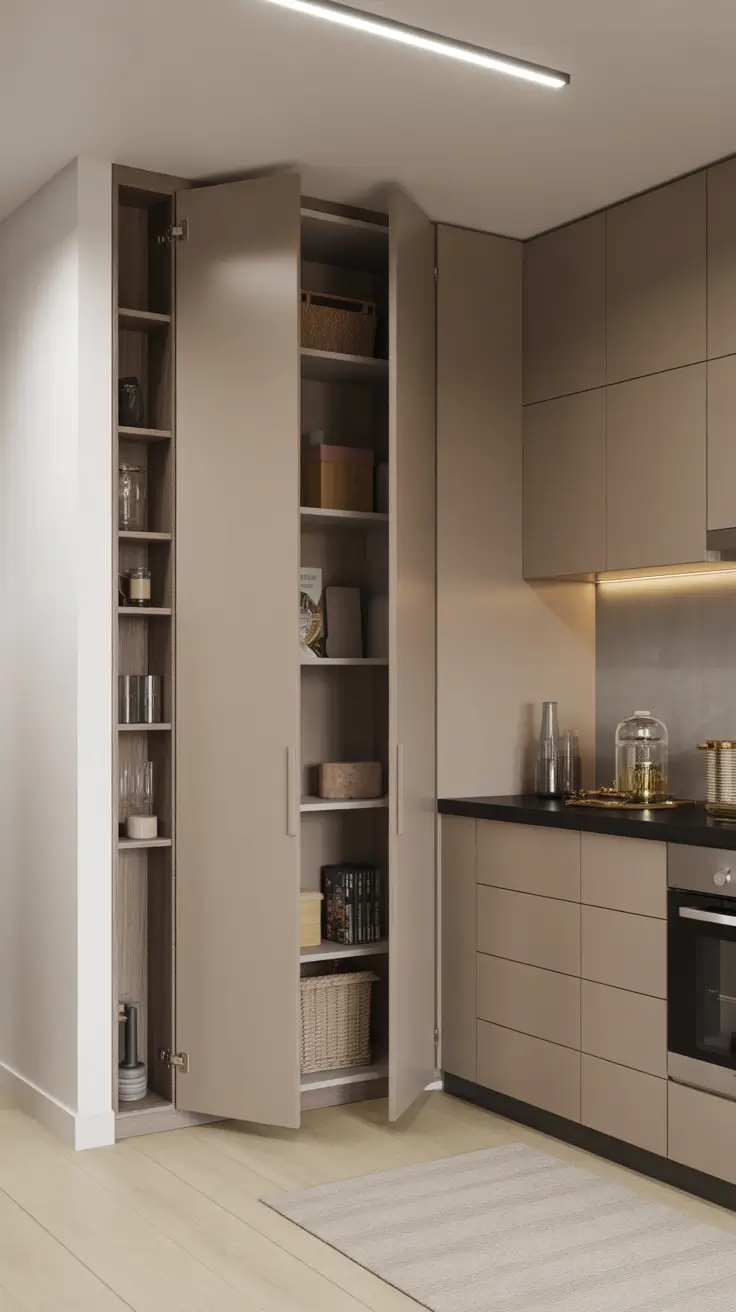
I focus on materials and construction methods that allow cabinetry panels, wall finishes, and even appliance fronts to double as pantry entrances. Floor-to-ceiling cabinets, recessed handles, and soft-close pivot doors help maintain a sleek profile. Lighting is also essential, with motion-activated LED strips ensuring usability without compromising the hidden effect.
From my experience, this design evolution reflects how homeowners value both aesthetics and efficiency. Designers featured in Architectural Digest frequently emphasize that concealed storage enhances perceived space and adds long-term value, a principle I consistently apply when planning modern pantry solutions.
What I would add to this concept is a stronger focus on sustainable materials, such as FSC-certified wood and low-VOC finishes, to align hidden pantry design with eco-conscious living trends.
Why Hidden Pantries Are Defining Modern Kitchen Cabinets
Hidden pantries have become central to modern kitchen cabinets because they support minimalist design without sacrificing storage. I design these spaces to disappear into cabinetry walls, allowing the kitchen to feel calm and organized even during heavy daily use. This approach is particularly effective in contemporary homes with flat-panel or handle-less cabinets.

I carefully select cabinet systems with reinforced hinges, push-to-open mechanisms, and consistent grain alignment. Tall pantry cabinets often conceal full shelving systems, pull-out racks, and appliance garages. These elements ensure that functionality remains high while visual noise stays low.
In my professional opinion, this trend reflects how kitchens are now lifestyle spaces rather than purely functional rooms. Designers from House Beautiful often note that concealed storage supports stress-free environments, something I see clients responding to immediately once installed.
To strengthen this section, I would include more detail on hardware innovations, such as magnetic latching systems and custom interior organizers that further enhance usability.
Walk-In Hidden Pantry Concepts For Contemporary Homes
A walk in hidden pantry offers the perfect balance between capacity and discretion. I design these spaces as secondary rooms concealed behind cabinet panels or flush wall doors, allowing homeowners to access generous storage without disrupting the main kitchen aesthetic. The result is a highly functional yet visually quiet environment.
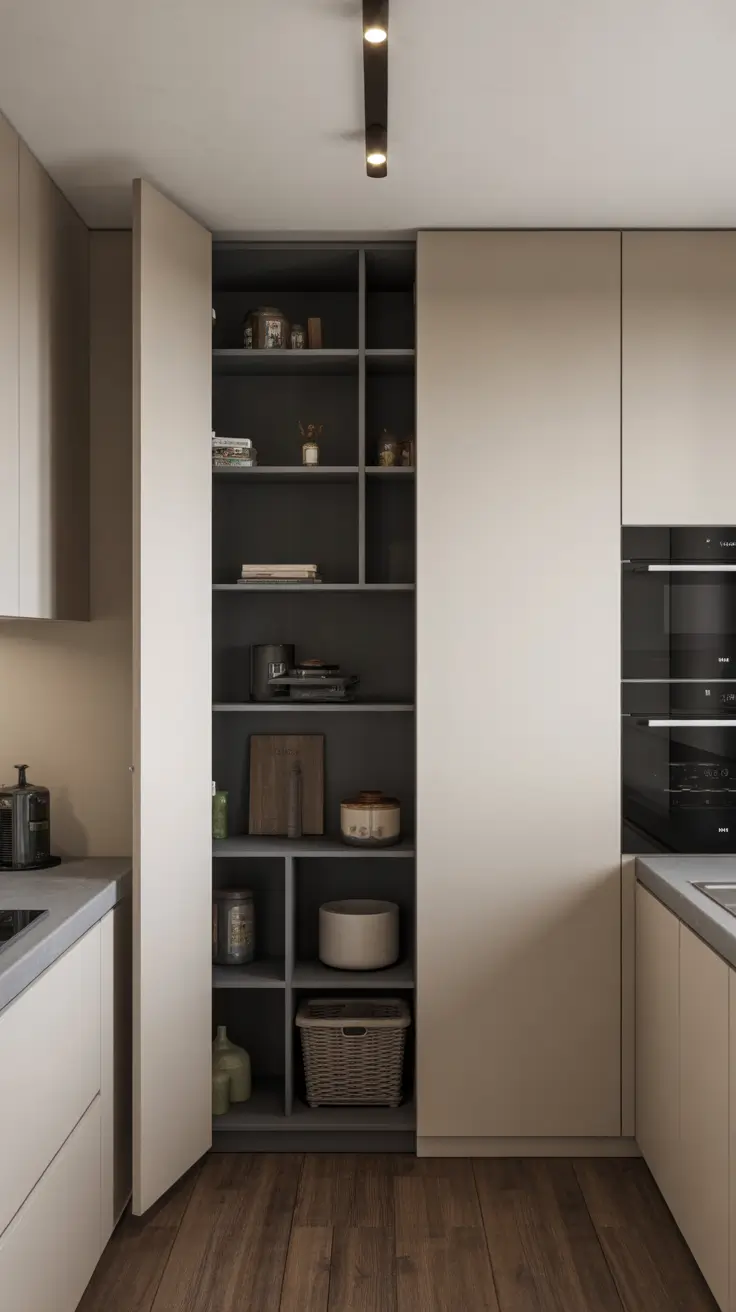
Inside, I incorporate adjustable shelving, countertop zones for small appliances, and dedicated zones for dry goods. Durable flooring, such as porcelain tile or sealed concrete, ensures longevity, while neutral finishes maintain continuity with the surrounding kitchen design.
From my experience, walk-in hidden pantries significantly improve workflow. Many U.S.-based interior designers recommend separating bulk storage from prep areas, and I find that clients appreciate how this setup keeps countertops clear and organized.
What could enhance this concept further is the addition of ventilation and smart inventory lighting to improve air circulation and visibility in deeper pantry spaces.
Small Walk-In Pantry Ideas That Maximize Every Inch
A small walk-in pantry requires precise planning, and I approach it as a vertical storage solution rather than a wide one. Narrow footprints can still function efficiently when shelves extend upward and corners are fully utilized. This is especially effective in homes where square footage is limited.
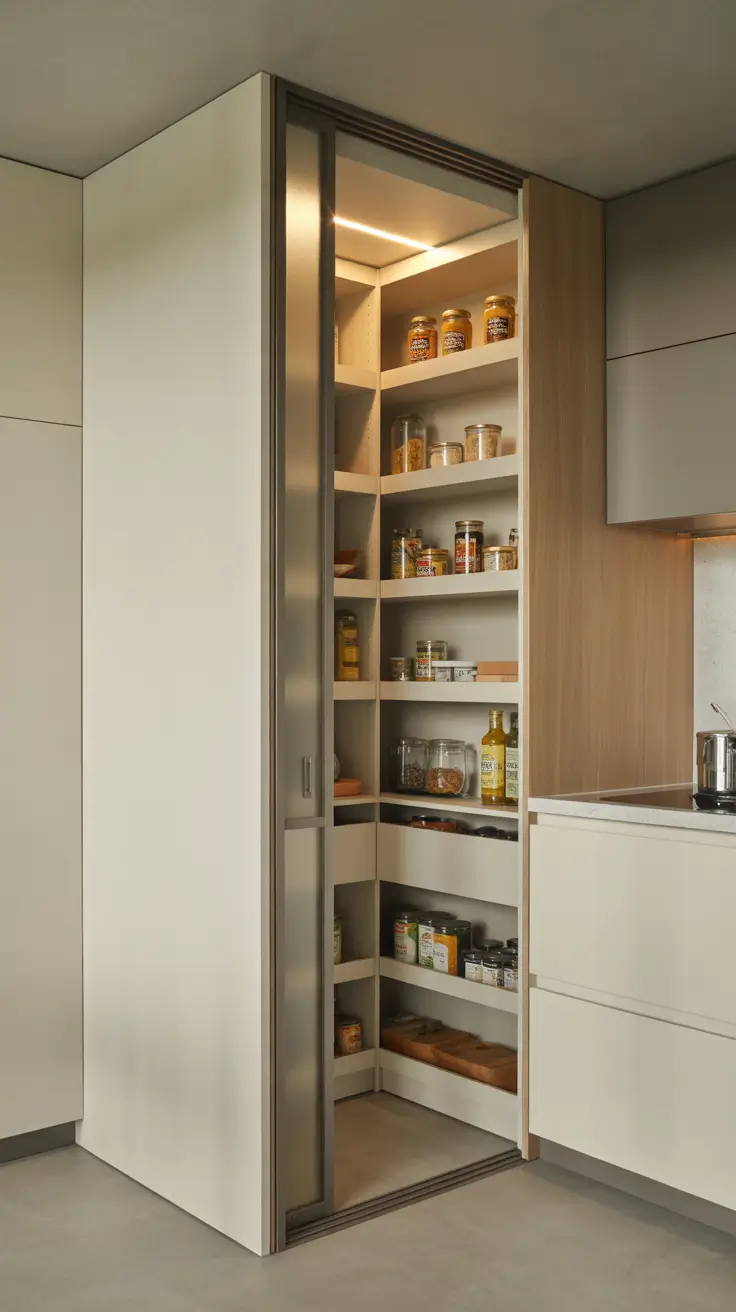
I rely on slim shelving systems, pull-out baskets, and shallow-depth cabinets to prevent wasted space. Integrated lighting and reflective finishes help the pantry feel larger and easier to navigate. Pocket or sliding doors are essential to maintain accessibility without interfering with nearby cabinetry.
In my opinion, the success of a small walk-in pantry depends on customization. Designers featured in Better Homes and Gardens often highlight tailored storage as the key to small-space success, a principle I consistently apply in my projects.
To complete this section, I would add guidance on labeling systems and modular inserts that allow the pantry to evolve with changing household needs.
Hidden Pantry Layout Strategies For Functional Kitchens
A well-planned layout is the foundation of any hidden pantry design. I prioritize proximity to prep zones while ensuring the pantry entrance remains discreet. This balance supports efficiency without drawing attention away from the overall kitchen composition.

I typically position hidden pantries along tall cabinet walls or behind secondary kitchen zones. Interior layouts include clear circulation paths, ergonomic shelf heights, and task lighting to reduce strain during daily use. These choices directly impact how intuitive the pantry feels over time.
Based on my experience, functional layouts reduce clutter and improve cooking efficiency. Kitchen design experts from the National Kitchen and Bath Association consistently emphasize workflow optimization, a guideline I follow closely.
What could strengthen this strategy is incorporating digital planning tools to simulate daily movement patterns and refine pantry placement before construction begins.
Modern Kitchen Cabinet Designs With Integrated Pantries
Integrated pantries within modern kitchen cabinets represent one of the most seamless hidden storage solutions available today. I design these systems so that pantry doors align perfectly with adjacent cabinet fronts, creating a uniform visual rhythm across the kitchen.
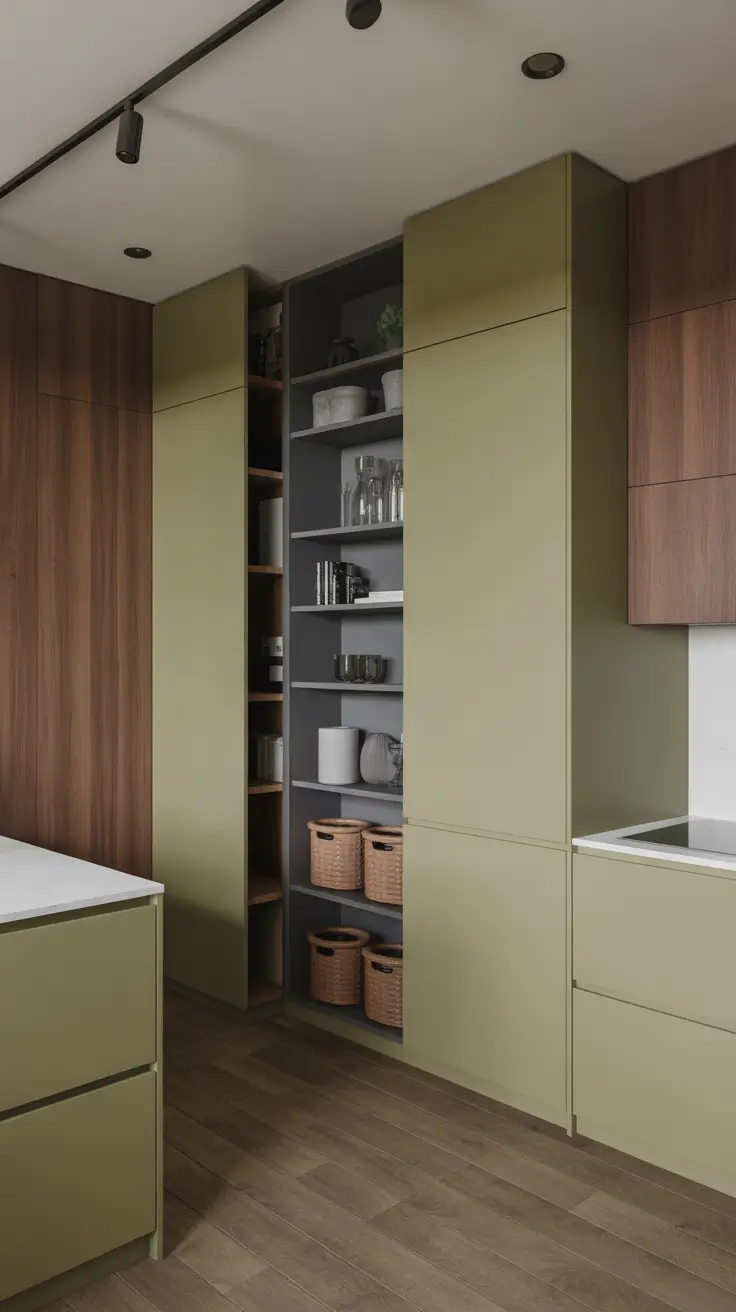
I include tall cabinet modules with internal pull-outs, adjustable shelves, and concealed ventilation. Materials such as matte lacquer, wood veneer, or textured laminates ensure durability while maintaining a refined appearance. These cabinets often conceal entire pantry systems without any visible indicators.
From my professional perspective, integrated pantry cabinets are ideal for homeowners who value minimalism. Many contemporary designers recommend this approach for maintaining design consistency, and I find it particularly effective in open-plan homes.
To improve this concept further, I would recommend integrating smart storage technology, such as sensor-based lighting and inventory tracking, to enhance functionality.
Hidden Pantry Ideas For Small Kitchen Spaces
In small kitchen environments, hidden pantries are essential for maximizing usability without overcrowding the room. I design these solutions to blend into walls, appliance panels, or narrow cabinet runs, ensuring the kitchen feels open and efficient.
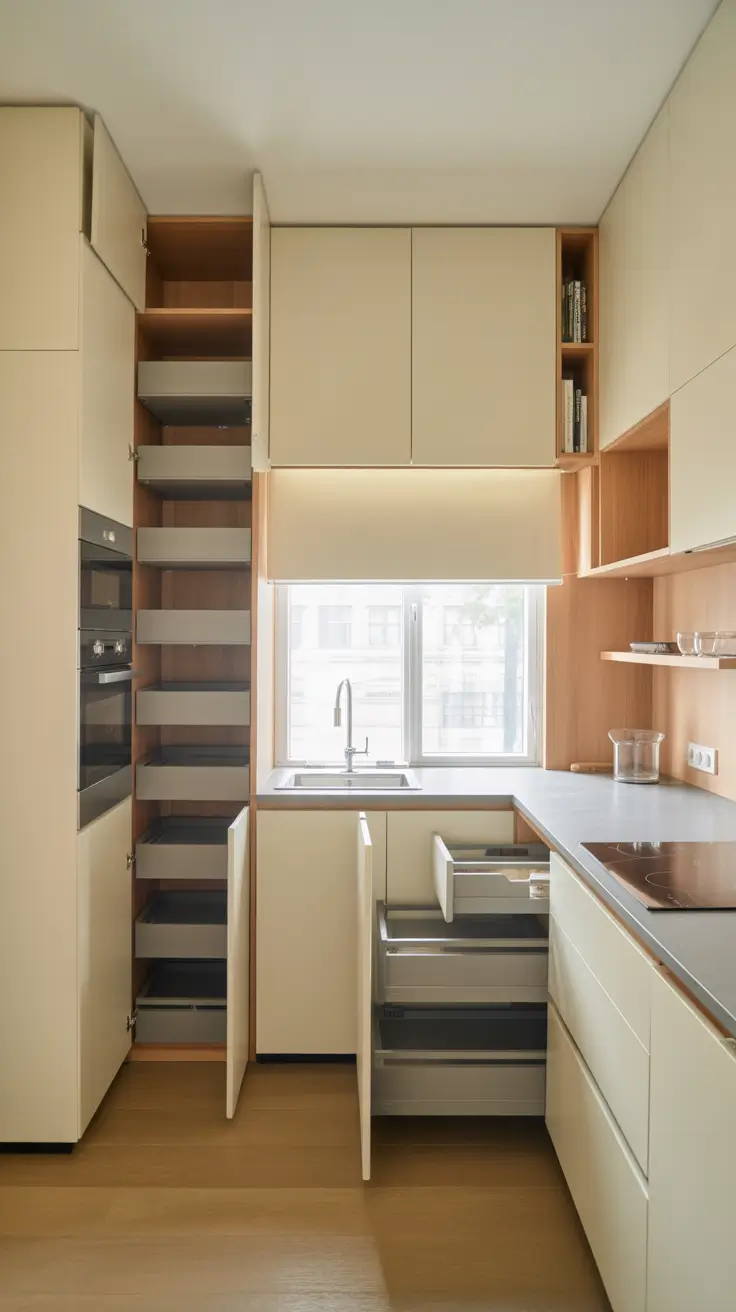
I often use pull-out pantry units, shallow cabinets, and vertical storage behind false panels. These designs work especially well in small spaces, where every inch must serve a purpose without compromising movement or aesthetics.
In my experience, clients are often surprised by how much storage can be concealed in compact kitchens. Interior design publications frequently highlight hidden storage as a small-space essential, a view I fully support based on real-world results.
What I would add here is a discussion on multifunctional furniture, such as kitchen islands with concealed pantry access, to further enhance small kitchen layouts.
Creative Hidden Pantry Solutions For Compact Layouts
When working with small spaces, I approach hidden pantry design as a creative exercise rather than a limitation. Compact layouts benefit most from unexpected storage zones that are concealed within walls, tall cabinets, or transitional areas of the kitchen. The goal is to preserve openness while quietly increasing storage capacity.

I often integrate slim pull-out pantry columns, toe-kick drawers, and recessed wall niches disguised with matching panels. These elements allow food storage to exist without interrupting circulation paths. Finishes and proportions always mirror surrounding cabinetry to ensure visual continuity.
From my professional experience, compact hidden pantry solutions dramatically improve daily comfort. Many urban design experts point out that clever storage reduces cognitive clutter, and I consistently see clients enjoy calmer kitchens after these solutions are installed.
What I would add here is a stronger focus on modular systems that can be reconfigured over time, allowing compact pantries to adapt as household needs change.
Using Basement Steps As Concealed Pantry Storage
Using basement steps as a hidden pantry is a highly efficient strategy that transforms overlooked space into functional storage. I design these pantries to be accessible from the kitchen level while remaining completely concealed within the stair structure. This approach works particularly well in multi-level homes.

I incorporate custom drawers, pull-out cabinets, and deep shelving units built into the risers or side walls of the staircase. Durable finishes and proper ventilation are essential to ensure food safety and longevity. The exterior panels typically match nearby walls or cabinetry for a seamless appearance.
In my opinion, this solution is both practical and architectural. Designers featured in This Old House often highlight underutilized stair areas as prime storage zones, and I agree based on consistent success in residential projects.
To complete this section, I would include guidance on moisture control and insulation to ensure basement-adjacent pantry storage remains suitable year-round.
Hidden Pantry Designs Built Into Staircases
Beyond basements, stairs themselves offer unique opportunities for hidden pantry design. I often treat staircases as structural furniture, integrating concealed doors and storage volumes that align with the overall interior design language.
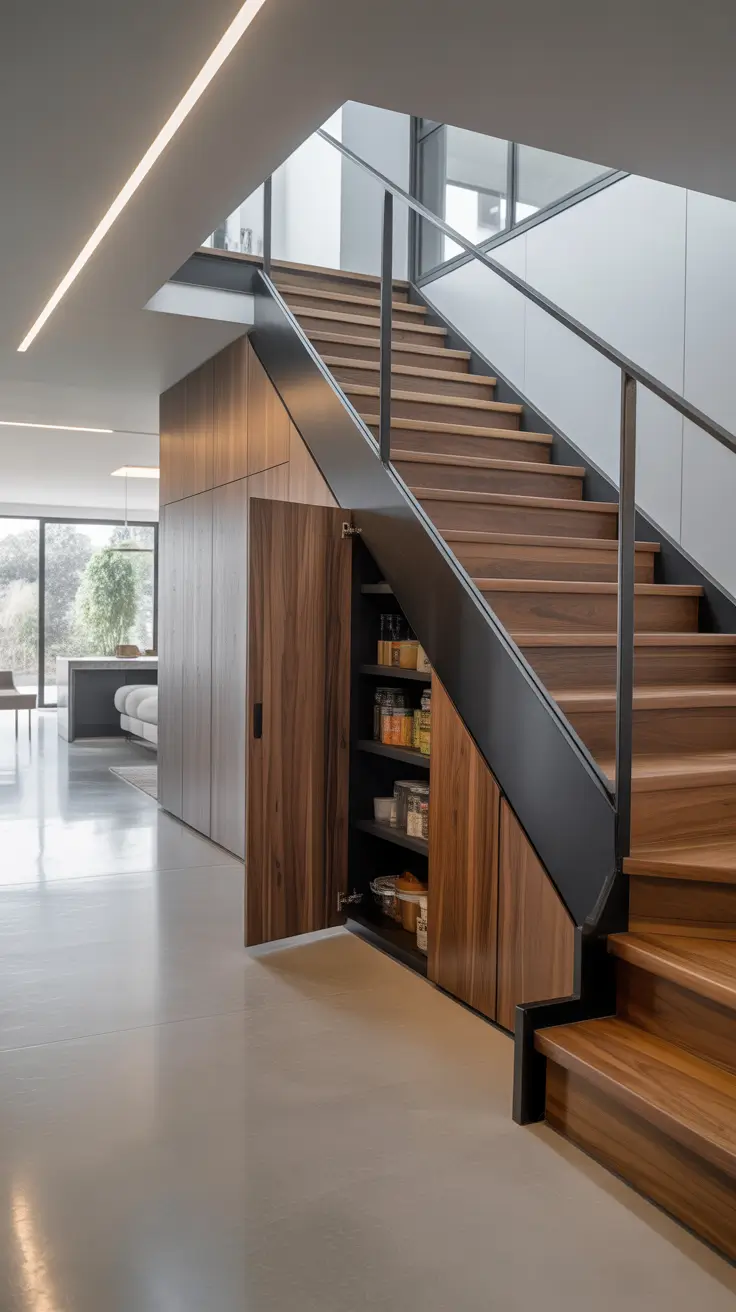
I design flush panels, pivot doors, or concealed handles that open into pantry zones beneath or alongside staircases. Interior shelving is customized to accommodate dry goods, appliances, or even wine storage. Lighting is discreet but sufficient for daily use.
From my experience, staircase pantries add character without visual clutter. Many contemporary architects advocate multifunctional stair design, and I find that homeowners appreciate how this approach maximizes square footage elegantly.
What could strengthen this concept further is incorporating acoustic insulation to minimize noise transfer between pantry and living areas.
Under-Stairs Hidden Pantry Ideas For Small Homes
In small homes, under-stairs pantries can significantly improve storage without requiring additional rooms. I design these pantries to feel intentional, not improvised, ensuring they align with the home’s architectural style.
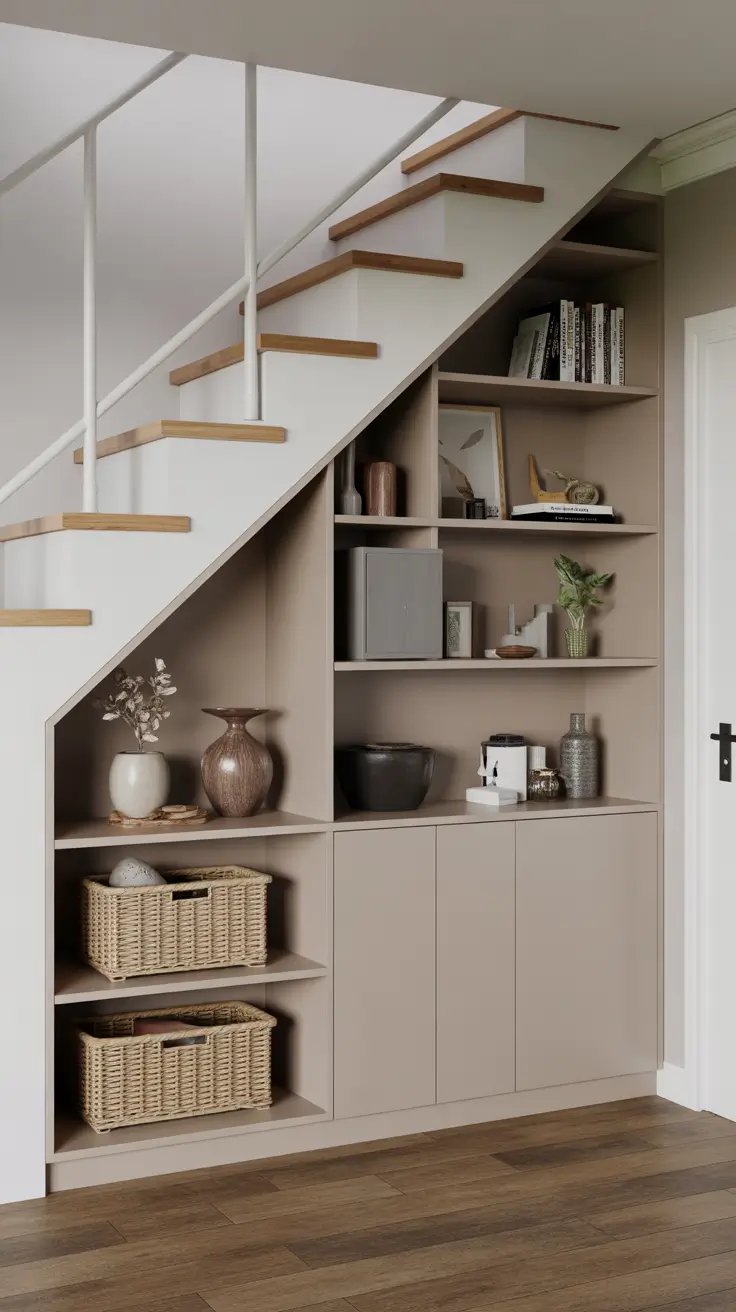
I rely on custom cabinetry, angled shelving, and pull-out systems that follow the slope of the stairs. Materials are chosen for durability, and finishes match surrounding interiors to maintain cohesion. This approach ensures usability without drawing attention.
In my professional view, under-stairs pantries are among the most cost-effective storage solutions available. Interior designers frequently recommend this strategy for compact homes, and I see consistent satisfaction from homeowners who adopt it.
What I would add here is advice on organizing by frequency of use, ensuring the most accessible zones store daily essentials.
Space-Saving Hidden Pantry Concepts For Urban Kitchens
Urban living demands efficient solutions, and space-saving hidden pantries are essential in dense environments. I design these pantries to integrate seamlessly into small kitchen layouts while preserving natural light and openness.

I often use vertical pull-out pantries, appliance-integrated cabinets, and corner storage systems. These designs maximize capacity while keeping circulation clear. Neutral tones and reflective finishes help enhance the sense of space.
From my experience, urban clients prioritize flexibility. Many design professionals note that adaptable storage is key in city apartments, and I always plan pantries that can evolve with lifestyle changes.
To enhance this section, I would include examples of combined pantry and utility storage to further optimize limited footprints.
DIY Hidden Pantry Ideas For Custom Storage
For homeowners who enjoy customization, DIY hidden pantry projects offer creative freedom and cost control. I see these designs as opportunities to tailor storage precisely to household habits while maintaining a polished look.

I recommend using ready-made cabinet frames, concealed hinges, and matching panels to achieve a professional finish. Attention to alignment, ventilation, and lighting ensures the pantry remains functional and durable over time.
In my opinion, successful DIY pantry projects rely on planning rather than complexity. Many home improvement experts emphasize preparation and measurement, and I agree based on observing both successes and failures in DIY renovations.
What I would add here is guidance on when to consult a professional, especially for structural modifications or electrical work.
Unique Hidden Pantry Doors That Blend Into Cabinets
Unique hidden pantry doors are often the defining feature of concealed storage. I design these doors to disappear entirely into cabinetry, walls, or architectural panels, making the pantry virtually invisible.
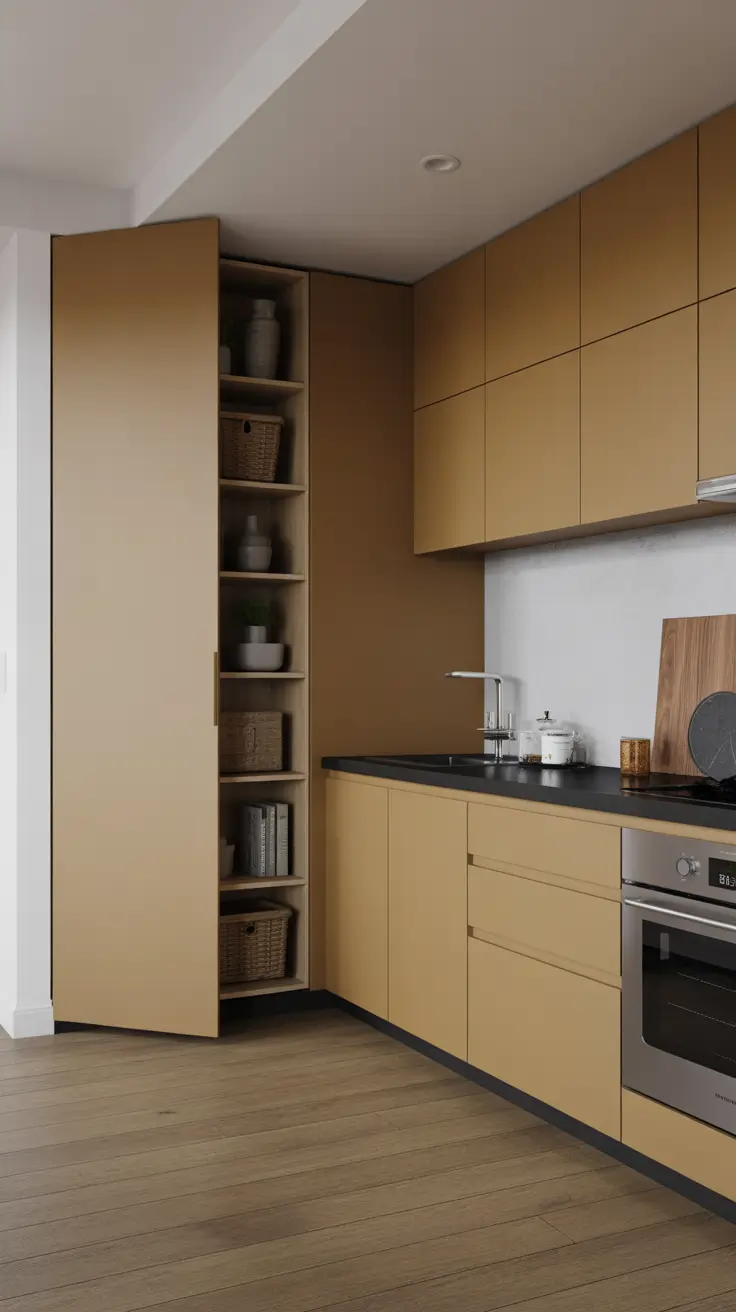
I use full-overlay cabinet doors, touch-latch systems, and continuous material finishes. Grain matching, color consistency, and precise gaps are critical to achieving a seamless look. These details elevate the pantry from functional storage to design feature.
From my professional perspective, hidden doors represent the future of kitchen design. Many leading interior designers highlight seamless transitions as a hallmark of luxury interiors, and I find clients respond strongly to this refinement.
To complete this section, I would recommend exploring custom hardware and pivot systems that enhance durability while maintaining invisibility.
Minimalist Hidden Pantry Designs For Modern Kitchens
In hidden pantry ideas 2026, minimalist design focuses on reducing visual noise while maximizing functionality. I design these pantries to blend seamlessly into the kitchen architecture, using clean lines, flush surfaces, and neutral color palettes. This approach supports modern living by keeping the kitchen calm, open, and uncluttered, even when storage needs are extensive.
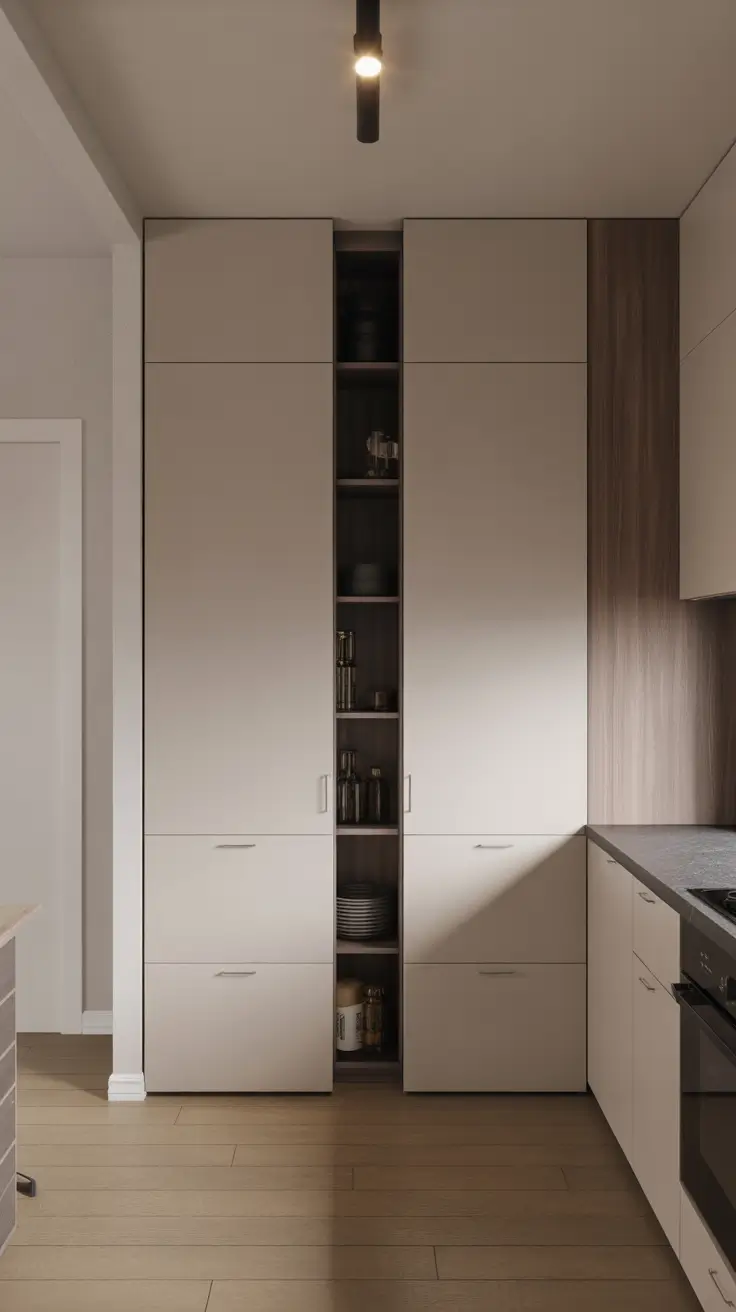
I typically use full-height modern kitchen cabinets, handle-less doors, and concealed hinges to hide pantry entrances. Interior shelving is adjustable and clearly organized, allowing homeowners to store food, appliances, and cookware without overcrowding visible areas. Integrated lighting ensures the pantry remains practical while staying visually discreet.
From my experience, minimalist hidden pantries are ideal for homeowners who value simplicity and order. Designers frequently featured in Dwell emphasize that simplicity enhances usability, and I see this proven daily in real kitchens where clutter is eliminated.
What I would add to this section is a deeper focus on texture variation, such as matte finishes or subtle wood grains, to prevent minimalist designs from feeling too flat or sterile.
Hidden Pantry Ideas That Keep Kitchens Visually Clean
A visually clean kitchen relies heavily on concealed storage, and hidden pantries are central to that strategy. I design these spaces to disappear entirely into cabinetry walls, ensuring that countertops and sightlines remain uninterrupted. This is especially important in open-plan homes.
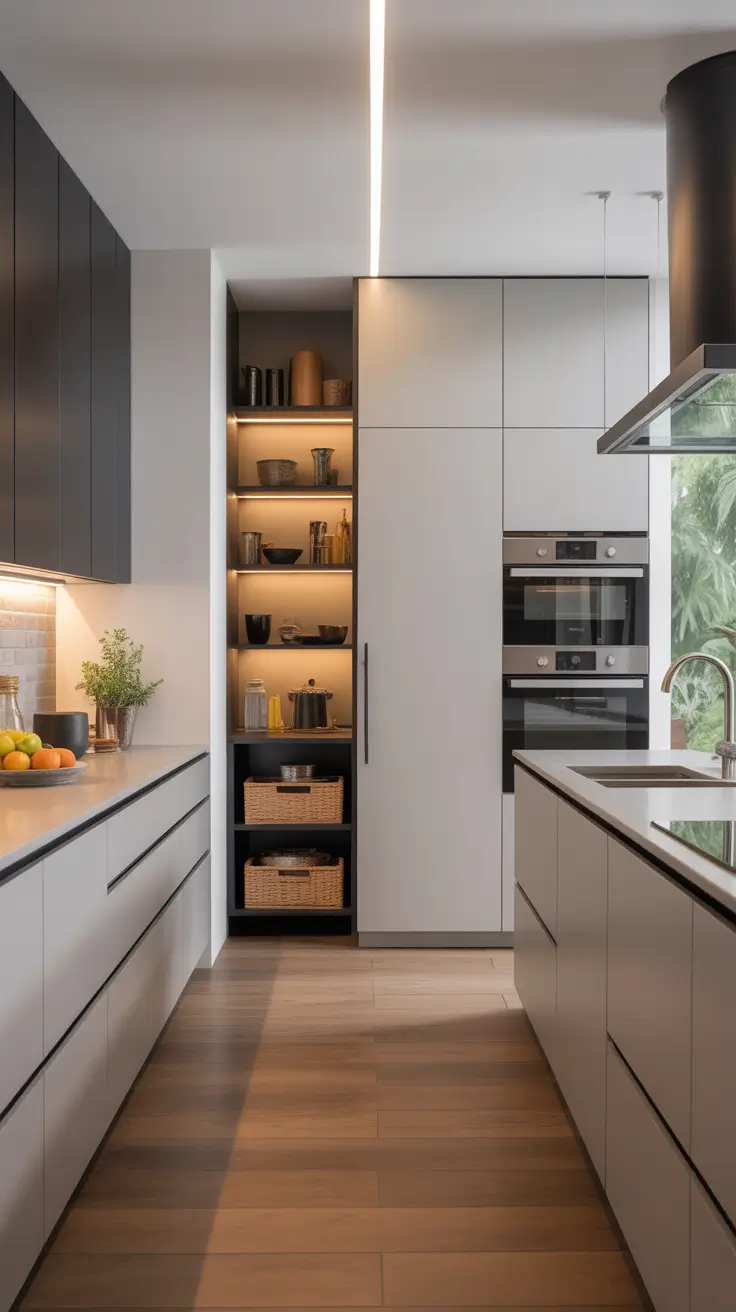
I incorporate push-to-open cabinet systems, panel-matched doors, and integrated appliance fronts. These elements allow the pantry to function as a full storage zone without drawing attention. Interior layouts are logical and ergonomic, supporting daily cooking routines efficiently.
In my professional opinion, visually clean kitchens reduce stress and improve workflow. Many U.S. interior designers note that concealed storage creates a sense of control, and I consistently see clients respond positively to this design choice.
To strengthen this concept, I would recommend adding hidden charging stations and small appliance garages inside the pantry to further reduce surface clutter.
Kitchen Layout Ideas That Seamlessly Hide Pantry Space
A thoughtful layout is essential for successful hidden pantry design. I plan pantry placement to support natural movement patterns while keeping entrances discreet. This ensures that functionality never compromises aesthetics.
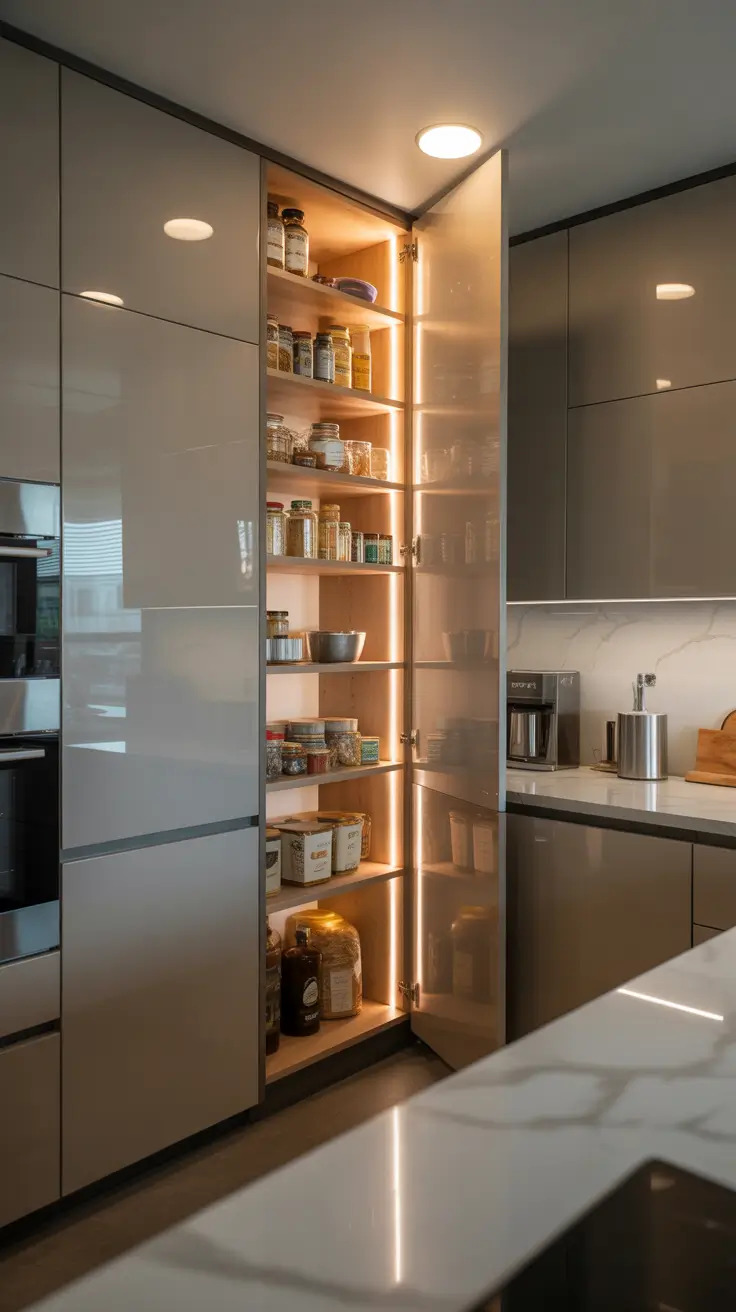
I often integrate pantries into tall cabinet walls, behind secondary work zones, or near transitional spaces such as hallways. Interior layouts prioritize accessibility, with shelves positioned at ergonomic heights and clear circulation paths.
Based on my experience, layout-driven pantry design significantly improves daily routines. The National Kitchen and Bath Association frequently emphasizes workflow planning, a principle I consistently apply in my designs.
What I would add here is the use of digital layout simulations to test pantry access and movement before final construction.
Innovative Hidden Pantry Ideas For Open-Concept Kitchens
Open-concept kitchens demand storage solutions that remain invisible from multiple angles. In hidden pantry ideas 2026, I design pantries that disappear entirely into architectural elements, preserving openness and cohesion.
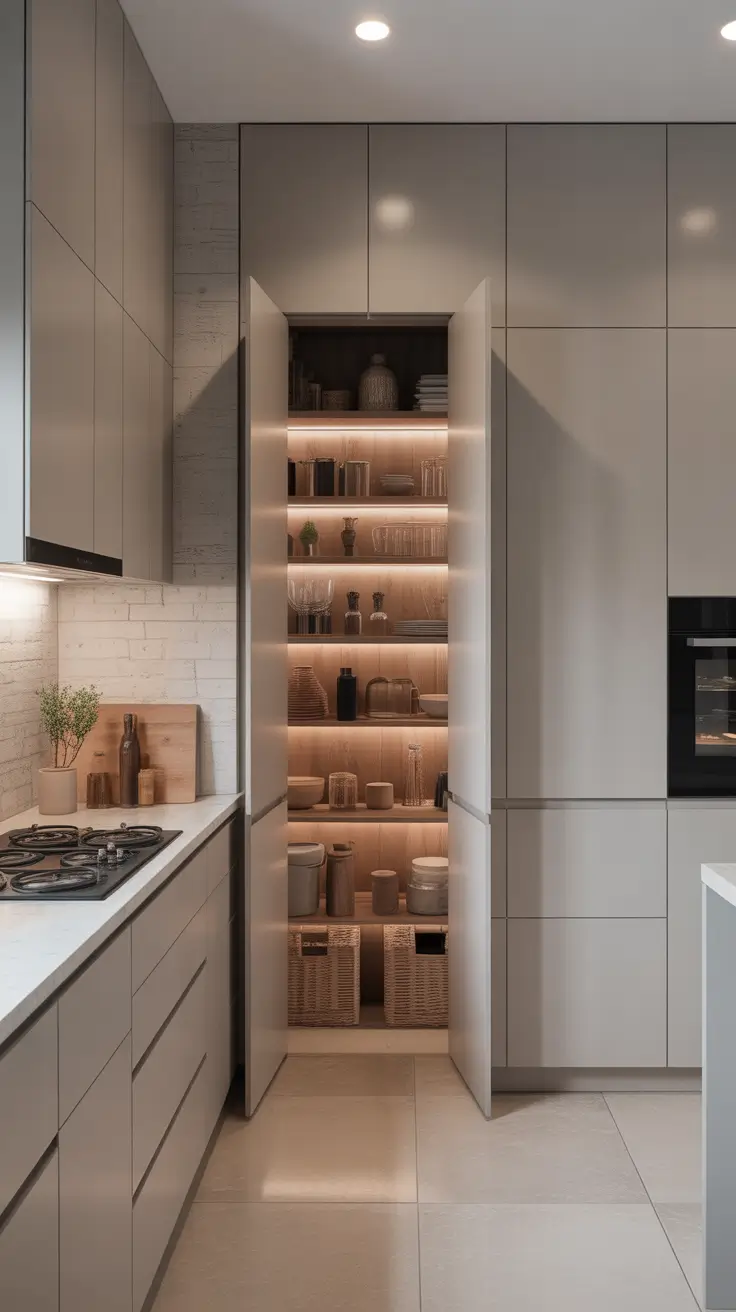
I rely on extended cabinet runs, wall panel systems, and concealed doors that align with surrounding finishes. These designs ensure that the pantry does not interrupt sightlines between cooking, dining, and living areas.
From my professional perspective, innovation in open-concept storage defines modern kitchen design. Publications like Architectural Digest often highlight seamless integration as a luxury standard, which I see reflected in client expectations.
To enhance this section, I would include acoustic considerations to prevent pantry activity from disturbing adjacent living spaces.
Hidden Pantry Organization Ideas For Everyday Convenience
Organization is the foundation of a successful hidden pantry. I design these spaces to support everyday convenience by grouping items logically and ensuring easy visibility. A hidden pantry should feel intuitive, not hidden in use.

I include adjustable shelving, pull-out baskets, labeled zones, and integrated lighting. These elements ensure that food storage remains efficient and accessible, even when concealed behind cabinet walls.
In my experience, well-organized hidden pantries reduce food waste and improve meal planning. Many professional organizers recommend clear zoning, a method I consistently apply with excellent results.
What I would add here is advice on incorporating digital grocery lists or inventory tracking tools to further enhance daily convenience.
Modern Hidden Pantry Shelving Solutions For 2026
In hidden pantry ideas 2026, shelving systems play a central role in how concealed storage performs over time. I design modern hidden pantry shelving to be flexible, visually light, and highly durable, ensuring it supports changing household needs without requiring structural updates. Proper shelving turns a hidden pantry into a truly functional extension of the kitchen.
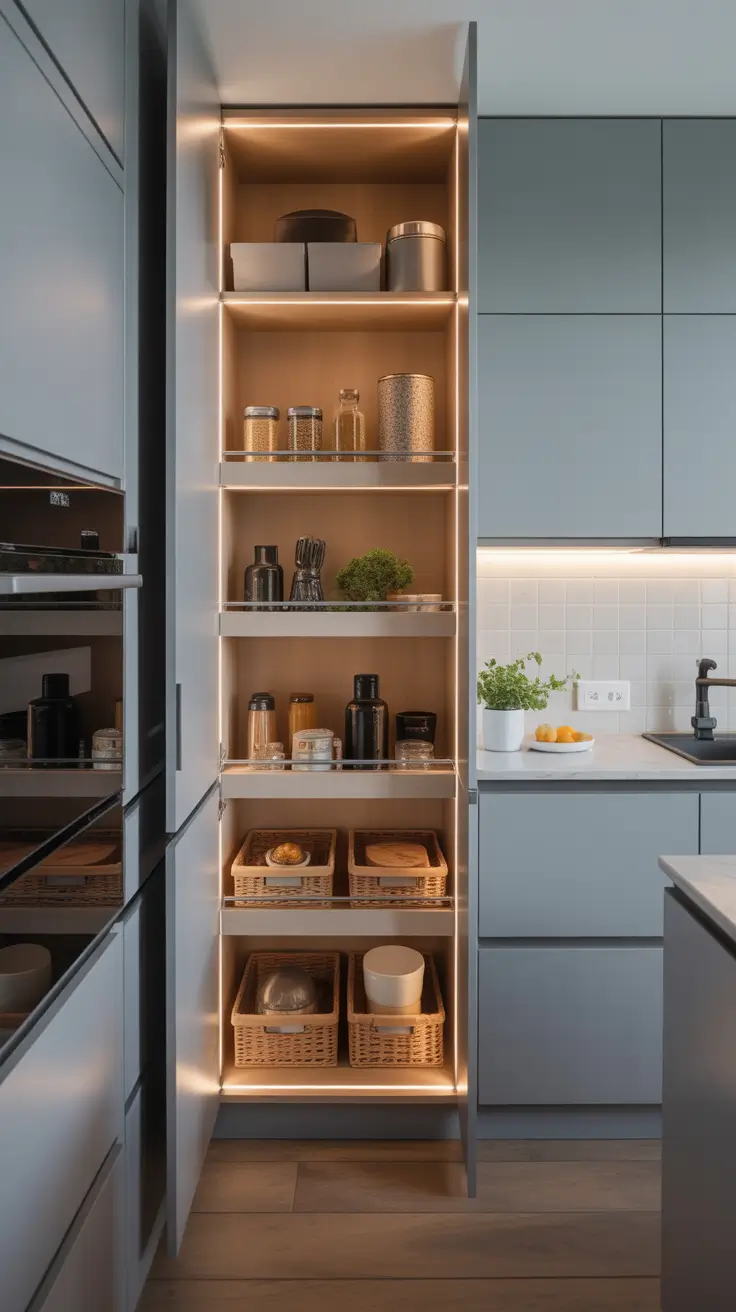
I typically use adjustable metal or wood shelving, integrated pull-out trays, and modular inserts that fit seamlessly inside concealed cabinets or walk-in spaces. These systems allow for efficient organization of dry goods, appliances, and bulk storage while maintaining clean interior lines. Built-in lighting ensures visibility even in deeper pantry zones.
From my professional experience, modern shelving solutions significantly improve long-term usability. Interior designers frequently note that adjustable systems outperform fixed shelving, and I consistently recommend them to clients planning for future flexibility.
What I would add here is the inclusion of moisture-resistant materials and easy-to-clean surfaces to improve durability and hygiene in pantry environments.
Stylish Hidden Pantry Designs That Feel Invisible
A truly stylish hidden pantry should feel completely invisible when closed. I approach these designs by aligning pantry doors, panels, and finishes perfectly with surrounding modern kitchen cabinets, creating a seamless visual experience. The pantry becomes part of the wall rather than a separate element.
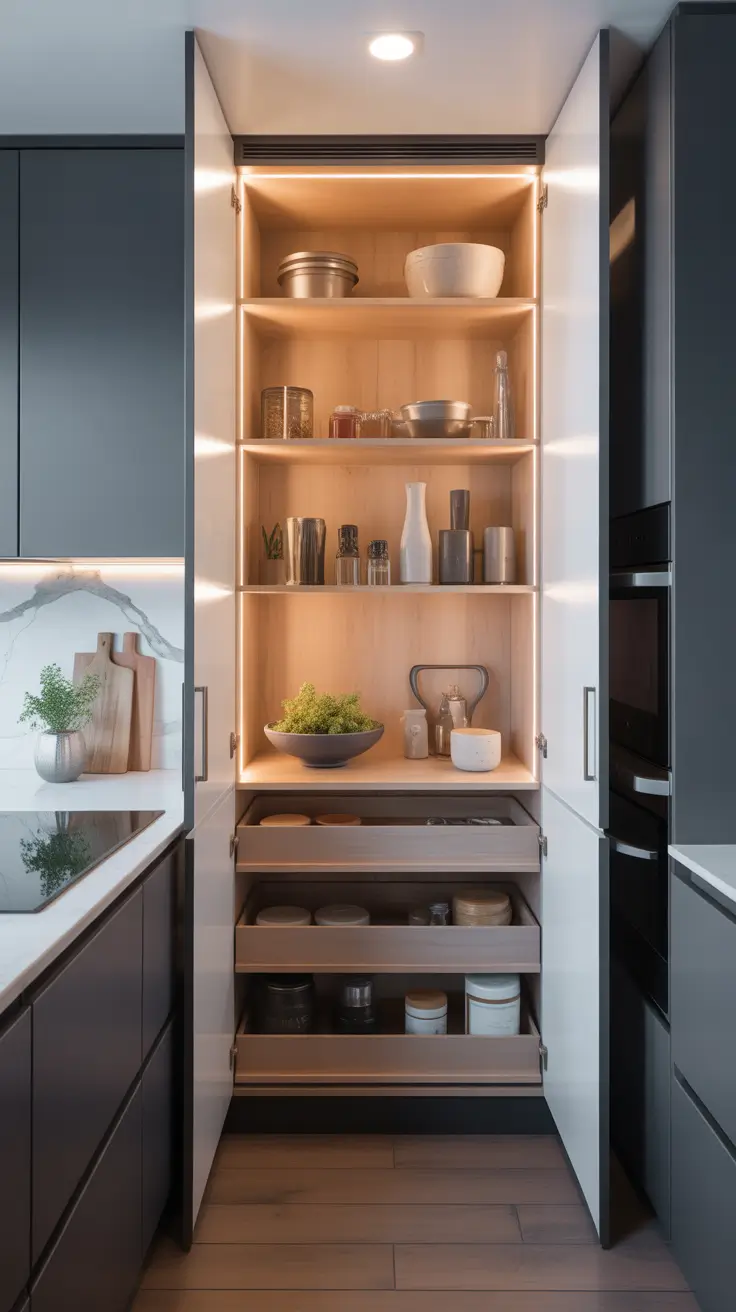
I rely on full-overlay doors, continuous material finishes, and concealed hardware to achieve this effect. Color consistency, grain matching, and precise spacing are critical details that ensure the pantry disappears into the overall kitchen composition.
In my opinion, invisible design represents the highest level of craftsmanship. Many luxury kitchen designers emphasize precision as a hallmark of quality, and I see clients immediately recognize the difference when these details are executed correctly.
To strengthen this section, I would recommend exploring advanced door mechanisms, such as pivot systems or magnetic closures, to further enhance the hidden effect.
Hidden Pantry Ideas Inspired By Luxury Kitchens
Luxury kitchens strongly influence hidden pantry ideas 2026, setting standards for both design and functionality. I draw inspiration from high-end interiors where storage is concealed yet expansive, supporting an uncluttered and refined environment.
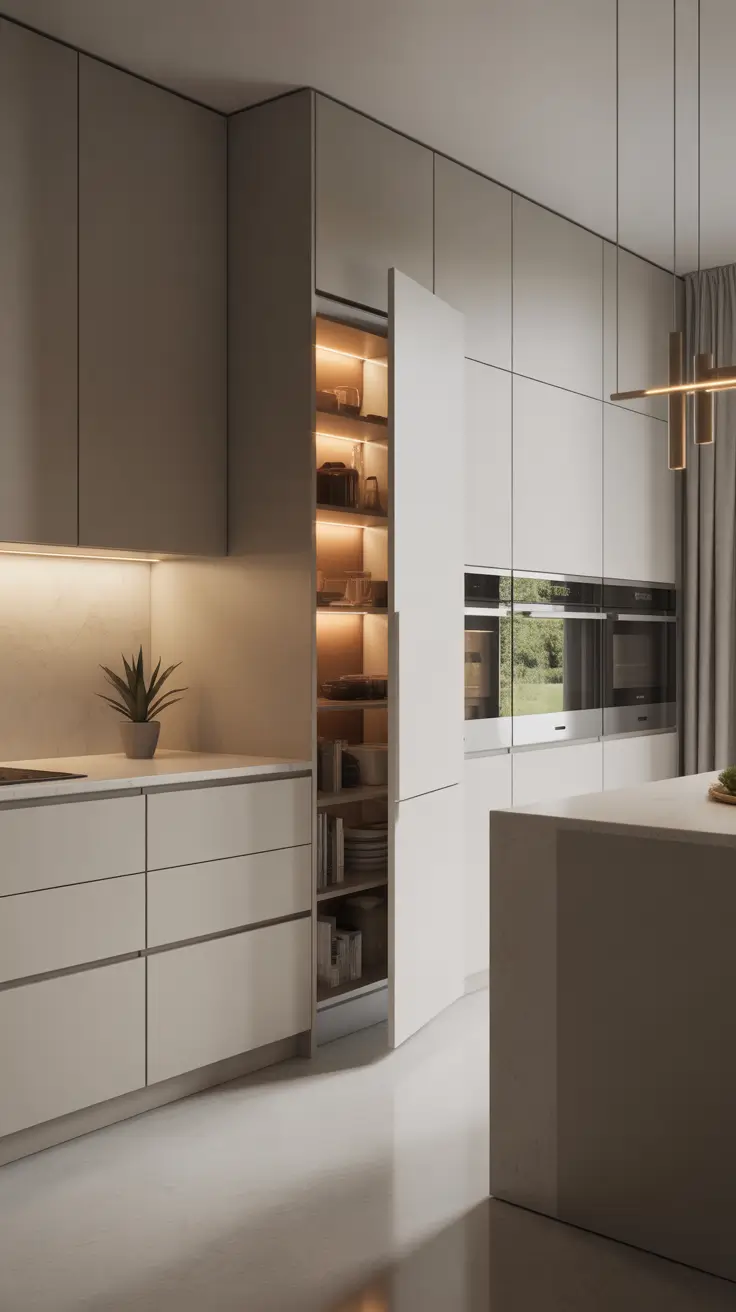
I integrate custom cabinetry, premium materials, and dedicated pantry zones hidden behind architectural panels. Interiors often include stone countertops, glass shelving accents, and integrated lighting that elevate the pantry experience without making it visually dominant.
From my experience, luxury-inspired hidden pantries are not about excess but about intention. Publications like Architectural Digest frequently highlight restraint and precision, principles I apply even in modestly sized homes.
What I would add here is guidance on balancing luxury details with everyday practicality, ensuring elegance does not compromise usability.
Functional Hidden Pantry Concepts For Busy Households
For busy households, hidden pantries must support speed, organization, and accessibility. I design these pantries to reduce daily friction, allowing families to move efficiently through cooking and storage tasks without disrupting the kitchen’s appearance.

I include clearly zoned shelving, pull-out baskets, labeled storage, and easy-access drawers. These features ensure that frequently used items are always within reach, even when concealed behind cabinet doors or walls.
In my professional view, functionality defines successful pantry design. Many home organization experts emphasize intuitive layouts, and I consistently see improved routines when these principles are applied.
What could be added here is a discussion on child-friendly storage zones and safety considerations for family-focused kitchens.
Future-Ready Hidden Pantry Ideas For Modern Living
Future-ready design is a defining theme in hidden pantry ideas 2026. I plan these pantries to adapt to evolving lifestyles, technology, and storage habits, ensuring they remain relevant for years to come.
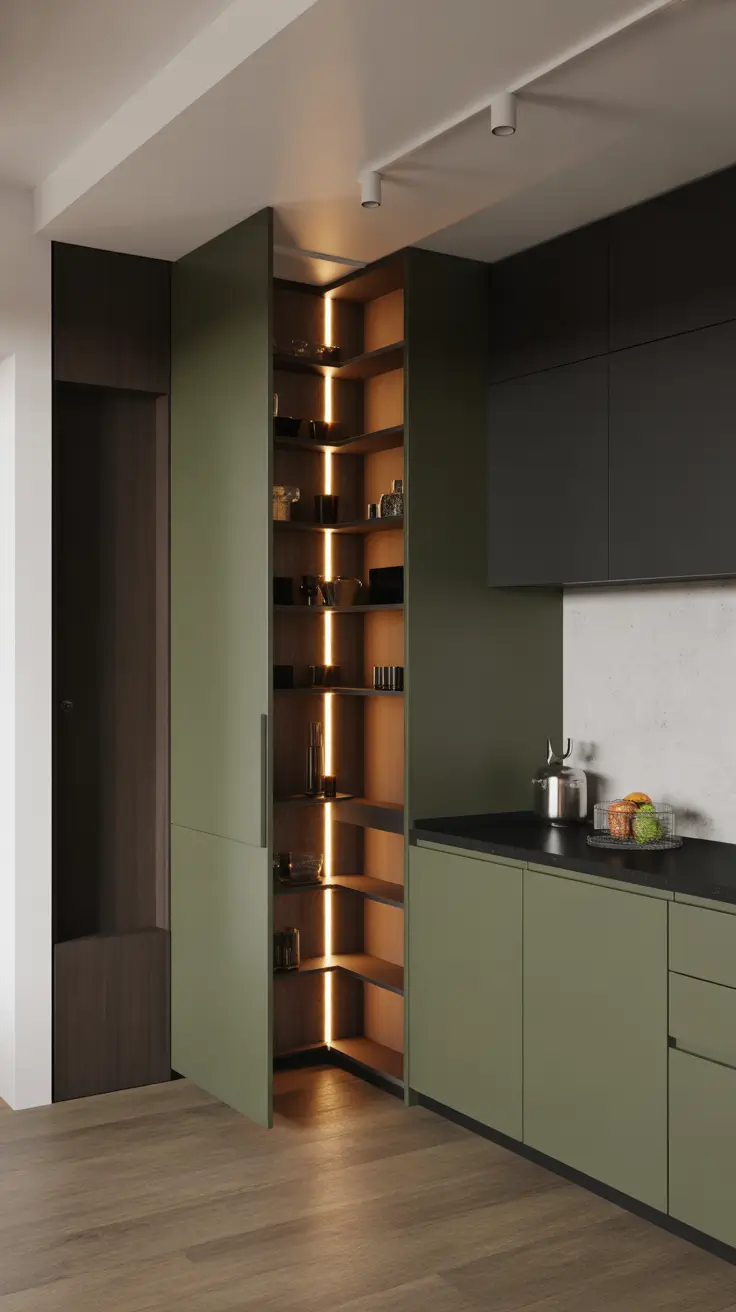
I integrate smart lighting, flexible shelving, and space for emerging appliances. Materials are chosen for durability and sustainability, while layouts allow for easy reconfiguration as needs change.
In my opinion, future-ready pantries protect long-term value. Many forward-thinking designers emphasize adaptability as a core principle, and I consistently design with this mindset.
What I would add here is the integration of smart inventory systems that help households track supplies efficiently.
Hidden Pantry Trends That Will Shape Kitchens In 2026
Looking ahead, hidden pantry trends reflect broader shifts in how we use our homes. I see increased demand for seamless integration, multifunctional storage, and designs that support both aesthetics and efficiency. These trends redefine how storage fits into the modern layout.
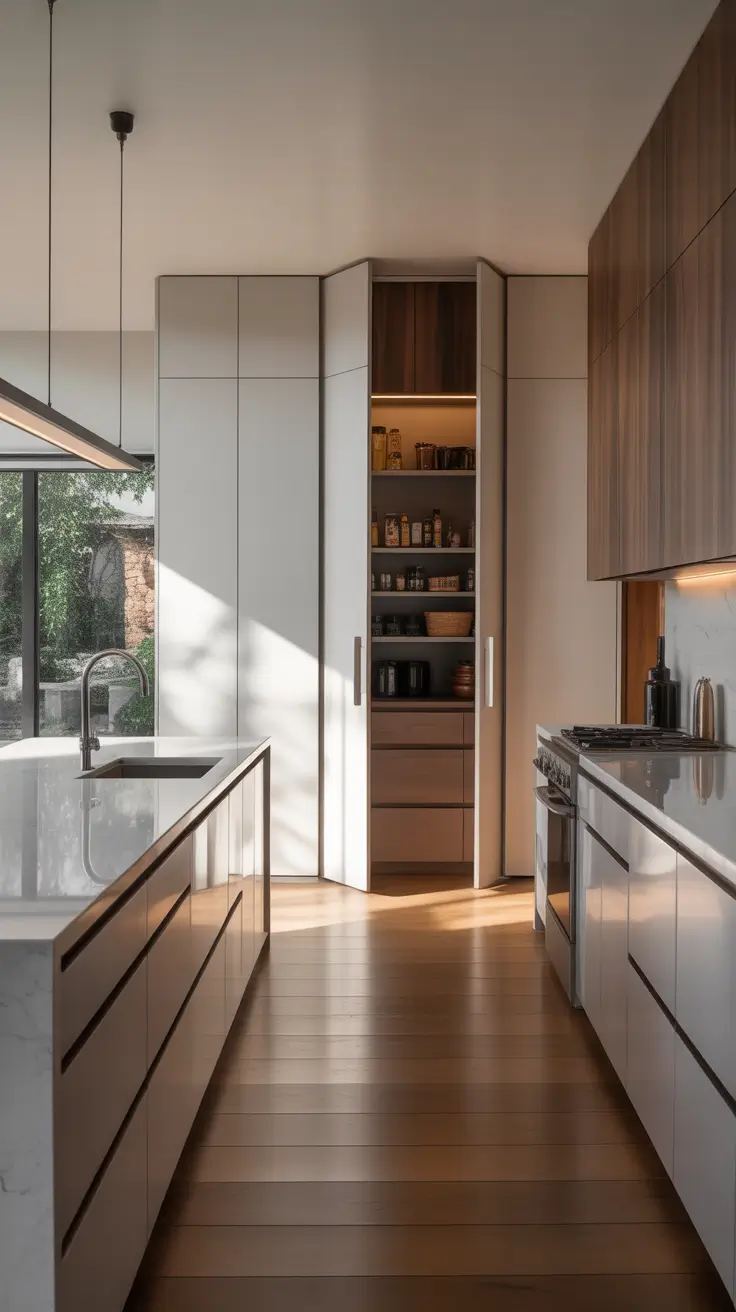
Key trends include concealed walk in pantries, vertical storage for small spaces, and hidden solutions integrated into stairs or basement steps. These approaches maximize space while preserving clean visual lines.
From my professional perspective, these trends represent a move toward intentional living. Industry experts consistently highlight thoughtful storage as a cornerstone of modern design, and I fully agree based on hands-on experience.
To strengthen this final section, I would include a brief checklist to help homeowners evaluate which hidden pantry trends best suit their specific homes.
Hidden pantries are no longer just a design trend but a practical solution for modern living. As hidden pantry ideas 2026 continue to evolve, they offer smarter layouts, cleaner visuals, and adaptable storage for every kitchen size. Whether integrated into cabinets, stairs, or compact spaces, these solutions prove that thoughtful design can transform everyday kitchens into efficient and timeless spaces.