
27 Open Kitchen Living Rooms For 2026: Modern Design Ideas, Layouts, and Smart Zoning Concepts

Are open kitchen living rooms still evolving, or have we already seen their best versions? In Open Kitchen Living Rooms For 2026, I see a clear shift toward smarter layouts, warmer materials, and spaces that truly support everyday living. In this article, I explain how Open Kitchen Living Rooms For 2026 are planned, styled, and personalized to meet modern lifestyle needs while remaining practical, flexible, and visually cohesive.
I see the evolving concept of open kitchen living rooms in 2026 as a balance between openness and subtle structure. These interiors no longer focus only on removing walls, but on creating visual continuity through materials, ceiling treatments, and furniture placement. The goal is to allow the kitchen and living room to coexist as one experience while still supporting different daily activities.

From my perspective, cabinetry finishes now align closely with living room furniture, often using warm woods, matte finishes, or textured laminates. Sofas are positioned to define lounge zones, while rugs, lighting layers, and ceiling details help establish boundaries without closing off space. Storage is integrated seamlessly so the room remains visually calm and uncluttered.
In my professional experience, this concept works best when homeowners embrace flexibility. Designers often reference publications like Architectural Digest, which emphasize zoning through lighting and furniture rather than walls. I agree with this approach because it allows the space to evolve with changing needs.
What I would add to this concept is more attention to acoustic comfort. Soft finishes, upholstered furniture, and ceiling panels should be included to manage sound in open kitchen living rooms.
Smart Plan Strategies For Open Kitchen Living Room Spaces
When I plan open kitchen living room spaces for 2026, I focus first on circulation and sightlines. A smart plan ensures that cooking, dining, and lounging areas feel intuitive and do not interrupt one another. Clear pathways and thoughtful furniture placement make the space functional for both everyday routines and entertaining.
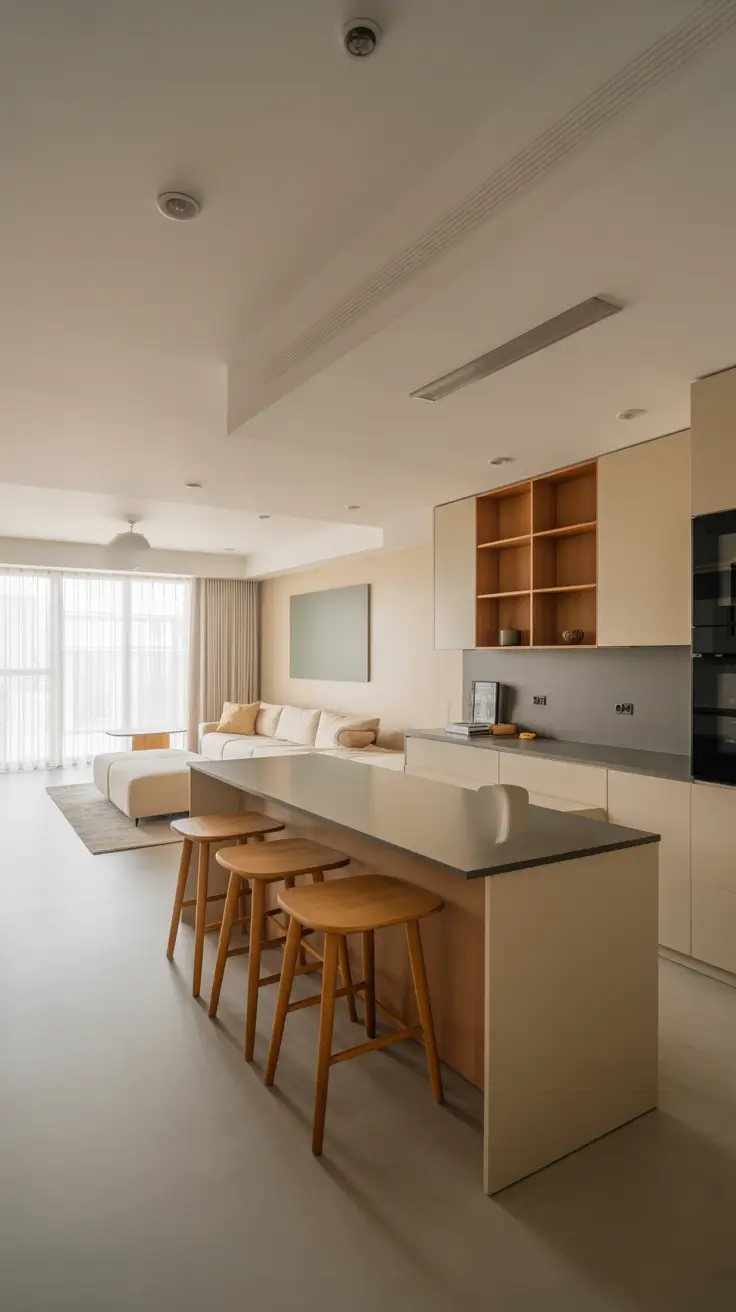
I always include multifunctional elements such as peninsula counters, built-in benches, and modular seating. These pieces provide seating, storage, and visual separation while keeping the layout open. Appliances are often panel-ready to maintain a cohesive look across the entire room.
From my experience, the best plans are those that anticipate movement. I have learned that placing the kitchen work zone slightly off-center reduces visual clutter and improves flow. This strategy is frequently recommended by US-based interior planners focused on livability.
What I would add here is a stronger emphasis on future adaptability. Electrical planning, movable furniture, and flexible lighting controls should be included to support changing lifestyles.
Kitchen And Living Room Combo Ideas That Define Modern Living
In 2026, kitchen and living room combo ideas reflect how modern households live and socialize. I design these spaces to feel unified while allowing each zone to retain its identity. Color continuity and consistent materials play a critical role in achieving this balance.

I typically recommend matching wood tones across cabinets, shelving, and coffee tables. Low-profile sofas, sleek dining chairs, and minimalist lighting fixtures help maintain a clean visual flow. Statement elements like a sculptural pendant or feature backsplash add character without overwhelming the room.
Personally, I believe this combo works best when comfort is prioritized over trends. I often advise clients to invest in seating and lighting first, as these elements define how the space is actually used. Many designers featured in Elle Decor echo this sentiment, emphasizing comfort-driven design.
What I would add to this approach is layered lighting control. Dimmers and task lighting should be planned early to adapt the space from day to night.
How To Design A Functional Open Kitchen Living Room Space
Designing a functional open kitchen living room space in 2026 requires thoughtful zoning rather than physical separation. I focus on defining areas through furniture arrangement, ceiling details, and changes in flooring materials. Functionality always guides aesthetic decisions.
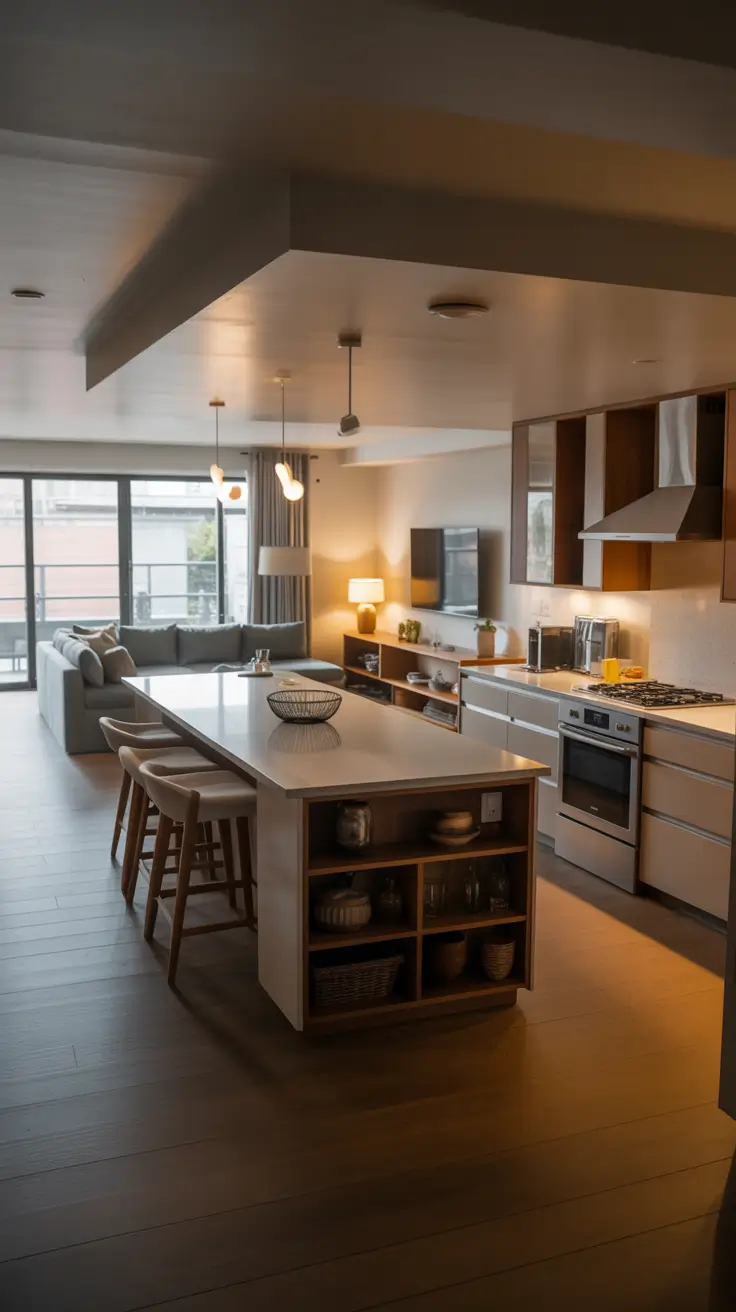
Key furniture pieces include sectional sofas, extendable dining tables, and islands with integrated storage. I choose durable upholstery and easy-to-clean surfaces, especially near cooking zones. Lighting is layered, combining ambient, task, and accent fixtures to support different activities.
In my experience, function improves dramatically when storage is carefully planned. Built-in cabinets and concealed pantries reduce visual noise and make the open layout more enjoyable. Industry experts often stress that clutter is the biggest enemy of open design, and I agree.
What I would add is early collaboration with lighting and electrical specialists. Their input ensures that every zone remains practical without compromising the overall aesthetic.
Open Kitchen Living Room Floor Plan Ideas For Every Home
Floor plan ideas for open kitchen living rooms in 2026 vary depending on home size, but the principles remain consistent. I design floor plans that prioritize balance, ensuring no area dominates the space visually or functionally. Proportion is essential.
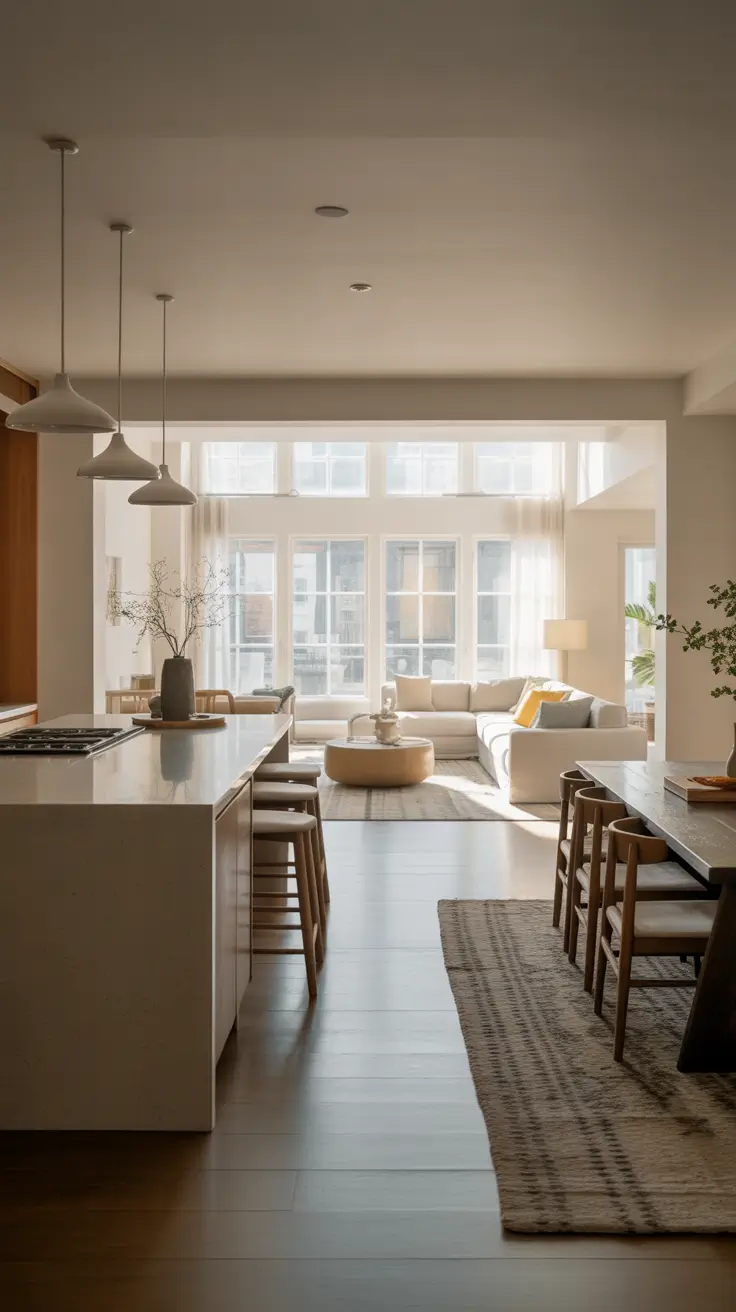
In these layouts, islands often anchor the kitchen, while seating areas align with windows or focal points. I include clear transitions between zones using rugs or subtle floor material changes. Furniture scale is carefully selected to avoid overcrowding.
I have found that homeowners appreciate floor plans that feel intuitive from the moment they enter the room. Open layouts featured in contemporary US homes often follow this logic, emphasizing symmetry and flow.
What I would add here is a focus on entry transitions. Incorporating console tables or low storage near entrances helps maintain order in open floor plans.
Decor Ideas That Unify Open Kitchen And Living Room Areas
Decor plays a major role in unifying open kitchen and living room areas in 2026. I approach decor as a connective layer that visually ties the space together. This includes consistent color palettes, repeated textures, and curated accessories.

I often use artwork, plants, and decorative lighting to bridge the kitchen and living zones. Bar stools echo the style of lounge chairs, and decorative bowls or vases repeat materials found in the kitchen. These details create cohesion without feeling forced.
From my experience, restraint is key. Too many decorative elements can overwhelm an open space. Designers frequently advise editing decor carefully, and I fully support this approach for long-term satisfaction.
What I would add is seasonal flexibility. Swappable textiles and accessories allow the space to evolve throughout the year without major redesigns.
Tiny Open Kitchen Living Room Ideas For Compact Homes
Tiny open kitchen living room ideas for 2026 focus on maximizing every square meter without sacrificing comfort. I design these spaces to feel airy by using light colors, reflective surfaces, and smart storage solutions.
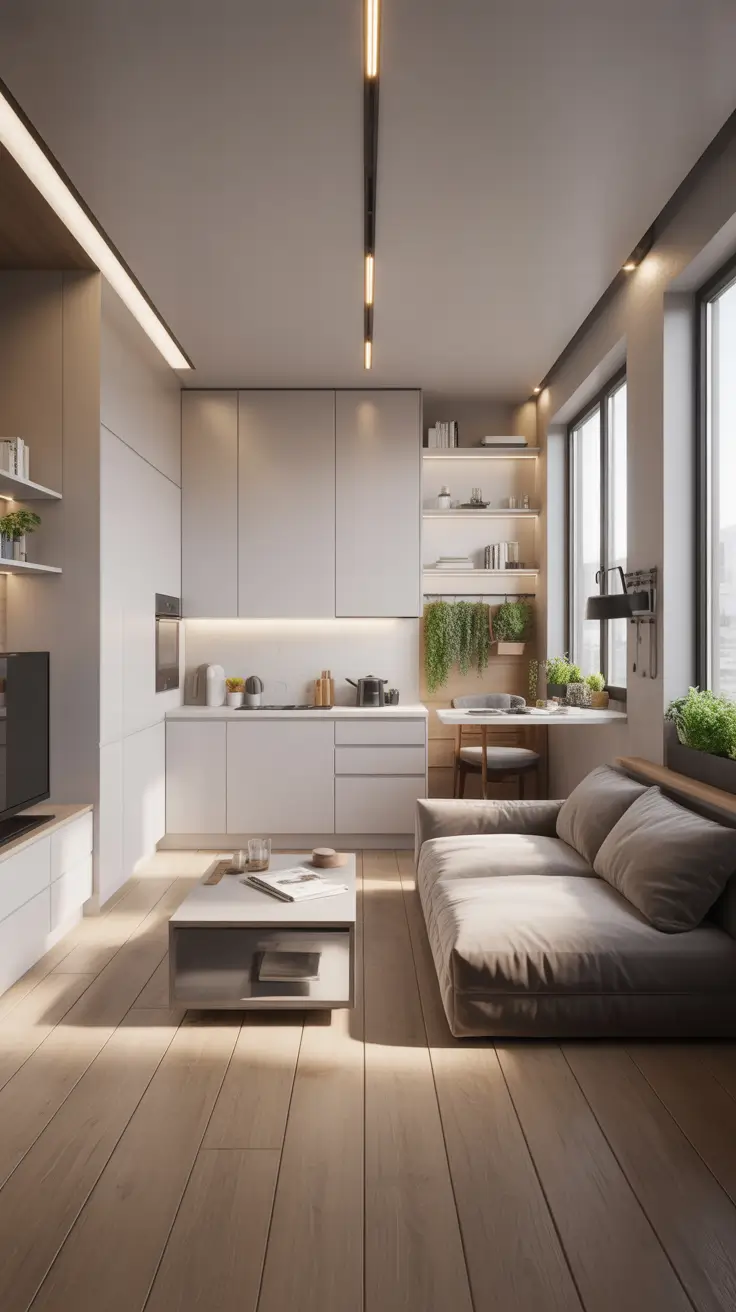
Furniture choices are critical. I rely on slim-profile sofas, wall-mounted cabinets, and compact dining tables. Multifunctional furniture, such as storage ottomans and foldable chairs, allows the room to adapt to different needs.
In my professional experience, compact open spaces benefit most from visual simplicity. Publications covering small urban homes often emphasize vertical storage and minimal clutter, which I consistently apply in my designs.
What I would add is custom cabinetry tailored to the exact dimensions of the space. This ensures no wasted areas and improves daily usability.
Using A Half Wall To Define Open Kitchen Living Rooms
When I use a half wall in an open kitchen living room for 2026, my intention is to introduce definition without sacrificing openness. A half wall creates a visual pause between zones while still allowing light, conversation, and airflow to move freely across the space. This solution works especially well in family homes where subtle separation improves functionality.
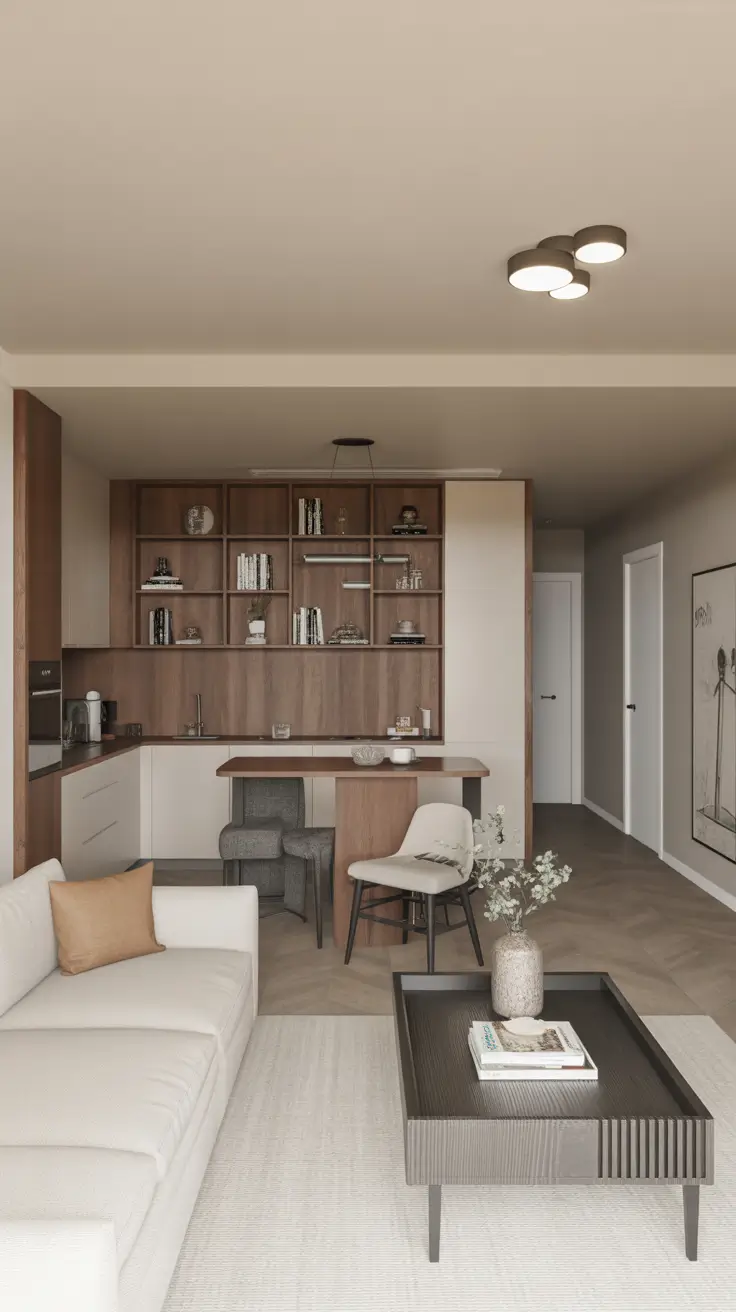
I often design half walls with added purpose. They may include shelving, integrated seating, or even a raised counter for casual dining. Materials usually match the kitchen cabinetry or flooring to maintain cohesion. From a furniture perspective, placing a sofa or console table against the half wall reinforces zoning without clutter.
From my experience, half walls are ideal for homeowners who want structure but dislike fully open layouts. Many American designers recommend this approach as a compromise between traditional and modern planning, and I agree because it supports both aesthetics and practicality.
What I would add to this section is the option of incorporating lighting or greenery into the half wall. Built-in planters or LED strips can elevate it from a simple divider to a design feature.
Kitchen Island Ideas For Open Kitchen Living Room Designs
In open kitchen living room designs for 2026, the kitchen island remains a central element. I see it as the heart of the space, acting as a bridge between cooking, dining, and socializing. A well-designed island enhances both workflow and visual balance.

I typically recommend islands with integrated storage, seating, and concealed appliances. Waterfall countertops, textured stone, or warm wood finishes add character. Bar stools are chosen carefully to align with the living room furniture, ensuring visual continuity across zones.
Personally, I find that islands encourage interaction. Clients often tell me that the island becomes their favorite gathering spot. Interior design experts frequently highlight islands as multifunctional anchors, and my experience confirms their importance.
What I would add here is thoughtful electrical planning. Power outlets, USB ports, and under-counter lighting should be included to support modern living needs.
Vaulted Ceiling Ideas For Open Kitchen Living Room Spaces
Vaulted ceilings transform open kitchen living room spaces in 2026 by adding volume and architectural interest. I use them to enhance natural light and create a sense of spaciousness, especially in suburban homes or renovated properties.

Design-wise, I pair vaulted ceilings with exposed beams, wood paneling, or subtle ceiling textures. Large pendant lights or chandeliers help visually anchor the space. Furniture remains grounded with low-profile seating to balance the vertical scale.
In my experience, vaulted ceilings change how a space feels emotionally. Clients often describe these rooms as more inspiring and comfortable. Designers featured in major US design publications often emphasize ceiling height as an underused design tool, and I strongly agree.
What I would add is acoustic consideration. Soft furnishings and ceiling treatments should be planned to prevent sound from echoing in these expansive spaces.
Small Apartment Design Solutions For Open Kitchen Living Rooms
Designing open kitchen living rooms for small apartments in 2026 requires precision and restraint. I focus on creating a seamless flow while ensuring each function is clearly supported. Space efficiency guides every decision.
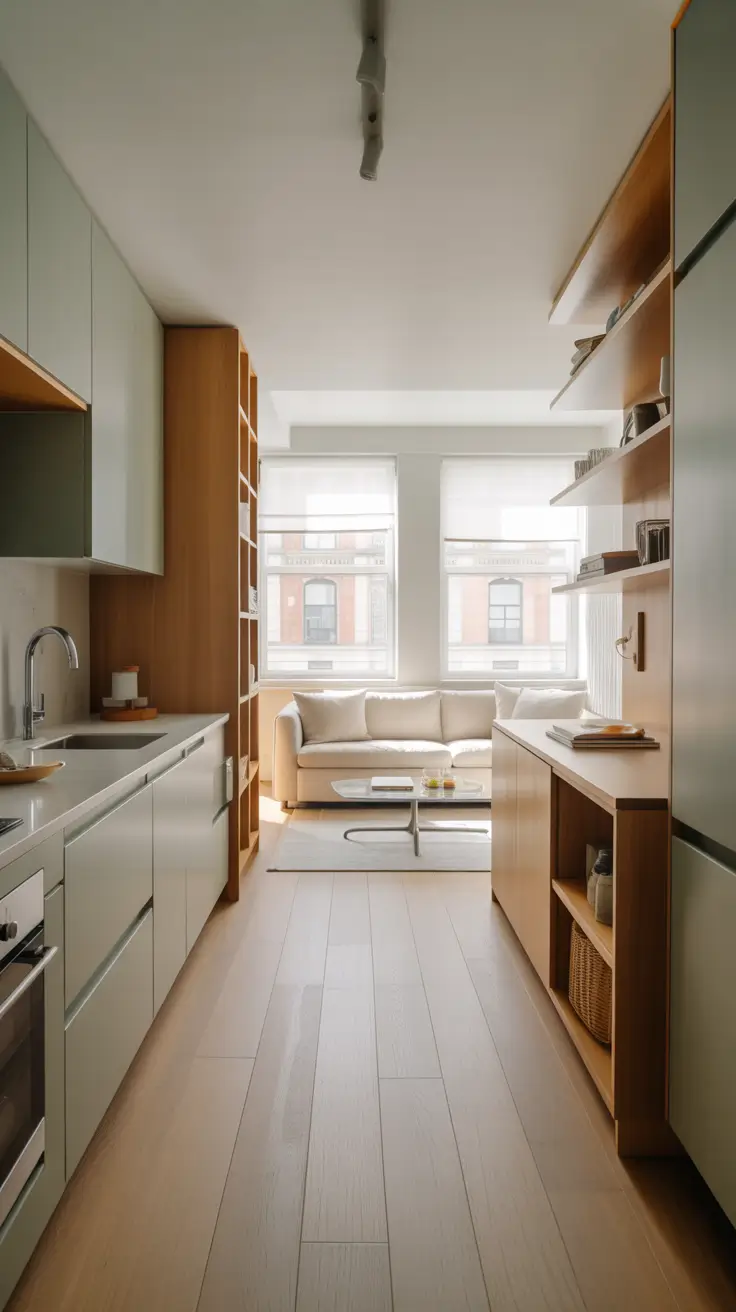
I rely on compact appliances, built-in storage, and multifunctional furniture such as extendable tables and sofa beds. Light cabinetry, mirrored surfaces, and continuous flooring visually expand the room. Furniture placement is minimal but intentional.
From my professional experience, small apartments benefit most from customized solutions. Many urban design experts stress the importance of tailored layouts, and I see firsthand how this approach improves daily living.
What I would add is integrated technology. Smart lighting and space-saving appliances should be prioritized to enhance comfort without adding visual clutter.
Beam Between Kitchen And Living Room As A Design Feature
A beam between the kitchen and living room is no longer something to hide in 2026. I treat it as a design feature that defines zones while adding architectural character. Beams naturally frame the transition between spaces.
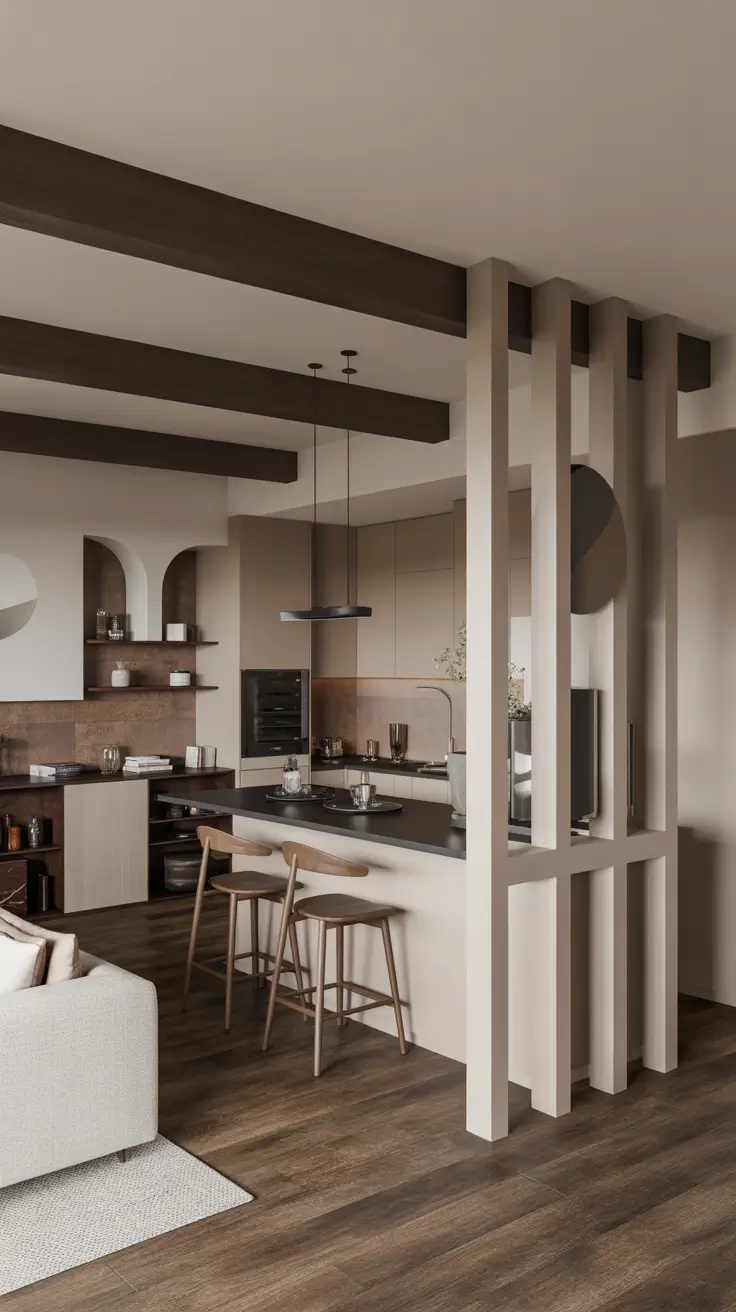
I often finish beams in wood, metal, or painted tones that complement the interior palette. Lighting fixtures or ceiling changes around the beam reinforce its role. Furniture placement aligns with the beam to emphasize spatial organization.
In my experience, embracing structural elements adds authenticity to a space. Many designers advocate highlighting original architecture, and I find this approach resonates well with homeowners seeking character.
What I would add is decorative integration. Hanging lights, subtle molding, or even artwork aligned with the beam can enhance its visual impact.
American Style Open Kitchen Living Room Inspiration
American style open kitchen living rooms for 2026 emphasize comfort, scale, and functionality. I design these spaces to feel welcoming, with generous seating and clearly defined yet open zones.
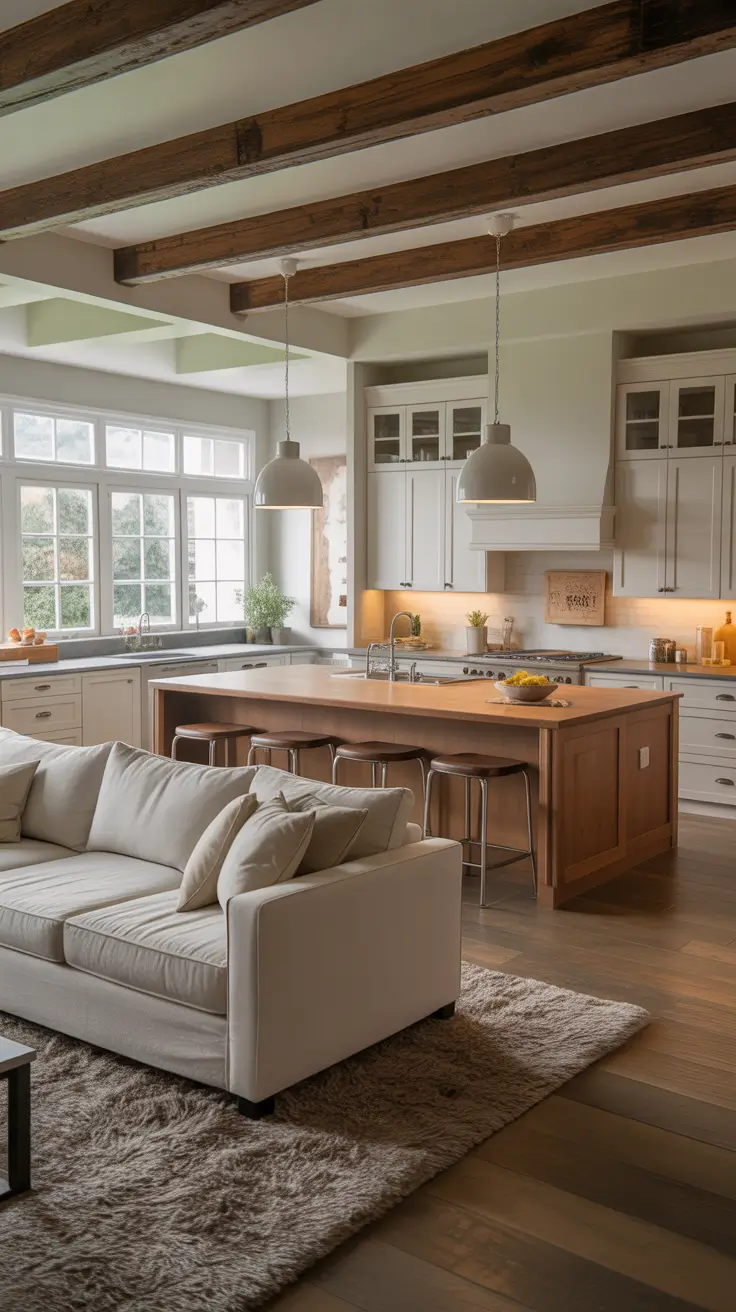
Key elements include large islands, comfortable sofas, and ample storage. Materials lean toward warm woods, soft textiles, and neutral palettes. Fireplaces or feature walls often anchor the living area within the open plan.
From my experience working with this style, the focus on livability sets it apart. US-based designers often highlight the importance of comfort-first design, and I fully align with that philosophy.
What I would add is personalization. Incorporating family-friendly materials and personal decor ensures the space feels lived-in rather than staged.
Divider Ideas That Maintain Openness And Flow
Divider ideas in open kitchen living rooms for 2026 aim to maintain openness while subtly guiding movement. I use dividers to create rhythm and structure without closing off the space.
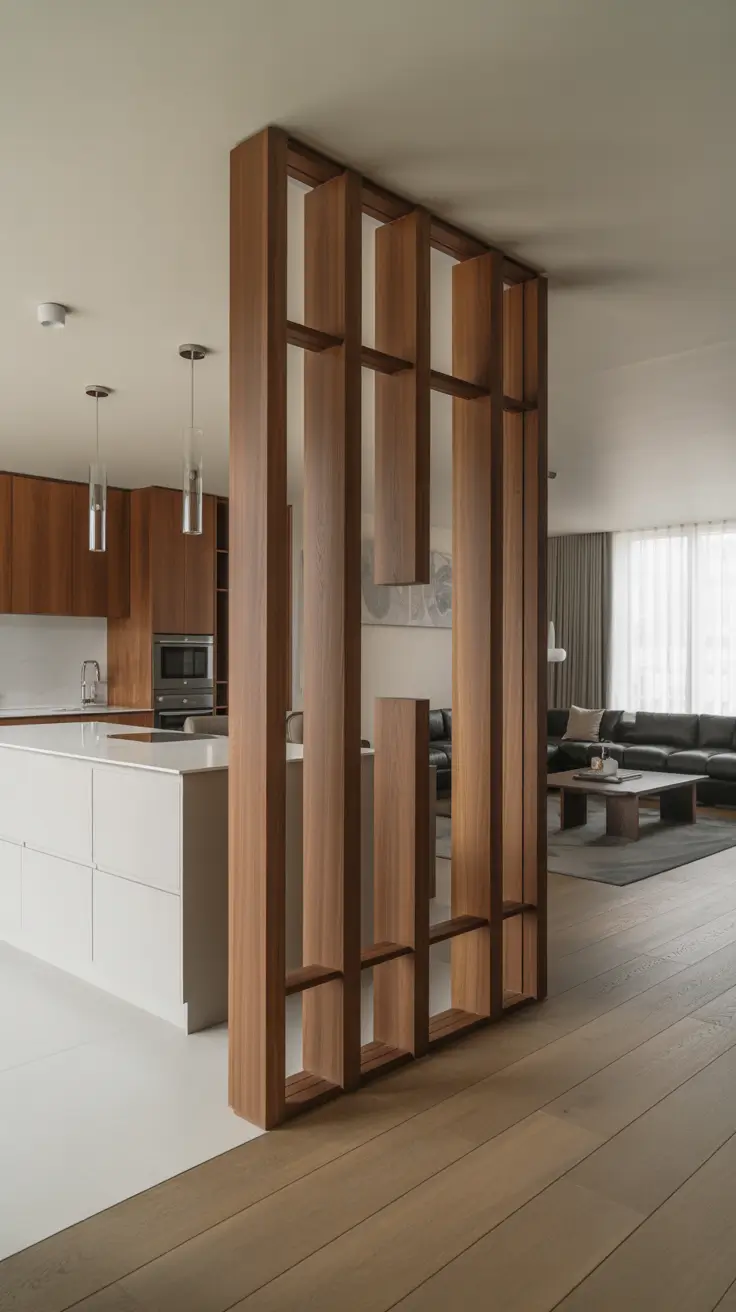
Popular solutions include glass partitions, open shelving, slatted wood screens, and sliding panels. These elements allow light to pass through while visually separating functions. Furniture placement often complements the divider’s orientation.
In my professional opinion, dividers work best when they serve multiple purposes. Designers frequently suggest combining storage and separation, which I find particularly effective in modern homes.
What I would add is flexibility. Movable or adjustable dividers allow homeowners to adapt the space for different occasions or future needs.
Semi Open Kitchen Living Room Designs For Balanced Privacy
I approach semi open kitchen living room designs for 2026 as a refined alternative to fully open plans. These interiors allow visual connection while offering moments of privacy, which is especially valuable in busy households. Semi open layouts create comfort without isolating spaces completely.
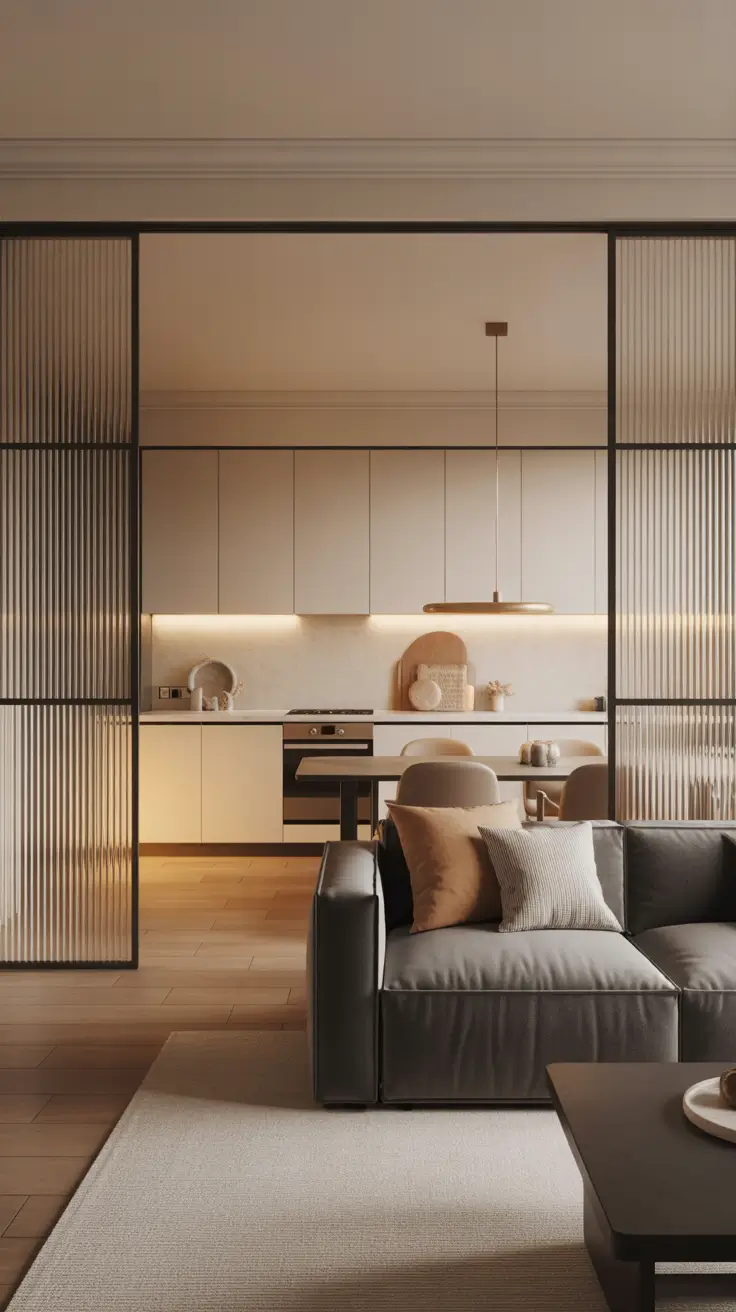
I typically include partial partitions, sliding panels, or framed openings. Furniture placement plays a major role, with sofas, cabinets, or shelving reinforcing separation. Materials remain consistent across zones to maintain harmony while subtly defining function.
From my experience, semi open designs appeal to homeowners who enjoy openness but need quiet zones. Many US designers recommend this balance for long-term livability, and I see it perform exceptionally well in family homes.
What I would add is acoustic planning. Soft materials and ceiling treatments should be integrated to improve sound control between zones.
Open Kitchen Living Room Combo Layout Ideas For 2026
In 2026, open kitchen living room combo layouts focus on clarity and flow. I design these layouts to support cooking, dining, and relaxing without overlap or congestion. A successful combo layout feels intuitive from every angle.

I rely on central islands, aligned furniture, and clear circulation paths. Dining tables often sit between the kitchen and living area, acting as a transition. Storage is built-in to reduce clutter and maintain openness.
Personally, I find that combo layouts work best when each zone has a clear anchor. Designers frequently emphasize this principle, and I have seen it dramatically improve daily usability.
What I would add is flexible seating. Movable chairs and modular sofas allow the layout to adapt to different occasions.
Innovative Ideas For Defining Open Kitchen Living Rooms
Innovative ideas for defining open kitchen living rooms in 2026 move beyond walls. I focus on creative solutions that guide movement and perception without blocking light or views.
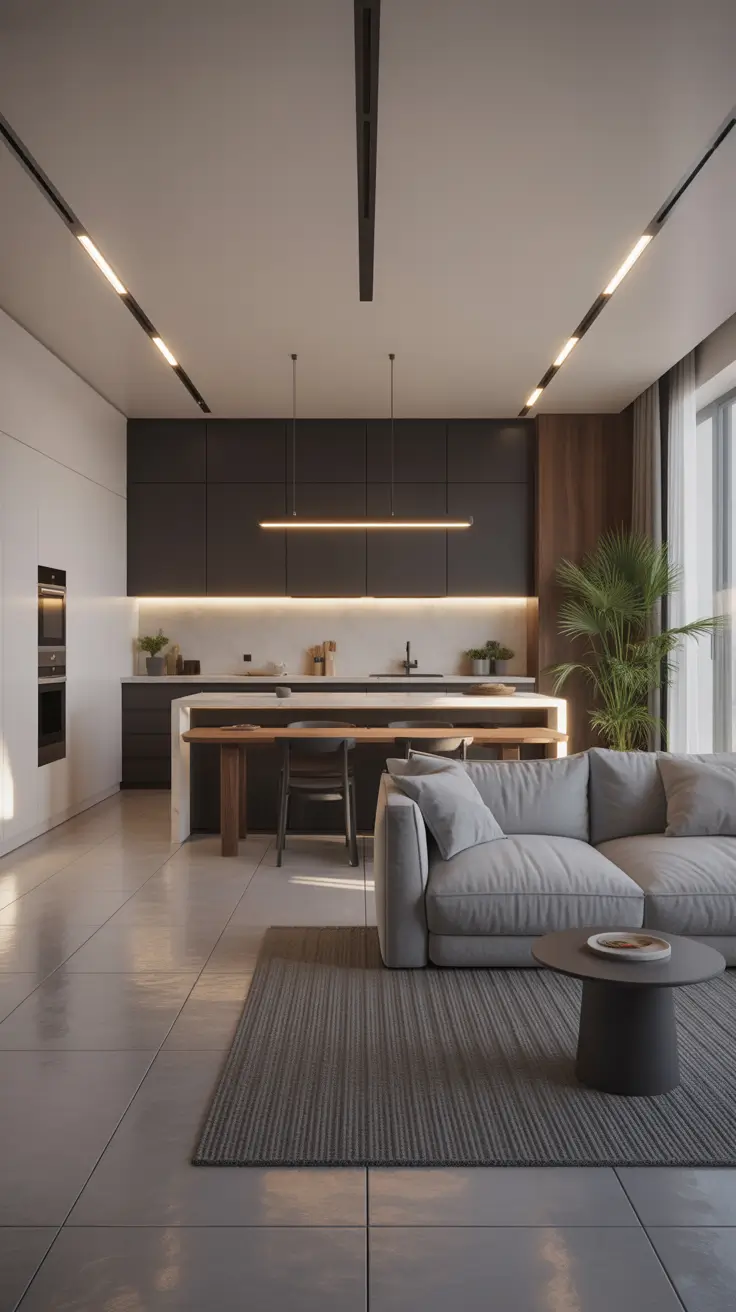
Popular approaches include ceiling changes, floor material transitions, and layered lighting. Furniture orientation also plays a defining role, with seating arranged to face specific focal points.
From my experience, innovation works best when it remains subtle. Interior design experts often advise against overdesigning open spaces, and I agree that restraint leads to timeless results.
What I would add is sensory zoning. Using texture, sound, and lighting temperature helps reinforce boundaries in a refined way.
Kitchen And Living Room Divider Solutions For Modern Homes
Divider solutions in modern homes for 2026 aim to maintain openness while providing structure. I use dividers to organize space rather than separate it fully.
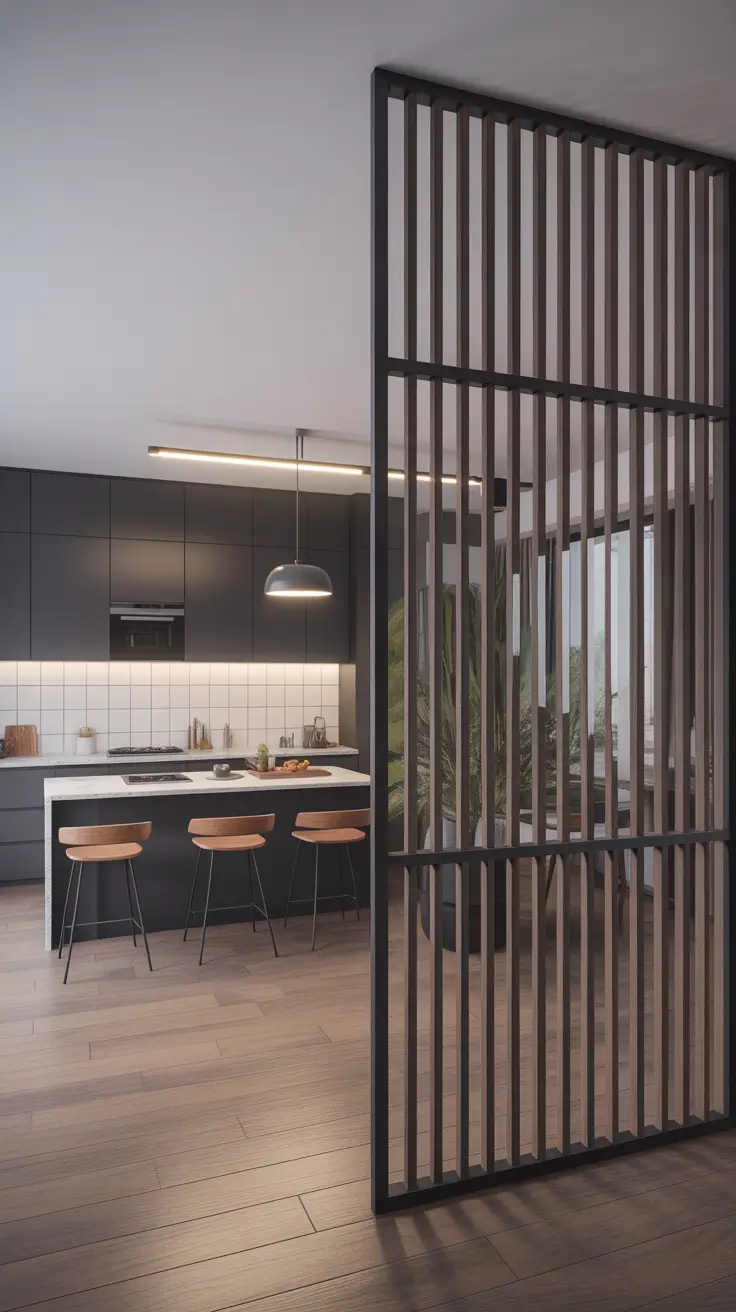
Glass panels, slatted wood screens, and open shelving are my preferred solutions. These elements allow light flow and visual continuity while clearly defining zones. Furniture often aligns with the divider to strengthen its purpose.
In my professional experience, the best dividers serve multiple functions. Many designers highlight this dual-purpose approach, and I consistently see positive feedback from homeowners.
What I would add is mobility. Sliding or rotating dividers increase flexibility and future-proof the layout.
Wall Between Kitchen And Living Room Alternatives
In Open Kitchen Living Rooms For 2026, traditional walls are often replaced with smarter alternatives. I explore solutions that maintain connection while offering separation when needed.
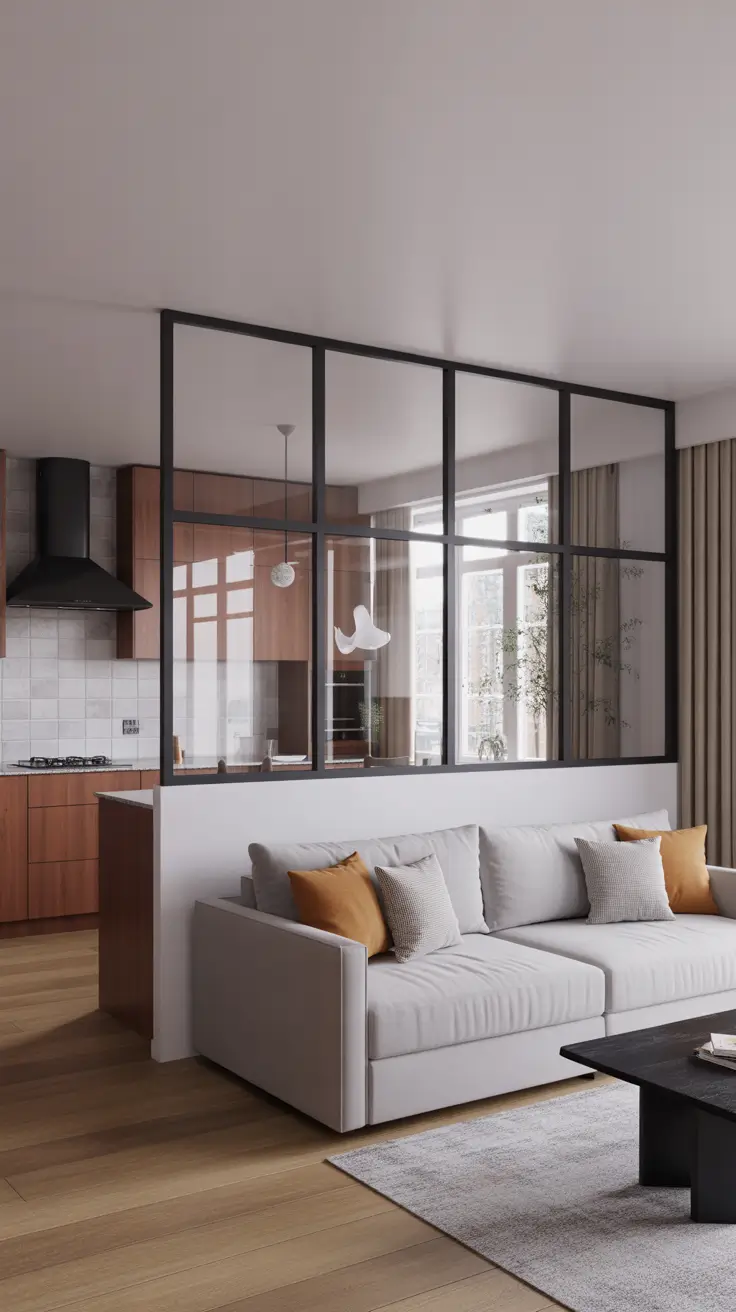
Alternatives include half walls, framed openings, and glass partitions. These options preserve light and sightlines while improving structure. Furniture placement reinforces the transition without closing off space.
From my experience, removing full walls improves light distribution and social interaction. Many US renovation experts recommend these alternatives for modernizing older homes.
What I would add is integrated storage within these alternatives. This maximizes functionality without adding bulk.
Open Kitchen Living Room Layout Ideas For Every Lifestyle
Layout ideas for open kitchen living rooms in 2026 must respond to diverse lifestyles. I design layouts that support entertaining, remote work, family life, or quiet relaxation.
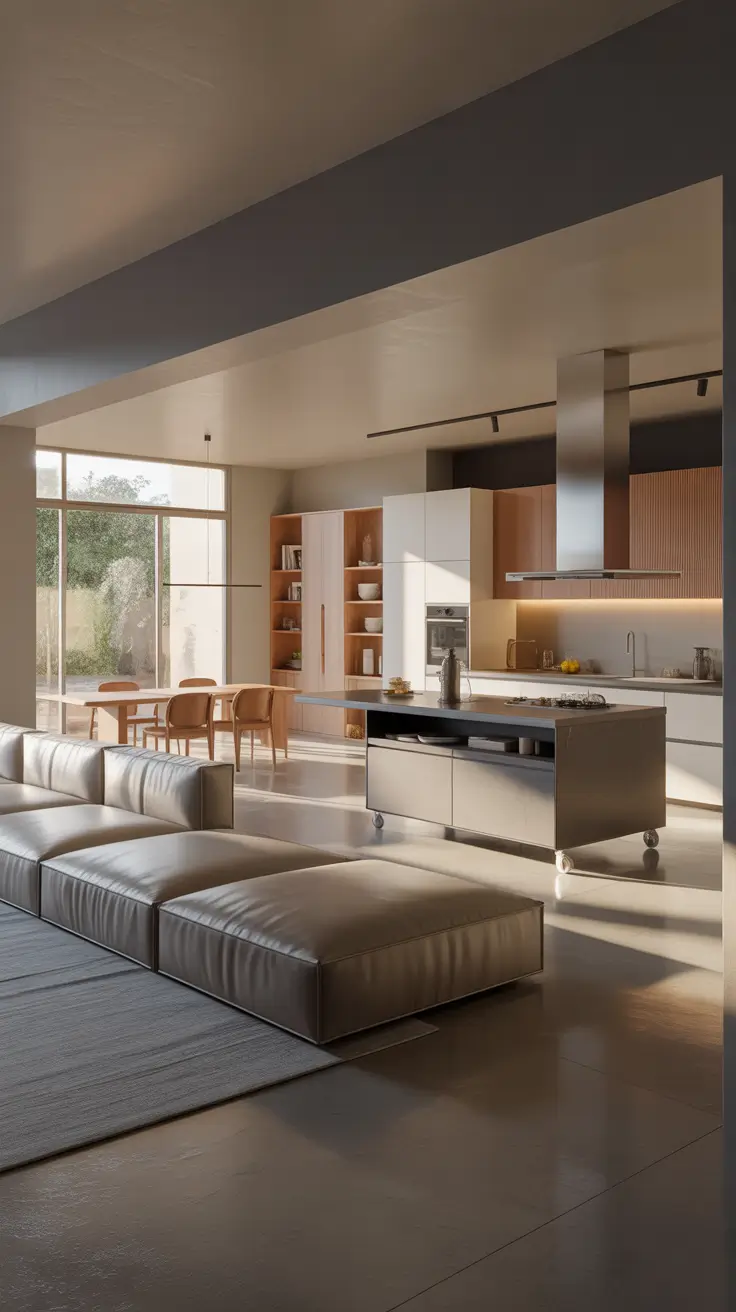
Key elements include adaptable furniture, flexible dining zones, and clearly defined work areas. Layouts are tailored to daily routines rather than trends alone.
In my experience, lifestyle-driven layouts lead to higher satisfaction. Designers frequently stress this user-focused approach, and I fully support it.
What I would add is early lifestyle assessment. Understanding daily habits should guide layout decisions from the start.
Functional And Aesthetic Design Principles For Open Spaces
Functional and aesthetic design principles are inseparable in Open Kitchen Living Rooms For 2026. I prioritize balance, proportion, and practicality to ensure the space works as well as it looks.
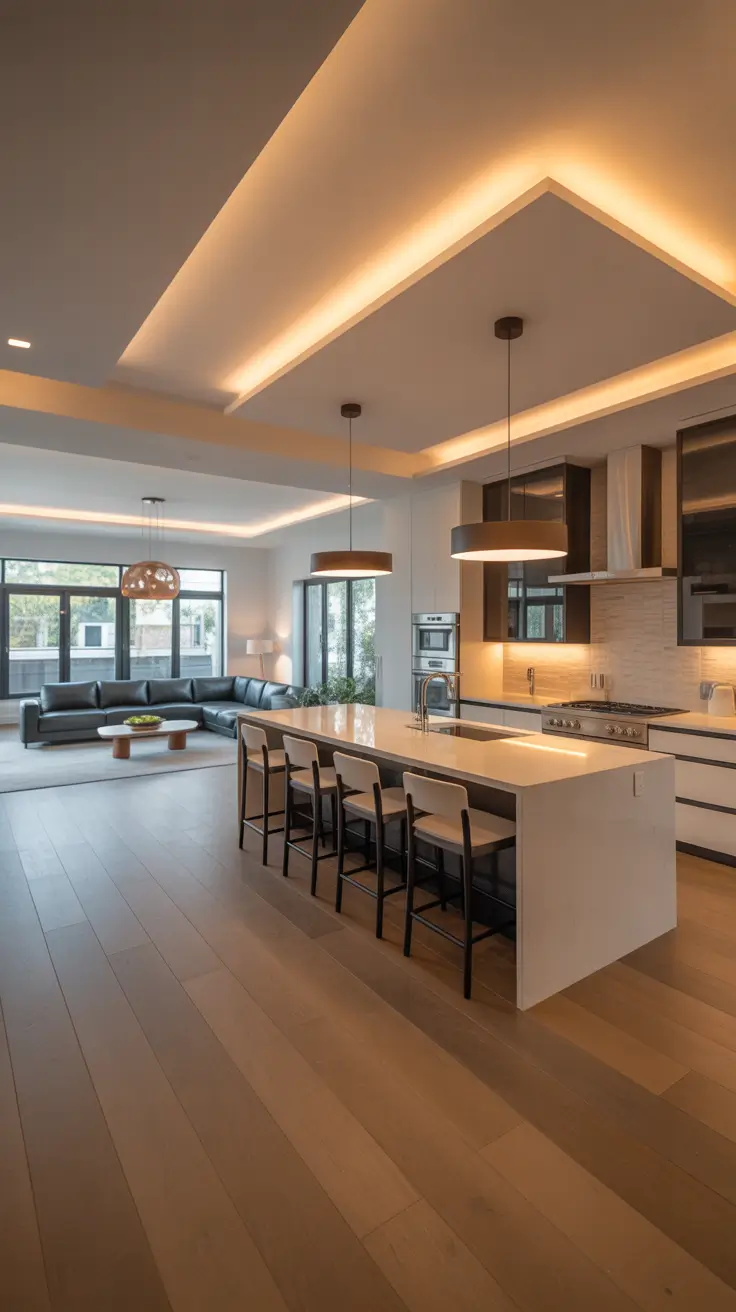
I focus on durable materials, ergonomic furniture, and cohesive color palettes. Lighting is layered to support both tasks and ambiance. Every design choice serves a purpose.
From my professional perspective, simplicity enhances longevity. Well-known interior publications often advocate for timeless design over trends, and I consistently see better long-term results with this approach.
What I would add is post-occupancy review. Evaluating how the space performs after use helps refine future designs.
Modern Open Kitchen Living Room Trends For 2026
When I look at modern open kitchen living room trends for 2026, I notice a clear move toward warmth, simplicity, and personalization. Open spaces are becoming softer and more inviting, moving away from cold minimalism while still maintaining clean lines and order. The focus is on livable modernity rather than showroom aesthetics.

In these interiors, I often use warm wood cabinetry, matte finishes, integrated appliances, and low-profile furniture. Curved sofas, textured rugs, and sculptural lighting are common additions that soften the geometry of open layouts. These elements help the kitchen and living room feel cohesive without appearing overly uniform.
From my professional experience, these trends respond directly to how people live today. Designers frequently cited in US design media emphasize comfort-driven modern design, and I see firsthand how these choices improve daily life.
What I would add to this trend discussion is longevity. Selecting timeless materials alongside trend-driven accents ensures the space remains relevant beyond 2026.
Window Between Kitchen And Living Room Design Ideas
A window between the kitchen and living room is a refined way to divide space while maintaining openness in 2026. I use this solution when full transparency is desired but some functional separation is needed, especially in smaller or transitional layouts.
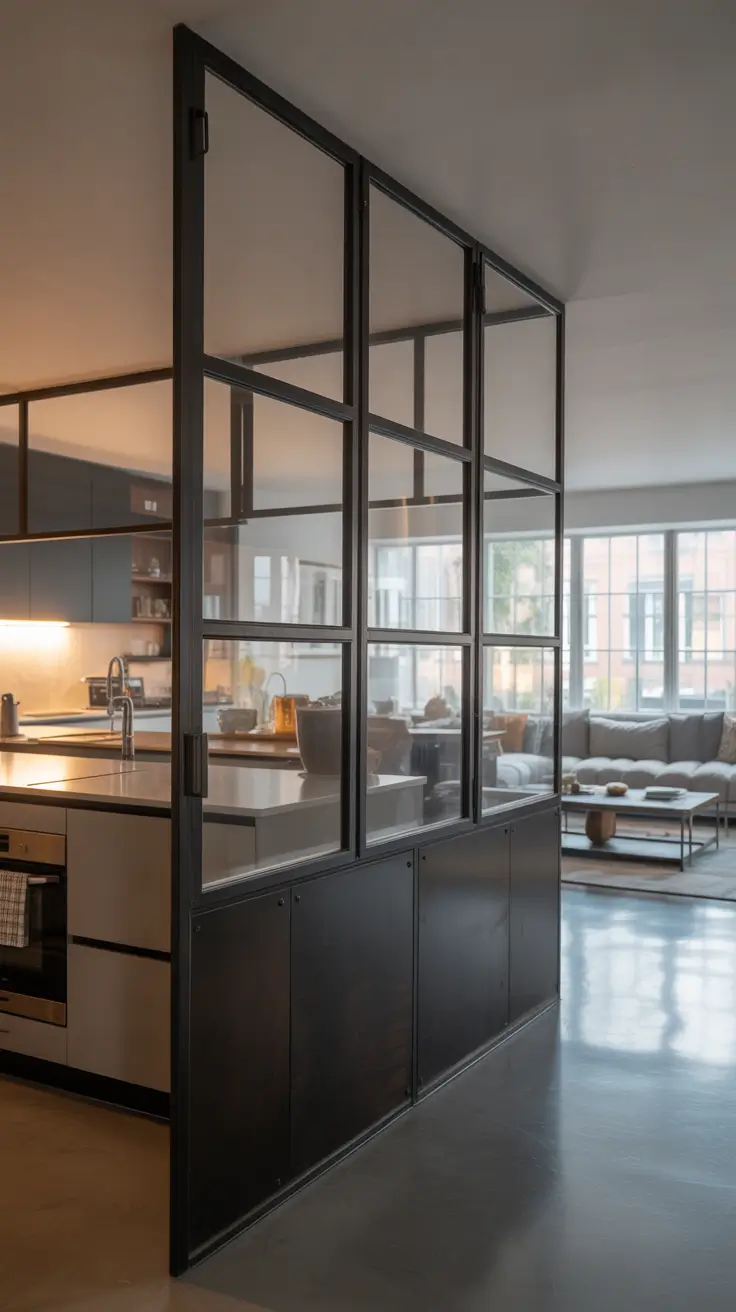
These windows are often framed in metal or wood and may include sliding or pivot mechanisms. They allow light to pass through while visually organizing the space. I pair them with aligned furniture and consistent finishes to reinforce cohesion.
In my experience, interior windows add architectural interest without overwhelming the room. Many professionals highlight their ability to balance privacy and connection, which I find especially effective in compact homes.
What I would add is integrated shading or textured glass. These options enhance flexibility and visual interest while preserving light flow.
Partition Design Options For Open Kitchen Living Rooms
Partition design options for open kitchen living rooms in 2026 are more versatile than ever. I approach partitions as architectural elements rather than barriers, using them to shape movement and define zones.
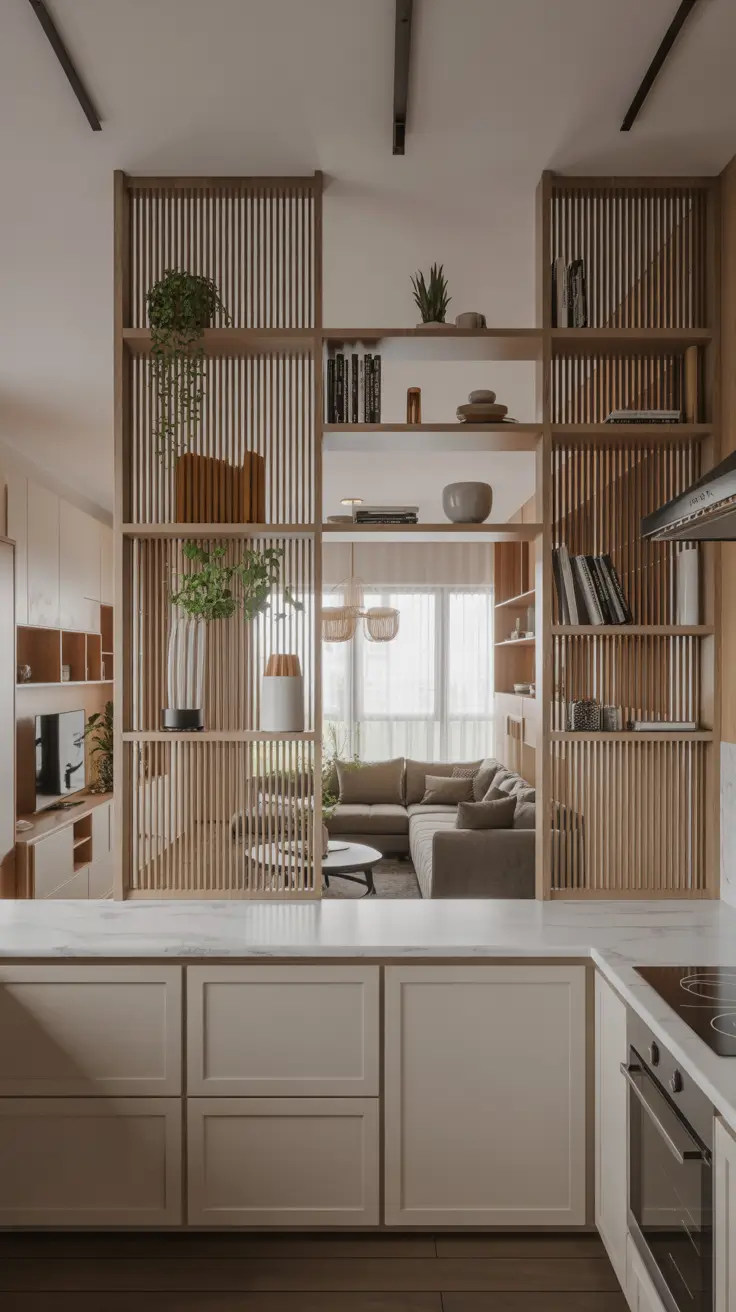
Common designs include slatted wood panels, glass walls, and mixed-material partitions. These structures often incorporate shelving or display niches, adding both function and style. Furniture placement complements the partition to strengthen spatial logic.
From my professional point of view, partitions work best when they serve more than one purpose. Designers frequently recommend multifunctional solutions, and I consistently apply this principle in my projects.
What I would add is modularity. Adjustable or movable partitions allow the layout to evolve with changing needs.
Defining Each Area In An Open Kitchen Living Room
Defining each area in an open kitchen living room is essential for comfort and usability in 2026. I rely on visual cues rather than physical barriers to create clarity within the space.
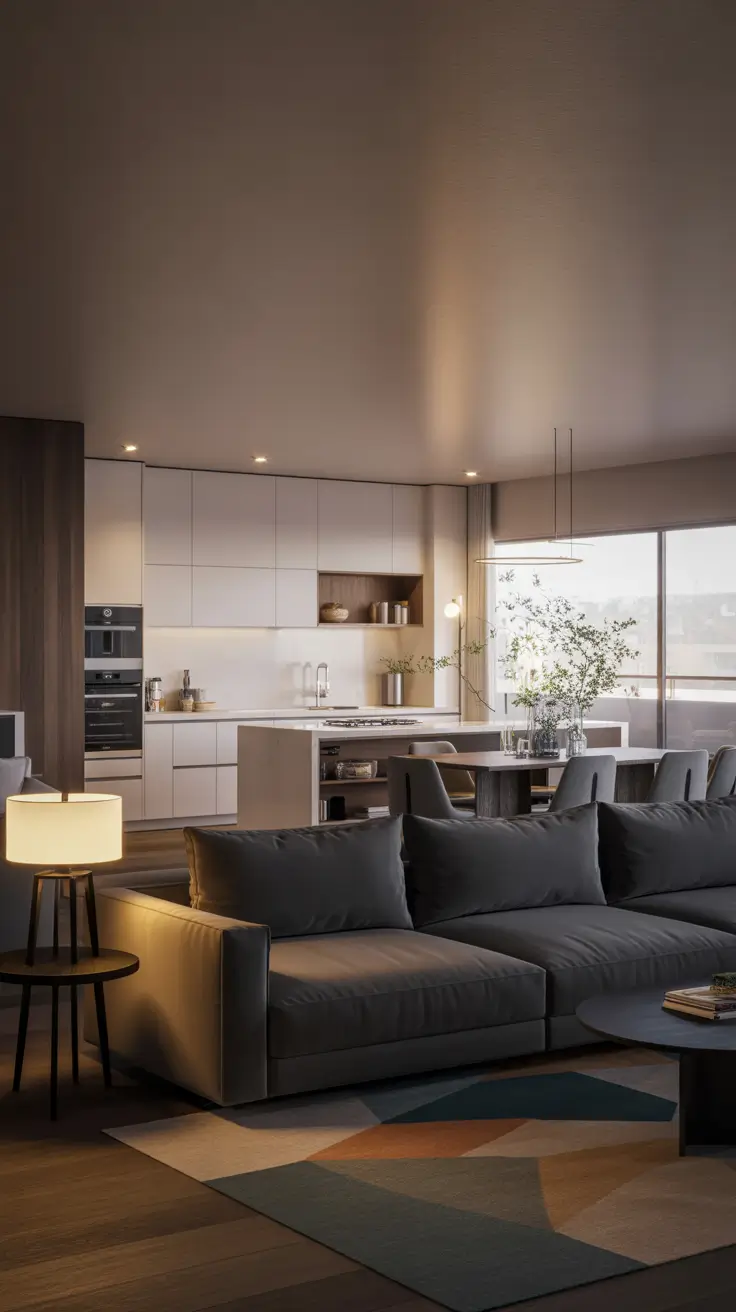
Area rugs, lighting zones, and furniture orientation are my primary tools. The kitchen, dining, and living zones each receive distinct yet coordinated treatments. This approach ensures that every area feels intentional.
In my experience, clearly defined zones reduce stress and improve daily routines. Many interior professionals emphasize zoning as the foundation of successful open layouts, and I fully agree.
What I would add is subtle floor elevation changes. Even minimal level shifts can enhance spatial definition without compromising openness.
Material And Color Ideas For Open Kitchen Living Rooms
Material and color choices play a defining role in Open Kitchen Living Rooms For 2026. I focus on palettes that unify the space while allowing individual zones to express subtle variation.
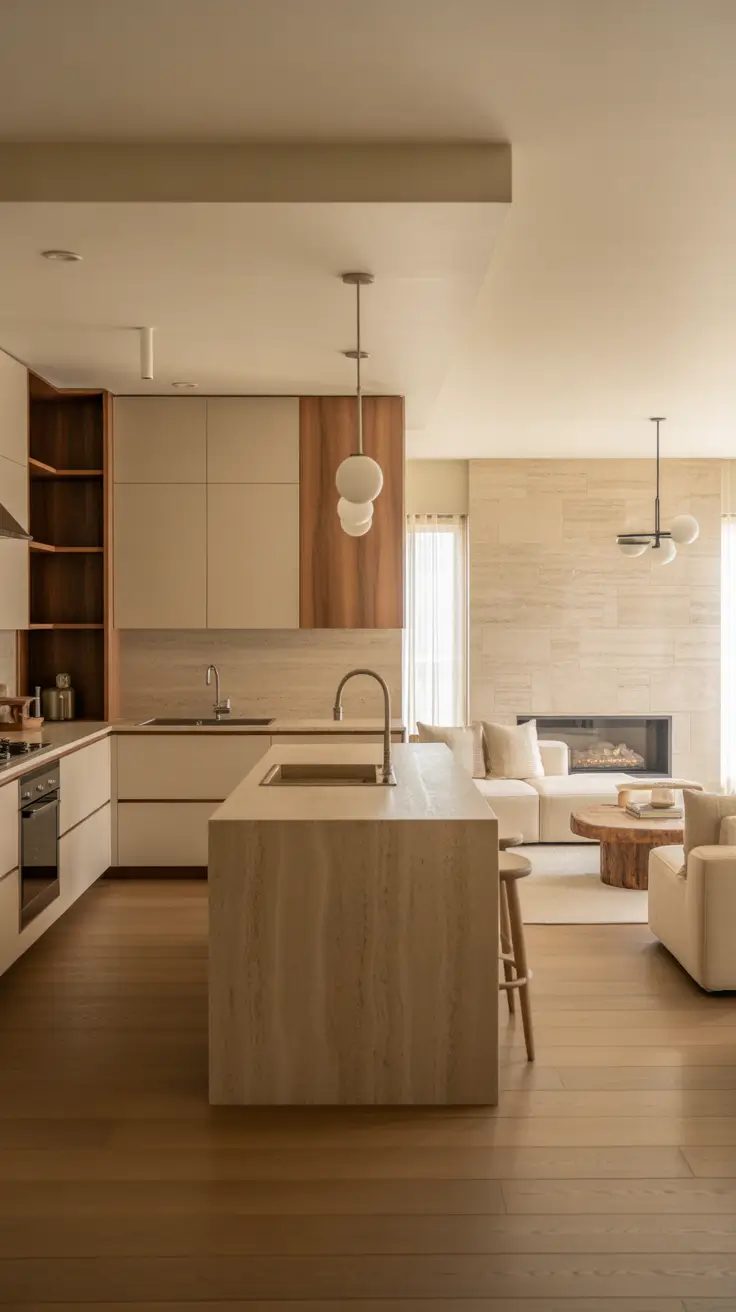
I often use warm neutrals, natural stone, wood, and soft textiles. Accent colors appear through furniture, art, or decor rather than permanent finishes. This strategy maintains flexibility and visual calm.
From my professional experience, cohesive material selection improves perceived space and comfort. Designers consistently recommend limiting dominant materials, and I see better results when this guideline is followed.
What I would add is tactile contrast. Combining smooth and textured surfaces enhances depth without visual clutter.
Lighting Strategies For Open Kitchen Living Room Areas
Lighting strategies for open kitchen living room areas in 2026 require careful layering. I design lighting to support tasks while also shaping mood and defining zones.
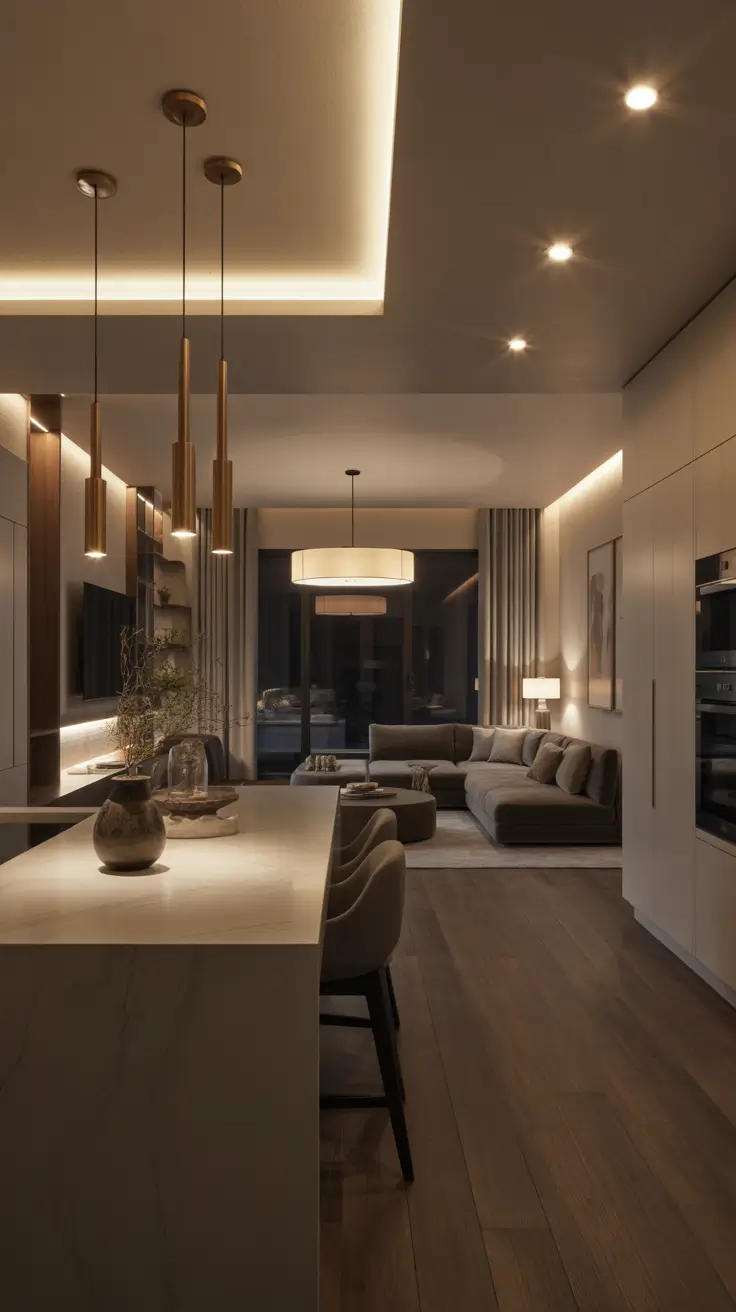
Pendant lights highlight islands and dining tables, while recessed lighting provides general illumination. Floor lamps and wall sconces soften the living area and create evening ambiance. All lighting is coordinated for visual consistency.
In my experience, lighting has the greatest impact on how an open space feels. Many US lighting designers stress the importance of layered lighting, and I consistently prioritize this approach.
What I would add is smart lighting control. Scene settings and dimmers increase flexibility and energy efficiency.