
Black cabinets are having a moment in 2027, and it’s not the dark, cave-like kitchen you might imagine. Done right, they become the anchor of the room, grounding everything from wood accents to metallic hardware. This roundup covers 26 ways to make black cabinetry work in your home, from full kitchen remodels to a single focal piece in an entryway.
Each look keeps the storage front and center, with the surrounding space playing a supporting role. Whether you’re drawn to matte finishes, fluted glass, or brass details, you’ll find a version of black that feels intentional and livable.
Modern kitchen with aesthetic black cabinets and wood accents
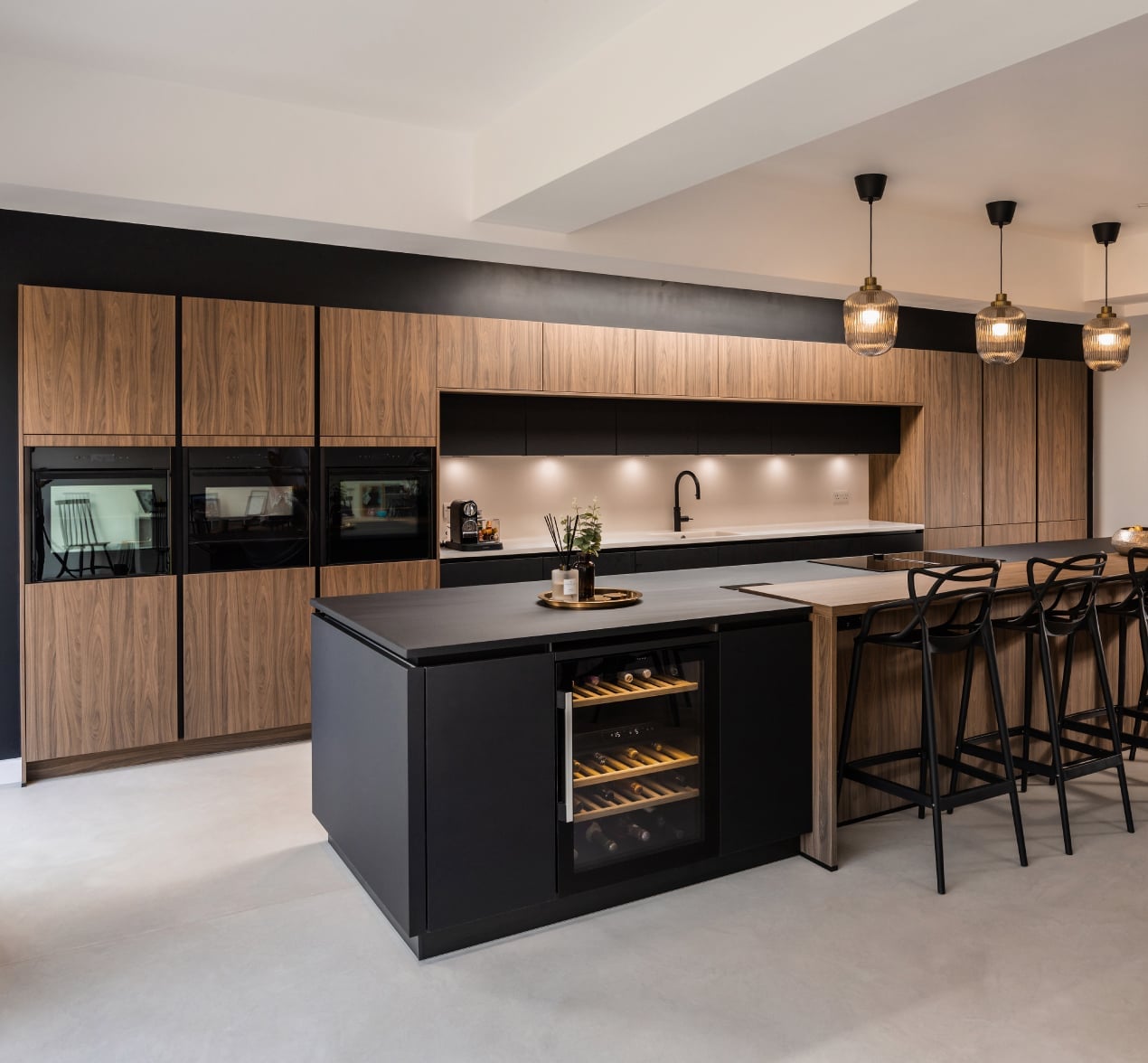
Matte black cabinets anchor a kitchen that feels more like a living room than a workspace. A wood veneer island and open shelving in the same warm tone break up the dark perimeter, creating a balanced look. Pendant lights with metal shades hang low over the island, while under-cabinet strips keep the countertops bright. The integrated wine fridge and panel-ready appliances disappear into the cabinetry, leaving the eye to rest on the contrast between the black and the wood. For anyone planning a modern kitchen, this layout proves that dark cabinets need a second material to give the space air.
Compact kitchen corner with dark green shaker cabinets and brass
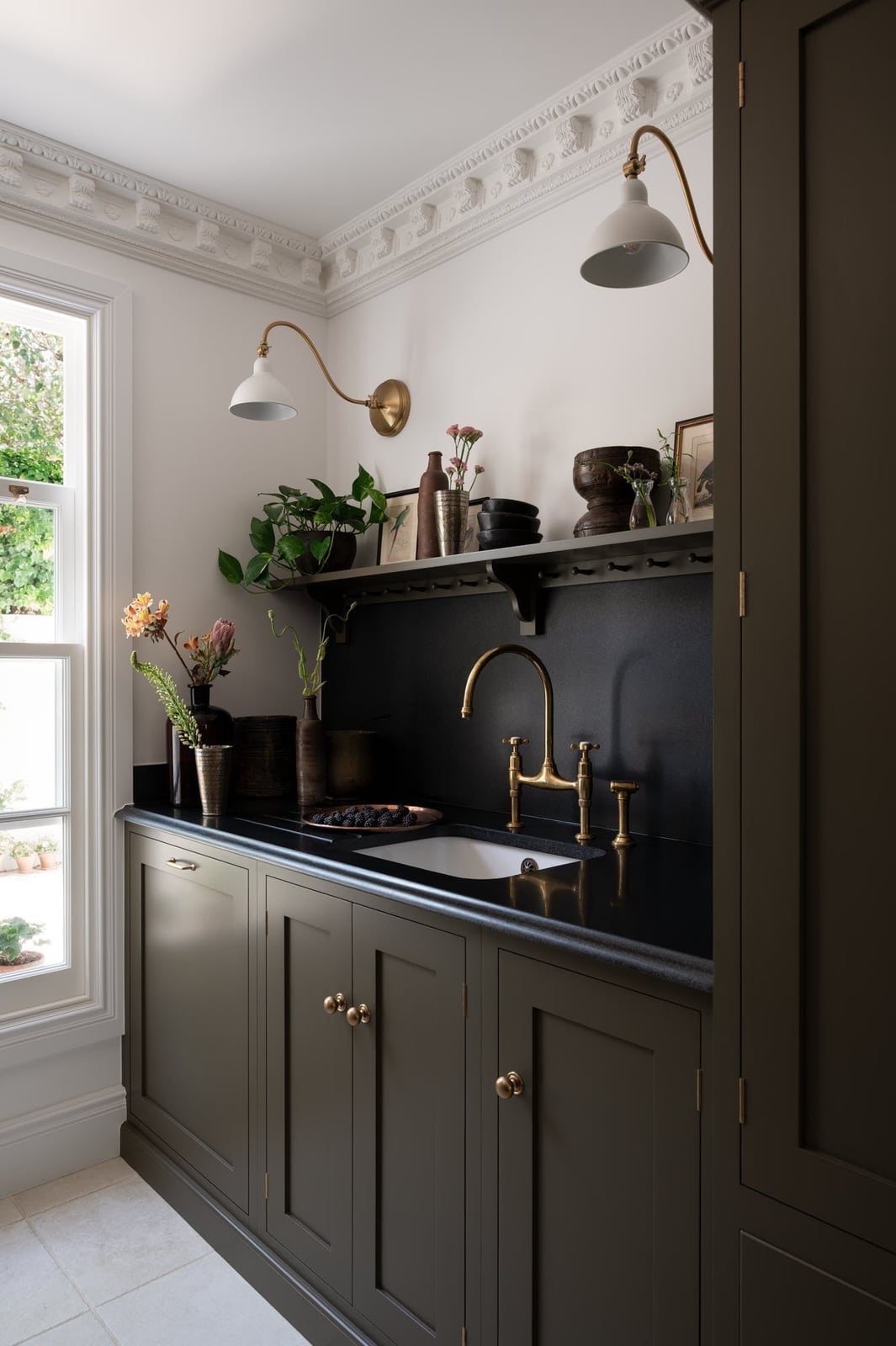
A small corner kitchen gets its personality from a deep green that reads almost black in low light. The shaker-style cabinets, paired with brass hardware and a matching faucet, bring warmth to a space that could have felt cramped. White walls and a light stone countertop balance the dark tones, while the wall sconces add a soft glow that changes the green throughout the day. This palette uses one saturated color, one metal, and one neutral. The ratio is roughly sixty percent green, thirty percent white, and ten percent brass. That small metal share keeps the look from turning flat.
Kitchen featuring black cabinets, marble island, and brass range
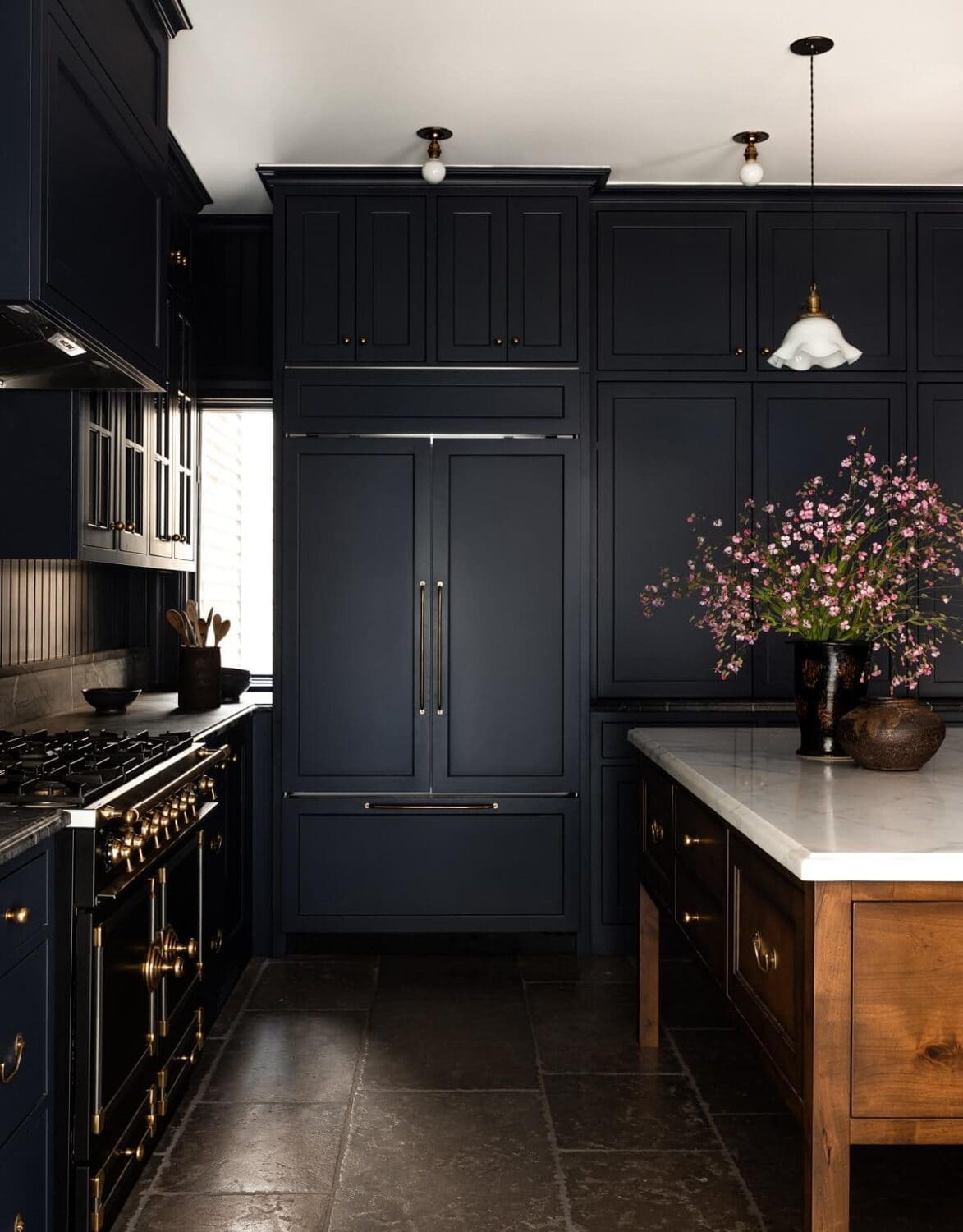
What makes a black cabinet kitchen feel warm instead of cold? The answer is usually in the materials you put next to it. Here, a veined marble island sits in the center, catching light from pendant fixtures overhead. The brass range against the back wall is ornate enough to look furniture, not an appliance. Wood tones appear in the flooring and in the open shelving, softening the black perimeter cabinets. The stone tile backsplash adds texture without competing. The lesson is plain: black cabinets are a backdrop. The interest comes from what you pair them with. Marble, brass, and wood each bring a different finish, and that mix stops the room from feeling one-note. If you are choosing a black cabinet kitchen, start by picking the materials that will live next to them.
Sleek black cabinets with live-edge wood countertop and gold accents
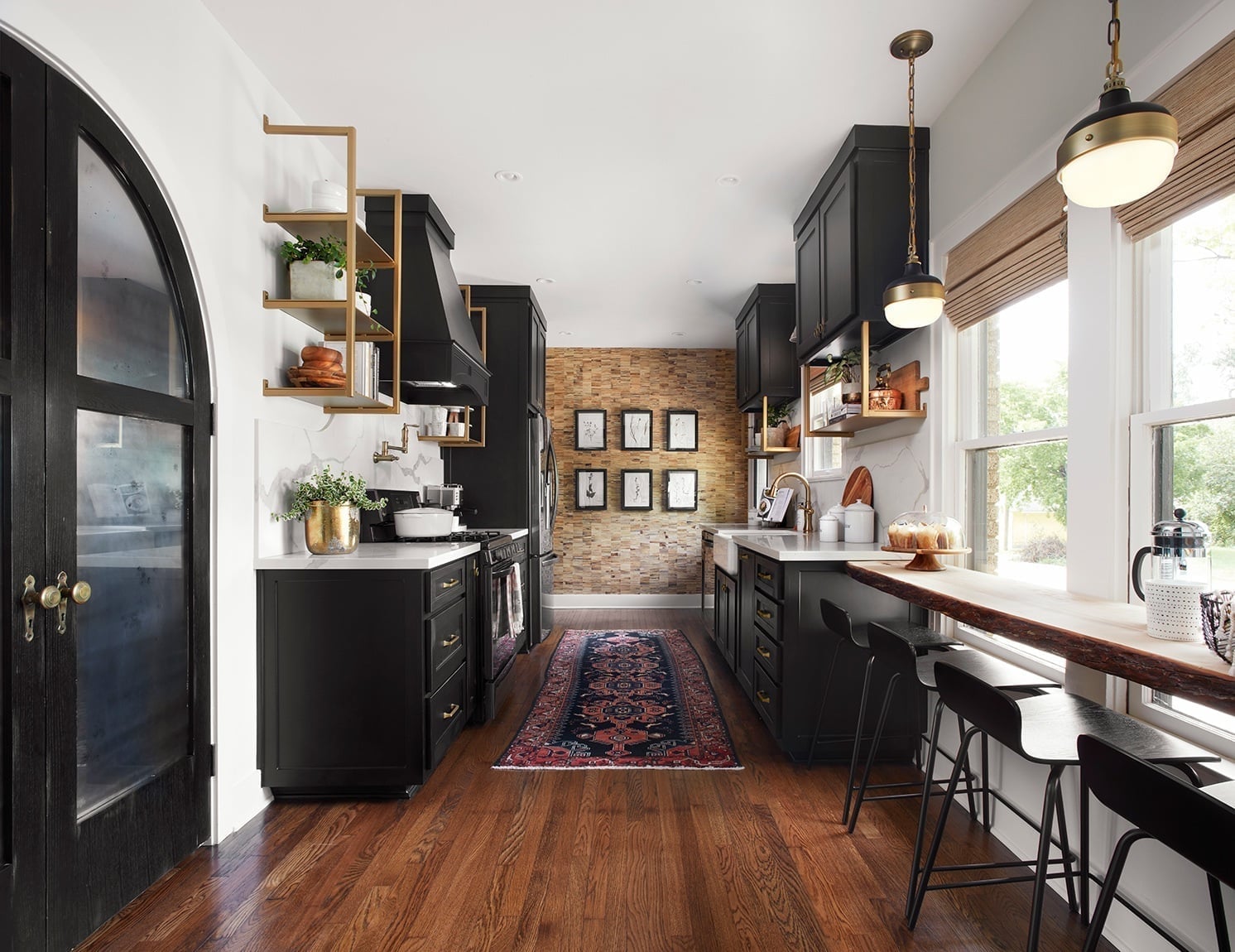
A live-edge countertop turns a galley kitchen into something closer to a furniture piece. The raw wood edge contrasts with the sleek black cabinetry below it, while gold accents on the hardware and pendant lights add a third texture. The black arched door at the far end of the room repeats the dark finish in a different form, creating a visual anchor. Bar stools with metal frames keep the island from feeling heavy. For a kitchen that leans modern but wants to avoid a cold look, the mix of matte black, raw wood, and gold offers a practical formula. Each material brings a different surface, and that variety is what makes the room feel intentional.
Traditional kitchen with black cabinets, fluted glass doors
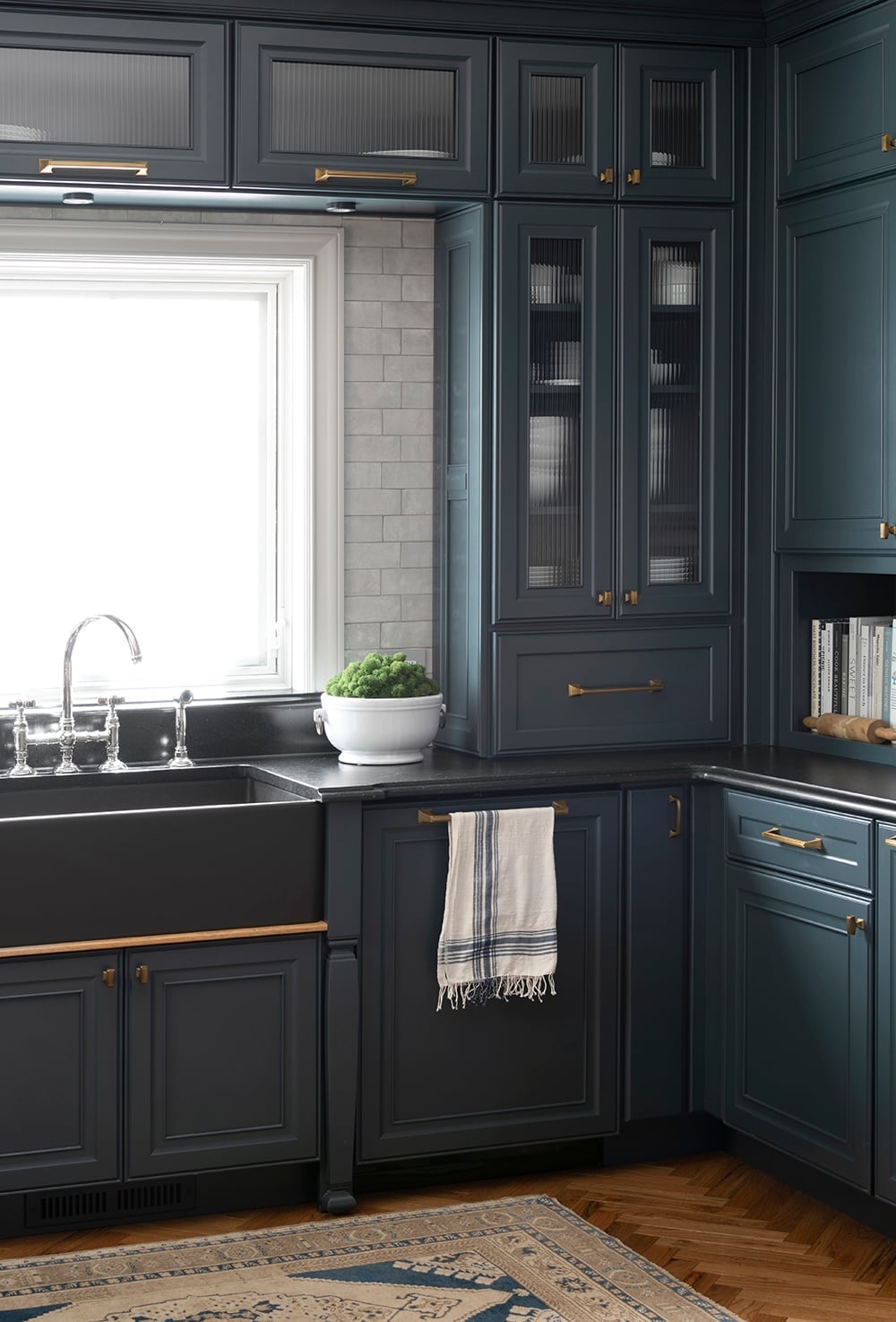
When you are short on counter space, the upper cabinets become prime real estate. Fluted glass doors turn those cabinets into display cases, letting you store glassware or dishes without hiding them away. The dark blue-black finish on the cabinets grounds the room, while the brass hardware and farmhouse sink keep the look traditional. A patterned rug on the tile floor adds softness underfoot. The under-cabinet lighting is essential here, because the glass doors mean anything inside the cabinets is visible, and good lighting makes the contents look intentional rather than cluttered. For a compact corner kitchen, this setup uses the vertical space for both storage and decoration, without needing a single open shelf.
Floral arrangement with berries adds color to dark cabinets
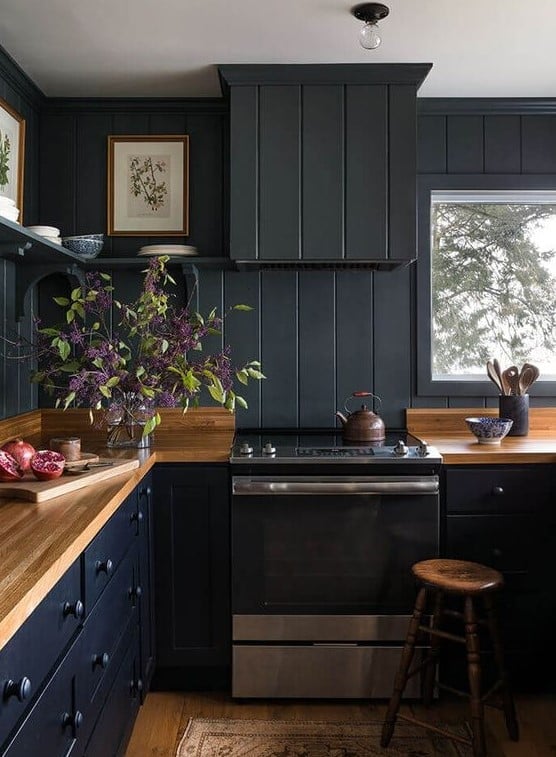
A vase of greenery and berries might seem like a small addition, but it does more work than a new piece of hardware. The compact corner kitchen has dark blue paneled cabinets and wood countertops, with a stove and a stool nearby. Overhead light and daylight hit the arrangement, which brings purple and green into the palette. The berries add a bright accent that breaks up the dark cabinetry without needing a permanent change. Swap out the flowers with the season to keep the palette fresh without repainting.
Mosaic tile backsplash adds striking contrast to matte black cabinets
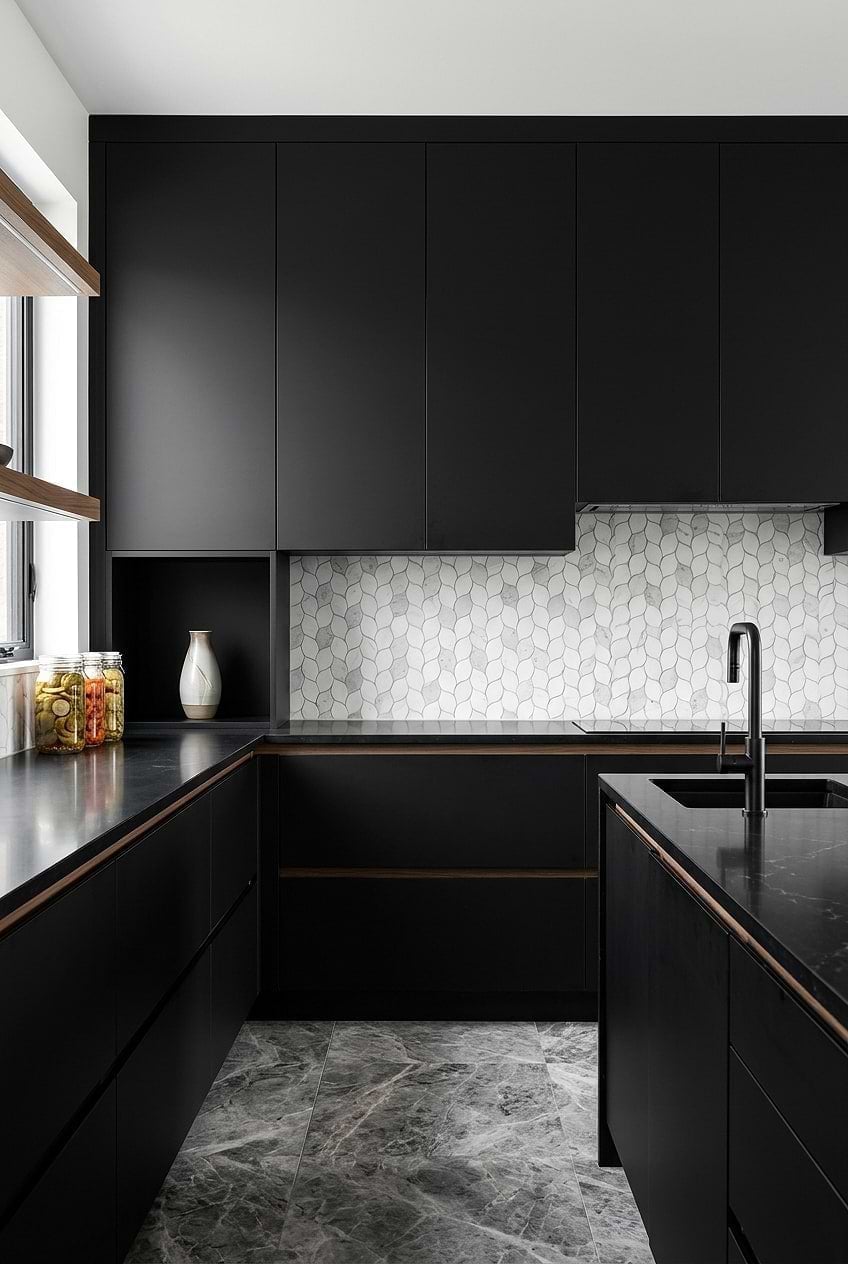
The mosaic tile backsplash draws the eye before the cabinets do, which is the point. The matte black cabinets sit in a modern kitchen with a marble floor and a black faucet, while natural light and overhead lighting make the tile pattern stand out. The backsplash adds a layer of texture that a solid slab would not provide. For a renter, a peel-and-stick mosaic panel can mimic this look without permanent installation. The contrast between the busy tile and the flat black cabinets prevents a heavy feel.
Classic kitchen with ornate black cabinets and white subway tile
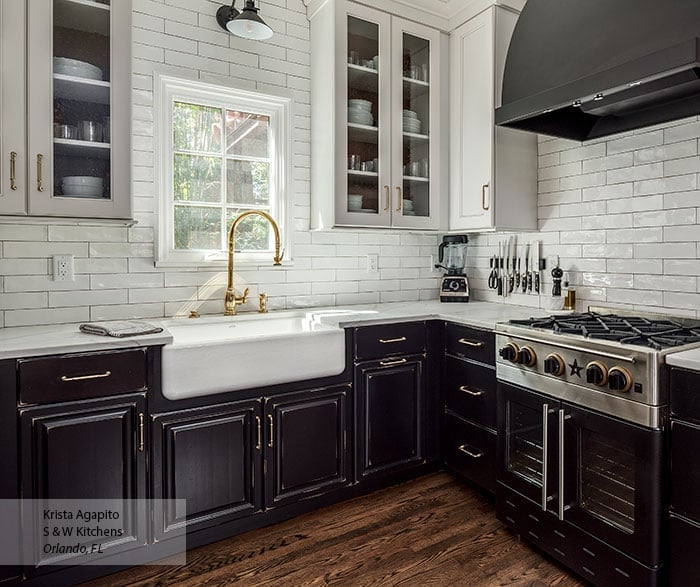
This corner kitchen pairs ornate black cabinets with white subway tile and a farmhouse sink, and the combination looks classic. The overhead pendant light and window light highlight gold accents in the space. The ornate detailing on the cabinets adds a traditional feel that plain slab doors would not offer. The white subway tile keeps the look grounded and prevents the dark cabinets from overwhelming the compact layout. The gas range fits neatly into the corner, making the most of the available counter space.
Gold hardware on sleek black cabinets with gray subway tile
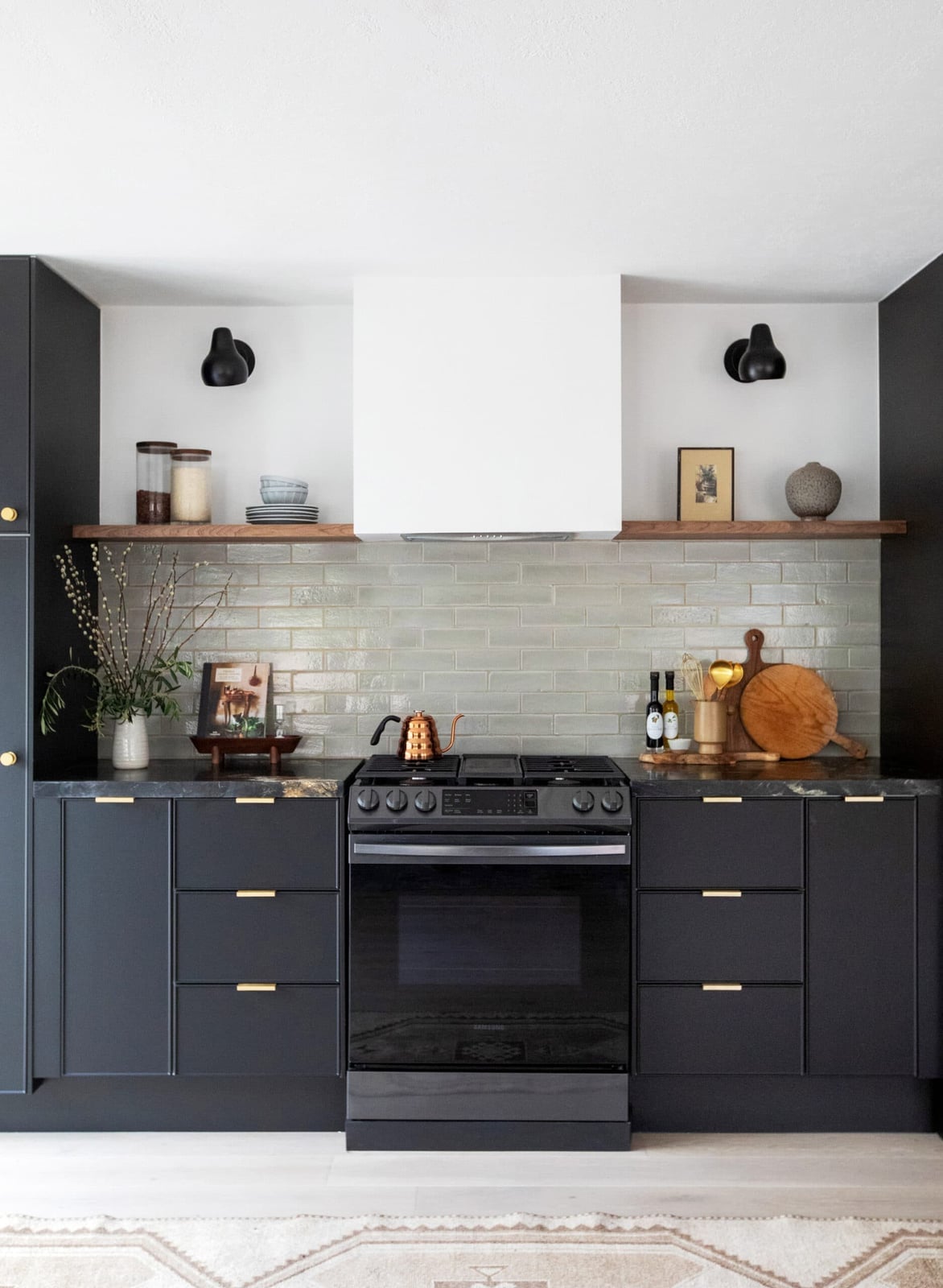
Does gold hardware on black cabinets ever look dated, or is it a lasting choice? In this compact modern kitchen, the black cabinets with gold hardware sit between a black range and wooden shelves, with gray subway tile as the backdrop. Wall sconces and an overhead hood light provide focused illumination. The gold hardware adds a warm metallic note that breaks up the black and gray palette. The gray subway tile is a neutral choice that will not clash with future changes, so the gold hardware can stay even if the tile gets swapped later.
U-shaped kitchen with black cabinets, gold hardware, and herringbone
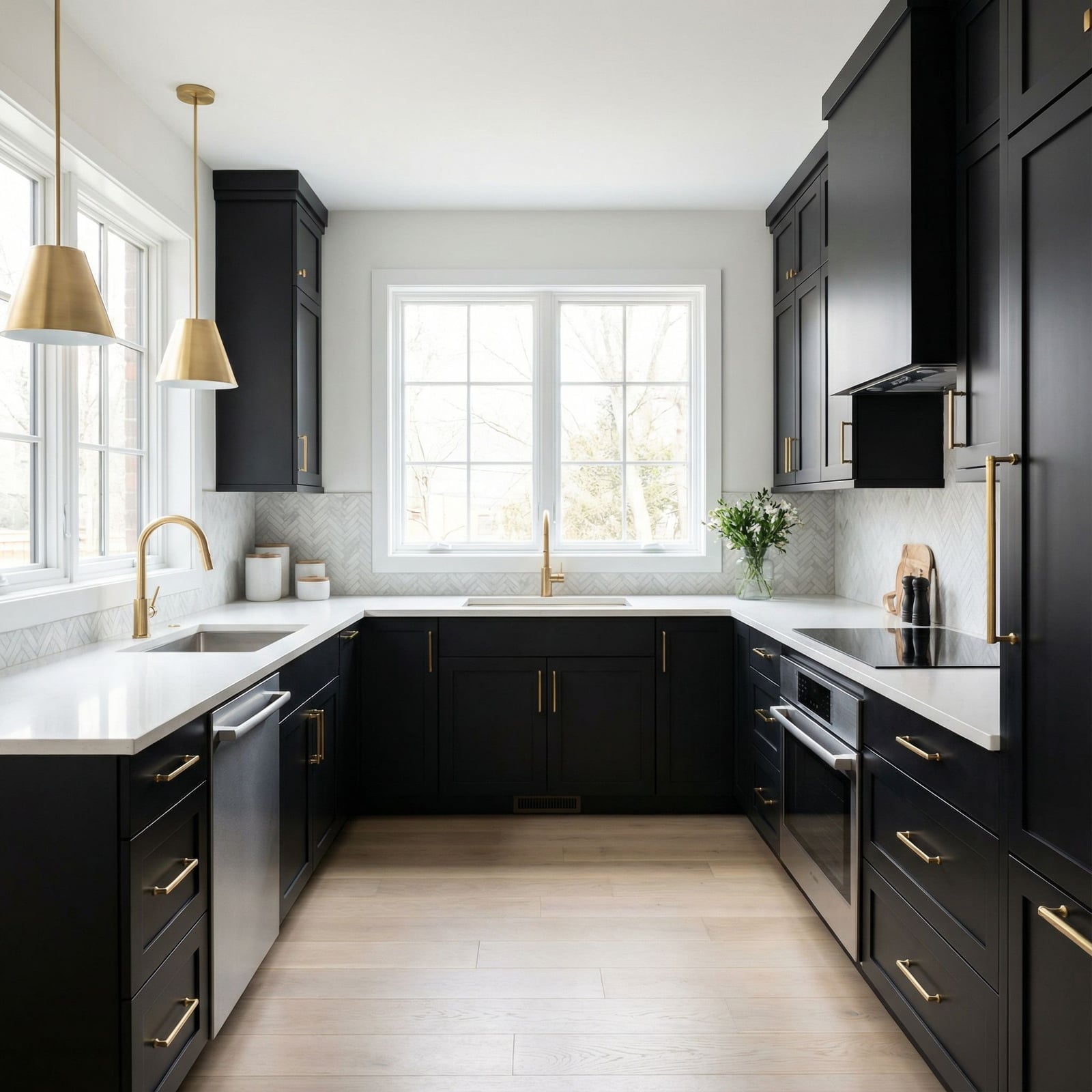
A U-shaped layout naturally creates distinct work zones, and this kitchen uses that to its advantage. The black cabinets with gold hardware wrap around the space, with gold pendant lights hanging above and stainless steel appliances integrated into the run. Natural light comes in from a nearby source, keeping the dark cabinets from feeling too enclosed. The herringbone pattern on the floor or backsplash adds movement that a straight lay would not provide. The layout makes the room feel larger than it is by keeping the countertops clear and the paths open.
Matte black cabinets create dramatic aesthetic in l-shaped layout
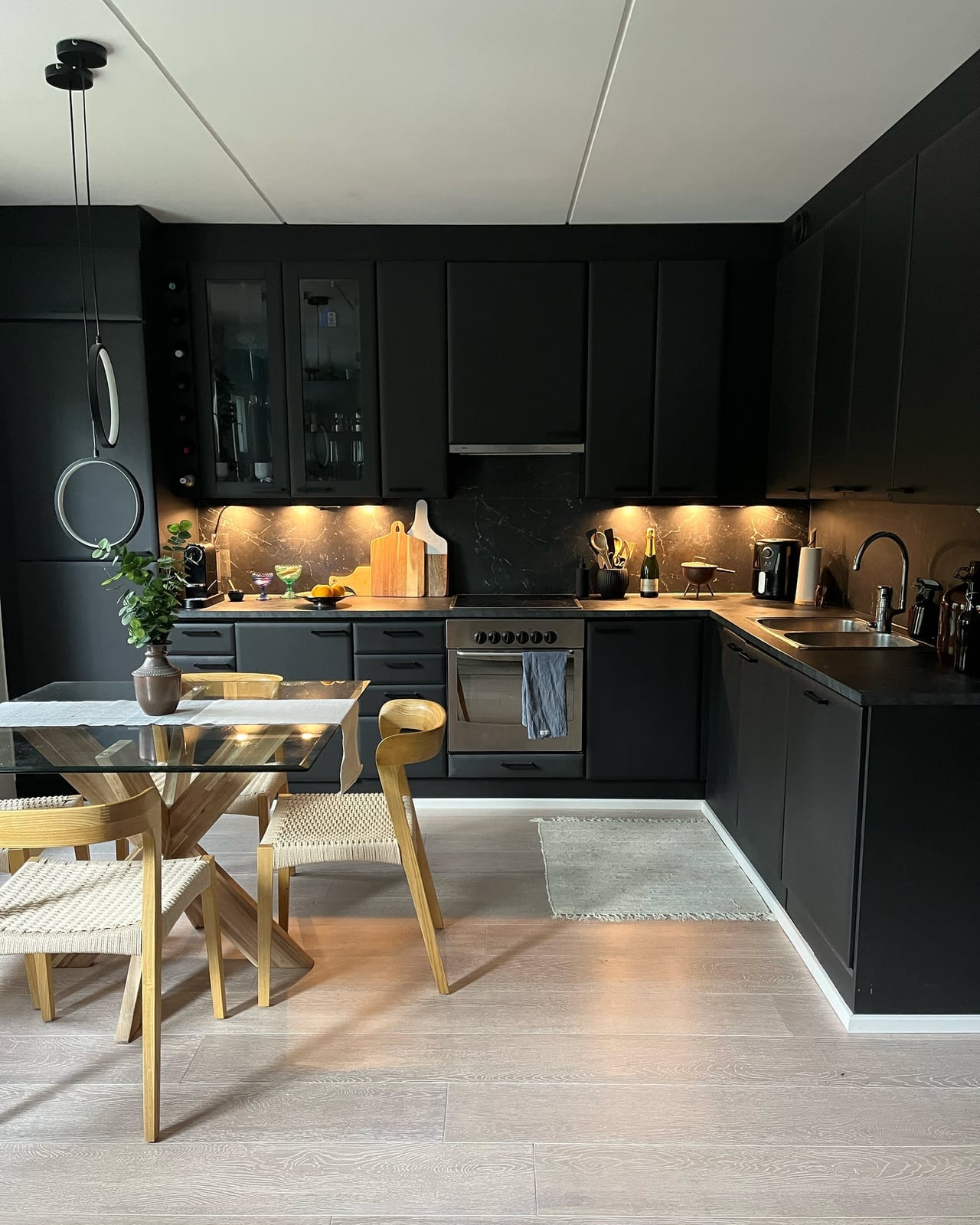
An L-shaped layout naturally defines zones without walls, and matte black cabinets anchor the workspace while a glass dining table and wooden chairs keep the dining area open. Under-cabinet lighting prevents the darker finish from swallowing the counter, and a single pendant over the table adds a second layer. The black cabinets are the main element, so the room stays simple: wood tones, gray, and stainless steel. That ratio gives the drama without the space feeling closed in.
Dark gray cabinets with geometric floor tiles and brass hardware
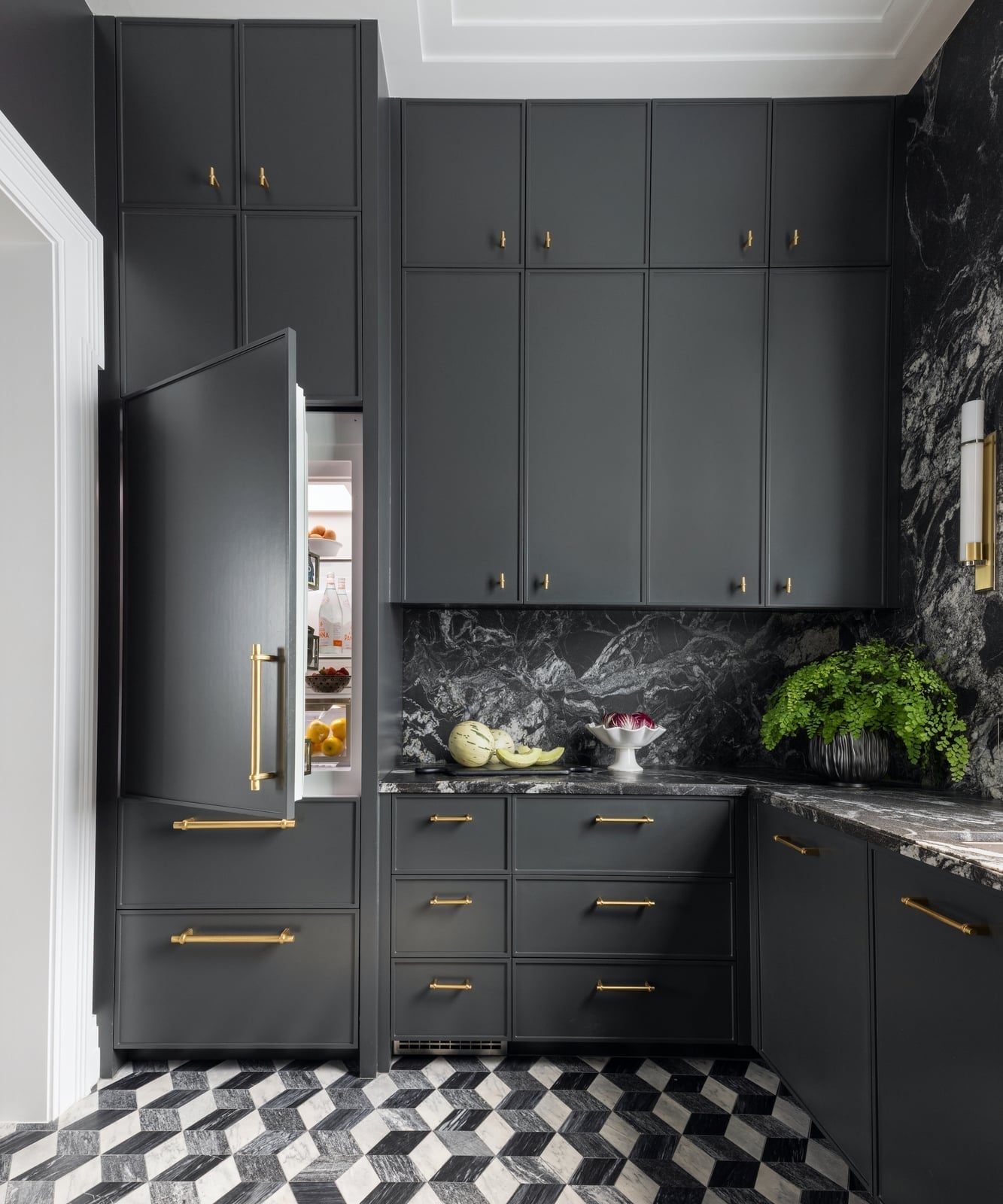
Dark gray cabinets are a popular alternative to black, especially when the floor introduces a geometric pattern that pulls the eye across the room. The palette here stays tight: dark gray and black on the cabinets, white marble on the counter, and gold brass on the hardware and sconce. What breaks the scheme is the floor tile itself, which adds a graphic layer. An integrated refrigerator keeps the wall line clean, and a small plant and fruit bowl bring in the only natural elements. The room feels roomy because the upper cabinets and drawers stay flush, and the pattern lives below eye level.
White diamond tile backsplash contrasts with black farmhouse cabinets
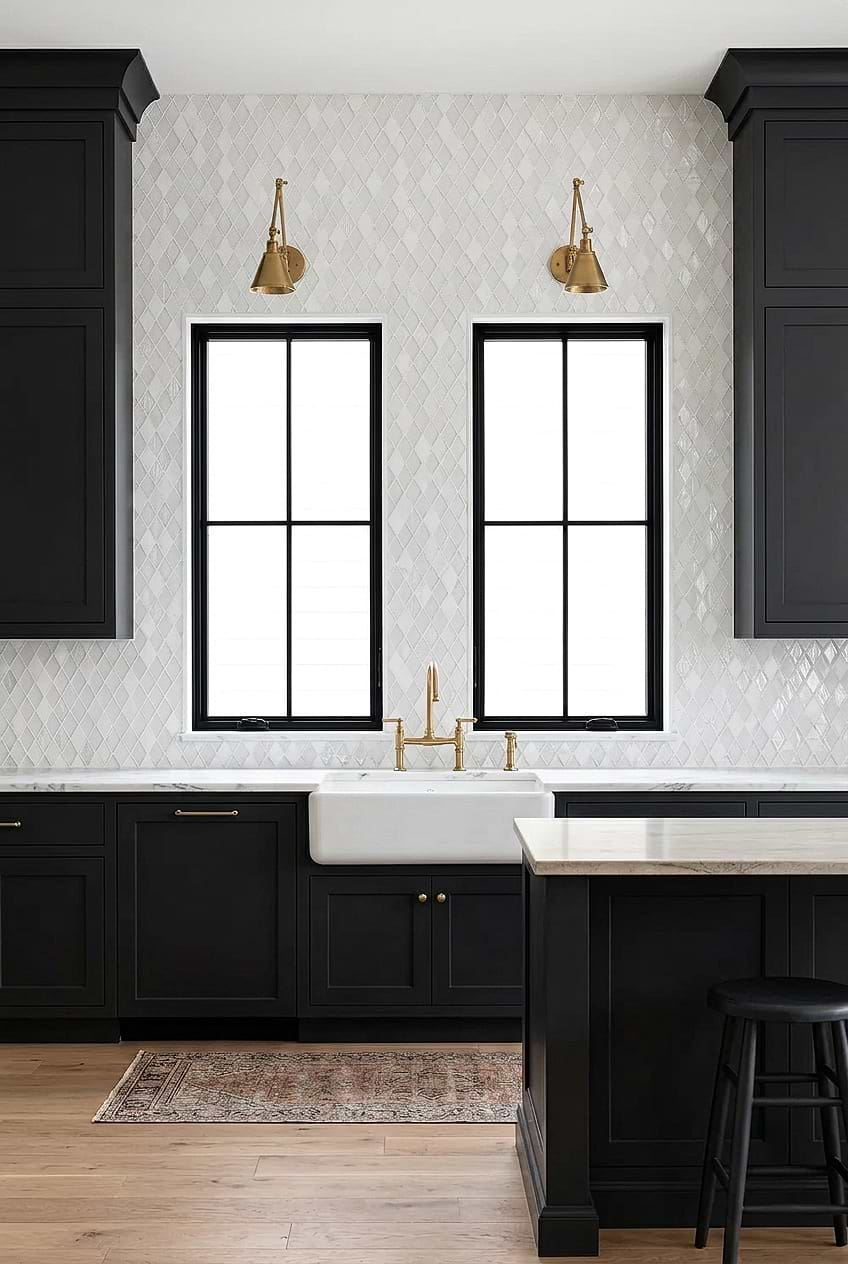
A white diamond tile backsplash does more than contrast with black farmhouse cabinets; it breaks the vertical line of the cabinetry and draws attention to the sink area. The farmhouse sink and island stool stay in a wood tone, so the black cabinets become the dark anchor and the only dark material. Wall sconces and windows keep the white tile bright, and the diamond pattern adds movement without needing a second color.
Stone accent wall contrasts with aesthetic black cabinets
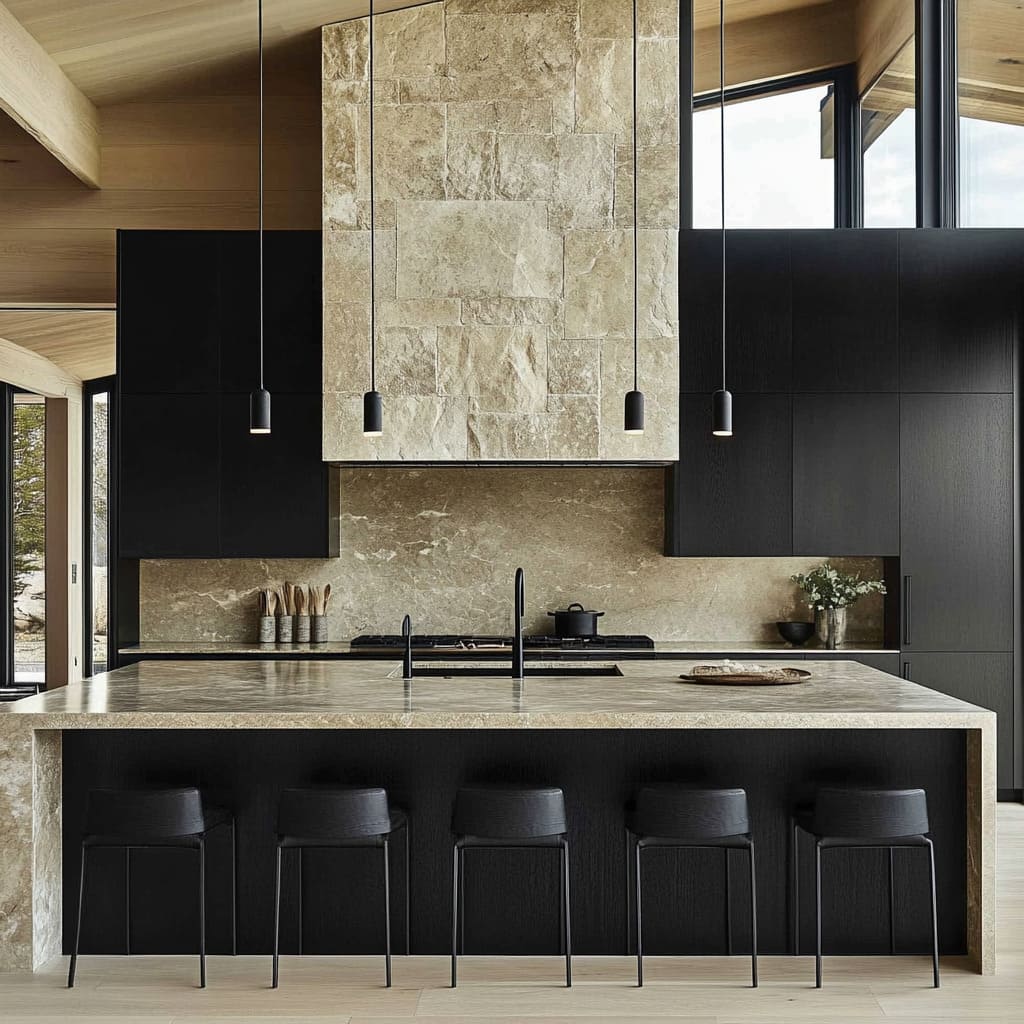
A stone accent wall behind the range and island gives the black cabinets a textured backdrop that keeps the kitchen from feeling flat. The palette here is beige stone, wood tones, and black, with the island adding a marble surface for contrast. Pendant lights hang over the island seating, and the stone wall stays the focal point behind the cabinets.
Ornate black cabinet holds vase and brass candlestick
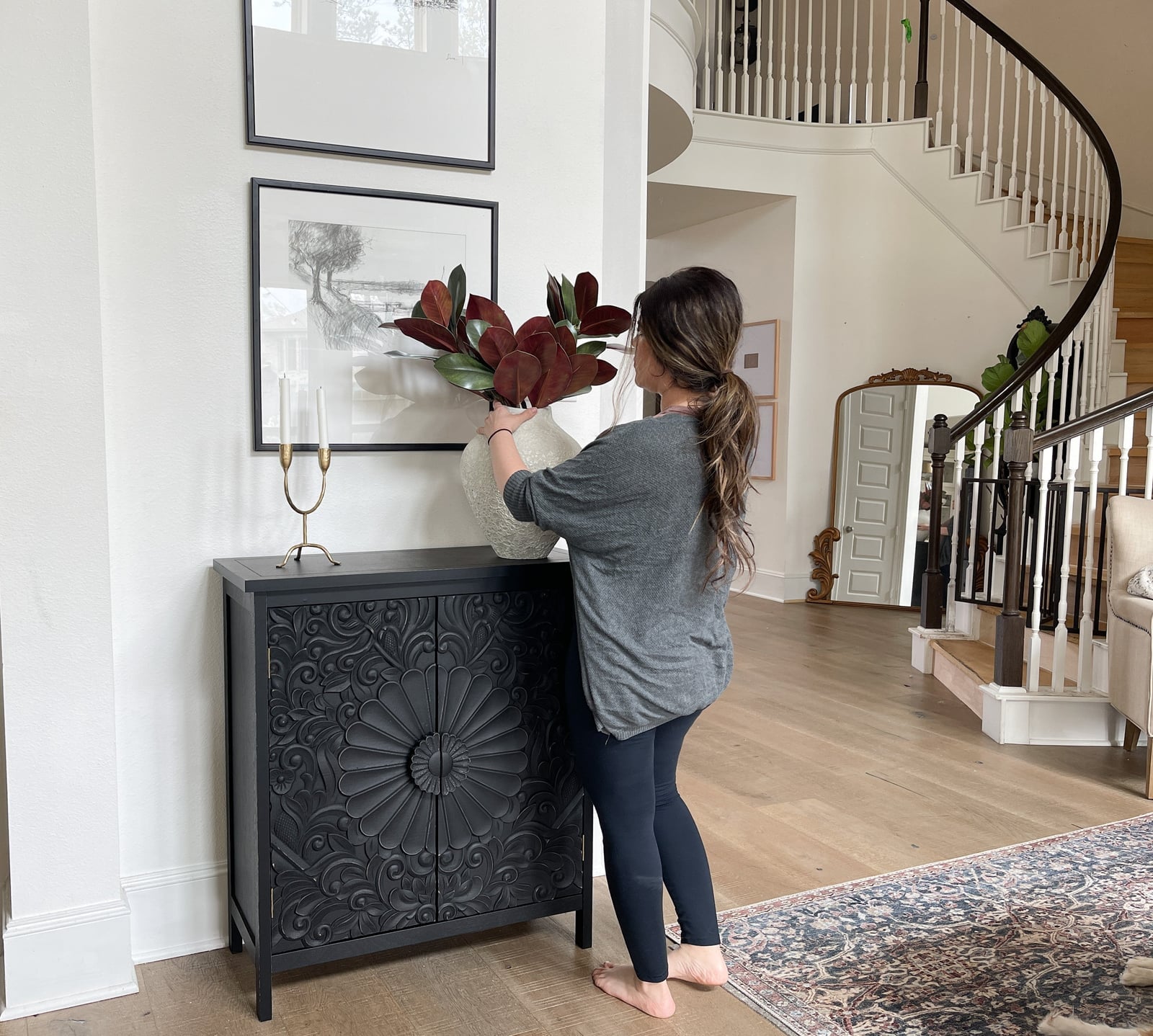
An ornate black cabinet in an entryway keeps the surface simple with just a large vase and a brass candlestick. The carved doors already provide pattern. The palette stays black, white, wood tones, green, and burgundy, with framed art above the cabinet pulling the eye upward. A nearby window keeps the dark finish from dominating the corner. For renters, a standalone carved cabinet in a similar finish can deliver the same effect without permanent changes to the wall.
Geometric tile backsplash adds bold element to black cabinets
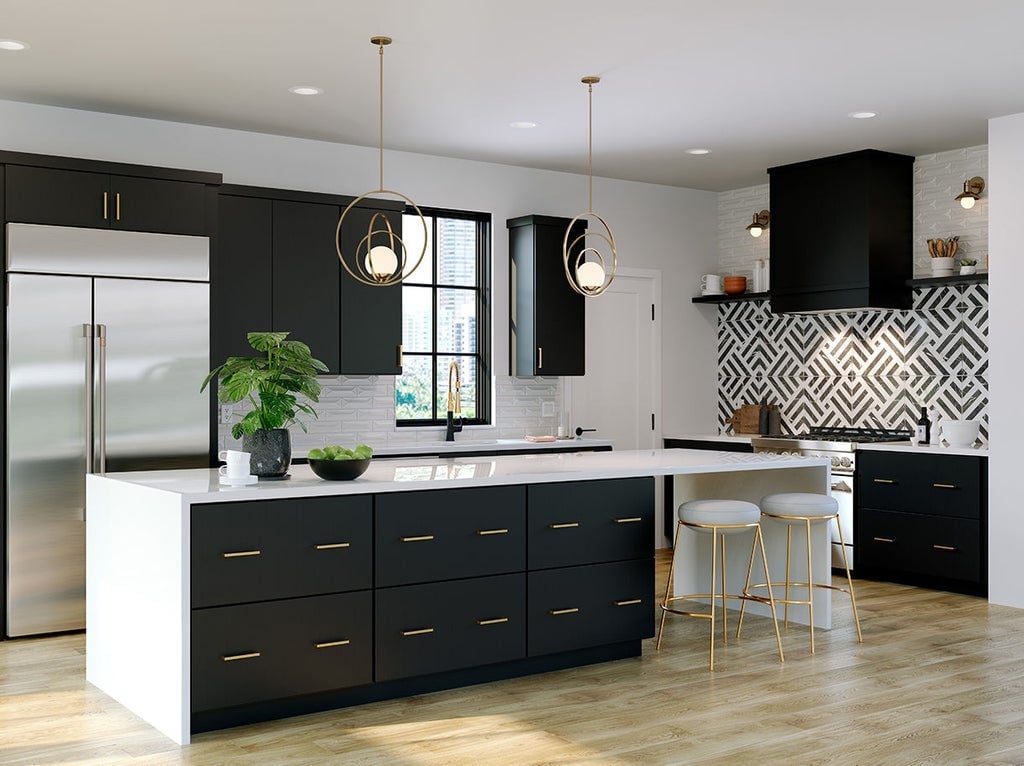
The backsplash is the visual anchor here, with a geometric tile pattern that draws the eye across the full wall. Black cabinets keep the perimeter grounded, while gold-toned hardware and warm wood stools introduce contrast. The island with seating acts as a counterbalance to the tiled wall, keeping the layout from feeling top-heavy. For a lower-commitment version, stick-on geometric tiles in a matte finish can mimic the look without the grout work.
Black lower cabinets contrast with warm wood upper cabinets
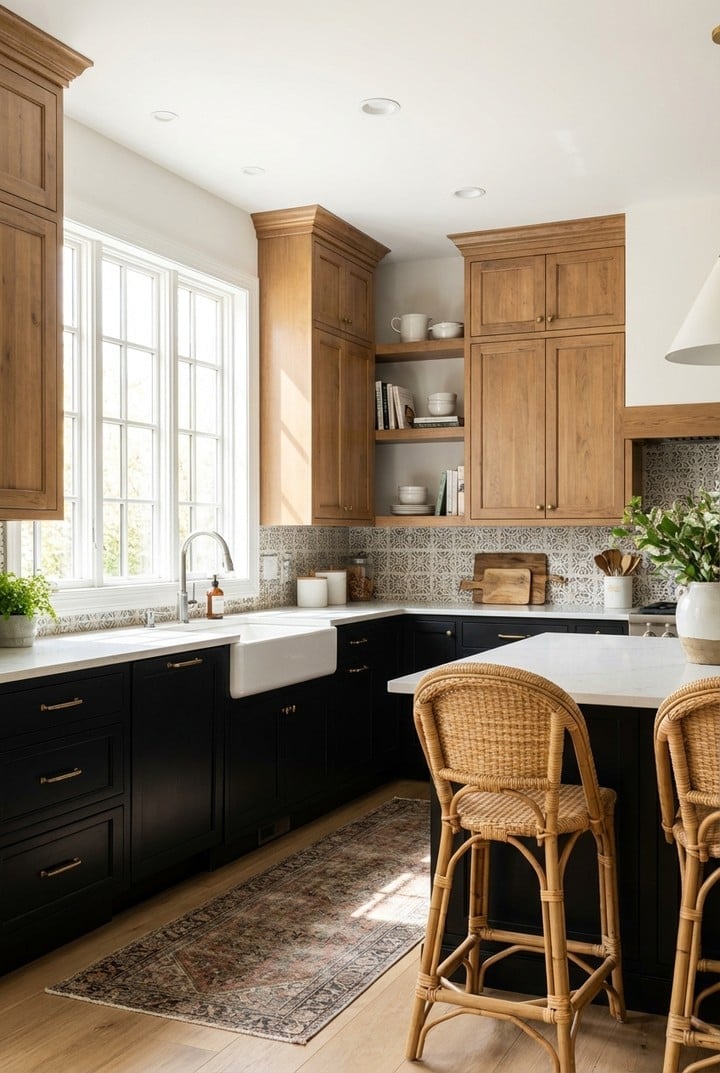
A practical rule for two-tone cabinetry is to keep the darker shade below eye level, where it grounds the room, and the lighter one above, where it reflects daylight. Here, black lower cabinets sit beneath warm wood uppers, creating a clear horizontal break that expands the visual width of the kitchen. The farmhouse sink and rattan stools soften the contrast, while the patterned tile backsplash ties both halves together. Renters can approximate the effect by painting the lower cabinets with a peelable black film or temporary contact paper designed for wood surfaces.
Modern kitchen with dark gray cabinets and marble backsplash
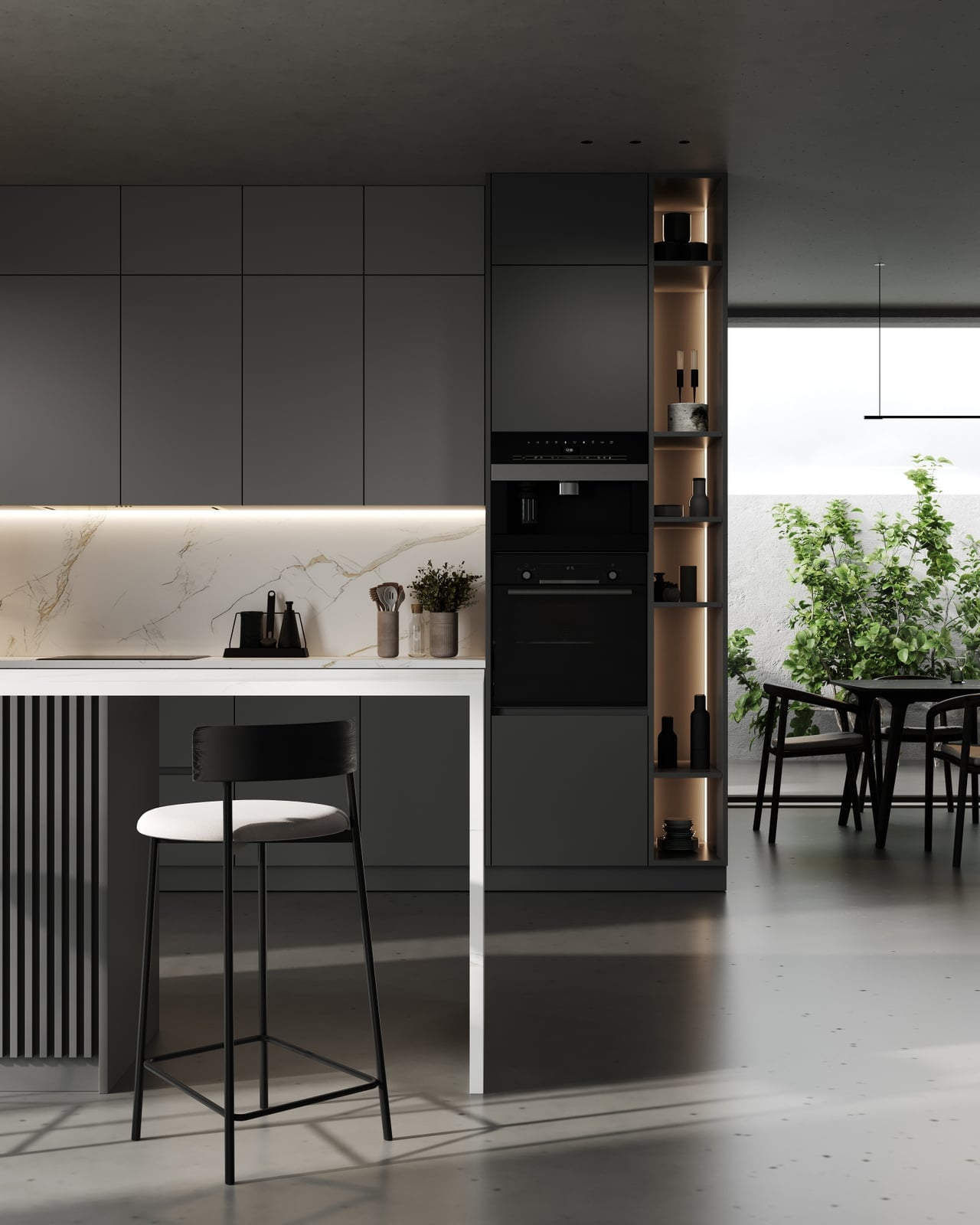
Dark gray cabinets sit a step lighter than pure black, which shifts how the rest of the kitchen reads. The marble backsplash here runs full height behind the range, catching the under-cabinet and recessed lighting in a way that a solid dark tile would not. Gold hardware and open shelving break up the gray mass, while the integrated appliances keep the silhouette clean.
Where a true black cabinet demands high contrast to stay visible, dark gray lets you work with muted tones across the whole palette. The marble slab acts as the room’s main light source, reflecting both natural and artificial light back into the space. A honed marble finish reduces glare and keeps the backsplash from competing with the cabinetry.
Compact kitchen with black cabinets and warm wood trim
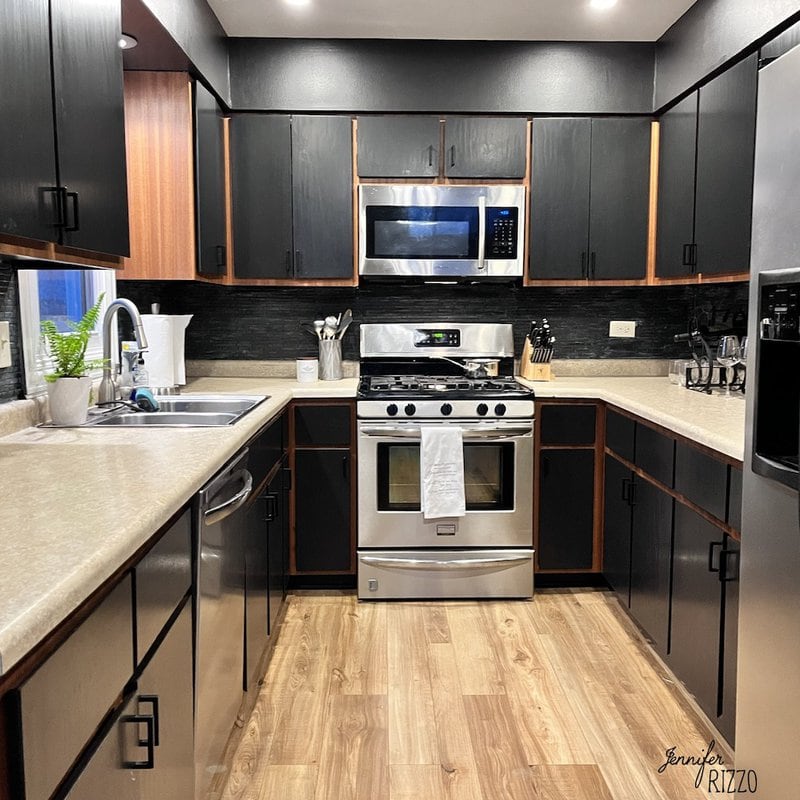
In a U-shaped layout, black cabinets can look heavy, but the warm wood trim here breaks the dark mass into readable sections. The wood runs along the counter edge and the cabinet faces, giving the eye a natural stopping point. Stainless steel appliances add a reflective surface that lifts the overall brightness. Under-cabinet lighting is essential in a compact black kitchen, as it prevents the countertops from disappearing into shadow and keeps the work surface functional.
Hexagonal tile backsplash creates sophistication with black cabinets
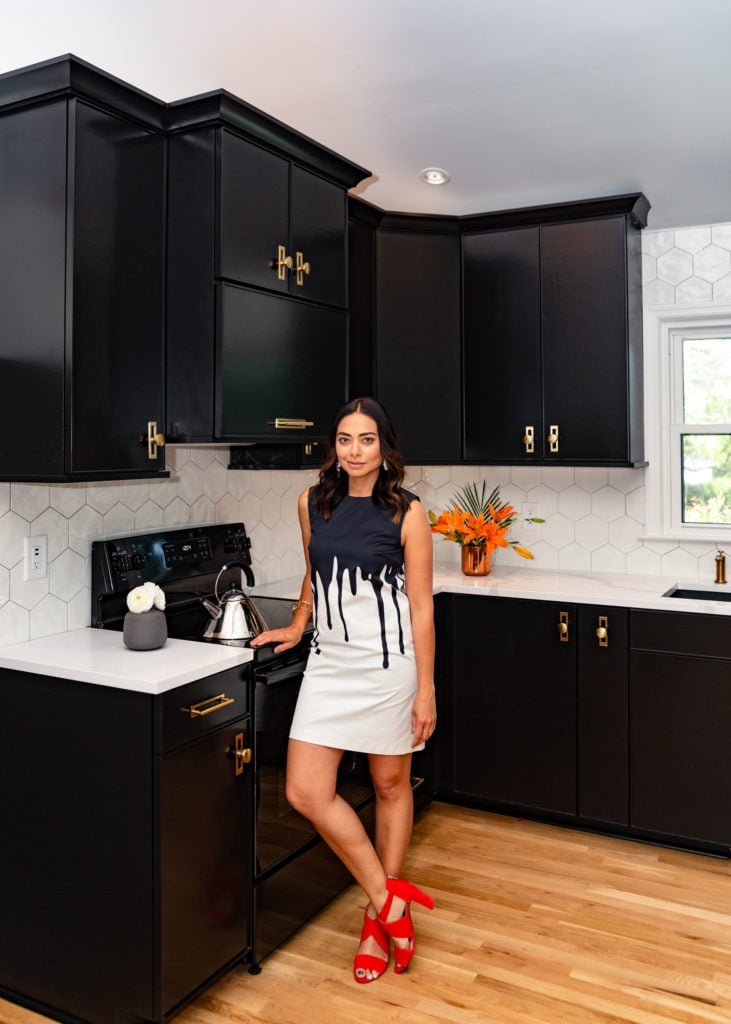
The combination of black cabinets and a hexagonal tile backsplash creates a geometric rhythm that contrasts with the flat cabinet fronts, while the white countertops keep the surface plane clear. Gold hardware adds a warm metallic line that connects the two textures. For a similar effect, look for hexagonal tiles in a matte white finish with charcoal grout; the darker grout lines echo the cabinet color and tie the two surfaces together.
Traditional kitchen with two-tone black and white cabinets
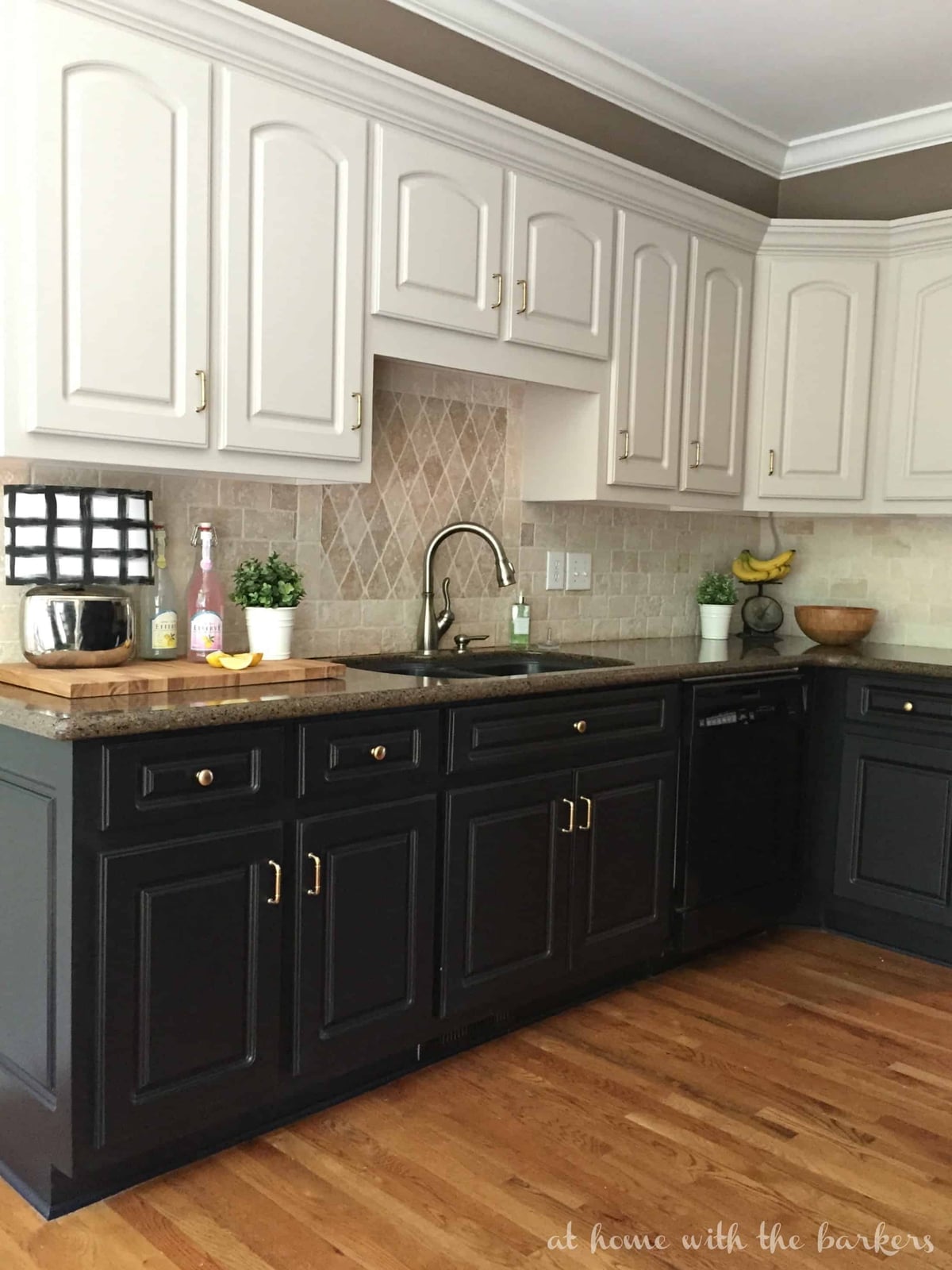
A two-tone approach gives traditional cabinets a fresh read without leaving the classic palette behind. Black lowers anchor the room while white uppers keep the sightline open, a swap that works in any compact corner layout. A beige stone countertop and warm wood floor bridge the contrast so neither side feels separate. The corner sink placement leaves the counter free for daily tasks. For renters, painting only the lower cabinets in a removable temporary finish delivers the same visual weight without touching the uppers.
Modern kitchen with black cabinets and black marble countertop
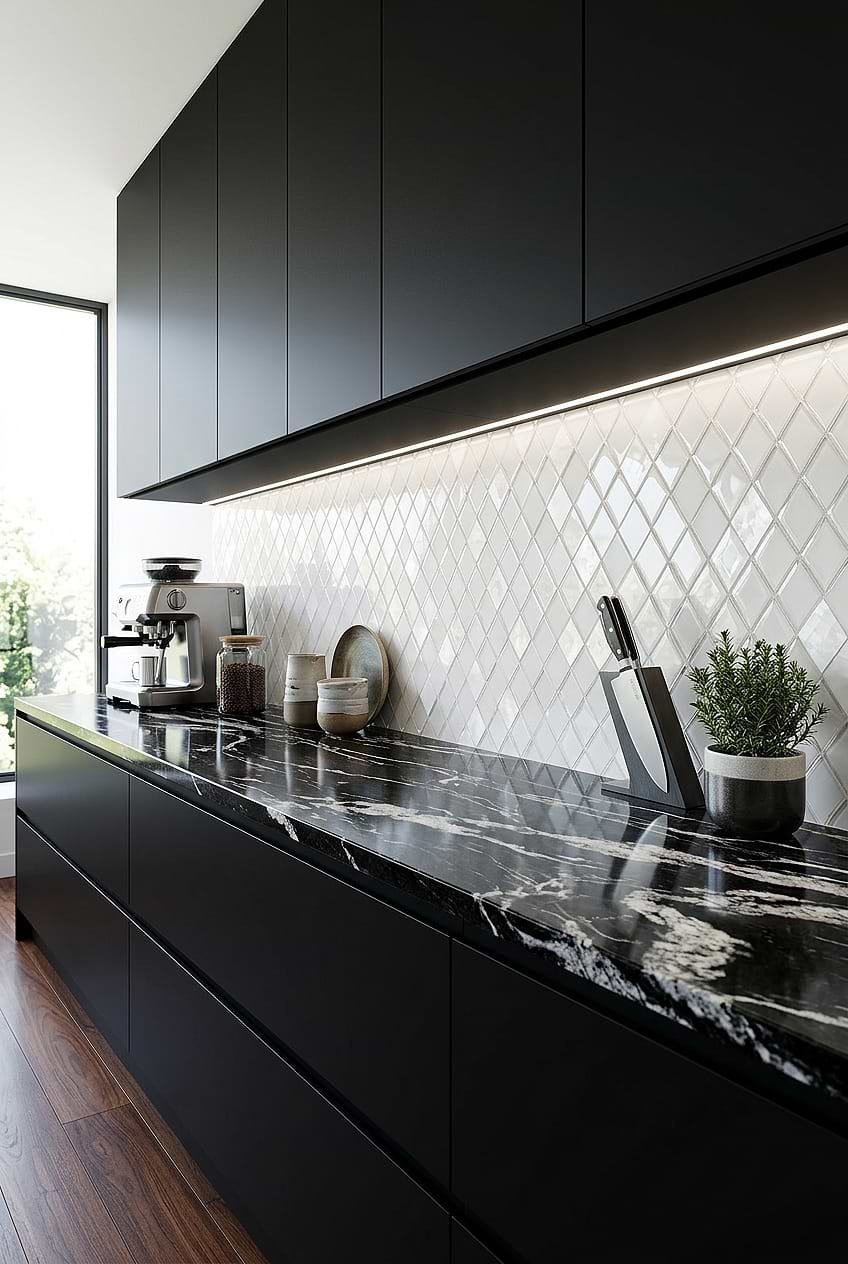
A black marble countertop extends the dark cabinetry into a continuous surface that looks one material block. An under-cabinet LED strip cuts across the slab, separating counter from cabinet so the eye registers each plane. A wood cutting board and a small potted plant add warmth without breaking the monochrome line. The narrow vertical tile backsplash in white keeps the palette from turning flat.
Marble backsplash complements dark cabinetry with pendant lights
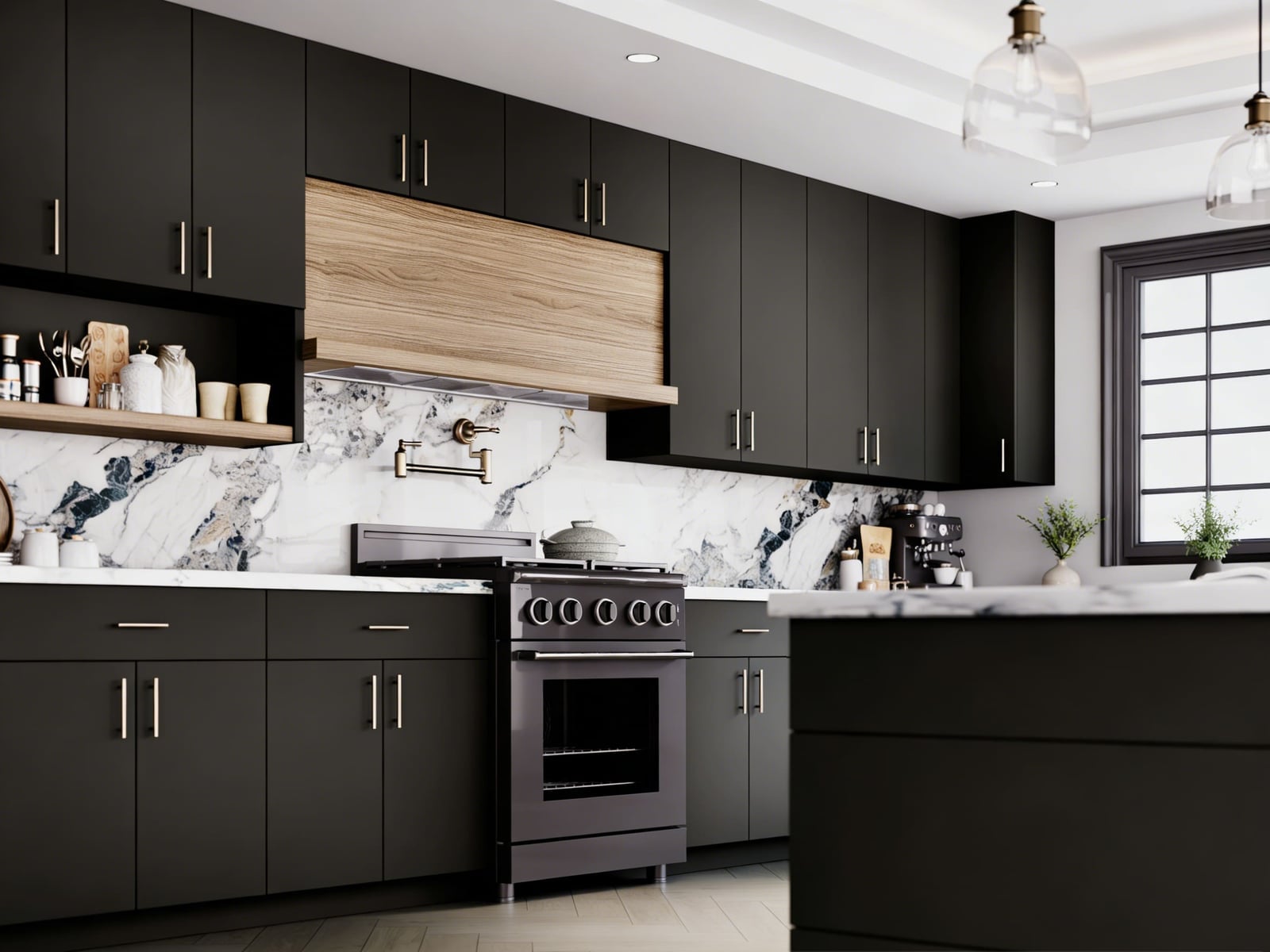
In a roomy u-shaped kitchen with an island, marble backsplash panels act as a light reflector behind dark cabinetry. Gold hardware on the cabinets picks up the warm glow from three dome pendant lights overhead. A black range and coffee machine stay within the dark zone, while the marble veining breaks up the mass. The result is a layered look where one material does the work of both texture and illumination.
Skylights illuminate dark cabinets and white marble island
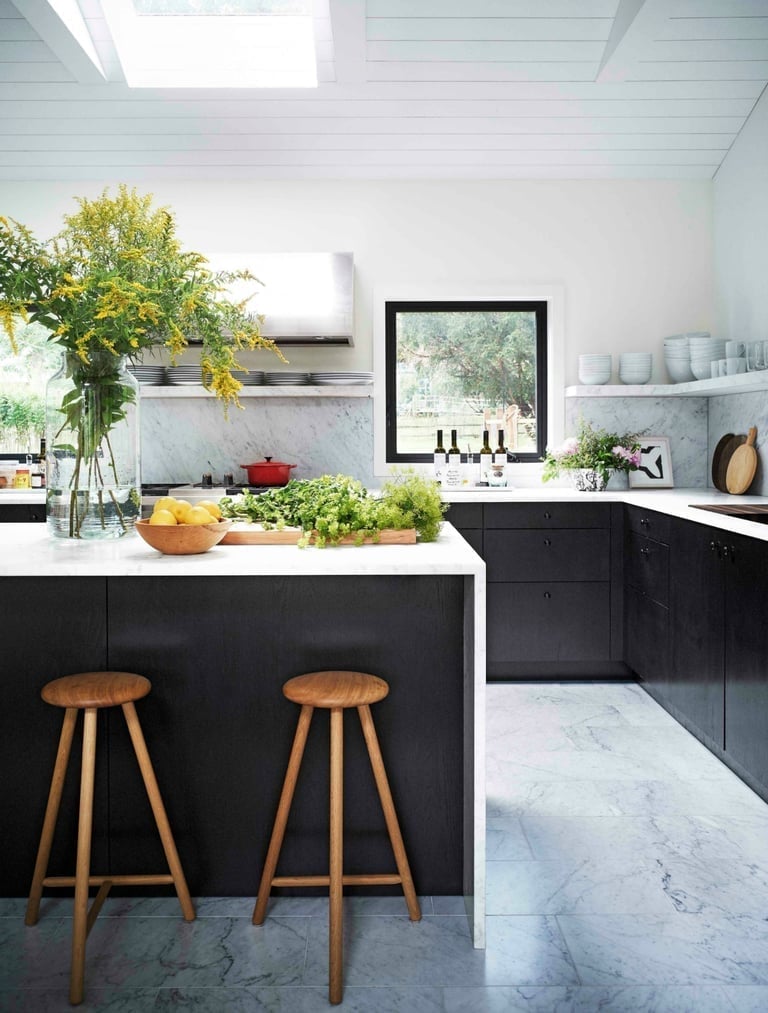
Dark cabinets can feel heavy without a natural light source, but overhead skylights change that equation. Here, white marble on the island and perimeter counters catches the daylight and bounces it across the black cabinetry. The L-shaped counter with island seating keeps the layout open so light reaches every surface. Wooden stools and a few green plants bring in the organic warmth that prevents the black-and-white pairing from looking sterile. For kitchens without skylights, a bank of windows or a glass door opposite the cabinets creates a similar reflective effect.
Metallic tile backsplash adds texture to black cabinets
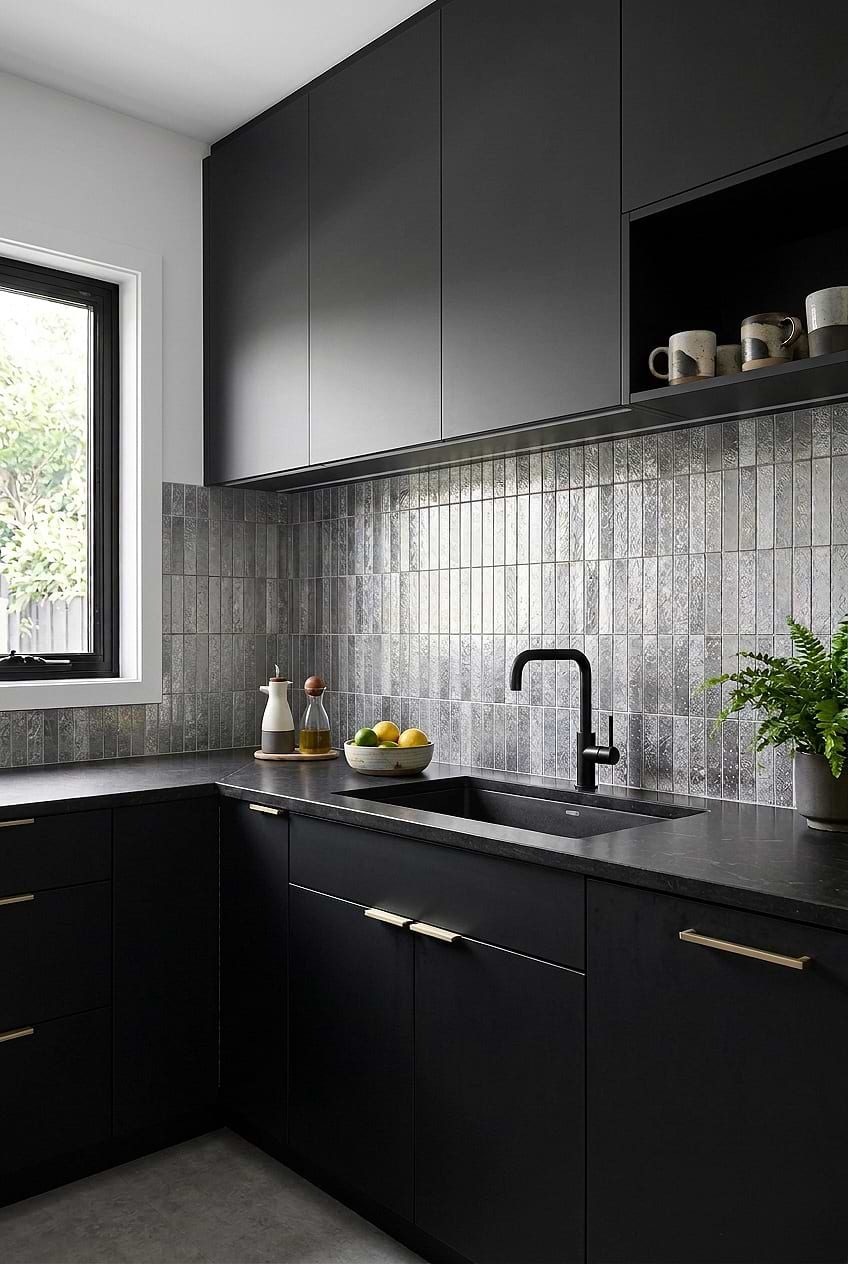
Vertical metallic tiles running from counter to upper cabinets create a ribbed surface that reflects side light. The silver-gray sheen contrasts with the matte black cabinet finish. A black sink and faucet keep the lower zone unified, while a single green plant on the counter adds a living element. The narrow format of the tile makes a compact corner kitchen feel taller.
Brass hardware on black cabinets complements farmhouse sink
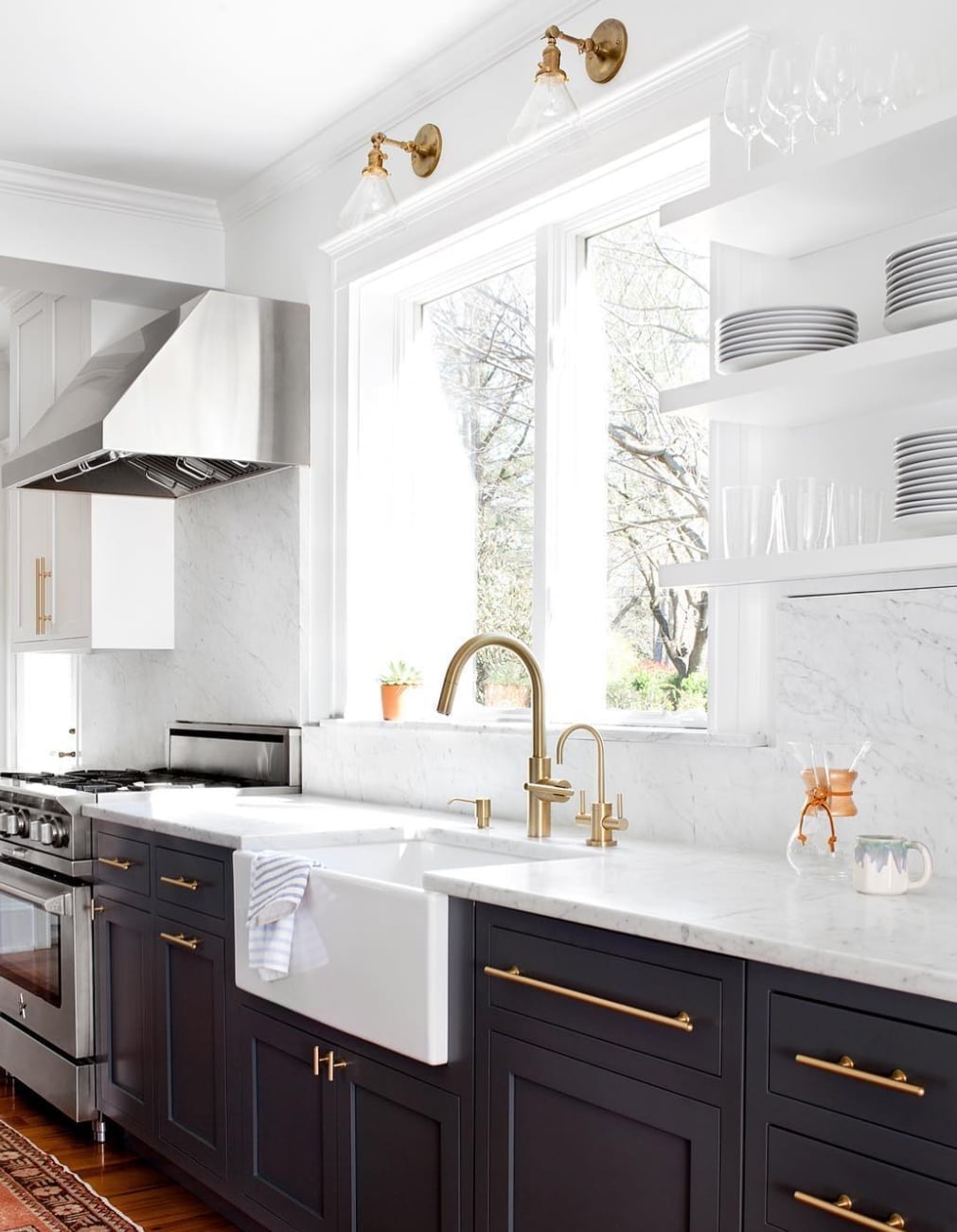
Brass hardware on black cabinets is a safe bet for a modern farmhouse kitchen, and this roomy corner layout shows why. The dark cabinets anchor the space while the brass faucet and pulls add warmth that keeps the look from turning too severe. A farmhouse sink under the window and a stainless steel range fit the practical side of the style. Wall sconces and natural light keep the palette of black, white, brass, and wood tones from feeling heavy. Open shelving breaks up the cabinetry and gives you a spot to show off everyday dishes. If you are renting, swap cabinet knobs for brass ones. It is a weekend swap that changes the whole feel without touching the boxes themselves.
Final Thoughts
Black cabinets work best when you let them be the main event. Keep the surrounding palette simple, use metal hardware to add contrast, and pay attention to lighting. A dark cabinet reads differently under a pendant than it does under a skylight. For upkeep, matte finishes show fingerprints more than satin ones, so test samples before you commit. The common thread across these 26 looks is restraint. Let the cabinet color do the talking, and the room will feel intentional rather than busy.