
Cottagecore kitchens trade sleek minimalism for something warmer, think floral wallpapers, apron sinks, and open shelves stacked with pottery. These spaces feel collected rather than designed, with patina and practicality sharing the spotlight.
Here are 30 aesthetic cottagecore kitchen ideas for 2027 that lean into farmhouse roots while keeping the room livable. Expect color-drenched cabinetry, vintage-style ranges, and natural textures that make daily cooking feel like a quiet ritual.
Farmhouse sink under a greenery-adorned window
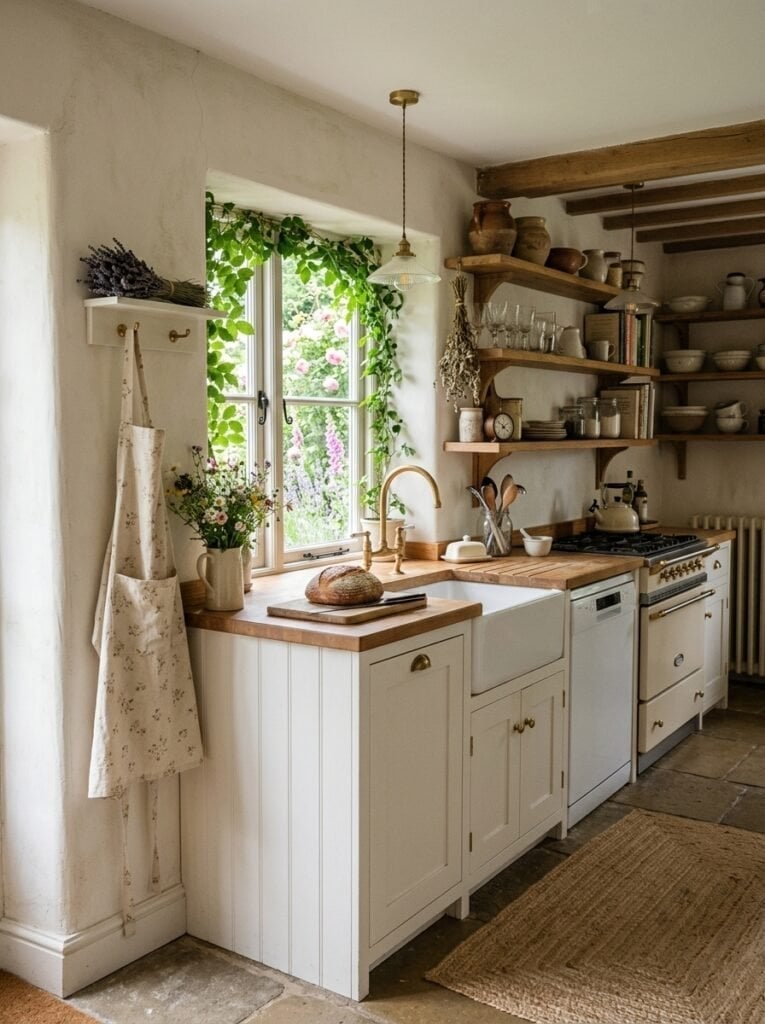
A farmhouse sink set under a window draped in trailing greenery turns a compact corner into the kitchen’s quiet center. The sink and dishwasher sit below the sill, while wooden shelves above the counter keep everyday dishes within reach. A range cooker anchors the opposite wall, and a pendant light drops soft warmth over the work zone. Natural light filters through the leaves, softening the white and wood palette. The layout keeps the wash-and-prep triangle tight, so nothing feels stretched in a small footprint.
Dark blue walls and copper pots above farmhouse sink
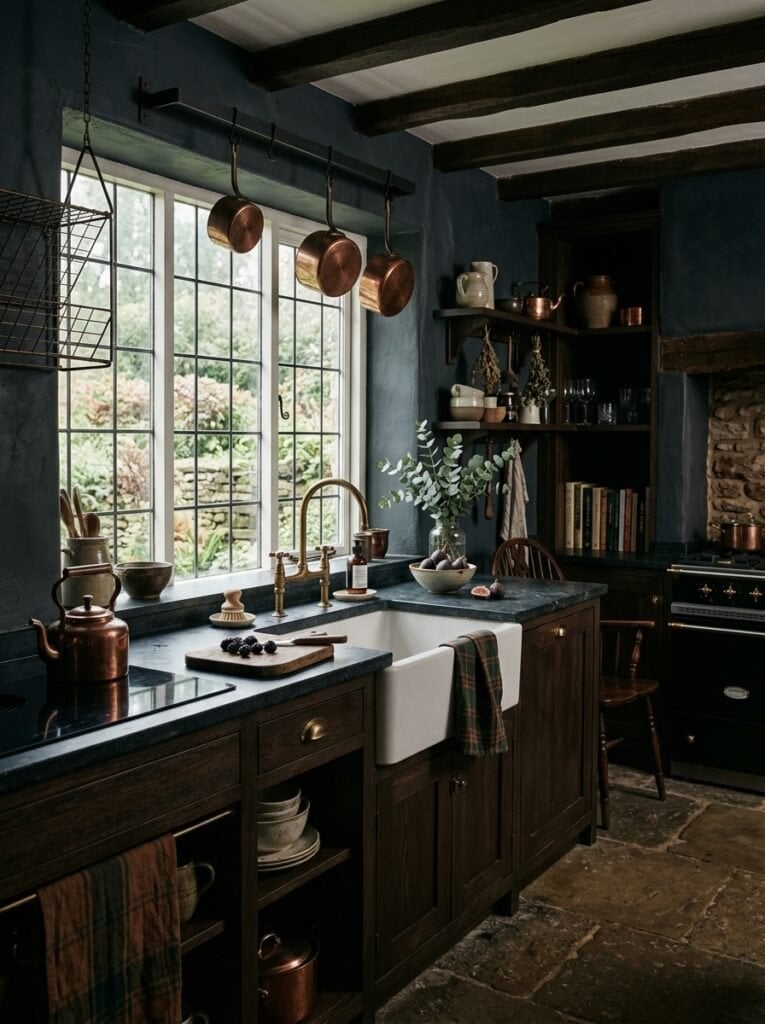
Dark blue walls and hanging copper pots make a direct statement: this kitchen knows its palette. The deep blue looks a neutral backdrop for the warm copper and dark wood cabinetry, while the stone floor keeps the look grounded. An L-shaped counter places the farmhouse sink and stove on adjacent runs, so the cook moves between them without crossing the room. Overhead beams add structure. The ratio of dark to light stays roughly three to one, which prevents the space from feeling like a cave.
Abundant pink floral wallpaper and cabinetry
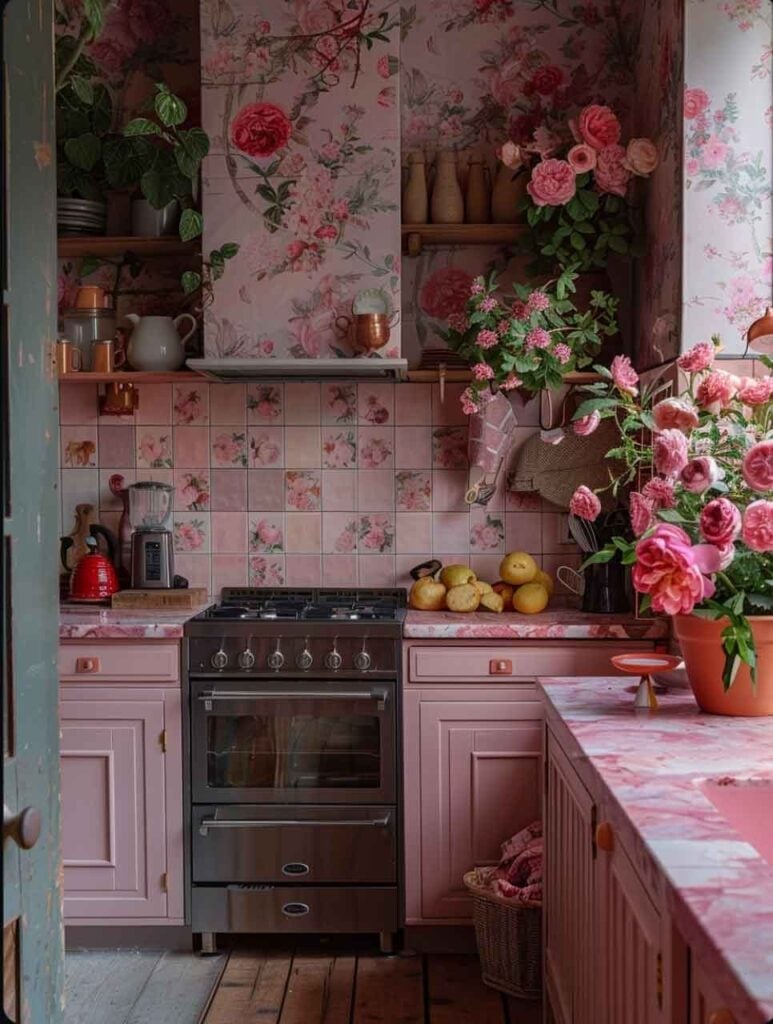
Can a kitchen handle wallpaper this bold without looking like a tea room? Yes, when the pattern covers every wall and the cabinets match the pink ground. The floral print runs wall to wall, wrapping the room in a dense layer of pink and green. The vintage-style stove and potted plants look natural companions rather than afterthoughts. Tile, wood, marble and metal mix in small doses, so the wallpaper stays the main event. The trick is commitment: half measures make busy wallpaper look accidental, while full coverage lets the room settle into its own logic.
Vintage stove and amber bottles on open shelving
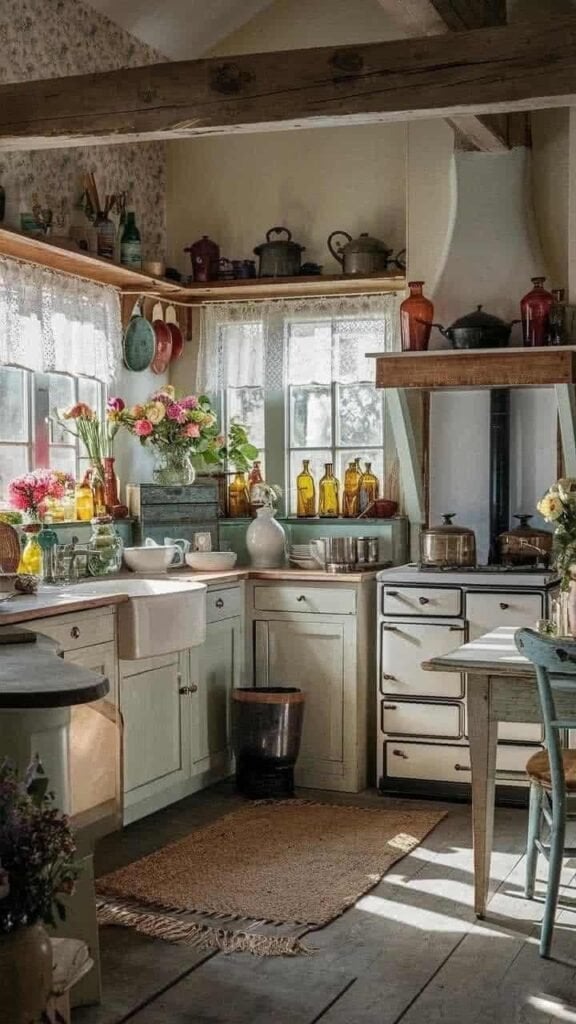
A vintage stove becomes the visual anchor, but the amber bottles and ceramic cookware on open shelving do the practical work. The cream and sage green palette lets the glass catch light without competing with the floral pink accents. A woven rug softens the floor near the wooden table, and the farmhouse sink sits ready on the opposite wall. Open shelving here stores what gets used daily, so nothing collects dust. The layout keeps the sink, stove and table close enough that a single person can manage the whole cooking and cleanup loop.
Green cabinetry with dark floral wallpaper design
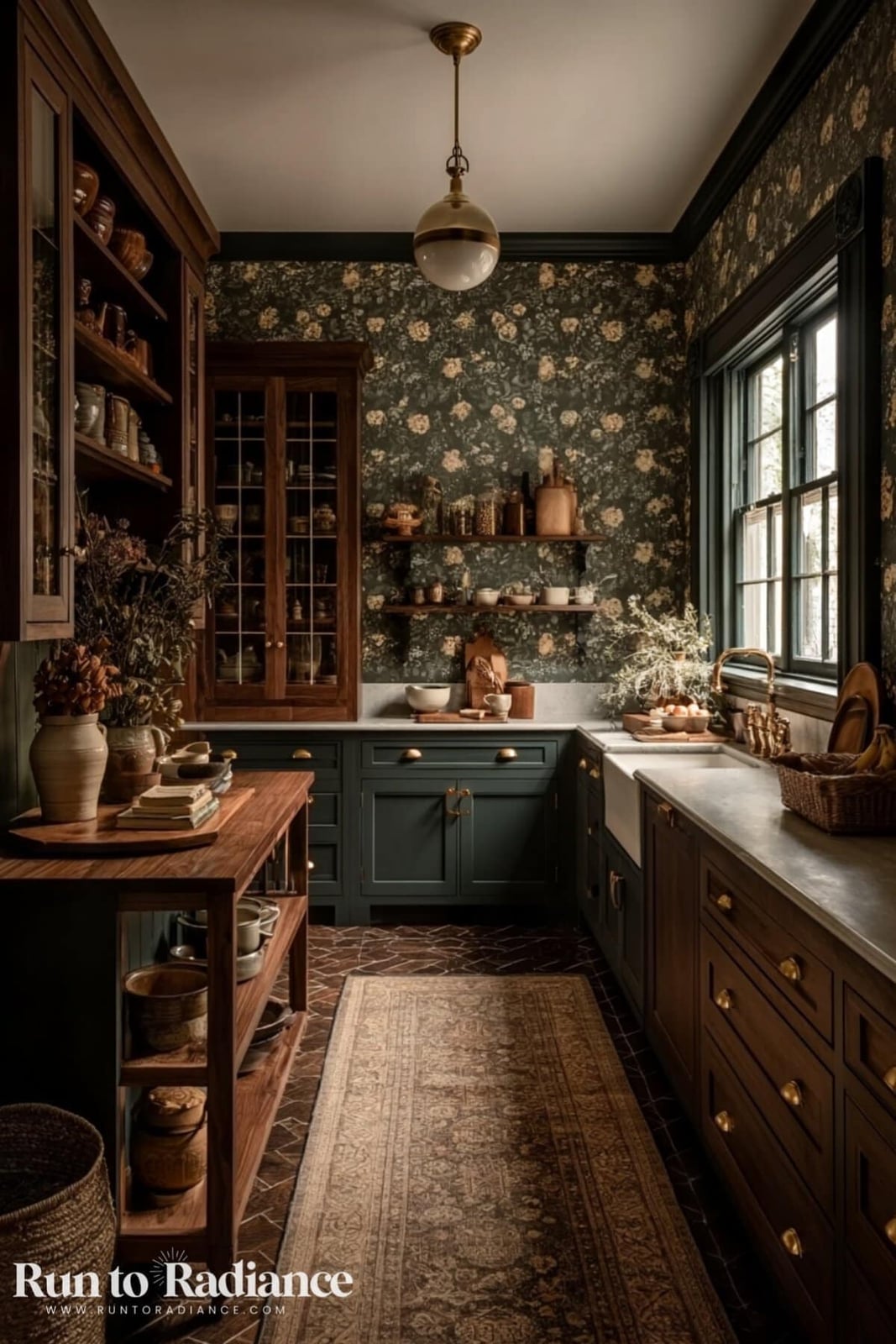
Pick a cabinet color that lives inside the print when using patterned wallpaper in a kitchen. The dark floral wallpaper here carries green, cream and yellow notes, and the green cabinetry pulls one of those tones forward. The wooden island and glass-fronted cabinet break up the wall of color, while the patterned runner rug adds another layer without clashing. A pendant light hangs over the island, and natural light from the window keeps the dark green from swallowing the room. The palette ratio runs roughly two parts green to one part cream, which gives the eye a resting place.
Stone farmhouse sink and rustic cutting boards
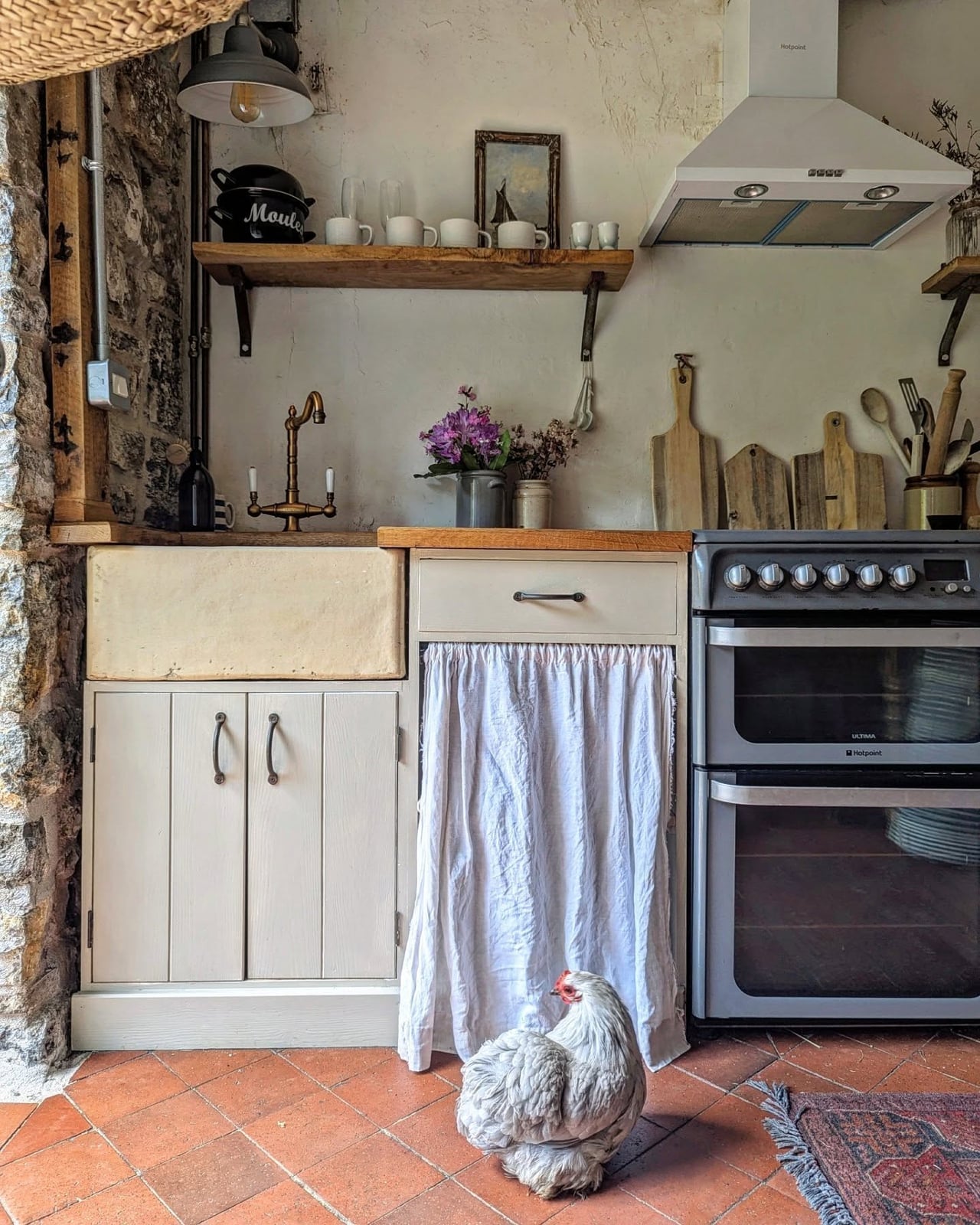
A sleek modern apron sink looks neat, but the stone version looks if it has been there for a century. Off-white cabinetry and a brass faucet keep the palette calm, while a row of wooden shelves above holds cutting boards and pottery within arm’s reach. A chicken wanders the terracotta tile floor, which tells you this kitchen is not precious. The layout is compact: sink and range oven sit side by side along one counter, and an industrial pendant light hangs overhead. The lesson here is about materials that earn their keep. Stone does not scratch from scrubbing or dent from dropped pans, and it pairs naturally with wood and brass. You get the old-house look without worrying about whether it will survive breakfast.
Open shelves with floral mugs and wildflowers
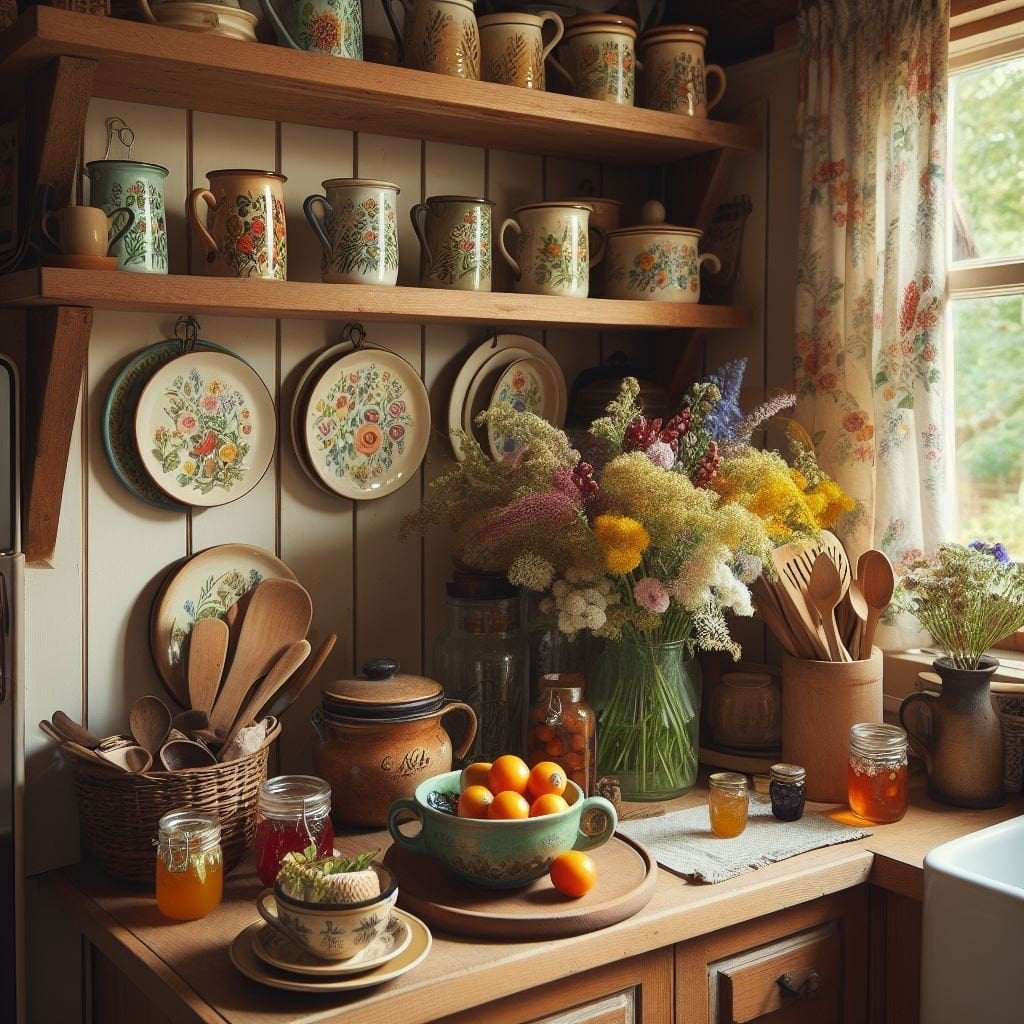
Floral mugs and plates on wooden shelves look like they landed there by happy accident, but the arrangement works because the colors stay in a narrow band. Cream, green, orange and yellow appear across the ceramics, the wicker basket and a ceramic pot, so nothing fights. A window floods the display with natural light, and by evening the same shelves look warm and collected. Wildflowers in a simple jar add a loose note that keeps the set from feeling like a store display. This is a renter-friendly approach: open shelving can be installed with brackets that leave no permanent mark, and the mugs and plates are easy to swap out or pack up.
Lush potted herbs and plants on wooden countertops
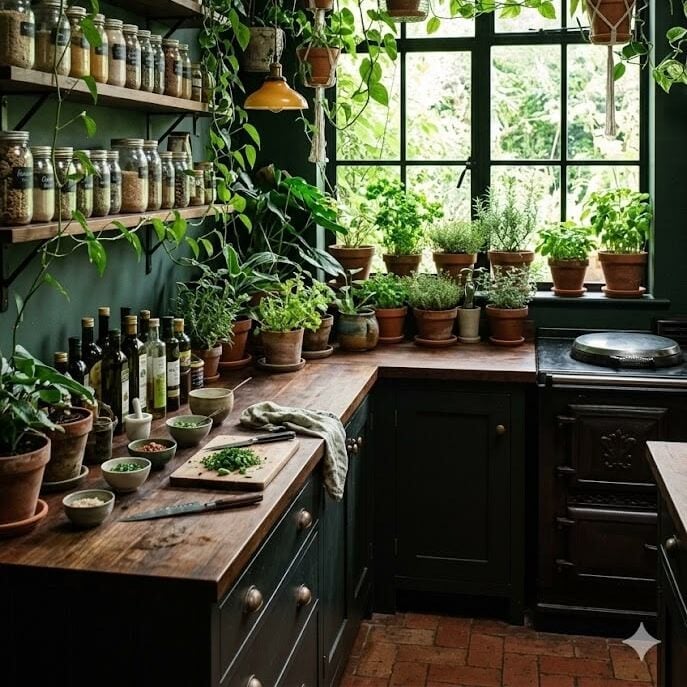
This kitchen proves that plants are not just decoration. They are the main event. A wooden countertop runs below dark cabinetry, and every inch of it holds terracotta pots, glass jars and trailing herbs. A pendant light and natural light keep the greenery healthy, and the brick wall behind adds texture without competing. What makes this work is the commitment: there is no single token plant on a high shelf. The herbs are crowded together, which actually makes them look fuller and more intentional. Choose plants that thrive in kitchen light and group them on a tray or wooden board so they are easy to water and move. Check your USDA zone before picking varieties, since some herbs need more sun than a typical kitchen window provides.
Sage green cabinetry with diamond patterned floor
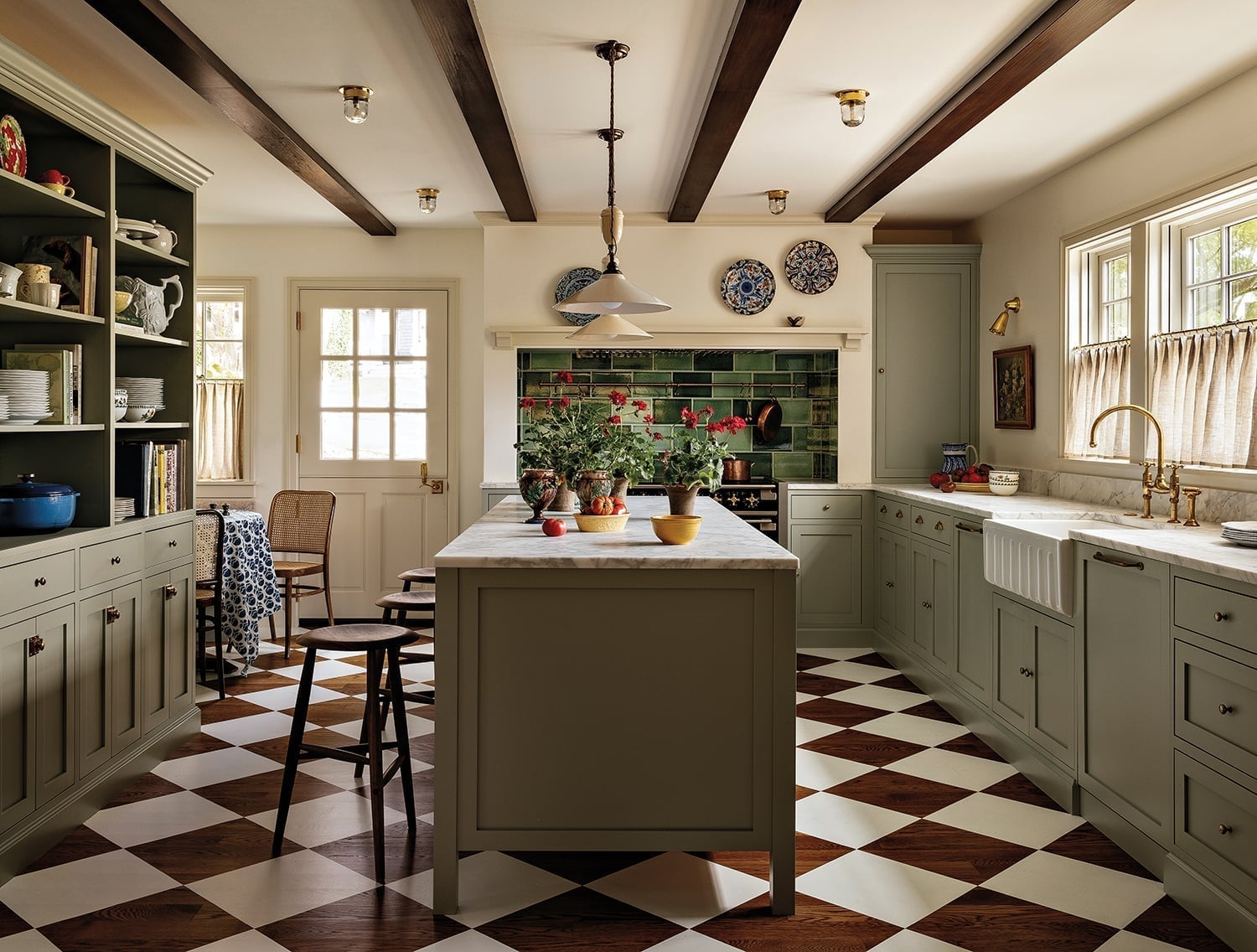
Can a patterned floor hold its own against busy cabinetry? In this kitchen, the answer is yes. Sage green cabinets and a marble-topped island sit above a diamond-patterned tile floor, and nothing feels noisy. The trick is that the floor uses the same cream and brown tones that appear in the wood beams and the marble, so the pattern looks texture rather than clutter. Open shelving and a farmhouse sink keep the room functional, while a wall sconce and overhead pendants provide layered light. The durability of tile matters here: a diamond pattern hides crumbs and scuffs far better than a solid light floor, and the grout lines break up the surface so spills are less noticeable. This is a layout that lives well because the palette does the heavy work.
Wicker baskets full of fruit on a central table
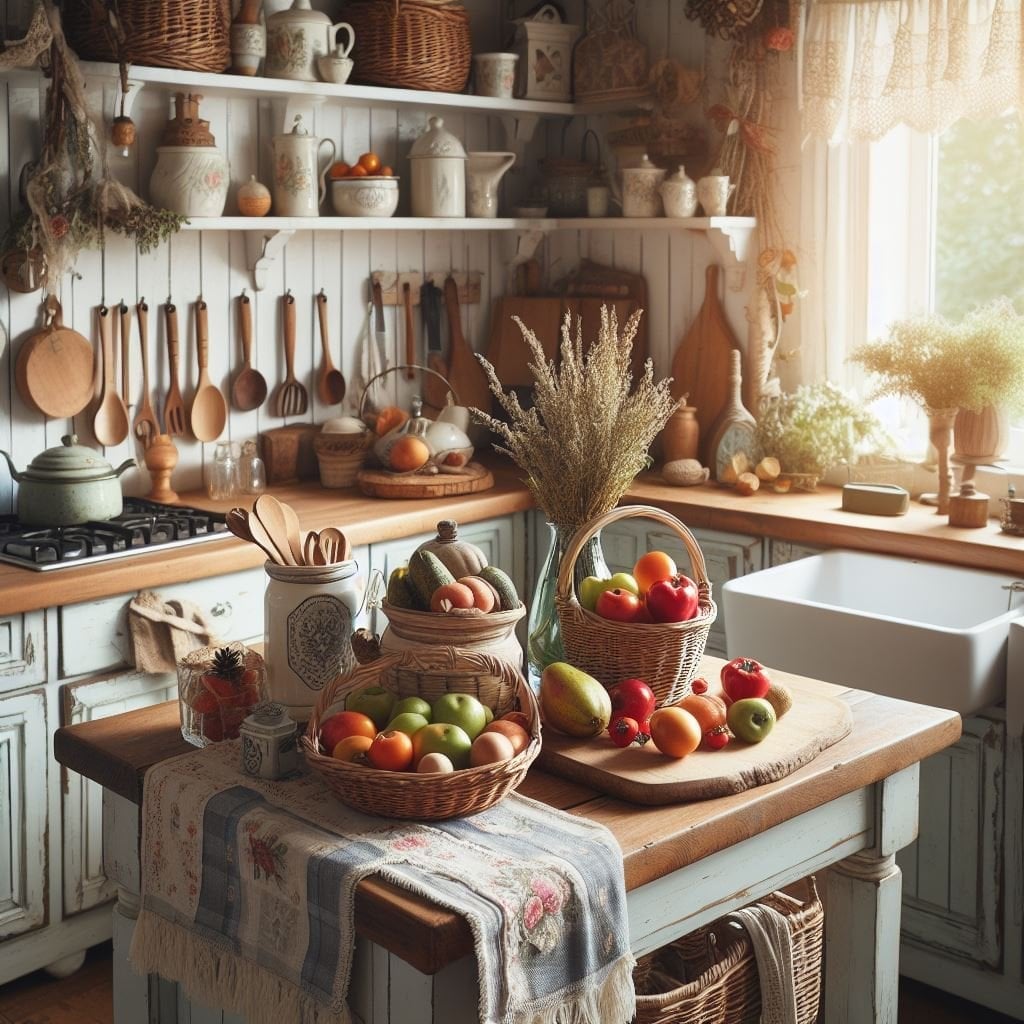
A central table covered with wicker baskets of fruit does more than look abundant. The baskets add warmth to a white kitchen with light blue accents, and the red and green of apples and lemons provide natural color that no decor item can match. Wooden utensils and rustic shelving on the walls echo the woven texture, so the baskets do not sit alone. The farmhouse sink and tile countertops keep the room grounded. What this setup teaches is scale: a single basket on a counter might look a prop, but a cluster on a table announces that this is a working kitchen. The baskets are also practical for grabbing fruit on the way out, and they hide the stems and bruises that a glass bowl would expose.
Exposed wooden beams and vintage range cooker
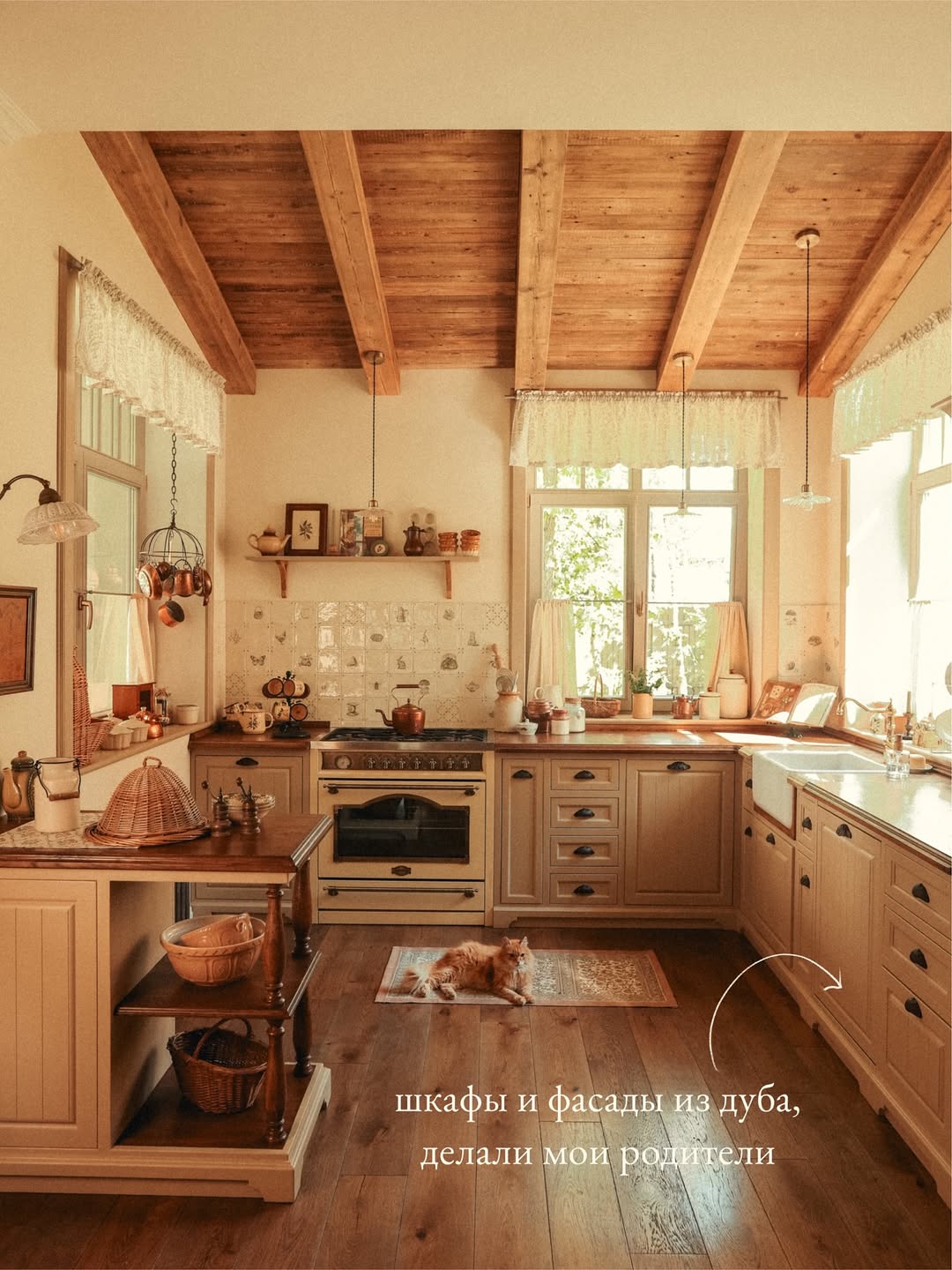
In a roomy kitchen, let one feature define the lighting scheme. Here, the wooden beamed ceiling anchors the room, so the pendant lights above the island and the natural light from the window work as supporting players. The cream and beige palette keeps the space bright, while the wood tones in the beams and island add warmth without darkening the corners. The u-shaped layout with a central island means the range cooker and farmhouse sink sit along the perimeter, leaving the island for prep. The result is a kitchen that feels open but not cavernous.
Ornate wooden island with spindle-back chairs
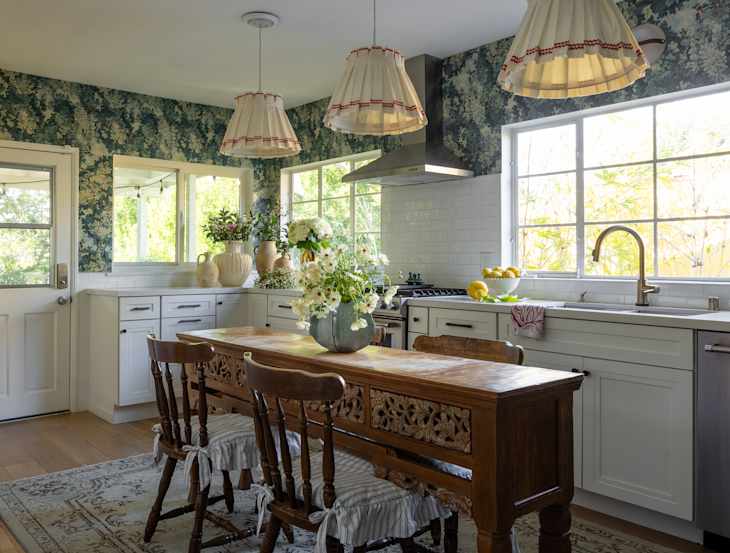
A carved wooden island could easily overwhelm a kitchen, but here it works because the palette around it stays quiet. White, green, and blue on the perimeter cabinets and floral wallpaper keep the eye moving, so the island is the centerpiece without feeling bulky.
The spindle-back chairs reinforce that scale. Their open backs and slim profile keep the seating area from feeling heavy, while the pendant lights above draw the eye upward. Light from the windows hits the island’s carved details, so the wood grain does the decorating. The room feels spacious because the ornate piece has room to breathe.
Soft pink cabinetry and floral refrigerator decal
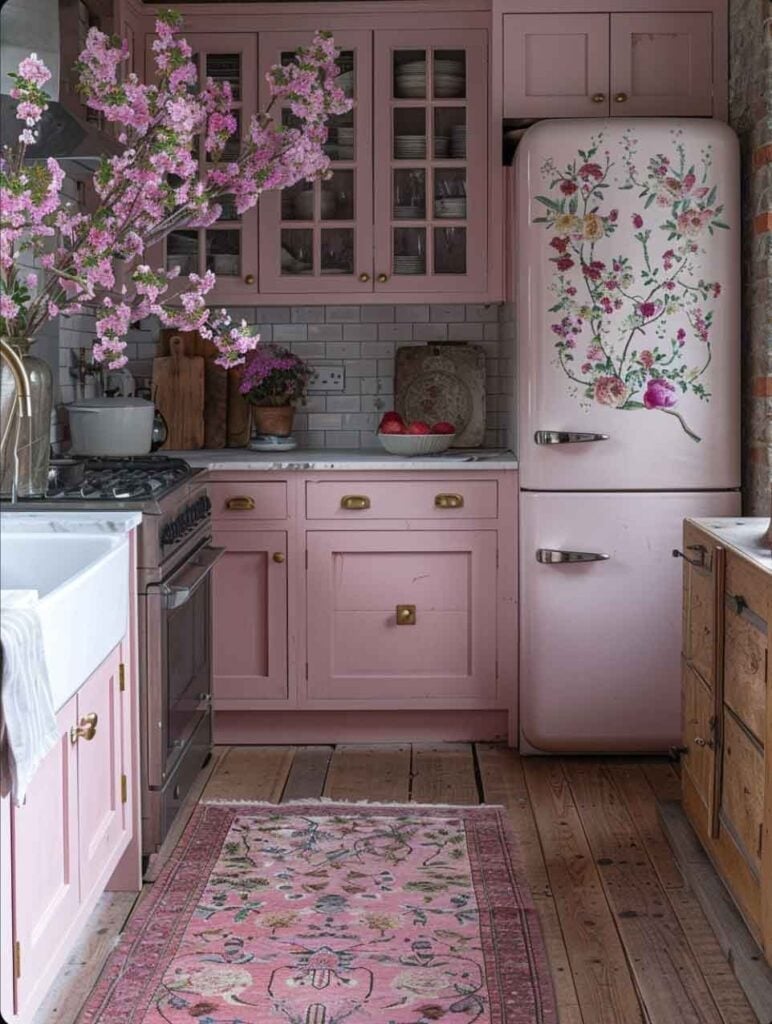
The floral decal on the refrigerator is the kind of detail that makes a compact kitchen feel personal rather than cramped. Pink cabinets and a farmhouse sink keep the palette soft, while the patterned rug adds a layer of texture on the floor. Overhead cabinet lights and natural light keep the space from feeling dim. The decal is a renter-safe swap that brings in the floral motif without a permanent commitment.
Pale yellow walls and open shelving display
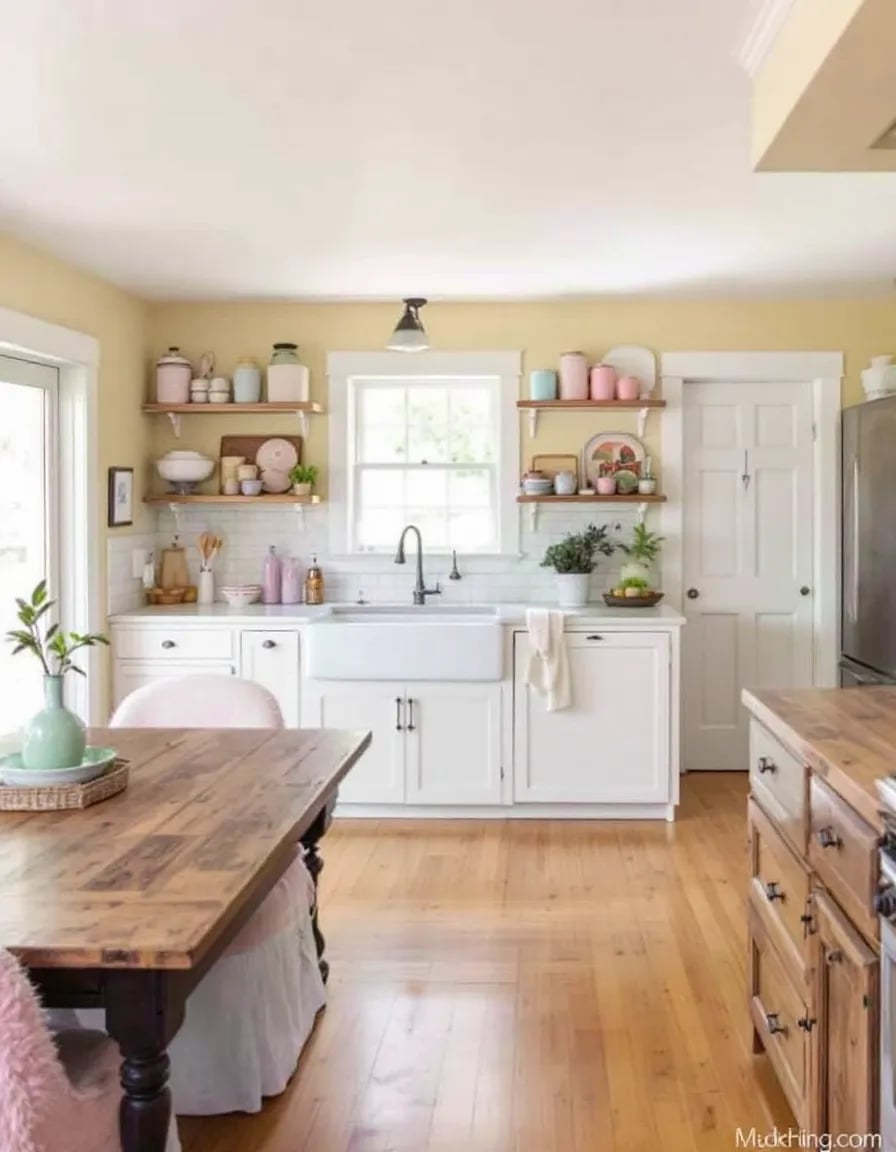
Pale yellow walls are a smart choice for a galley kitchen with a dining area because they reflect both the overhead pendant light and the window light without bouncing glare. The white cabinets and wood tones keep the palette grounded, so the yellow appears sunny and not loud. The open shelving above the farmhouse sink displays ceramics and glassware, which adds visual interest at eye level. The room feels connected because the dining table sits within the same sightline as the sink, making the whole space live larger than its footprint.
Cream floral wallpaper and copper kettle
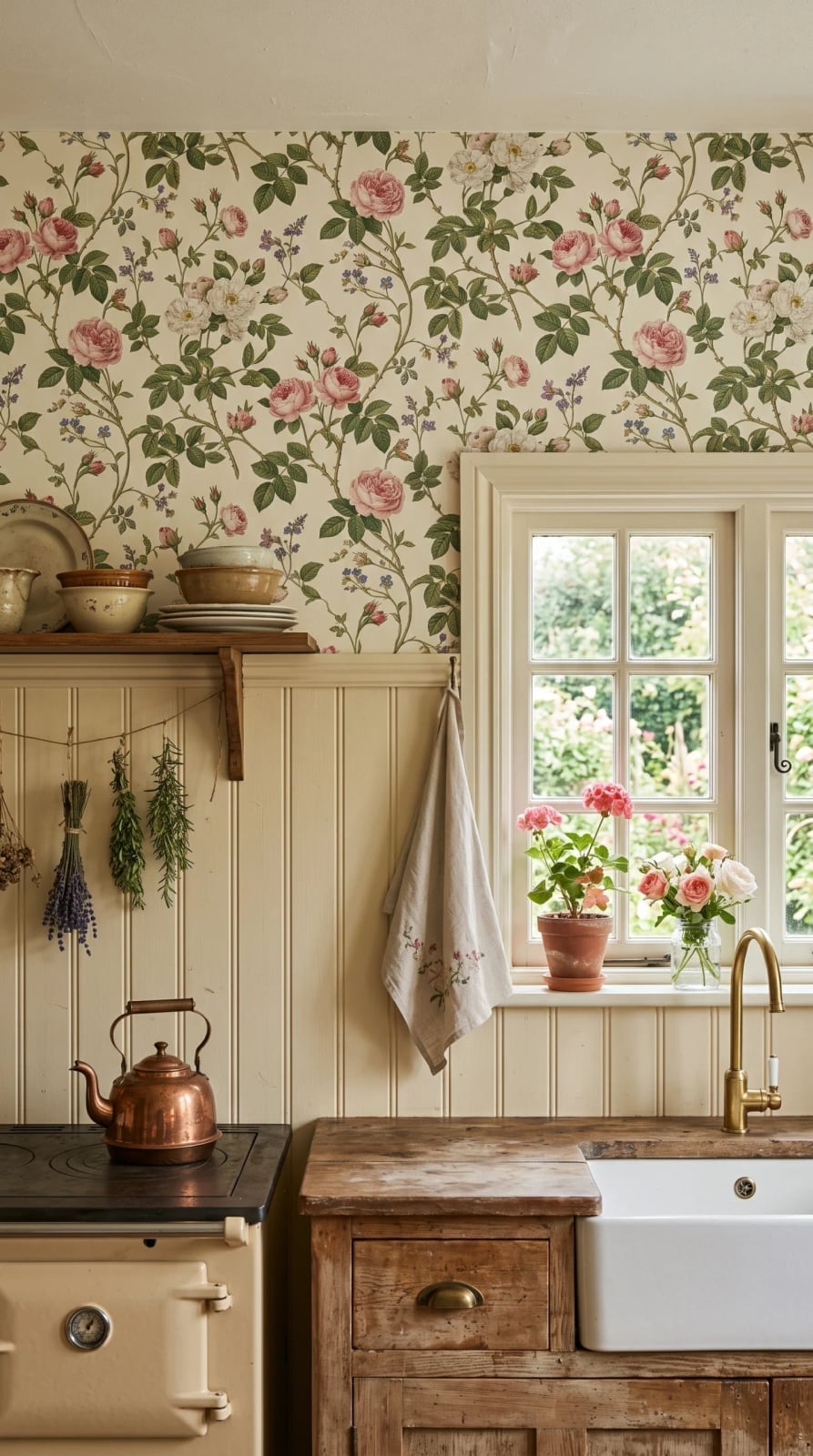
A practical rule for a compact kitchen with a corner vignette is to use the wallpaper as the anchor and let everything else support it. The cream floral wallpaper with pink and green blooms sets the palette, so the wooden cabinets and copper kettle follow its lead. The apron sink and open shelving keep the counter clear, while the dried herbs above the window add a natural line.
The copper kettle sits on the stovetop, which is a smart storage move for small spaces: keep frequently used pieces out where they double as decor. The brass and ceramic accents pick up the warm tones in the wallpaper, so the room feels collected rather than cluttered.
Central island with hanging copper pot rack
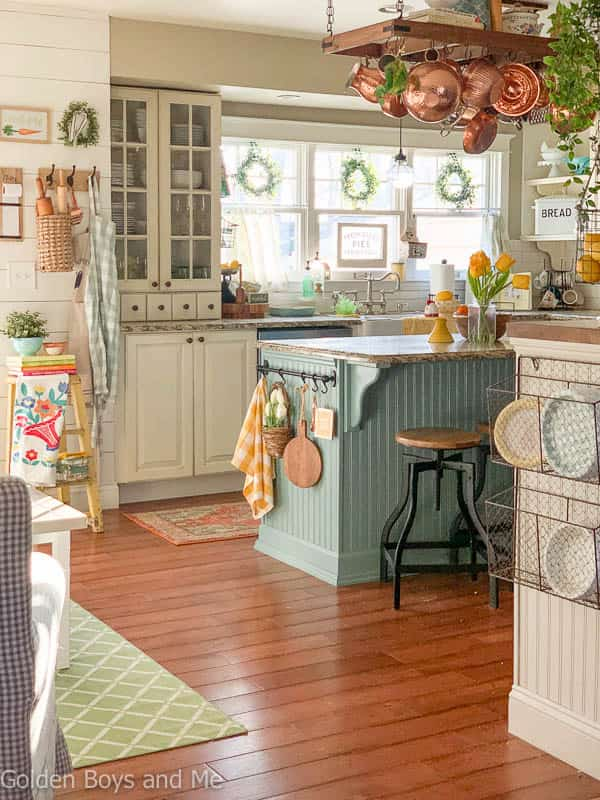
A hanging copper pot rack turns the island into the kitchen’s functional center. Cream and sage green cabinetry with glass fronts keep the room light, while the warm copper pulls the eye upward. Wire baskets on the rack hold produce or linens without cluttering the counter. The rack itself becomes a storage solution that frees drawer space for utensils and gadgets.
Wooden island with ceiling-mounted pot rack
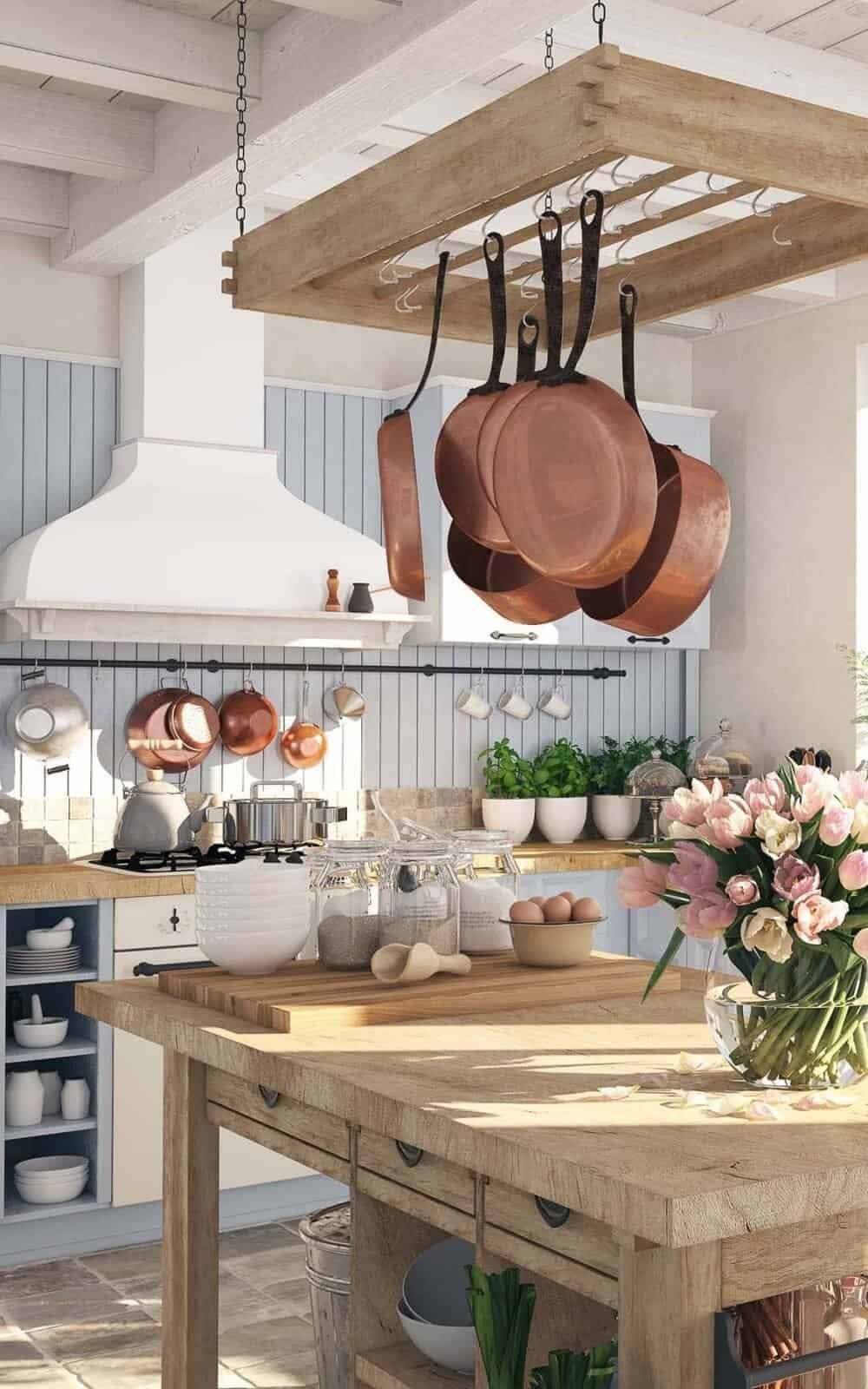
A ceiling-mounted pot rack works best when the pots themselves are the decoration. In this roomy kitchen, copper pots hang above a wooden island, their warm tones echoed by the white range hood and light blue cabinetry. A renter-friendly version uses a tension rod between two upper cabinet faces instead of drilling into the ceiling. Hang pots by their handles with S-hooks, and keep daily-use pans within arm’s reach. The arrangement keeps the counter clear for prep work and makes grabbing a skillet as natural as opening a drawer.
White shaker cabinets with lilac flower accent
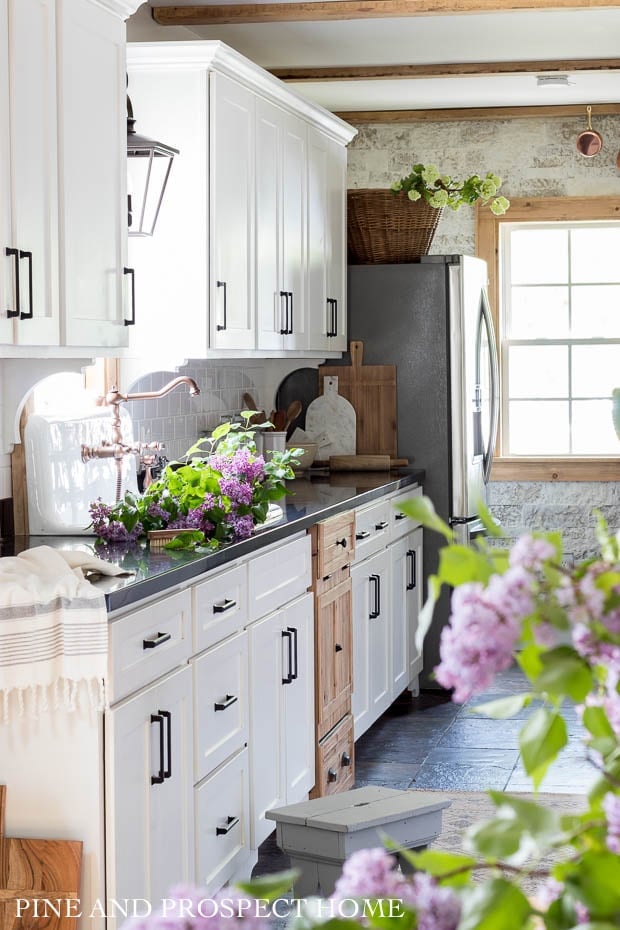
White shaker cabinets look cottagecore’s neutral baseline, but the palette risks feeling flat without a counterweight. Dark countertops and a copper faucet add contrast, while fresh lilac flowers on the counter introduce purple and green without permanent commitment. The flowers soften the black-and-white framework without fighting it.
This approach suits anyone who rents or tires of color quickly. Swap the lilacs for dried eucalyptus in winter or bright tulips in spring. The flowers act as a seasonal thermostat for the whole room, letting the white cabinets stay constant while the accent shifts.
Deep green cabinetry and blue chairs at island
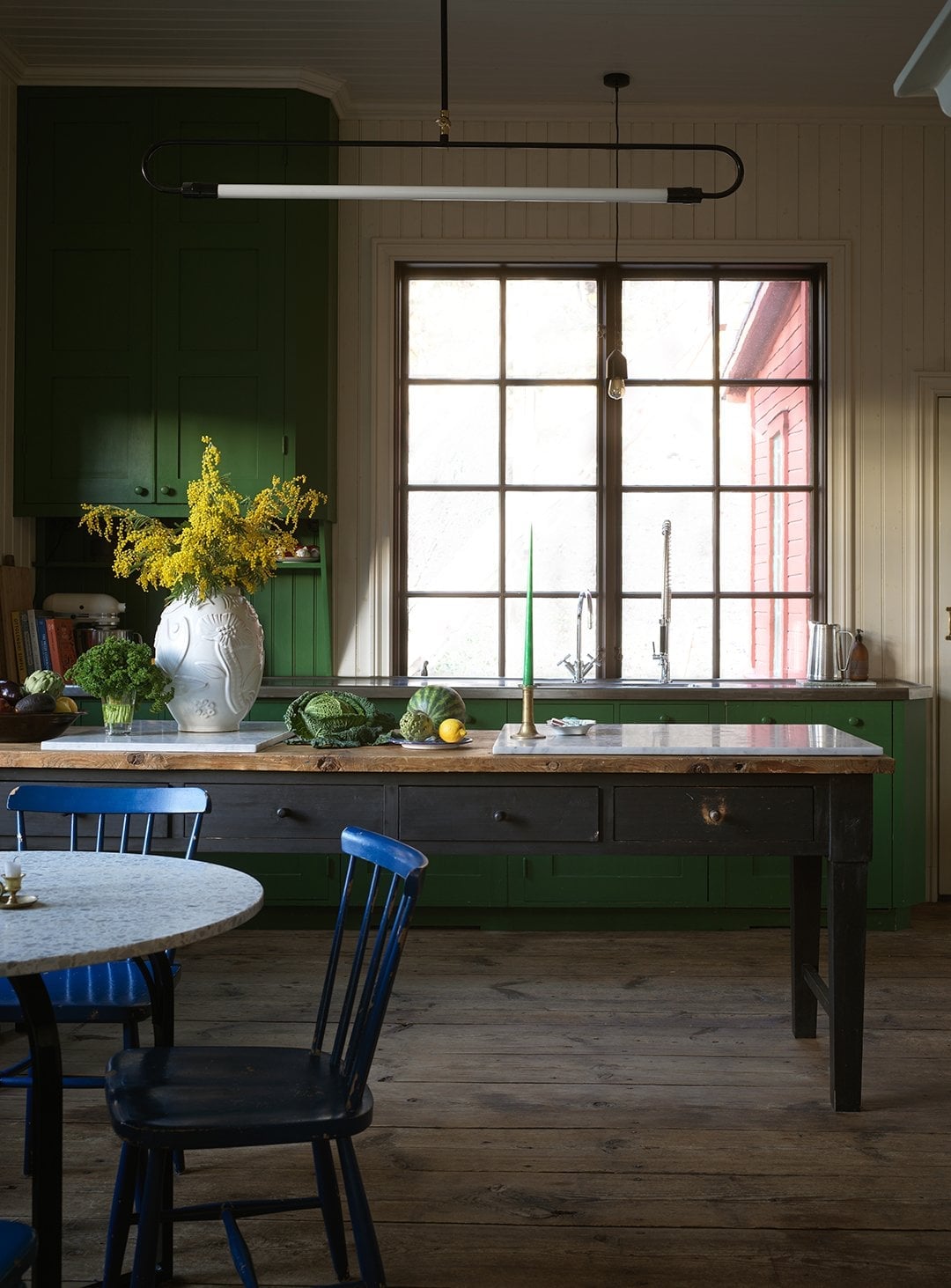
Deep green cabinetry anchors the room the way a dark suit anchors a wardrobe. Blue chairs around a dark wood island add a second saturated color without competing. A large window and an overhead linear fixture keep the space from feeling cave-like. The palette works because green and blue share a cool undertone, so they sit side by side without clashing. White walls and a light countertop give the eye a place to rest.
Distressed blue pantry cabinet with tin panels
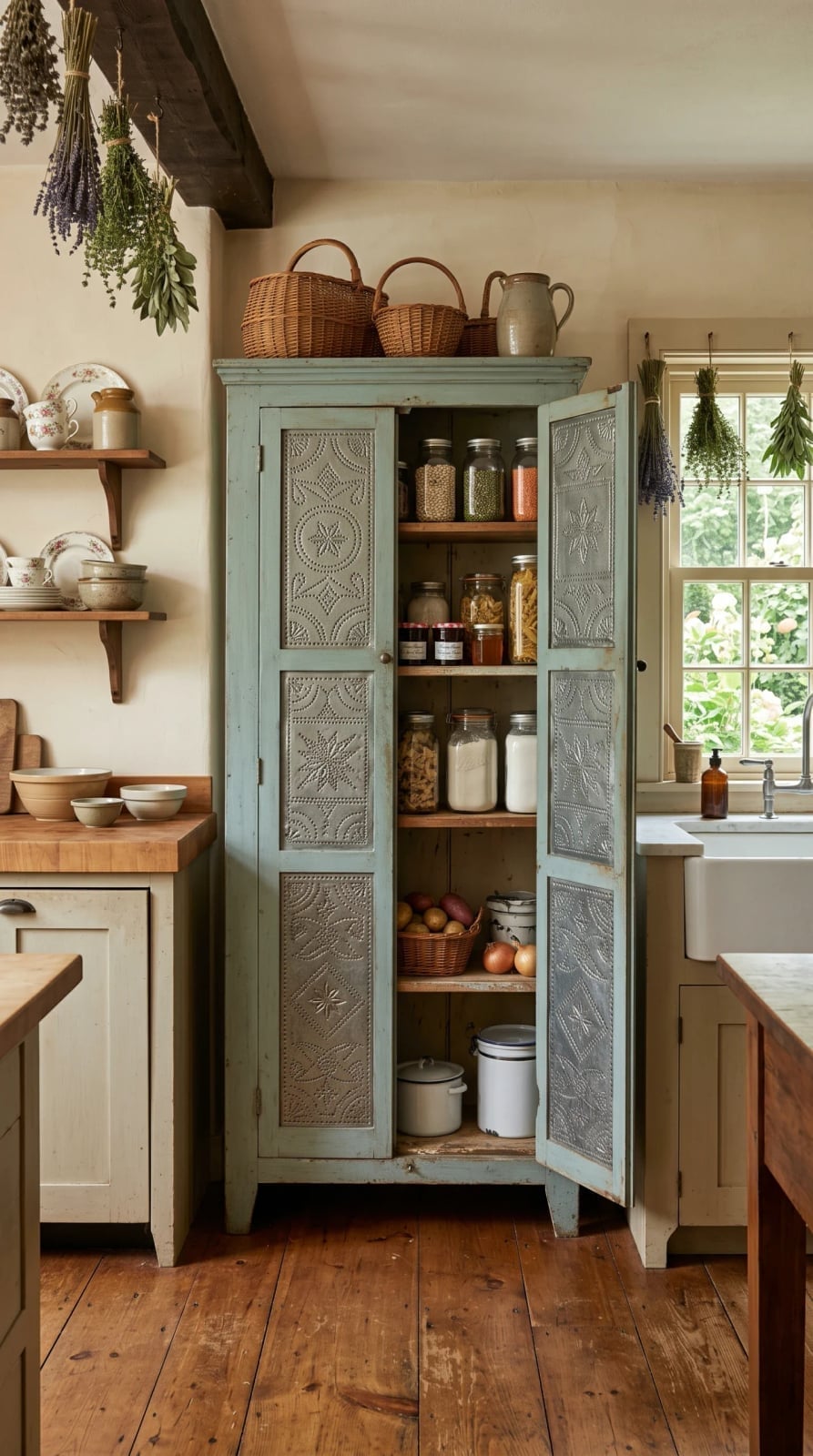
A tall pantry cabinet with embossed tin panels earns its place by scale alone. The distressed pale blue finish looks collected rather than new, and the tin panels add texture that flat paint cannot match. Woven baskets on the lower shelves hide bulk items, while ceramic jars on the upper shelves keep dry goods visible. The cabinet breaks the run of plain cabinetry and gives a small kitchen a focal point that does not need to be centered on the sink or stove.
Light blue paneled cabinets with gold hardware
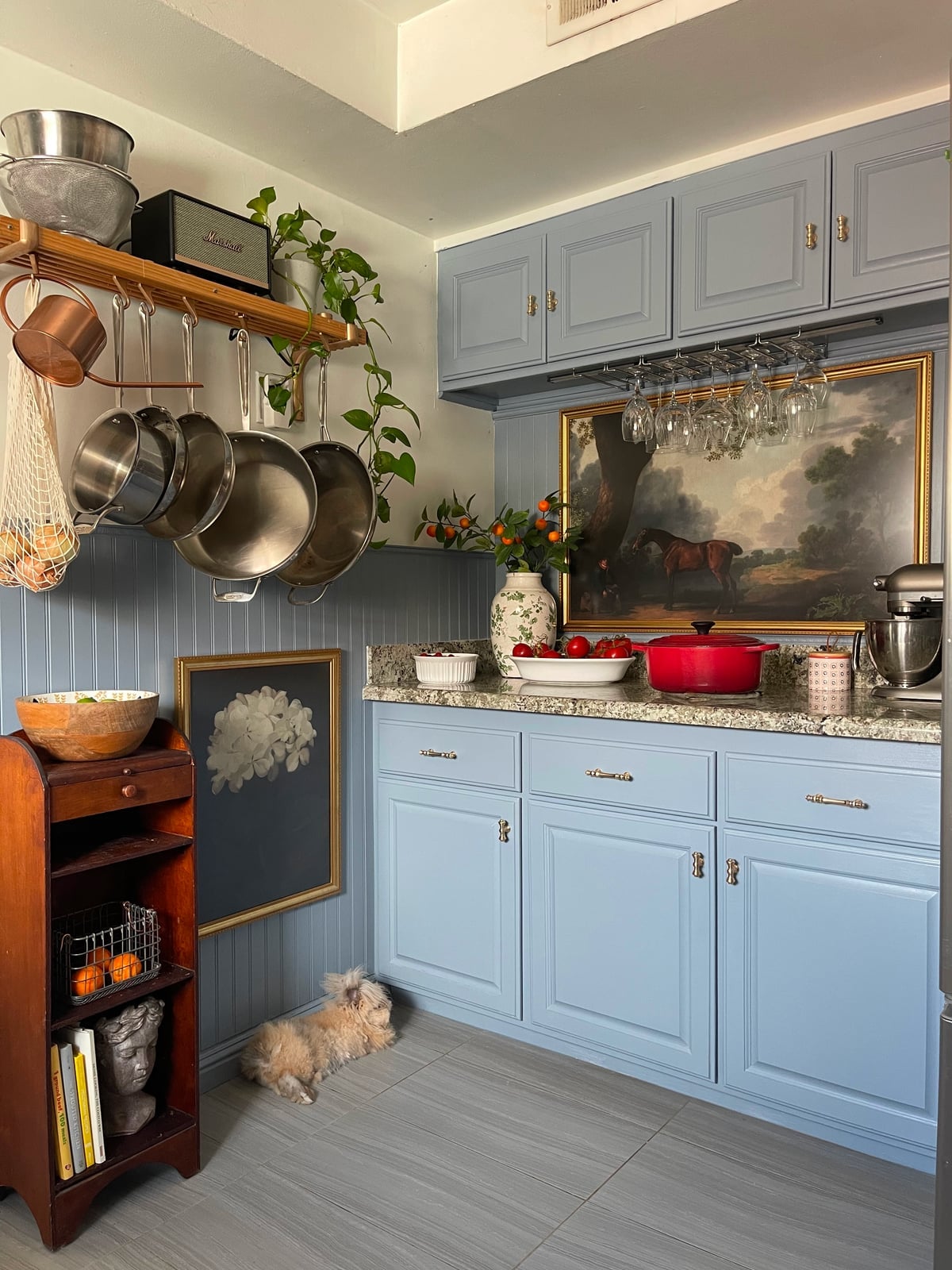
Light blue paneled cabinets look a softer alternative to the usual sage or cream in this style. In a compact corner kitchen, the pale blue keeps the space from shrinking further, while gold hardware adds a warm, traditional detail. The palette pairs blue with gray and wood tones, so the room stays grounded rather than feeling like a pastel box. Hanging pots and vintage artwork on the wall reinforce the lived-in cottage look. For a similar effect, match your cabinet color to the light in the room: north-facing kitchens can handle a slightly brighter blue, while south-facing rooms can carry a deeper shade without feeling heavy. The key is keeping the surrounding materials simple. Wooden shelving and natural stone countertops let the cabinet color lead the design.
Copper pots hang above a cast iron stove
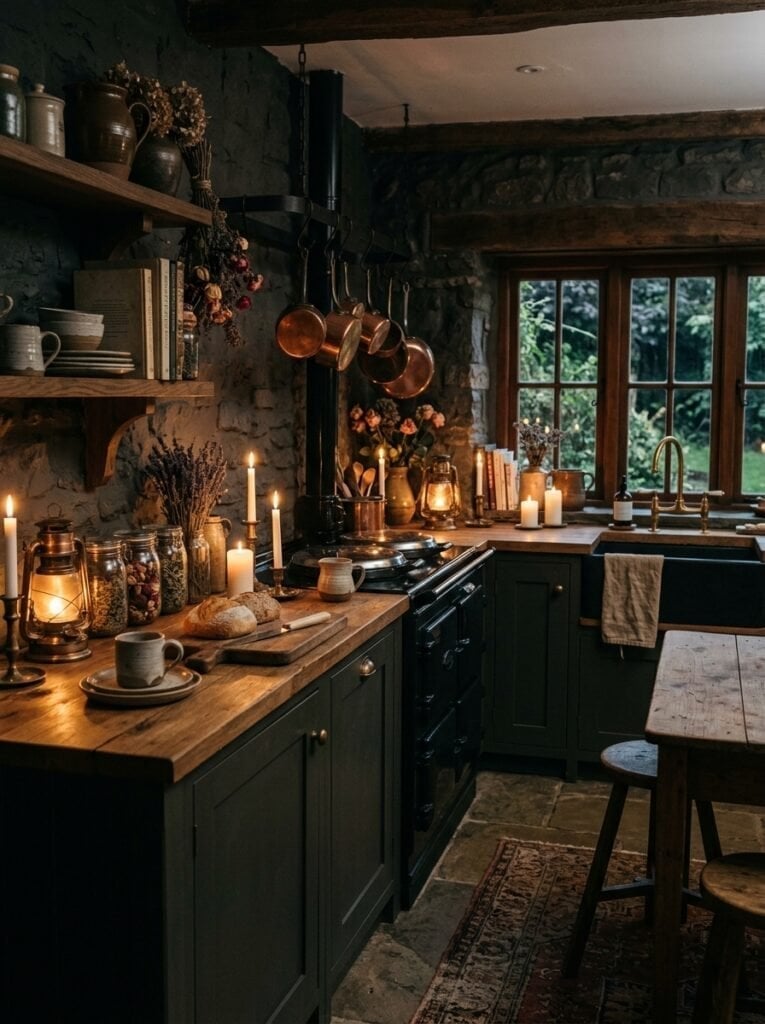
In a compact L-shaped kitchen with dark green cabinets and wooden countertops, a cast iron stove anchors the room while copper pots hang above it from a ceiling rack. The warm copper tones break up the dark green and stone gray palette, and the hanging storage keeps the counter clear. A stone floor and natural light from a window complete the look. Choose copper or brass cookware that you actually use, not just display pieces. The material patinas over time, which adds character instead of demanding a constant polish.
Dark green shaker cabinets with wooden cutting boards
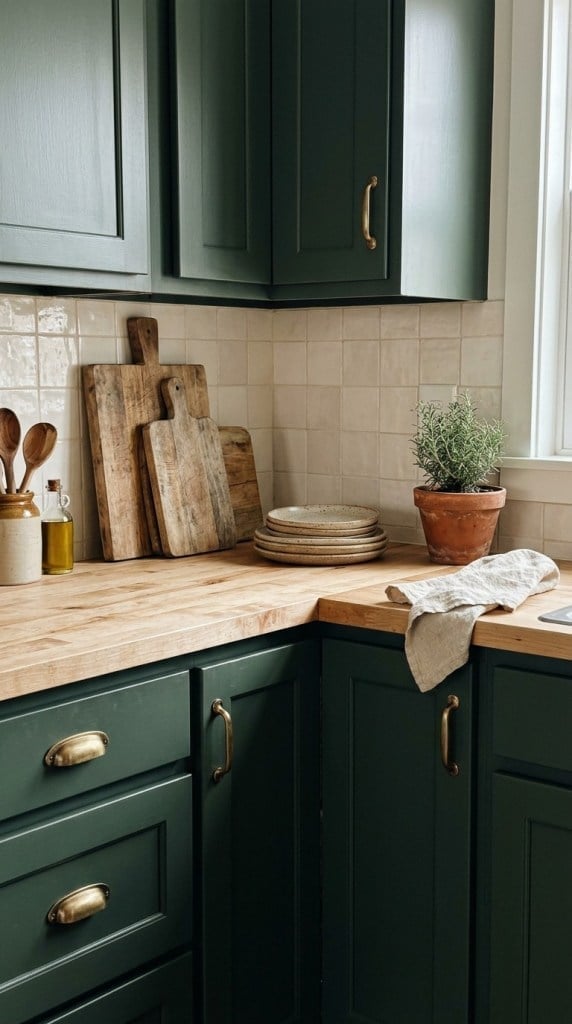
A practical rule for shaker cabinets in a cottagecore kitchen is to let the hardware and countertop accessories set the mood. Dark green shaker cabinets provide a strong backdrop, so a wooden cutting board, a ceramic pot, and a linen napkin on the counter become the visual anchors. The cream tones in the tile and trim keep the dark green from dominating the room. For renters or anyone not ready to commit to new cabinets, a dark green peel-and-stick wallpaper on the backsplash or a single painted cabinet door can create a similar focal point without a full renovation.
Blue cabinets and green tile backsplash hide imperfections
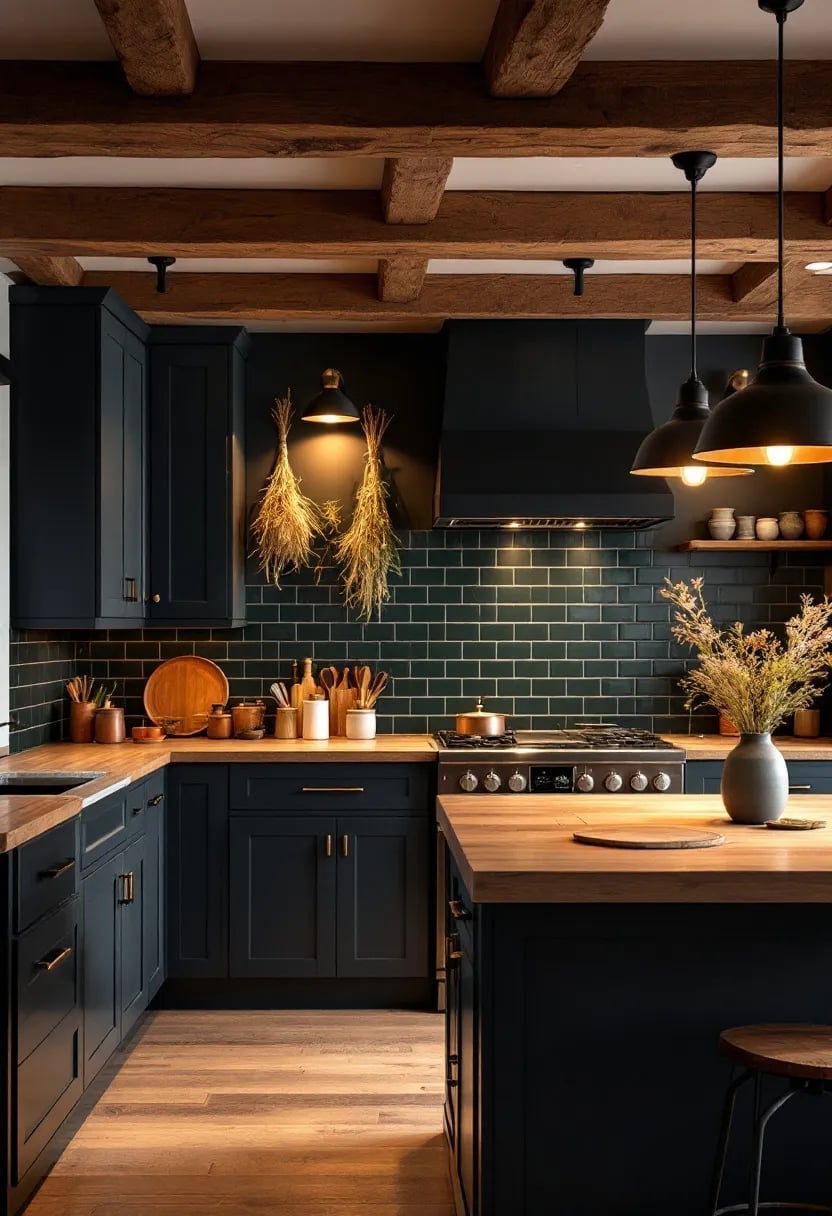
Dark blue cabinets paired with a green subway tile backsplash create a palette with a shared blue undertone, so the two colors work together instead of competing. Wooden countertops add warmth, and pendant lights with warm bulbs keep the space from feeling cold. Hanging dried herbs from the ceiling ties the look back to the cottagecore style.
Choose a backsplash tile with a slight variation in color or texture. A handmade or matte finish subway tile will hide small imperfections better than a high-gloss, perfectly uniform one. The darker cabinet color also hides smudges and fingerprints between cleanings, which is useful in a busy kitchen.
Two-tone cabinets with herringbone wood floors
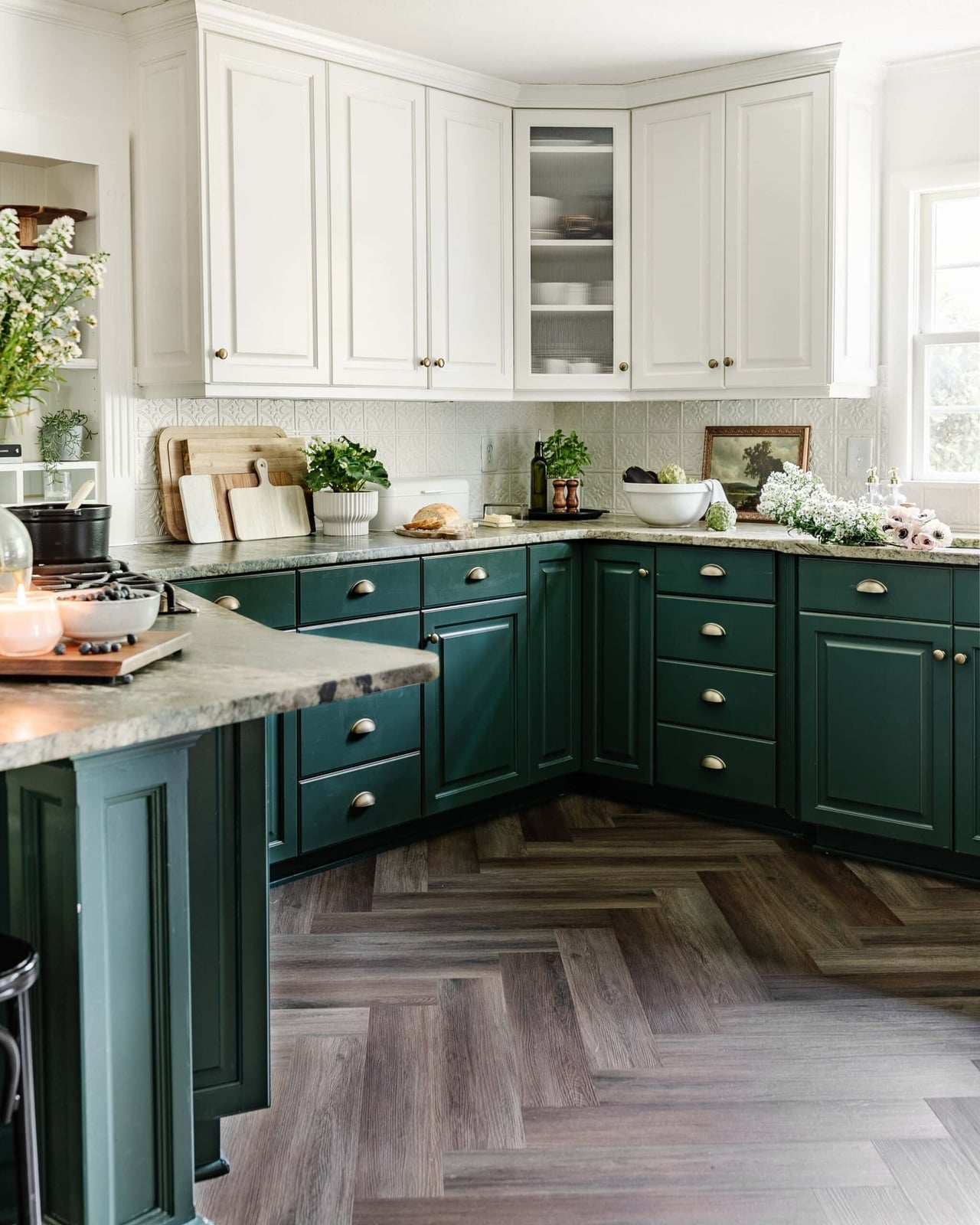
Two-tone cabinets with dark green lowers and white uppers create a clear visual divide in a roomy corner kitchen with an island. The herringbone wood floor adds movement and texture without introducing a new color. Potted plants and cutting boards on the counter keep the look soft and functional. For a similar effect, use the darker color on lower cabinets to anchor the room and the lighter color on top to keep the space open. The floor pattern works as a neutral base. If herringbone is not an option, a diagonal wood plank floor creates a similar sense of motion.
Dark green cabinetry and stone counter island
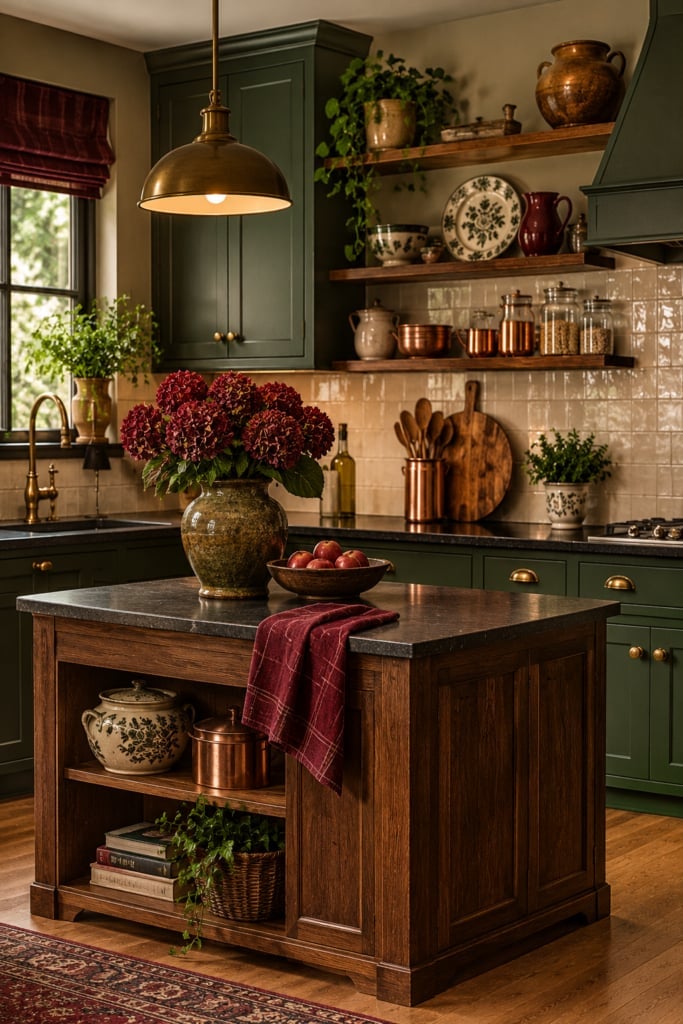
A central island with a stone countertop and dark green cabinetry around the walls gives this kitchen a roomy, grounded feel. The dark green acts as a neutral when it covers that much surface area, so the wood island, cream accents, and a large vase of burgundy flowers can sit beside it without clashing. A single pendant light over the island keeps the palette from turning too heavy. The layout works because the island anchors the room while the open shelves above the counter keep the walls from feeling closed in. For any kitchen with a similar footprint, letting one color dominate the cabinetry and pulling in wood and stone for the island creates a balanced center of gravity.
Mauve cabinets with arched window and string lights
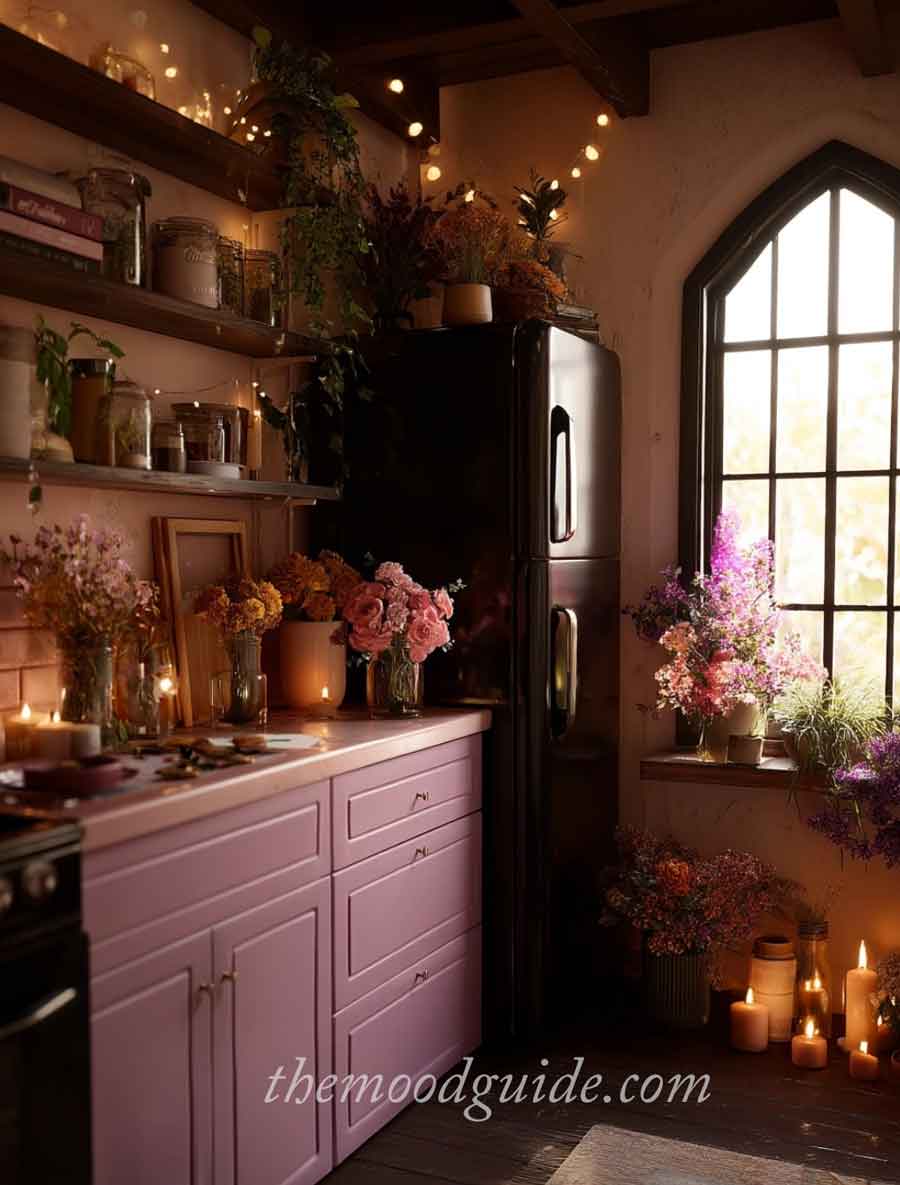
Painting cabinets a permanent color like mauve can feel like a big commitment, but string lights and candles offer a softer way to bring that same warmth into a rental or temporary space. In this compact corner kitchen, the mauve cabinets and black refrigerator sit under an arched window that lets in natural light, while a set of string lights draped above the counter adds a glow that works day and night. The open shelves hold glass and ceramic pieces that catch the light without competing with the cabinet color. If mauve walls or cabinets aren’t an option, a string light installation with warm bulbs and a few gold-toned accents can mimic the same cozy, slightly romantic feel without a permanent change.
Sage green cabinets with double apron sink
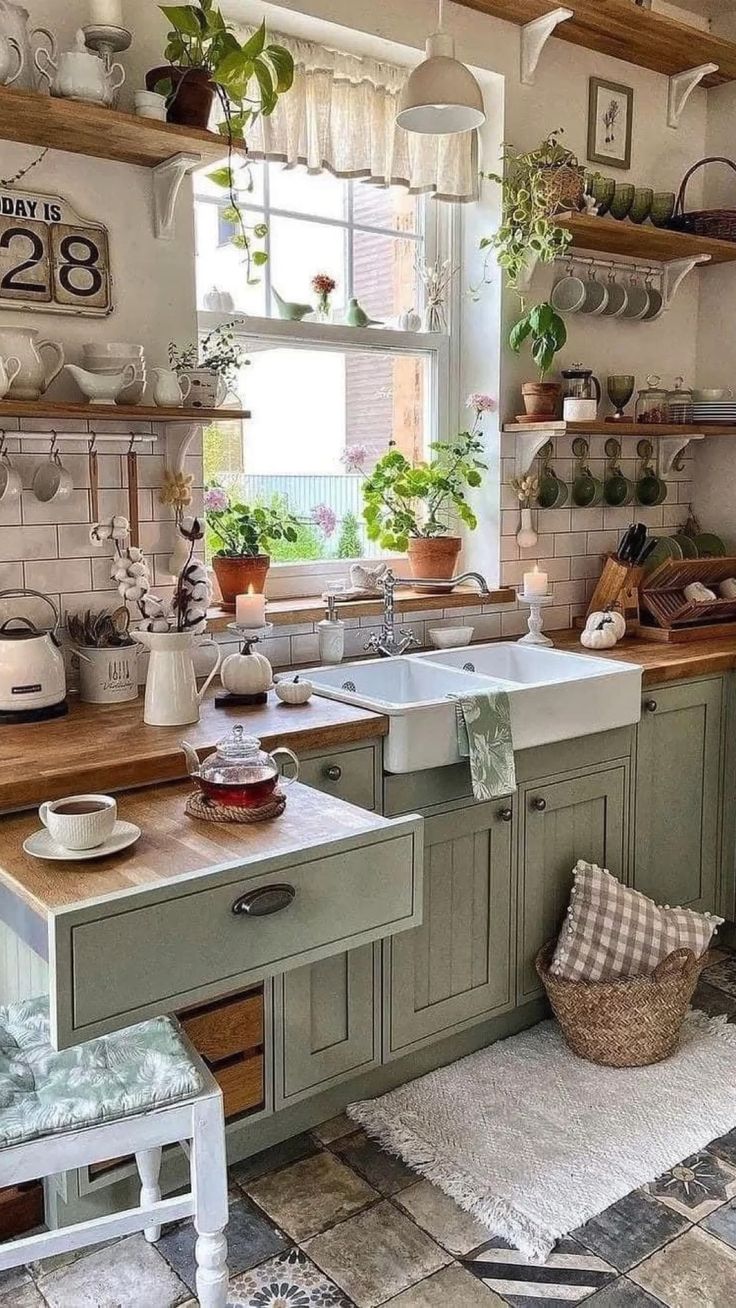
The double apron sink sits at the center of this compact kitchen, with sage green cabinets below and open shelves above holding potted plants and ceramic pieces. A pendant light hangs over the sink area, and daylight lands directly on the wooden countertops. The layout puts the sink between the counter space on either side, which makes washing and prepping feel like part of the same motion. The wicker baskets and brass accents on the shelves tie back to the wood tones in the counter, so the whole corner appears as one connected setup.
Sage green cabinets with vintage range and fresh bread
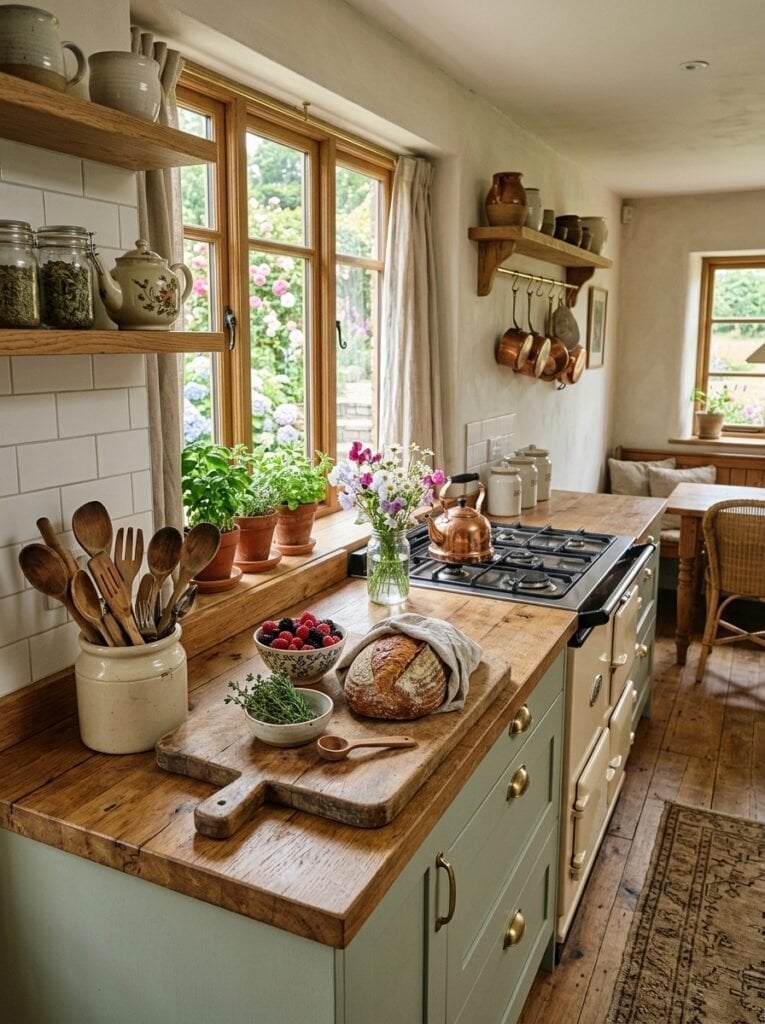
A vintage-style range with copper details sits against sage green cabinets in this L-shaped kitchen, with wooden countertops and open shelving above. The counter holds a wooden cutting board with bread and berries, and potted herbs sit nearby on the shelf. The range is the practical anchor here: its enamel finish and metal knobs hold up to daily cooking, and the copper adds a warm accent that matches the wood tones without needing polish every week. Windows and the overhead ambient fixture keep the sage green from looking too cool, so the whole room stays cozy.
Rustic wooden shelving with cakes and pomegranates
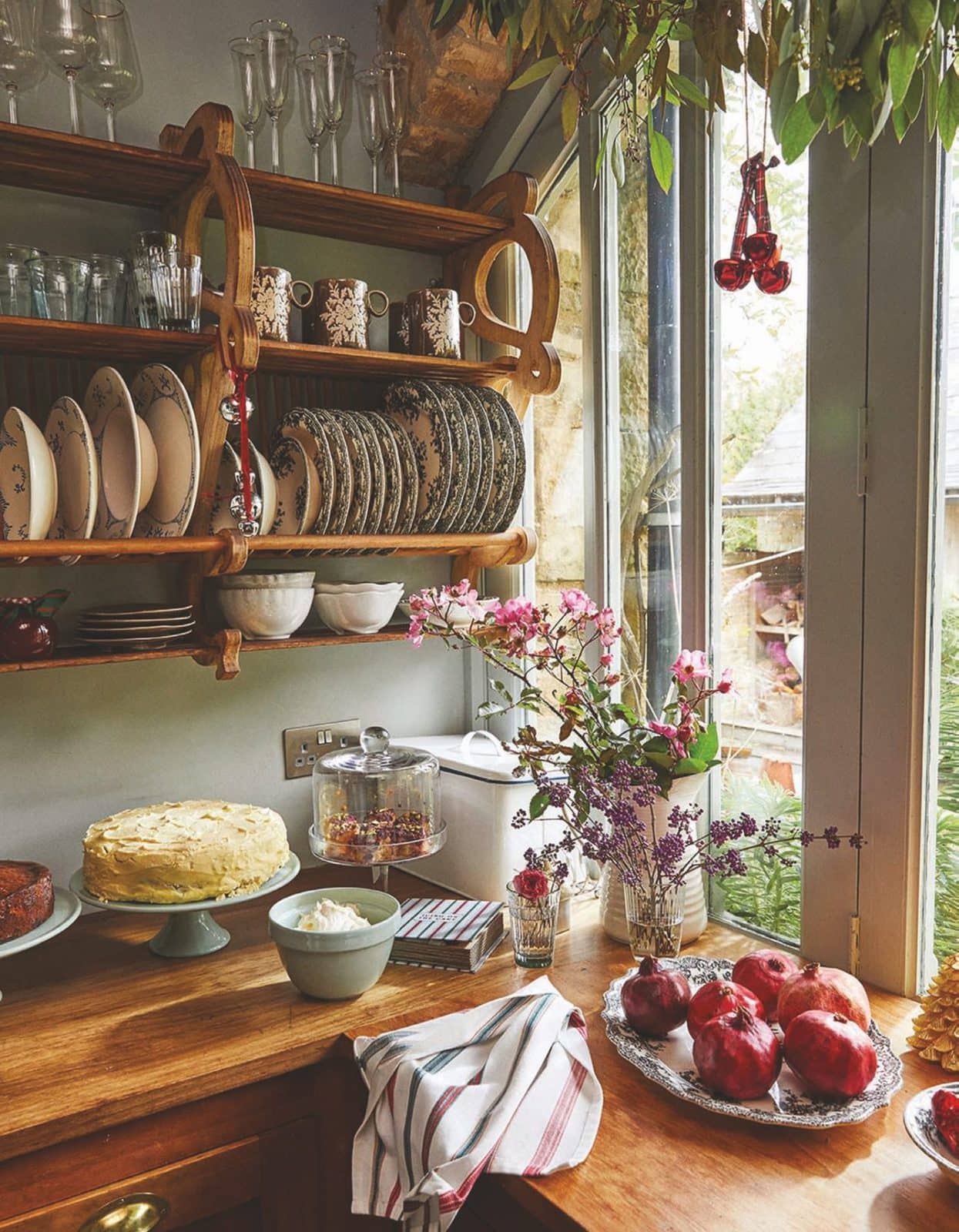
Open shelving can tip into clutter if every shelf holds a different object, but this compact kitchen uses a single rustic wooden shelving unit to keep things organized. The shelves hold patterned plates, glass jars, and small floral arrangements, with cakes and pomegranates on the lower shelf where they are easy to reach. The sage green walls and cream counter below keep the eye moving upward while the red fruit and ceramic pieces stand out. The top shelf gets the most light, so glass and lighter plates sit there while heavier ceramic pieces stay lower. For a small kitchen, limiting open shelving to one wall and using it for both display and daily access prevents a crowded look.
Final Thoughts
Cottagecore is about letting a kitchen breathe, old wood, soft greens, and hand-washed dishes drying on a rack. The practical takeaway? Choose finishes that welcome wear: painted cabinets that can be touched up, stone sinks that won’t show every scratch, and open shelving that forces you to edit your clutter. Swap a trend color every few years on walls or an island rather than redoing the whole room. For outdoor plant ideas, check your USDA zone before committing to herbs near a window. A kitchen that looks like it grew there, not like it was dropped in, will age better than any trend.