
A deck is more than a platform. It is the stage for your outdoor life, from morning coffee to evening gatherings. For 2027, the focus is on design that blends function with personality, turning simple boards into a space you actually want to be in.
These 27 aesthetic deck design ideas cover the full range of styles and layouts, offering practical inspiration for updating your own outdoor area. Whether you are starting from scratch or refreshing an existing deck, this collection provides clear, actionable approaches to make the most of your space.
Multi-level composite deck with integrated stairs and modern railings
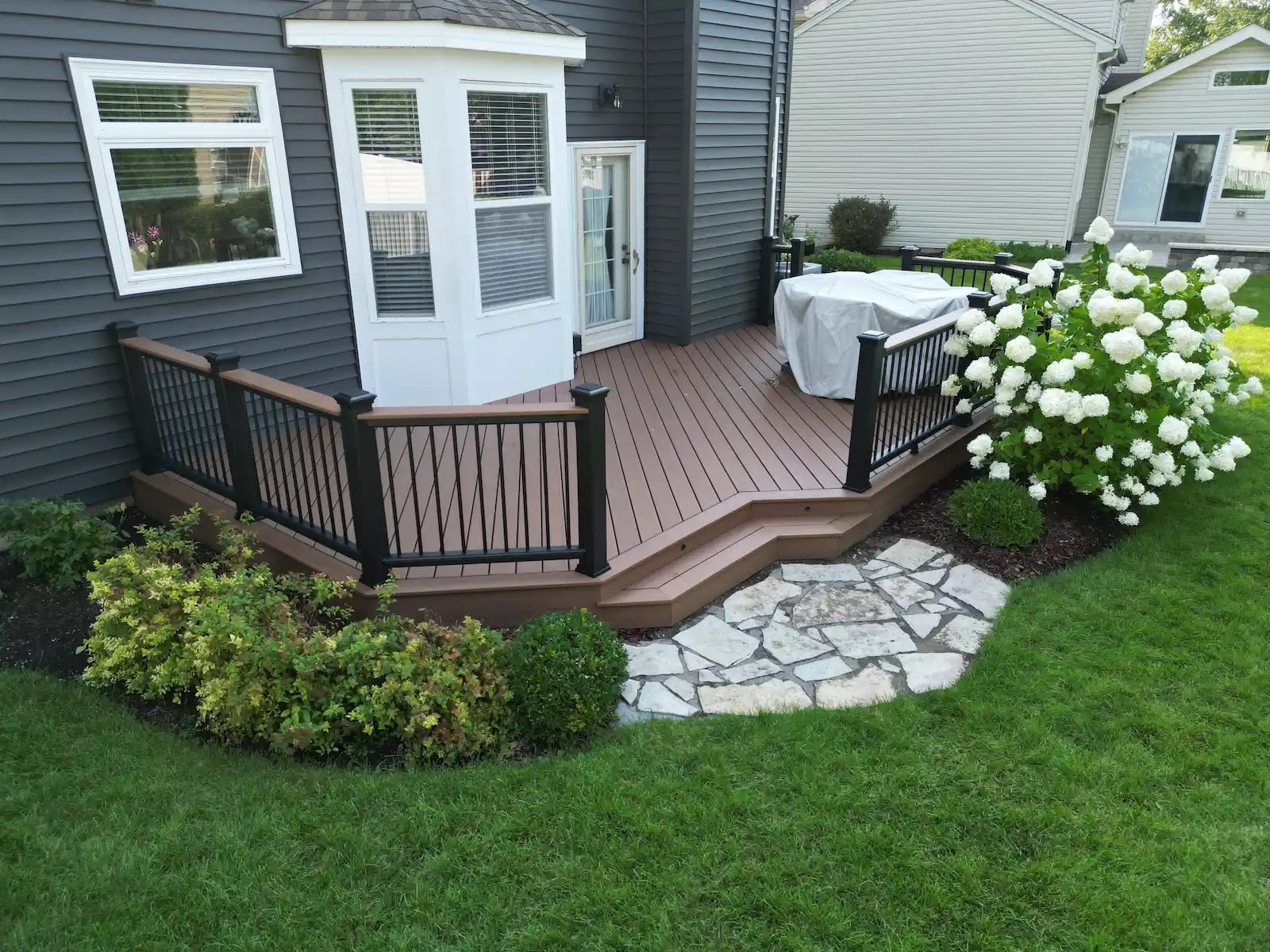
A multi-level deck with integrated stairs naturally breaks up a large yard without needing walls or fences. This modern version uses brown composite decking, black metal railings, and a stone paver base to keep the look clean. The stairs connect two levels so the space flows from a dining area down to a lounging spot. A large white hydrangea bush softens the hard lines, proving that one well-placed plant can balance an entire layout.
Cozy transitional deck with wicker furniture and bold striped rug
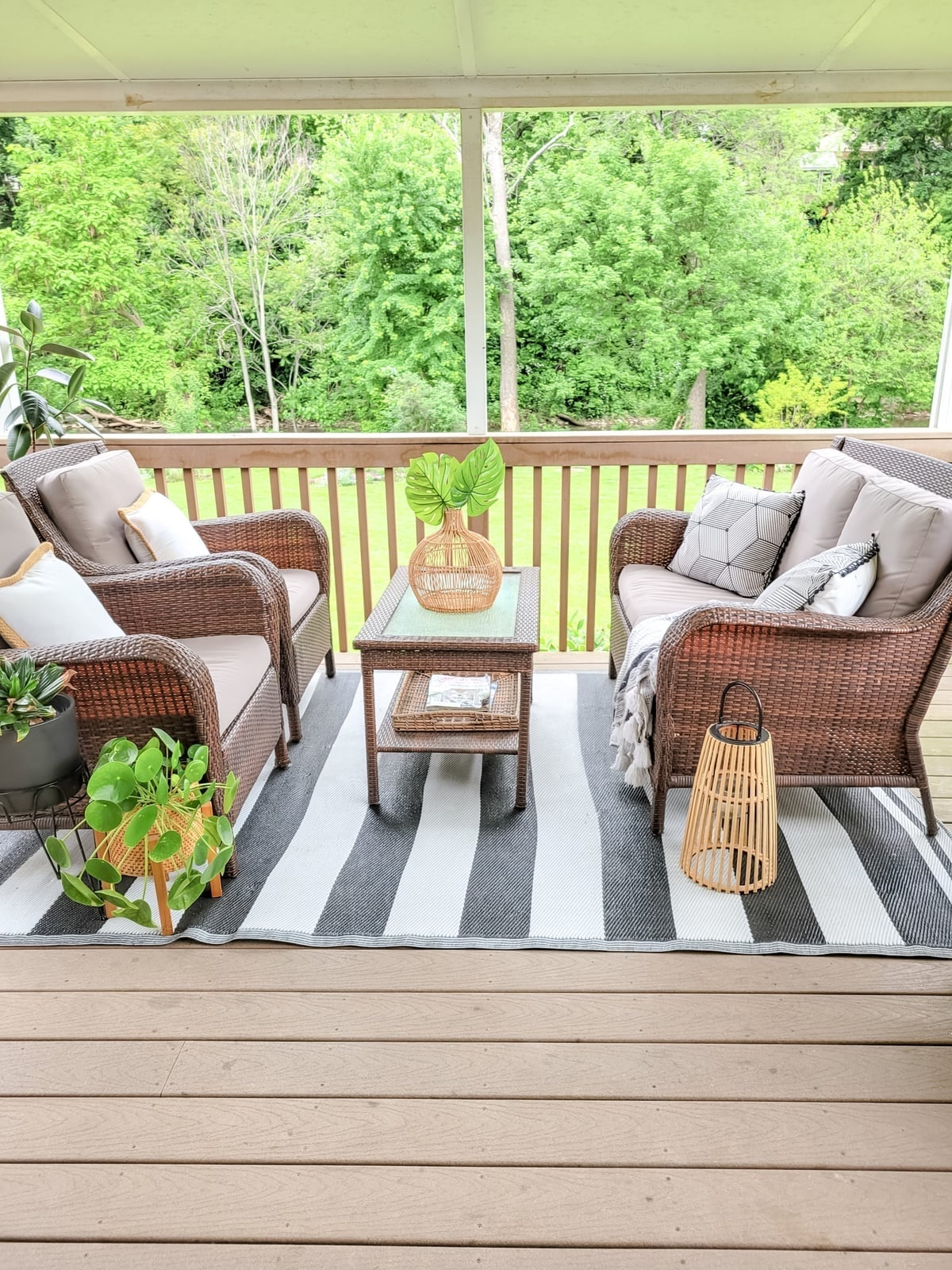
This transitional deck gets its warmth from a bold striped rug that anchors the whole seating group. Brown wicker sofa and armchairs around a glass-topped coffee table keep the look familiar, while the rug adds energy. A bamboo lantern beside the seating brings in a natural texture. The brown, beige, and gray palette lets the rug provide all the visual interest.
Modern deck featuring a prominent wooden pergola and stone accents
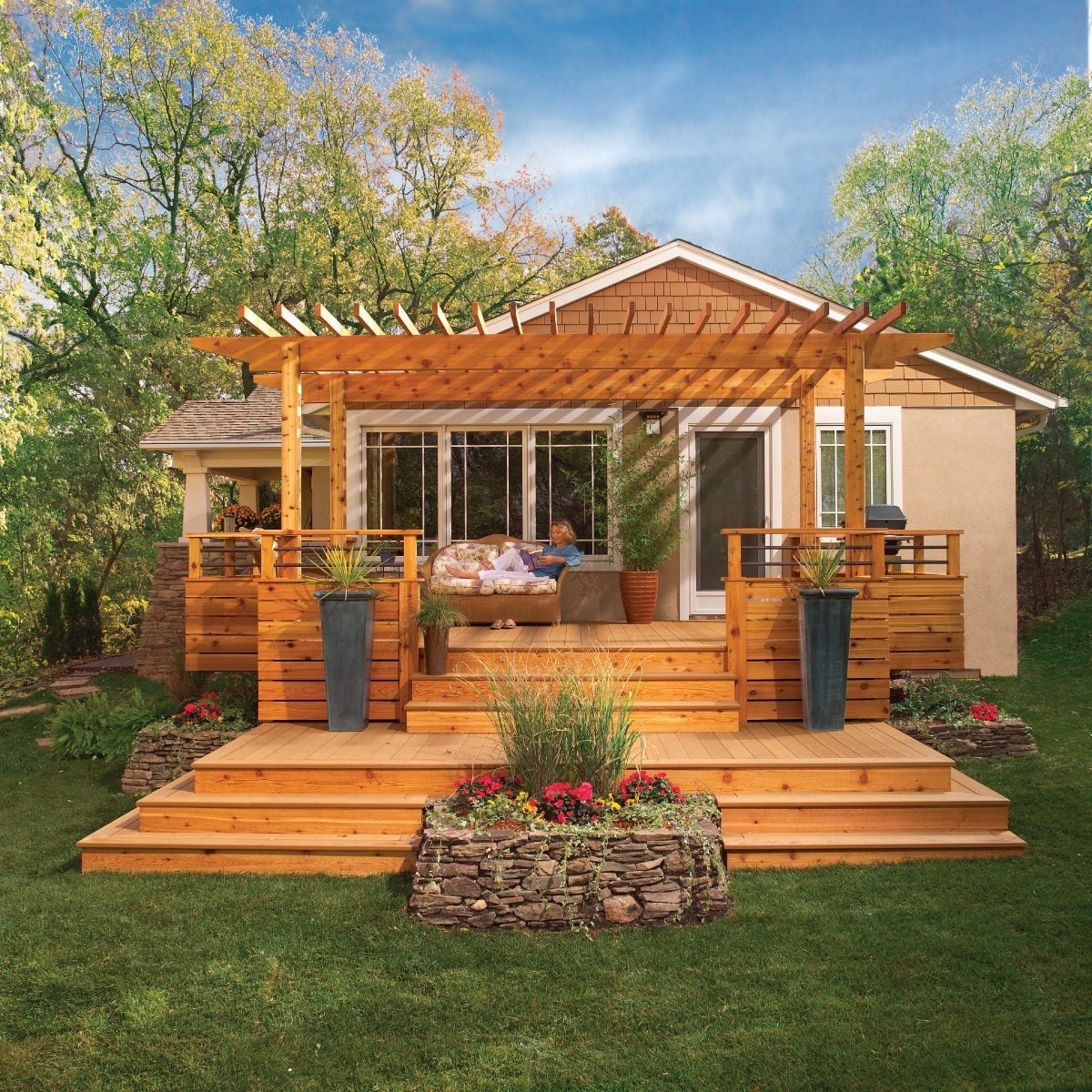
What makes a pergola feel like the center of a deck and not just an add-on? This one uses natural wood tones against a blue sky and green landscaping so the structure stands out without overpowering. The deck has wide stairs that step down to a lower level, and the pergola sits right above the main seating area with a wicker sofa and tall metal planters. Stone accents around the base of the pergola tie the wood to the ground, making the whole structure feel planted.
Striking geometric pattern decking in composite wood
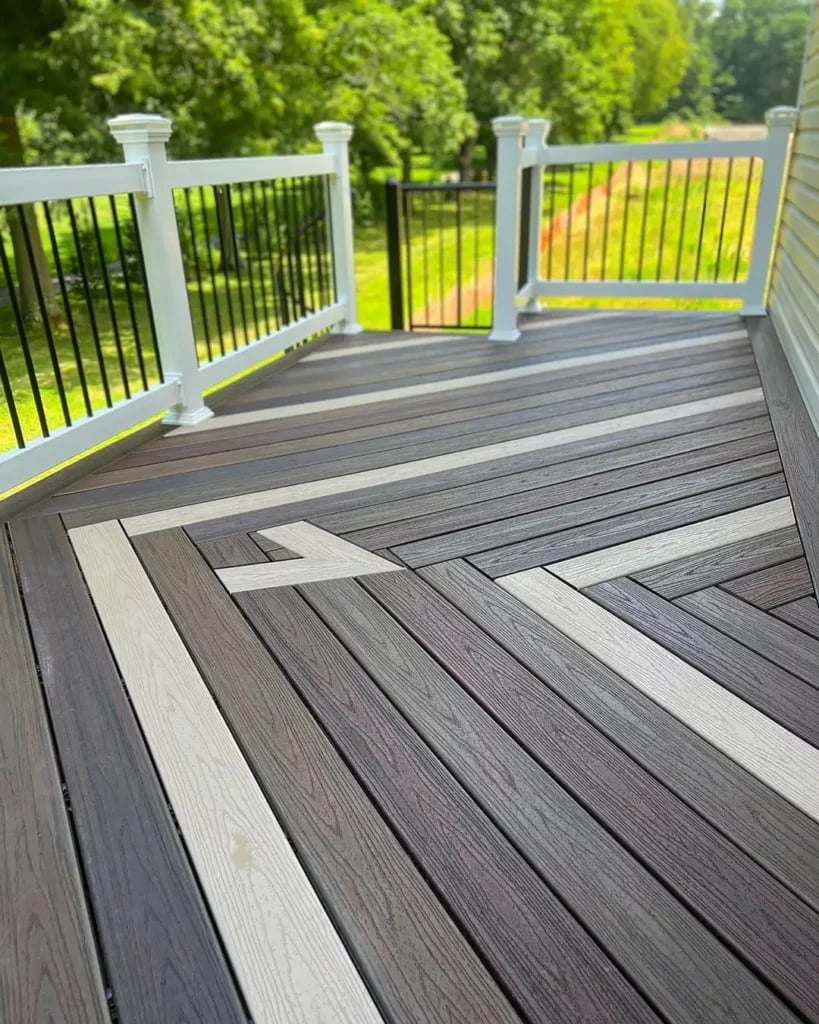
Angled planks laid in a geometric pattern change how light moves across a deck. Instead of running boards in a straight line, this composite wood deck uses a chevron-like arrangement that draws the eye outward. White railings with black balusters frame the pattern without competing with it. A gate at the far end keeps the layout practical, but the real focus is how the angled lines make a flat surface feel active.
Elegant outdoor dining area with white metal set and turquoise rug
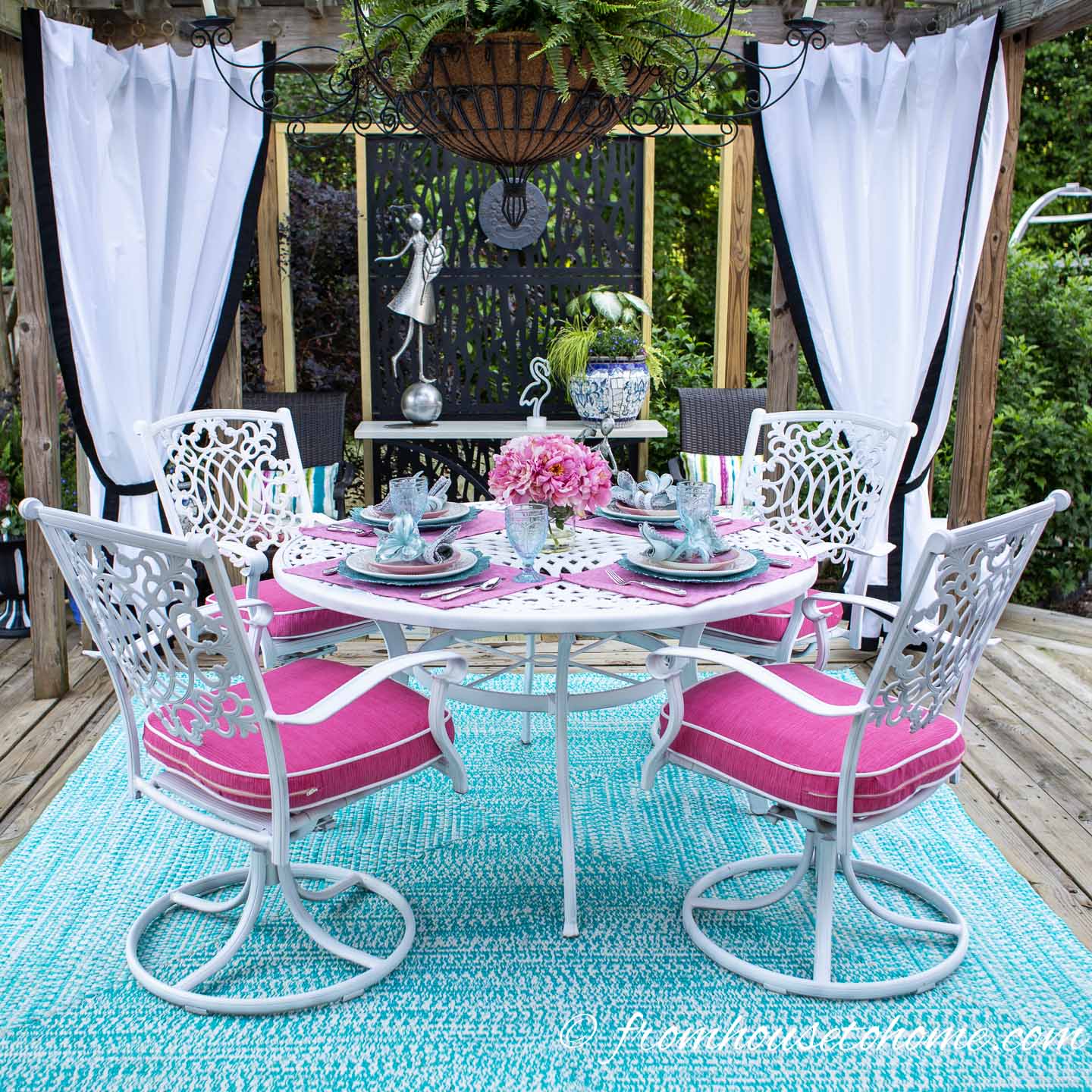
A bright turquoise rug under a white metal dining set defines the dining zone under the pergola. The white chairs and tabletop pop against the green yard beyond. A hanging planter overhead adds softness without crowding the table. The rule here is simple: if the dining set is neutral, the rug can carry the color.
Boho deck with papasan chairs and warm string lighting
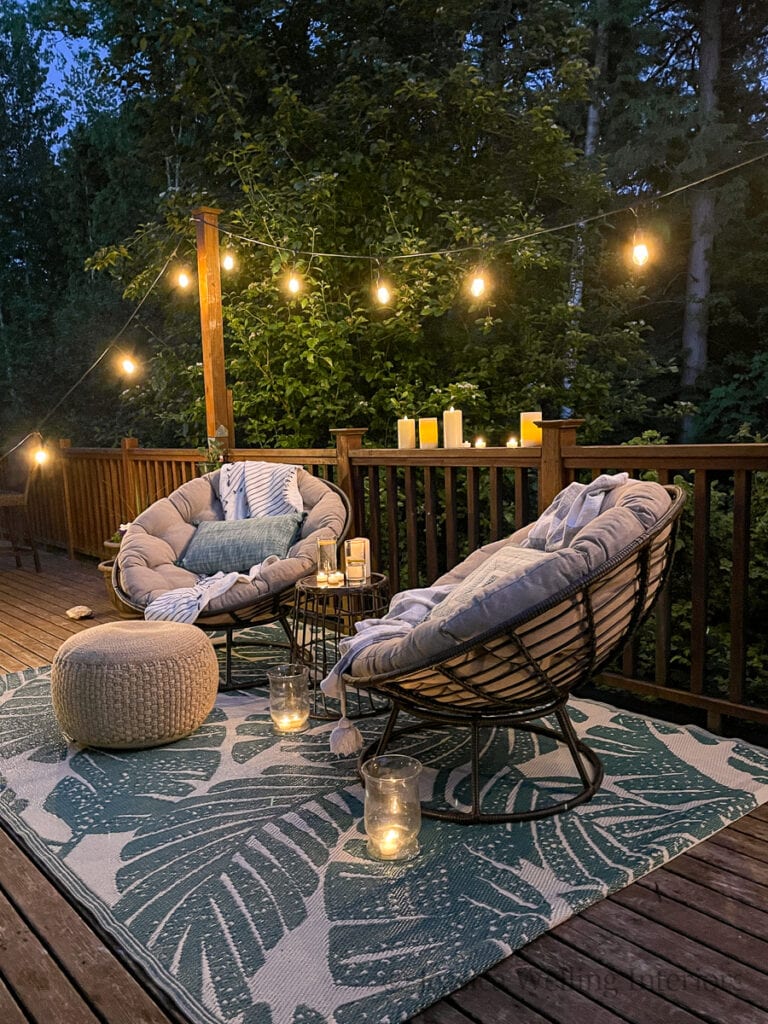
If a full rattan sofa set feels like too much commitment, two papasan chairs and a round ottoman give the same boho weight for less. The tan frames and cushions sit on a large leaf-patterned rug that anchors the whole seating area. String lights and candles add warmth overhead and at eye level. A second seating area nearby keeps the layout flexible for groups. The mix of rattan, wood, and fabric stays cohesive because the palette sticks to tan, gray, green, and white. That rug does the heavy work of defining the zone, so the chairs can float without feeling lost.
Coastal patio with anchor decor and blue upholstered seating
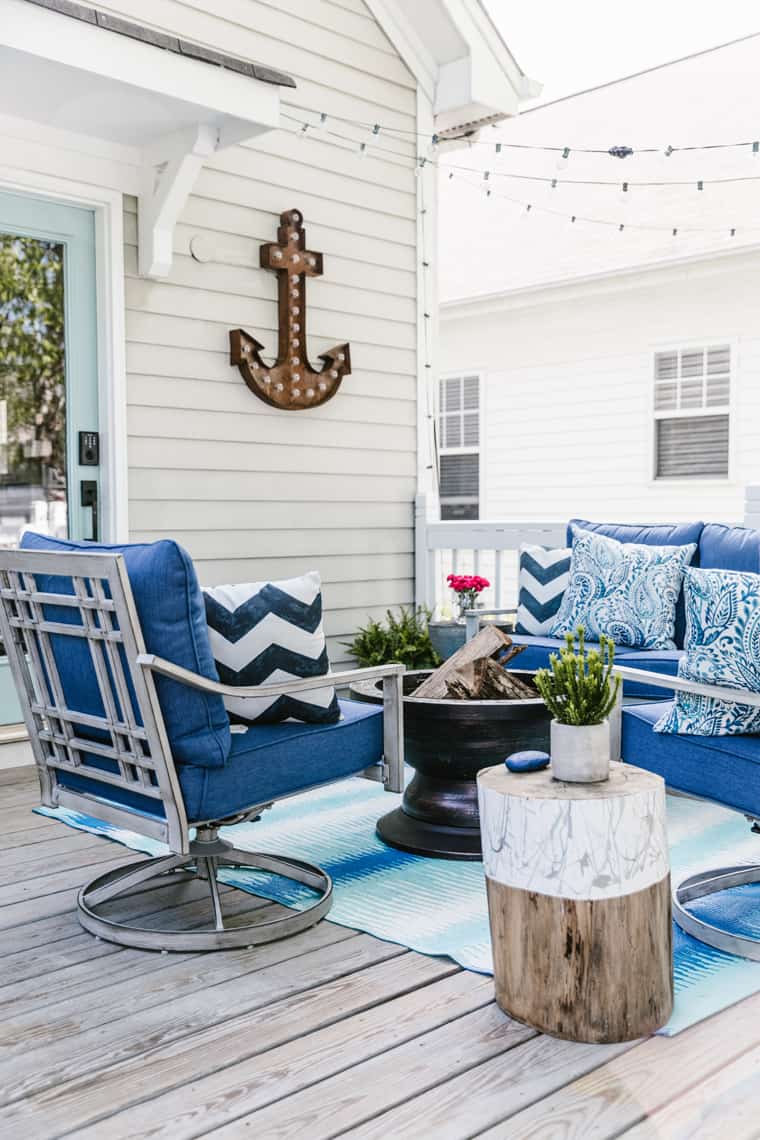
A large metal anchor wall decor piece sets the coastal tone without leaning on seashells or rope. The blue upholstered swivel chairs and sofa arrange around a fire pit, with a log side table adding natural texture. String lights and a wall sconce provide layered light for evening use. The palette of blue, white, gray, and wood tones keeps the look grounded and not theme-heavy. For a renter, the anchor decor hangs on a single hook and comes down just as fast, making this coastal patio decor easy to reverse when you move.
Vibrant potted plants on a multi-level wooden deck
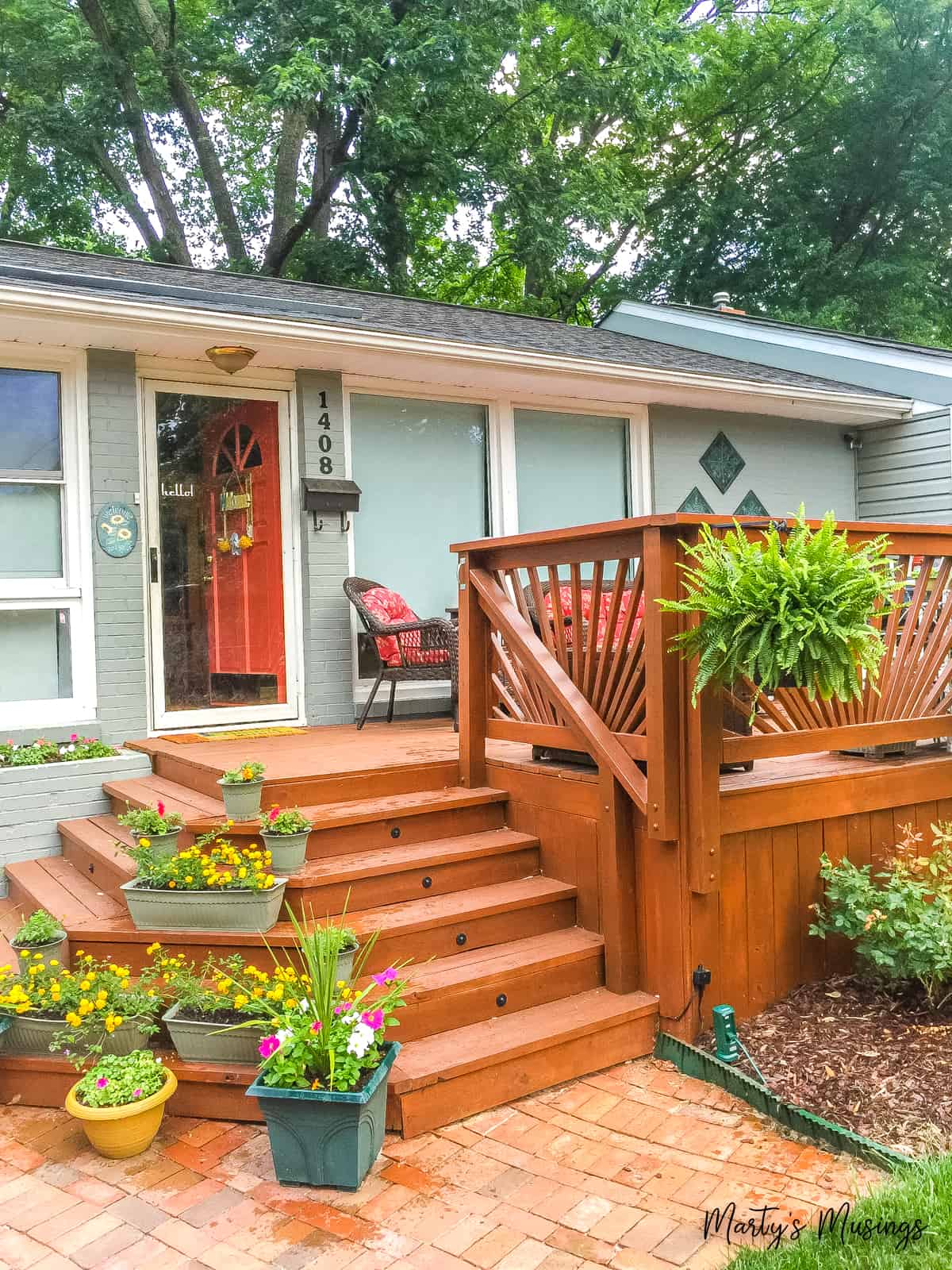
This traditional wooden deck uses potted plants as the main color source. The stairs and multi-level surfaces stay neutral in brown wood and brick, while red, yellow, and green plants add the punch. A single wicker chair on the lower level keeps the seating minimal so the plants look the feature. Overhead and step lights handle illumination after dark. The palette strategy here is simple: let hardscape and furniture recede, then let the plants carry the color. For deck stairs with potted plants, choose containers with drainage and group odd numbers for a natural rhythm.
Orange accents on a modern deck with glass railings
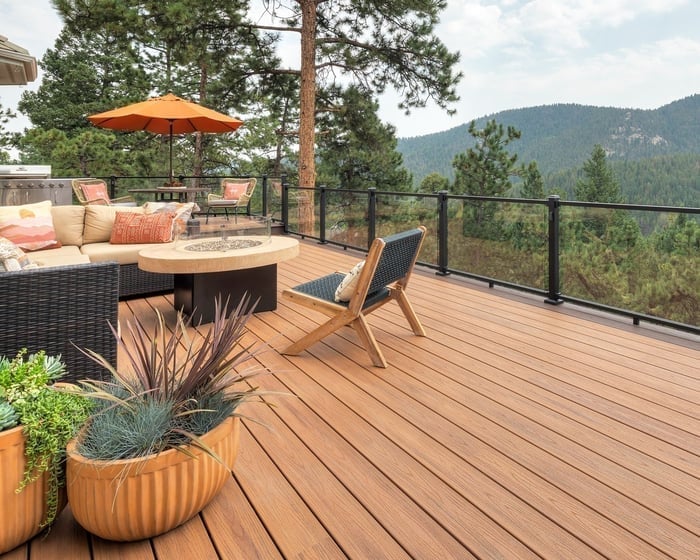
Can a modern deck stay clean without feeling cold? Orange accents are the answer here. An oval stone fire pit table anchors the seating area, with a sectional sofa and a lounge chair arranged around it. The palette of tan, orange, green, and black keeps the orange from feeling secondary. Glass railings let the eye travel past the deck to the yard, so the space reads larger than its footprint. A potted plant and an umbrella add vertical interest without crowding the layout. The fire pit table doubles as a surface for drinks or decor, making the sectional sofa fire pit table deck work for both conversation and casual dining.
Concrete fire pit as the hero element on a patio
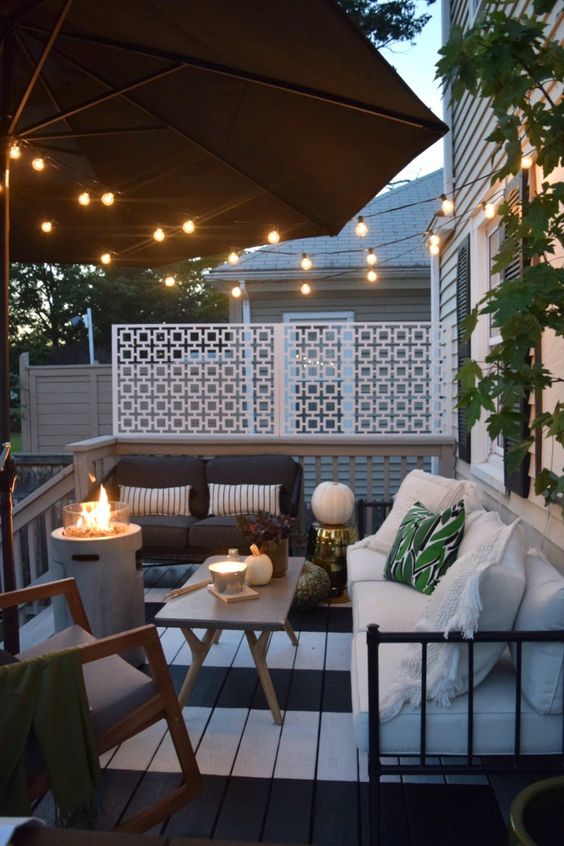
A concrete fire pit in a clean cylinder shape brings weight and warmth to this modern deck. The gray surface contrasts with the wood decking and the black metal sofa frame. An outdoor sofa and coffee table face the fire pit, with decorative pumpkins adding seasonal color. String lights soften the hard edges overhead, and the fire pit glow does the rest after dark. The material choice matters: concrete resists weather better than stone or brick in freeze-thaw climates, so a concrete fire pit deck design like this one holds up with minimal sealing every few years.
Shade from pergola over a multi-level deck
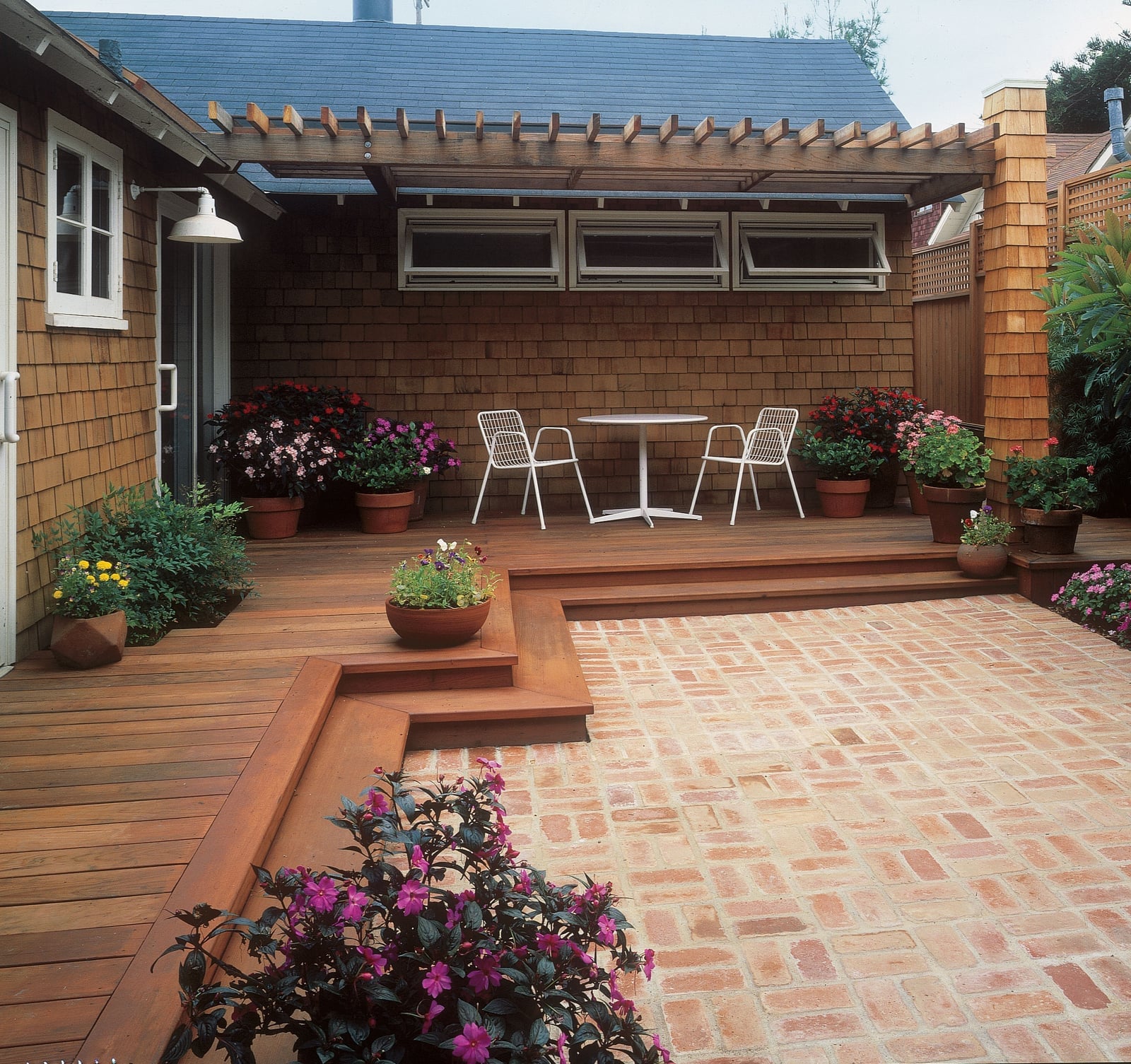
When a deck spans more than one level, a pergola over the upper section keeps the seating zone from feeling exposed while the lower brick patio stays open to the sun. The wood shingle siding on the house ties the brown deck and red brick together, so the white metal chairs and round table look a deliberate pause. A wall-mounted outdoor light near the pergola post suggests the space works past sunset, even without full string lighting.
White pergola and deck accented by colorful sunflowers
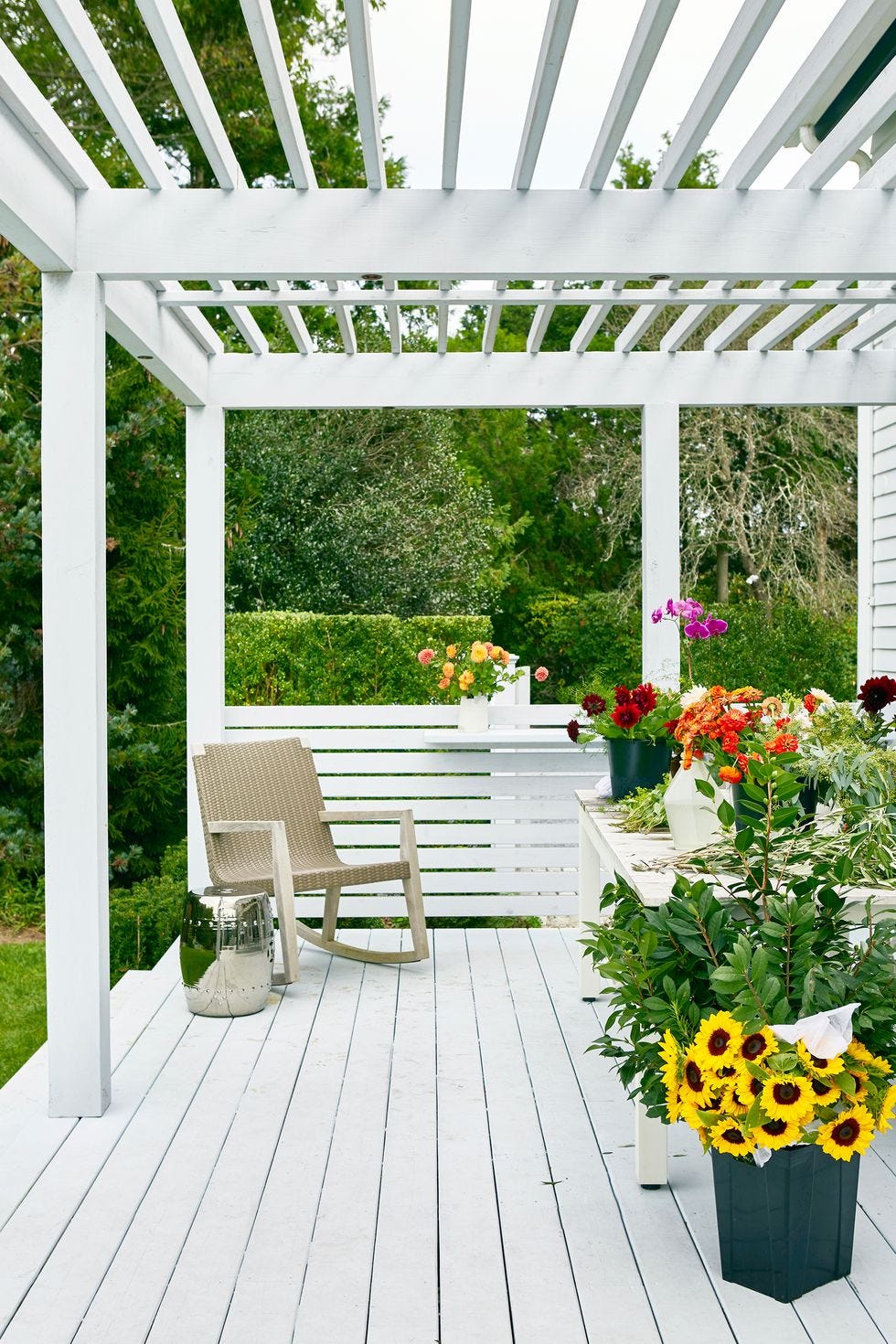
A neutral deck with a white pergola and white table can lean sterile fast. Bright sunflowers in a dark planter break that clean palette with yellow, orange, red and pink all at once, and the green leaves and wicker rocking chair keep the warmth grounded. The flowers become the hero element because nothing else competes for attention.
The deck stays simple on purpose. A dark planter holds the sunflowers without blending into the white table, and the metal and wood pieces recede so the color stands out. Choose one saturated accent and let the surrounding palette stay quiet. The ratio is roughly ten percent bright color to ninety percent neutral.
Recessed step lighting on a multi-level wooden deck
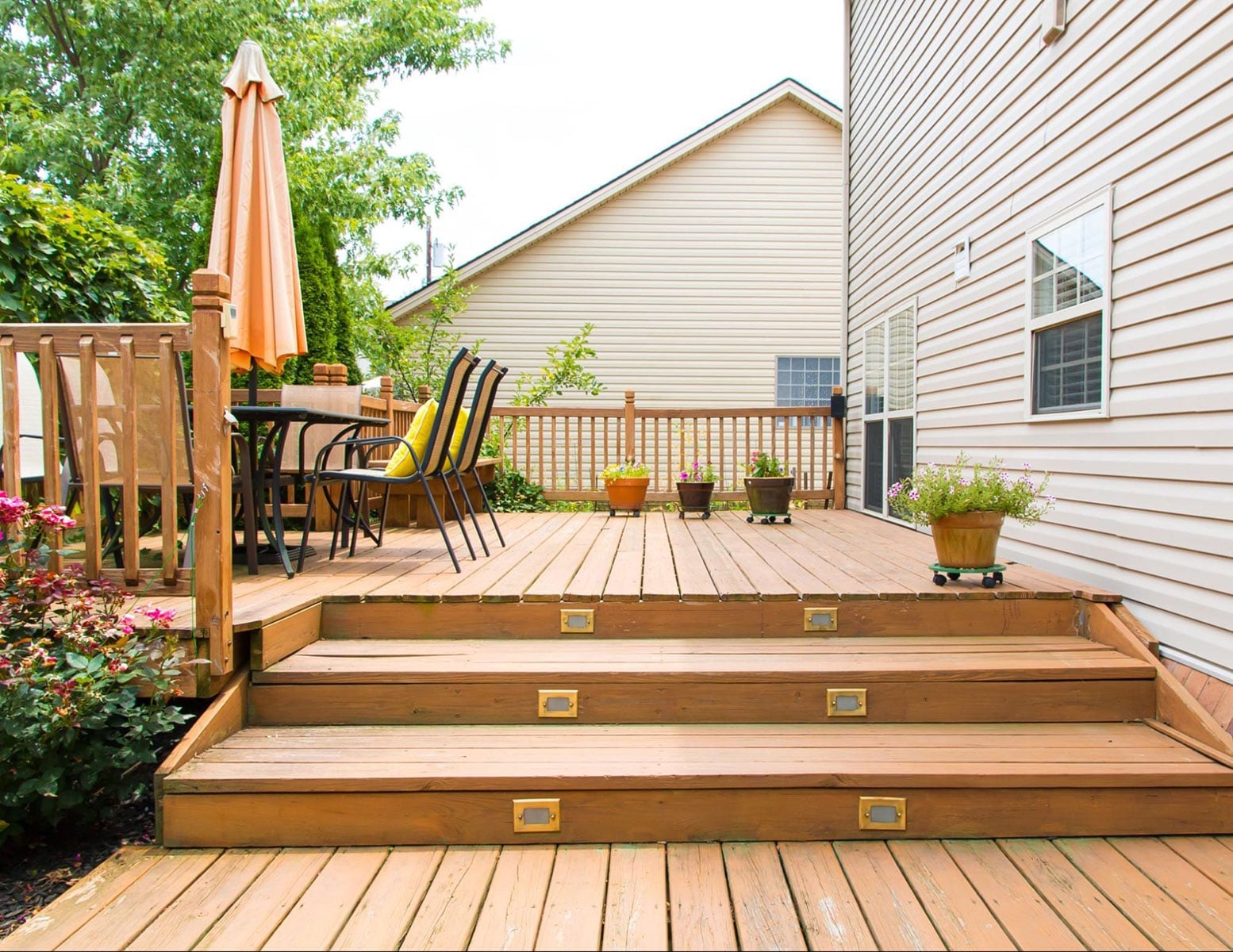
Recessed step lights sit flush into the risers of a multi-level wooden deck, so the stairs appear as a clean line during the day and a safe path after dark. The warm glow from each fixture outlines the central stairs without spilling onto the patio table, chairs and umbrella above. Position the lights no wider than the tread itself so the beam stays contained.
Spacious outdoor living area with l-shaped sectional and olive tree
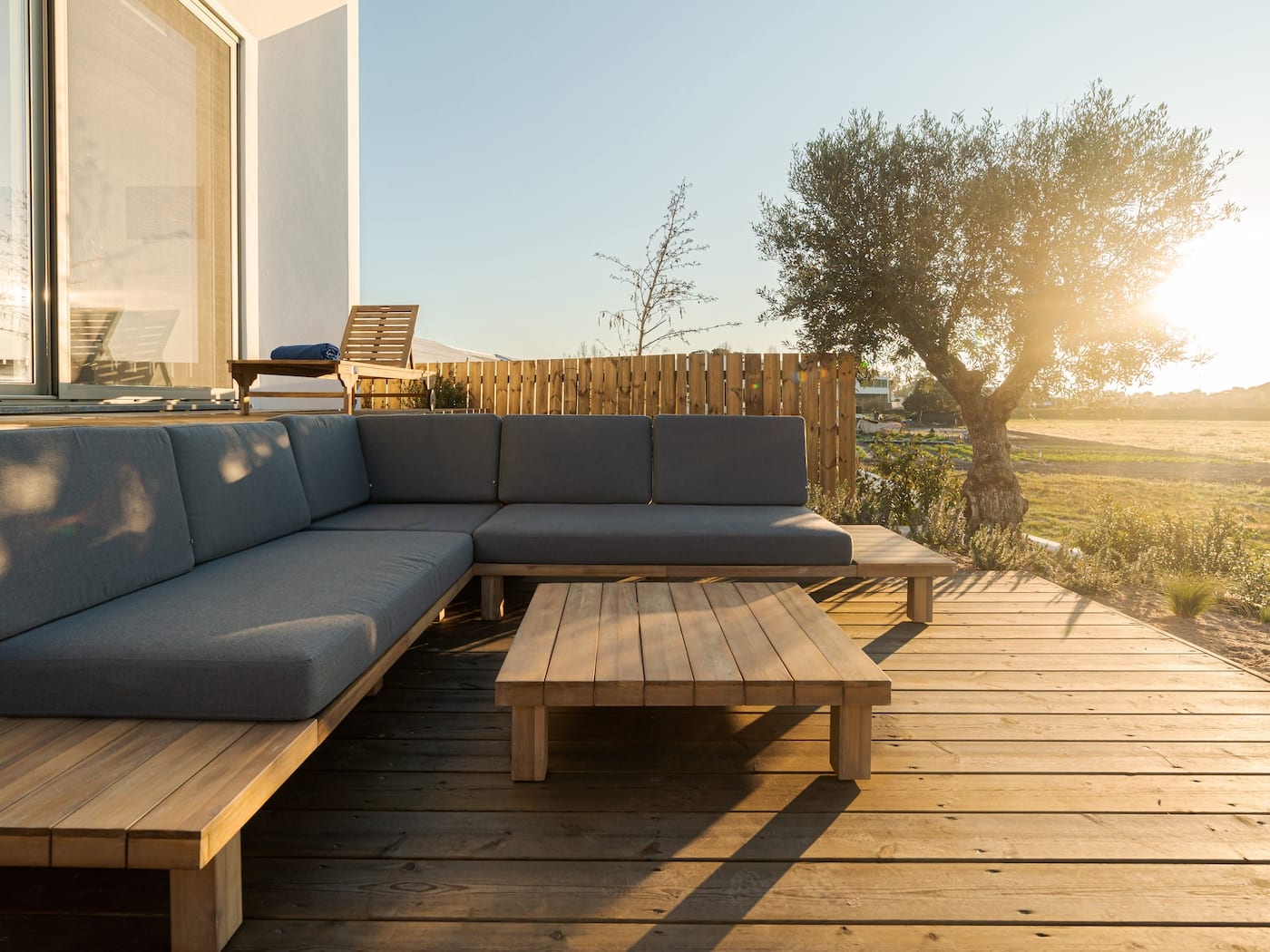
A large L-shaped sectional sofa anchors this deck by facing a wooden coffee table, which creates a natural conversation zone without walls. The olive tree nearby adds vertical relief to the low furniture line, and the evening sun hitting the wood tones keeps the gray upholstery from feeling cold. For layout, place the sofa so it faces the longest sightline, here the open deck, rather than the house, which makes the space feel larger than its actual footprint.
Tranquil water feature on a multi-level wooden deck
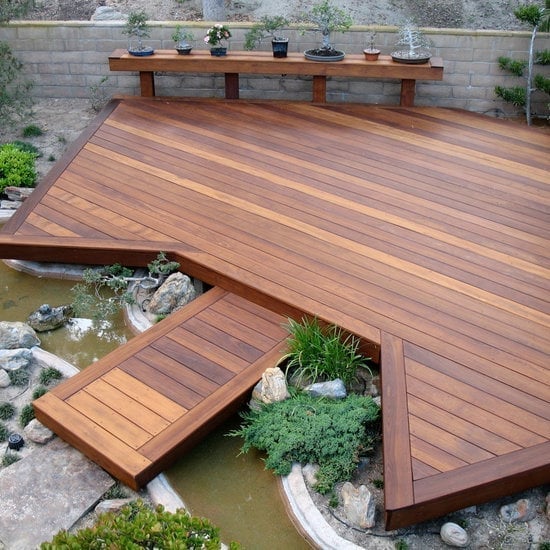
A water feature becomes a focal point when the deck layout gives it its own zone. On this multi-level wooden deck, the water sits on a lower level bordered by stone and brick, while the main seating area stays above. The sound and movement draw attention downward, so the upper deck feels like a lookout rather than a pass-through.
Bonsai trees near the stone border reinforce the calm without adding clutter. The wooden deck stays warm brown, the stone stays neutral, and the water becomes the only moving element. Place the water feature where it can be heard from the main seating area but seen from an angle, not straight on.
Lush greenery on a modern deck with a sofa
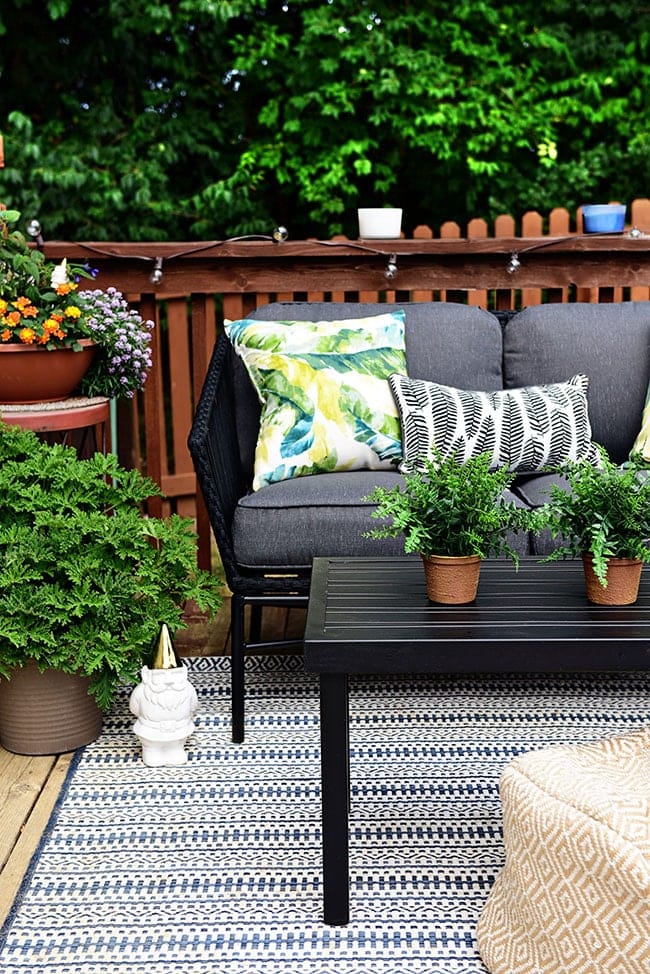
A gray outdoor sofa and black coffee table sit on a patterned rug, with string lights overhead and potted plants scattered around. The tropical leaf patterned pillow adds a relaxed note against the modern lines of the wicker and metal furniture. For a similar effect, choose a neutral base like gray and white, then let green from plants and a single patterned accent carry the color. That keeps the hero seating area central and the palette simple enough to change out the accents next season.
Slatted roof pergola over a wooden deck
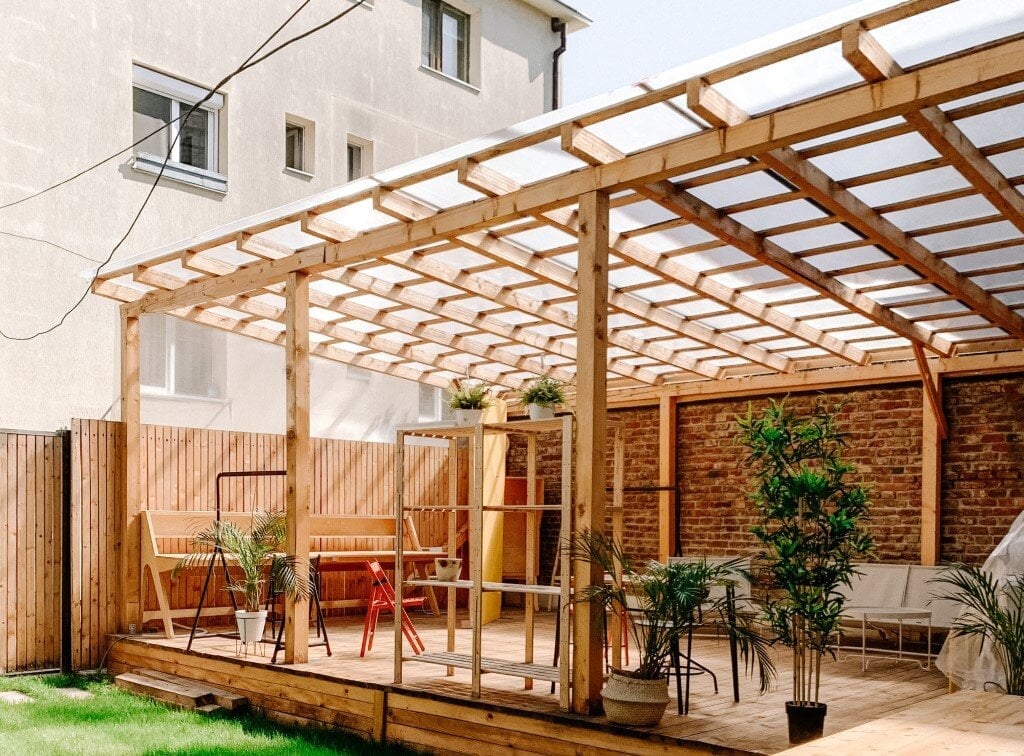
A slatted wooden pergola roof is one of those details that does two jobs at once: it filters the daylight overhead while keeping the open-air feel intact. Below it, the deck is zoned into a dining area with a wooden table and a separate seating nook with a bench and potted plants. The slats break up the direct sun without turning the space into a dark room, which matters on a roomy deck where you want both light and shade. If you rent, look for a freestanding pergola kit with a slatted top. It sits on the deck surface without permanent posts, so you can take it down when you move.
Built-in l-shaped sectional with integrated planters
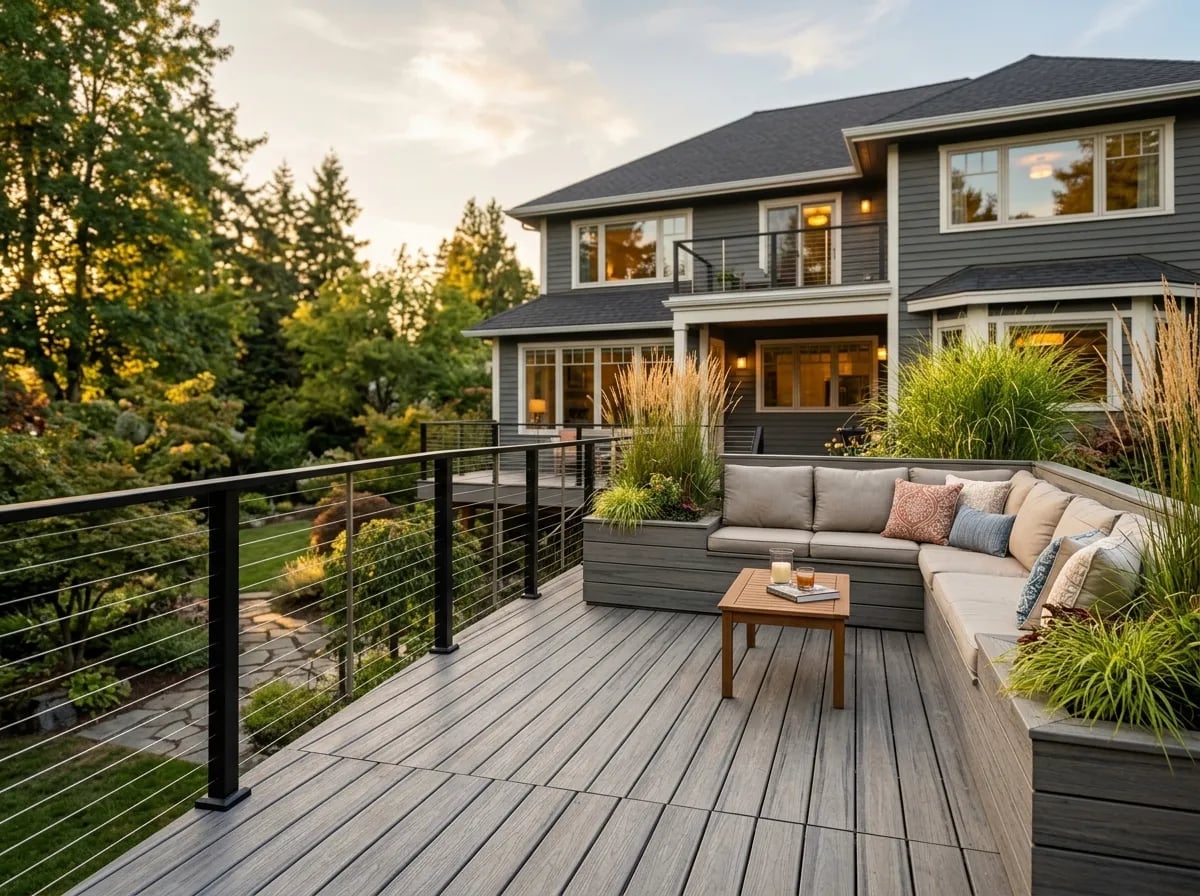
A freestanding sectional is easy to rearrange, but a built-in L-shaped sofa with integrated planters changes how you use the whole deck. The seating follows the perimeter, with the coffee table centered and ornamental grasses growing out of the planters that frame the corners. That layout keeps the middle of the deck open for traffic and sets a clear boundary between the lounge zone and the rest of the space.
The composite decking and metal railing hold up to weather, while the upholstered cushions add comfort. The orange accent pillows break up the gray and beige palette without adding clutter. To get a similar built-in look without construction, place long rectangular planters at each end of a freestanding L-shaped sofa. It mimics the integrated feel and keeps the same open center.
Rustic deck with abundant hanging greenery and wooden bench
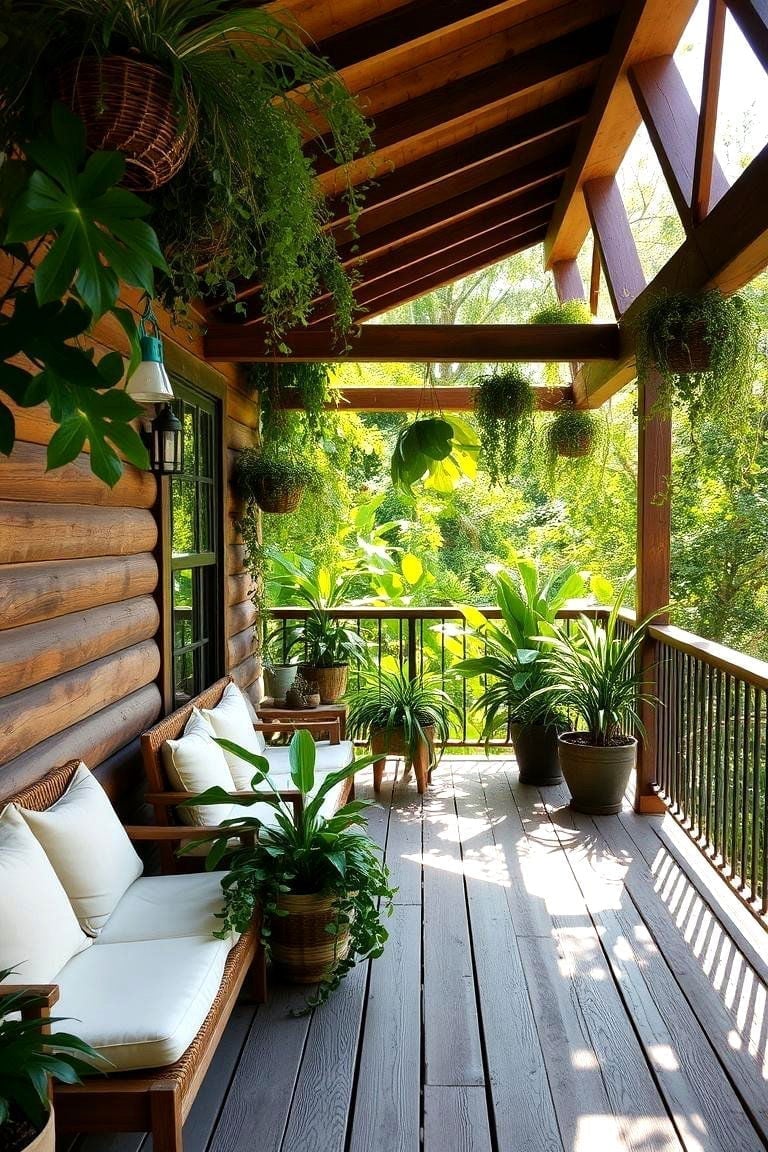
The hanging baskets here draw the eye upward, which makes the deck feel larger and more enclosed at the same time. A wooden bench and potted plants on the floor keep the seating low, so the hanging vines and ferns become the main vertical element. The rustic palette stays in wood tones, green, and white, which lets the plants stand out without competing with bold furniture colors. Hang baskets from a pergola beam or a wall-mounted bracket, and keep the seating simple so the greenery stays the focal point.
Screened-in wooden deck with traditional lattice skirting
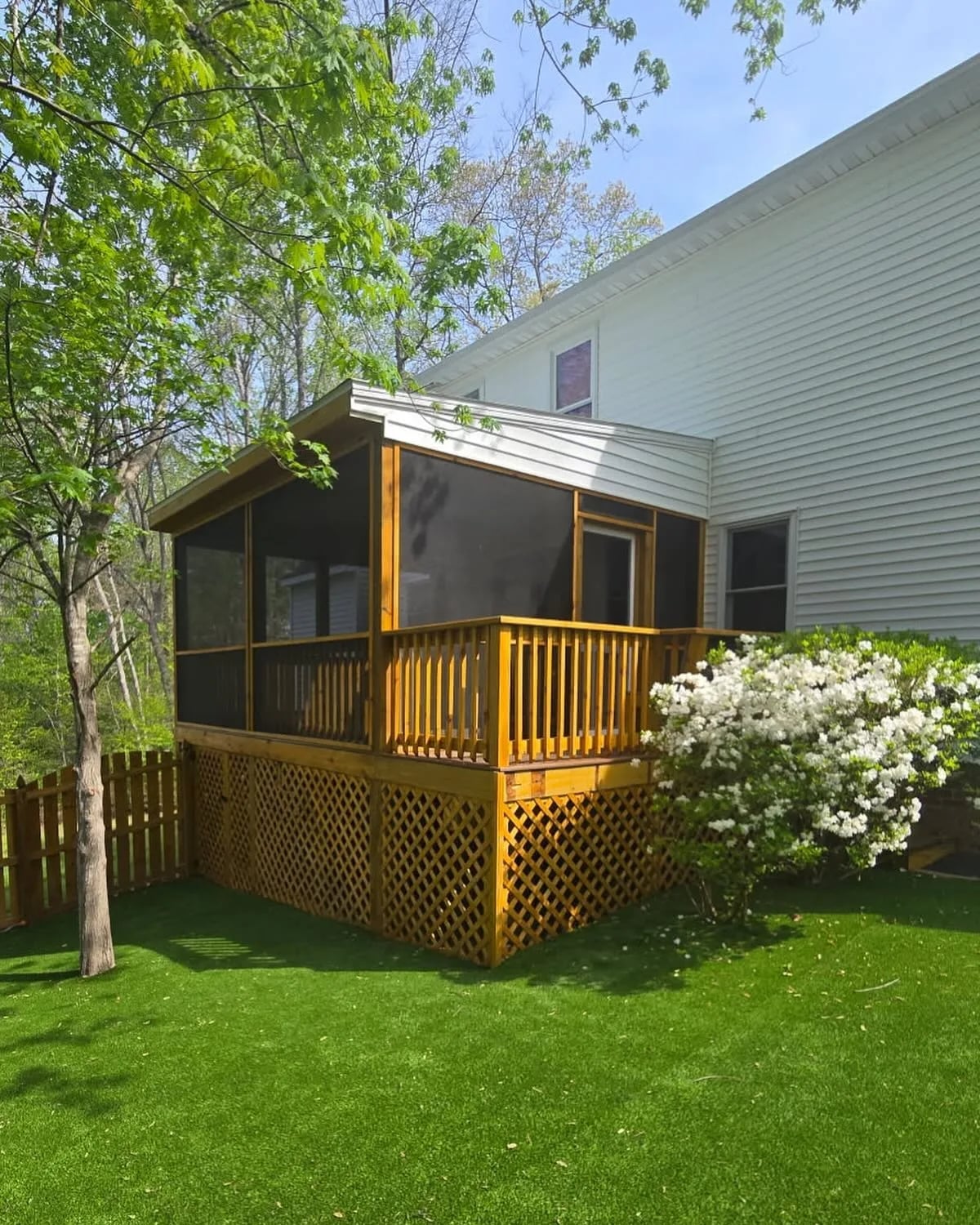
A screened-in deck solves the bug problem without closing off the outdoor feel, and this one adds traditional lattice skirting to finish the look. The wood deck sits sharper, with the screen enclosure keeping the space airy while the lattice hides the gap underneath. That combination works well for a roomy deck where you want to use the space in the evening without constant insect management. The natural wood tones and white trim keep the style classic, so it blends with most house exteriors. If you are adding screening to an existing deck, make sure the screen frames are removable for cleaning and winter storage.
Hot tub on a multi-level wooden deck
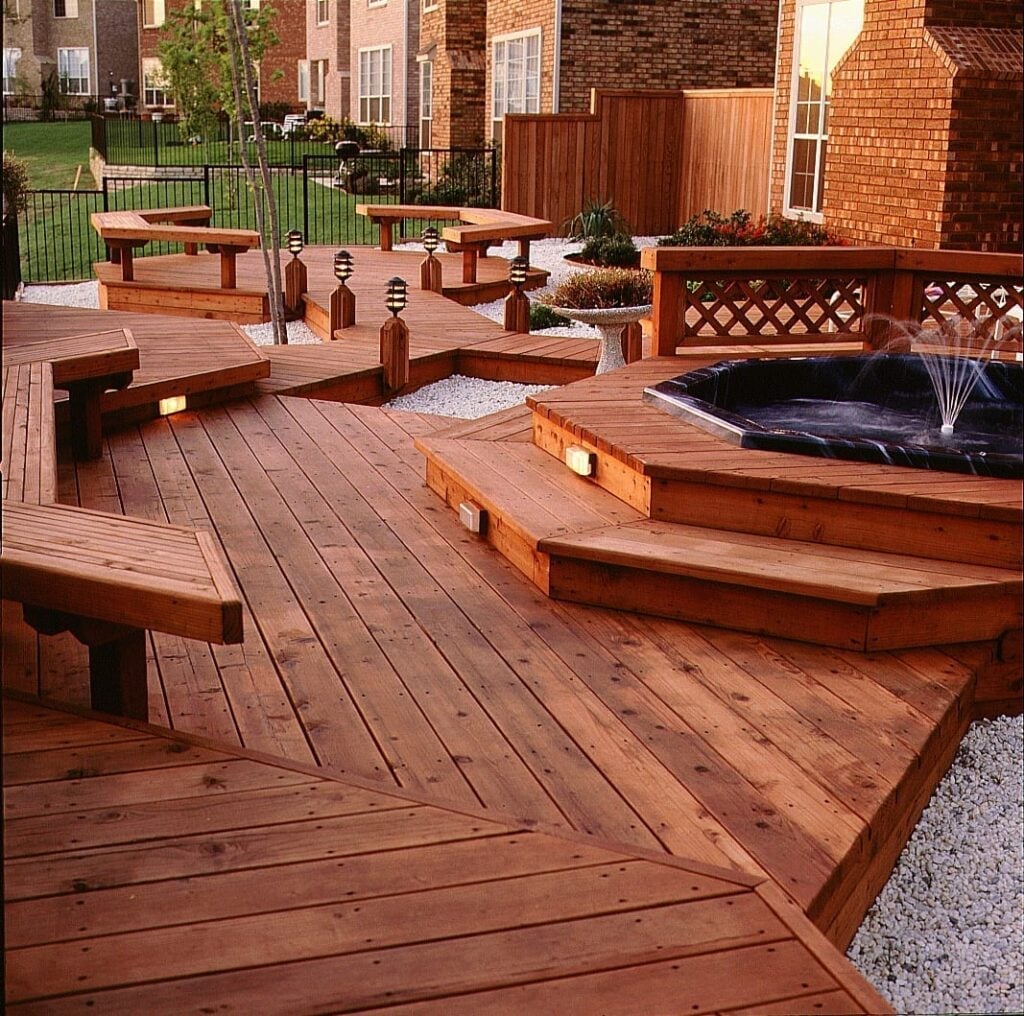
A hot tub needs a solid foundation and easy access, so a multi-level deck that separates the wet area from the lounging zone makes practical sense. The built-in benches on the lower level keep towels and robes within reach without cluttering the edge of the tub. Integrated deck lights and post lights guide the way after dark, which matters when you are stepping out of warm water onto wood. The gravel transition around the base helps drainage and breaks up all that brown wood with a neutral texture. A brick border adds a clean line between levels so the whole setup feels finished.
Dark gray multi-level deck with dining and seating areas
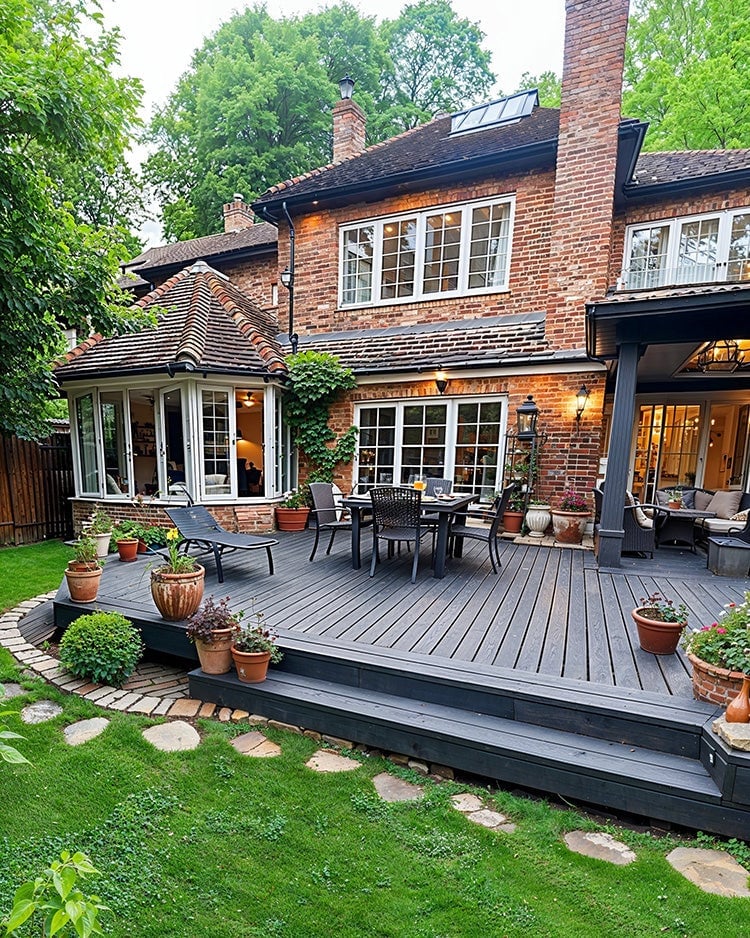
The dark gray deck boards anchor the whole space, letting the brick red and terracotta pots pop against a neutral base. Traditional outdoor sconces and lanterns add a warm glow that softens the cool gray after sunset, while the green of potted plants keeps the palette grounded in nature. This kind of contrast works because the gray is deep enough to recede, so the dining set and lounge chairs become the focal points on each level.
Inviting outdoor living space with a gray sectional
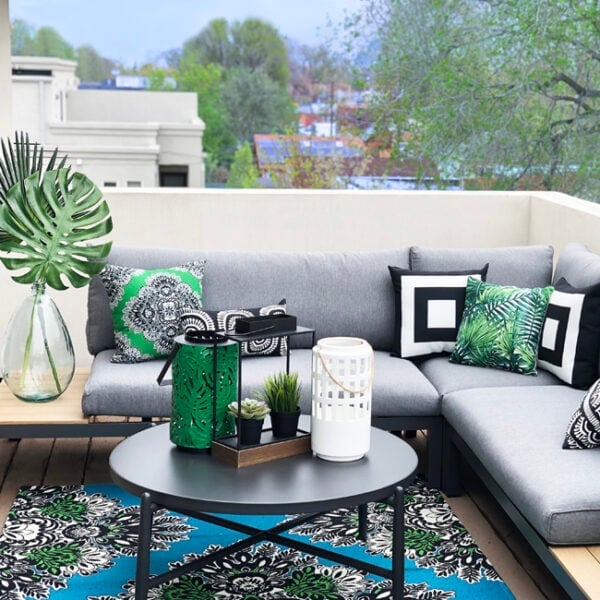
A vibrant patterned rug under a sectional sofa does double duty: it defines the seating zone on an open patio and introduces color that the gray sofa and metal coffee table cannot provide on their own. The blue and green tones in the rug echo any nearby plants, while the black metal frame of the table keeps things crisp. Daylight does the heavy lifting here, but decorative lanterns on the coffee table are an easy swap-in for evening, and they add a warm glow without needing permanent wiring.
Oval metal table on a modern deck
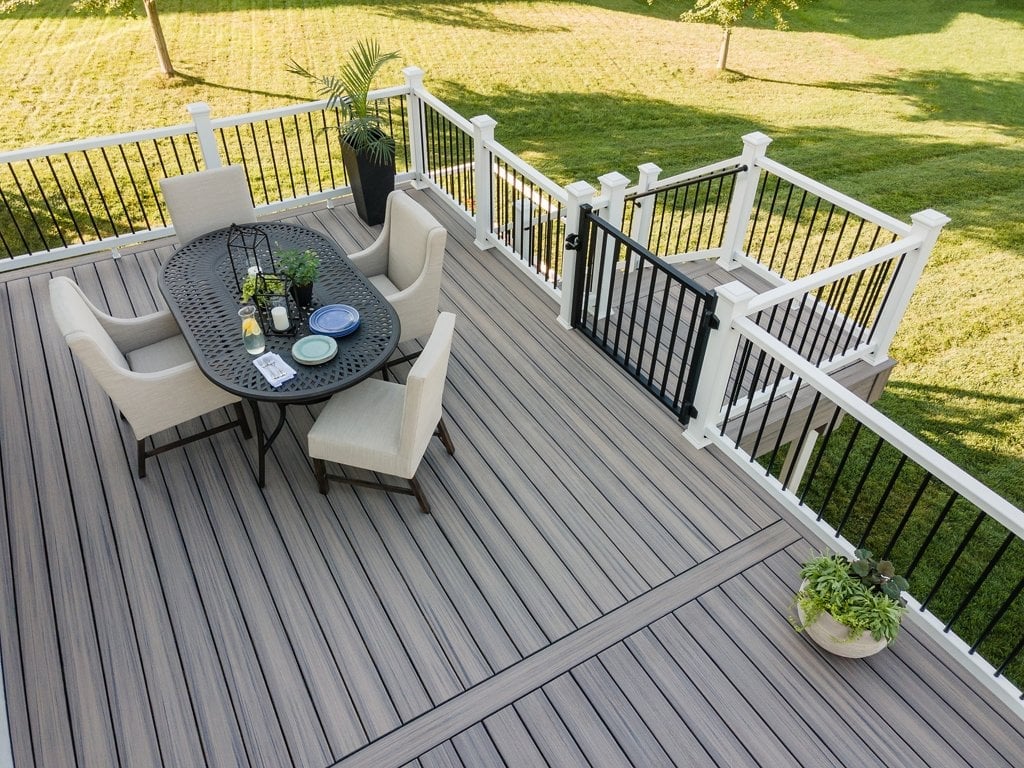
Round or square dining sets can crowd a deck rail, but an oval metal table follows the line of the railing and leaves more walk-around room on each side. The four upholstered chairs add comfort without blocking the view, and the beige fabric softens the industrial look of the metal. Gray composite boards keep the surface low-maintenance so spills from outdoor meals wipe up fast. A single potted plant near the railing fills the corner without making the table feel cramped, and the neutral palette means you can switch out chair cushions or centerpieces as the season changes.
Subtle illumination on a modern deck with gray sofa
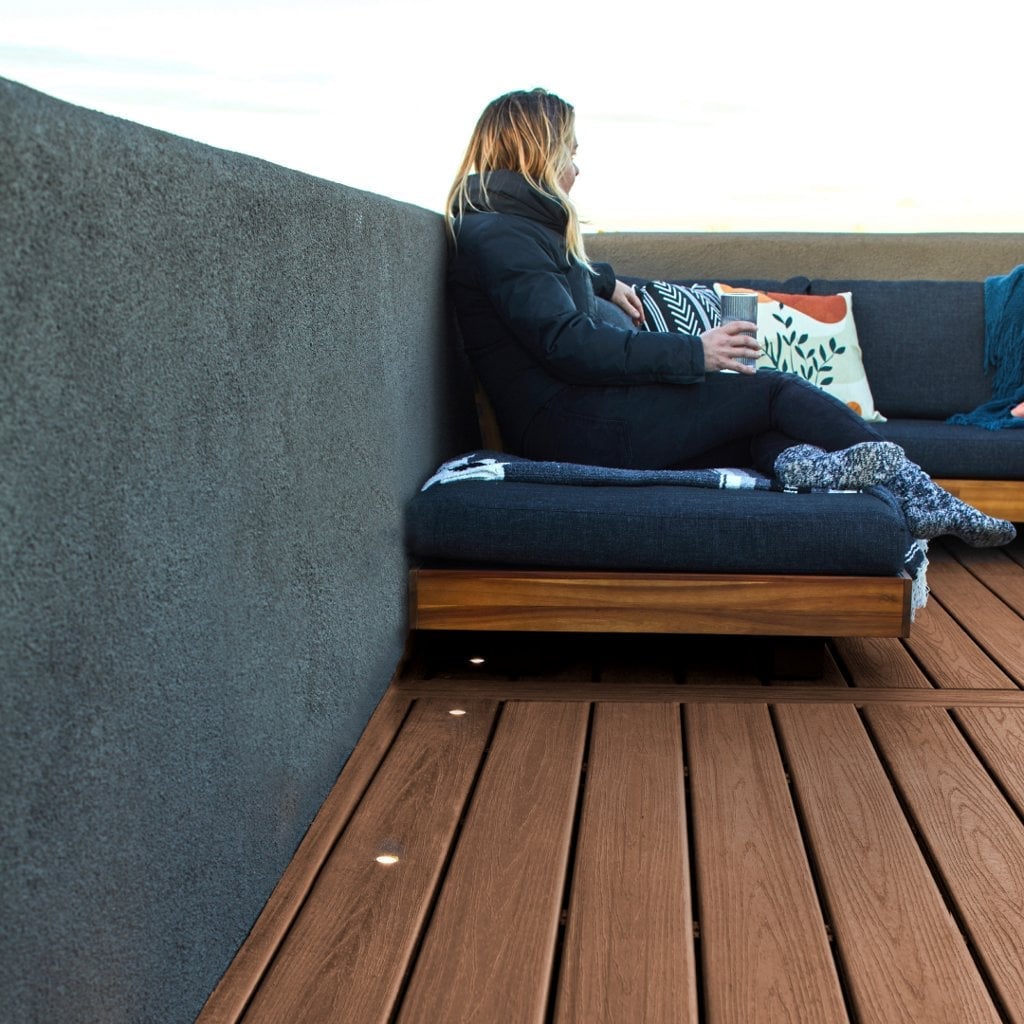
Recessed deck lights installed along the perimeter cast a low, even glow that outlines the seating area without blasting light into the sofa. The gray sofa and its orange and green pillows stay visible but not harshly lit, which keeps the evening mood relaxed. As a renter-friendly alternative, battery-operated LED strip lights tucked under the sofa frame or along the baseboard can mimic the same soft edge lighting without cutting into the deck surface.
Dining area on a transitional deck
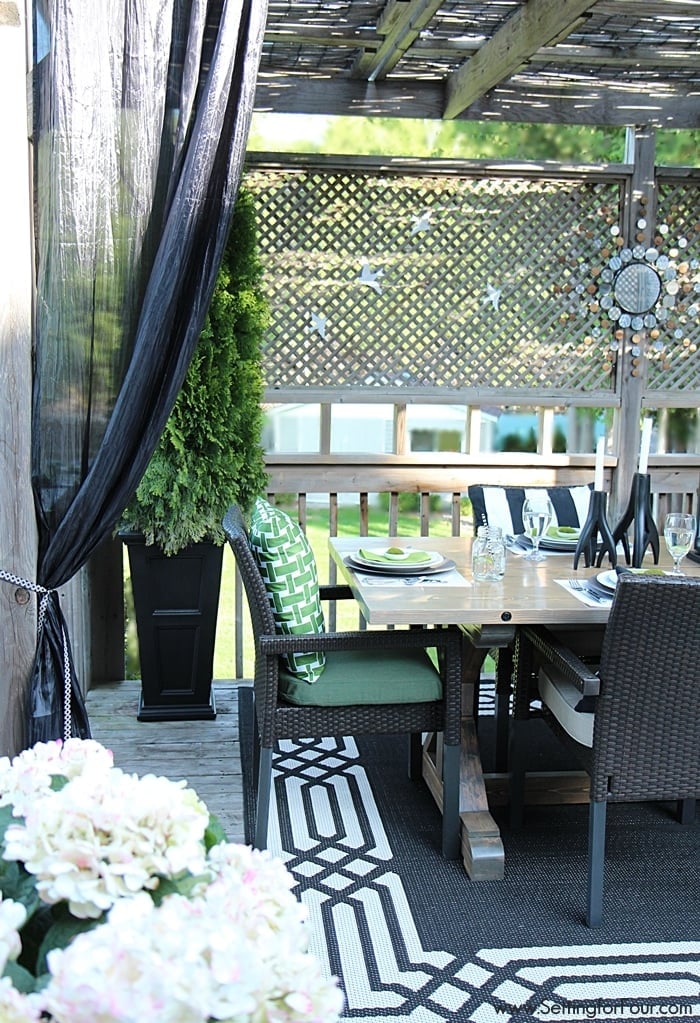
A geometric outdoor rug is the most direct way to anchor a dining set on a deck. The table and wicker chairs sit centered on the black-and-white pattern, which repeats the dark frame of the table legs and the pale finish of the woven seats. That repeating contrast makes a transitional setup feel neat. The potted evergreen adds a vertical green note that softens the straight lines of the furniture. 3 looks that actually work.
Retractable awning over an above-ground pool
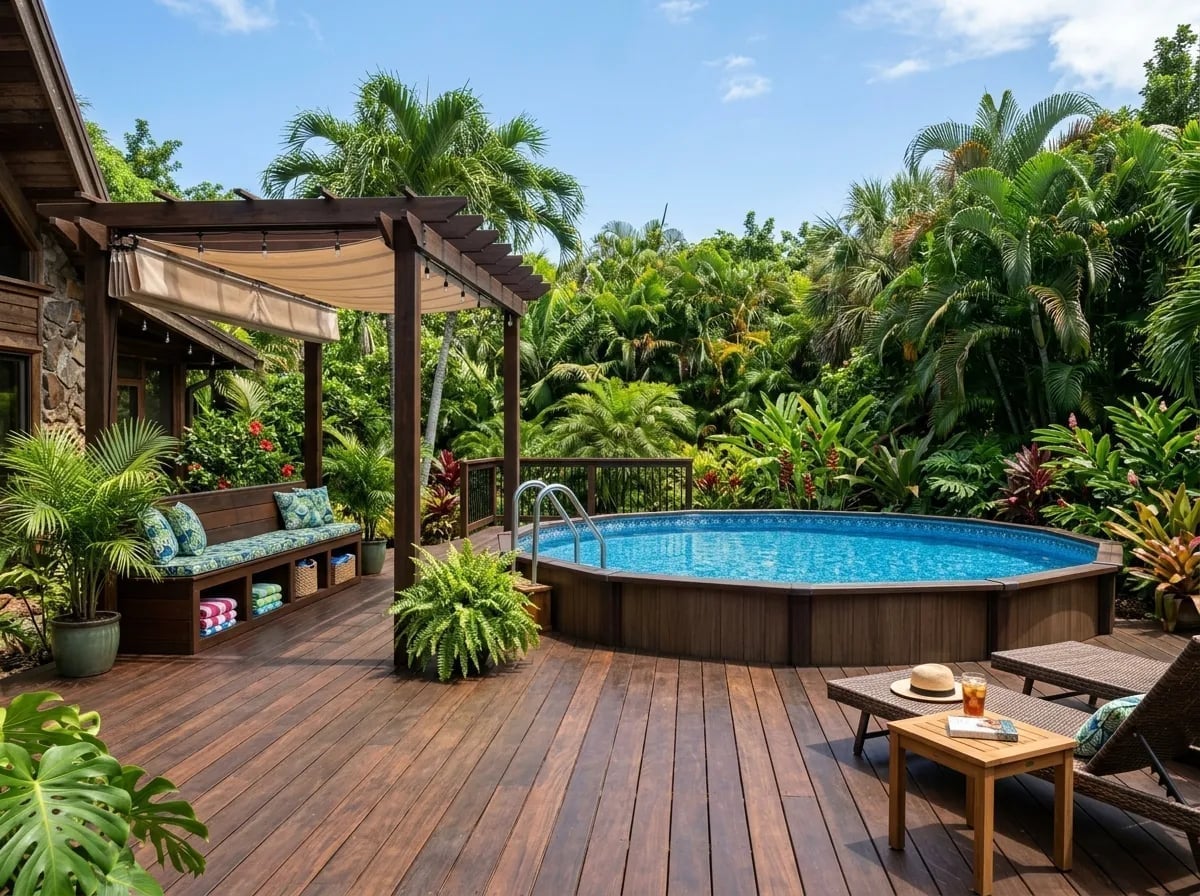
A fixed pergola is a permanent structure, but a retractable awning over an above-ground pool gives renters the same shade without the permit paperwork. The awning here extends from the house to cover the pool deck, and the string lights hung below turn the whole setup into an evening hangout spot. A built-in bench lines one side of the deck, while lounge chairs and a coffee table sit under the awning, creating a seating zone that faces the water. The tropical foliage around the perimeter softens the metal frame of the pool and keeps the space feeling like a retreat. 27 looks that actually work.
Final Thoughts
An aesthetic deck in 2027 is less about following a single trend and more about how the space lives. The strongest designs here share a few common threads: a clear layout that defines zones for dining, lounging, or gathering, and a consistent palette that ties the hardscape to the furnishings. Lighting, whether recessed steps or string lights, extends usability into the evening. For upkeep, composite materials and powder-coated metals hold up better than untreated wood in most climates. Check your USDA zone before planting anything permanent. The takeaway is simple: let the deck’s structure lead, then add layers of comfort and personality. A great deck doesn’t happen by accident, but it doesn’t need to be complicated either.