
Floor tile sets the tone for an entire room, and 2027 is shaping up to be a year of bold patterns and subtle textures alike. From geometric kitchen floors to marble-look living rooms, the options keep expanding. This roundup covers 32 aesthetic floor tile ideas that span real homes, not renderings.
Whether you are drawn to checkerboard, herringbone, or large-format stone effects, the goal is to find a tile that anchors the space without overwhelming it. Each photo shows the tile as the clear hero, with the surrounding room kept simple so the pattern or material can speak for itself. Consider this a visual tour of what is possible right now, from entryways to patios.
Modern kitchen with striking geometric gray, white, and black floor
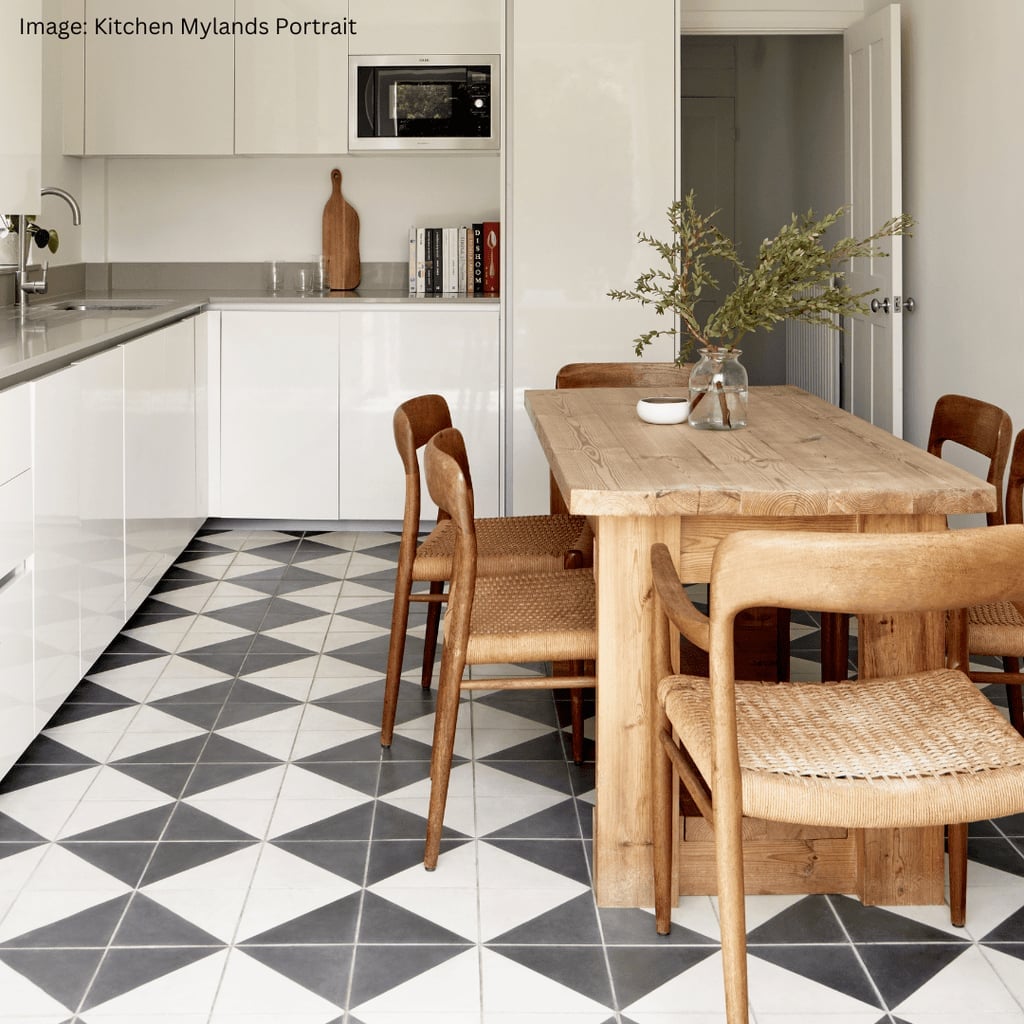
A geometric floor pattern in gray, white, and black can make a kitchen feel bigger than it actually is. The layout here places a kitchenette along one wall and the dining area next to it, with the tile acting as the visual anchor that connects both zones. A wooden dining table and chairs warm up the cool palette, while a glass vase on the table keeps the look light. The palette is the idea: keeping the wall color neutral and letting the floor do the talking means the room looks intentional without extra decoration.
Expansive living and dining area featuring large-format marble-look
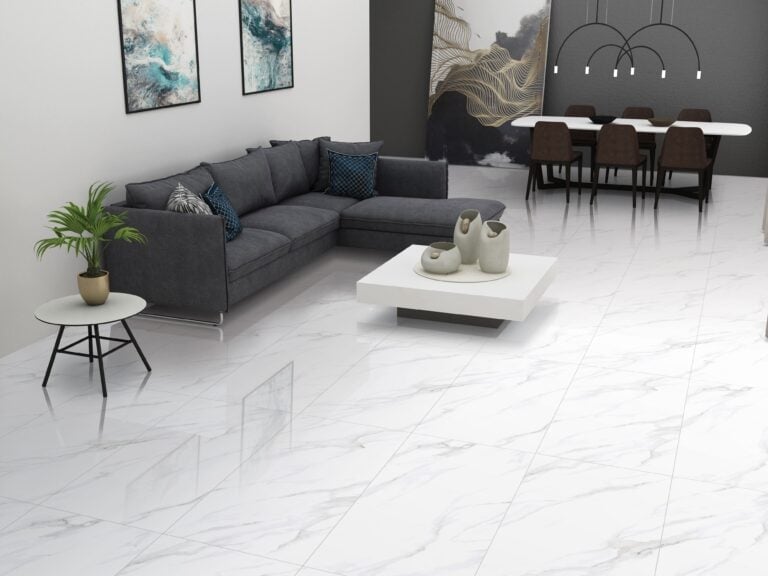
Large-format marble-look tiles work best when the room has the square footage to match their scale. In this open-plan living and dining area, the oversized tiles make the space feel even more expansive, with fewer grout lines breaking up the floor. A sectional sofa and a white coffee table anchor the seating area, while a dining table and chairs sit nearby under pendant lights. The pale gray and white palette keeps the room airy, and natural light from windows bounces off the neat surface. The principle of scale and proportion applies here: a big pattern needs a big room, and a busy pattern needs simple furniture to let it breathe.
Garage with interlocking gray plastic floor tiles in a diamond pattern
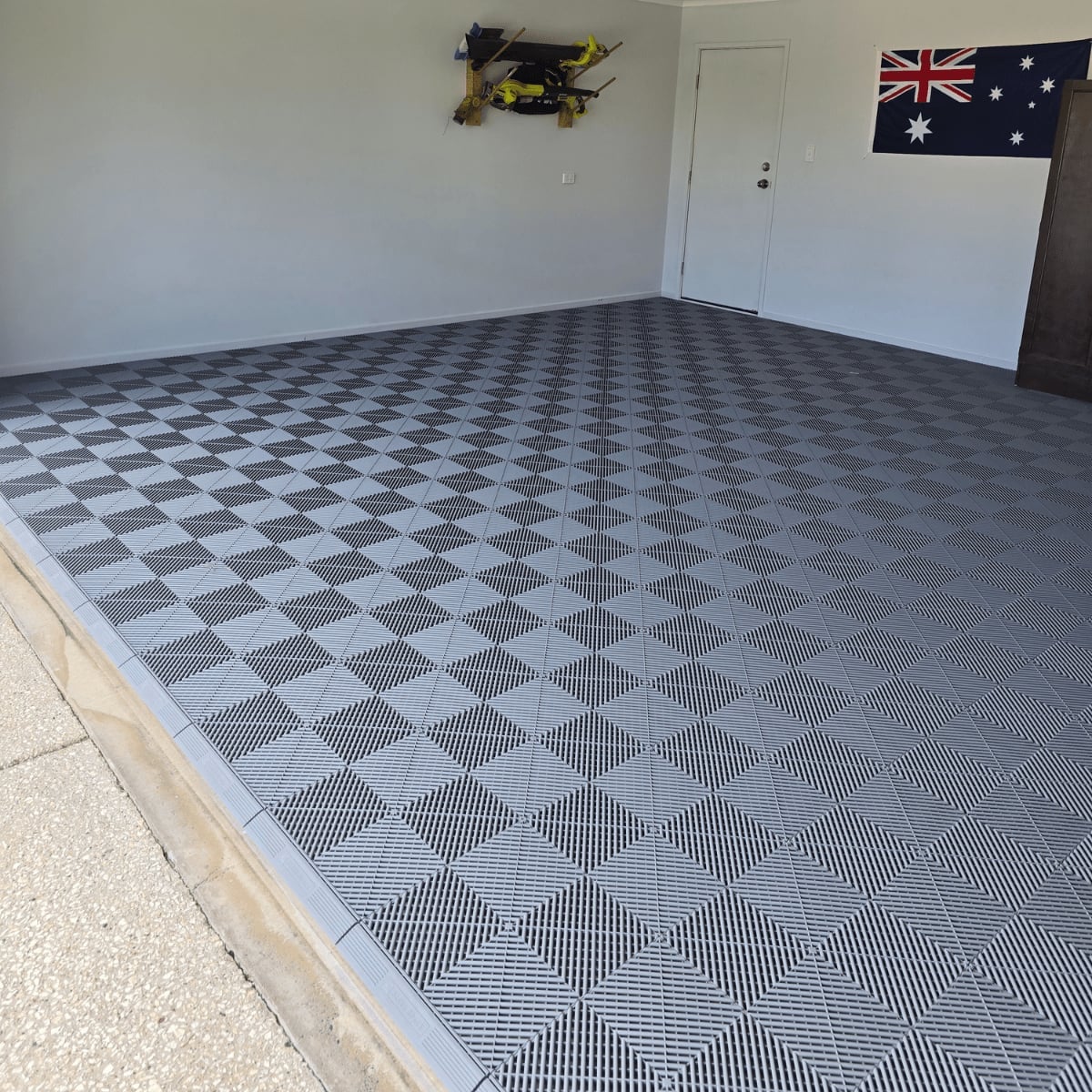
Can a garage floor actually look good without being a permanent commitment? Interlocking gray plastic tiles with a diamond pattern answer that question. They sit directly over concrete, so there is no glue, no grout, and no going back if you decide to remove them. The plastic material handles the kind of weight and moisture a garage sees, and the gray color hides the dust and dirt that come with the territory. A tool rack along the wall keeps the space functional, and the open floor area stays easy to sweep.
The real advantage here is durability without permanence. Plastic tiles are tough enough for a workbench area but light enough to take with you if you move. The diamond pattern adds visual interest to a room that usually gets none. If you rent or change your mind often, this is a practical alternative to painting or epoxying a concrete floor.
Living room anchored by a red, beige, gray, black, and white geometric
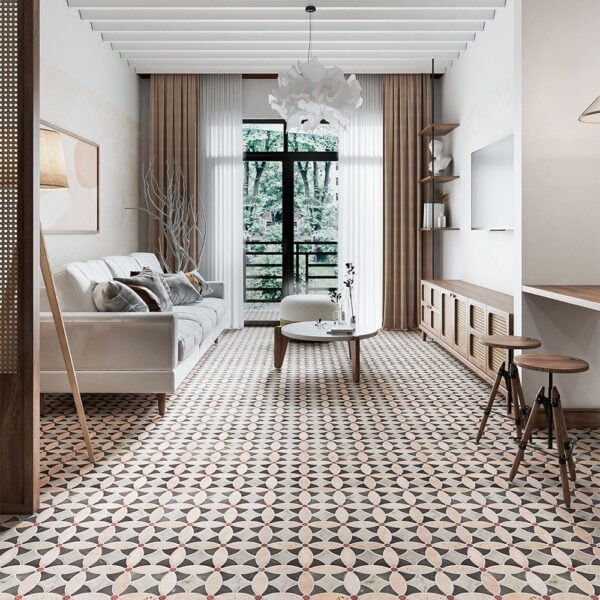
A geometric floor tile in red, beige, gray, black, and white sets the tone for the whole room. The tile is the hero, and the materials around it need to support rather than compete. In this living room, a sofa, coffee table, media console, and stools are arranged to frame the pattern, not cover it. Pendant light and floor lamp provide layered lighting that picks up the different hues in the tile. The principle of materials applies: when the floor has that much going on, stick to natural textures like wood and fabric for the furniture. Let the floor be the art.
Light wood geometric pattern on a light wood floor
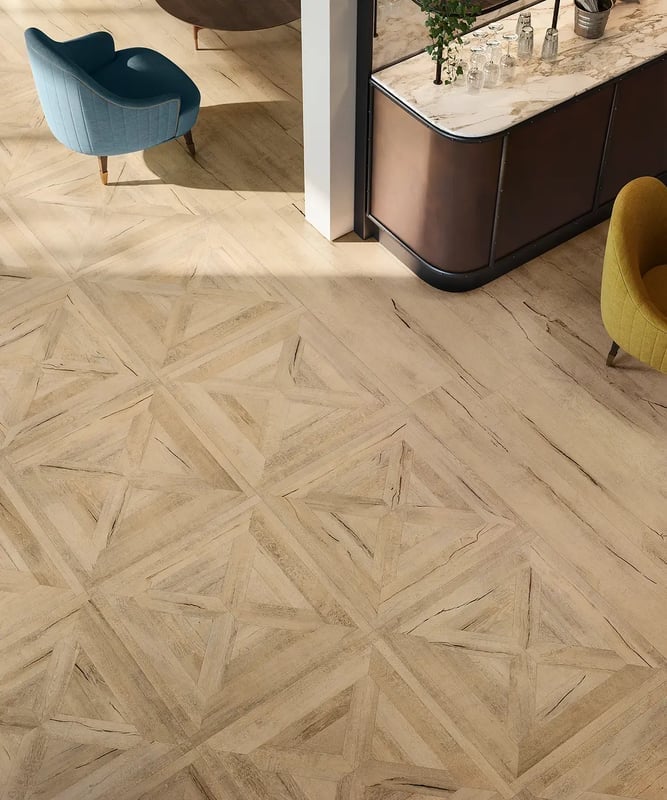
Geometric wood-look tile with light wood tones creates a textured pattern that feels calm. A blue armchair and a yellow armchair add color without clashing, and a marble-topped counter brings in a different material for contrast. The styling works by letting the floor set a neutral base and then layering in color through furniture. Dark accents in the metal legs and the marble veining keep the look grounded. The floor holds the chairs in place.
Outdoor patio featuring large format beige and cream marble-look tiles
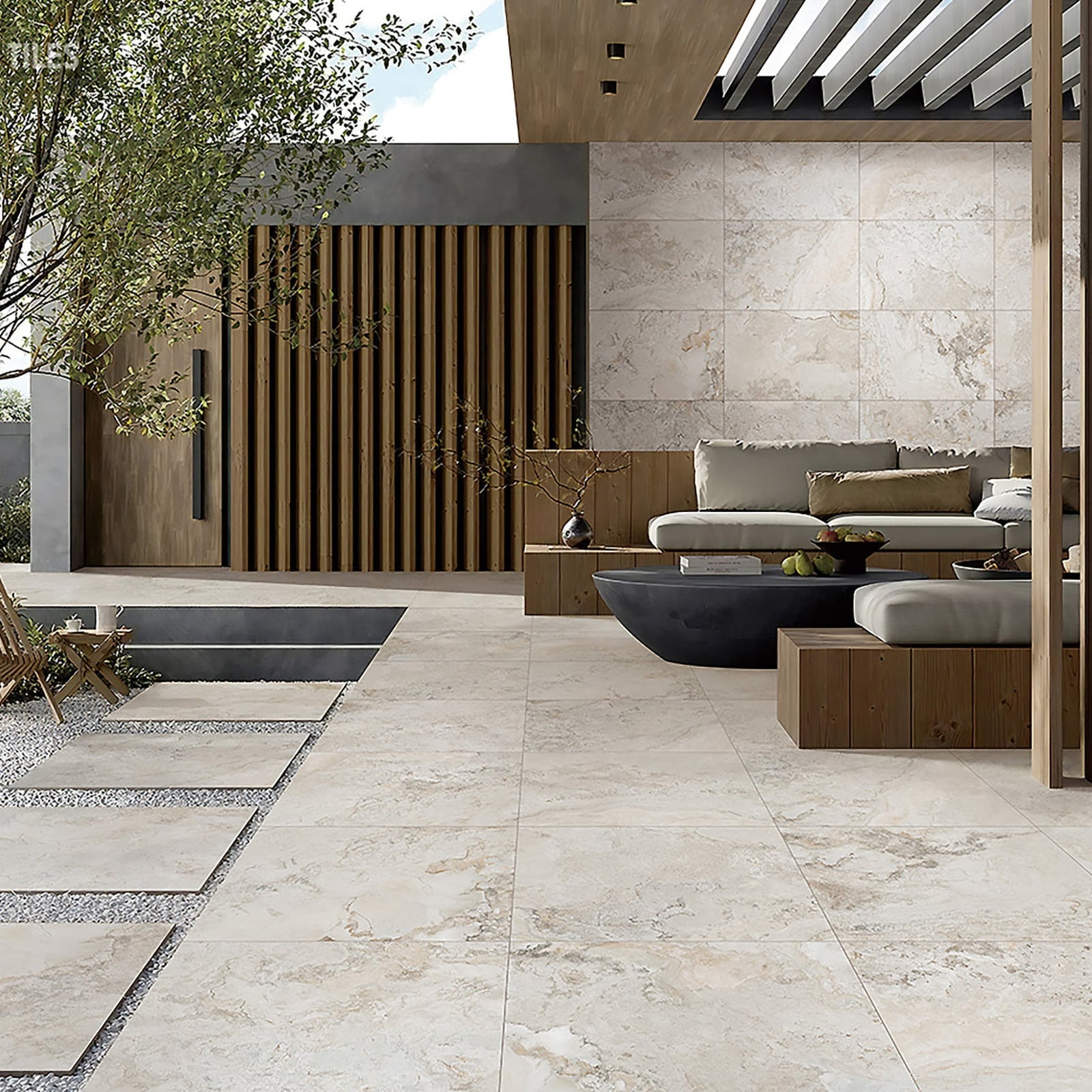
If you love the look of a stone patio but want something that sits flatter and cleans up faster, large-format marble-look tile is a solid swap. On this open-plan patio, beige and cream tiles stretch from the seating area past wooden benches and stepping stones, with recessed ceiling lights above for evening use. The tile stays cool underfoot even in full sun, which matters more on a patio than indoors. A sofa and coffee table sit on one side, and the pathways define the layout. The warm neutral palette lets the wood benches and concrete stone accents add texture.
Spacious living area with light-reflecting gray marble-look floor
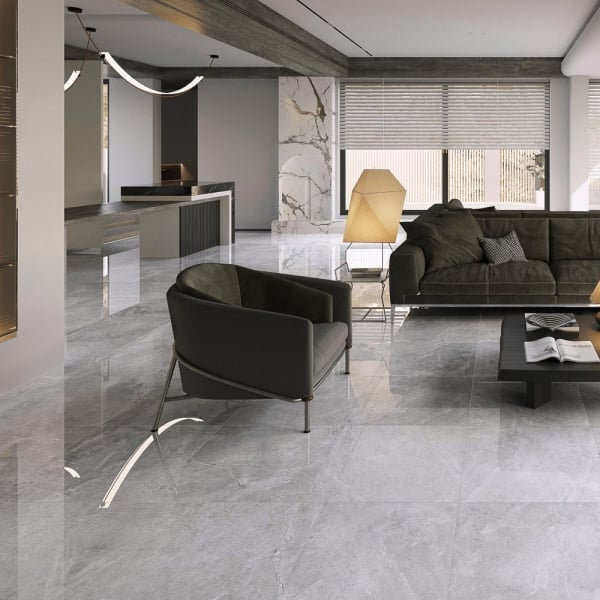
Gray marble-look tile in large format does two things at once: it makes the room feel bigger, and it bounces daylight from the blinds back into the space. In this living area, the floor picks up the gray from the sofa and the dark brown of the coffee table, while the pendant lights and floor lamp add warm pools of light. The eye moves from the seating group to the tile, then back up. For a renter-safe version, a large gray vinyl plank with a subtle stone print gives the same reflective quality without a permanent installation.
Traditional hallway with a bold black and white checkerboard tile
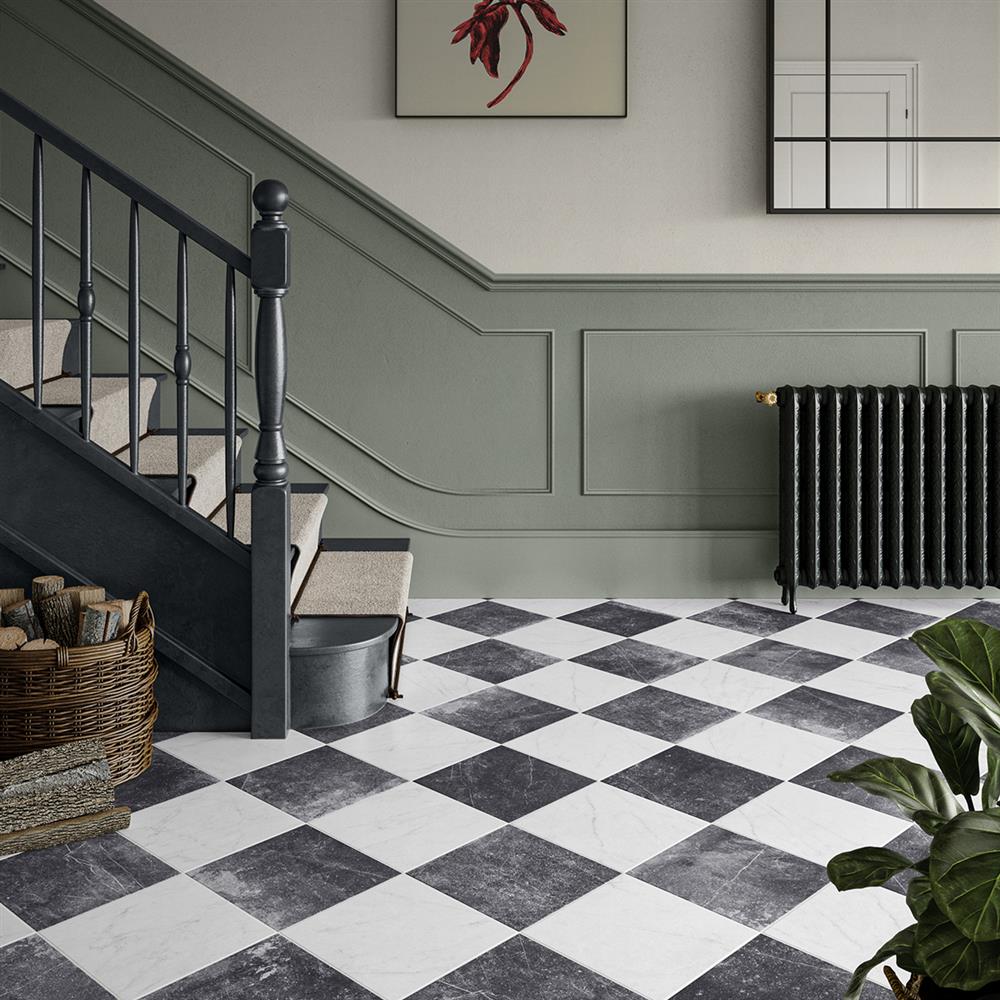
A black and white checkerboard floor is the quickest way to tell a hallway it has arrived. In this traditional entry, the tiles run right up to a sage green wall and a wooden staircase on the left, with a radiator and a basket of logs keeping the scene grounded. The contrast is high, but the scale of the squares keeps it from feeling like a game board. What breaks the look is softness: the wood tones and the green wall stop it from looking stark. For a similar effect without the grout lines, a black and white vinyl sheet with a checkerboard print holds up to foot traffic in a rental.
Entryway with geometric black and white floor tiles and natural wood
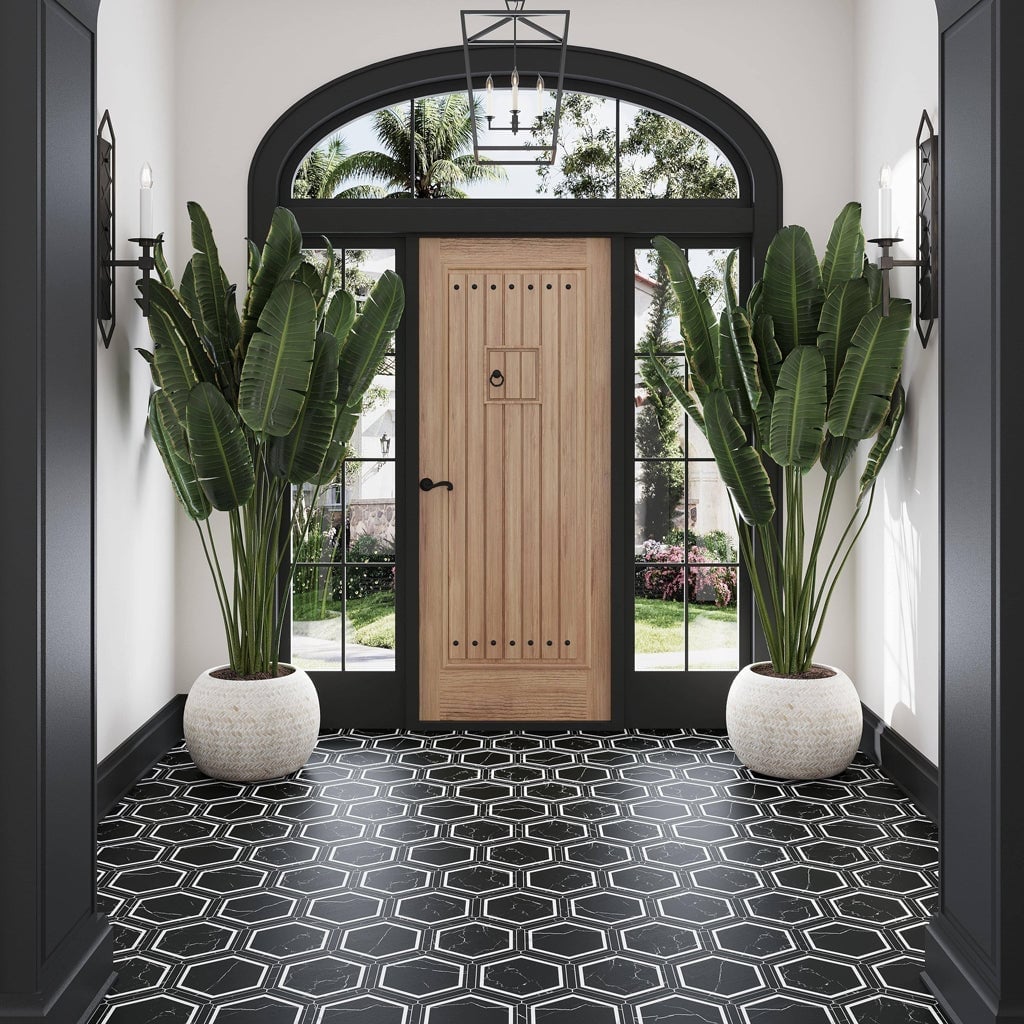
Can a geometric tile handle the front door without showing every grain of dirt? Yes, when the pattern is busy enough to hide daily dust but the finish is smooth enough to sweep clean. In this entryway, black and white geometric tiles sit under a wooden door and flanking potted plants, with natural light from the door and a window plus wall sconces. The layout keeps the plants symmetrical, so the tile is the visual anchor. The wood tones in the door and the warm metal of the lantern overhead keep the black and white from looking cold. For a busy entry, a glossy finish wipes down faster than a matte one.
Living room featuring a blue, brown, and beige herringbone wood-look
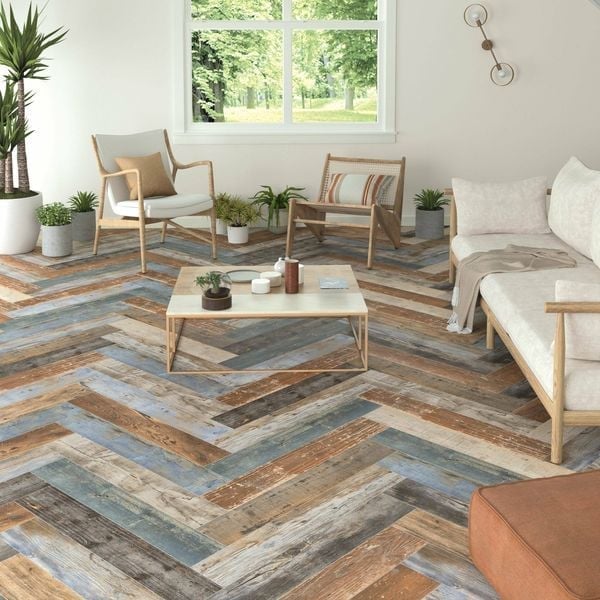
Herringbone wood-look tile in blue, brown, and beige holds a consistent tone across the whole floor without natural grain variation. The herringbone pattern runs under a central seating group with a sofa, armchairs, a coffee table, and potted plants, while daylight from the window hits the long planks. The blue undertone acts as a cool counterpoint to the rattan and linen furniture. The style uses a ratio of pattern to solid surfaces, about two-thirds floor, one-third furniture.
Black and white hexagons create a striking restaurant floor
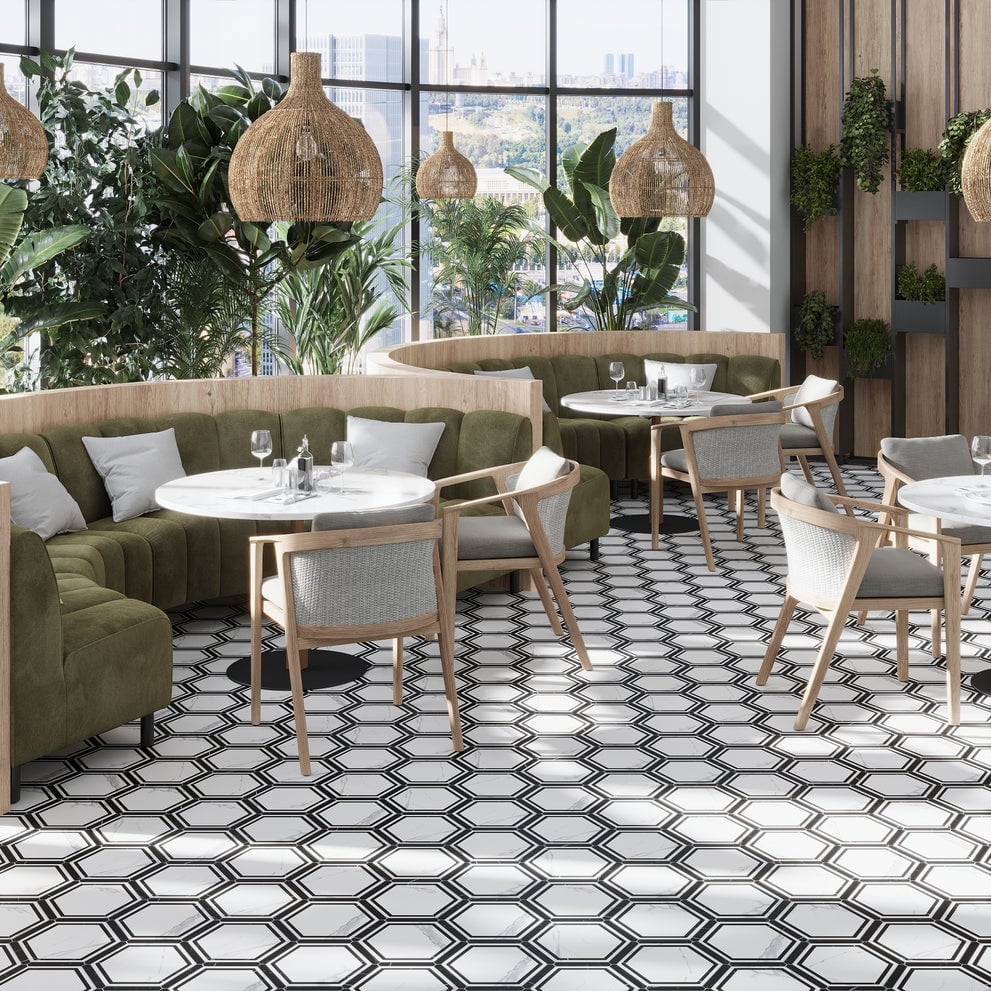
A practical rule for busy commercial floors is to anchor the pattern with the room’s layout. The hexagonal tiles in this restaurant form a geometric carpet of black and white, defining the seating area without a rug. Round tables and upholstered banquettes sit comfortably on the tile field, while natural light and pendant lights soften the high-contrast grid. The tile acts as the hero element here, with the rest of the room kept simple. Wood tones, rattan, and fabric chairs keep the space from feeling cold. The layout works because the pattern stops short of the walls, letting the eye rest on the clean perimeter.
Bathroom vignette with large gray stone-effect floor tiles
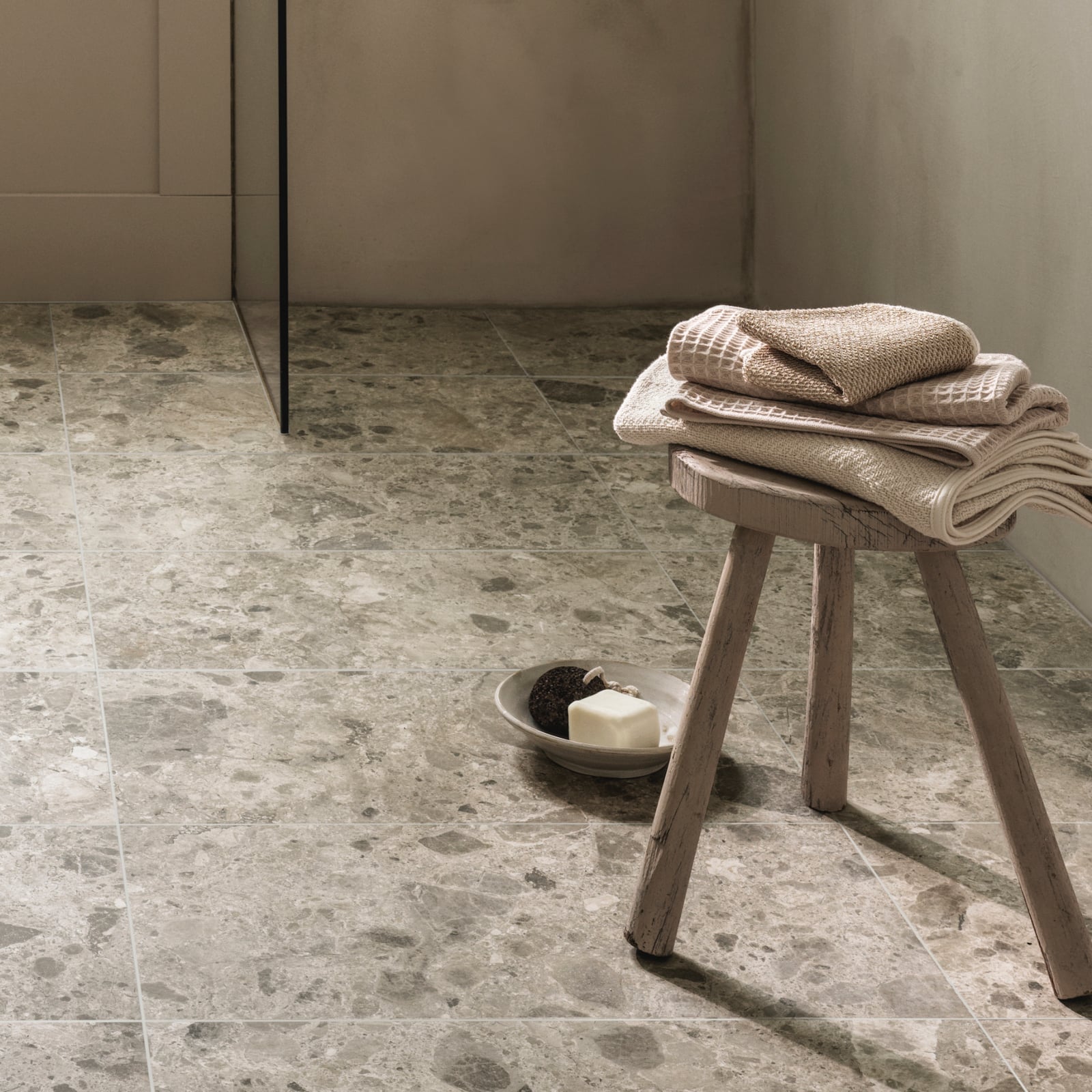
Close alternatives to stone tile often sacrifice texture for ease, but large gray stone-effect tiles manage both. The palette here stays within gray, beige, and taupe, which looks natural and grounded. A wooden stool, a stack of cotton towels, and a glass soap dish sit in a corner vignette, drawing attention to the floor’s subtle veining and matte finish.
The compact bathroom benefits from the large format tiles, which reduce grout lines and make the floor feel continuous. The stone effect adds warmth that plain ceramic would lack, and the neutral palette allows the wooden stool and textiles to stand out without competing. This is a palette that works because it lets the material do the talking.
Mediterranean reception area with light beige floor tiles
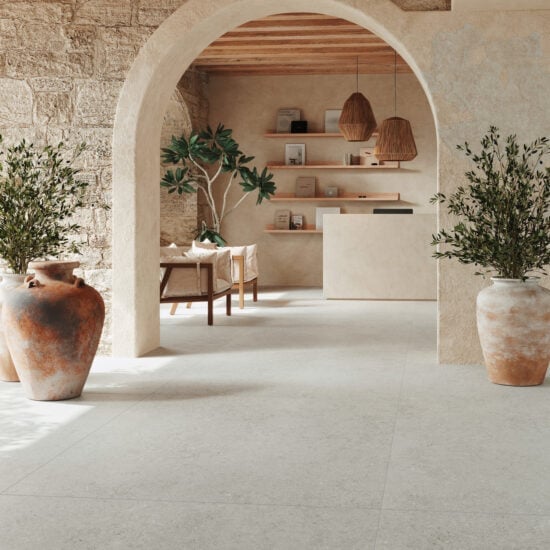
The light beige floor tiles in this reception area set a calm base for a room rich in texture. The style is Mediterranean, with terracotta, plaster, and wood surfaces balanced by large terracotta vases and abundant greenery. The floor’s pale tone reflects natural light from the archway entrance, softening the heavier materials around it. The warm beige floor acts as a neutral anchor against cooler stone and green accents. The tile itself is simple, so the pattern comes from the room’s layout and the interplay of materials.
Blue and white pattern on a kitchen floor for a clean look
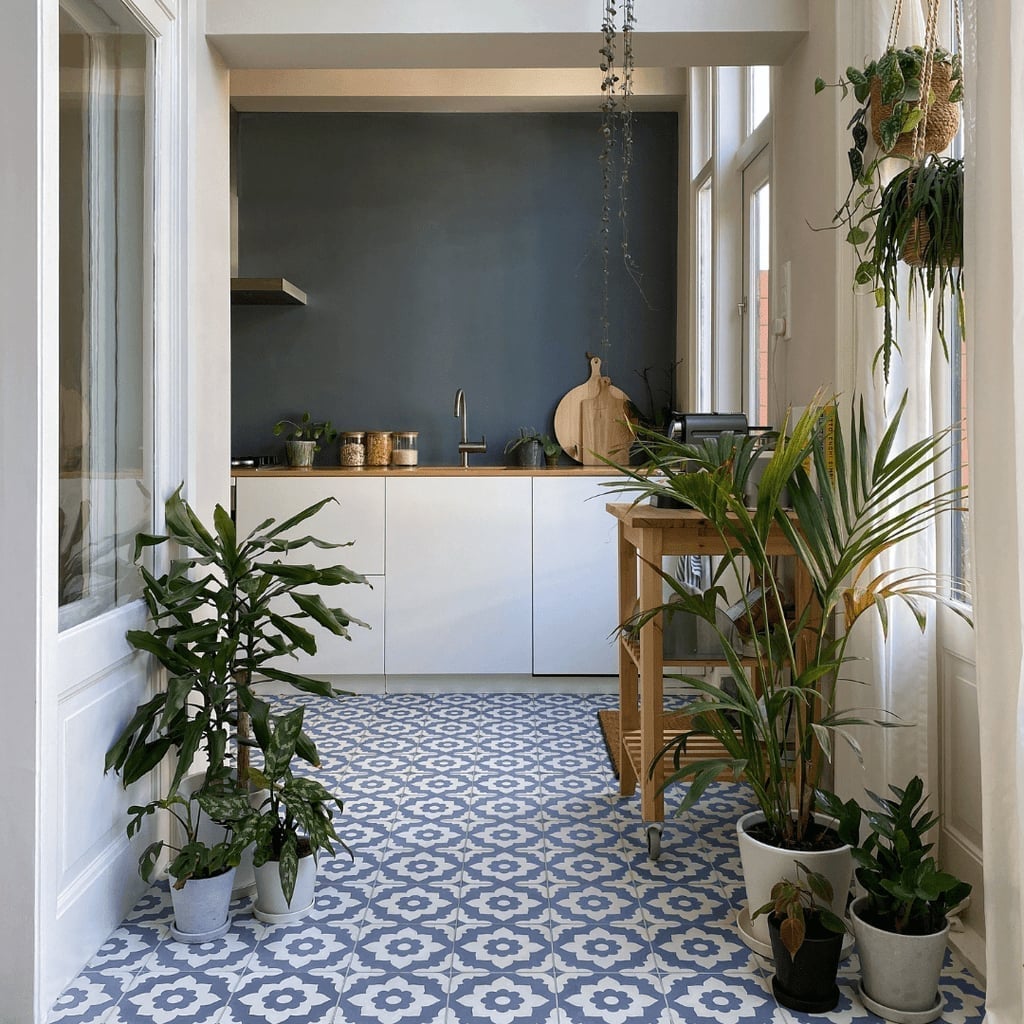
The blue and white patterned floor tile is the right call if you want a clean kitchen with personality. The palette is crisp: white cabinets and a wooden island sit above a tile that mixes cool blue with dark gray accents. Natural light from windows keeps the pattern from feeling heavy. The tile works as an element because it stays on the floor, leaving the upper half of the room light and open. The blue ties to the potted plants and glassware, creating a cohesive color story without matching. The white base of the tile keeps the room bright, while the pattern adds the interest that a solid floor would miss.
Minimalist detail of large format light gray floor tiles
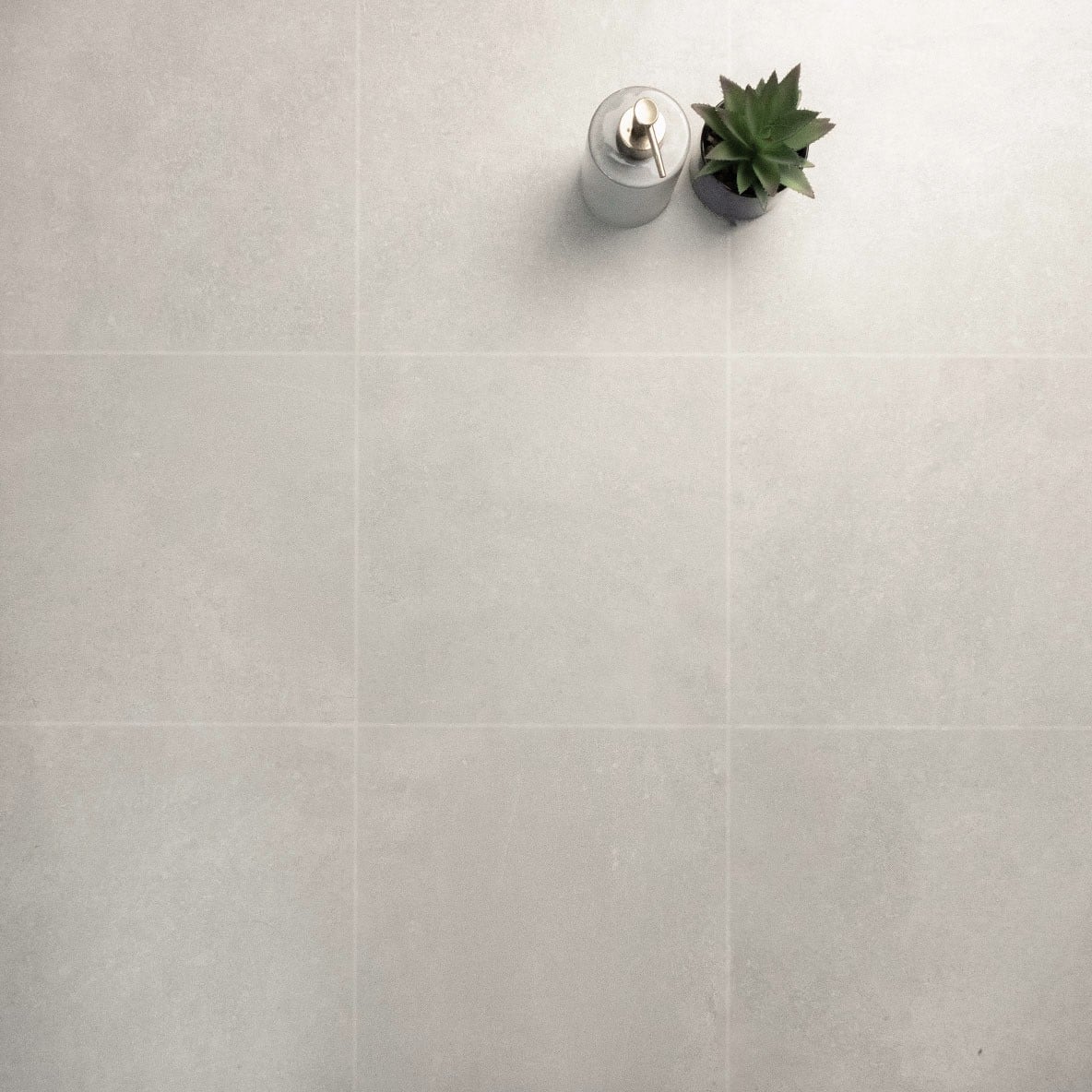
A practical rule for minimalist spaces is to let the floor’s scale do the decorating. The large format light gray tiles here create a smooth surface that looks calm and uninterrupted. The detail vignette shows a soap dispenser and a potted plant on the tile, emphasizing how the floor recedes into the background.
The large format means fewer grout lines, which supports the clean look. The light gray palette works because it is neutral without being cold, and it reflects available light to keep the room open. For storage, a minimalist floor like this benefits from simple, low-profile furniture that does not compete with the tile’s scale. The floor becomes the foundation, not the focal point, and that is exactly what a minimalist space needs.
Kitchen with black and white checkered floor tile and light green
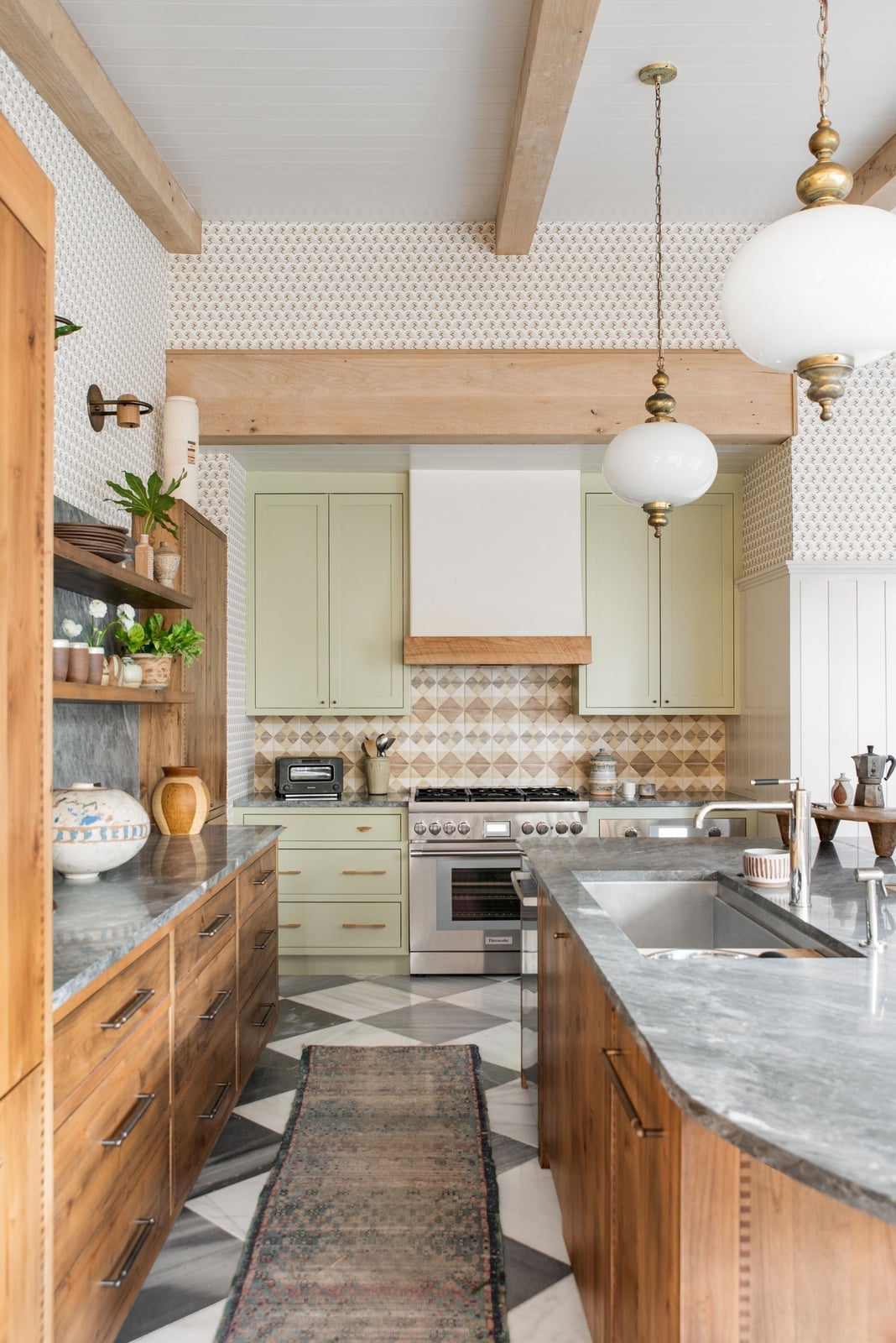
A black and white checkered floor tile sets a graphic foundation for a modern farmhouse kitchen. The room keeps its palette restrained with light green cabinetry, beige countertops, and white marble accents so the floor looks the defining pattern rather than a competing one. Brass hardware and pendant lights add warmth that softens the high contrast. The galley layout with a central island benefits from the tile’s visual rhythm because the repeat draws the eye along the length of the space. A wood range hood and open shelving break the formality and keep the kitchen from feeling like a diner.
Hallway with gray and white marble checkerboard floor tiles
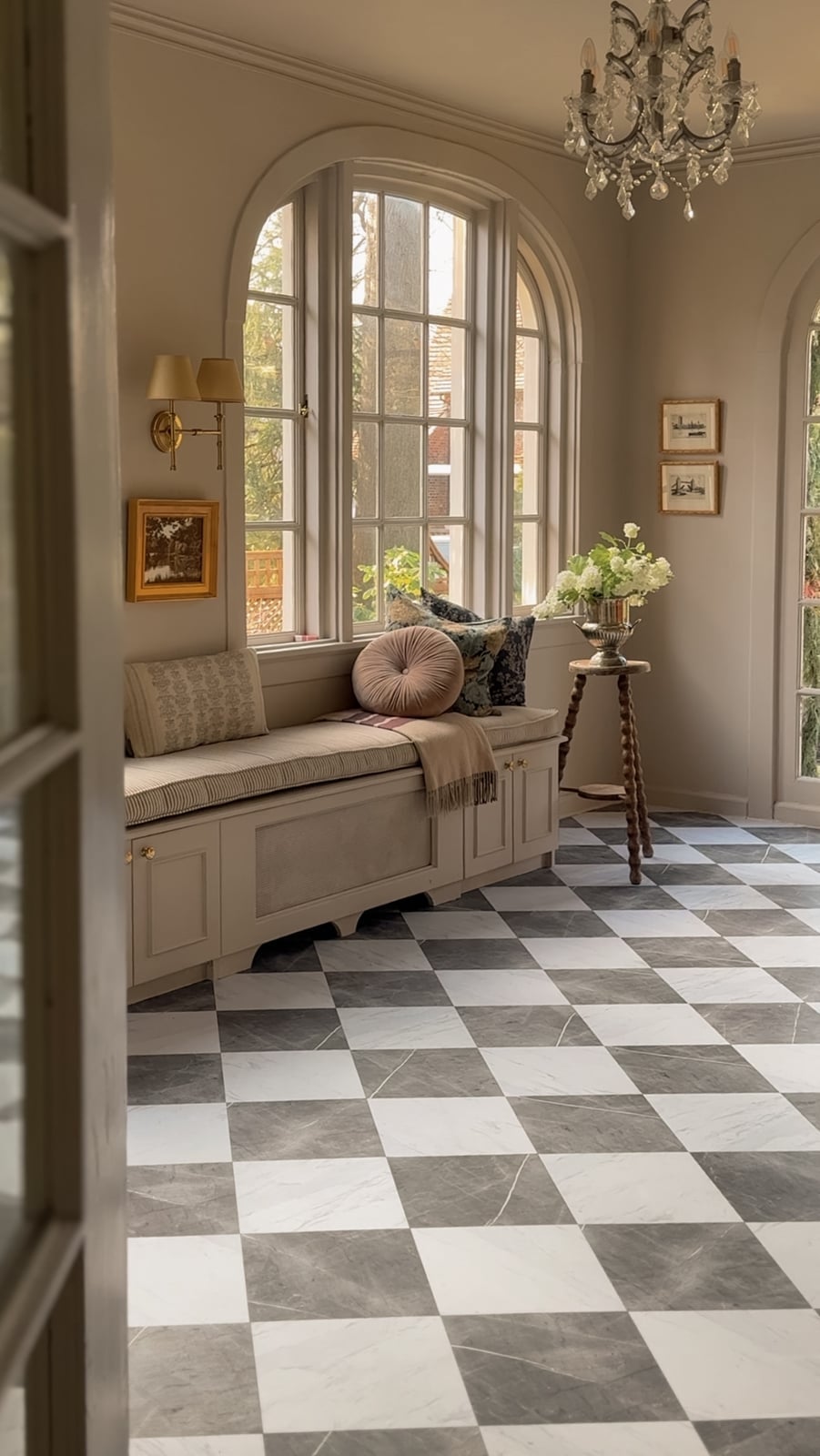
A practical rule for a hallway that feels wider than it is: lay marble checkerboard tiles on the diagonal. The gray and white squares create a continuous diamond grid that pushes sightlines toward the far end rather than cutting the corridor into short segments. A built-in bench along one wall anchors the traditional style, while a crystal chandelier and wall sconces provide layered light that keeps the stone from reading cold. Wood accents in the side table and window trim balance the hard surface. For renters, a vinyl peel-and-stick checkerboard in the same scale mimics the look without altering the subfloor.
Galley kitchen with blue cabinets and a striking patterned floor tile
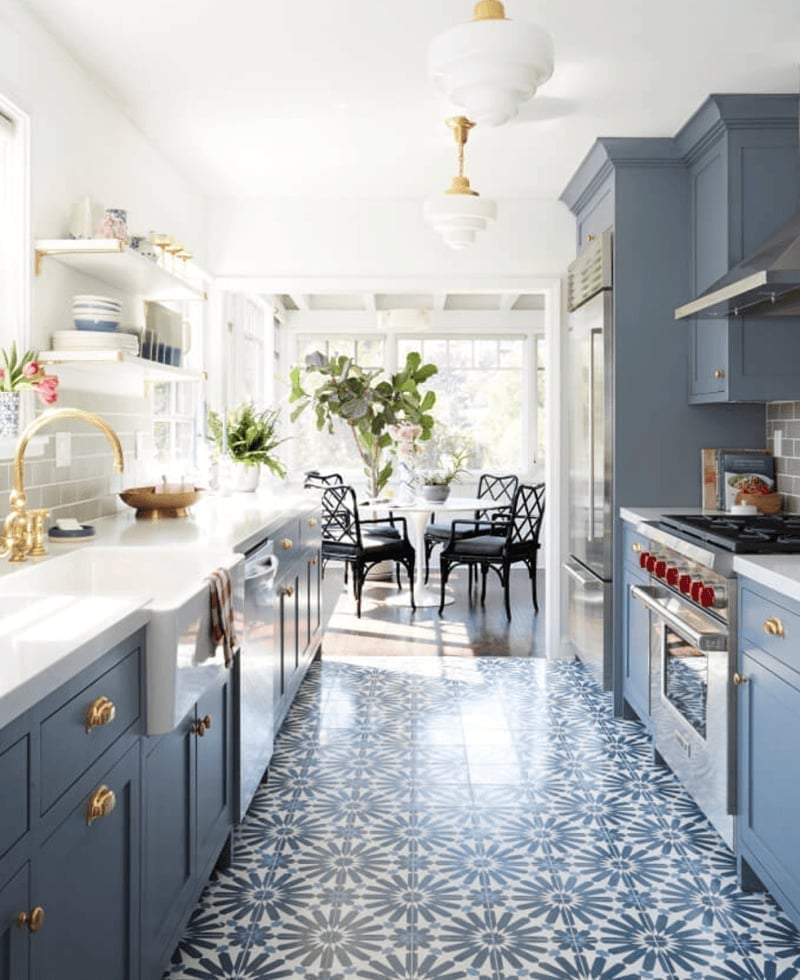
A close alternative to the standard subway backsplash is letting the floor tile carry all the pattern. This galley kitchen pairs deep blue cabinets with a white farmhouse sink and gold faucet, then anchors the room with a multi-toned patterned floor tile in gray, white, and gold. The tile pulls the blue and brass together without requiring a third accent color on the walls or counters. Stainless steel appliances and a simple dining set keep the look grounded. The palette ratio leans toward two thirds cool tones from the cabinets and tile, with gold and warm gray filling the rest. What breaks the scheme is introducing a competing geometric on the backsplash or countertop edge.
Wood grain tile pattern creates a modern hallway feel
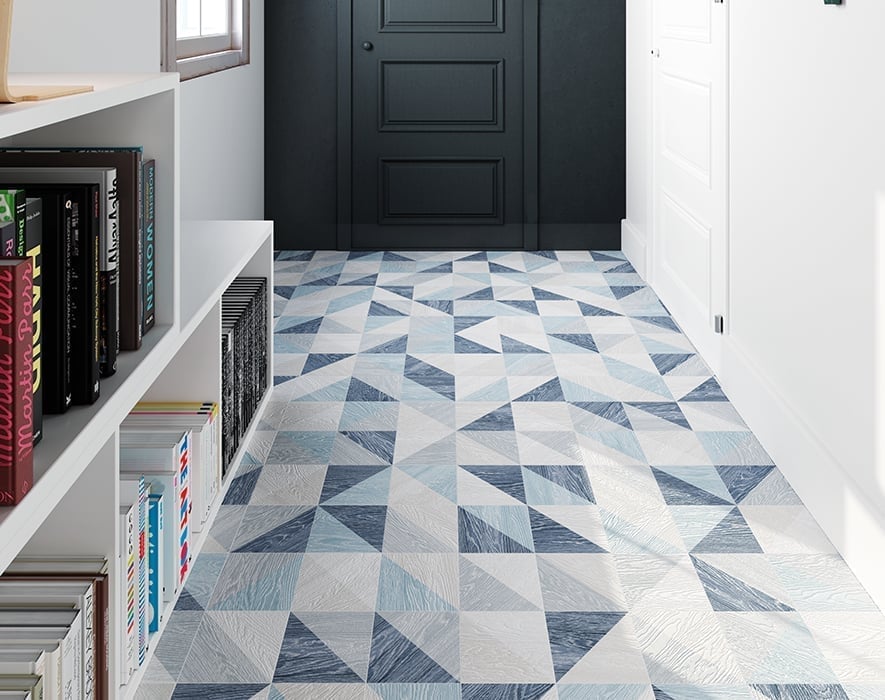
A geometric wood grain tile combines the warmth of hardwood with the precision of ceramic. The rectangular planks are arranged in a staggered chevron that gives the hallway direction without the busyness of a small-scale pattern. The subtle grain lines are visible in the natural light, which softens the gray-blue palette of the walls and door. A white bookshelf along one wall lifts the visual weight so the floor does not dominate. The tile’s low porosity makes it a practical choice for entries where wet boots or muddy shoes are a regular issue.
Dining room featuring ornate patterned floor tiles and wooden
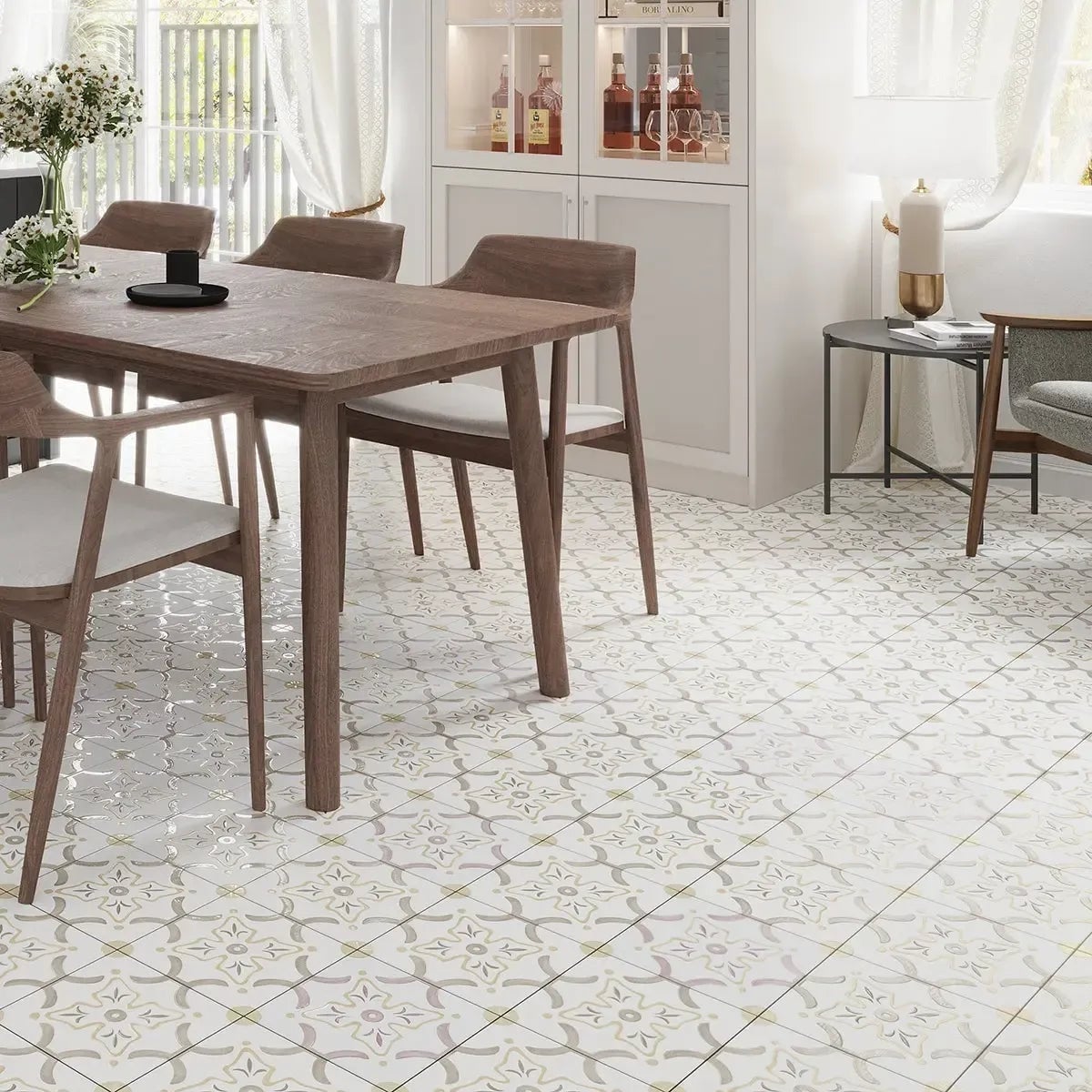
This dining room proves that an ornate floor tile works best when it stays the only busy surface in the room. The beige, gray, and white pattern covers the full floor, but the walls stay neutral and the wooden dining set and chairs are kept simple. A glass cabinet against the wall keeps visual clutter low while the table lamp adds a warm focal point at eye level. The tile’s scale and proportion matter here: a large repeating motif fills the roomy space without making the floor feel like a rug. What breaks the look is adding a patterned tablecloth or a second decorative element in the same color family.
Compact bathroom with white and gray hexagonal floor tiles
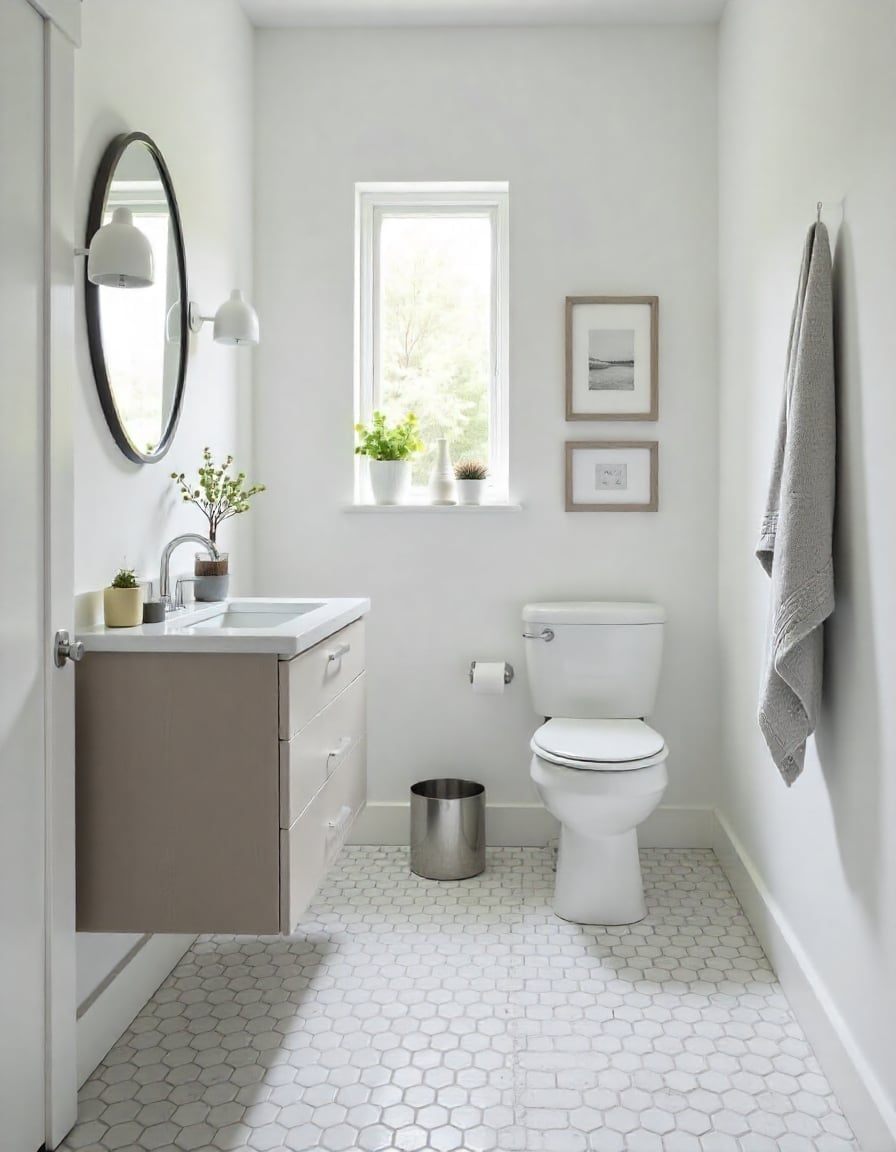
A tight floor plan calls for one clear visual anchor, and scaled-down tile shapes deliver it without making the room feel smaller. In this compact bathroom, hexagonal floor tiles in white and gray create a surface that looks busy from a distance but settles into a clean grid up close. The pattern draws the eye across the room, so a floating vanity and a round mirror above it keep the wall plane unbroken. Natural light from a window and wall sconces bounce off the pale tiles, which helps a small space feel wider than its footprint. The takeaway for a tight room: let the floor carry the pattern and keep every other surface restrained. White walls and a simple vanity let the hexagon shape do the work.
Open-plan living and kitchen with marble-look tiles and gold veining
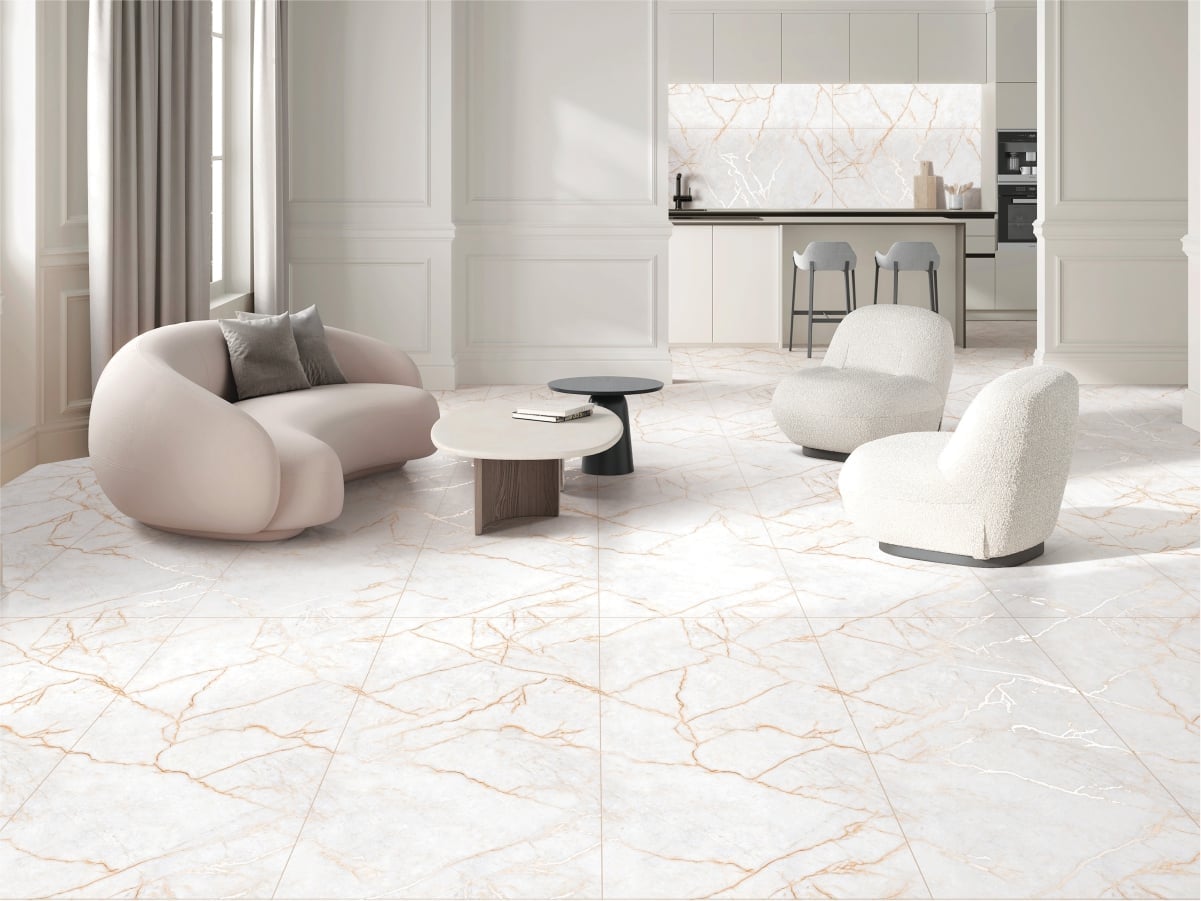
Large format marble-look floor tiles with gold veining run through this open-plan living room and kitchen, pulling the two zones together without a transition strip. The warm gold lines echo the brass legs on a curved sofa and the metal base of bar stools at the kitchen island, so the palette is cohesive. A pair of boucle armchairs in white and a pair of coffee tables keep the seating area grounded, while the tile surface reflects overhead light and window light across the whole footprint. For an open plan, a single floor material with a distinct vein color can act as the thread that ties furniture groups together.
Teal mosaic floor tiles create a spa-like bathroom
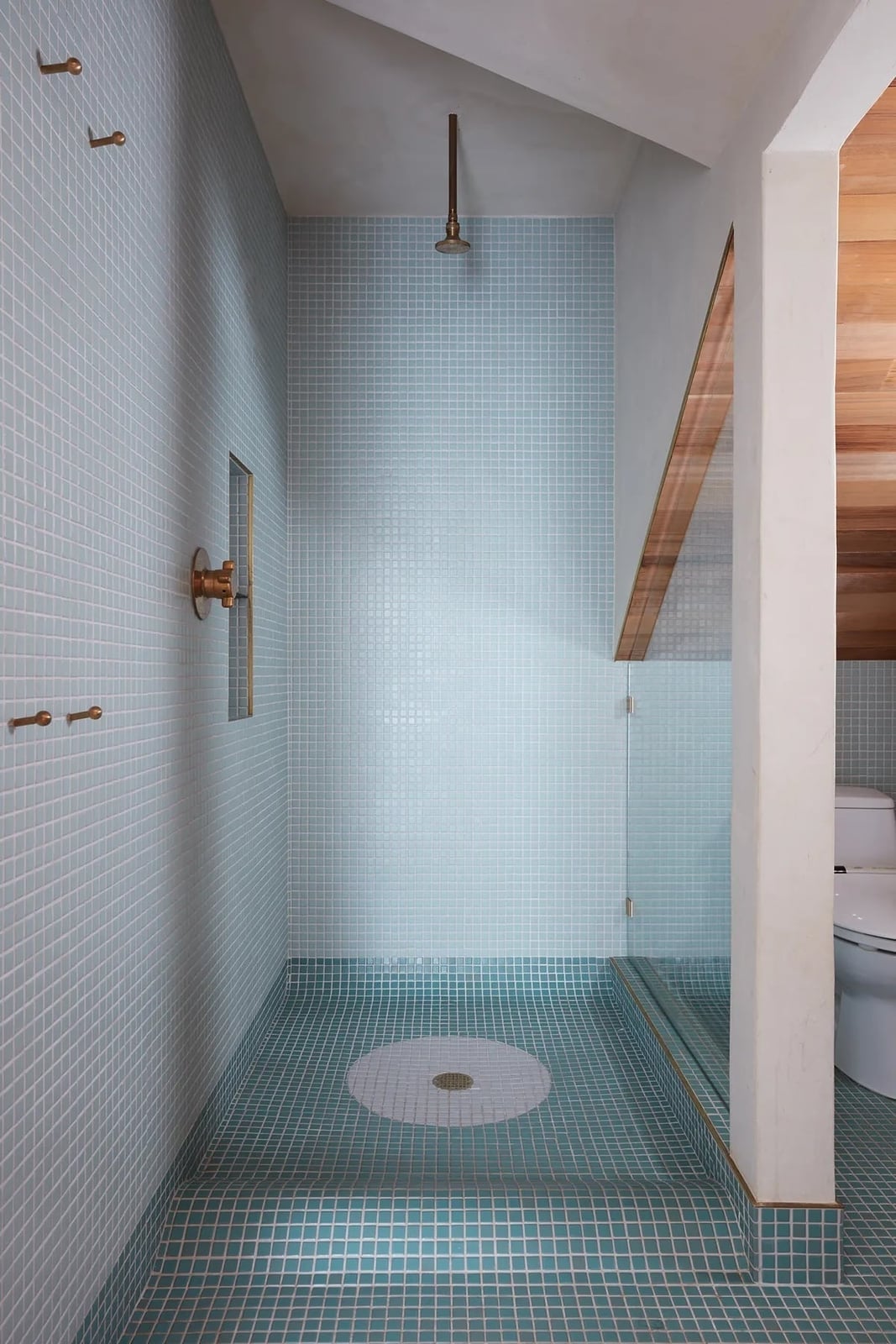
To make a bathroom feel like a retreat, pick a floor color that suggests water. In this roomy bathroom, teal mosaic tiles cover the floor with a circular inlay near the shower, and the glass enclosure keeps the view open from corner to corner. The teal sits between the white of the shower head and toilet and the wood tones of a vanity, so the palette stays cool without feeling cold. Brass fixtures add a warm contrast that keeps the teal from looking too marine. For a spa-like effect, let the floor carry the color and pair it with simple white walls and natural wood accents.
Ornate tiles and wood planks for a grown-up look
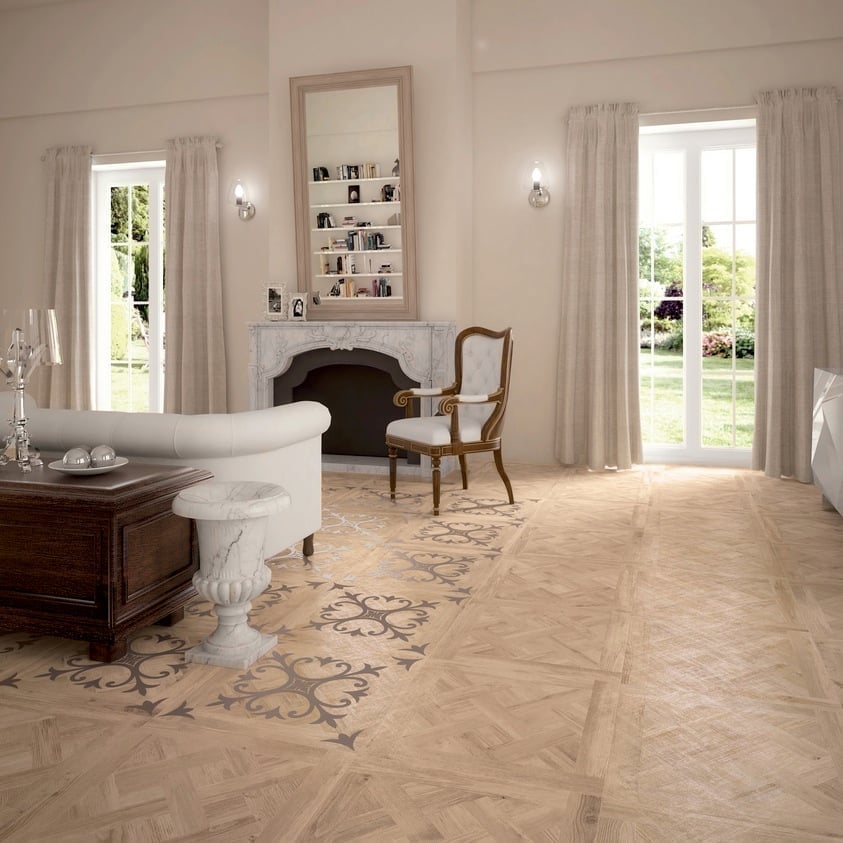
An ornate floor pattern can feel overwhelming in a whole room, but transitioning it to wood planks at a certain point keeps the look grounded. A patterned tile area near the fireplace and furniture shifts to wide wood planks across the open plan, creating a transition from the detailed zone to the calm one. Wall sconces cast light across the tile, highlighting the raised relief of the pattern, while the wood section stays in shadow. The trick is treating the ornate tile as an area rug instead of a full-room treatment. A sofa and armchair placed on the tile side anchor the pattern, and the wood side keeps the room from feeling busy.
Mudroom with large format beige floor tiles and practical storage
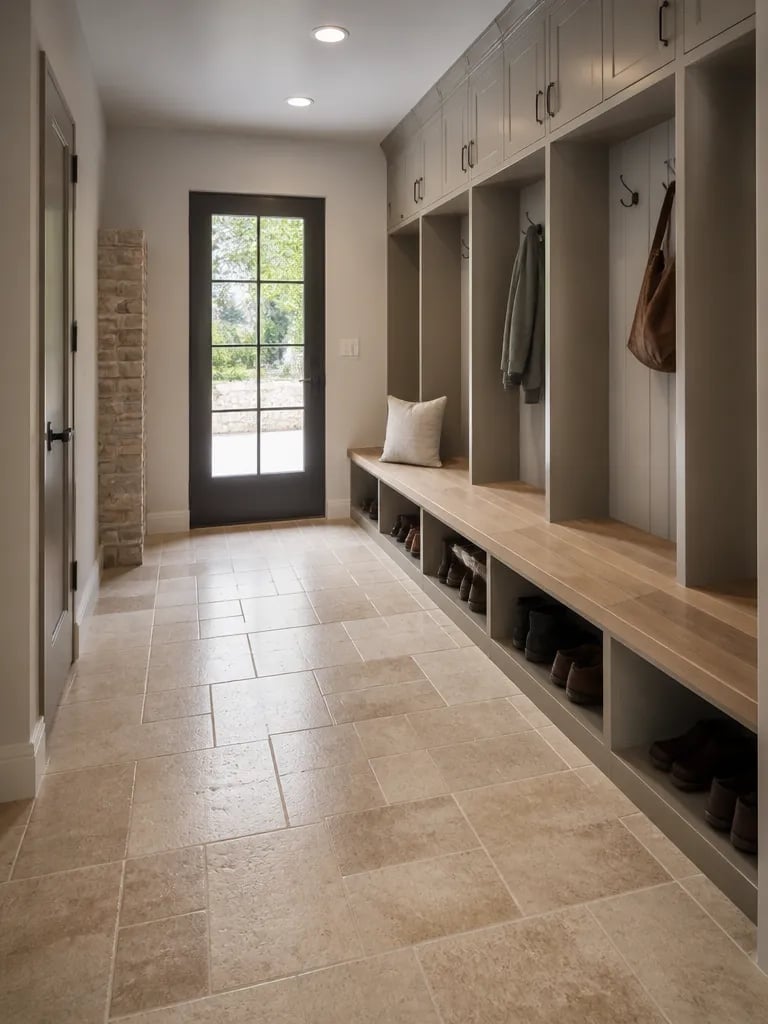
A mudroom needs a floor that stands up to wet shoes and muddy boots, and large format beige tiles deliver that durability with fewer grout lines to scrub. In this roomy hallway, the beige tile runs from the door past a long wall of built-in storage: overhead cabinets, a bench, and shoe shelves. The tile color matches the painted wood of the cabinets, so the floor recedes and the storage becomes the focal point. Recessed ceiling lights keep the beige looking warm rather than flat. For a high-traffic entry point, a large format tile in a neutral tone means less grout maintenance and a surface that hides the dust and dirt that come through the door.
Marble checkerboard floor for a traditional bathroom
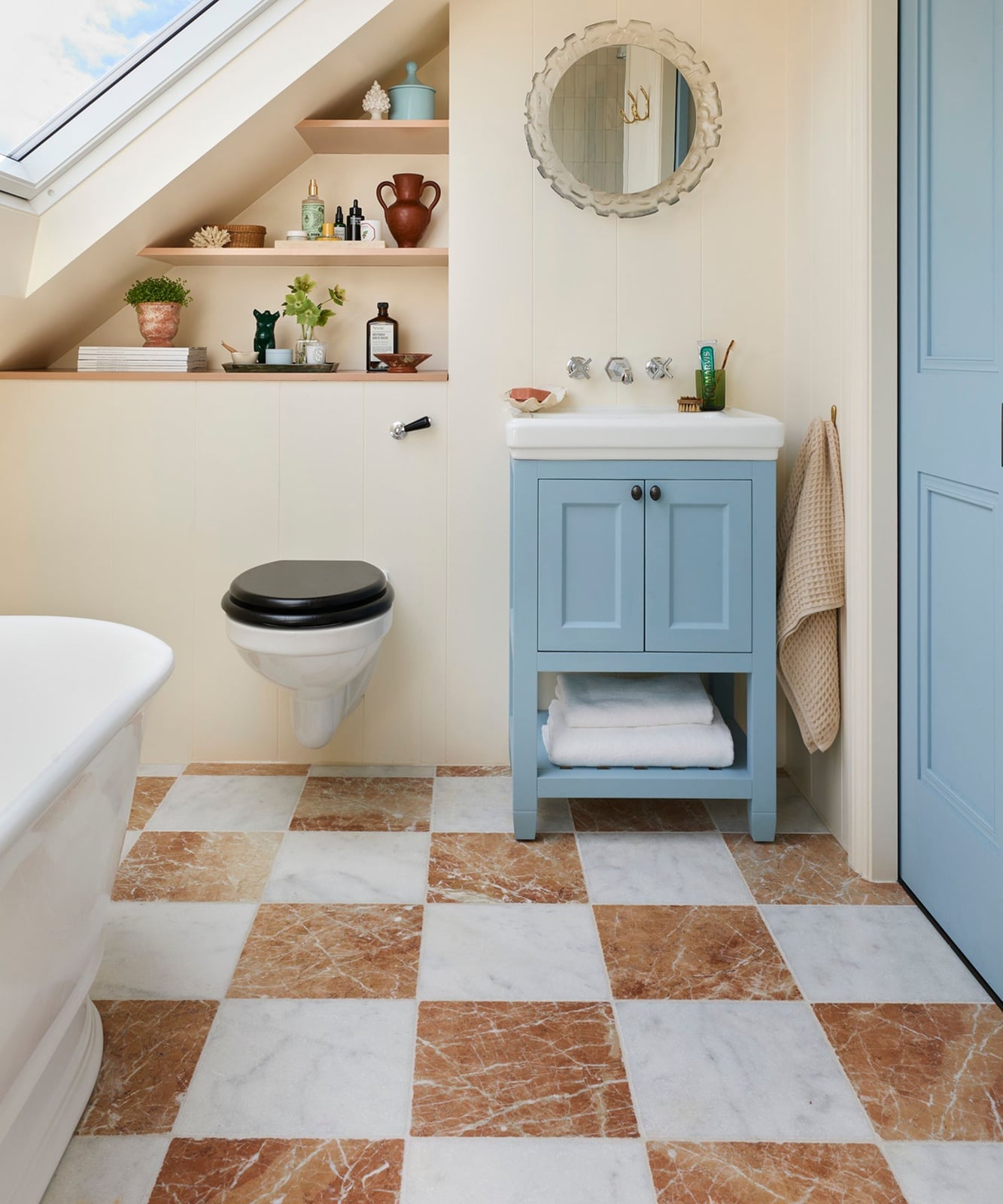
A classic checkerboard floor in marble is a durable choice for a traditional bathroom. The white and cream squares keep the compact room feeling open, while the blue and brown veining adds depth. A clawfoot tub and wood vanity fit the style without competing with the tile. The natural light from the skylight is the main source here, so the floor’s glossy finish helps bounce that light around. For a similar look with less upkeep, consider a porcelain tile with a marble finish rather than natural stone.
White and gray geometric tiles create a clean bathroom
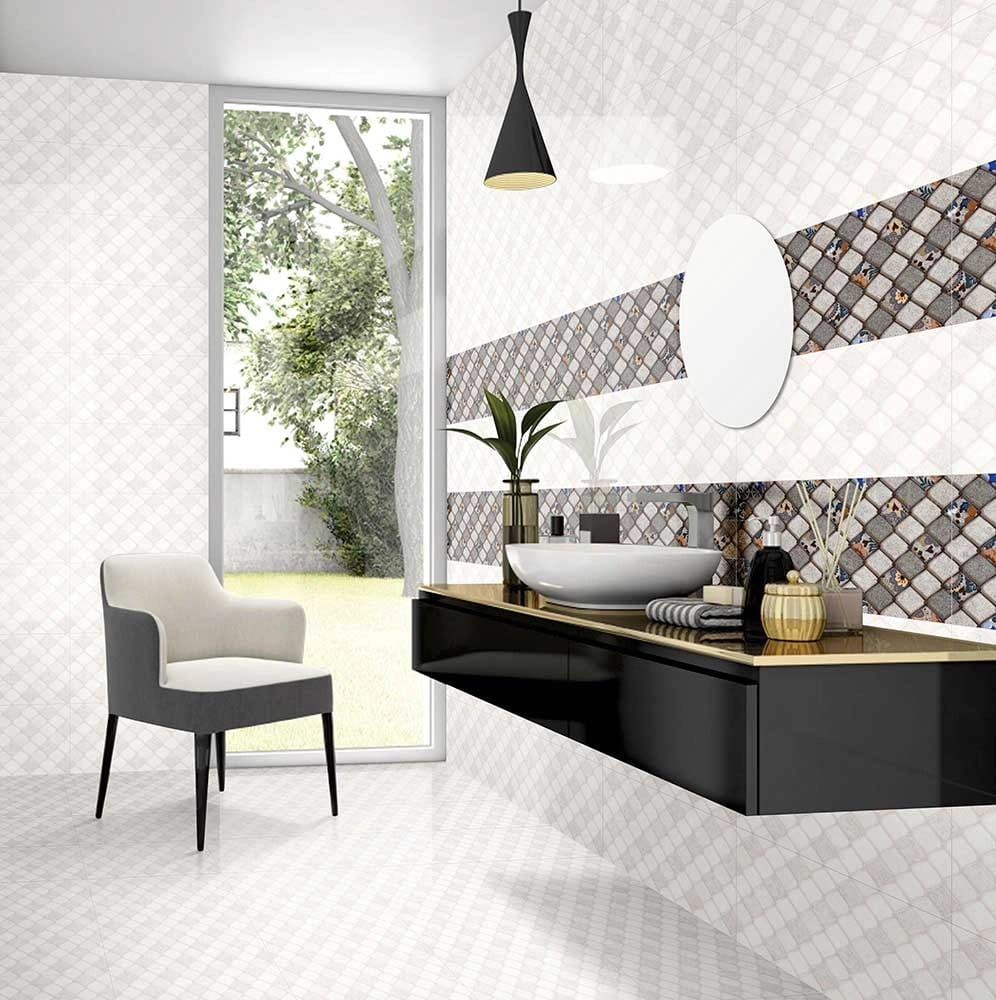
In a modern bathroom, let the floor anchor the palette. A white and gray geometric tile pattern does that without adding color that could feel dated. The black, gold, and green accents in the vanity and armchair become details that tie the space together.
The pendant light and ambient light keep the room bright, so the floor pattern stays crisp. For a renter safe version, a large vinyl floor cloth with a printed geometric pattern can give the same effect. Just make sure it is cut to fit around the toilet and vanity base for a clean edge.
Geometric tiles and a grand staircase for an entryway
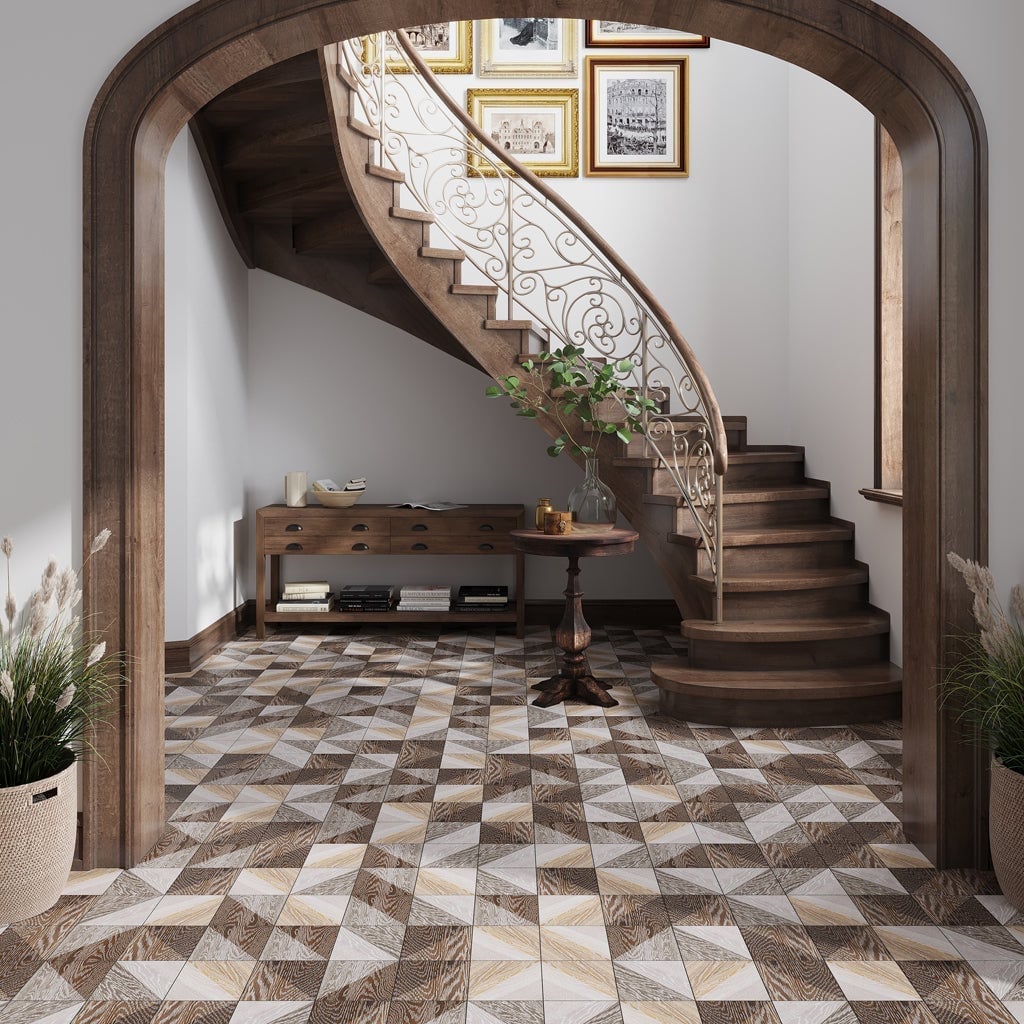
The geometric patterned floor tile here is scaled to match the roomy entryway and the curved staircase. The brown, beige, white, and gray palette keeps the tile from feeling busy against the wood console and round pedestal table. The tile is lit at an angle, so the pattern shifts as you walk through. A tile with a matte finish helps hide footprints in a high-traffic zone like this.
Gray and white patterned tiles transition to simple gray
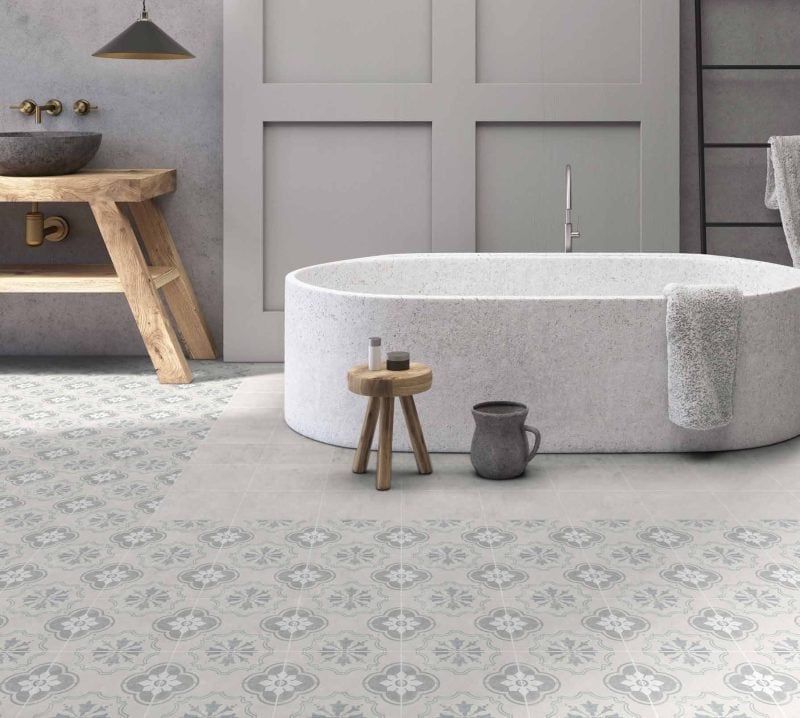
The layout here uses two zones: an ornate patterned tile around the freestanding bathtub and a simple gray tile near the vanity and stool. This marks the wet area without a shower curtain or glass panel. The gray and white palette keeps the transition smooth, and the pendant light and natural light balance the darker stone and concrete accents. For a similar effect, use the same tile in two different laying patterns rather than two different tiles.
Spacious bathroom with large format marble tiles and dark blue walls
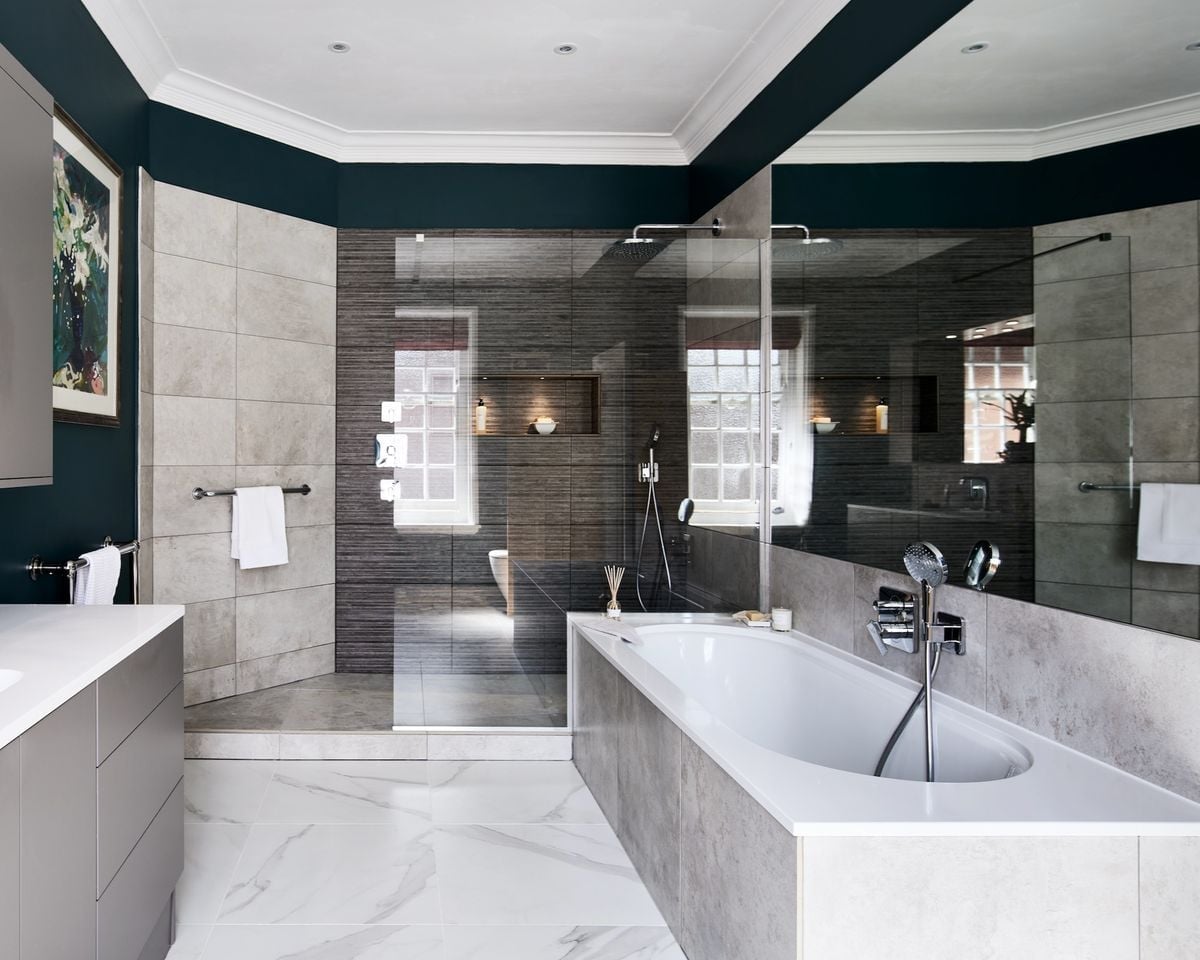
Large format marble floor tiles in a bathroom can feel cold next to dark blue walls, but the pale gray and beige veining in the stone warms the contrast. The spacious layout with distinct zones for the freestanding bathtub and walk-in shower is supported by the floor’s continuous surface. The overhead and recessed lighting is essential here, as the large tiles need even light to avoid looking flat.
When choosing large format tiles for a bathroom, look for a rectified edge. This allows for a thin grout line, which looks more modern and is easier to clean than a wide grout joint.
Beige, black, and white tiles for a mid-century entryway
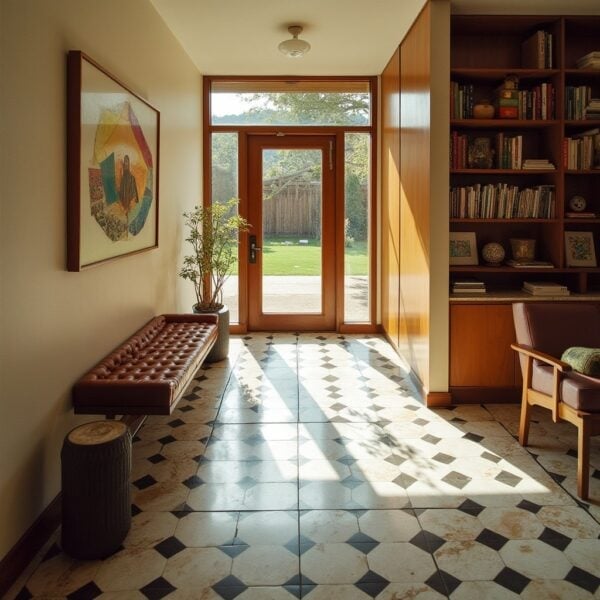
The geometric floor tile pattern in this entryway sets the tone before you take another step. Beige, black, and white shapes repeat across the hall, grounded by wood tones from a bench and a bookshelf that line opposite walls. The palette and the mid-century chair keep the look balanced. The busy floor gets quiet furniture and a tufted bench with simple lines. A glass lamp and natural light from the door keep it from feeling heavy. For a renter safe swap, use a large flatweave rug with a similar geometric print instead of permanent tile.
Glossy beige marble tiles for a neutral living room
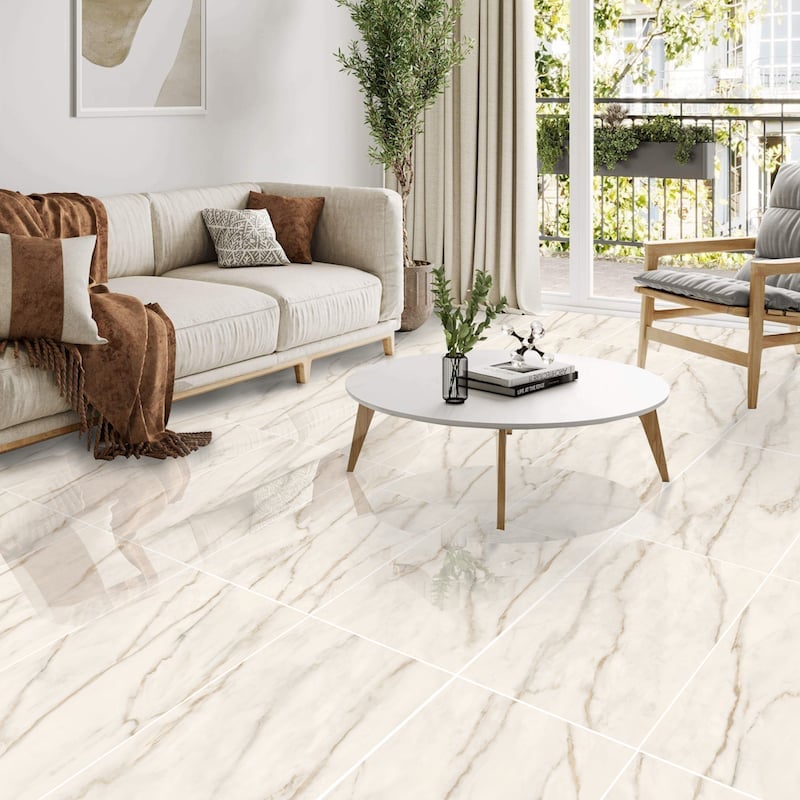
A glossy marble-look floor in beige and white makes a room feel larger without adding color. The finish is the point. Light bounces off the surface, so the room feels airy even with a sofa, coffee table, and armchair in place. The beige base keeps the tile neutral enough to work with wood furniture and brown fabric. Mixing in a second glossy surface, like a high-shine coffee table, creates glare instead of depth. Stick with matte or textured furniture to let the floor do the reflecting. The open layout benefits from one continuous material that ties the seating area together.
Final Thoughts
These 32 looks prove that floor tile can do more than cover ground. It can define a kitchen, warm up a hallway, or turn a bathroom into a calm retreat. The common thread is that the tile stays central, while the room around it stays quiet. That balance is what makes a space feel finished but not fussy. If you are planning a tile project, start by choosing a pattern or material that you want to see every day. From there, let the rest of the room support it. A simple palette, consistent lighting, and minimal clutter let the tile do its job. The right tile is the one that makes you want to walk barefoot across it.