
Garden art in 2027 is less about fussy ornaments and more about pieces that feel like part of the landscape. We have rounded up 25 sharp garden art ideas that turn a planted yard into a personal outdoor gallery without requiring a renovation budget or a landscape architecture degree.
From weathered stone busts and mossy buddha statues to spiral metal sculptures and repurposed glass bottle arrangements, these garden art ideas range from traditional to abstract. The focus stays on what works outdoors: materials that weather well, shapes that hold their own among plants, and placements that make sense for how you actually use the space.
Zen garden tranquility with a moss-covered buddha statue
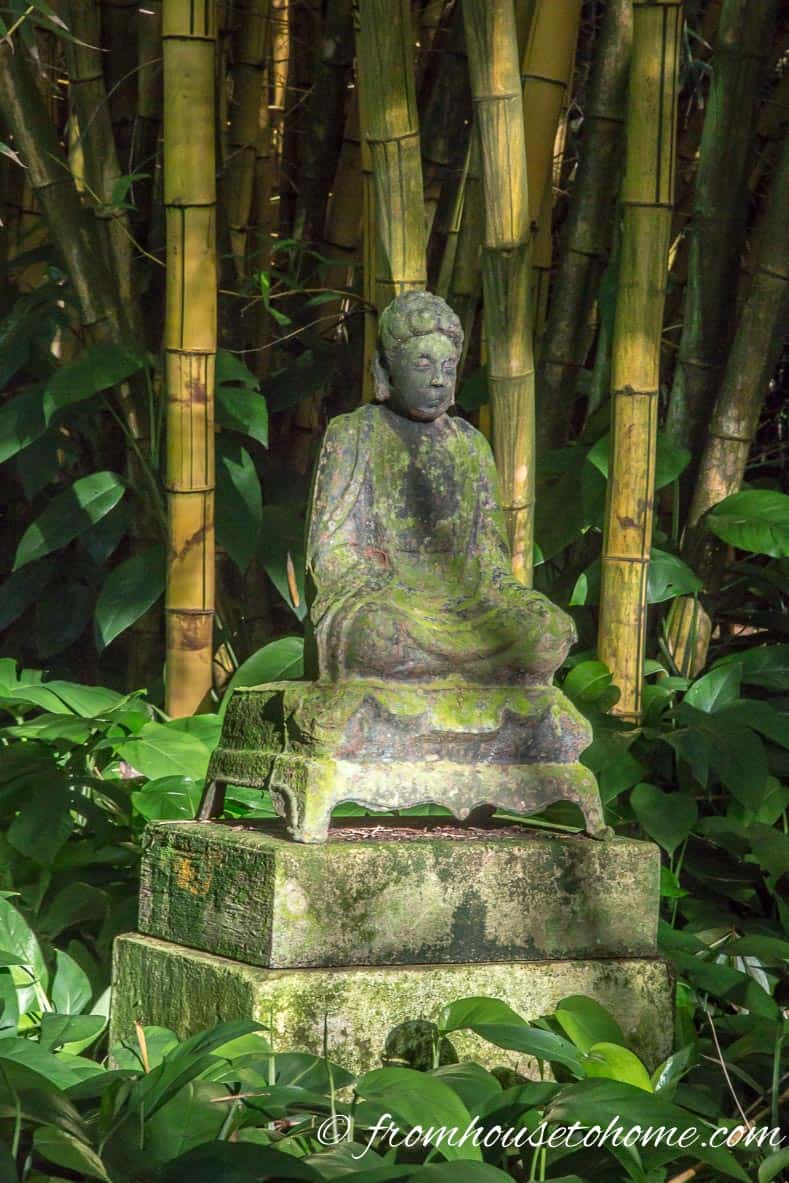
A moss-covered Buddha statue becomes the quiet focal point of a zen garden when you place it front and center. The green and brown palette feels organic rather than planned. Bamboo stalks and stacked stone bases frame the statue without competing for attention. Dappled sunlight filters through the surrounding foliage, softening the hard lines of the stone. The layout works because nothing else in the space tries to be the hero. Every element supports the calm that the Buddha statue introduces.
Modern abstract metal sculpture for a sharp garden
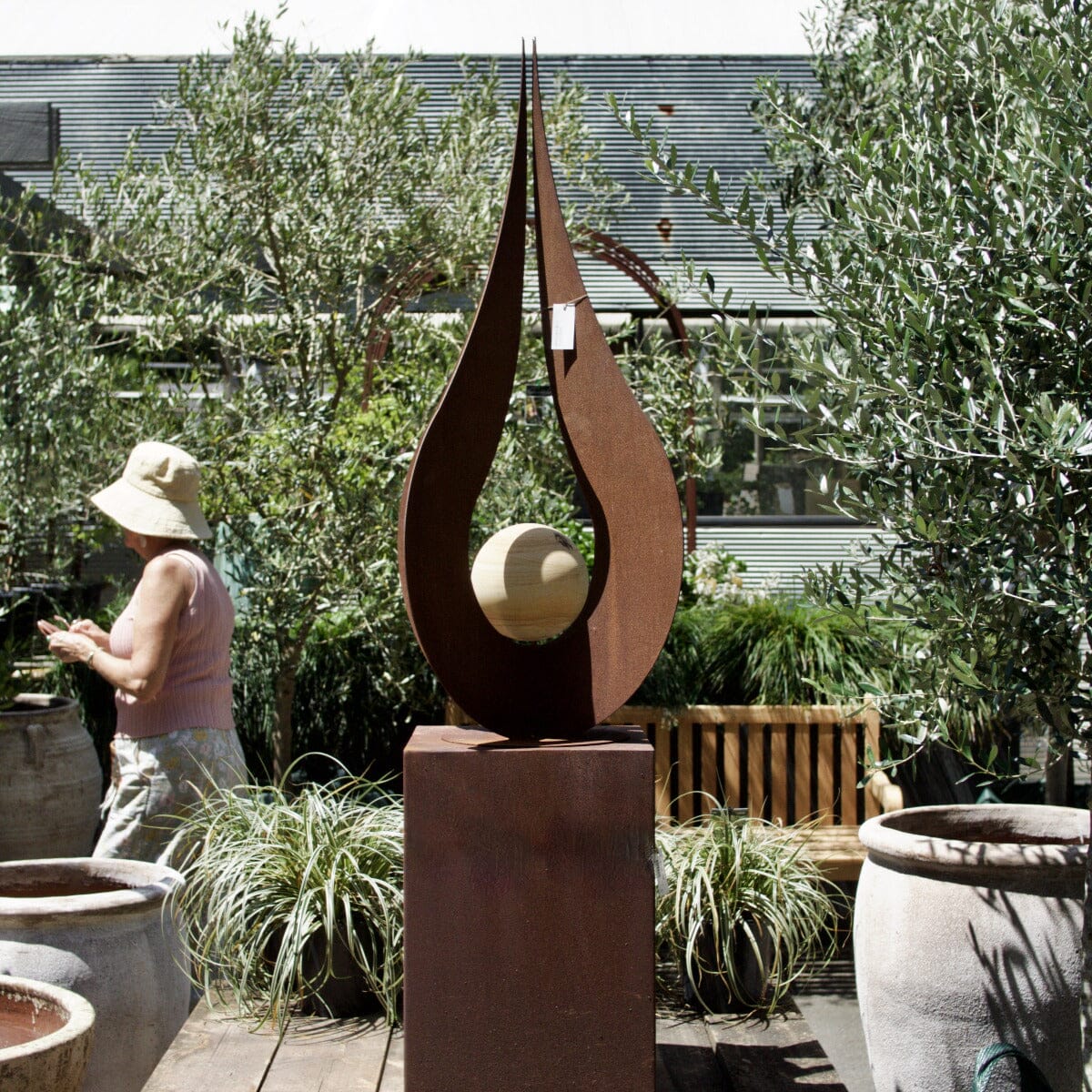
An abstract metal sculpture with a sphere on top acts as the clear anchor for this modern garden. The palette uses brown, beige, green and gray, so the sculpture feels integrated. Stone planters and a wooden bench flank the piece, grounding it in natural materials. Daylight hits the metal surface and creates shifting highlights that change through the afternoon. Choose a sculpture with one rounded element among straight lines. That contrast keeps the eye moving across the whole composition.
Whimsical garden Art from repurposed glass bottles
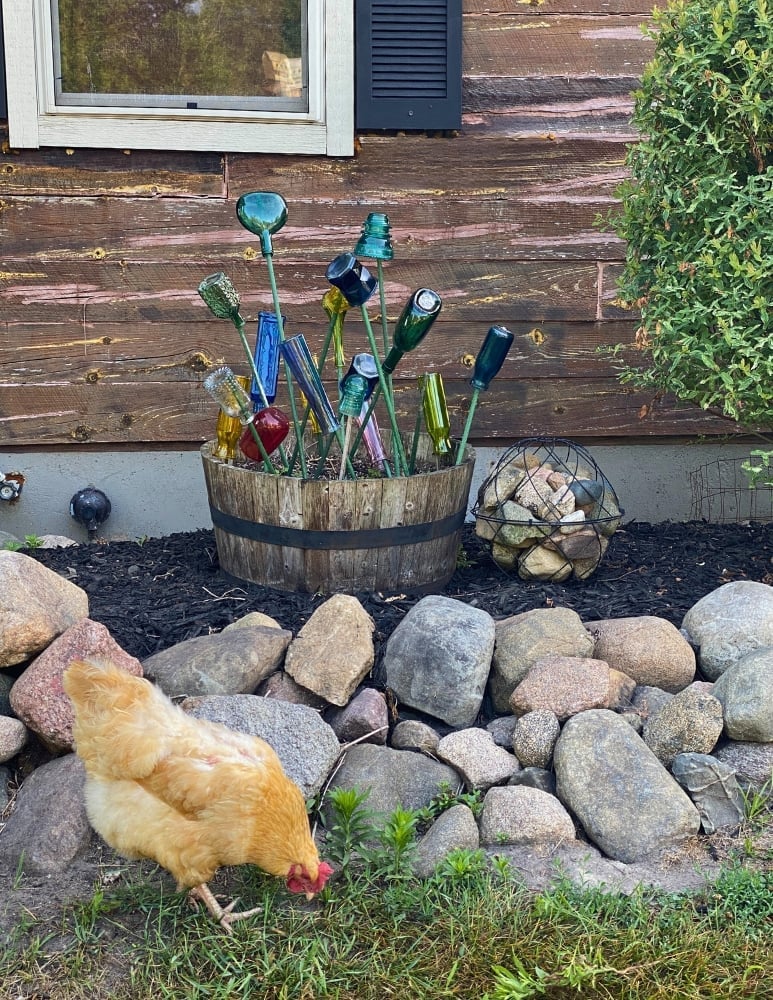
Can a pile of old glass bottles really look intentional in a garden bed? Yes, when you arrange them by color and height. This rustic display mixes green, blue, red, yellow and pink glass inside a wooden barrel planter with a stone border. The daylight passes through the bottles and throws colored light onto the surrounding plants. A renter-safe swap uses a large ceramic pot instead of a built-in bed. Group the bottles tightly so they register as one piece of art rather than scattered clutter. The wooden barrel keeps the look grounded while the glass adds the lift.
Rustic vertical birdhouse display on a tree trunk
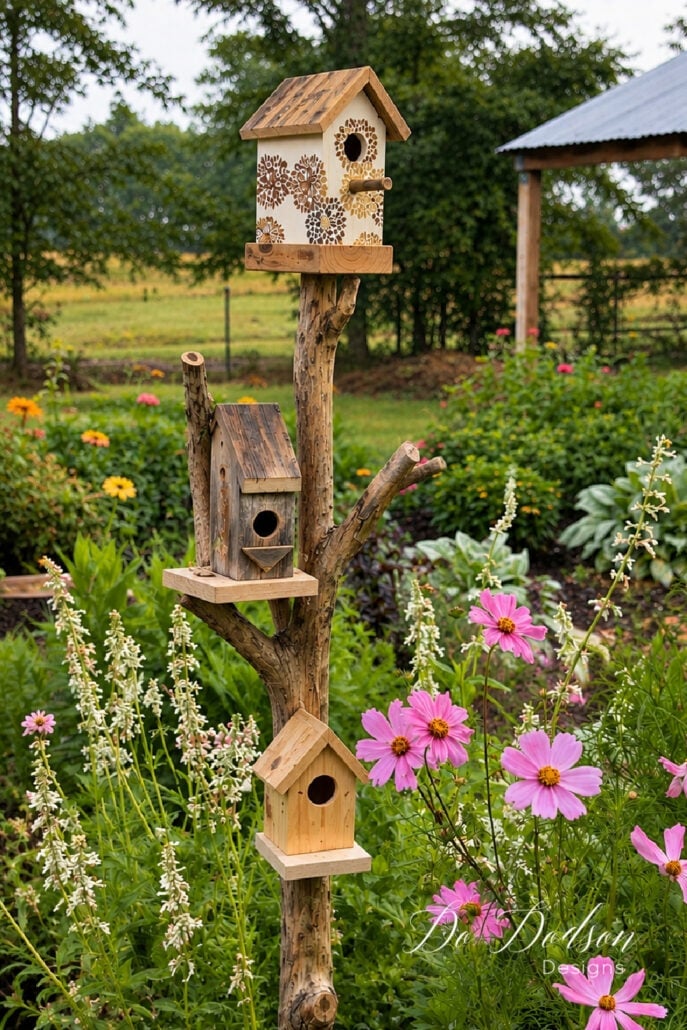
A multi-tiered wooden birdhouse attached to a tree trunk uses vertical space that would otherwise sit empty. The natural wood tones blend with the bark, while small pink and yellow floral accents add color without overwhelming the rustic feel. Daylight hits the top ornate birdhouse first, drawing the eye upward. Scale matters here: each tier is smaller than the one below, so the stack feels stable. The vertical line also echoes the tree itself, making the birdhouse look like it belongs.
Vibrant glazed ceramic spheres for contemporary gardens
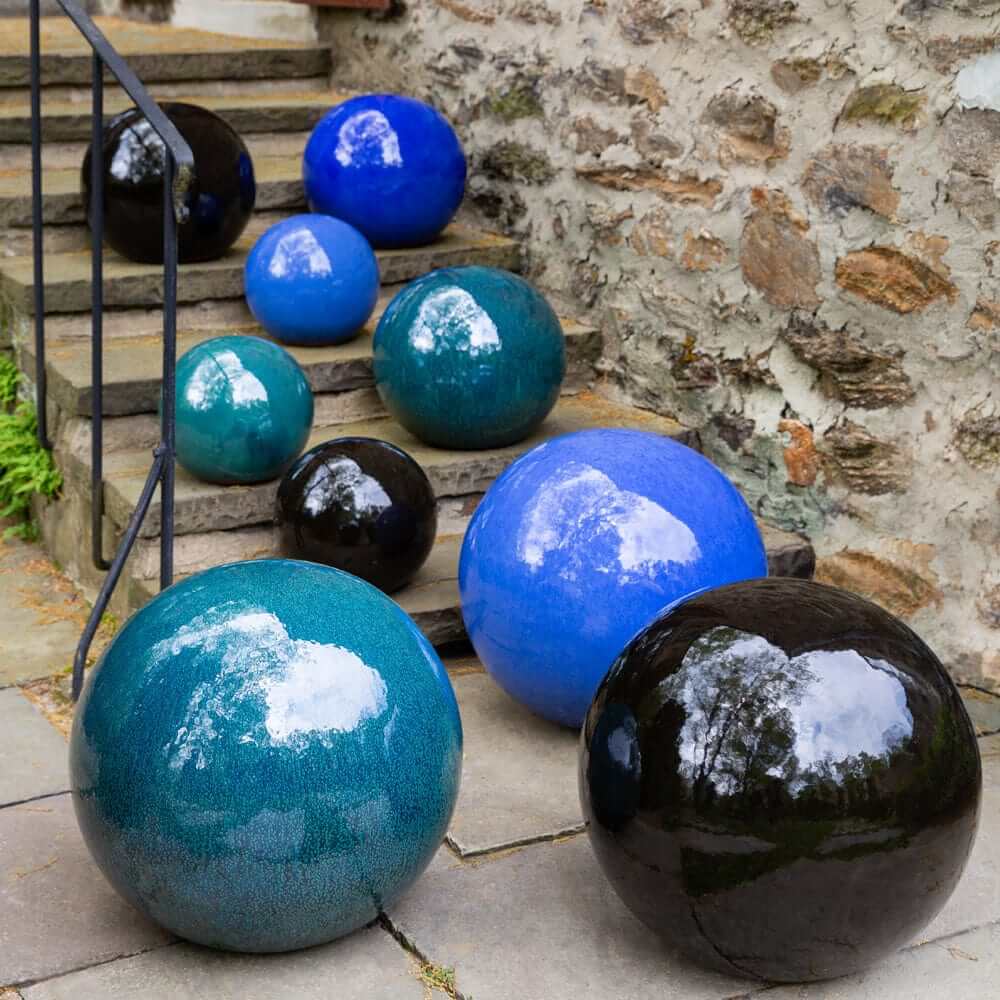
To place decorative spheres, vary their height by setting some on steps and others on the ground. This arrangement uses large glazed ceramic spheres in blue and teal against stone steps. The glossy finish catches daylight and creates a sheen that contrasts with the matte stone and metal accents nearby. The palette relies on a tight range of blue, teal and black, so the spheres look a deliberate collection. Keep the spacing loose enough that each sphere has its own visual breathing room.
Cozy cottagecore seating nook with floral accents
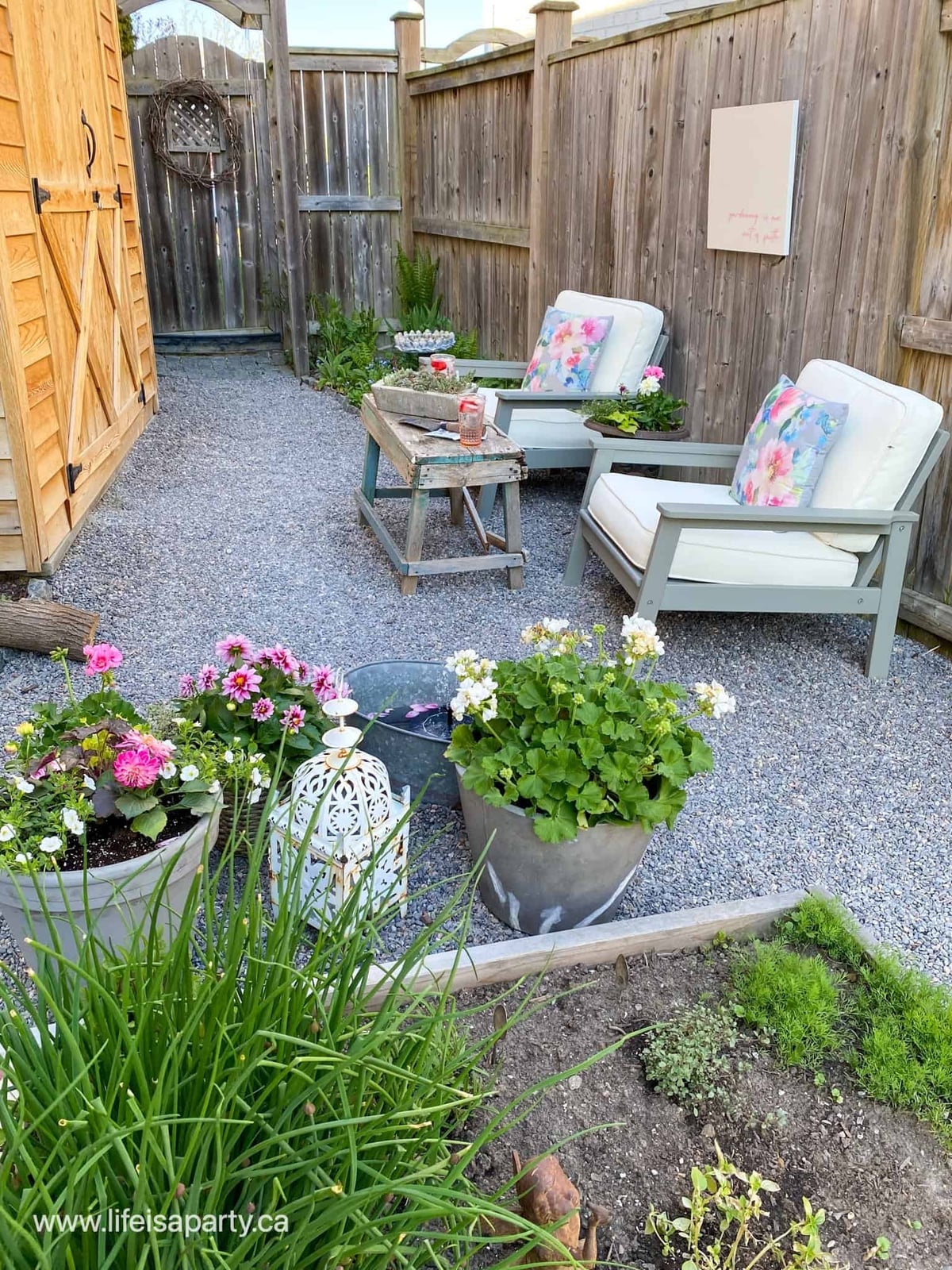
A cottagecore seating nook does not need a full garden shed to feel transported. Two gray chairs with floral patterned cushions and a distressed wooden table set the tone, with potted flowers and a white lantern adding soft layers. The gravel floor keeps the space grounded while allowing water to drain, a practical choice for compact backyards. Adjacent garden beds in pink and green tie the nook into the surrounding landscape. Wood tones, white, and soft pink create a calm spot that feels separate from the lawn. A single white lantern on the table anchors the grouping.
Eclectic garden sculpture of repurposed glass candle holders
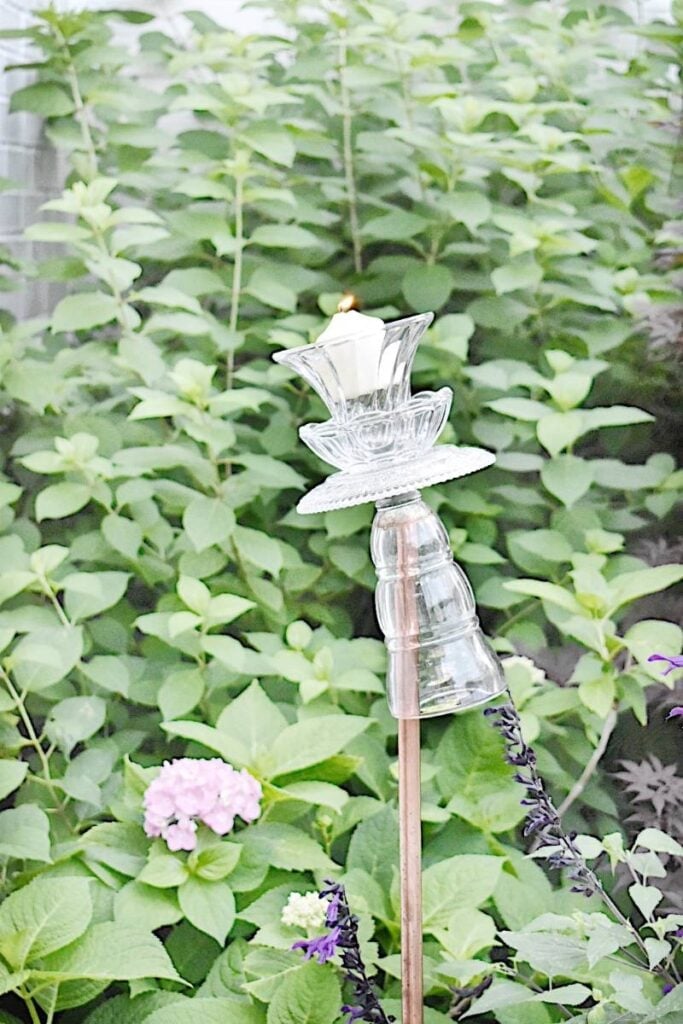
A vertical sculpture made from stacked glass candle holders catches daylight and holds a lit candle at its top, placed among pink hydrangea and purple salvia. The green, pink, purple, and white palette creates a cohesive look, with the glass adding a subtle gleam against the matte plant leaves. For renters, a freestanding glass sculpture like this one goes in and out without damaging the soil or leaving a hole behind.
Glass bead sculptures arranged with lavender and roses
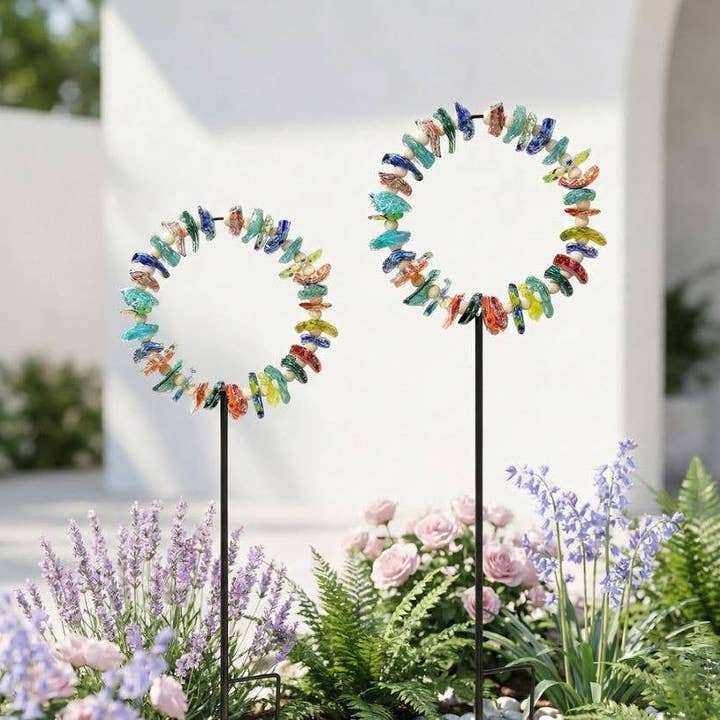
Colorful circular glass bead sculptures on metal stakes rise above purple lavender and green foliage, their multicolored beads catching daylight. The palette mixes warm and cool tones without matching anything exactly, which keeps the garden bed from feeling too coordinated. The glass stakes stand at different heights, creating a rhythm that guides the eye across the bed. The surrounding plants soften the hard edges of the glass, making the sculptures feel like part of the garden.
White birdhouse with metal accents and daisies at base
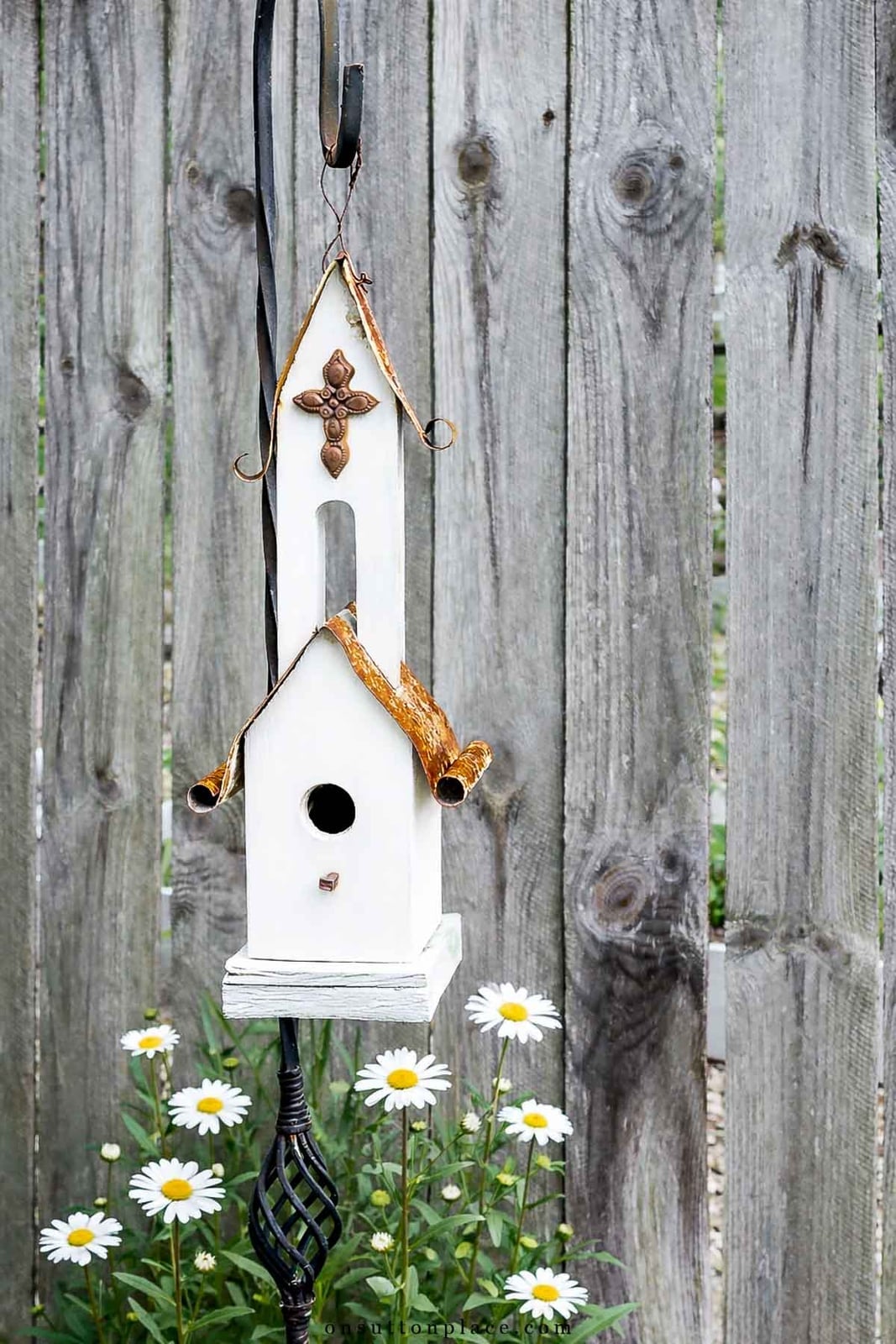
Does a white birdhouse hold up outdoors, or does it weather poorly fast? An ornate white birdhouse on a metal stand keeps its look because the paint is applied over wood, and the metal stand lifts it above damp ground where rot starts. Daisies at the base add yellow and green contrast. The rustic style relies on the crisp white paint and the weathered gray of the metal stand. The birdhouse hangs at eye level, making it easy to spot activity without craning your neck.
Wooden figure sculpture tending large green leaves
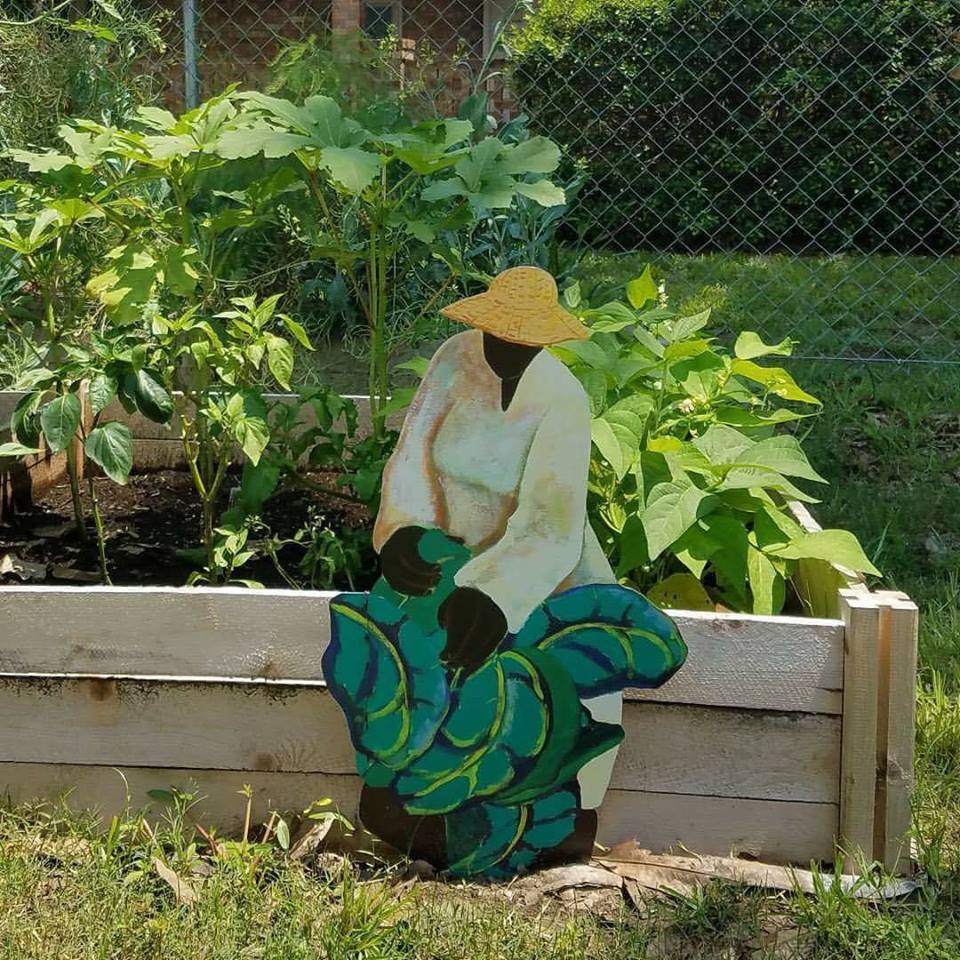
A painted wooden garden art sculpture of a figure stands in front of a raised garden bed, its green, white, yellow, and brown palette echoing the leaves behind it. The sculpture is about the same height as the plants, so it does not tower over the bed or get lost in the foliage. Placing it just in front of the raised bed creates a layered look that draws attention to both the art and the vegetables or flowers growing behind it. This layout works for compact backyards where every inch needs to earn its place.
Stone duck sculptures with curved rusty metal necks
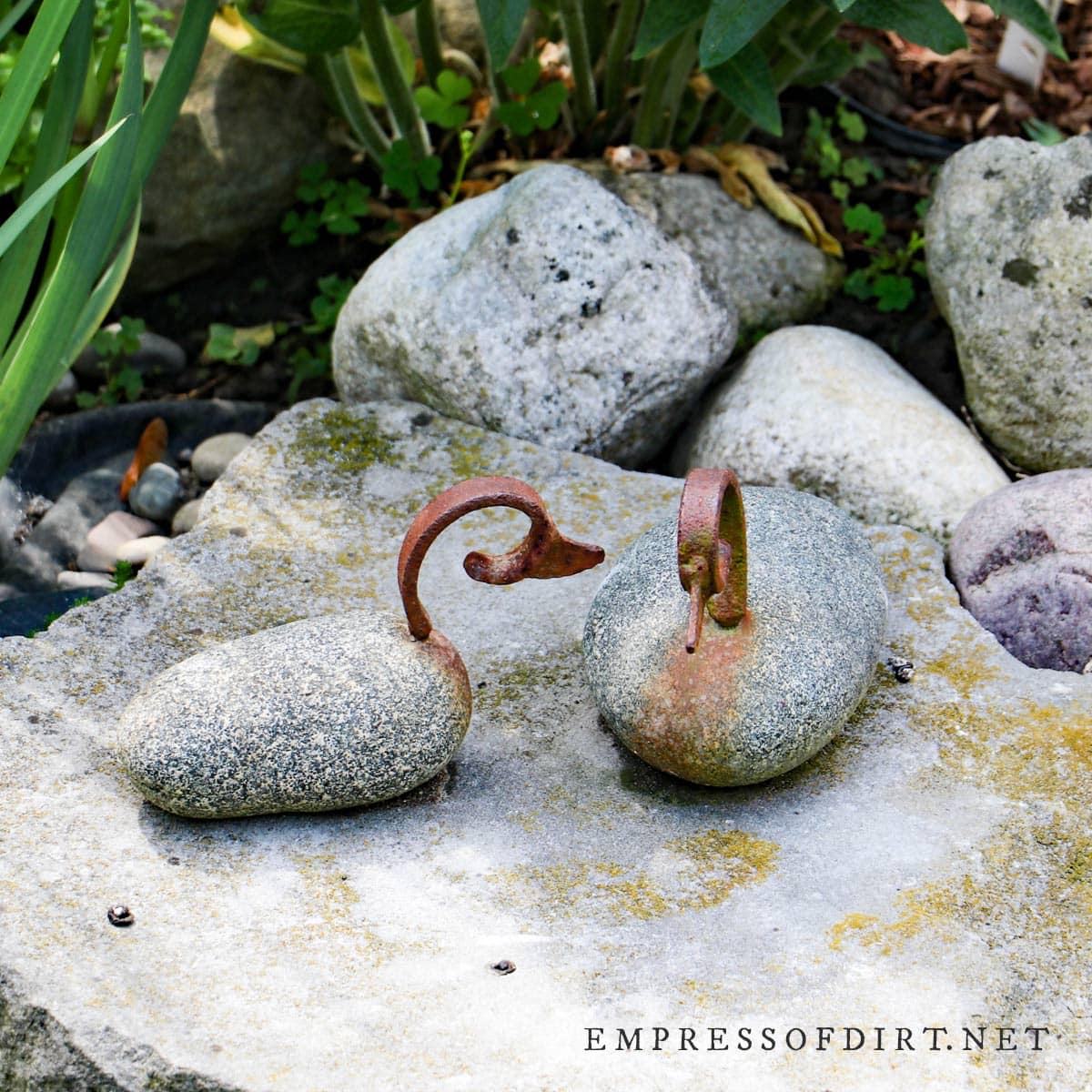
A good rule for garden art is to mix textures that feel natural together, and this pair of stone ducks with curved rusty metal necks does exactly that. The gray stone bodies anchor the sculpture, while the rusted metal necks add a surprising curve that draws the eye. The palette of gray, green from the surrounding plants, and rust keeps the look grounded. The layout works because the ducks sit close enough to look like a pair, but with enough space around them to let each material breathe. Placing them in a garden bed among low greenery lets the rusted finish catch daylight without competing with flowers.
Mosaic stepping stone with blue orange and red tiles
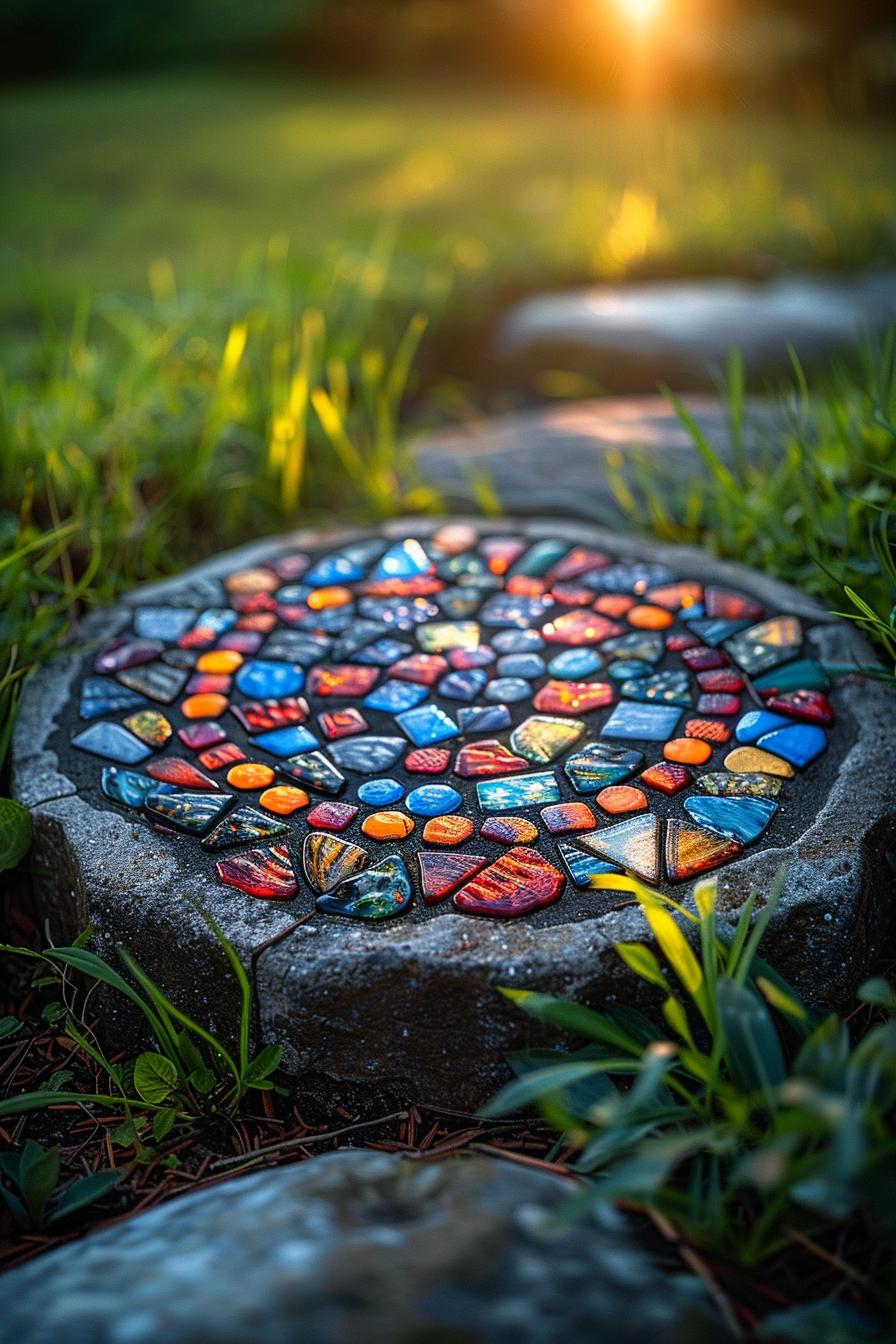
A plain gray stone path feels practical, but swapping in a mosaic stepping stone with blue, orange, and red tiles turns the walkway into a design choice. The circular shape breaks the linear rhythm of a path, and the multicolored glass tiles catch golden hour sunlight in a way that plain stone cannot. The palette mixes warm orange and red with cool blue, all set against green grass and gray stone, so the stepping stone becomes the focal point without clashing with the garden.
The layout places the mosaic stone as part of a path, which means it works as both a functional step and an art piece. The eclectic style comes from the unexpected color combination, and what breaks the look would be too many competing patterns nearby. Keeping the surrounding path simple lets the mosaic tile pattern stand out.
Large abstract rusted metal sculpture as garden focal point
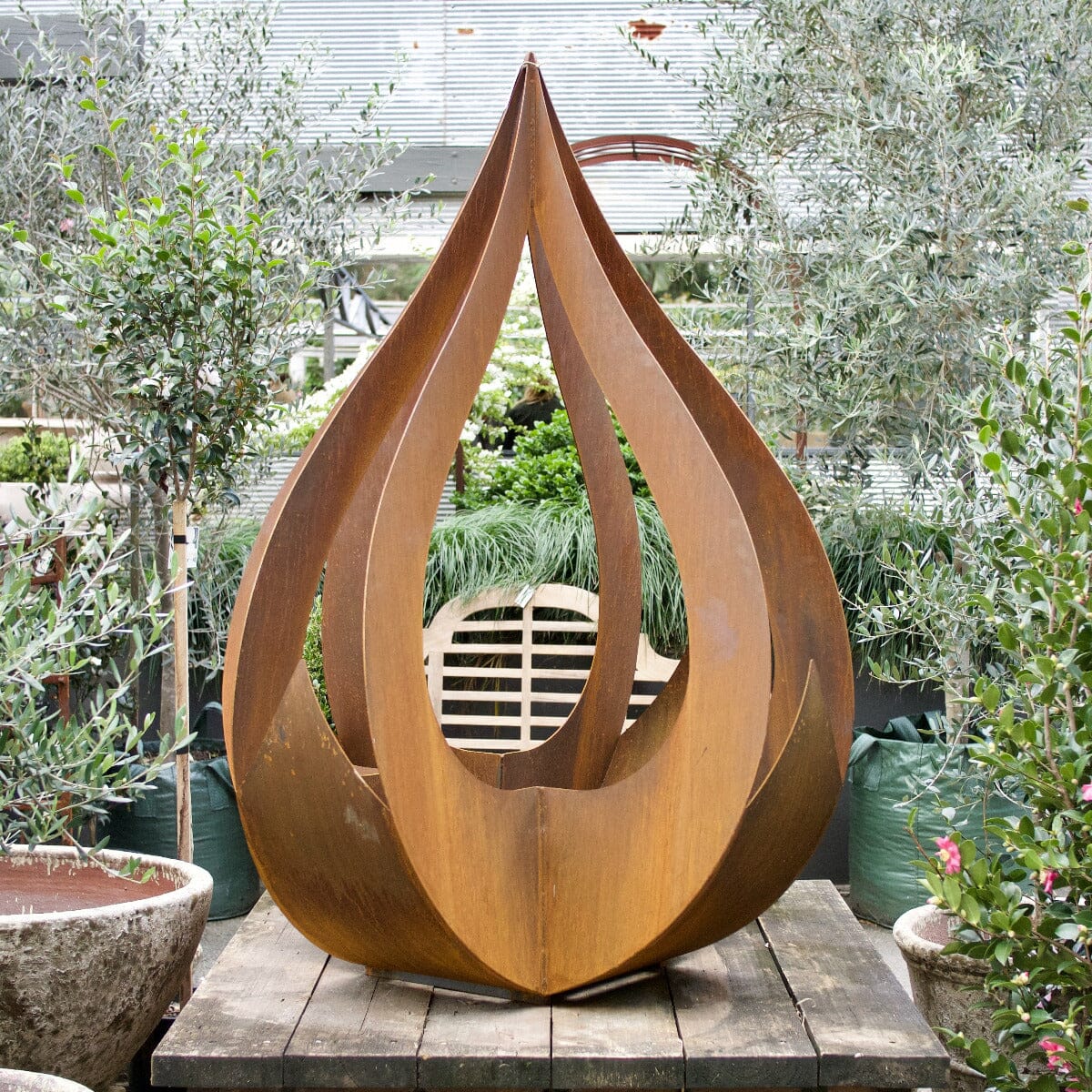
The design of this large abstract rusted metal sculpture uses negative space as much as the metal itself, with open curves that let the garden show through. Placed on a wooden table and surrounded by stone planters, the rusted finish repeats the warm brown of the wood and the gray of the stone. The layout makes the sculpture the central point in a roomy garden, so the eye lands there first. Keeping the surrounding planters low and the table simple means the metal form stays the focus.
Teapot bird feeder with teacup and saucer below
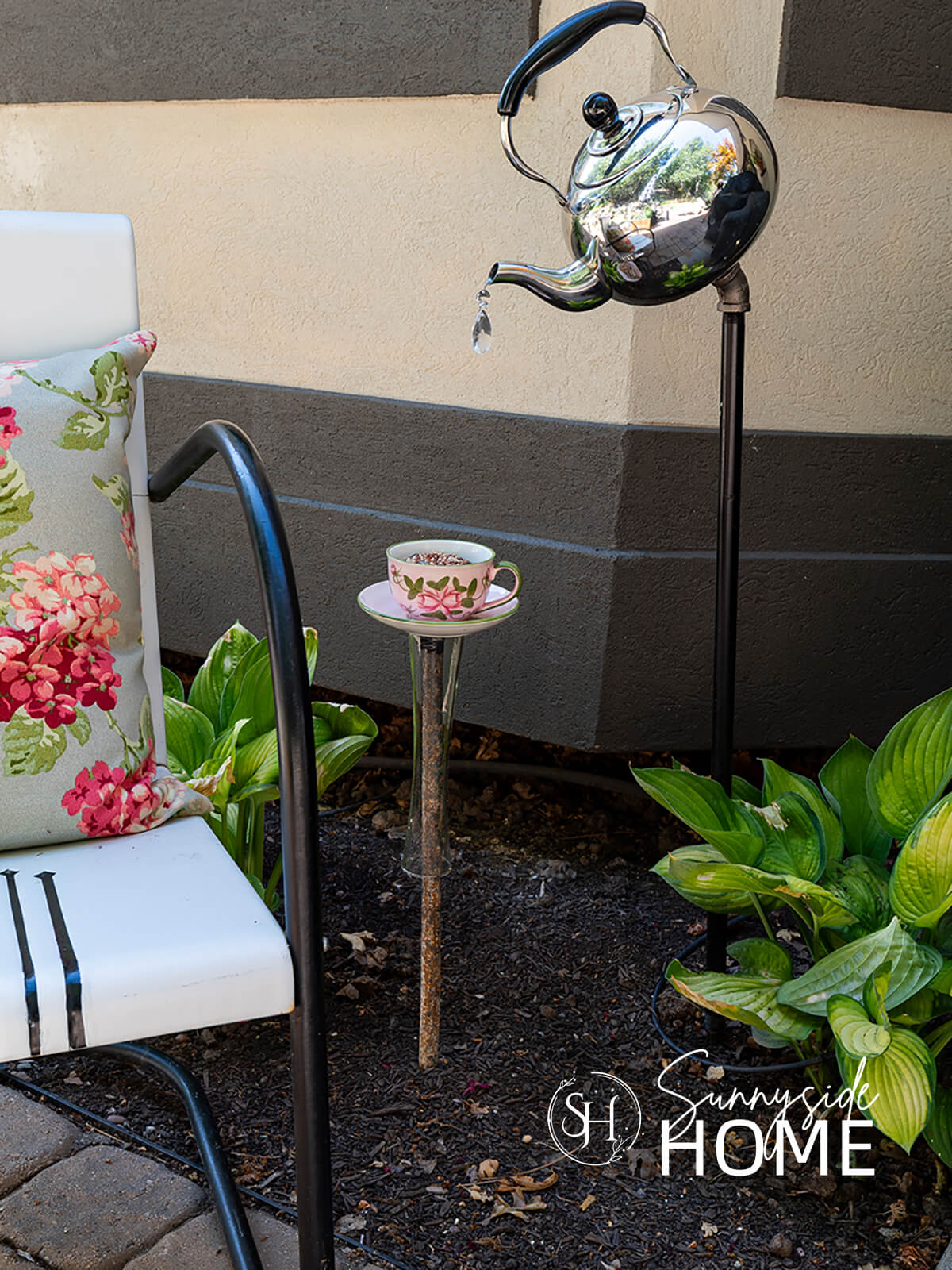
A teapot bird feeder with a teacup and saucer below is a clear case of functional garden art that does not take itself too seriously. The cream ceramic teapot hangs above a matching teacup feeder, with pink and red flowers and a white chair nearby softening the traditional style. The compact layout places the feeder in a garden bed with seating, so it works for birds and for people watching them. The daylight makes the cream ceramic appear warm. The whimsical element comes from the unexpected use of tea set pieces, and the look holds together because the metal hanger and green plants ground it as outdoor decor.
Overlapping circular metal sculptures among hosta plants
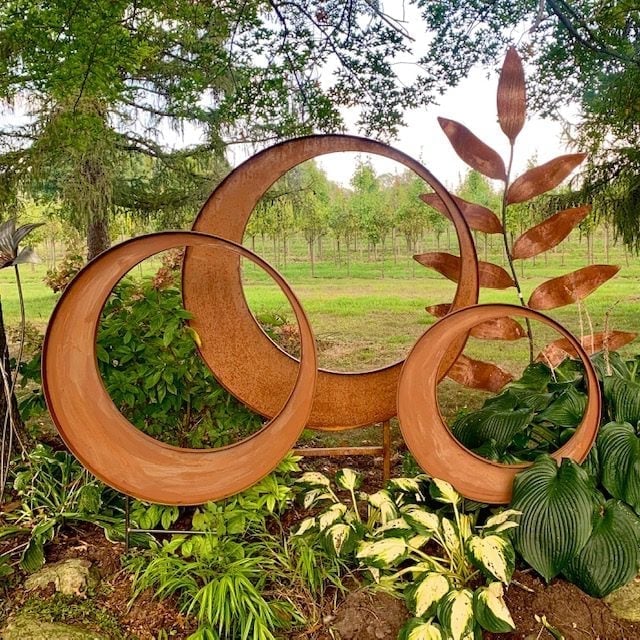
To arrange multiple sculptures in one garden bed, vary the size and orientation so the eye moves across the group. Three overlapping circular metal sculptures with a rust finish, plus a separate leaf-shaped piece, create a cluster that feels connected. The palette of rust, green from hosta plants, and brown from the soil ties the metal to the natural setting.
The layout places the sculptures in an open area where the hostas fill the ground level and the metal forms rise above them. The overlapping circles create depth because each one sits at a slightly different angle. The rustic style comes from the weathered metal. Spacing them too far apart or adding a neat finish that does not match the rust would break the look.
Owl sculpture from reclaimed wood bark and stones
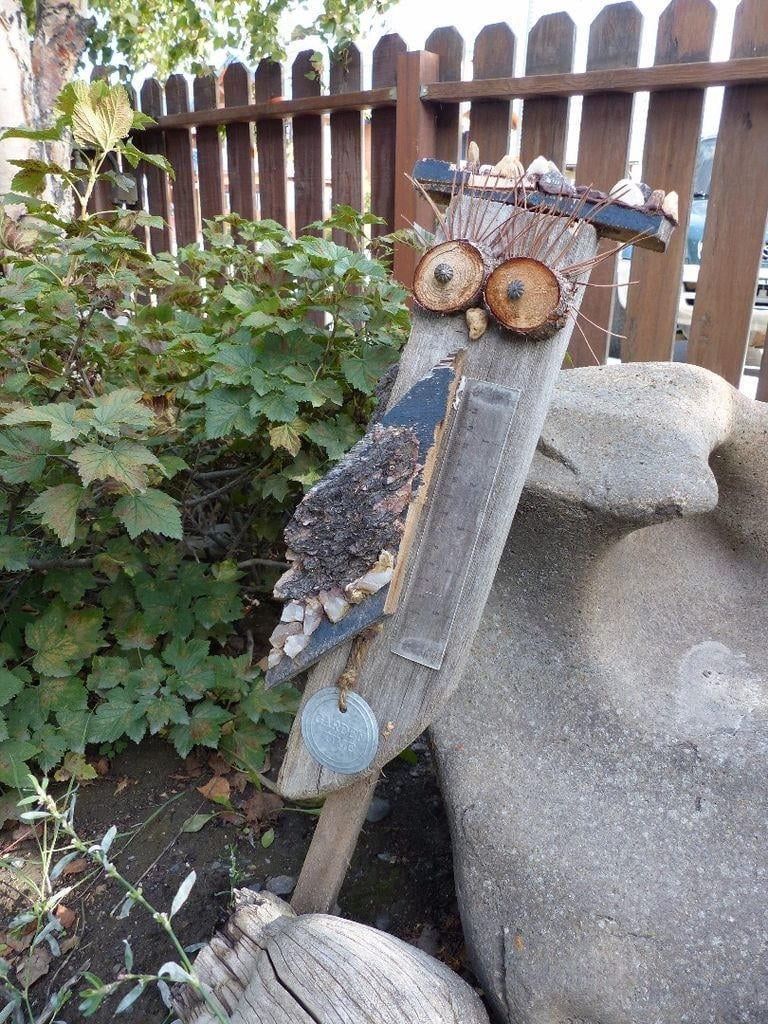
This owl sculpture is built from reclaimed wood, bark, and stones, with a large stone at its base to anchor the piece. The mix of natural browns and grays helps it blend into the foliage and fence behind it. A room mode approach treats the backyard like an outdoor room: the sculpture becomes the focal point, while the surrounding plants and fence act as simple walls. The palette stays earthy and muted so nothing competes. If you rent, a heavy sculpture like this one sits directly on the ground without any permanent installation.
Weathered classical bust statue for traditional gardens
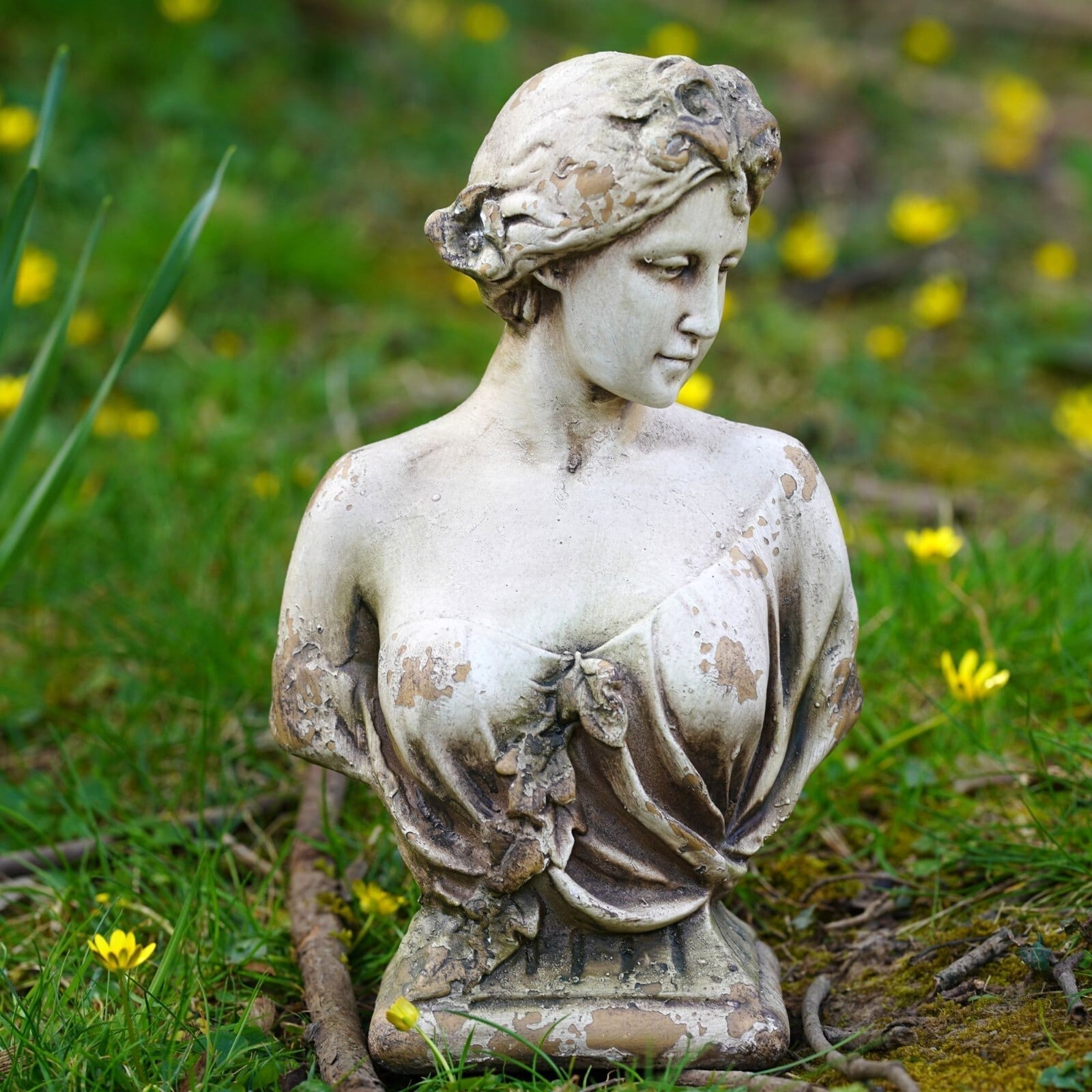
A compact statue has the most impact when it sits at ground level, where it becomes a natural part of the garden. This weathered classical bust in white and beige stands among green foliage and yellow blooms, the traditional finish softened by age. The style is defined by that aged stone look: it breaks if the bust looks too glossy or new. For renters, a bust this size is easy to move and needs no mounting. Just set it on the soil or a flat stone, and the garden does the rest.
Naturalistic garden with sculptural driftwood pieces
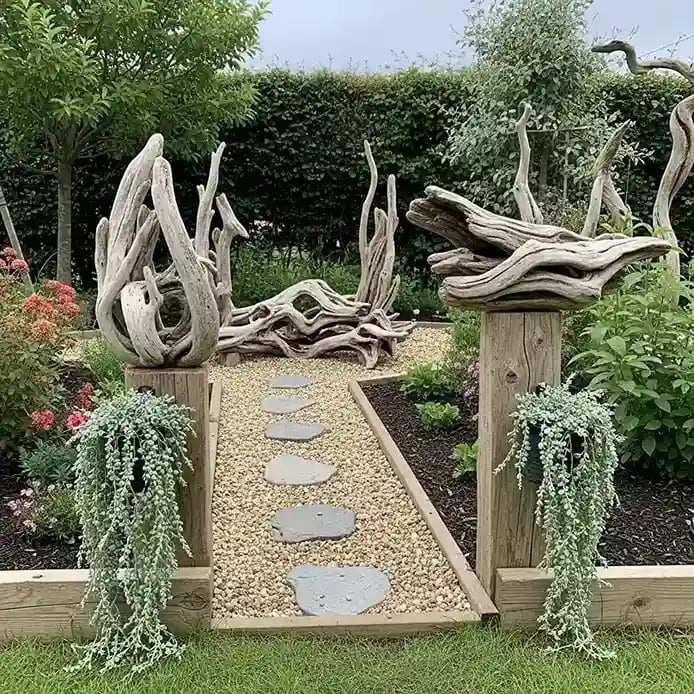
A formal stone birdbath anchors a garden with symmetry, but a sculptural driftwood piece does the opposite: it follows the organic lines already in your yard. Here, large driftwood sculptures sit along a pathway of stepping stones, with raised beds and hanging plants framing the view. The palette stays in grays, browns, greens, and soft pinks, all pulled from the driftwood and surrounding plants. The layout leads the eye naturally from the path toward the sculptures, making the walk itself part of the art. If your garden already has loose, natural shapes, driftwood fits right in.
Vibrant mosaic garden stake with geometric shapes
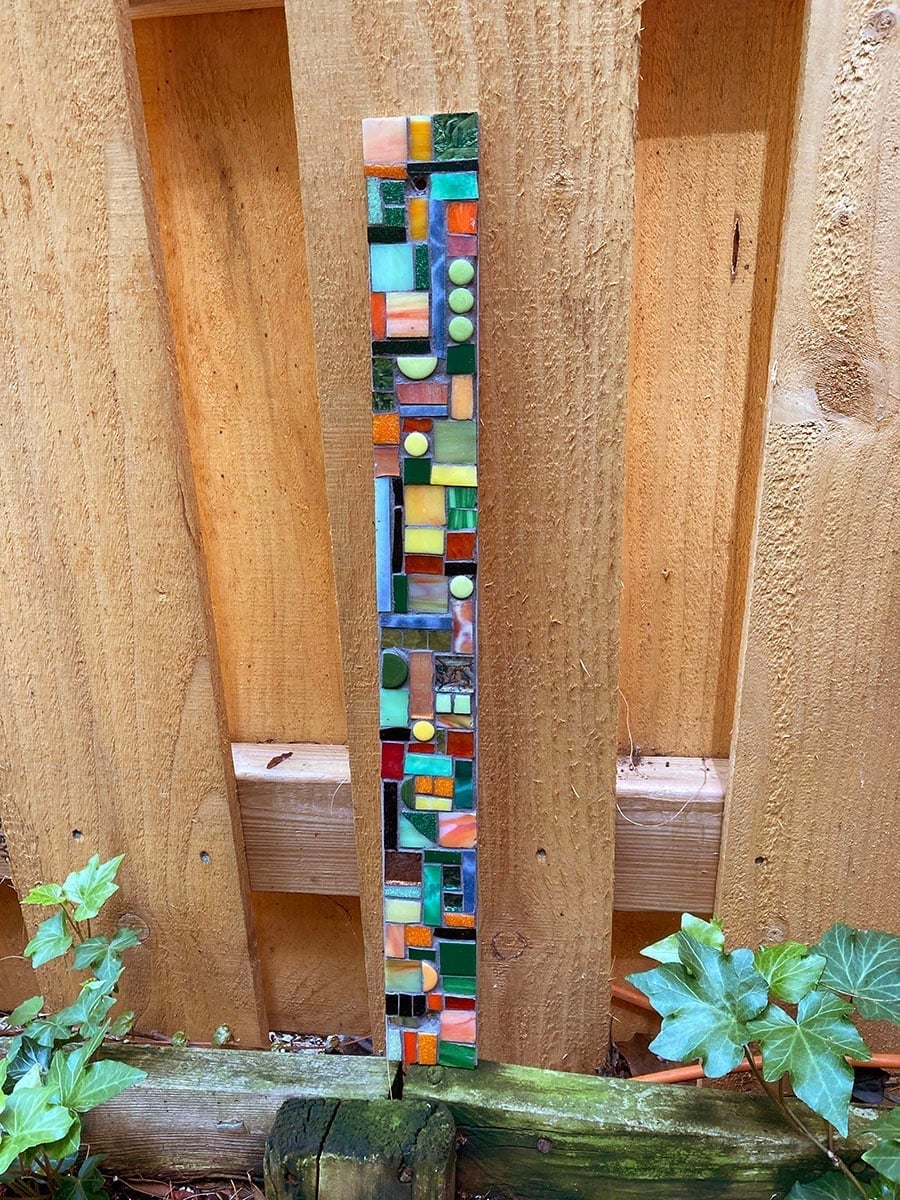
A mosaic garden stake in orange, blue, yellow, red, and peach leans against a wooden fence, its glass tiles catching daylight. The palette is the defining feature: bright, geometric, and unapologetic. What makes it work is the ratio of color to neutral. The wood fence provides a quiet backdrop so the stake can pop. For upkeep, glass mosaic tiles handle sun and rain well, but check that the adhesive is rated for outdoor use before you build or buy. A single stake like this one adds a lot of personality without overwhelming a small garden.
Metal flower sculptures and mushroom Art in dappled daylight
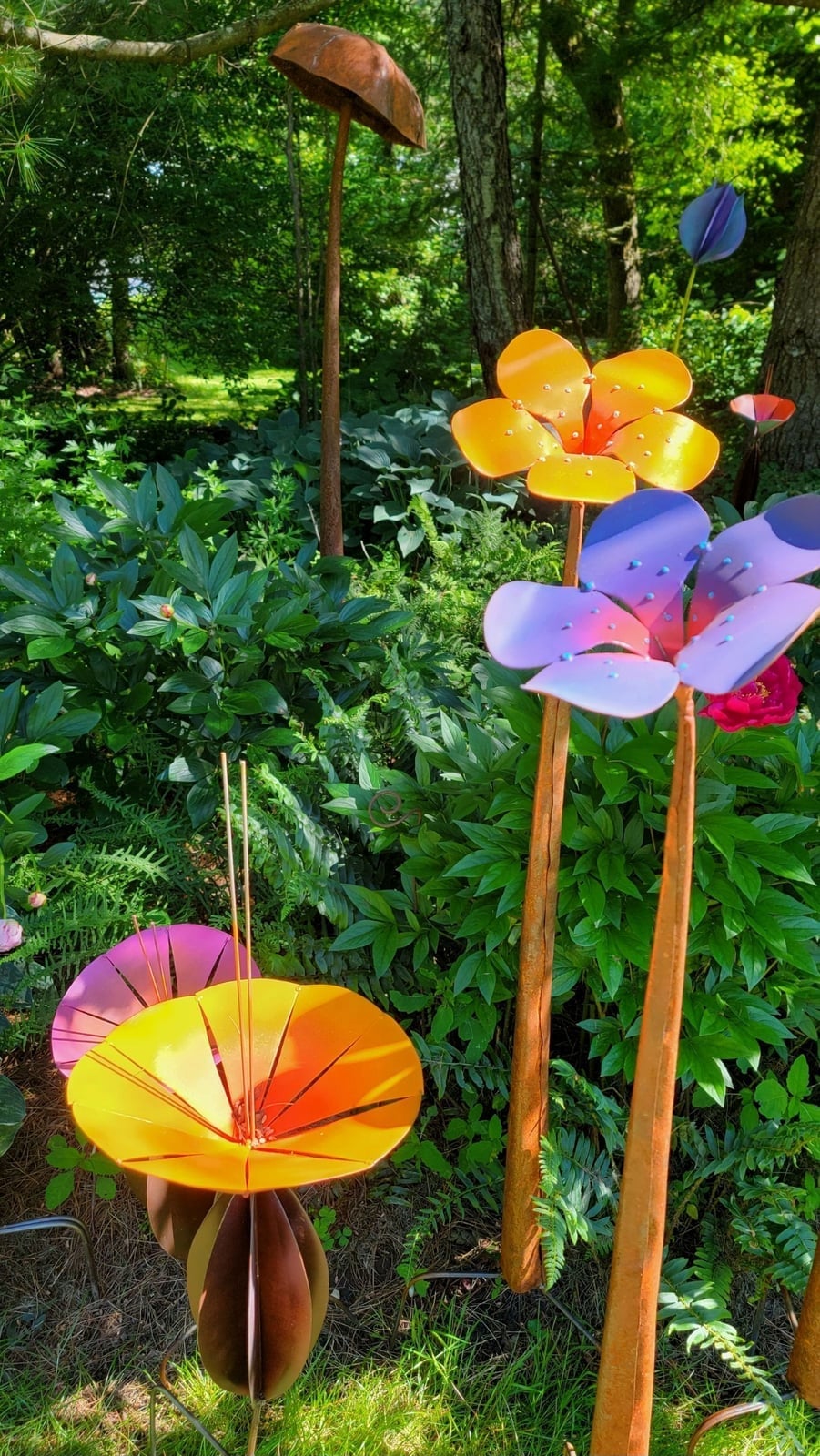
Tall metal flower sculptures in yellow, orange, purple, and pink scatter among plants, with a smaller mushroom sculpture tucked nearby. The scale works because the flowers are taller than the surrounding greenery, so they rise above the foliage rather than disappearing into it. Dappled daylight softens the metal finish, which keeps the bright colors from feeling harsh. In a garden art setup, metal holds up well across seasons, though the finish may patina over time. Place the tallest pieces toward the back of a bed and let the plants grow around them for a natural look.
Striking twisted driftwood sculpture in a gravel garden
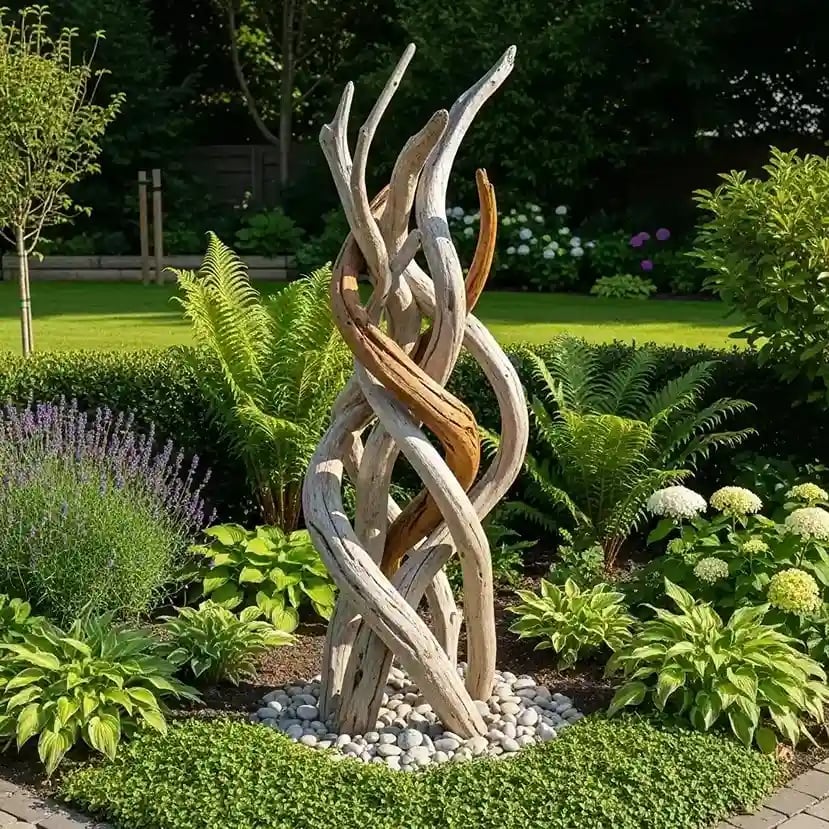
To place sculpture in a naturalistic garden, let the planting do the framing. Here the twisted driftwood piece sits in a gravel bed, with hostas, ferns, and lavender circling it in layered greens, grays, and white. The open layout means the eye lands on the wood first, then travels outward to the foliage. This arrangement works because the plants are low enough not to block the sculpture, but full enough to soften its base. Gravel adds texture without competing, and the lavender introduces a vertical accent that repeats the upright lines of the driftwood. The whole space feels settled, with the sculpture acting as the quiet anchor.
Golfing figure weather vane in a vibrant flower bed
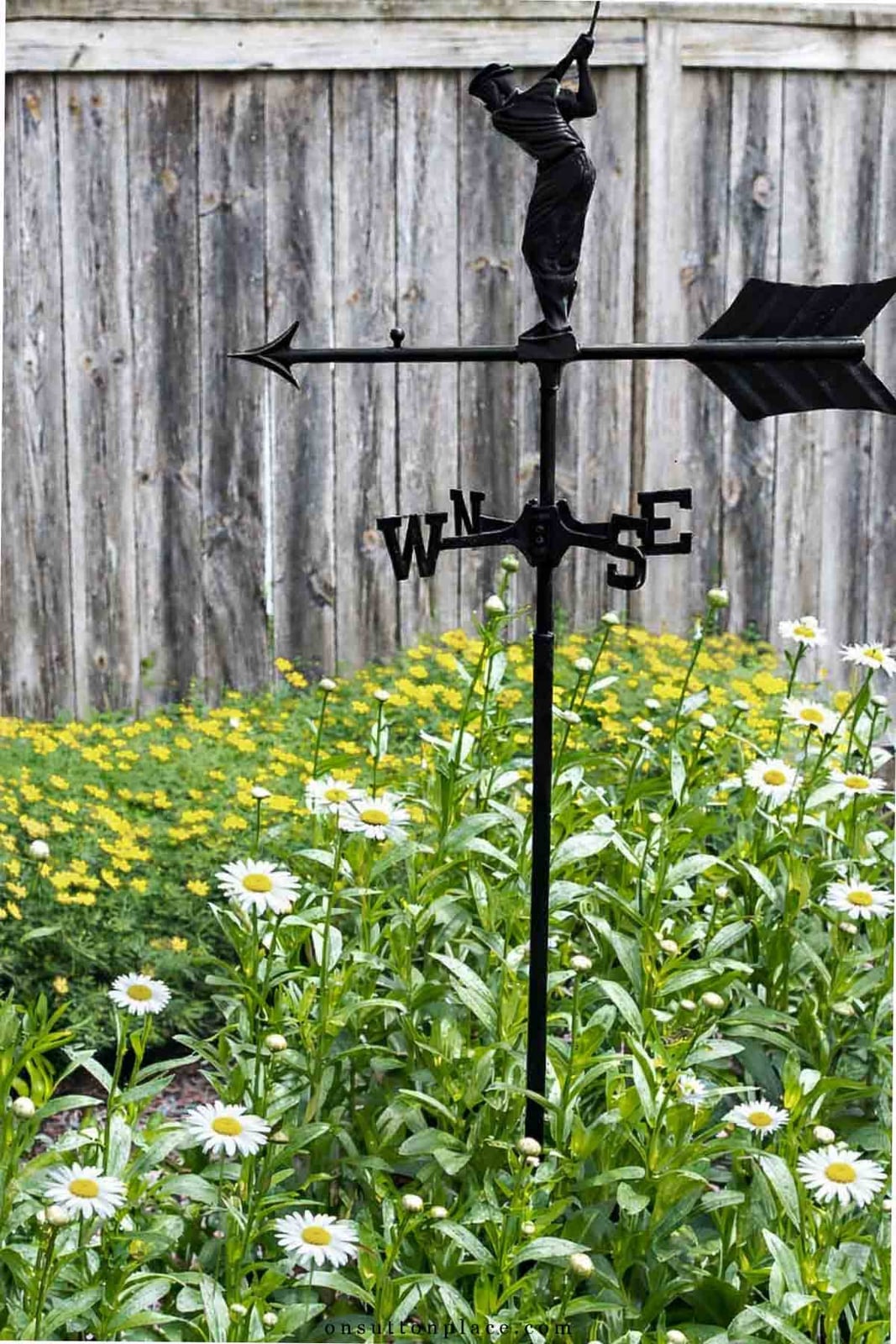
A golfing figure weather vane rises from a bed of daisies and yellow wildflowers, with a wooden fence behind it. The palette here is green, yellow, white, and gray, and the vane’s metal finish picks up the gray of the fence while the flowers echo the yellow accents. This is a rustic setup that leans on contrast: the rigid metal lines against the soft, loose petals. What breaks the formality of a standard weather vane is the casual flower bed below it, which keeps the whole thing from feeling like a lawn ornament.
Birdhouses on tree trunk with stone and metal crow
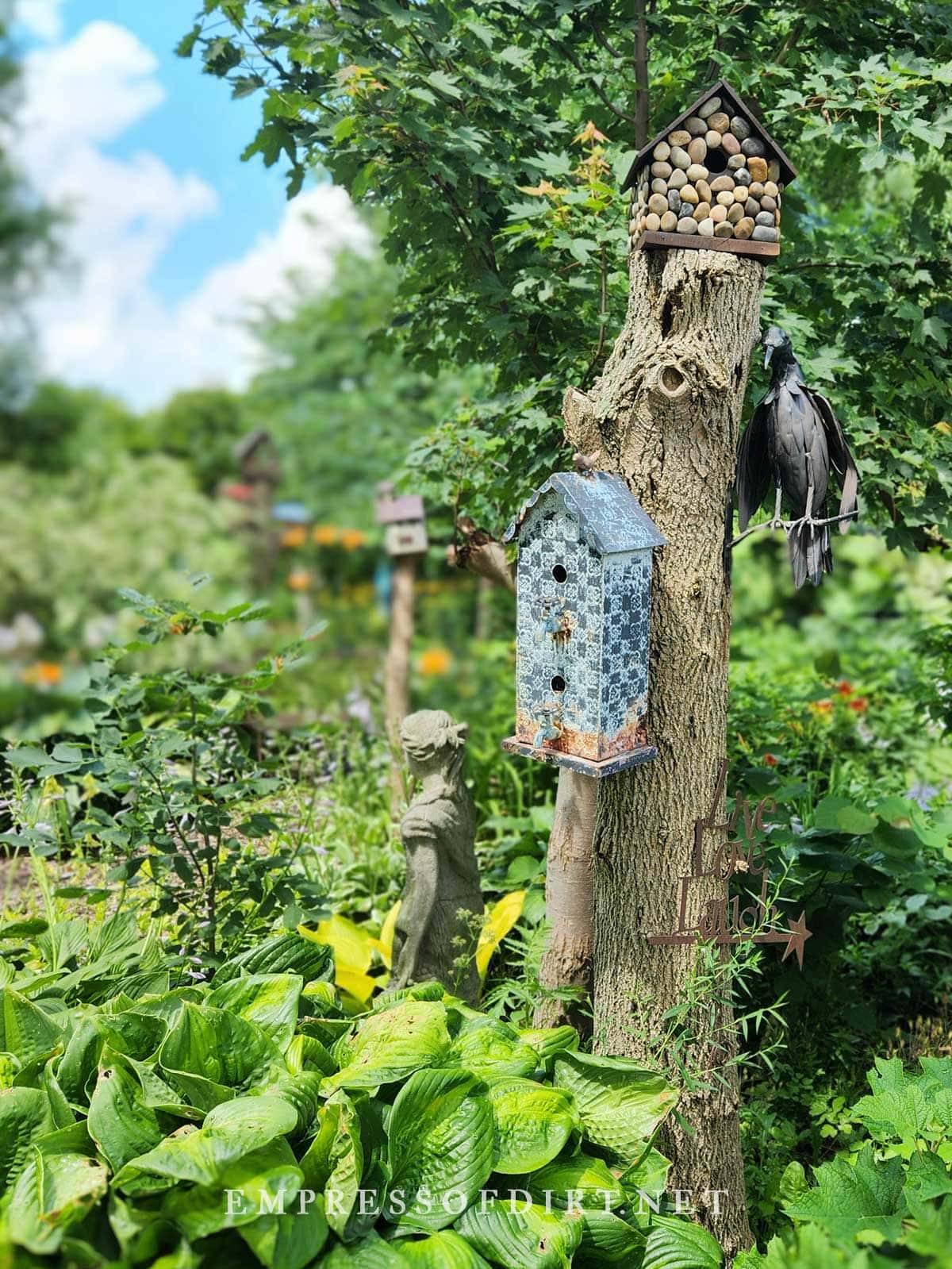
A practical rule for grouping birdhouses is to vary the height and color so each piece reads on its own. Here two birdhouses are mounted vertically on a tree trunk, with an ornate blue one drawing the eye first. A stone statue and a metal crow sit at the base, adding weight and a darker note to the composition. The wood of the trunk ties the natural materials together, while the metal crow introduces a contrasting finish. This arrangement uses scale and proportion to create a layered look without crowding the garden bed.
Spiral metal sculpture with yellow silver accents
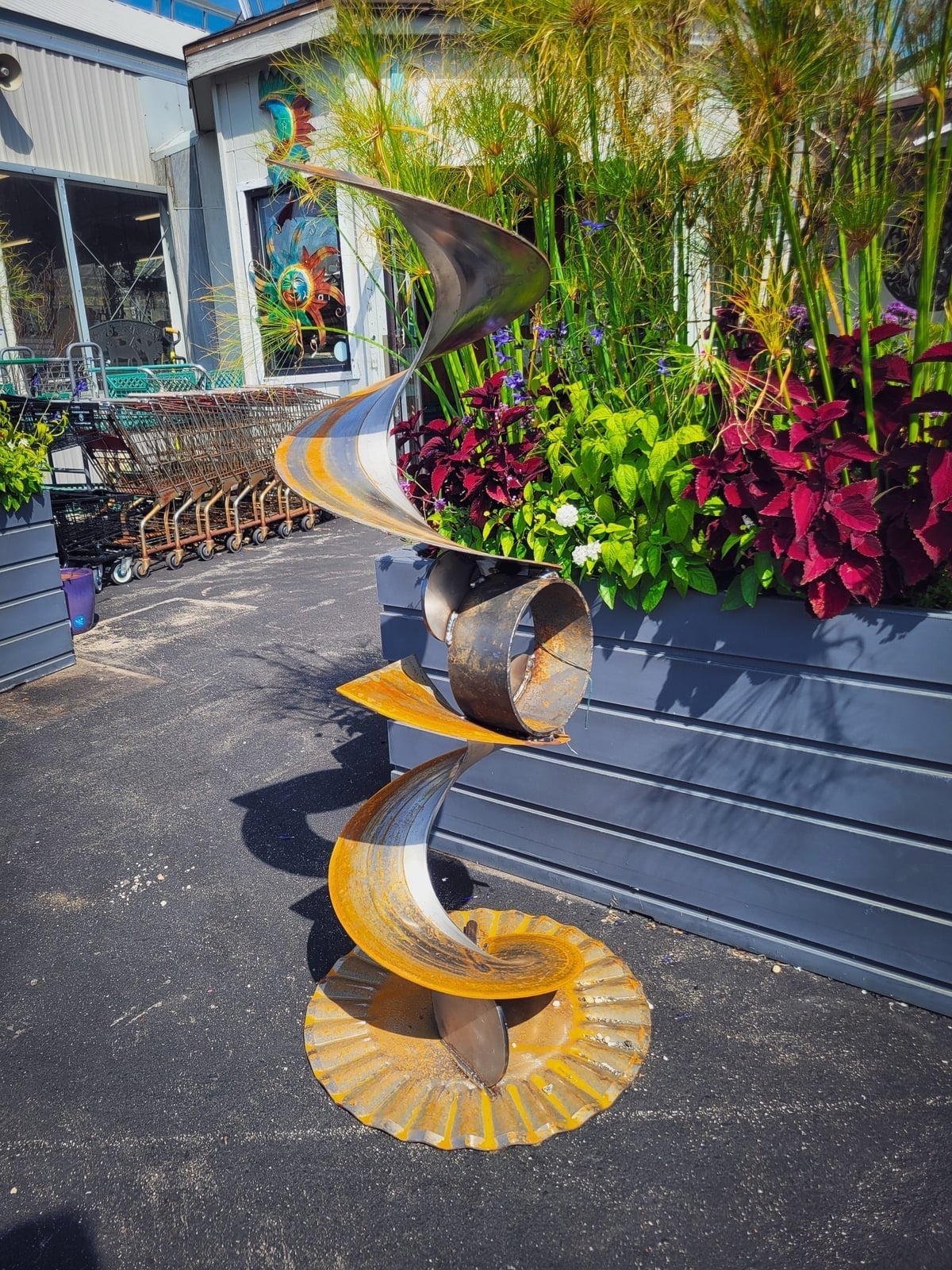
A spiral metal sculpture is not the same as a solid abstract form. This one has open coils in yellow and silver, placed in front of a planter box filled with tall grasses and coleus plants. Daylight moves through the spiral instead of hitting a flat surface, which changes how the piece looks from different angles. The planter box behind it provides a backdrop of green and burgundy, so the sculpture’s metallic tones stand out. This setup works because the plants are dense enough to anchor the scene but soft enough not to compete with the metal. The whole thing is a deliberate pairing of industrial and organic elements.
Bronze sculpture on stone pedestal with manicured hedges
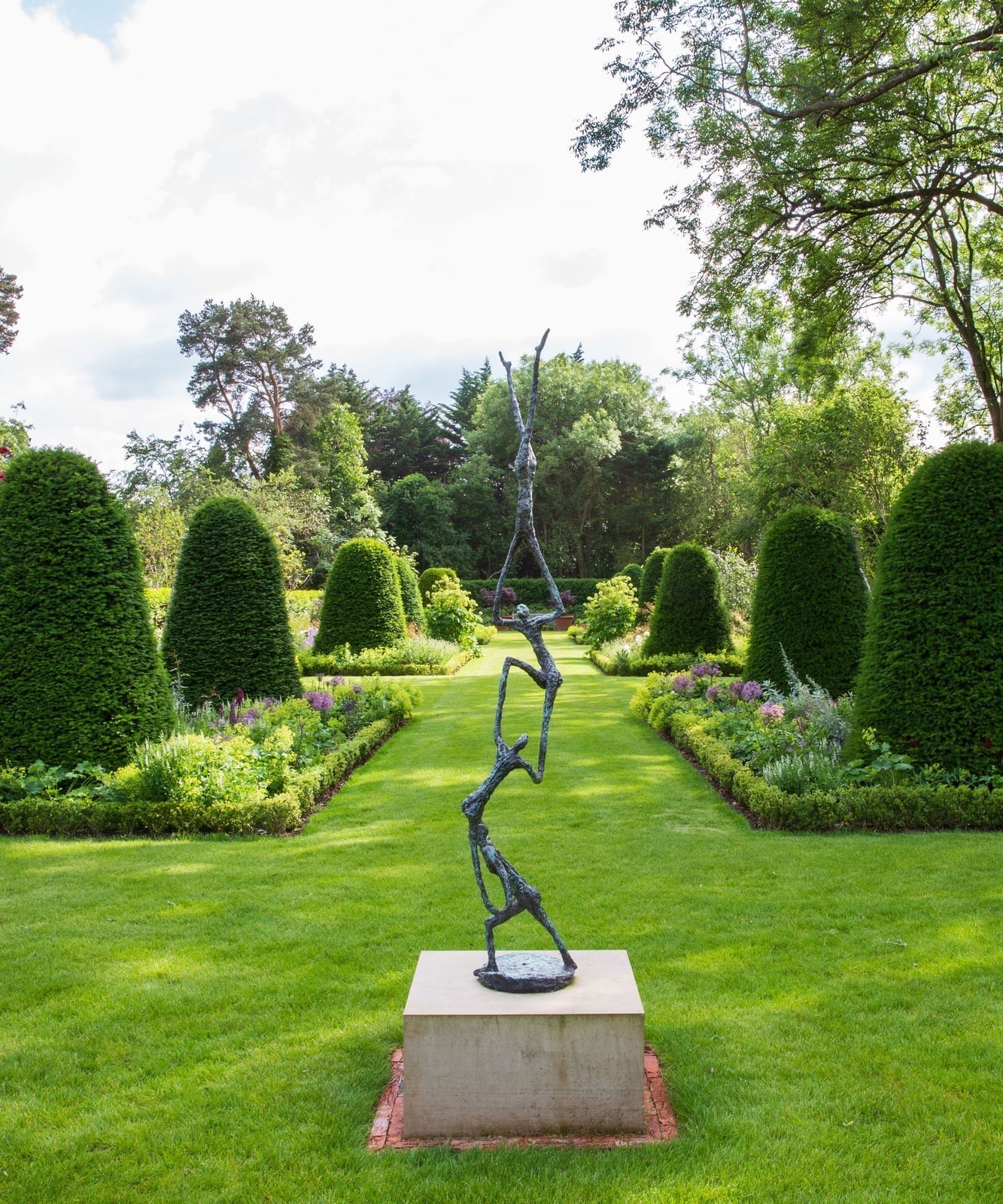
The abstract bronze sculpture sits on a stone pedestal at the center of a formal garden, with manicured topiaries flanking a symmetrical pathway. The overcast sky mutes the bronze finish, letting the green of the hedges and the beige of the stone take the lead. A few touches of purple and pink in the planting beds break up the otherwise restrained palette. This is a layout that relies on repetition and balance, with the sculpture acting as the full stop at the end of the sight line.
Final Thoughts
Garden art works best when it suits the existing rhythm of your yard. A stone bust reads right in a formal hedge border, while a driftwood sculpture blends into a gravel garden without fighting the plants. The most successful pieces are the ones that look like they belong there, not like they were dropped in from a catalog.
Start with one piece that anchors a corner or a path, then add smaller accents as you find them. The garden changes seasonally, and your art choices can shift with it. That is the real trick to making outdoor art feel intentional rather than decorative.