
Farmhouse flooring isn’t just about picking wood and calling it a day. It’s the foundation that sets the tone for the whole room, whether you’re going for rustic charm or something a bit more neat. In 2027, the options are more varied than ever, and we’ve rounded up 25 ideas that actually work for real homes.
From durable stone tiles in mudrooms to wide planks in kitchens, each idea considers how a space lives. You’ll see how different materials, colors, and patterns can change the feel of a room without a full renovation. No fluff, just practical inspiration you can use.
Warm wide plank hardwood floors in a farmhouse kitchen
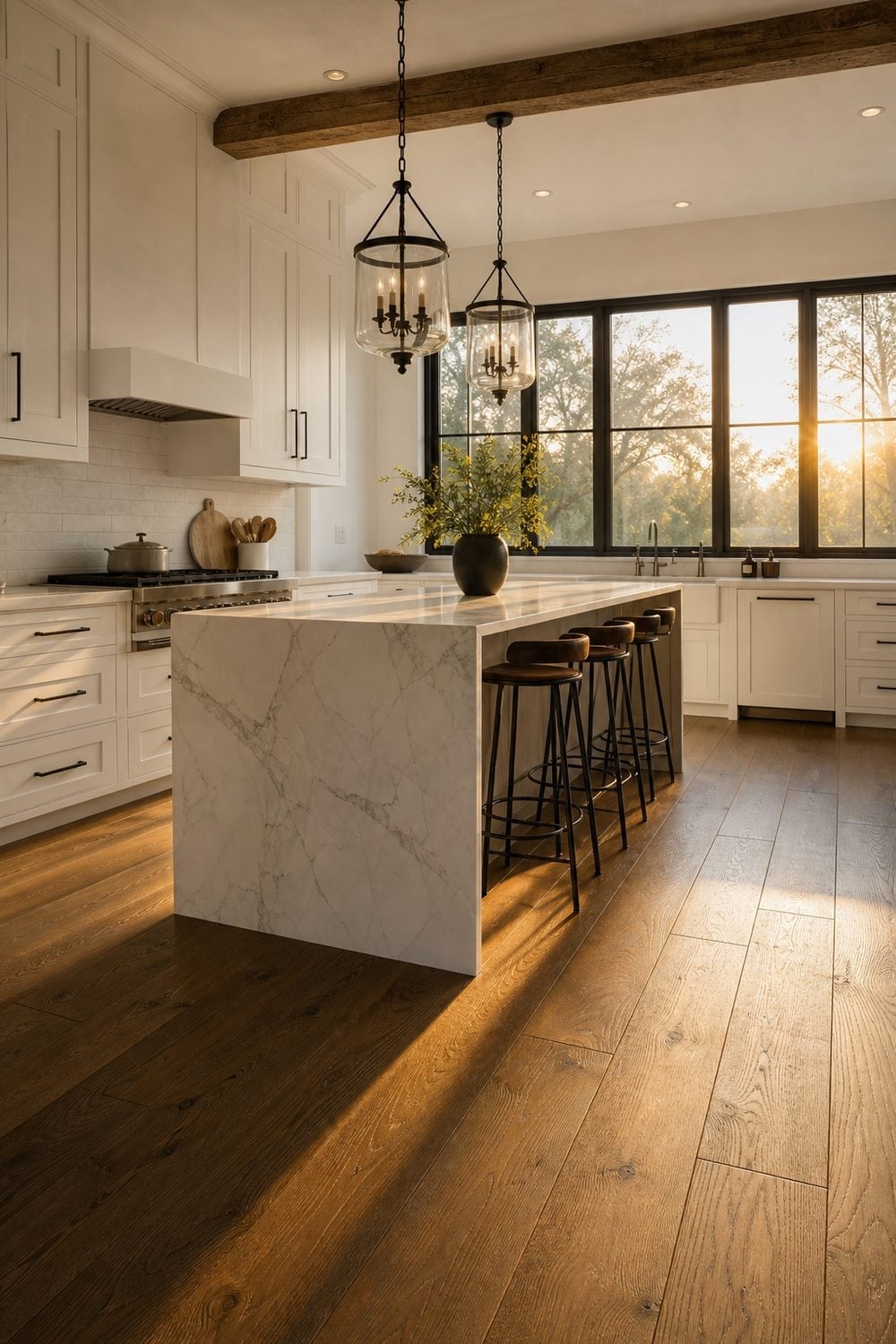
Warm wide plank hardwood floors set the tone for a farmhouse kitchen that feels both open and settled. The wood tones bring a natural contrast to white marble countertops and black bar stool frames. Pendant lights above the kitchen island echo the warmth below, while natural light from windows keeps the wood from reading too dark. The style here is grounded by the floor itself: the wide planks define the room’s pace, and the rest of the kitchen stays simple so the grain does the talking.
Durable large stone tile flooring for farmhouse mudrooms
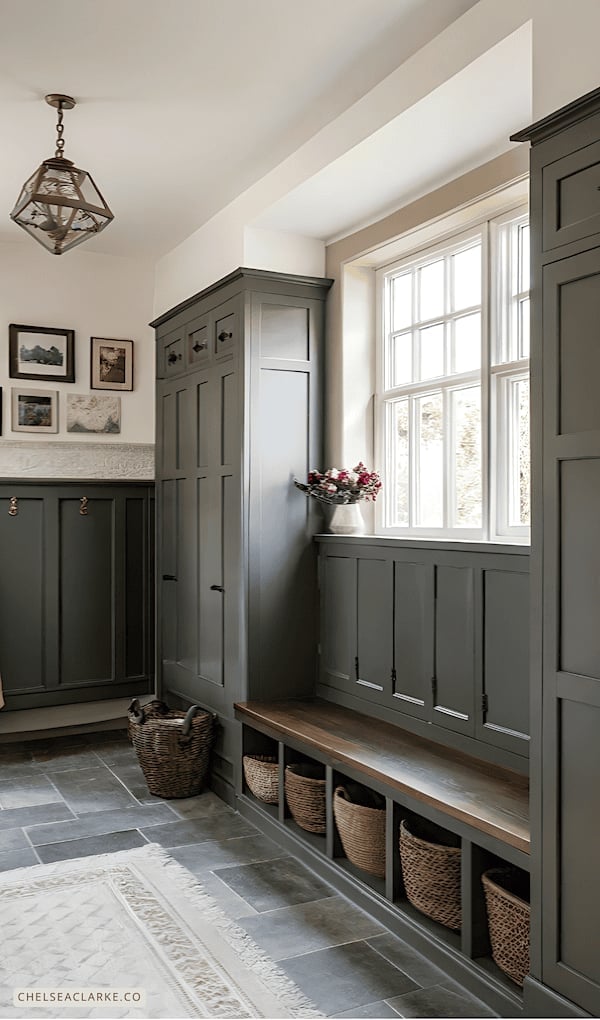
Large stone tile flooring handles a mudroom’s daily traffic without losing its farmhouse character. The gray stone looks a neutral base against white built-in cabinetry and wood bench seating. Wicker baskets add texture, and a metal pendant light keeps the look from leaning too rustic. The palette stays tight: gray, white, and wood tones, with the stone acting as the anchor. What breaks the monotony is the scale of the tiles themselves: bigger than standard, so fewer grout lines and a cleaner sweep underfoot.
Light wood plank flooring anchoring a farmhouse living room
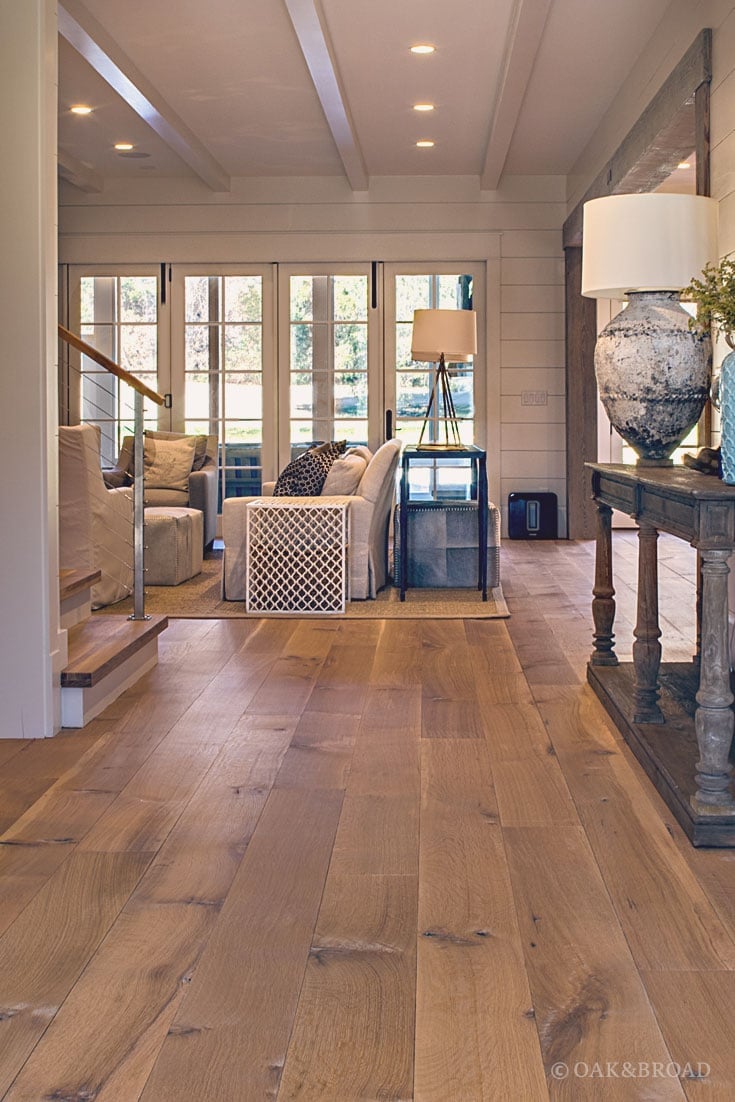
Can light wood plank flooring hold its own in a large living room, or does it wash out? In this open plan space, the answer is clear: wide planks in a light tone lead the eye from the seating area to the console table without a visual break. The floor acts as a neutral canvas for a beige sofa, white walls, and a metal floor lamp.
Recessed ceiling lights and natural light bounce off the pale surface, making the room feel bigger than it already is. The trick is letting the flooring set the layout. Furniture floats on top, but the planks decide the flow. A dark rug or a heavier armchair could break the rhythm, but here the floor stays the main event.
Grounding dark wood plank floors in a farmhouse bedroom
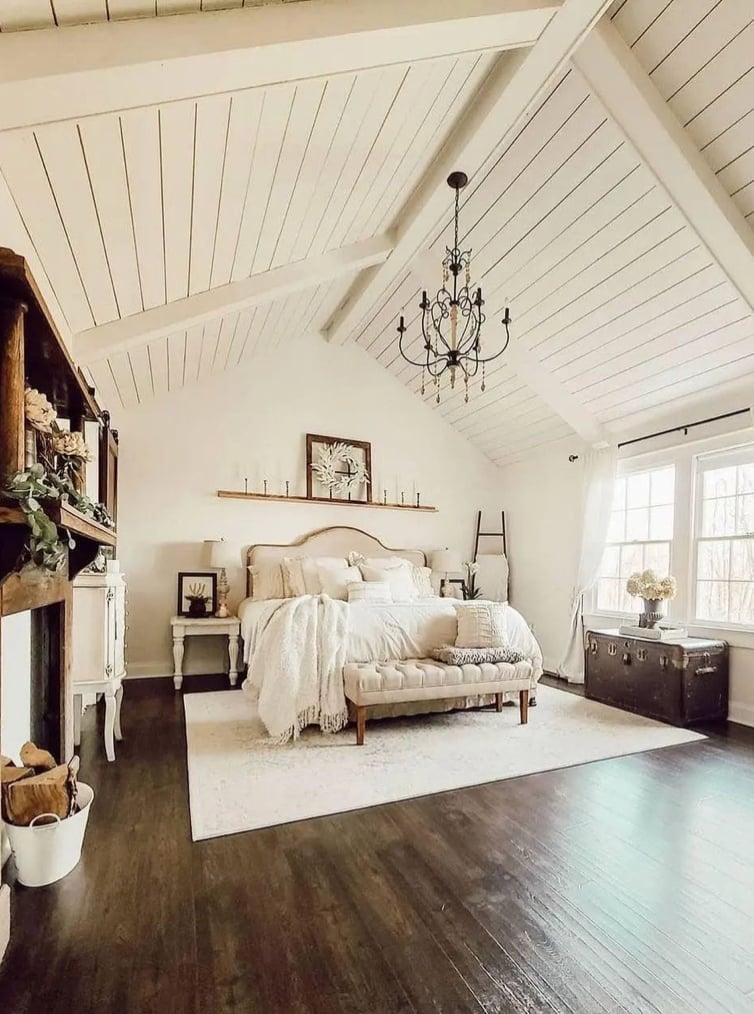
Dark wood plank flooring brings weight to a farmhouse bedroom that might otherwise float away on white walls and cream linens. The deep brown planks anchor a four-poster bed, a vintage trunk, and a tufted bench without making the room feel small. A fireplace on one side and a ladder on the other break up the floor’s expanse. The palette works because the dark wood is the only deep tone: the chandelier and natural light keep the contrast readable, not heavy.
Striking multicolored slate tile in a farmhouse kitchen
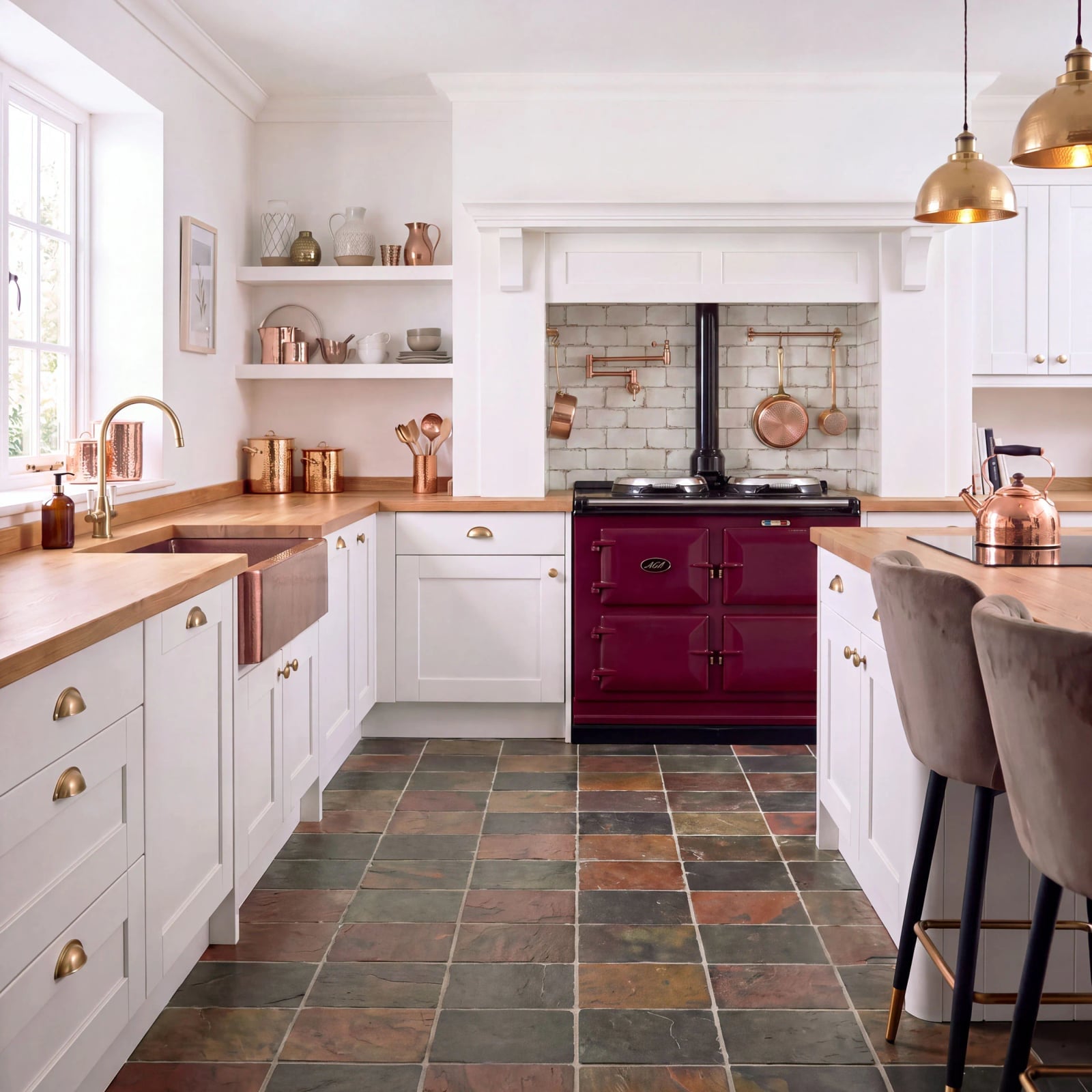
A practical rule for slate tile in a kitchen: let the floor pick the palette, then echo it. In this galley kitchen, multicolored earth tones in the slate range from warm brown to burgundy, and the room follows suit. A burgundy range cooker, copper sink, and brass pendant lights repeat the floor’s accents, while white painted cabinets keep the look from getting busy. The slate is the hero, so the island seating and wooden countertops stay neutral. The material itself breaks the all-wood farmhouse norm, adding texture that hides daily kitchen mess without trying.
Wood-look tile flooring for a durable farmhouse kitchen
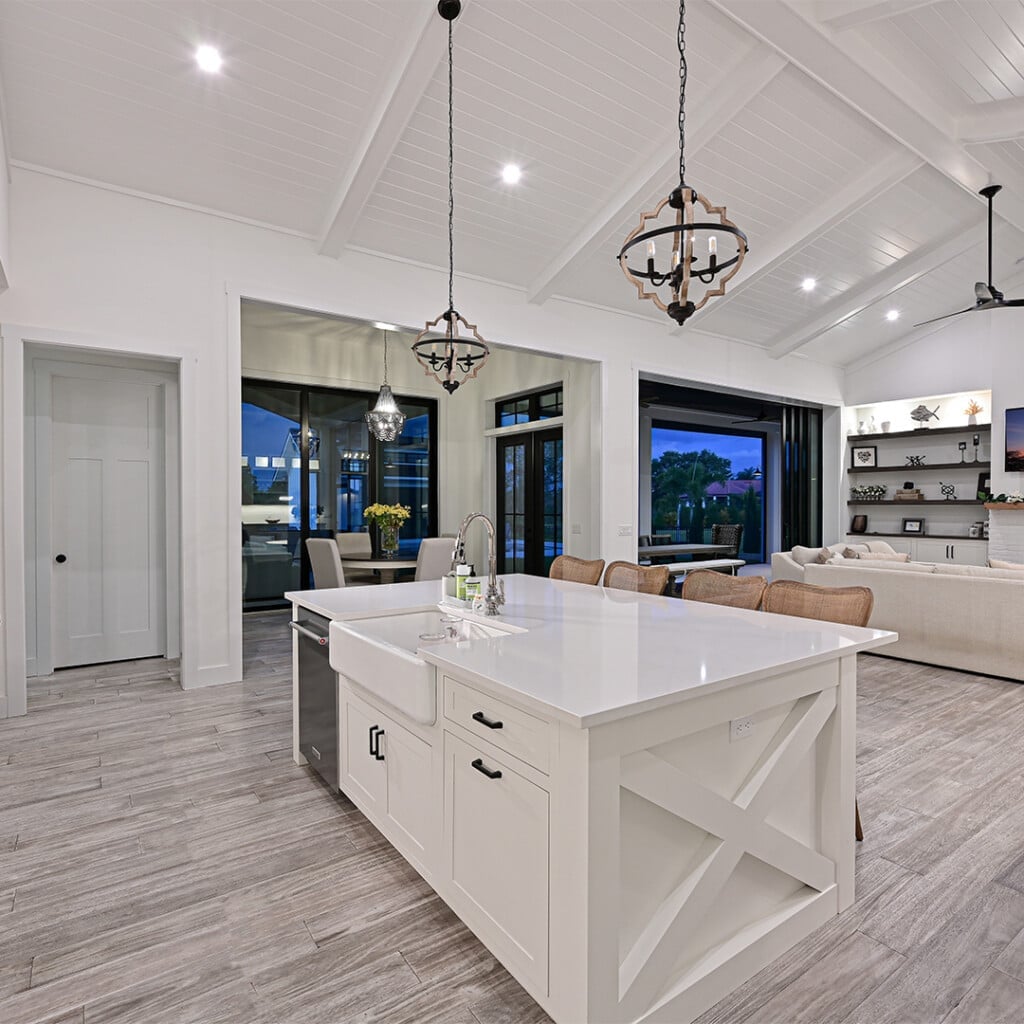
Tile that looks like wood is not a compromise. It is a different tool. In a farmhouse kitchen with an island, a farmhouse sink, and pendant lights overhead, wood-look tile gives the same warm, neutral base as wide plank hardwood. The surface is sealed, so spills from the sink or counter do not soak in. The layout stays open, with the island at the center and the tile running in a consistent direction. White cabinetry and a quartz countertop keep the palette clean. The gray and wood tones in the tile bridge the gap between the warm island and the cooler white surfaces.
Distressed white wood plank flooring for rustic charm
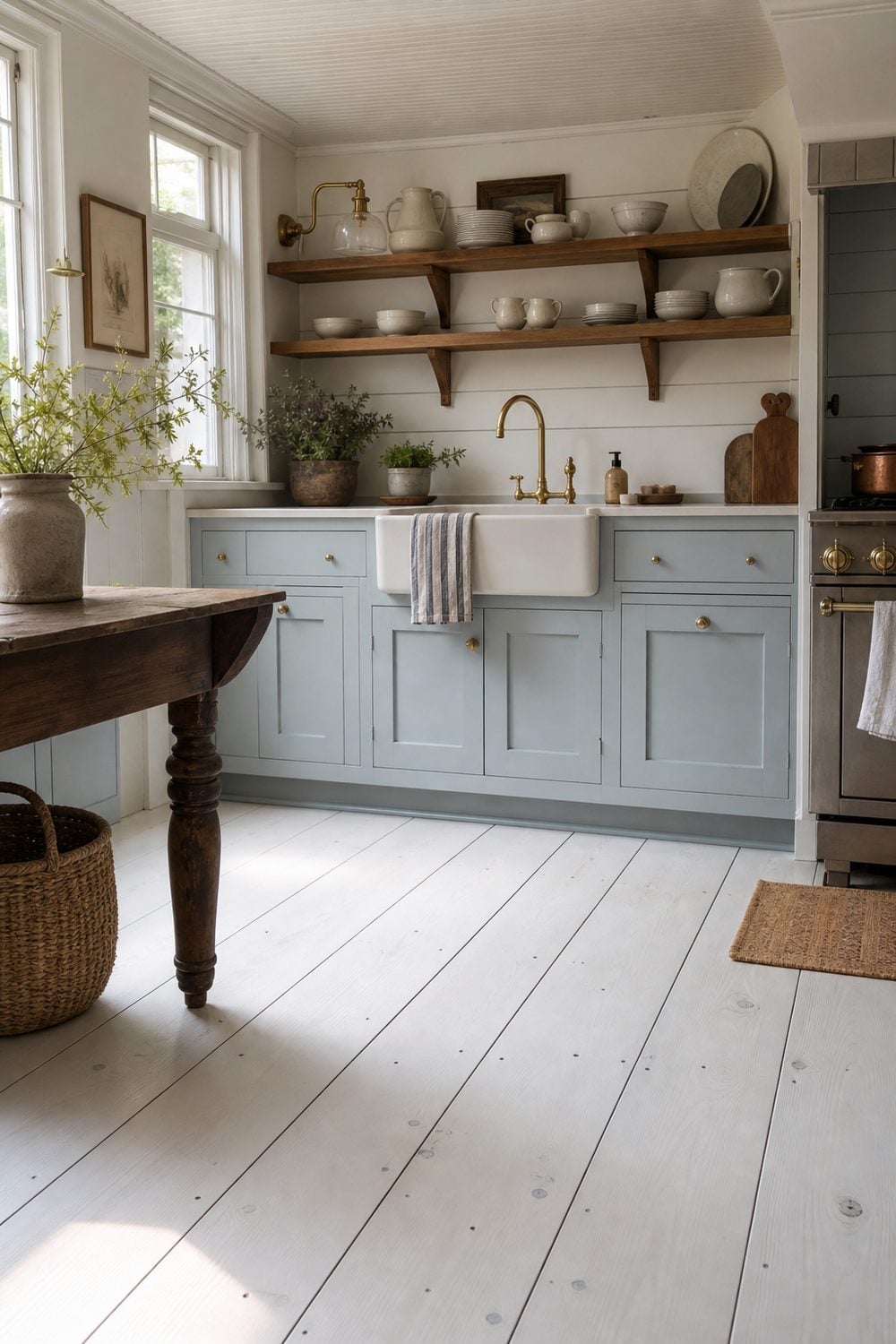
White wood planks with visible wear are not trying to look new. The surface is brushed or scraped, which means scuffs and scratches from daily use blend in rather than stand out. In a kitchen with a farmhouse sink, a wooden table, and open shelves, the flooring looks the oldest piece in the room. Brass details and a woven basket keep the look from tipping into shabby. For renters, a peel-and-stick vinyl plank in a distressed white finish gives the same faded, lived-in look without altering the subfloor.
Oversized brass pendant light above light wood plank floors
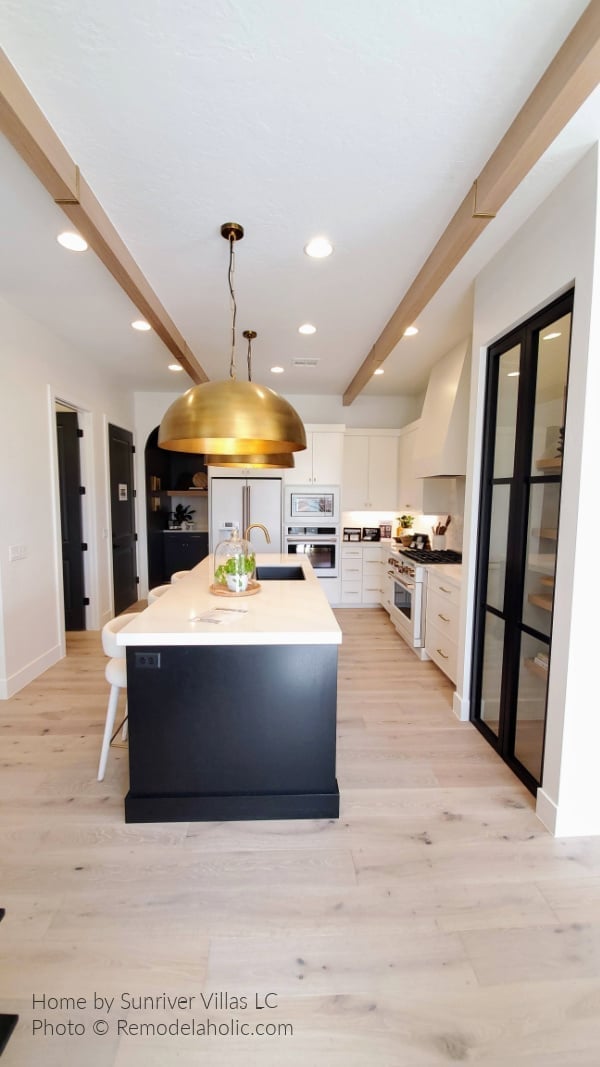
A large brass pendant over a kitchen island does two things. It pulls the eye up and adds a warm metallic note that light wood floors need. The white cabinetry and marble countertop stay neutral, so the pendant becomes the focal point. The wood planks, being light, reflect some of that glow back into the room. Recessed lights fill in the general brightness, but the pendant defines the island zone. The trick is scale: a fixture that looks too big in the store often looks just right over a large island.
Wide plank light wood flooring in a farmhouse entryway
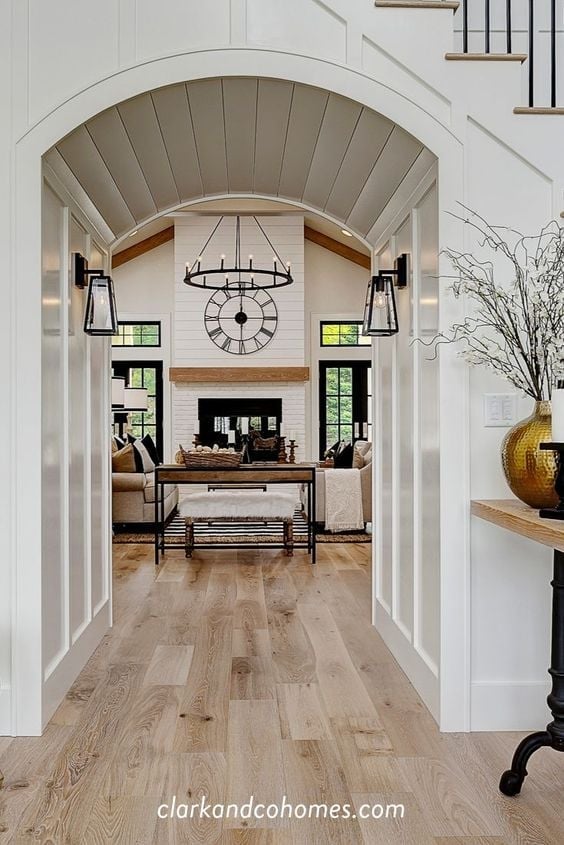
Does light wood flooring hold up in a high-traffic entry? It does if the finish is a matte sealant rather than a high-gloss one. The entryway in question has a console table, a bench, a large clock, and a chandelier overhead. The wide planks run the length of the hallway, which visually extends the space. Wall sconces and natural light keep the wood tones looking warm rather than washed out. The layout leads from the front door past the stairs into the living area, and the continuous flooring makes the path feel deliberate. A dark entry rug near the door catches the worst of the dirt without covering the whole floor.
Natural wood plank floors leading to a rustic barn door
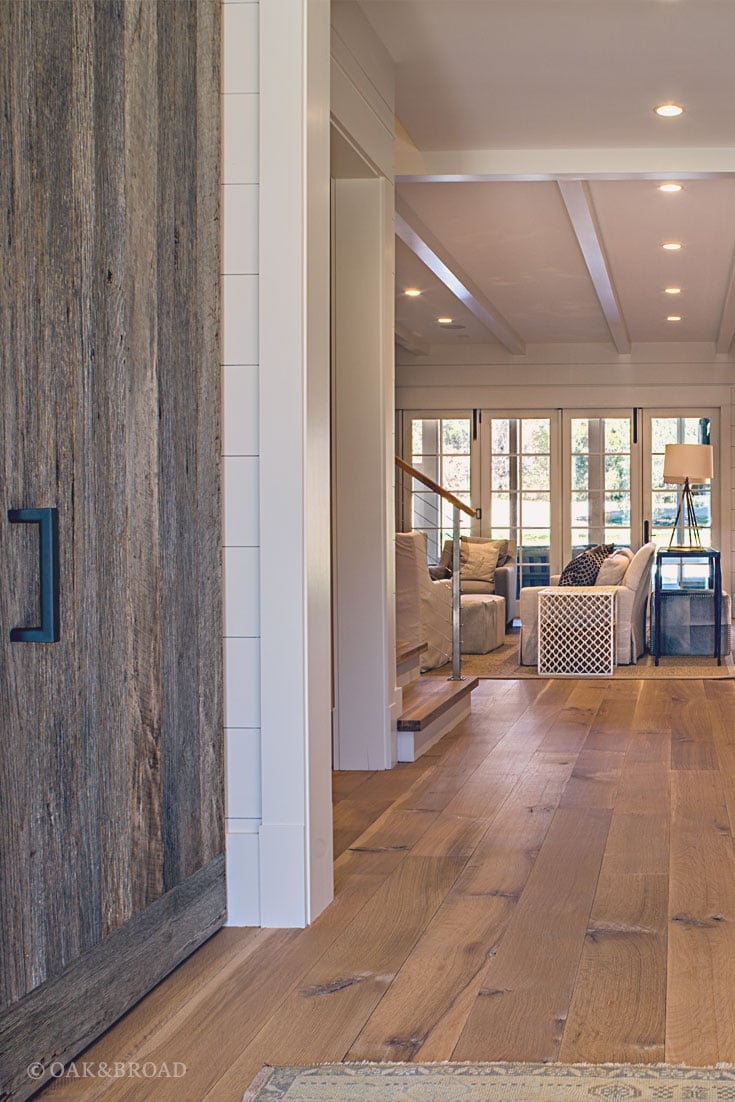
The floor here is the connector. Wide natural planks run from the hallway straight to a large barn door, and the uninterrupted grain draws the eye down the sightline. Shiplap walls and a gray sectional keep the palette quiet, so the wood does not compete with anything. A floor lamp near the sectional adds a warm pool of light that echoes the floor’s undertone. The planks are laid parallel to the barn door track, which reinforces the horizontal line. If the subfloor allows, nailing the planks rather than gluing them makes future repairs simpler.
Classic black and white checkered tile in a farmhouse hallway
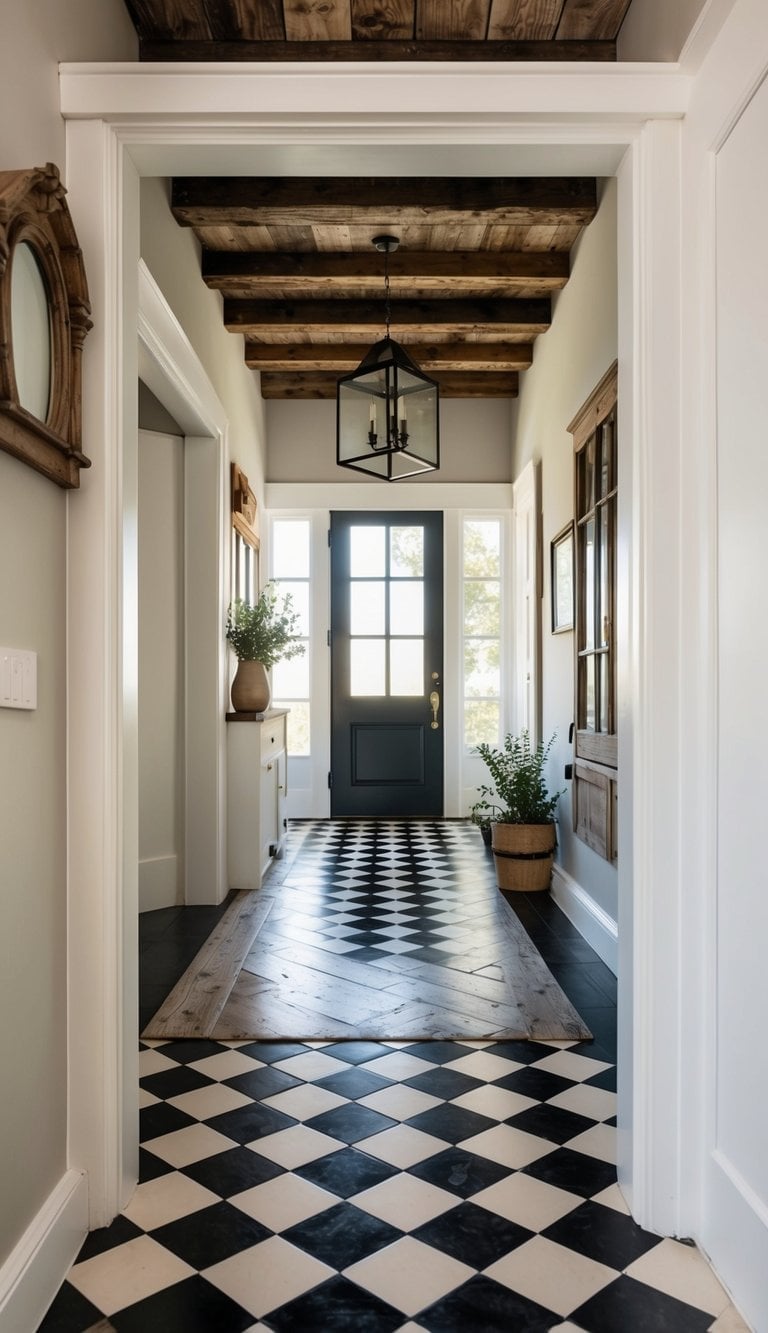
A checkered floor is a classic move, but a simple hallway lets it stand out. Here black and white tiles run the length of the room, with a wood inlay that echoes the wooden ceiling beams above. A black front door and a lantern pendant light complete the look, while natural light from the door and windows keeps the hallway bright. The palette stays tight: black, white, wood tones, and gray. That contrast is what defines the style, and the wood inlay breaks the pattern just enough to keep the eye moving.
Bright farmhouse feel with wide plank light wood floors
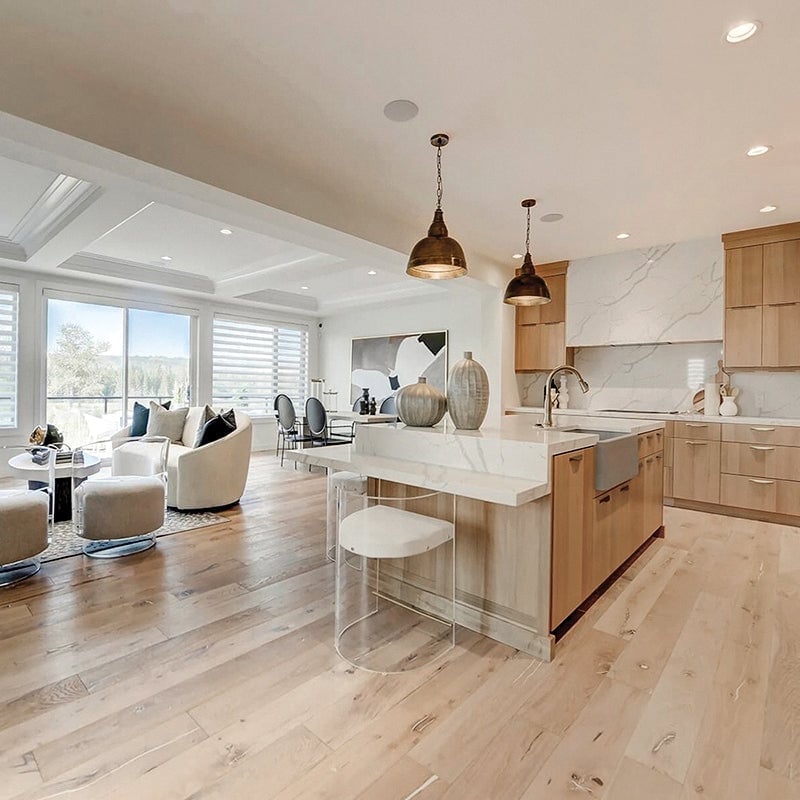
An open plan kitchen and living area does not need a single flooring material to feel cohesive. Wide plank light wood floors prove otherwise. Their warm tone ties the kitchen island, marble countertops, and wood cabinetry together with the sectional sofa and brass fixtures. Recessed ceiling lights and pendant lights supplement the natural light, keeping the whole space bright.
The scale of the planks matters here. Wider boards make the room feel larger, while the light color bounces daylight around the open layout. The palette of light wood, white, gray, and black stays consistent, and the brass introduces a warm accent that breaks the monotony while preserving the farmhouse feel.
Light wood plank floors complementing exposed beams
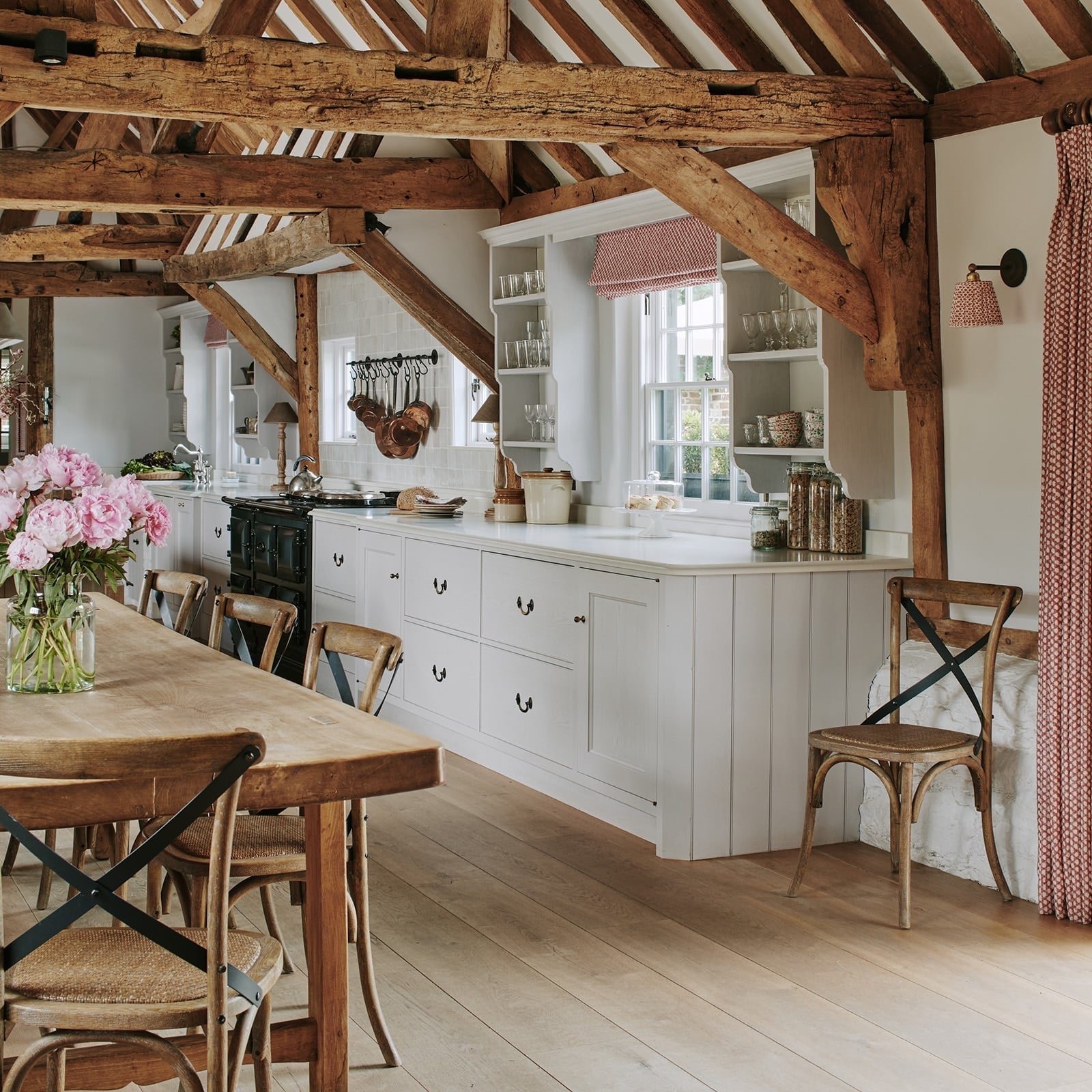
Light wood plank floors and exposed wooden beams work together because they share a similar tone and grain. In this kitchen, the floor anchors the room while the beams draw the eye upward. White cabinetry and a farmhouse table with wooden chairs keep the look grounded, and copper accents in the range cooker and wall sconce add warmth. The palette of light wood, white, and red accents is simple, and the stone countertops introduce a natural contrast for visual variety.
Clawfoot tub in a beadboard bathroom
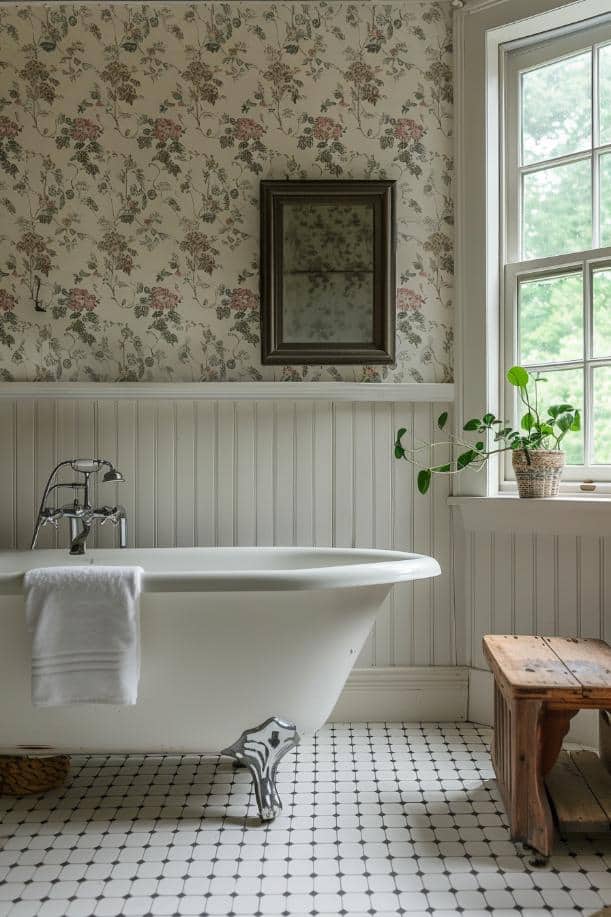
A black and white checkered tile floor is a natural fit for a farmhouse bathroom, especially when the room is roomy enough for a clawfoot tub. The white beadboard walls and green accents keep the palette fresh, while the floor provides a graphic foundation. A wooden stool and a potted plant add softness. The style works because the floor is the statement, and everything else supports it.
Large format gray stone tiles in a farmhouse kitchen
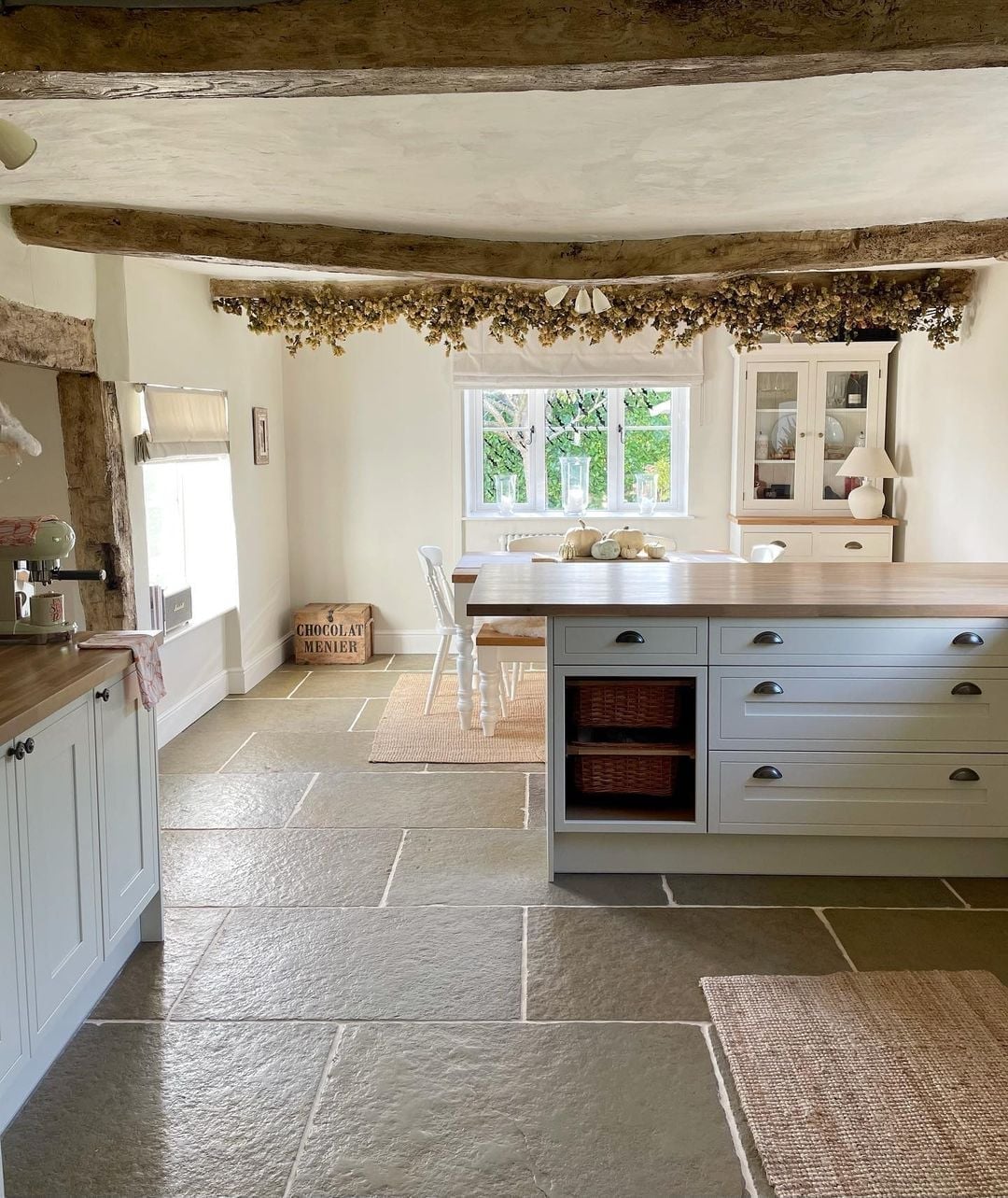
Large format stone tile floors have fewer grout lines, which makes the surface feel more continuous. In this farmhouse kitchen, large format gray stone tiles set a neutral foundation for white cabinets and wooden beams. The open plan layout with a kitchen island benefits from the smooth look, and natural light keeps the gray from feeling too heavy.
The palette stays restrained: gray, white, and wood tones. The stone provides texture, while the wicker accents and warm wood elements break the coolness of the stone. This is a floor that can handle heavy use without dominating the room, making it a practical choice for a busy kitchen.
Wood vanity and barn doors with wood floors
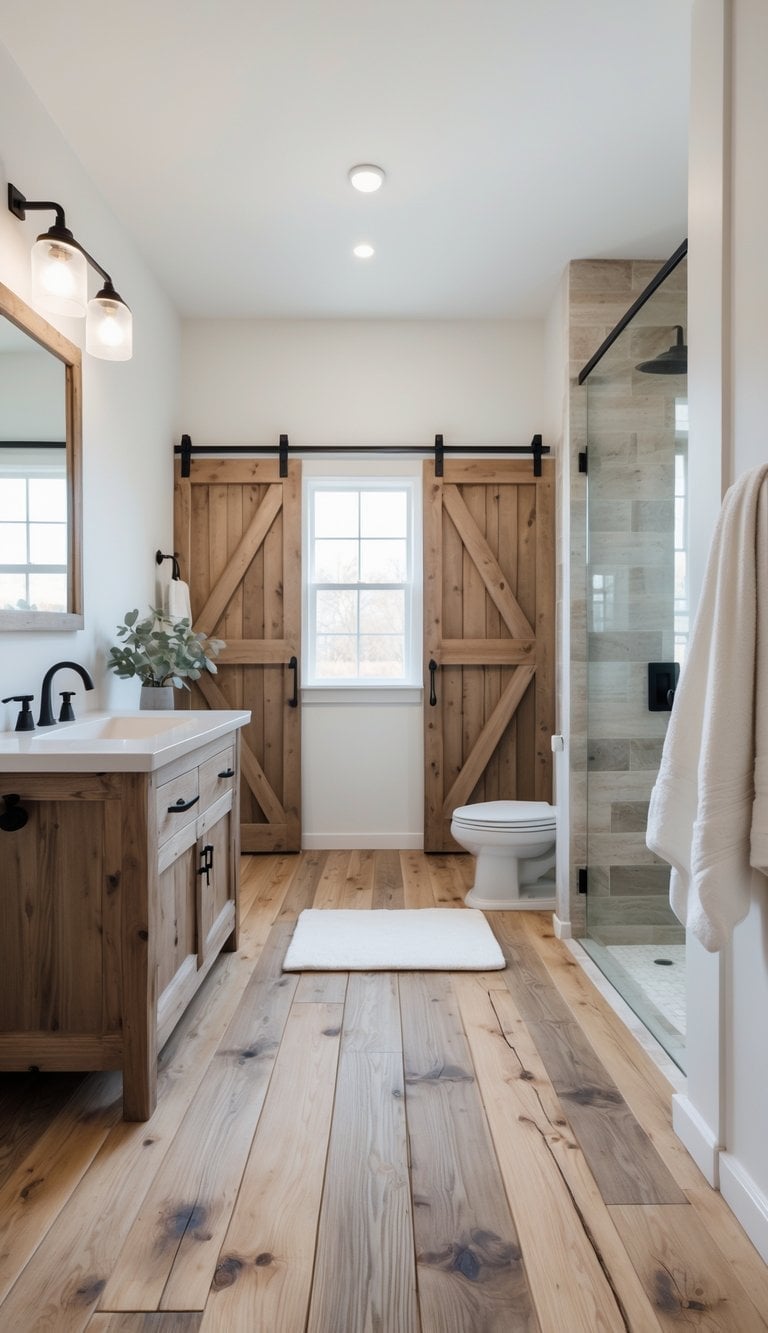
A bathroom with natural wood plank flooring ties the vanity and sliding barn doors together without them competing. The wide planks carry warm wood tones across the room, while the white tile, glass shower enclosure, and black metal hardware keep the look crisp. Overhead recessed lights and a wall sconce with glass shades provide even illumination. This is style mode in action: the wood defines the farmhouse feel, and the ratio of wood to white surfaces keeps it from feeling heavy.
Light wood herringbone floor in a cozy farmhouse living room
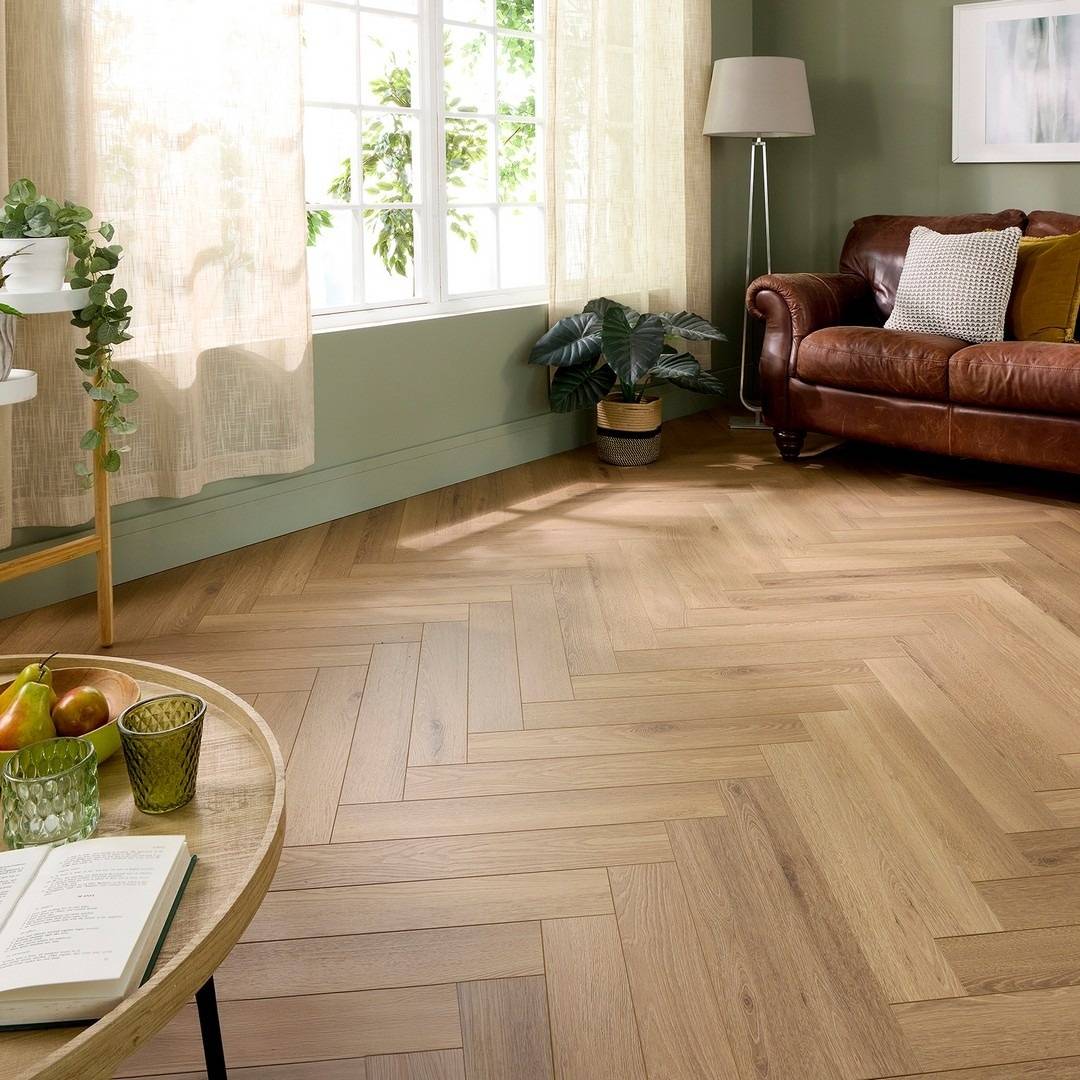
A herringbone pattern in a living room should set the direction, then you furnish to support it. The light wood herringbone floor anchors a brown leather sofa, a round coffee table, and a floor lamp. Sage green and natural linen keep the palette soft. The window fills the space with light. The herringbone pattern defines this look. A solid area rug in a neutral tone would break the repetition without hiding the floor.
Wide plank light oak flooring with rustic barn doors
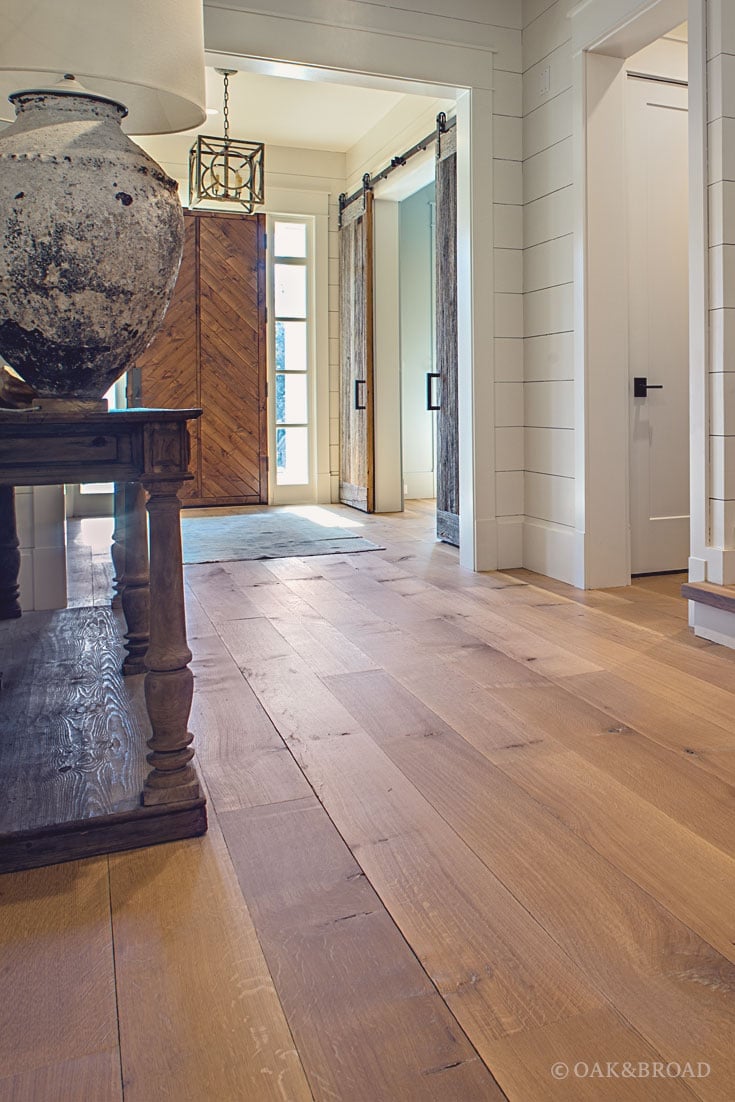
Light oak flooring can feel casual next to dark furniture, but in a wide hallway with shiplap walls and barn doors, the light wood tones keep the space open. The overhead lantern adds a warm glow. A console table provides a landing spot without crowding the path.
For layout, the barn doors act as a visual stop at the end of the hallway. The wide planks run continuously, which makes the hallway feel longer. The window balances the warm oak and white walls. This setup keeps the floor as the lightest surface in the room.
Warm brown wide plank wood floors in a farmhouse kitchen, indoor
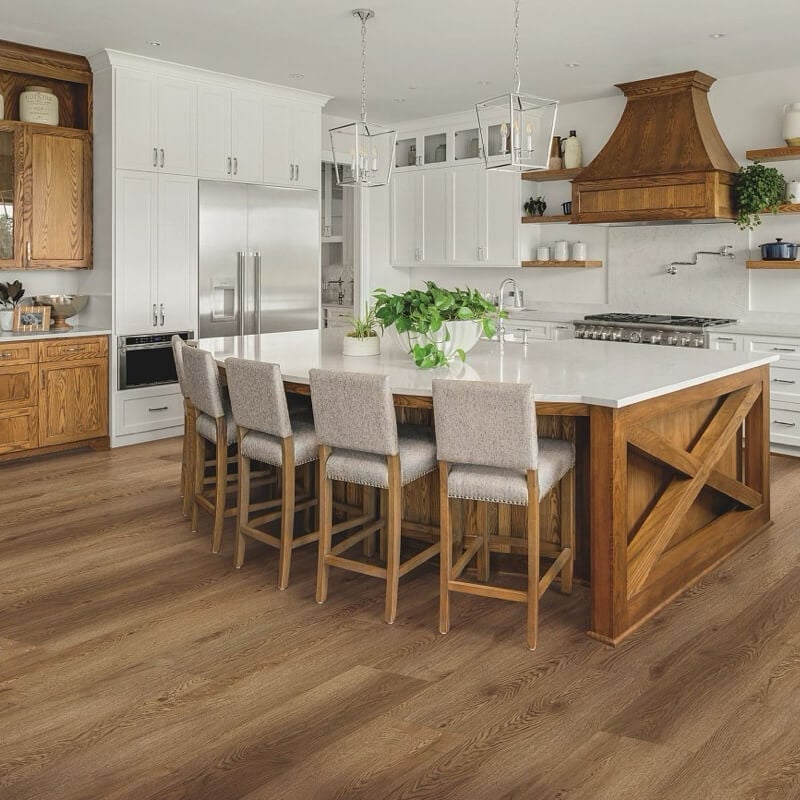
The wide plank wood flooring in this kitchen brings a brown warmth that balances the white cabinetry and stone countertops. The planks are the palette anchor: everything else is lighter or neutral. Pendant lights and natural light keep the space bright. The kitchen island with bar stools and the range hood sit comfortably over the warm wood. A few metal accents in the fixtures break the wood tones just enough to avoid an overly rustic look.
Sisal runner over wood planks
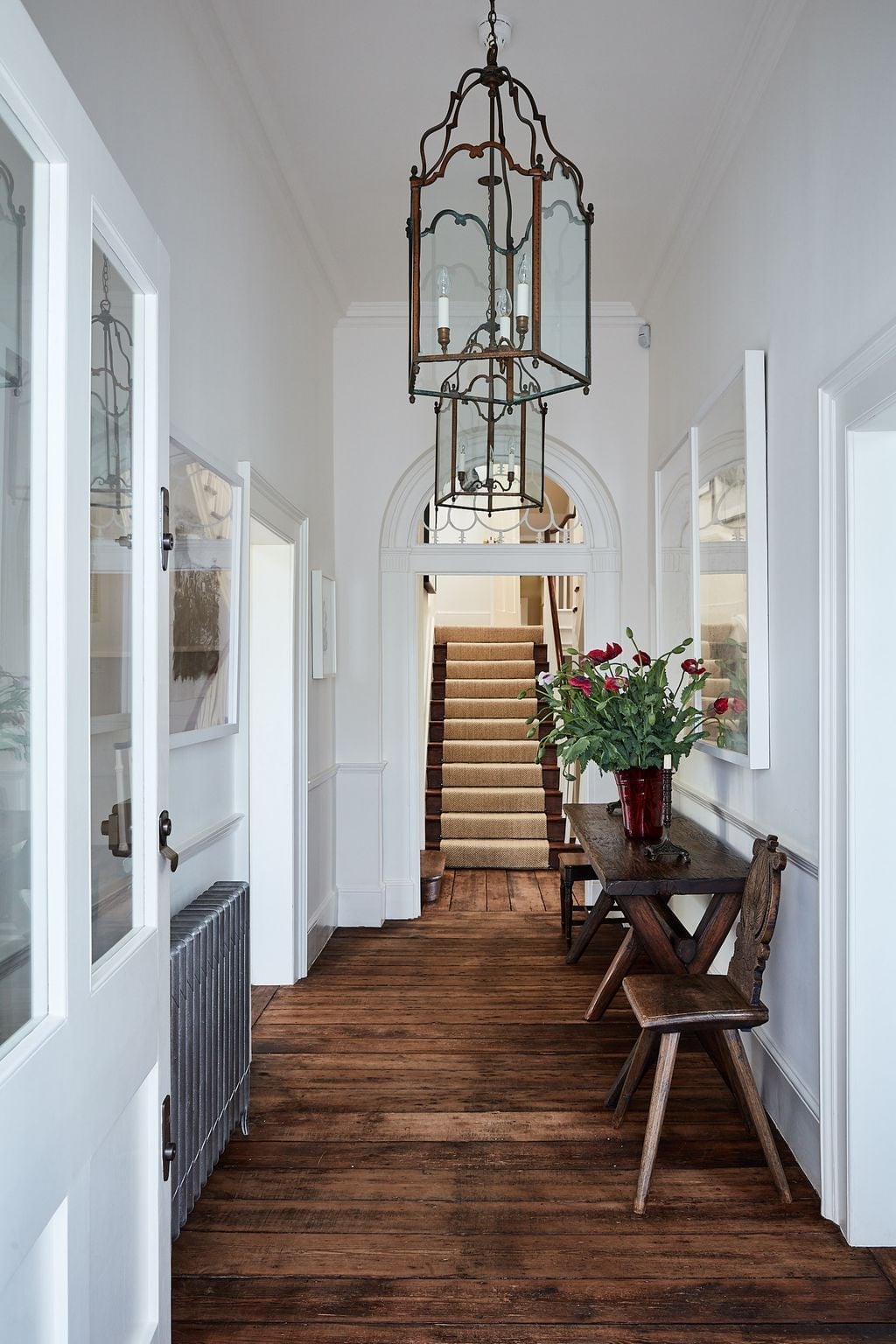
A sisal runner over wide plank wood flooring in a hallway is a clear one-line assessment: texture on texture works when the tones match. The natural brown and beige of the sisal echo the wood planks without covering them completely. A wooden console table and a wooden chair keep the material story consistent. The ornate lantern adds a lighter note. This is style mode again: the sisal defines the look, and the ratio of runner to visible floor is about one third. A patterned runner would break the calm rather than add to it.
Geometric patterned runner over light wood plank flooring
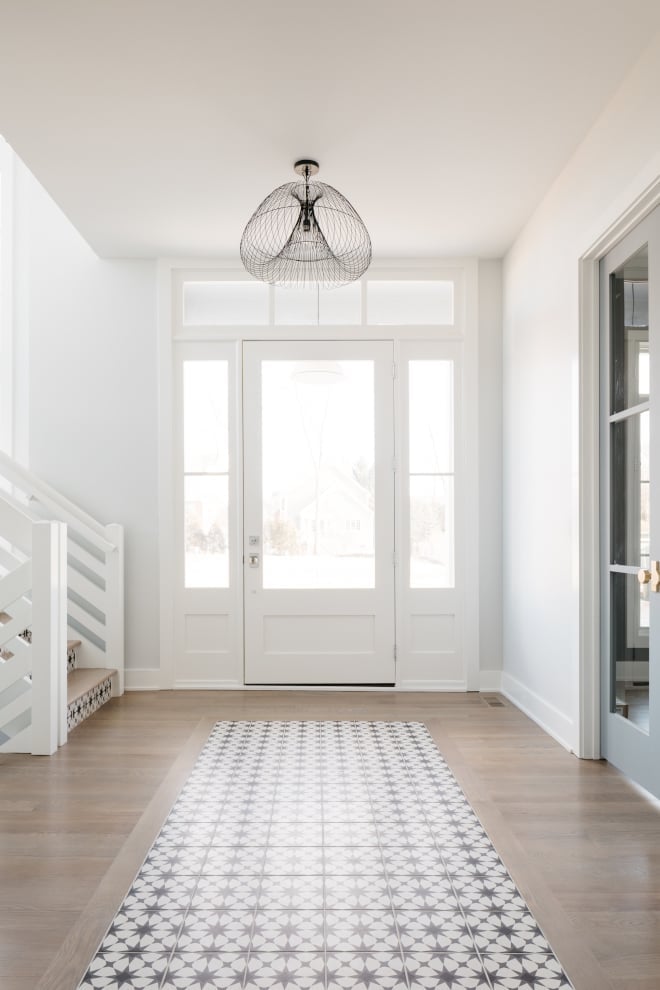
A runner can define a hallway without committing to a full floor change. In this entryway, a geometric patterned runner stretches across light wood plank flooring, linking the front door to the staircase. The runner adds contrast in white, gray, and black against the wood tones below. A metal pendant light overhead and natural light from the door keep the area bright. The staircase to the side and the runner’s pattern work together to draw the eye forward.
For a similar setup, pick a runner with a repeat pattern that fits the hallway length. Leave a few inches of wood visible on each side so the floor still anchors the room. This approach lets you swap the runner when the mood or season changes, which is a practical move for renters or anyone who likes to update their look without a full renovation.
Distressed wood plank flooring in a farmhouse bedroom
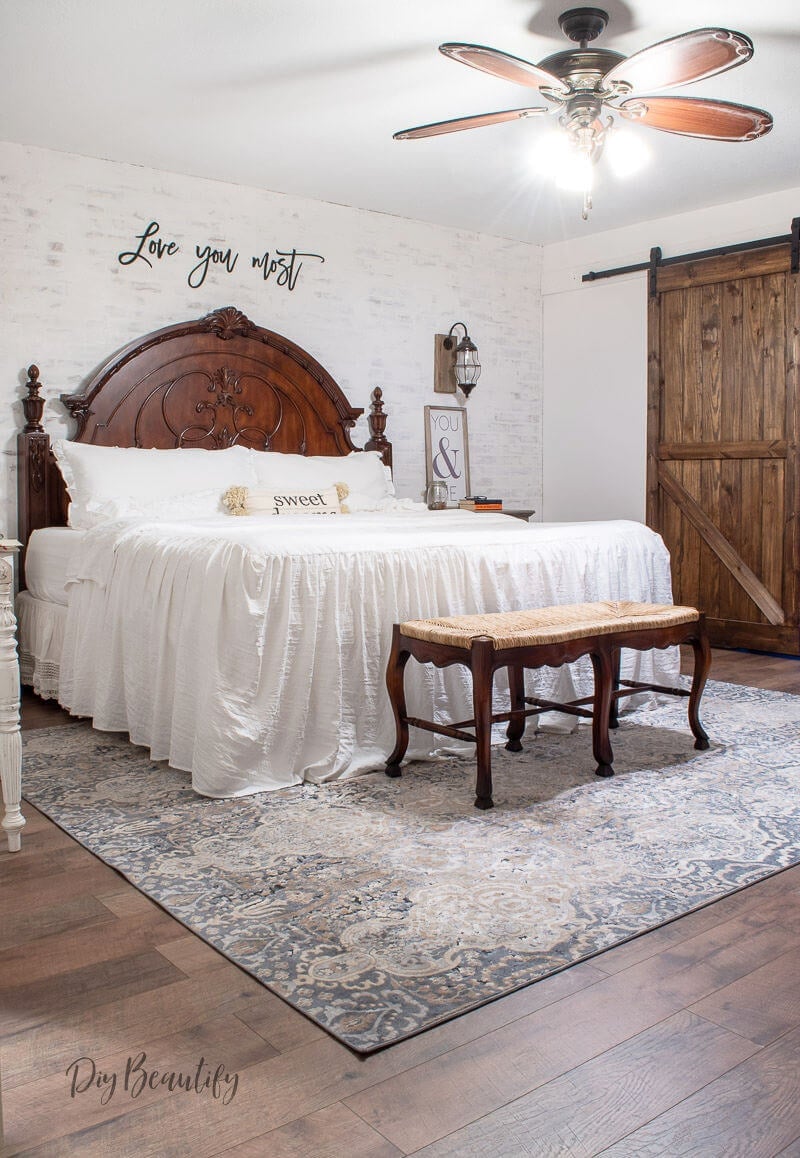
Distressed wood plank flooring brings a sense of history to a bedroom with its worn finish and visible grain. The planks in this room show a mix of wood tones that echo the large wooden bed frame and the sliding barn door. A woven bench at the foot of the bed and a wall sconce above add softness against the rugged floor. The blue and beige accents in the bedding temper the floor’s weathered look without fighting it. The ceiling fan with a light fixture keeps the room practical while the floor does the heavy visual work.
Multi-colored slate tiles for a warm farmhouse kitchen
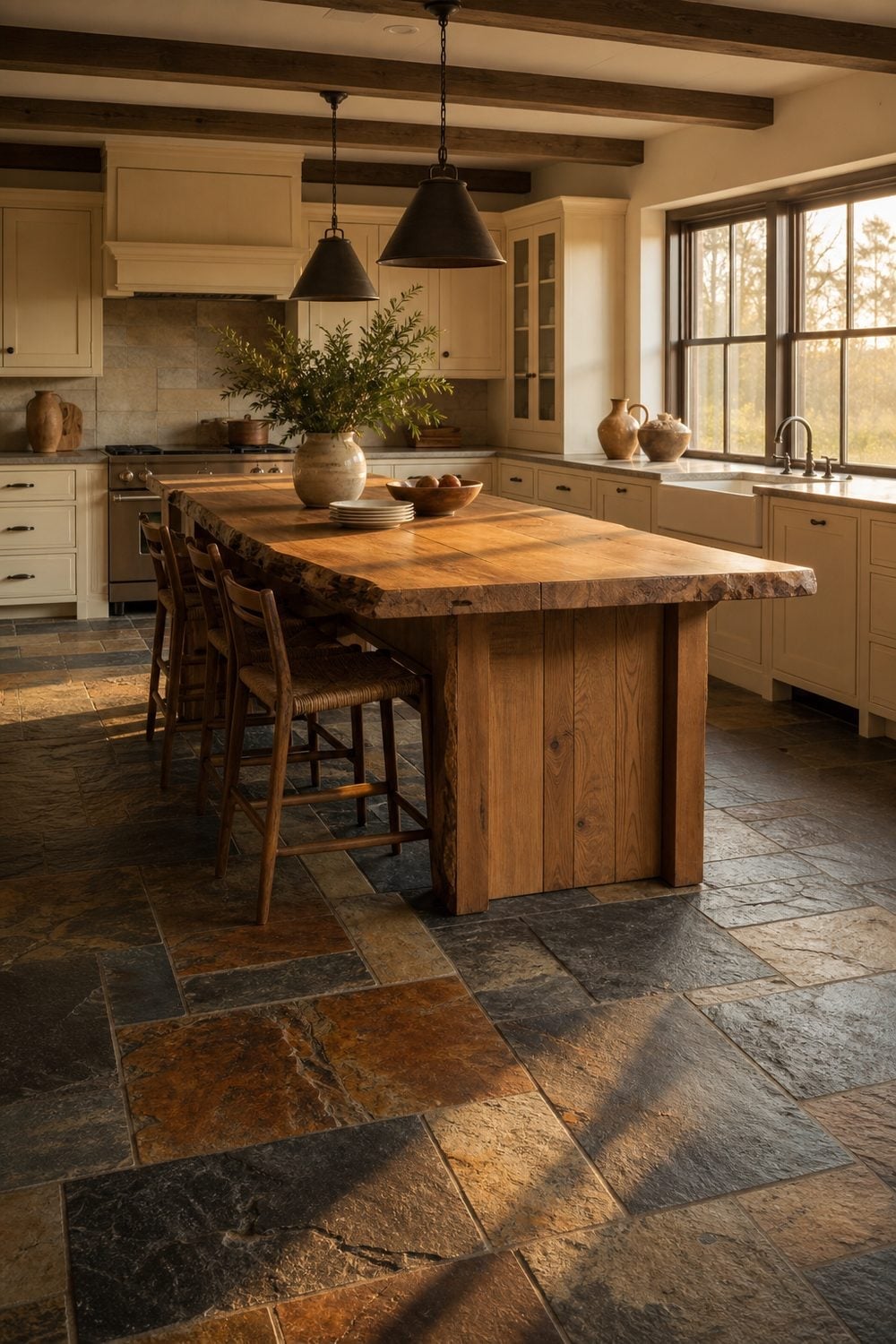
Multi-colored slate tile flooring introduces a palette of earth tones, slate gray, rust, and beige that feels rooted in nature. In this kitchen, the stone tile anchors the large wooden island and woven stools without competing with them. The irregular coloring hides daily crumbs and spills better than a solid surface, which matters in a busy cooking space. Pendant lights above warm the stone’s cool undertones. To keep the look cohesive, pull one tile color, such as rust or beige, into a backsplash or countertop accessory.
Rustic stone tile floor in a welcoming farmhouse entryway
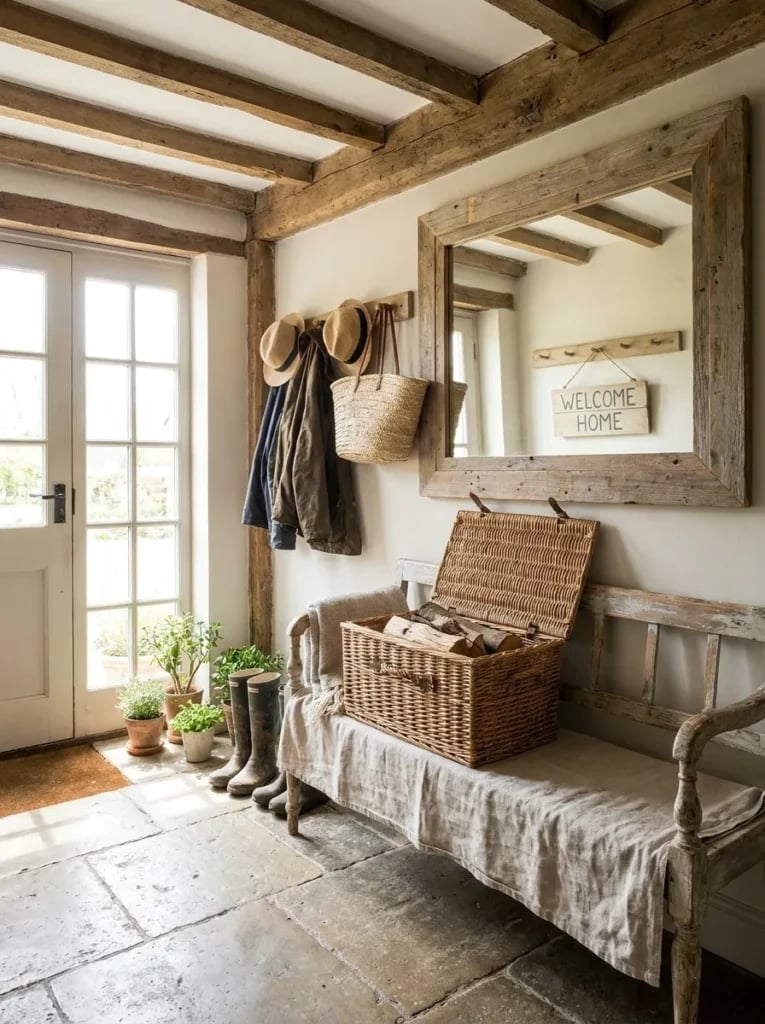
A stone tile floor might feel cold or heavy in some homes, but in this entryway it creates a warm welcome. The large stone tiles in beige and green tones contrast with the white walls and wood bench. A wicker basket, boots, and a few plants soften the hard surface and make the room feel lived in. Overhead beams and natural light from the doors keep the space airy.
The trick here is balance: the stone floor grounds the entryway, but the linen, wood, and wicker pieces around it add texture and prevent a cave-like feel. A mirror on the wall bounces light back into the space, helping the stone become a feature. This setup works best when the floor’s color connects to the wood tones in the furniture, creating a smooth transition from floor to wall.
Irregular flagstone flooring in a farmhouse kitchen
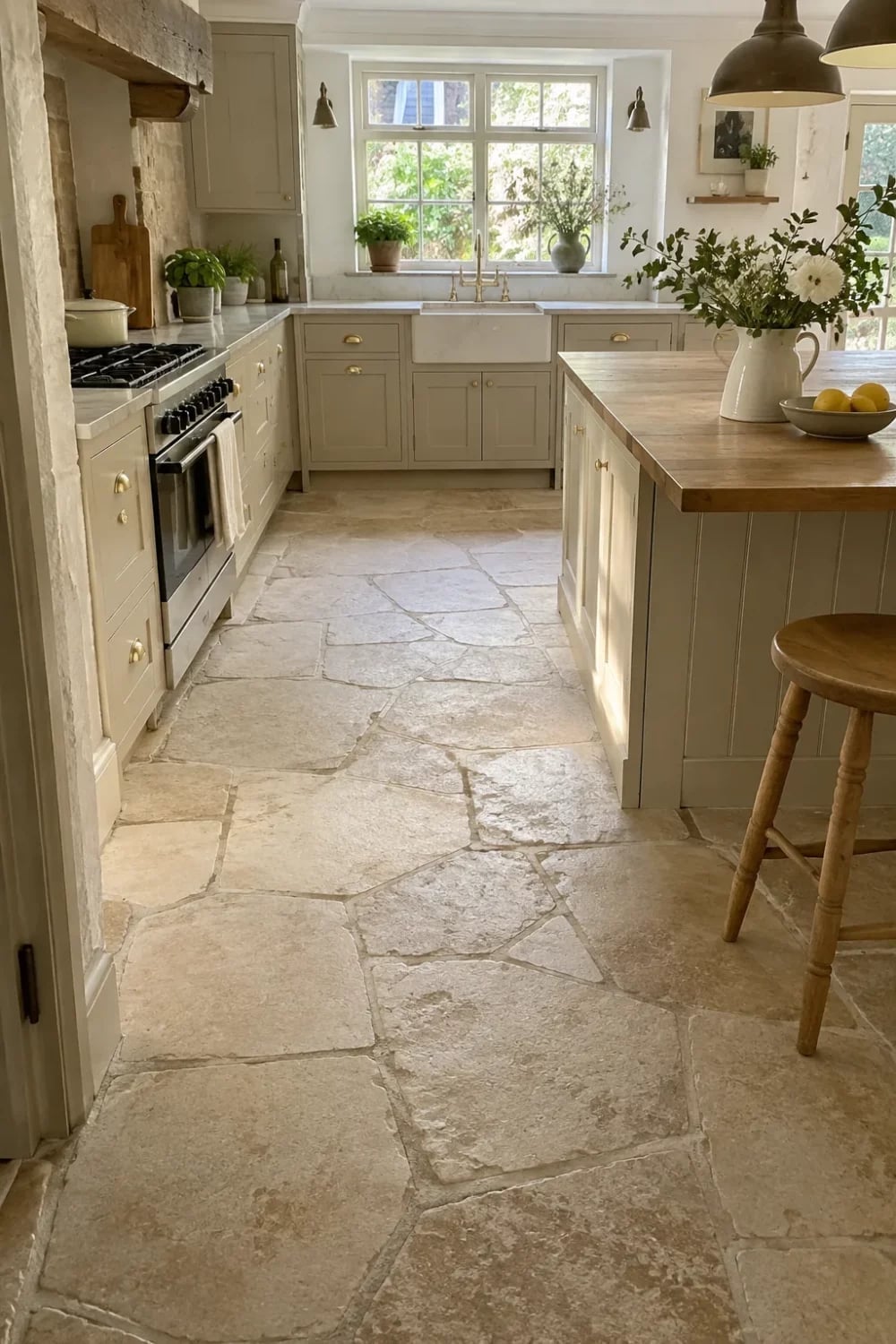
Irregular flagstone flooring in a kitchen offers a one-of-a-kind surface where no two stones are the same shape. The beige, cream, and taupe tones in this galley kitchen blend with the wooden island countertop and the farmhouse sink. The stone’s irregular shapes create a natural grid that defines the cooking zone without needing a rug. A wooden stool and marble accents on the countertop tie the organic floor to the room’s clean lines. The gaps between the stones add grip underfoot, which is a bonus in a kitchen where water or oil might hit the floor.
Final Thoughts
Farmhouse flooring works when it balances character with practicality. Wide planks keep things open and airy; stone and tile handle mud and mess. A runner adds comfort where you stand longest. Whatever material you choose, let the floor set the tone and keep the rest simple. Check your climate zone before committing to natural stone, and seal wood floors in kitchens and entries. The right floor makes the whole house feel settled.