
If you’re tired of looking at the same old cabinet doors, a fresh coat of paint might be the quickest way to change the whole room. For 2027, the trend is leaning into personality, from soft pastels to deep, moody hues that make the storage the star of the kitchen.
This roundup of 29 cute kitchen cabinets painted 2027 shows how a simple color shift can redefine the space without a full gut renovation. Whether you want a calm cream or a playful green, there’s a shade here to match your style.
Farmhouse charm with white shaker cabinets and wood accents
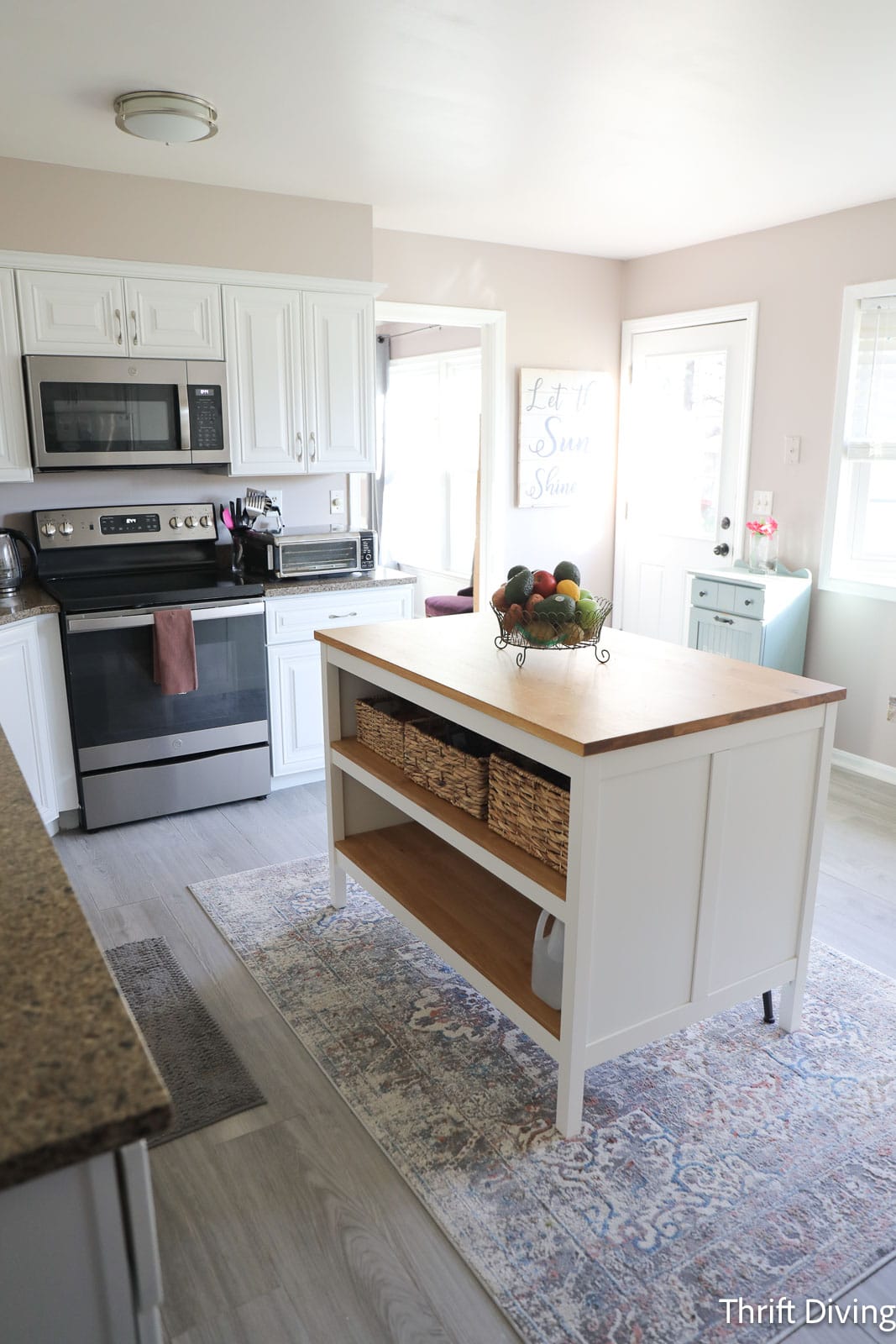
A white kitchen island with a wood countertop anchors the space. The wood top adds warmth against the white shaker style, while wicker baskets and muted blue accents create a relaxed farmhouse feel. An overhead flush mount light and natural light from windows keep the look grounded in everyday farmhouse function.
Sage green kitchen cabinets with modern black hardware
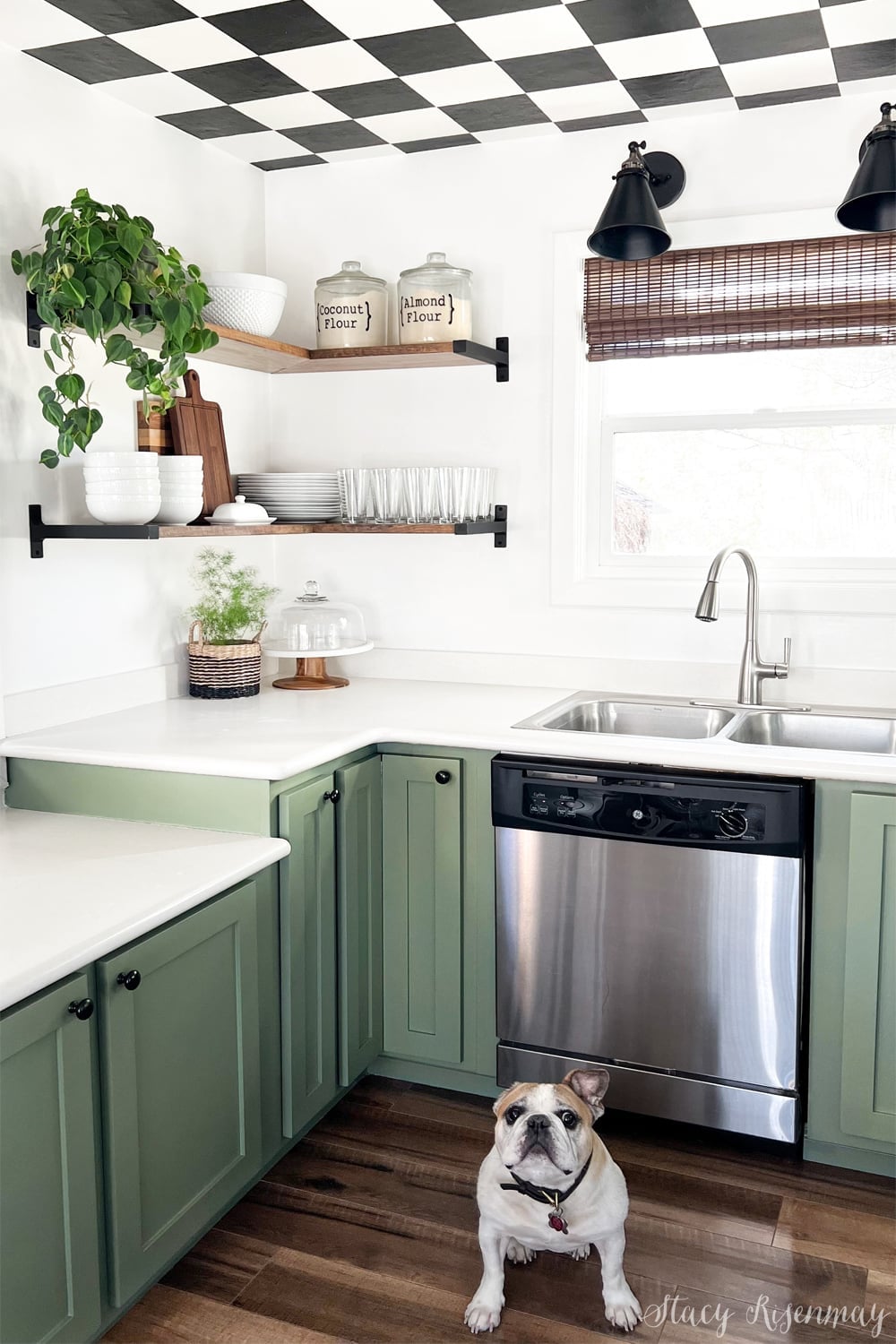
Sage green painted cabinets paired with black hardware look fresh without being trendy. The muted green sits well against white walls and wood shelves, and the black handles give the compact corner layout a crisp edge. Overhead track lighting and natural light keep the sage from going flat, while the stainless steel dishwasher blends into the background.
Traditional cream cabinets with a grand range hood
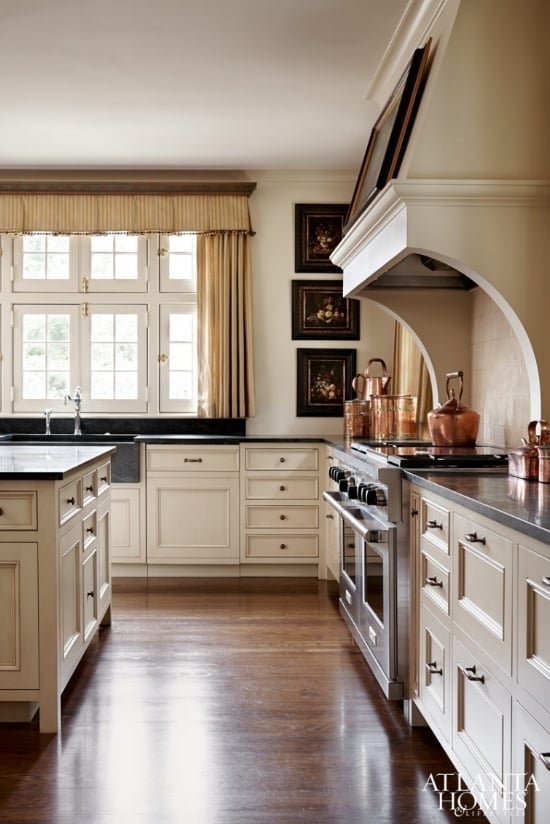
What makes a cream kitchen feel substantial rather than just safe? The materials. Cream painted cabinets pair with dark wood accents and a copper range hood to give the room weight. The arched hood becomes the natural focal point above the range, while marble countertops on the island and perimeter add a cool contrast to the warm cream. Stainless steel appliances stay quiet against the richer palette. Sunlight from windows and overhead lighting keep the traditional layout from feeling heavy.
Eclectic pantry cabinet in a dusty rose hue
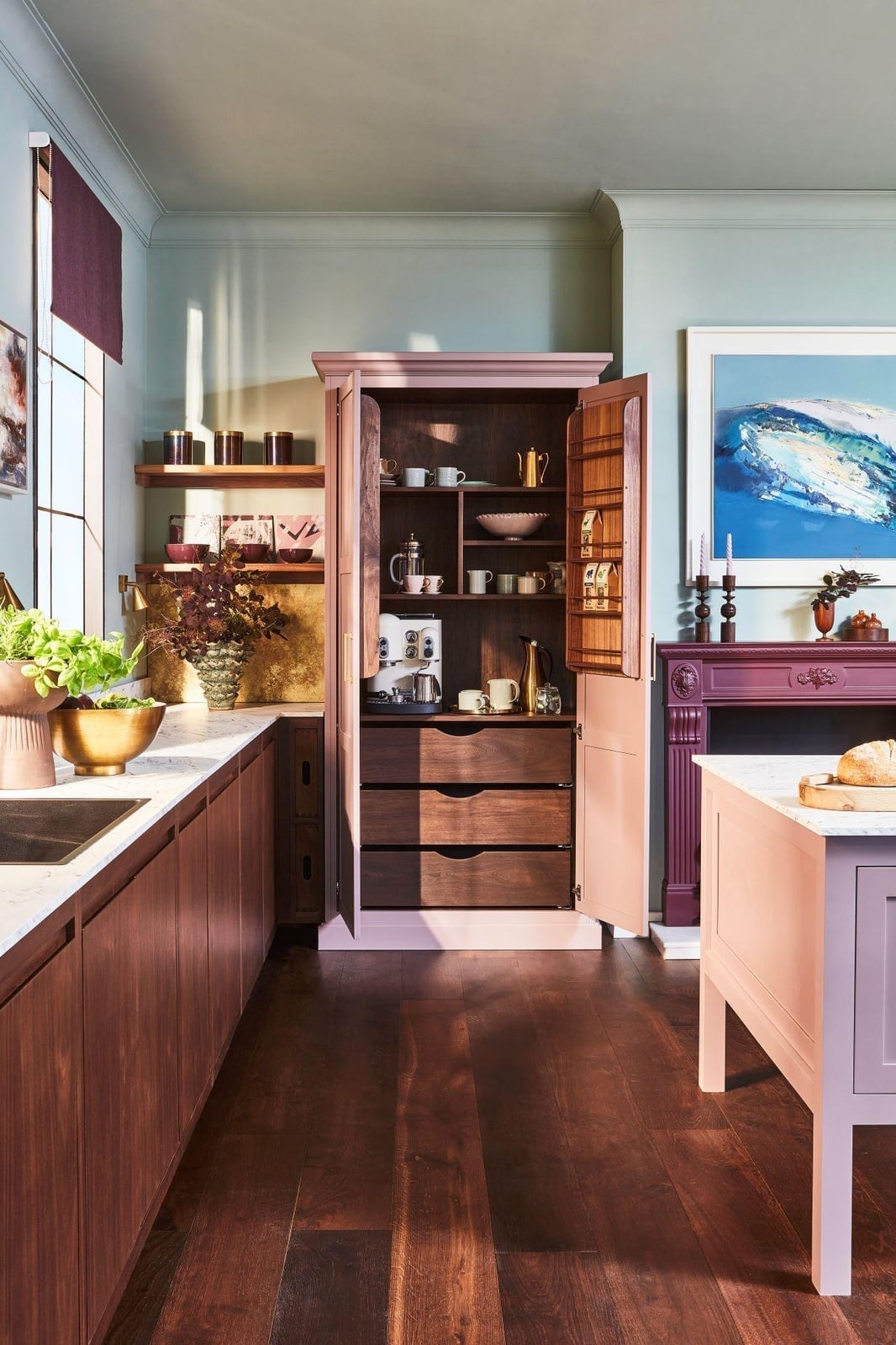
A tall pantry cabinet painted in dusty rose stands out against sage green and plum accents in this open plan kitchen. The pink is balanced by brass hardware and the natural wood flooring. Overhead lighting and daylight keep the color from feeling too dark, and the marble counter on the island grounds the eclectic palette.
Vibrant yellow island as a kitchen focal point
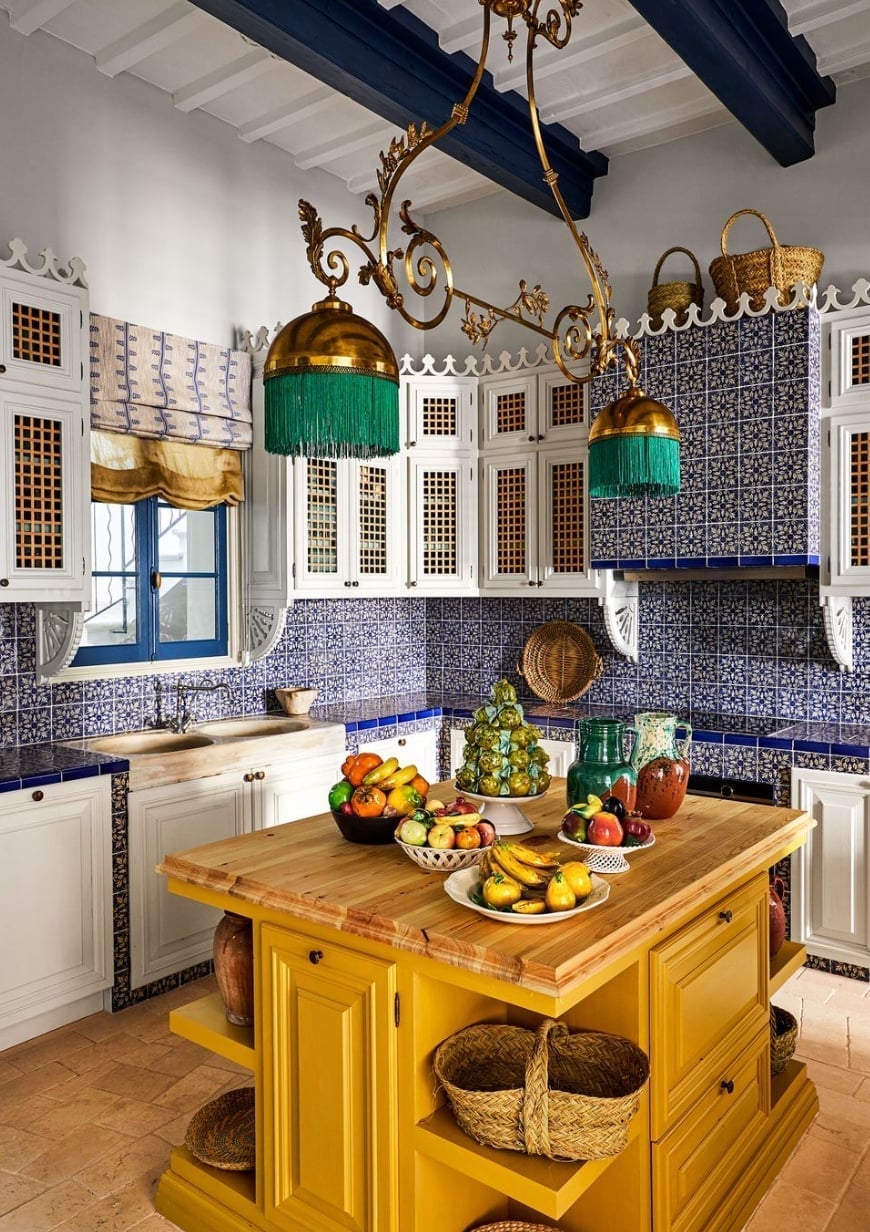
A bright yellow kitchen island becomes the focal point when the surrounding room stays simple. White perimeter cabinets and blue patterned tiles let the yellow take center stage without competing. Brass pendant lights above the island echo the warm tone, while wicker adds texture. The palette stays in check: one bold move, then everything else supports it.
Navy blue island with marble countertops in a modern farmhouse
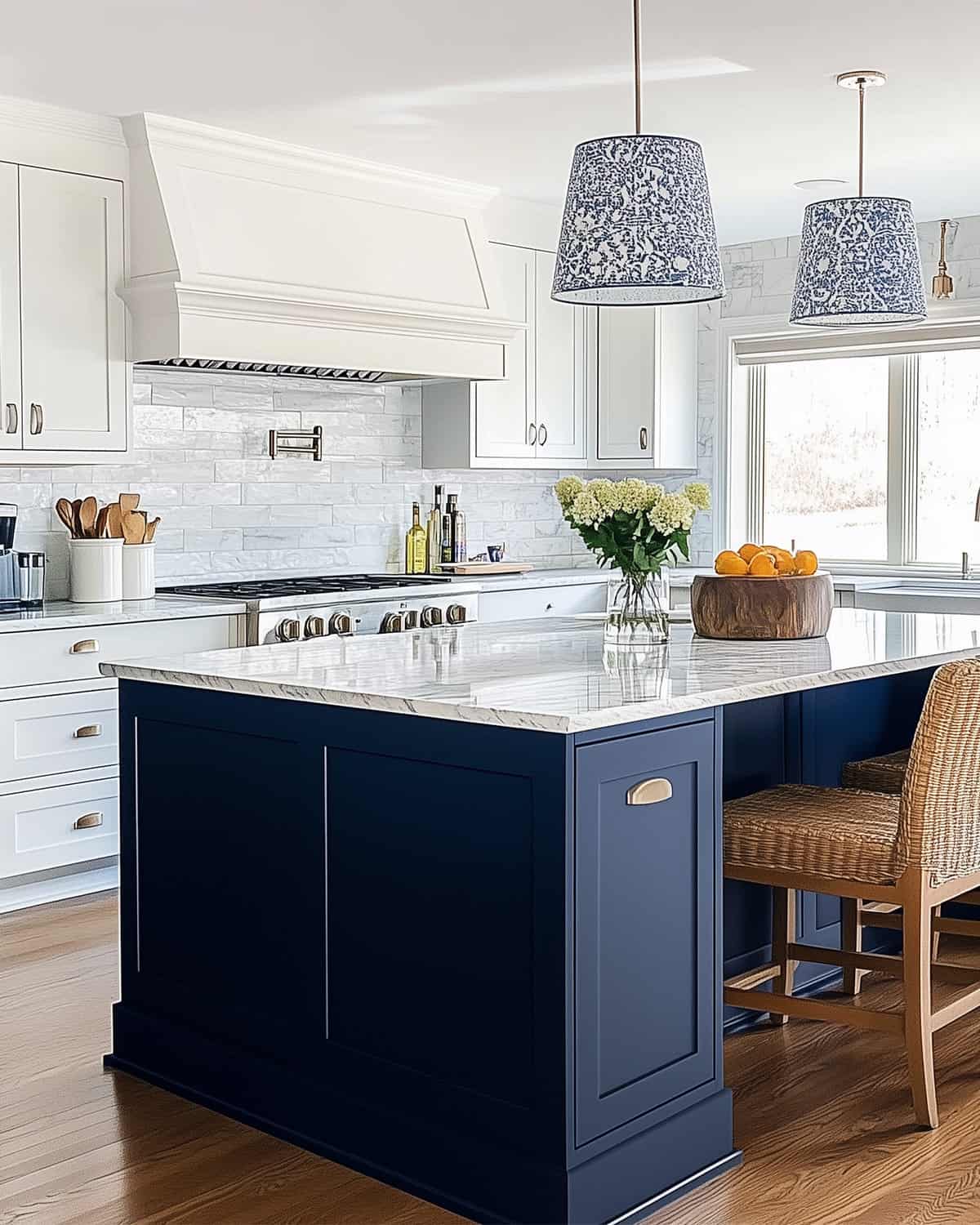
A navy island could feel too heavy for a kitchen with white cabinets, but the marble countertop keeps it from going dark. The white marble offers a crisp contrast that makes the blue look a deliberate accent rather than a moody choice. Wicker stools with a natural wood tone add warmth and keep the island from feeling like a formal piece of furniture. The pale perimeter cabinets let the island claim attention without competing. It is a palette trick that works because the ratio of blue to white stays small. The white backsplash and countertops reflect light around the room, so the navy looks a grounded anchor, not a block of color. If you like the idea of a dark island but worry about the weight, this balance of marble and wicker is worth noting.
A marble countertop on an island used for meal prep will show its age. Etching and stains are part of the stone’s character. A sealed marble surface is easier to maintain, but it still requires wiping up spills quickly, especially anything acidic. The wicker stools are a practical choice for a kitchen that sees daily use. They are lightweight enough to move out of the way for cleaning. The navy paint on the island base will hide scuffs better than a lighter color would, which is a practical advantage for a high-traffic area.
Dark green cabinets with brass hardware and tiled backsplash
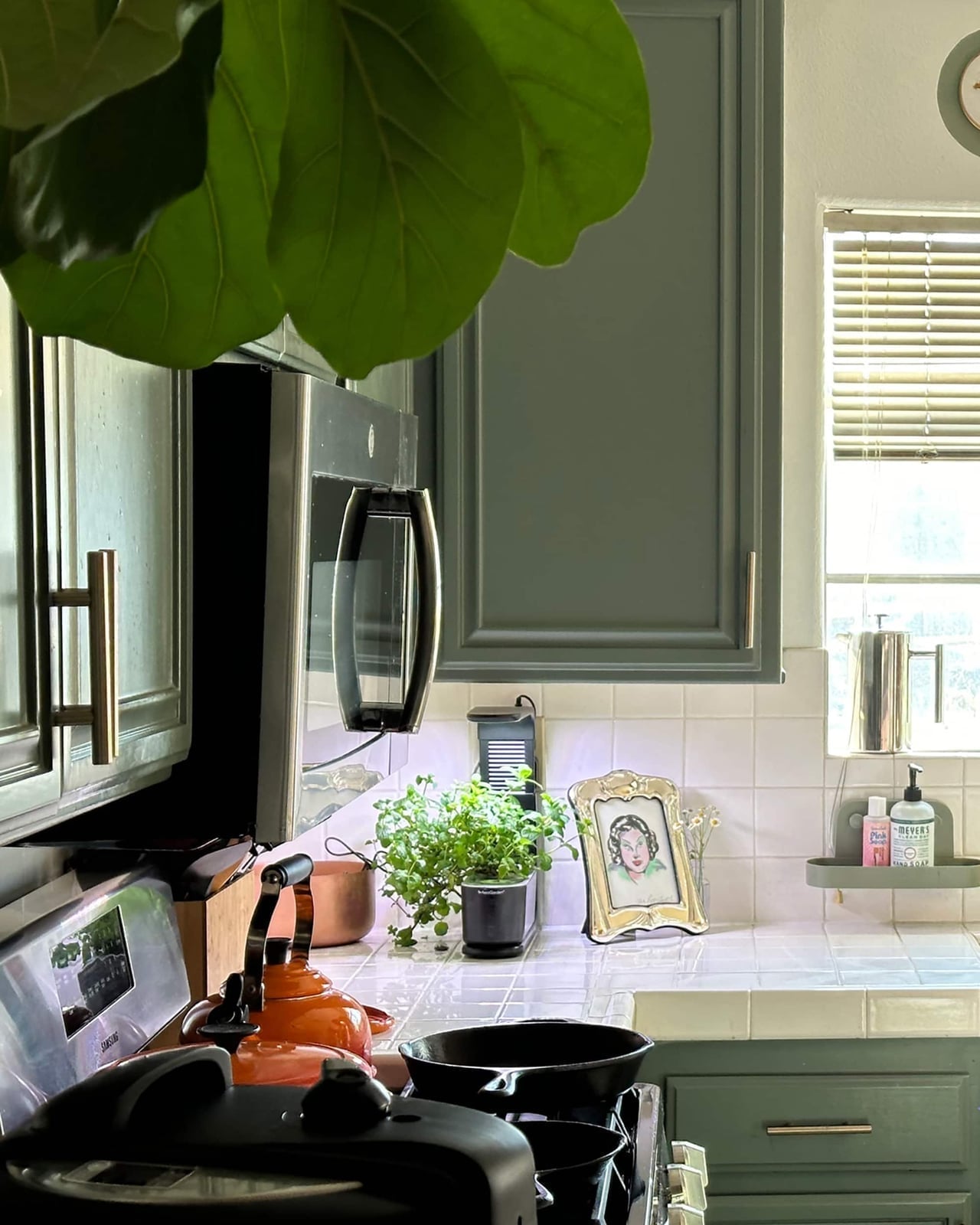
The dark green paint on these cabinets does not disappear into the room. It holds its own against the brass hardware and the white tile backsplash behind the counter. A bright orange kettle on the counter adds a pop of warmth that the green does not have on its own. The brass pulls catch the daylight from a nearby window and give the green a slightly warmer tone. A small framed portrait and a potted plant on the counter add personality without cluttering the space. For a renter, this look is achievable with removable hardware and a temporary backsplash option. The dark green paint can be reversed when the lease ends.
Striking green island contrasting cream cabinetry
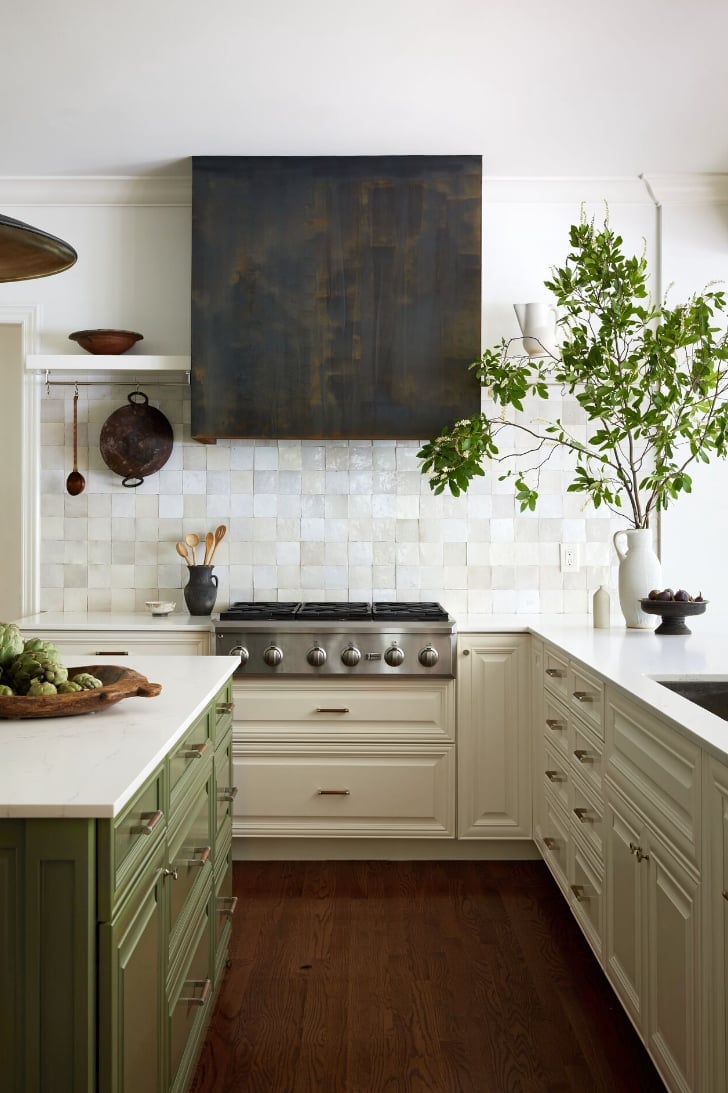
This kitchen works because the green island is the only saturated color in the room. The cream perimeter cabinets keep the background calm, and the white countertops and backsplash let the green stand out without feeling busy. The dark brown wood of the range hood and the black hardware on the island add just enough weight to ground the green. A simple vase and a bowl on the counter are the only decor, which is the right move when the island is already making a statement. The overhead pendant light and daylight keep the green from looking flat. The palette ratio here is roughly one part green to three parts cream and white, which is a useful guideline for any two-tone kitchen.
Black island with marble countertops in a farmhouse kitchen
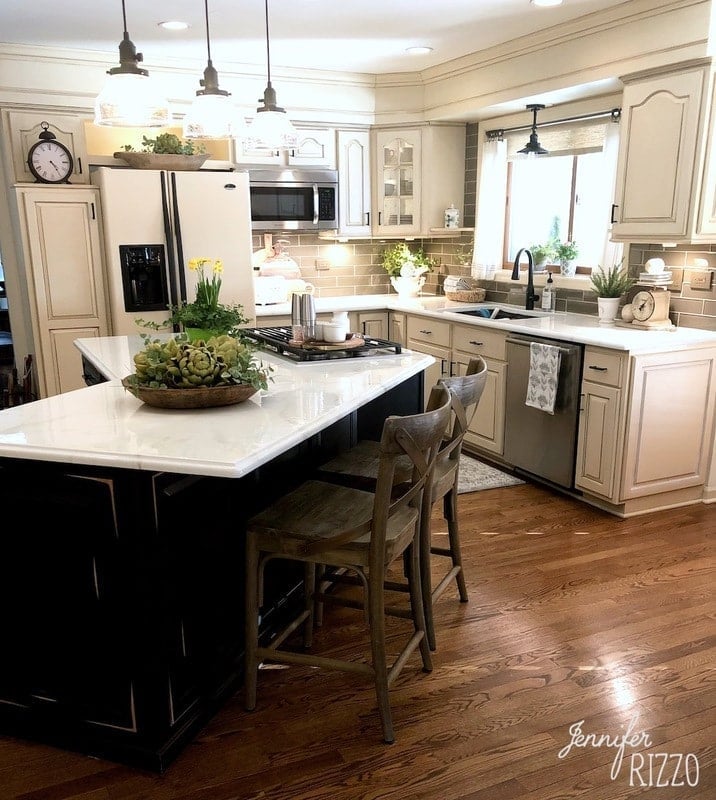
Can a black island work in a farmhouse kitchen without feeling like a design risk? It can when the perimeter cabinets and floors stay light. The cream cabinets and beige tile floors keep the space warm, and the white marble on the island countertop offers a bright surface that breaks up the dark base. The wood bar stools add a natural element that softens the black. The refrigerator and other appliances are stainless steel, which looks neutral against the cream cabinets. The pendant lights above the island and the overhead lights in the room provide enough illumination to keep the black from absorbing all the light. The layout is an L-shaped counter with the island in the center, which gives the black piece room to breathe.
A black painted island will show dust and fingerprints more than a lighter color would, so it needs regular wiping. A matte finish hides smudges better than a gloss finish does. The marble countertop on the island is a softer stone, so it will scratch and stain over time. Using cutting boards and trivets is the practical way to protect the surface. The bar stools are a wood tone that will hide minor wear better than a painted finish would. It works best in a kitchen that gets moderate daily use.
White shaker cabinets with butcher block island top
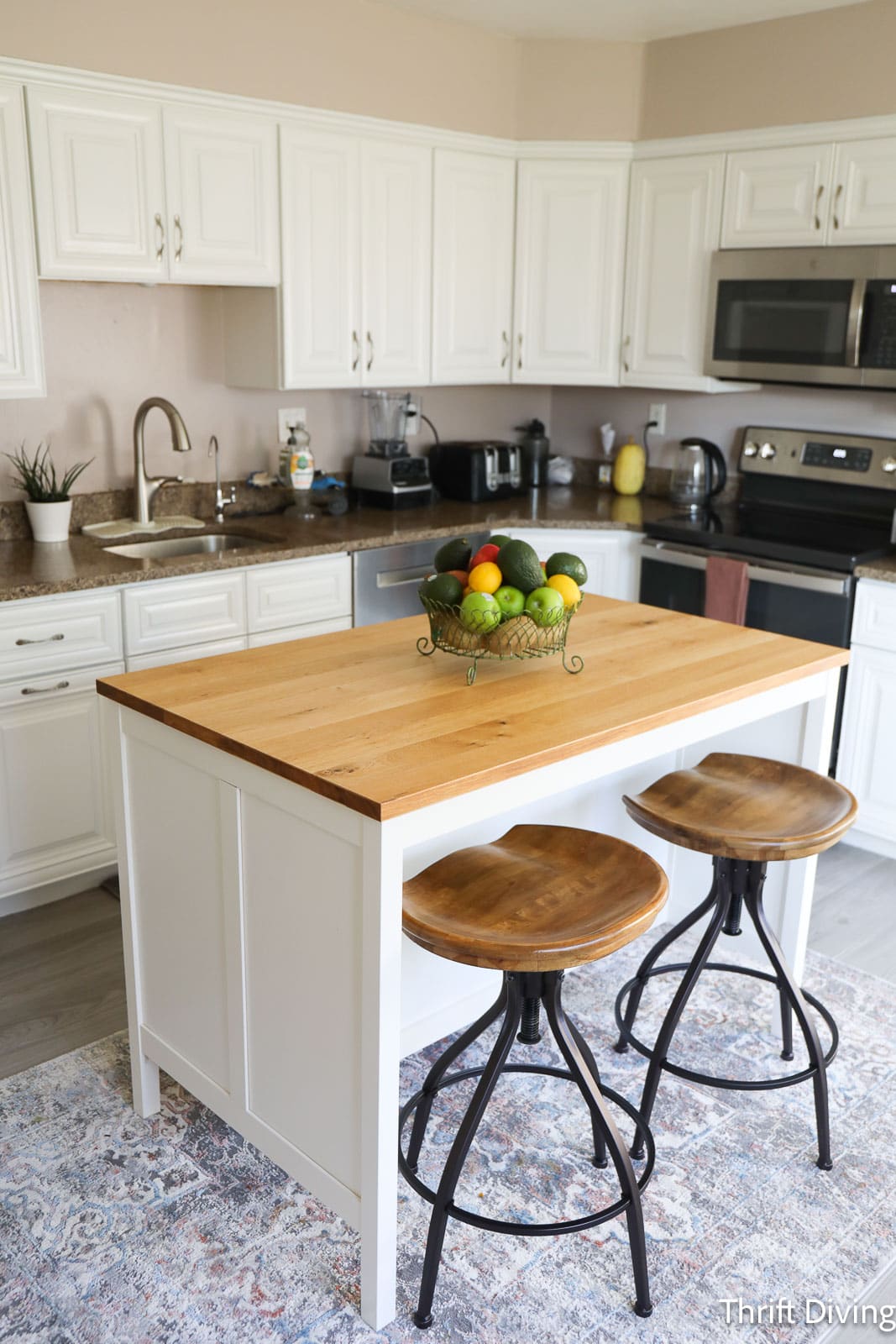
The white shaker cabinets on the perimeter and the white island base keep the kitchen feeling open and bright. The butcher block top on the island adds a warm wood tone that breaks up all the white without adding a new color. The wood stools match the island top and create a cohesive look. The beige walls and gray floor are neutral enough to let the white and wood be the main event. The fruit basket on the island is a simple touch that reinforces the farmhouse feel. For a kitchen that gets heavy use, a butcher block top is a practical choice because it can be sanded and refinished when it shows wear.
Two-tone farmhouse cabinets: blue base, natural wood upper
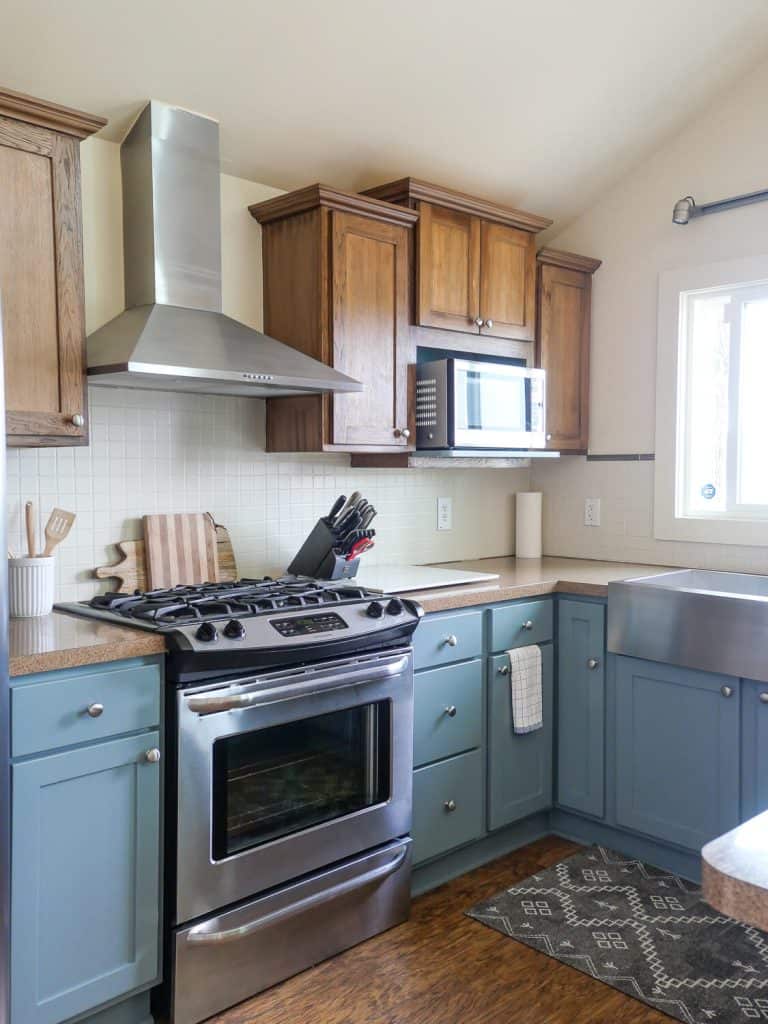
Two-tone cabinetry typically uses the darker shade below to anchor the room. Here, a blue base anchors the compact L-shaped layout while natural wood uppers keep the eye moving upward. White countertops and a farmhouse sink tie the two halves together without competing. The result makes a corner kitchen feel wider than it is.
Charming blue cabinets with mint green open shelving
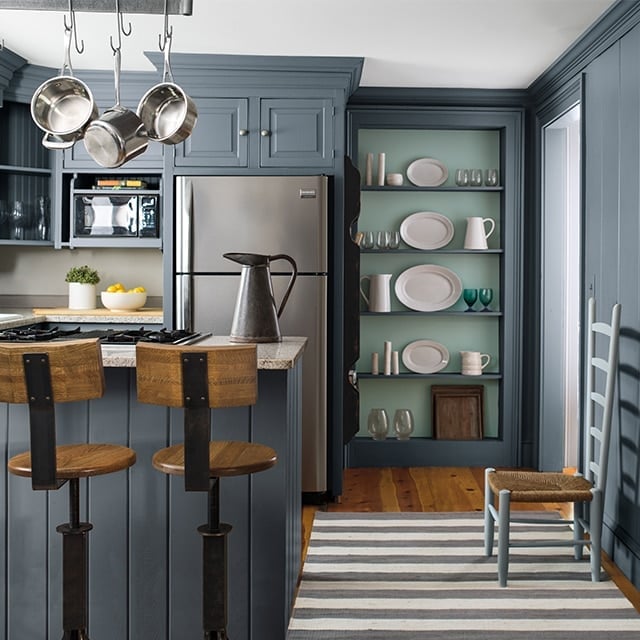
Blue cabinets often lean navy or slate, but this kitchen takes a softer route. A gray-blue paint covers the main cabinetry, while mint green open shelves add a second cool tone that avoids matching. The palette stays in the same family but shifts enough to create depth.
White countertops and a neutral rug keep the look from feeling busy. Bar stools in a light wood tone echo the shelves without repeating the exact color. It is a palette that works because the ratio of blue to green stays uneven, with blue leading and green appearing in smaller doses.
Crisp white cabinetry with glass-front displays
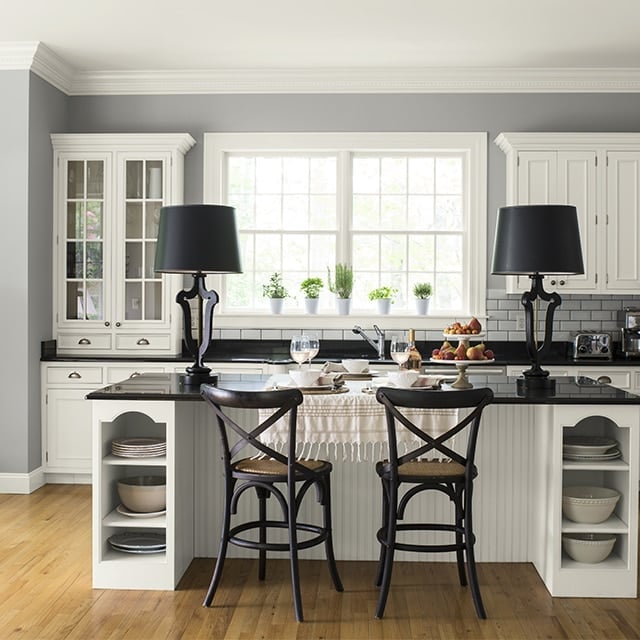
A glass-front cabinet changes how you treat the inside. White cabinetry with glass doors turns dishware into part of the decor, so what you store matters. The kitchen island stays simple with cross-back stools and black lamps, letting the glass uppers do the talking. Sunlight from windows and table lamps keeps the white from going flat, a detail that matters more with glass than solid doors.
Modern two-tone cabinets: white upper, natural wood lower
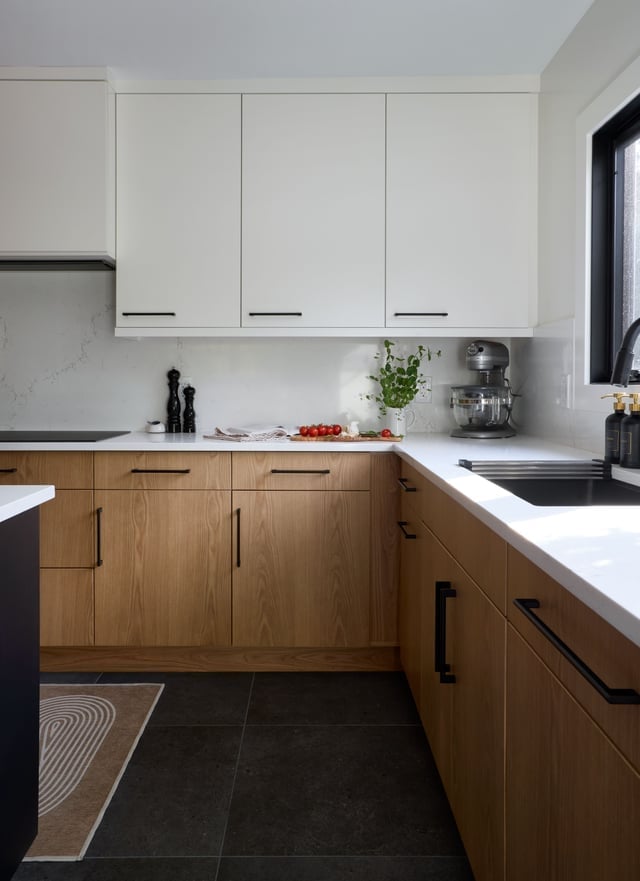
This compact corner kitchen gets its energy from a clear divide: white uppers and natural wood lowers. The two-tone setup draws the eye down to the wood grain, then back up to the bright white, creating a rhythm that feels modern without being cold. A black faucet and a green plant add small contrasts that keep the palette from looking only white and wood. The mix works because each half has a distinct job.
Glass fronts display dishes on white cabinets
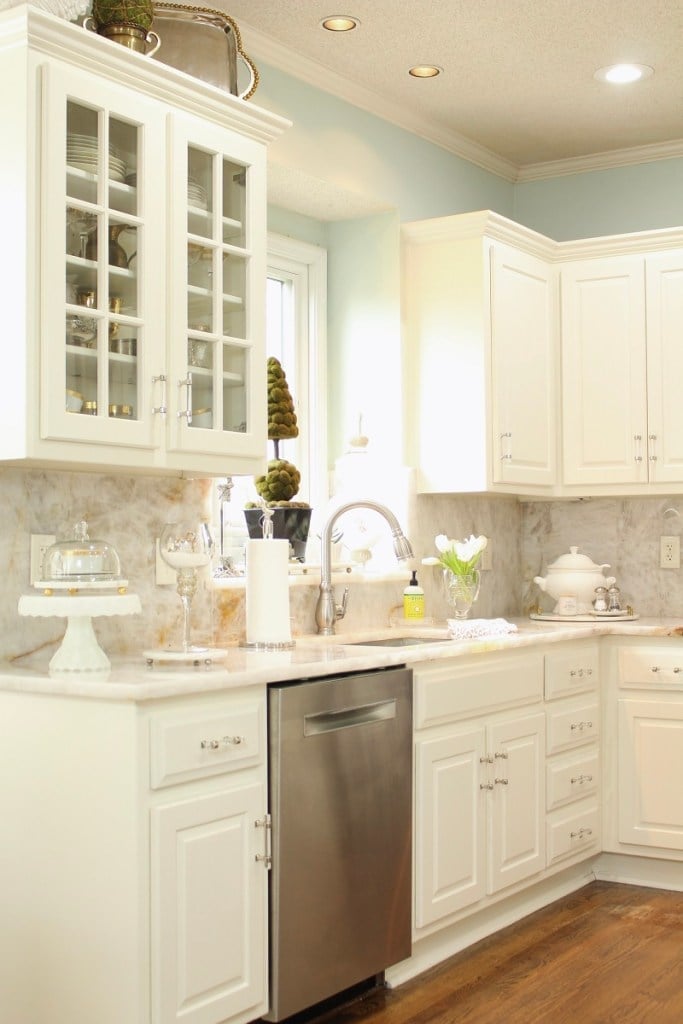
Glass-front cabinets let you see dishes and glassware, so editing what goes inside matters. White cabinets with glass doors create a display zone. A marble countertop and stainless steel dishwasher keep the traditional look grounded. Recessed ceiling lights and daylight from the window make the glass transparent, a distinction that affects how much you see from across the room.
The compact corner layout places the sink and dishwasher close together, a setup that benefits from the open feel glass fronts provide. Light blue accents in the dishes add a soft color note without painting a single cabinet.
Wood base cabinets with fluted glass uppers
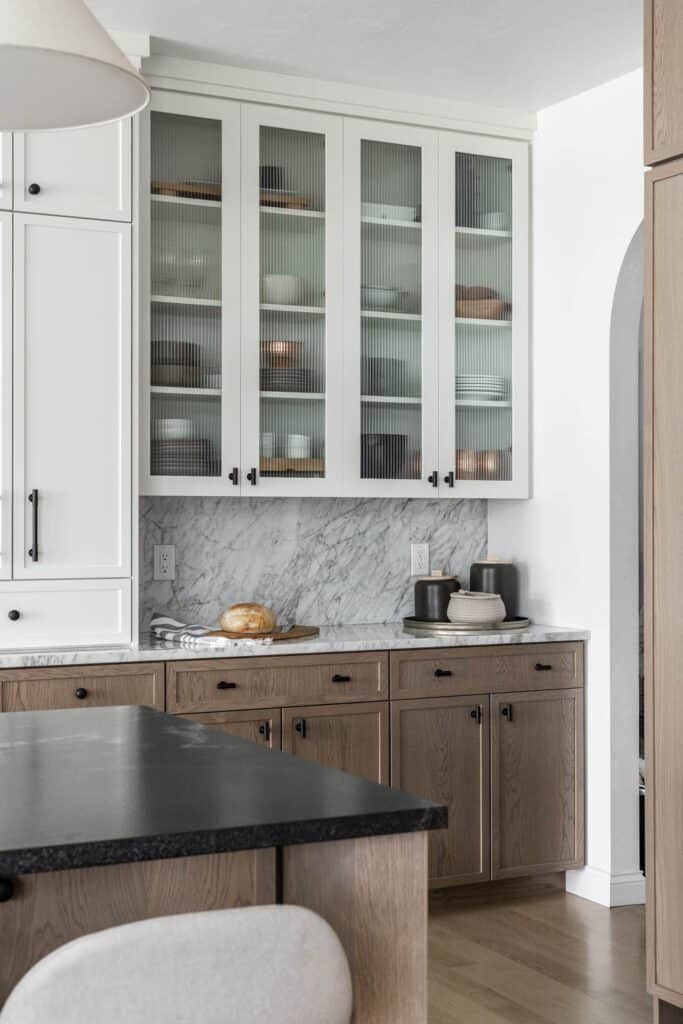
Fluted glass cabinet doors over wood base cabinets give you a practical way to add detail without committing to a full glass-front kitchen. The upper cabinets stay bright and open, while the wood bases anchor the room with warmth. A marble backsplash and granite island countertop keep the modern farmhouse look grounded in natural stone. The mix of materials means the eye moves easily between light and dark surfaces, making the room feel larger than it is.
Pale pink farmhouse cabinets with white subway tile
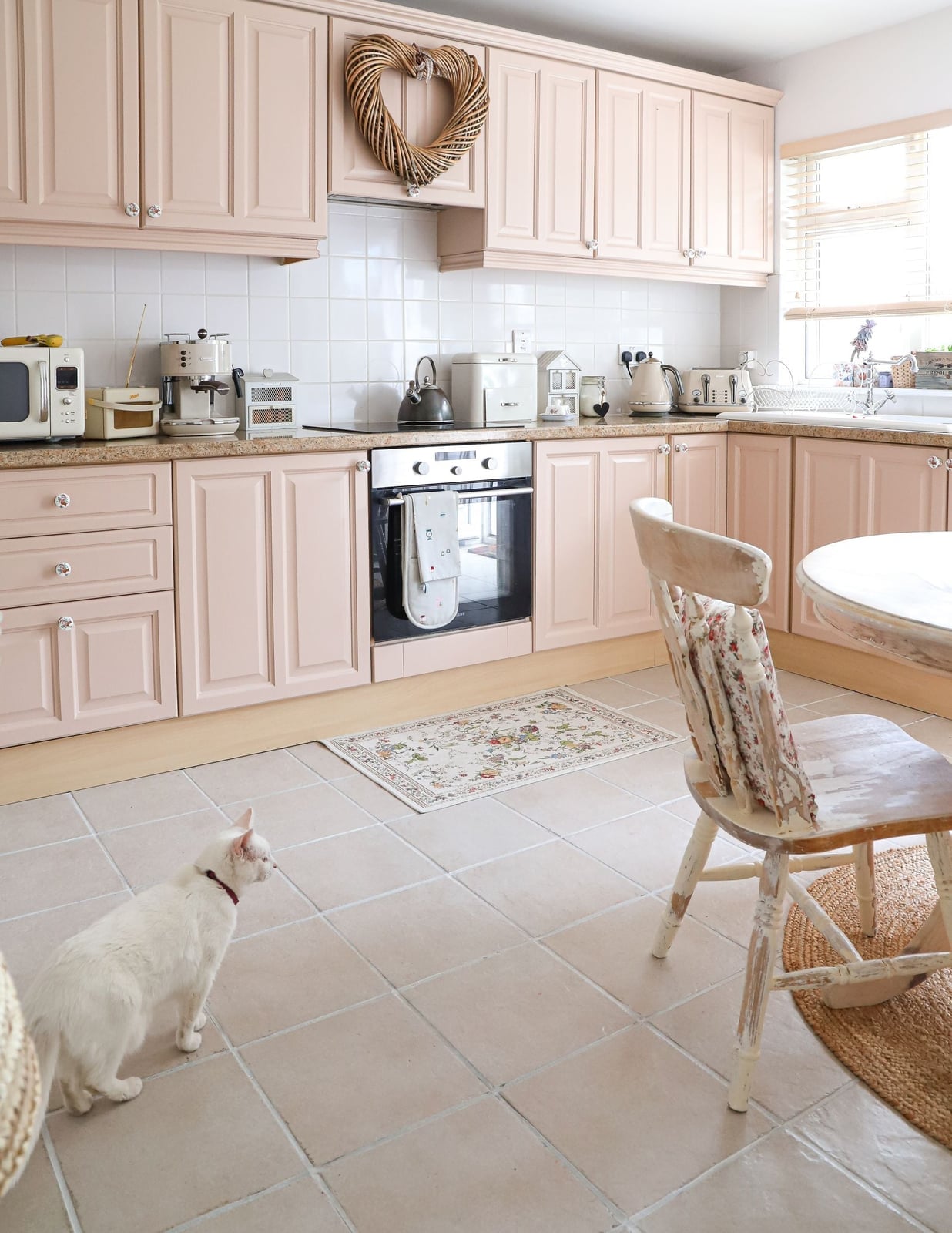
A pale pink cabinet pairs well with a neutral kitchen. White subway tile, beige wood tones, and a granite countertop keep the color balanced. White appliances and a round wooden table with linen accents fit the farmhouse feel without competing. Evening light from the window makes the pink look soft. For renters, a peel-and-stick tile backsplash and temporary cabinet wrap can give the same look without painting the original wood.
Off-white modern farmhouse cabinets with sage green accents
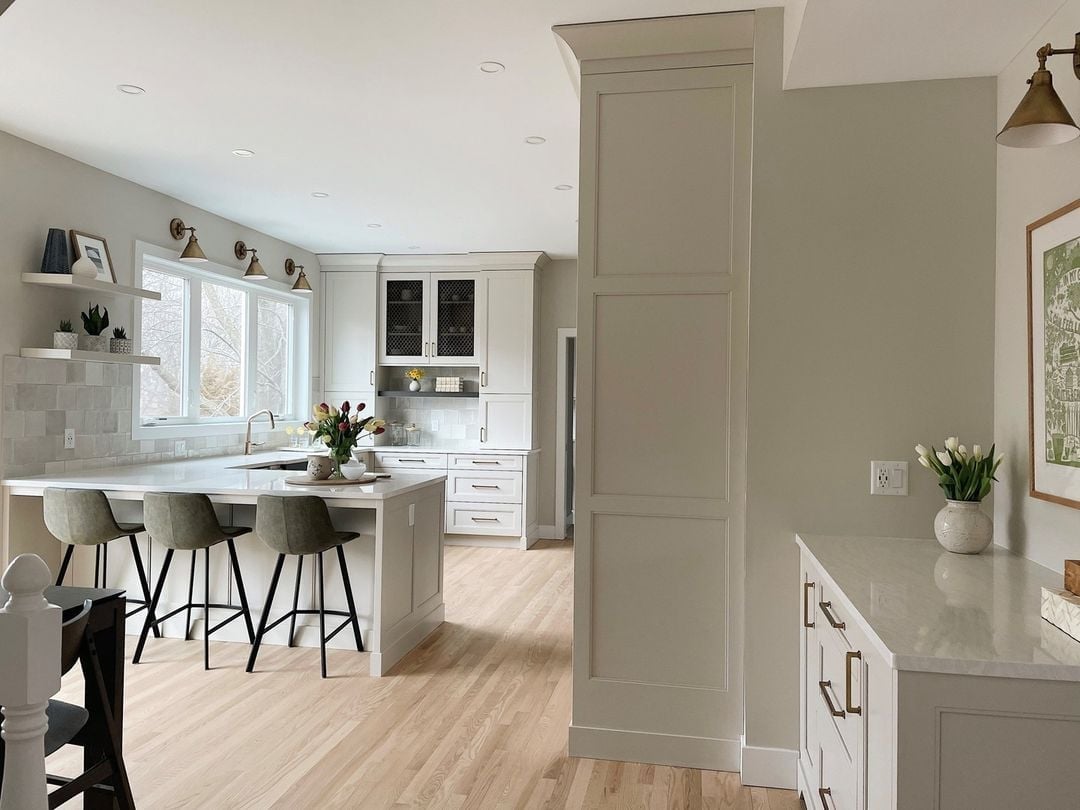
Off-white cabinets can feel flat next to pure white walls. Sage green accents solve that by adding depth without shifting the room into full color territory. In a modern farmhouse kitchen, the off-white perimeter cabinets stay quiet while a sage green island and bar stools pull focus. Wood tones in the open shelving and marble surfaces keep the palette natural. Brass hardware and wall sconces warm up the mix. The ratio is roughly three parts off-white to one part sage, which keeps the green from competing with the cabinets.
Dark gray cabinets with patterned rug and wooden shelving
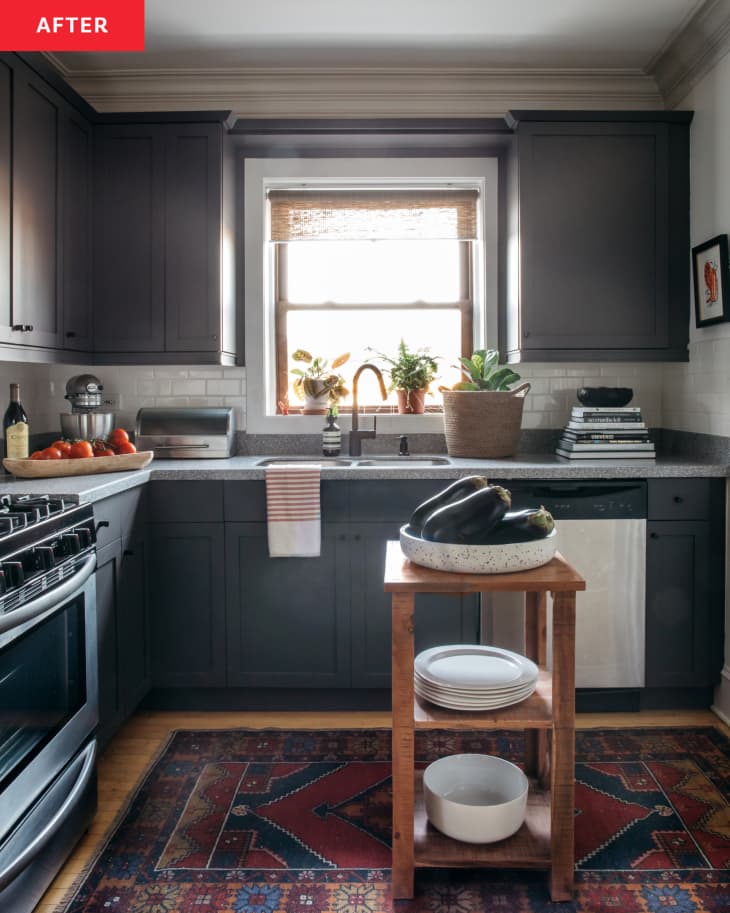
Dark gray cabinets can make a compact kitchen feel smaller unless you balance them with lighter elements. A patterned rug with red and blue tones adds warmth underfoot, while a wooden shelving unit breaks up the dark mass. Sunlight from the window keeps the gray looking charcoal. The tile backsplash and granite countertop keep the look modern. The rug also protects the floor in a high-traffic corner layout.
White shaker cabinets with black hardware and gold pendants
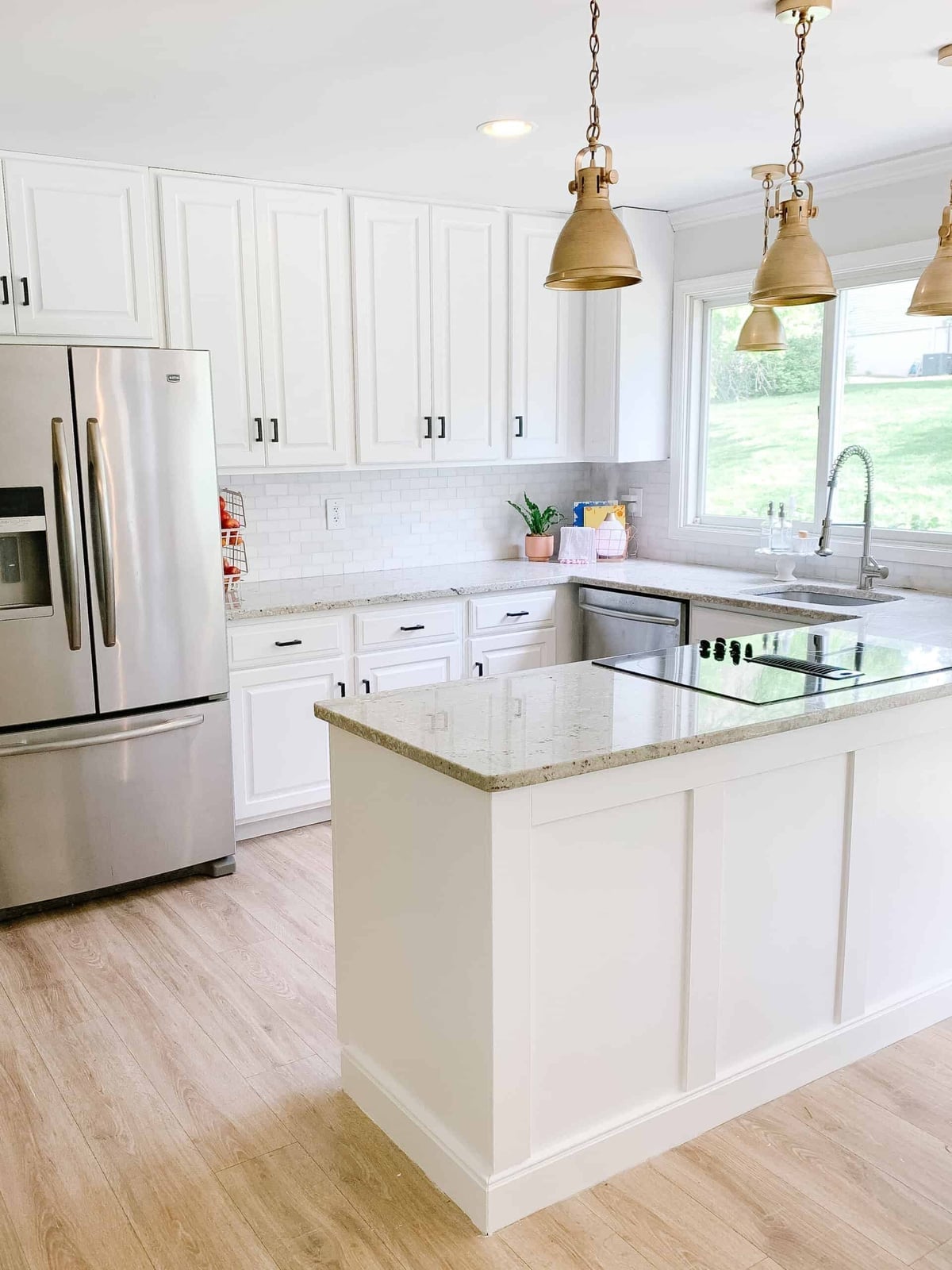
White shaker cabinets with black hardware and gold pendant lights create a clear visual hierarchy. The cabinets stay quiet, the hardware adds contrast, and the pendants draw the eye up. An L-shaped layout with a kitchen island keeps the work zones separate. The light wood island top and stainless steel refrigerator keep the farmhouse style from feeling too formal. Sunlight from nearby windows keeps the white bright, while the gold pendants add warmth in the evening.
Terracotta island cabinets paired with cream uppers
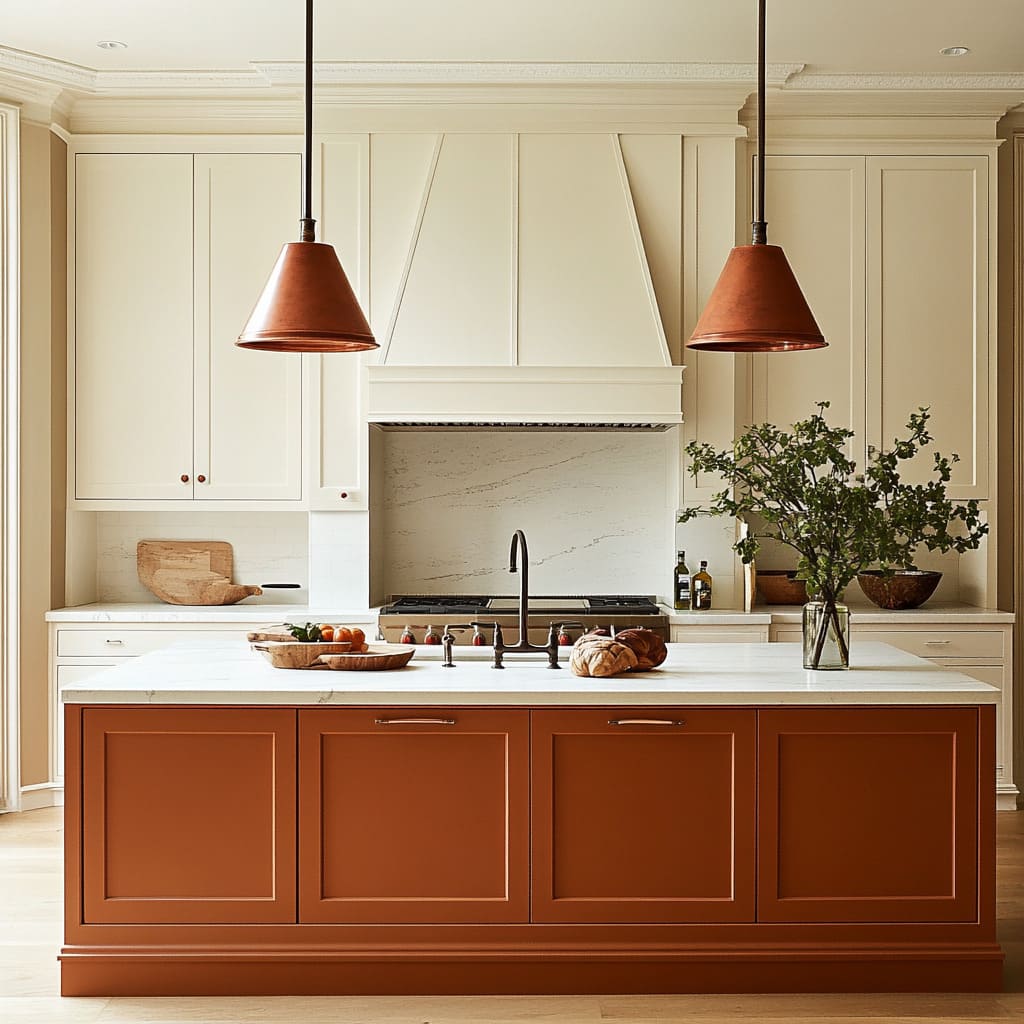
A two-tone palette works best when one color anchors the layout and the other keeps the room open. Here a terracotta kitchen island with a sink and range becomes the focal point, while cream upper cabinets and a matching range hood keep the perimeter light. The warm wood tones in the island tie into the copper pendant lights overhead, and the marble countertop adds a cool contrast. The room feels roomy because the darker shade stays on the central element, not the walls. This approach suits kitchens where you want a bold color without overwhelming the whole space.
Sage green glass-front cabinets with wood base cabinets
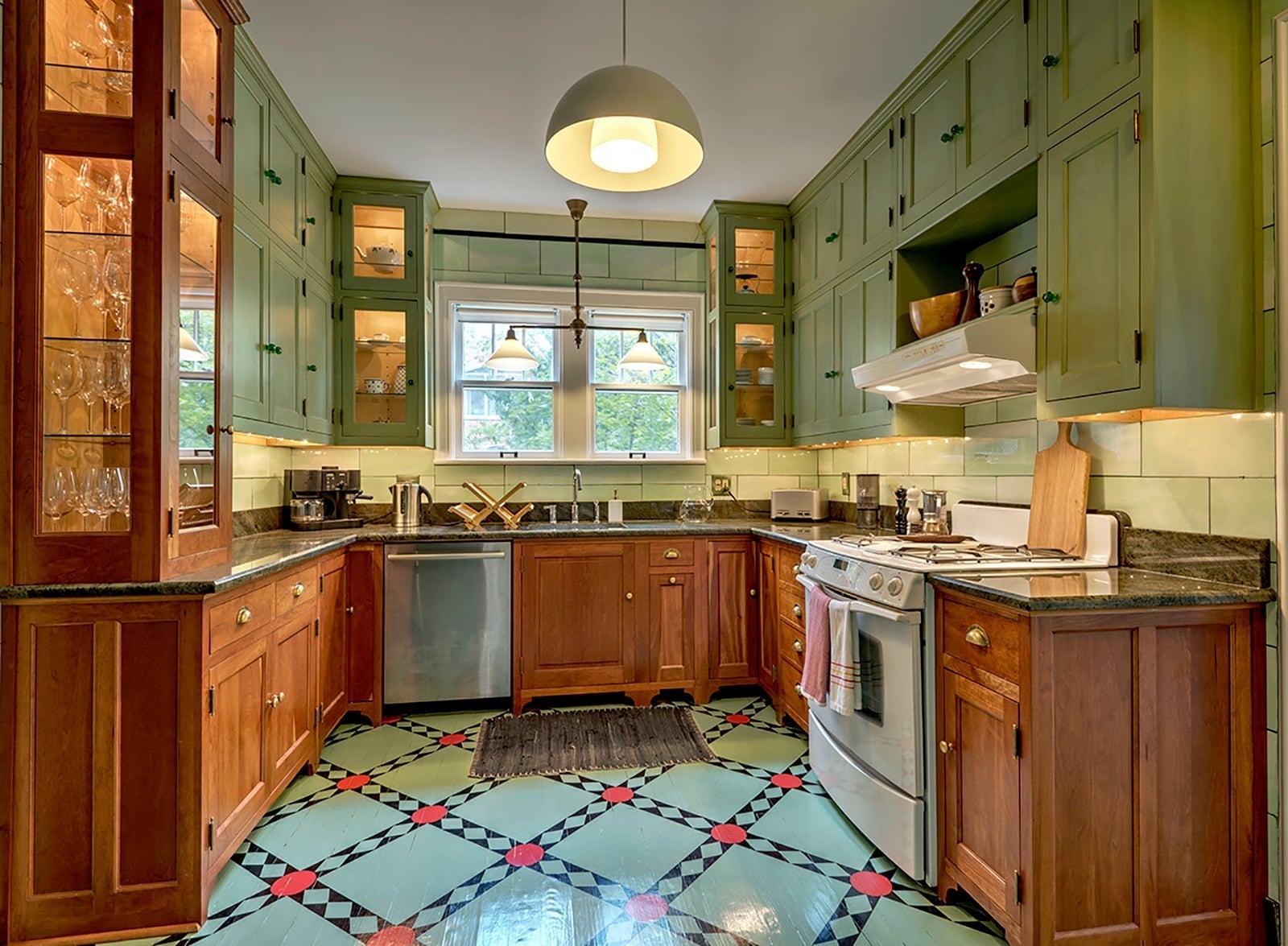
The sage green upper cabinets have glass fronts that show off dishware, and the wood base cabinets anchor the U-shaped layout. A white range sits between them, and the light green tile backsplash picks up the cabinet color. Red accents in the room add a small pop. Pendant lighting and under-cabinet lights make the glass fronts glow, while interior cabinet lights highlight what is inside. The painted geometric floor adds pattern without competing with the cabinet colors.
Natural wood cabinets with marble backsplash and floating shelves
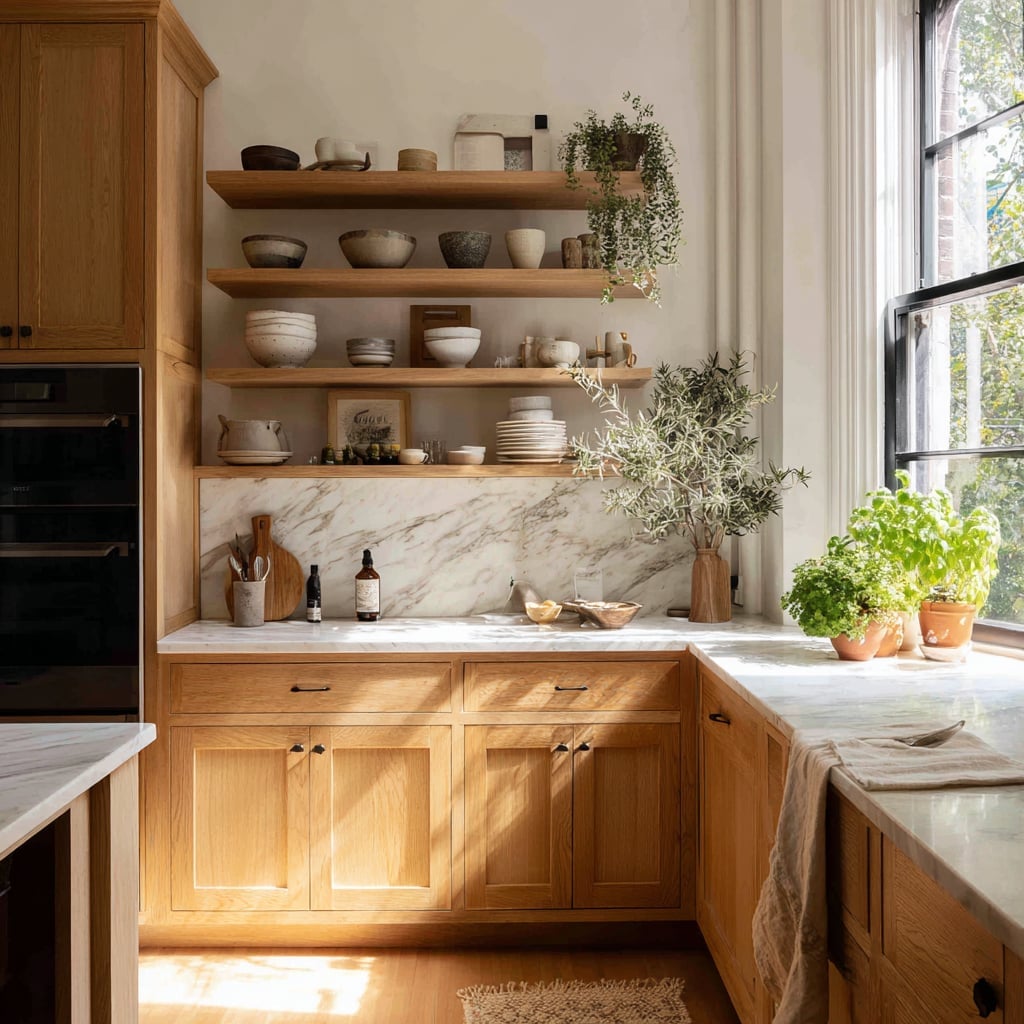
Natural wood cabinets bring warmth to a compact corner kitchen, and pairing them with a marble countertop and backsplash keeps the look refined. Floating shelves above the counter hold potted plants and ceramics, adding soft green and gray tones. The wood grain becomes the main texture, so the marble stays subtle. Sunlight from a window keeps the space from feeling dark. This combination works when you want the cabinets to feel like furniture, not just storage.
Teal glass cabinets with marble countertops
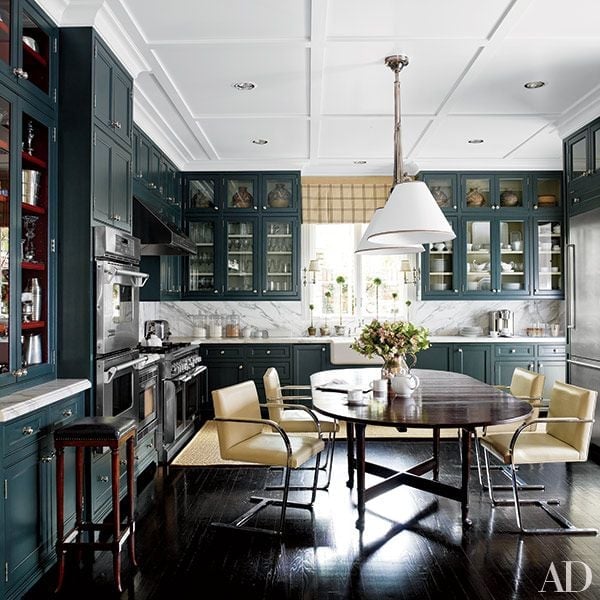
Dark teal cabinets with glass fronts can look formal, but here they feel relaxed because the kitchen opens into a dining area with an oval table and metal chairs. The deep teal becomes a backdrop for the white marble countertops, and the pendant lights and daylight keep the room bright. The galley layout lets the cabinets line one wall while the dining space extends the room. This setup works for anyone who wants a strong cabinet color without making the whole kitchen feel closed in.
Off-white cabinets with fluted glass and beige lowers
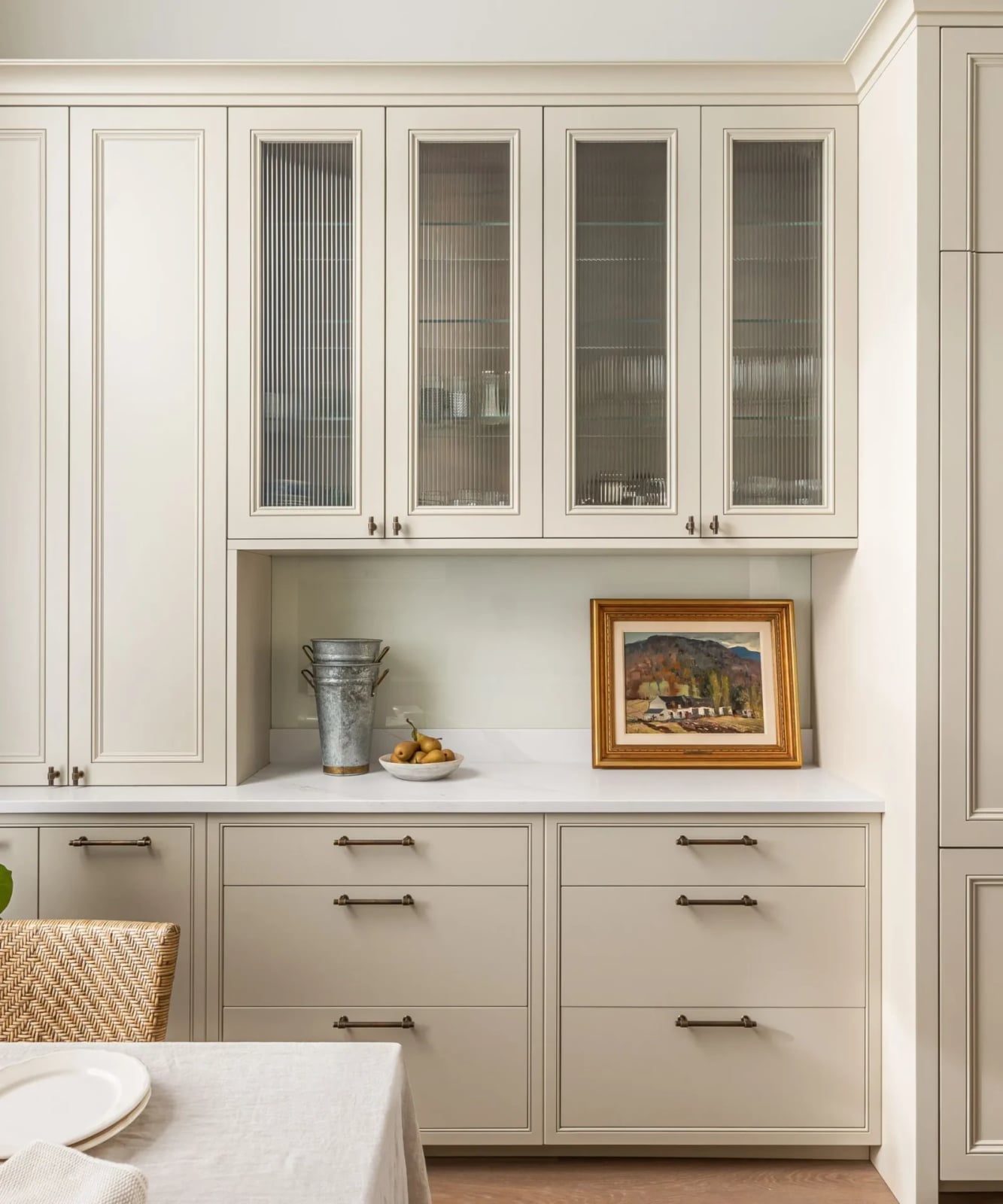
Fluted glass cabinet doors add texture to an off-white upper cabinet run, while beige lower cabinets with drawers keep the storage practical. The fluted surface catches light differently than flat glass, so the wall feels layered even without open shelving. A framed landscape painting and a woven chair introduce softer browns and greens. Brass hardware and a metal vase add metallic notes. This detail works best in a compact kitchen where you want visual interest without adding more furniture.
Striking two-tone cabinets: white upper, black lower
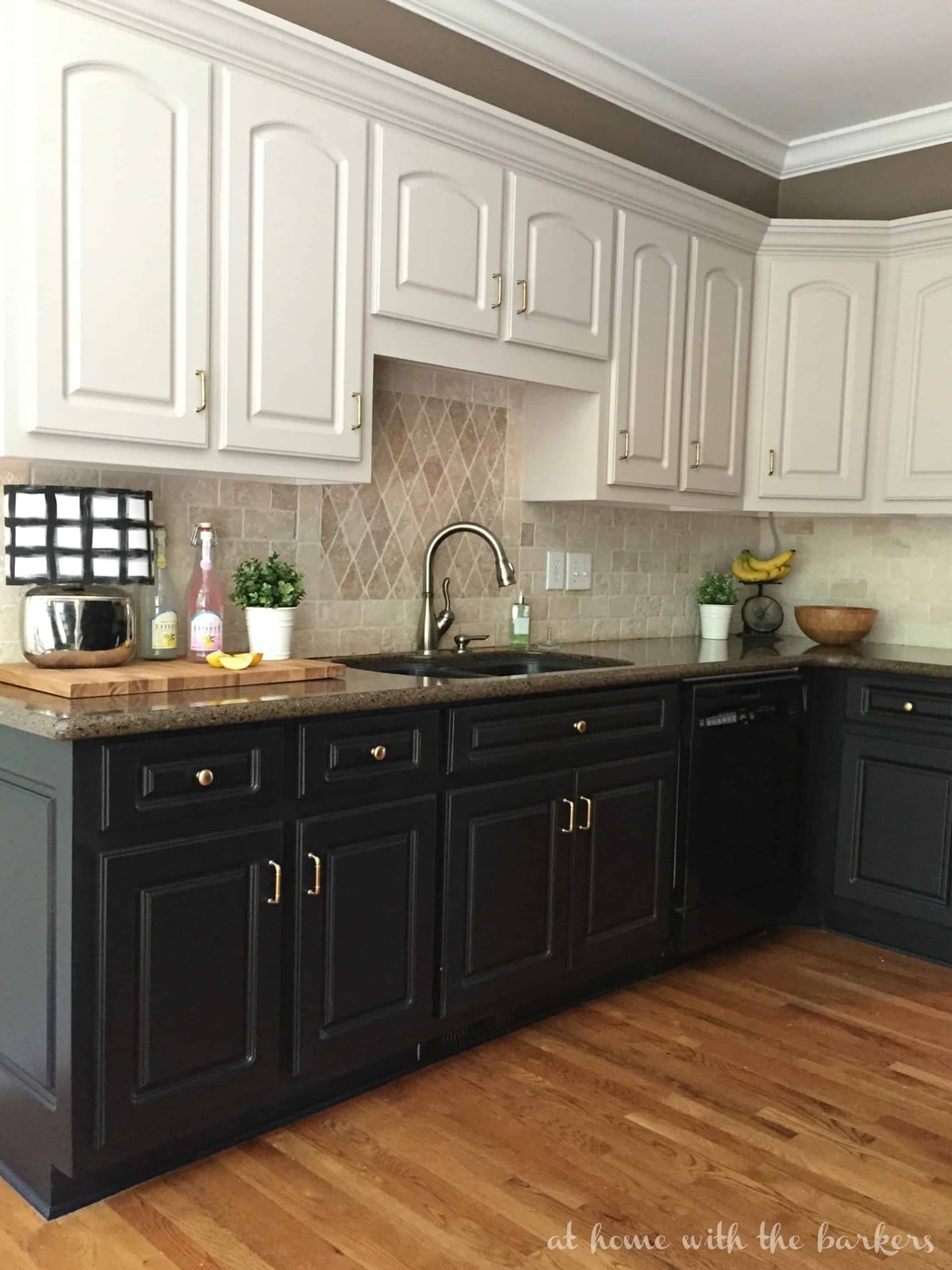
White uppers paired with black lowers give a compact corner kitchen a clear sense of structure without making it feel smaller. The two-tone palette uses the lighter shade above to keep the eye moving upward, while the dark base anchors the L-shaped counter and the tile backsplash. Brown and beige tones from the granite counter and wood flooring soften the contrast so the look looks traditional rather than stark. A single principle drives this palette: the ratio of light to dark should favor the upper half in a small layout. That keeps the room open without losing the depth that a darker lower cabinet provides.
Cream painted cabinets with island and brass accents
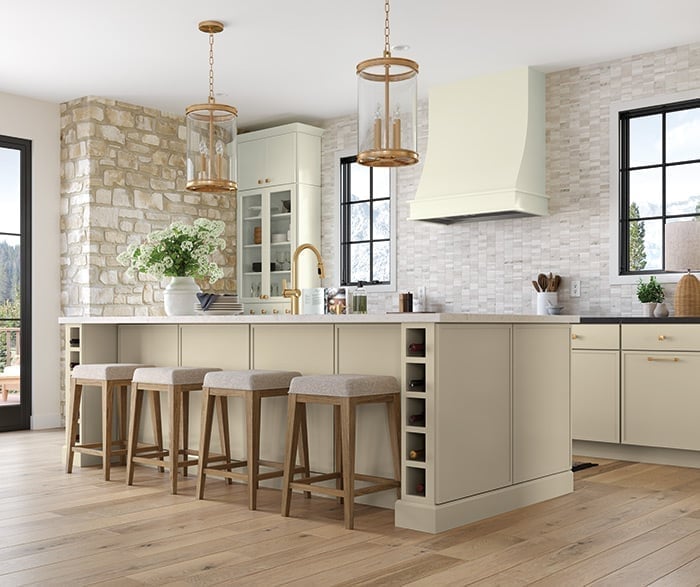
Cream painted cabinets can feel expected next to white. But in a roomy modern farmhouse kitchen, the warmer tone looks softer and more grounded, especially when paired with brass hardware and pendant lights. The island with its wine rack and bar stools becomes the social center, while the range hood and built-in cabinetry keep the look cohesive. Wood tones and stone countertops add texture without competing with the cream finish. Sunlight from windows helps the pale palette stay airy rather than flat. For a renter, this is a smart reference point: you cannot repaint built-ins, but you can swap in brass pulls and a warm-toned runner to bring the same cream-and-gold effect into a space with existing white cabinets.
Gray shaker cabinets with cream shiplap walls
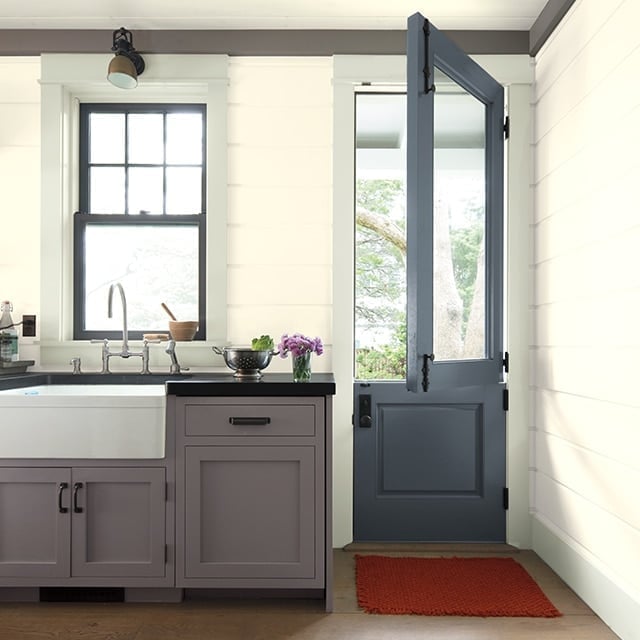
Gray shaker cabinets against cream shiplap walls create a farmhouse palette that relies on contrast between the two neutrals. A farmhouse sink and a dutch door reinforce the style, while the dark blue and rust accents in the room add depth. The compact corner layout keeps the sink adjacent to the door, making the work triangle efficient. The principle here is that shaker cabinets, with their simple recessed panel, take paint well and look classic rather than trendy. That makes gray a safe choice for a long-term kitchen update.
Beige painted cabinets with glass-front uppers and open shelving
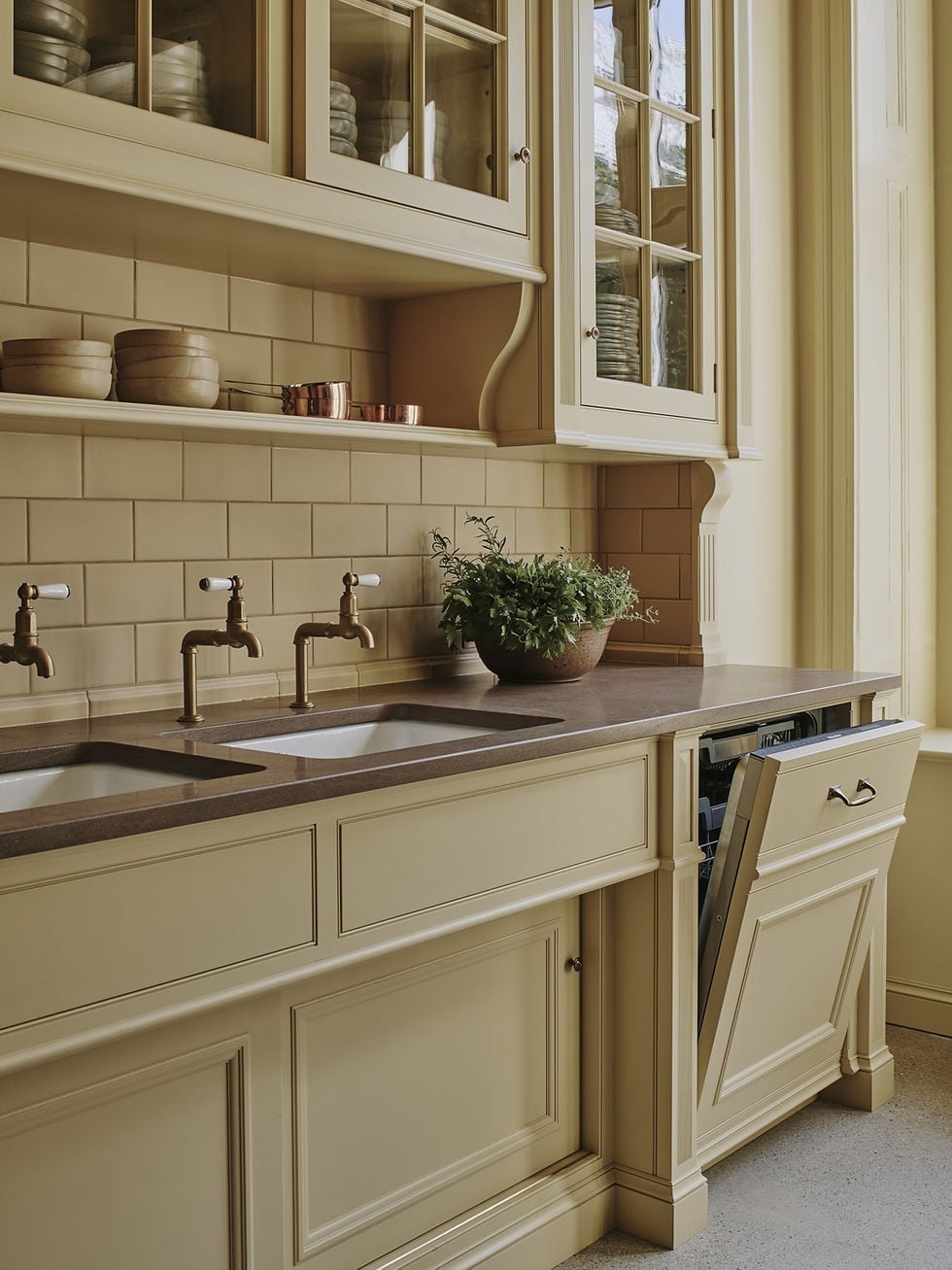
Beige painted lower cabinets paired with glass-front uppers and open shelving turn a compact kitchen into a display-friendly space. The glass fronts show off dishes and glassware, while the open shelves above break up the wall of cabinetry. A double sink and brass faucets sit under a window that brings in daylight, and copper accents add warmth to the beige and cream palette. The styling variation here is that the mix of closed storage below and open storage above gives the room both function and visual rhythm. It is a layout that asks for edited belongings, since the glass and shelves put everything on view.
Final Thoughts
A fresh coat of paint is one of the most direct ways to change how your kitchen feels. The key is to pick a color that you enjoy seeing every day, not just one that’s trending. These 29 ideas prove that the options go far beyond basic white. From dark green islands to pale pink pantries, the cabinet is the place to take a risk. Just remember that prep work makes the finish last longer, and a good primer is worth the extra hour. Spend your time on the painting itself, and the storage will reward you for years to come.