
A porch railing does more than keep you from tumbling into the petunias. It sets the whole mood of your home’s front entrance or back deck, and in 2027, the options are more creative than ever. From sleek glass panels that keep the view wide open to charming criss-cross patterns that scream farmhouse, there’s a style for every porch personality.
This roundup of 32 cute porch railing ideas covers modern metal cutouts, coastal lattice, rustic wood with cable, and plenty of ways to add color with planters, lights, and seasonal decor. Whether you’re updating an existing railing or starting fresh, these looks prove that safety and style can happily coexist.
Modern porch railing with intricate black metal cutouts
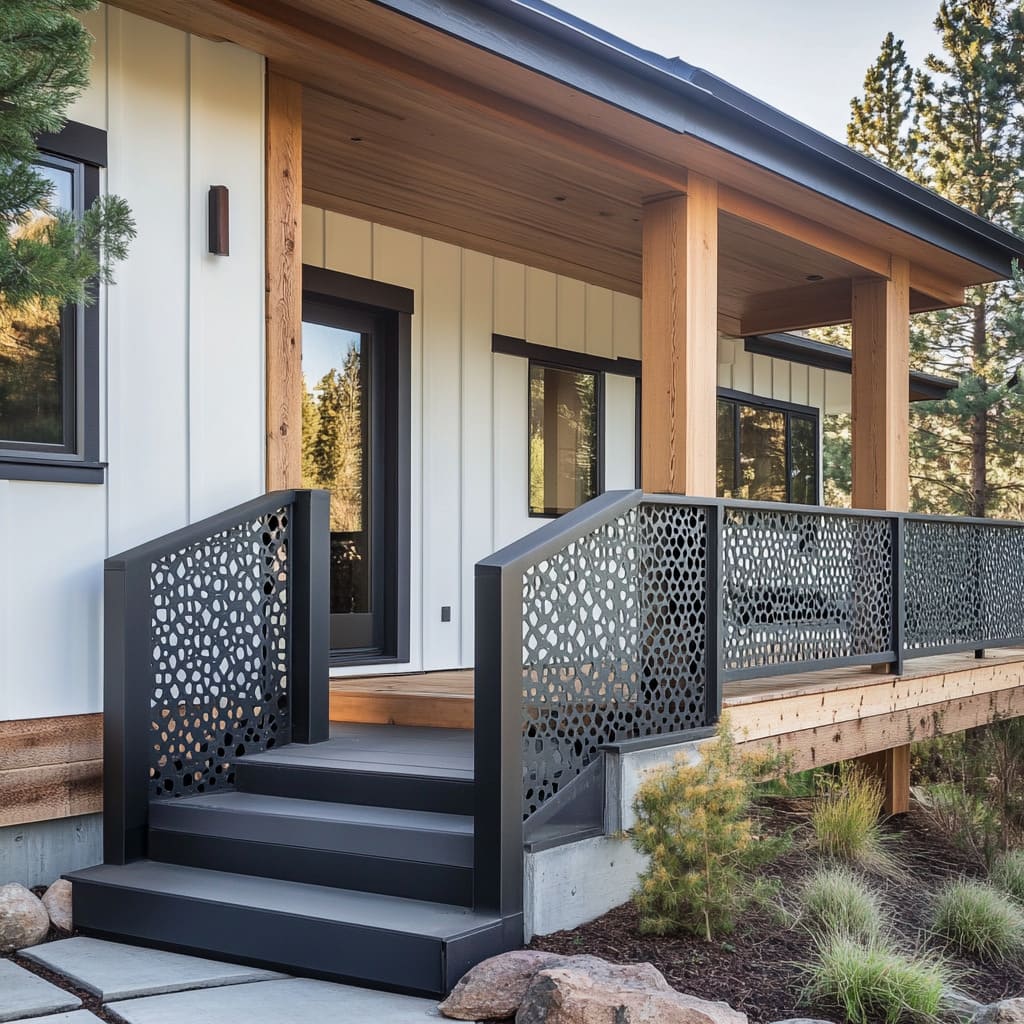
The stairs lead up to a porch deck framed by a modern railing that looks both solid and airy. The ornate black metal panels carry a detailed cutout pattern, set between wooden posts and beneath a white ceiling with exposed beams. A wall sconce adds evening light, but the layout works in daylight too. The concrete stairs and gray deck boards keep the palette grounded so the metalwork gets the attention. The roomy feel comes from letting the railing be the main event rather than crowding it with furniture.
Contemporary cable railing with leaf motif accents
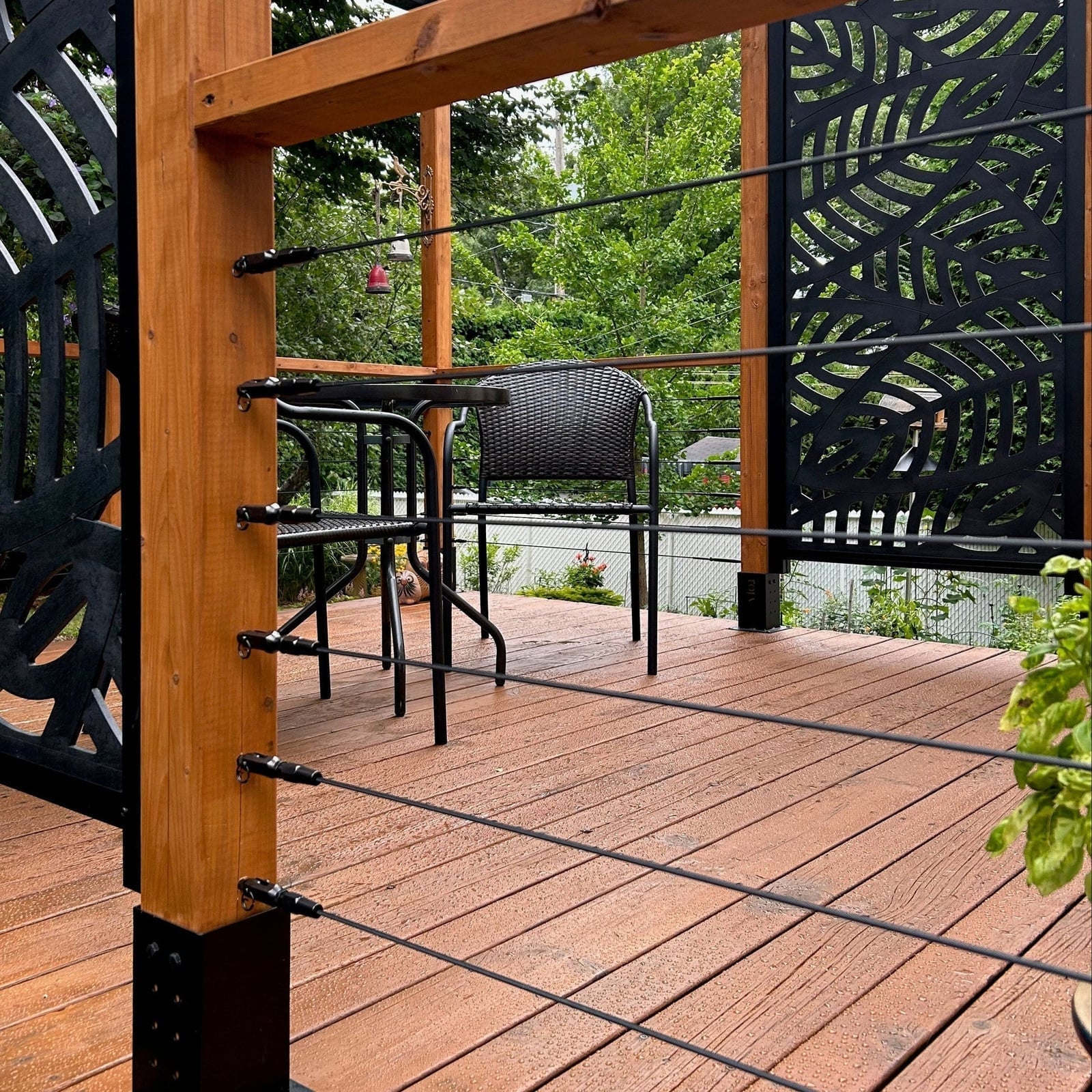
This is a modern porch where the railing does double duty. Horizontal cables run between wood posts for an open view, while black metal decorative panels with a leaf motif break up the line. The brown, black, and green palette repeats in the wicker chairs and metal table, reinforcing the natural tones. The roomy deck layout keeps the seating area set back from the railing edge, so the cables and panels frame the scene without blocking it. What defines the look is the contrast between the thin cables and the solid decorative inserts, and what breaks it would be adding a third railing material or a bright painted color.
Rustic porch with modern cable railing and colorful planters
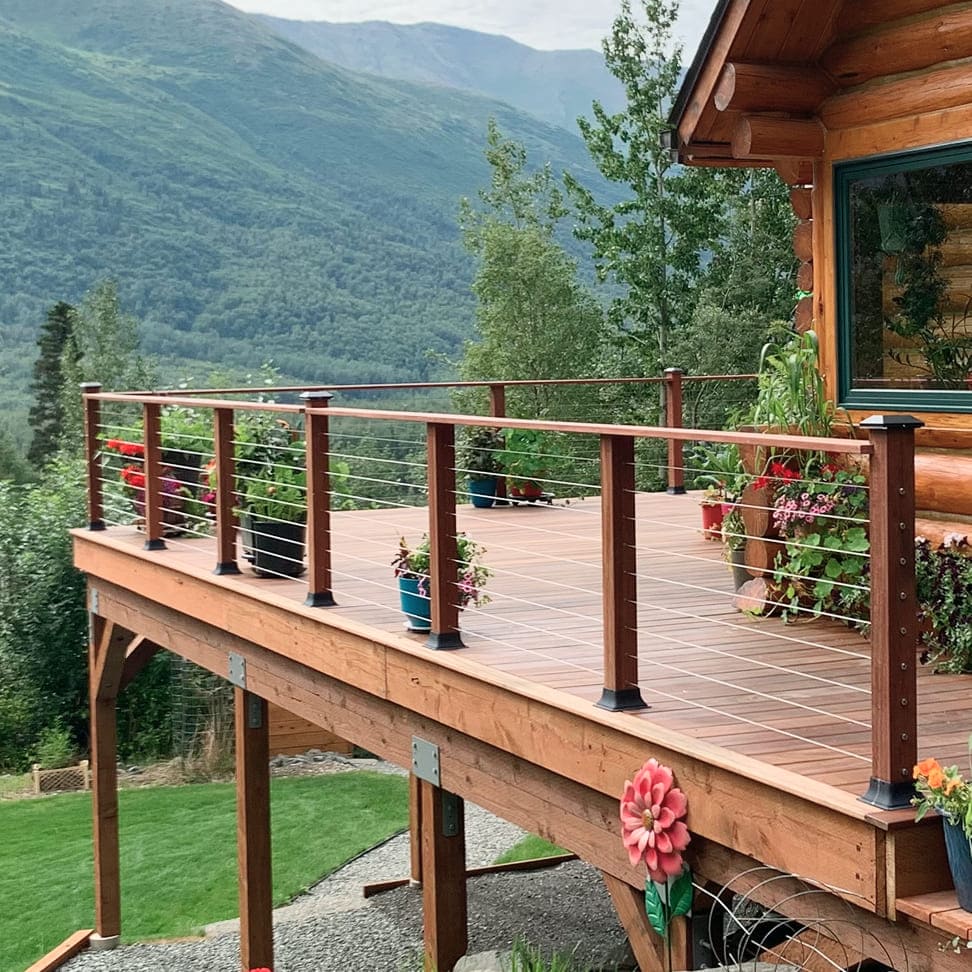
Can a cable railing feel rustic? This porch says yes. The wooden deck and railing posts stay in warm browns, while the horizontal metal cables keep the view open and the look current. Colorful planters in reds, blues, and greens sit by the railing, bringing the palette beyond the usual wood-and-metal combo.
The layout runs the railing in a straight line along the deck, which makes it easy to arrange planters at regular intervals. A practical swap for renters: use freestanding planters on the deck surface rather than hanging anything from the railing itself. The rustic-meets-modern mix works because the wood is the dominant material and the cables stay thin and dark. Add too many metal accents and the balance tips toward industrial.
Coastal porch with white lattice railings and ceiling fans
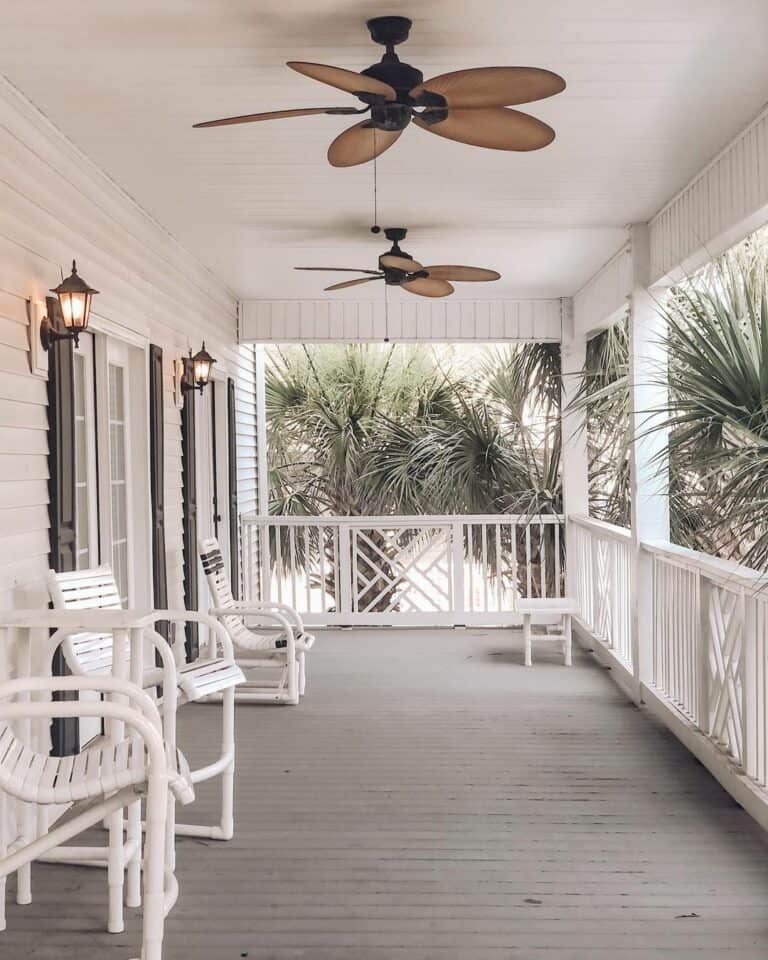
The white lattice railing pattern sets the coastal tone, with the criss-cross grid echoing traditional beachfront porches. Ceiling fans with lights hang above, and wall sconces add layered illumination for evening use. White chairs line the railing in a linear seating arrangement, keeping the layout simple and the view clear. The gray wood tones on the floor balance all the white so the space does not feel washed out. The style is defined by the lattice itself, and what breaks it is anything dark or heavy on the railing line.
Wood posts and horizontal cables on deck
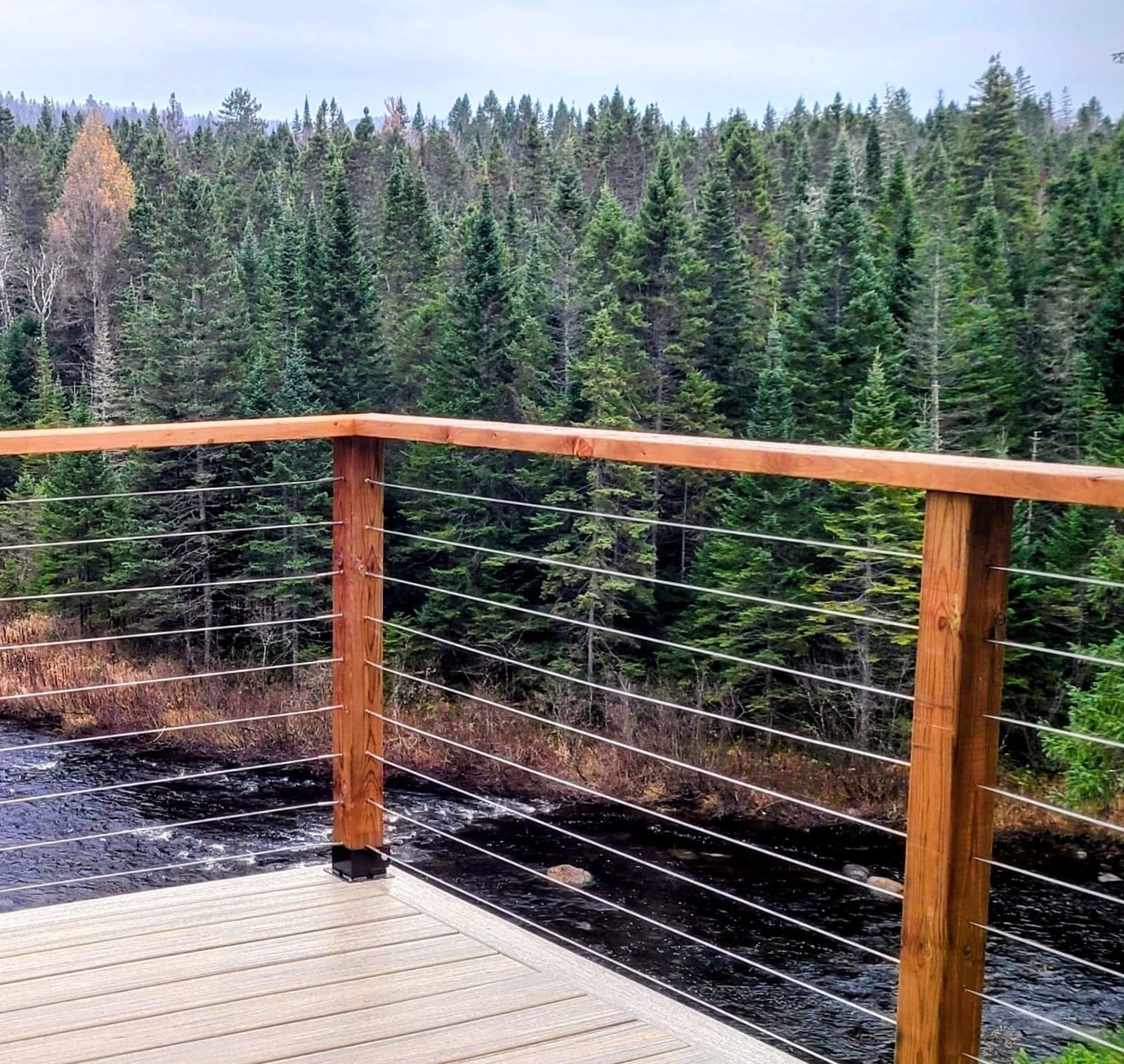
For a deck overlooking water, keep the railing low and the view high. This modern setup uses thick wood posts with horizontal metal cables running between them, set on composite deck boards in warm brown. The palette uses wood tones, silver, and greens from the surrounding landscape. The layout places the railing along the deck edge so the cables act like a transparent wall. For storage, choose deck boxes in a matching wood tone that sit against the house side of the railing instead of along the view side. The material contrast between the chunky wood posts and the thin cables defines the look, and adding a top rail in a different finish would break the clean line.
Sleek glass railing for unobstructed outdoor views
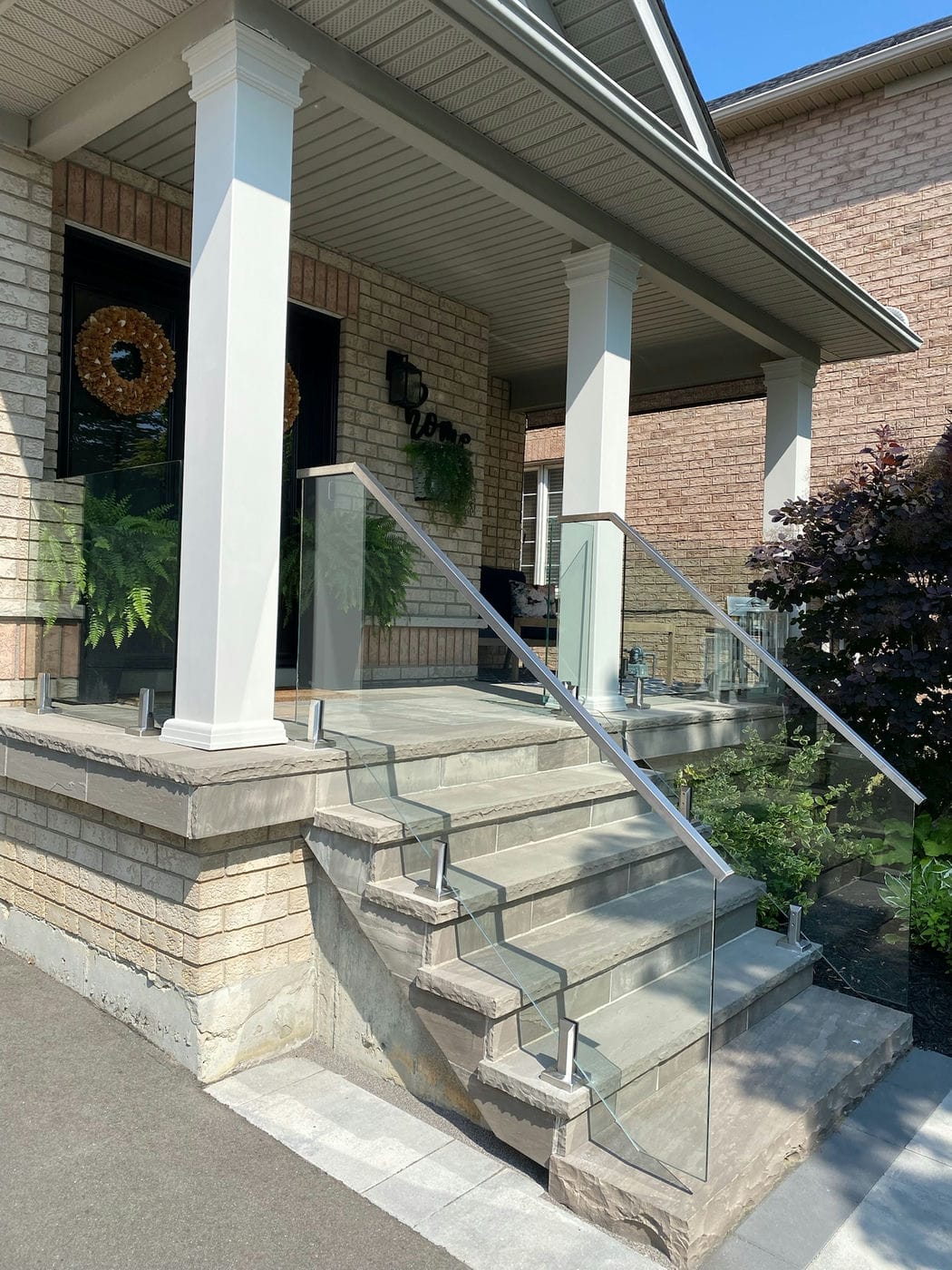
A solid railing keeps you safe, but it also blocks the view. Glass panels solve that trade-off without sacrificing the modern feel you likely want for a porch. The clear panels sit between metal posts and a metal top rail, creating a near-invisible barrier that lets the landscape take center stage. White columns and stone steps keep the palette neutral and grounded. The practical principle here is material: glass is the one choice that preserves sight lines while meeting code requirements. It does collect smudges and pollen, so plan for a regular wipe-down with a glass cleaner and a squeegee.
Traditional black metal railing guiding up concrete steps
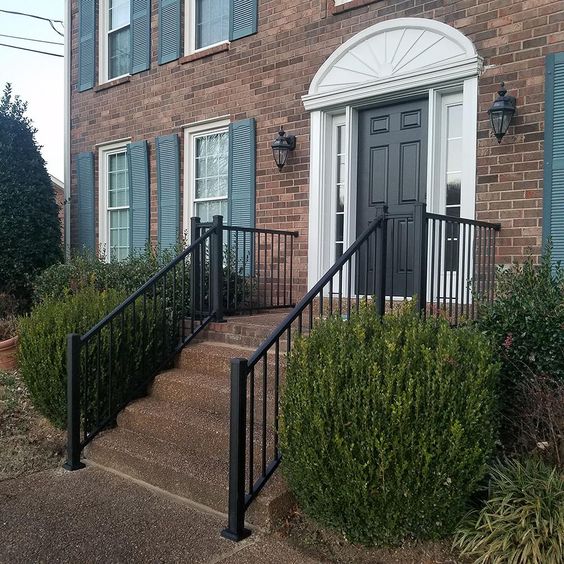
The black metal railing runs up both sides of the concrete steps, creating a clear path toward the dark gray front door and teal shutters. The repetition of vertical bars echoes the brick texture and the shrubbery below. For a renter-friendly approach, focus on what attaches without permanent changes. Rail-mounted planters that hook over the top rail add greenery without drilling. Outdoor sconces on either side of the door improve safety at night and are a swap the landlord may approve.
White railing with black spindles for farmhouse porch
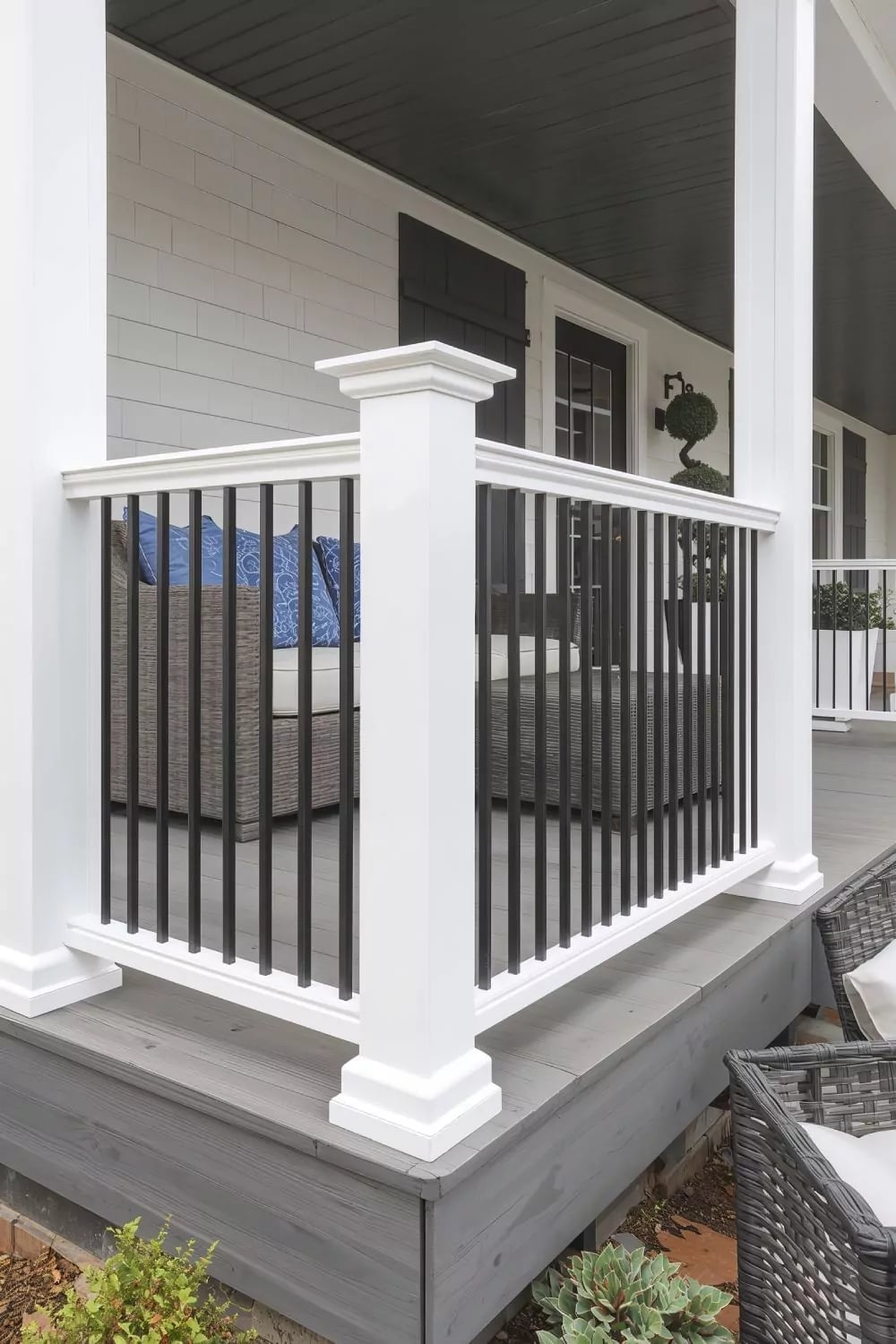
This is the farmhouse color formula done right: white rails and black spindles create contrast against the furniture. The wicker sofa and chairs in gray with blue patterned pillows stay visually separate because the railing acts as a frame, not a focal point. The palette uses two strong colors, white and black, which lets the blue pillows and any seasonal decor stand out. The style works because the ratio is even: every other element breaks the black-and-white scheme on purpose, not by accident.
Wooden stairs with modern metal handrail
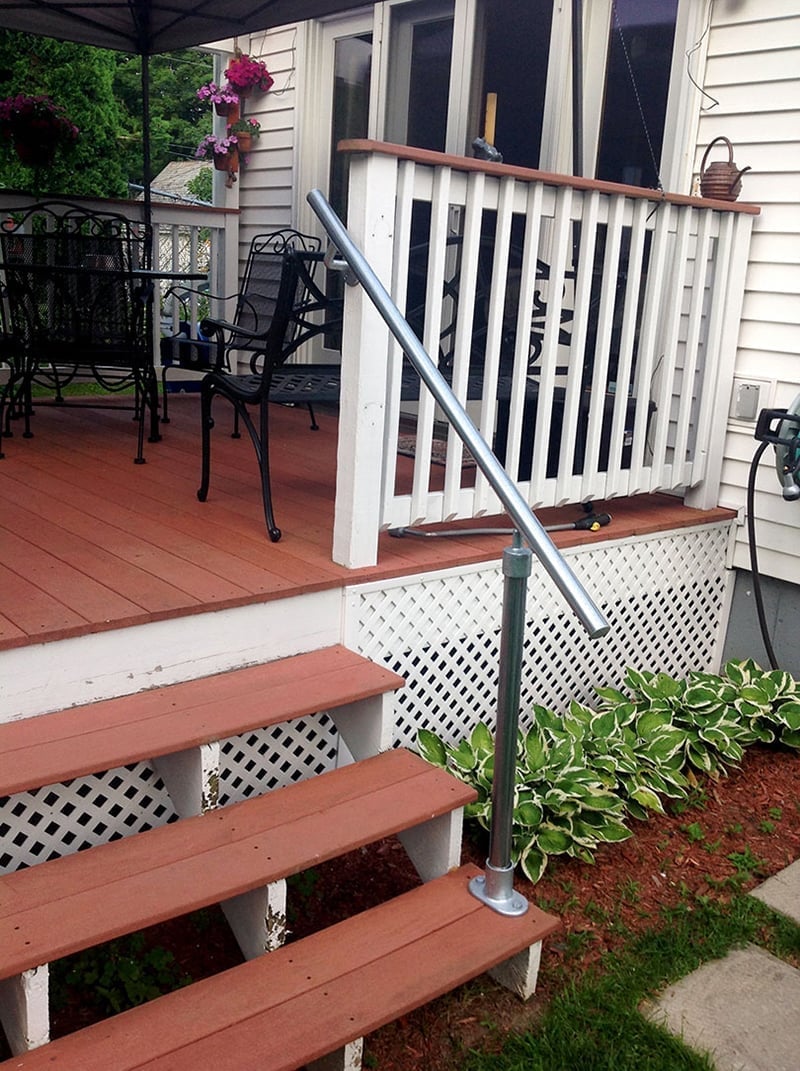
Does a metal handrail hold up on wood stairs over time? Yes, when the mounting hardware is stainless steel and the posts are set into the joists, not just the deck boards. Here the metal handrail runs along the top of wood steps, with white lattice below the deck surface. The dark metal finish hides wear from daily use, while the wood treads show scuffs more readily. The smart layout choice is to extend the handrail past the bottom step by a few inches, which gives you something to grab before the last step.
Bright traditional porch with white vertical railings
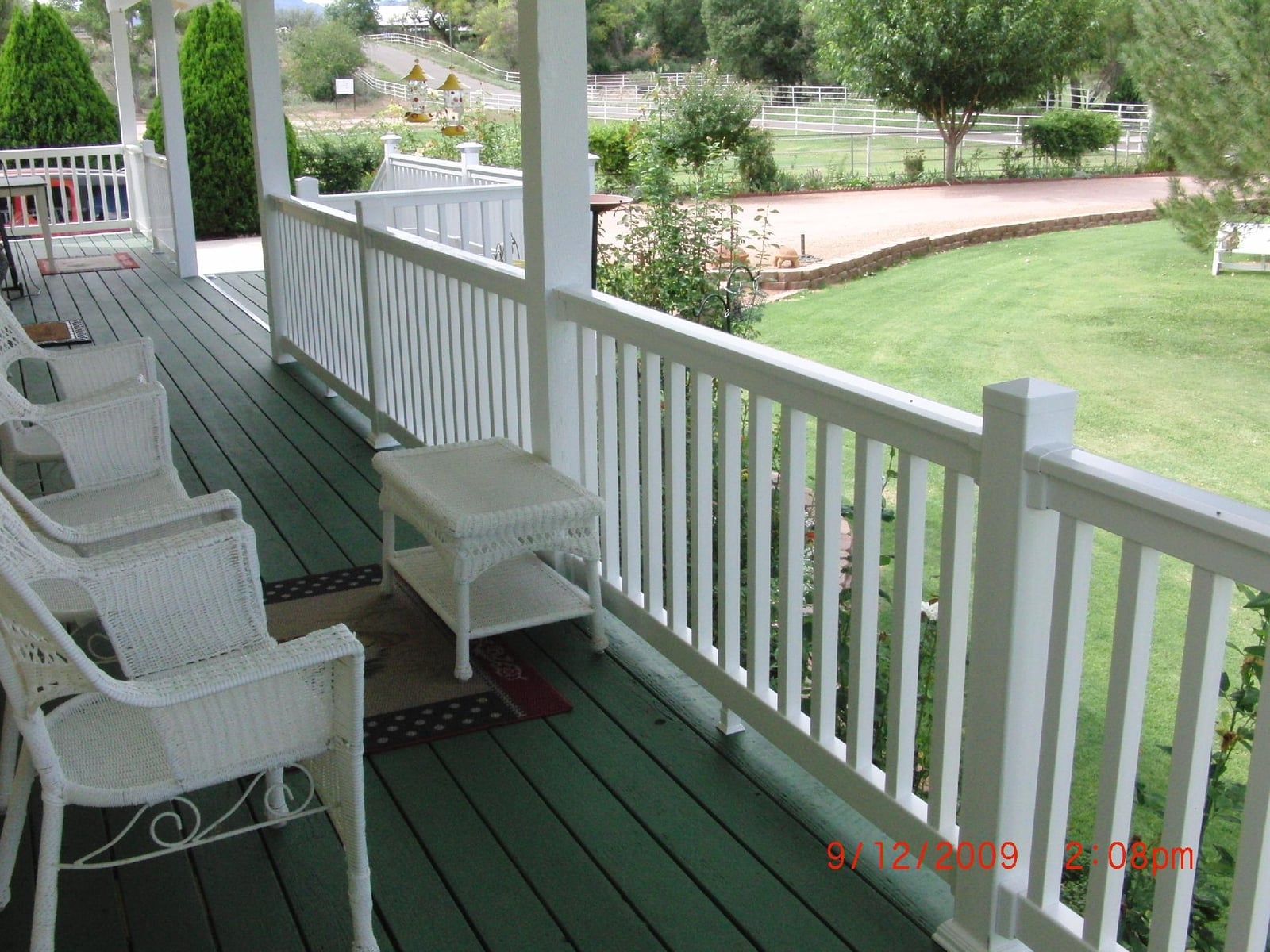
White vertical railings spaced at a standard interval create a rhythm that makes a long porch feel wider. The wide view shows wicker chairs and a side table lined up along the porch, with the railing acting as a low backdrop. The palette is simple: white and green from the lawn beyond. Vertical lines add perceived height, so a low porch with a shallow roof benefits from the upward visual pull of closely spaced balusters.
Criss-cross railing for farmhouse porch comfort
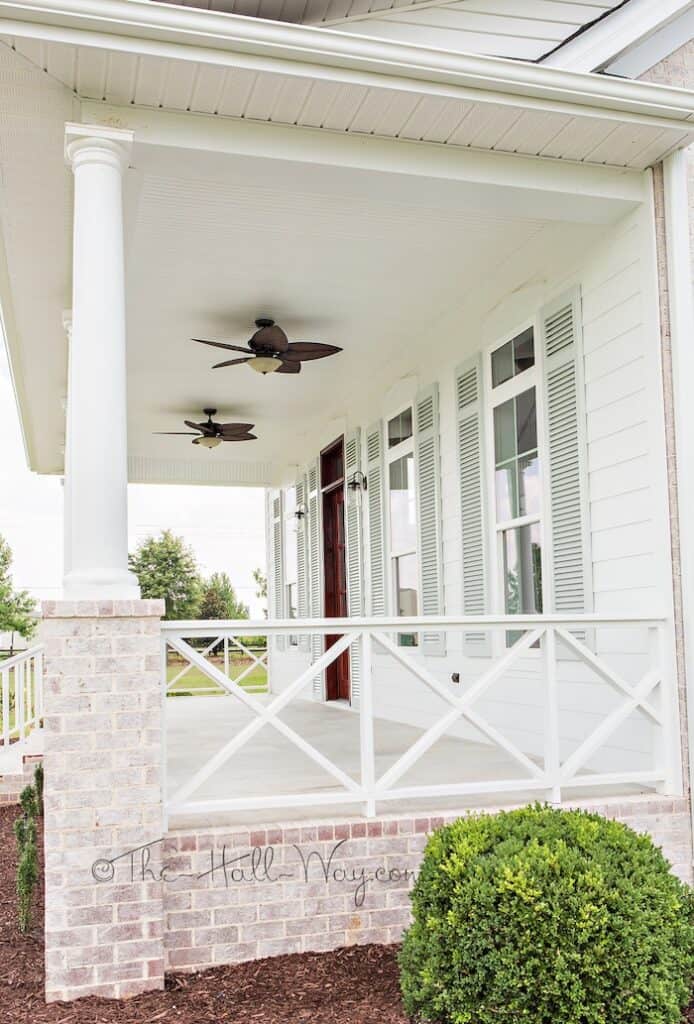
A covered porch with a white criss-cross railing sets the tone for a farmhouse look that feels settled. The white railing and columns keep the structure light against the brick red of the house and the green surroundings. Ceiling fans and louvered shutters add detail that makes the porch feel like a proper room. The layout works because the railing defines the edge without blocking the view of the yard. It creates a clear boundary that still lets the porch breathe.
Modern wooden railing with glass panels overlooking a lake
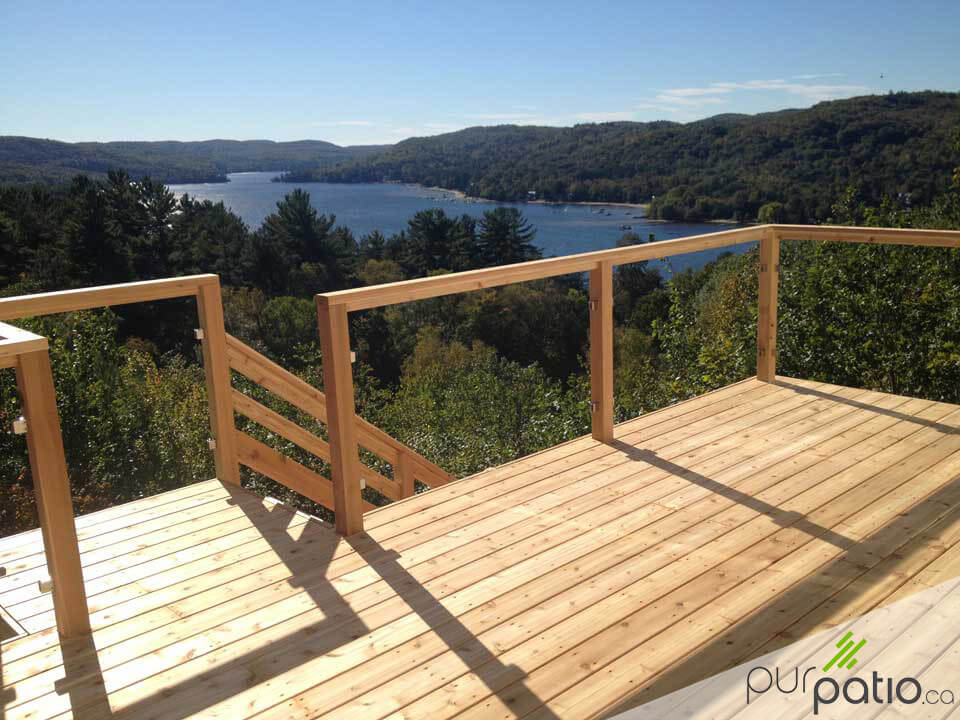
A solid wood railing might feel too heavy when the whole point is the water. This modern setup uses glass panels set into a wooden frame so the lake stays the main event. The natural wood tones of the deck, stairs and railing warm up the structure without competing with the blue sky and water. The open deck layout means the railing is more of a guide than a wall. It keeps people safe while letting the eye travel straight to the horizon. The wood adds texture, the glass adds transparency, and together they make the view feel bigger than the porch itself.
Cable railing with glass panels on deck
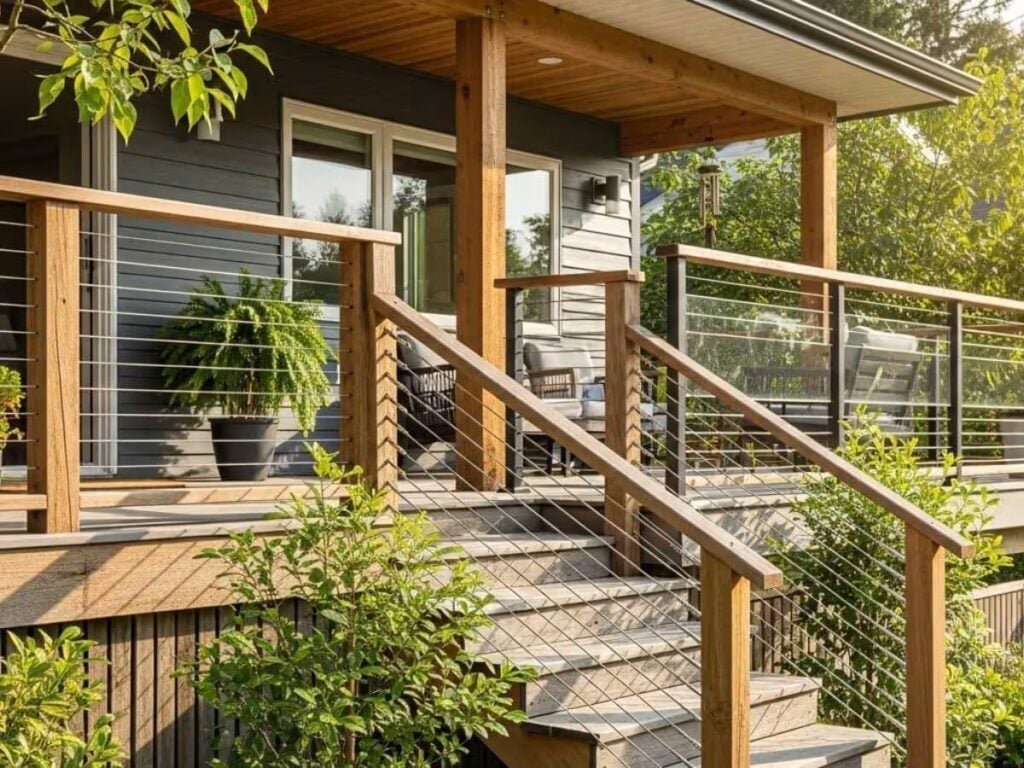
Horizontal metal cables paired with glass panels create a railing that is almost invisible from a distance. The wooden posts provide the structure while the cables and glass do the work of keeping people on the deck. Natural daylight passes through without interruption, so the greenery beyond stays crisp. Outdoor seating near the railing benefits from the open sightlines. It is a practical choice for anyone who wants a barrier that does not feel like one.
Multi-level deck with contrasting railings
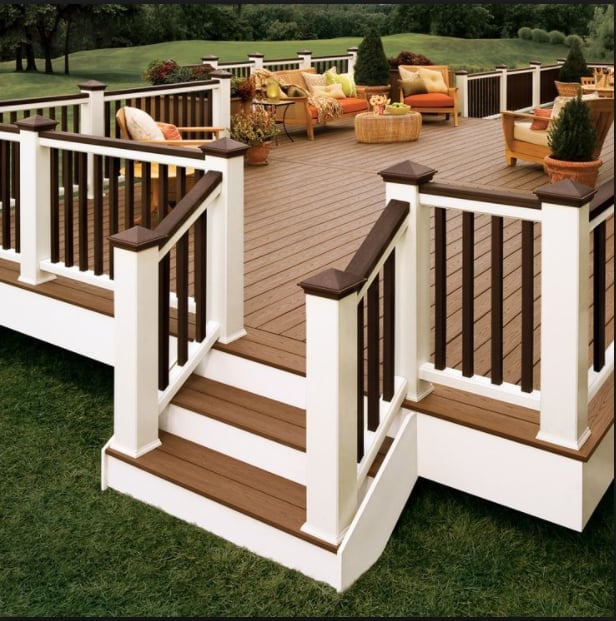
This multi-level deck uses contrasting railings to separate function from flow. The upper level features a white railing that keeps the seating area around the sofa and coffee table feeling open and bright. The lower level switches to a dark brown railing that grounds the stairs and defines the transition. Daylight hits both levels evenly, so the contrast gives each area a distinct purpose. The layout proves that different railings can work together when they share the same clean lines. It is a simple way to zone a large deck without adding walls.
Classic wood railing with black balusters and copper light fixture
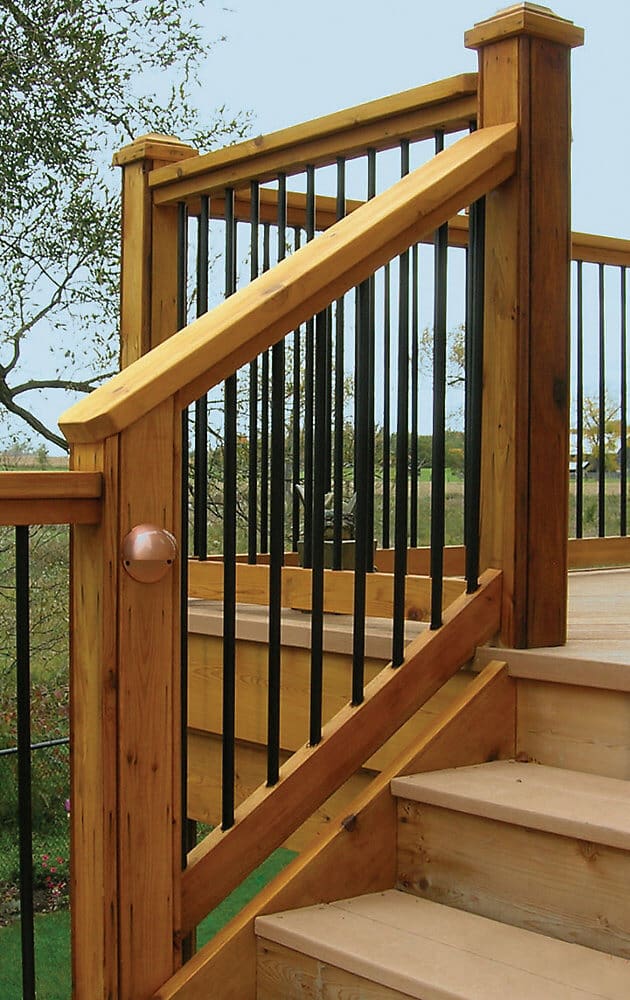
A staircase railing with wooden posts and black balusters is a traditional choice that does not need much help to look right. What makes this one stand out is the copper light fixture mounted near the railing. The warm copper tone picks up the brown of the wood and the black of the balusters, tying the whole composition together. The compact layout means the railing and the light share the same visual weight. It is a reminder that a well-placed fixture can do more for a staircase than any decorative trim. The railing does its job, and the light makes sure you see it.
Cozy farmhouse porch with criss-cross railing and lanterns
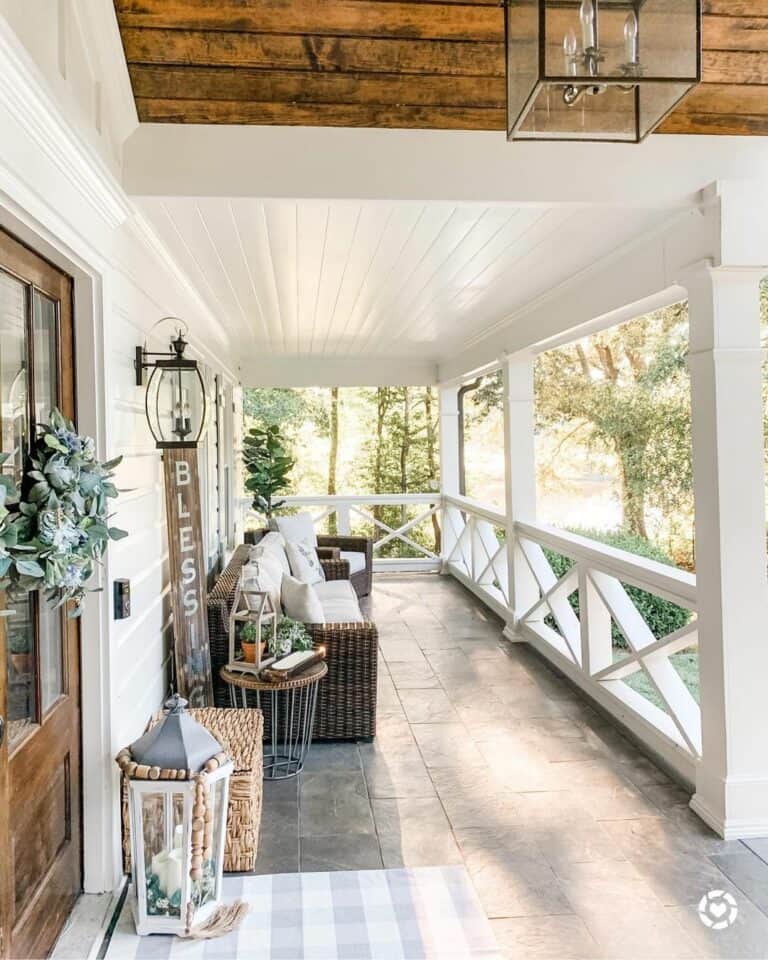
A white criss-cross railing runs the length of a roomy farmhouse porch, setting a traditional rhythm that the space follows. A wicker sofa, a plaid rug and a wooden sign keep the seating area grounded in casual comfort, while a pair of lantern sconces and an overhead pendant light add warmth at eye level and above. The palette stays in white, wood tones, green and gray, so nothing competes with the railing’s pattern. For renters who cannot replace existing spindles, a similar criss-cross effect is possible by attaching lattice panels to the inside of the railing frame with removable hooks.
Screened-in porch with lush greenery and bar cart
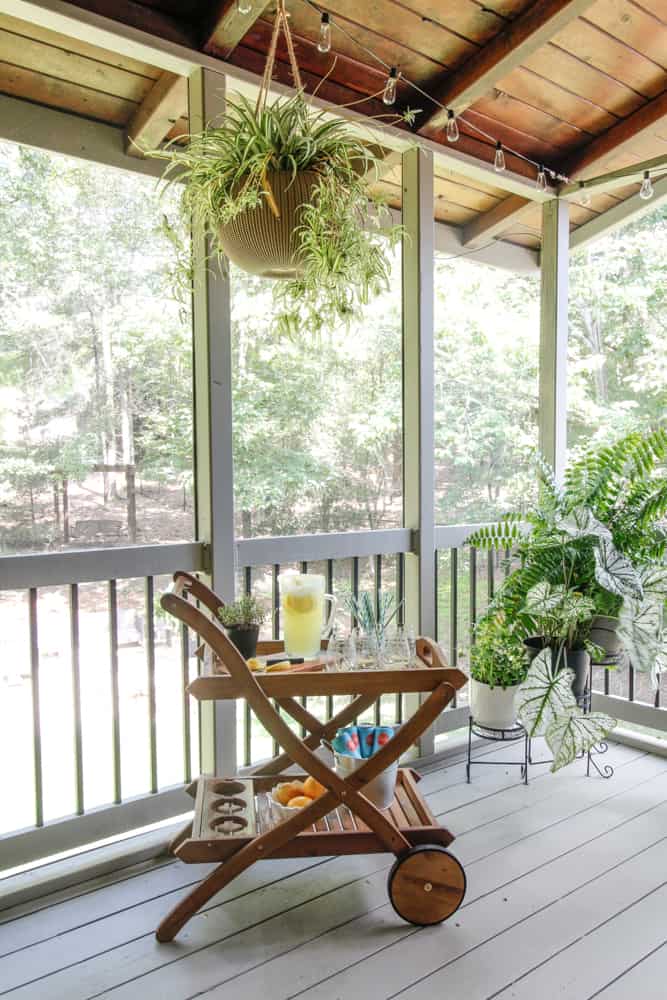
To decorate a screened-in porch, treat the floor plan like an indoor room because the enclosure already defines the walls. Here a wooden bar cart anchors one end of the deck, with a hanging planter above and potted ferns and caladium on stands around it. String lights cross the ceiling, softening the transition from daylight to evening. The transitional mix of wood, metal and glass keeps the look from leaning too formal or too rustic. Renter-friendly swaps include using a console table instead of a built-in bar and hanging plants from tension rods instead of drilling into the ceiling.
Rustic wooden railing with solar light and hammock
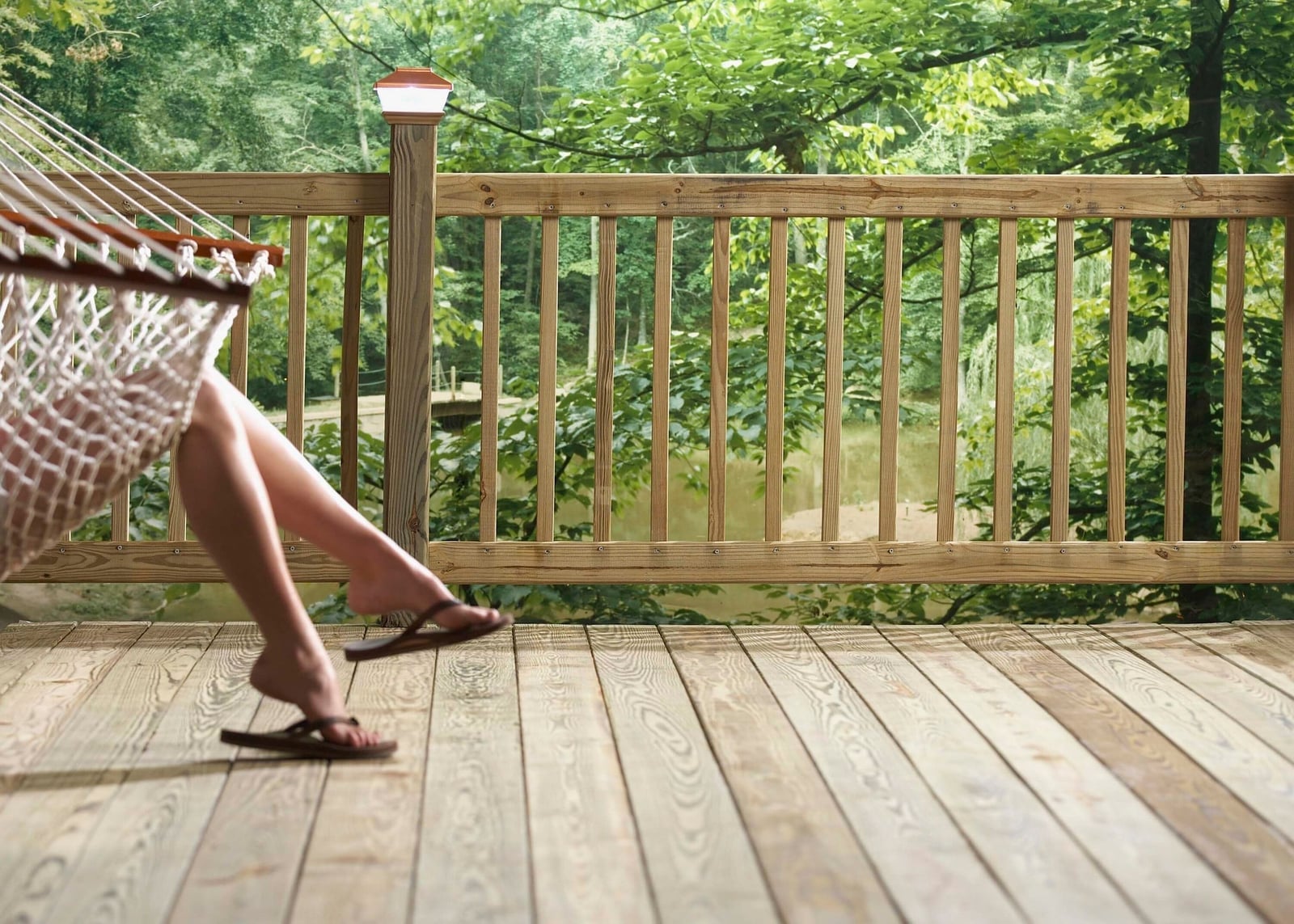
This rustic deck could easily have gone full cabin, but it pulls back with a hammock and a solar-powered post light that keep the mood relaxed rather than rugged. The wooden railing runs along the edge, overlooking water and trees, so the view does the decorating. A solar light on the post adds a soft glow at night without wiring, which matters for a deck that sits far from the house. The natural wood tones and green foliage set the palette, and there is no painted trim or metal accent to break it. For a similar setup, choose a solar fixture with a warm LED bulb so the light does not wash out the wood grain.
Railing with solar light and seasonal decor
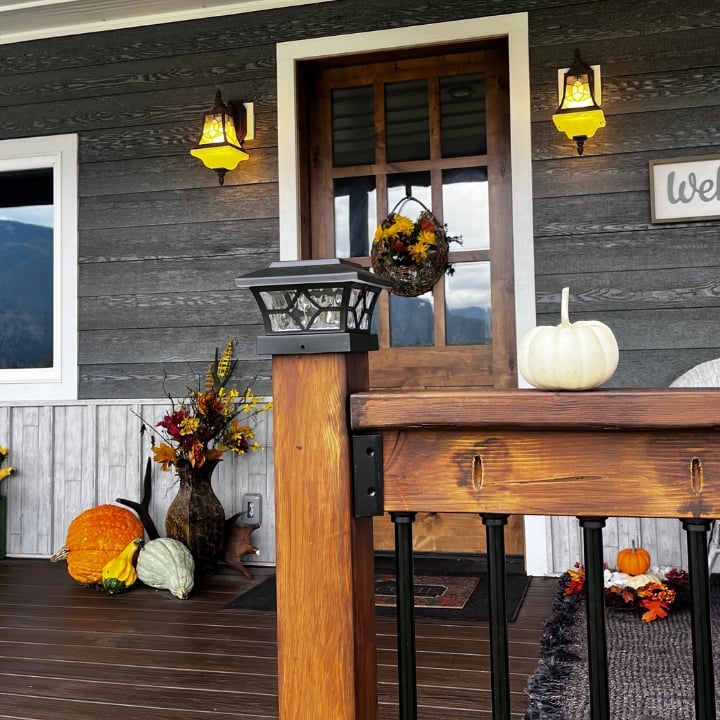
A solar post cap light sits on a wooden railing, casting a quiet glow that works with the wall sconces on either side. The compact entrance vignette adds pumpkins and a hanging basket in orange, yellow and white, so the seasonal decor looks purposeful and organized. The gray and brown palette of the railing and porch keeps the look grounded, letting the warm accents stand out. For renters, a solar cap light is a smart swap because it requires no wiring and simply rests on top of the post, making it easy to remove when the season changes.
Modern multi-level deck with glass and metal staircase railing
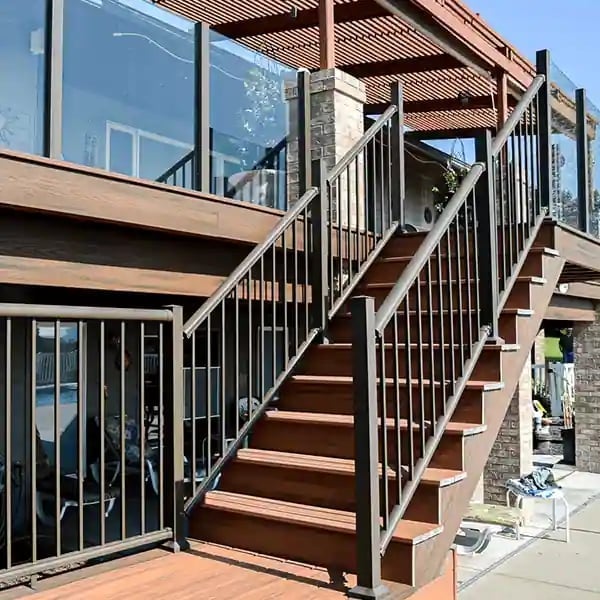
Glass railing panels on a multi-level deck do one thing well: they disappear. Here the clear panels run alongside a central staircase made of wood, with metal railings and stone accents framing the structure. The brown and gray palette keeps the focus on the transition between levels, and the glass lets the deck’s geometry show without interruption. For a split-level yard, glass panels work best when the staircase is the main visual anchor, because the material itself adds no color or pattern. Upkeep involves regular cleaning with a glass-safe spray to keep the panels from looking hazy, especially in areas with hard water.
Black metal railing with stone planters
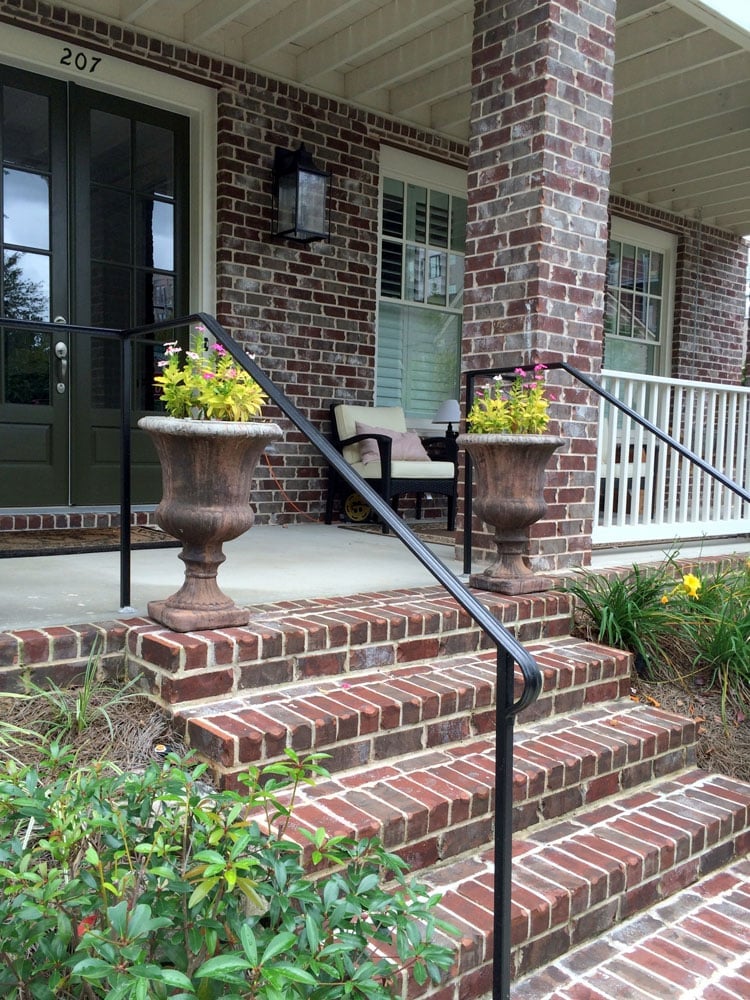
A porch railing does more than mark a boundary. It sets the tone for how the entry feels. Here, a black metal railing runs alongside brick steps, its slender vertical bars keeping the view open while providing a firm handhold. The real anchor comes from the stone urns placed at the base, carved and substantial, filled with greenery that softens the hardscape. A single wooden chair sits on the porch above, a quiet invitation to pause.
The materials carry the weight here. Brick steps offer a warm, textured rise. The metal railing adds a crisp, linear contrast. Stone urns bring a sense of permanence. Together, they create a traditional look that does not rely on clutter. The palette stays restrained: red brick, dark green foliage, white trim, and gray stone. A lantern near the door adds a warm glow when daylight fades, making the transition from outdoors to indoors feel deliberate.
Dark wood deck with light blue ceiling
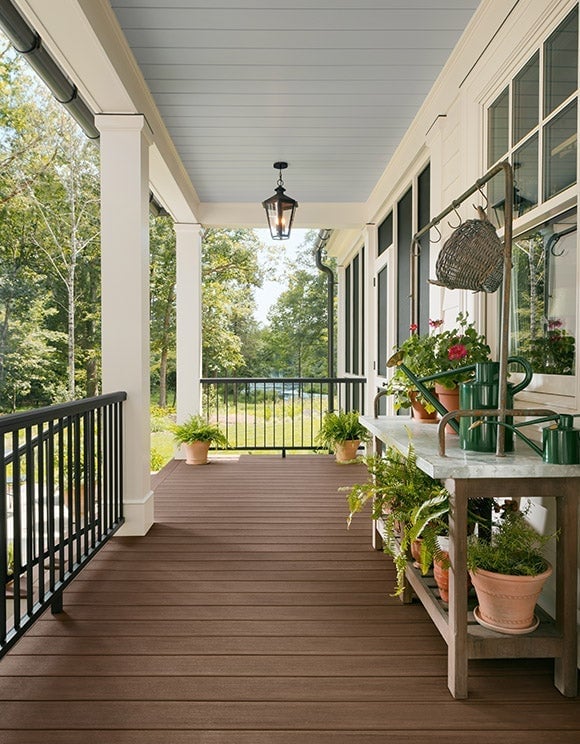
The light blue ceiling is what sets this porch apart. Against a dark wood deck and a black metal railing, that soft overhead color keeps the area balanced. A wooden potting bench and a collection of potted plants line the railing, while a hanging lantern adds a warm focal point. The palette works because it balances deep browns and blacks with a single, unexpected pastel note. This trick makes the whole porch feel planned.
Wrought iron railing on a stone balcony with red flowers
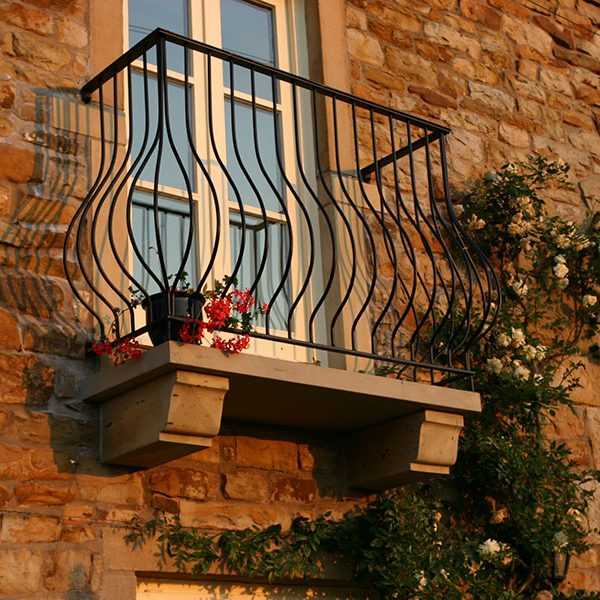
When a balcony is compact, every detail needs to earn its place. An ornate wrought iron railing does exactly that. The scrolling metalwork adds visual interest without taking up floor space, and its dark finish stands out against a stone wall. A single potted plant with red flowers provides a bright accent, drawing the eye to the railing’s curves. The stone balcony itself offers a solid, textured base. The combination works because the railing is the star, and the rest stays simple.
Modern multi-level deck with black metal mesh railing, outdoor
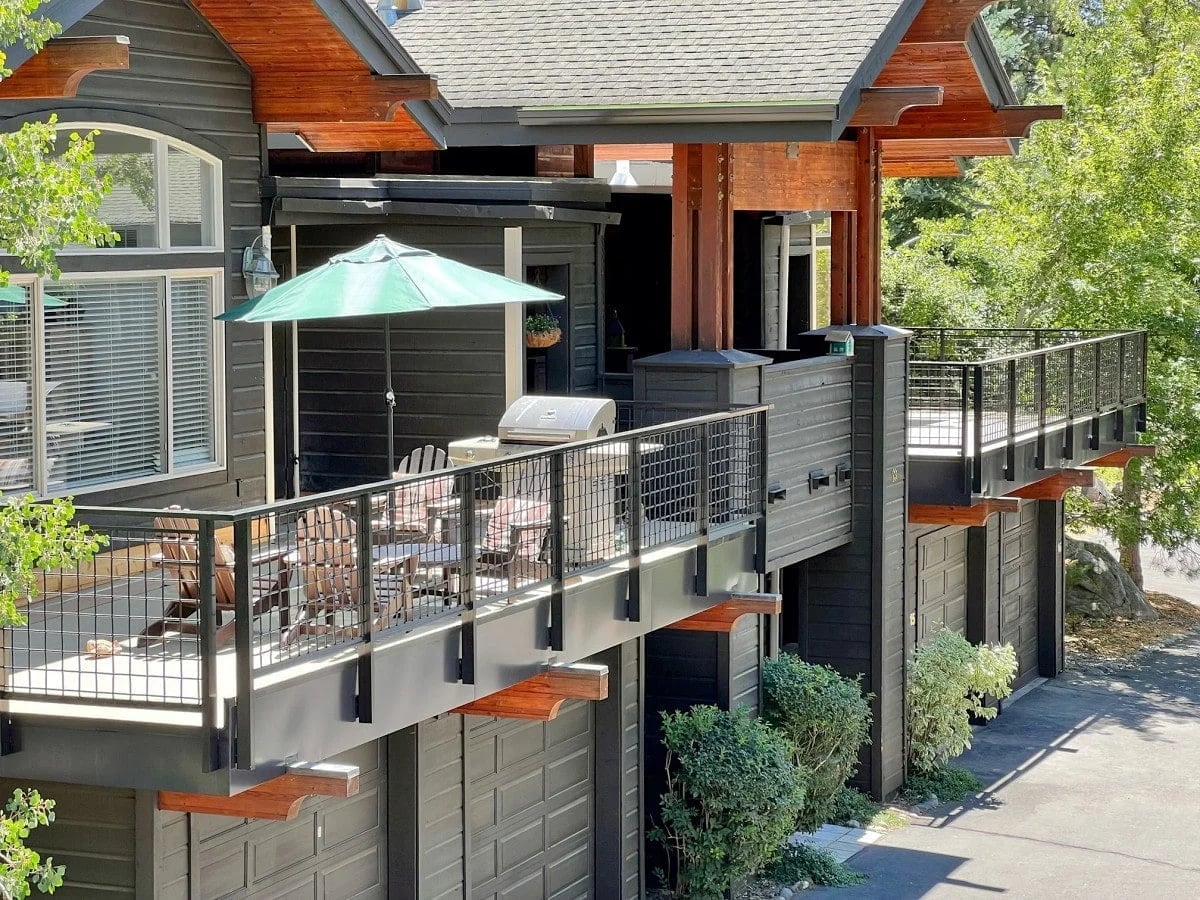
A black metal mesh railing is a different choice from the usual vertical bars or cables. It offers a similar open sightline but with a denser, more industrial texture. On a multi-level deck, this keeps the look cohesive across different heights. The dark gray mesh looks a solid plane from a distance, but up close, it lets light and air pass through.
The deck itself is roomy, furnished with a grill, chairs, a table, and an umbrella. The wood tones of the decking warm up the cool metal. The mesh railing acts as a neutral backdrop, letting the furniture and the surrounding greenery take center stage. It is a practical choice for a deck that gets heavy use, offering safety without blocking the view.
Traditional white wooden railing with colorful flowers
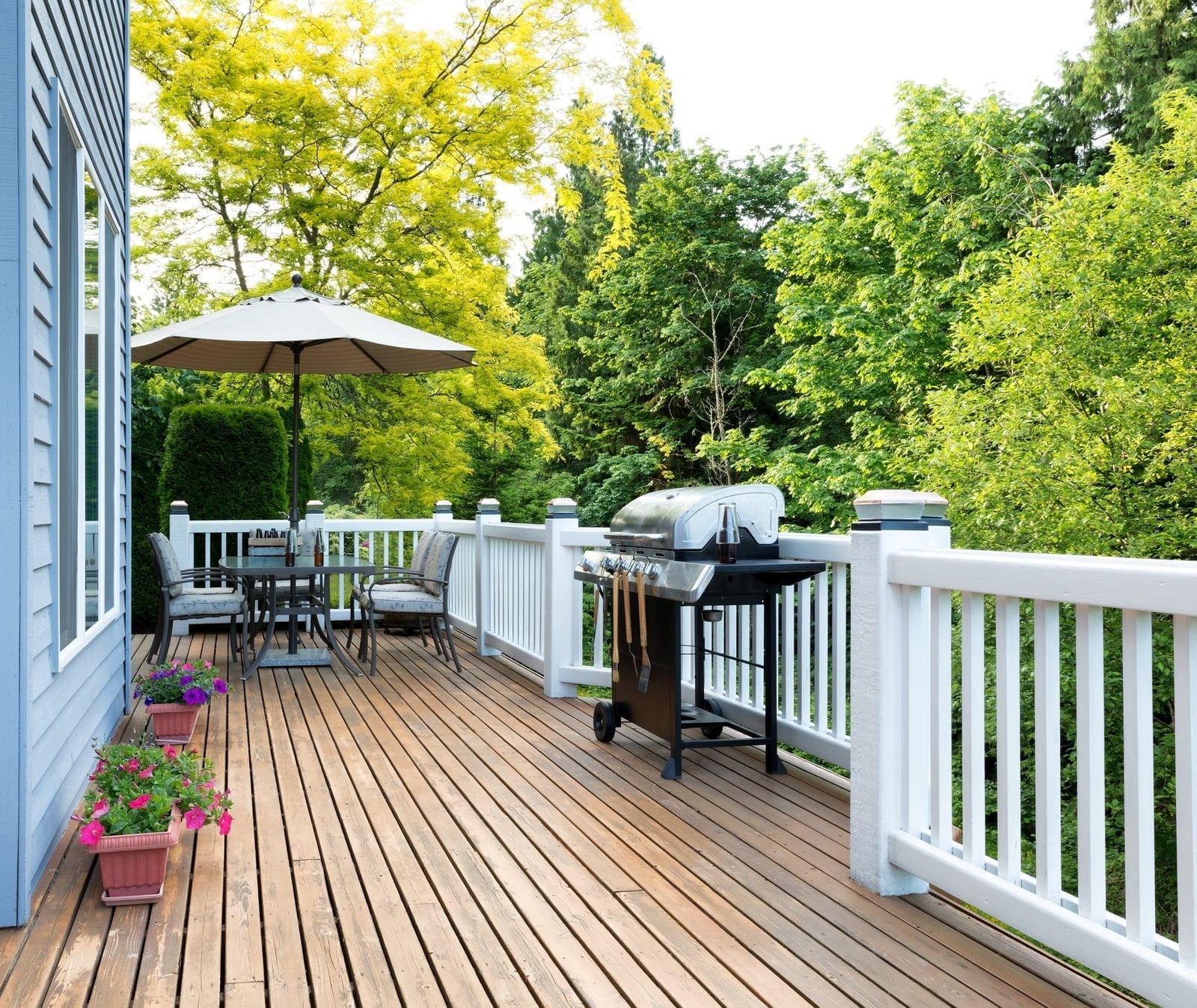
A white wooden railing is the classic backdrop for a lively deck. Here, it frames a seating area with a grill, table, and chairs under an umbrella. The real color comes from the potted flowers along the railing: pink, green, and light blue blooms that feel cheerful without being chaotic. The white railing keeps the eye moving, while the flowers provide stops along the way. It is a straightforward setup that relies on the railing to define the space and the plants to bring it to life.
Classic white vinyl porch railing with rocking chairs
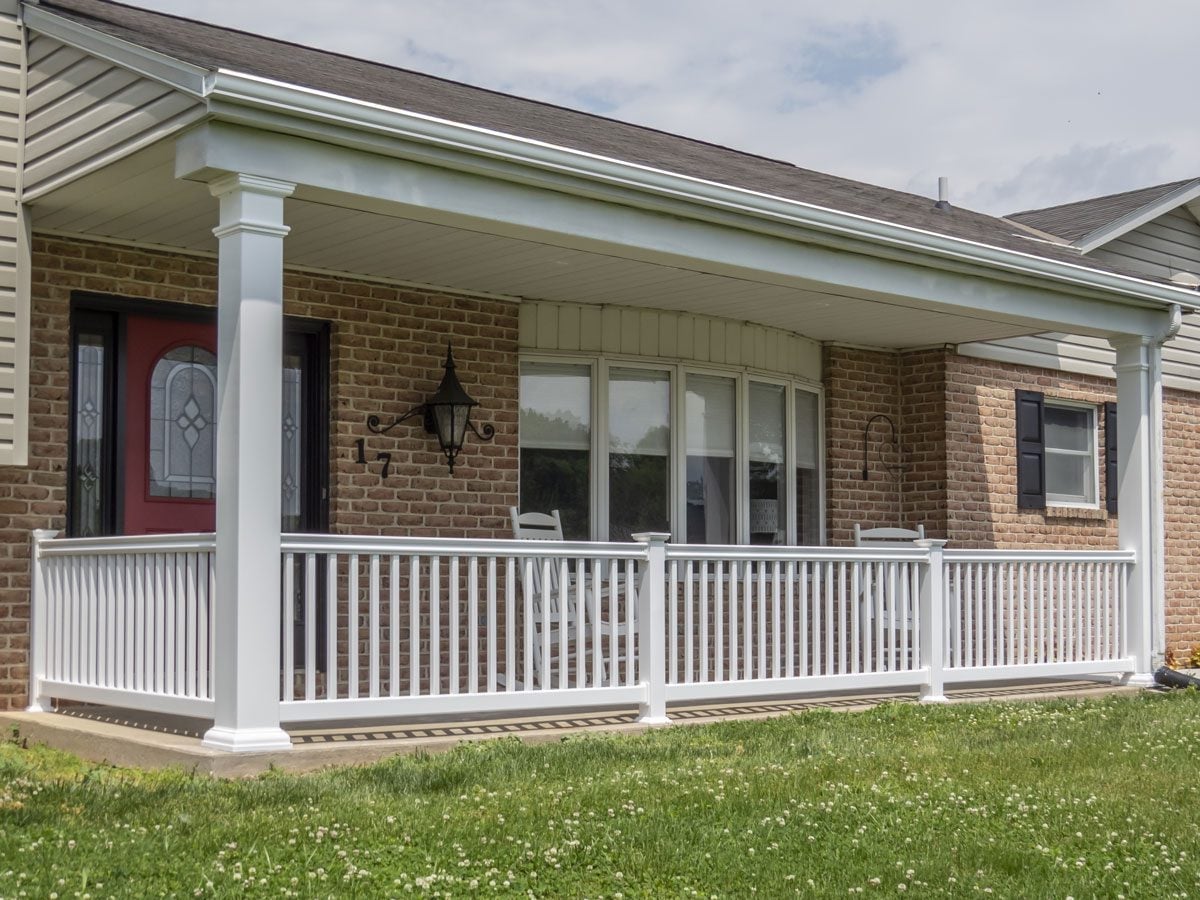
White vinyl railing is a solid bet for anyone who wants the look of painted wood without the annual scraping and repainting. This traditional porch pairs the vinyl railing with white rocking chairs, brick-red walls and a beige floor for a clean, cohesive palette. A black lantern near the door adds contrast without competing with the railing. Vinyl resists rot and insects, which matters on a porch exposed to rain and humidity. The material also stays cool enough to touch on hot afternoons, a small comfort when you are leaning on it to watch the yard.
Gray wooden railings add modern touch
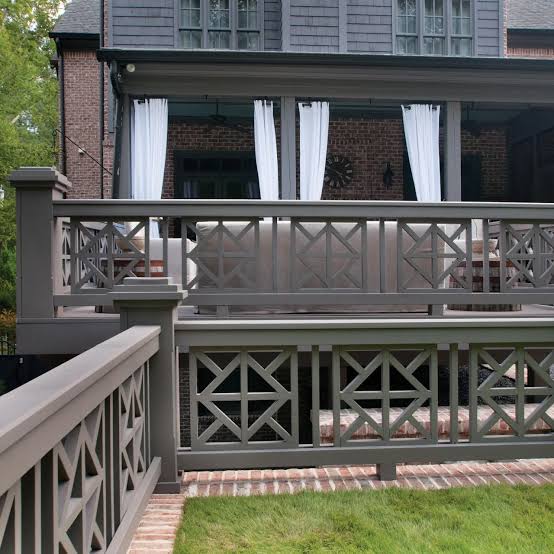
Updating a porch without a full rebuild starts with what the structure already gives you. This spacious deck keeps its brick foundation and adds gray wood railings with a geometric cutout pattern. The dark gray looks more current than white or natural wood, and the repeating cutouts create visual rhythm across the long run of railing. A gray sofa and matching chairs on the deck echo the railing color, so the palette stays tight. What breaks the uniformity is the warm brick below. Leaving the brick unpainted keeps the space from feeling cold and lets the gray geometry stand out.
Deck with black metal and cable railings
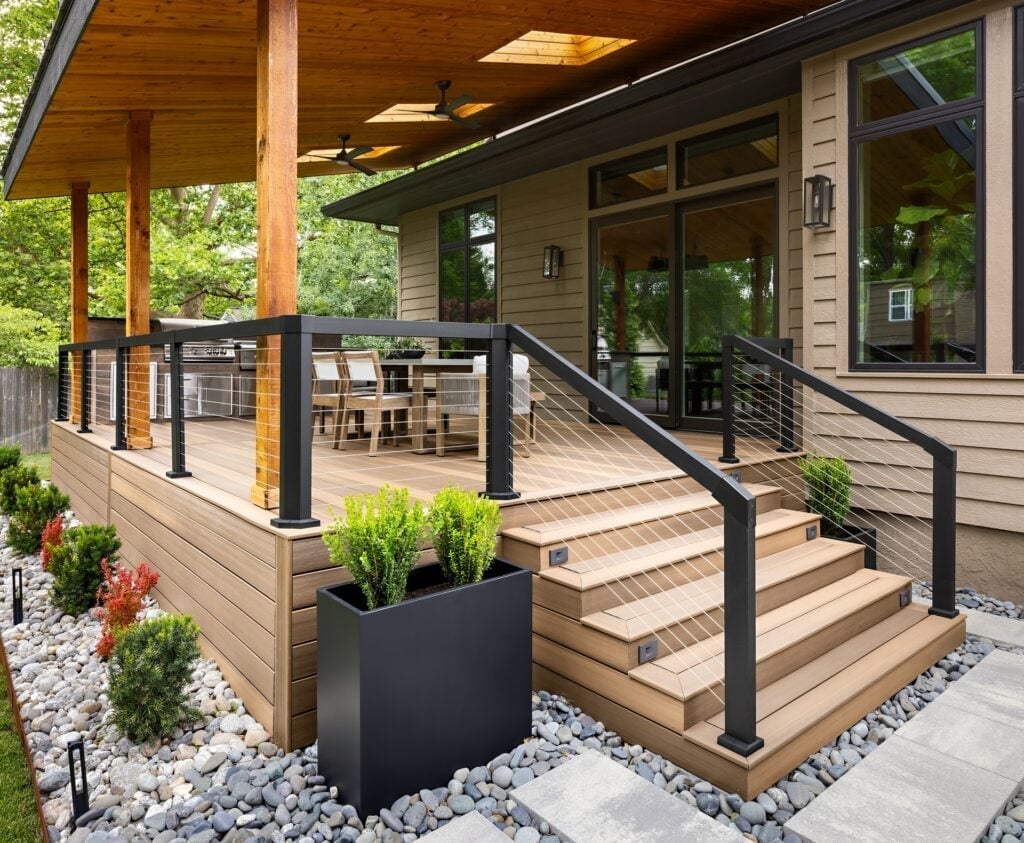
This roomy deck runs black metal posts at the corners and uses horizontal cable railing between them, a combination that keeps sight lines open while meeting code requirements for child safety. The dark metal frames the deck without blocking the view of the yard and stairs. An outdoor dining set with wood tones sits on the deck, and planters add green near the railing. Ceiling fans with integrated lights hang above, which helps with airflow on still days and extends the hours you can use the space after sunset.
Modern farmhouse porch with black metal railing and wood beams
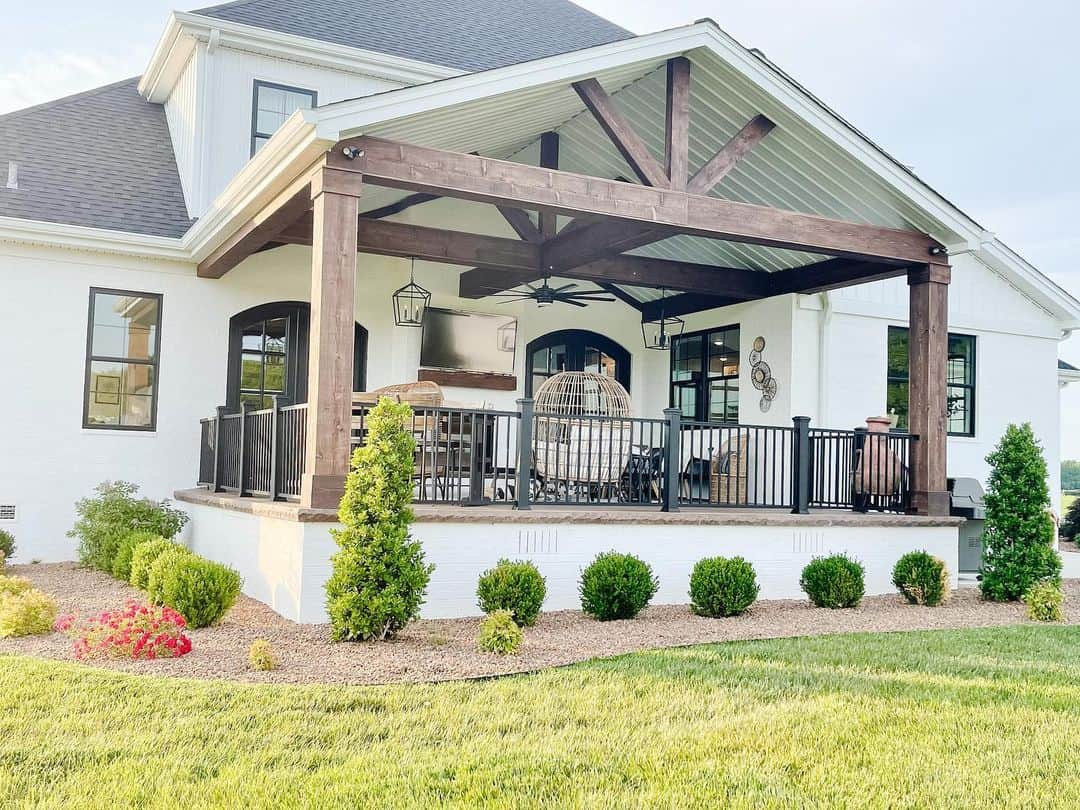
The black metal railing on this covered porch runs straight and simple, letting the dark wood roof beams do the heavy visual work. White stucco walls and brick accents give the porch texture without clutter. Hanging lanterns along the ceiling add warm light in the evening, which softens the black-and-white contrast. A modern farmhouse look like this depends on keeping the metal railing slender. Thicker rails would compete with the beams overhead. The railing here stays low and horizontal, which makes the porch feel wider and draws attention up to the roof structure.
Traditional staircase with white newel post and dark wood handrail
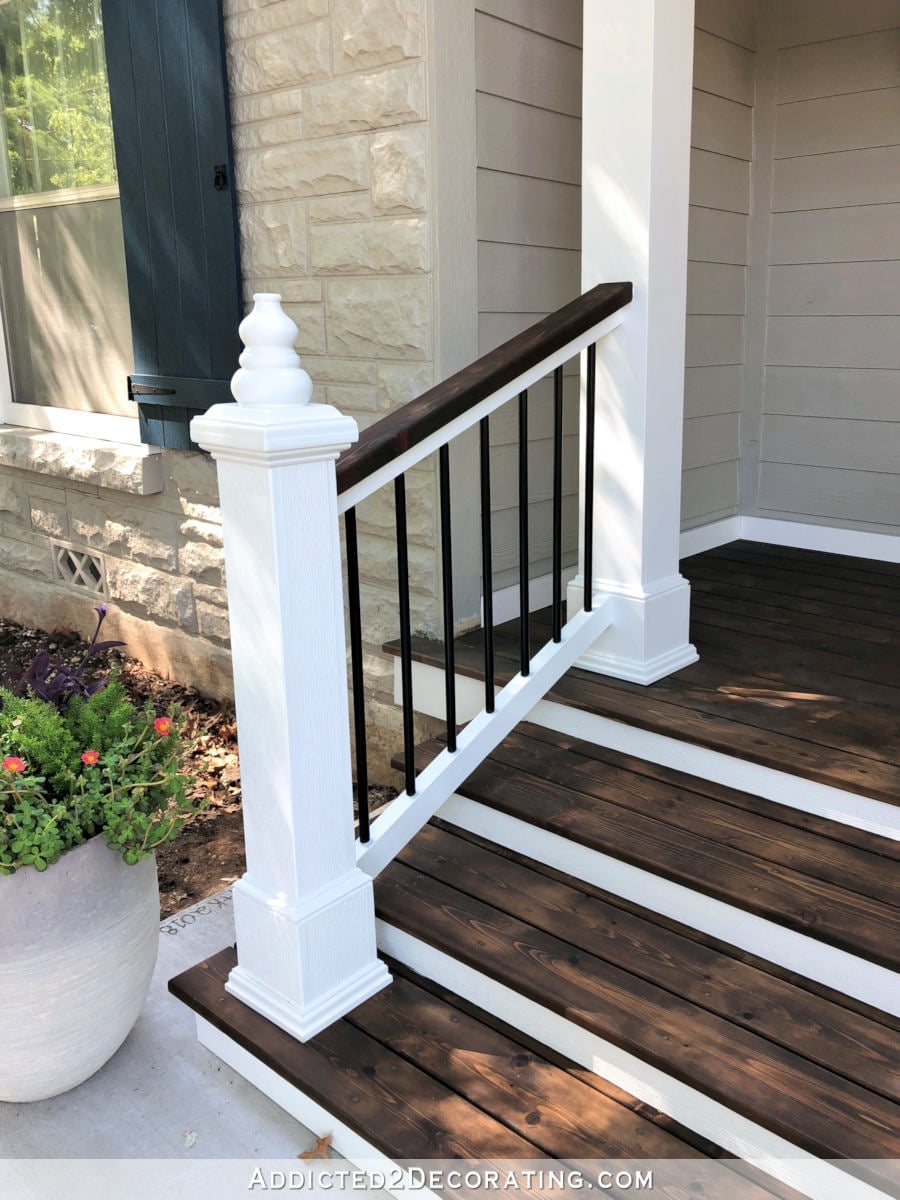
A compact porch staircase often gets squeezed between the house and the yard, so the railing has to work harder to make the entry feel intentional. This traditional design uses a white turned newel post as the anchor point, then runs a dark wood handrail and black balusters down the stone steps. The white post matches the vinyl siding on the house, while the dark handrail ties to the front door. The contrast between the post and the handrail is the trick. If both were white, the handrail would disappear against the siding. Keeping the handrail dark gives the eye a clear line to follow from the top of the stairs to the ground.
Traditional porch with sturdy black metal handrail
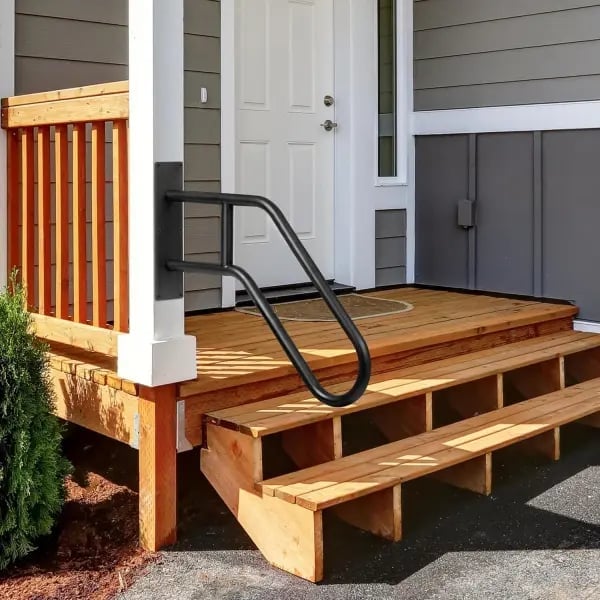
A black metal handrail running along wood stairs and a deck gives a traditional porch a grounded, purposeful line. The gray deck boards and white trim keep the palette neutral, so the handrail stands out as a deliberate accent. Wood posts anchor the rail at each turn, which helps the metal feel connected to the structure instead of stuck on. For the layout, the handrail follows the steps down and then continues along the deck edge, creating a continuous guide that makes the transition from ground to porch feel natural. That single dark line pulls the eye through the space and gives the whole porch a clear boundary without closing it in.
Wicker chairs on deck with stone pillar
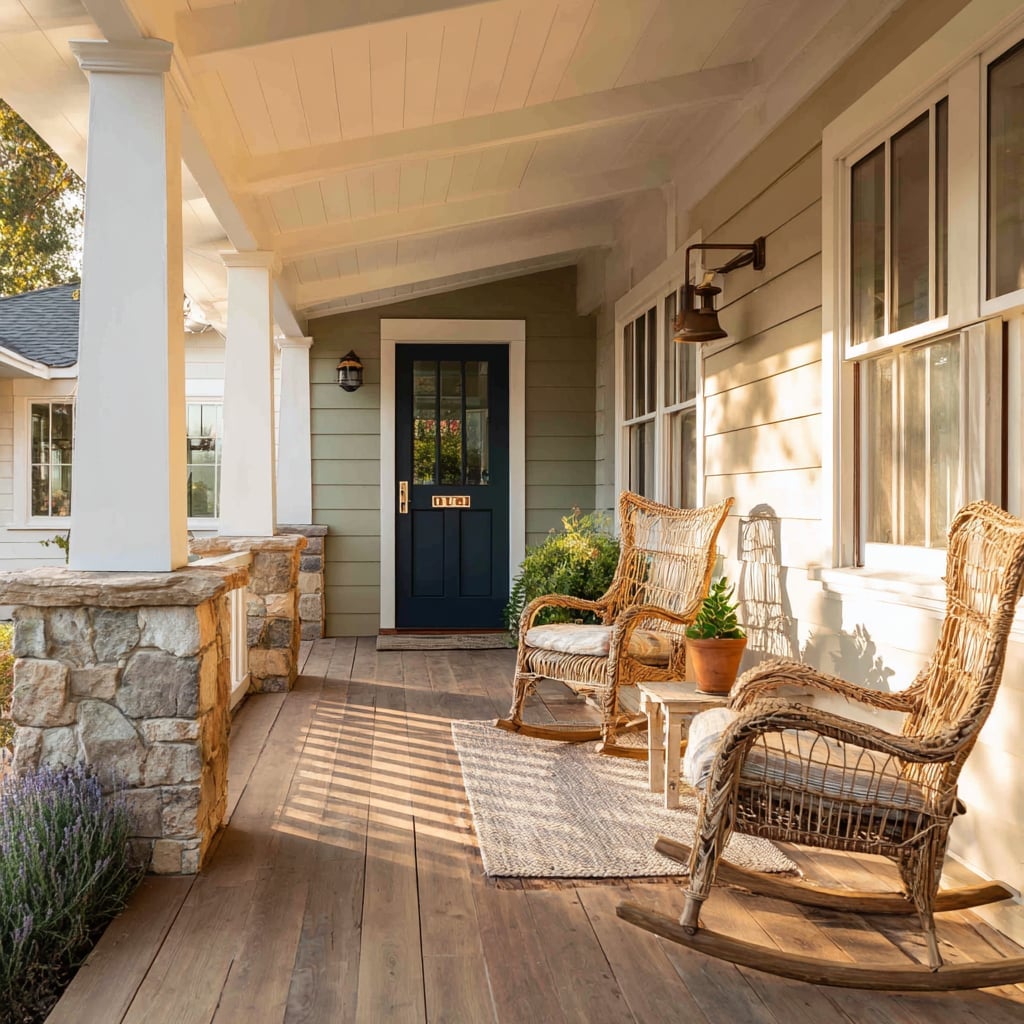
A farmhouse porch with wicker rocking chairs and a stone pillar leans on texture instead of color to do the work. The palette stays restrained: green siding, white trim, wood tones on the deck floor, and navy cushions on the chairs. The stone pillar breaks up all that painted surface with something raw and solid, which keeps the porch from looking too precious or too matched. Two wicker rockers face the front door with a small side table between them, and a rug sits under the chairs to define the seating zone. Wall sconces on either side of the door add warm light for evenings, and a potted plant brings in a living green note that echoes the siding.
Final Thoughts
Choosing a porch railing comes down to how much time you want to spend on maintenance and how the railing frames the view from inside or the street. Wood needs staining every couple of years but warms up a space. Metal holds up longer but can rust if scratched. Cable and glass keep sightlines open but show every smudge. Whichever route you pick, pair the railing with planters or lighting that matches its finish, and you will have a porch that feels finished without feeling fussy.