
There is something satisfying about making your own wreath. It does not have to be perfect, and the process itself is half the fun. This collection of 20 homemade Christmas wreaths offers ideas for every kind of maker, from the traditionalist who wants pine and red ribbon to the modern crafter drawn to felt, yarn, or dried fruit.
Each version keeps the wreath as the clear focus, with the space around it simple and supporting. Whether you hang it on the front door, a wall, or a cabinet, you will find a look worth trying.
Gather Your Natural Wreath Making Supplies

A flat lay of natural craft supplies reads as a promise of what is about to be built, not just a shopping list. Moss, eucalyptus, holly, ribbon, and twine are spread across the surface alongside scissors, each piece a building block for a rustic wreath. The green, brown, red, and blue palette keeps the arrangement grounded in nature, while the overhead view makes every texture visible. A moss wreath base sits at the center, waiting for the layers that will turn it into something finished. For a layout like this, keep the hero element central and let the surrounding materials fan out without crowding it.
Craft a Lush Evergreen Wreath with Dried Oranges

This wreath leans into abundance, and that is exactly what makes it work. Evergreen boughs form a dense base, with dried orange slices adding warm orange tones against the deep green. Pinecones, red berries, and a single bell punctuate the surface without overwhelming the natural look. The bright daylight makes the textures pop, from the waxy leaves to the matte fruit. The palette here is a simple ratio: mostly green, with orange and red as accents. That balance keeps the wreath from feeling cluttered while still looking full.
Design an Olive Branch Wreath with Gold Accents

Can olive branches hold their own against traditional evergreens for a Christmas wreath? This one says yes. The wreath hangs on a front door, its muted green foliage paired with gold bells and beads that catch the natural light. Olive branches have a softer, more silver-green tone than pine, which makes the gold feel deliberate but not flashy. The materials here are straightforward: olive branches, a metal or wood base, and small gold accents.
For this design, keep the greenery as the focus and space out the metal pieces. The white door behind it keeps the contrast clean, so the wreath stays visible against its background.
Create a Modern Wood Hoop Wreath
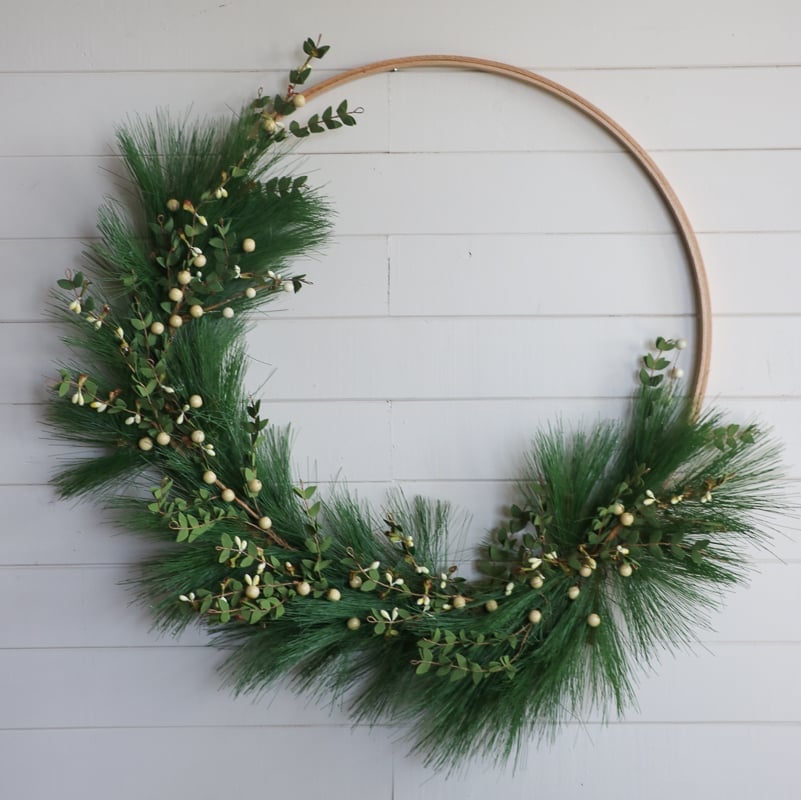
A wood hoop replaces the traditional full circle of greenery, leaving the center open and the silhouette airy. Pine and eucalyptus are tucked into the top and bottom of the hoop, with the bare wood showing through in between. The soft ambient light keeps the green and white palette calm, and the minimalist frame means the wreath reads more as decor than as a statement. For lighting, a hoop wreath benefits from a wall that gets indirect light, so the open center does not cast a harsh shadow.
Curate a Gallery Wall of Diverse Wreaths

To create a gallery wall of wreaths, vary the textures more than the sizes. Seven wreaths hang on a neutral wall, mixing natural greenery, dried materials, moss, and bare twigs. The eclectic palette keeps each piece distinct, but the neutral wall behind them ties the whole arrangement together. Soft ambient light helps the different materials look cohesive. For storage between seasons, flat wreaths stack easily in a closet, while three-dimensional ones need a hook or a shallow box to keep their shape.
Assemble a Traditional Pine Wreath with a Red Bow

A classic red bow on a lush pine wreath feels timeless, but swapping the usual satin ribbon for burlap gives it a grounded, textured look. This version pairs a large pine base with a red burlap bow and pinecones, set against a simple wooden background. The soft natural light keeps the palette of green, red, brown, and white from feeling heavy. Center the wreath and let the wall stay plain, so the pine needles and bow structure do all the work.
Decorate a Wreath with Ornaments and Pinecones
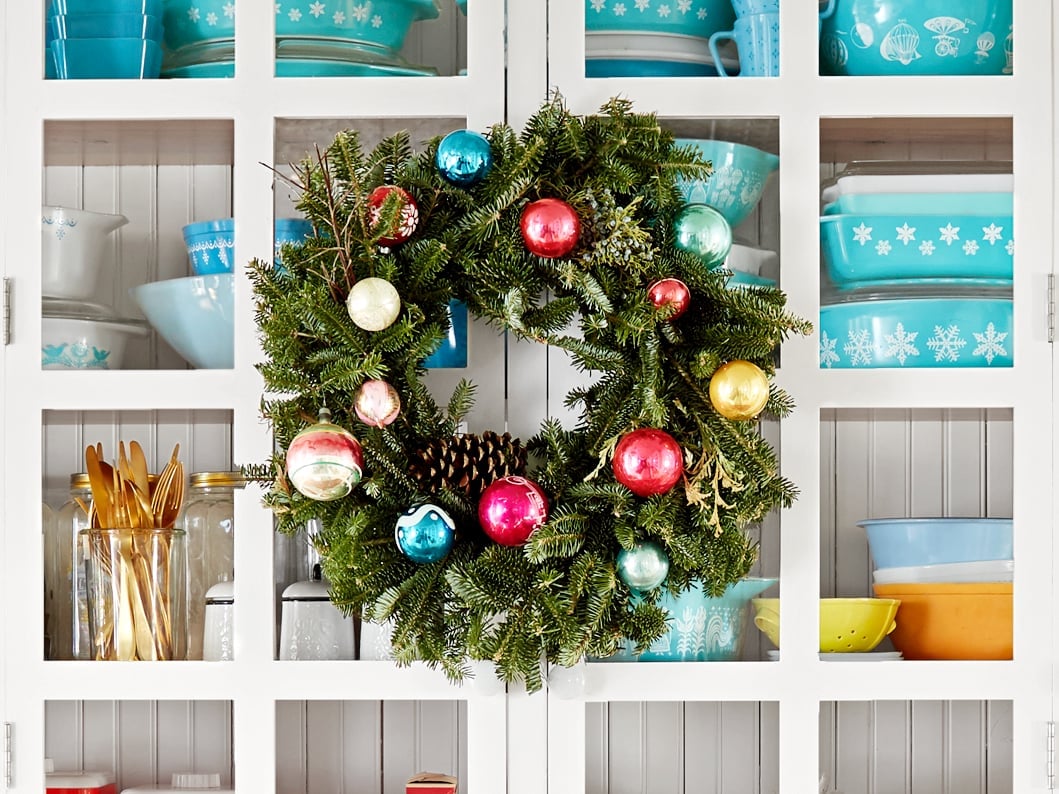
This wreath is hung inside a kitchen cabinet, which is a renter-friendly move that avoids drilling into walls. The traditional design mixes green pine branches with ornaments in red, blue, and gold, plus pinecones, all lit by ambient room light. The trick is to cluster ornaments in odd numbers for a collected feel, not a uniform one.
Hang a Large Evergreen Wreath with Brass Bells
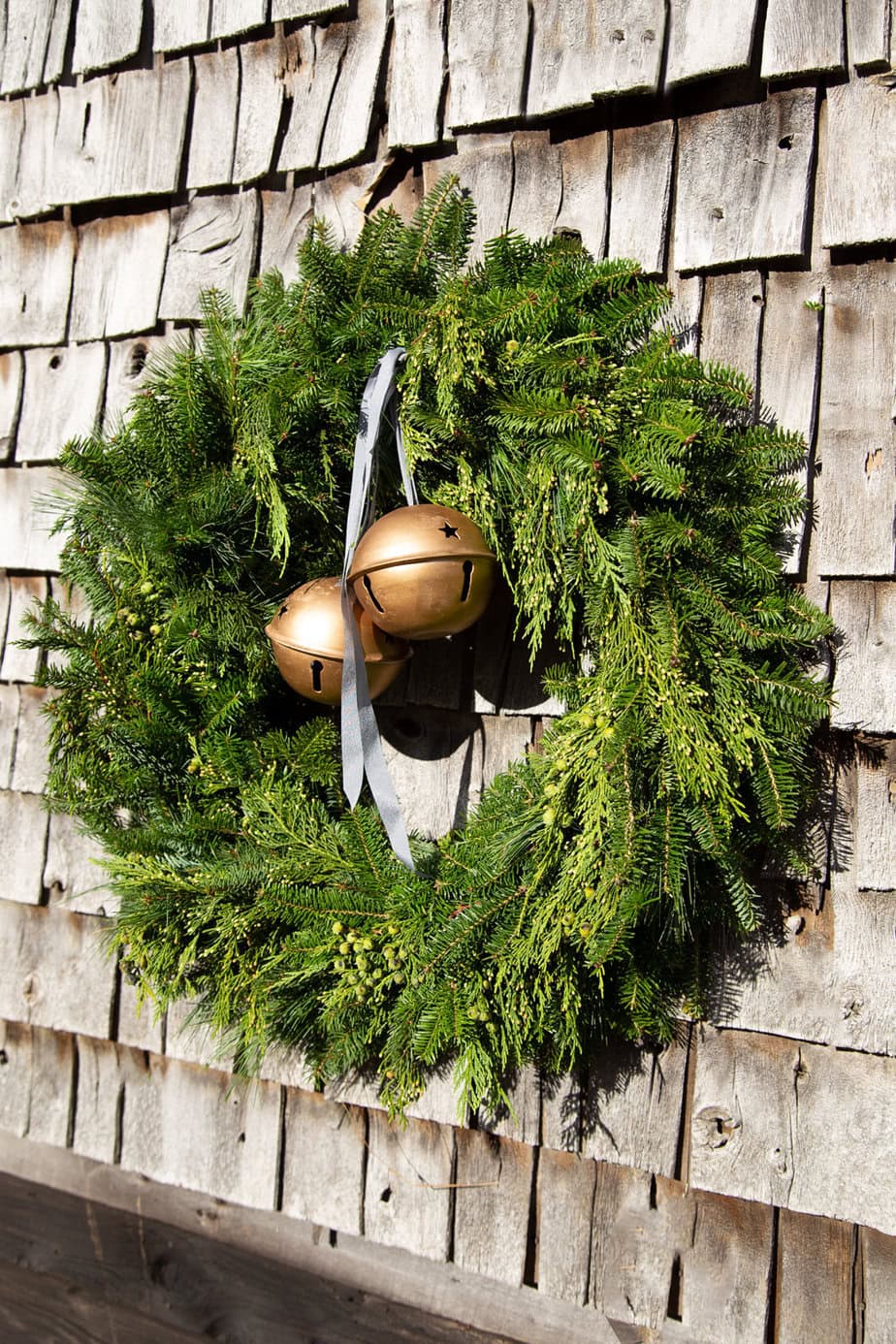
This is a large wreath that knows its scale. Hung on an exterior shingled wall in bright daylight, the evergreen base and brass bells read clearly against the gray wood. The rustic palette of green, gold, and gray keeps it from looking fussy. A principle for outdoor element mode: the wreath needs visual weight to hold its own against the wall texture and daylight, so oversized bells or branches are a practical choice.
Make a Modern Pom Pom Wreath
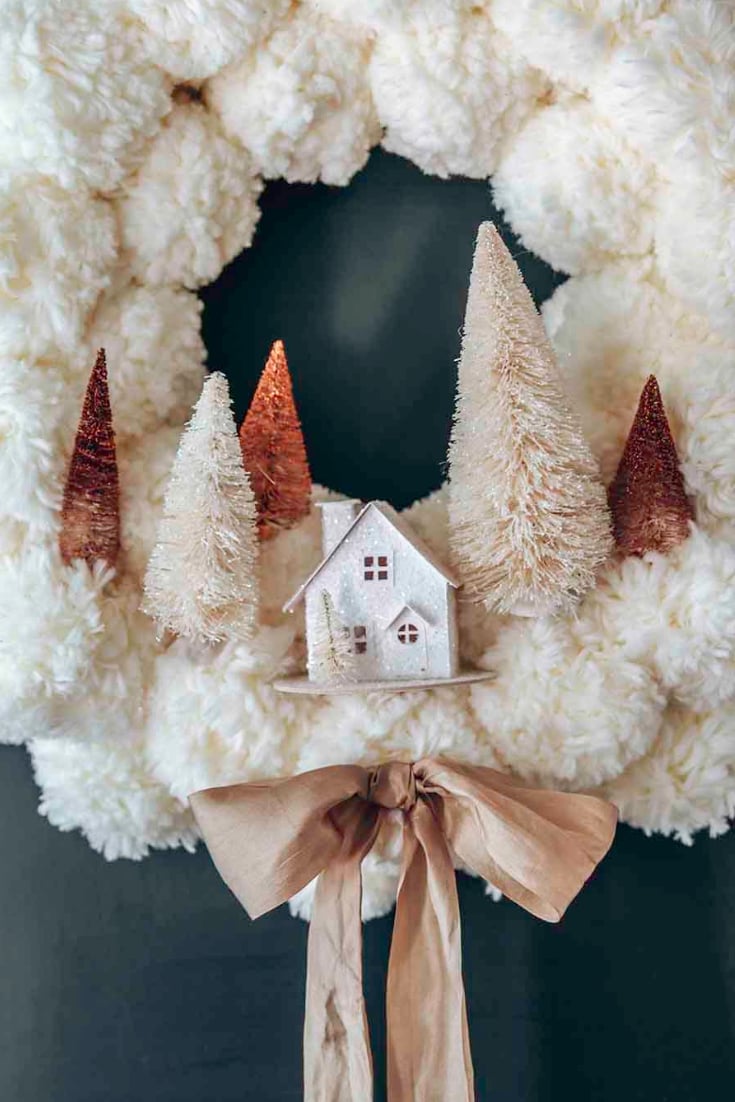
Will a yarn wreath hold up through the season? Yes, if you choose the right materials. This modern pom pom wreath is mounted on a wall indoors, with a fluffy white texture that contrasts with copper and green accents from miniature trees and houses. The soft light helps the yarn look soft, not dusty. A useful tip for element mode: felt and yarn are lightweight, so they stay put with a simple adhesive hook, and they won’t shed like fresh greenery.
Adorn a Door with a Gingham Bow Wreath

A full evergreen wreath gets a large gingham bow in pink and gold bells, all hanging on a front door in daylight. The fabric bow is the focal point, so the wreath stays simple. A rule for scale: the bow should be proportional to the door, not the wreath alone, so it becomes a deliberate accent.
Create a Whimsical Wreath with Felt Trees

A flocked artificial pine wreath gains a playful feel when you add felt trees in pink, green, red, orange, and yellow. The colorful shapes contrast with the white flocking and the pink door behind them. A ribbon ties it all together. To recreate it, look for a flocked wreath as the hero element and arrange the felt trees outward in a balanced ring. This keeps the eye moving around the wreath without settling on one spot. The whimsical style works because the colors break from the usual red and green ratio, adding unexpected warmth.
Design a Yarn Ball Wreath with Peppermint Candies

A yarn-wrapped wreath covered in peppermint candies has candy shop charm. The palette stays tight: pink, red, cream, and white. The yarn base softens the look, while the candy stripes add a graphic punch. A ribbon hangs below to finish it.
For a balanced palette, limit yourself to two or three main colors plus one accent. Here the cream yarn acts as the neutral, red and pink are the main colors, and the white candy stripes become the accent. Keeping the ratio at roughly 60 percent cream, 30 percent red and pink, and 10 percent white keeps the wreath cohesive.
Craft a Dried Orange Slice Wreath
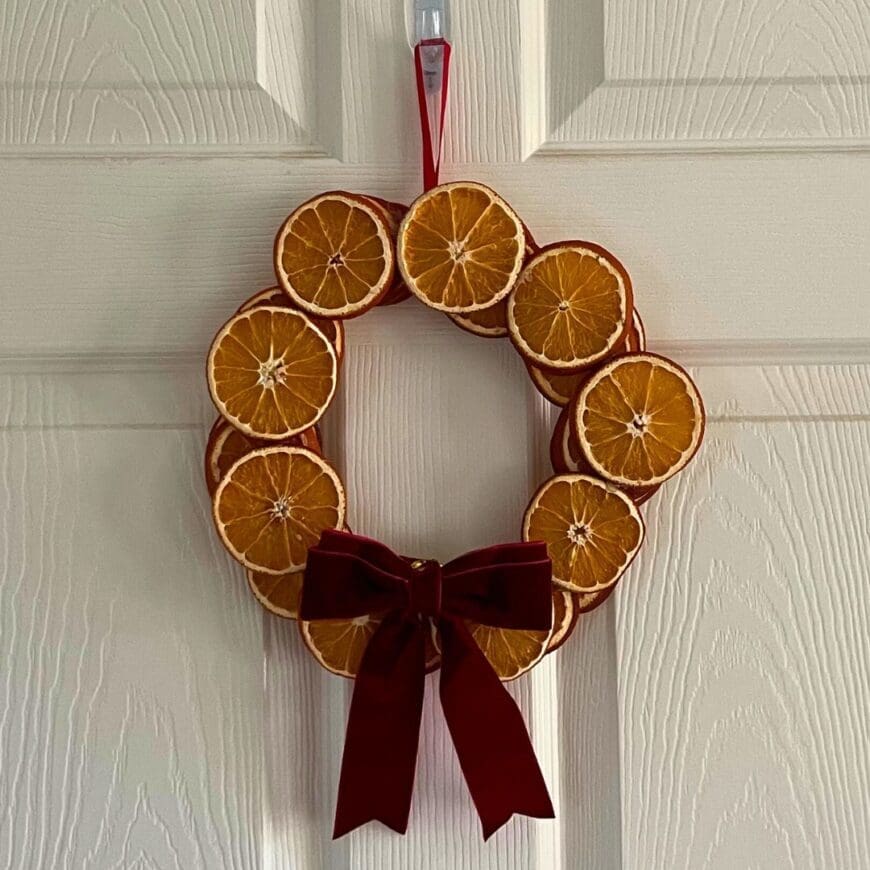
Dried orange slices form tight concentric circles across the wreath, creating a repeating pattern that feels orderly. A red bow sits at the bottom as a single focal point. The natural, rustic style pairs warm orange and brown slices with cool daylight. For materials, choose elements that share a similar thickness. The uniform slices sit flush against each other, so nothing sticks out at an awkward angle. This makes the wreath look cohesive even before you add the bow.
Assemble a Full Pine Wreath with Red Ribbon

A full pine wreath with berries, dried orange slices, and pinecones looks abundant against a brick wall. The red ribbon bow sits at the bottom, pulling the eye down and anchoring the arrangement. Soft, directional light from the side casts subtle shadows that give the pine needles texture and depth. For a lighting principle, place a wreath where it catches side light rather than flat overhead light. The shadows define the layers of pine and make the berries and pinecones pop. A brick wall adds enough roughness to keep the wreath from floating visually.
Detail a Wreath with Baubles and a Snowflake Ornament

How do you store a wreath covered in delicate ornaments without crushing them? The trick is to treat the wreath like a three-dimensional object, not a flat ring. A close-up view shows the mix of red and silver baubles, pine branches, berries, and a twig base, with a snowflake ornament as the focal point.
For a storage principle, hang the wreath on a padded hanger in a closet or wrap it loosely in acid-free tissue paper and lay it flat in a box. Keep heavier ornaments like the snowflake near the top so they don’t pull the wreath out of shape during storage. This preserves the detail for next year without having to redo the whole arrangement.
Hang a Small Felt Wreath on a Chair

A small felt wreath turns a dining chair into a holiday accent without taking over the room. The compact design in green, beige, gold, and red hangs on the chair back, adding a festive touch that feels deliberate without crowding the space. The soft ambient light keeps the felt and ribbon textures visible without glare. In element mode, the wreath becomes the focal point while the fabric chair stays simple. For renters, this is a damage-free way to decorate: a ribbon loop over the chair back means no hooks or nails.
Construct a Wreath from Paper Bows
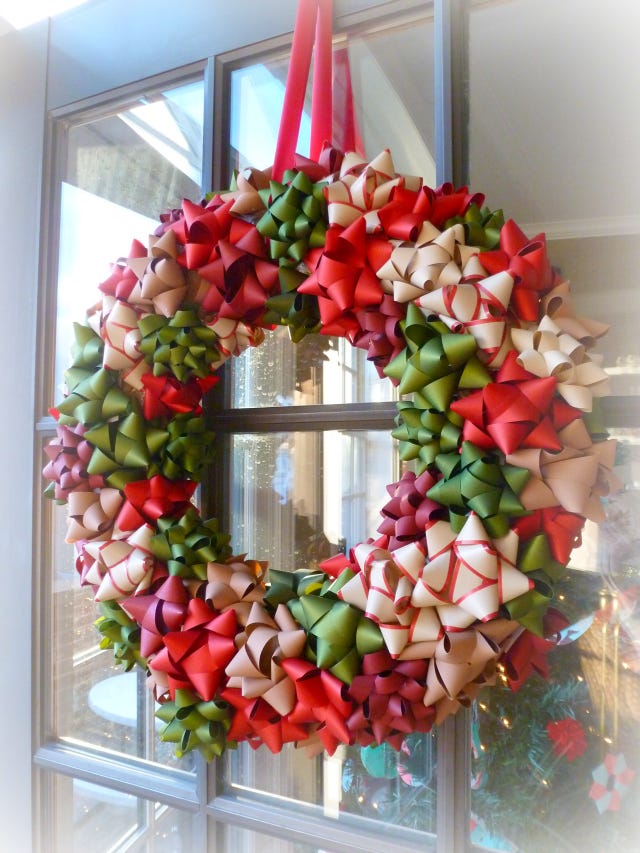
A practical rule for outdoor wreaths: lighter materials hold up better in wind and sun. This paper bow wreath proves the point with a dense arrangement of small red, green, and cream bows attached to a base of greenery. Hung on a glass door in natural daylight, the red ribbon ties it together without weighing it down. The traditional style works because the paper bows create texture without needing glue or wire that might show. For renters, paper bows are a temporary swap that removes cleanly and stores flat.
Showcase an Ornate Wreath with Baubles and Pinecones

An ornate wreath is formal next to a simpler evergreen version, but the difference is in the layers. Here, pine branches form the base, then baubles in green, red, gold, and bronze are clustered with pinecones for depth. The soft studio light keeps the metallic finishes from washing out.
The palette is traditional, but the ratio leans heavy on the ornaments over the greenery. What breaks the uniformity is the mix of finishes: glossy baubles next to matte pinecones. The wreath is centered on a white background, so the eye goes straight to the texture. If you hang this indoors, keep the wall behind it plain so the details stay visible.
Display a Fluffy White Yarn Wreath
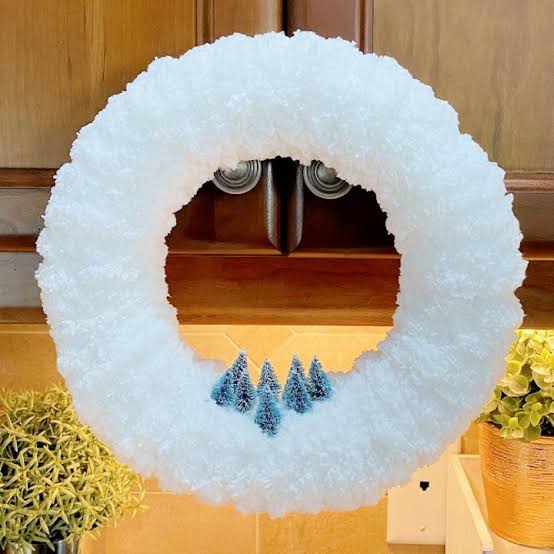
A fluffy white yarn wreath has a soft, cloud-like texture that contrasts with the hard surfaces of a kitchen. The modern style relies on the white yarn as the main material, with faux greenery and miniature trees adding small hits of green and blue. Ambient and overhead light keep the wreath visible without creating harsh shadows on the cabinet where it sits. The yarn wraps tightly enough to hold its shape, which means the wreath keeps its form through the season without sagging.
Adorn a Wreath with Faux Snow and Miniature Trees
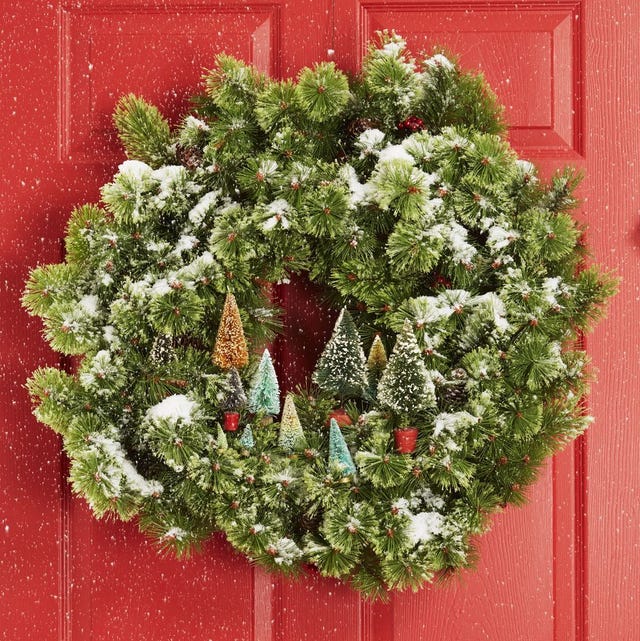
This wreath works because the scale matches the door it hangs on. A large pine base is dusted with faux snow, and bottle brush trees in green, white, and red are tucked into the branches. The close-up framing shows how the miniature trees sit at different heights, which keeps the arrangement from looking flat. Soft ambient light prevents the faux snow from reading as harsh. For a cohesive look, match the tree colors to the wreath palette. Check your USDA zone before adding real greenery outdoors, as cold weather affects how long it lasts.
Final Thoughts
Making your own wreath is mostly about the prep. Gather your base and your materials before you start cutting wire, and test the balance of colors and textures on a table before you commit. A wreath that leans too heavy on one side will drive you crazy every time you walk past. Store finished wreaths flat in a cool, dry spot if you plan to reuse them next year. The best takeaway from this list might be that a homemade wreath does not need to look perfect. It just needs to look like yours.