
Outdoor lighting in 2026 is no longer just about visibility. It’s about mood, color, architecture, and making your exterior feel as designed as your living room. If you’ve been looking for 28 outdoor lighting ideas 2026 that feel modern, realistic, and actually livable, you’re in the right place.
So what lighting styles will dominate patios, backyards, front doors, and gardens this year? And how can you mix design trends like coastal LEDs, warm lanterns, solar sculpture lighting, and modern pathway systems without your outdoor space looking messy or overdone? I’ll answer all of that, with practical design guidance I personally use.
House Entrance Lighting
I love using a warm coral-toned lighting plan at the entrance because it instantly makes the home feel welcoming without looking dated. In 2026, the key is keeping the glow soft and layered, rather than blasting the entry with a single bright porch light. I typically combine a subtle wash on the wall, a gentle highlight on the steps, and one defined focal fixture near the door.
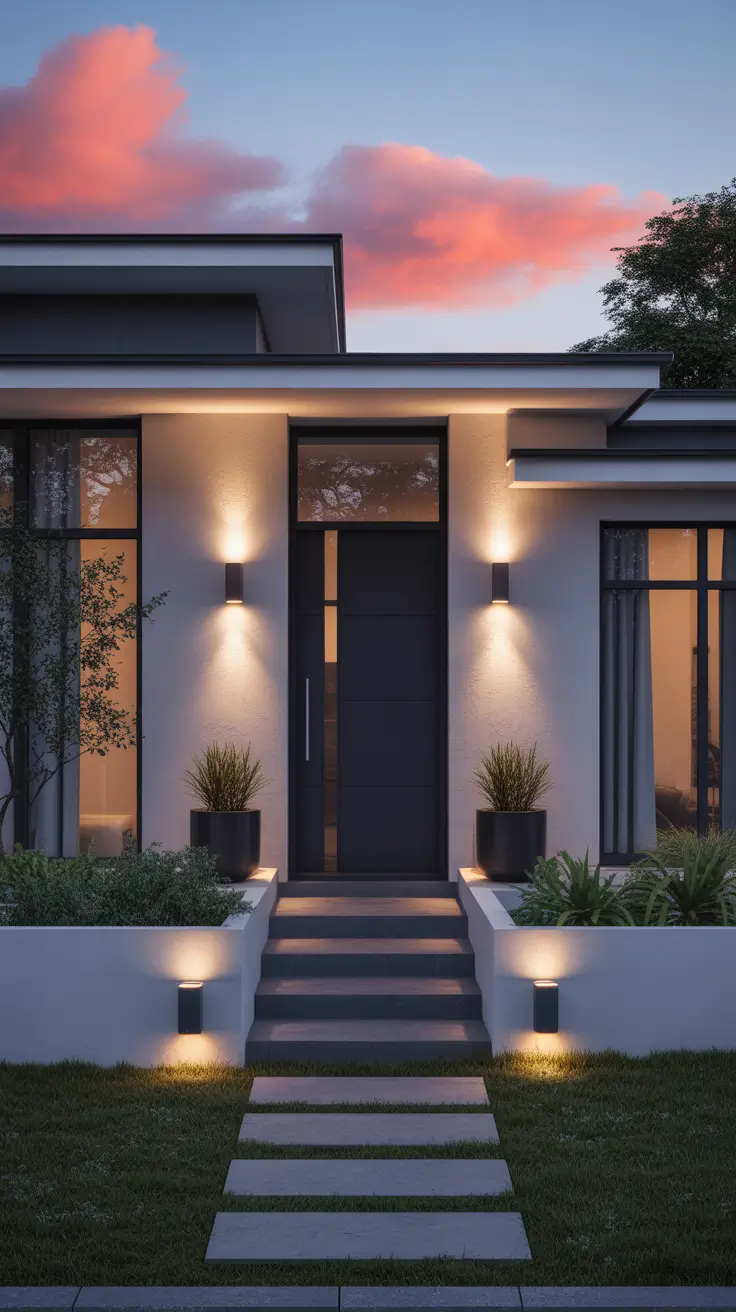
For furniture and design details, I pair this look with a clean entry bench, a slim outdoor rug, and a simple planter arrangement. The coral glow works beautifully against pale stucco, white siding, or warm wood cladding. I also like adding a modern matte-black house number plaque and a simple statement door handle so the lighting feels intentional, not random.
In my experience, this is one of the easiest lighting ideas to get right because it flatters almost every exterior material. It also looks amazing in photos, especially during golden hour. The biggest trick is choosing bulbs that don’t drift into pink or red, because coral should feel warm and elegant, not theatrical.
What I would add to complete this section is a motion-sensor layer that activates at low brightness. That way, the entrance stays softly lit all evening, but still brightens when someone approaches.
Modern Farmhouse Outdoor Lighting
Modern farmhouse lighting in 2026 is all about warmth and texture, and I’ve found that mocha-toned lantern fixtures deliver that better than harsh black metal. The goal is to make the exterior feel cozy but still clean, which means using lantern shapes that are simplified, not overly traditional. I usually recommend lanterns with straight lines, clear glass, and a warm, candle-like LED inside.
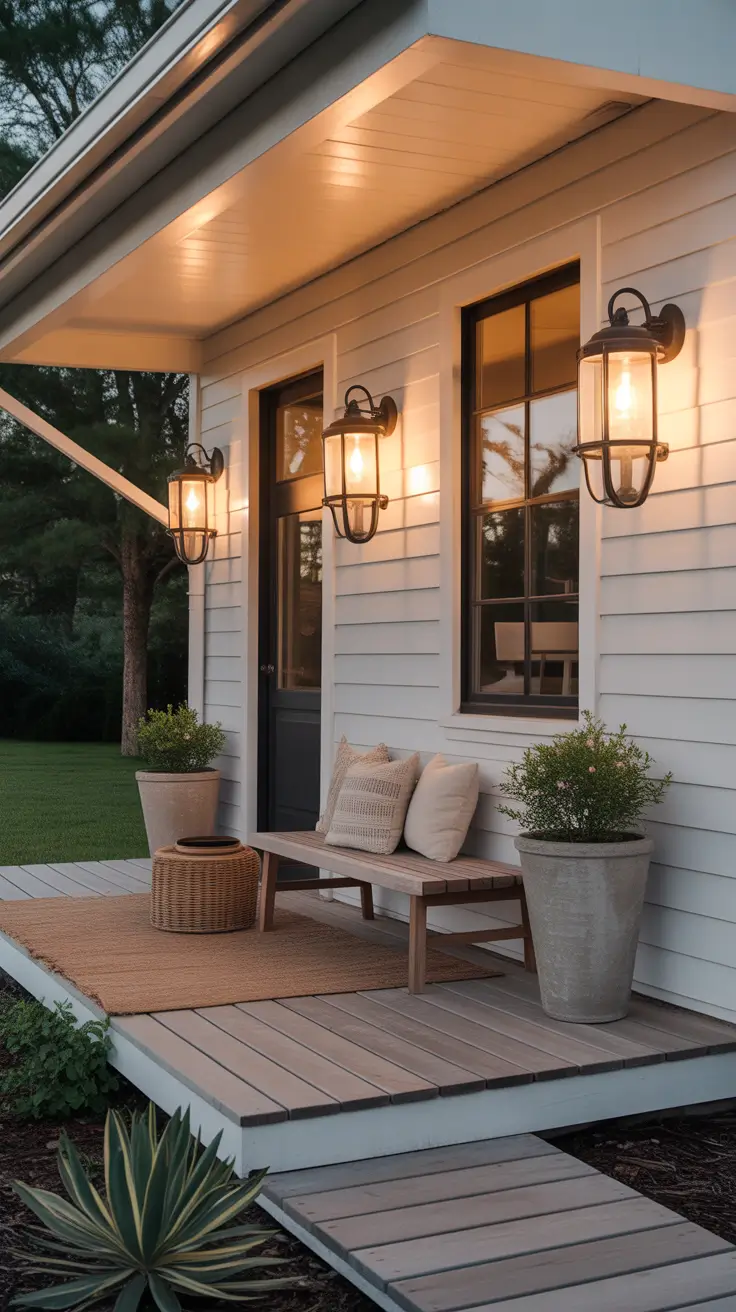
For the design setup, I like placing two matching lanterns on either side of the front door, then repeating the finish in small details like the mailbox, door hardware, and even the outdoor seating frame. A simple wood bench, woven outdoor pillows, and a large ceramic planter instantly make the lighting feel like part of the overall design.
Personally, I think mocha finishes are going to be one of the most underrated lighting trends this year because they photograph better than pure black. They soften the contrast and make the home feel more expensive, especially against white board-and-batten siding.
To make this idea even stronger, I would add a dimmer system or smart bulbs so the lanterns can shift from bright functional light to warm ambient glow for evening curb appeal.
Landscape Lighting With Matte Onyx Pathway Lighting
When I design landscape lighting for a modern garden, I focus on clean geometry and consistent spacing. Matte onyx pathway lights are perfect for 2026 because they feel sleek, architectural, and timeless. Instead of lighting everything, I prefer to guide the eye by illuminating only key routes and a few feature plants.
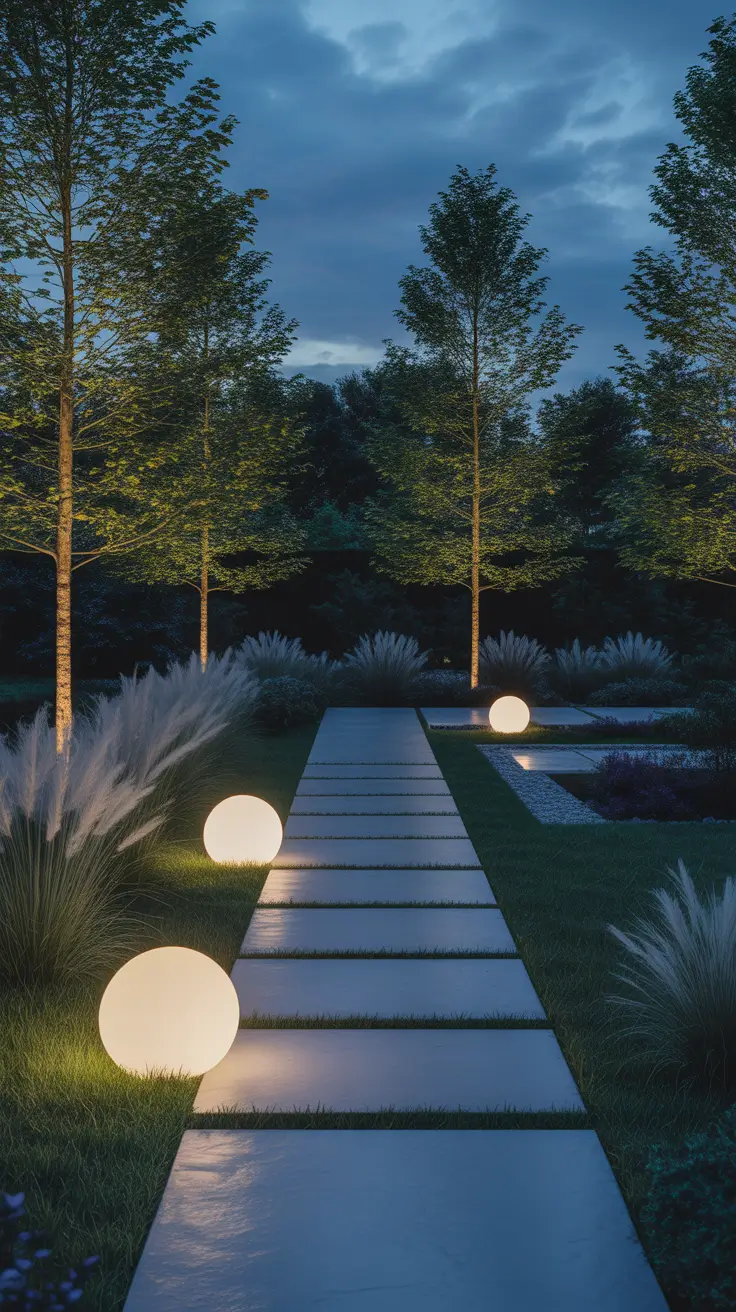
For the full scene, I combine low-profile path lights with a minimalist planting plan: ornamental grasses, sculptural shrubs, and a few statement boulders or edging stones. I also like adding a simple outdoor lounge zone nearby with a low-profile sofa set, because it makes the pathway lighting feel connected to how the yard is actually used.
From my perspective, matte onyx finishes work best when you keep the rest of the outdoor decor calm. If you add too many finishes, the garden can feel busy. A modern garden should feel curated, not crowded, and the lighting should support that.
What I would add here is one subtle uplight aimed at a single tree canopy. That one extra layer makes the whole yard feel larger and more professionally designed.
Mid Century Modern Outdoor Lighting
Mid century modern outdoor lighting is one of my favorite styles to work with because it naturally balances function and aesthetics. In 2026, pearl white wall sconces are trending because they feel lighter and more refined than heavy black fixtures. I use them to create a clean, sculptural look on exterior walls, especially near patios and side entrances.
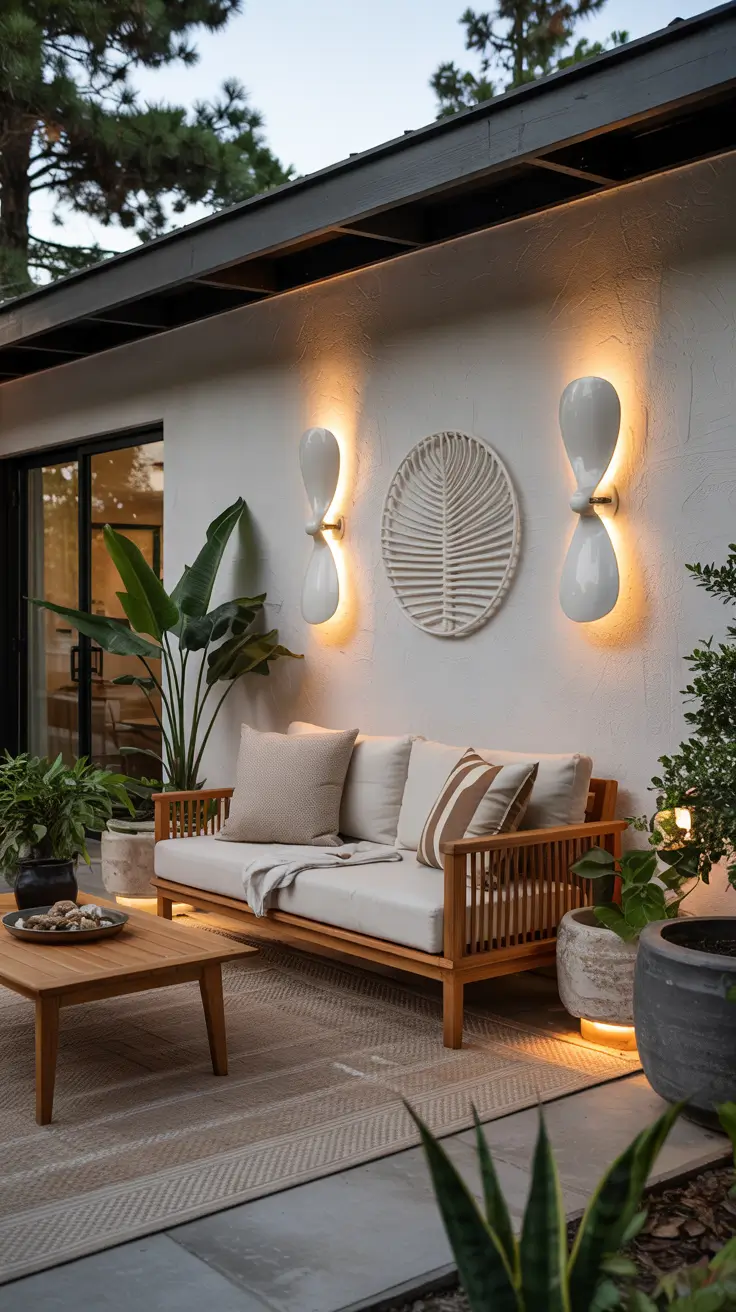
For the design details, I pair these sconces with mid-century outdoor furniture like a low teak bench, a simple lounge chair, and a small round side table. I also like adding a textured outdoor rug and a few ceramic planters in neutral tones. The pearl white finish blends beautifully into modern siding or smooth stucco, keeping the exterior looking airy and curated.
In my own projects, I’ve noticed that minimalist sconces help avoid the “builder-grade” look that many homes get stuck with. They also work well with warm-toned LEDs, which is important because mid century design should feel inviting, not cold.
To complete this idea, I would add a small lighting accent near the ground, like a recessed step light or a short bollard, so the wall sconces don’t feel like the only light source.
Backyard Patio Lighting
Coastal blue LED accents are a standout trend for 2026, especially for patios and backyard seating areas. I like this idea because it adds a fresh, breezy mood without looking like nightclub lighting. The trick is using blue as an accent, not the main source of illumination, so the space stays comfortable for real-life use.
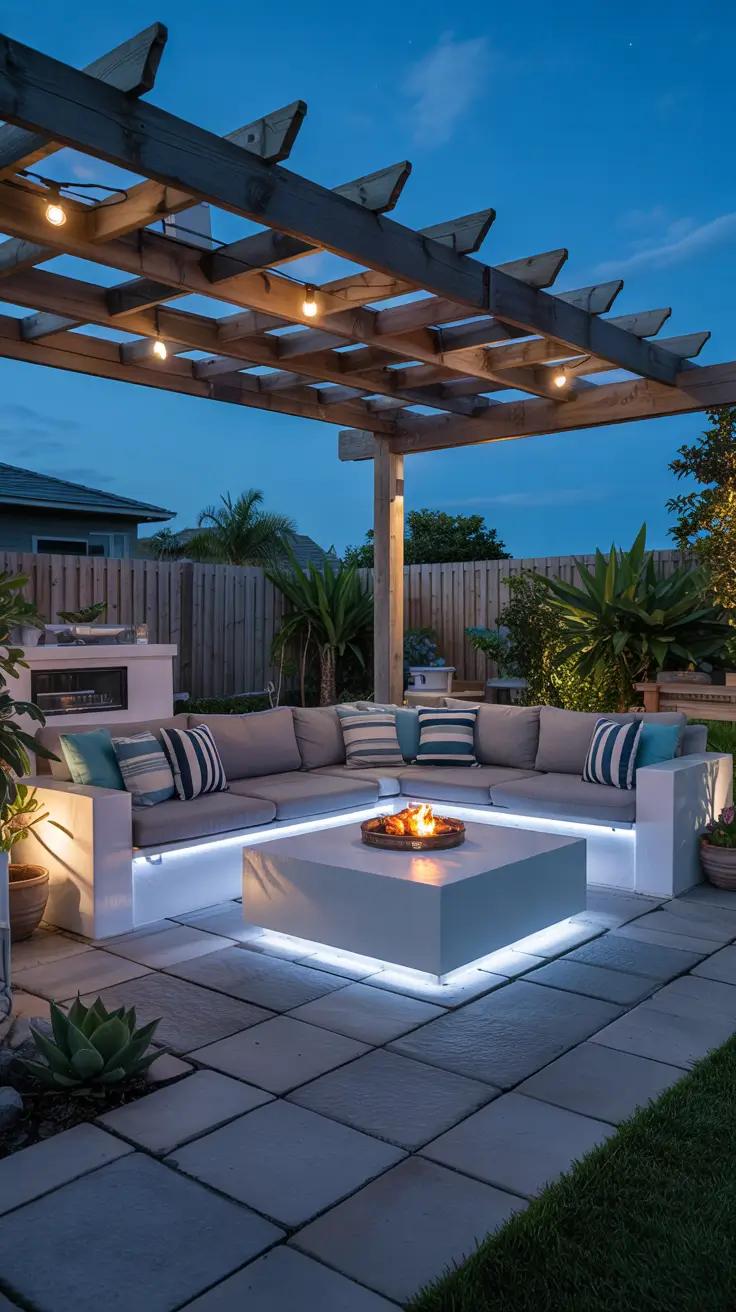
In terms of furniture and layout, I design this with a full patio scene: a sectional sofa, a coffee table, and a dining zone nearby. I often recommend LED strips tucked under a bench, beneath railing lines, or along the base of a pergola. Then I layer warm white overhead lighting so the patio still feels cozy.
Personally, I think this style works best when the rest of the decor is neutral and coastal-inspired. Think white cushions, driftwood-toned tables, woven textures, and a few blue ceramic accessories. The lighting becomes the “cool breeze” element, rather than something loud or artificial.
What I would add to strengthen this setup is a smart control system so you can switch between warm white for dinner and coastal blue for relaxing after sunset.
Solar Outdoor Lighting
Solar lighting has finally reached a point in 2026 where it can look truly designer, especially when you choose sculptural fixtures. Sandstone beige solar lights are a smart trend because they blend into natural landscaping instead of standing out like cheap plastic stakes. I use these most often in garden beds, around seating zones, and near paths where you want subtle visibility.
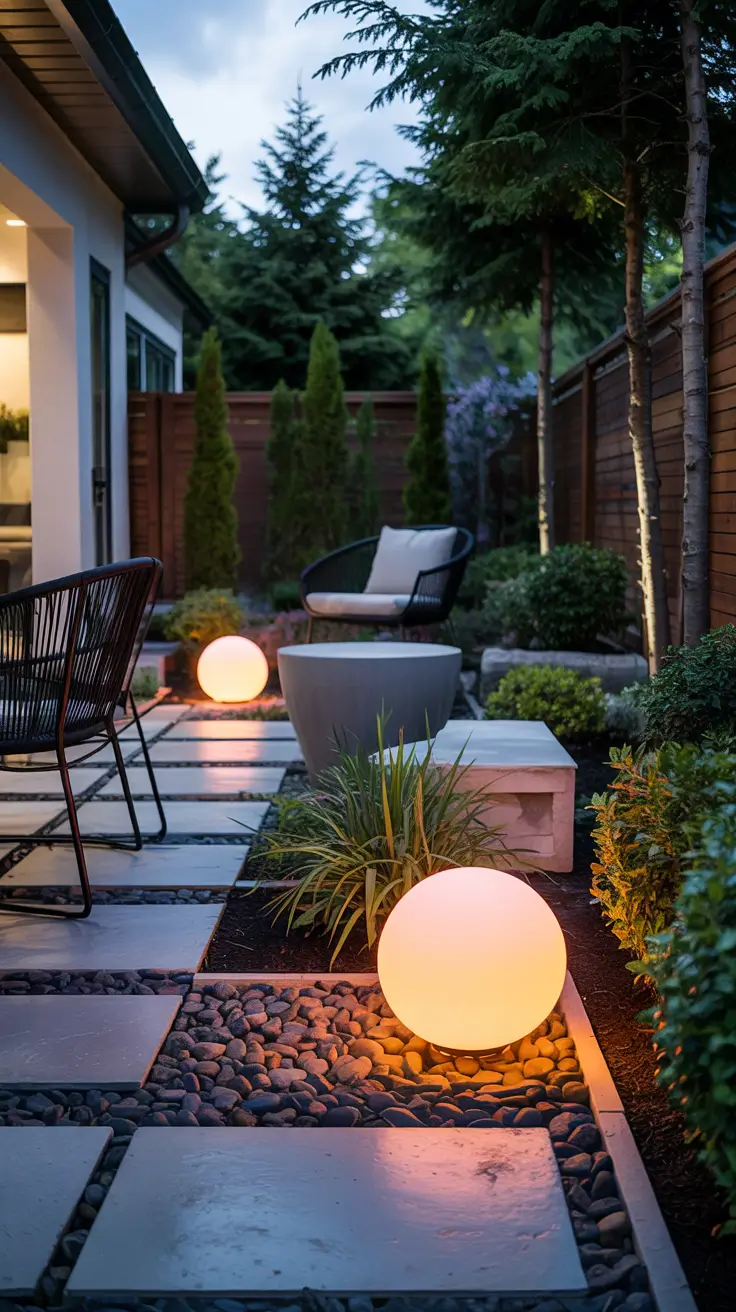
For the full outdoor design, I combine sculptural solar fixtures with natural textures: stone pavers, gravel sections, drought-tolerant plants, and warm wood furniture. I also like using these lights near a small outdoor dining set because they create a gentle ambient glow without needing wiring.
From my experience, solar lights work best when you treat them like decor, not utilities. I choose fewer fixtures, spaced intentionally, rather than lining the entire yard. That approach looks far more modern and expensive.
To make this section complete, I would add one higher-output solar spotlight aimed at a feature element like a tree, a wall texture, or a sculptural planter arrangement.
Rustic Outdoor Lighting
Rustic lighting in 2026 is no longer heavy or overly vintage. The updated version is lighter, warmer, and more refined, and copper glow string lights are perfect for that. I use them to create a dining space that feels romantic, upscale, and practical, especially in backyards that need a quick design upgrade.
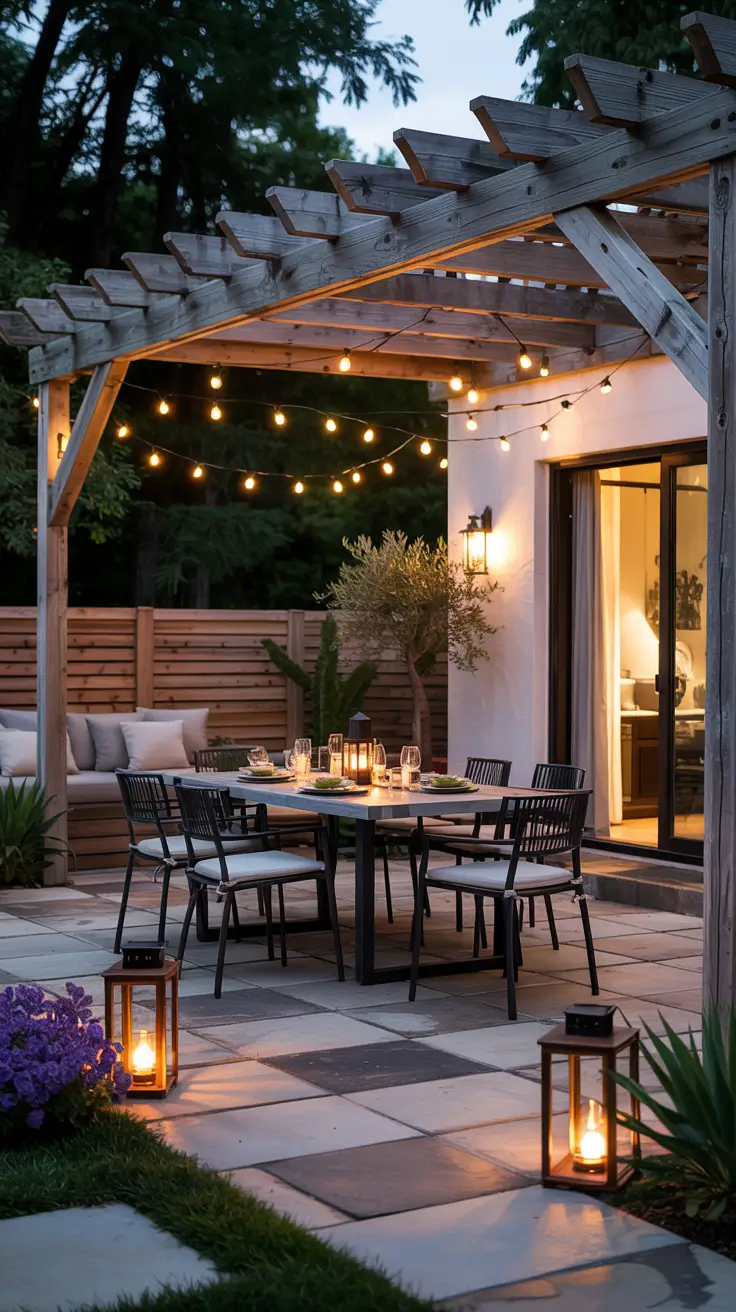
For the full dining setup, I recommend a large outdoor table, comfortable chairs with cushions, and a textured outdoor rug underneath. I also love adding a simple outdoor bar cart and a few lanterns on the table. Copper-toned string lights look stunning against wood pergolas, brick walls, or even modern fences, because they add warmth without fighting the architecture.
Personally, this is one of the easiest outdoor lighting ideas to implement with a big payoff. I’ve used this approach in multiple backyard designs and it consistently makes the space feel like an outdoor restaurant, but still comfortable enough for everyday family dinners.
What I would add here is a second layer of lighting such as wall sconces or a pendant over the dining table. String lights alone can feel flat if you don’t give the space depth.
Backyard Fire Pit Lighting
When I design backyard fire pit zones in 2026, I treat them like outdoor living rooms, not just a place to light a flame. Ember red lighting accents are trending because they extend the fire’s warmth visually, even when the flame is low. I like using subtle red-toned LEDs around the perimeter of the seating area, paired with warm white light for safety and comfort.
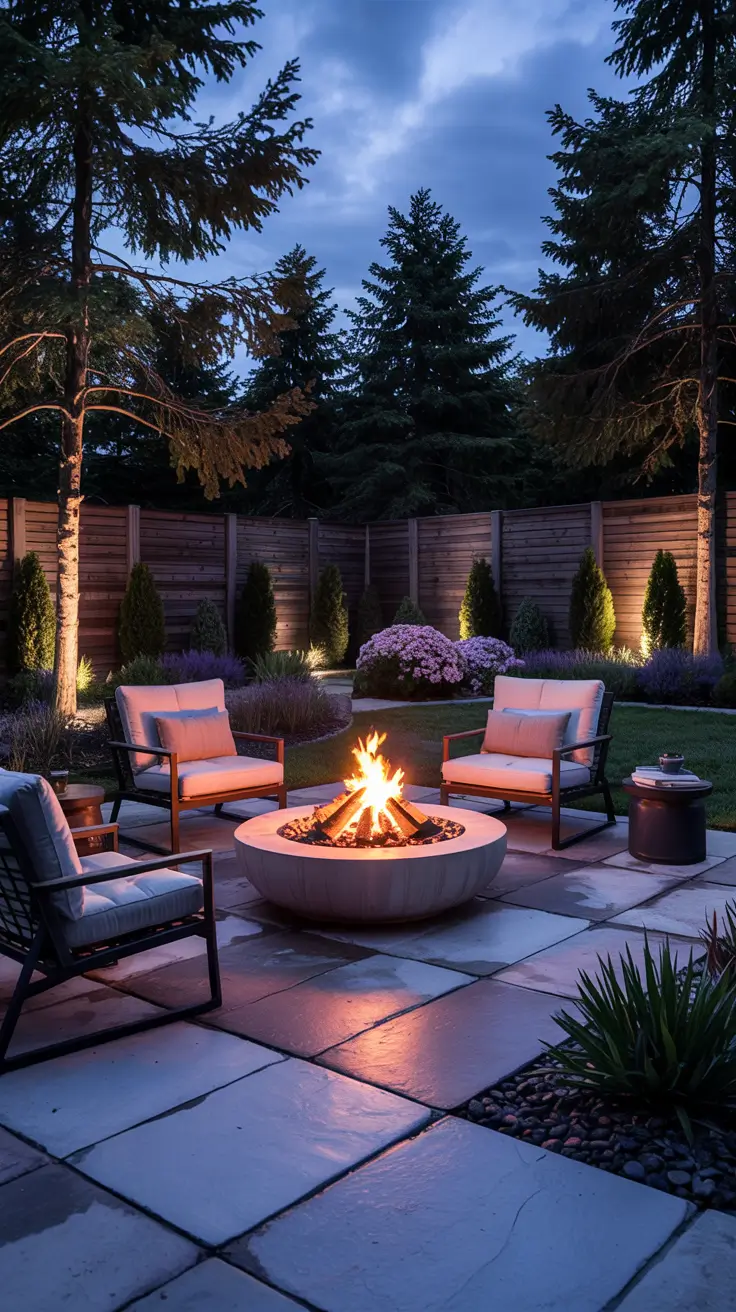
For furniture, I always build this idea around deep outdoor lounge chairs, a circular fire pit table, and a soft-textured outdoor rug that can handle weather. I also like adding side tables, a woven blanket basket, and a few low lanterns so the lighting feels layered and intentional. Ember red works best when it’s used in small doses, like a glow under a bench or a recessed strip beneath the fire pit surround.
Personally, I think this is one of the most “2026” outdoor lighting looks because it feels cinematic but still livable. It’s also incredibly flattering for outdoor gatherings, because the warm tones make people look better in photos and the whole area feels more intimate.
To finish this setup properly, I would add a dimmable pathway light leading to the fire pit area so guests can walk safely without ruining the mood.
Recessed Deck Lights In Driftwood Brown Finishes
Recessed deck lighting is one of the most practical outdoor lighting ideas, and in 2026 it’s being upgraded with driftwood brown finishes that blend beautifully into modern wood tones. I like this idea because it looks clean in the daytime and becomes extremely functional at night. It’s also one of the best choices if you want lighting that doesn’t visually clutter the space.
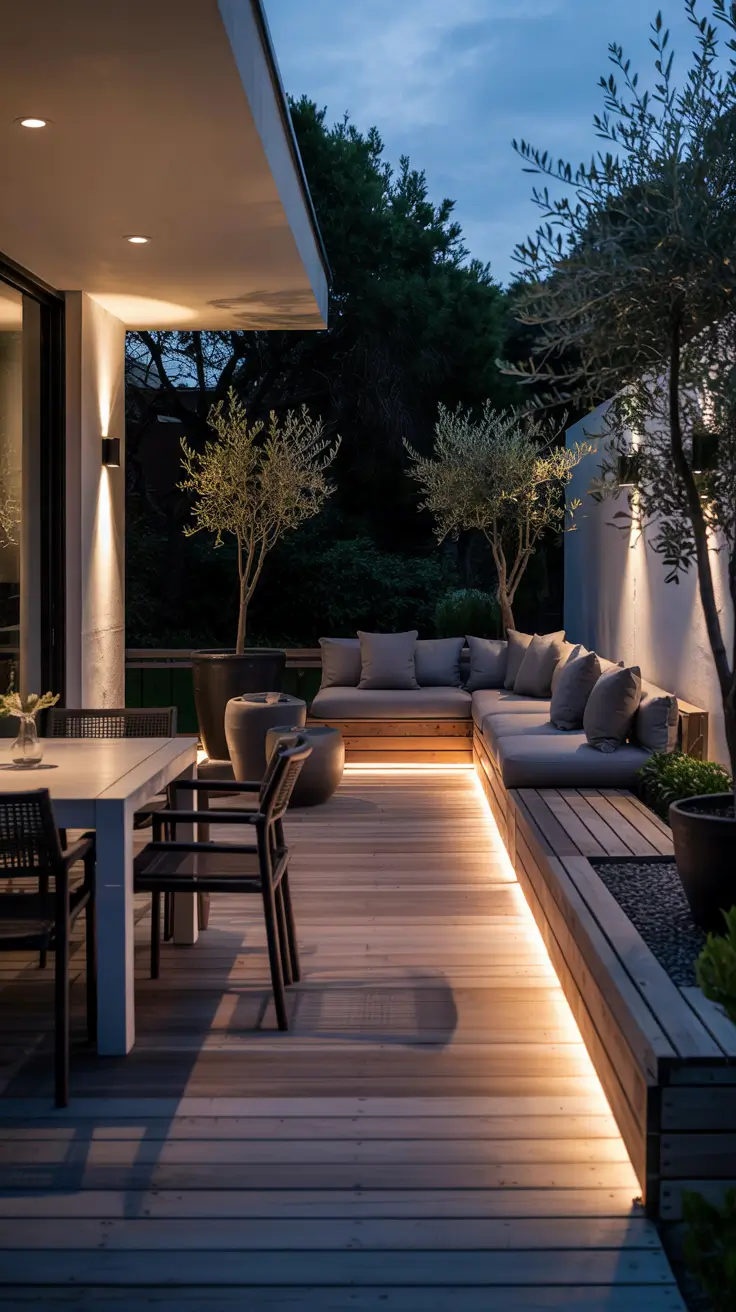
For the design details, I usually combine recessed deck lights with a full seating setup: a dining table, a grill station, and a lounge corner. The driftwood brown finish works well with composite decking, natural cedar, and even stained wood. I also recommend pairing this with slim railing lights or a few minimalist wall sconces so the deck has multiple layers of illumination.
In my experience, recessed deck lights are the lighting feature homeowners appreciate most after the project is finished. They don’t call attention to themselves, but they dramatically improve how the space feels and how safe it is.
What I would add to make this section complete is a note about spacing and installation planning. I always recommend mapping the deck layout first so lights align with stairs, corners, and traffic flow.
Front Door Lighting Fixtures
In 2026, front door lighting fixtures are being treated like architectural details, not afterthoughts. I love this approach because it instantly improves curb appeal and makes the entrance look professionally designed. Instead of traditional lanterns, I’m seeing more streamlined, oversized fixtures with clean lines, soft diffusion, and a strong silhouette.
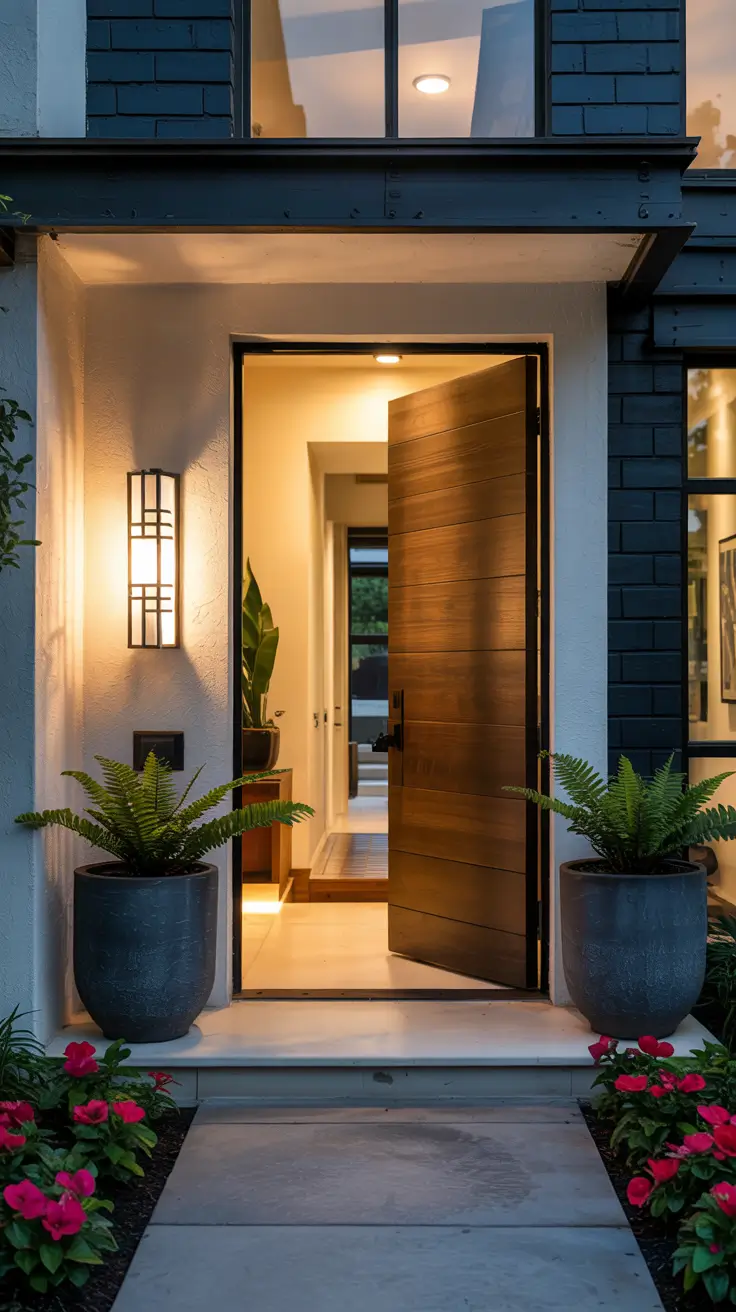
For the full entrance scene, I like pairing a statement fixture with a modern door, large planters, and a bench or chair if the porch has enough space. The fixture should visually match the scale of the door and the trim. I also recommend matching the finish to other exterior elements like the mailbox, house numbers, and railing so the design feels cohesive.
Personally, I always tell people that the front door is one of the best places to invest in lighting. It’s the first thing guests see, and it’s also what you see every time you come home. A strong fixture can make even a basic exterior look upgraded.
To strengthen this section, I would add the suggestion of using a warm LED temperature and a dimmer. A front door fixture should never feel harsh or overly bright.
Front Door Brass Lighting
Brass outdoor lighting is a major trend in 2026, especially for front doors, because it adds warmth and a subtle luxury feel. I like brass here because it softens modern architecture and makes traditional exteriors feel updated. The key is choosing a brushed or satin brass finish, not a shiny yellow tone that can look dated.
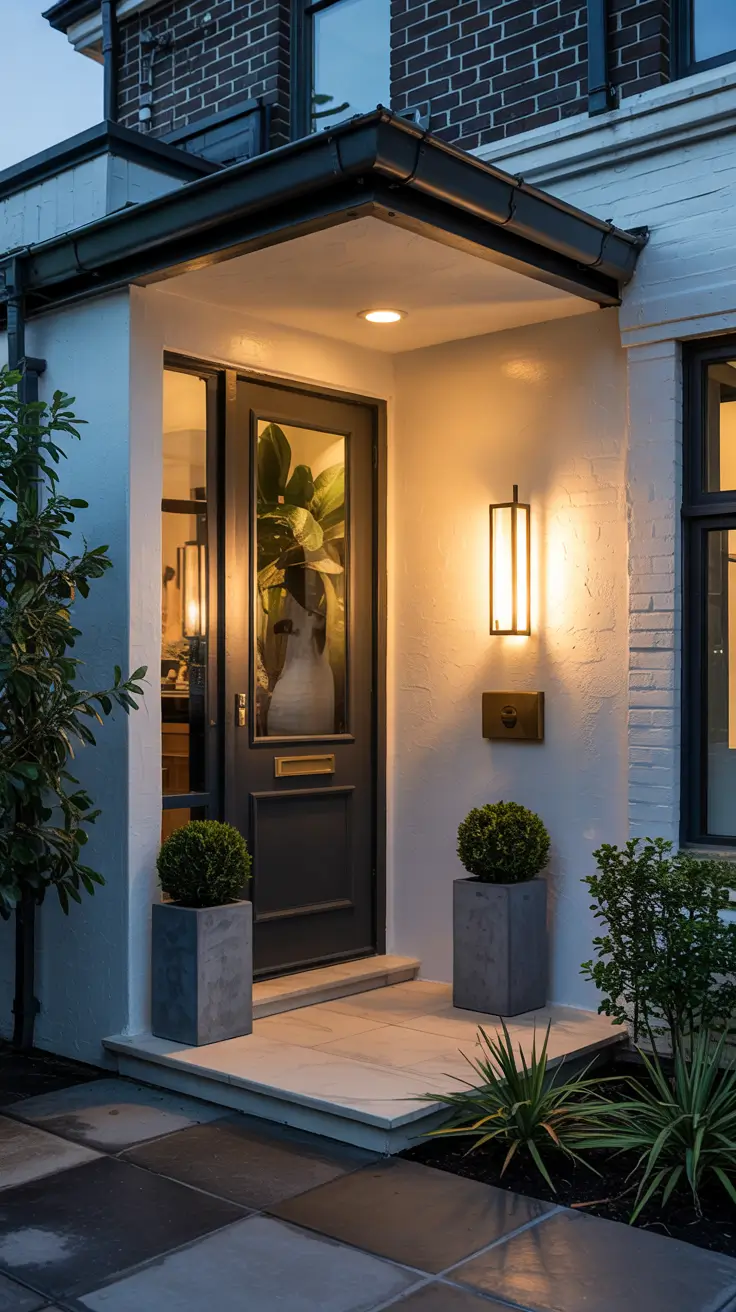
For the design layout, I pair brass lighting with dark-painted doors, warm wood accents, and simple landscaping. Brass looks incredible next to deep green, charcoal, navy, and black doors. I also like adding a matching brass door knocker, a modern handle set, and a clean doormat so the whole entry reads as intentional.
In my experience, brass is one of the easiest finishes to elevate curb appeal without changing the architecture. It also looks fantastic in realistic photos, because it catches ambient light in a soft way rather than reflecting harshly.
What I would add to complete this idea is a note about maintenance. I always recommend choosing brass fixtures designed for outdoor use, because cheap brass finishes can fade quickly in direct sun.
Cottage Outdoor Lighting
Cottage outdoor lighting in 2026 is leaning toward Mediterranean warmth, and terracotta pendant lights are a perfect way to achieve that. I love this idea for covered patios, porch ceilings, or pergolas where you want a cozy glow and a strong style statement. Terracotta tones add warmth and depth without needing bold colors everywhere else.
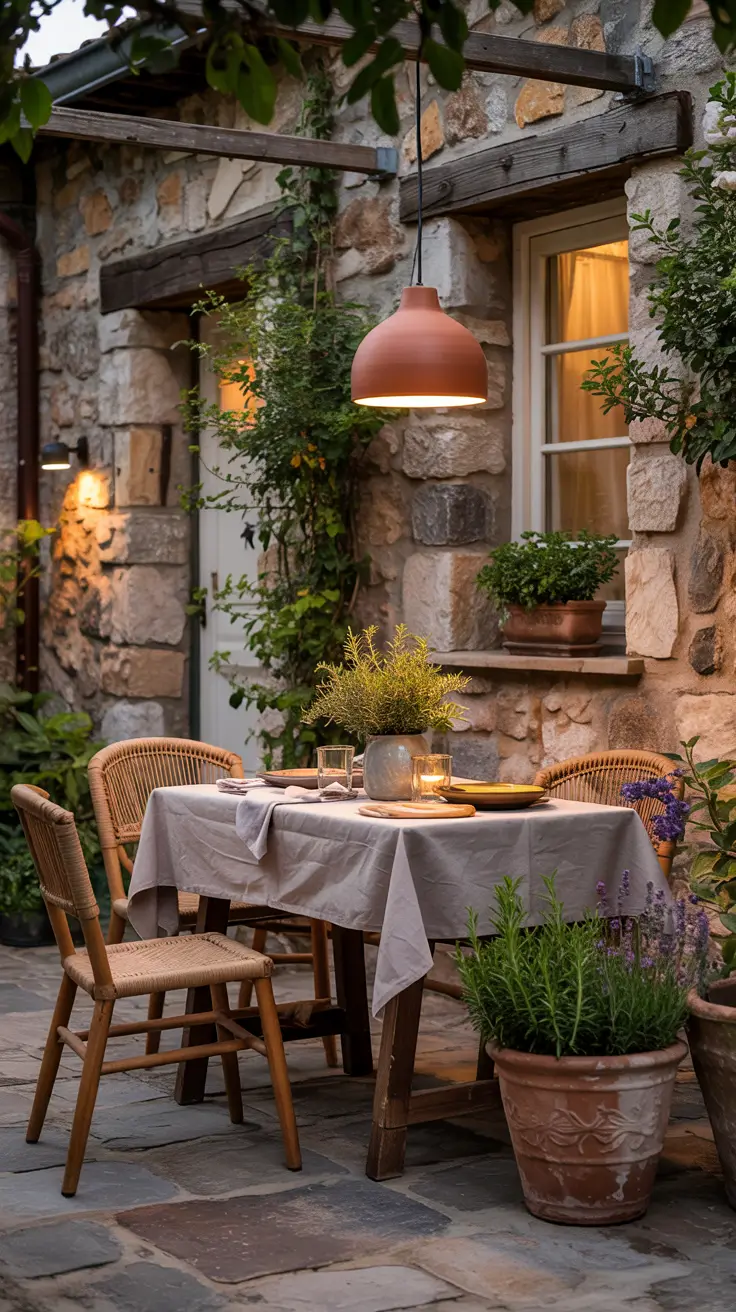
For furniture and design, I usually pair terracotta pendants with a rustic wood dining table, woven chairs, linen-style cushions, and ceramic planters. I also like adding a patterned outdoor rug and a few olive-tree-style plants in large pots to reinforce the Mediterranean vibe. The pendant light becomes the centerpiece, so everything else can stay simple and textured.
Personally, I think this lighting style makes outdoor spaces feel like a destination. It’s the kind of design that encourages people to sit longer, eat slower, and actually enjoy the evening outdoors.
To make this section even stronger, I would add a recommendation for warm, diffused bulbs. Terracotta lighting looks best when the glow is soft and golden, not sharp or overly white.
Wedding Outdoor Lighting Posts
Outdoor wedding lighting in 2026 is all about creating a clean, elevated look that still feels romantic. I love using lighting posts because they make the setup look intentional, not improvised. Instead of hanging lights from random trees, posts create structure and symmetry, which instantly makes the backyard feel like an event venue.
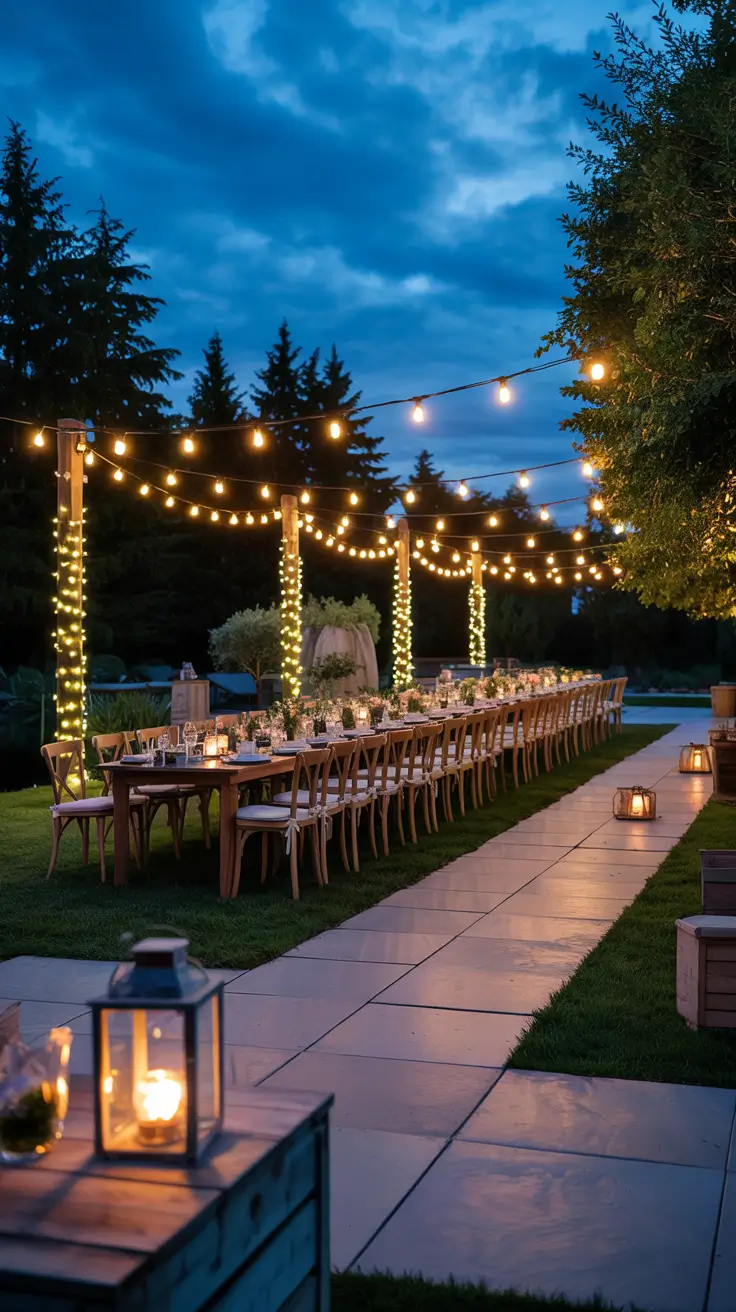
For the design elements, I recommend pairing lighting posts with string lights, a defined dining area, and a simple lounge corner. The furniture should feel cohesive: matching chairs, neutral table linens, and soft floral arrangements. I also like adding a few lantern clusters at ground level to create depth in the photos. The lighting posts give you control over the spacing and the height of the string lights.
From my experience, the biggest mistake people make with backyard wedding lighting is underestimating how much lighting affects the atmosphere. Posts make everything look polished and intentional, especially when photographed after sunset.
What I would add here is a suggestion to include pathway lighting for guests. Even simple solar path lights or subtle stake lights can prevent trips and keep the event feeling comfortable.
LED Outdoor Lighting Systems With Smart App
Smart outdoor lighting has become a defining feature of 2026, and I’m seeing more homeowners choose app-controlled systems in graphite silver finishes because they feel modern and discreet. I like this idea because it gives you flexibility: you can adjust brightness, change zones, and create lighting scenes for different moods without rewiring anything later.
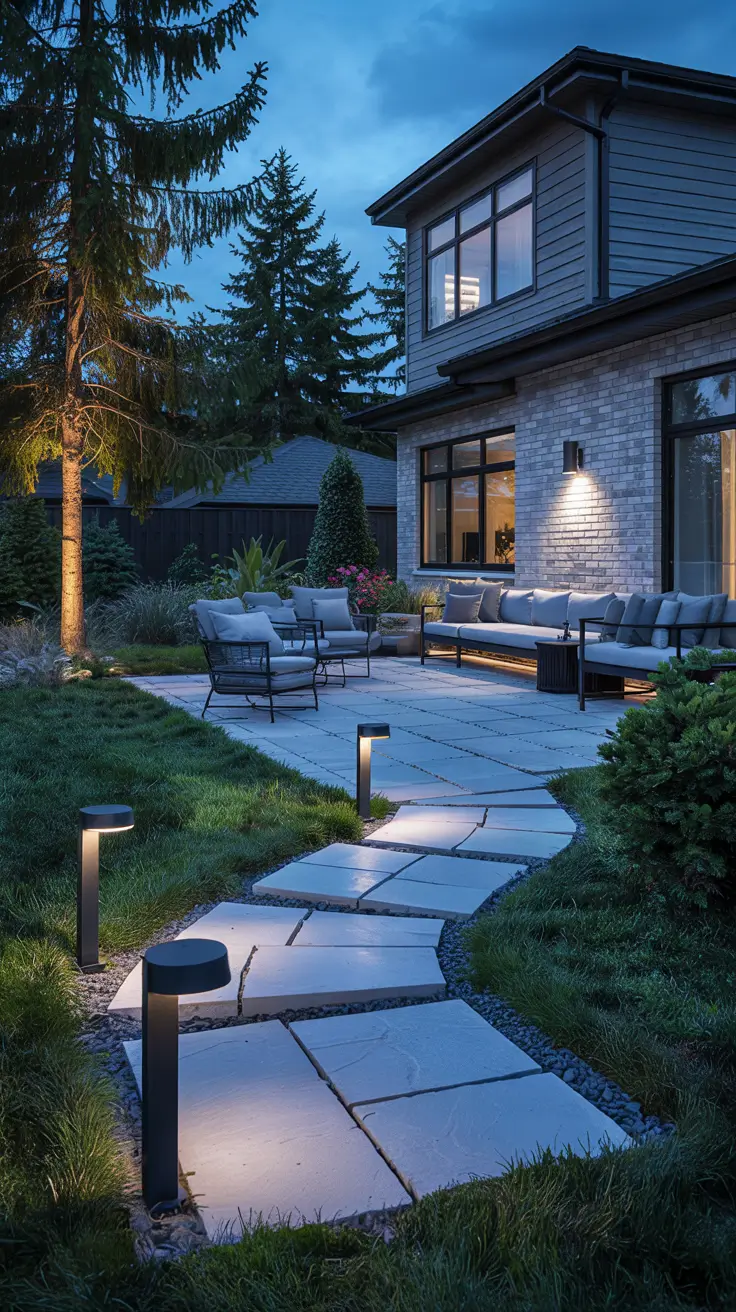
For the design setup, I recommend combining smart LED systems with layered lighting zones: pathway lights, wall sconces, deck accents, and a patio overhead source. Graphite silver fixtures blend beautifully into modern exteriors, especially homes with gray stone, black window frames, or contemporary siding. I also like using smart lighting to highlight landscape elements like trees, textured walls, or water features.
Personally, I think smart outdoor lighting is worth it when you actually use the features. Scheduling is the most valuable tool: I love setting the lights to turn on at sunset, dim later at night, and brighten slightly if motion is detected near the entrance.
To complete this section, I would add a reminder to choose systems that work with the smart ecosystem you already use. The best setup is the one you’ll actually control, not the one with the most complicated features.
Color-Changing RGB Lighting In Aqua And Lime
When I design contemporary backyard spaces, I use color-changing RGB lighting strategically rather than as a novelty. In 2026, aqua and lime tones are trending because they feel fresh, energetic, and surprisingly elegant when balanced correctly. I focus on installing these lights around seating zones, pergolas, or pool edges so they act as an accent layer instead of the main source of illumination.
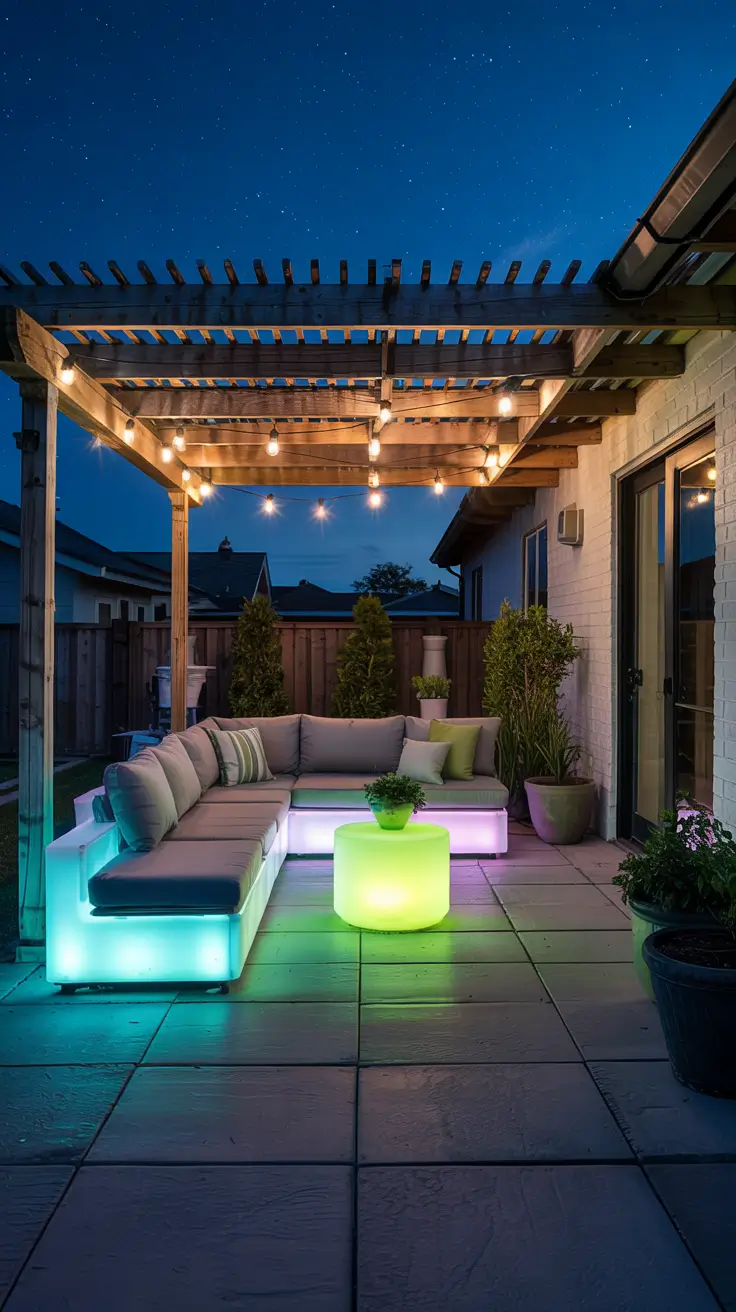
For the full outdoor setup, I combine modular sectional sofas, low-profile coffee tables, and neutral outdoor rugs to ground the vibrant lighting. I prefer hiding RGB strips beneath built-in benches, under steps, or along planter edges. This ensures the glow feels architectural. Lime tones reflect beautifully off light concrete or pale stone, while aqua enhances water features and glass railings.
In my experience, RGB lighting works best when paired with smart controls. I always recommend programmable scenes so homeowners can switch from subtle aqua for everyday evenings to bold lime for gatherings. What I would add here is a reminder to include warm white lighting as a base layer, because color lighting alone can feel incomplete without neutral balance.
Floating Orb Lights For Resort-Style Pools
Floating orb lights instantly transform a standard pool into a resort-inspired focal point. I use them to create movement and softness across the water surface, especially in modern backyard settings. In 2026, these orbs are larger, rechargeable, and designed with matte diffusers that prevent glare.
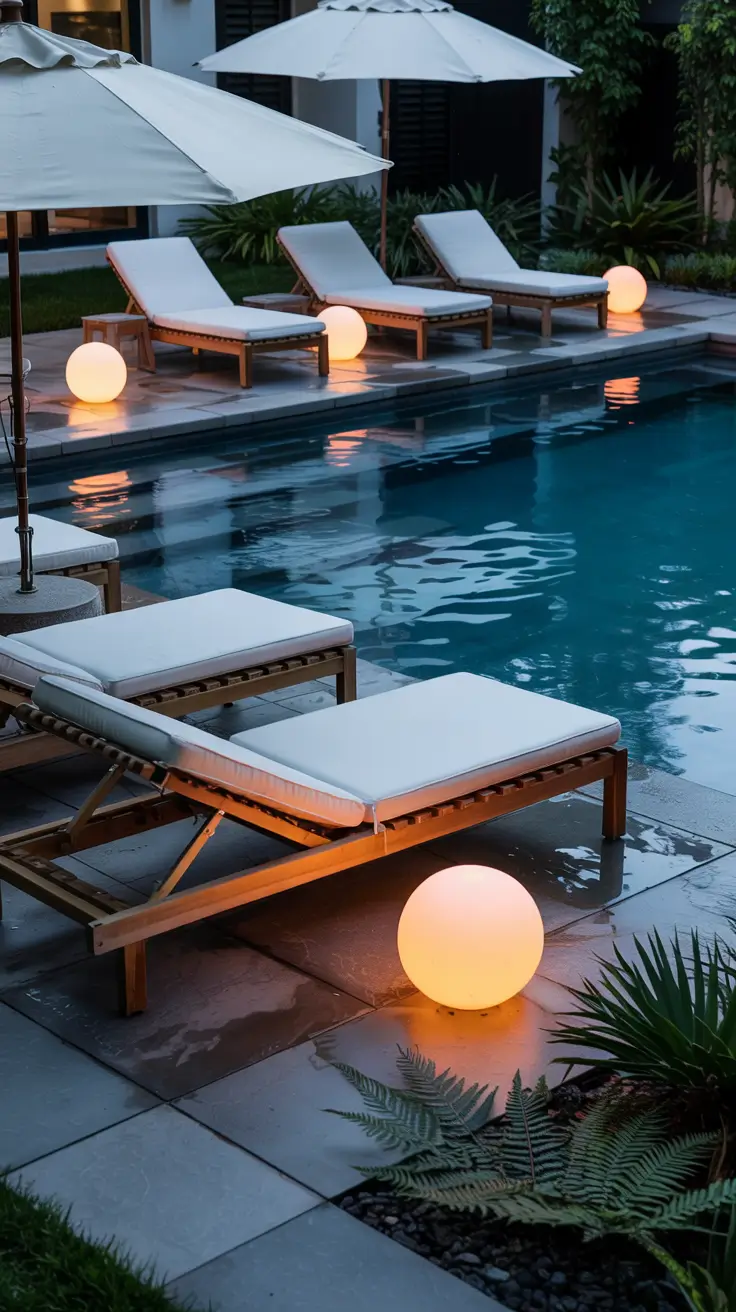
To complete the design, I pair floating lights with minimalist chaise lounges, oversized umbrellas, and neutral outdoor cushions. I also add subtle deck lighting and soft landscape uplighting so the pool does not feel isolated. The orbs should reflect off clean water and complement stone coping or wood decking.
Personally, I find that floating lighting elements bring a playful elegance to a backyard. Architectural Digest often emphasizes layering light for depth, and this concept works beautifully here. What is missing in many installations is perimeter lighting around the pool edge, which improves safety and enhances the overall glow.
Industrial Chic Metal Lanterns In Charcoal Black
Industrial chic lighting continues to dominate patios and modern farmhouse exteriors. I prefer charcoal black metal lanterns because they provide strong contrast without overpowering the architecture. Their structured lines feel clean and modern rather than rustic.
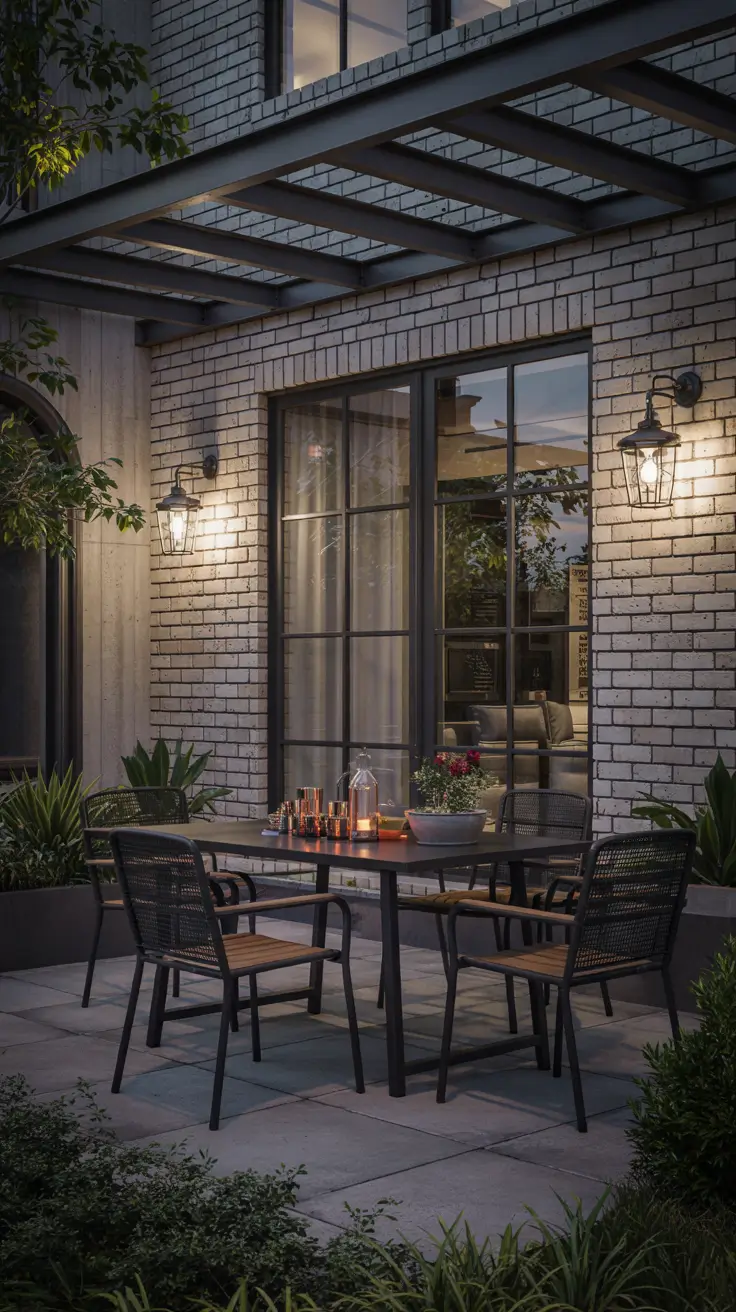
I often place these lanterns along brick walls, concrete facades, or beside large glass doors. To complete the scene, I incorporate metal-framed outdoor furniture, structured cushions, and a substantial dining table. The charcoal finish works especially well with exposed beams and matte stone flooring.
In my projects, industrial lanterns perform best when balanced with softer elements like woven textiles or greenery. Without texture, the space can feel too rigid. I would also add dimmable bulbs to soften the intensity and keep the environment welcoming rather than stark.
Minimalist Bollard Lights In Ash Taupe
Minimalist bollard lights are ideal for landscape and pathway design. I select ash taupe finishes because they blend effortlessly into gravel, stone, and neutral paving. In 2026, the focus is on subtle illumination that guides movement without visual clutter.
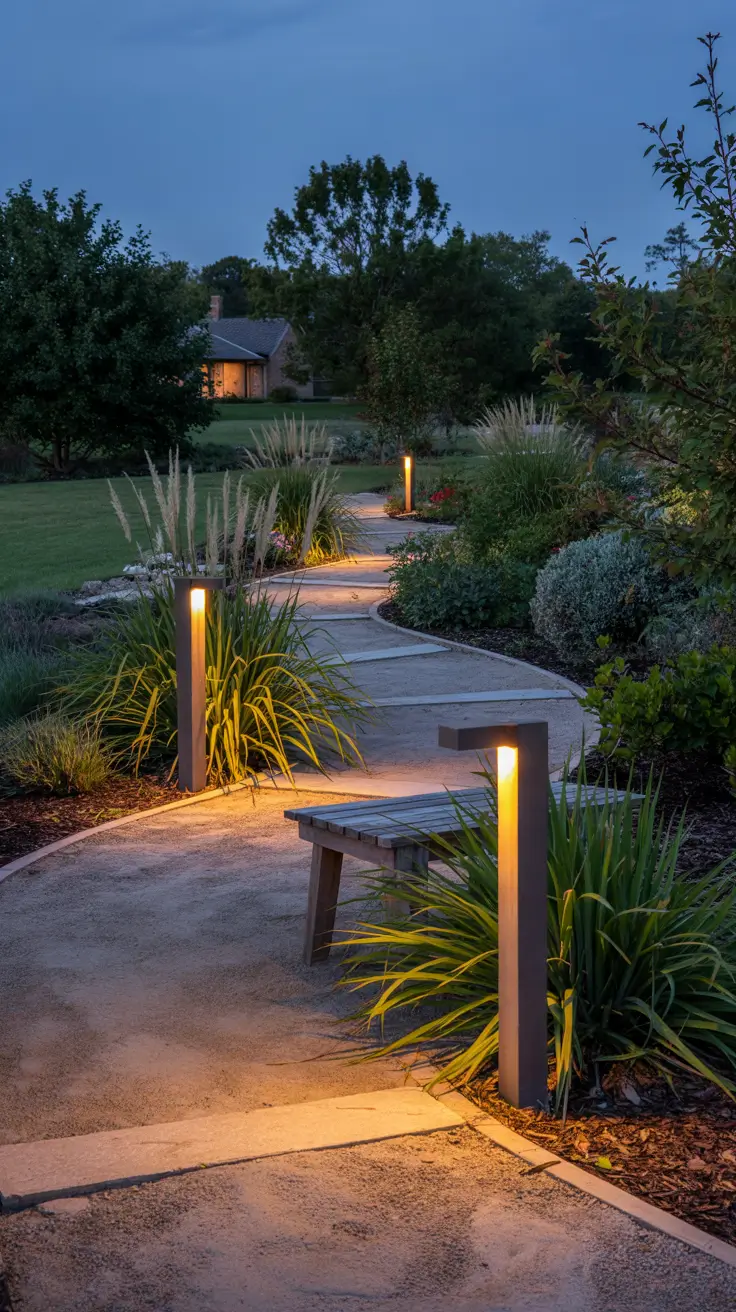
For pathways leading to a front door or garden lounge area, I combine bollard lights with ornamental grasses and structured hedges. I also design a small seating zone nearby with a bench and side table to give the lighting context within the landscape.
From my perspective, consistent spacing is the key to professional-looking installation. Uneven placement disrupts the flow. I would add a note about choosing fixtures with downward-facing beams to prevent light pollution and glare.
Biophilic Lighting Designs Blending Moss And Stone Tones
Biophilic outdoor lighting integrates natural tones and textures to support a calming environment. I often use moss green and stone-toned fixtures to blend seamlessly with plantings and garden walls. This approach is particularly effective in tranquil backyard retreats.
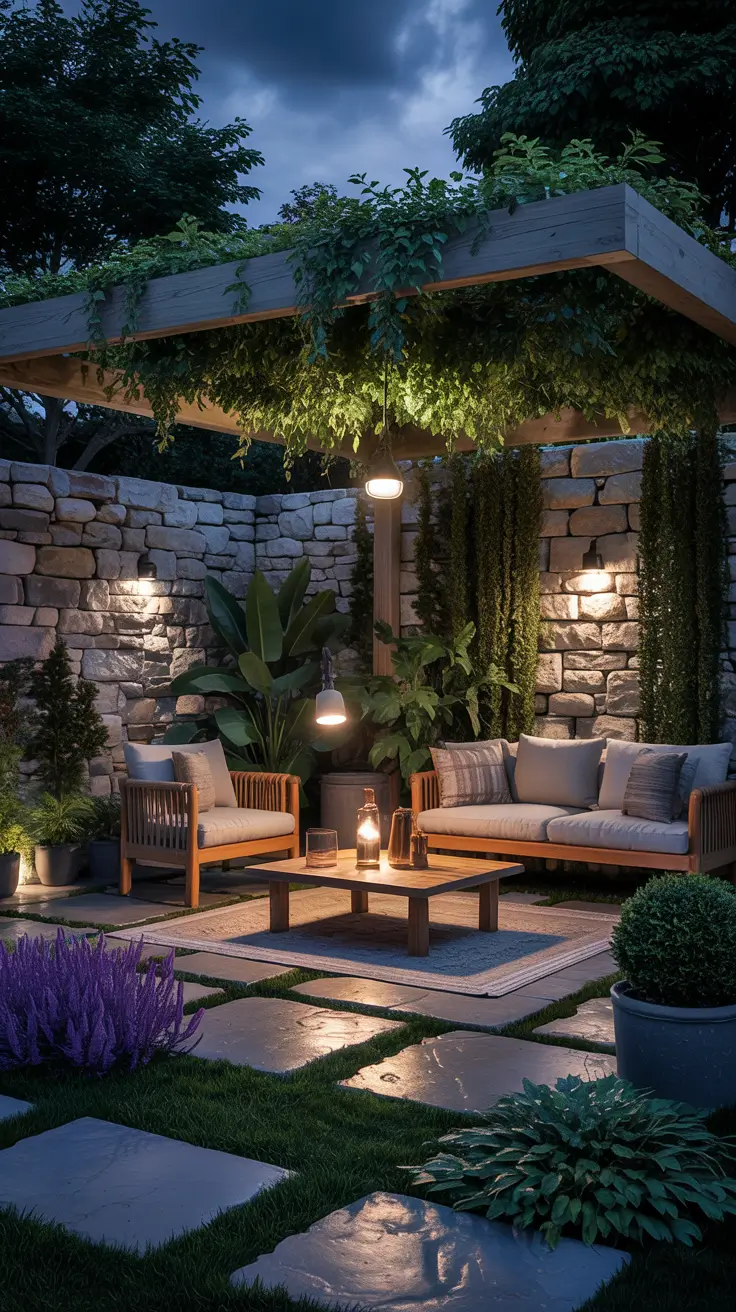
I design these spaces with natural wood furniture, textured stone pathways, and layered planting beds. Hidden uplights placed among foliage create depth while maintaining a soft, organic look. Stone planters and water features enhance the effect.
Personally, I appreciate how biophilic lighting reduces visual stress. Designers frequently highlight the importance of nature-inspired environments for well-being. To strengthen this section, I would recommend adding subtle seating lighting to ensure functionality matches aesthetics.
Retro Globe String Lights In Mustard Glow
Retro globe string lights are making a comeback, especially in mustard glow tones that feel warm and nostalgic. I use them in backyard dining areas to create an inviting, celebratory atmosphere without overwhelming the design.

I pair these lights with wooden dining tables, upholstered chairs, and textured outdoor rugs. Draped above a pergola or stretched between posts, they create a canopy effect. The mustard hue complements wood finishes and warm-toned exteriors beautifully.
In my experience, globe lights should not be the only source of light. I always layer them with wall sconces or low-level path lighting. Adding structural support posts for even spacing ensures a clean and polished look.
Under-Railing LED Strips In Arctic White
Under-railing LED strips are one of the most practical outdoor lighting ideas 2026 for decks and balconies. I install Arctic white strips beneath railings to create a clean floating effect that highlights architectural lines.
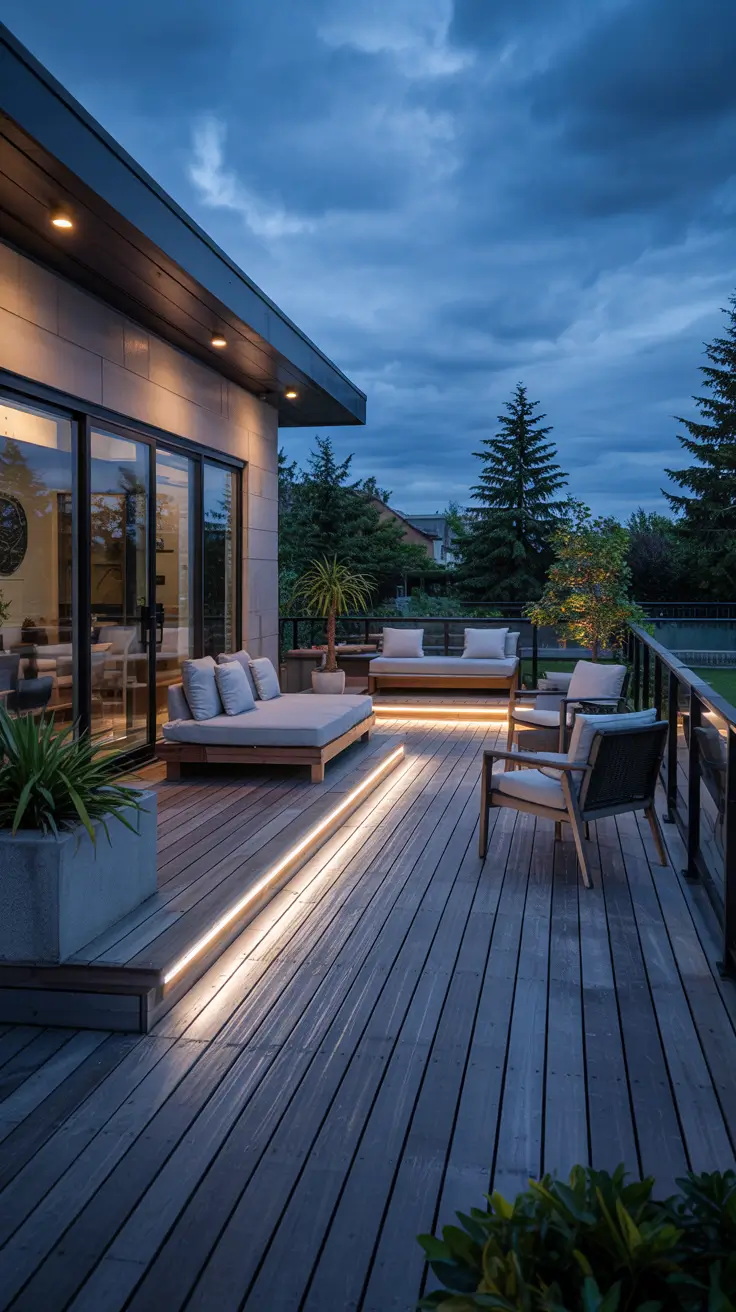
The design typically includes a full deck scene with lounge seating, planters, and possibly a small dining table. The Arctic white glow enhances modern composite decking and dark rail systems. I like pairing this lighting with neutral outdoor textiles for a crisp finish.
Personally, I find this solution incredibly effective for both safety and style. The subtle glow defines the perimeter without glare. What I would add is a dimmer option to adjust brightness depending on the occasion.
If one of these lighting concepts sparked an idea for your home, share your thoughts in the comments and let’s discuss how to adapt it to your space.
Solar-Powered Garden Stakes In Olive Grove Shades
When I design eco-conscious landscapes, I often turn to solar-powered garden stakes in olive grove shades because they feel subtle and organic rather than technical. In 2026, these fixtures are designed with matte finishes and slim profiles that disappear into planting beds during the day and softly illuminate pathways at night. I find them especially effective for layered garden lighting where wiring would disrupt established landscaping.
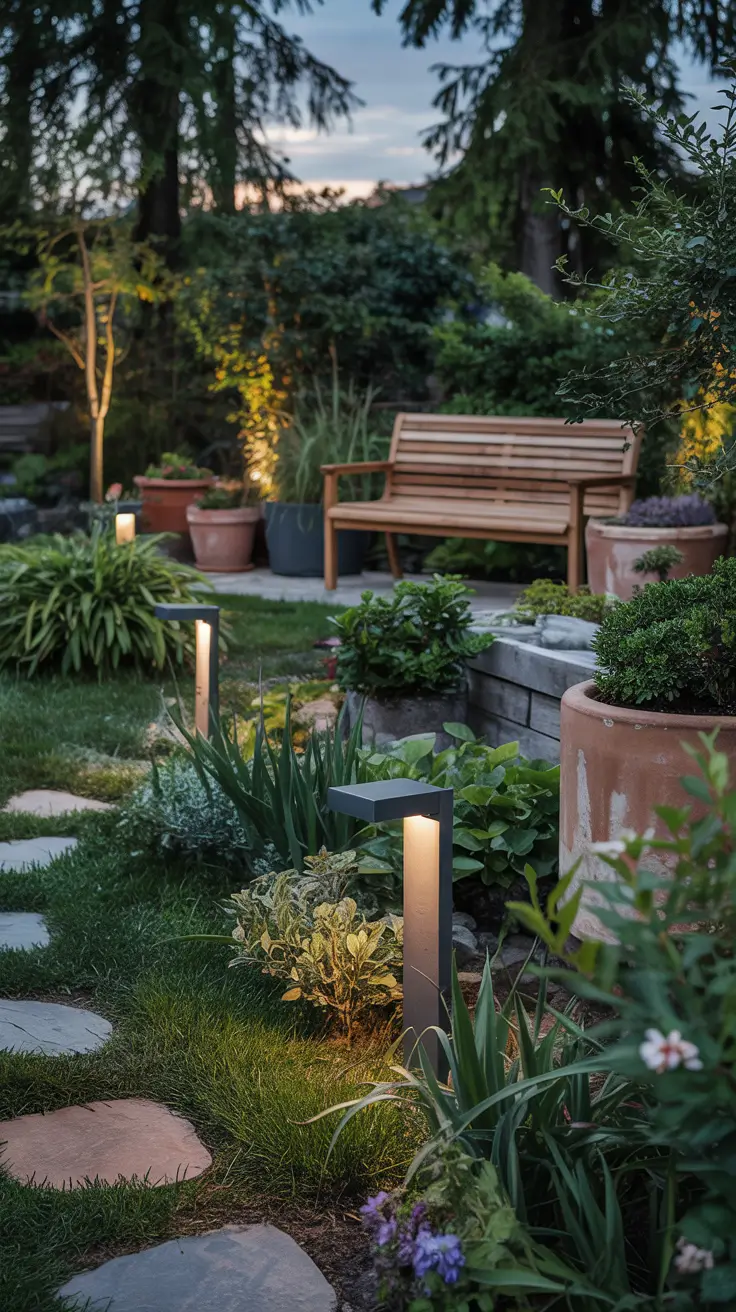
To complete the look, I arrange the stakes along curved stone paths, around lavender bushes, or near low shrubs. I pair them with natural wood benches, terracotta planters, and gravel walkways to maintain cohesion. The olive tone blends beautifully with greenery and prevents the fixtures from looking plastic or artificial.
From my experience, solar stakes work best when grouped intentionally rather than placed randomly. I always test their sun exposure during the day to ensure proper charging. What I would add here is a slightly stronger focal solar spotlight aimed at a tree or sculptural plant to create depth in the garden composition.
Architectural Facade Lighting In Warm Caramel Hues
Architectural facade lighting is one of the most transformative outdoor strategies in 2026. I use warm caramel hues to highlight textures such as stone cladding, brickwork, or wood paneling. This tone enhances architectural depth without appearing too yellow or overly dramatic.
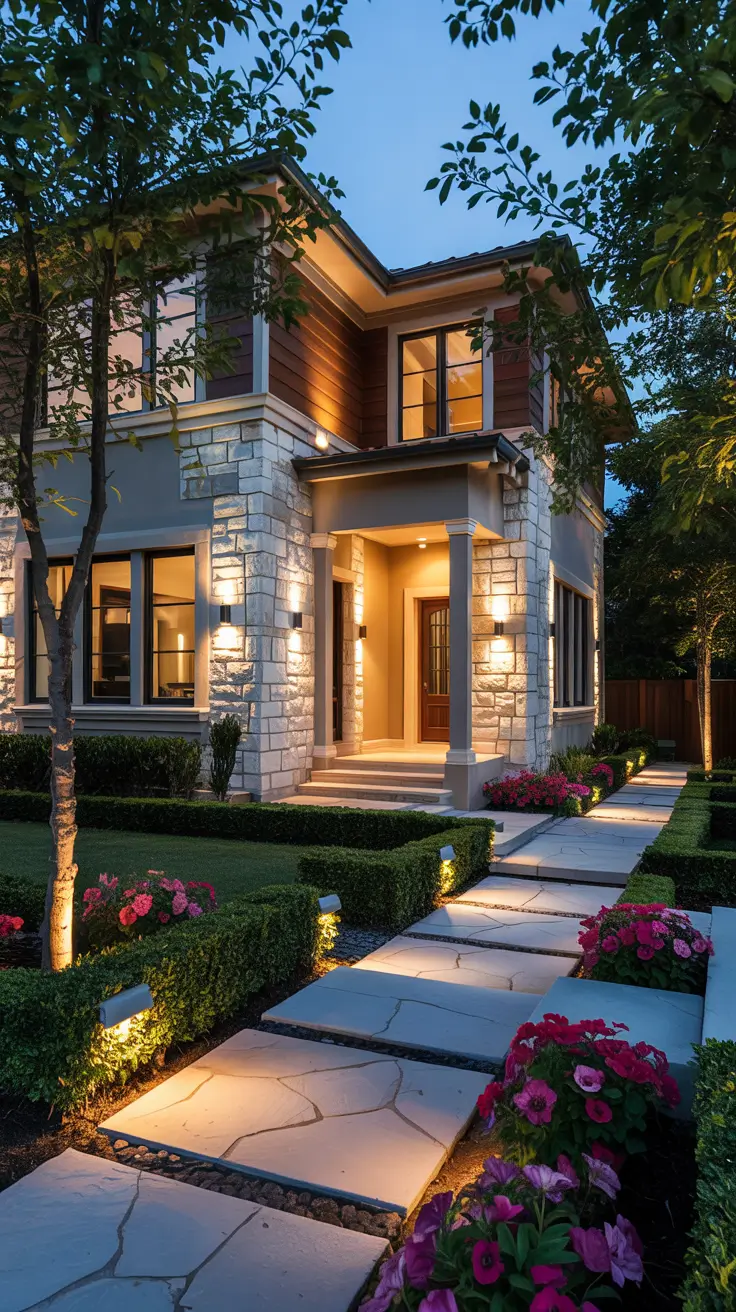
For a cohesive design, I integrate uplights at the base of walls and discreet downlights under roof overhangs. I combine this with minimalist landscaping and a clear front walkway to ensure the facade remains the focal point. The warm caramel glow works beautifully with modern and transitional homes alike.
Personally, I believe facade lighting is where homeowners see the greatest visual return. It adds dimension and presence after sunset. I would also recommend adding subtle entry lighting so the facade illumination transitions naturally into the front door area.
Portable Rechargeable Lamps In Blush Rose
Portable rechargeable lamps are becoming essential for flexible outdoor living. I frequently incorporate blush rose tones because they introduce warmth and softness to neutral patios. In 2026, these lamps feature sleek silhouettes and dimmable controls, making them both decorative and practical.
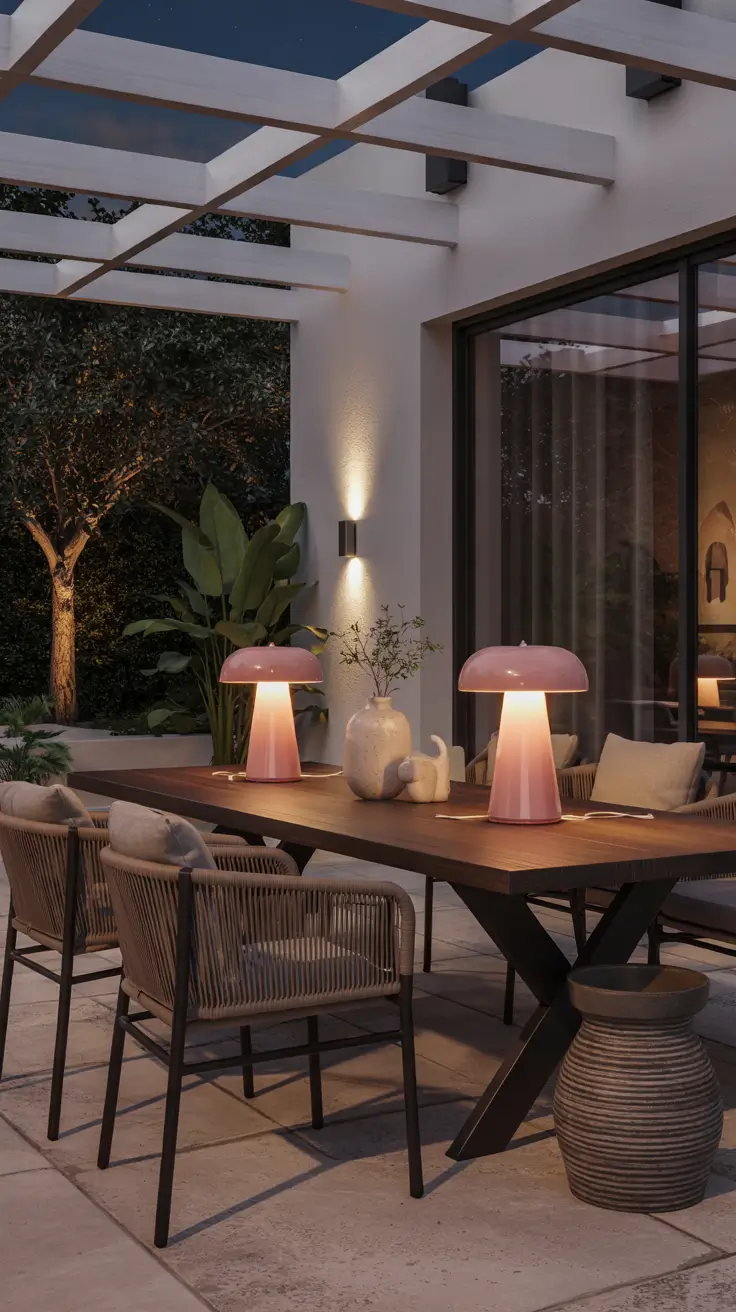
I place them on outdoor dining tables, side tables, and even along built-in benches. Paired with woven seating, textured cushions, and ceramic accessories, blush lighting creates an intimate setting for evening gatherings. Their portability allows easy rearrangement depending on the event layout.
In my projects, I appreciate how rechargeable lamps reduce reliance on permanent wiring. Design experts often emphasize adaptability in outdoor spaces, and this approach supports that principle. What is often missing is a dedicated charging station indoors to keep the lamps organized and ready for use.
Layered Lighting Concepts For Textured Outdoor Spaces
Layered lighting remains the foundation of successful outdoor design. I approach textured spaces by combining ambient, task, and accent lighting to create dimension. In 2026, the focus is on balancing these layers rather than relying on a single dominant fixture.
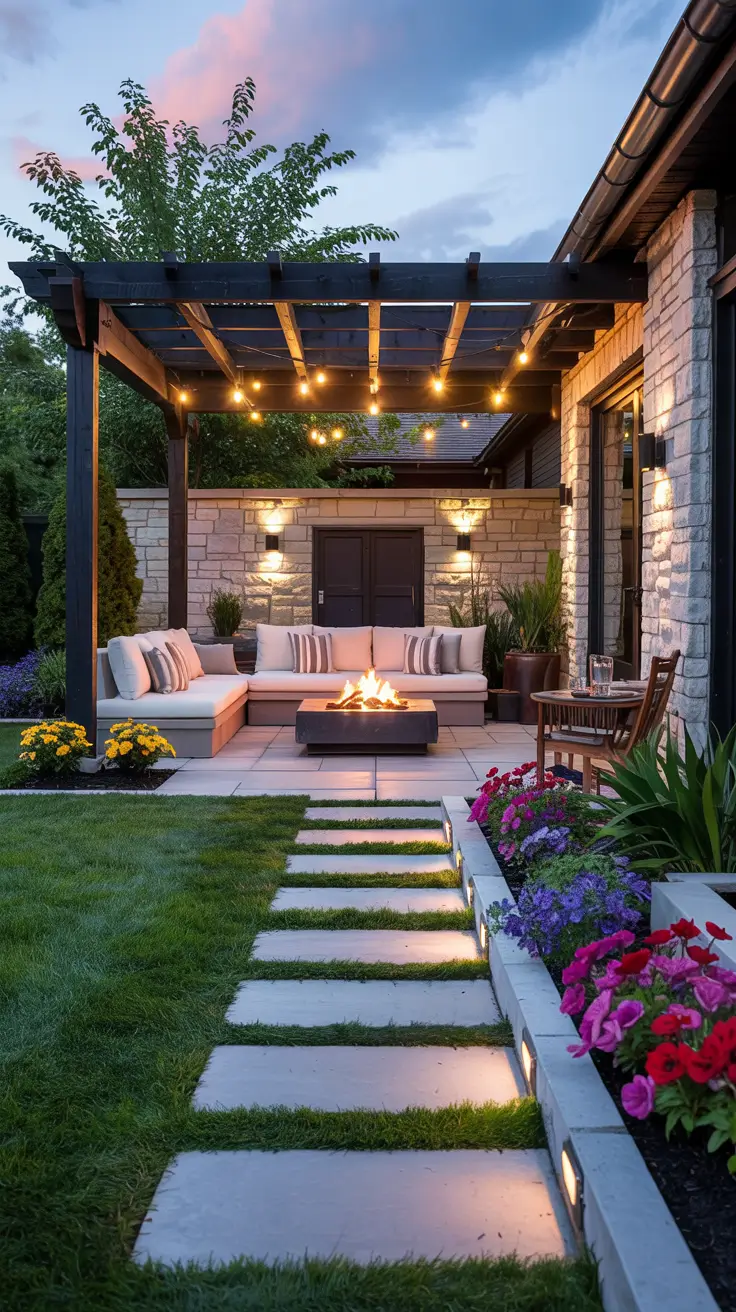
For example, I may use overhead pergola lights for general illumination, recessed step lights for safety, and small accent spots to highlight stone walls or plants. I integrate comfortable seating, rugs, and dining zones so the lighting supports real usage patterns.
In my experience, layered lighting creates the most natural atmosphere. Publications such as Elle Decor frequently highlight the importance of depth in design, and lighting is central to achieving it. I would add a recommendation to map lighting zones on paper before installation to avoid uneven distribution.
Zen-Inspired Path Lighting In Mist Gray
Zen-inspired lighting emphasizes simplicity and tranquility. I use mist gray fixtures with soft diffused beams to guide movement along garden paths. The goal is not brightness but calm navigation.
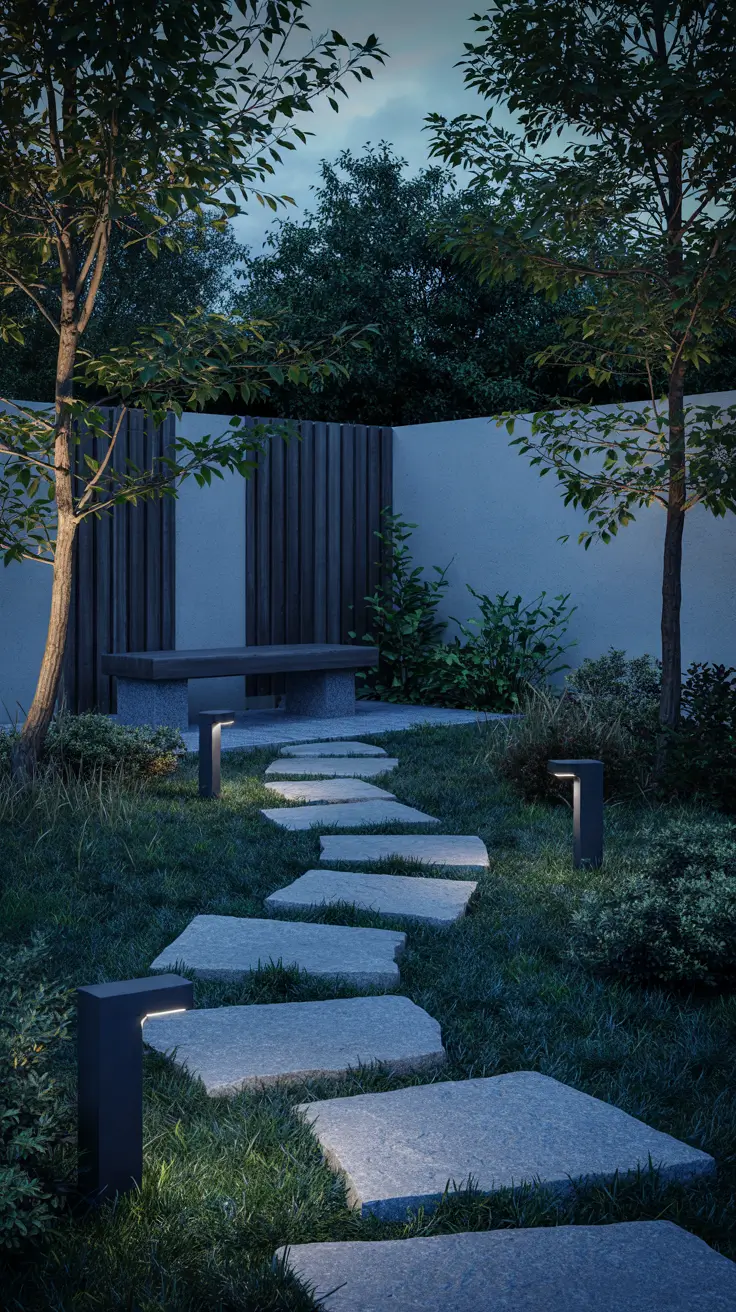
I design these spaces with smooth stone pavers, minimal planting palettes, and low wooden seating. The mist gray finish complements neutral landscaping and prevents visual distractions. I position lights at consistent intervals to maintain rhythm and balance.
Personally, I find this approach ideal for meditation gardens or quiet backyard retreats. To enhance this concept, I would incorporate subtle water features or sculptural stones illuminated gently from below to deepen the sense of serenity.
Statement Chandelier Lighting For Covered Patios
Statement chandeliers are redefining covered patios in 2026. I treat them as focal art pieces that anchor dining or lounge areas. Oversized designs with weather-resistant materials bring interior elegance outdoors.
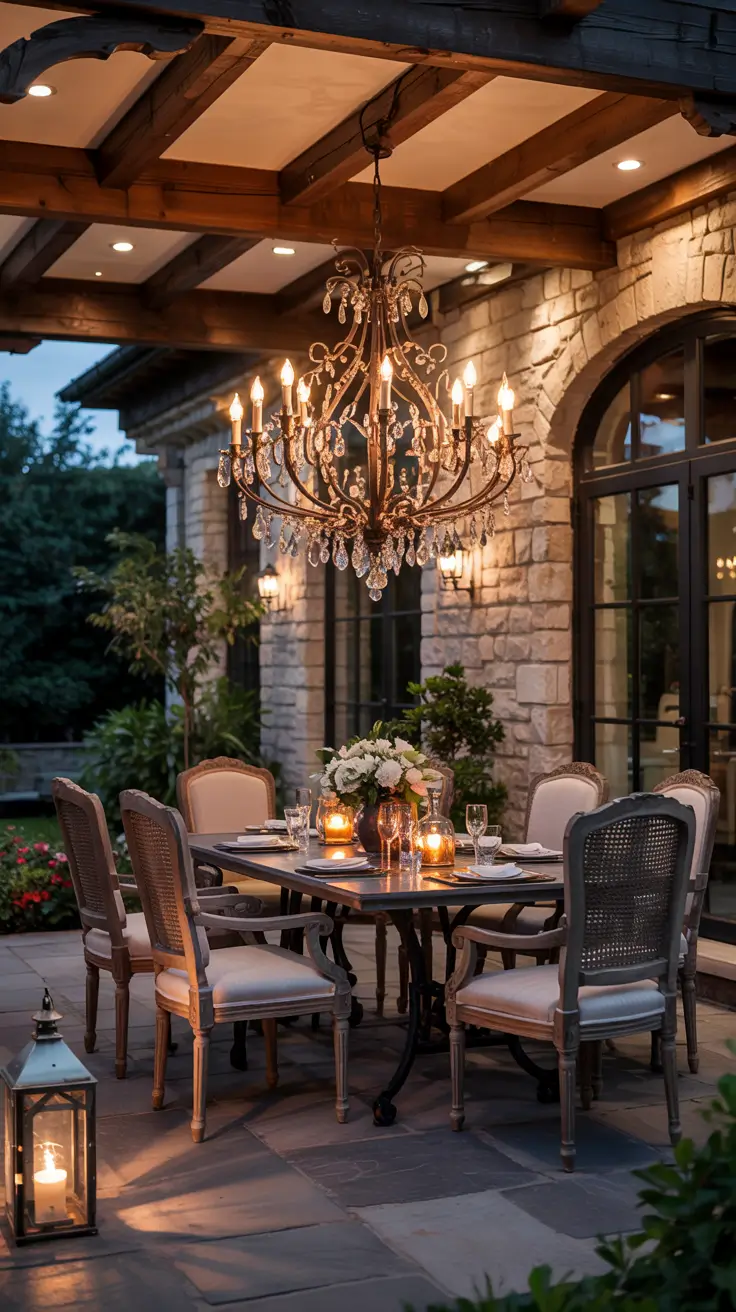
I typically pair chandeliers with a full patio arrangement including a large dining table, upholstered chairs, and layered textiles. Ceiling beams or pergola structures frame the fixture, while subtle wall sconces provide additional balance.
In my professional opinion, chandeliers elevate outdoor spaces to feel like true extensions of the home. I always ensure scale is appropriate to ceiling height. Adding a dimmer control is essential to maintain comfort during evening meals.
Futuristic Neon Accents For Bold 2026 Outdoor Spaces
For homeowners seeking dramatic expression, futuristic neon accents are defining bold outdoor spaces in 2026. I integrate slim neon lines along architectural edges, bar counters, or pergola beams to create a sculptural effect.
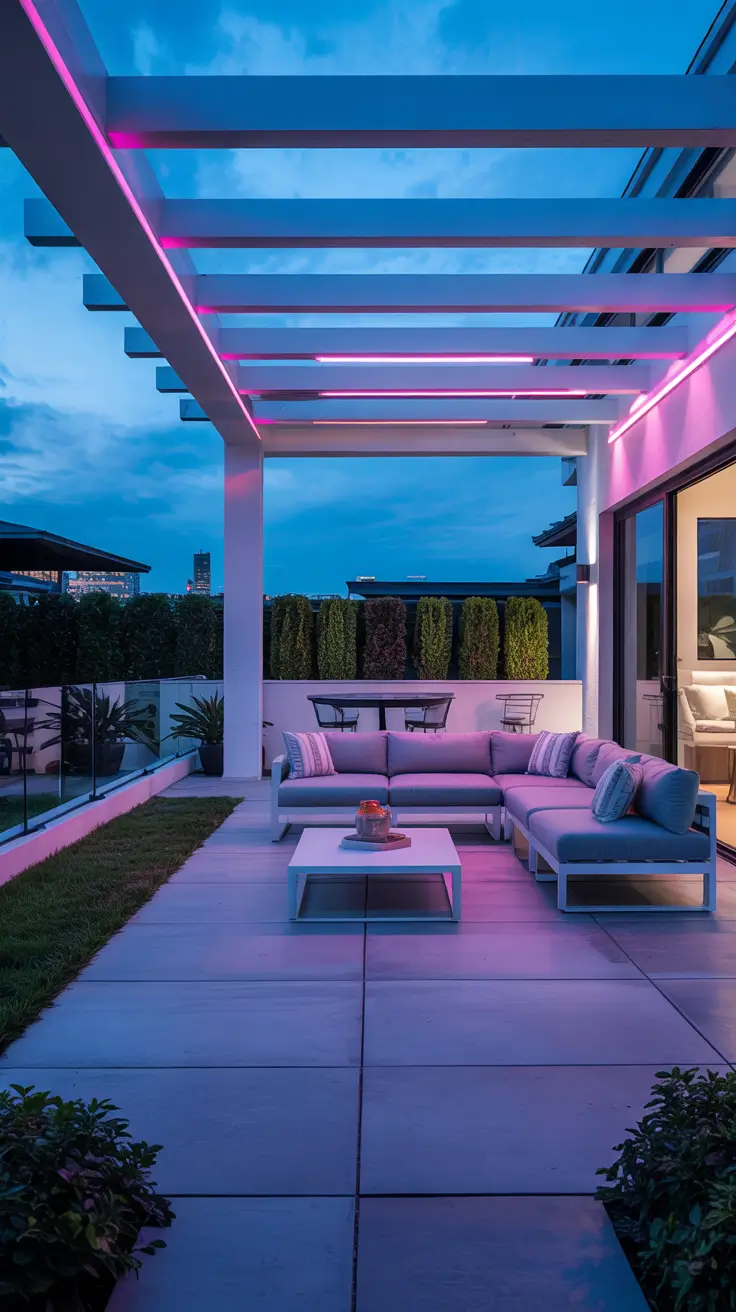
To keep the look cohesive, I pair neon accents with modern outdoor furniture featuring clean lines and monochromatic tones. Concrete flooring, glass railings, and metallic details complement the contemporary aesthetic.
In my view, neon works best when restrained to one or two architectural features. Overuse can overwhelm the space. I would add neutral ambient lighting as a base layer to ensure functionality remains a priority.
If these ideas inspired you, let me know which concept fits your home style best. I always enjoy hearing how readers adapt trends into their own spaces.
Outdoor lighting in 2026 is about layering, personality, and architectural impact. Whether you prefer rustic charm, mid century modern fixtures, coastal LED accents, or solar-powered landscape solutions, the right lighting can completely transform your house entrance, patio, or backyard. Save your favorite ideas, experiment with placement, and create an outdoor space that feels just as intentional as your interior.