
Blue tile is having a moment, and for good reason. It adds depth and personality without overwhelming a space.
In this article, we are looking at 34 different ways to use simple blue tile in your home, from kitchens to bathrooms and beyond. Each idea focuses on the tile itself, keeping the surrounding decor minimal so the color and texture can shine.
Vibrant blue mosaic tile backsplash in a modern kitchen
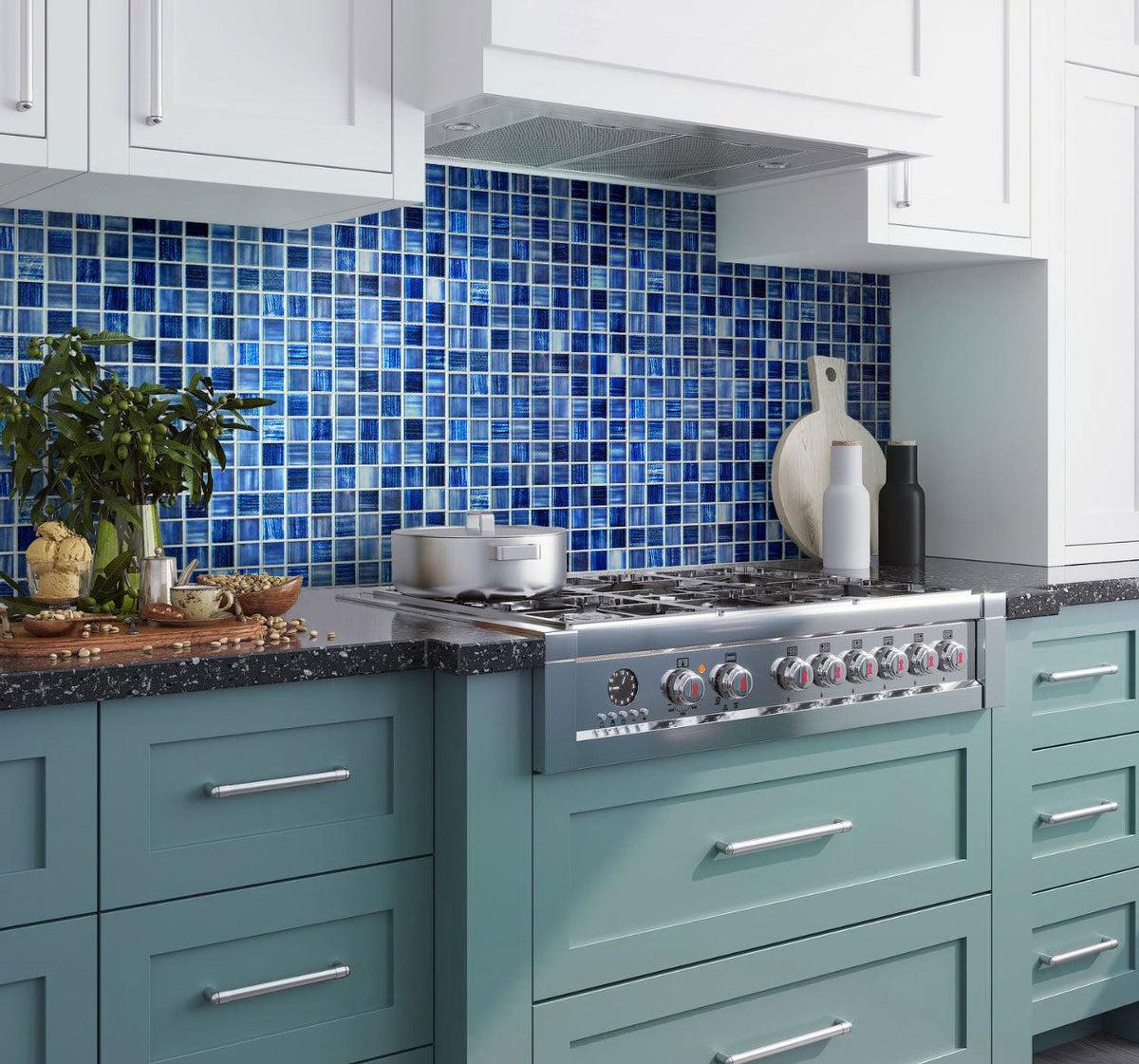
A compact kitchen uses a vibrant blue mosaic tile backsplash to draw the eye between a gas range and upper cabinetry. The palette mixes blue, white, and teal glass tiles, which catch the overhead range hood light and keep the small space from feeling closed in. A plain wood cutting board and stainless steel range let the tile stay the focal point. For a similar effect, keep nearby counters simple so the mosaic has room to look the main pattern rather than just more clutter.
Iridescent deep blue vertical tile wall in a modern bathroom
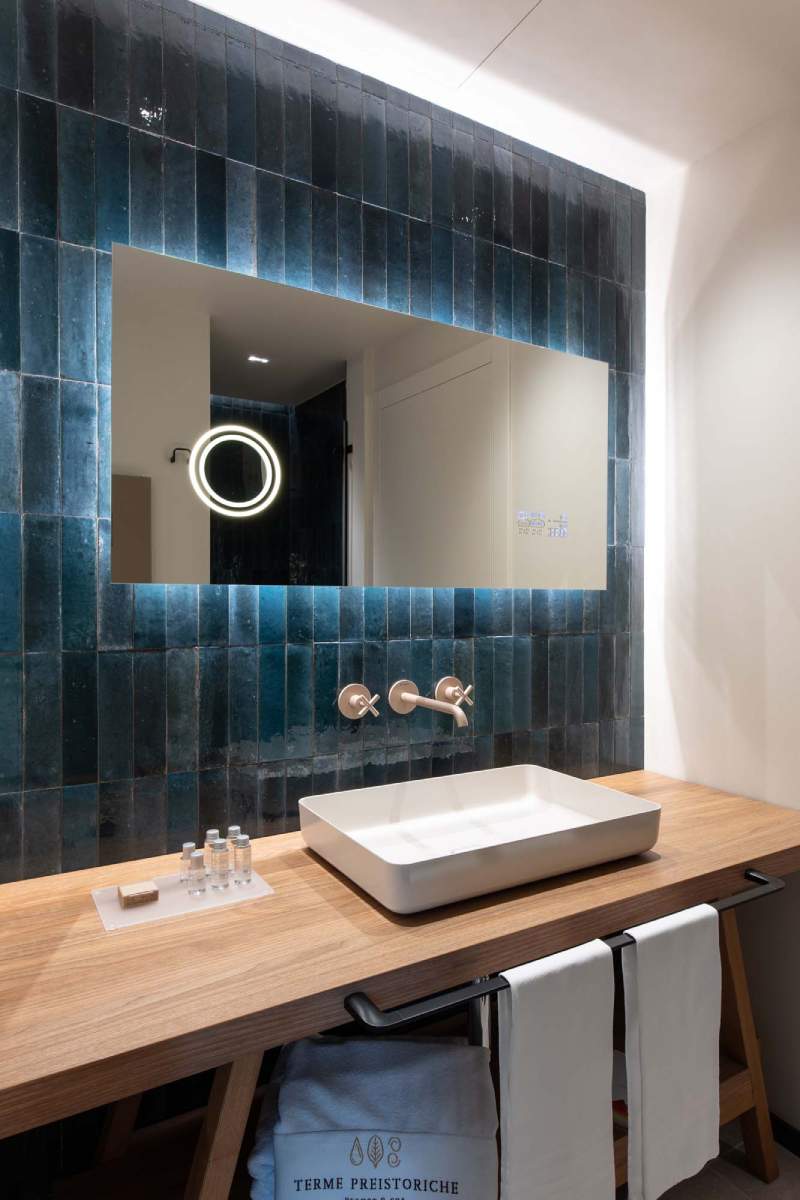
This wall does two things at once. The iridescent deep blue vertical tile wall behind a vessel sink adds color without making the compact bathroom feel smaller, and the glossy finish bounces light from the integrated mirror fixture and ceiling light. A wooden vanity and wall-mounted faucet keep the look grounded. The tile material matters here: a high-gloss ceramic tile reads differently than matte stone, so choose the finish based on how much reflection you want. A matte tile would absorb the light and make the wall feel heavier in a tight footprint.
Glossy deep blue square tile backsplash in a modern kitchen
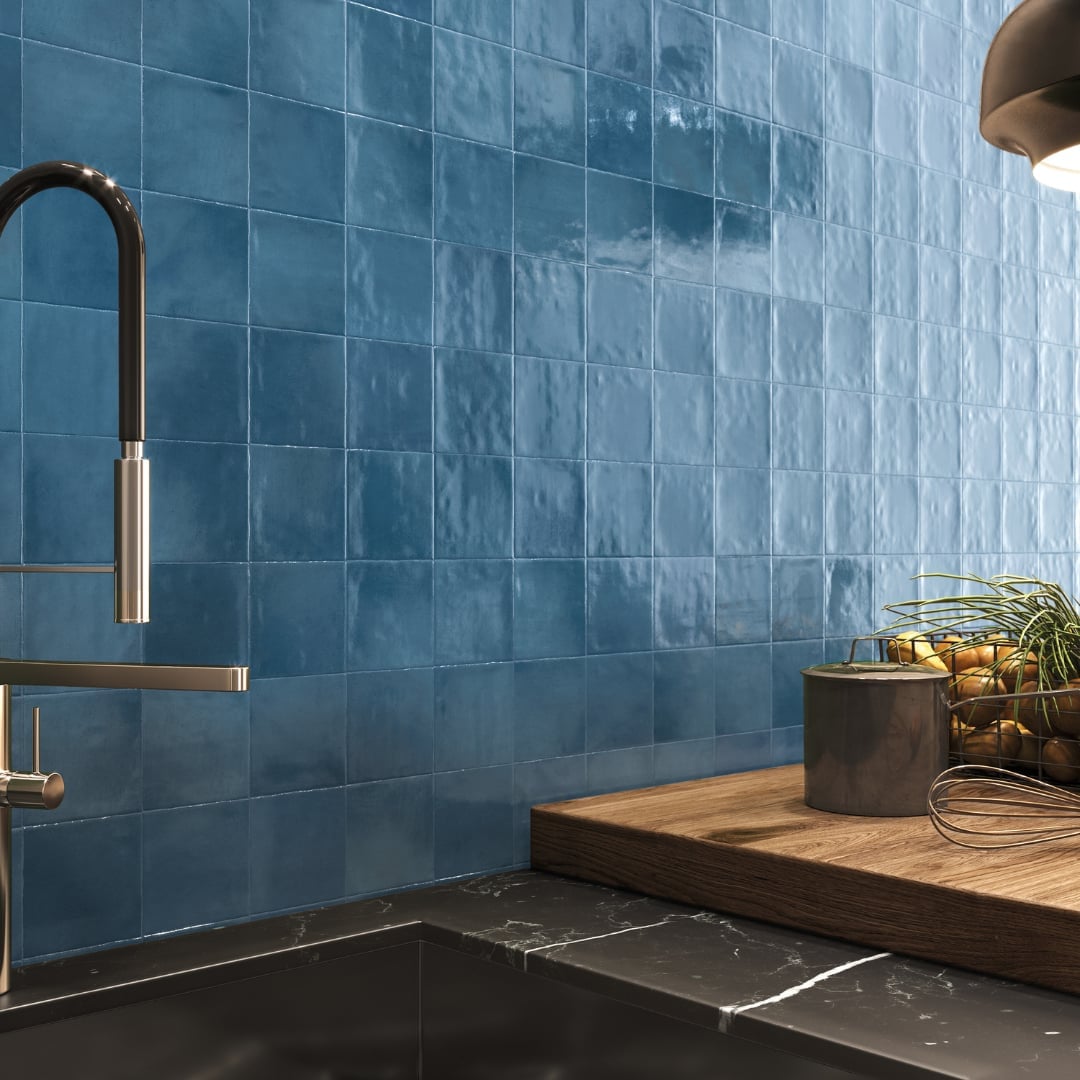
What material works for a kitchen backsplash that needs to handle splashes and still look clean? Glossy deep blue square tiles are a solid answer. The glossy surface reflects the overhead pendant light, which helps a compact kitchen feel open, and the deep blue color hides minor splatter better than a white tile would.
The rest of the kitchen stays neutral: a marble countertop, a metal faucet, and a wooden cutting board. A metal basket adds texture without competing. The trick is keeping the ratio of busy to calm. When the tile is glossy and colored, the counters and hardware should be matte or plain so the finish on the tile does most of the work.
Deep blue glossy subway tile backsplash in a compact bathroom
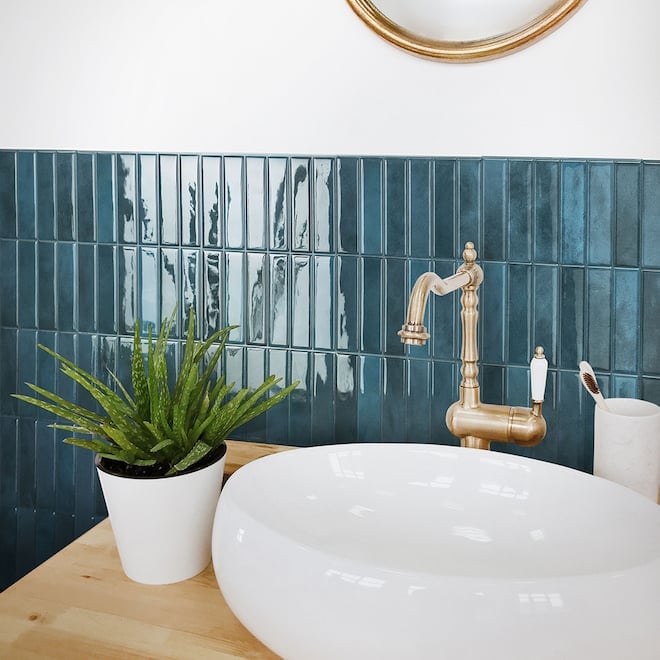
Vertical deep blue subway tiles run behind a vessel sink with a vintage-style faucet, and the glossy finish catches natural light from a nearby window. The palette adds brass and green from a potted plant, which warms the deep blue without making the compact bathroom feel crowded. A practical rule: when the tile is dark and glossy, keep the grout light to define each tile and prevent the wall from looking one dark slab.
Blue patterned tiles cover walls and floor
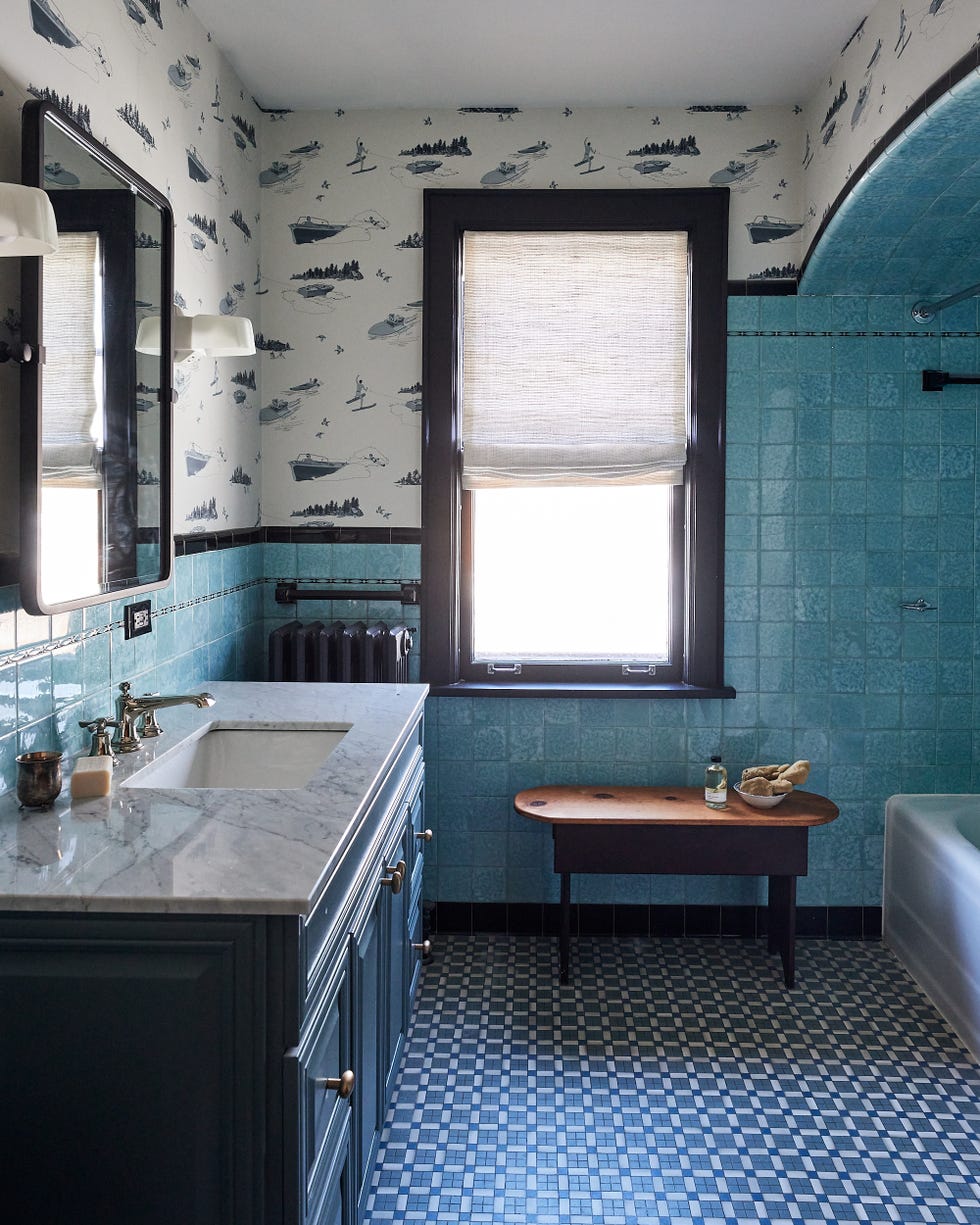
A compact traditional bathroom lets blue patterned tiles cover both walls and floor, creating a continuous surface that makes the room feel larger than it is. The palette mixes blue, white, black, and gray, with natural light from a window and wall sconces keeping the space bright. A wooden table and brass fixtures add warmth against the cool tile. When using pattern on all surfaces, keep the vanity and tub simple so the eye has a place to rest.
Hexagonal blue tiles with gold grout accent walls
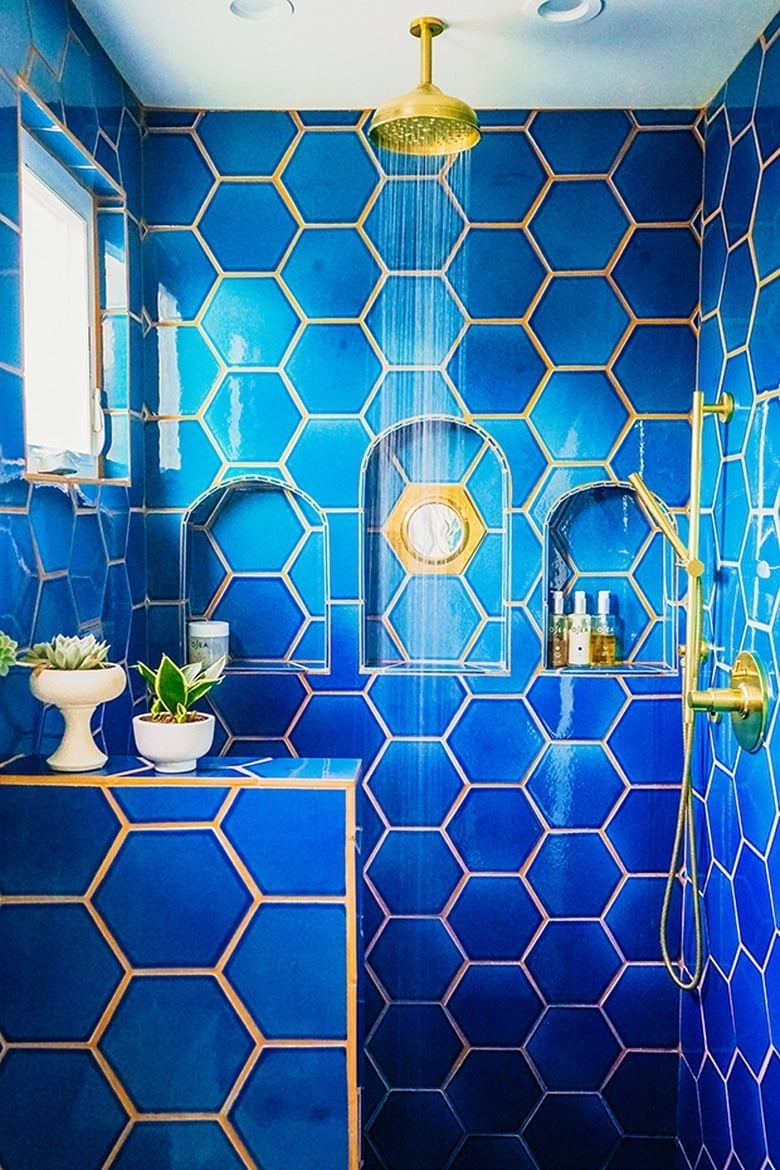
A full wall of white subway tile is the safe bet, but a single accent wall of hexagonal blue tiles with gold grout asks for a second look. The glossy tile reflects overhead and natural light, while the metallic grout lines add a grid that looks jewelry for the wall. In a compact corner shower with built-in niches, the vibrant blue and gold combination keeps the eye moving. Brass fixtures on the showerhead and vanity counter tie the palette together. The effect comes from material contrast: a glossy surface paired with a reflective grout creates depth without adding pattern. It works because the grout is the unexpected detail, not the tile shape alone.
Striking wall of vertical blue tiles in a modern bathroom
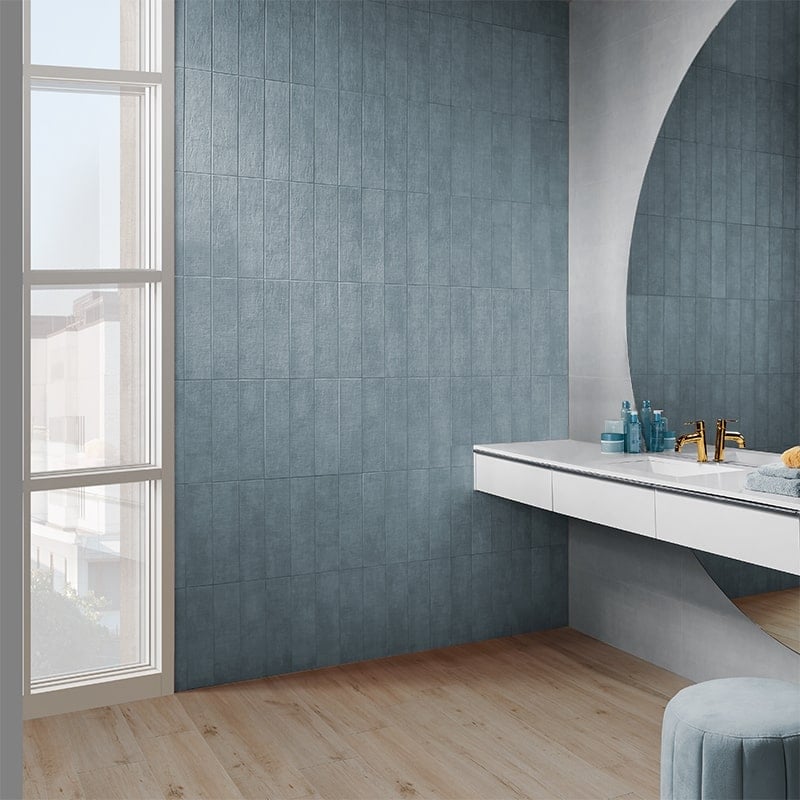
The vertical orientation of the blue tile wall draws the eye upward, making the roomy bathroom feel taller than its actual dimensions. A floating vanity in light wood, a round mirror, and a single blue stool keep the focus on the tile rather than competing with it. The glossy tile surface softens the blue color. The design focuses on scale and proportion: vertical lines on a single wall add perceived height, which is useful in any room where you want the ceiling to feel higher. White and gold accents prevent the look from feeling heavy.
When you want a blue vanity without a plain surface
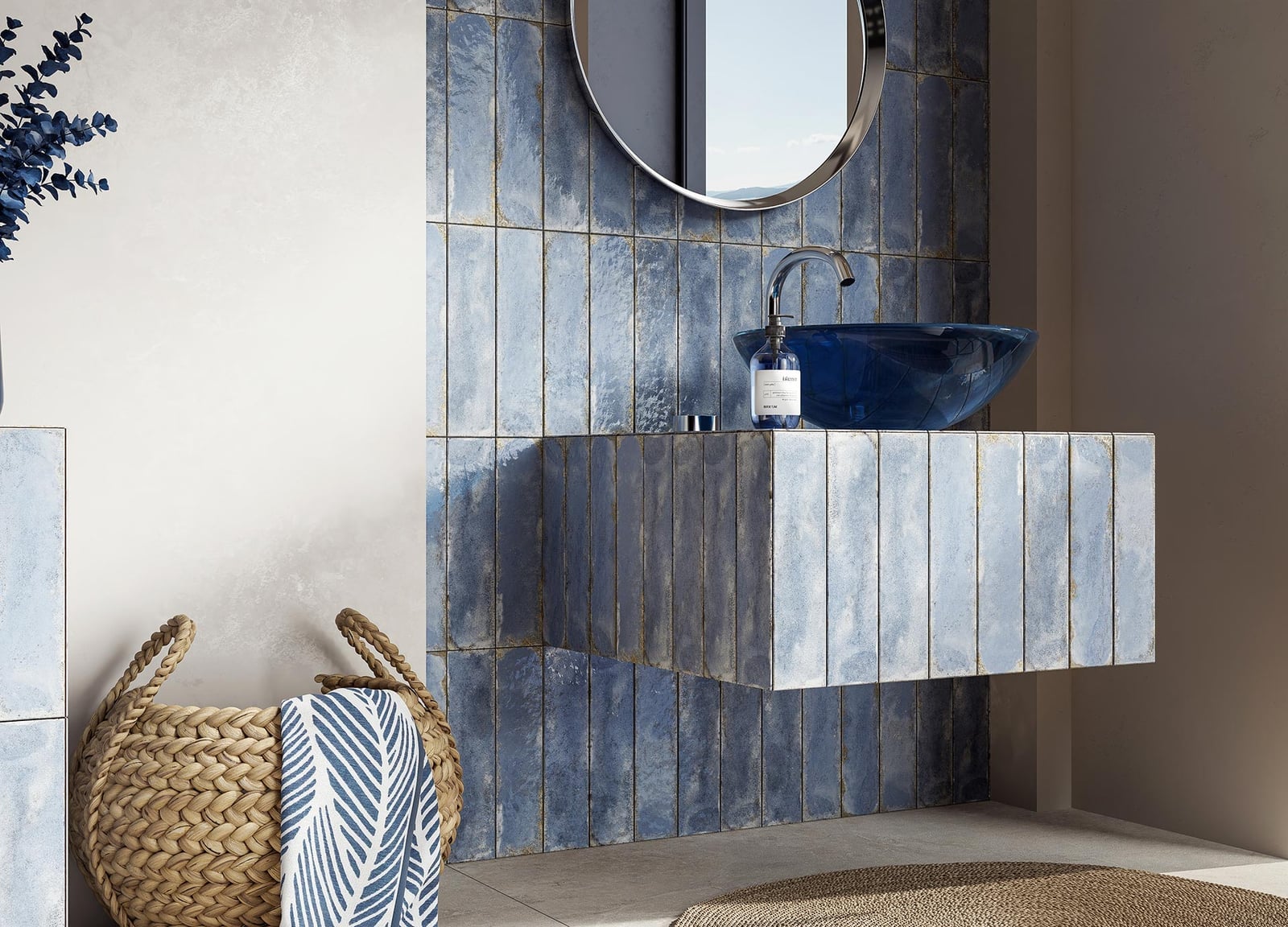
A blue tiled vanity front gives you the color without a solid surface that shows every water spot. Here, a wall-mounted vanity is covered in blue tile, topped with a blue glass vessel sink. A round mirror above and a wicker basket below keep the look grounded. The glossy tile and glass sink share a color family but differ in texture, so the vanity is layered. The metal faucet and drain break up the blue and tie the composition together.
Blue subway tile shower enclosure in a modern bathroom
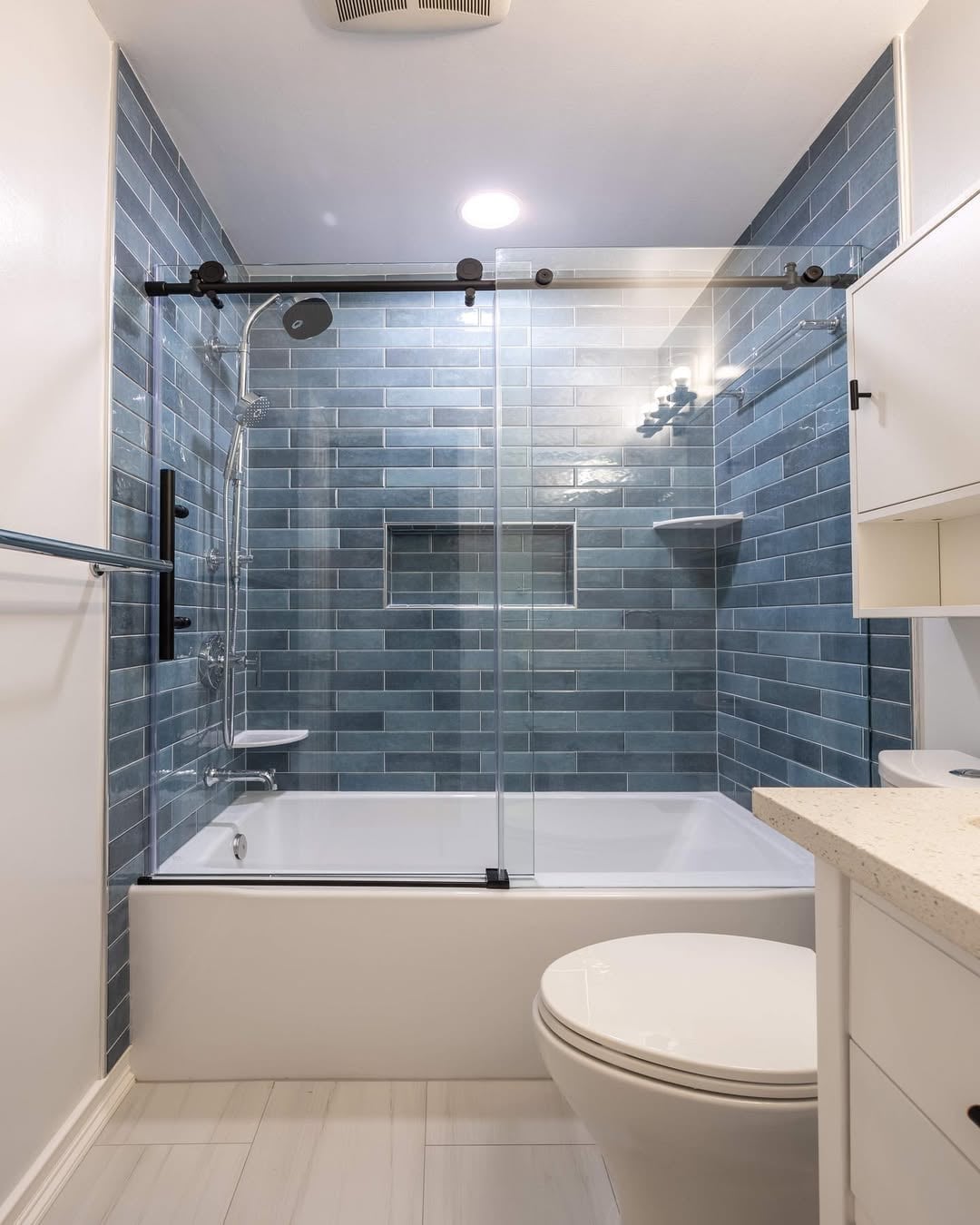
Does blue tile work in a compact shower without making the space feel smaller? It does when the surrounding surfaces stay light. Here, the blue subway tile shower enclosure sits against white walls and a gray floor, with a standard layout that places the bathtub, toilet, and vanity in a row. The overhead light and vanity lights keep the blue from looking dark. Layout balance matters: one bold element works when the surrounding surfaces are neutral. The white bathtub and vanity provide visual rest, so the shower enclosure becomes the focal point, not the whole room.
Vertical blue subway tiles create a shower wall
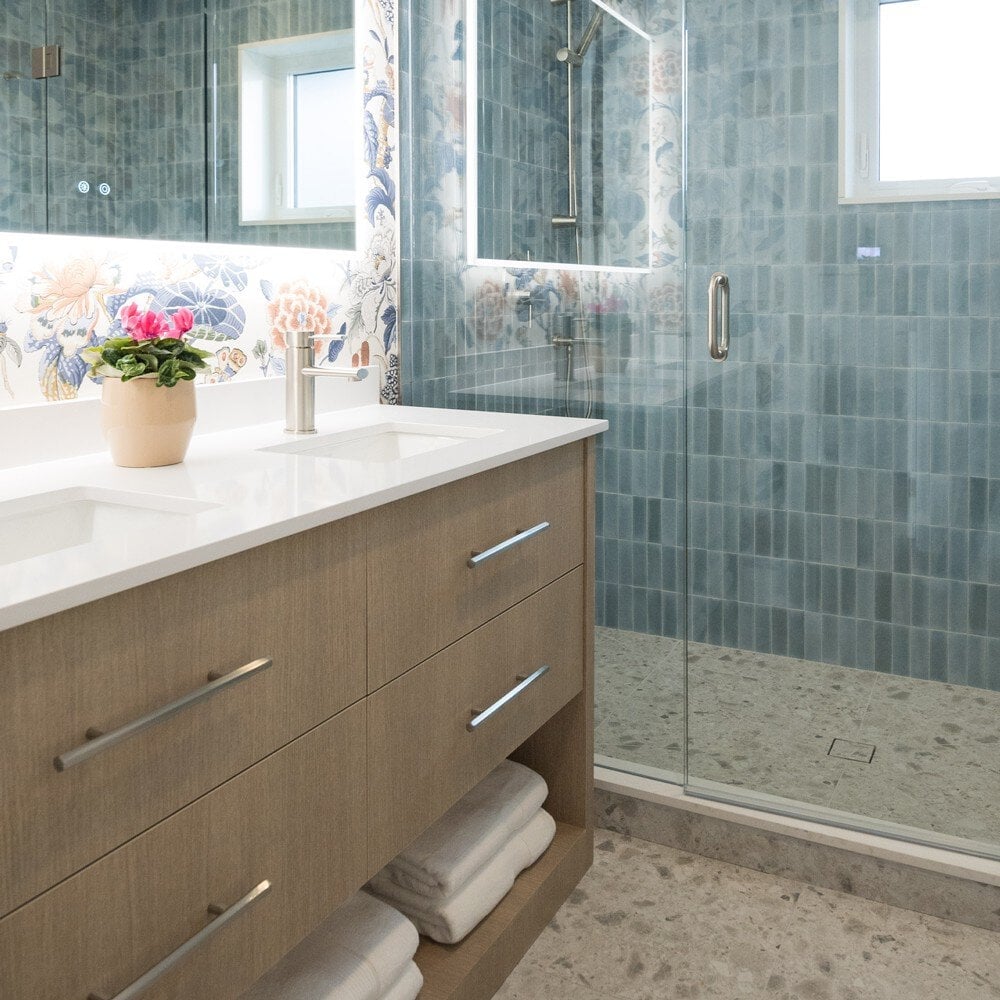
Vertical blue subway tiles on the shower wall create a clean, modern line that pairs well with the wood and stone accents in the rest of the bathroom. The compact layout places the double vanity opposite the glass shower enclosure, with overhead vanity and shower light keeping the space bright. The design principle here is about durability: vertical tile installation in a shower directs water down the seams rather than pooling along horizontal grout lines, which can reduce long-term moisture issues. The floral accents in the room add a soft contrast to the straight tile lines.
Deep blue glossy tile wall with brass fixtures in a modern bathroom
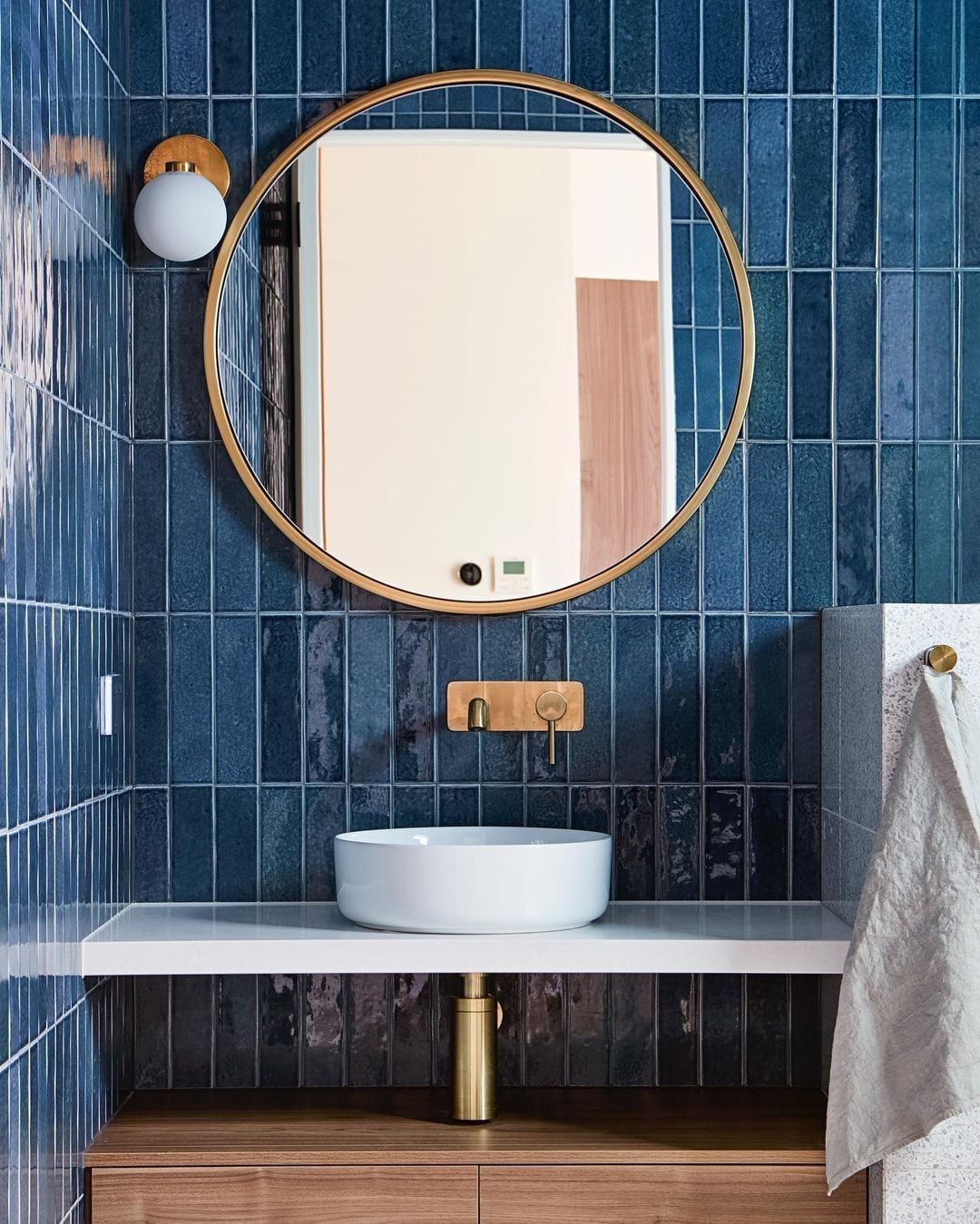
A deep blue glossy tile wall pairs best with a simple room. In this compact bathroom, vertical blue tiles cover the wall behind a stone vessel sink and round mirror, with a brass wall faucet and wall sconce as accents. The palette sticks to deep blue, white, brass and wood tones, so the tile becomes the focal point. The vanity and sink sit below the mirror in a standard layout, but the dark glossy wall gives the small space more depth than a light one would. For a compact bathroom, pick one wall for bold tile and keep the other surfaces neutral to avoid a cramped feel.
Horizontal blue subway tile backsplash in a modern bathroom
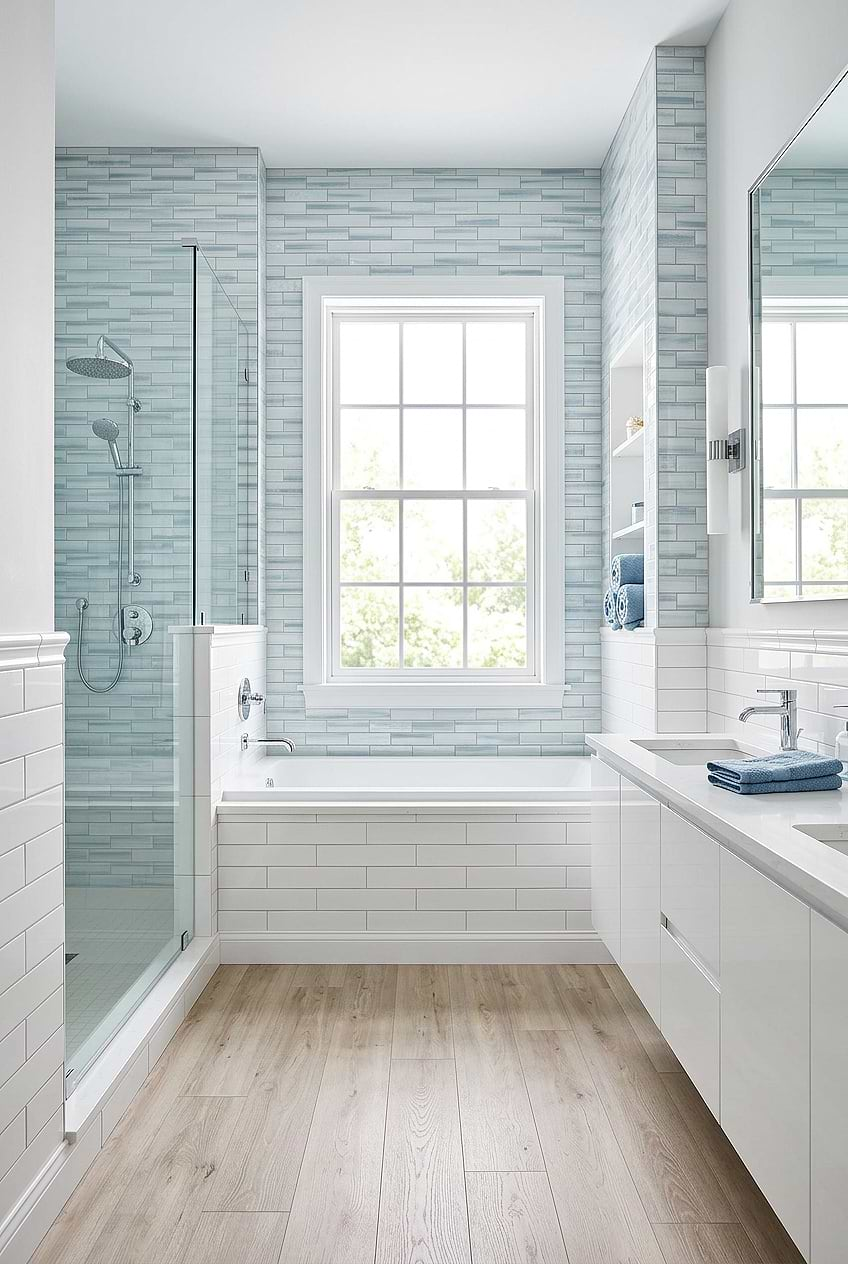
A horizontal blue subway tile backsplash feels more grounded than a vertical one, especially in a roomy bathroom with a bathtub, shower and vanity along the same wall. The light blue tiles run in a straight line above the vanity and sink, with white wall sconces and natural light keeping the space open. The palette uses light blue, white and wood tones, while the glass and quartz surfaces add a clean modern finish. The horizontal line draws the eye across the room instead of up, which works well for a layout where the vanity sits between the tub and shower. To recreate it, look for a glossy tile that reflects the natural light and keeps the backsplash from feeling flat.
Herringbone tile wall behind a white bathtub
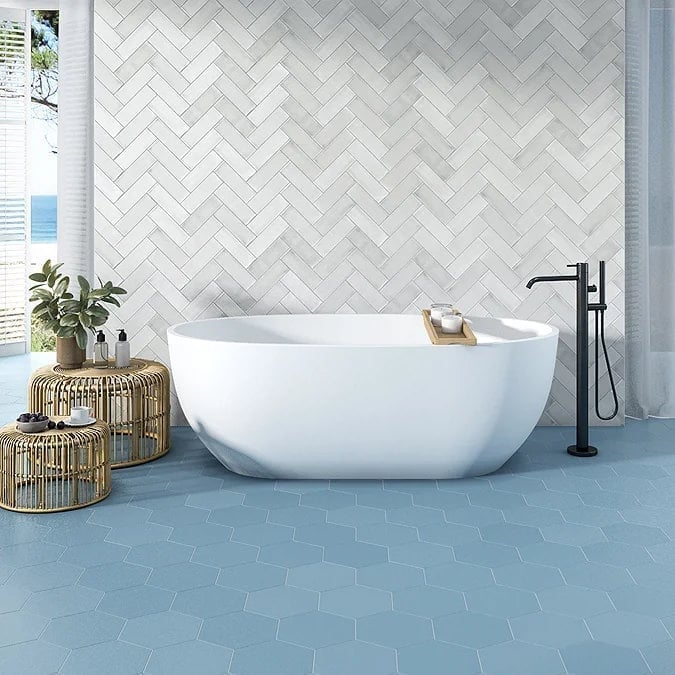
A herringbone tile wall behind a freestanding white bathtub adds texture without needing a second color. The blue tiles form a repeating V pattern that draws the eye upward, while the white tub and black faucet stay simple. Rattan side tables on each side bring in natural wood tones and soften the tile’s crisp lines. The room gets natural light, which keeps the blue looking calm and not dark. For a similar setup, match a textured wall with simple fixtures and let the tile pattern do the work.
Square tiles show a blue floral botanical pattern
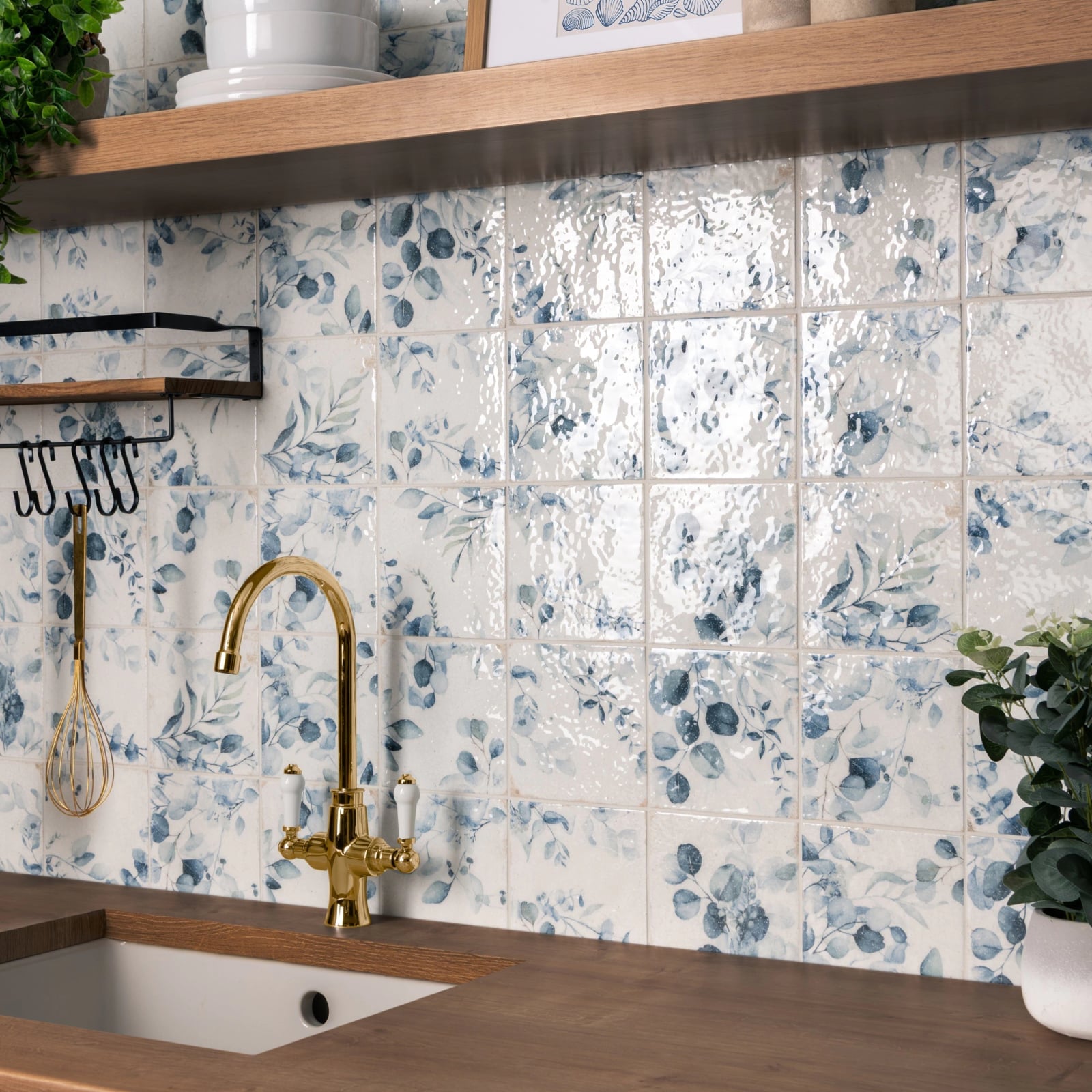
A blue floral botanical tile backsplash fits a traditional kitchen where the other surfaces stay neutral. The square tiles feature a repeating blue botanical pattern against a white background, with a wooden shelf above the sink and a brass faucet adding warm contrast. In a compact kitchen, daylight helps the pattern feel balanced. The floral design pairs well with solid countertops and cabinets, so the tile becomes the focal point. For a similar look, choose a pattern with a light background to keep the room from feeling too dark.
Textured tiled surface with subtle blue and gray gradient
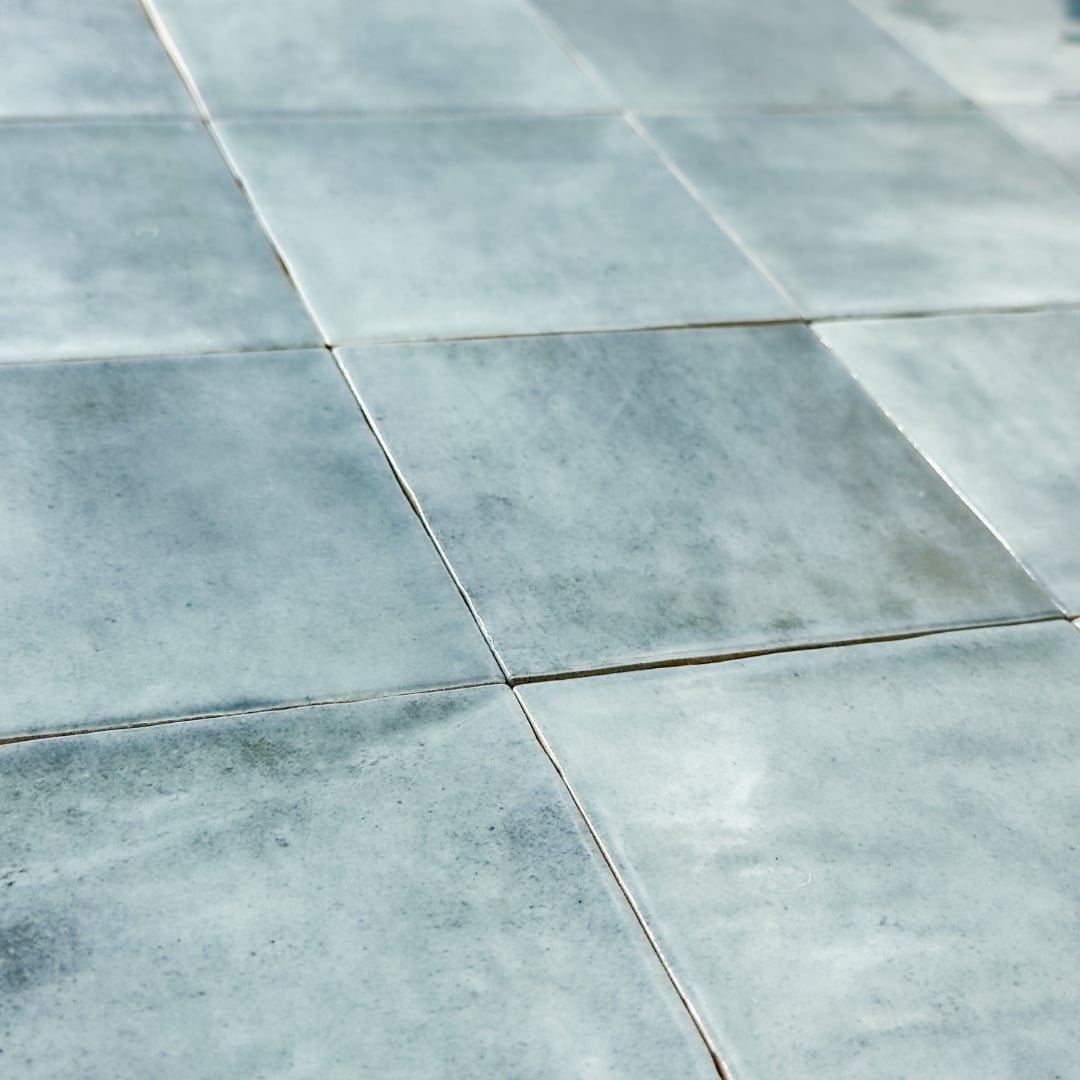
A subtle blue and gray gradient tile works best when the surface is the main visual element, with no competing patterns or bold fixtures nearby. The textured tiles shift from light blue to gray, creating a soft ombre effect that natural light can play across. In a modern indoor setting, this kind of tile works well as a backsplash or accent wall where the gradient adds depth without needing extra decoration. Keep the grout color close to the lighter shade so the transition appears smooth and smooth. The texture also hides minor smudges better than a flat glossy surface.
Iridescent blue tile backsplash in a modern laundry room
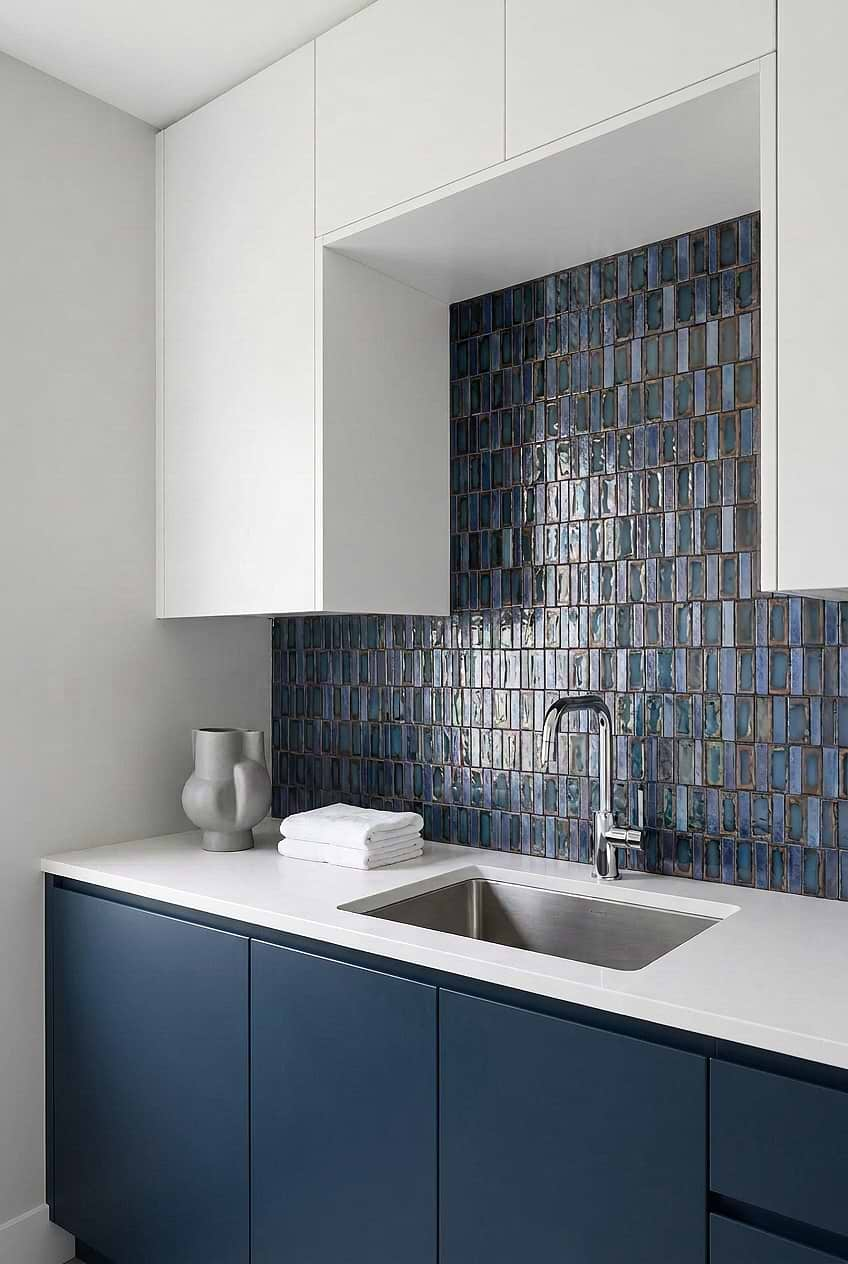
An iridescent blue tile backsplash turns a compact laundry room into a space that feels more deliberate than just functional. The glossy tiles catch the overhead light, shifting between deep blue and lighter tones across the wall behind the sink and counter. White laminate cabinets and a metal faucet keep the look clean so the tile does the work. The principle here is materials: a glossy, reflective surface in a small room makes the area feel larger without adding square footage. It is a simple swap that asks for nothing more than a weekend and a steady hand with a trowel.
Circular patterned blue tiles cover the walls, bathroom
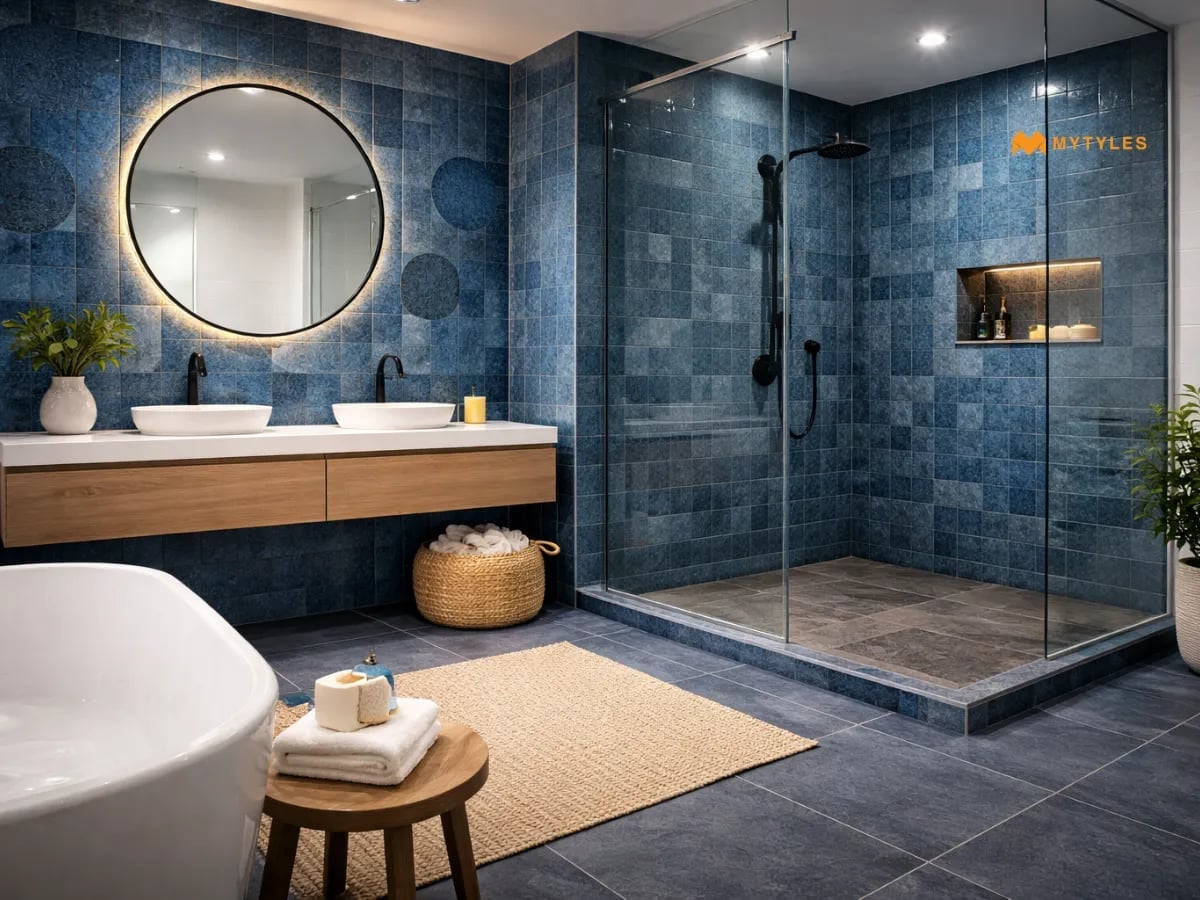
A practical rule for patterned tile in a large bathroom: let the pattern set the pace and keep everything else quiet. In this roomy layout, circular blue tiles cover the walls around a freestanding bathtub, double vanity and walk-in shower. The shades of blue shift slightly across the surface, while the wood vanity, woven basket and round mirror add natural texture without competing. Recessed ceiling lights and vanity mirror light keep the space bright. The scale here works because the pattern is the event. For a renter-friendly take, look for peel-and-stick tile with a similar circular motif. It gives the same visual rhythm without a permanent change.
Vibrant blue tile shower and tub surround in Mediterranean style
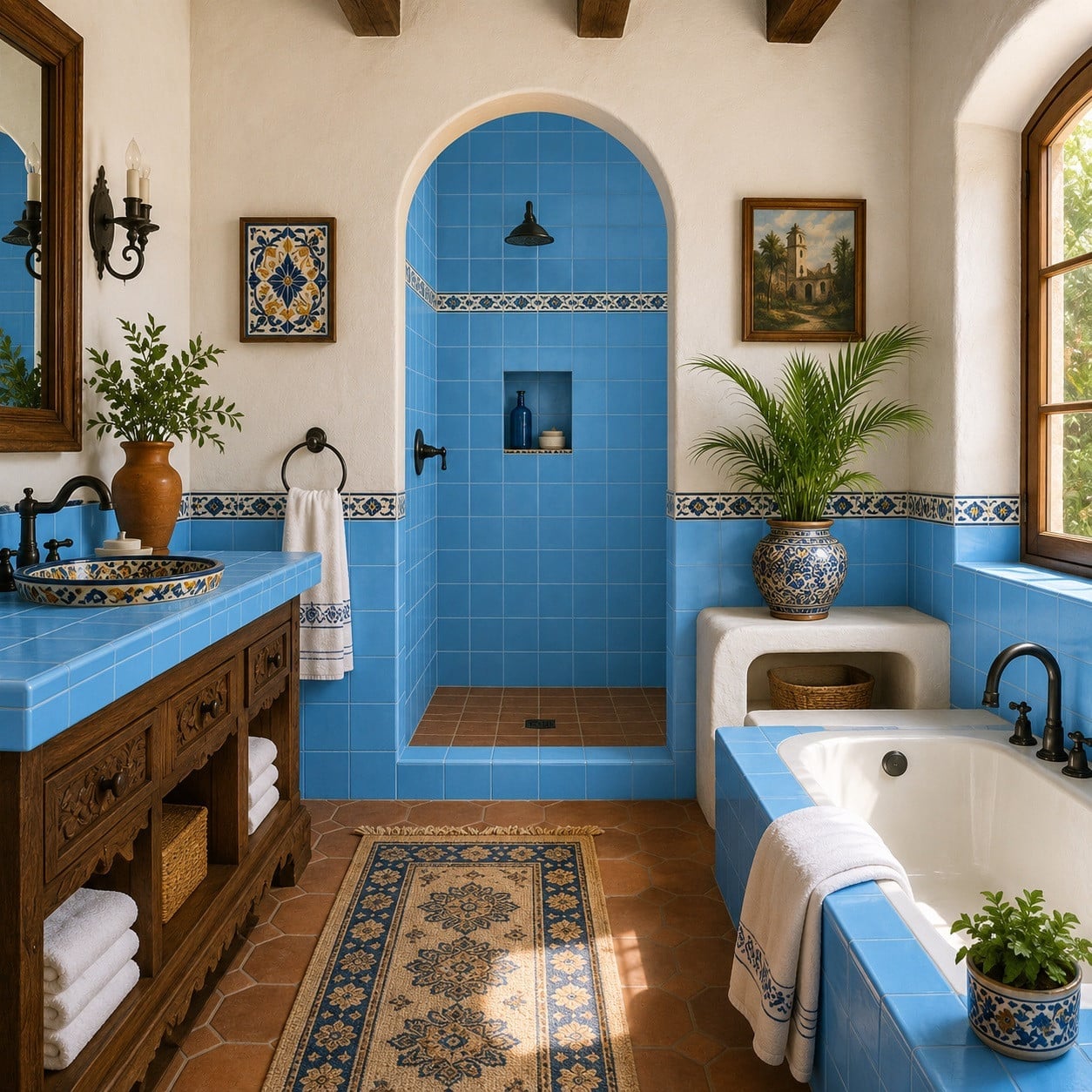
A Mediterranean bathroom often leans on warm terracotta and cream, but this one pushes the blue forward instead. Vibrant blue tile covers both the arched shower alcove and the surround around the freestanding tub, while white walls, a wooden vanity and a patterned rug keep the palette grounded. Wall sconces and natural light from a window soften the glossy finish.
What defines this look is the ratio: blue takes up about half the wall space, with white and terracotta filling the rest. The gold accents in the fixtures and the warm wood break the cool tones just enough. If you want a similar feel without full tile, try a blue tile backsplash behind the vanity and carry the same shade into a shower curtain. It keeps the Mediterranean spirit without committing every surface.
Light blue tiles create a striking wall effect
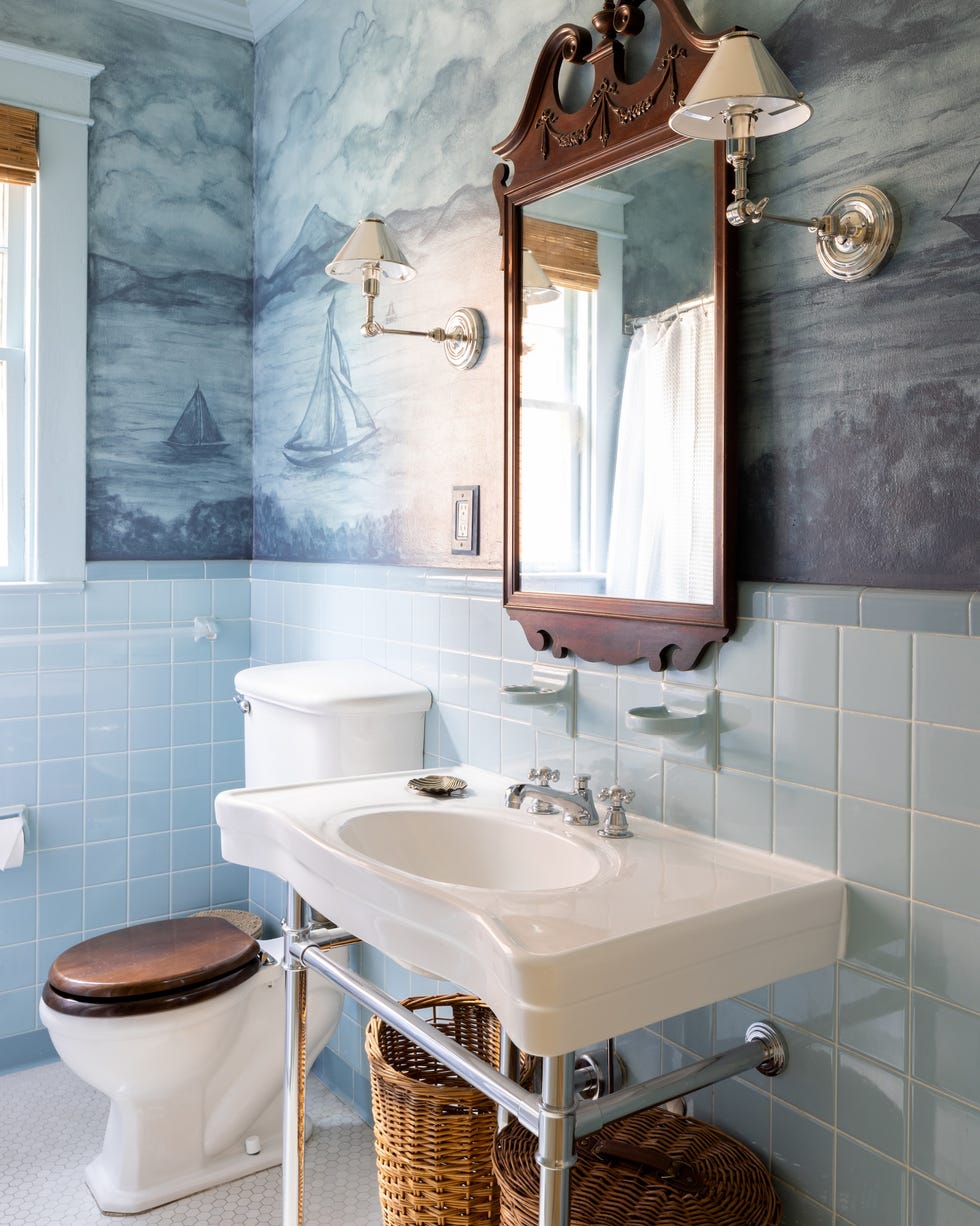
A compact bathroom gets its personality from a wall of light blue square tiles that run from floor to ceiling. The glossy finish reflects the wall sconces, making the small room feel taller and brighter. A pedestal sink, toilet and wooden mirror keep the layout standard, while the tile becomes the focal point. The layout principle here is vertical continuity: taking tile all the way up draws the eye upward and tricks the space into feeling larger. A wicker basket adds a natural break. For a traditional feel, pair light blue with gray grout and white trim. It looks classic without being fussy.
Blue tiled floor in a traditional kitchen
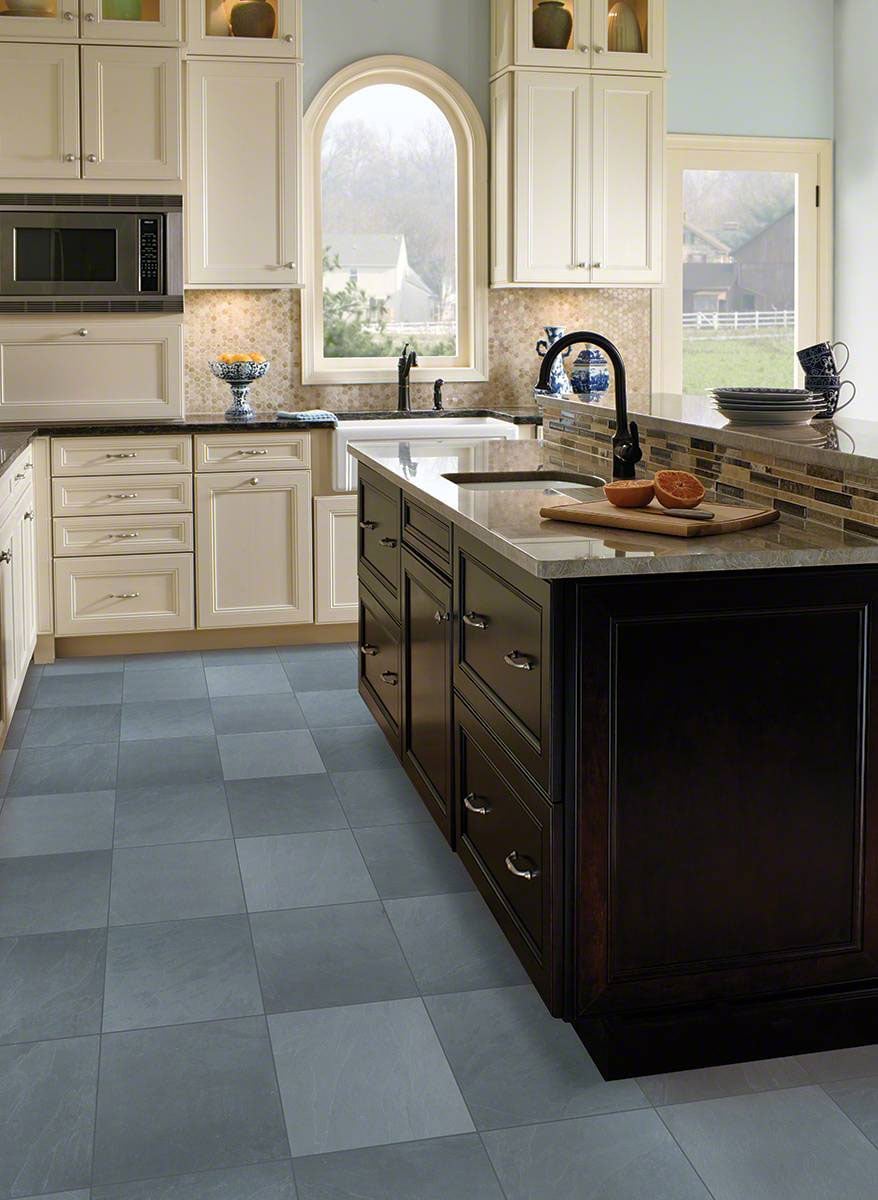
A blue tiled floor in a traditional kitchen is a clear choice for grounding the room without competing with the cabinetry. The blue and gray tiles cover the floor in a repeating pattern, while cream walls, wood cabinetry and a granite countertop keep the palette warm. A large arched window brings in natural light that softens the cool tones. The material principle here is durability: tile on the floor handles the foot traffic and spills of a busy kitchen better than wood or laminate. A central island with seating anchors the layout. The blue stays subtle enough that it works with both the wood tones and the gray countertops.
Blue and white tile risers on a staircase
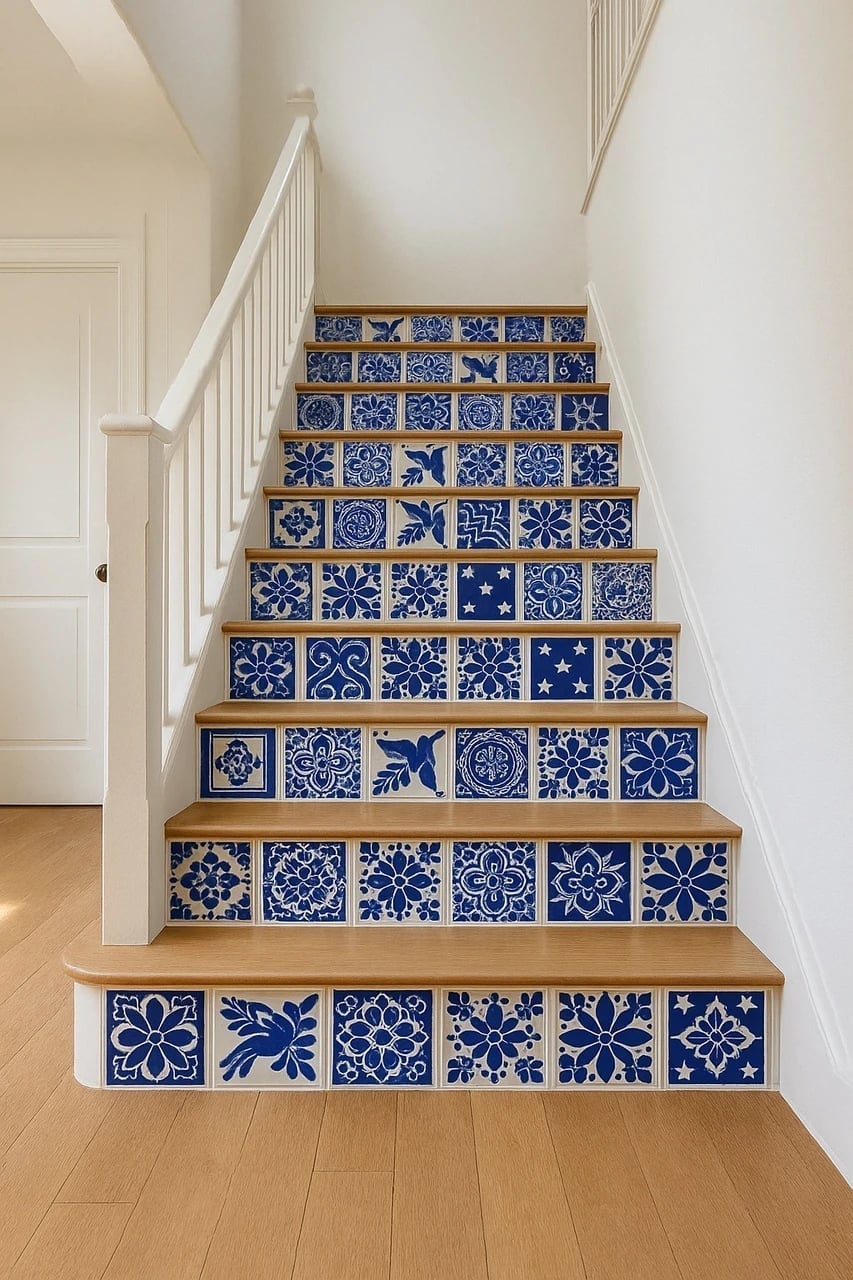
A practical rule for any stair refresh: treat the risers as a canvas and the treads as the frame. Here, blue patterned tiles on each riser turn a straight, roomy staircase into a focal point without touching the wooden steps or white banister. The palette stays in the blue and wood tones family, which keeps the eclectic look grounded. If you rent, a renter-safe swap is adhesive-backed tile sheets made for risers. They apply over existing paint or tile and peel off later without damaging the surface underneath. Just cut each sheet to size and press firmly to the center of the riser.
Light blue herringbone tile walls in a modern bathroom
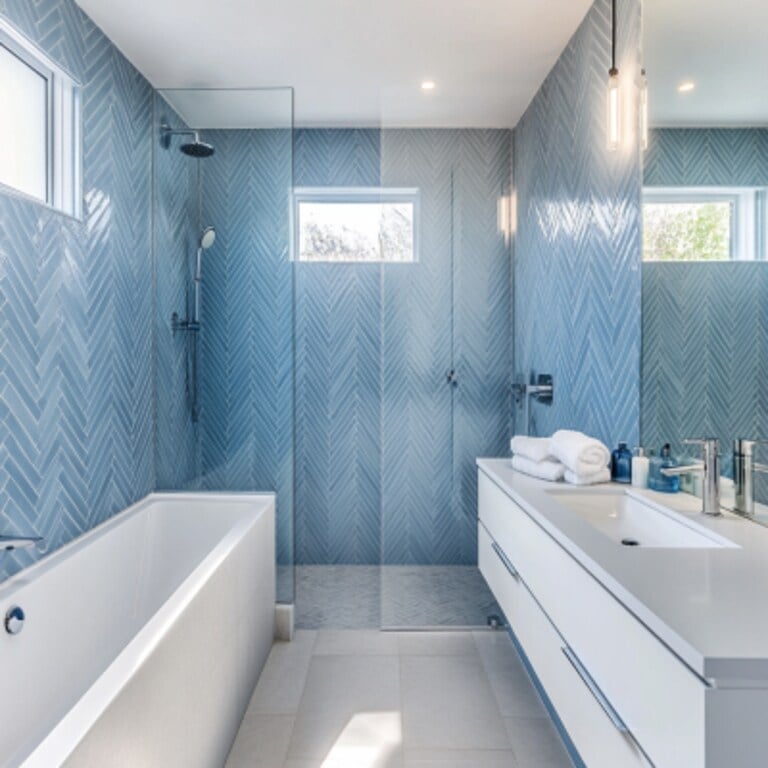
The light blue herringbone tile pattern wraps the walls in a continuous line that draws the eye around the roomy layout. A freestanding bathtub sits opposite a floating vanity, with a glass shower enclosure completing the linear arrangement. The palette sticks to light blue, white, and gray, while chrome fixtures and wall sconces add a clean, reflective finish. Natural light from a window keeps the space from looking too cool, so the herringbone looks texture rather than temperature.
Deep blue vertical shower tiles and hexagonal floor tiles
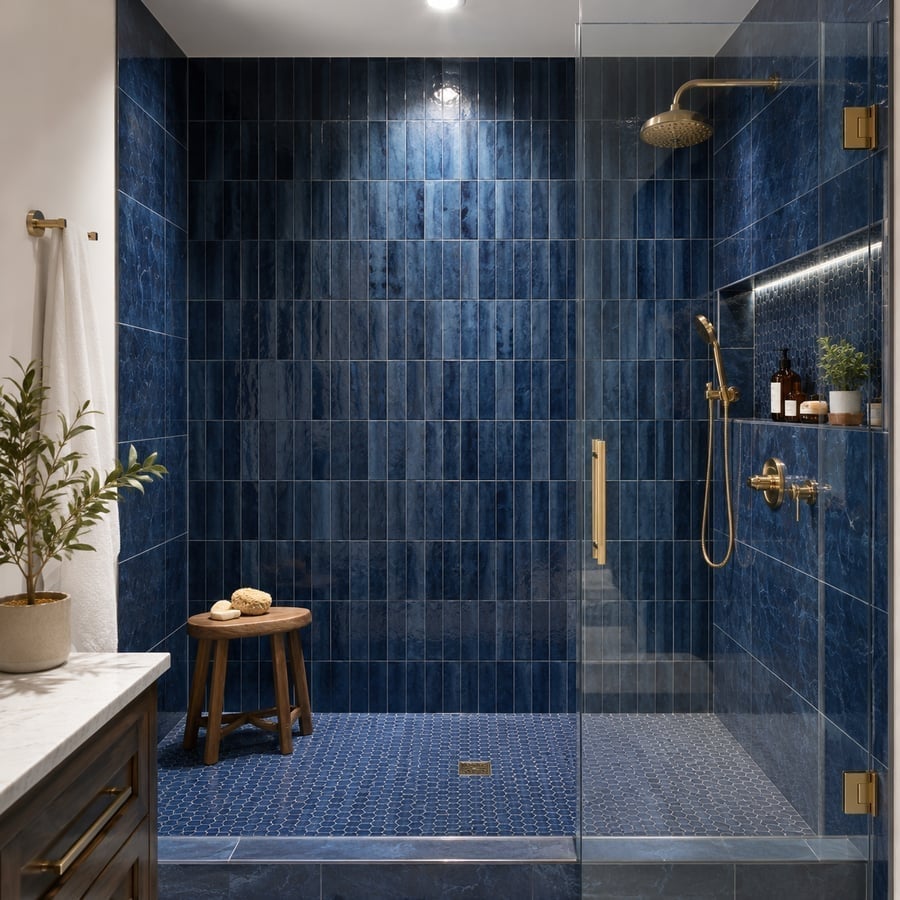
A practical rule for mixing tile shapes: let one pattern lead and the other support. In this roomy walk-in shower, the deep blue vertical tiles cover the walls in a continuous sweep, while hexagonal floor tiles in a matching tone ground the space underfoot. The palette adds gold through the brass fixtures and a wooden stool for warmth. Recessed ceiling light and shelf lighting bounce off the glass enclosure, keeping the deep blue from feeling too heavy.
Spacious blue tiled floor on a modern outdoor patio
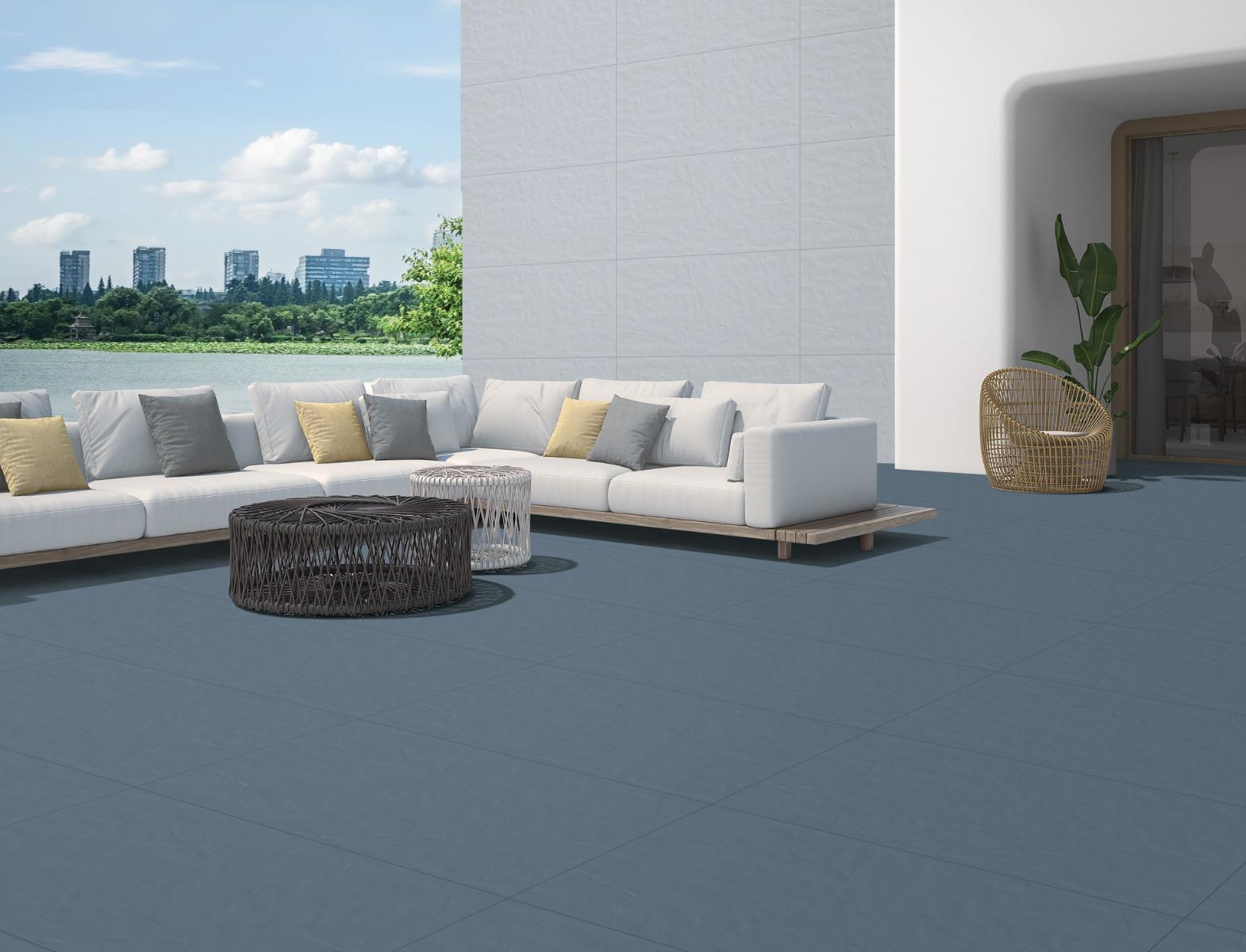
Blue tile on a patio reads differently than on a kitchen wall. Inside, it wraps a room; outside, it anchors the seating. Here, the blue tiled floor extends under a sectional sofa, wicker coffee tables, and a wicker chair, forming a continuous surface that defines the open plan layout. The palette includes blue, white, gray, and yellow accents, which stop the floor from dominating. Daylight handles the rest, keeping the space bright without extra fixtures. A practical rule for outdoor tile: check the slip rating. Glossy finishes can get slick after rain, so a matte or textured surface is safer for a patio.
Blue clawfoot bathtub in a traditional bathroom
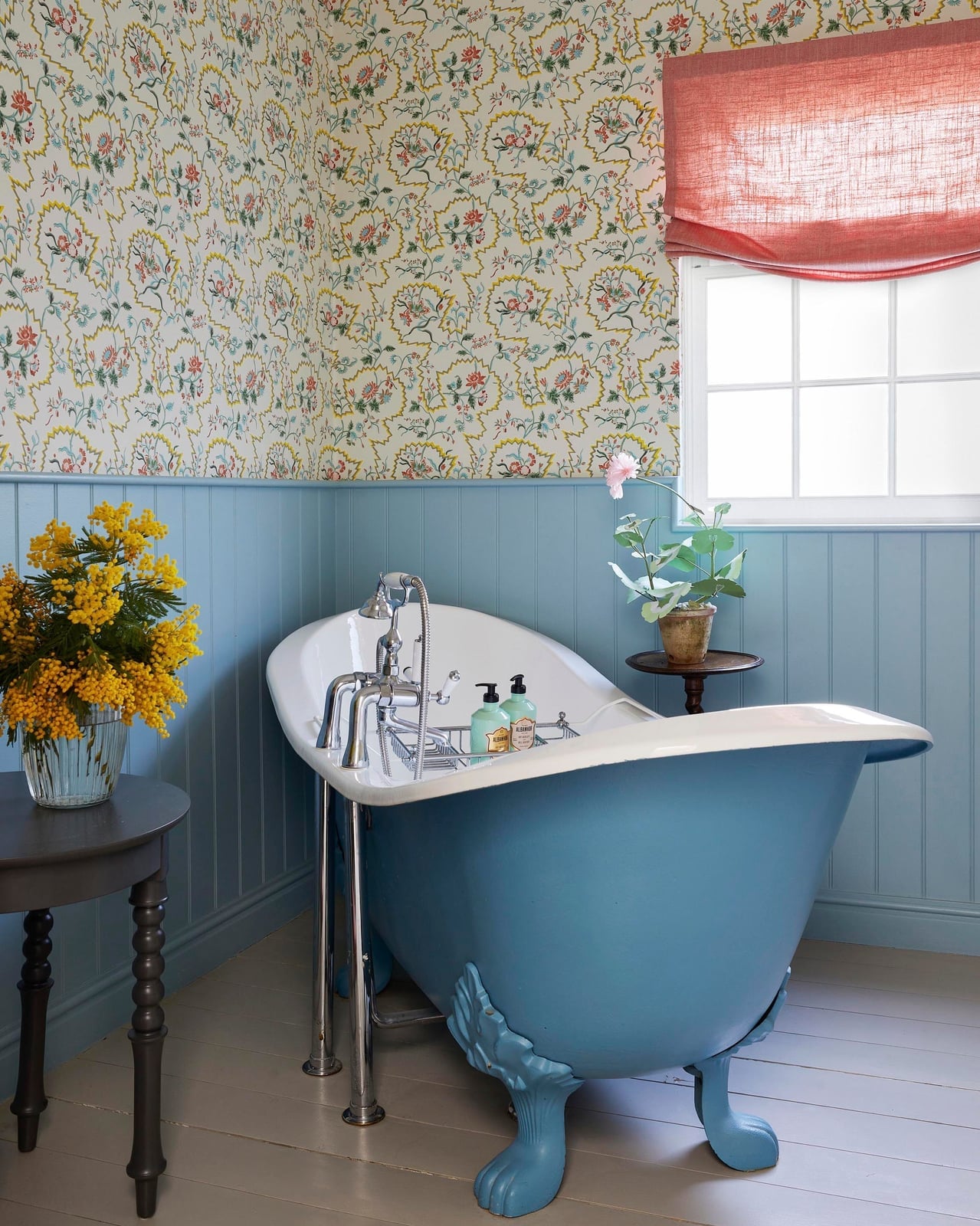
The blue clawfoot bathtub sits centered in a compact bathroom, with a round side table to the left and a small pedestal table to the right. The palette expands beyond blue to include white, yellow, red, and green, carried by the wood paneling and the porcelain tub itself. A window brings in natural light that hits the metal claw feet and glass accessories. The result is a traditional layout that uses the tub as the anchor, letting the smaller pieces orbit around it without crowding the floor.
Vertical dark blue wall tiles in a compact bathroom
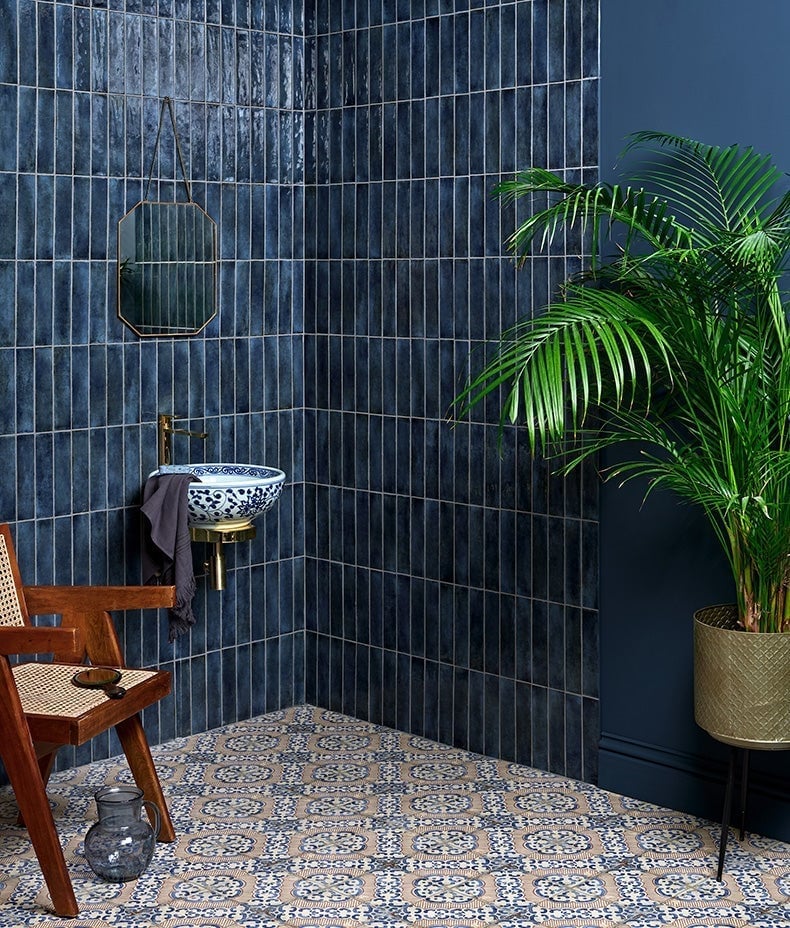
This compact bathroom uses vertical dark blue wall tiles to draw the eye upward, making the space feel taller than it is. The dark blue tile wraps the corner where the sink sits, while a beige wall, a rattan chair, a potted palm, and an octagonal mirror keep the room from leaning too dark. The mix of natural textures keeps the look eclectic rather than heavy. For a compact room, vertical tile installation is a practical trick: it adds visual height without requiring any structural change.
Blue tile wall contrasting with white tiles in a bathroom
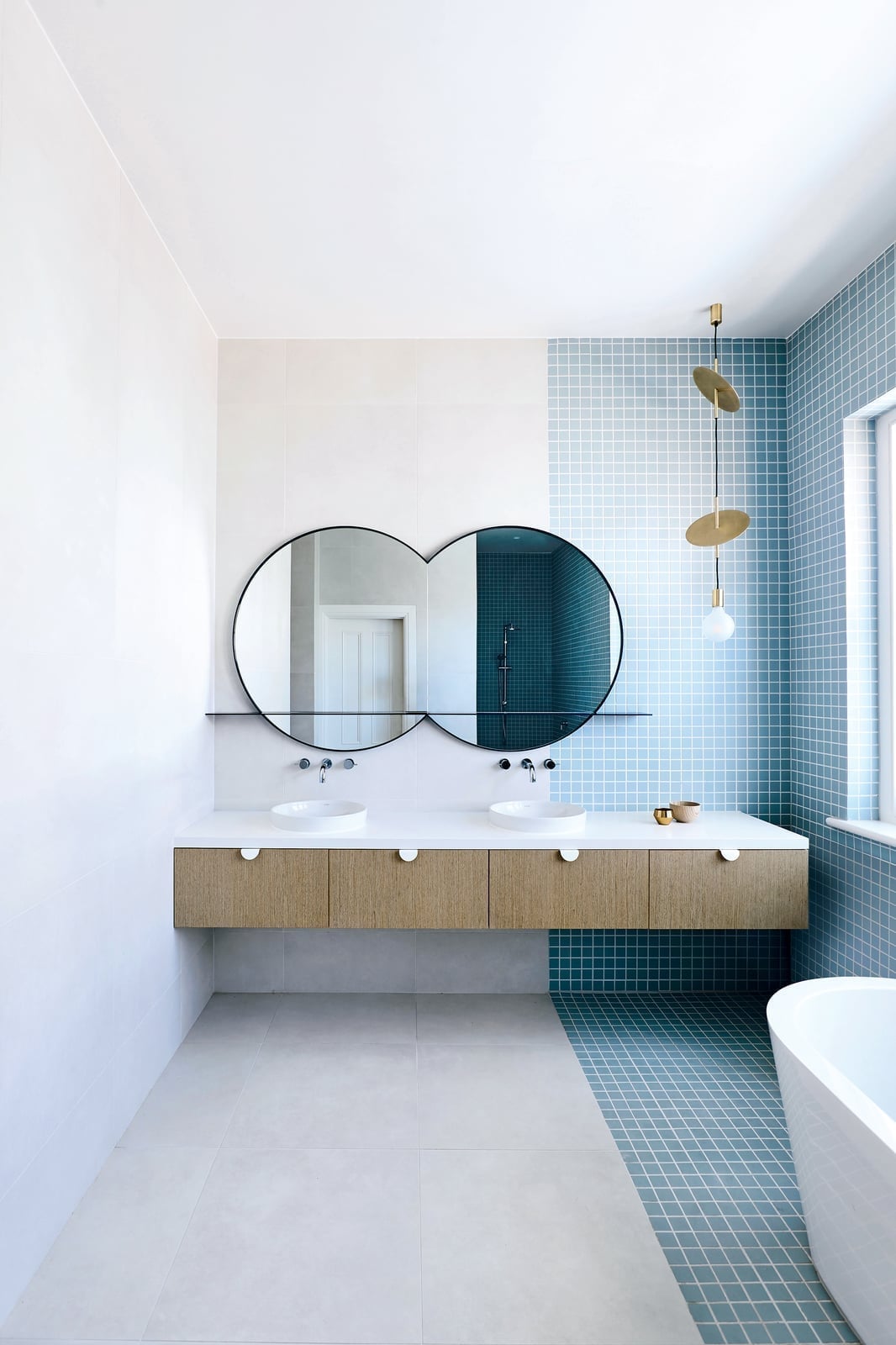
Contrast in a bathroom works best when one color leads and the other frames it. Here, a light blue and teal tile wall sits behind a double vanity, while white tile covers the rest of the room. The white keeps the space bright and open, and the blue wall becomes a deliberate focal point. Dual circular mirrors and natural light from a window keep the palette from feeling chilly.
For renters, this kind of look is achievable with a tile backsplash in a blue tone that matches the rest of the room. Pair it with a floating vanity in a wood tone to warm up the blue. The contrast works because the blue is concentrated on one wall.
Deep blue vertical tile wall in a modern bathroom, close-up take
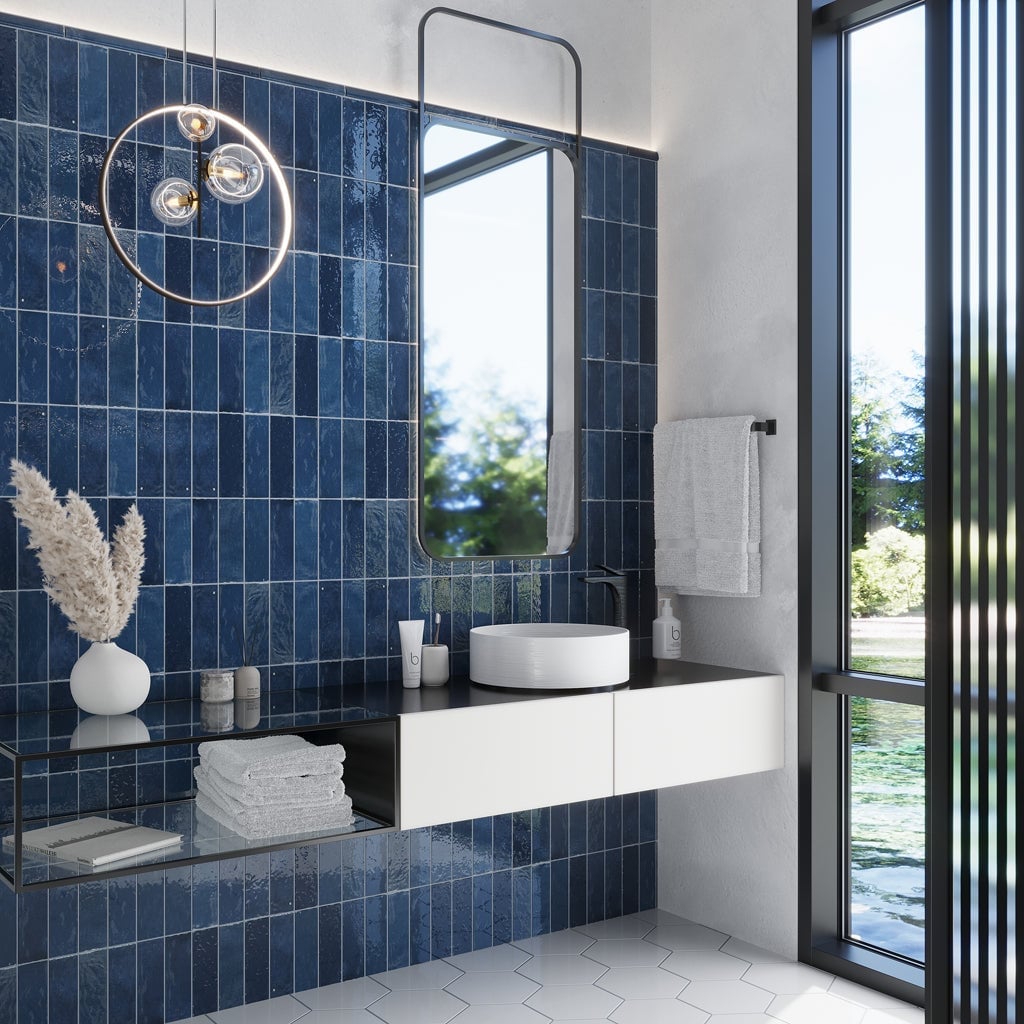
The deep blue vertical tile wall here runs from vanity to ceiling, with a white floating vanity, a round mirror, a glass shelf, and a vessel sink keeping the composition clean. Vertical stacking makes the wall feel taller, and the glossy tile reflects light from the pendant and recessed ceiling lights. The scale of the tile is standard subway size, so the pattern reads clearly without being busy. For a similar effect, keep the other surfaces simple, a white vanity and minimal metal accents let the tile do the work.
Ombre mosaic tile wall in shades of blue and black
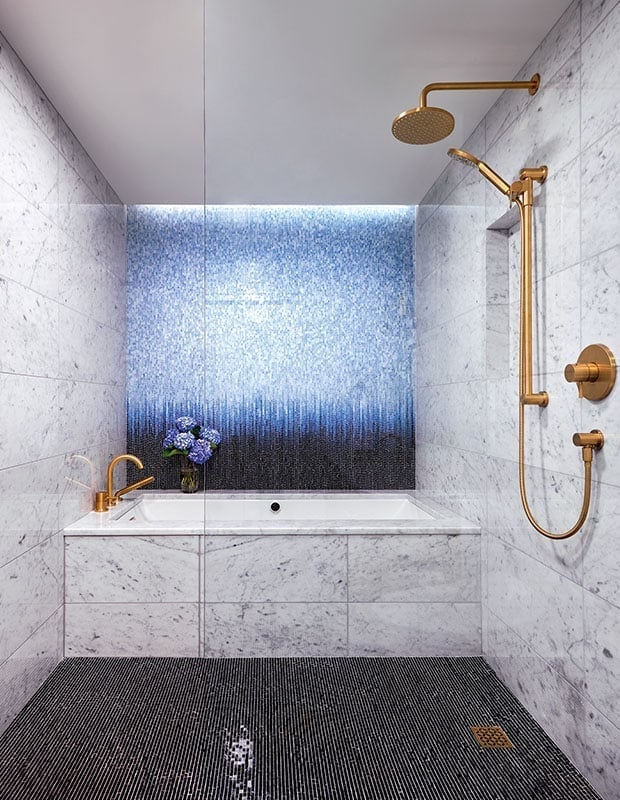
This ombre mosaic tile wall blends blue, white, black, and gold glass tiles in a gradient that shifts from lighter at the top to darker near the floor. The effect is a wall that feels layered rather than solid. Marble, brass fixtures, and a corner bathtub with a showerhead complete the compact bathroom. The mosaic format means the tile is already mixed, so matching future repairs is tricky. Order a few extra sheets at installation and store them with the rest of the spare tile. The gradient hides minor wear better than a solid color would.
Glossy deep blue vertical tile wall detail
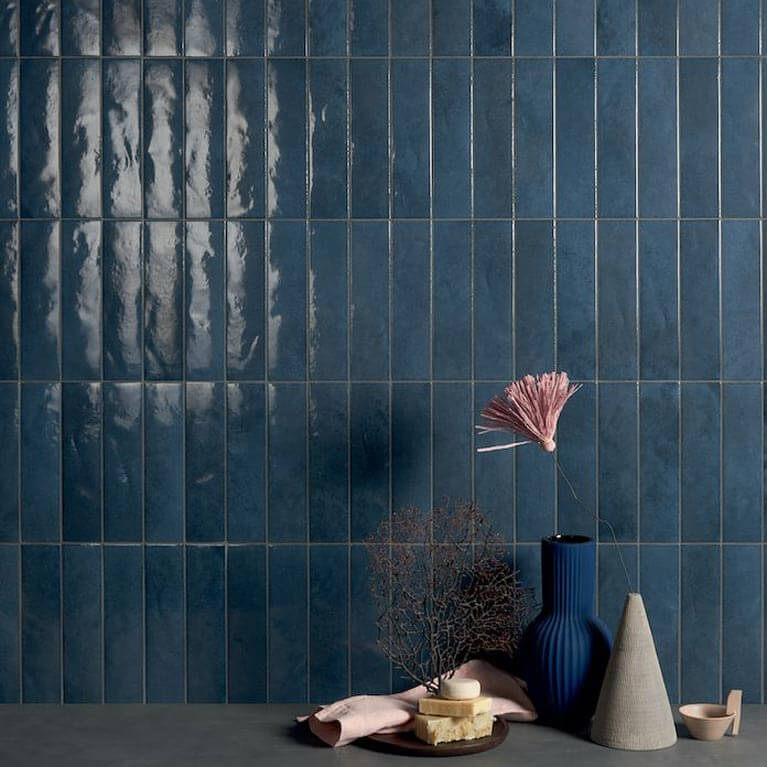
A glossy deep blue vertical tile wall reads differently than a matte one: the sheen catches natural light and soft shadows, making the wall feel dimensional rather than flat. Here, the blue is set against gray and pink accents, a ribbed vase, a conical vase, a coral branch, and stacked soap on a shelf, which softens the overall look. The vertical arrangement of the tiles reinforces the height of the wall without competing with the accessories.
For a variation, swap the pink for a warm wood or cream to shift the mood from cool to cozy. The gloss finish does show water spots more readily than matte, so a daily quick dry with a squeegee keeps the wall looking clean.
Blue and white tile backsplash in a modern kitchen
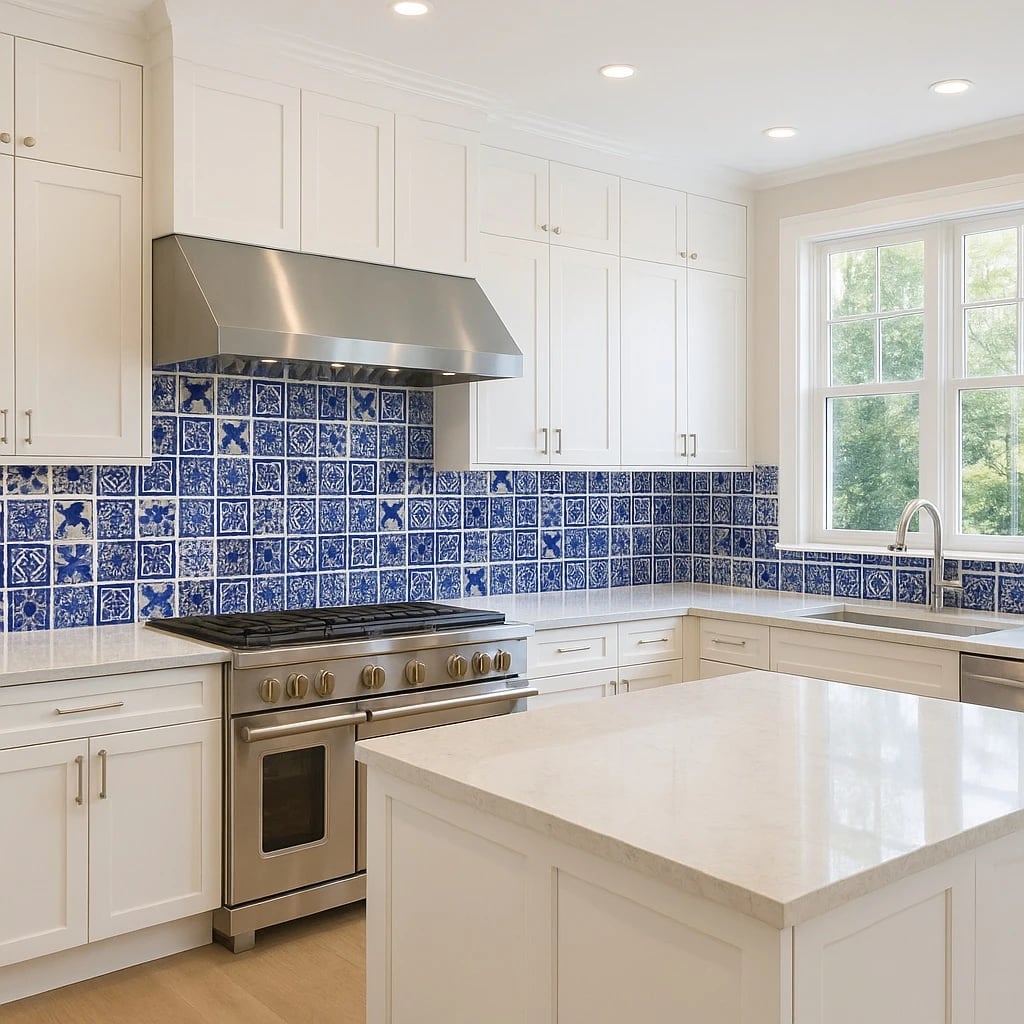
A blue and white patterned tile backsplash pulls this kitchen together by giving the eye a clear destination between white cabinetry and a stainless steel range. The palette sticks to three notes, white, blue, and silver, so the marble counter and wood island look supporting players rather than clutter. Recessed ceiling lights keep the finish matte enough that the pattern stays readable from across the room. When you pick a tile with this much going on, let everything else step back.
Bright blue diamond-patterned tile walls in a bathroom
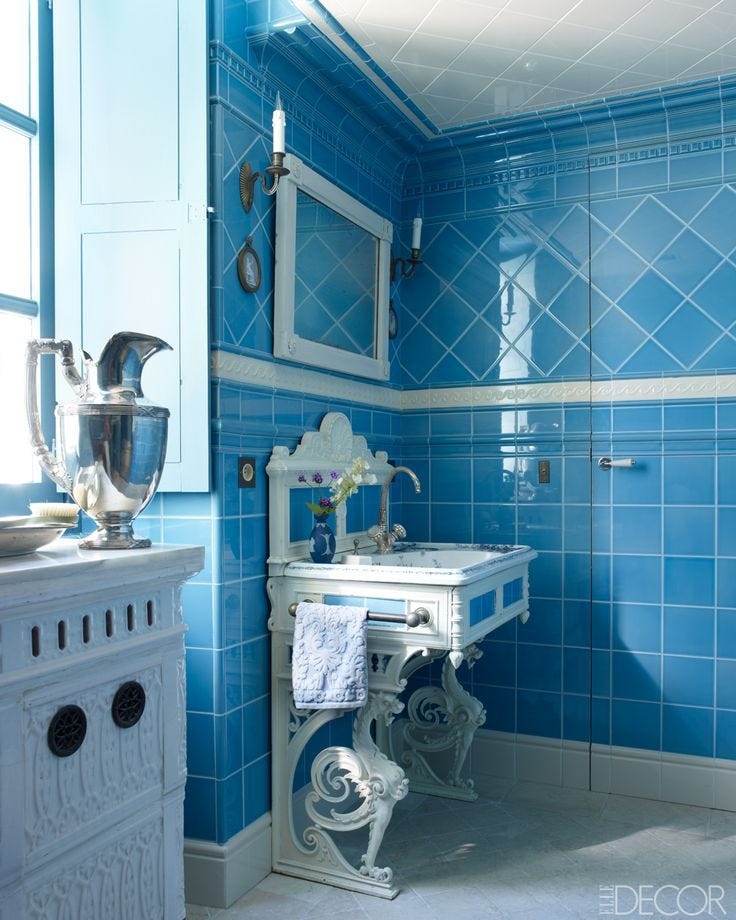
This traditional bathroom proves that a bright blue diamond-patterned tile wall can feel orderly rather than loud. The repeating geometry creates a natural grid that the pedestal sink and mirrored cabinet sit against without fighting for attention. White trim and a marble counter balance the color, and wall sconces cast enough light to keep the pattern crisp rather than shadowy. What breaks the look is adding another busy surface: the diamond tile works because the other finishes stay plain. Natural light from the window helps the bright blue look cheerful instead of heavy.
Blue geometric tile wall with floating wood vanity
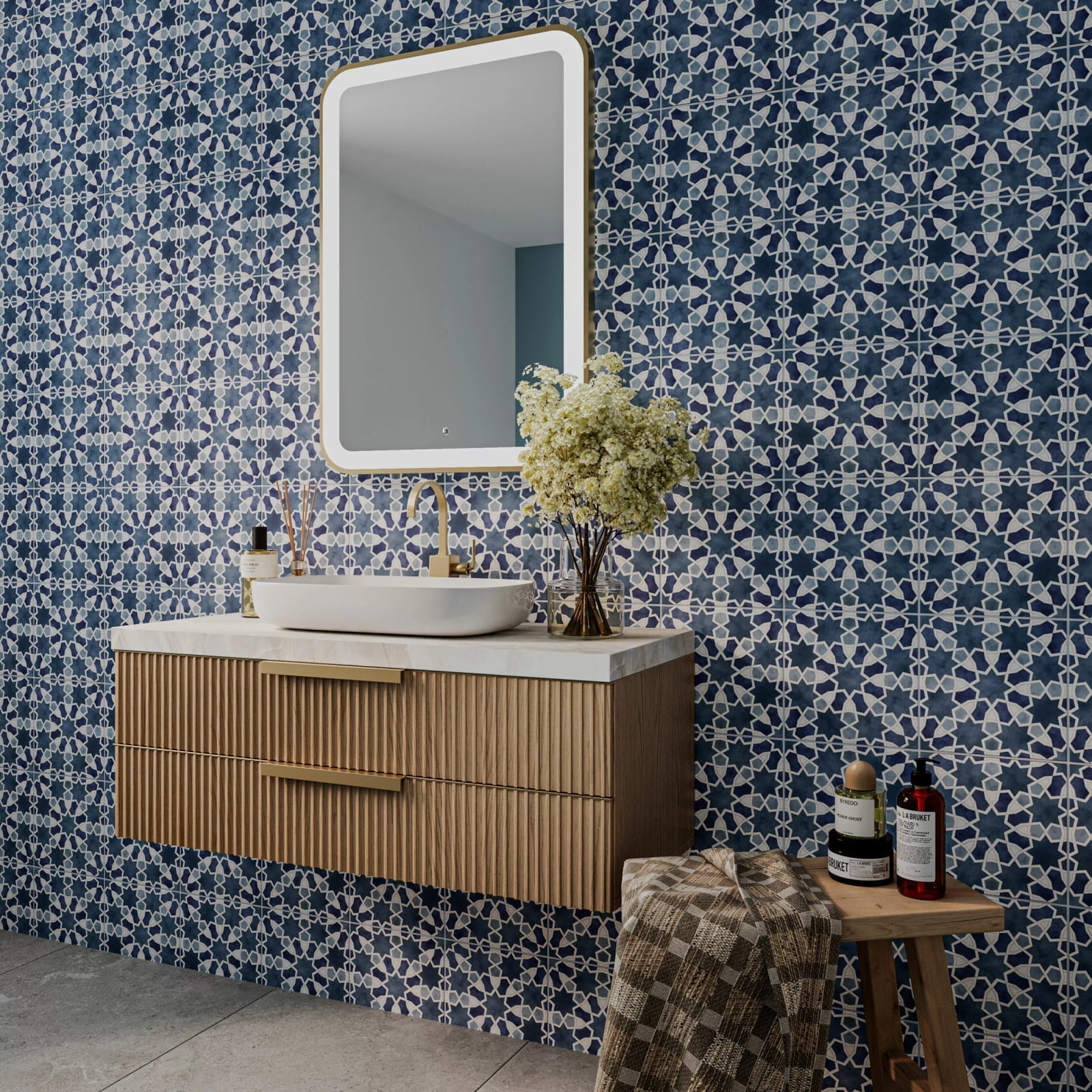
A plain blue tile wall can feel safe. A blue geometric tile wall with a floating wood vanity takes a small risk that pays off. The intricate pattern in shades of blue, white, and gray gives the compact bathroom a focal point without needing art or a bold fixture. The wood vanity adds warmth that marble alone would not supply, and the brass accents on the mirror and sink tie the cool tile to the warm vanity.
The key is balance. The tile pattern is busy, so the floating vanity keeps the floor visible and the room feels larger. Integrated mirror lighting makes sure the geometric lines stay visible even at night. If you try this combination, keep the vanity simple and let the tile do the talking.
Deep blue picket tile wall surrounding a white bathtub
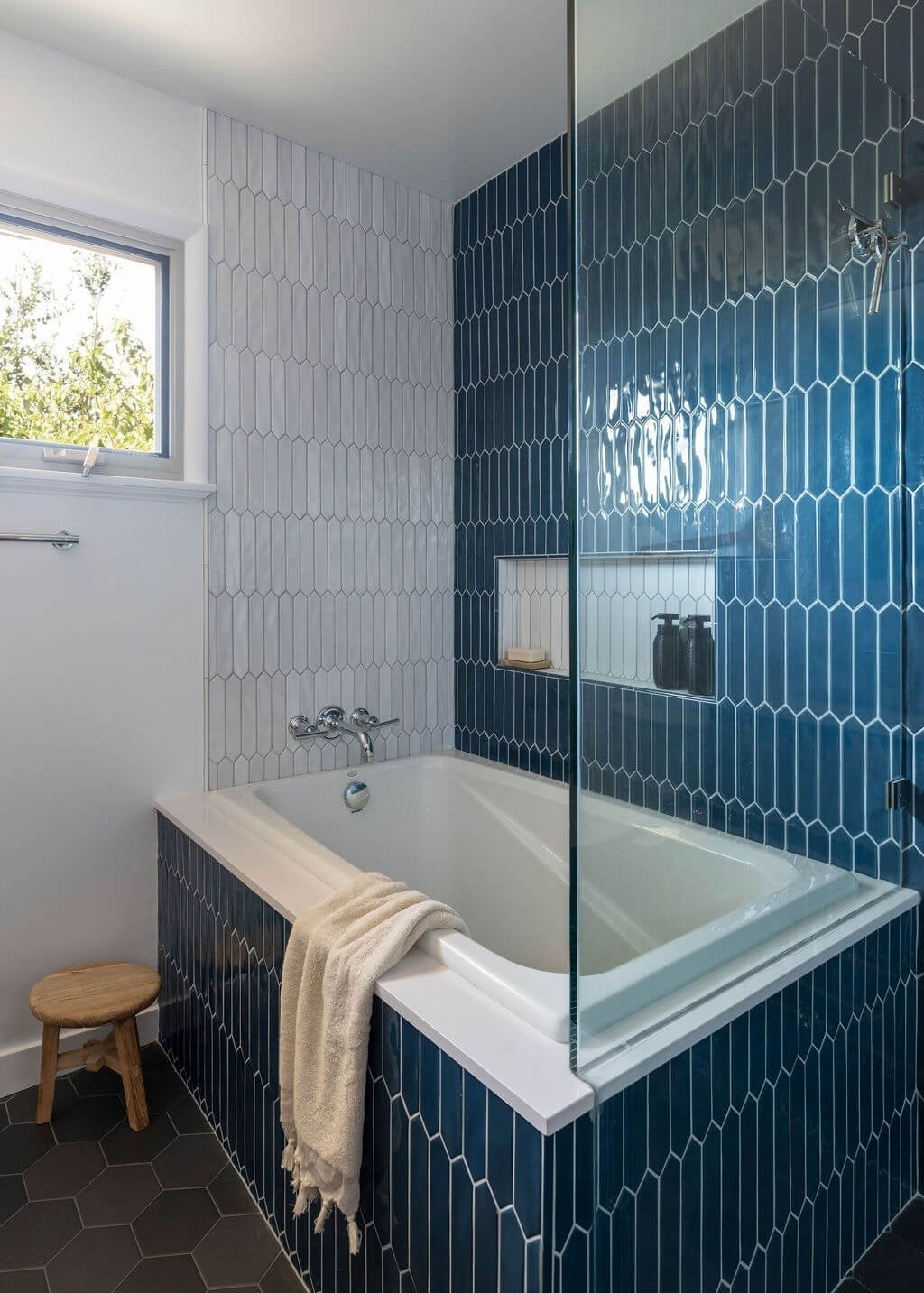
A white bathtub surrounded by deep blue picket tile creates a clear visual anchor. The picket shape adds vertical movement next to the glass enclosure, and the dark gray floor keeps the whole setup grounded. A wooden stool next to the tub gives the eye a resting point between the blue and white. Natural light from a window is what makes this work: without it, deep blue tile in a small room can feel like a cave.
Final Thoughts
Blue tile proves that a single material and color can carry a room when you let it lead. The supporting space stays quiet, and the tile does the work. For upkeep, wipe glossy tiles with a damp cloth; seal natural stone or porous tiles annually. Check your climate for outdoor tile freeze-thaw ratings. In a rental, consider peel-and-stick tile for a temporary backsplash. The takeaway: let the tile be the star, and keep everything else simple.