
Brown paint is making a serious comeback in 2027, and it’s not the muddy shade you might remember. This roundup of 29 rooms proves how flexible brown can be, from rich accent walls to warm taupe backgrounds that let other colors shine.
Whether you’re cozying up a living room or adding depth to a hallway, these ideas show brown as a design-forward choice that feels grounded and modern all at once. Expect to see everything from deep chocolate to soft mushroom tones, each with a practical take on making the shade work in your own space.
Rich brown trim frames a welcoming entryway
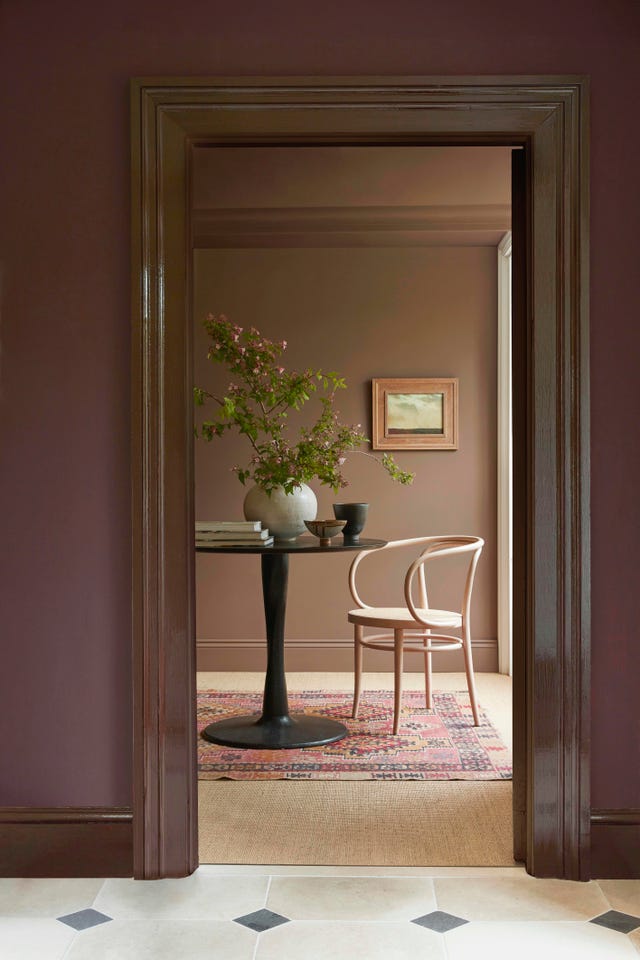
That doorway trim is the color of dark chocolate, and it sets the tone for the whole space. The rich brown against plum, beige, and pink creates a palette that feels both grounded and a little unexpected. A bentwood chair and a round table keep the entryway from looking too formal, while the patterned rug adds a layer of texture. The trick here is letting the trim be the anchor and keeping everything else in a supporting role.
Inviting staircase with warm brown banister
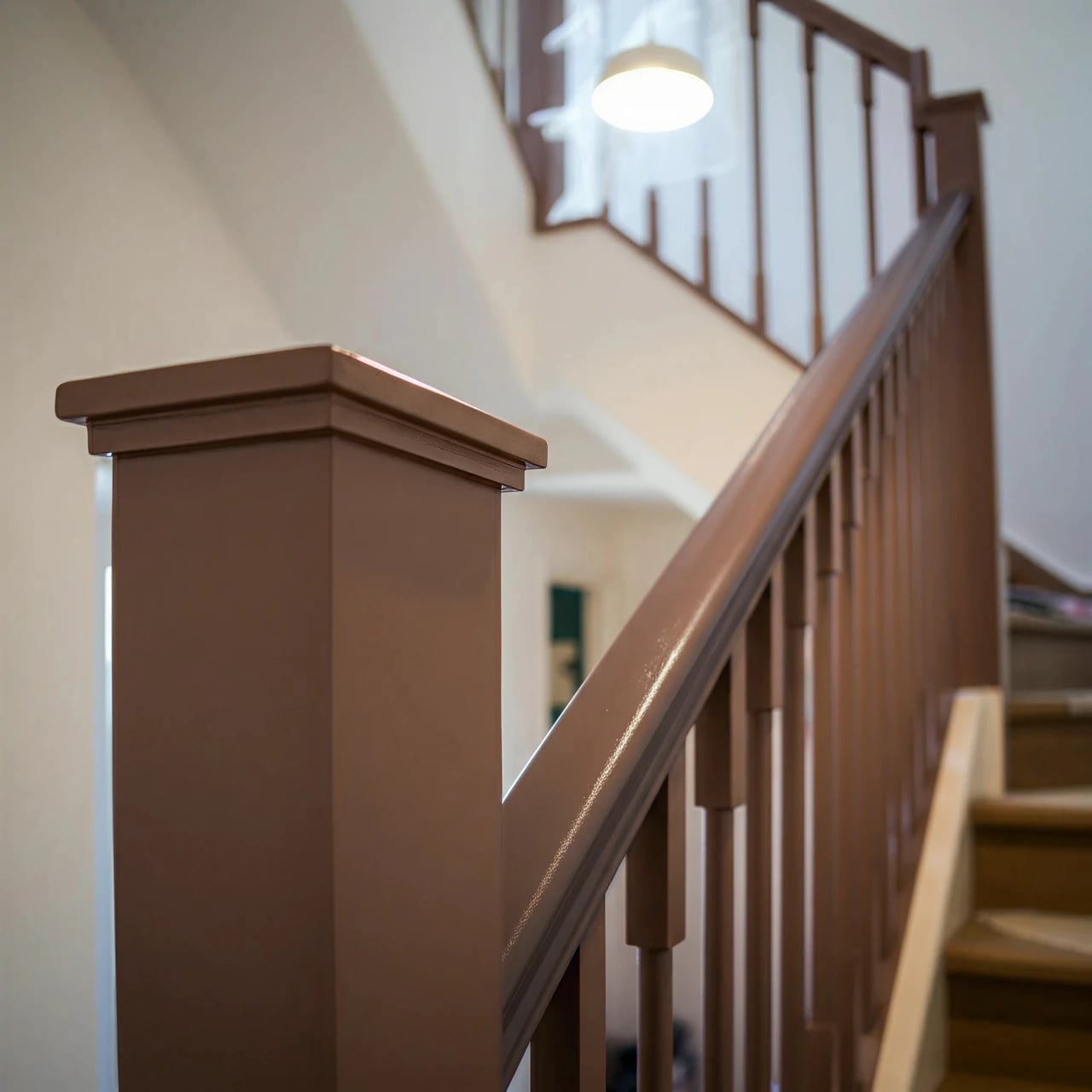
A warm brown banister and newel post are the defining features of this staircase. Paired with white balusters and beige walls, the wood takes center stage without making the hallway feel dark. A single pendant light overhead adds a focused glow that highlights the grain. The palette stays in a narrow range of brown, white, and beige, which gives the space a calm, cohesive feel. What breaks the repetition is the contrast between the painted white elements and the natural wood finish. It is a simple formula that works for most traditional homes.
Farmhouse hallway with cozy brown paneling
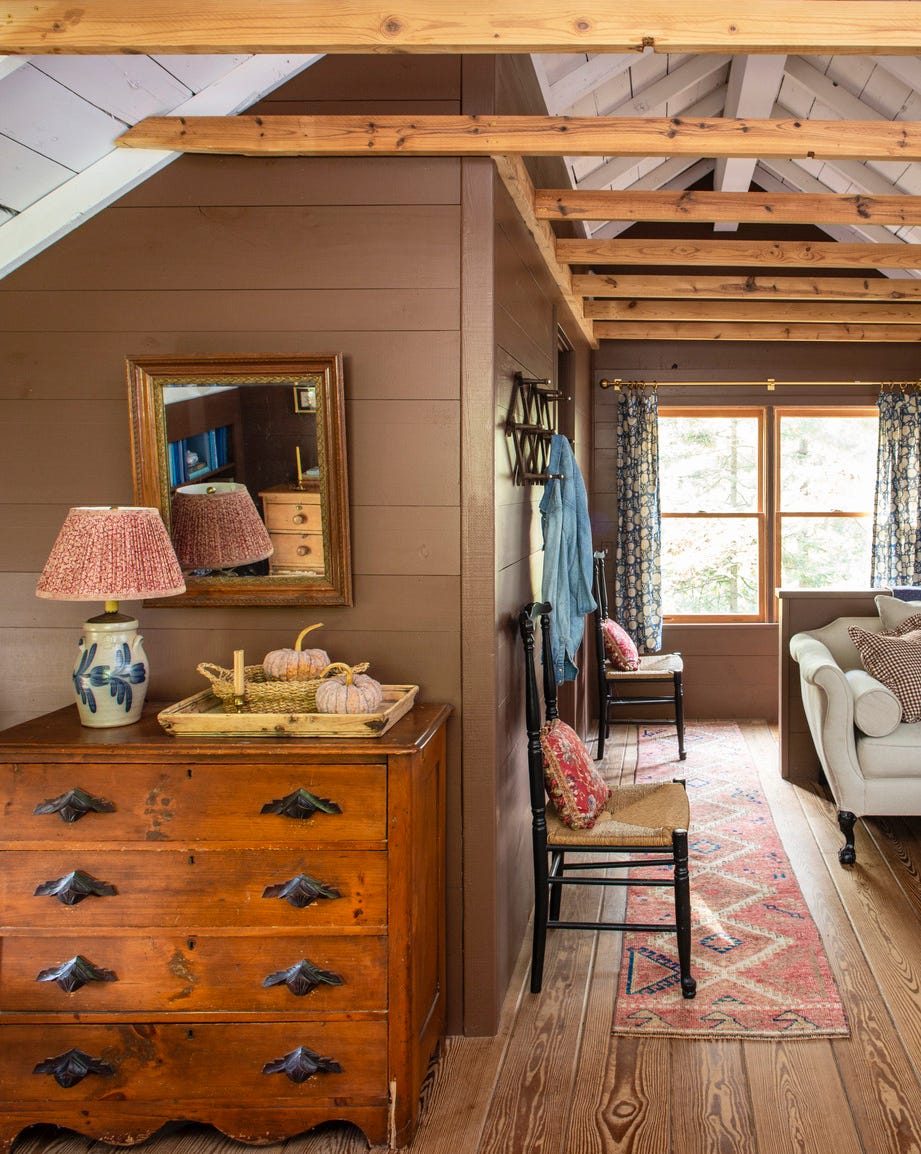
Can a hallway feel like a room you want to sit in? This one does, thanks to brown paneled walls that wrap the space in warmth. The wood dresser and woven tray reinforce the farmhouse feel, while a pink rug and blue curtains add color without competing with the walls. A table lamp and sunlight from the windows keep the compact hallway from feeling like a tunnel.
The materials do the work here. The wood paneling is the main event, but the wicker basket and fabric on the chairs add softness. The metal details on the dresser provide a slight industrial note. If you are working with a narrow hallway, this mix of textures keeps it from looking flat.
Modern bedroom with a bold brown accent wall
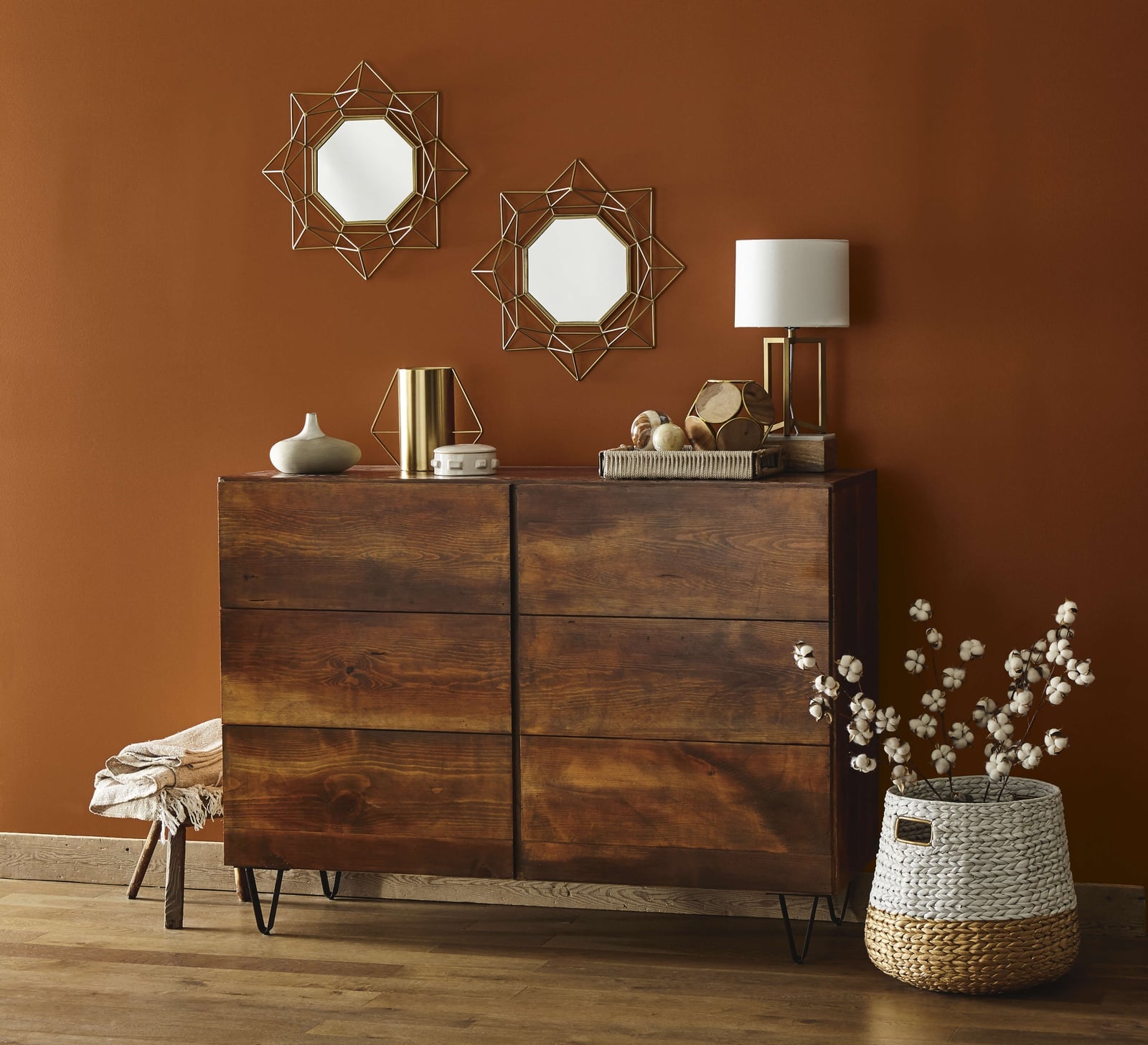
A brown accent wall behind the dresser gives this bedroom a clear focal point. The gold geometric mirrors above the dresser catch the light from the table lamp, creating a subtle shimmer against the matte wall. White and beige bedding and a wicker basket keep the look from feeling heavy. The palette is simple: brown, gold, white, and beige. The ratio is mostly light tones with one dark wall. The gold mirrors are what break the scheme, adding a reflective moment that stops the room from looking too uniform.
Traditional living room with warm brown walls
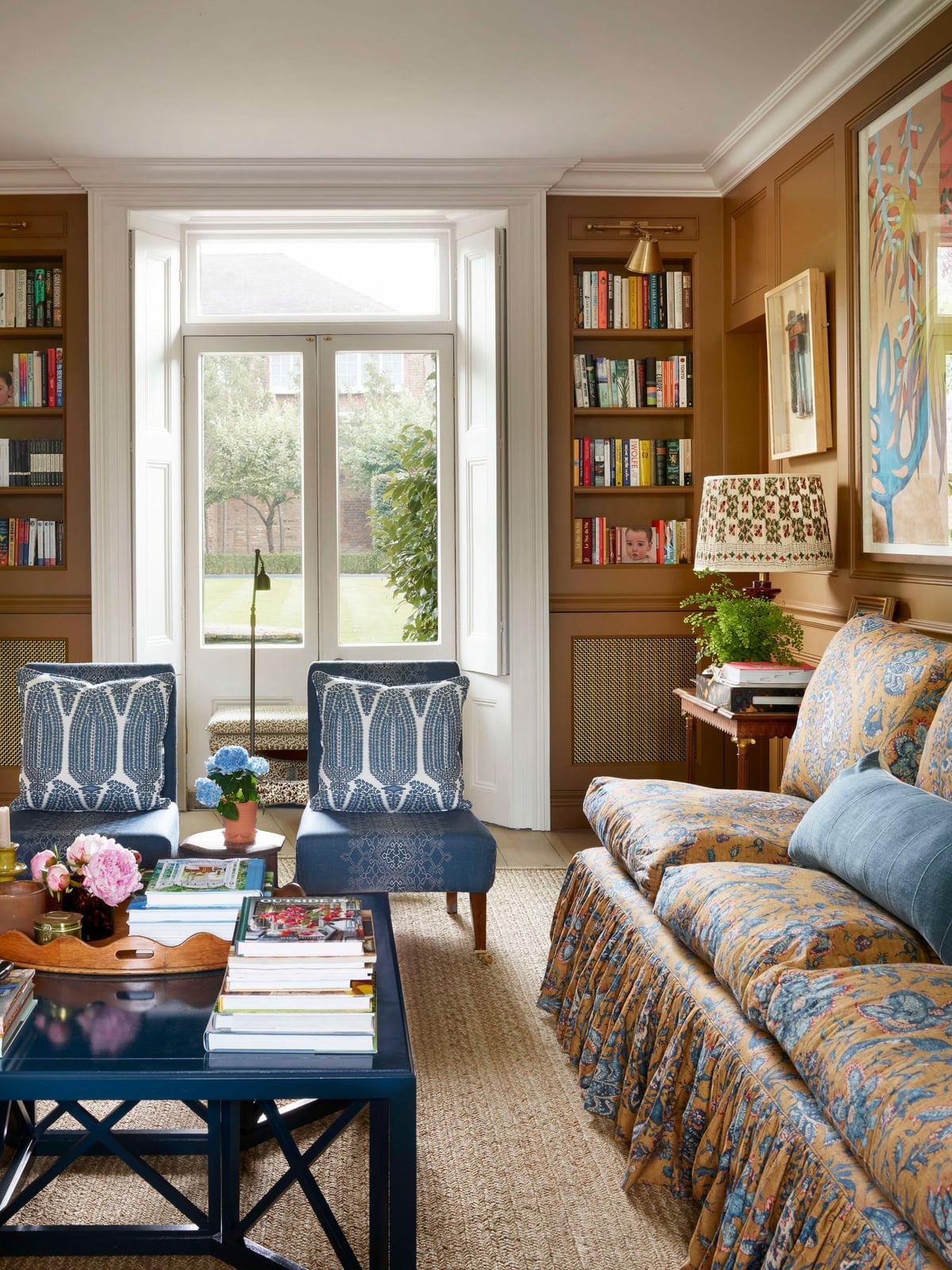
A practical rule for warm brown walls is to balance them with lighter furniture and plenty of texture. Here, a blue sofa and two armchairs sit on a patterned rug, with a coffee table in the center. Bookshelves flank a window, drawing the eye upward and making the room feel larger. The palette combines brown, blue, yellow, and white, which keeps the space lively without losing the warmth of the walls. The wall sconces and table lamp add layers of light, while the glass and metal accents prevent the room from feeling too heavy. The ornate sofa skirt is the detail that softens the look.
Boho bedroom oasis with dark brown walls
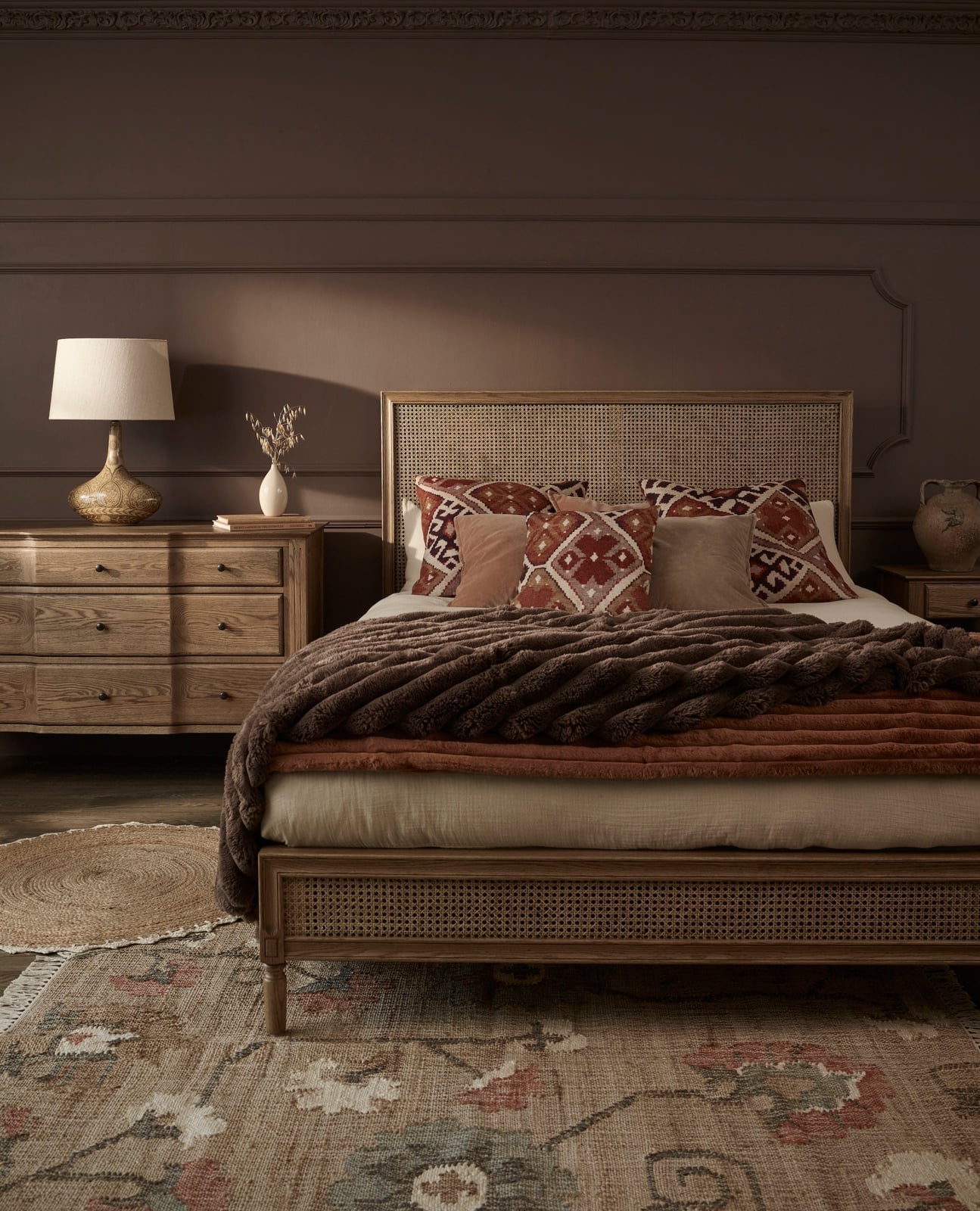
A white rattan bed frame keeps a dark brown bedroom from looking too heavy. The textured walls pull in rust, muted red and muted blue through patterned pillows and throws, while a floral rug and jute layers soften the floor. A wooden dresser to the left and a nightstand to the right balance the layout. The palette is the defining move here: dark brown sets the depth, and the warm accent colors keep it grounded rather than gloomy. What breaks the boho look is the ratio of pattern to solid, enough throws and pillows to feel layered, but not so many that the wall color gets lost.
Entryway accents in taupe and dark wood
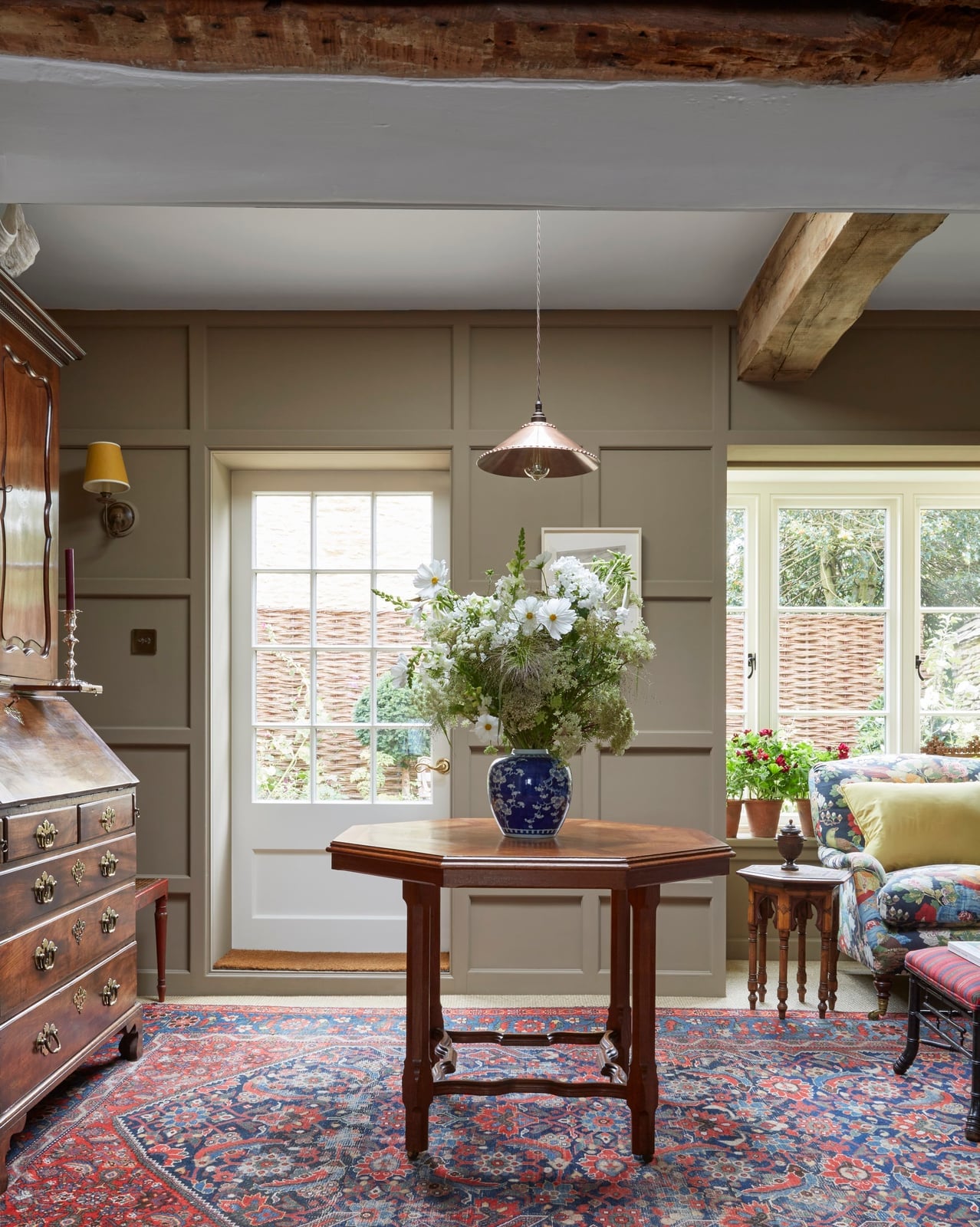
The taupe walls act as a quiet backdrop for a blue and red rug and dark wood furniture. A large floral arrangement in a blue and white vase becomes the focal point, with an antique desk on one side and a patterned armchair on the other. A pendant light and wall sconce add warm light, while sunlight from windows keeps the space from feeling too dim. For renters, this palette works because taupe is a flexible neutral that pairs with most existing furniture, and the color can be introduced through temporary pieces like a rug or ceramic vase rather than a permanent wall change.
Brown accent wall in a dining room with plants
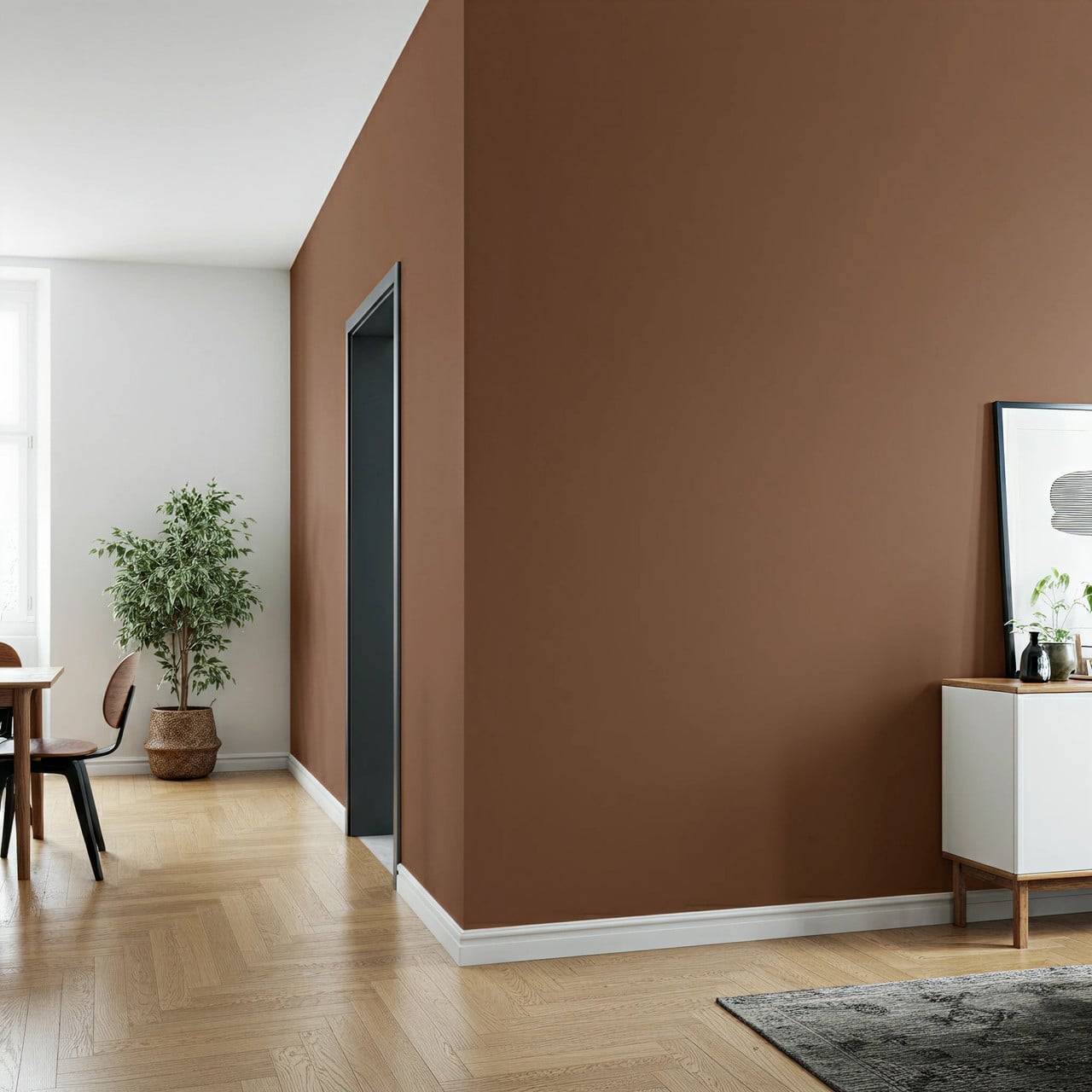
A rich brown accent wall gives this modern dining room a clear anchor. The white walls and wood table keep the space from feeling closed in, while a potted plant and wicker details add texture. Black metal chair frames and a sideboard tie the brown to the darker notes in the room. The key to this look is letting the accent wall be the dominant color without competing finishes, sunlight from a window does the work of keeping the brown from looking flat. A reader might try this as a way to add warmth to an all-white dining room without repainting the whole space.
Deep brown paneled door in a sharp office
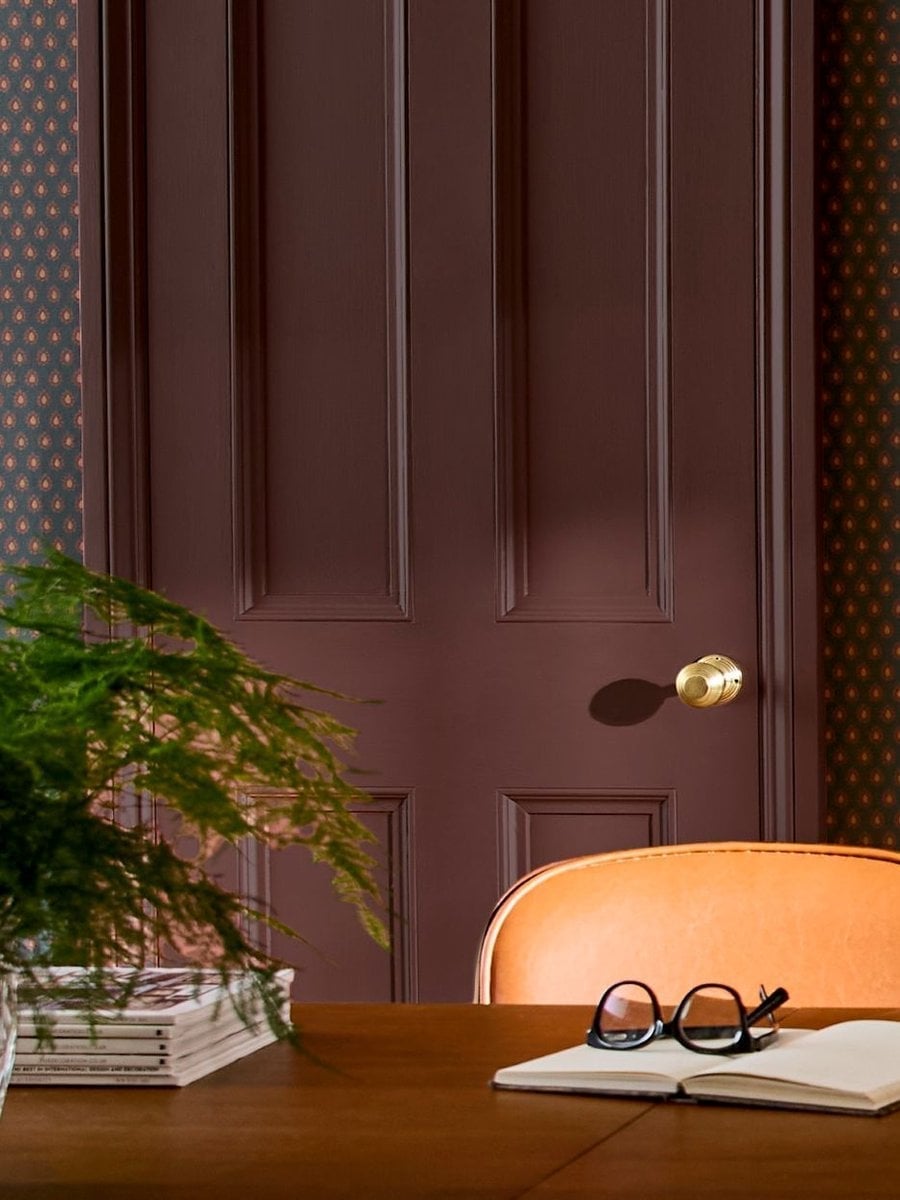
Can a single door carry a whole room’s style? In this compact office, a deep brown paneled door does exactly that. The dark patterned wallpaper and orange leather chair create a traditional palette. The wood door looks the heaviest element, so the desk and chair are placed in front of it to balance the visual weight. Brass hardware on the door adds a neat note. The takeaway for materials is that a dark painted door works best when the surrounding finishes are lighter or more textured. Here the wallpaper and orange chair keep the door from dominating the room.
Living room with brown and gray walls
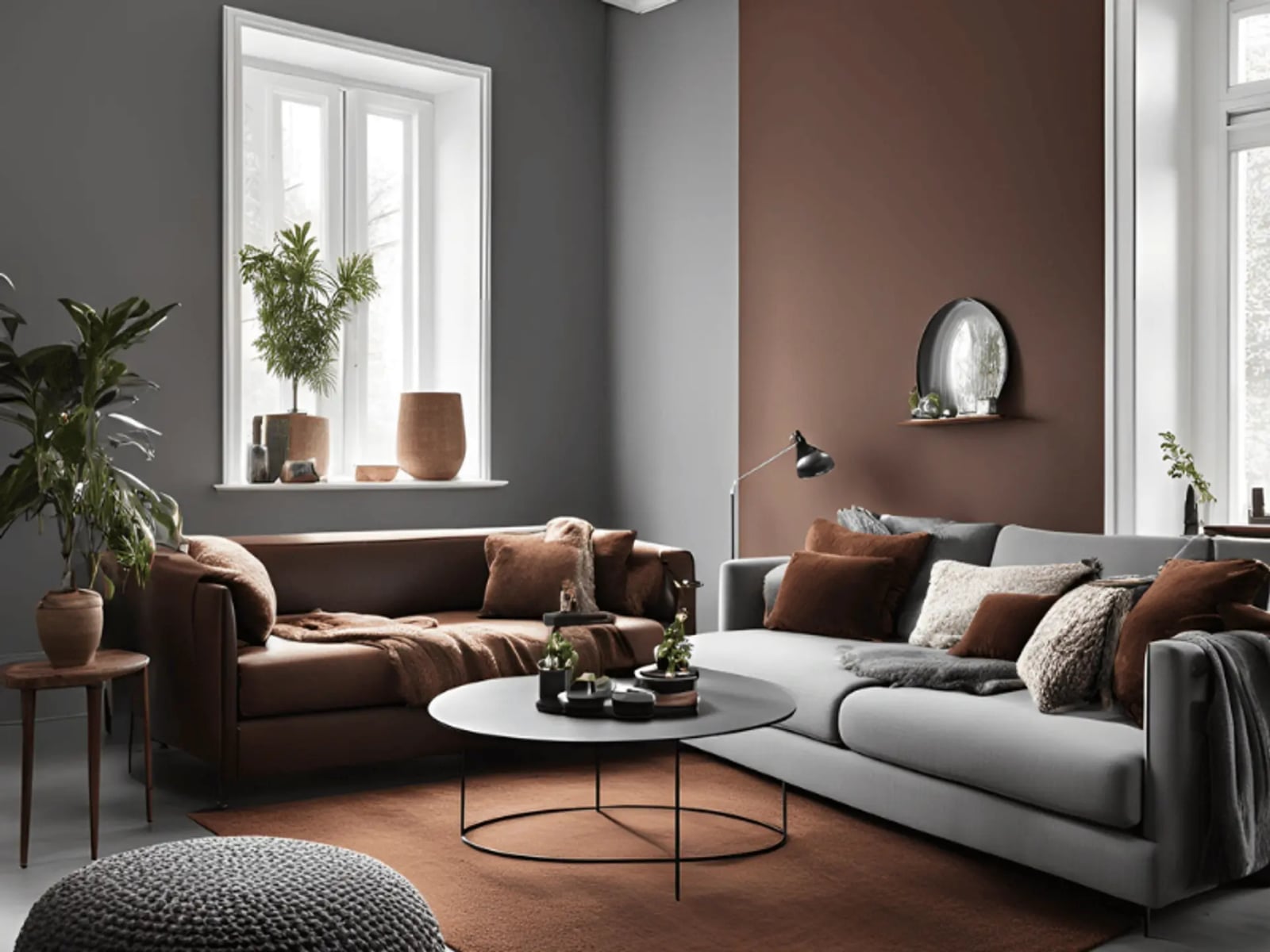
Two sofas face each other around a round coffee table, with one wall painted in a warm brown and the rest in gray. The brown wall becomes the accent, while the gray provides balance. A floor lamp and window provide balanced illumination. The palette here is about proportion: brown takes up about a quarter of the wall space, gray the rest. That ratio keeps the brown from overwhelming the room and lets the fabric sofas and ceramic accents stay visible. To recreate it, look for a warm brown paint for one feature wall and a lighter gray for the remaining walls.
Cozy living room with taupe walls and cream sofa
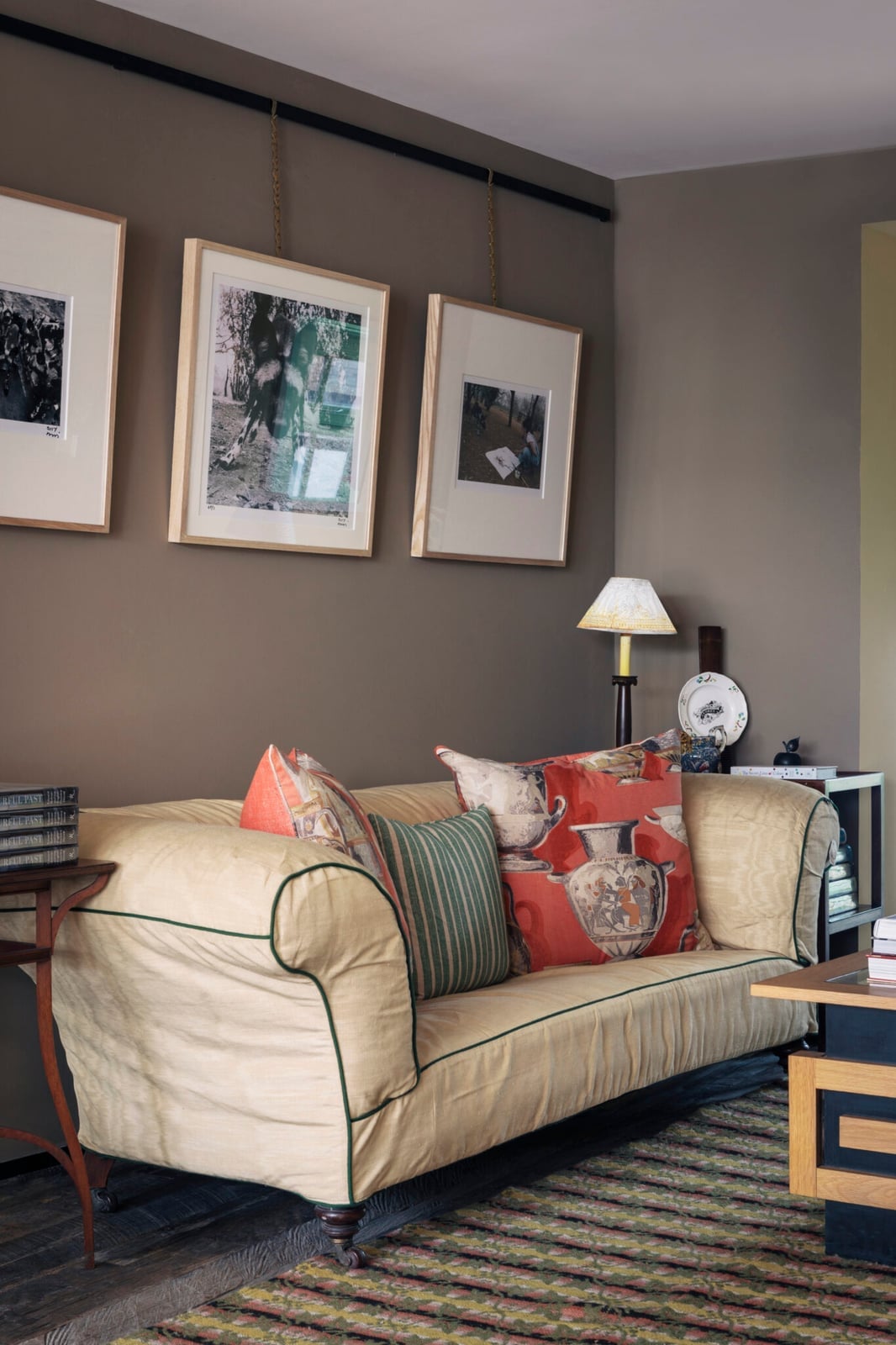
A taupe wall is a soft backdrop that lets furniture do the talking without the room feeling unfinished. In this traditional living room, the cream sofa with green piping becomes the focal point, its clean lines standing out against the muted wall color. A patterned pillow and a table lamp add texture, while the framed art above the sofa balances the composition. The neutral palette makes the green trim look deliberate. The layout keeps the sofa central and the room around it simple, which makes the space feel roomy without being empty.
Cream sofa and patterned rug in a living room
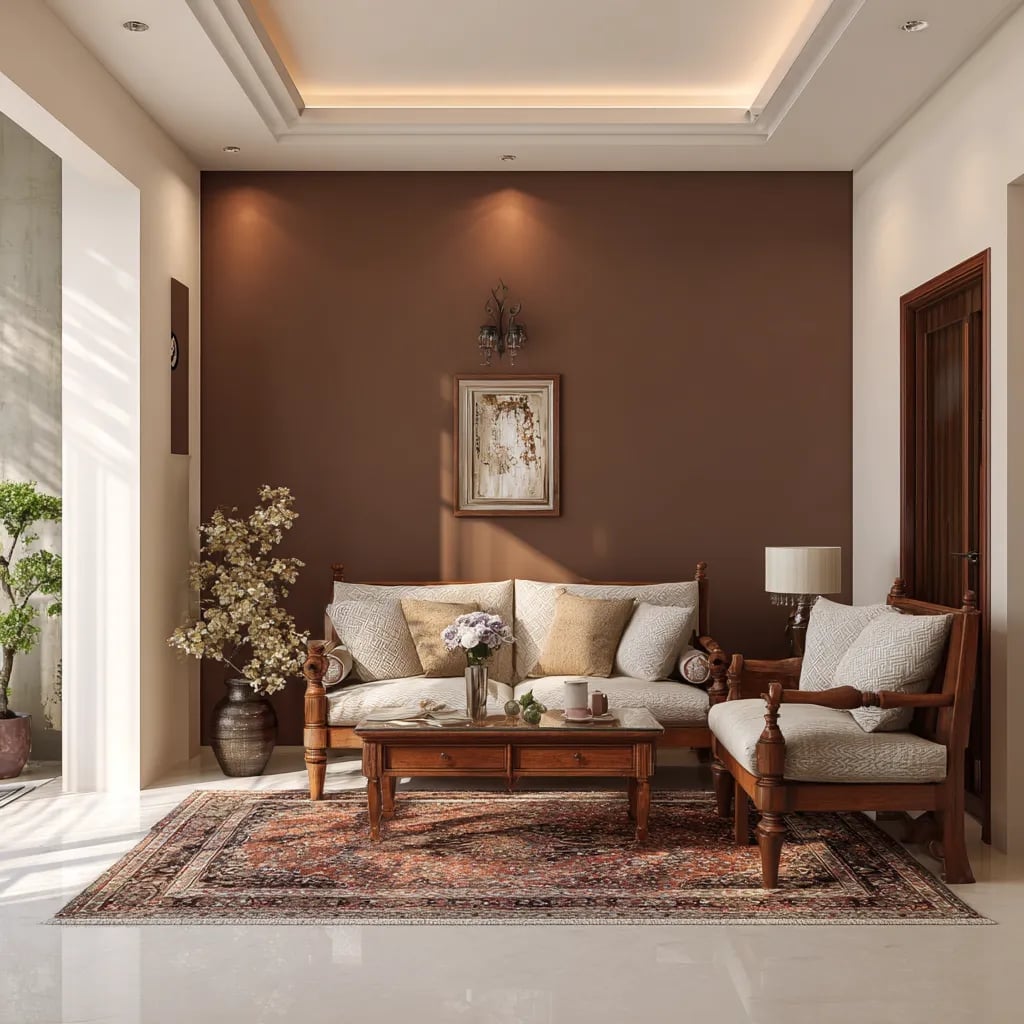
A rich brown accent wall can feel heavy if the rest of the room doesn’t balance it. Here, a cream sofa and a beige armchair face each other across a coffee table, with a patterned rug in brown, cream, beige, and red tying them together. The brown wall becomes a backdrop rather than a burden because the lighter furniture and rug pull the eye down and around the room. Overhead lighting and wall sconces keep the space bright without washing out the wall color. The table lamp on the side table adds a warm glow that softens the contrast. The layout puts the sofa and chair in conversation, so the room feels arranged for actual use, not just display. The palette works because the brown is repeated in the rug and the wood furniture, creating a thread that connects every piece without matching.
Earthy vignette on a warm brown wall
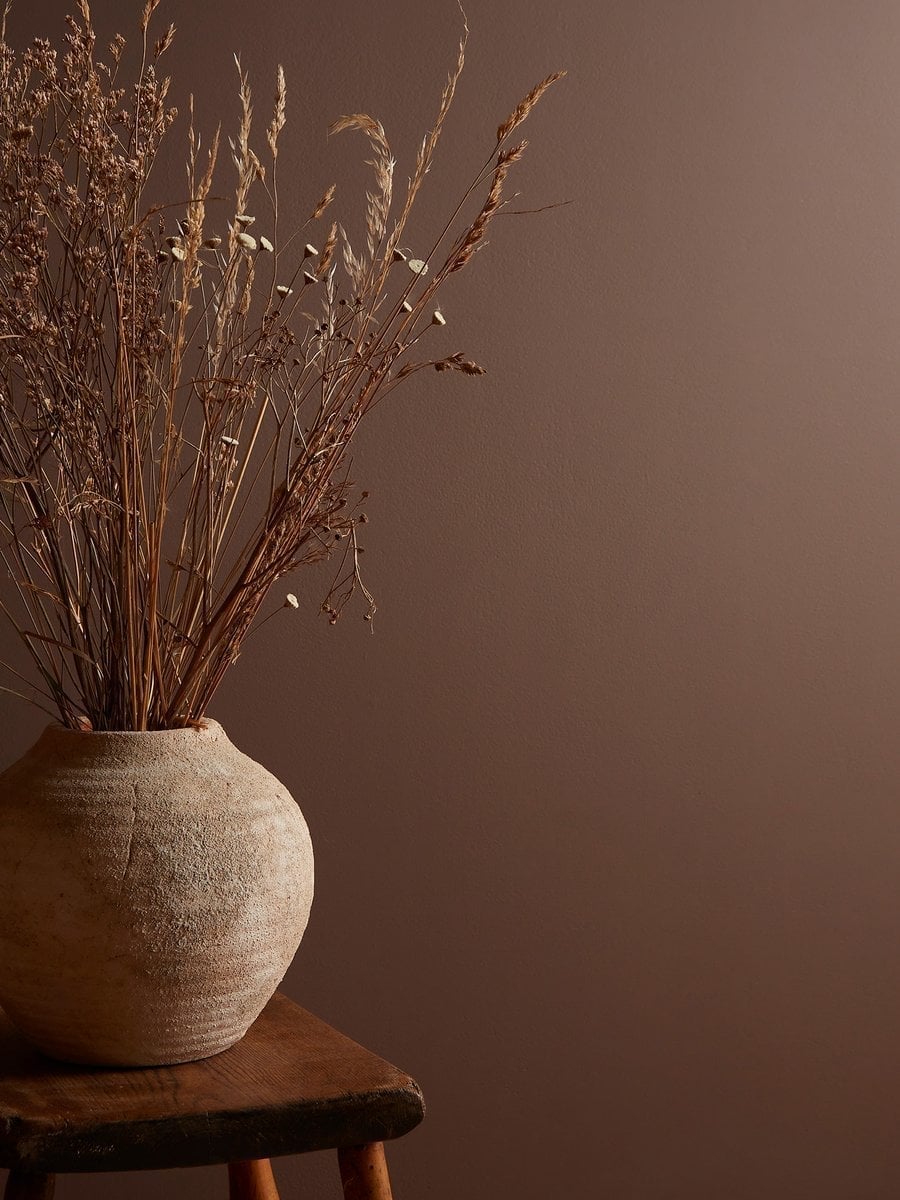
A dried floral arrangement in a textured terracotta vase sits on a wooden stool, set against a warm brown wall. The composition is deliberately sparse: just three materials, terracotta, wood, dried grass, and a narrow palette of brown, beige, and tan. The wall color looks a natural extension of the objects rather than a separate layer. For a similar effect, choose vessels and stems that share an earthy finish with the wall so the vignette feels like it grew there.
Boho bedroom with playful brown and white patterns
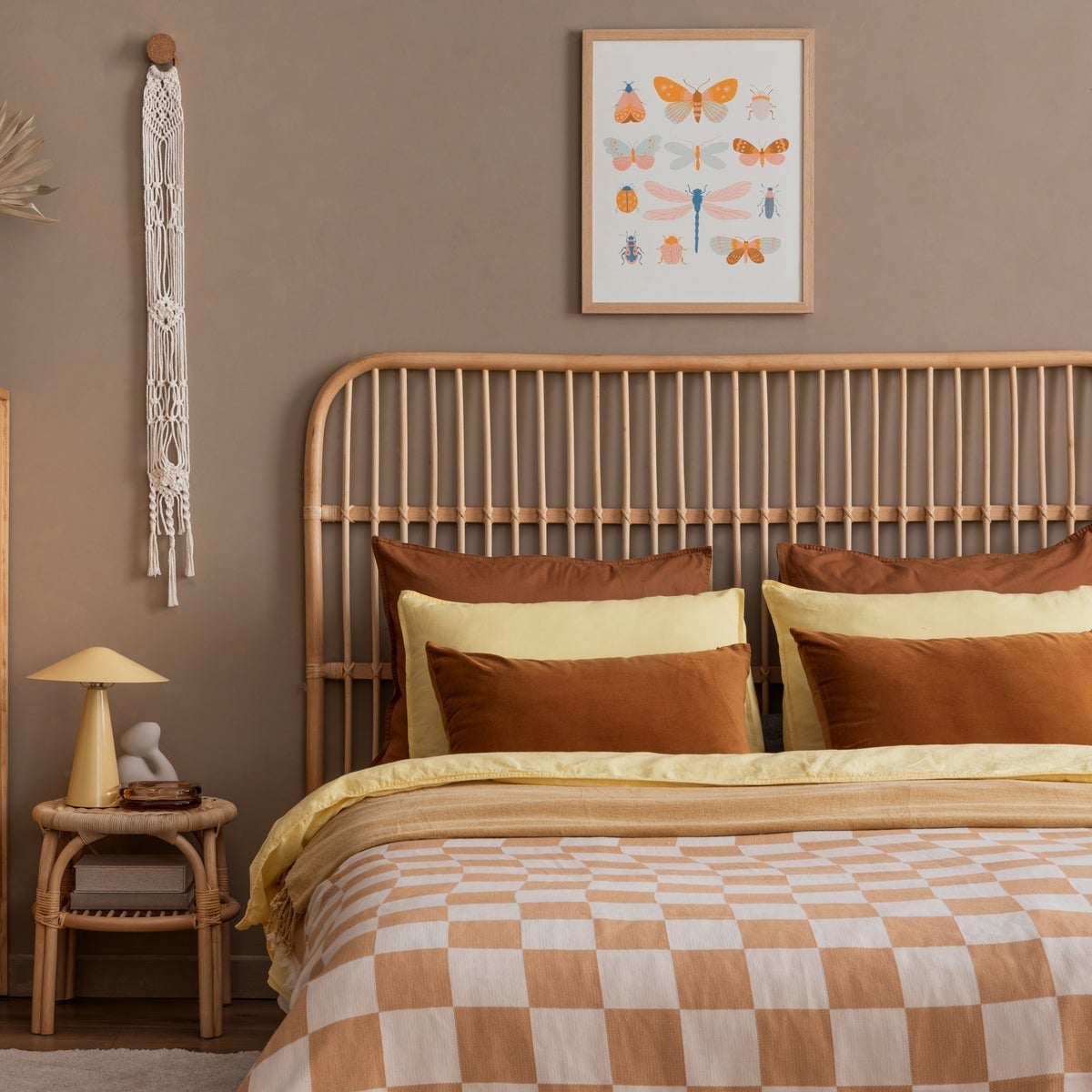
A checkerboard blanket in brown and white is the standout piece here, and it earns that spot. The boho bedroom keeps everything else subdued: a rattan headboard, a linen duvet, a beige bedside table with a table lamp. The yellow accent in the bedding adds a second color. The layout centers the bed, with the blanket draped over the foot, so the pattern looks like a deliberate choice. The palette stays in the warm brown family, so the white in the checkerboard provides contrast without clutter.
White sofa on a vintage rug in a living room
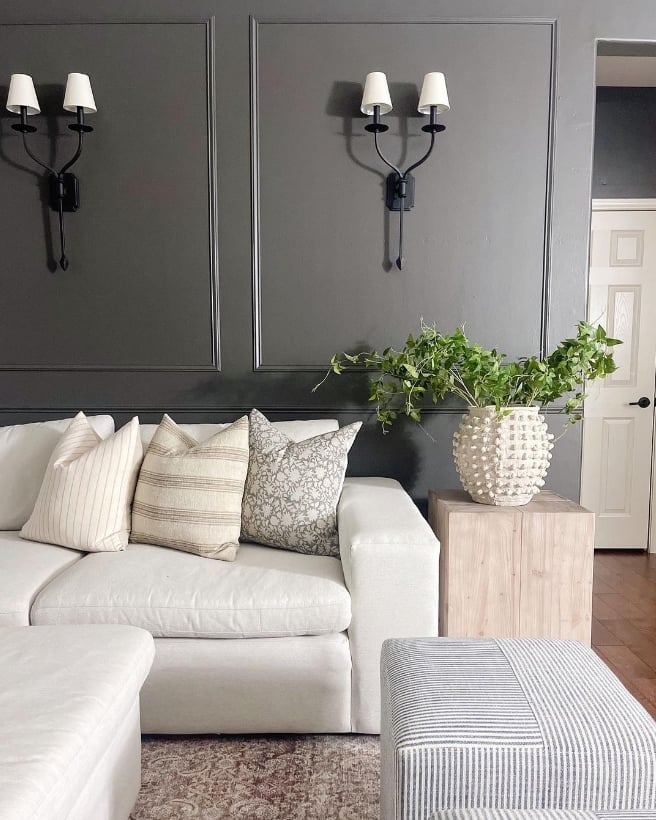
A paneled wall in dark gray sets the tone for this modern farmhouse living room, but the white sofa and vintage-style rug in beige, green, and blue keep it from looking too somber. The paneling adds architectural interest without needing any structural work. It’s a renter-safe swap if you use removable panels or paint an existing wall. The sofa faces the wall, with a side table and a ceramic vase nearby, so the paneled wall becomes the focal point. Wall sconces provide ambient light that highlights the texture of the paneling. The palette mixes dark gray with white and muted earth tones, so the room feels grounded without being dark. The layout puts the sofa at a distance from the wall, leaving space for the rug to anchor the seating area.
Rustic living room with dominant brown tones
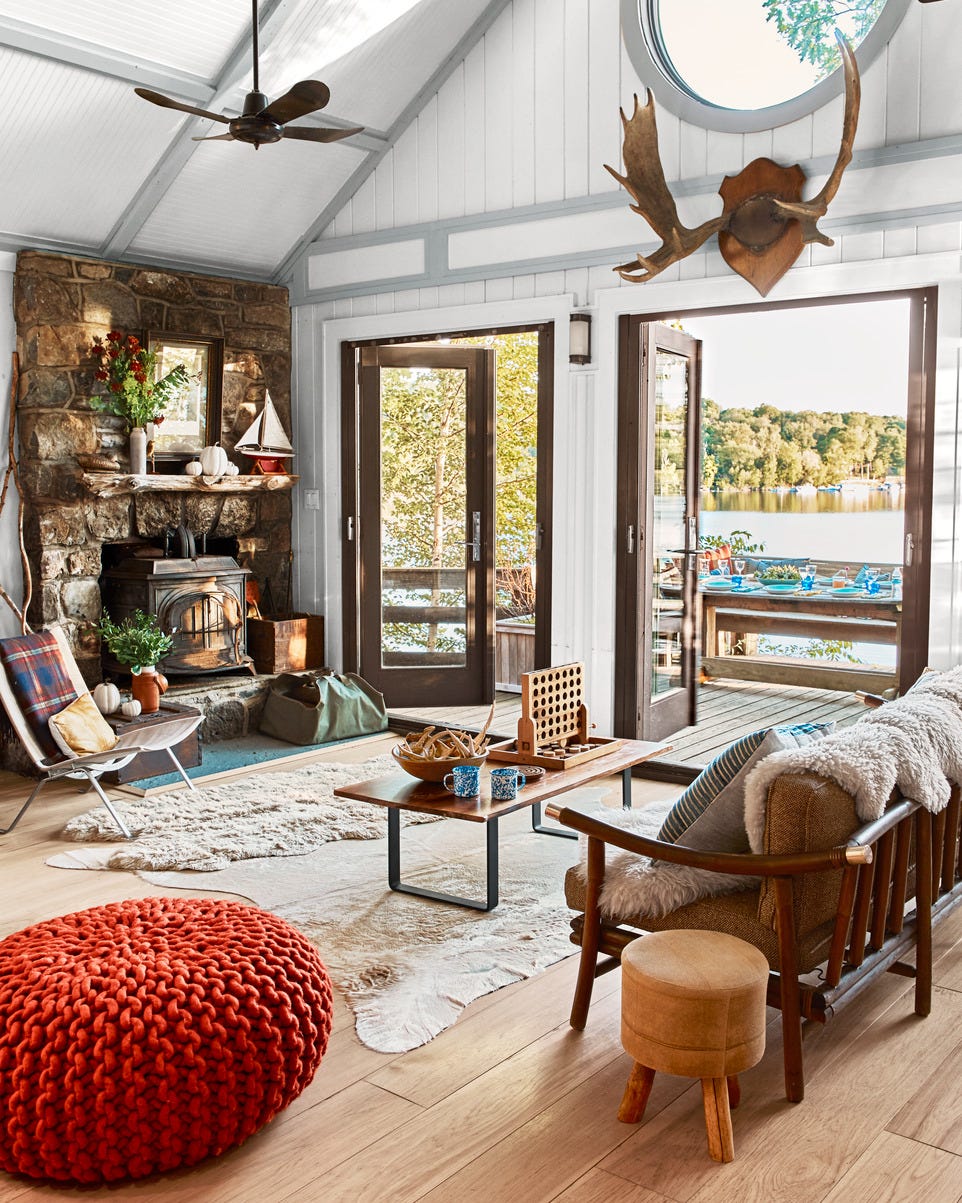
A stone fireplace with a wood stove anchors this rustic living room, with the brown palette carried through plaid fabric and wood furniture. The white walls and stone keep the room from feeling too heavy, while blue and red accents add contrast. A sheepskin throw on an ottoman softens the rugged materials. The style relies on that balance of rough and cozy. If the stone and wood threaten to overwhelm, a single bright textile or light wall helps the room breathe.
Luxurious bathroom with warm brown walls and vanity
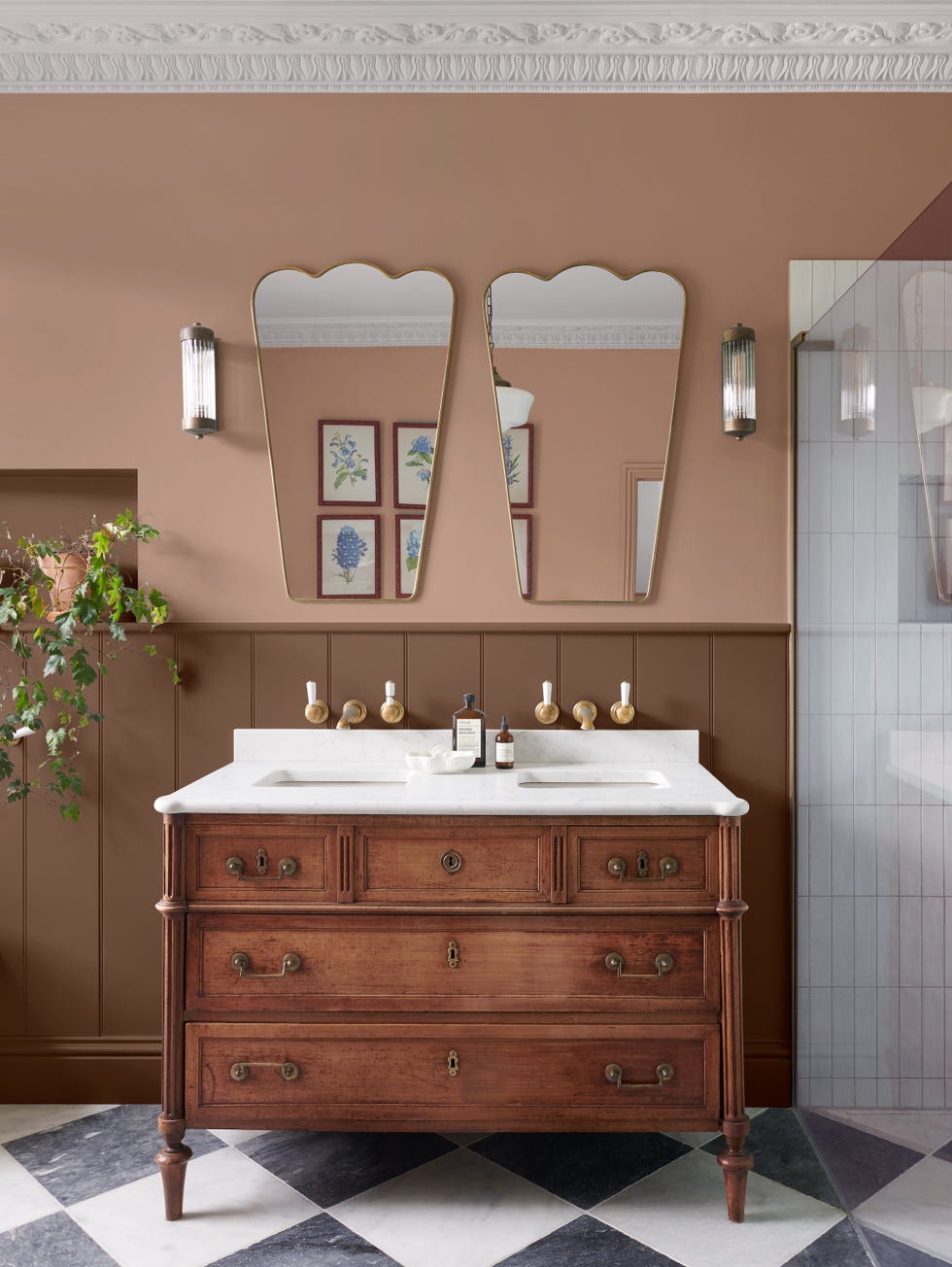
A traditional bathroom feels more grounded when the vanity matches the wall color. Here, the warm brown wood of an antique double vanity repeats the wall tone, so the marble countertop and brass fixtures become deliberate accents. The double sinks are centered beneath ornate mirrors, with wall sconces flanking each one. The window keeps the brown from closing in. A renter can mimic this by changing the vanity hardware to brass and adding a marble-look tray for soap and bottles.
Chocolate cake on a table in a dining room
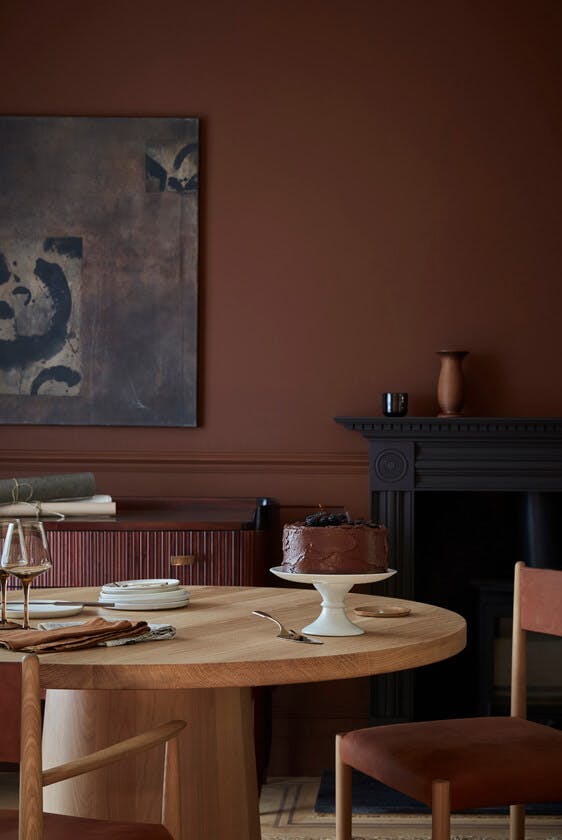
A modern dining room with a centered round table and upholstered chairs might feel formal, but a chocolate cake on a cake stand changes the tone. The brown cake echoes the wood tones in the room, while the black chairs and fireplace mantel keep the palette restrained. The fireplace on the side wall adds warmth without competing with the table. This setup works for dinner parties or Sunday meals. For a casual gathering, swap the cake stand for a wooden board and skip the tablecloth. If the room leans too dark, a white ceramic vase or light linens break the brown.
Kitchen with trendy dark brown walls and olive cabinets
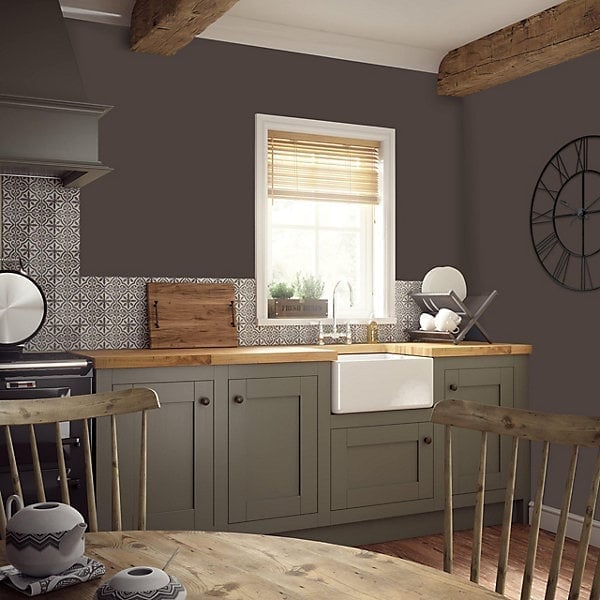
Dark brown walls in a compact farmhouse kitchen are balanced by olive green cabinets and a white farmhouse sink. The wood table and chairs add warmth, while sunlight and overhead beams prevent a cave-like feel. A wall clock and ceramic pieces soften the dark palette. The trick is letting the olive green look a distinct color. If the cabinets lean too green, a warm wood cutting board or brass hardware pulls the look together.
Ornate paneling on taupe walls in a living room
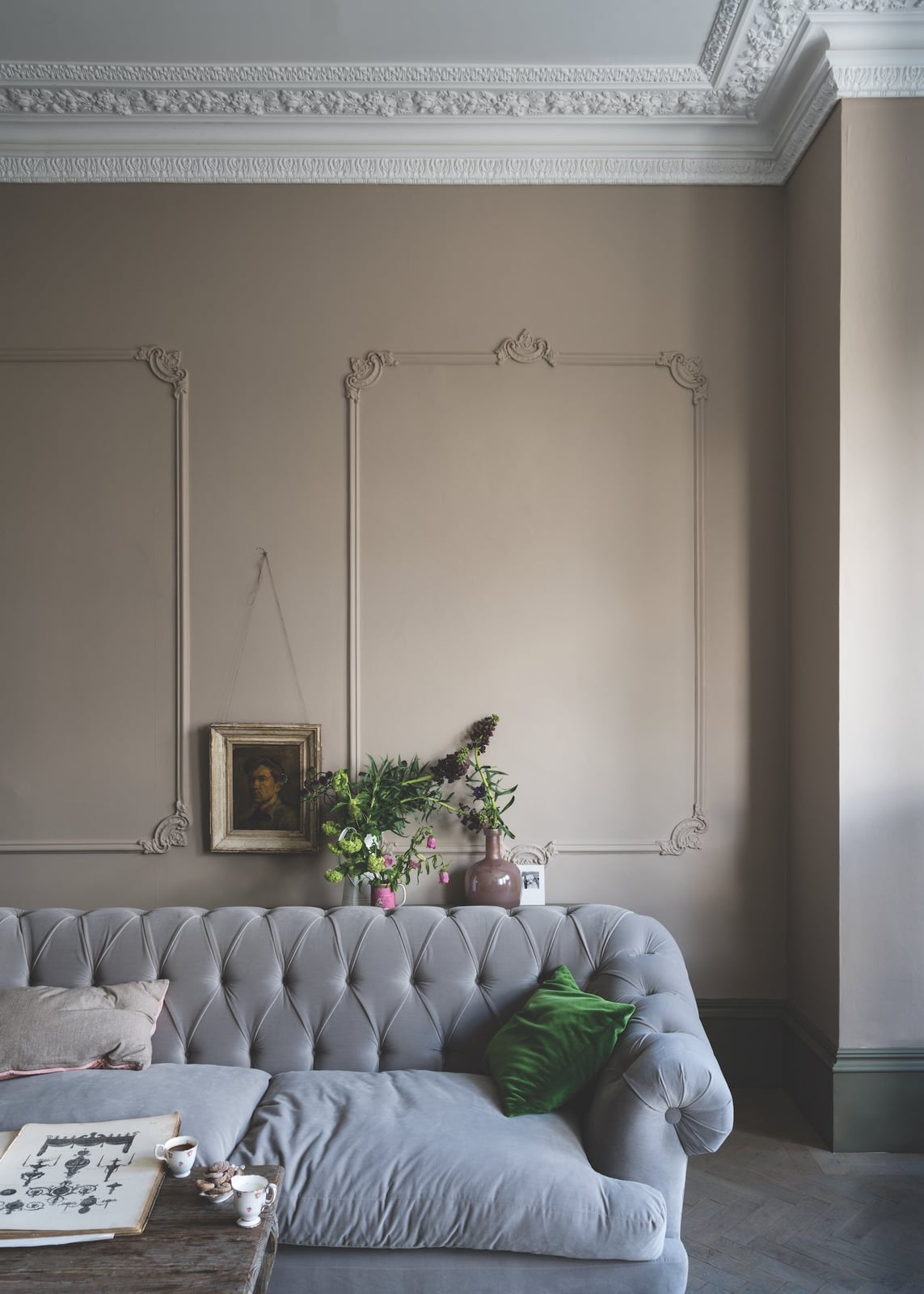
Ornate wall paneling in taupe sets the backdrop for a traditional living room with a tufted gray sofa and a green pillow. The wood floor and linen textures keep the space from feeling stiff. An antique painting and floral arrangements add the expected formality, but the gray and green prevent the room from looking purely vintage. The paneling creates visual rhythm, so the sofa against the wall feels intentional rather than just placed. A lighter rug or a single brass accent would break the taupe-gray monotony if needed.
Warm brown doors in a traditional hallway
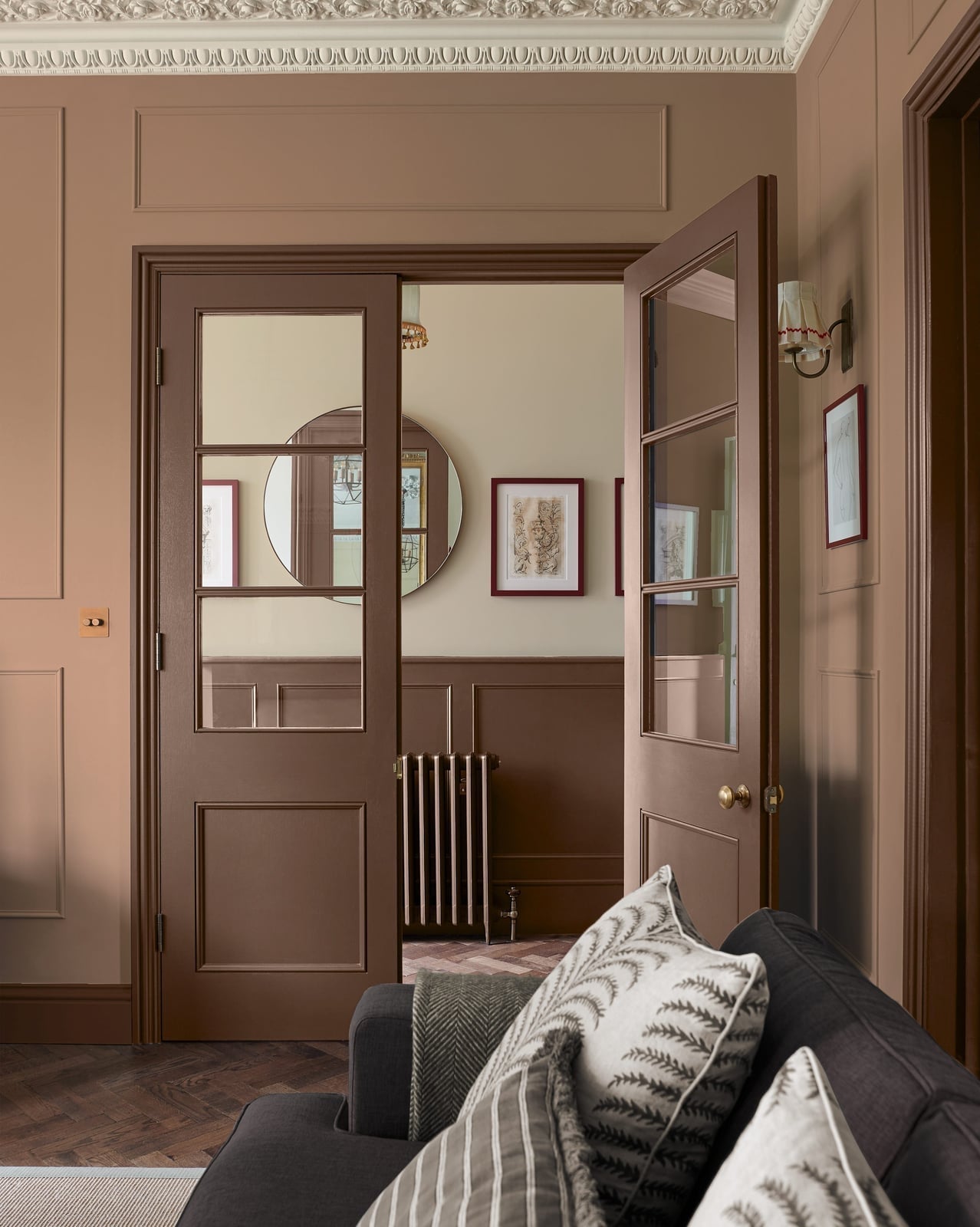
In a hallway with multiple doors, the doors set the rhythm of the space. In this traditional entry, the paneled doors in a warm brown finish create a repeating architectural beat that guides the eye from one end of the hall to the other. The wood tones are grounded by beige walls and white trim, so the brown looks rich and not heavy. A wall sconce adds a soft glow that highlights the panel details, making the doors feel dimensional. This palette works with almost any floor finish, from oak to tile, because the brown acts as the neutral bridge. The layout keeps the path clear: doorways lead into adjoining rooms, and the radiator is tucked out of the main traffic line. To recreate it, look for: a single brown paint color for all the doors so the hallway feels like one continuous element.
Boho hallway with brown walls and ornate lamp
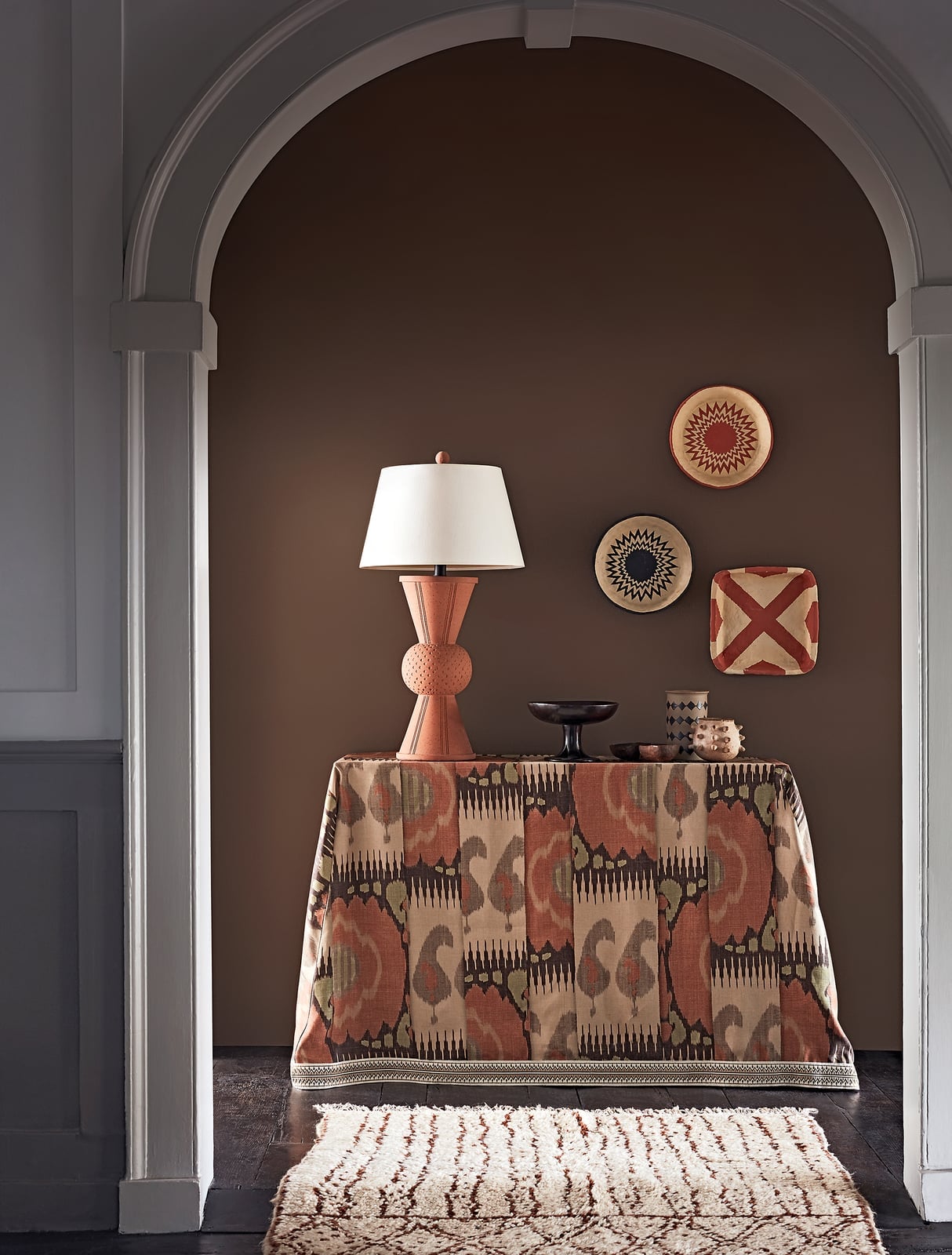
The hallway uses a console table with a patterned cloth as the visual anchor, and the brown walls let the tabletop details stand out. Cream, rust, green, and black appear in the ceramic plates and lamp, so the brown acts as a quiet backdrop rather than a competing color. The ornate table lamp, with its carved base and fabric shade, becomes the focal point because the wall color does not fight it. A narrow rug on the floor softens the step without crowding the path. This setup works best when the table is scaled to the hall width: leave enough room to walk past without brushing the lamp.
Mustard yellow headboard against dark brown walls
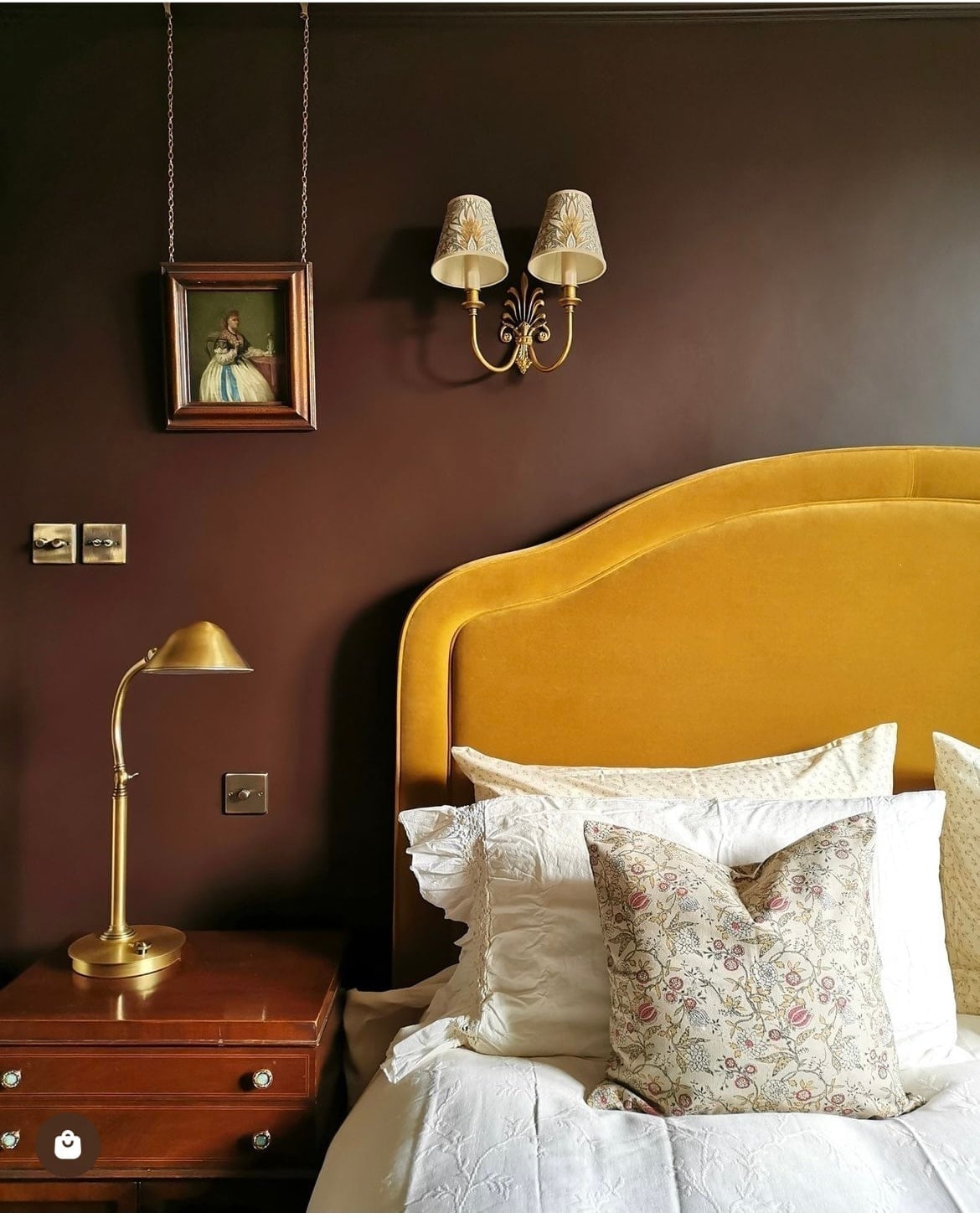
A dark wall in a bedroom works well with a headboard in a contrasting saturated color. Here, a mustard yellow velvet headboard sits against dark brown walls, and the warm tones add coziness rather than chill. The velvet texture reflects light from the wall sconces and the brass desk lamp, creating a soft sheen that breaks up the flat paint. A wooden nightstand and a floral pillow in white and mustard repeat the palette without crowding it. The brass accents on the lamp tie back to the headboard’s warmth. It suits a space where the bed should feel like the main event, not just another piece of furniture.
Ceramic plates on a dresser in a dining room
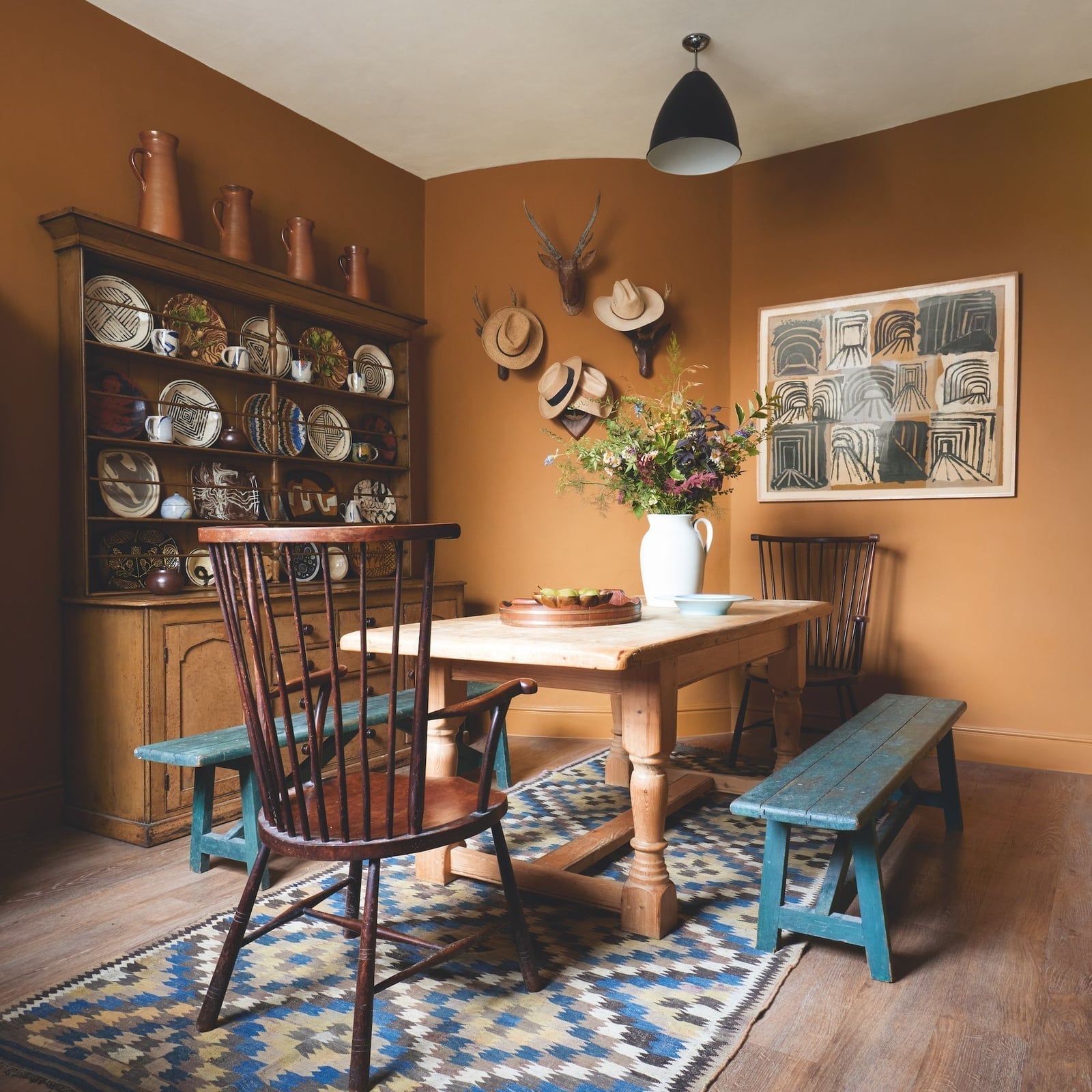
A farmhouse dining room might lean heavily on wood, but this one balances it with blue and cream accents that keep the space from looking too rustic. The dresser against the wall is filled with ceramic plates in blue and cream, and the colors echo the patterned rug on the floor. The pine dining table and spindle-back chairs stay in a natural wood tone, while painted benches in black add a crisp contrast. A pendant light overhead and sunlight from nearby windows keep the room feeling bright. The dresser does double duty as storage for tableware and as a display piece, so every plate is both useful and decorative.
Red marble fireplace in a living room
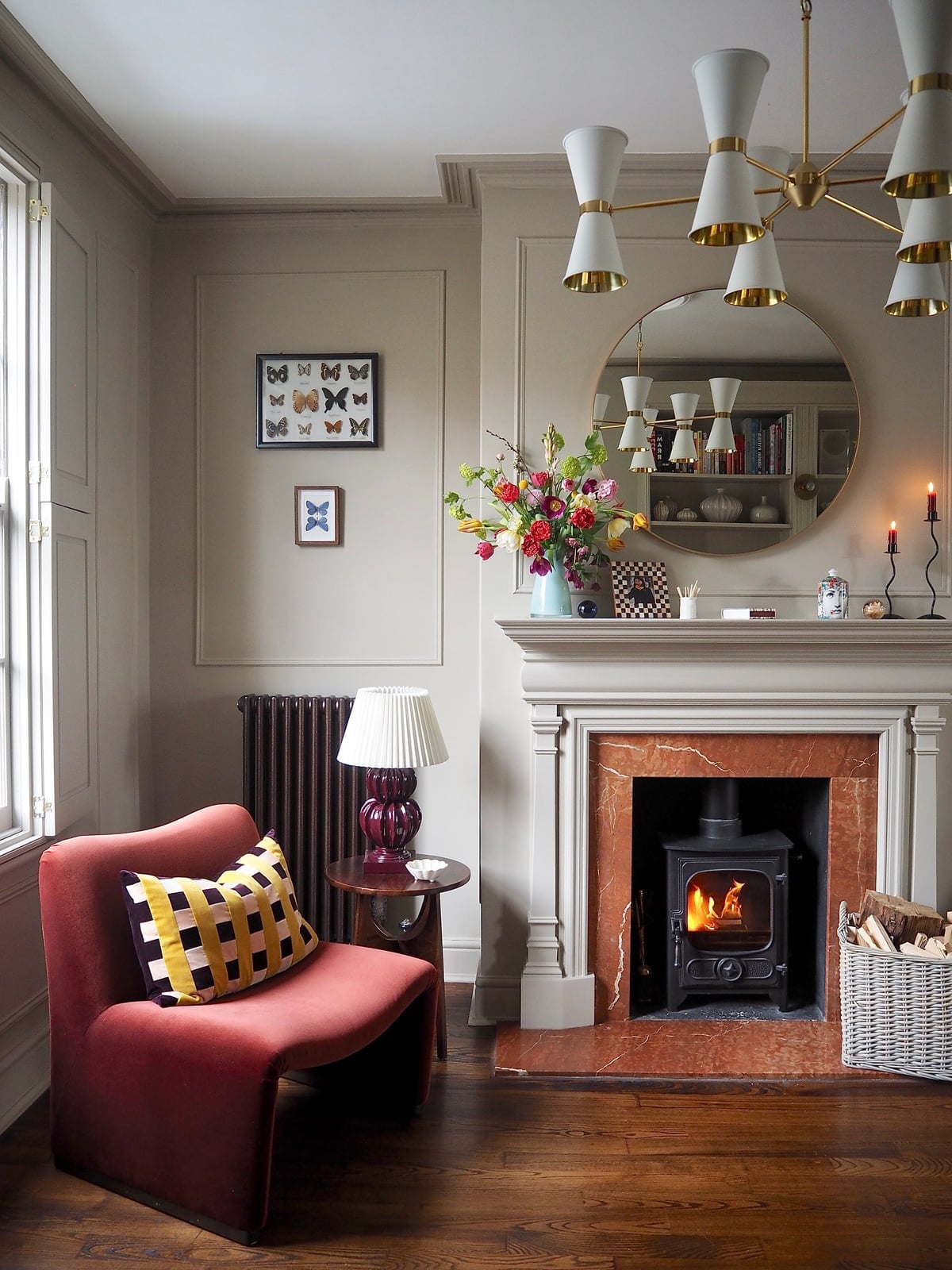
The fireplace with a red marble surround becomes the room’s focal point because of its color and material contrast. Against taupe walls and cream trim, the marble feels warm and grounded. A wood stove sits inside the opening, and the brass and glass details on the tools nearby pick up the gold tones in the chandelier overhead. An armchair to the left and a side table with a lamp create a seating nook that faces the fire. The window balances the red tones, so the room stays inviting. A mirror above the mantel reflects the light and visually doubles the space.
Transitional living room with warm brown walls, indoor
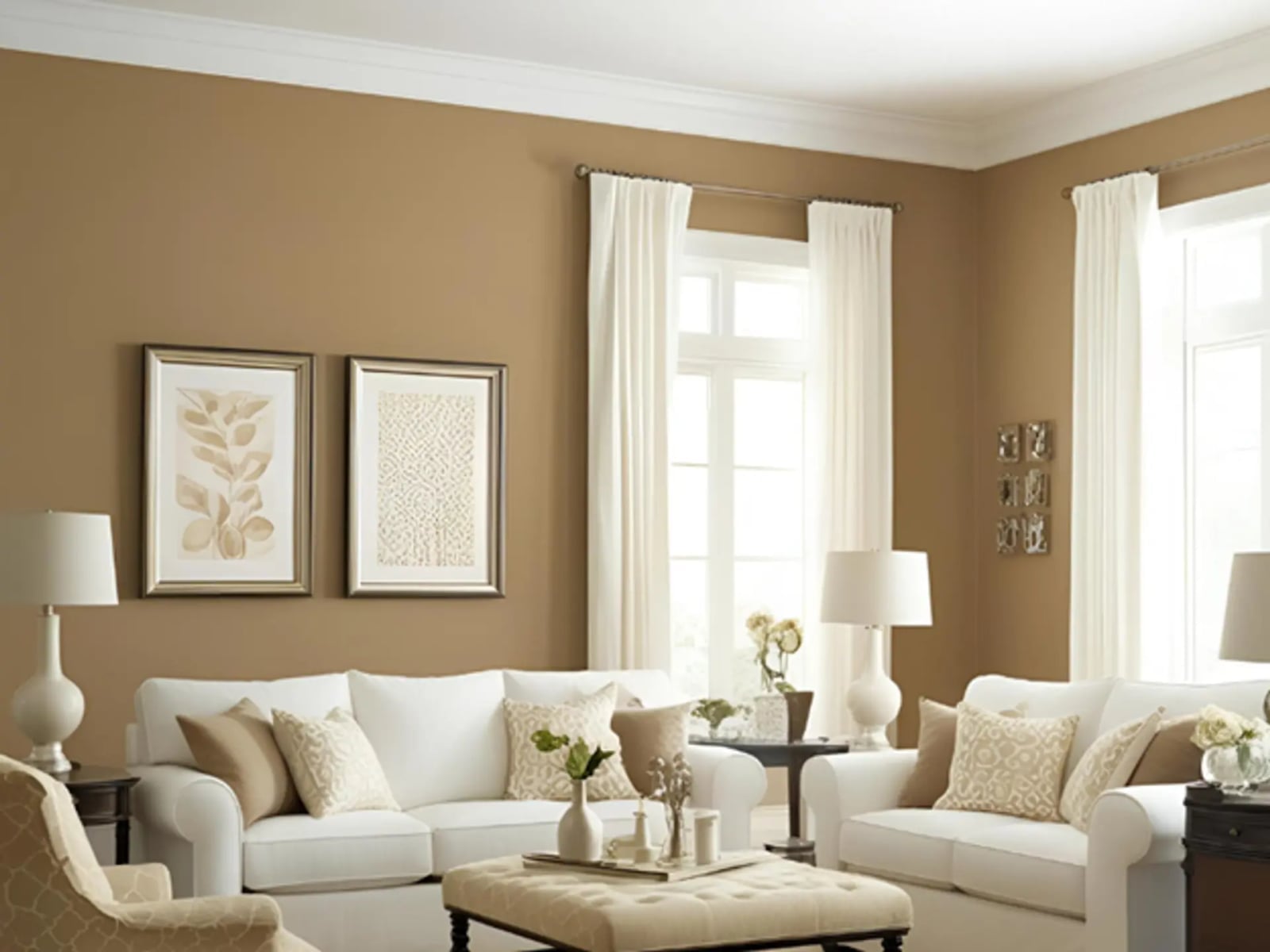
This transitional living room gets its confidence from brown walls that act as a neutral anchor. Two white sofas face each other with a tufted ottoman between them, and an accent chair completes the seating circle. The palette stays in the warm brown and beige family, so the white upholstery feels crisp without feeling cold. Table lamps and sunlight from windows keep the room bright. The style here is defined by that balance: traditional shapes with a relaxed layout. What breaks it is any piece that leans too formal or too rustic, so stick with clean lines and soft textures to keep the transitional feel intact.
Carved wood sideboard in a mauve-brown living room
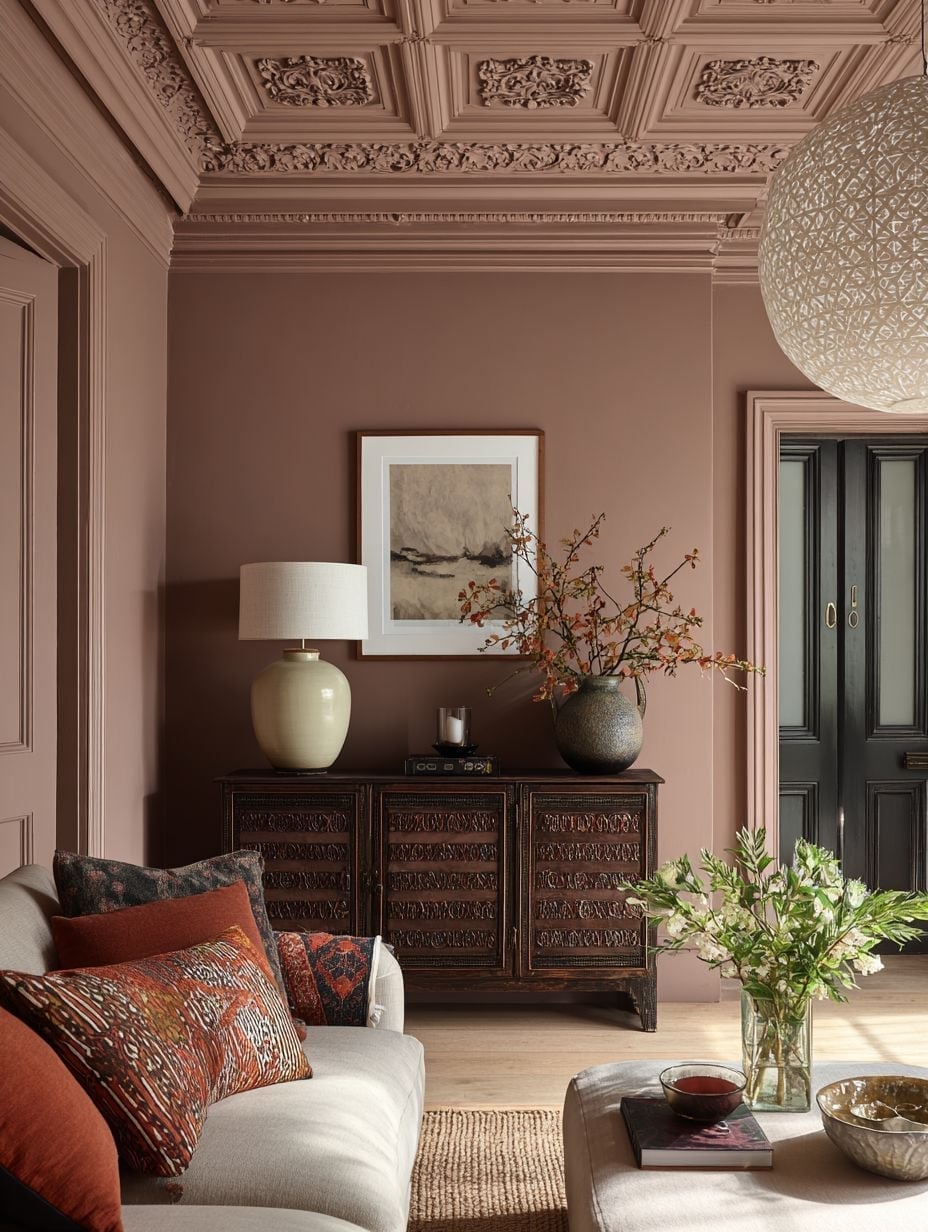
A mauve brown wall is a close cousin to standard warm brown, but with a subtle rosy undertone that makes it feel softer and more unexpected. In this traditional living room, an ornate carved sideboard becomes the focal point, with a textured sofa facing it across a coffee table. The cream textiles and dark wood pieces keep the palette grounded. Ambient overhead light and a table lamp add warmth without washing out the wall color. The style is defined by that sideboard’s intricate carving, which brings a handcrafted feel to the room. What breaks it is adding too many competing patterns or glossy finishes, which would fight the sideboard’s detail rather than support it.
Modern dining room with dark brown walls
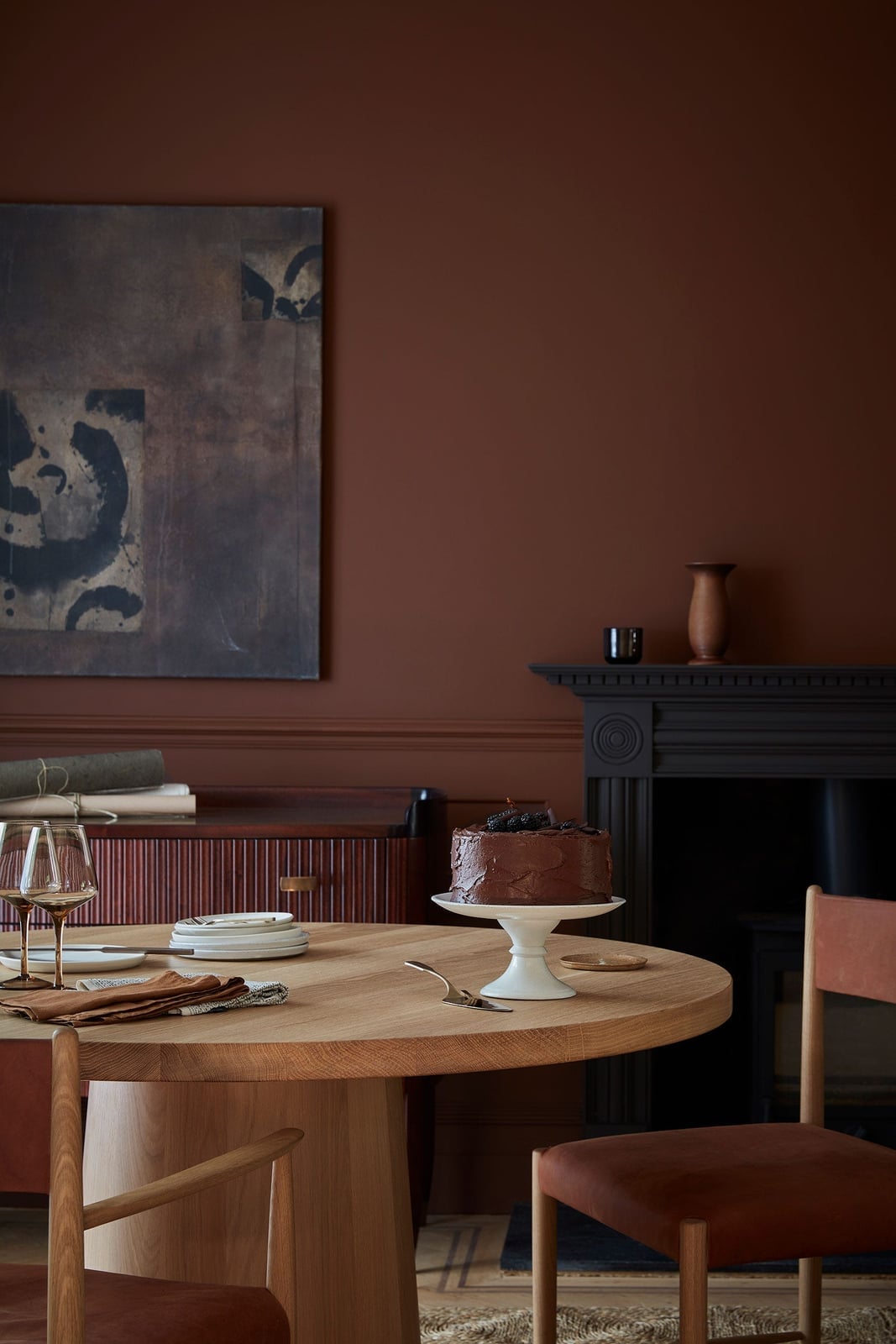
Dark brown walls in a modern dining room create a backdrop that makes wood tones and black accents stand out. A round dining table sits centered in the room, with chairs around it and a fireplace to one side. Sunlight keeps the room from feeling too closed in. The contrast between the dark walls and the lighter wood of the table defines the style. Adding anything too ornate or colorful would pull the room away from its modern lean. A chocolate cake on a cake stand on the table adds a simple, human touch that complements the architecture.
Traditional living room with dark brown walls and gold mirror
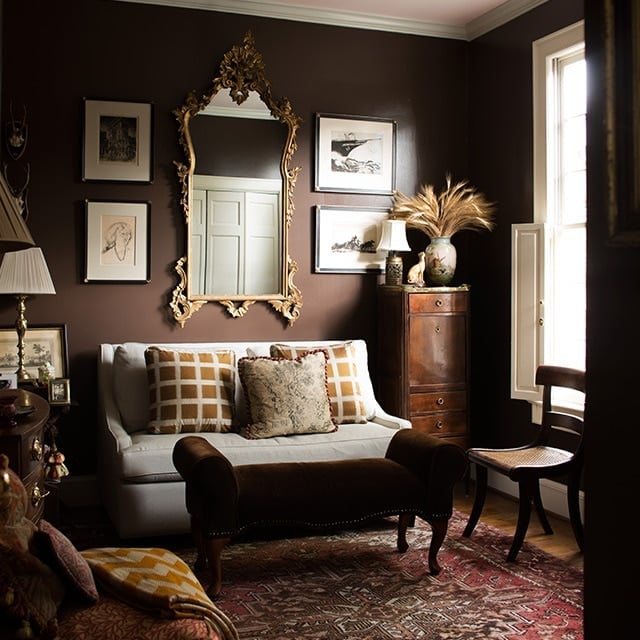
A large ornate gold mirror against dark brown walls is a classic move that works because the mirror reflects sunlight from a window and a table lamp back into the room. The furniture is arranged around a central rug, with a sofa, bench, cabinet, and chair creating a cozy but formal layout. The palette mixes cream, gold, and rust with the dark brown, creating a layered look. The mirror’s ornate frame gives the room a focal point that draws the eye. Any piece that feels too casual or modern would disrupt the traditional symmetry.
Final Thoughts
Brown paint in 2027 is less about trend-hopping and more about finding a shade that feels like a natural extension of your home. Across these 29 looks, the common thread is balance: pairing deep brown with lighter furniture, using it as an accent on trim or a single wall, or letting taupe serve as a neutral backdrop. The upkeep is straightforward with a quality flat or eggshell finish, and the versatility means it can shift with your decor over time. The takeaway is simple: brown is worth a second look, especially when you let the room around it do the talking.