
Green paint is the color story of 2027, but it is not just one shade. From deep teal to soft sage, this palette can shift a room’s mood without changing the furniture. This article shares 25 ways to use green paint in your home, whether you want a bold accent wall, a painted piece of furniture, or a full room wrap.
Each idea treats the paint as the hero, so the rest of the space can stay simple. Expect practical tips on layout, light, and how these greens actually live in a room.
Deep teal built-in bookshelves anchor a modern living room
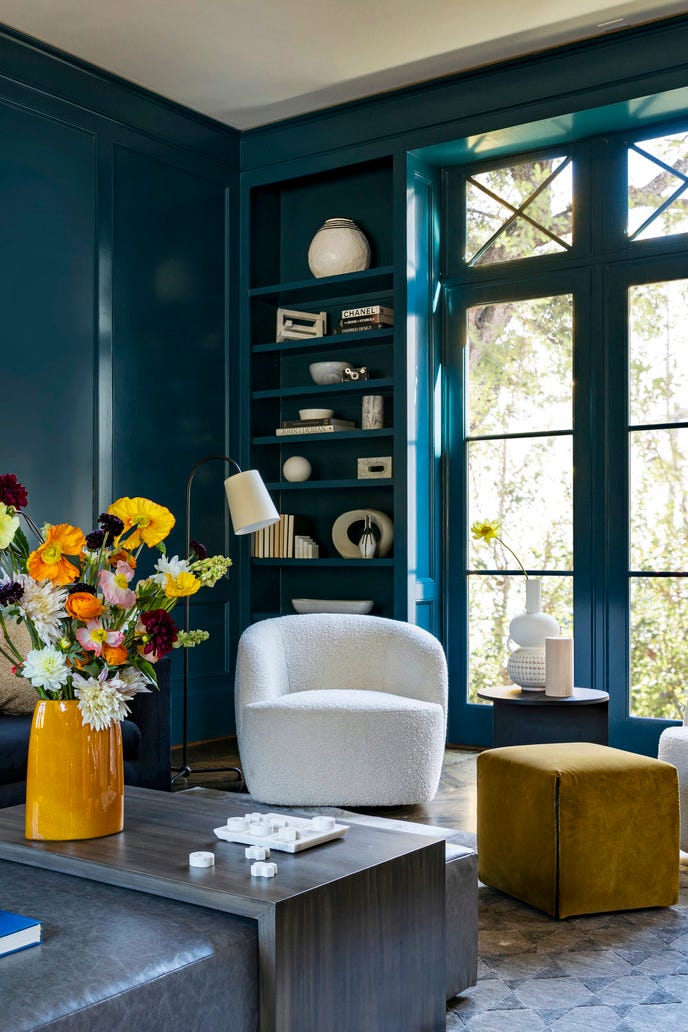
A deep teal built-in bookshelf fills an entire wall, its dark hue anchoring the room without making it feel smaller. The color acts as a backdrop for mustard yellow, orange, and pink accents in the room, with a boucle armchair and a velvet ottoman adding texture. A floor lamp and natural light from a window keep the space from looking too heavy. The layout principle here is simple: when you paint a large built-in a saturated color, keep the furniture and decor light or neutral to let the bookshelf do the work.
Vibrant lime green accent wall energizes a dining area
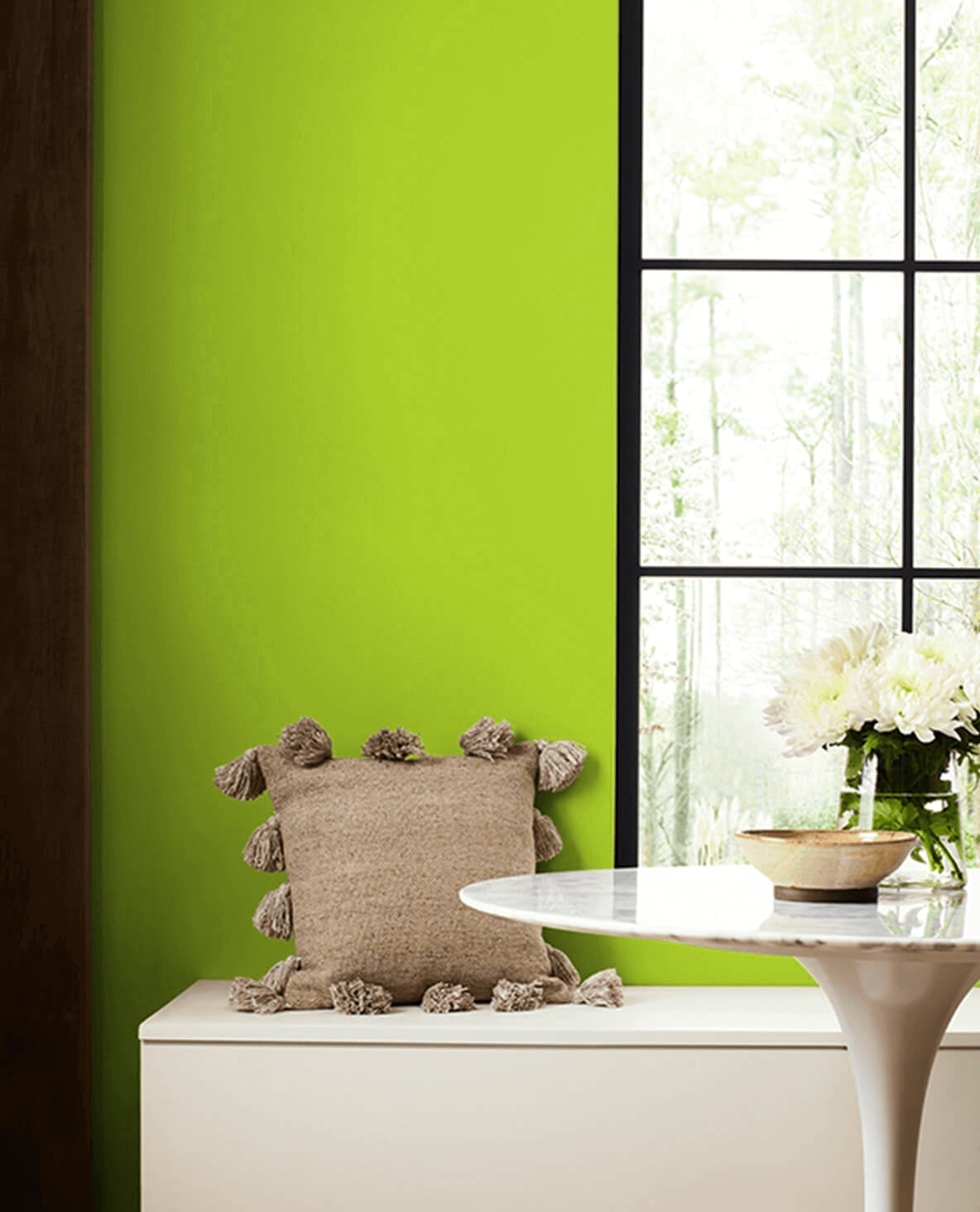
A vibrant lime green accent wall turns a compact dining corner into the most energetic spot in the house. The color works because the palette stays tight: white, beige, and brown pieces like a tulip table and a glass vase of flowers let the wall take center stage. A decorative pillow on a chair picks up the green without matching it exactly. The palette lesson is that a bold accent wall needs restraint everywhere else. Keep nearby furniture neutral and let the wall be the one loud note in the room.
Dramatic dark green ceiling and walls in a modern nursery
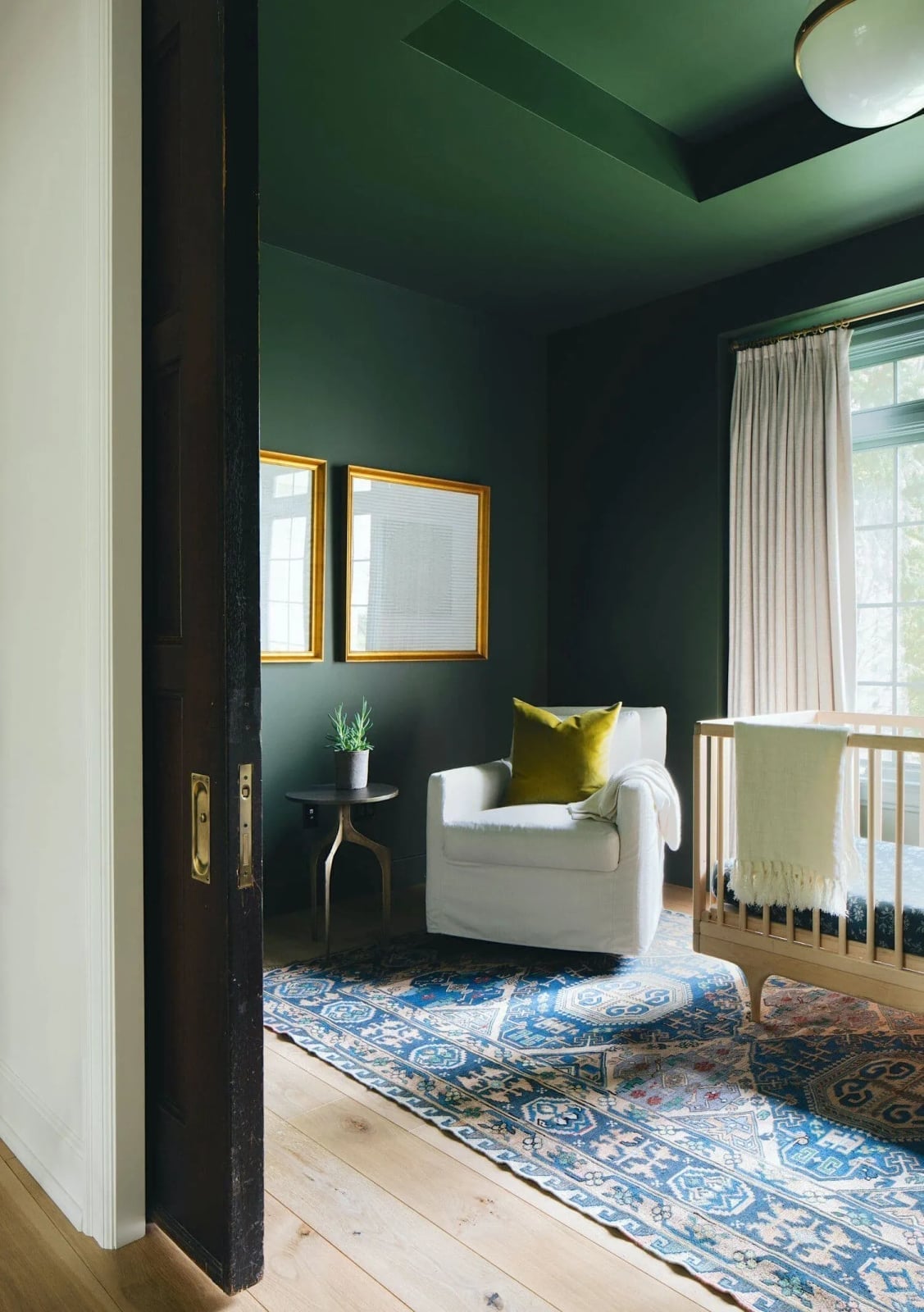
Can a dark room feel calm for a nursery? This one proves yes. The dark green paint covers both the walls and the ceiling, wrapping the space in a cocoon-like feel. A cream crib, a linen armchair, and a soft rug break up the darkness with lighter fabrics. The gold tones in the side table and overhead light add warmth without fighting the green.
The trick is in the proportions: the dark green occupies the largest surfaces, while the cream and gold stay as smaller, high-contrast accents. This ratio prevents the room from feeling like a cave. For a nursery, scale the dark paint to cover the main surfaces, then use lighter furniture and textiles to balance the weight.
Focal point dark green painted brick fireplace in a living room
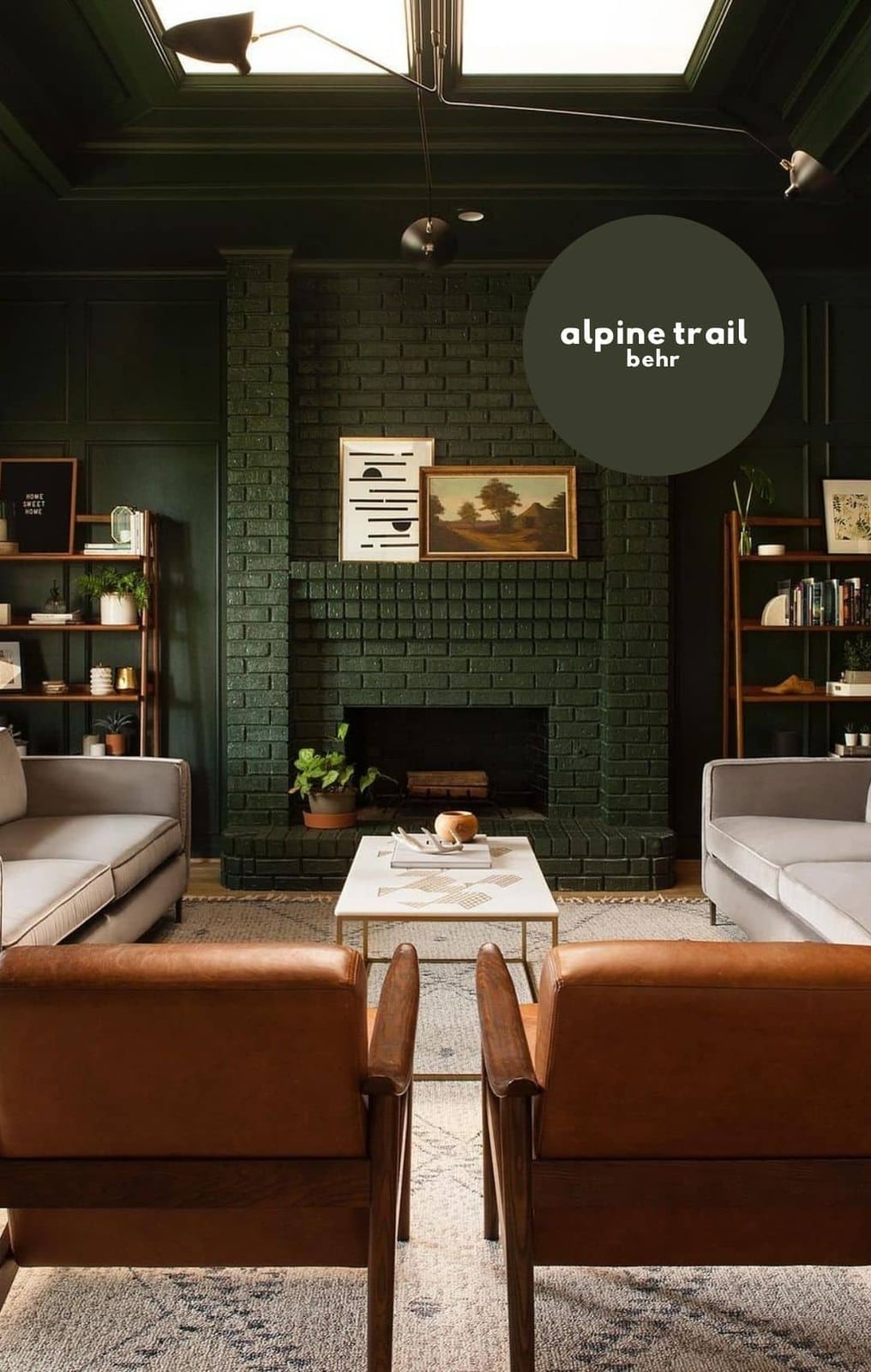
A dark green painted brick fireplace becomes the visual anchor in a modern living room. The brick texture shows through the paint, adding depth that a smooth wall cannot match. Two sofas flank the fireplace in a symmetrical arrangement, with a marble coffee table and leather armchairs completing the setup. Natural light from skylights keeps the dark green from swallowing the room. The material takeaway is that painting brick does not hide its texture. The uneven surface catches light differently, so the color shifts throughout the day.
Distressed deep green dresser with ornate brass hardware
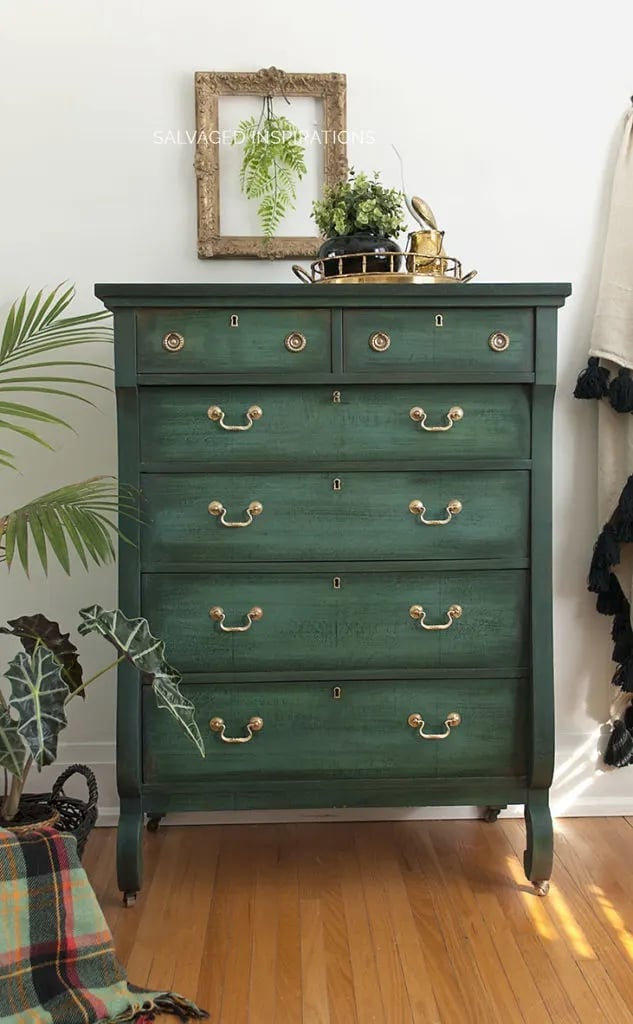
A distressed deep green dresser with ornate brass hardware proves that a single painted furniture piece can redefine a bedroom. The finish is not smooth. Visible wear marks and lighter patches give the wood a history that a solid coat of paint would miss. The brass handles and keyhole plates catch the morning light coming through the window, while potted plants on either side soften the dresser’s traditional silhouette. The styling rule is to let a distressed finish be the event. Keep the top of the dresser simple, with a decorative tray or a framed picture, so the hardware and the paint get the attention.
Serene sage green paneled wall in a modern bathroom
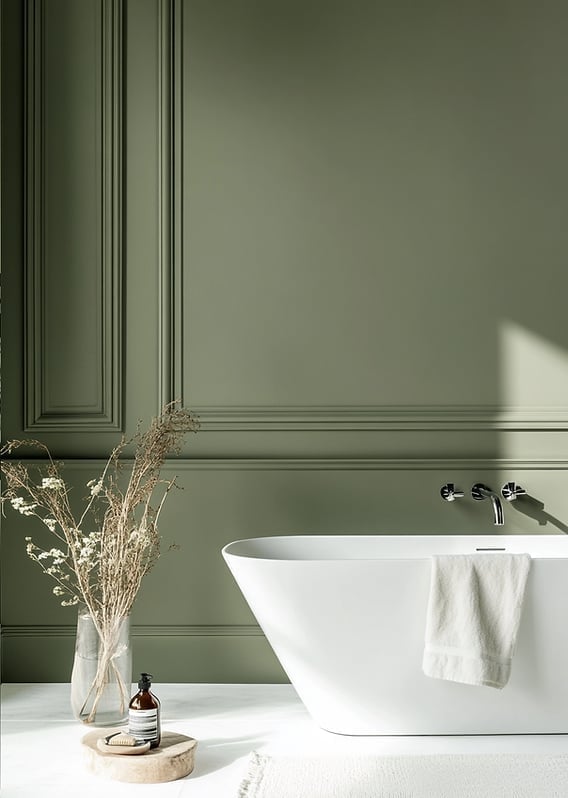
A sage green paneled wall behind a freestanding bathtub creates a serene look, and the trick is the finish. Painted wood paneling in a bathroom needs a satin or semi-gloss sheen to handle humidity without showing every splash. The sage green here pairs with white ceramic and chrome fixtures, so the palette stays clean and the paneling becomes a textured backdrop. A glass vase with dried flowers on the tub adds organic shape without competing for attention.
The layout keeps the bathtub centered against the paneled wall, making the green feel grounded. Daylight casts soft shadows across the panels, which adds depth without needing extra sconces. Removable peel-and-stick paneling over existing tile can give a similar look without permanent changes. The upkeep is straightforward: a damp cloth and mild cleaner keep the painted surface fresh, and the satin finish resists mildew better than flat paint.
Sage green walls complementing a taupe sofa in a living room
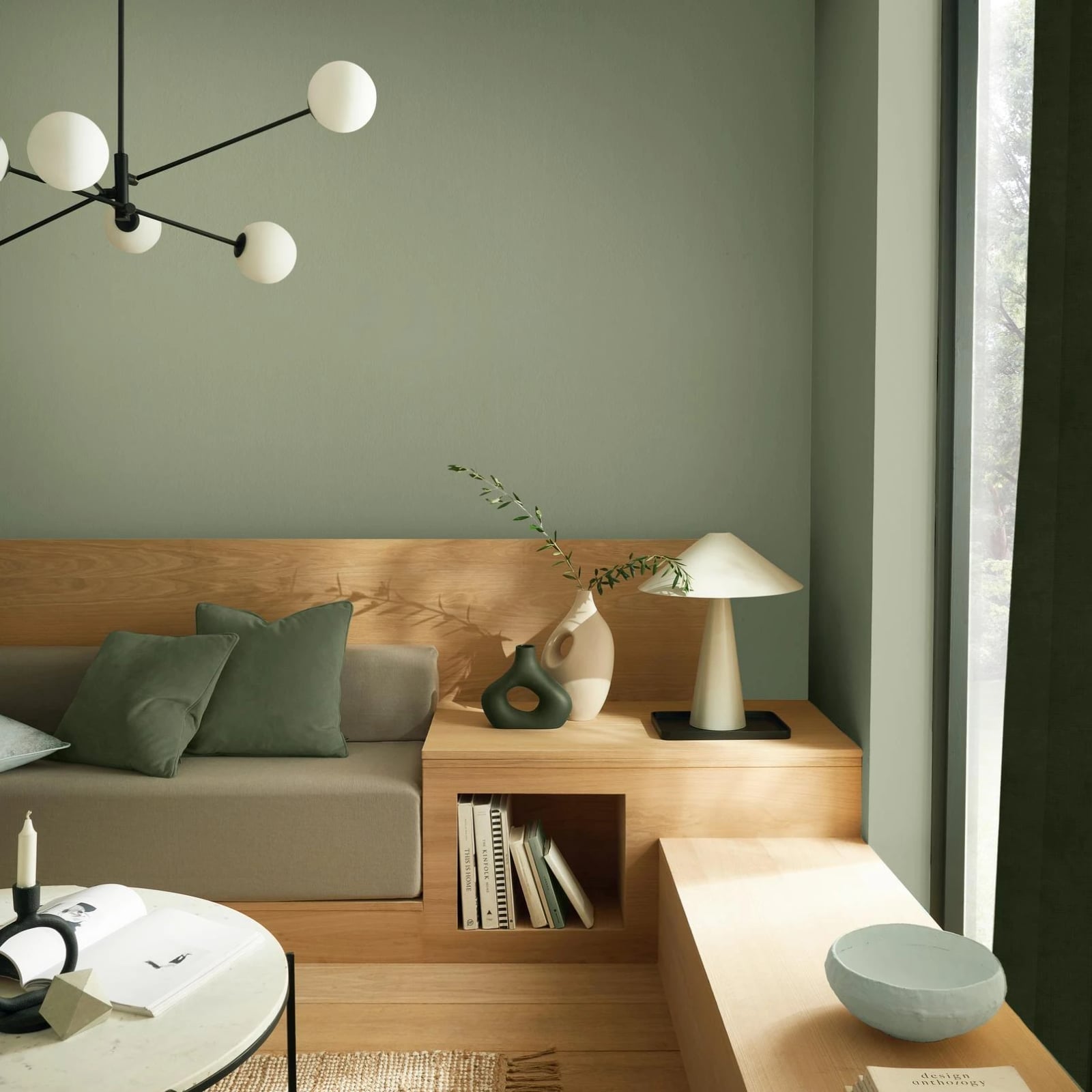
The taupe sofa sits against sage green walls, and the pairing works because both hues share an earthy undertone. Olive green pillows on the sofa echo the wall color without matching it exactly, which keeps the palette from feeling flat. A round coffee table in wood and a mushroom lamp with a linen shade add soft texture. The sage green painted walls do not compete with the built-in wooden seating and shelving unit nearby. For renters, this is a simple roll-on change that transforms the room without touching the flooring or furniture. The neutral base means the green can shift with new pillows or art later.
Arched niche in deep green holds wood shelves
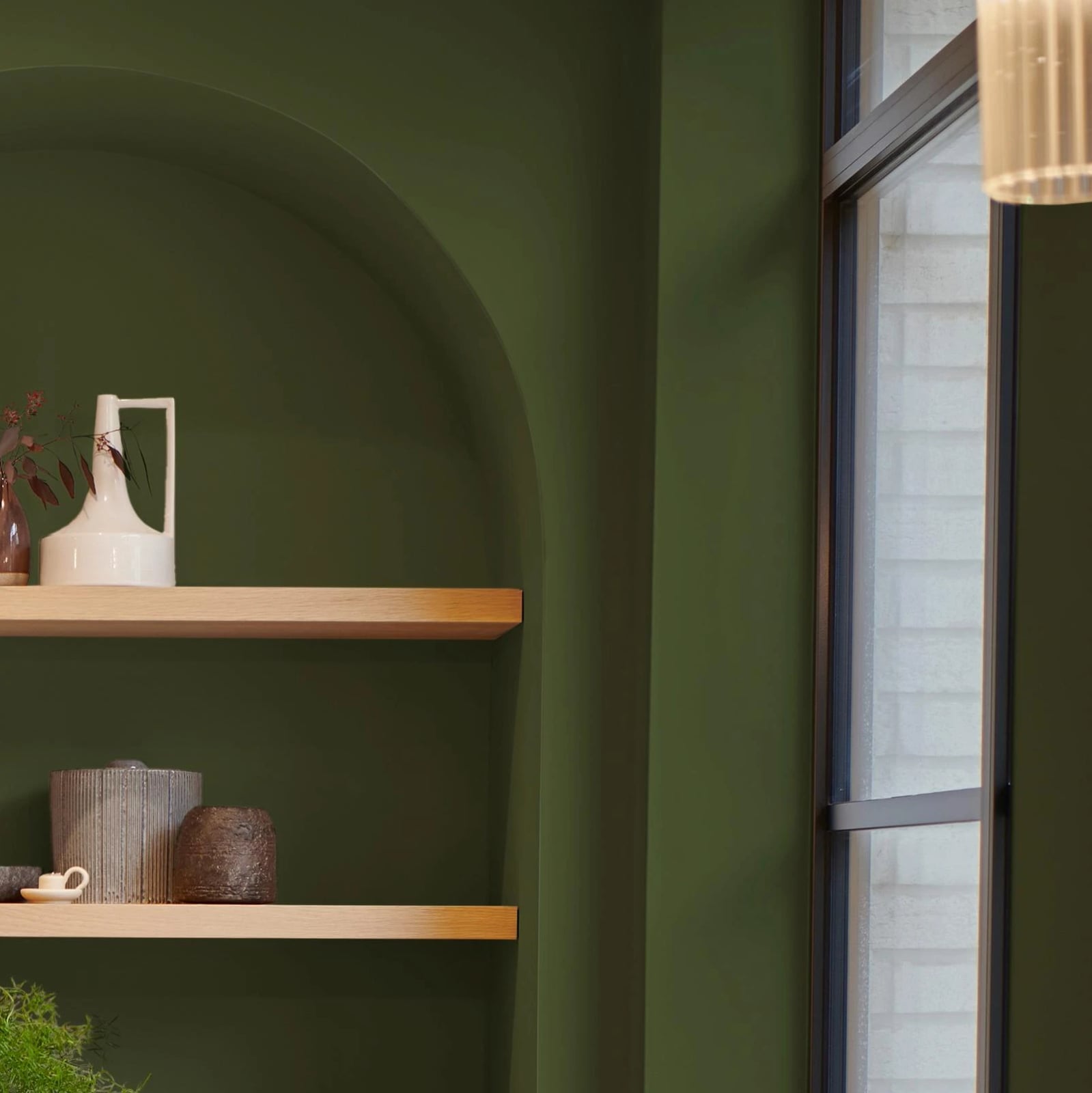
A deep green arched wall niche creates a natural focal point in this living room. The recessed shelving unit holds floating wood shelves, and the deep green paint makes the arched shape pop against the surrounding wall. White and textured ceramic vases sit on the shelves, breaking up the dark color with light shapes. A pendant light hangs nearby, casting warm light onto the display. This is a clever storage solution for a corner that might otherwise hold a tall plant or nothing at all. The deep green color hides dust on the shelves better than white or light wood. For upkeep, a microfiber duster reaches into the arched niche without scratching the paint.
Sage green walls and trim with a deep green velvet sofa
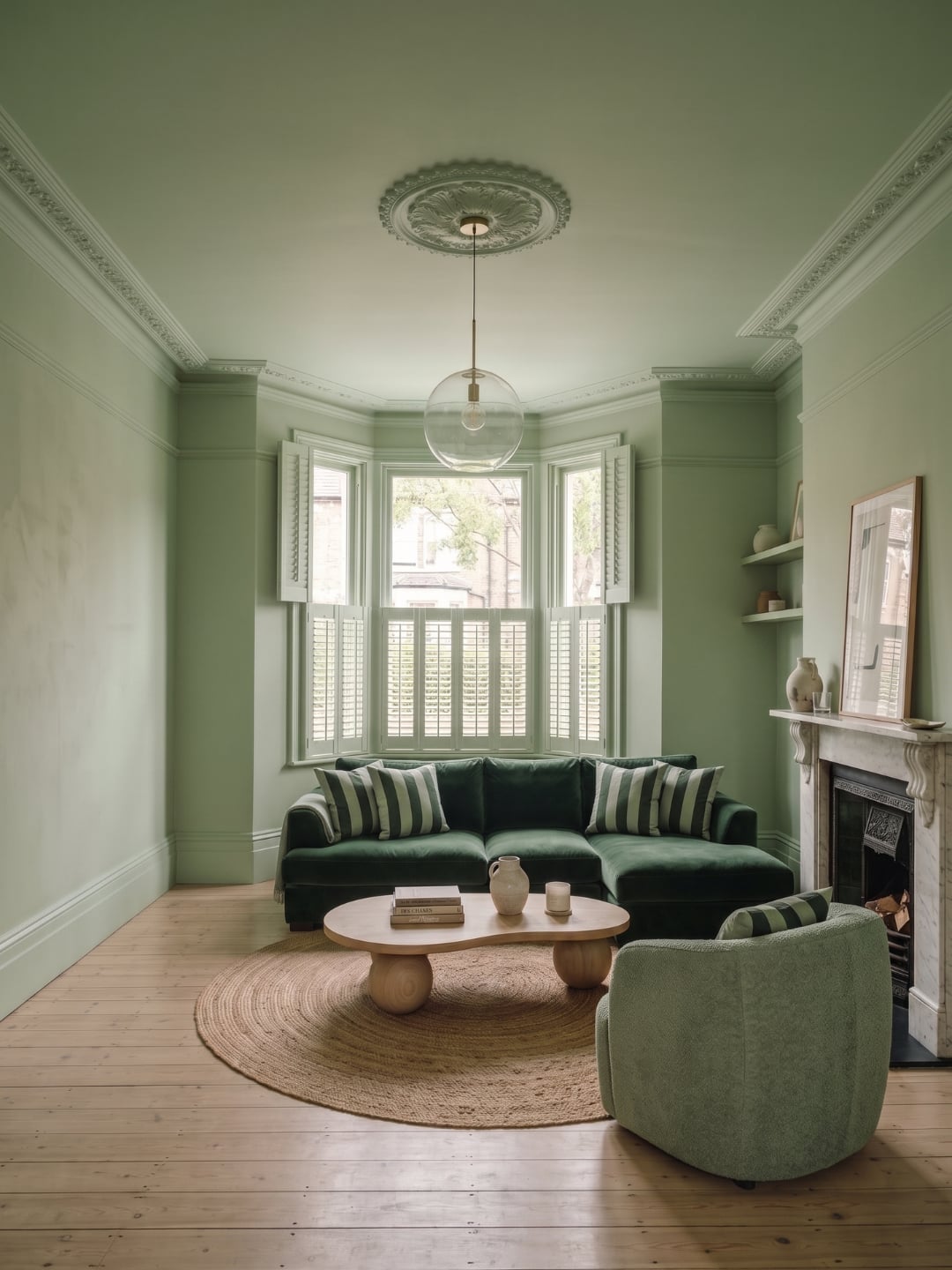
Can the same color family work on both walls and furniture without looking one-note? Yes, when the shades differ enough. Sage green walls and trim provide a soft backdrop for a deep green velvet sectional. The two greens sit on opposite ends of the spectrum, so the sofa looks rich and grounded against the lighter wall. A round coffee table in marble and a jute rug add texture and break up the green. The sofa faces a fireplace, with the coffee table centered between them. The scale of the sectional anchors the room, while the sage walls keep the space from feeling closed in. Daylight from nearby windows and a pendant light overhead ensure the deep green velvet catches the light without looking black. For maintenance, a lint roller or vacuum with a soft brush keeps velvet dust-free, and the sage walls can be wiped with a damp sponge.
Deep green kitchen cabinetry with brass hardware
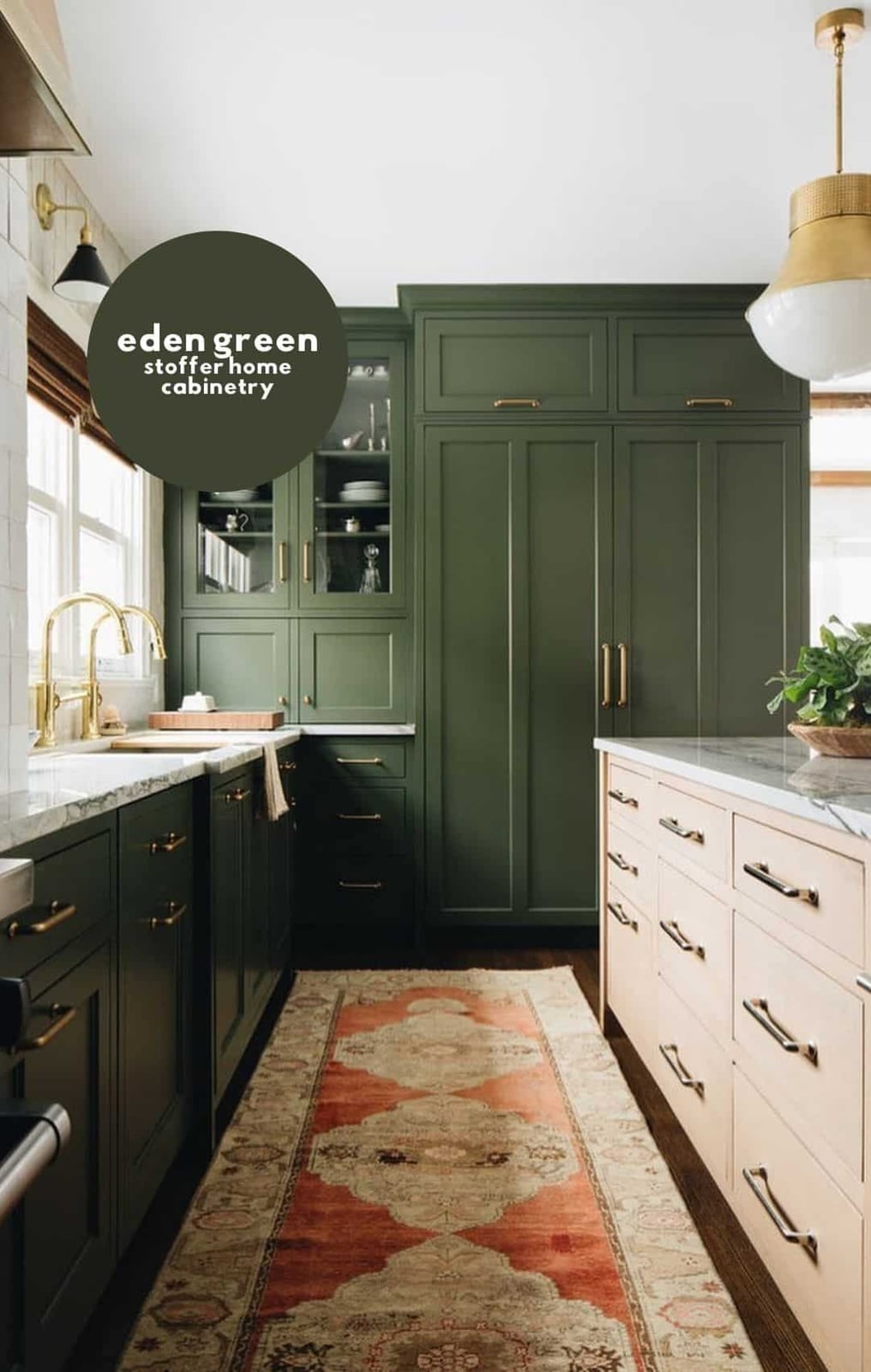
Deep green kitchen cabinets with brass hardware offer a durable finish that hides everyday smudges better than white or cream. The green cabinets sit below cream island cabinets, creating a two-tone look that adds visual interest without overwhelming the room. Brass fixtures and a patterned runner rug warm up the green, while marble countertops keep the palette grounded. The L-shaped counter and island layout provides plenty of prep space, and the green cabinets anchor the perimeter. For upkeep, a gentle soap-and-water solution works on painted cabinets, and brass hardware polishes up with a dry cloth. The deep green color also masks minor scratches better than dark blue or black.
Rustic wood shelf displays ceramics on sage wall
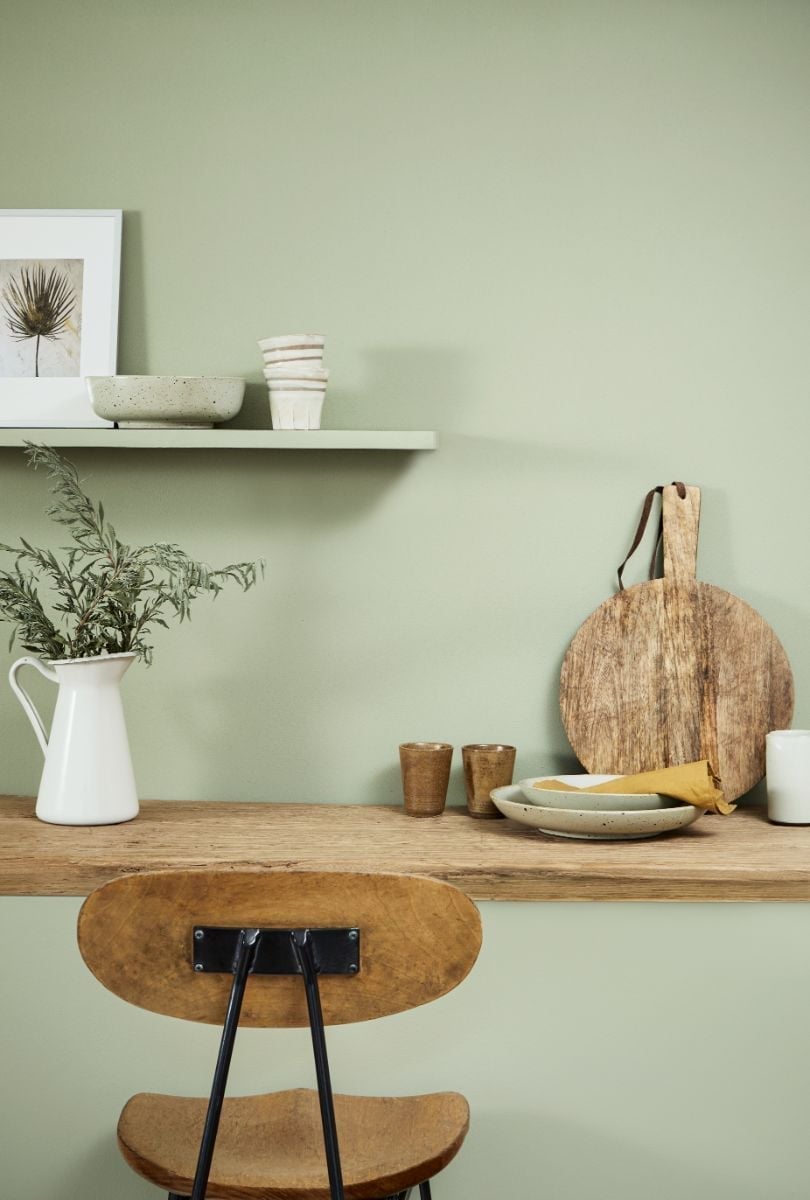
A wall-mounted shelf is a good spot to test a color before committing to a full room. Here a rustic wood shelf with a few ceramic bowls and a white pitcher sits against a sage green wall in a compact kitchen corner. The wooden cutting board and framed art above keep the vignette from feeling too sparse. The wall color works as a backdrop, not a statement. A simple desk area below the shelf ties the whole composition together without competing for attention.
Olive walls contrast with marble console table
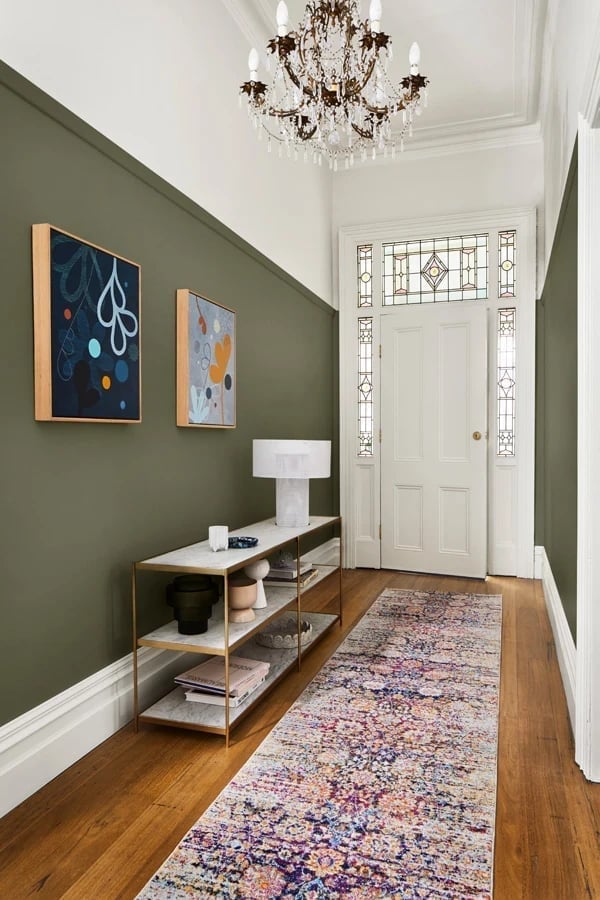
Olive green can feel heavy in a narrow hallway if you pair it with dark furniture. This hallway takes a different route by placing a marble console table against the olive walls. The white marble top and brass base keep things light, while a colorful rug runner leads the eye toward the door at the end. A table lamp and a small chandelier add warm light. The abstract art above the console breaks up the wall surface so the green becomes a deliberate choice.
The olive green walls contrast with the white trim and door frame, which helps define the space. The light from the door at the end of the hall keeps the green from turning too dark. A narrow hallway benefits from this kind of high-contrast palette, where the wall color grounds the space and the lighter elements keep it from feeling closed in.
Sage green paneled wall in a boho living room
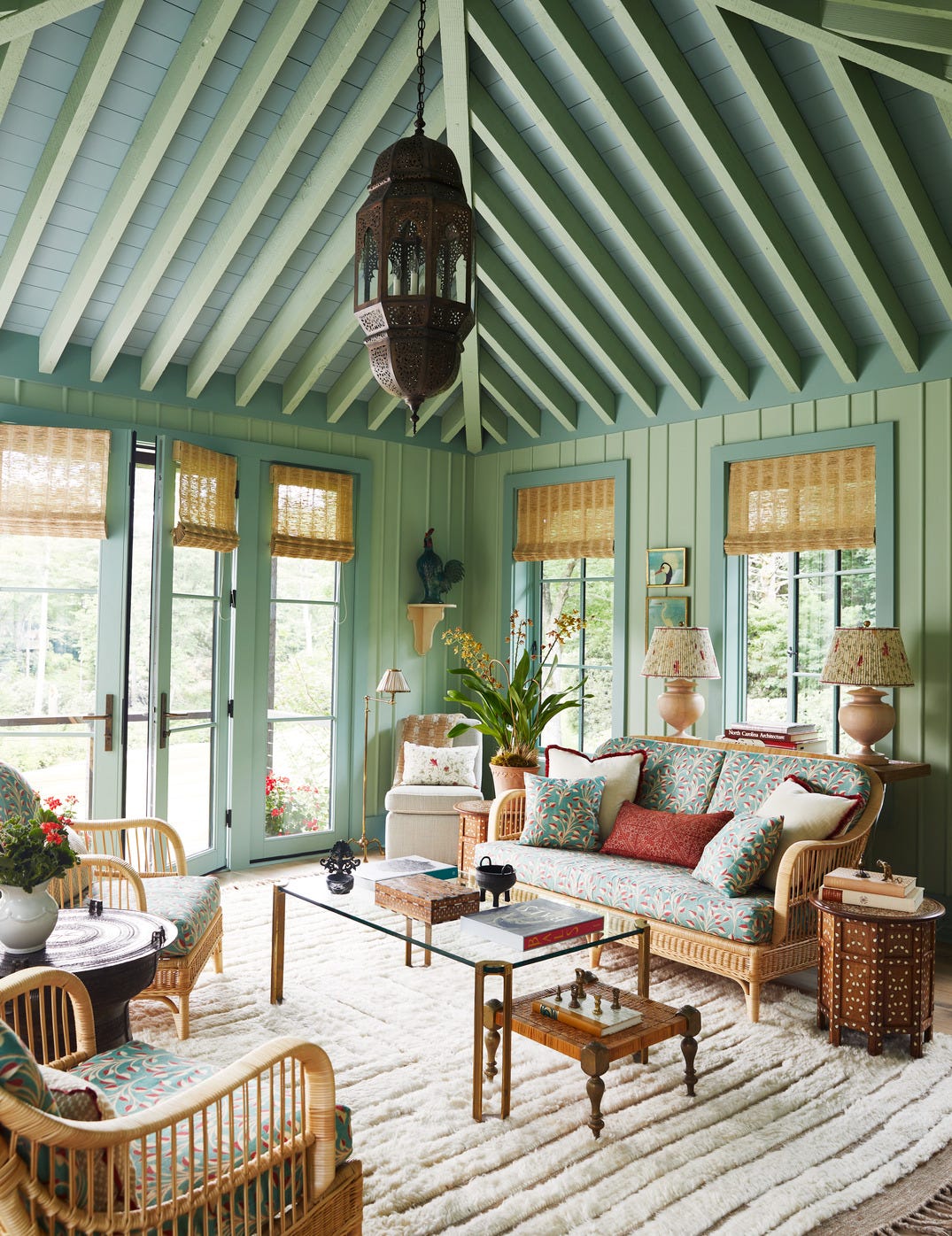
The sage green paneled wall here acts as a calm anchor for a mix of textures. A rattan sofa sits in front of it, while a glass coffee table and patterned armchairs add visual interest. An ornate hanging lantern and daylight from windows provide layered lighting. The vaulted ceiling painted light blue keeps the room feeling open instead of overwhelmed by green.
Bedroom gallery wall with maps and artwork
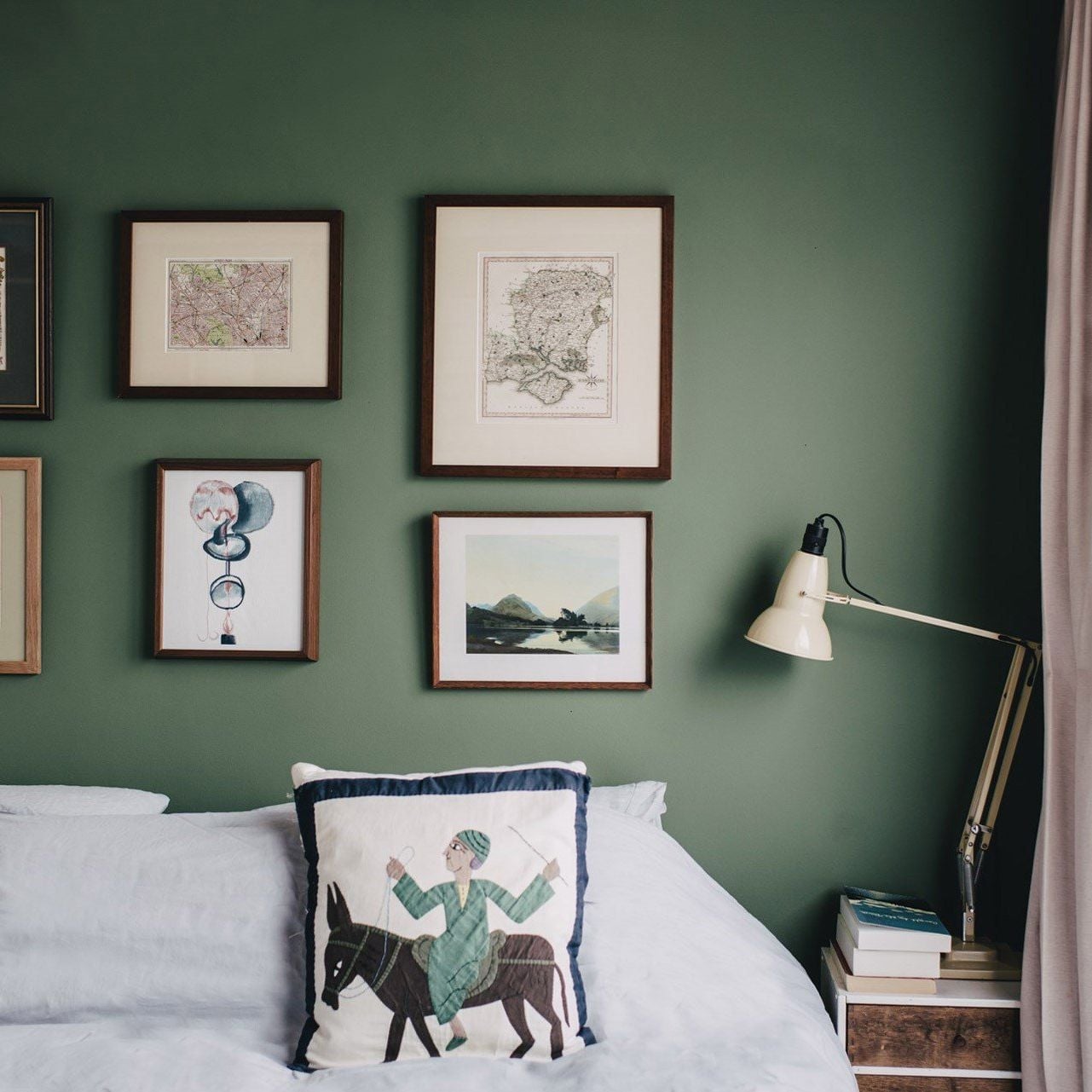
A deep green accent wall works well as a backdrop for a gallery wall because the color recedes visually. Here a collection of framed maps and artwork hangs above a bed in a roomy bedroom. The cream, brown, pink, blue, and white tones in the art stand out against the deep green. A task lamp on the bedside table adds focused light for reading, while ambient light fills the rest of the room. The gallery wall becomes the focal point without the wall color stealing the show.
Deep teal walls complementing a rattan rocking chair
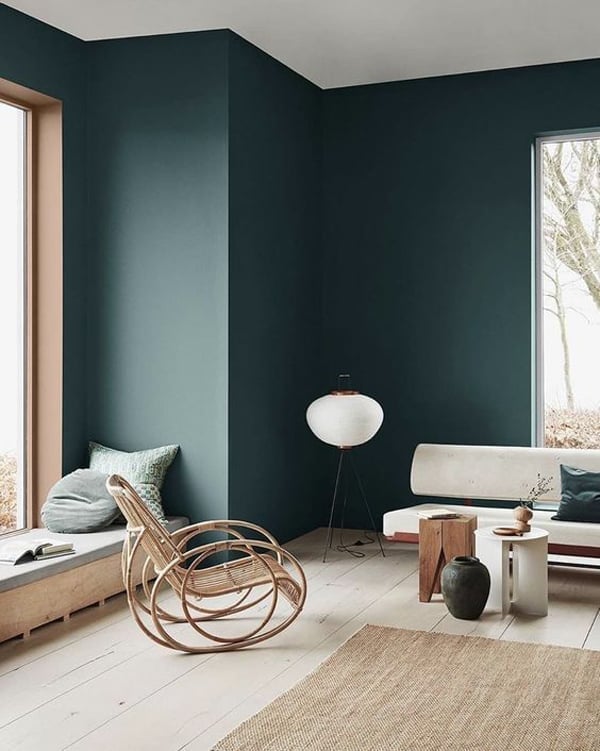
When placing a focal piece like a rattan rocking chair, give it enough breathing room. In this living room, the chair sits near a window with a floor lamp beside it, while a white sofa faces the window across a woven rug. The dark teal walls provide a strong contrast for the natural tan rattan and the light beige sofa. A wooden side table and a ceramic vase on a white side table complete the setup without cluttering the space.
The layout is effective because the dark teal walls wrap the room in a cozy tone, while the light furniture and daylight from windows keep it from feeling too heavy. The rug anchors the seating area, and the floor lamp adds a warm glow during evening hours. This arrangement suits a room that needs a calm focal point without relying on a TV or fireplace.
Farmhouse hallway with sage paneled walls
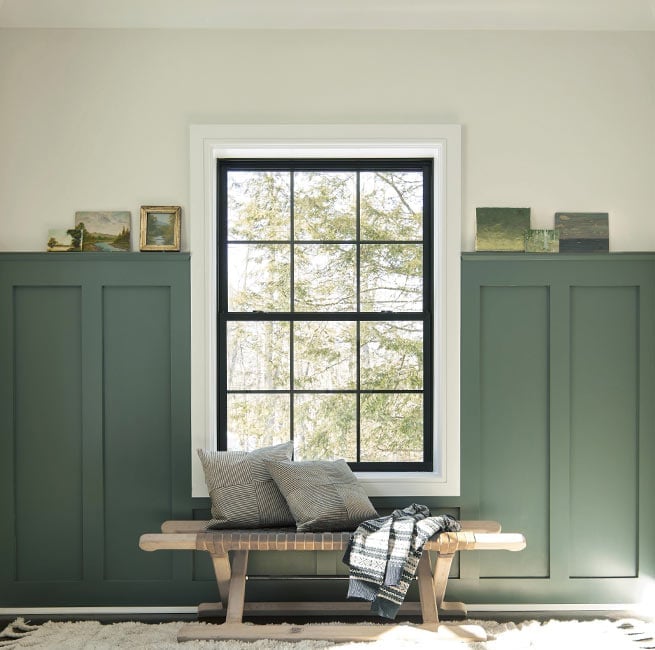
A wooden bench with leather straps sits centered under a window in a roomy hallway, flanked by sage green paneled walls. The cream, black, and gray palette, plus a shag rug and small landscape paintings, keeps the look simple. For a layout like this, letting the bench anchor the space and repeating the wall color on the paneling creates a clear path through the room. The window above the bench brings in daylight, making the sage green feel fresh rather than heavy.
Dark green paneled alcove creates reading nook
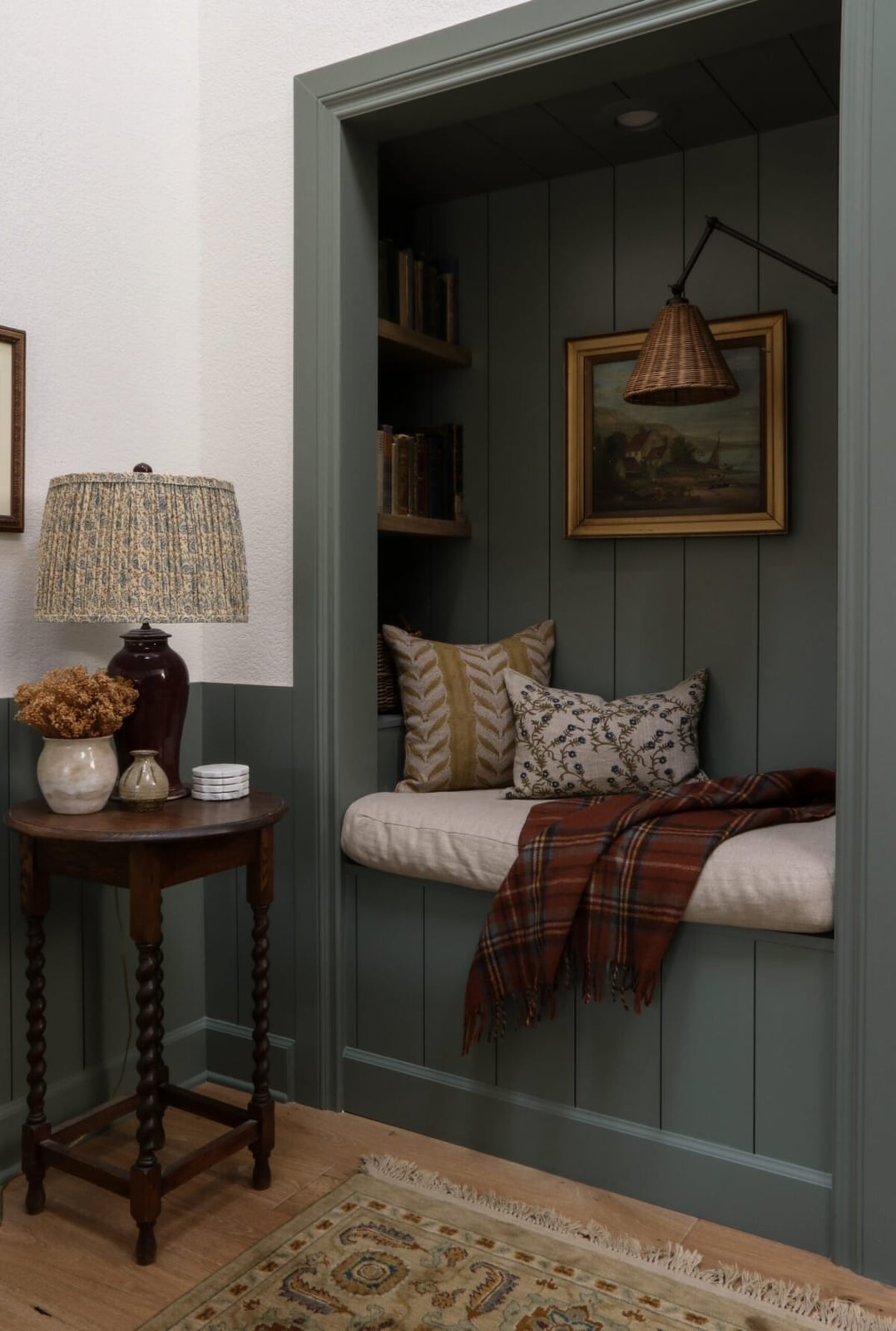
Use one dark color on the walls and built-ins to define a compact alcove without adding clutter. Here, dark green paneling wraps around a built-in bench with shelving, creating a reading nook. A cream throw blanket, rust-colored pillows, and a wicker side table add warmth, while a brass task lamp provides focused light. The dark green acts as a frame, making the alcove feel separate from the room. This approach works well for a corner that might otherwise feel like dead space.
Deep green walls and ceiling in a compact living room corner
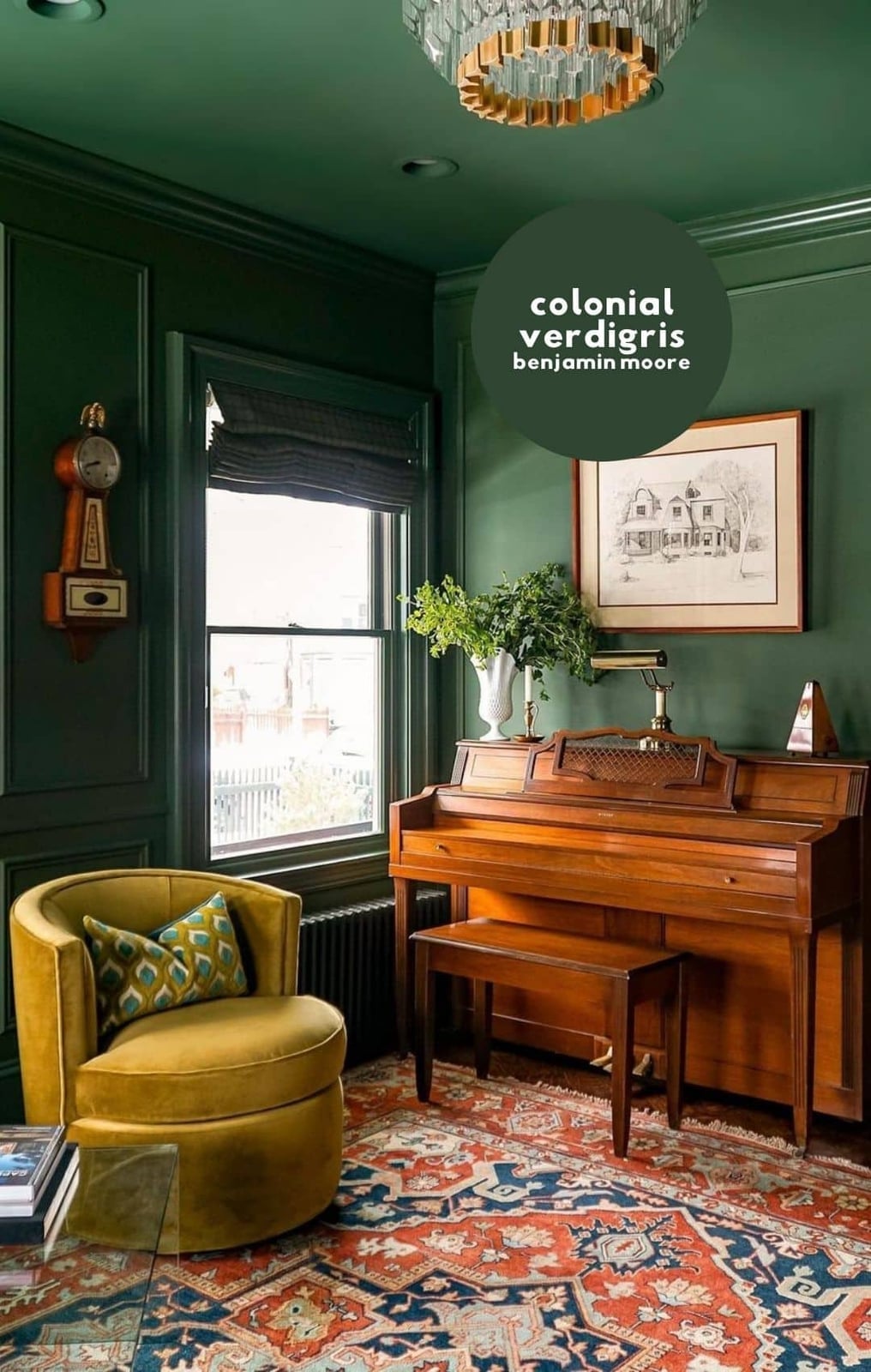
Painting both walls and ceiling in deep green could make a small corner feel like a cave, but here it does the opposite. The deep green backdrop in this compact living room corner lets the upright piano, a mustard yellow armchair, and a navy blue rug pop. A crystal chandelier adds sparkle, and a brass desk lamp throws warm light onto the piano bench. The trick is in the proportion: the deep green acts as a neutral shell, so the colorful furniture and patterned rug carry the visual weight. This is not a look for anyone who wants a quiet corner; it asks for strong accent pieces to hold their own against the dark walls.
Deep green accent wall with botanical wallpaper and hanging chair
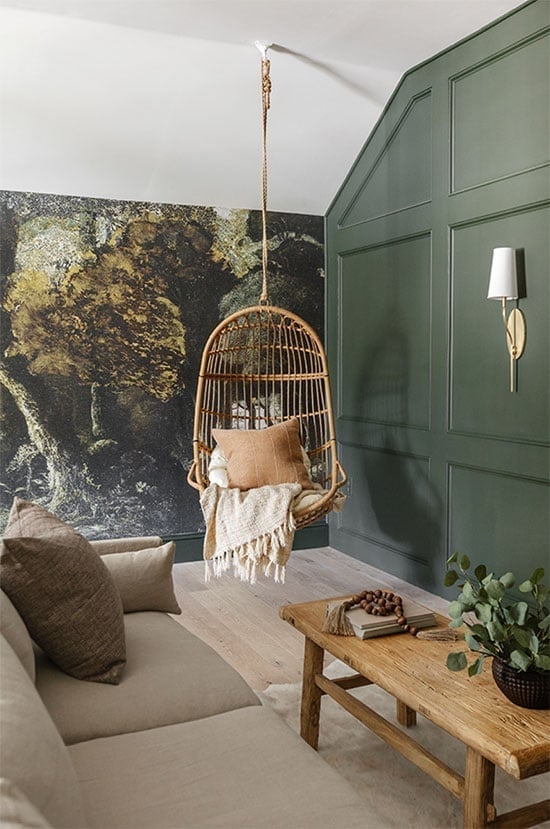
A rattan hanging chair suspended in a corner becomes the focal point of this roomy living room, with a deep green accent wall and botanical wallpaper behind it. A beige sofa and a wooden bench keep the seating grounded, while a wall sconce adds soft light. The deep green wall sets a calm backdrop for the textured rattan and linen, and the botanical wallpaper adds pattern without overwhelming the space. This setup is a natural fit for a room that already has a relaxed, modern feel.
Boho bedroom with sage green accent wall
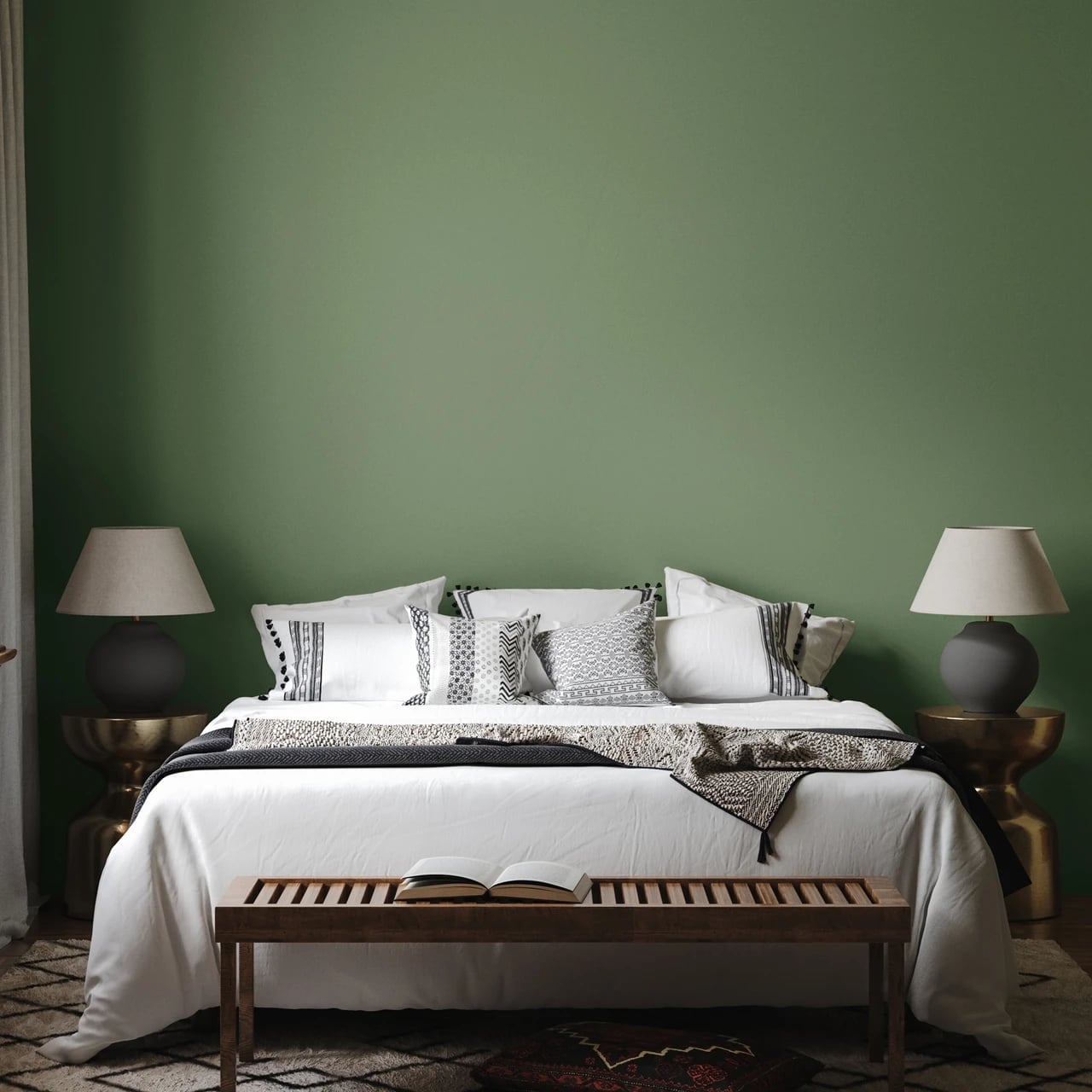
This modern boho bedroom is effective because the sage green accent wall is the calm anchor. A platform bed sits centered, flanked by wooden bedside tables with brass table lamps. The earth tones include sage green, white, black, and gold. The sage green wall is a backdrop that lets the layered textiles and brass accents take center stage. For a palette like this, keep the accent wall to one side of the room and use the same color on the bed frame or a bench to tie the look together without adding extra pattern.
Vibrant green and white striped wallpaper in a coastal bedroom
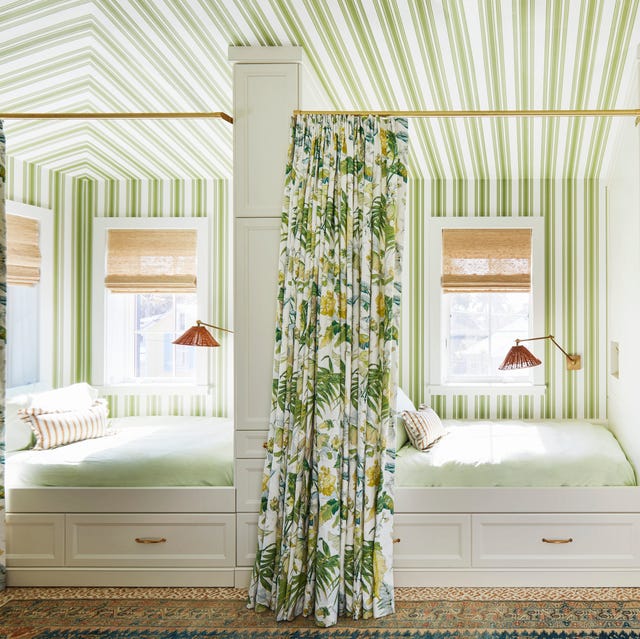
When a room uses the same wallpaper on walls and ceiling, the whole space wraps around you. Here green and white stripes cover both surfaces in a coastal bedroom, making the built-in twin beds with drawers feel like part of the architecture instead of furniture dropped into the room. The light green bedding and floral curtains soften the pattern, and the wall sconces add a layer of warm light that keeps the stripes from feeling too crisp. For this layout, let the wallpaper set the rhythm, then keep the bedding and window treatments in the same color family so the room flows together without a hard stop.
Deep green walls and ceiling in a traditional dining room
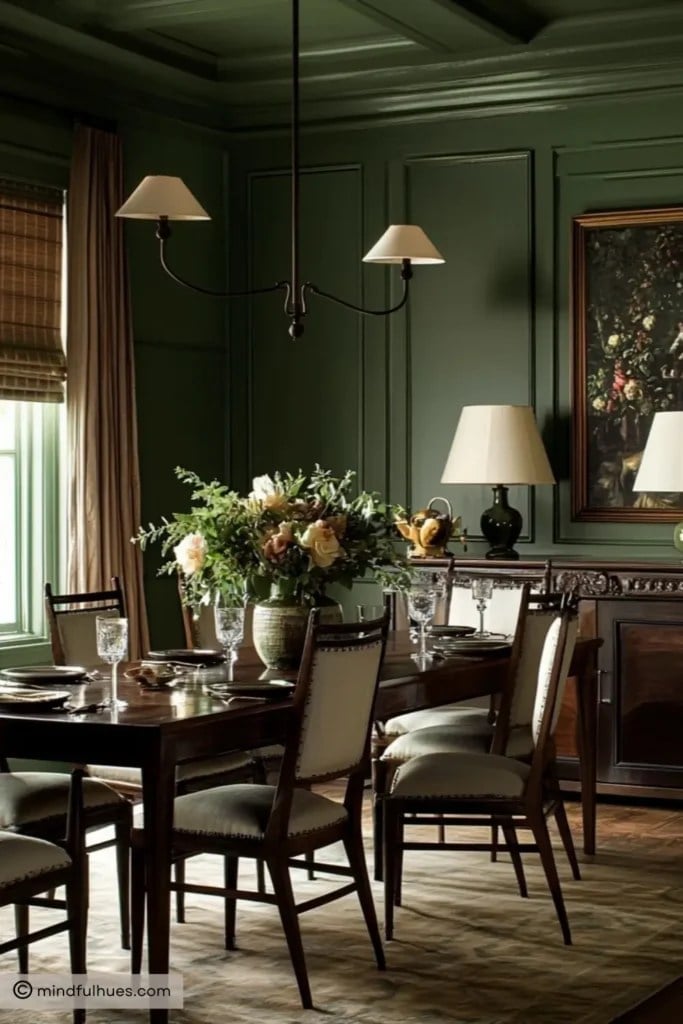
Deep green walls and ceiling make this traditional dining room feel like a jewel box. A dark wood dining table sits centered under an overhead chandelier, with upholstered chairs and a buffet against the wall in cream and beige tones. The palette prevents the room from feeling heavy. The deep green is a rich backdrop, and the table lamps on the buffet add warm pools of light that balance the daylight.
Deep green walls as a backdrop for a vibrant modular sofa
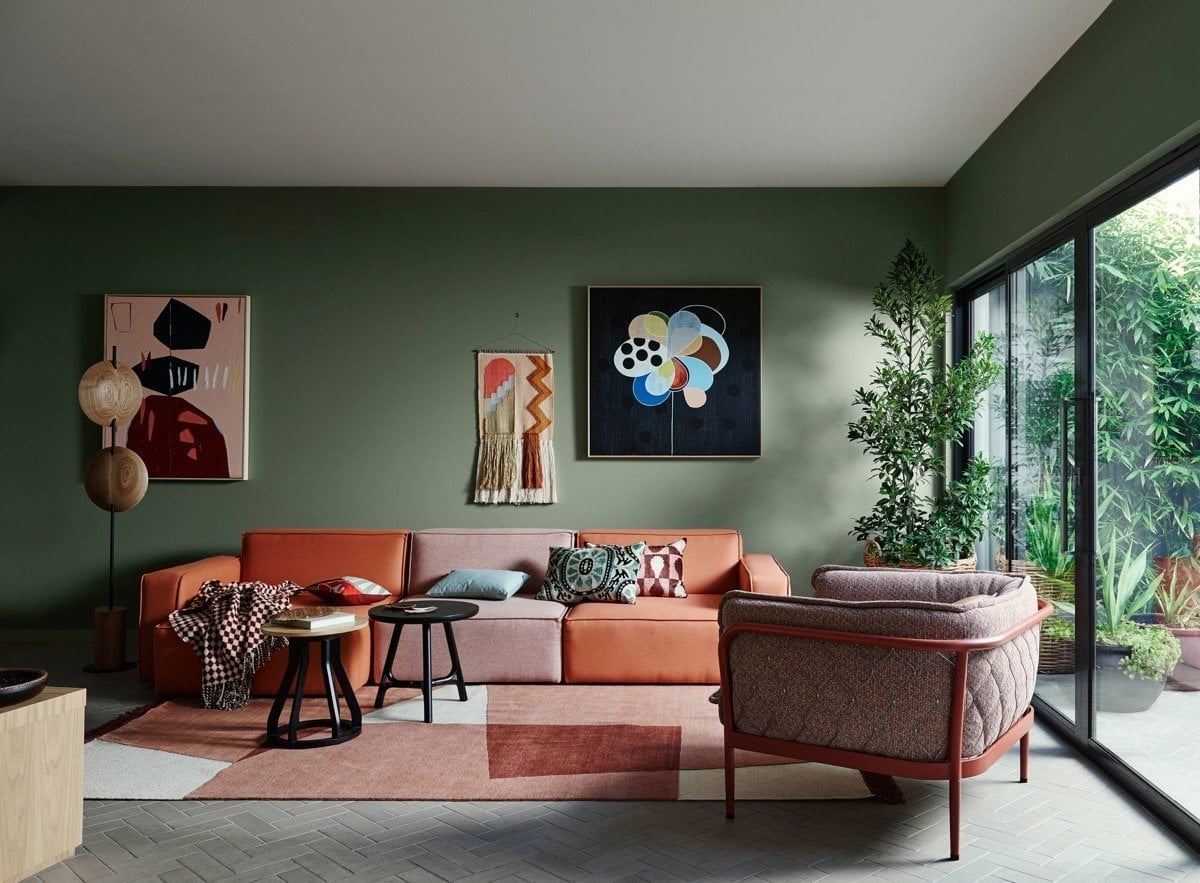
Deep green walls work best when the furniture has something to say back. Here a modular sofa in orange and pink sits against the green, with a terracotta rug grounding the grouping and abstract art on the walls. The green acts as a neutral in this context, letting the sofa hold the attention. Match the depth of the wall color to the volume of the furniture. A pale green would have let the sofa float; the deep green gives it something to push against.
Vibrant green painted cabinets in a farmhouse kitchen
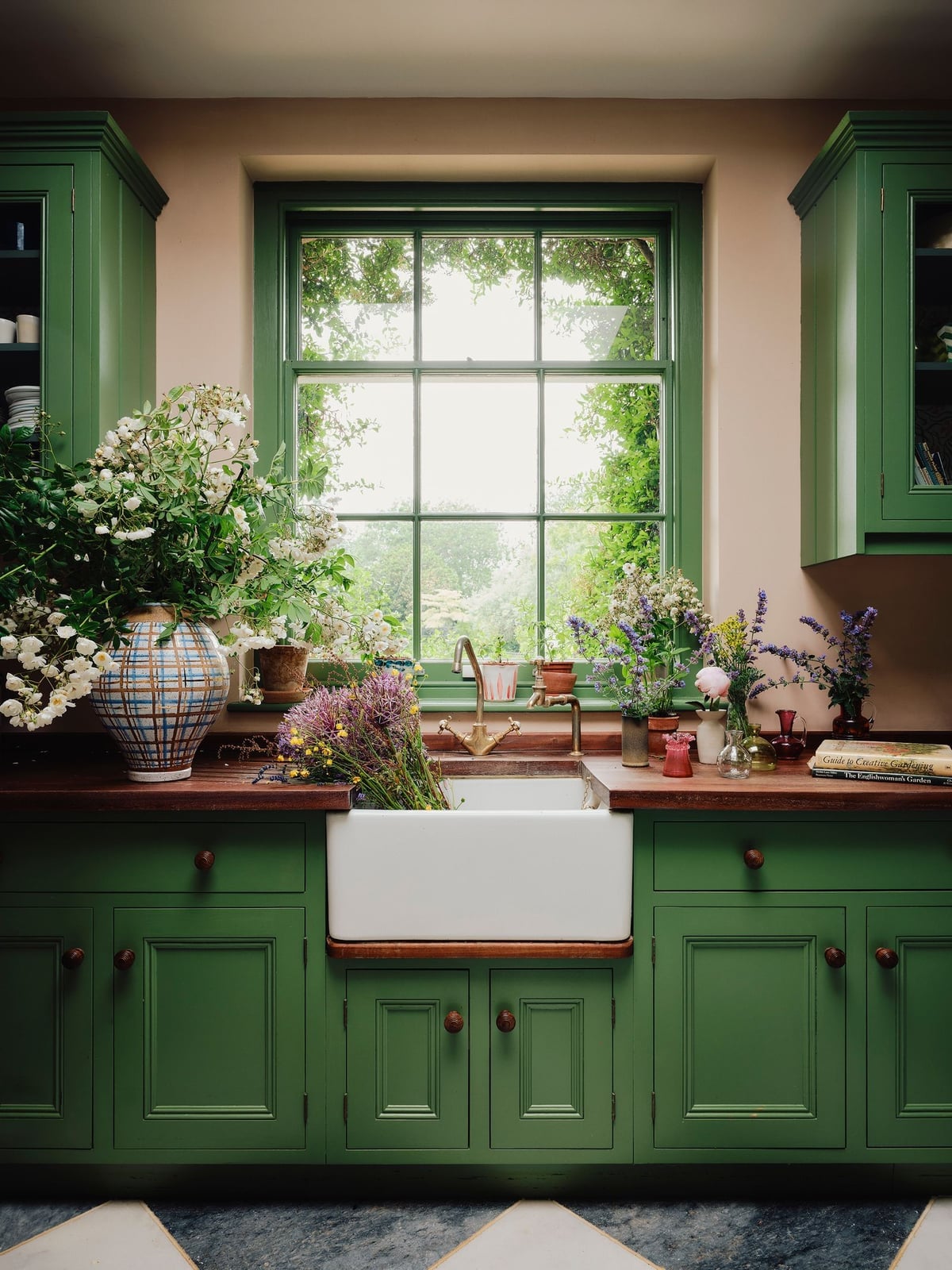
Vibrant green cabinets are a different animal from a green accent wall. A wall sits still; cabinets get opened and closed daily, and the color shows wear faster around handles and edges. Here farmhouse style green cabinets flank a farmhouse sink with a brass faucet, with wooden countertops that warm up the green. The daylight from the window helps the color shift through the day, from a bright punch at midday to a deeper tone in the afternoon. Ask your colorist for: a paint sample tested on a cabinet door you can move around the room, because the color looks different in the sink zone than it does near the window.
Olive green walls adorned with framed Art in an eclectic corner
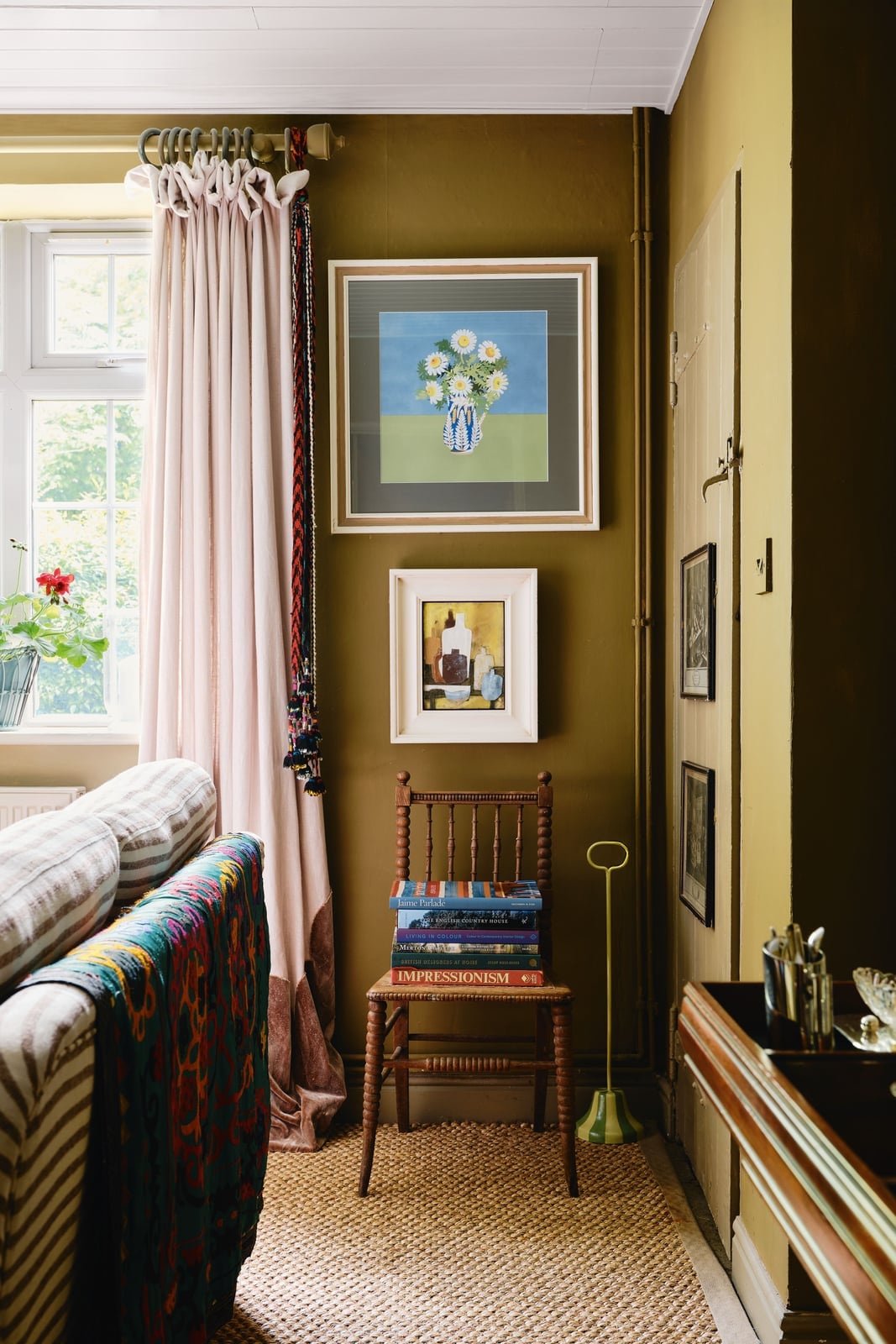
Olive green walls in this compact corner read like a warm neutral. A wooden chair holds stacked books, a patterned throw drapes over the seat, and framed artwork hangs above in pale yellow, pink, blue, and white. The olive green lets the art and the books do the talking. Use the wall color to unify a mix of objects instead of matching everything to one shade.
Final Thoughts
These 25 green paint ideas show that the shade you pick sets the mood, but how you use it makes the room. A deep teal bookshelf feels grounded, while a lime accent wall adds energy. Sage works quietly behind furniture, and olive brings warmth to a hallway. The common thread: keep the space around the color simple. That lets the green stand out without competing. When choosing your own, test samples at different times of day. Light changes how any green reads. Prep the walls well, use quality painter’s tape, and consider the finish. Flat paint hides imperfections, while satin or eggshell holds up to cleaning. That is the real takeaway: a trendy color only looks good if the application is solid.