
Choosing a paint color for your kitchen in 2027 is less about following a single hue and more about finding a shade that makes the room feel like yours. The options this year range from quiet creams to bold teals and deep greens, so there is plenty of room to match your taste.
This article covers 32 ways to work color into your kitchen, whether you want to paint cabinets, an island, or just the walls. Each idea treats the paint as the main event, with the rest of the room kept simple to let the color stand out.
Creamy white cabinets and marble accents for a bright, airy kitchen
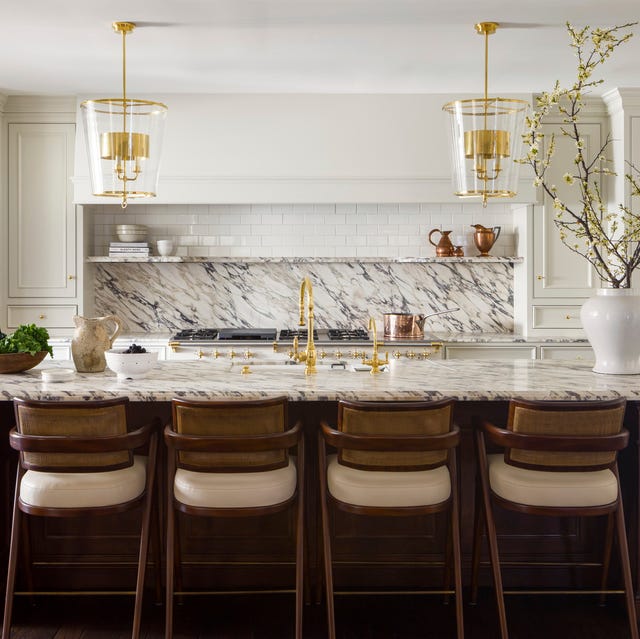
Creamy white cabinetry sets a quiet stage, letting the marble backsplash and island countertop take the lead. The stone’s veining adds texture. Brass pendant lights and a brass faucet bring warmth to the cool white and marble palette. A roomy island with seating anchors the layout, making the kitchen feel both open and connected. The restrained palette allows natural light to bounce around freely.
Sunny yellow cabinets for a cheerful farmhouse kitchen vibe
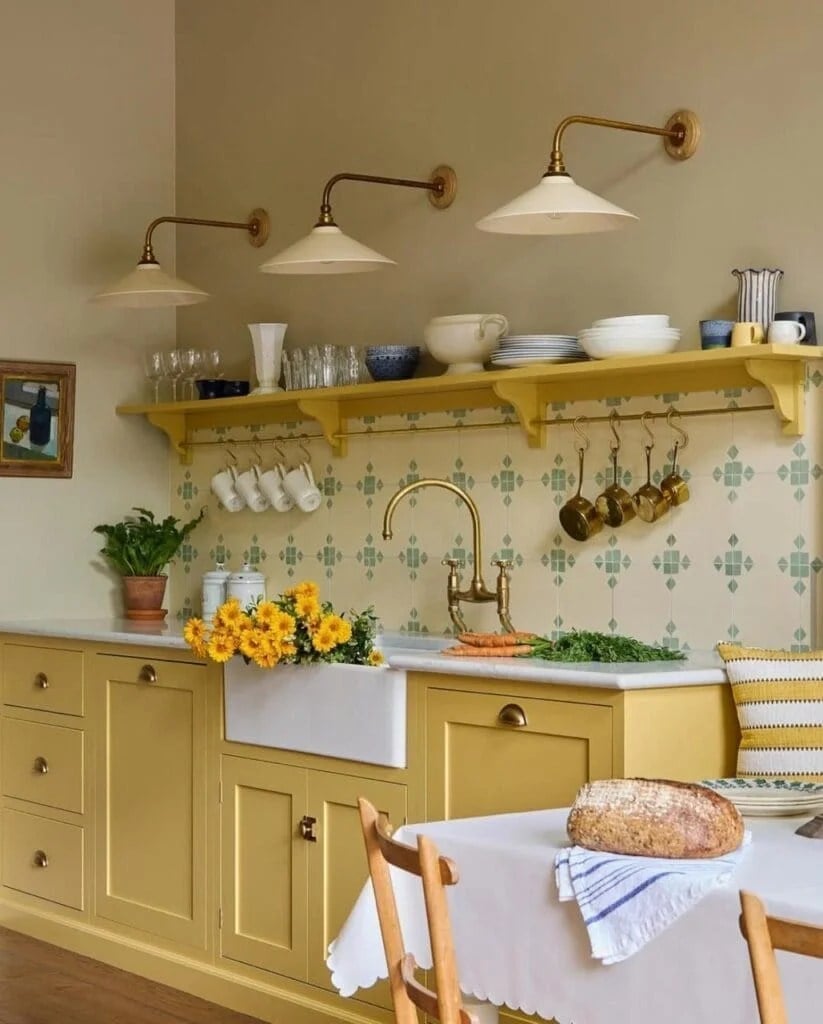
Yellow cabinets deliver instant energy, and in this farmhouse kitchen they feel grounded rather than loud. The yellow looks sunny but not acidic, balanced by cream countertops and a green accent in the tile. An apron-front sink and brass faucet reinforce the farmhouse character, while wall sconces add soft, layered light. The L-shaped layout keeps the workspace efficient, and open shelving above the counter prevents the yellow from feeling heavy. What breaks the look is the brass, without its warm glow, the yellow could lean too cool. The palette stays cheerful without tipping into novelty.
Bold blue painted cabinetry and range hood for a modern farmhouse
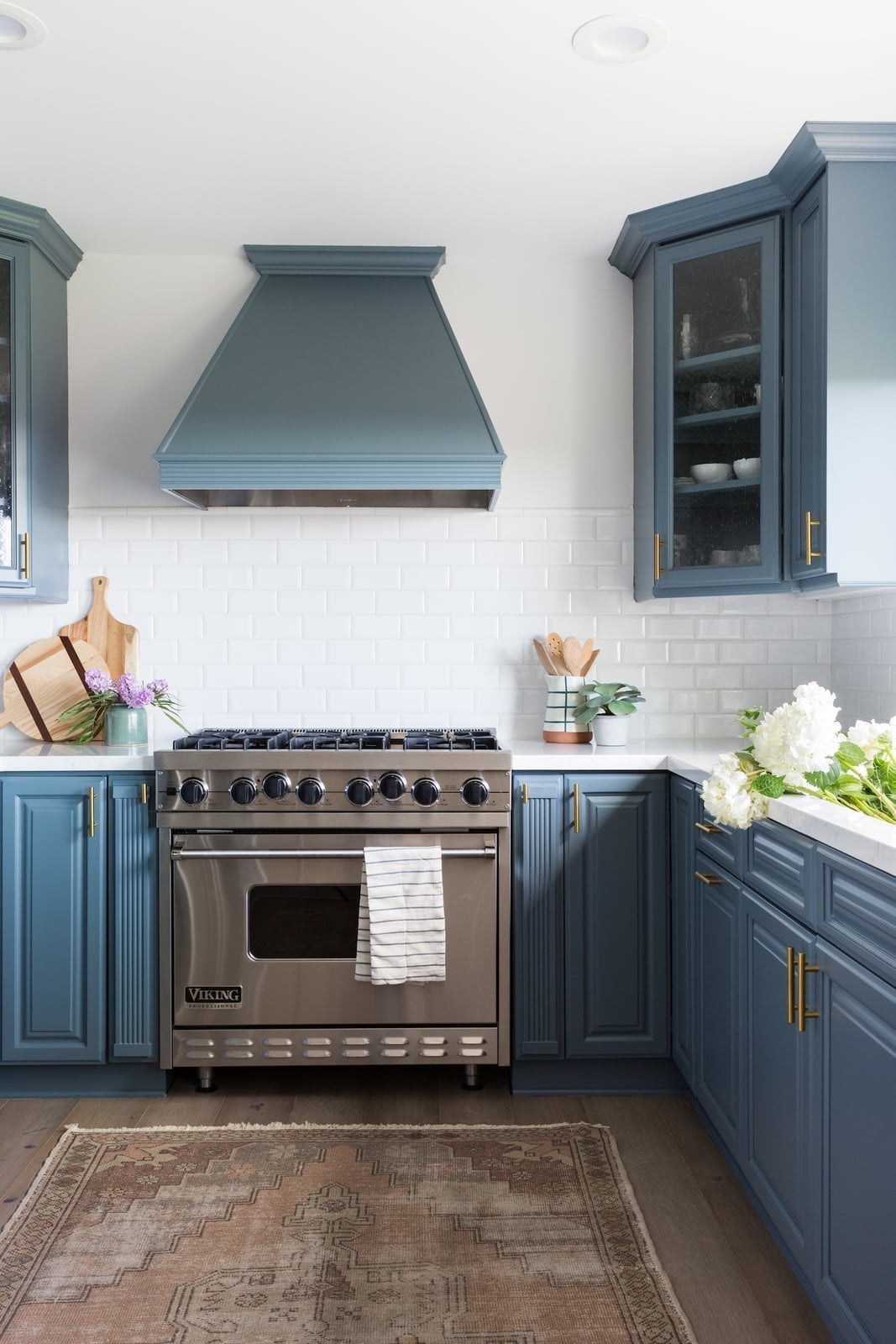
Can a painted range hood hold its own next to a stainless steel range? In this modern farmhouse kitchen, the blue hood becomes the anchor. The blue cabinetry and hood match in hue, creating a continuous block of color across the wall. White subway tile and a muted earth tone rug break up the blue, preventing a dark, enclosed feel.
The stainless steel range adds a professional edge, grounding the blue with its cool metallic finish. Recessed overhead lighting highlights the cabinetry and hood without casting shadows. The blue looks purposeful. It works because the kitchen stays simple. A patterned rug at the floor level introduces texture without competing with the painted surfaces.
Navy blue island as a focal piece in a modern kitchen
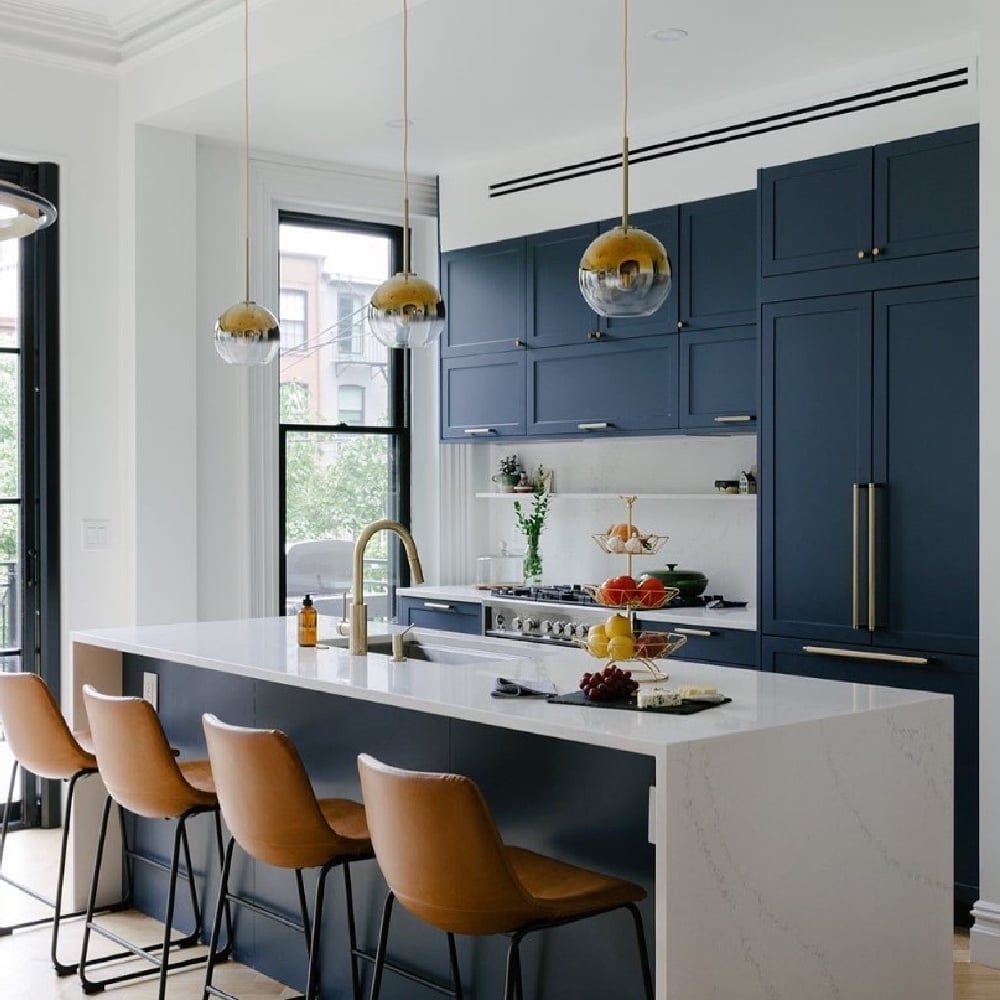
A navy blue island in a modern kitchen pulls double duty: it creates a visual anchor and defines the work zone. The dark cabinetry contrasts with white perimeter walls and countertops, making the island feel like a piece of furniture instead of built-in storage. Tan bar stools and gold pendant lights soften the navy, preventing it from dominating the room. Sunlight keeps the kitchen from feeling closed in, even with the bold color at center.
Vibrant teal cabinetry for a compact and eclectic kitchen
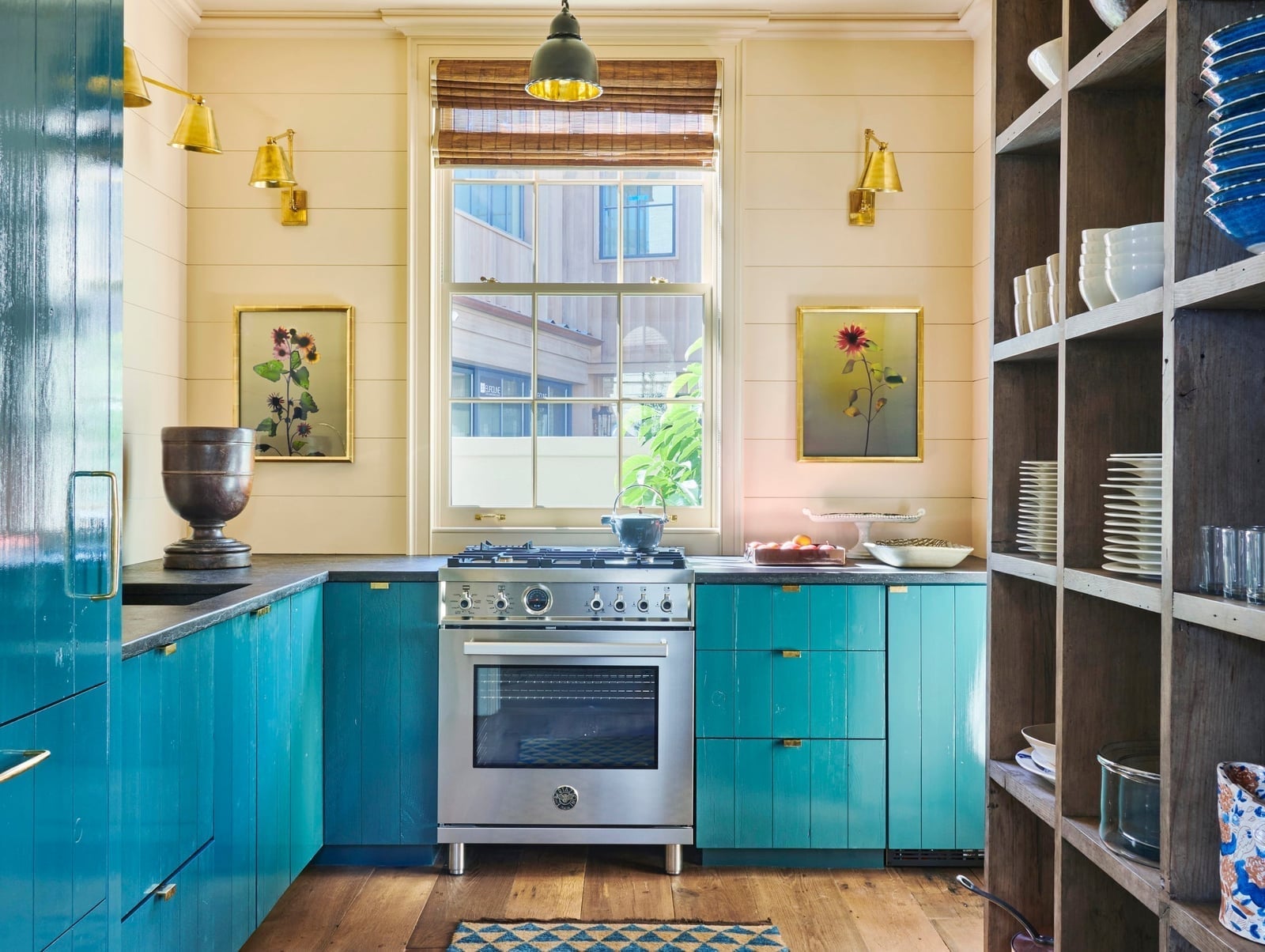
In a compact kitchen, teal cabinetry adds personality without sacrificing function. The L-shaped layout maximizes counter space along two walls, and an open shelving unit on the right provides vertical storage for dishes and glassware. Cream countertops and wood tones keep the teal from feeling overwhelming, while brass hardware and wall sconces introduce warmth. A pendant light over the sink area targets task lighting where it matters most. The eclectic mix works because the teal is the only saturated color. The rest of the palette stays neutral.
Light gray cabinets in a modern farmhouse kitchen with wooden island
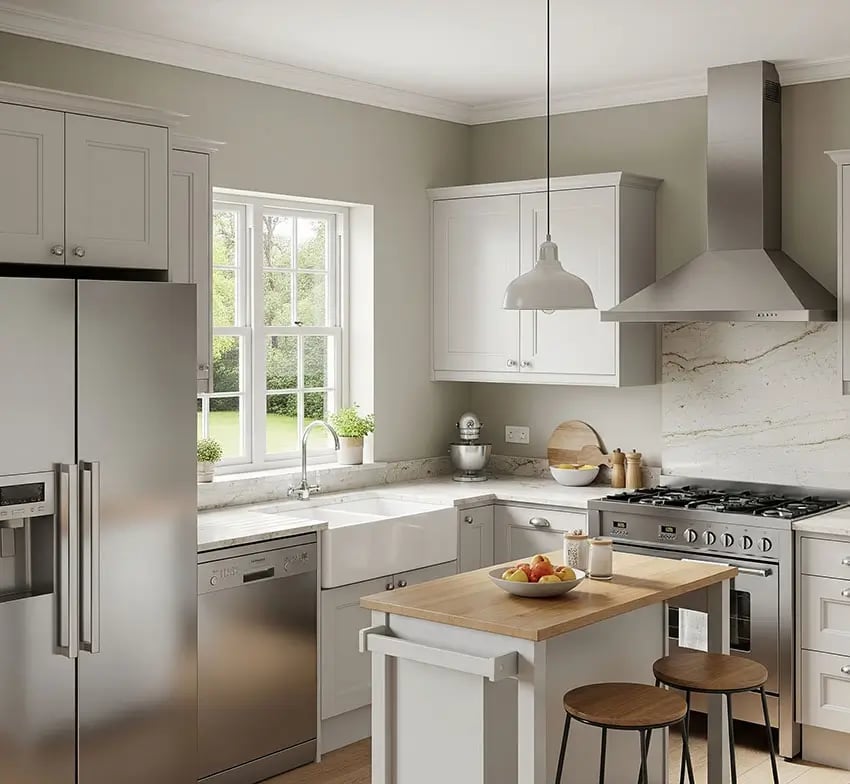
Gray cabinets can look flat next to a warm wood island, but this kitchen uses a light gray that keeps the room feeling open. The L-shaped layout wraps around a central island with a farmhouse sink and wooden stools, so the gray acts as a neutral backdrop rather than a competing color. Marble counters and stainless steel appliances keep the palette clean. The trick is to match the gray’s undertone to your natural light. A cool gray in a north-facing room can look dull, while a warm gray holds its own. If you are renting, ask your landlord about painting just the island instead of the whole kitchen; a single painted element shifts the balance without a full renovation.
Bright green island as the focal point in a modern farmhouse
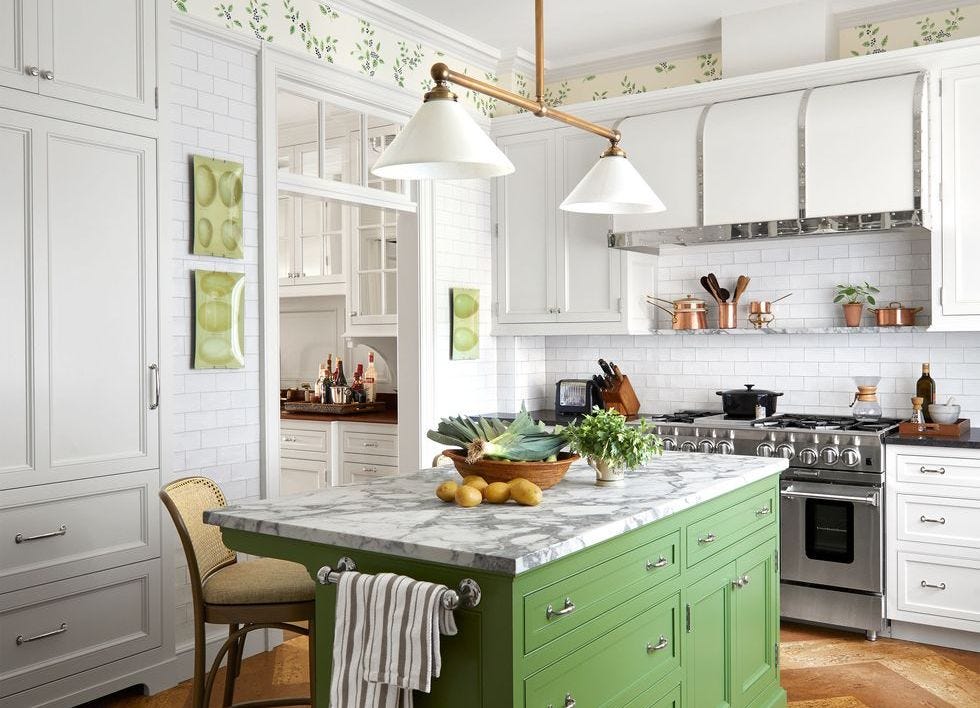
A bright green island stops the eye without needing anything else to compete. The marble countertop and brass pendant lights keep the look refined, while the white perimeter cabinets let the color own the center. For renters, a peel-and-stick film on the island’s sides gives the same punch without a permanent coat of paint. Just test a small patch first to make sure the film peels cleanly from your cabinet finish.
Sage green cabinetry for a charming farmhouse kitchen
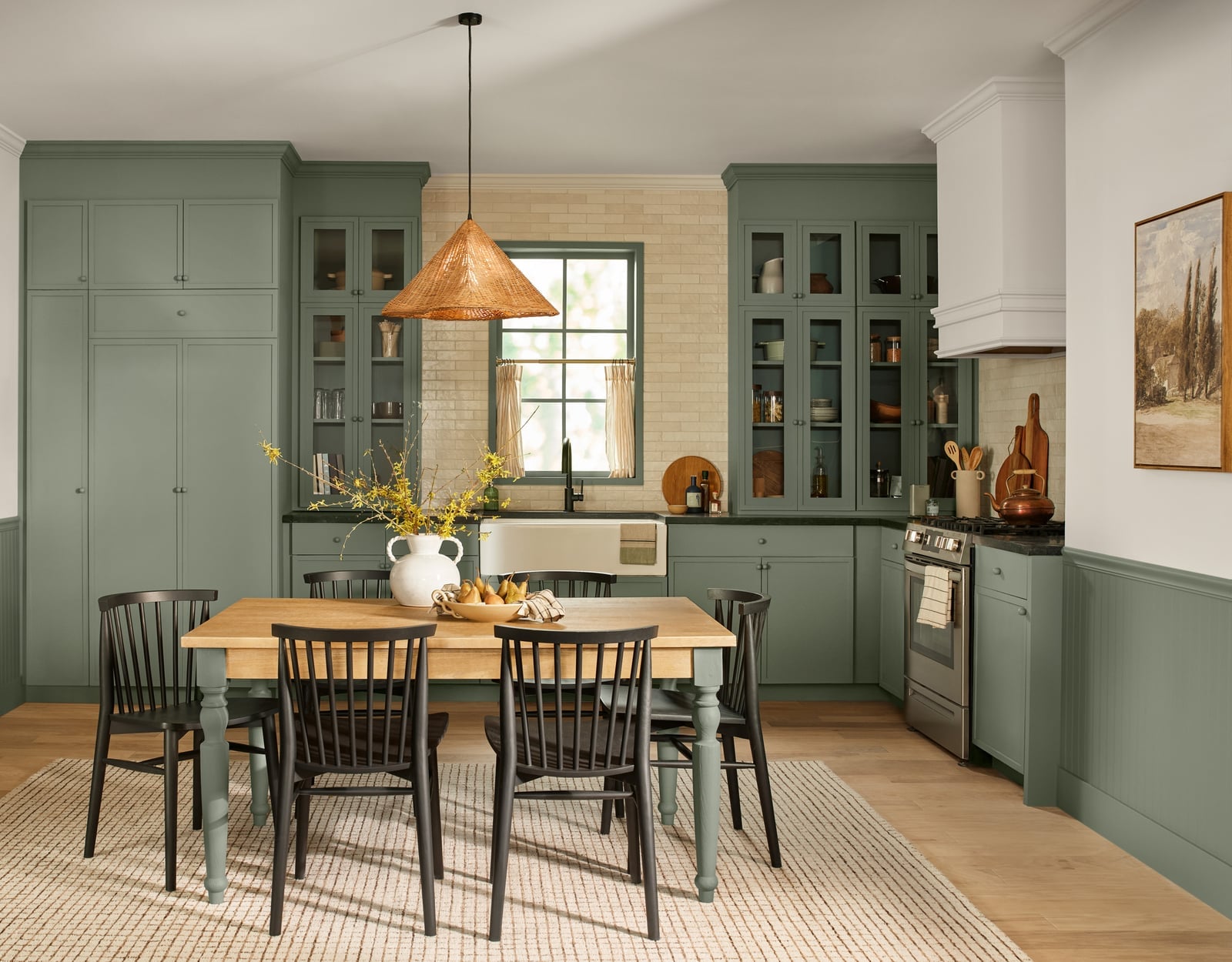
Sage green is the farmhouse color that actually lives up to the hype. It sits between beige and green, so it picks up warm wood tones and black hardware without going muddy. In this L-shaped kitchen, the sage cabinets line the walls while a dining table with spindle back chairs fills the adjacent space. The range and farmhouse sink stay traditional, but the sage stops the room from looking like a catalog page. It works because the ratio of green to neutral is about one to two, too much sage looks minty, too little looks an accident.
Olive green island with copper accents in a cozy farmhouse kitchen
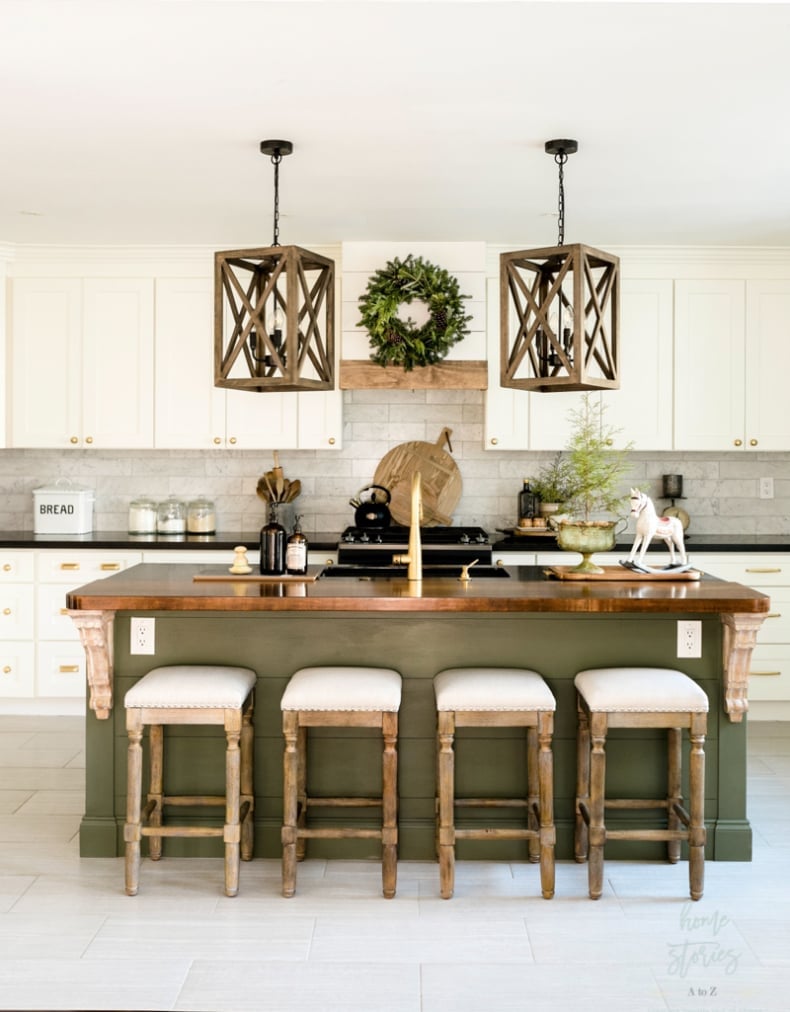
Can copper hold up in a kitchen? Yes, but it depends on where you put it. This olive green island sits under pendant lights with copper finishes, and the range hood picks up the same warm tone. Copper develops a patina over time, which works for a farmhouse look but might surprise you if you expect it to stay shiny. The marble countertop on the island gives a smooth surface for prep, while the wood base adds texture. If you want copper accents without the upkeep, try copper-toned bar stools or a single pendant, the color still registers without the tarnish management.
Teal green walls and navy cabinets for a bold, modern kitchen
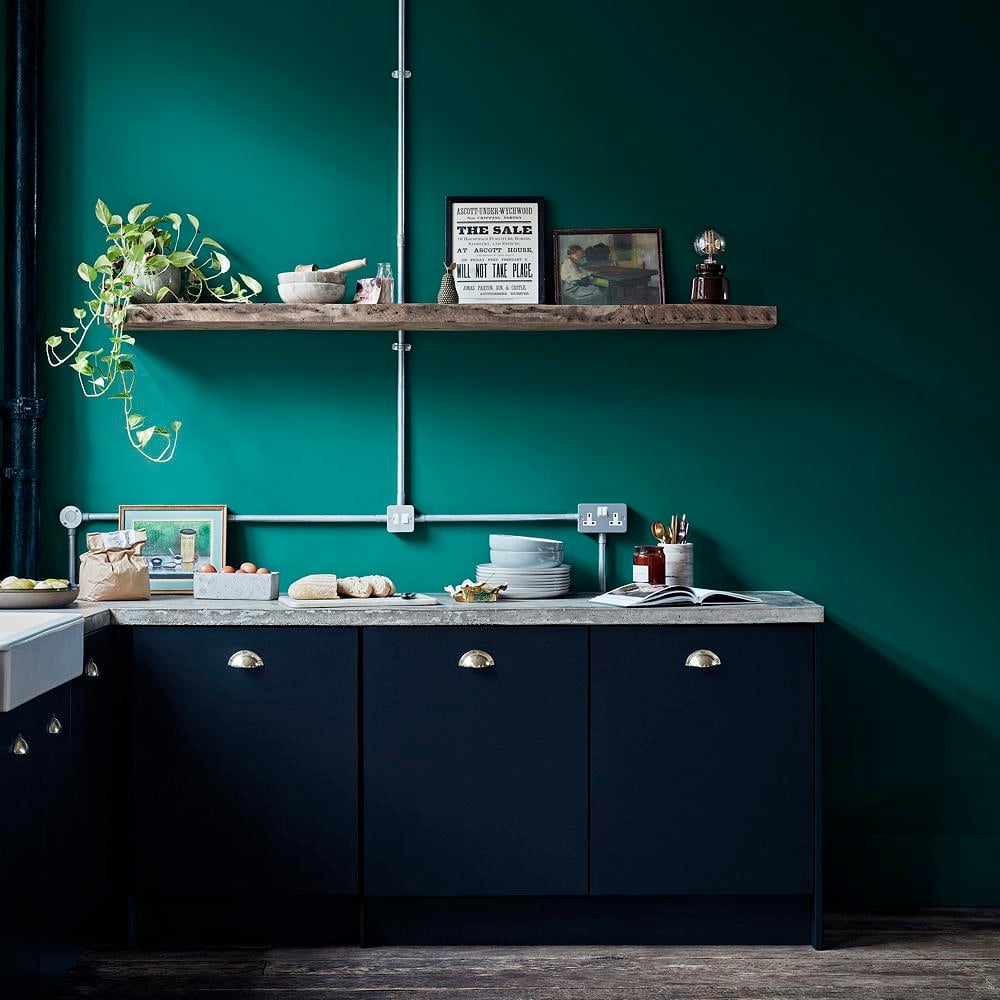
Teal green walls with navy cabinets is a high-contrast move that works because the two blues are different enough to look separate colors. The concrete countertop and floating wood shelf break up the dark mass, so the compact corner feels intentional rather than cramped. A good rule: when using two dark tones on walls and cabinets, let one be the background and the other be the furniture. Here the teal wraps the room and the navy anchors the base.
Color-blocked mint green, coral, and peach walls for a playful kitchen
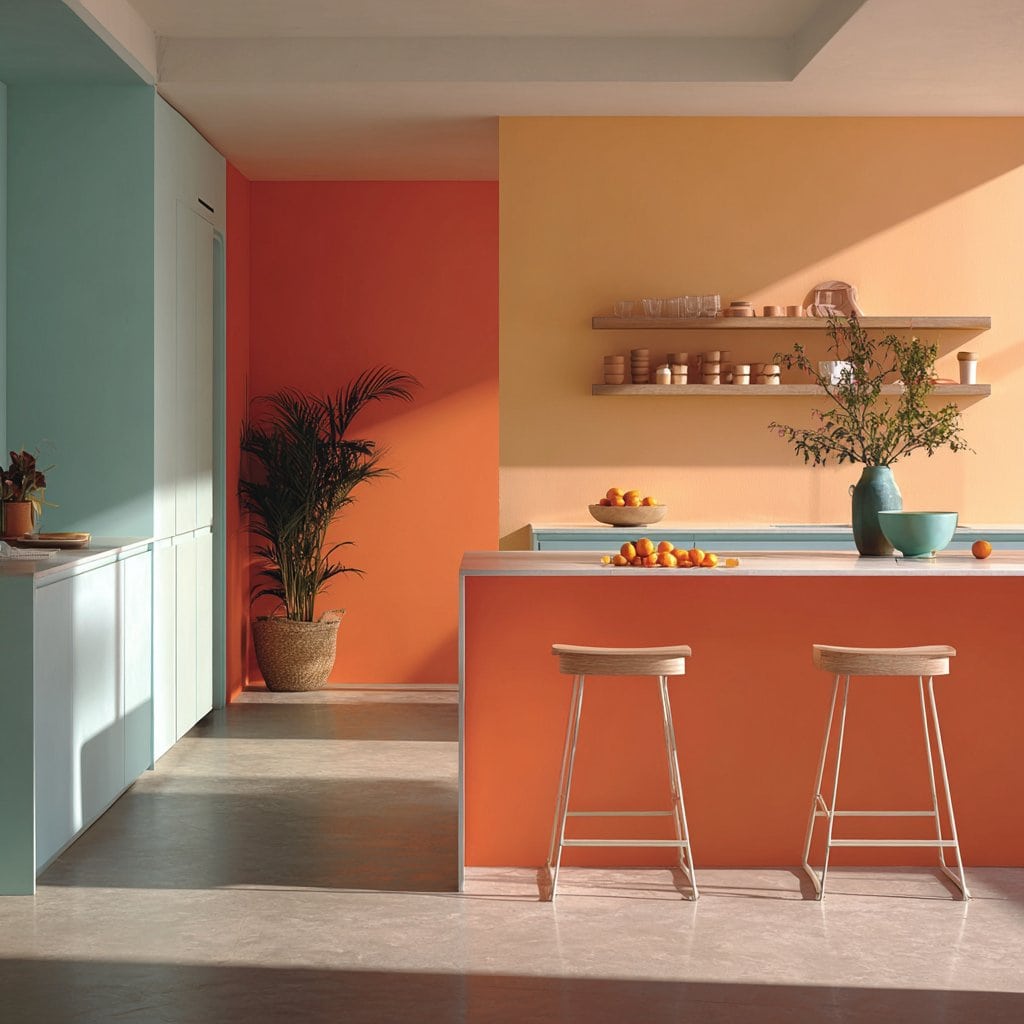
In a roomy, open modern kitchen, the central island is a natural wood tone, with mint green, coral orange, and peach walls wrapping the space. Each shade sits at a similar saturation, with light blue cutting in as a cool pause. Woven wicker bar stools and a ceramic potted plant keep the look grounded. The layout already has island seating, so the color blocking works like a backdrop, not a distraction.
When you want a teal island without a wooden countertop
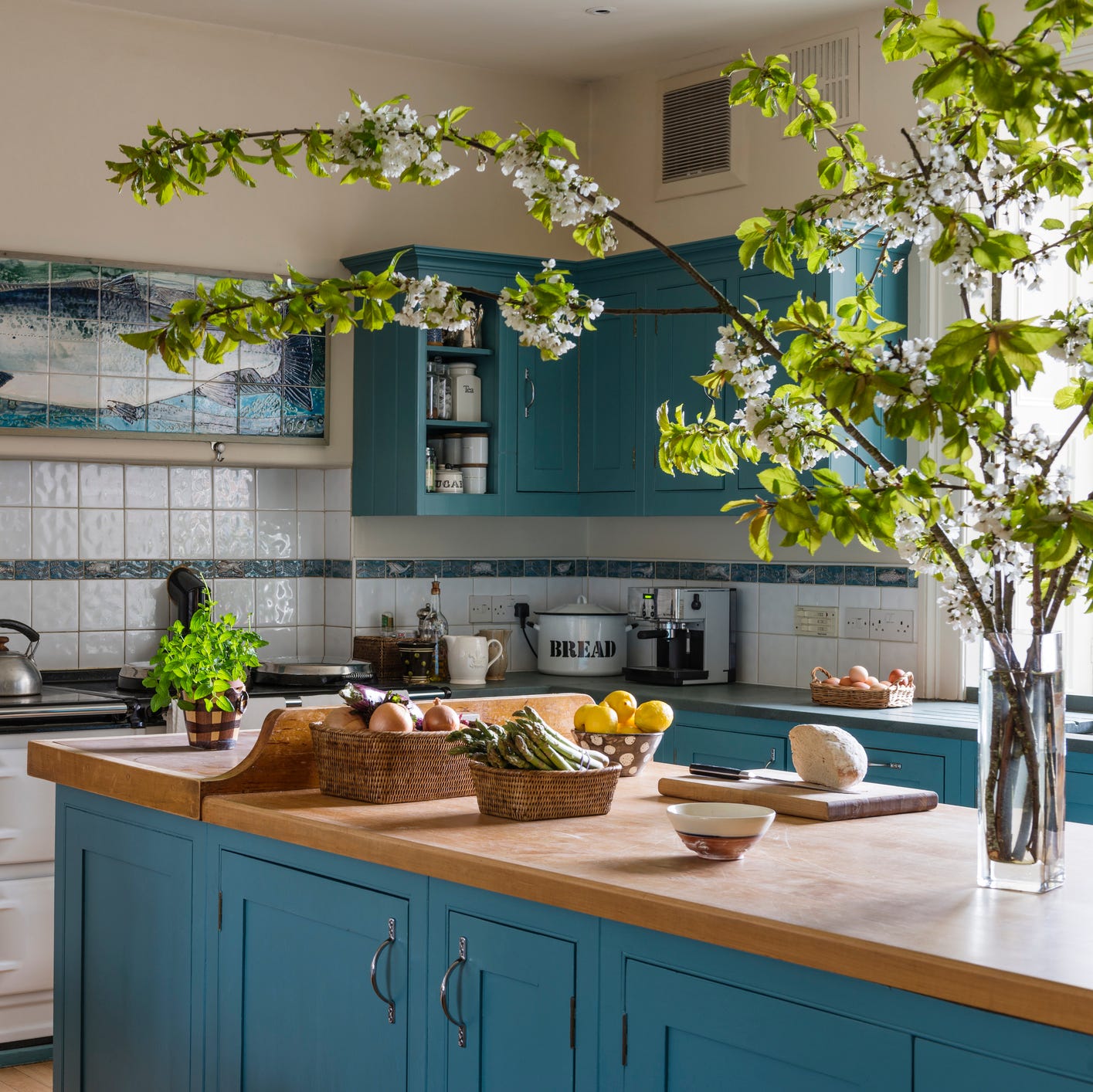
A teal kitchen island with a wooden countertop leans farmhouse, but to keep the color without the wood surface, swap the counter for something with a cleaner line. In this roomy farmhouse kitchen, the teal cabinetry sits under a wooden countertop that matches the warm tones of the perimeter cabinets. Baskets of produce on the counter reinforce the rustic feel, and natural light keeps the teal from going flat.
The alternative is a teal island base with a white marble or quartz counter. The palette stays the same teal, white, and wood tones, but the counter swap removes the heavy wood block. The island still anchors the room, but the finish looks more modern than farmhouse. Keep the perimeter cabinets white and let the teal island do the work.
Black pendant lights on a sage green cabinet base
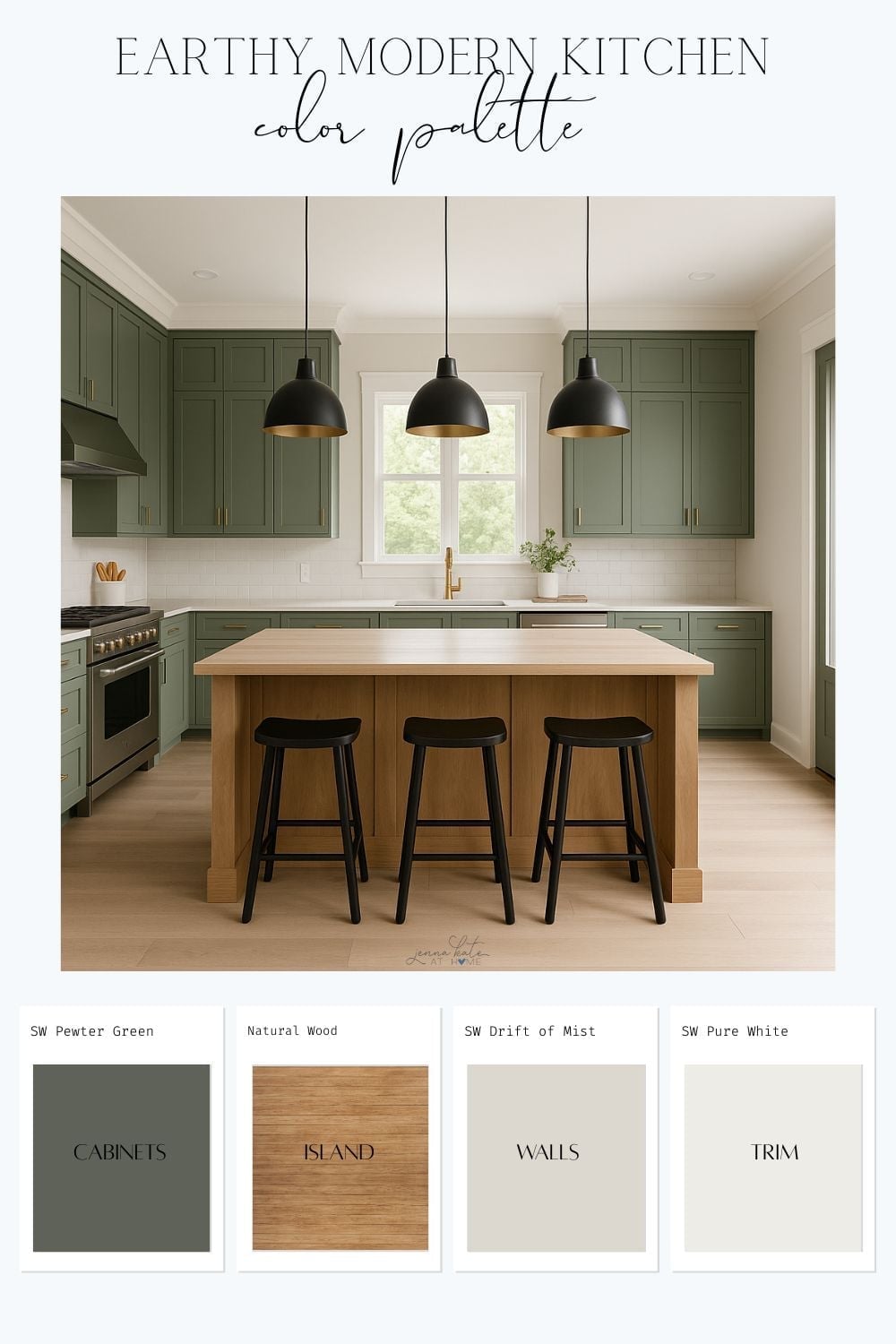
The black pendant lights here are not just fixtures; they define the vertical line of the room. In this modern kitchen, sage green base cabinets wrap the perimeter, while the central island is a light wood that keeps the palette from feeling dense. Beige walls and white trim give the green room to breathe. The black stools and pendant lights create a deliberate contrast, so the green looks fresh and not heavy. The natural light helps the green stay true, while the pendants drop the eye to the island surface.
Cream cabinetry and open wood shelving in a modern farmhouse corner
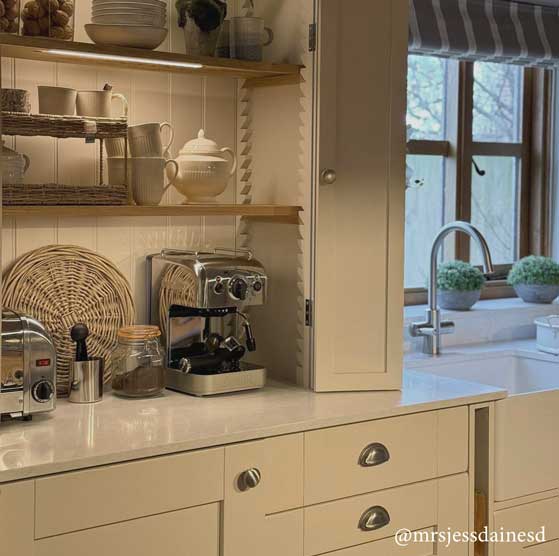
A compact corner like this one benefits from cream cabinetry because the light shade keeps the space from feeling closed in. The modern farmhouse corner holds a chrome espresso machine and a toaster on the counter, with a farmhouse sink and faucet nearby. Open wood shelving above the counter breaks up the upper line and adds storage without weight. Overhead LED strip lights provide task lighting, while natural window light softens the stainless steel and marble. The cream, beige, and wood tones make the corner feel purposeful rather than crowded.
Dark blue lower cabinetry and island in an l-shaped farmhouse kitchen
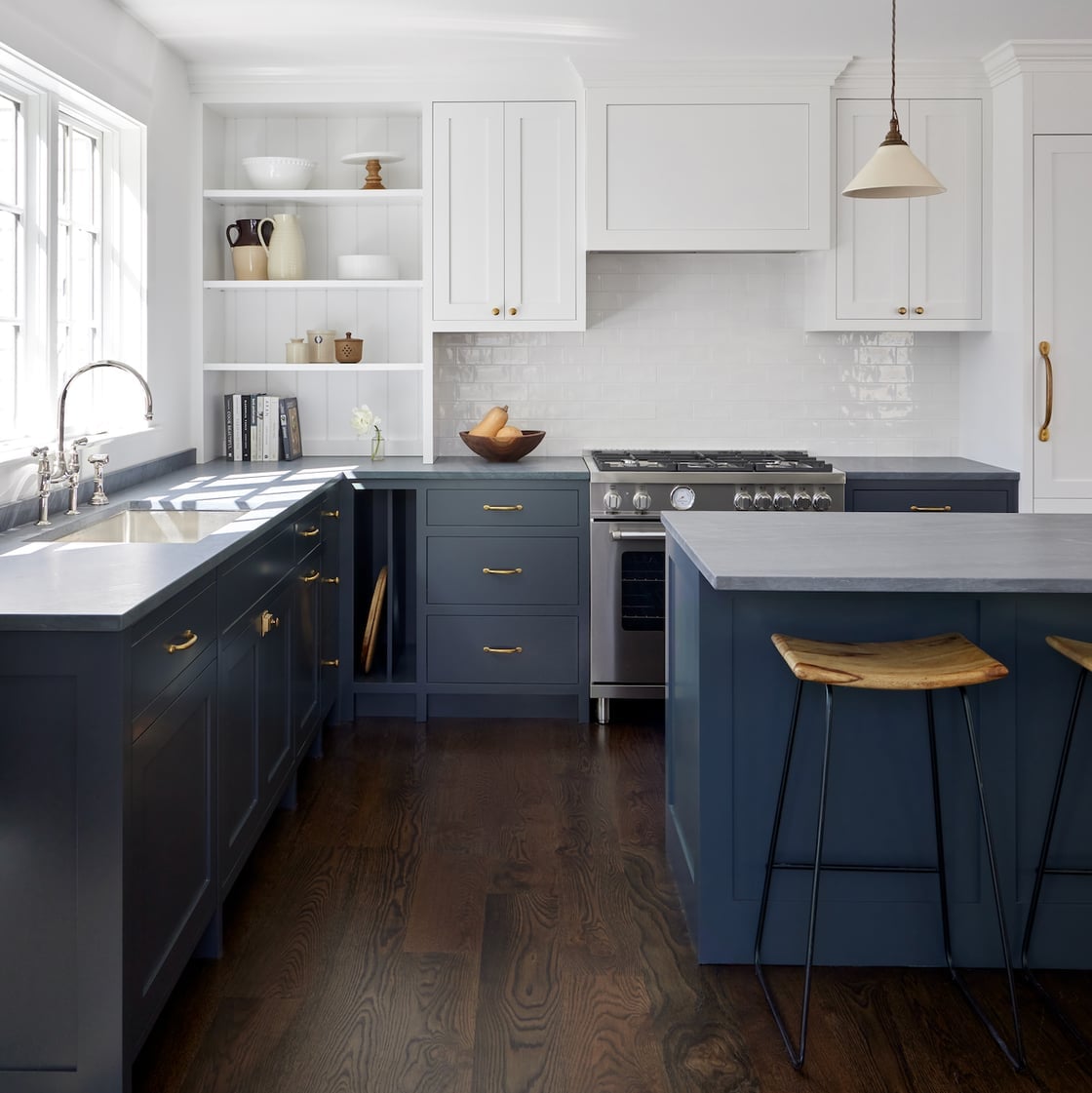
In an L-shaped kitchen, dark blue lower cabinets work best when the upper half stays light. The dark blue cabinetry wraps the lower perimeter and the central island, while the walls and upper cabinets remain white. The palette is dark blue, white, gray, and wood tones, with a marble countertop and brass hardware adding contrast. The L-shaped counter leaves the island as the main work zone, with bar stools on one side and the range on the perimeter.
Pendant lights above the island and natural light keep the dark blue from dimming the room. To recreate it, look for dark blue on the lower cabinets and island base only. The white uppers and gray tile backsplash reflect light, so the blue becomes a deliberate foundation.
Teal cabinetry and retro refrigerator for a vintage-inspired kitchen
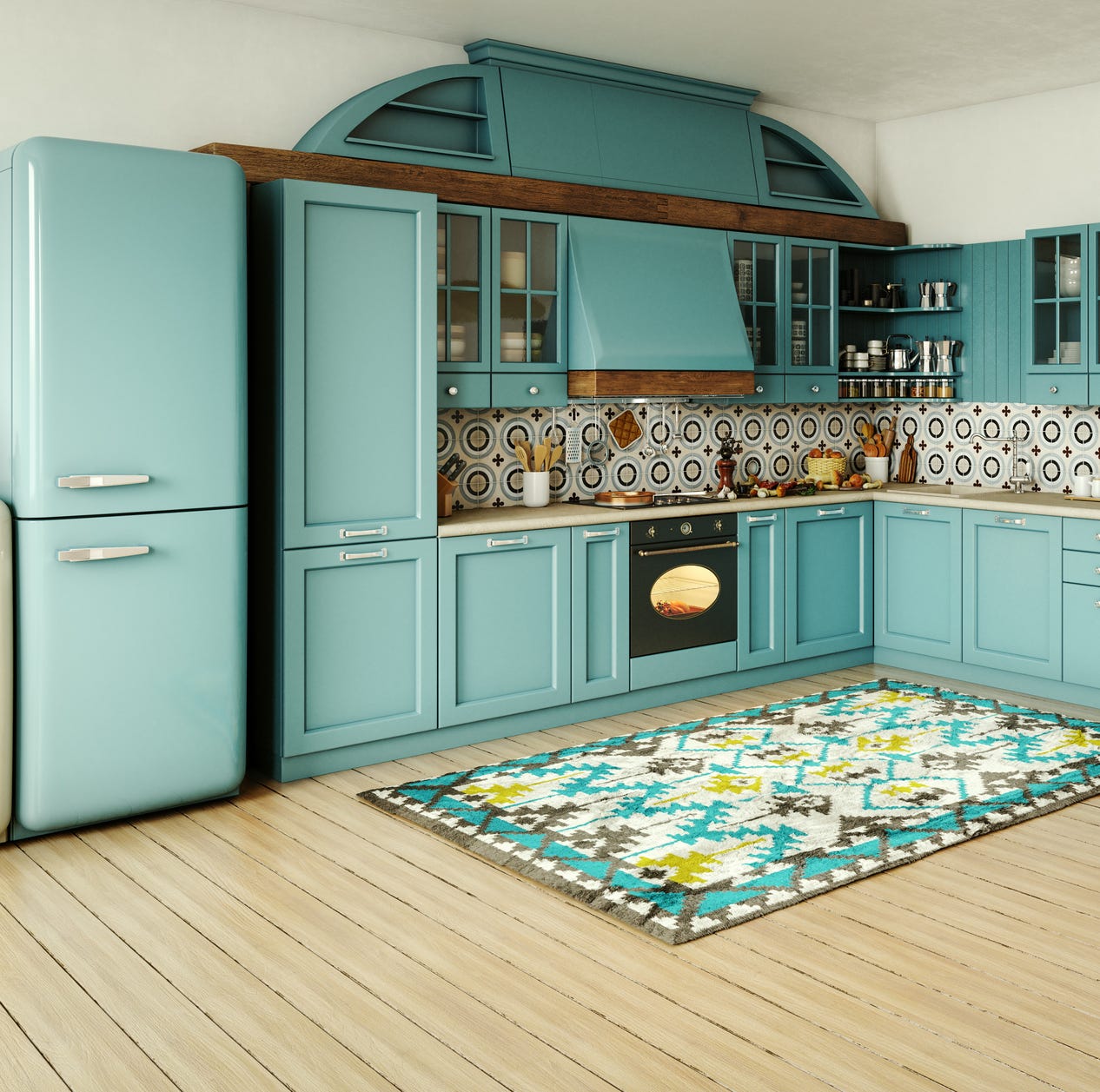
A retro refrigerator in matching teal anchors this L-shaped kitchen, where the cabinet color and the appliance finish speak the same language. The palette stays clean: white countertops and wood tones keep the teal from feeling heavy, while a patterned rug on the floor introduces yellow and blue for contrast. Under-cabinet lighting helps the glossy cabinet fronts look deliberate. For a vintage look without a full restoration, matching the refrigerator finish to the cabinetry is the one move that does most of the work.
Blue island with rattan bar stools in a bright modern farmhouse
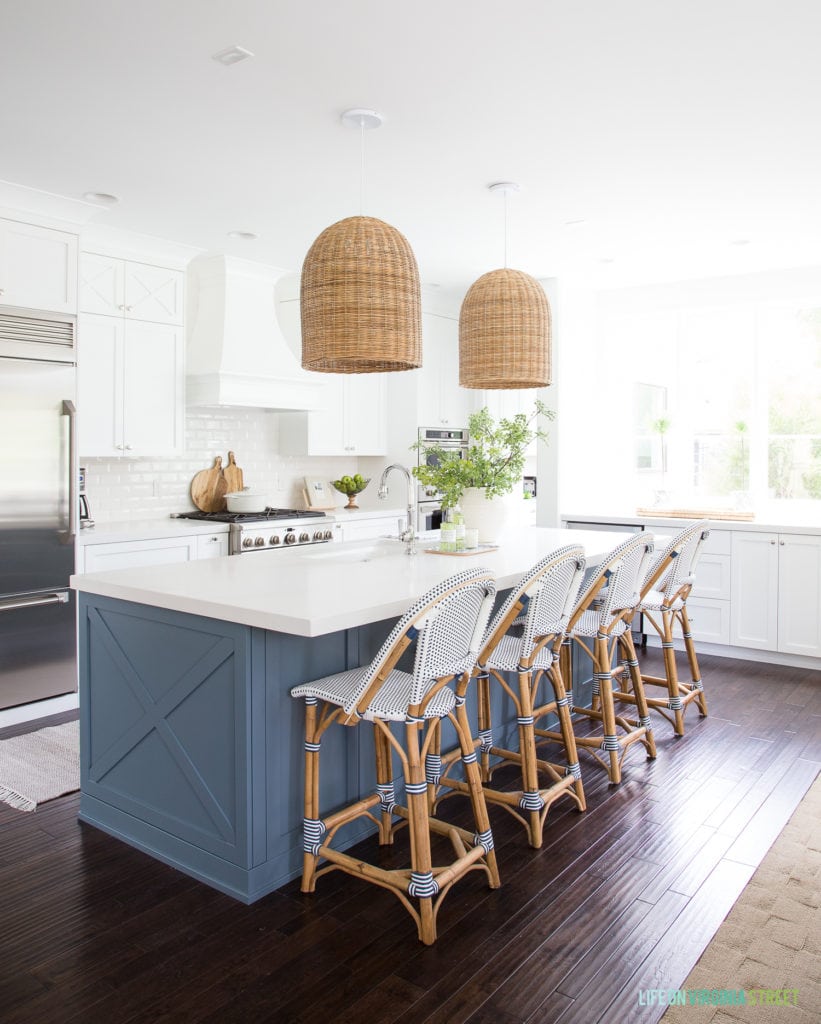
To mix materials, let one piece carry the color and let everything else support it. Here the blue island holds the visual weight, while rattan bar stools and large woven pendant lights add texture. The perimeter stays in white cabinetry and marble countertops, so the room looks bright and open. Natural light from nearby windows keeps the blue looking soft. For renters, this setup is easy to replicate: paint the island (with permission or a wrap) and swap in rattan stools that can move with you.
Deep green cabinetry in a farmhouse kitchen with blush pink accents
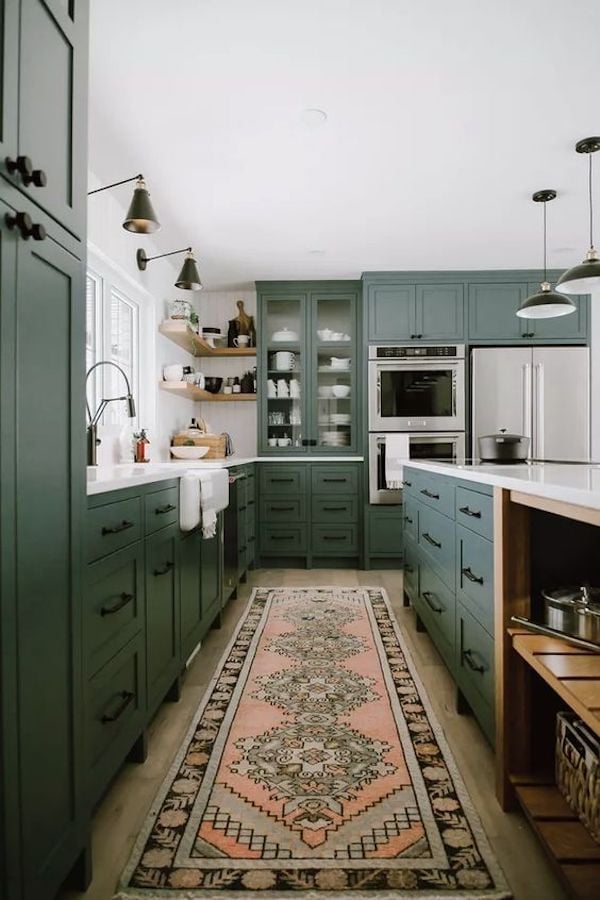
Deep green cabinets can feel like a heavy choice until you set them against something unexpected. In this galley kitchen with an island, the green looks rich rather than dark because a blush pink runner rug and light wood tones break the intensity. The farmhouse sink and white marble countertops keep the look from tipping into moody. The palette stays grounded: green and pink are not a natural pair, but the light wood floor and white perimeter cabinets act as a neutral bridge.
Wall sconces and pendant lights add warmth without competing with the cabinetry. If you want to try this contrast without painting every cabinet, start with the island in deep green and add a pink rug or small appliance. The ratio matters more than the total square footage.
Dark blue cabinetry and wood island for a modern farmhouse kitchen
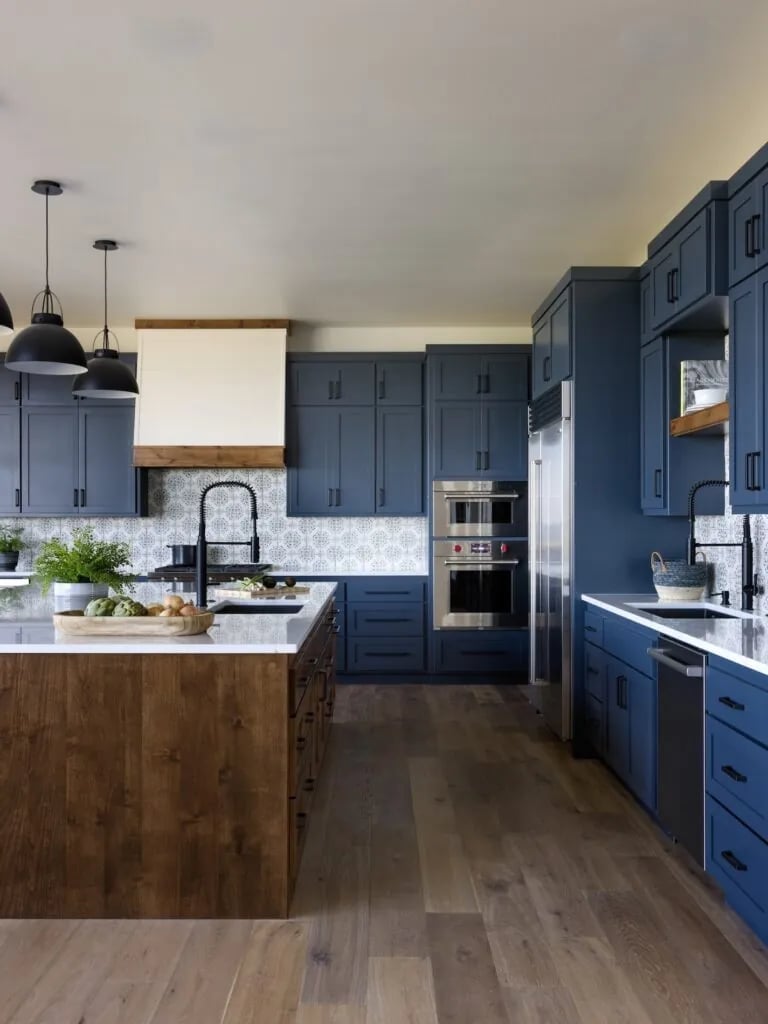
A two-tiered island in dark blue cabinetry sits at the center of this kitchen, with a wood countertop on the lower tier that breaks the blue into something approachable. The perimeter stays in white and gray, with stainless steel appliances and marble countertops that let the island do the talking. Pendant lights hang above the upper tier, which keeps the work surface clear and the visual line clean. The dark blue looks a finish choice rather than a trend because the wood island adds a natural element that keeps the room from feeling too neat.
Pink kitchen island as the centerpiece in a farmhouse kitchen
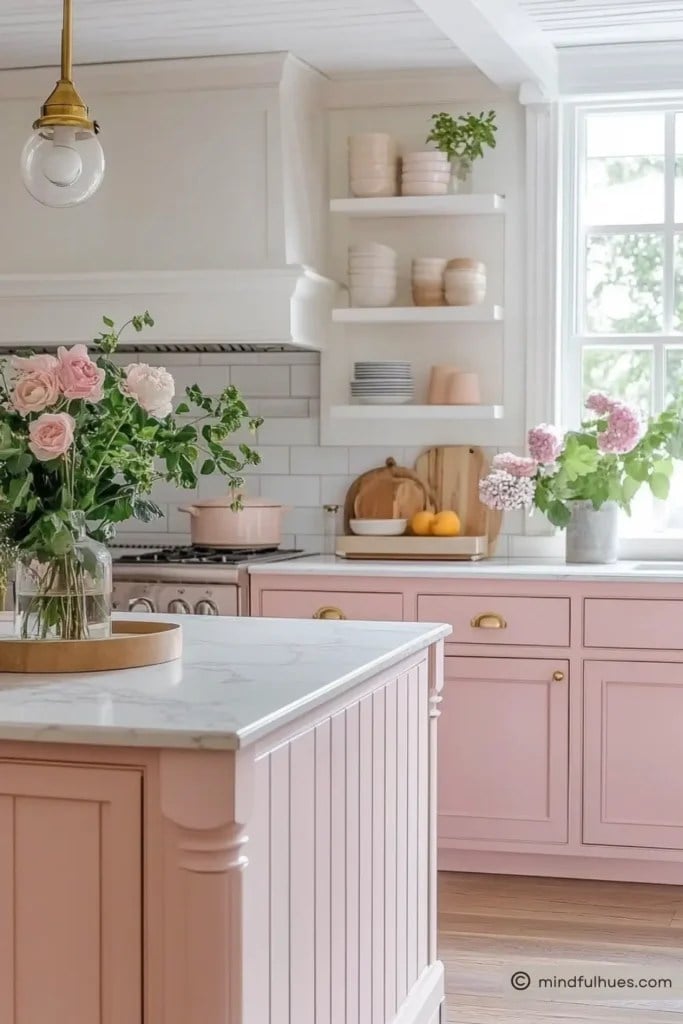
A pink kitchen island is a direct statement, and it works here because everything else stays neutral. White perimeter cabinetry, a marble countertop on the island, and wood tones in the flooring and open shelving let the pink feel deliberate. A single brass pendant light above the island adds a warm metallic note without clutter. Natural light from a window keeps the pink soft and airy. If you want a centerpiece color but are not ready for pink, the same approach works with any saturated hue: keep the surrounding palette simple and let the island carry the personality.
All-white kitchen with subway tile and a woven island stool
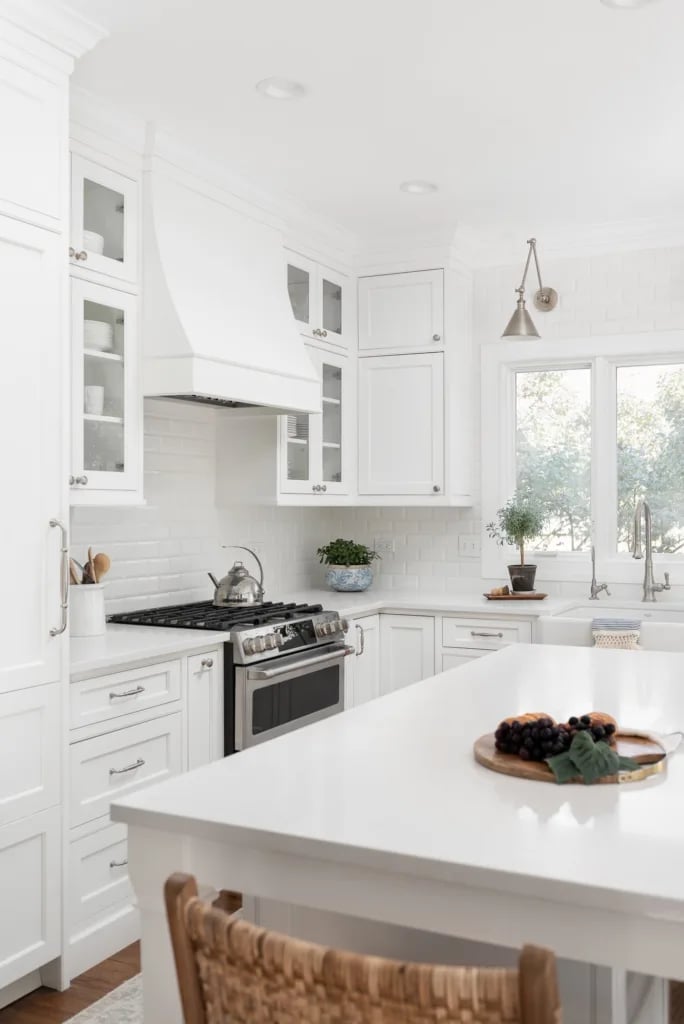
A white kitchen with an island gets a lot of mileage out of texture. When every cabinet, counter, and backsplash is a neutral tone, the eye needs something to hold onto. This roomy L-shaped layout uses a white subway tile backsplash, marble counters, and a stainless steel range to build a clean base, then lets the woven island stool bring in warmth without adding color.
Sunlight through the window brightens the room, and the wood stool prevents the kitchen from feeling sterile. It is a small swap that shifts the whole feel. If you are working with an all-white perimeter, pick one piece of furniture or a single stool in a natural material. It gives the room a lived-in edge without undoing the crispness.
Yellow kitchen island with blue and gray walls for transitional style
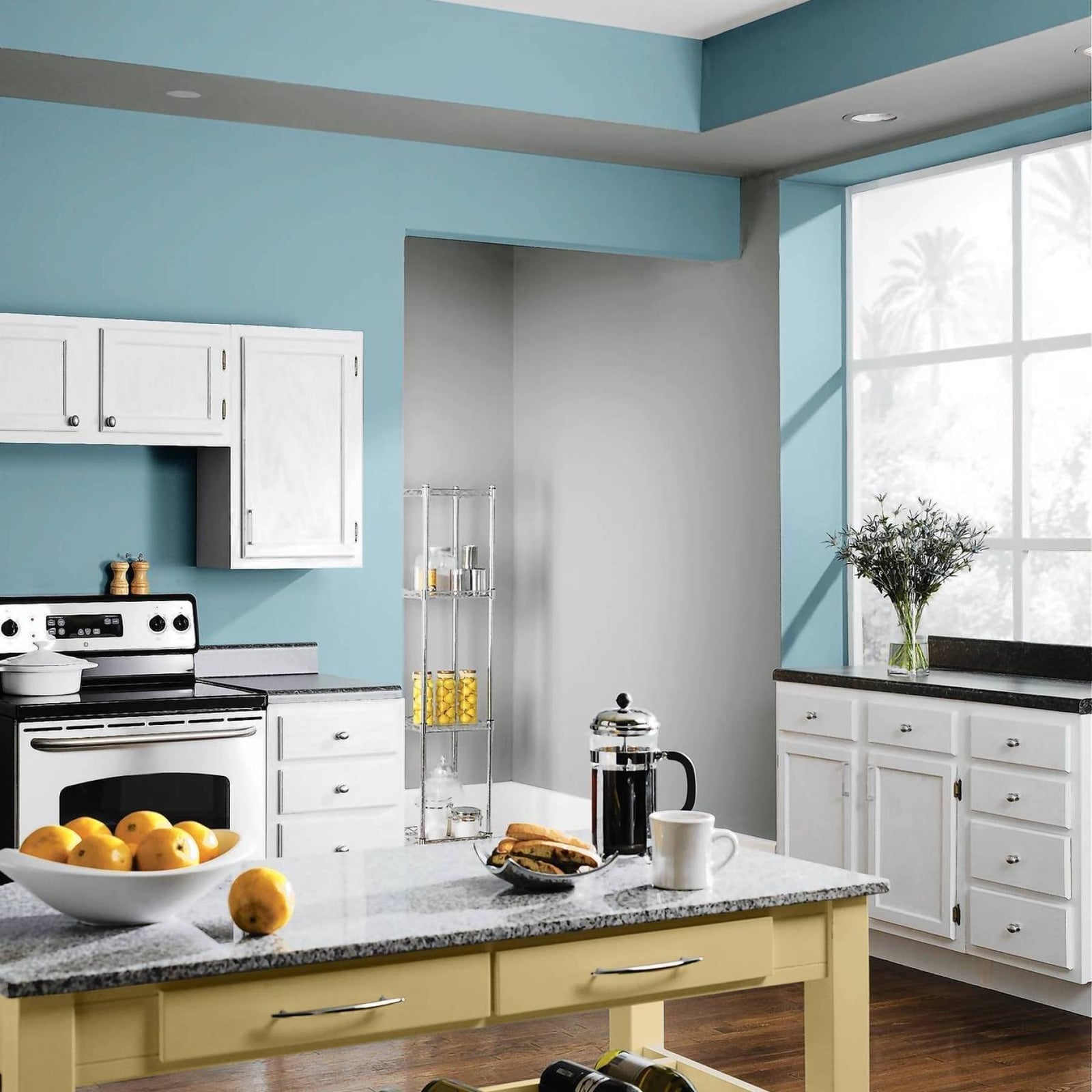
A yellow island sits in front of a blue accent wall, with the rest of the room finished in gray and white. The palette works because the yellow is the only warm note. White cabinets and stainless steel shelving keep the space open, while the granite counter on the island ties back to the cooler tones. The french press on the counter hints that this is a kitchen meant for morning use, not just show. The color ratio is roughly one part yellow to two parts cool neutral, which keeps the island from feeling like a toy in an otherwise serious room.
Neutral cream and beige kitchen with a professional range cooker
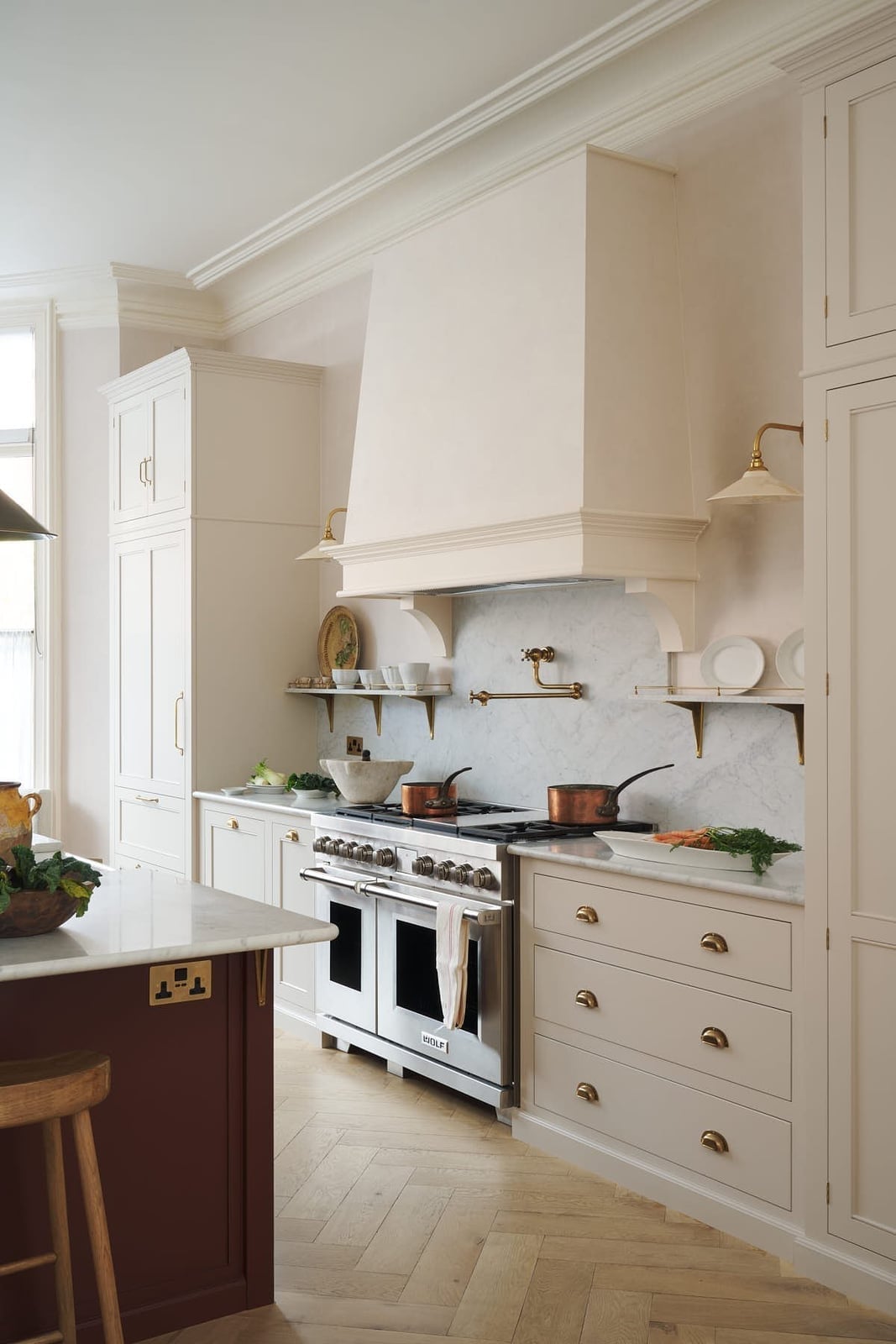
A professional range cooker tends to pull focus, so the room around it should stay quiet. This kitchen uses cream cabinetry, beige walls, and marble countertops to build a neutral backdrop that does not compete. The wooden island adds a natural texture, and the brass wall sconces bring a soft glow that keeps the stainless steel of the range from feeling too industrial. The rule is simple: when the hero piece is large and metallic, surround it with warm, matte materials. Wood, stone, and brass all absorb light rather than reflect it, which balances the visual weight of the cooker.
Sage green walls and white cabinets with a dark gray island
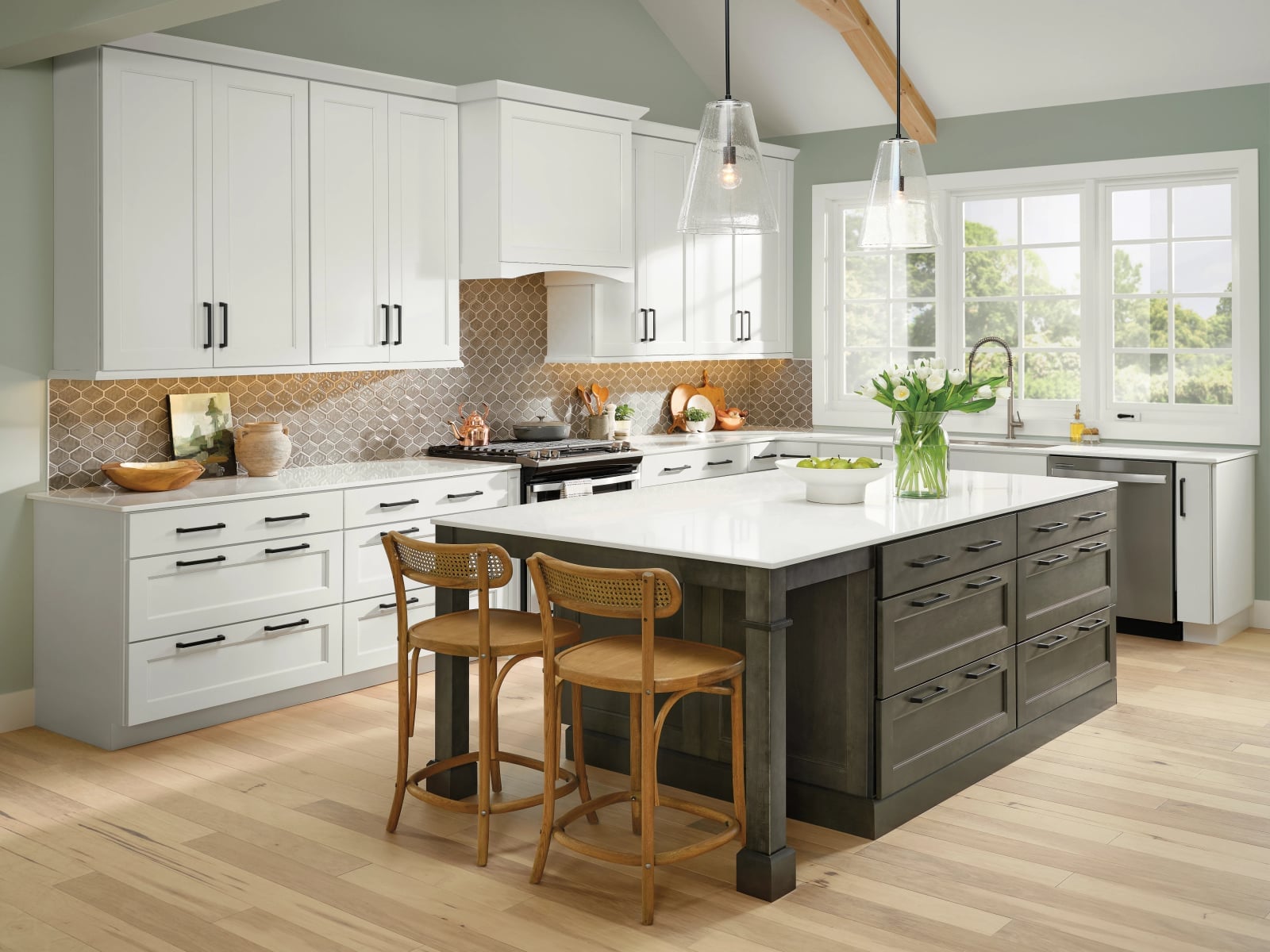
Sage green walls can feel earthy and calm, but pair them with white shaker cabinets and a dark gray island and the room shifts toward something more structured. The palette here is three distinct zones: the soft green on the walls, the bright white on the perimeter, and the deep gray anchoring the center. Marble countertops and glass pendant lights keep the look from turning heavy, while the rattan bar stools add a natural break.
The contrast between sage and gray is subtle enough to feel cohesive but distinct enough to define the space. If you are worried about green walls making a room feel dark, the white cabinets act as a buffer. They reflect the natural light from the windows and keep the island as the focal point rather than the wall color.
Geometric lights above a dark gray island base
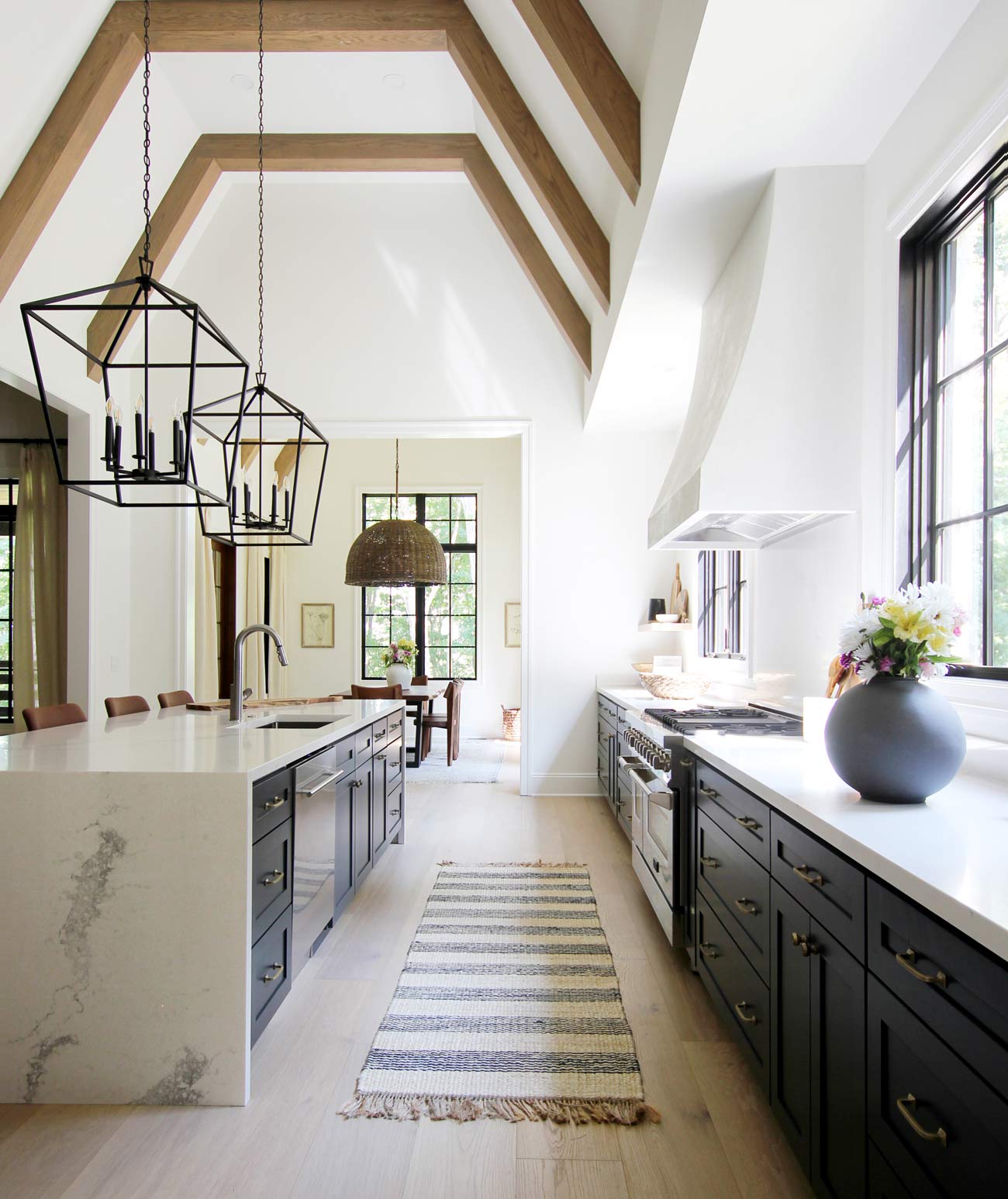
The geometric pendant lights above the dark gray island do more than illuminate. Their angular shapes contrast with the soft curves of the marble countertop and the wood beams overhead. The island itself has a two-tiered layout with a sink, so the pendants are positioned to cast light directly onto the work surface. Brass hardware on the dark wood cabinets echoes the warm tones in the pendants, creating a visual line from the fixtures down to the cabinetry. The striped runner rug on the floor pulls the whole composition together without adding another color to the mix.
Deep green cabinetry with copper countertops in a traditional kitchen
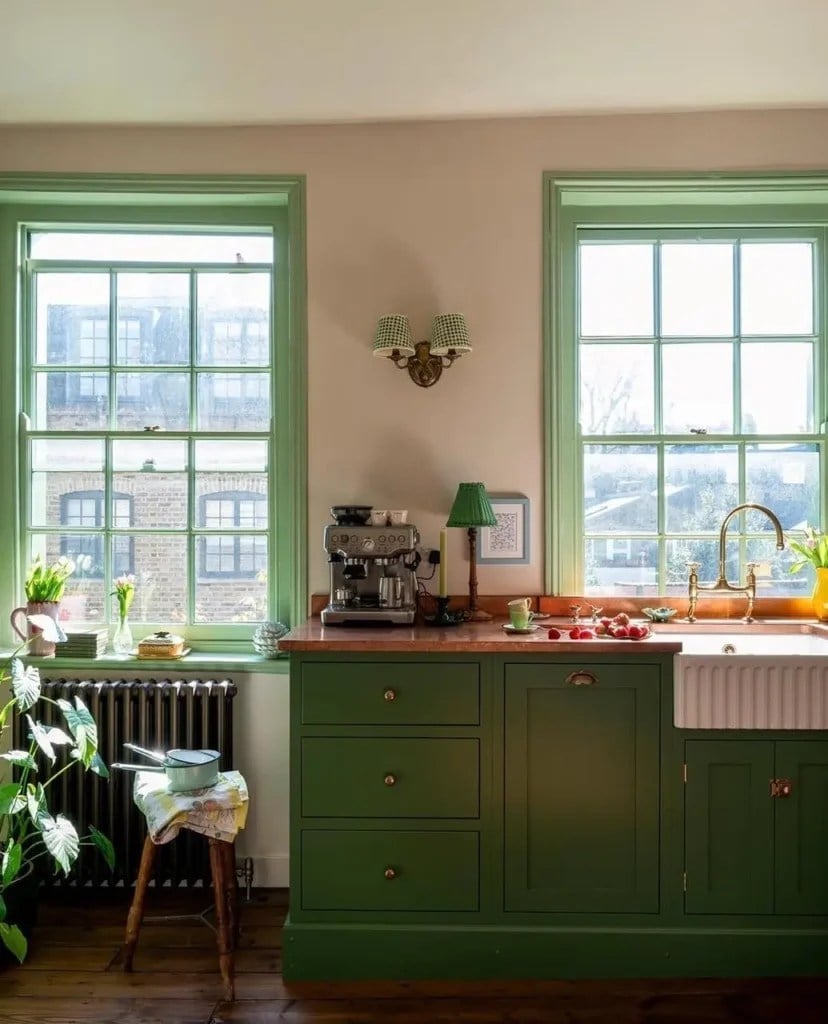
Deep green cabinetry paired with copper countertops is a deliberate material choice, not a trend. The warm copper top sits against a farmhouse sink and a brass faucet, all set on a beige tile backsplash. An espresso machine on the counter adds a daily-use anchor to the look. To recreate it, look for a copper-toned tray or cutting board on a butcher block surface. The brass and copper metals echo each other, so a brushed brass faucet or cabinet pulls tie the palette together naturally.
Gray upper cabinets and wood lower cabinets with industrial brass
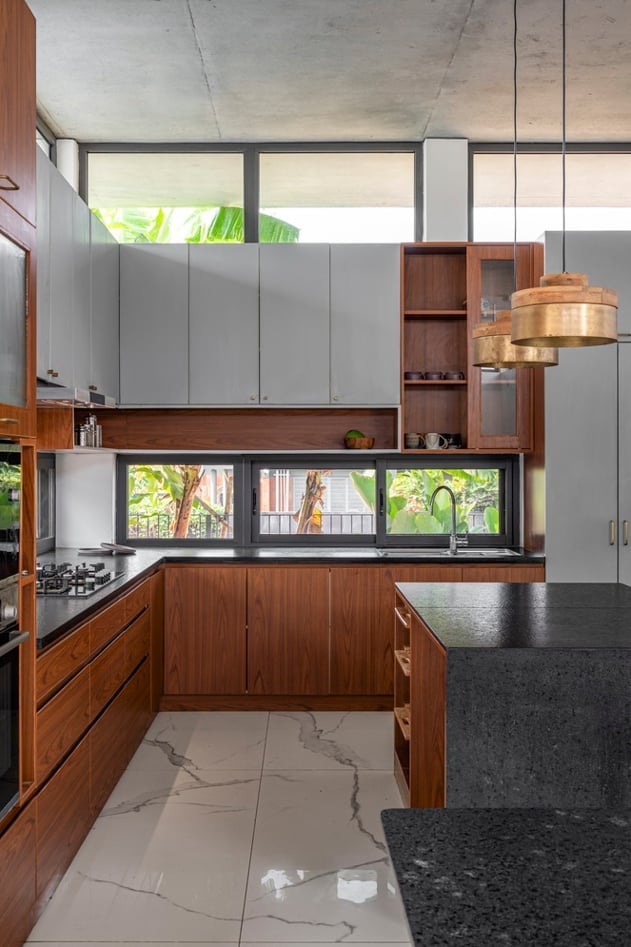
A practical rule for a two-tone kitchen is to keep the darker material below eye level. Gray upper cabinets and wood lower cabinets follow that logic, with the wood grounding the room and the gray keeping the upper half light. Brass pendant lights hang above an island, adding an industrial note without dominating the space. The countertops mix marble and granite, which gives the kitchen a layered, collected feel. For renters, this palette works as a peel-and-stick backsplash in a warm stone tone, paired with gray cabinet wraps or contact paper on the uppers only.
Sunny yellow walls and white cabinetry with a professional range
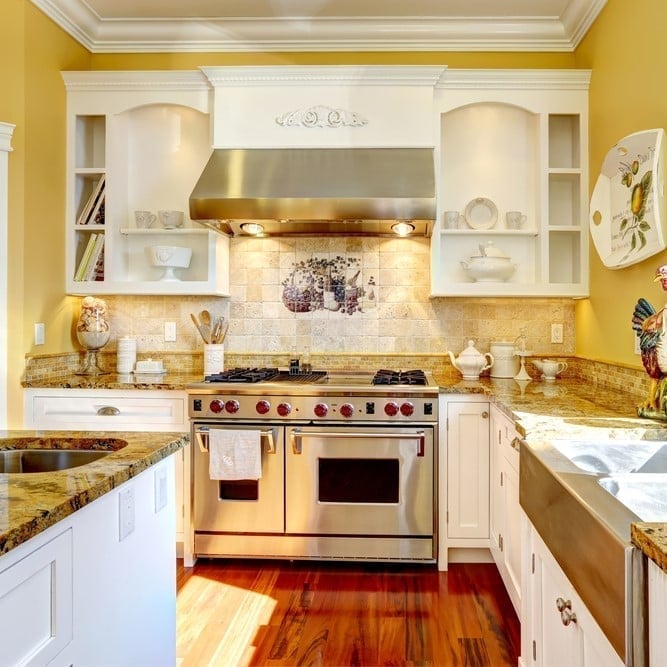
The yellow wall color stands out against white cabinetry and a beige tile backsplash, while the professional range and farmhouse sink keep the kitchen rooted in tradition. Granite countertops and a wood floor add natural texture that balances the brightness. This palette works well for kitchens that get limited direct sunlight, since the yellow warms up the room. The white cabinets and stainless steel range keep the look practical for daily cooking without the yellow overwhelming the space.
Lime green lower cabinets contrasted with cream uppers in a modern
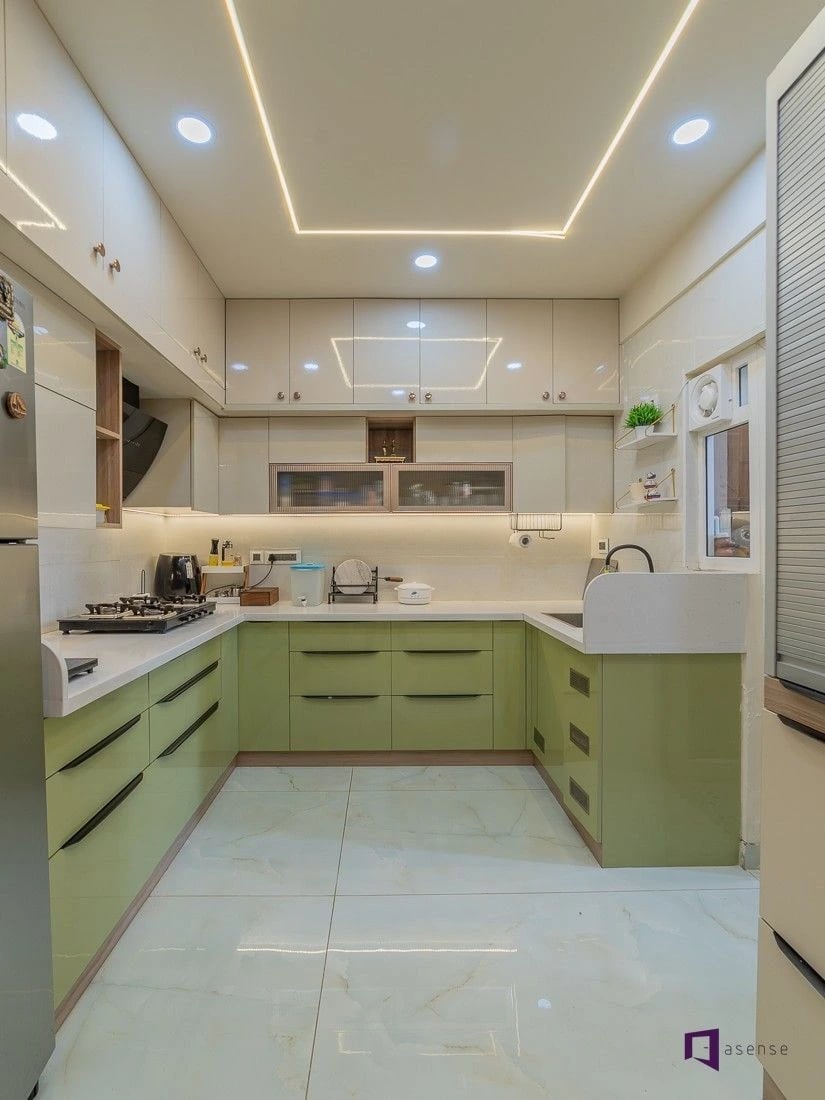
The lime green lower cabinets pull the eye down to the countertops, while cream upper cabinets and marble tile keep the rest of the room calm. A U-shaped layout with integrated appliances and cove lighting above the cabinets gives the kitchen a smooth, built-in feel. The lacquered finish on the lower cabinets makes the color pop and is easier to wipe clean than a matte paint. Wood accents on the open shelves warm up the cool green and cream palette without adding another color.
Pale yellow cabinets with cream uppers in a modern farmhouse kitchen
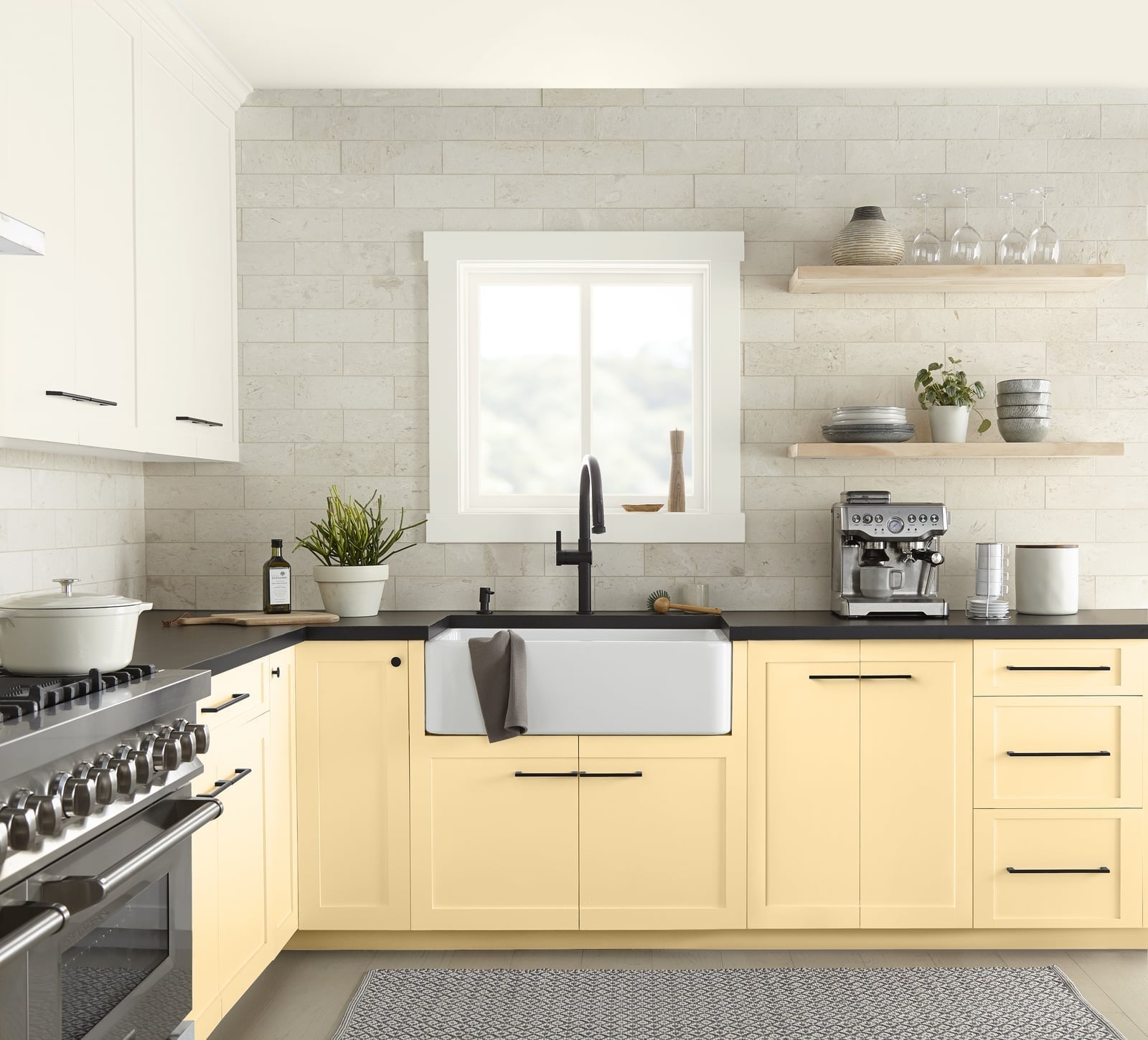
Pale yellow cabinets can look too sweet if the finishes lean rustic, but here they work because the countertops and backsplash stay cool and neutral. Cream upper cabinets and a gray island base keep the palette grounded, while the farmhouse sink and range stove add the expected modern farmhouse touches. Natural light from a window helps the pale yellow look soft rather than saturated. The difference between this and a bold yellow kitchen is the ratio: the pale yellow covers only the lower cabinets, so it looks a highlight rather than the main color.
Blue kitchen island as a focal point with white perimeter cabinetry
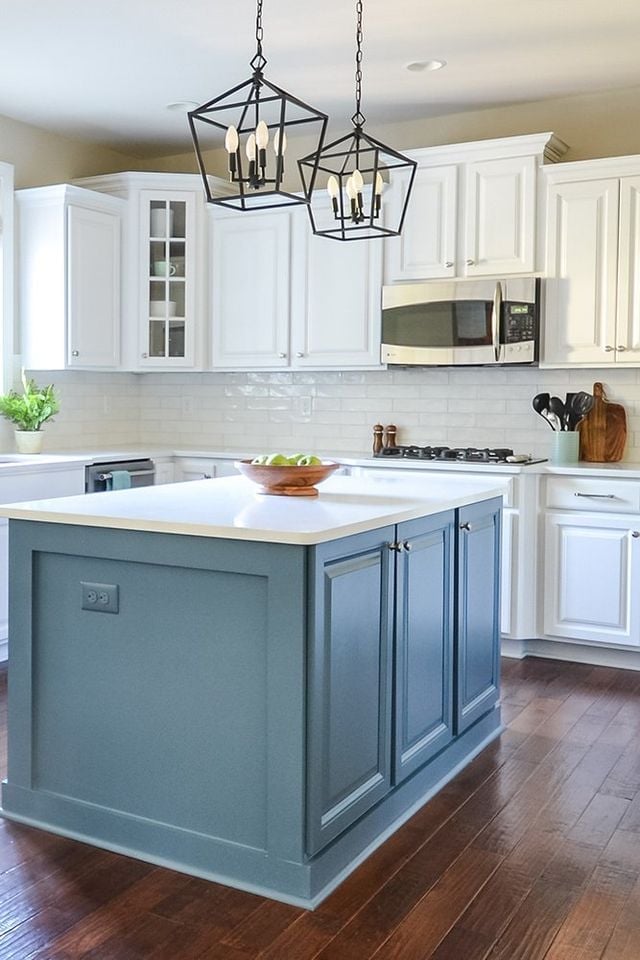
A blue kitchen island with white perimeter cabinetry draws the eye without overwhelming the room. The central island stands apart in a saturated blue, while the surrounding cabinets stay clean and light. White subway tile and stainless steel fixtures keep the look crisp, and the wood-topped island adds warmth. Pendant lights hang directly above the island, reinforcing it as the focal point. This setup works well in an open layout where the island anchors the cooking zone and the white perimeter fades into the background.
Rich brown cabinetry in a traditional galley kitchen layout
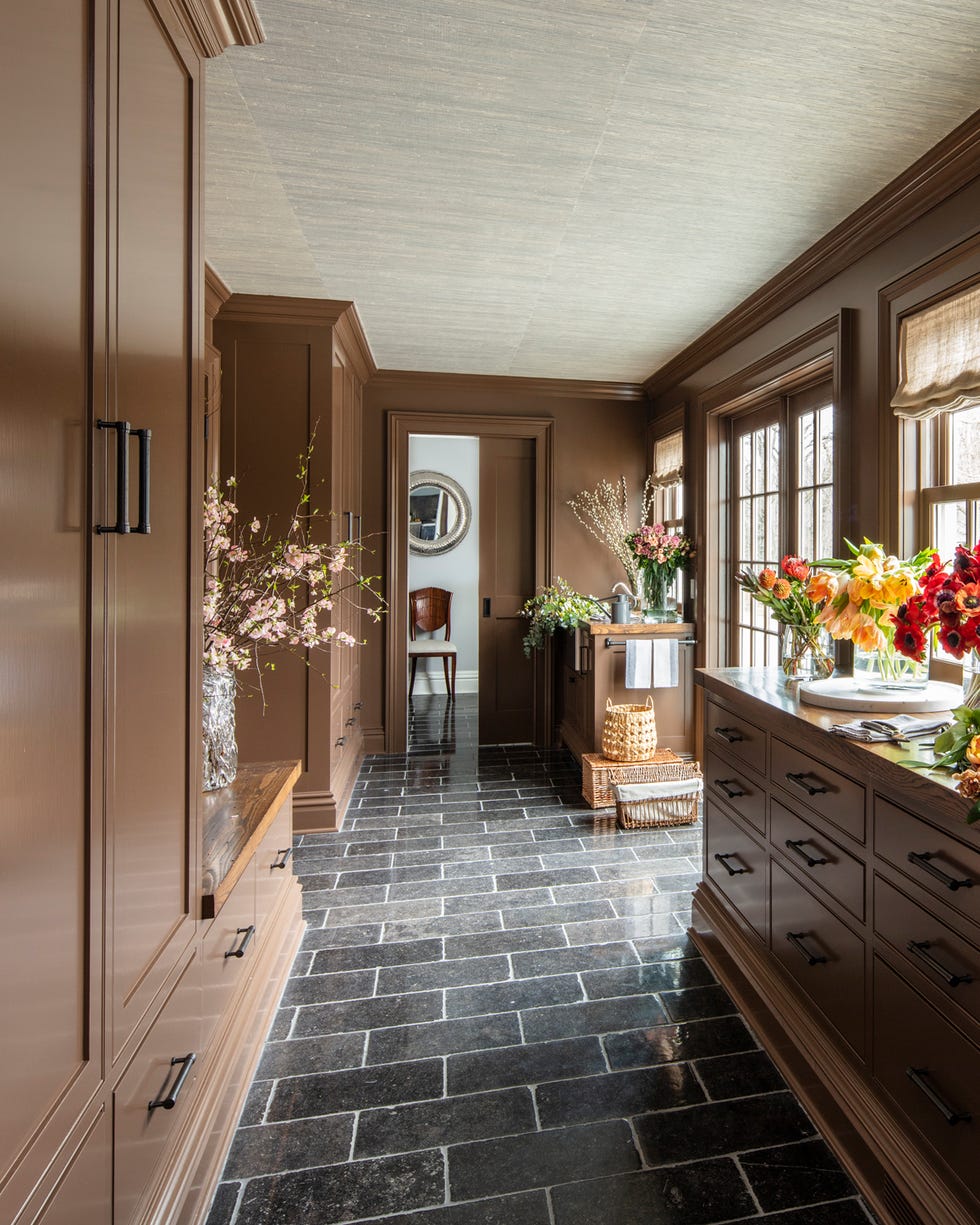
Rich brown cabinetry brings a sense of depth and permanence to a traditional galley kitchen. The warm wood tones fill both sides of the long room, balanced by a gray stone tile floor and white countertops. A wooden cart and floral arrangements soften the look, while natural light from the windows keeps the brown from feeling heavy. The palette relies on the contrast between the deep brown cabinets and lighter surfaces. A few glass-front upper cabinets break up the solid wood, letting the room breathe without losing its traditional character.
Final Thoughts
The kitchen paint colors trending for 2027 are not about one look. They range from soft creams and grays to punchy teals, yellows, and greens. The common thread is using color deliberately, whether on a single island or across all the cabinets. Keep the surrounding elements neutral, and the paint will anchor the room without competing. Before you pick up a brush, test a few samples on the wall and live with them for a few days. Natural light changes everything. The right shade is the one that feels good every time you walk in.