
Blue is the color that keeps on giving, and 2027’s palette is full of surprising new ways to use it. From the quietest powder blue to a bold, glossy navy, these 30 ideas prove that a simple can of paint can change the entire feel of a room.
Whether you’re looking to create a serene bedroom or a dramatic living room, this collection focuses on the paint itself as the main event, with the rest of the space playing a supporting role. You’ll find inspiration for walls, trim, and even a cabinet, all centered on the idea that the right shade of blue is a powerful design tool.
Muted blue walls create a serene bedroom retreat
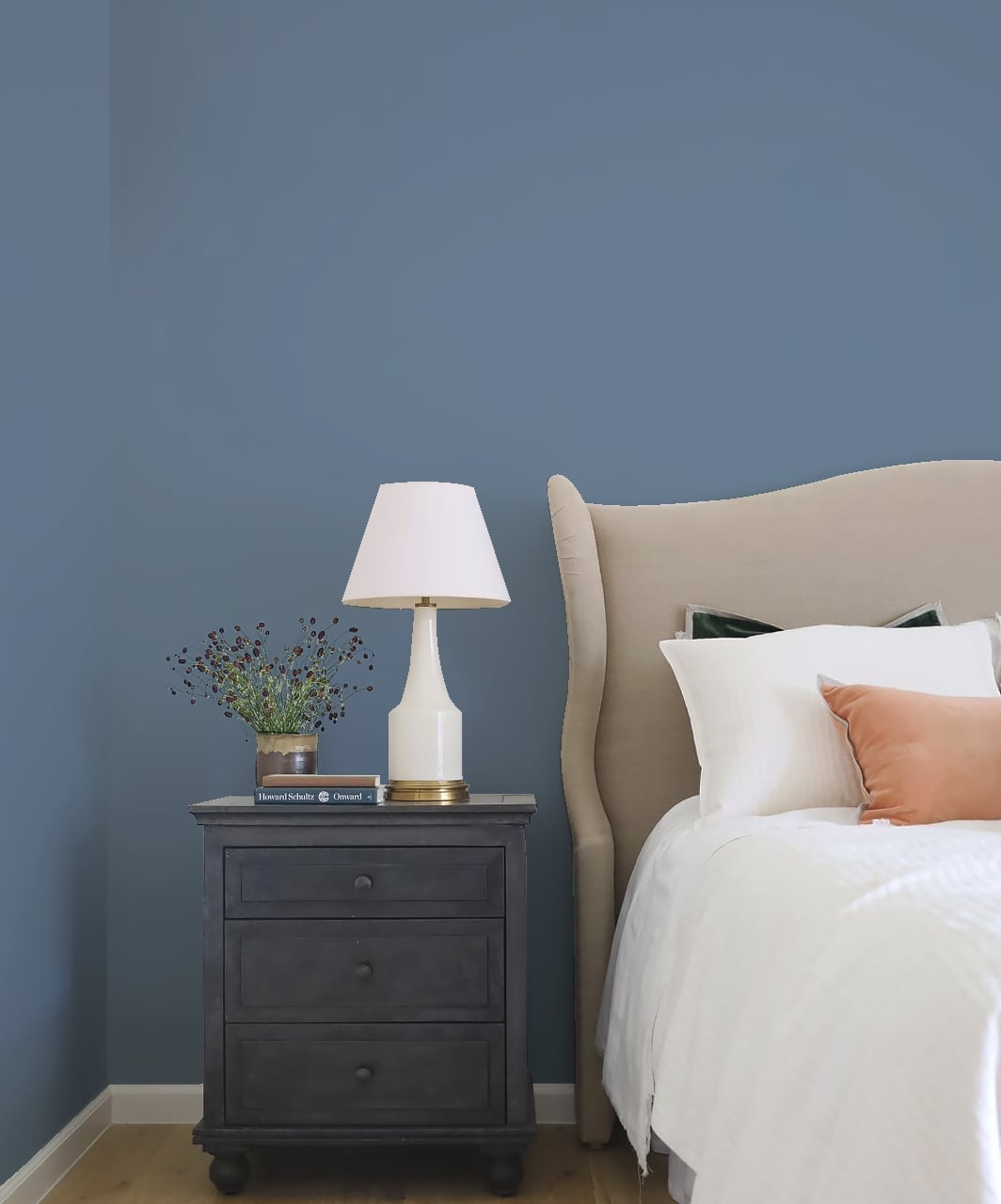
The muted blue walls in this bedroom set a calm, grounded tone that lets the wood and linen pieces around them do the talking. A wingback bed in a soft neutral fabric anchors the corner, while a small table lamp adds a warm glow. The palette stays quiet, with beige, white, and a hint of peach keeping the room balanced. This kind of blue works well in a bedroom because it recedes just enough to make the space feel larger and more restful.
Two-tone navy and gray for a modern bedroom
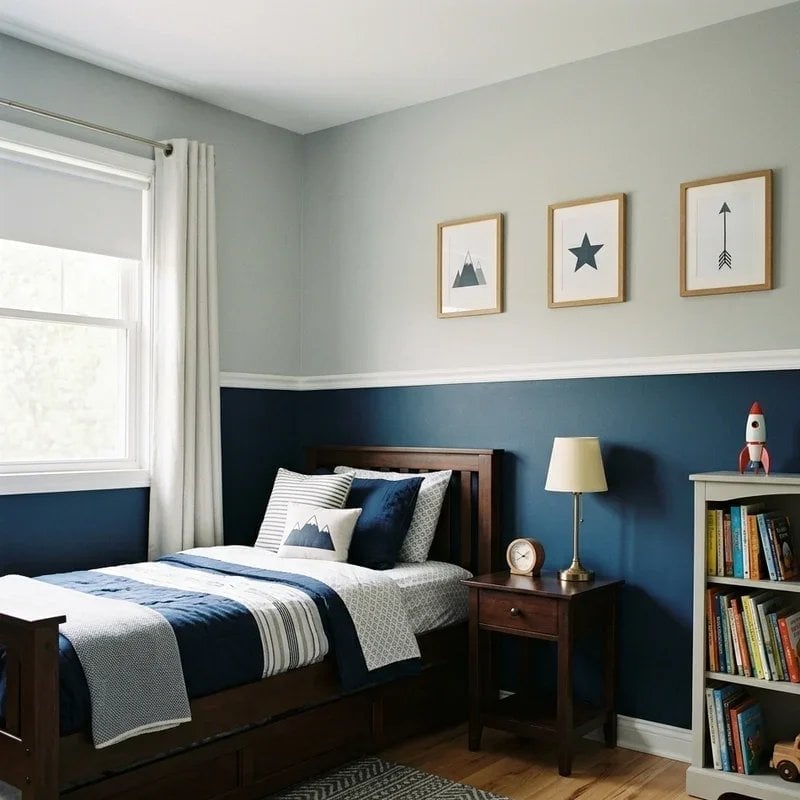
A two-tone wall treatment does a lot for a compact bedroom. Navy blue on the lower half grounds the room, while a soft gray on top keeps it from closing in. The bed sits against the darker section, which makes the headboard and white linens stand out. A small bookshelf on the right and a table lamp on the nightstand add function without clutter. Natural light from a window on the left balances the deeper tones. For a rental, this kind of two-tone look is easy to reverse with a single coat of primer when it is time to move out.
Deep blue walls anchor an eclectic living room
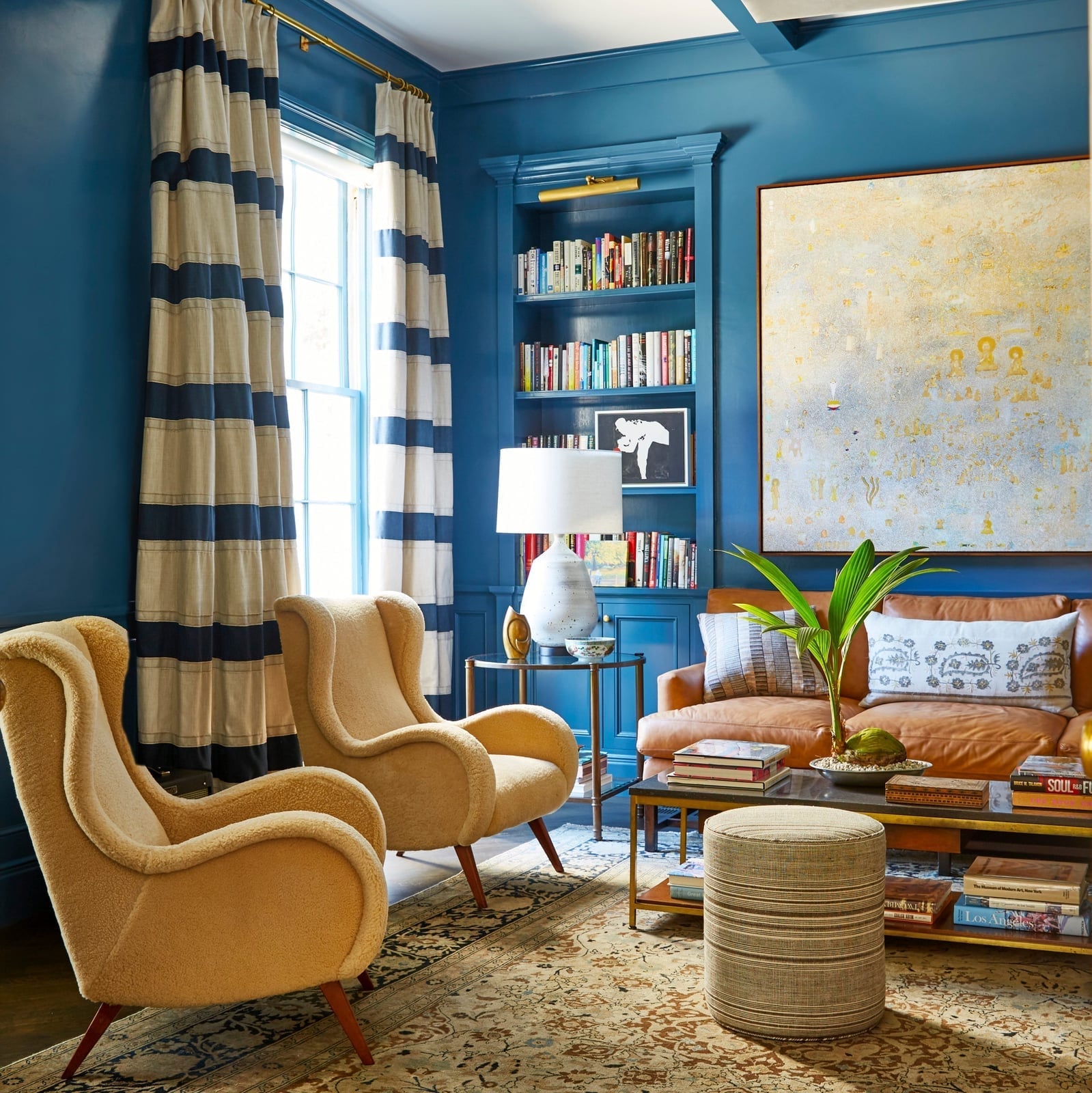
How do you make a room full of different furniture and textures feel intentional rather than random? A deep blue wall color ties it all together. In this living room, the blue acts as a backdrop for two tan armchairs, a leather sofa, and a patterned rug. The built-in bookshelf holds books and objects, and the wall sconce and overhead lamp provide layers of light. The wood, fabric, metal, and glass pieces each stand out against the blue without competing. A room like this works because the wall color is strong enough to unify, but not so loud that it overpowers the mix of styles.
Ombre blue walls complement a bathtub
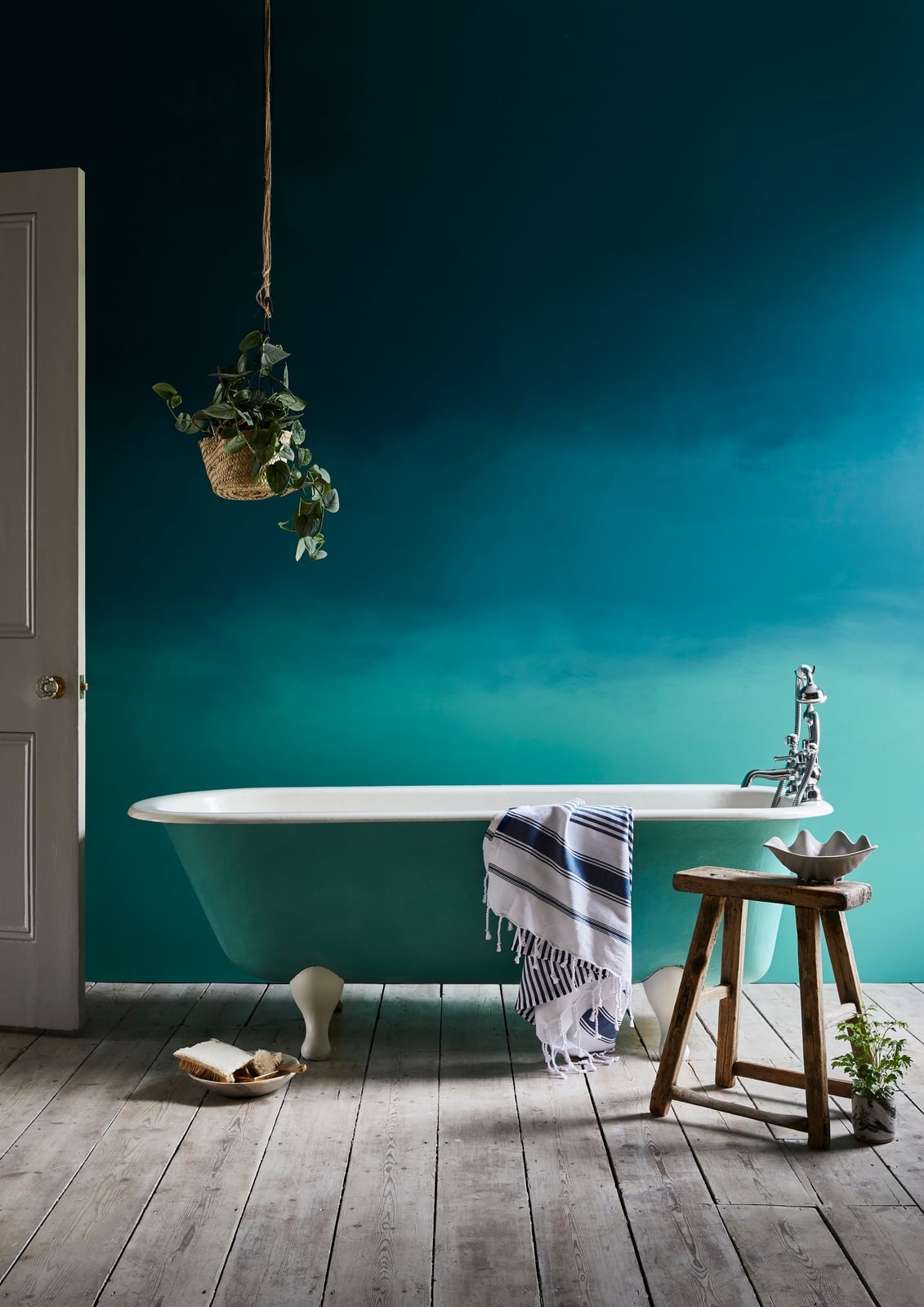
An ombre blue wall behind a clawfoot bathtub creates a gradient that draws the eye upward. The deep teal at the bottom fades into a bright turquoise near the top, which makes the white tub and natural wood stool stand out. A hanging plant adds a touch of green without crowding the scene. The color shift is visible in natural light, making the wall feel like part of the room’s architecture. This kind of paint treatment works well in a bathroom where you want a focal point that does not rely on tiles or wallpaper.
Paneled muted blue walls for a traditional bathroom
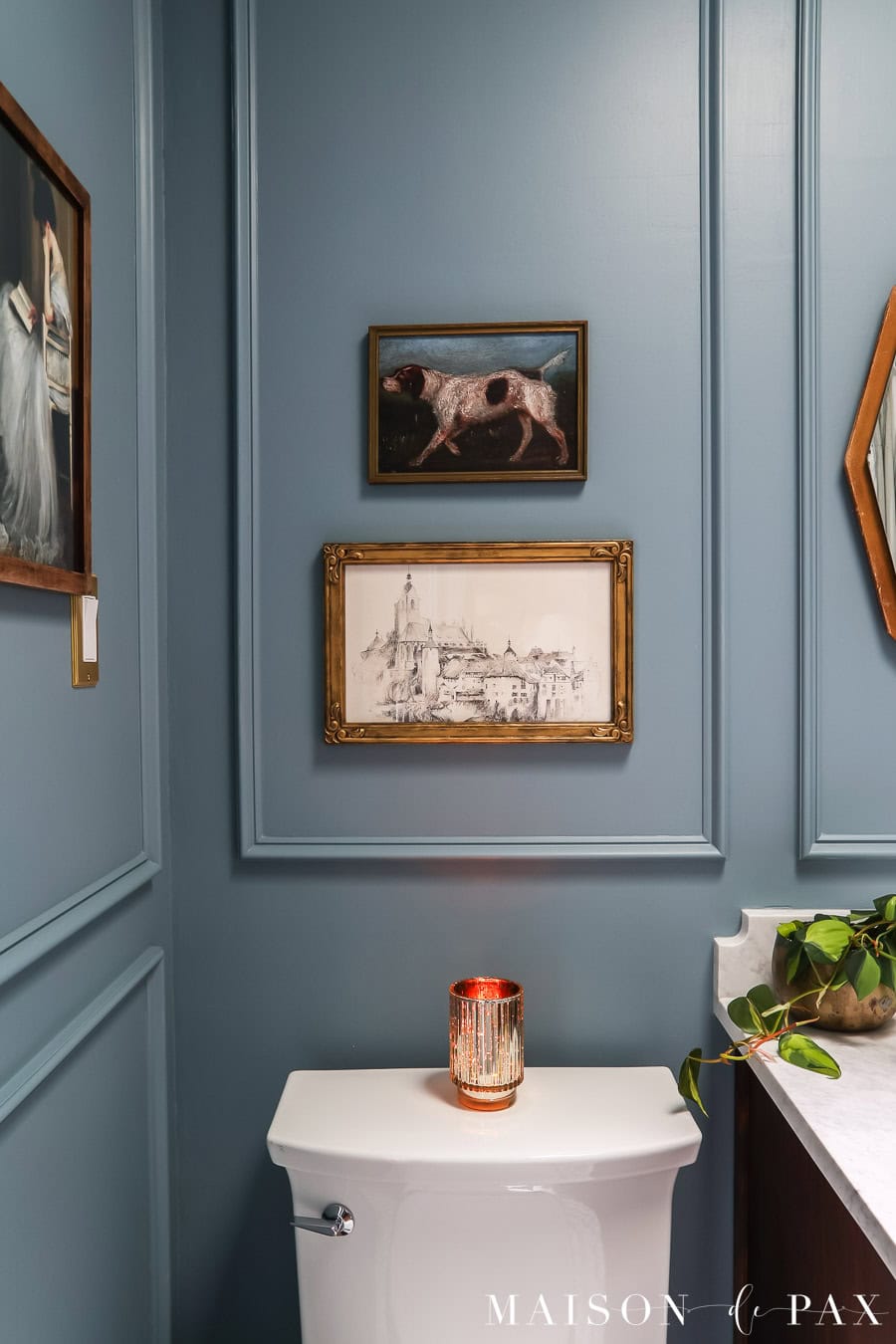
Paneled walls in a muted blue give a small bathroom a finished look without needing a full renovation. The painted wood panels add texture and a sense of permanence, while the muted tone prevents the space from feeling too dark. A framed piece of art hangs above the toilet, and a brass candle holder on a nearby surface adds a warm metallic note. For a bathroom that lacks storage, the paneling can be a visual anchor that makes the room feel more intentional. The blue pairs well with white marble and green plants, which keeps the space fresh.
Floral ceiling above deep blue walls in bedroom
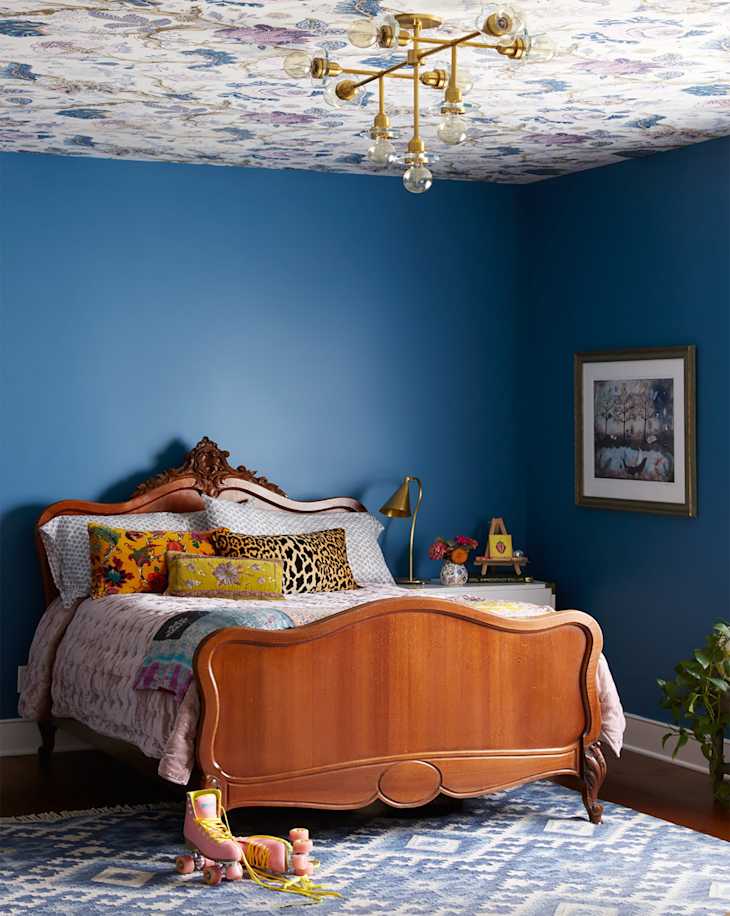
A floral ceiling might sound like a splurge reserved for historic homes, but it can work in a rental bedroom with peel-and-stick wallpaper. The deep blue walls here anchor the room, while the floral pattern overhead draws the eye up and makes the ceiling feel higher. The ornate wood bed frame and patterned rug keep the look eclectic rather than precious. A brass chandelier adds a touch of warmth without competing with the busy ceiling. The trick is letting one element, the ceiling, be the star, and keeping the walls a solid, dark color that grounds everything below.
Light blue paneled wall frames bed with linens
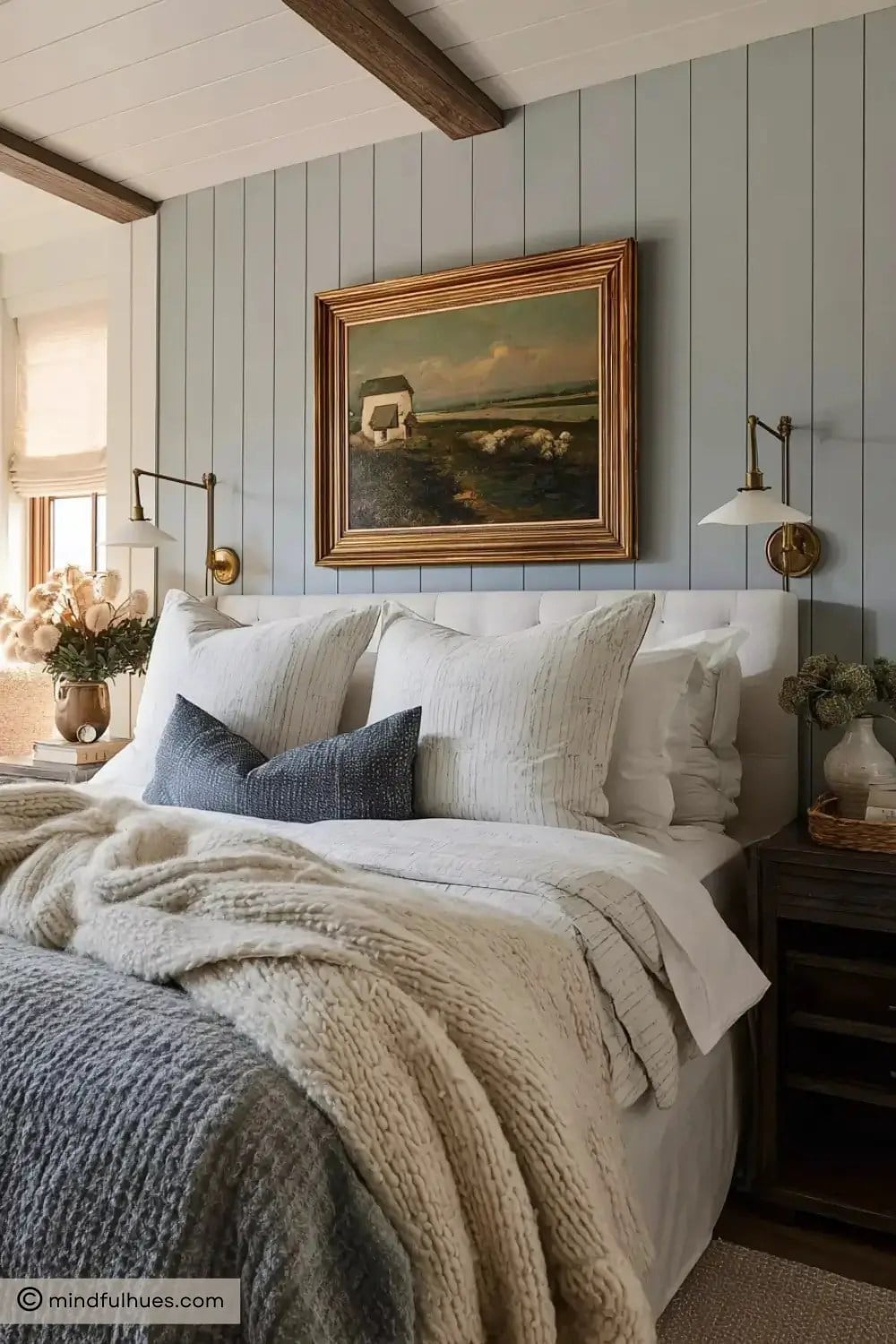
The light blue paneled wall behind the bed acts as a built-in headboard, giving the room a finished look without a large piece of furniture. The tufted headboard and linen bedding add soft texture, while the wall sconces provide task lighting for reading. A landscape painting above the bed breaks up the paneling and adds a focal point. This setup works well for renters because the paneling can be achieved with removable wall panels or paint, and the sconces can be plug-in styles that don’t require wiring.
Light blue wall in a boho-sharp corner
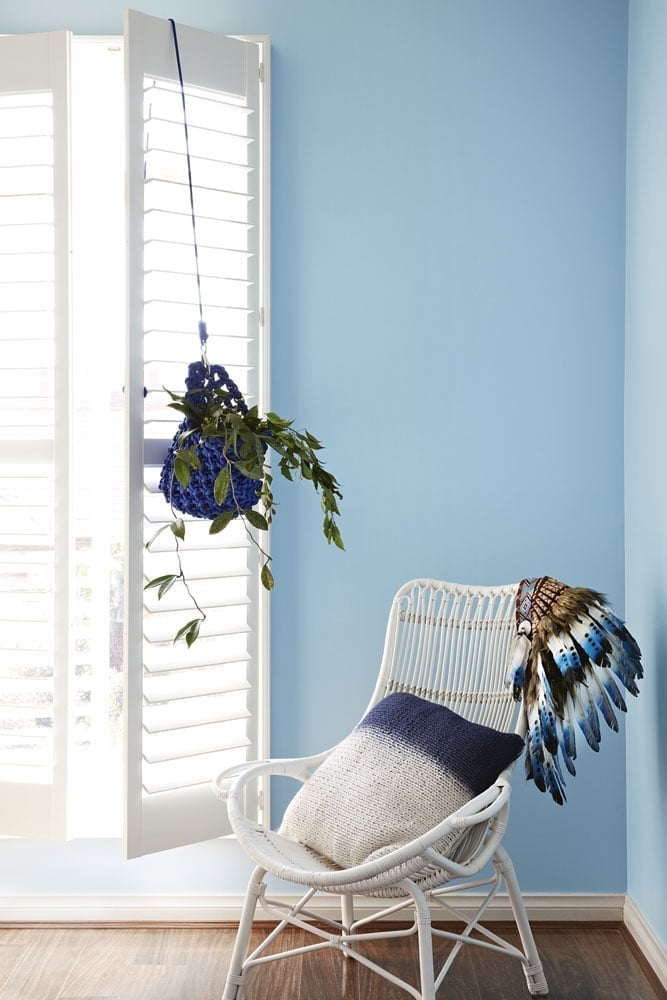
A light blue wall makes an unexpected backdrop for a boho corner. The wicker chair and knit pillow add natural texture, while the feather headdress and hanging plant bring in earthy elements. The navy blue throw pillow ties back to the wall color without matching it exactly. This corner works because the light blue is calm enough to let the textures and patterns shine, but distinct enough to define the space. It’s a simple way to add color without committing to a whole room.
Light blue walls as a focal point in an eclectic living room
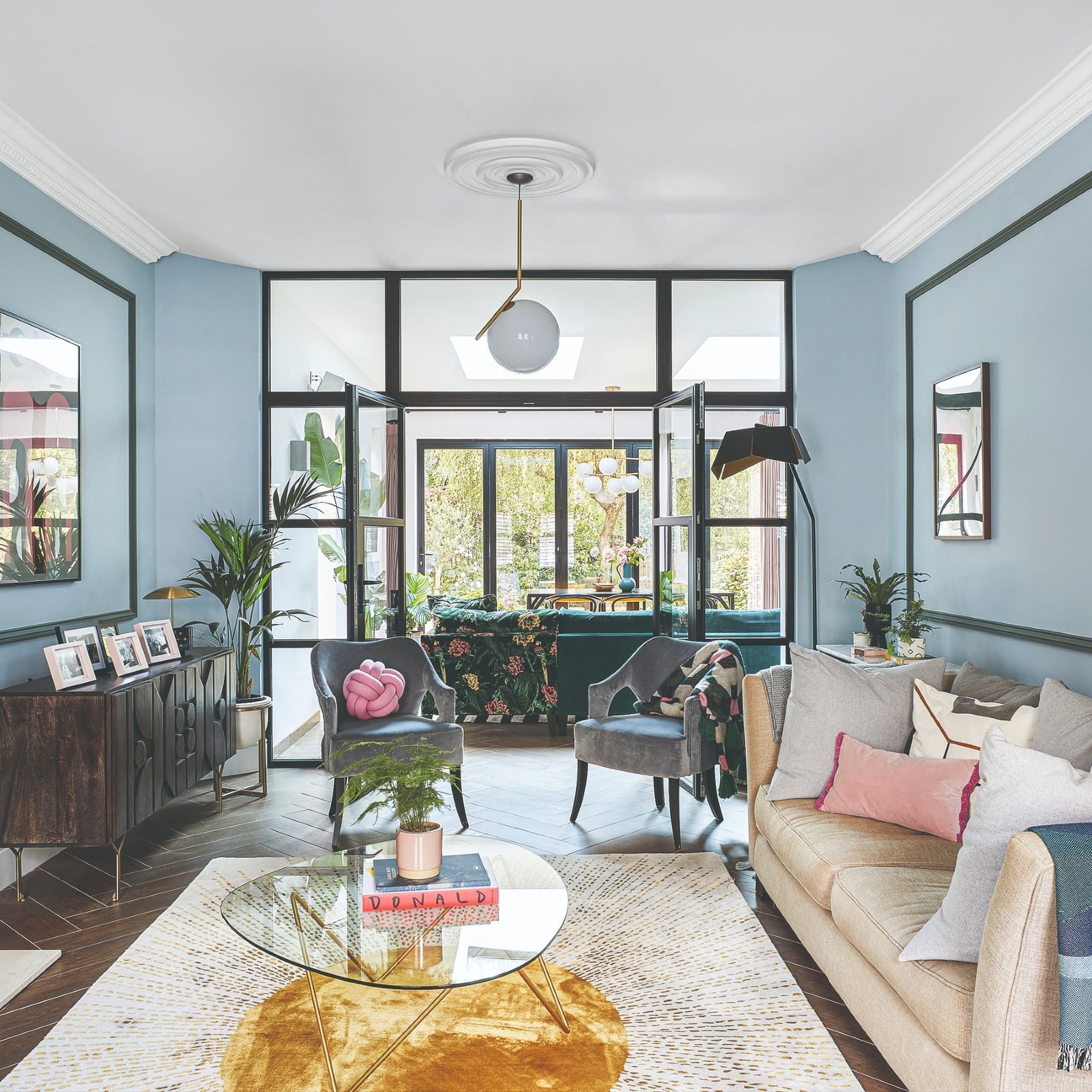
Can light blue walls hold their own in an eclectic living room filled with dark green velvet armchairs, a glass coffee table, and a wooden sideboard? Yes, if the blue is the lightest element in the room. The walls here are a soft, airy blue that recedes, letting the darker furniture and rich textures take center stage. A gold floor lamp and pink accents add warmth without clashing. The open-plan layout connects the seating area to a dining space, and the blue walls create visual continuity. The key is choosing a blue with enough gray in it to look neutral rather than childish.
Reef blue paint can against white background
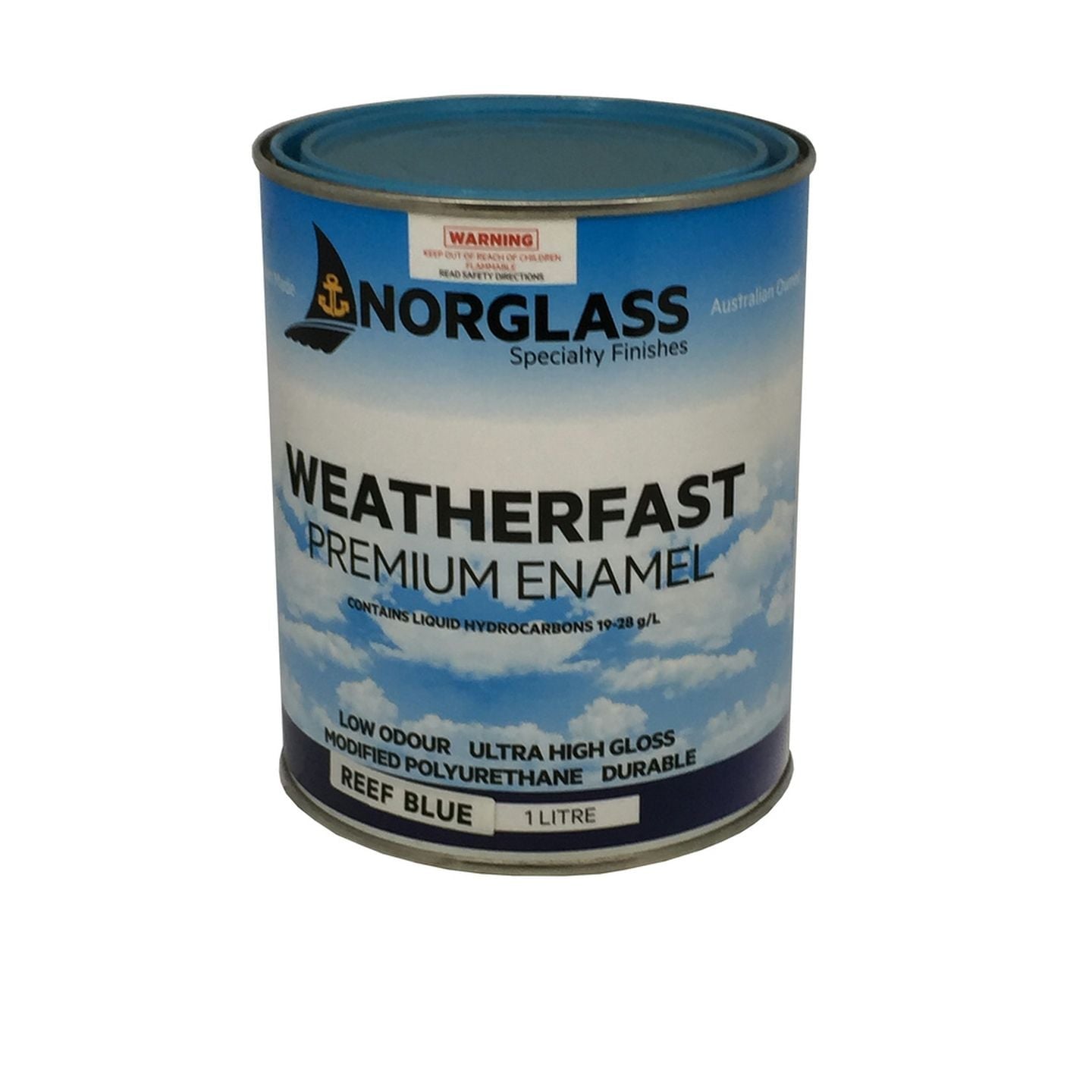
A single paint can in reef blue enamel shows how a bold color can work as an accent. The blue is vibrant but not overwhelming, and the metal can adds a industrial touch. Against a white background, the blue pops without needing a whole wall. This is a practical way to test a color before committing to a larger project. A quart or liter can is enough to paint a small piece of furniture or an interior door, giving you a sense of how the color behaves in your light.
Deep blue accent wall with gallery display
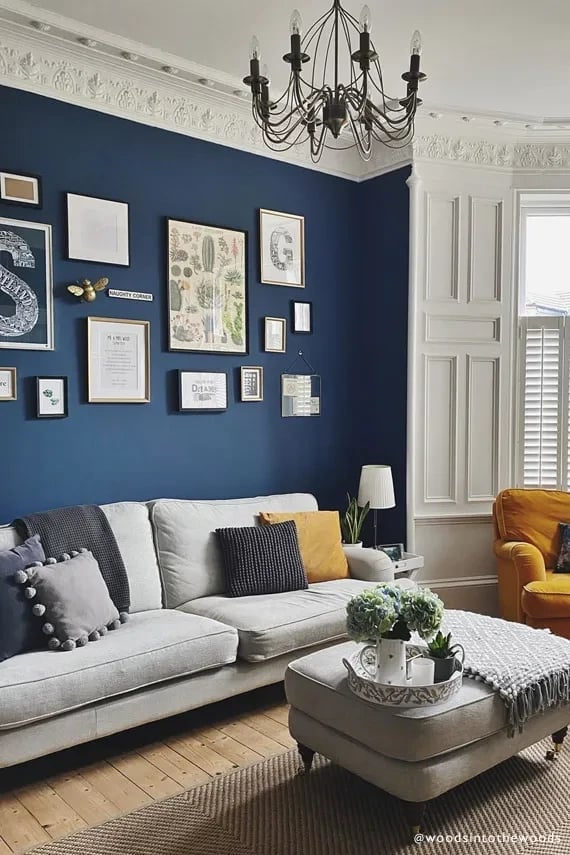
A deep blue accent wall works best when the furniture layout responds to it. Here the sofa faces the painted wall directly, with the ottoman pulled up front, so the gallery display becomes the natural focus of the room. The deep blue backdrop makes the art pop without competing with it, and the sectional, armchair and chandelier all stay in neutral tones (white, gray, wood) so the wall stays the anchor. A practical layout rule: let one wall take the color and arrange seating to face it, keeping the remaining walls light to preserve a roomy feel.
Deep blue living room with teal velvet sofa
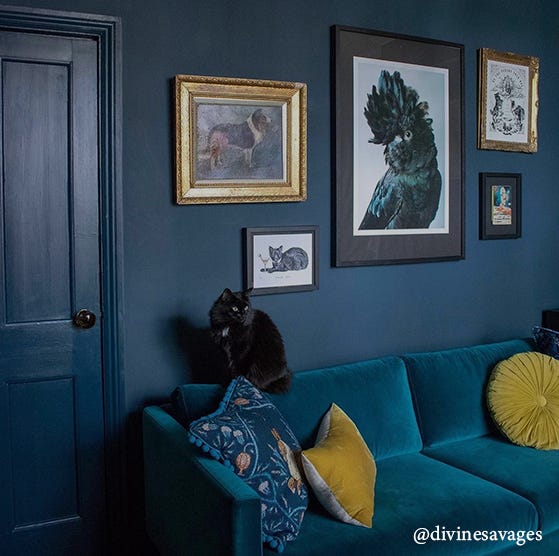
Teal velvet against deep blue walls could feel like too much blue in one room, but this living room proves the opposite. The trick is the gold and yellow accents threaded through the framed art and the throw pillow, which break up the blue family and add warmth. The deep blue walls act as a dark backdrop, letting the teal sofa hold the spotlight without fading into the background.
The palette strategy here is to pick one dominant blue for the walls and a second, distinctly different blue for the main furniture piece. Then introduce a contrasting accent color through small items like pillows or art. The room stays cohesive without looking monochromatic, and the velvet texture adds depth that a flat finish would miss.
Deep blue walls in a modern bedroom with buffalo check
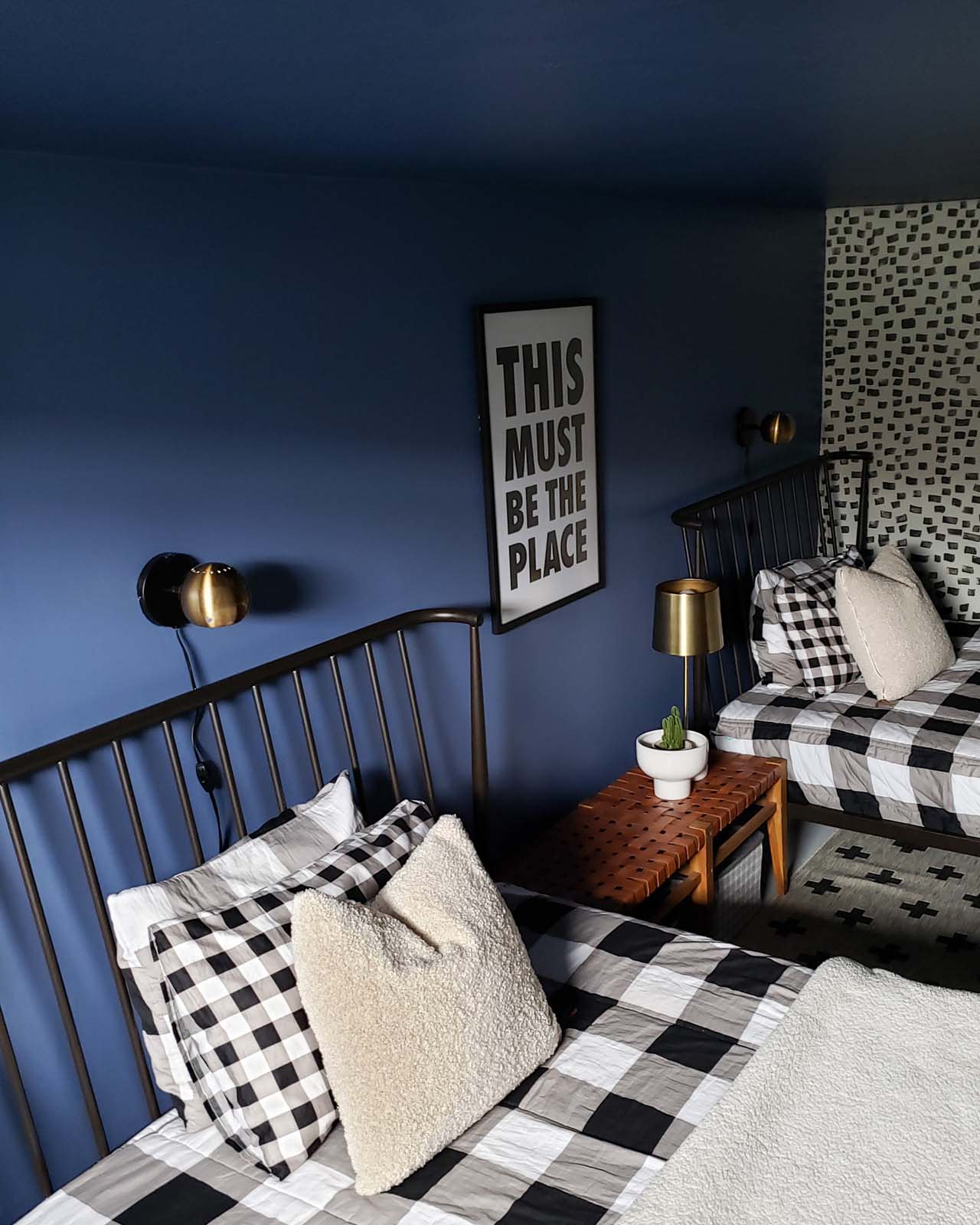
The deep blue walls here do something unexpected: they make the black metal bed frames feel lighter, not heavier. The buffalo check bedding in black and white breaks the solid color into a pattern that looks crisp against the dark paint. Two beds sit side by side with a small table between them, a compact layout that works because the wall sconces free up surface space. The tan leather and textured pillows soften the high-contrast palette, so the room looks modern rather than stark.
Light blue walls with a traditional brick fireplace
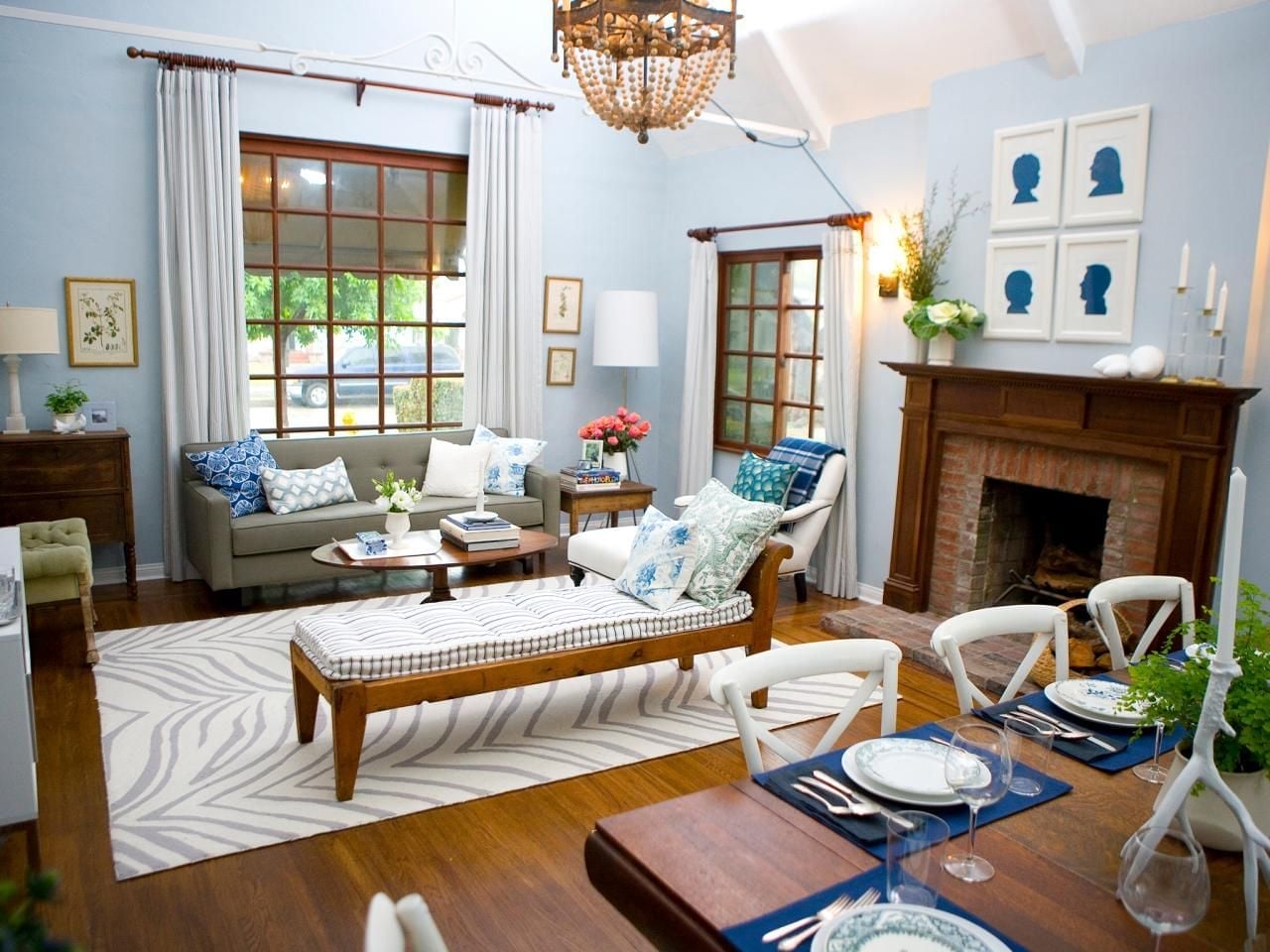
Light blue walls and a traditional brick fireplace are a natural pairing. The soft blue cools the warm brick tones, while the ornate wooden fireplace surround gets to show its detail without fighting a dark background. Natural light from the chandelier and lamp keeps the room bright, and the brown, brick red and green accents in the furniture echo the fireplace palette. A simple lighting principle: when a room has a dark focal point like a brick fireplace, keep the wall color pale so the brick looks texture, not shadow.
Navy lower walls blend with beige upper section
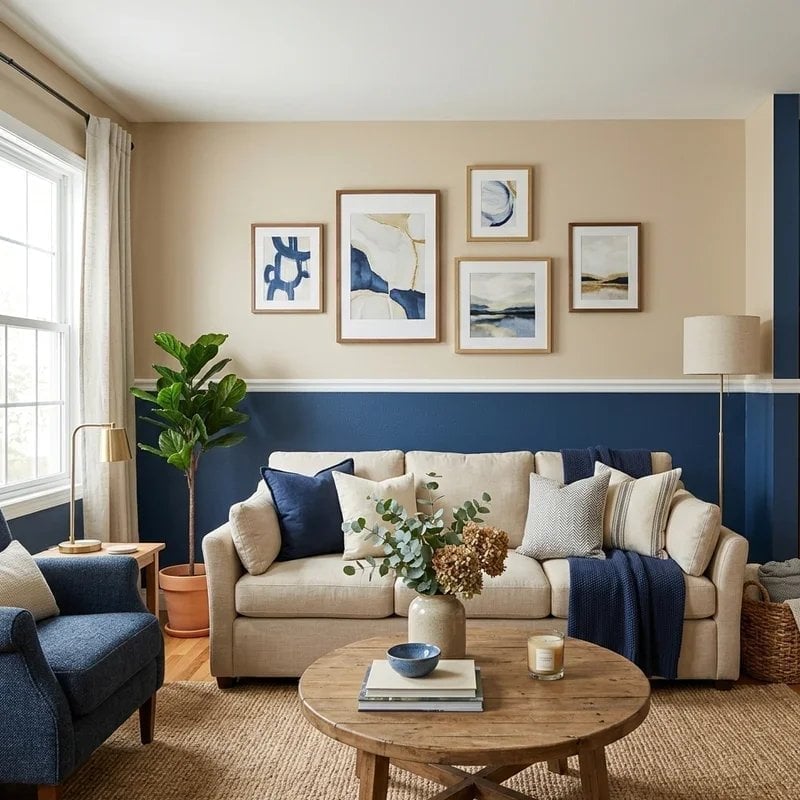
Use the darker color on the lower half to anchor the room, and keep the upper half light to maintain a sense of height. Here the navy lower walls ground the space, while the beige upper section keeps the room open. The sofa and armchair face each other with a round coffee table centered between them, a layout that encourages conversation. The floor lamp and natural light balance the dark lower wall, and the fiddle leaf fig adds a vertical green element that bridges the two tones.
The beige and navy combo works because the neutral upper wall prevents the room from feeling heavy, while the navy lower half gives the gallery wall a visual base. A jute rug and natural wood tones reinforce the earthy side of the palette, so the two-tone effect looks planned.
Teal blue walls create grown-up bar area
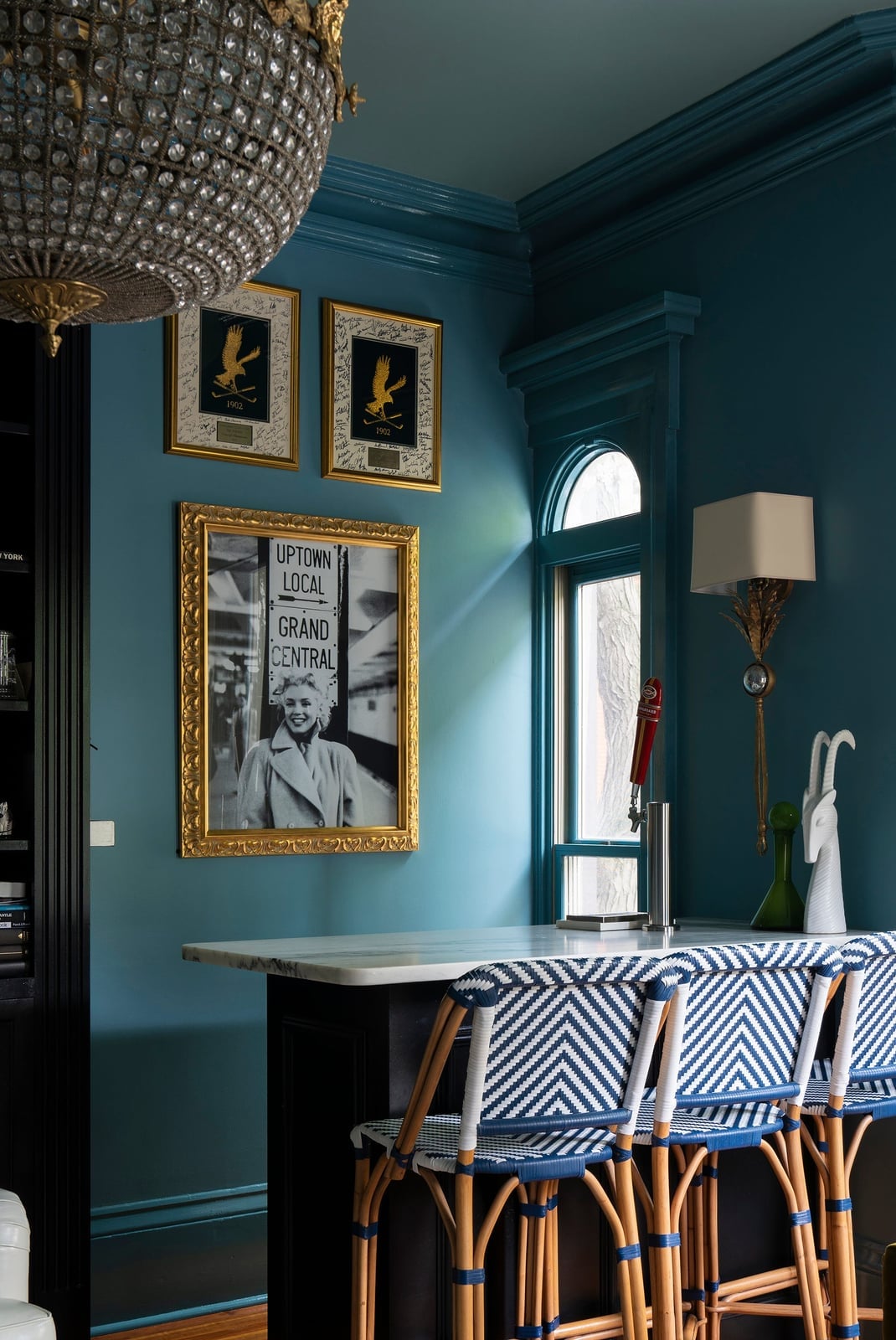
The teal blue walls set a rich backdrop for the bar area, where the chevron patterned bar stools become the focal point. White marble countertops and black metal stools ground the space, while gold accents from the ornate chandelier and wall sconce add warmth. Natural light softens the compact corner, making the teal feel inviting rather than heavy. The palette works because the navy and gold echo the teal without competing, and the rattan on the stools introduces a natural texture that keeps the look from turning too formal.
Ornate dark blue cabinet with brass hardware
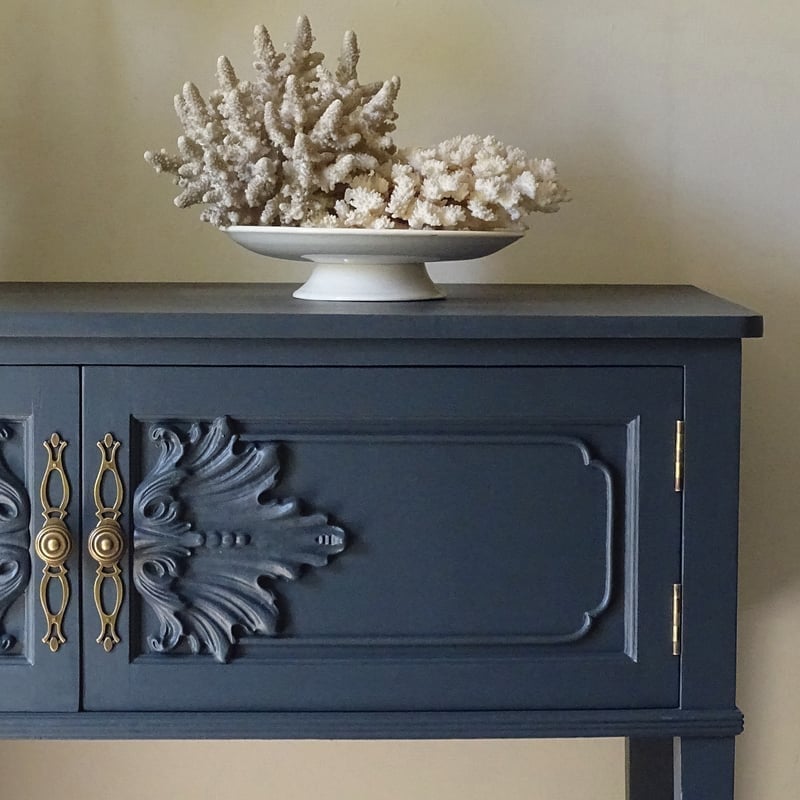
A single focal piece can set the tone without permanent changes. This ornate dark blue cabinet, with its brass hardware and decorative coral on top, proves the point. The cream wall behind it lets the cabinet stand out, and the natural light keeps the dark blue from feeling heavy. A ceramic vase or a stack of books on top adds personality without crowding. Since the cabinet is the hero element, keep the surrounding wall simple and let the brass and blue do the work. When you move, the cabinet goes with you, and the room goes back to neutral.
High-gloss bright blue walls for a dramatic dining room
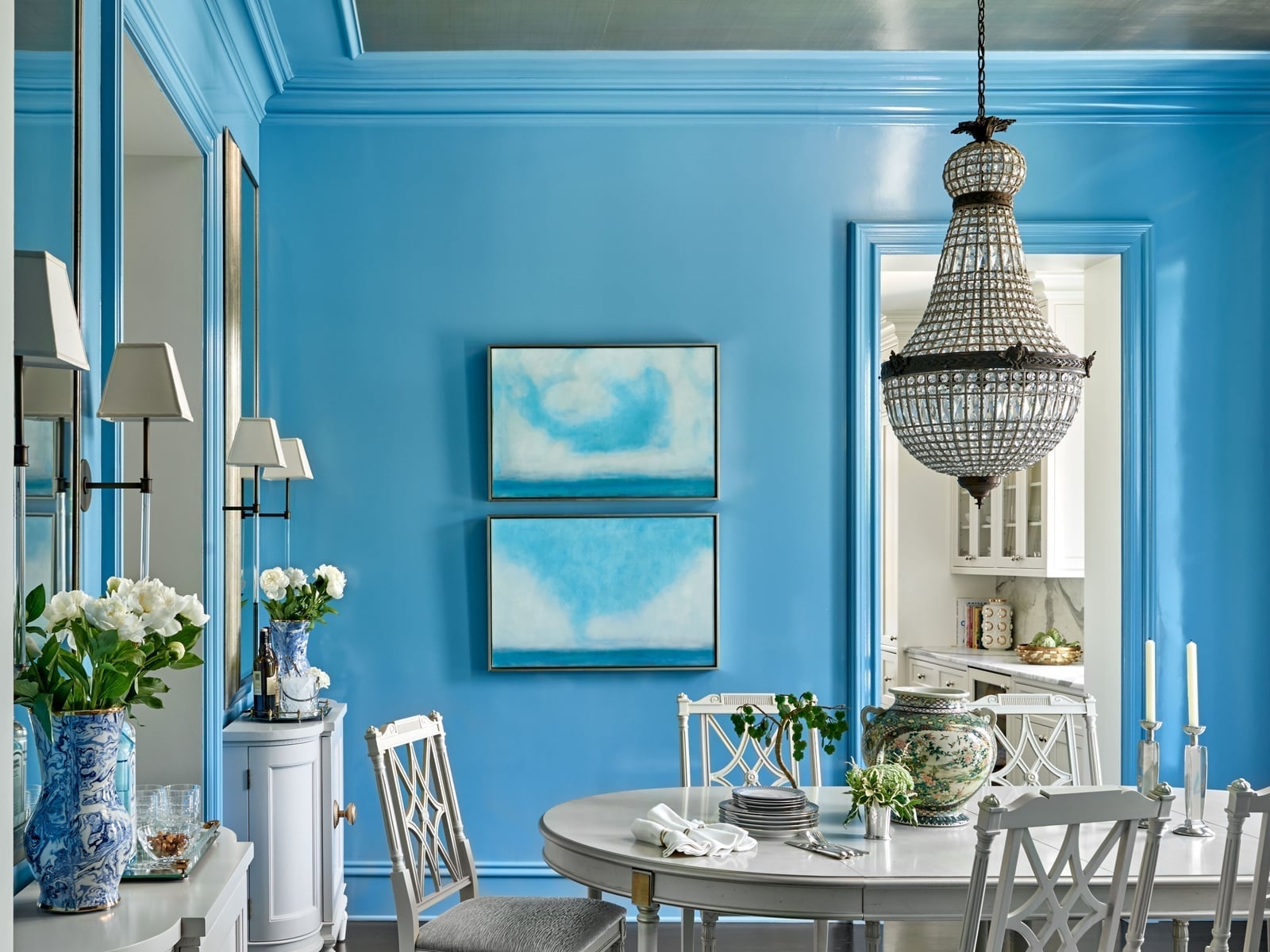
Where a matte blue wall looks calm and grounded, a high-gloss bright blue wall turns up the energy. This dining room uses glossy blue walls to create a dramatic backdrop for the round table and ornate chandelier. The lacquer finish reflects light from the chandelier, wall sconces, and candles, making the room feel larger and more lively.
The bright blue pairs naturally with white and silver accents, while the green from the patterned vases and the gray from the abstract art add depth. The marble table top keeps the look grounded, and the crystal on the chandelier ties back to the glossy walls. The key is to let the walls shine and keep the furnishings in lighter tones so the room stays balanced.
Bold royal blue walls in a modern bedroom
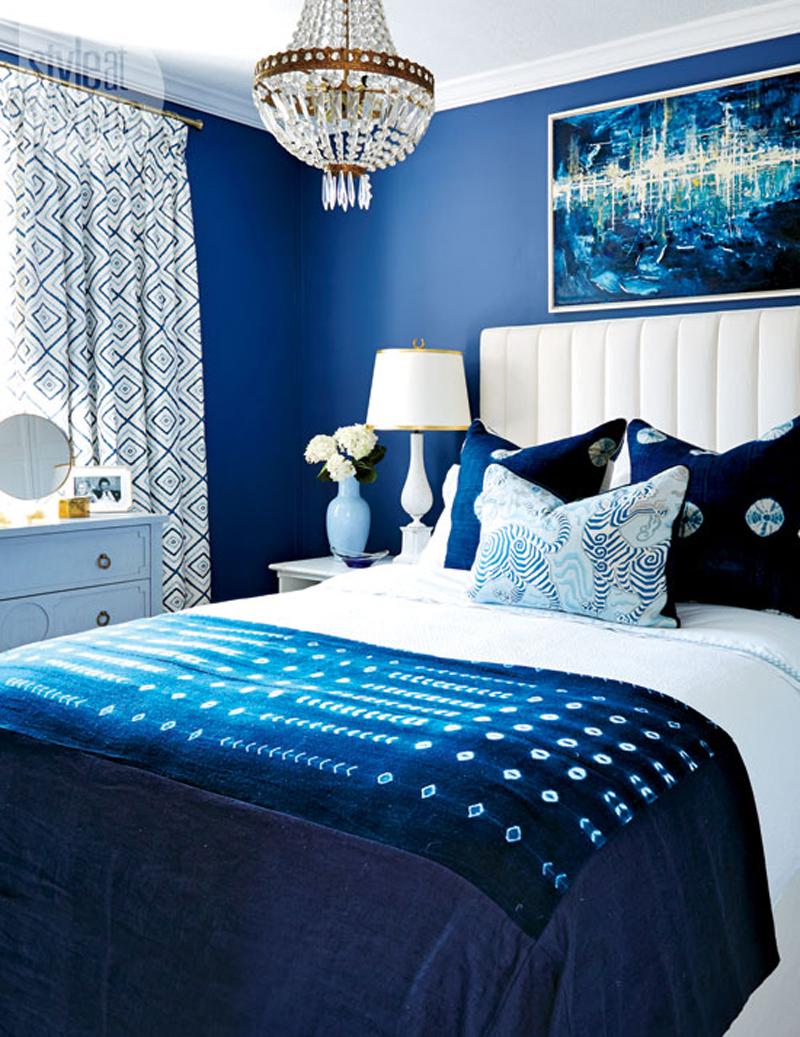
The royal blue walls in this bedroom wrap the space in color, with the tufted headboard and white bedding providing a crisp contrast. The gold accents from the chandelier and bedside lamp add a touch of formality, while the patterned curtains and abstract art introduce eclecticism. The navy in the curtains ties back to the walls, creating a cohesive palette. The room feels roomy because the white bedding and light curtains balance the saturation. It suits someone who wants a bold, cohesive bedroom without needing to fill every surface with color.
Blue accent wall behind plush headboard
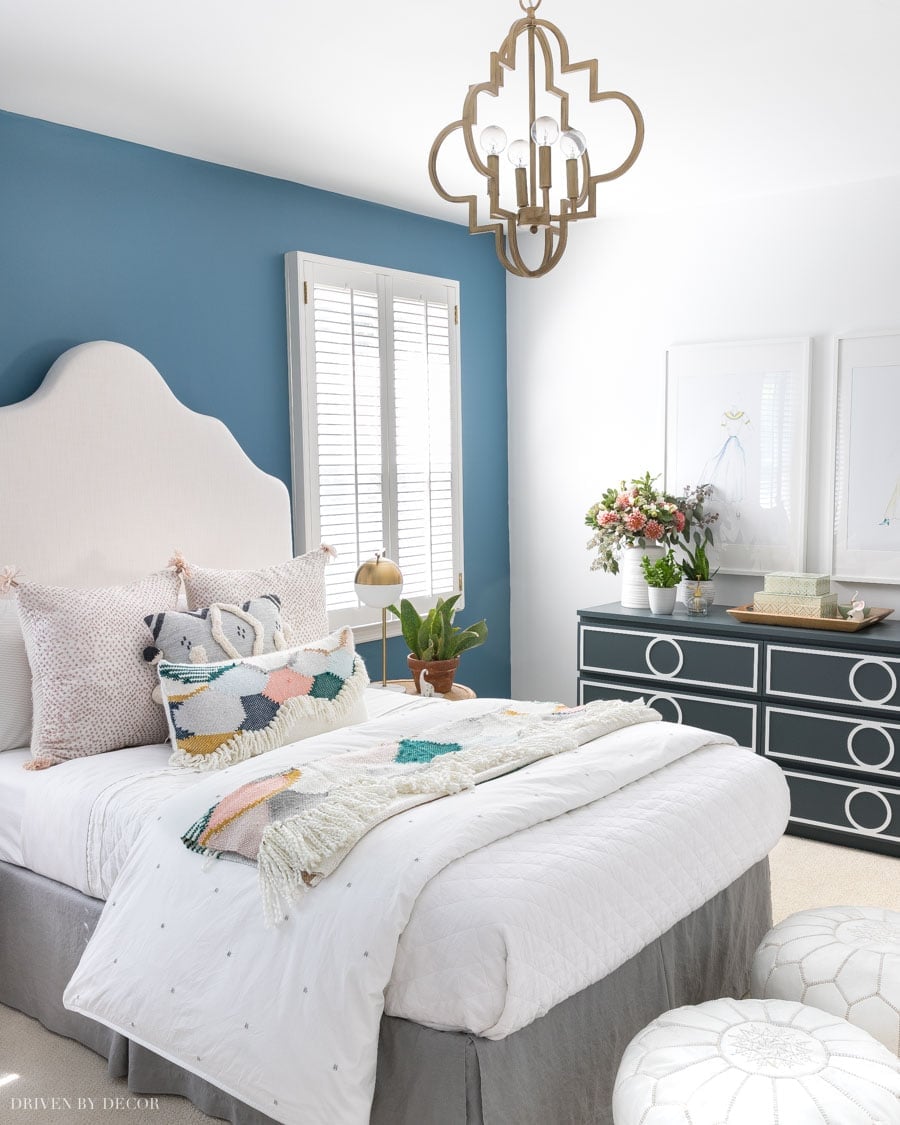
The bold blue accent wall behind the upholstered headboard anchors the bedroom with a clear focal point. The wall color is saturated enough to stand on its own, so the linen bedding and gray poufs can stay neutral. Daylight keeps the blue from feeling too dark, and the ornate chandelier introduces elegance. The dresser opposite the bed balances the layout, and the pink accent in the pillows introduces a soft contrast. This approach works best when the accent wall is behind the main furniture piece, so the eye goes straight to the bed.
Deep blue painted staircase in a grand hallway
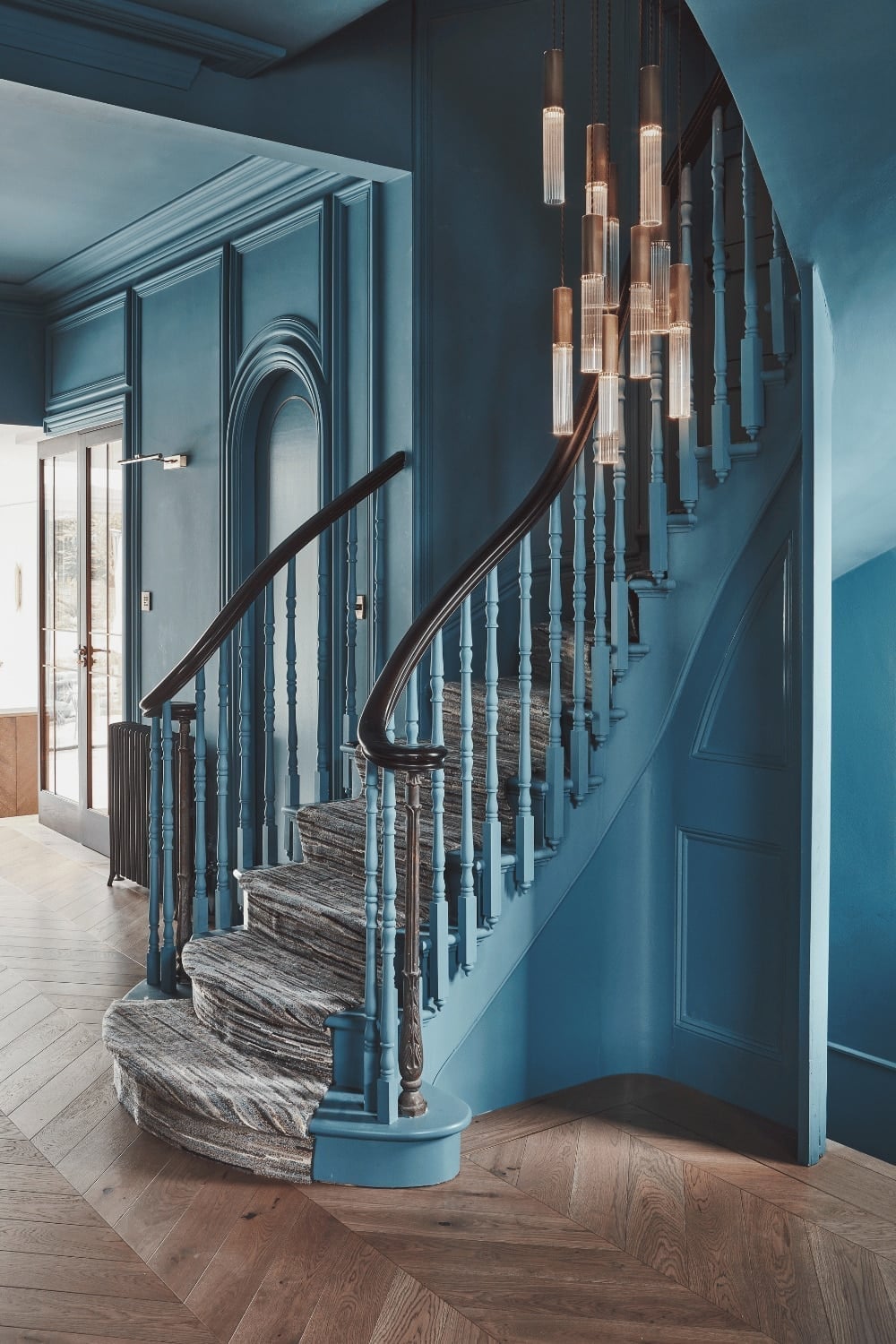
A painted staircase works best when the rest of the hallway stays neutral. Here the deep blue risers and stringers stand against gray walls, a brown herringbone floor and a neutral stair runner. The curved shape of the staircase becomes the hero element because the palette stays quiet around it. Two pendant lights and a wall sconce cast enough light to keep the blue from feeling heavy, even in a roomy space. The layout trick is letting one architectural feature carry the color while everything else supports it. That keeps the hallway from feeling busy and gives the eye a clear path through the room.
Subtle blue accents in a modern farmhouse living room
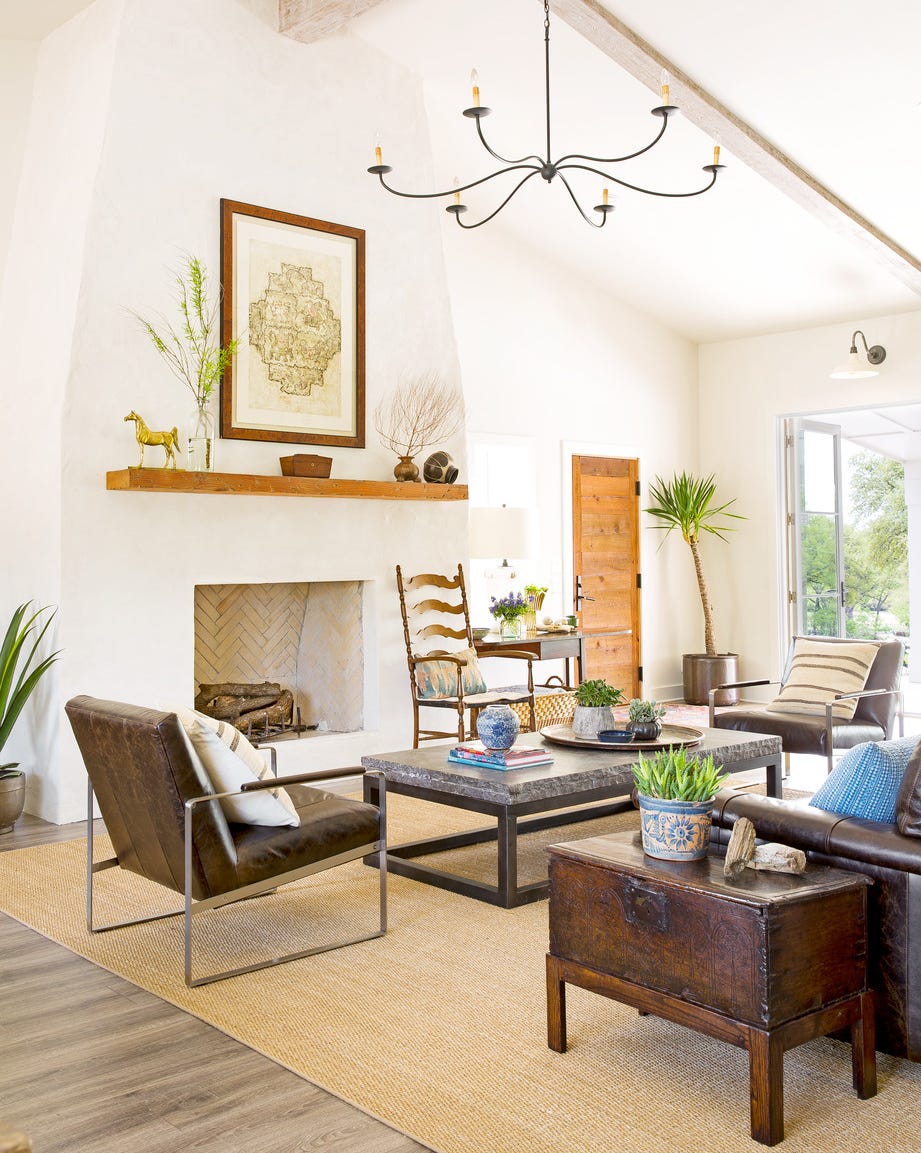
This modern farmhouse living room uses blue as a minor note. A textured white fireplace anchors the room, while blue accents appear in small doses through the seating area. Leather armchairs, a wooden chest and a stone coffee table stay within a warm brown and white palette, so the blue provides contrast. The chandelier and wall sconces add metal tones that echo the cool accent color. The palette works because the ratio of white and brown to blue stays heavily in favor of the neutrals.
Soft blue walls complement denim sofa easily
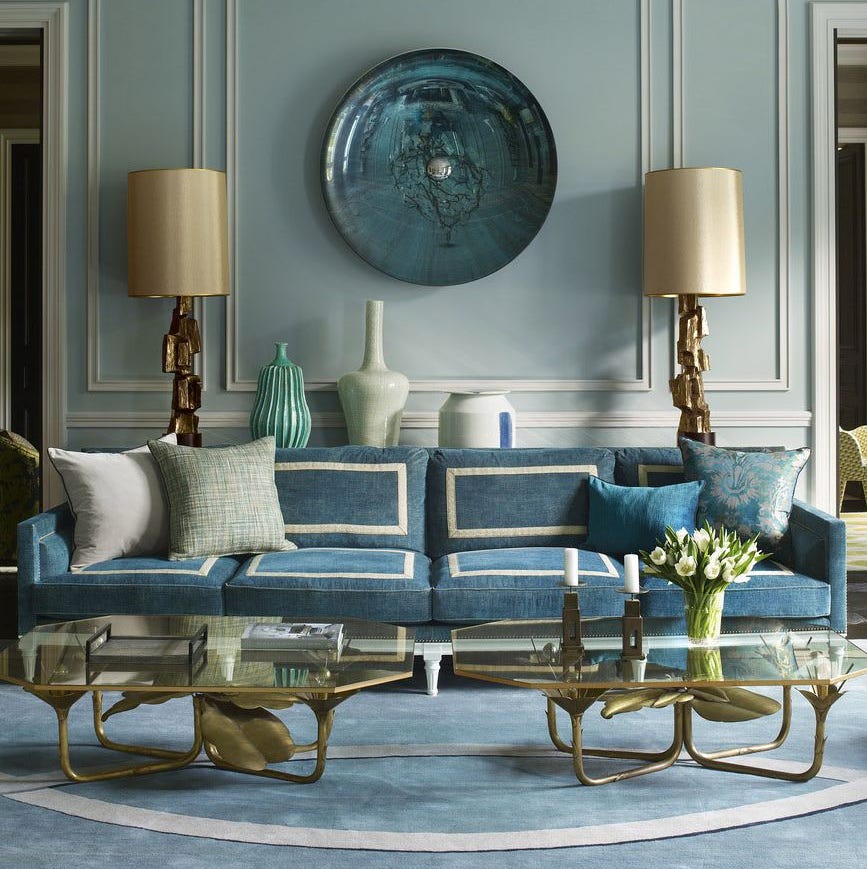
Pair light blue walls with a deeper denim sofa to create contrast without matching. Here the walls are a soft light blue and the sofa is a deeper denim tone, so they relate without matching. The room adds white, gold and green through glass coffee tables, brass lamps and a large round blue wall art piece. The glam style comes from the metallic finishes and the reflective surfaces, not from the color itself. Because the sofa is the centerpiece, the two coffee tables in front of it create a layered look that keeps the seating area grounded. The two blues are clearly different in depth, which makes the palette work.
Striking blue walls with a four-poster bed
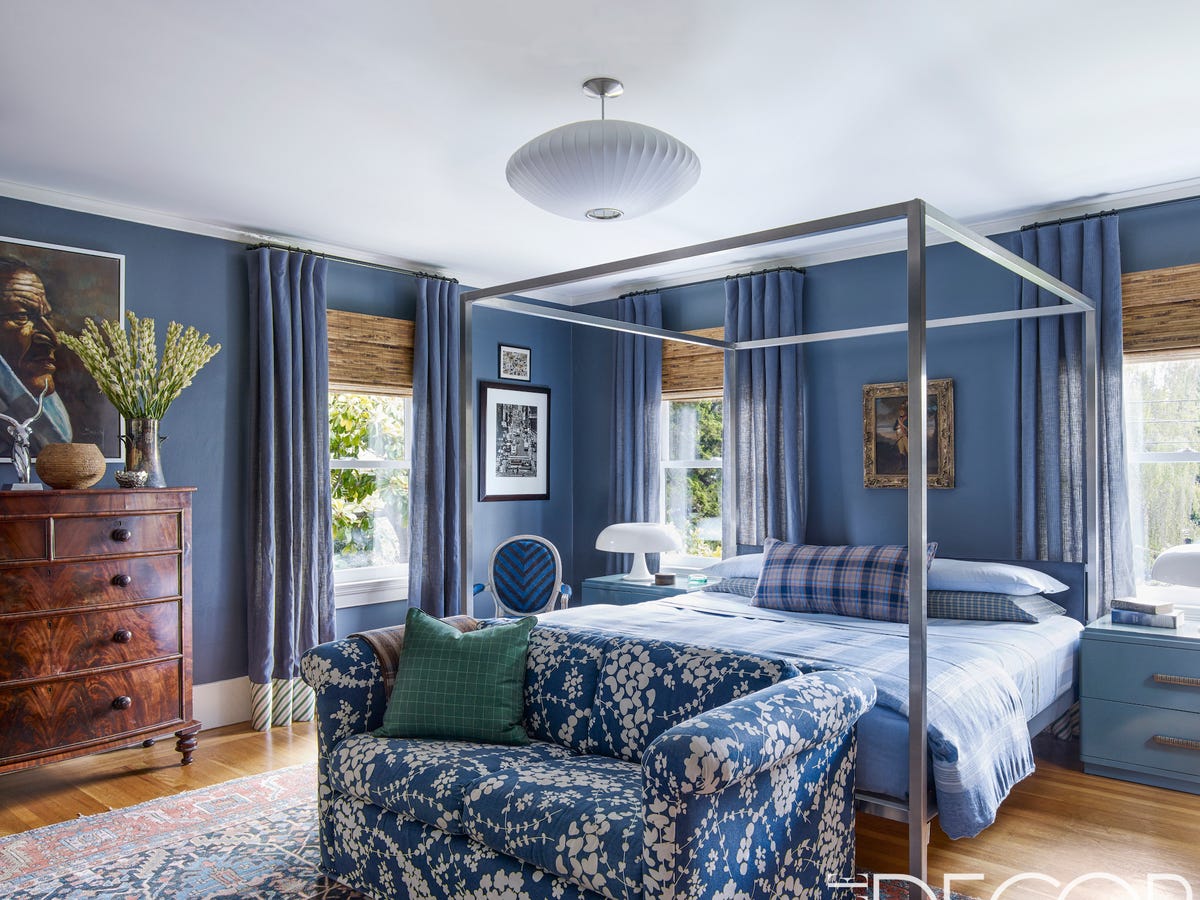
A deep blue wall might feel too dark for a bedroom, but here it works because the four-poster bed breaks up the color with its wood frame and white linens. The room gets natural light plus additional light from a pendant fixture and table lamps, which keep the blue from absorbing all the brightness. A patterned sofa in the foreground and an antique dresser add green and wood tones that warm the space. The lighting strategy matters more with a saturated wall color: multiple light sources at different heights prevent the room from looking a cave. The four-poster bed becomes the focal point because its vertical lines interrupt the expanse of blue.
Calming light blue walls in a traditional bedroom
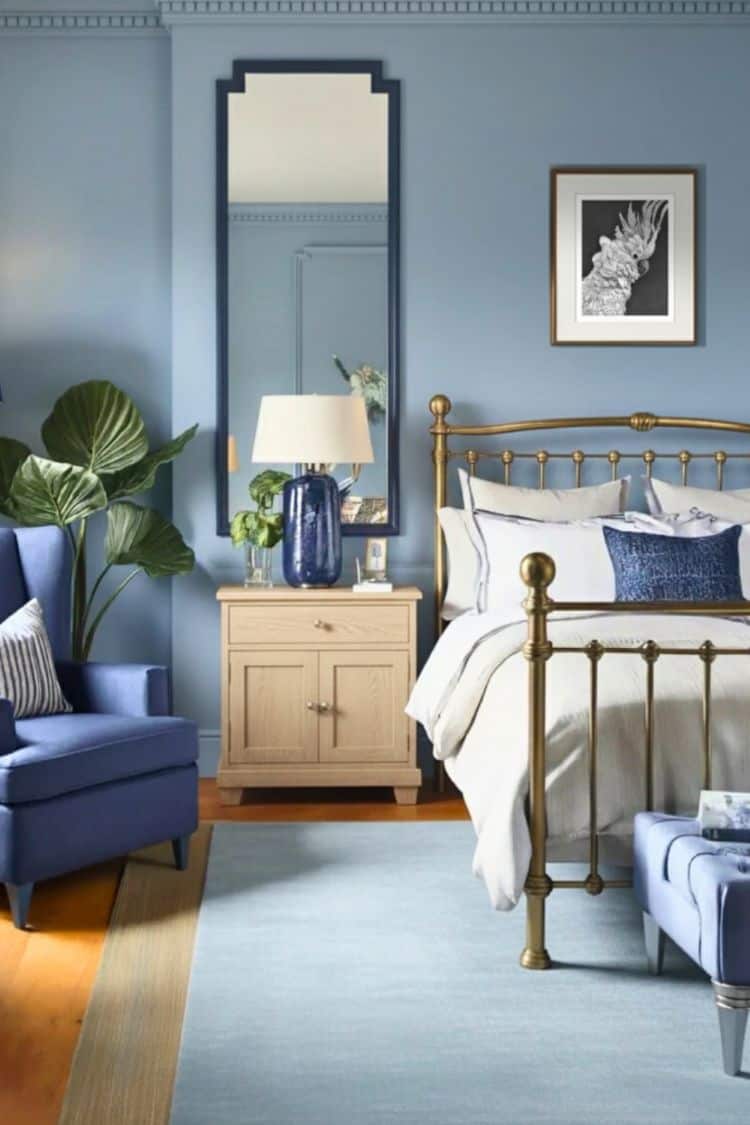
This traditional bedroom pairs light blue walls with navy accents for a layered look that feels calm and balanced. A brass bed frame sits centered, with a blue armchair to the left and a wooden nightstand beside the bed. The tall mirror reflects natural light, which helps the light blue paint appear airy. The palette uses brass and wood tones to warm the blue, and the white linens keep the bed from disappearing into the wall color. The design works because the light blue is the background, not the focal point, and the navy chair and bedding give the eye a deeper note to land on.
Deep teal painted wall backdrop for Art
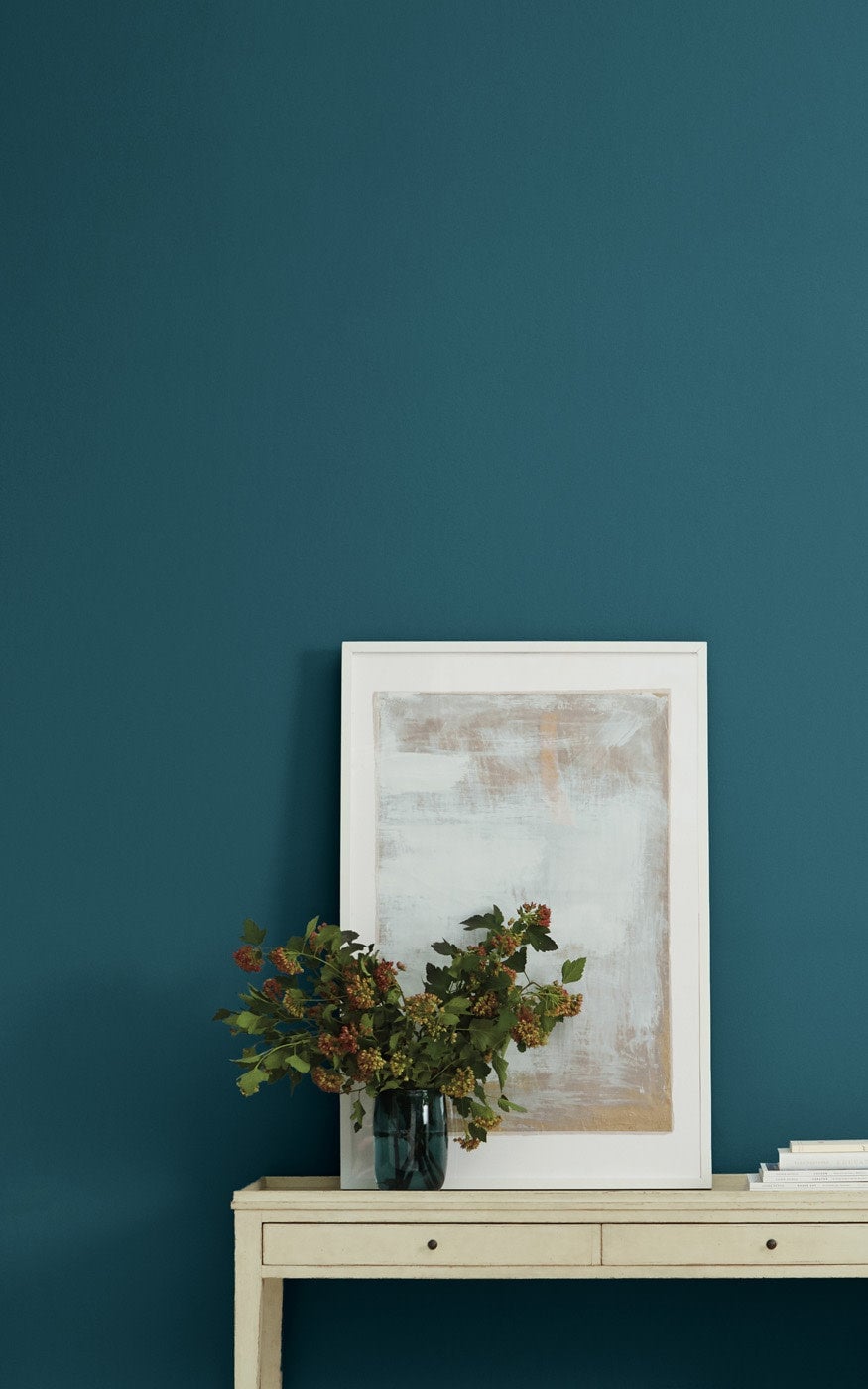
A deep teal painted wall is a strong backdrop for framed art, and this one works because the wall stays simple. The deep teal accent wall art here pairs with a console table holding a vase of foliage and a framed abstract piece in cream, gold, green and red. The painted wall has a matte finish that absorbs light rather than reflecting it, so the glass on the art and the glossy vase catch your eye instead. If you swap out art often, a dark painted wall hides the nail holes and dust marks that show up on white walls. The trick is keeping everything on the console table to a minimum so the wall looks a gallery backdrop rather than a cluttered shelf.
Soft blue double doors and trim for a modern space
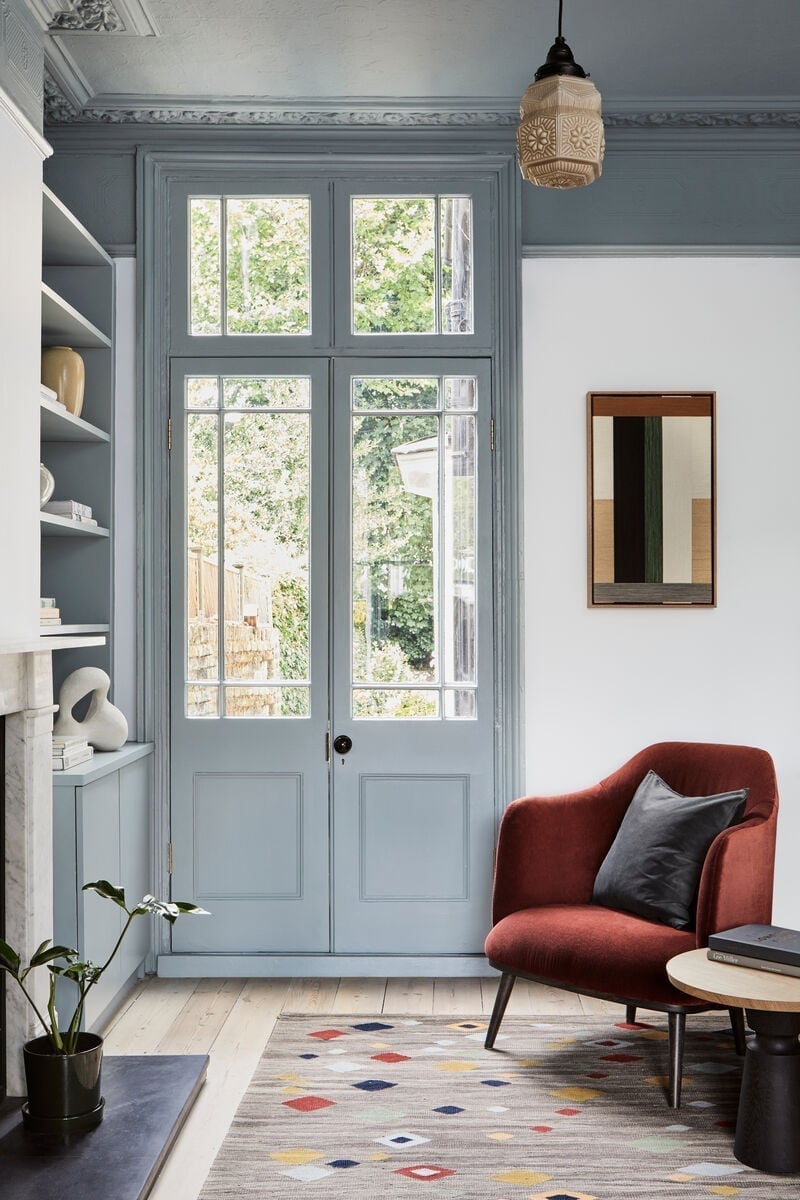
You might think painting double doors a pale blue is too sweet for a modern living room, but this setup proves the opposite. The soft blue painted doors and trim sit between a white ceiling and a gray floor, with a red armchair and a patterned rug anchoring the seating area. A pendant light hangs overhead while natural light comes through the doors, and the mix stops the blue from feeling chilly. The doors are the hero element here, so the surrounding space stays restrained: a side table, a plant, an abstract sculpture and shelves on the left wall.
For renters, painting doors is a reversible change if you use a quality primer and keep the landlord’s original color on hand for move-out. The blue becomes a permanent architectural feature, and it ties the woodwork to the cool tones in the marble and gray fabrics. A red chair nearby gives the palette a jolt of warmth that stops the room from looking monochrome.
Powder blue walls meet pink headboard
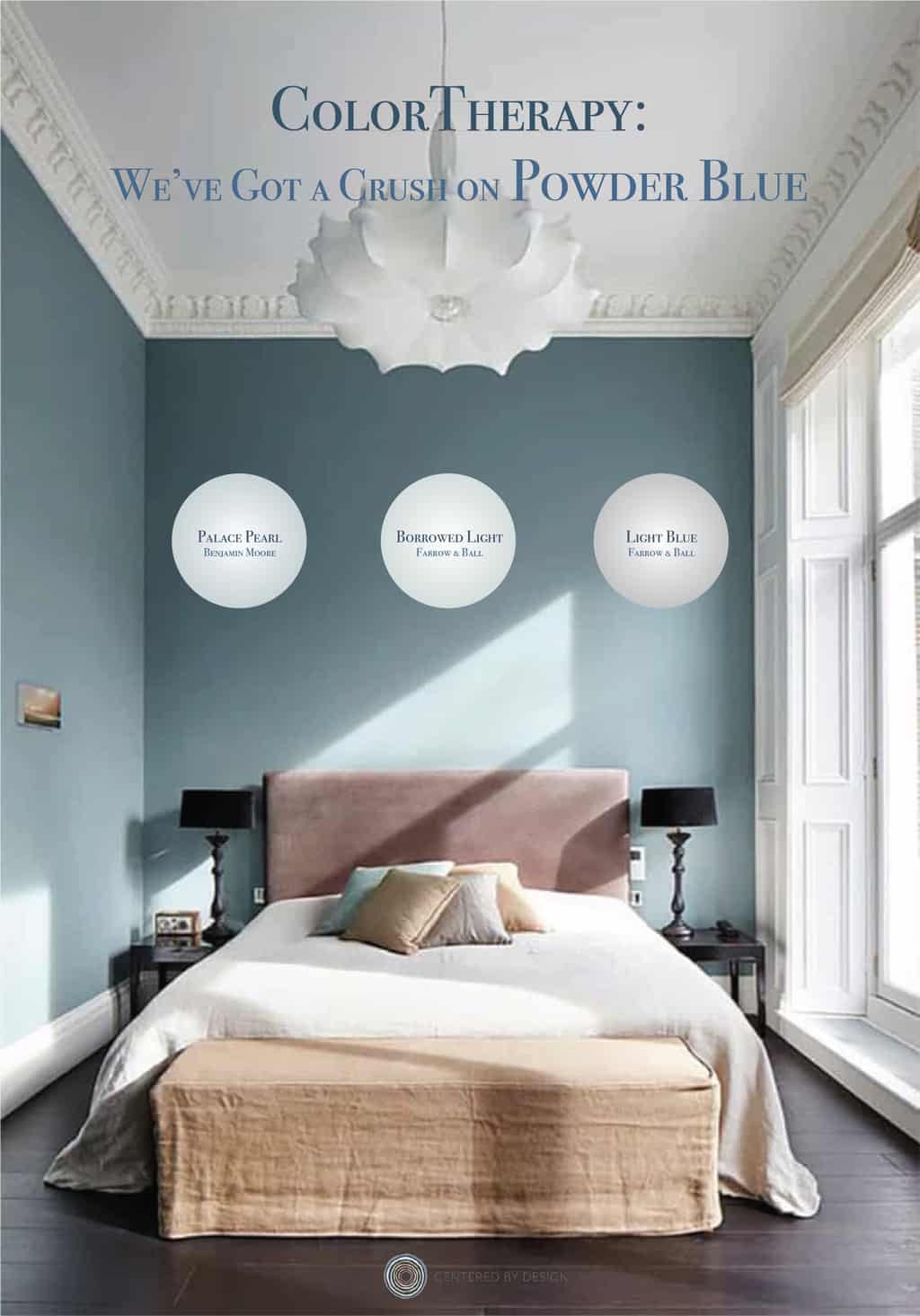
The powder blue walls in this bedroom sit behind a pink velvet headboard, with a beige linen bench at the foot of the bed and white bedding on top. The combination works because both colors have a similar level of saturation, so neither overpowers the other. Dark wood floors and two table lamps with warm bulbs ground the pastel palette, stopping it from looking washed out. If you are trying powder blue with pink, keep the third color neutral to avoid a candy-store effect.
Vibrant blue walls show white bedding
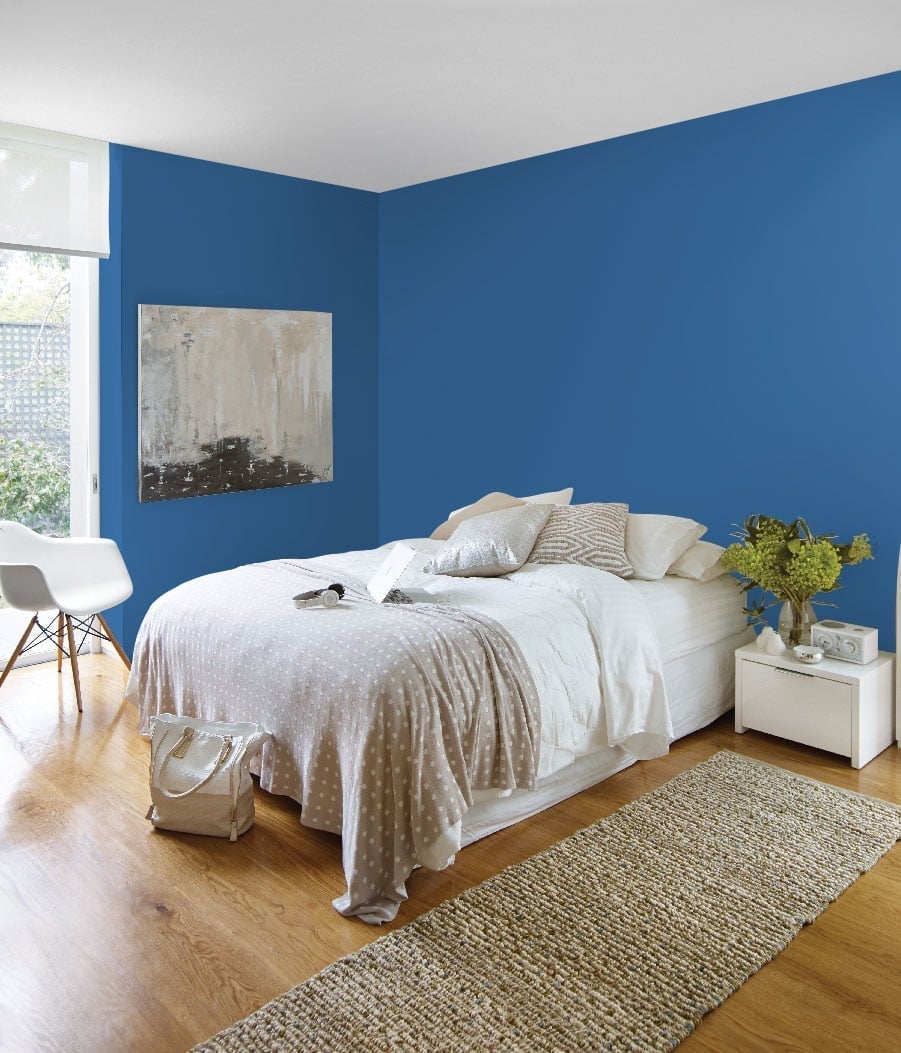
Vibrant blue walls behind a bed make white bedding the clear focal point, and this room uses that contrast well. The walls are a saturated, almost electric blue, while the linens and a nearby white chair stay crisp and light. A wood nightstand and a woven natural fiber element add warmth so the blue does not feel cold. A bedside lamp balances the intensity. For a vibrant blue modern bedroom walls scheme that still feels restful, follow this ratio: one bold saturated wall, white textiles and natural wood accents to soften the edges.
Light blue cottage-style wall shelf
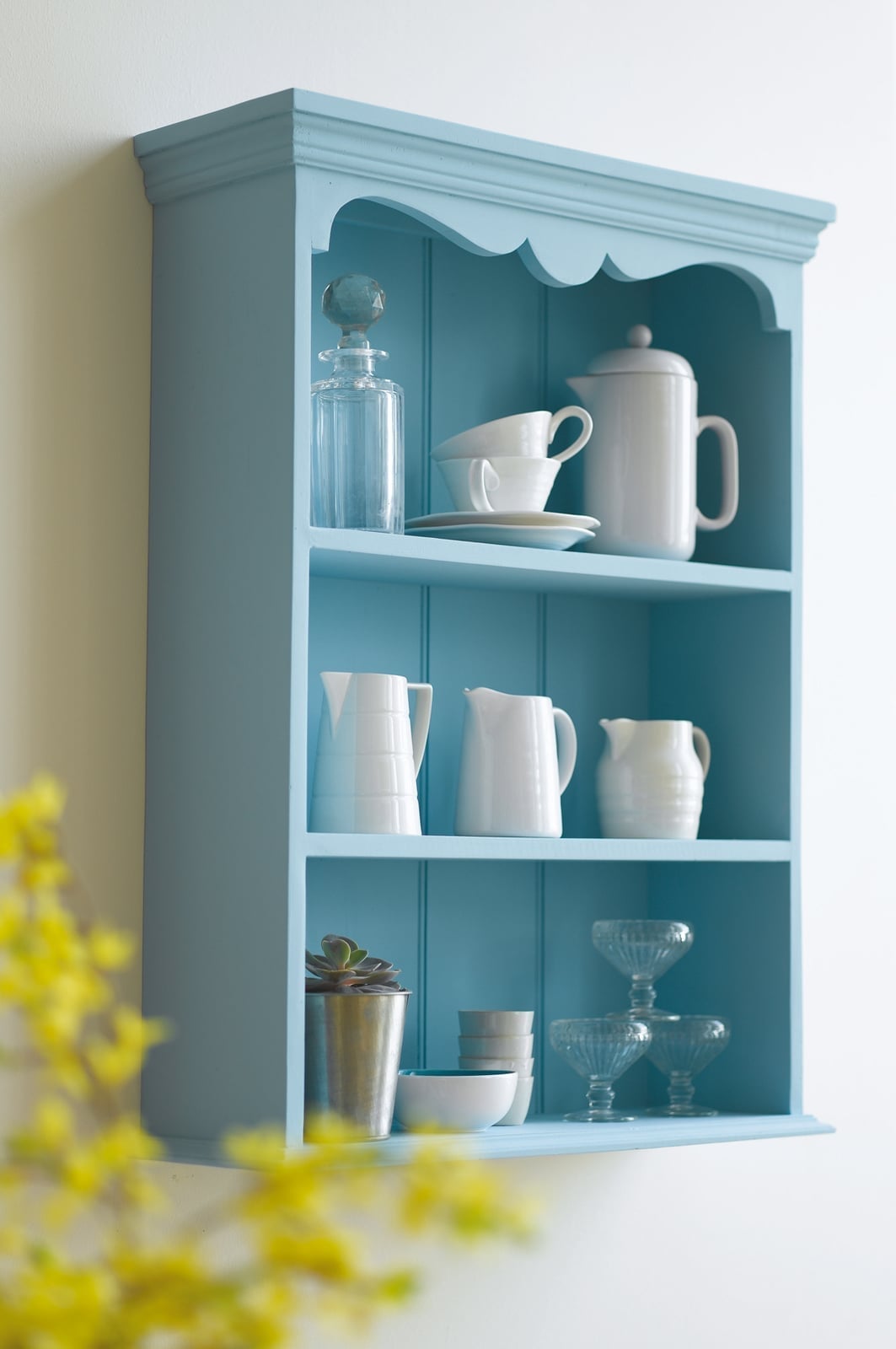
You could hang a row of floating shelves in any finish, but a single light blue cottage wall shelf with a scalloped top edge gives the same display space with more personality. This shelf holds white pitchers, teacups and a glass decanter, all objects that would look busy on a dark or bare wood shelf. The light blue paint looks an extension of the wall, so the shelf feels built-in rather than added on. The scalloped edge is the detail that sells the cottage style, and it is easy to find pre-made shelves with that profile at home improvement stores.
For keeping the look cohesive, limit the objects on the shelf to white and clear glass so the shelf color stays the star. A metal bracket in a neutral finish keeps the hardware from competing with the painted wood. This approach works for a kitchen wall, a hallway nook or a bathroom where you need a few inches of storage without committing to a full cabinet.
Final Thoughts
Blue paint proves it can be both a backdrop and a statement, depending on the shade and finish you choose. The key is matching the intensity to the room’s purpose: lighter tones for relaxation, deeper hues for drama, and glossy finishes for impact. Keep samples on your wall and observe them at different times of day before committing. With the right blue, your space will feel intentional without feeling cold. These 30 ideas give you plenty of room to experiment and find what fits your home best.