
The classy earthy bathroom in 2027 is all about grounding a space in natural materials without losing that refined edge. It’s not rough or rustic; it’s stone basins on clean vanities, warm wood beams above sleek floating cabinets, and fixtures in unlacquered brass that will patina over time.
This collection of 26 looks shows you how to balance texture and polish, from freestanding tubs with garden views to compact vanities in rattan and olive-toned wall paint. You will get practical ideas for mixing wood, stone, metal, and tile in ways that feel classic rather than trendy.
Freestanding bathtub as a garden view centerpiece
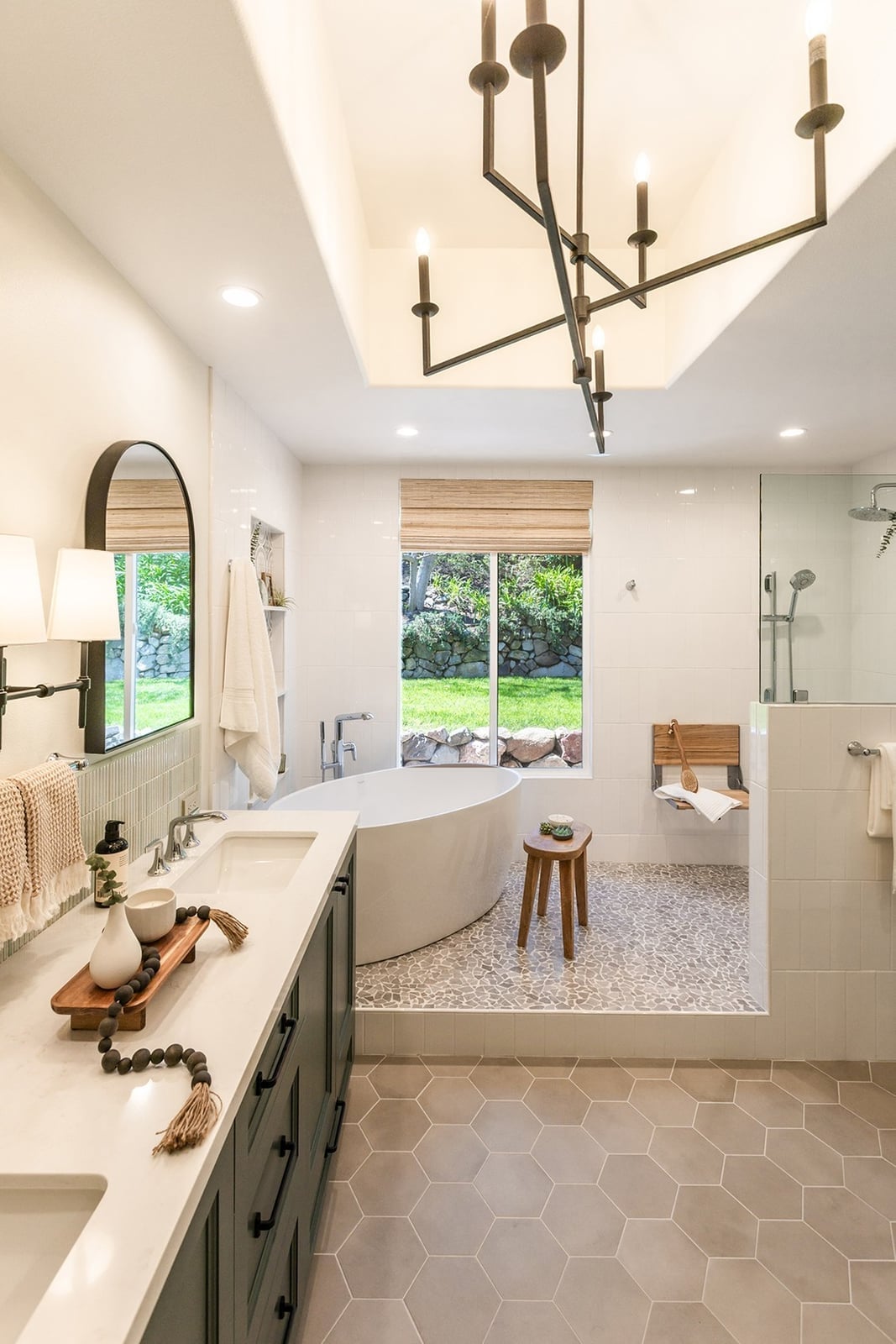
A freestanding bathtub placed near a window turns the view into part of the room. With the vanity on one side and a walk-in shower on the other, the layout stays open instead of crowding the tub into a corner. A chandelier and wall sconces keep the light soft, while the dark green accents and natural wood tones make the space feel grounded. It is a layout that treats the tub as the anchor, and everything else supports it.
Modern floating vanity with wood beam ceiling accents
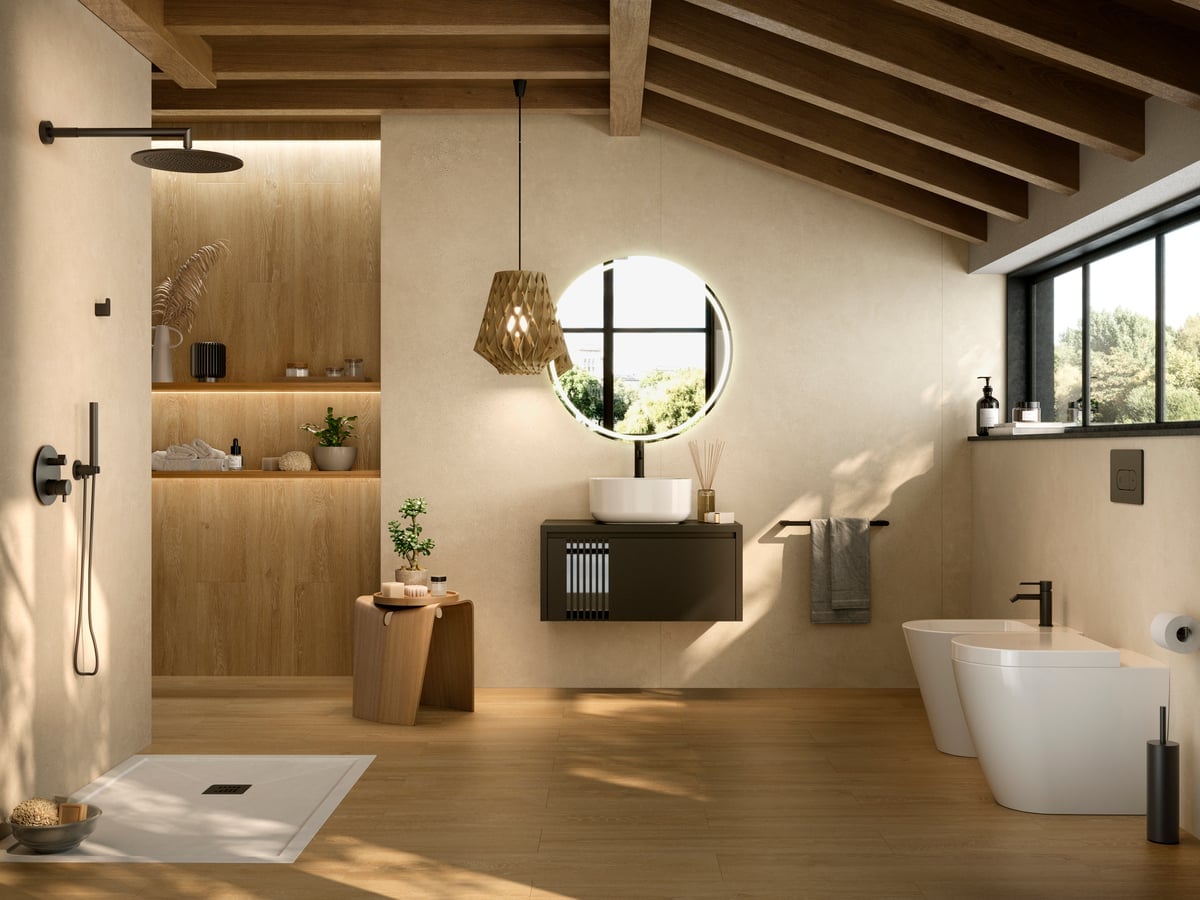
The wood beam ceiling gives this bathroom its warmth. Without it, the beige palette and black accents would lean minimalist, but the beams add texture that makes the room feel settled. The floating vanity keeps the floor visible, which helps the space breathe. The backlit mirror balances the natural light. The material mix is simple: wood, stone, metal. The beams are the defining move.
Unique wooden bathtub with brass floor faucet
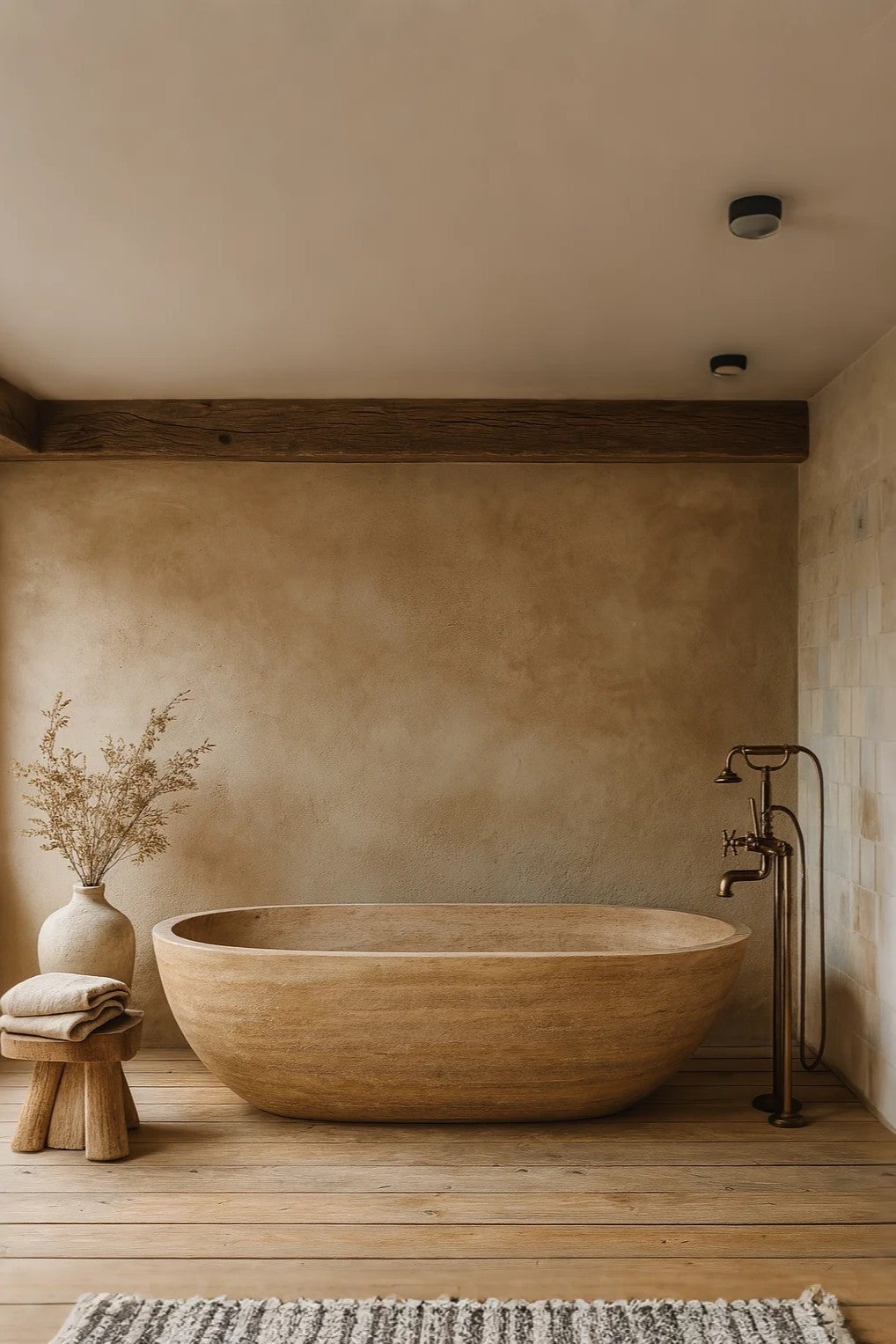
How does a wooden bathtub hold up in a bathroom? The material is sealed and the brass floor faucet adds a sculptural detail that draws the eye straight to the tub. The beige and cream stone tile keeps the room neutral, so the wood stands out without competing. A dried floral arrangement and a simple wooden stool complete the scene. The palette stays in the warm brown and cream range, and the brass is the only metallic note.
Textured stone basin with dried reed accents
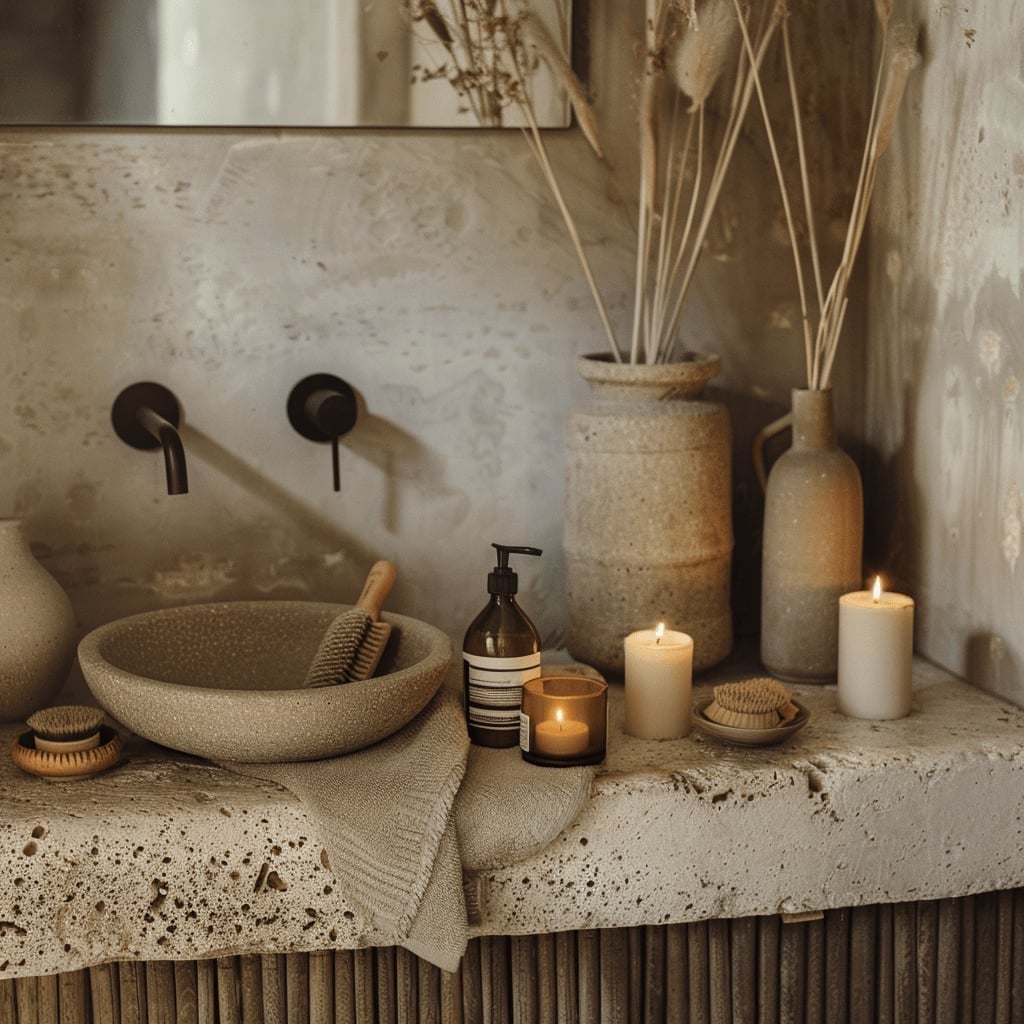
The stone basin has a rough texture that shifts throughout the day. Wall-mounted faucets keep the counter clear, so the basin stays the focal point. Dried reeds in a simple vase add height without blocking the window light. The combination of matte stone and organic accents makes the sink feel more like a sculptural element.
Marble vanity with integrated sink and bronze fixtures
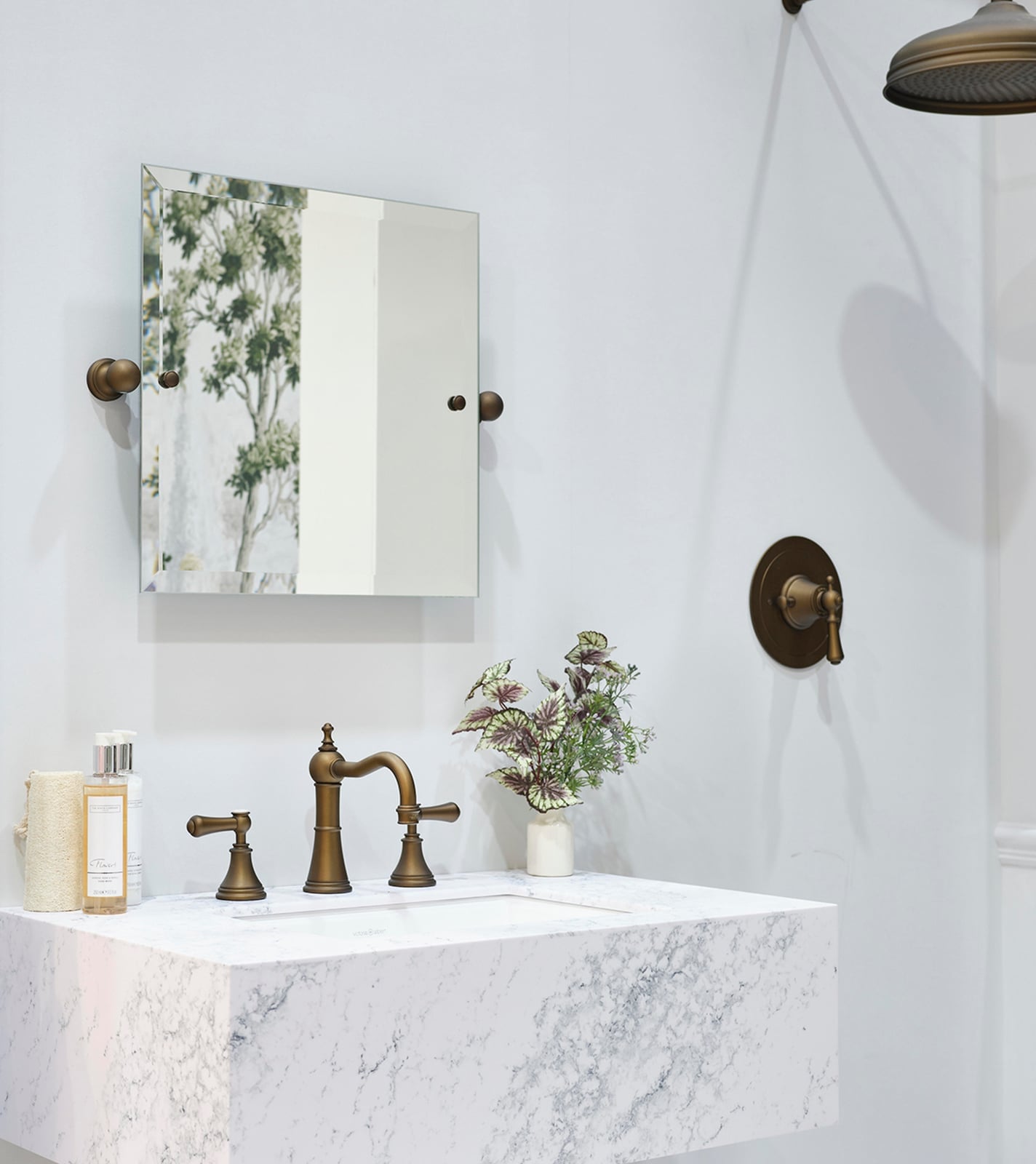
A floating marble vanity with an integrated sink eliminates the seam where grout usually traps moisture. Bronze fixtures add a warm contrast to the cool stone, and the square mirror keeps the look clean. In a compact corner layout, the wall-mounted design makes the floor feel larger. The integrated sink is a practical choice: fewer surfaces to clean and a smooth look that holds up over time.
Farmhouse vanity with starburst floor tiles
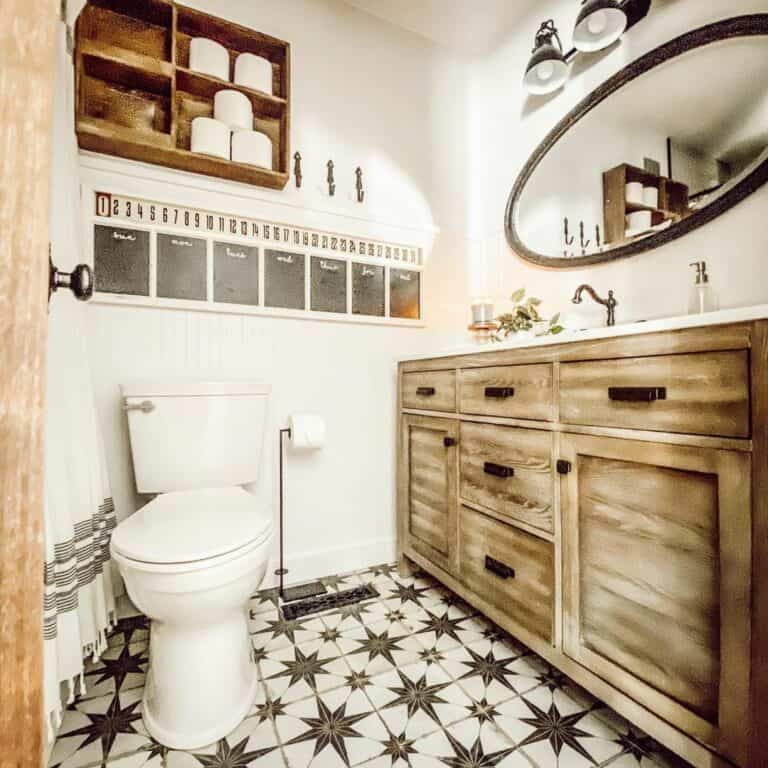
A classic farmhouse vanity with a marble top and black hardware feels right at home, but the floor tiles are what make the room memorable. The black starburst pattern against a beige background brings geometry into a space that could have stayed purely rustic. Compact bathrooms often struggle with visual weight, and this tile gives the eye a clear anchor without crowding the room. The wooden vanity stays warm and simple, while the oval mirror and wall shelf above keep the wall from feeling bare. Evening track lighting casts soft shadows across the starburst pattern, which shifts the room from bright morning farmhouse to cozy nighttime retreat.
Greenery spills from planter box over vanity
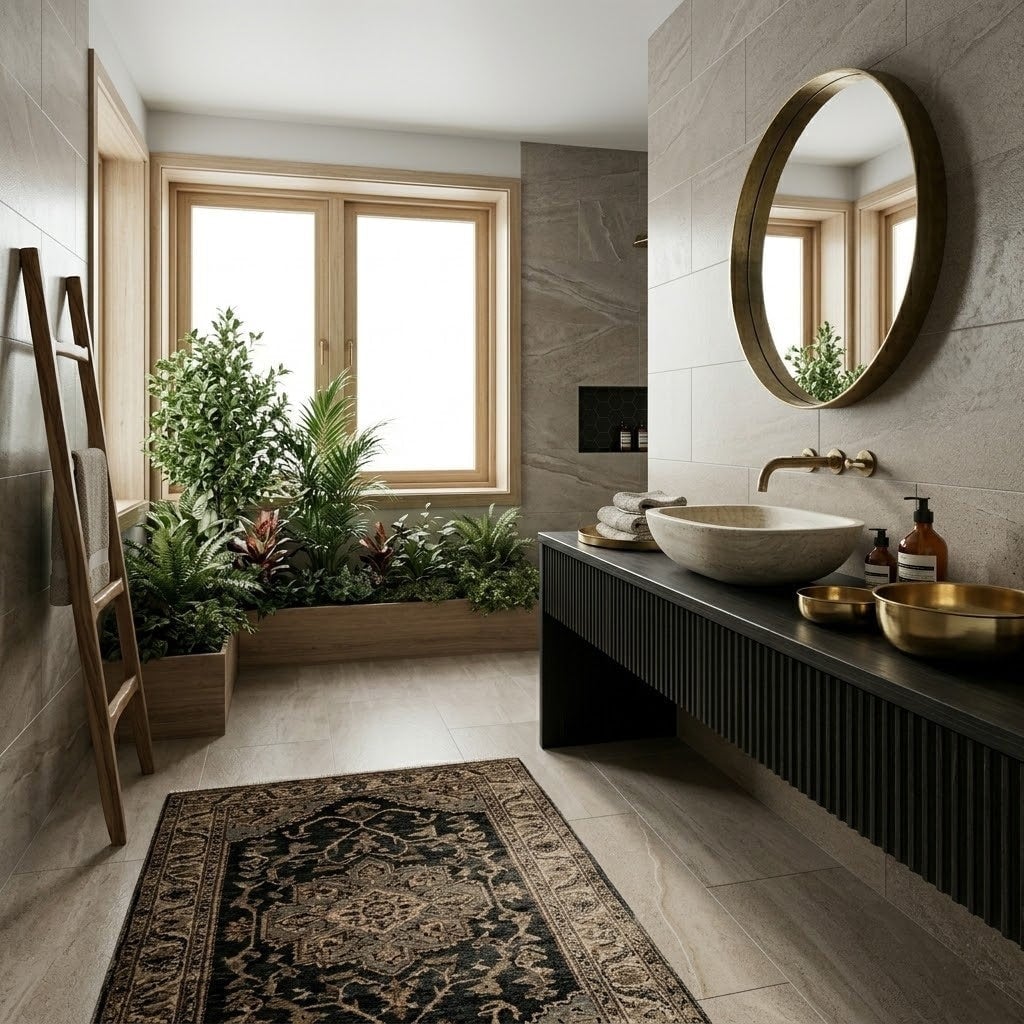
A large planter box sits on the vanity counter, spilling lush greenery down past the stone vessel sink. The mix of green leaves against beige tile and a fluted wood cabinet softens the modern lines without sacrificing the clean look. The window hits the plants directly, which keeps them full and thriving. A wooden ladder leaning nearby adds another layer of organic texture, making the whole setup feel less staged and more like the room grew that way on its own.
Hammered metal bathtub on stone floor tiles
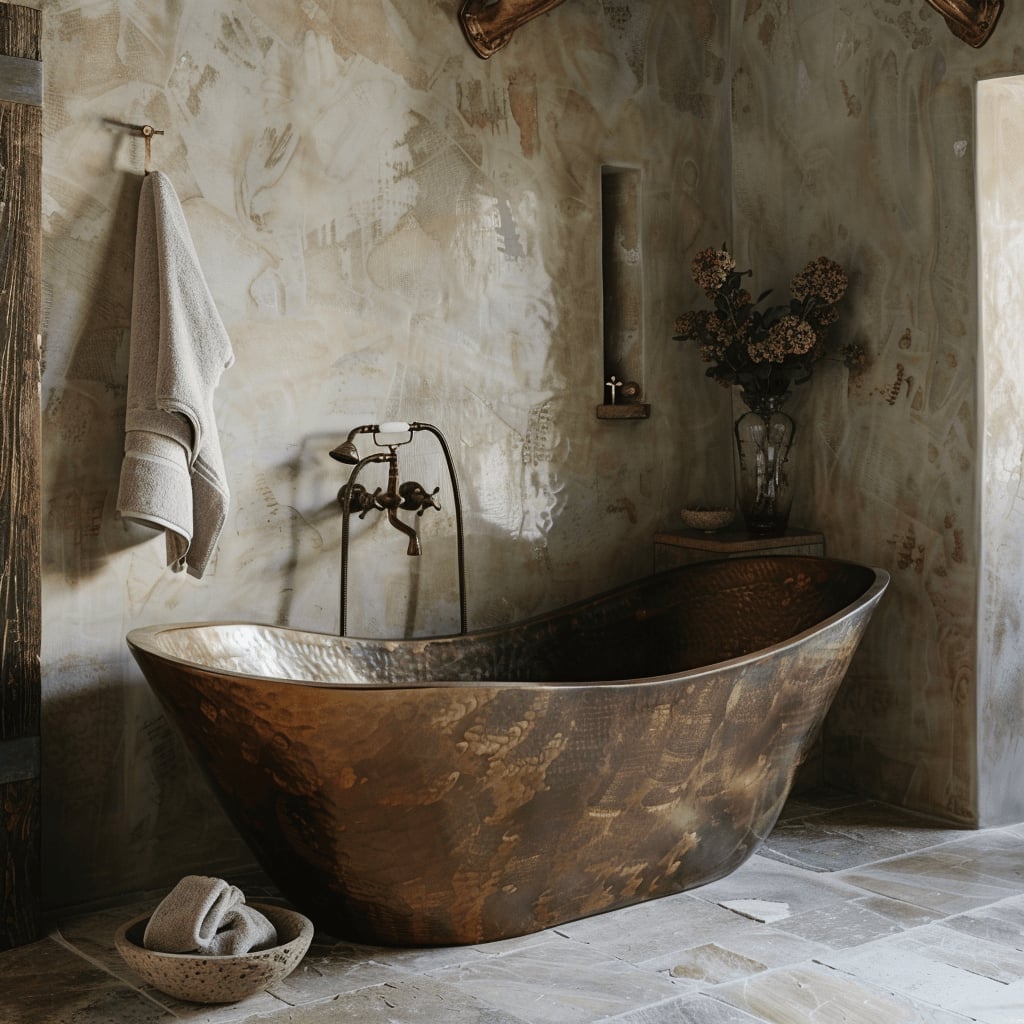
A hammered metal bathtub brings an unmistakable texture that smooth stone and concrete walls cannot match. The dark brown metal finish typically lasts two to three weeks and looks handcrafted rather than mass-produced. Paired with a vintage-style faucet and stone floor tiles in warm beige and gray, the tub becomes the room’s centerpiece. The earthy palette stays grounded: beige, brown, gray, and off-white, with no glossy finishes to break the quiet. A towel rack on the wall keeps the layout practical, so the tub can sit centered and the room still functions.
Arched wood frame surrounding double vanity
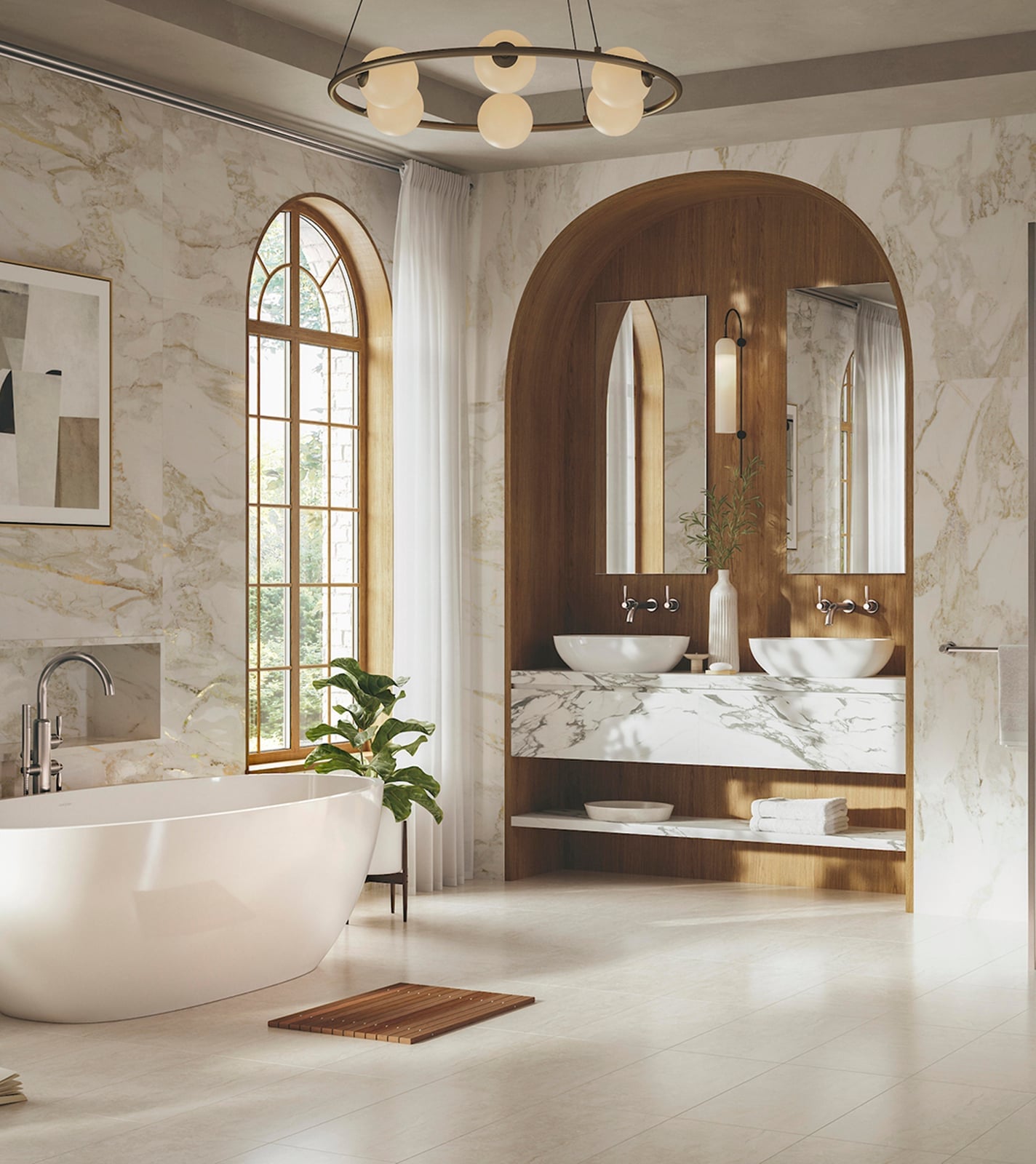
Can a single architectural detail make a whole bathroom feel intentional? In this case, an arched wood frame around the double vanity answers that question. The frame echoes the arched window nearby, creating a rhythm that ties the marble vanity and freestanding bathtub together. The room is spacious and open plan, so the arch helps define the vanity zone without building a wall. A modern chandelier and wall sconce provide evening light, while natural light from the window keeps the marble and beige palette soft during the day. The layout places the vanity behind the arch and the tub in front of it, which gives each piece its own space while keeping the room visually connected.
Rattan vanity cabinet in a compact bathroom
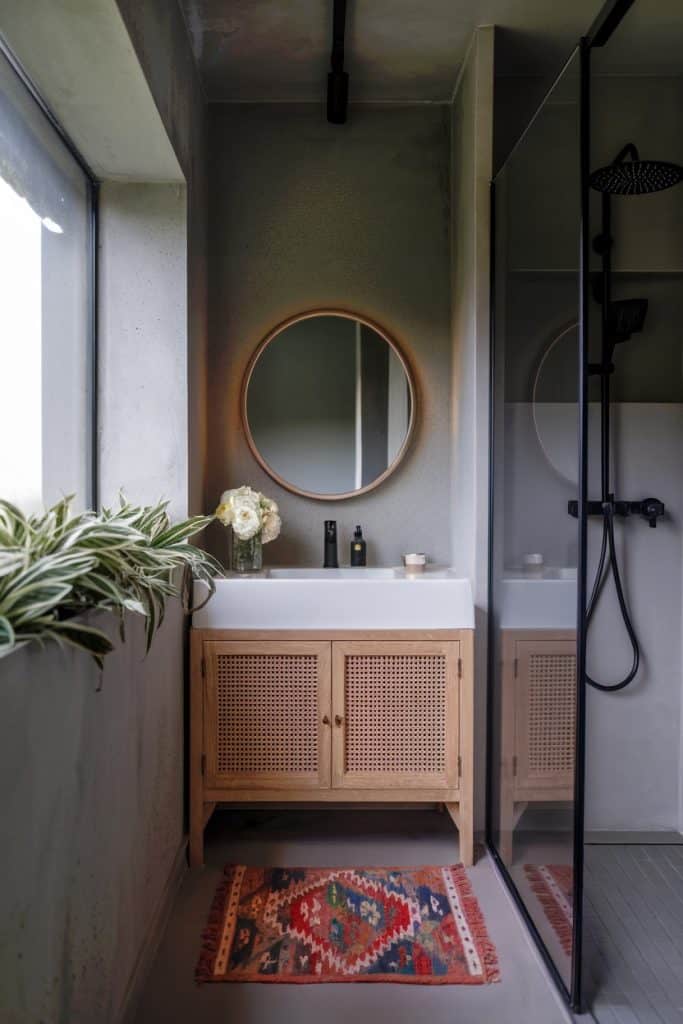
A rattan vanity cabinet brings warmth to a compact bathroom without taking up extra visual space. The woven texture contrasts nicely with the concrete countertop and white sink, adding a natural element to an otherwise gray and beige palette. A round mirror above keeps the look soft, while a patterned rug on the tile floor introduces red and blue accents that keep the room from feeling too neutral. The glass shower enclosure to the right and overhead track light make the layout work for daily use, proving that natural materials can fit into a small, modern bathroom without looking out of place.
Vessel sink sits atop marble counter
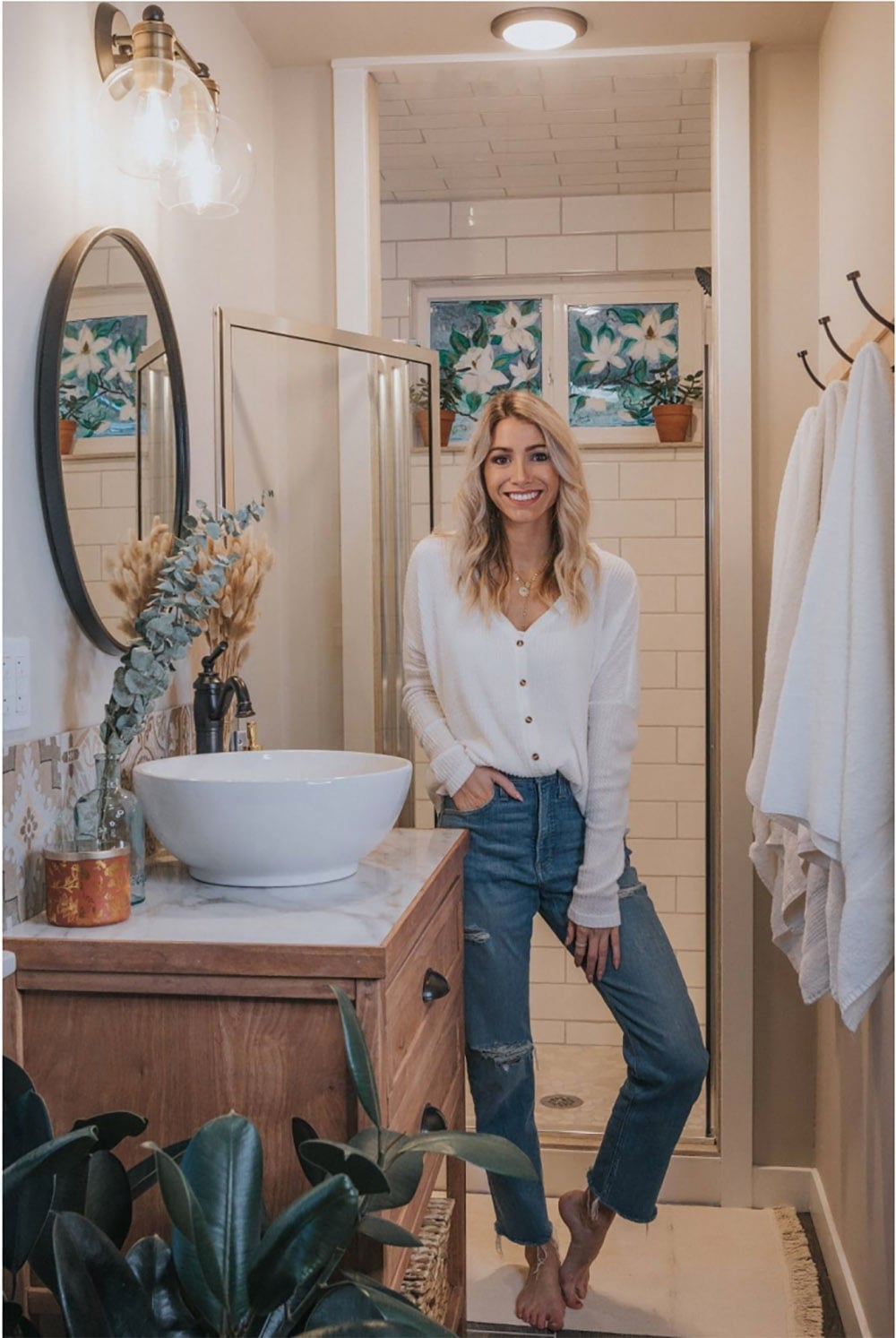
A vessel sink on a marble counter works best when the vanity beneath feels grounded. Here, a warm wood vanity with visible grain balances the cool white marble, while green subway tile in the adjacent shower adds an earthy note that ties the two materials together. The oval mirror above repeats the soft shape of the sink, and the wall sconces on either side frame the setup without competing with it. The takeaway is that a vessel sink sits high, so the counter height should feel proportional to the vanity depth. A shallow vanity under a tall sink looks top-heavy. Keep the vanity generous enough to anchor the sink visually.
Japandi stone bathtub with bamboo views
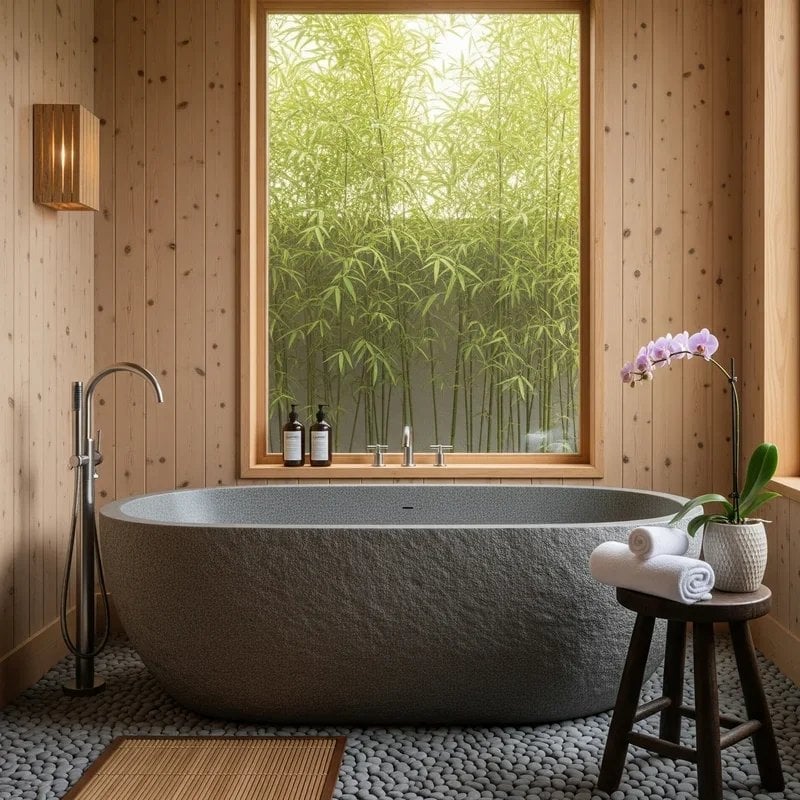
Japandi style is often described as minimal, but this bathroom proves it can also feel rich. The textured stone bathtub anchors the room, while wood paneling on the wall and a small wooden stool add warmth without clutter. A bamboo plant by the window and an orchid on the stool introduce green tones that echo the view outside, making the natural light feel carefully placed.
The palette uses a narrow range of wood tones, gray, and white, with green as the only accent. That restraint prevents the room from looking busy. The stone tub is the one heavily textured surface in the space, so the walls and floor stay smooth and simple. To recreate it, pick one tactile material and let everything else recede.
Mosaic tile shower wall with wood vanity
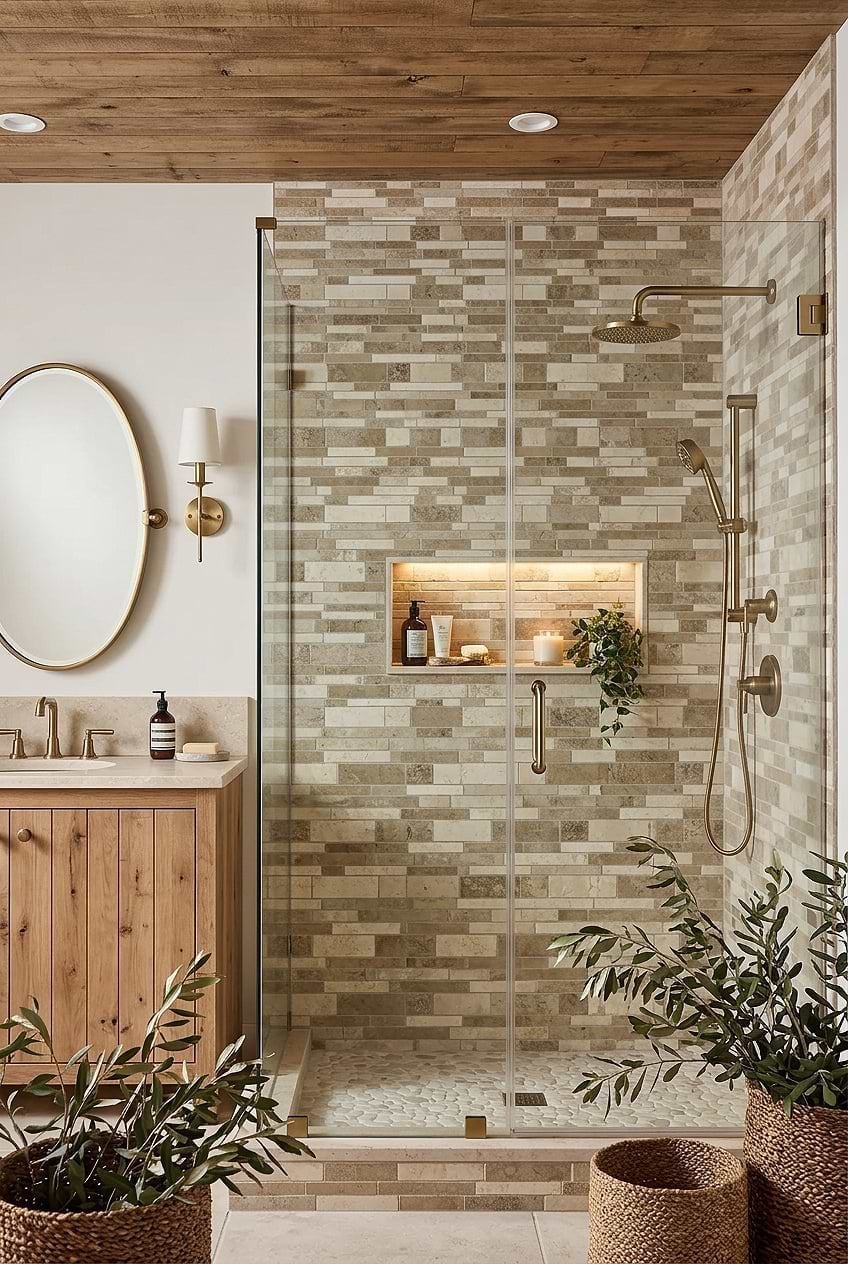
The mosaic tile shower wall is the most detailed surface in the room, so everything around it stays clean. A wood vanity with an oval mirror and a glass shower enclosure keeps the eye on the tile pattern. The rainfall shower head and recessed ceiling lights make the shower feel like its own zone, while the niche lighting adds function without extra hardware. The key is that mosaic tile works best when it covers one continuous surface, like a shower wall, rather than being cut up by windows or shelves. Keep adjacent materials smooth and the palette neutral to let the tile do the work.
Stone vessel sink on warm wooden vanity
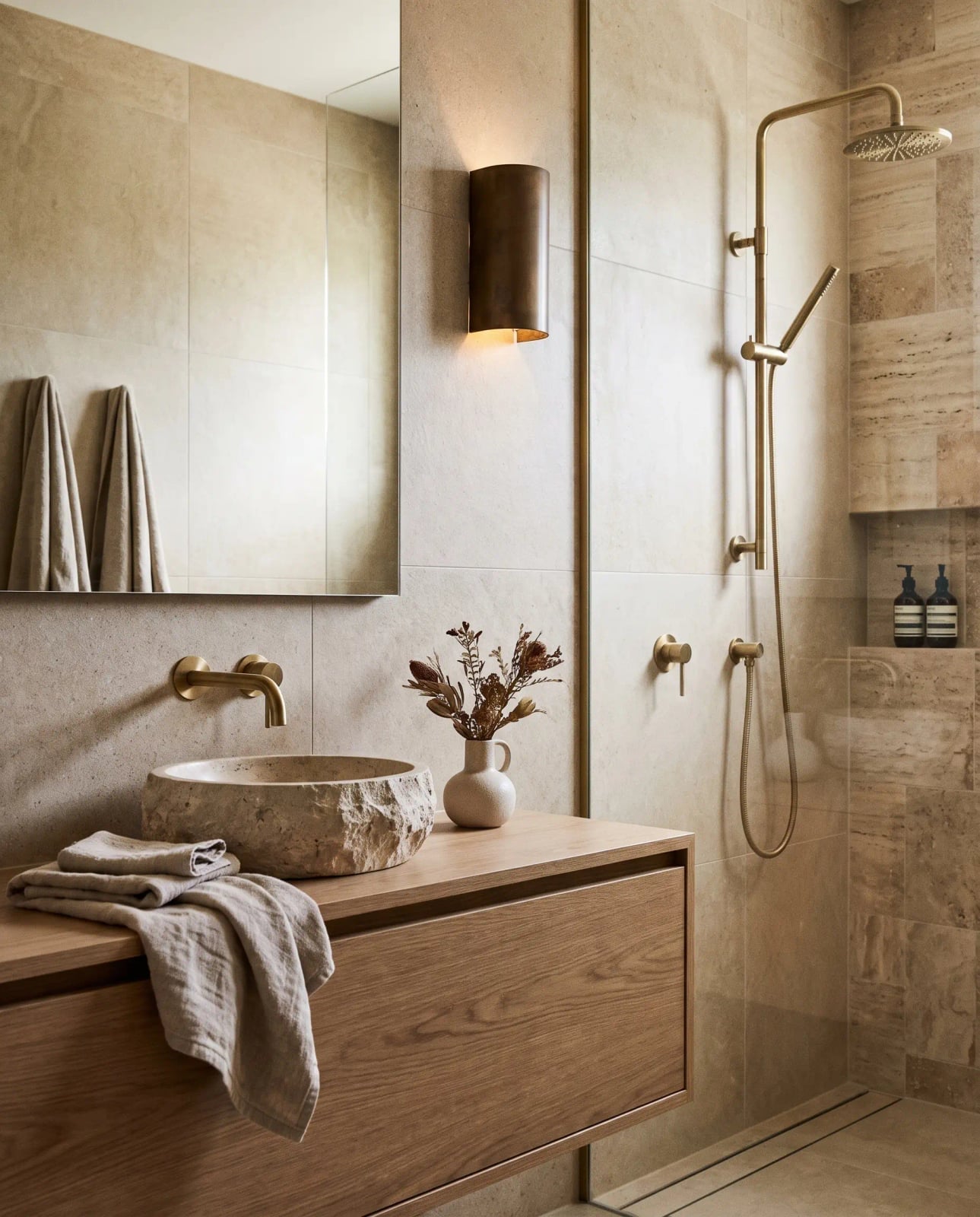
This is a compact corner setup that makes the most of limited square footage. The stone vessel sink on a warm wooden vanity is paired with a wall-mounted faucet, which saves counter space and keeps the visual line clean. A wall sconce above the mirror provides task light without taking up surface room, and the shower area is tucked nearby without crowding the sink zone. The lesson here is that a corner vanity can feel generous if the sink is the only object on the counter. Wall-mount the faucet and skip countertop storage to keep the stone vessel sink as the focal point. A small stool or basket nearby can hold essentials instead.
Backlit round mirror over floating stone vanity
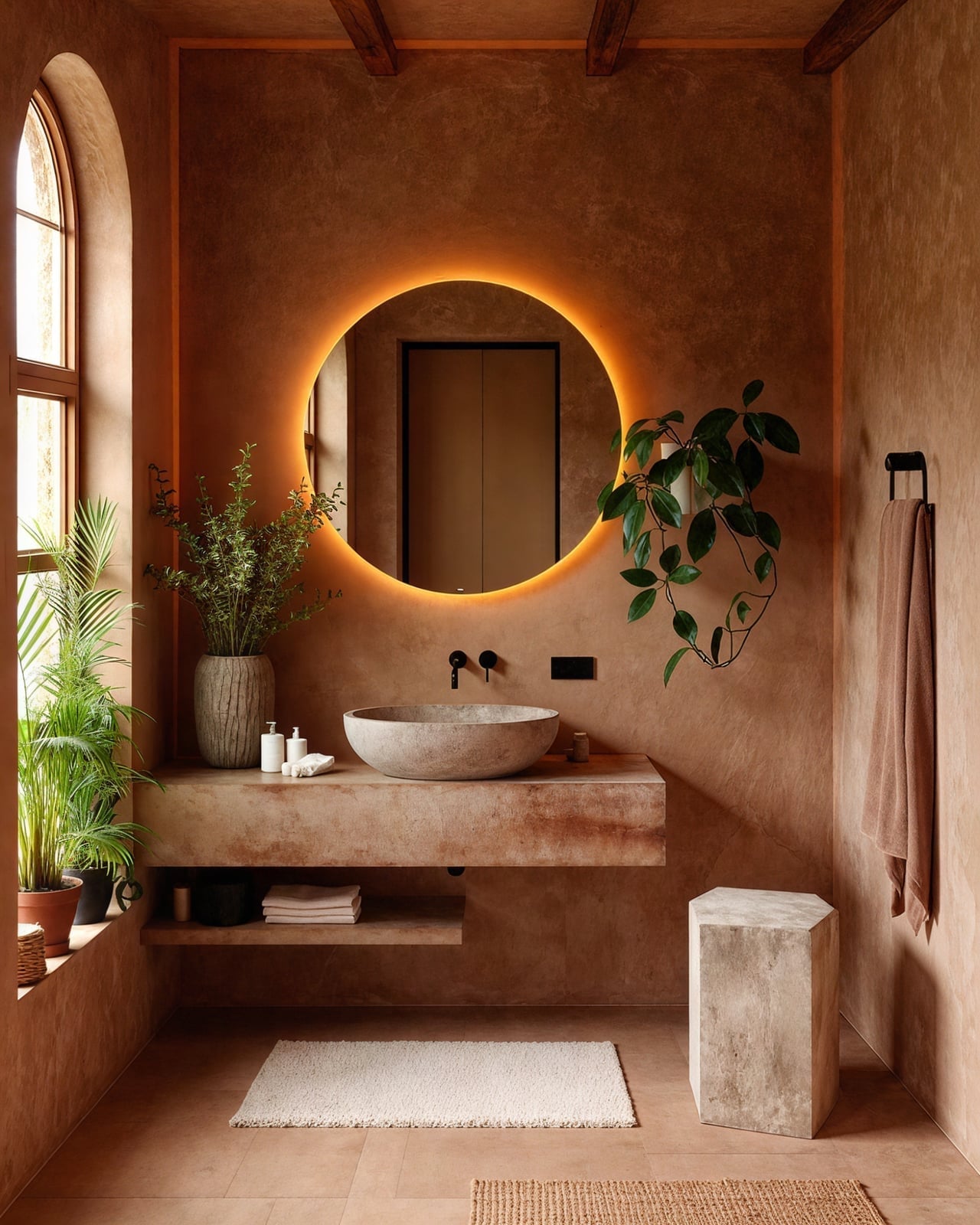
A backlit round mirror does double duty as a light source and a design element. Over a floating stone vanity, it warms the terracotta and beige palette. The floating vanity with open shelving below keeps the floor visible, which helps the room feel larger, and the hexagonal stool adds a sculptural note without taking up much space.
The practical rule here is that backlit mirrors work best when they are the primary light source over the sink. They cast light evenly on the face without shadows, which is useful for tasks like shaving or makeup. Position the mirror to reflect any natural light in the room. The plants on the open shelf add life without cluttering the counter.
Rustic lodge bathtub with snowy landscape view
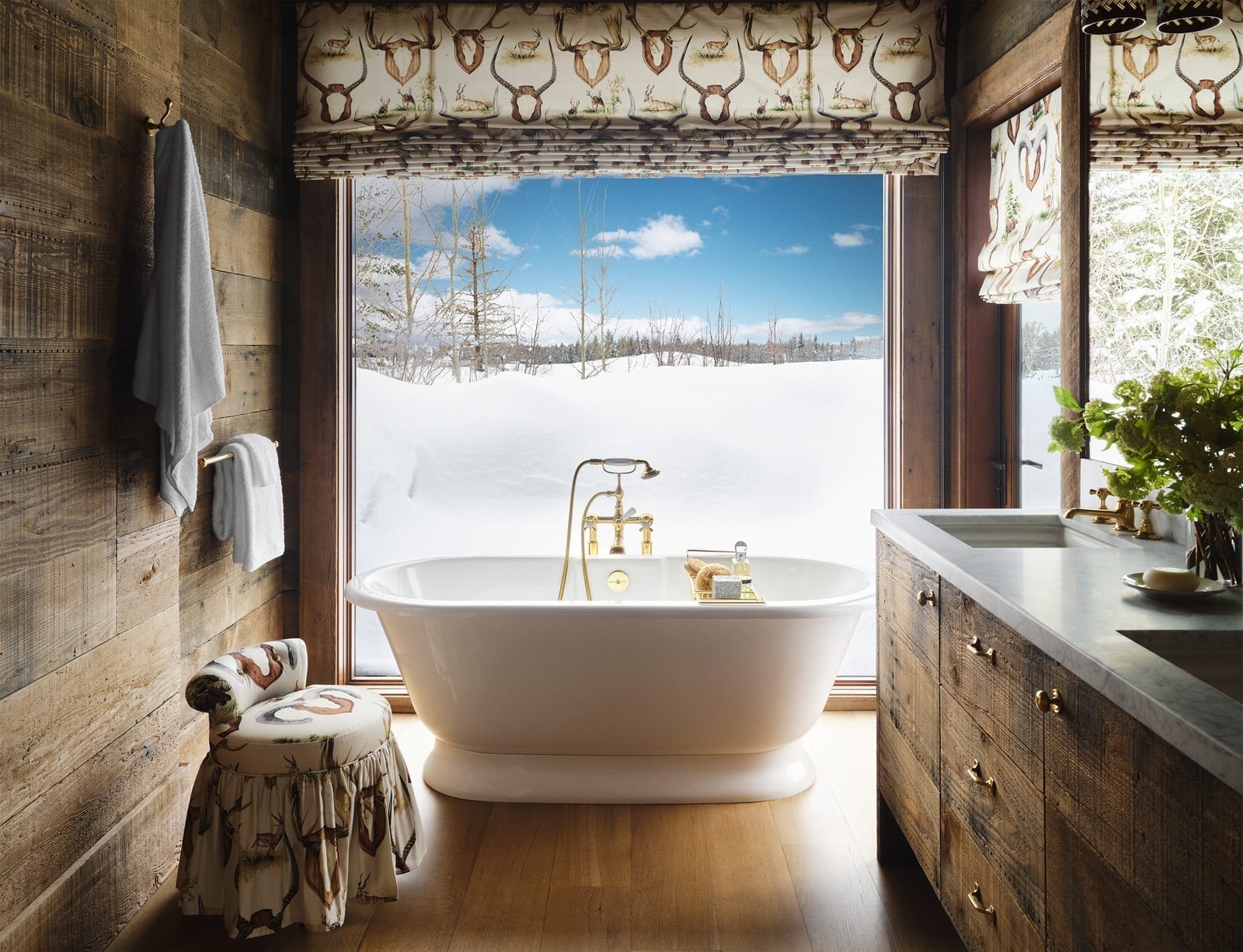
A freestanding clawfoot tub centered before a large window pulls the snowy landscape into this rustic lodge bathroom, making the view the main event. The wood paneling and marble surfaces keep the palette neutral, while brass details on the tub and a small upholstered stool add warmth without clutter. A wooden vanity sits to the right, balanced and out of the way. The layout works because the tub is the sole focal point; nothing competes with the sightline through the glass.
Boho-sharp rattan mirror and vessel sink
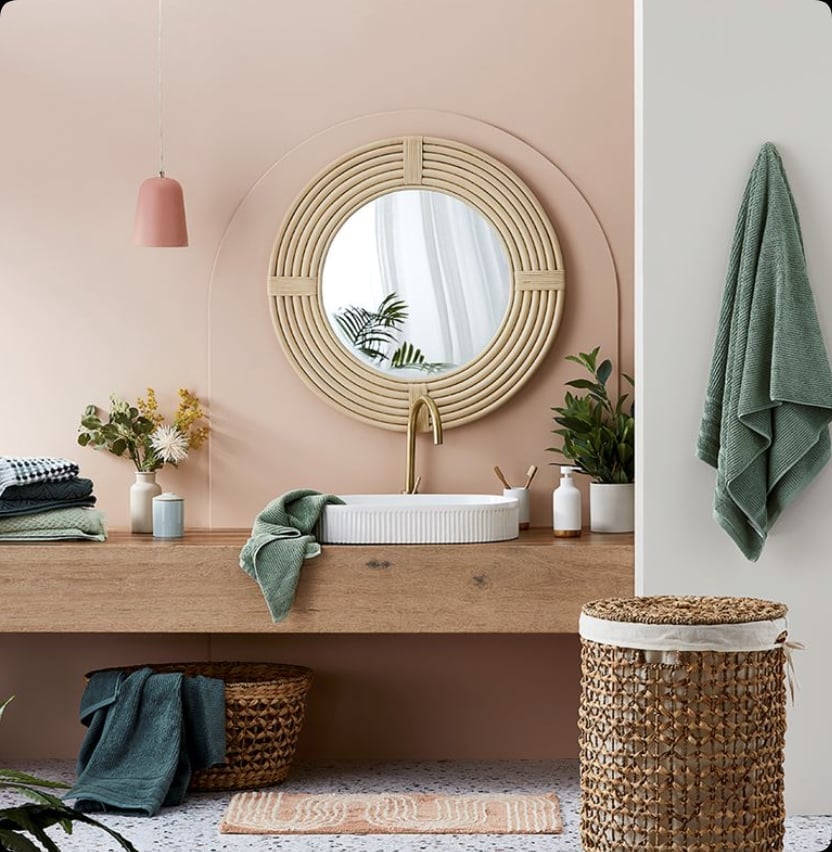
Small bathrooms work best with one focal piece and everything else supporting it. Here a round rattan mirror hangs above an oval vessel sink with a brass faucet, while a woven laundry hamper and storage baskets below the vanity handle the clutter. The pink and sage green palette keeps things soft, and a pendant light and window keep the space open. Renters can swap in a similar mirror and baskets without touching tile or plumbing; the look comes from texture, not permanent changes.
Veined stone bathtub with arched window light
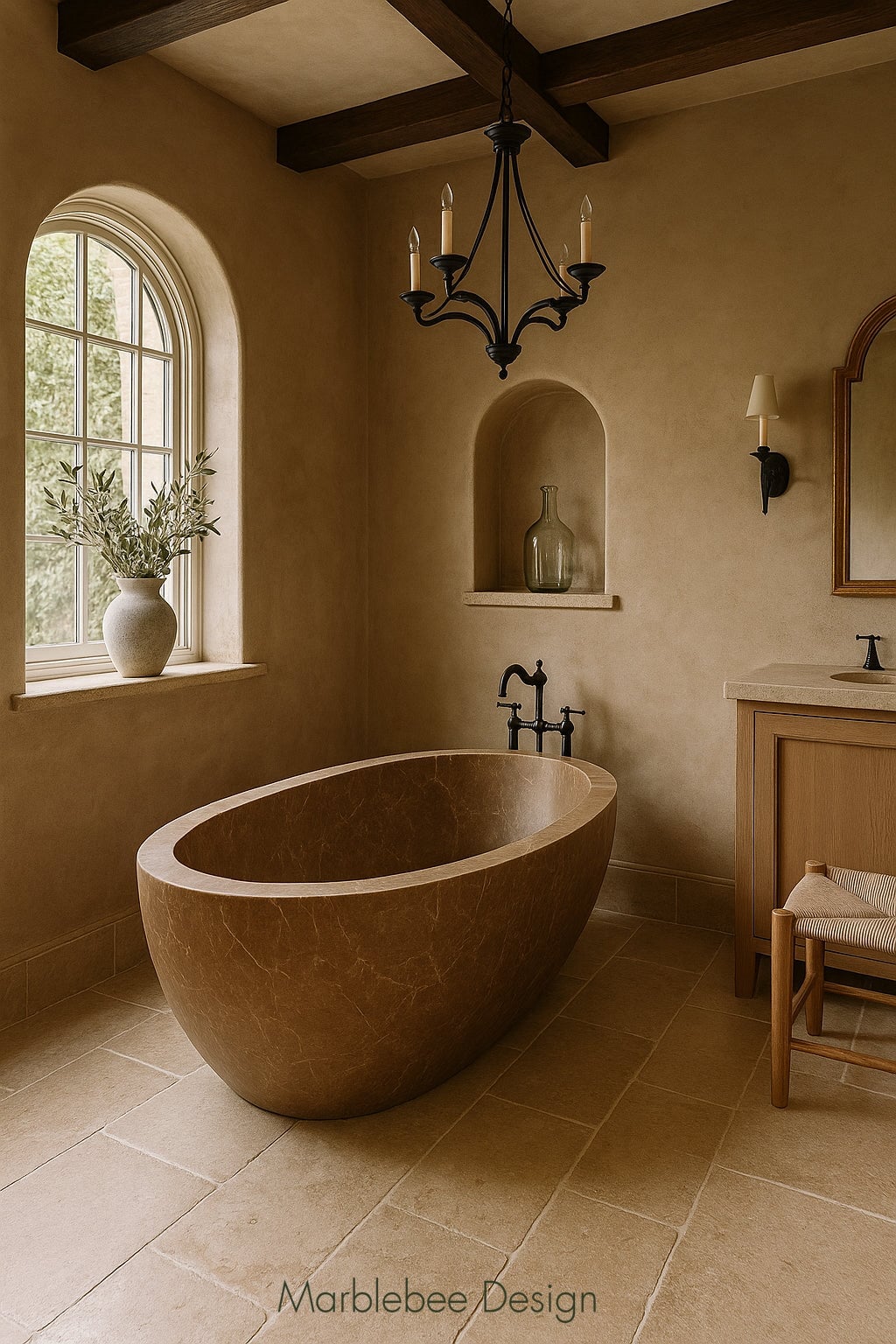
A veined stone bathtub anchors this earthy bathroom in a way that a standard acrylic tub cannot. The natural variations in the stone become the room’s main texture, so the finishes can stay simple: a wooden vanity, a woven stool, and beige tiles on the floor. The arched window on the left pours in daylight, and a wrought iron chandelier and wall sconce provide evening light.
The key difference between this and a spa bathroom is the mix of old and new. The chandelier and sconce have a traditional shape, but the stone tub feels ancient rather than neat. That contrast keeps the room from feeling like a catalog page. The layout puts the tub centered, vanity to the right, window on the left, so the eye moves easily across the space.
Olive green walls with light beige vanity
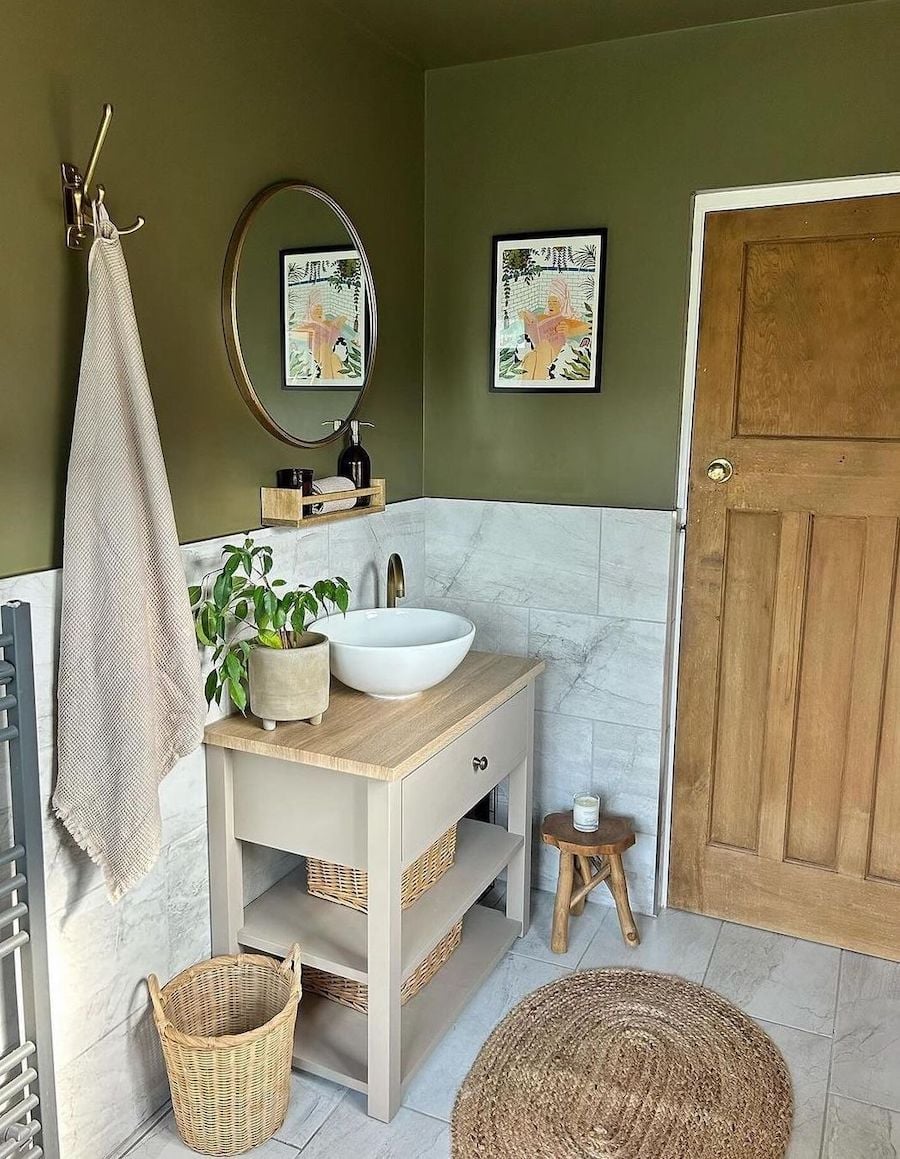
Olive green walls pull this compact bathroom into the earthy category without natural stone or wood paneling. The light beige vanity and marble tile backsplash prevent the space from feeling dark, while open shelves hold wicker baskets that add storage and texture. A round mirror and wooden stool complete the setup. The palette works because the green is muted, not bright; it looks a wall color, not an accent. Overhead light and window light balance the room for both morning and evening use.
Clawfoot bathtub with terracotta tile flooring
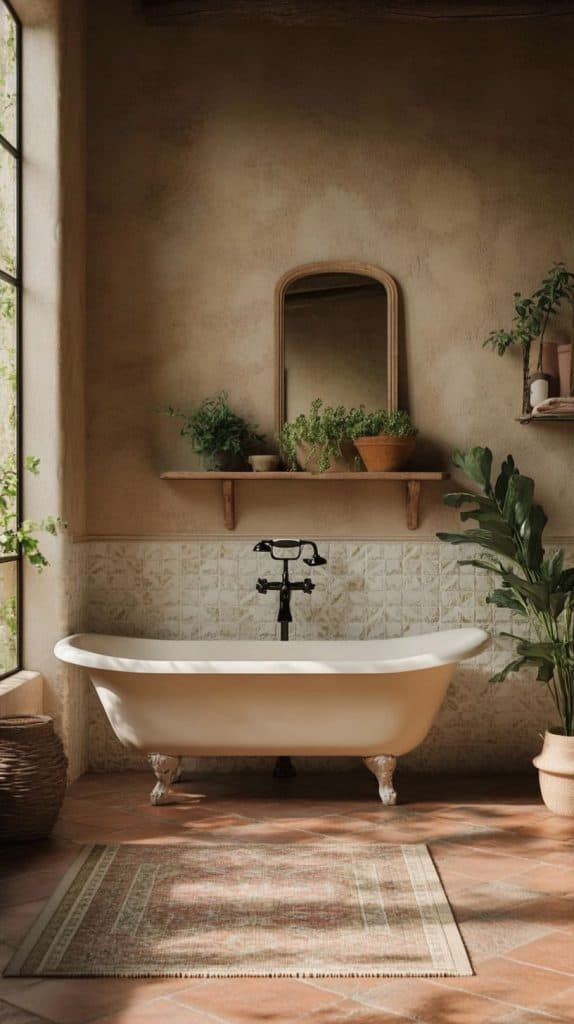
This roomy bathroom pairs a clawfoot bathtub with terracotta floor tiles, and the combination works because both materials have a matte, earthy finish. The tub is centered, with an arched mirror and a wooden shelf above, while a patterned rug and potted plants soften the tile. Terracotta is a durable choice for bathroom floors when sealed properly; it holds up to moisture and adds warmth that cooler stone cannot match. The green accents from the plants tie the terracotta to the cream walls, making the whole palette feel intentional.
Travertine tile rain shower with deep green vanity
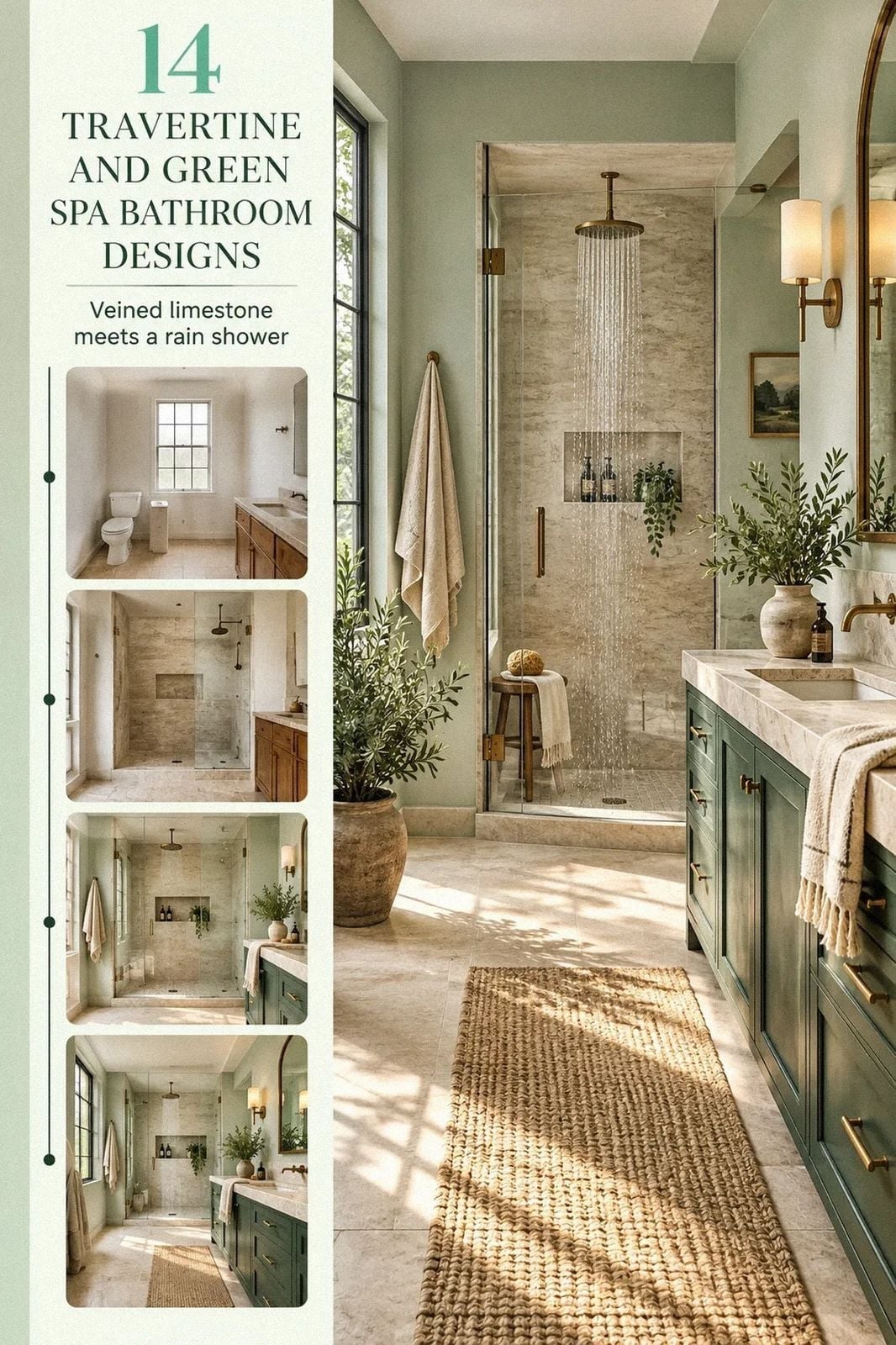
To create an earthy spa bathroom, let one natural material set the tone and build the palette around it. Here, travertine tile wraps the rain shower enclosure, its beige and cream veining grounding the space. Across the room, a deep green vanity adds weight without competing with the stone. A glass shower enclosure keeps the sightline open, while a jute runner on the floor introduces texture. Wall sconces cast warm light across the marble counter, and a large potted plant brings in life. The layout works because the vanity sits opposite the shower, creating a balanced walkway. The palette stays in the sage, beige, cream, and gold family, so nothing feels mismatched.
Sculptural wood vanity with organic modern style
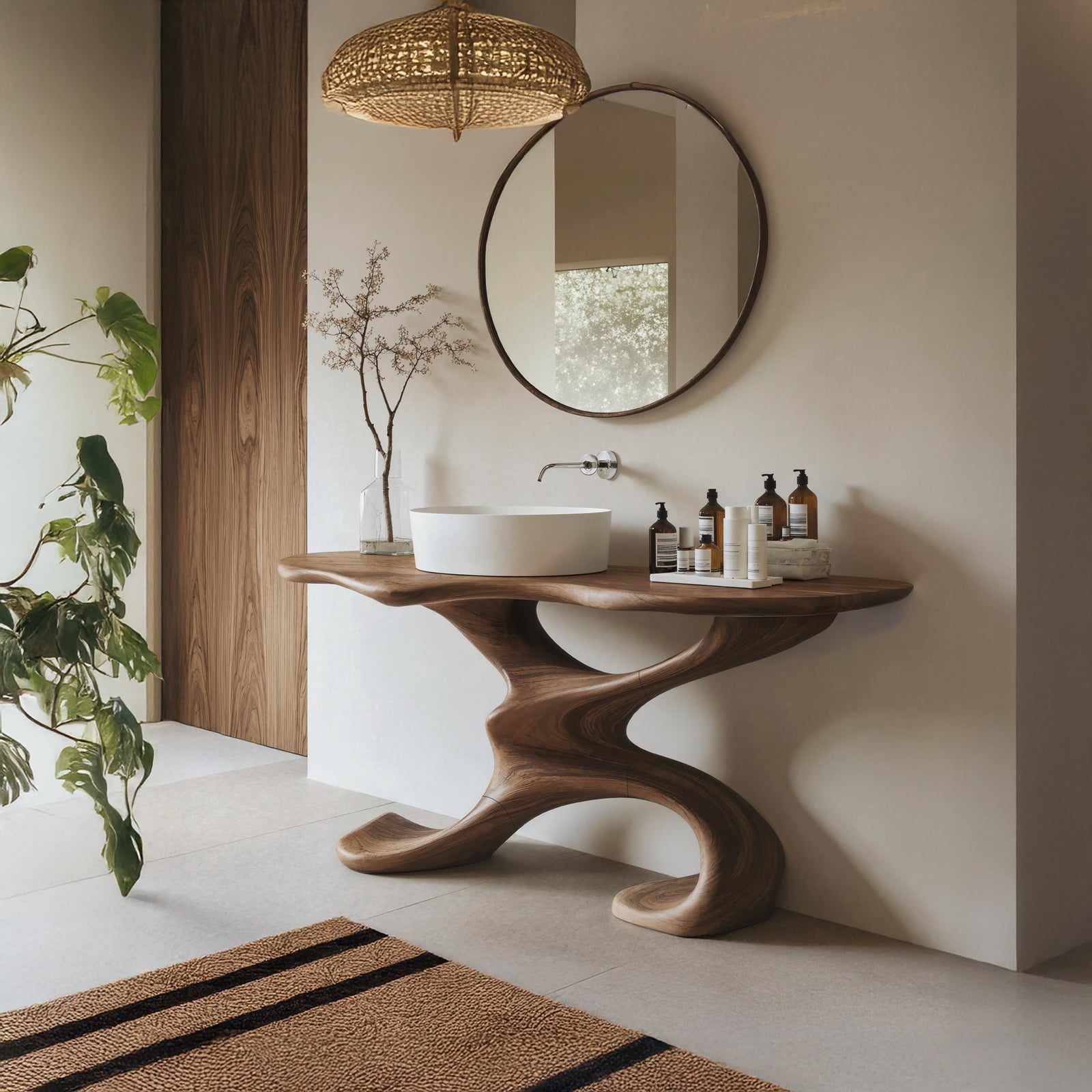
The sculptural wood vanity base is the defining piece here, its carved form adding a natural, almost hand-hewn quality to the room. Paired with a stone vessel sink and a round mirror, the vanity becomes the focal point without needing much else. A pendant light hangs above, casting light that catches the wood grain. The palette stays quiet: beige, brown, white, and green, letting the vanity’s silhouette do the talking. This setup suits anyone who wants a bathroom that feels like a calm, considered space rather than a collection of fixtures.
Pebble floor in tan tiled shower
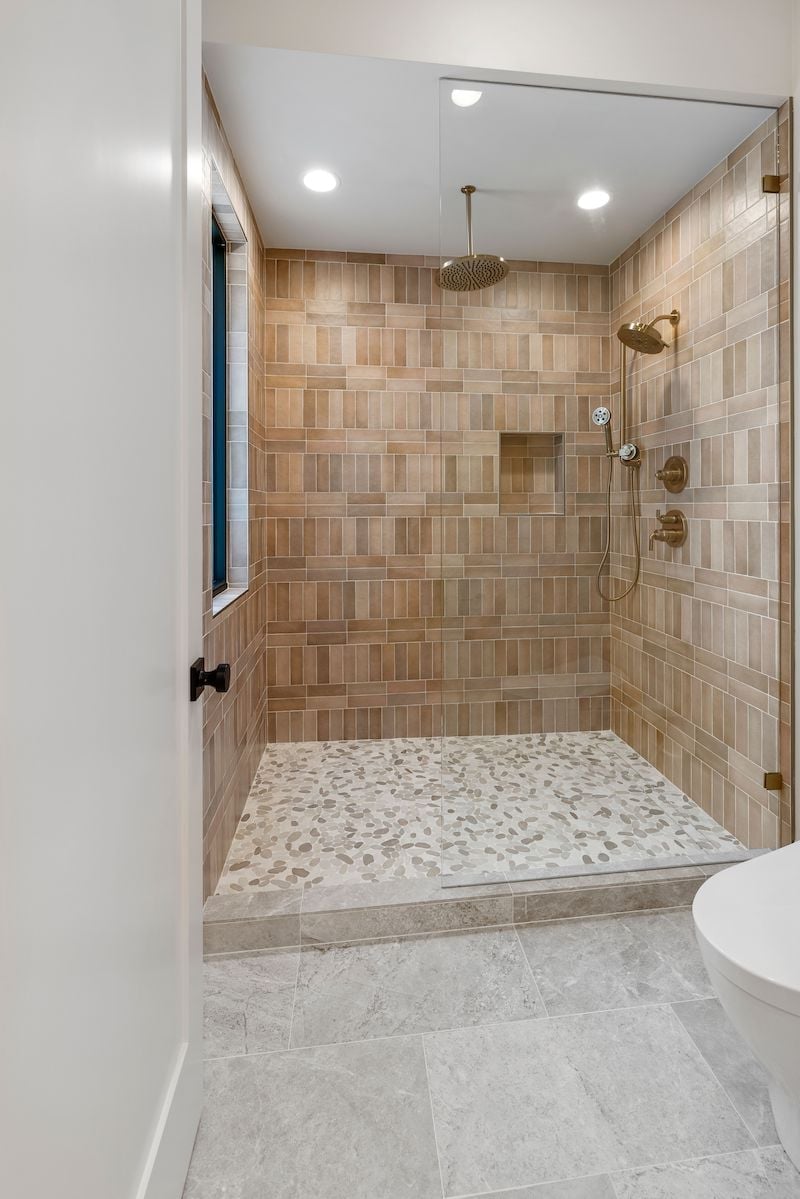
A pebble floor in a tan tiled shower adds tactile interest underfoot while keeping the palette cohesive. The two-toned floor mixes rounded stone with smooth tile, creating a visual break that also helps with grip. A rain shower head and a handheld shower are mounted on the wall, with a built-in niche for bottles. The glass door keeps the enclosure open to the room. Brass fixtures add a warm metallic note against the tan and beige tones. This approach works well when you want the floor to feel like a feature.
Rough-hewn stone sink on rustic wooden vanity
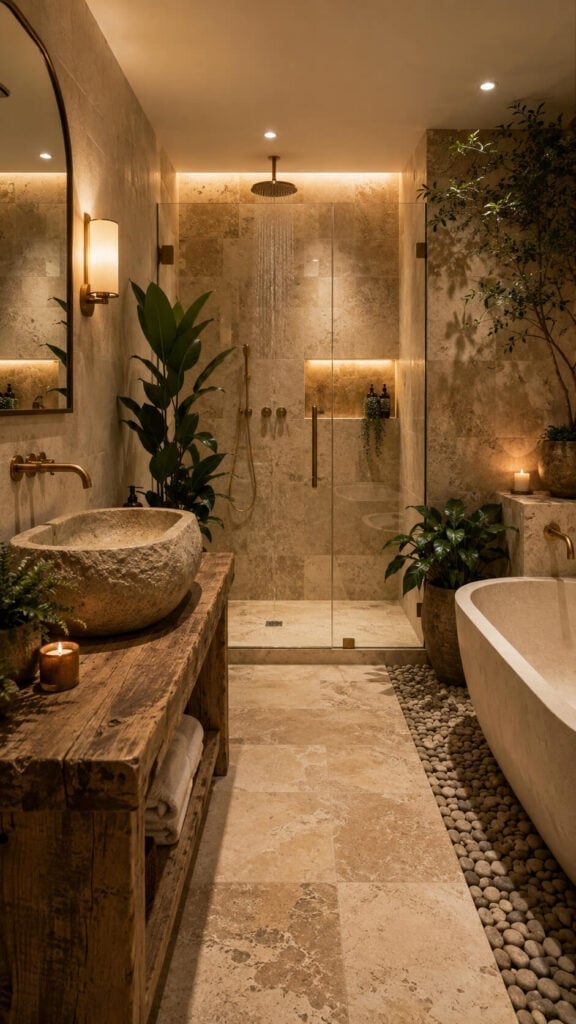
A rough-hewn stone sink might feel like a gamble in a bathroom, but here it works because the surrounding finishes lean into its raw character. Instead of neat everything, the room pairs the sink with a rustic wooden vanity, warm ambient light from a wall sconce, and a pebble-textured floor. The shower in the back and the freestanding tub on the right keep the layout open. The stone sink becomes the anchor, its uneven surface catching light differently than a smooth basin would. The key is balance: the wood is warm, the stone is cool, and the brass fixtures bridge the two. This setup suits anyone who prefers a bathroom that feels grounded rather than glossy.
Warm wood cabinet below stone counter
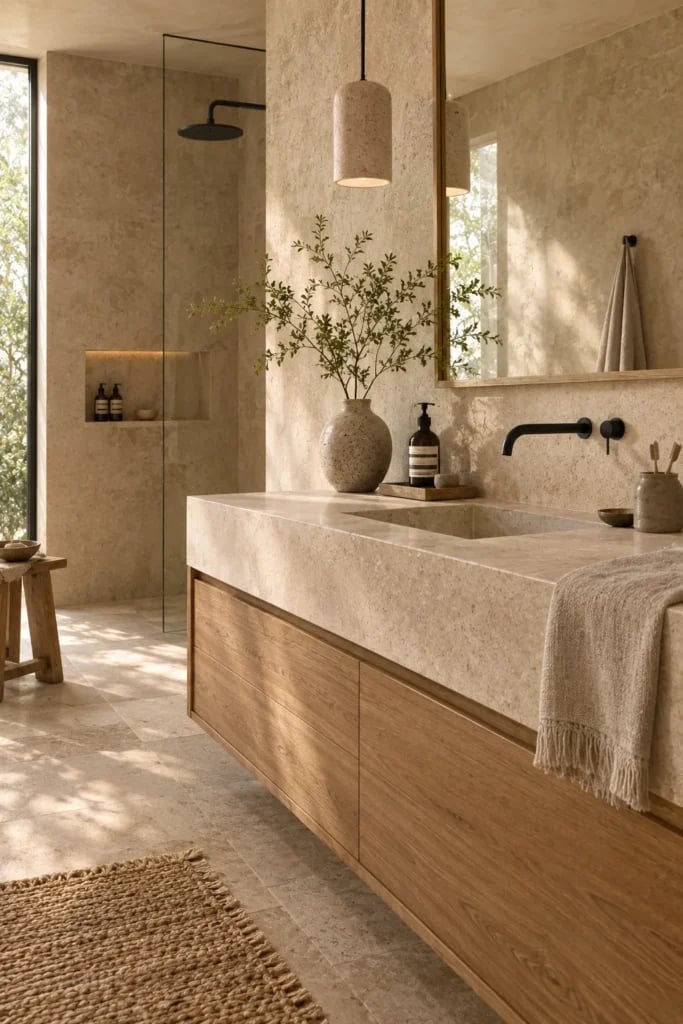
A warm wood cabinet below a stone countertop gives the vanity a solid, grounded feel. The floating design keeps the floor visible, making the room feel larger. A stone vessel sink sits on the counter, with a pendant light overhead and natural light coming from a nearby window. The wood tones warm up the stone, while black accents on the faucet and mirror add a subtle edge. This combination works for anyone who wants a bathroom that feels modern without losing a sense of natural warmth.
Dusty rose freestanding bathtub with sage green walls
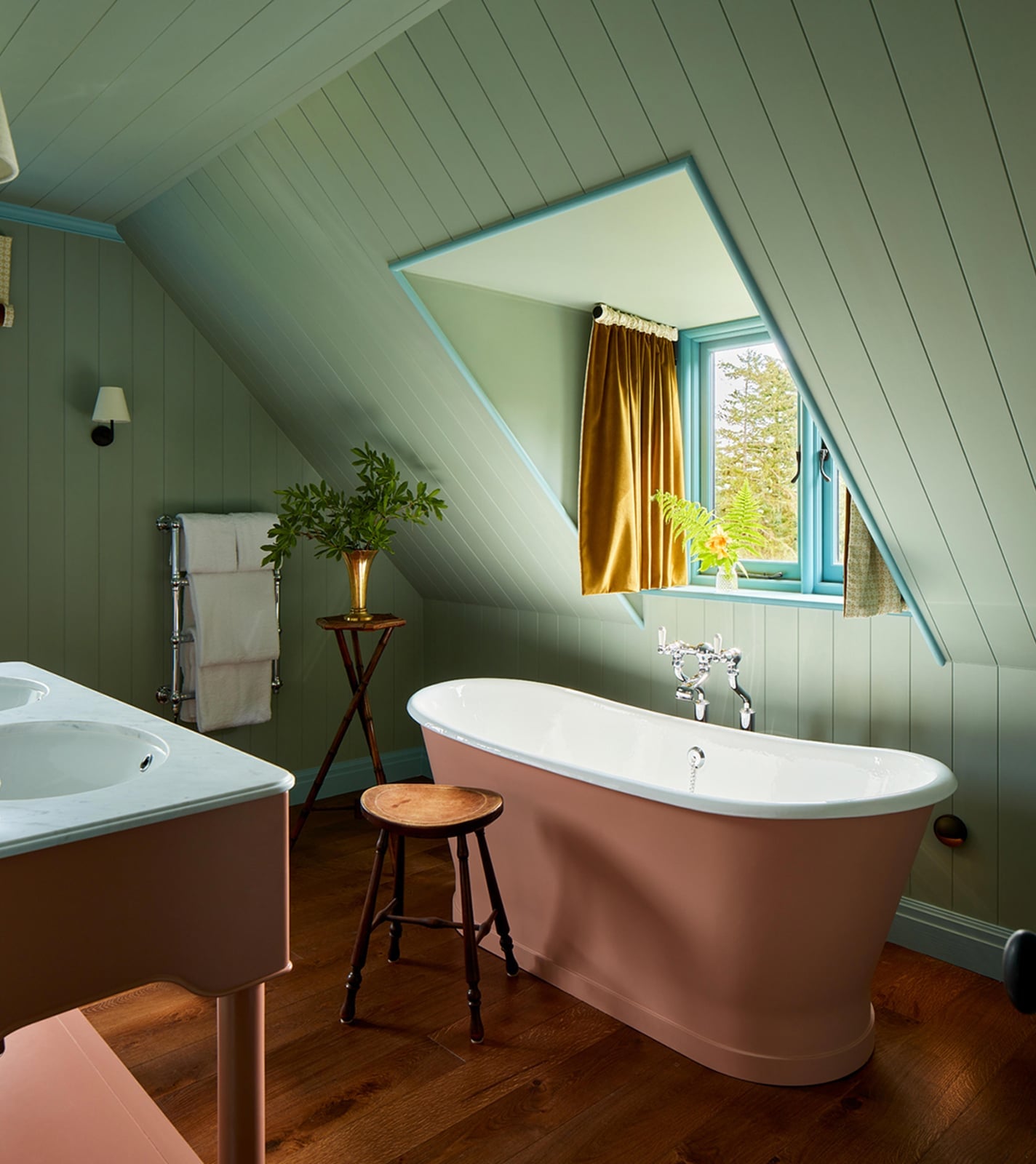
A dusty rose bathtub against sage green walls is a color pairing that feels both unexpected and settled. The room keeps the palette in check by using the green as a steady backdrop and letting the pink tub claim attention without competing. A wooden double vanity and a small stool add warmth, while blue accents and gold wall sconces bring in contrast without clutter. The dusty rose shade is balanced by the green wall color. Limit the pink to one major piece and echo it sparingly in small accessories to avoid a themed look. For a renter-safe swap, try a pink bath mat or shower curtain against an olive wall instead of committing to a tub.
Final Thoughts
A classy earthy bathroom in 2027 is not about filling every surface with stone and wood. It is about choosing a few natural elements and letting them anchor the room. The freestanding tub, the stone sink, the wood vanity each do their part. The rest stays simple. If you pick one material and commit to it, the room will feel intentional without trying hard. Check your climate zone before adding plants or wood finishes near moisture. That small step saves you from refinishing work down the road. Let the materials age naturally and keep the palette quiet.