
Planning a garden that feels simple and intentional starts with the bones. For 2027, the trend is less about fussy flower beds and more about layout, texture, and how you use the space. We’ve gathered 35 ideas that focus on clean lines, natural materials, and plant combinations that do the work for you.
Whether you have a tiny courtyard or a sprawling backyard, these looks are built to live in, not just look at. Expect stone paths, raised beds, and seating areas that feel like a natural extension of your home, not an afterthought.
Eclectic garden shed with mosaic Art and tiered planters
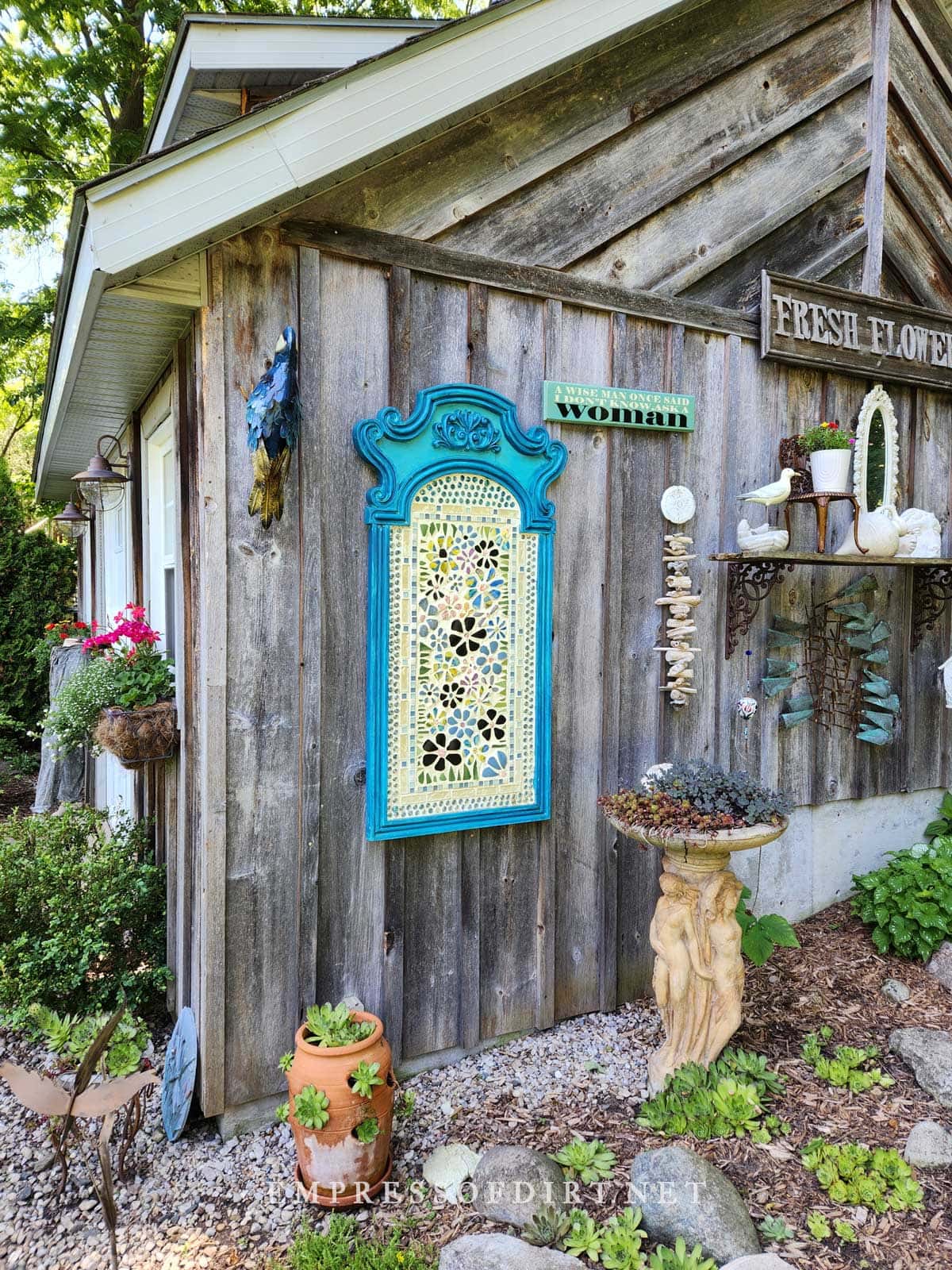
A teal mosaic art panel turns a plain shed wall into the focal point of the yard. The vertical panel anchors the eye, while a bird bath, hanging planter, and terracotta pots cluster at the base. The palette mixes teal, yellow, green, black, and wood tones without feeling busy because the art sets the color story. A practical layout trick for an eclectic garden shed mosaic art look: group smaller planters at ground level so the wall piece reads clearly, not lost in a jumble.
Modern backyard with natural stone pond and gravel seating area
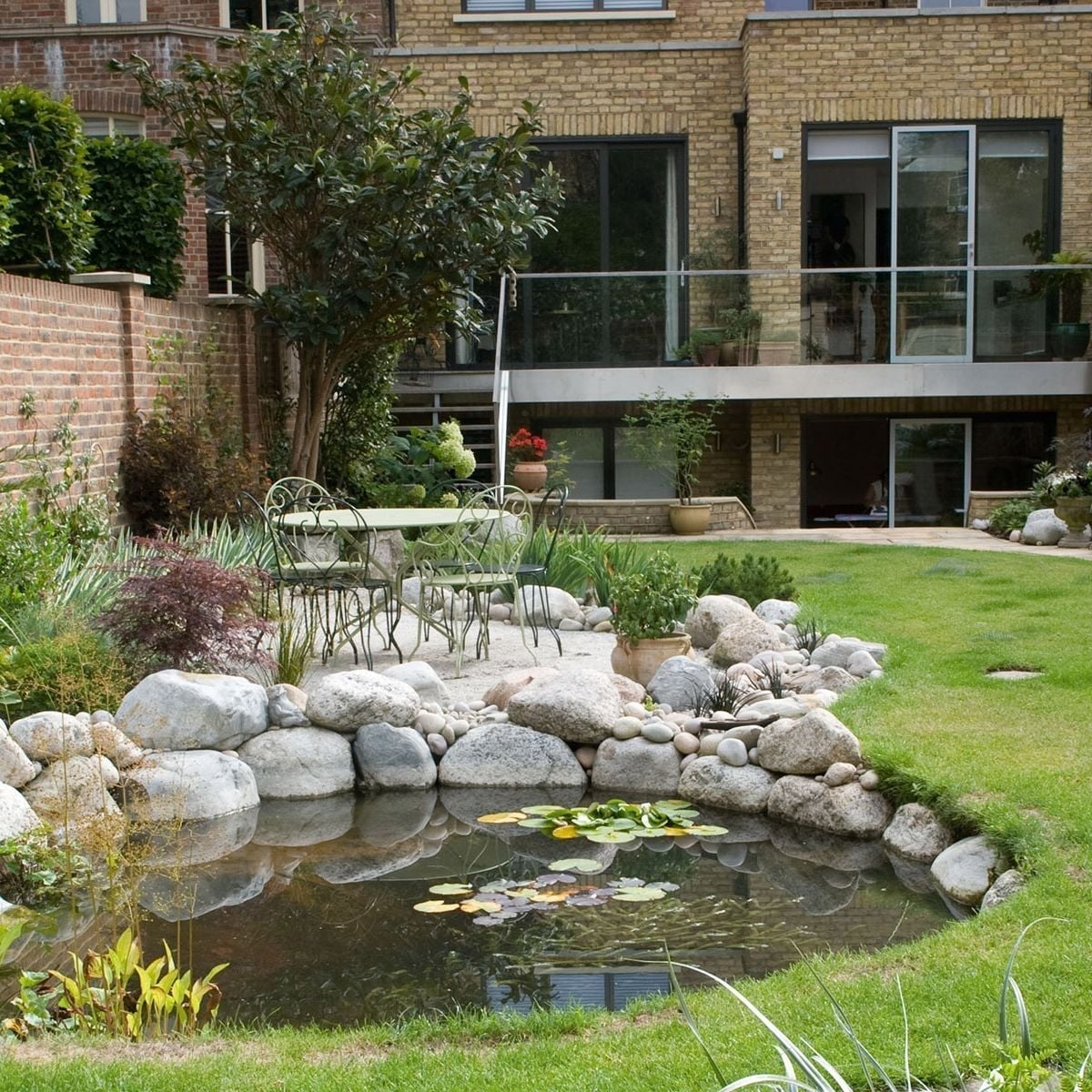
The pond sits in the foreground with a raw stone edge, while a metal garden table and chairs sit behind it on gravel. A patch of lawn balances the hardscape to the side. The material mix keeps the space from feeling sterile. The palette rule here: let the stone pond lead with its gray-beige tones, then match the seating and gravel to that range. The green lawn and yellow brick accents add contrast without competing.
Japandi zen courtyard with moss mounds and bamboo
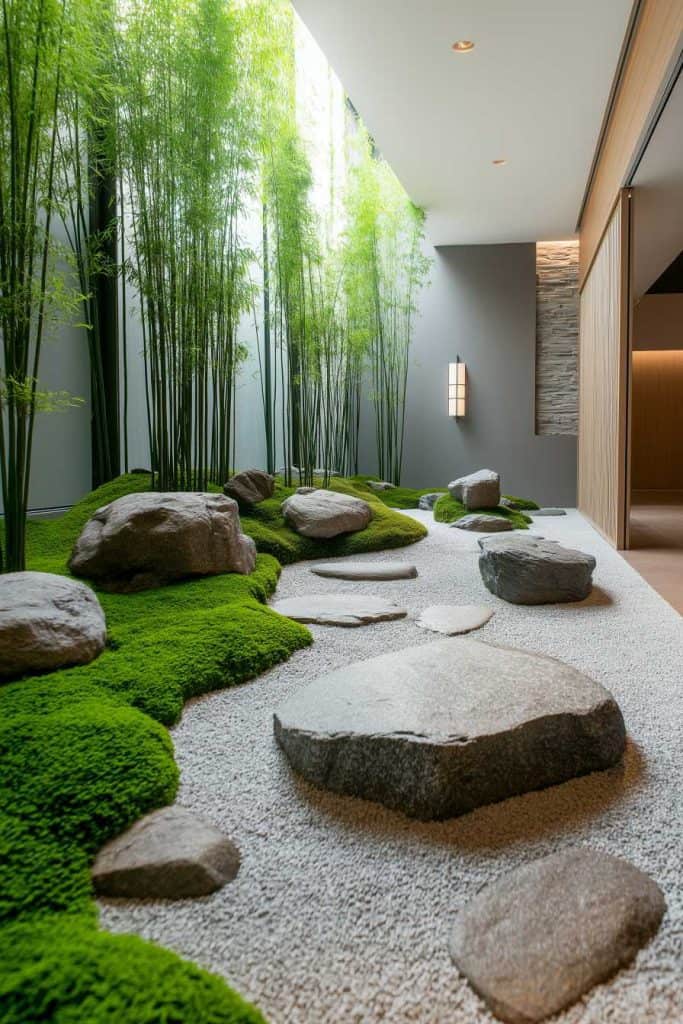
To make a small courtyard feel open without adding square footage, focus on material choices. This japandi zen garden uses gravel as a neutral base, then adds large stones and moss mounds for texture. Bamboo stalks rise vertically against a wall, making the space feel taller. A wall sconce provides soft evening light, but during the day the courtyard relies on natural light from above.
Stepping stones create a clear path through the moss, so the layout guides movement rather than blocking it. The palette stays tight: green, gray, and white. The moss mounds are the standout element because they bring a soft, lush texture that contrasts with the smooth stones and straight bamboo. For a calm courtyard, keep the material count low and let each one earn its place.
Cottage garden with greenhouse and abundant flowering plants
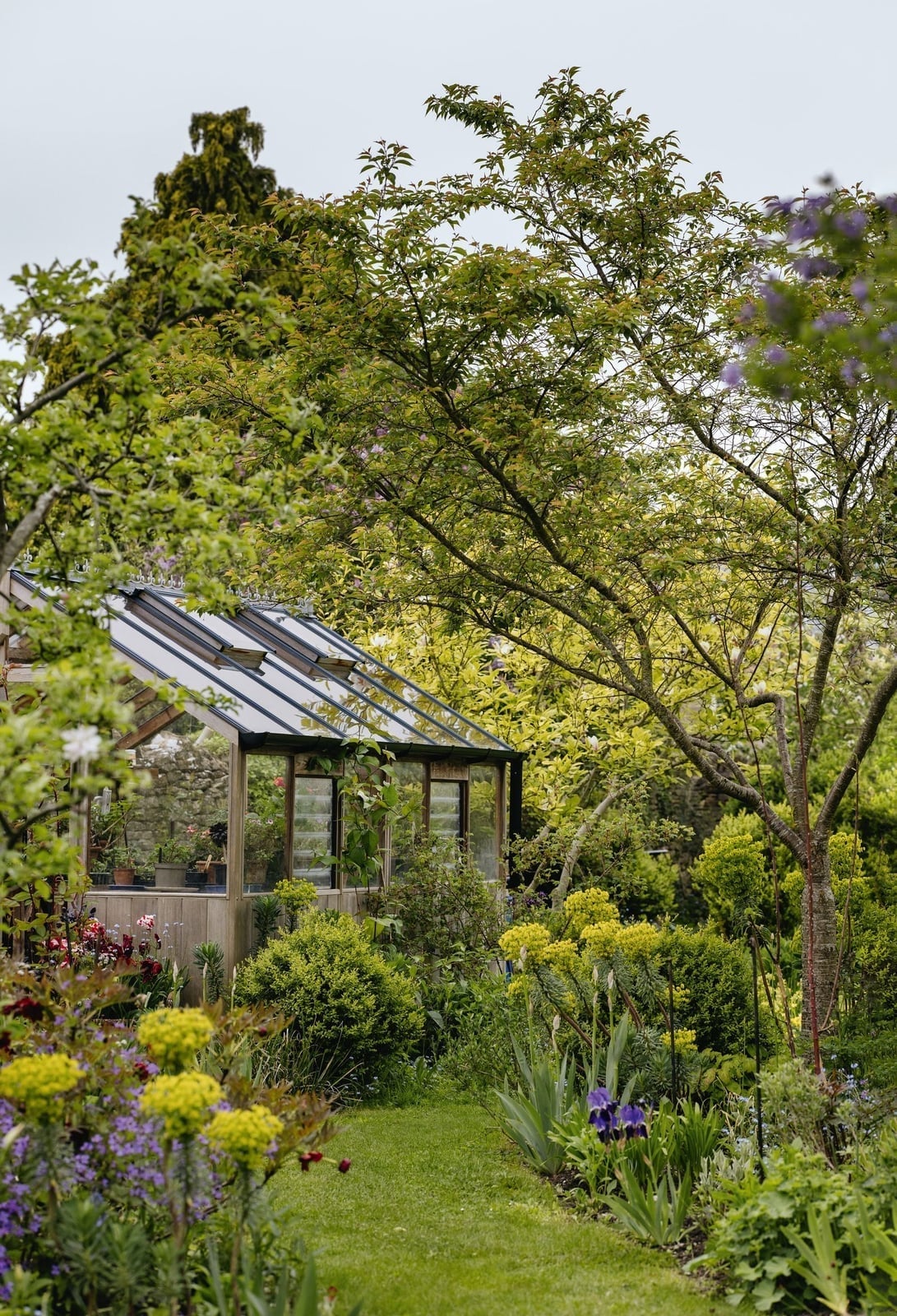
A glass greenhouse sits tucked among dense flowering plants, with a stone pathway leading to its door. The layout puts the greenhouse at the end of the path, making it a destination rather than an afterthought. The cottage garden greenhouse flowering plants mix includes yellow, purple, and green tones, with trees providing height at the back. A practical layout idea: place the greenhouse where it catches daylight from multiple angles, then let the plants spill over the path edges for that natural, overgrown feel.
Stone pathway leads to wooden dining set
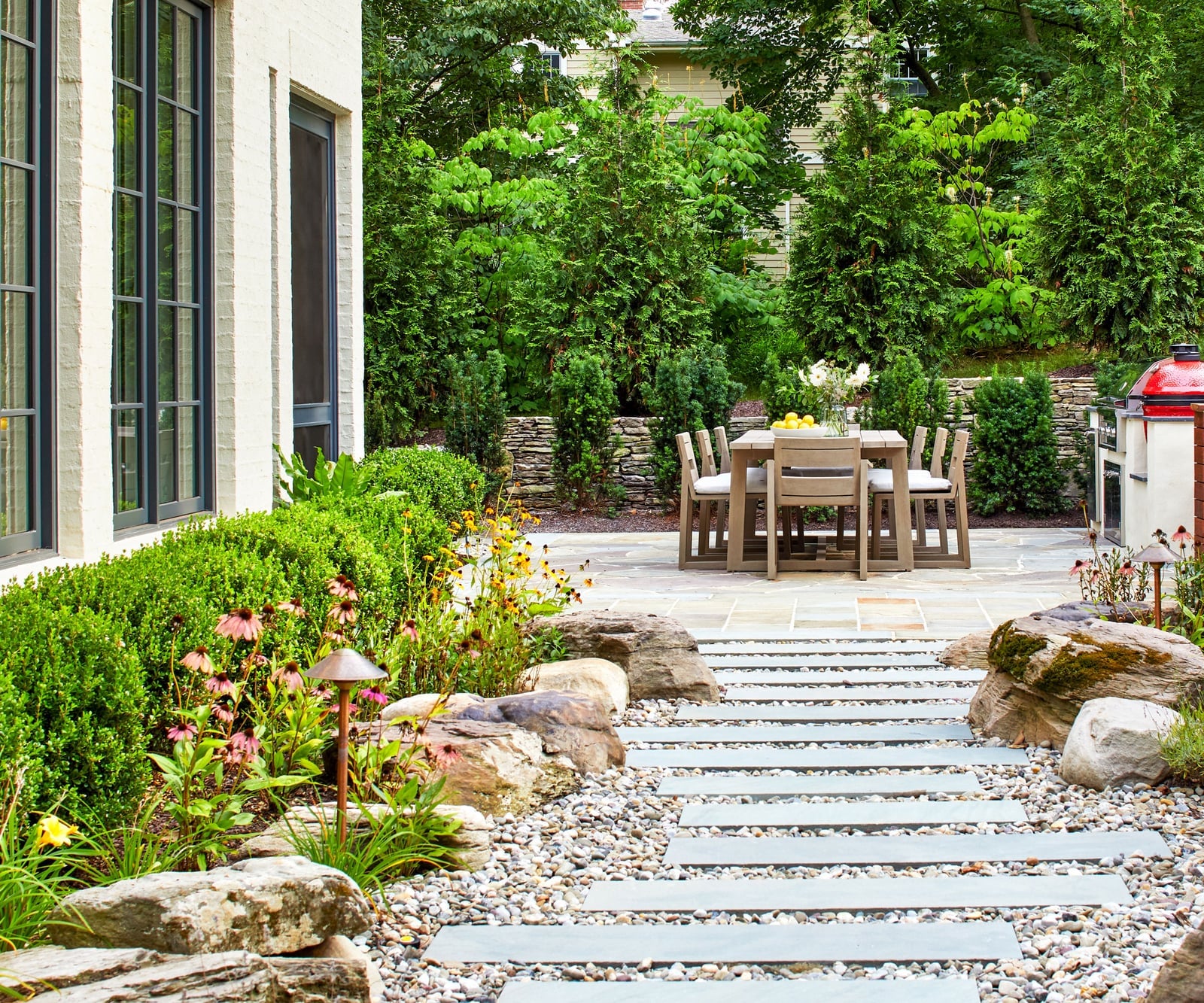
A modern patio stone pathway leads to a wooden dining set. The stone walkway directs to a wooden dining table and chairs, with an outdoor grill nearby. The pathway acts as the spine of the layout, dividing the patio into zones without walls. Low-level garden lights line the path, so the dining area stays usable after sunset. The palette mixes green, beige, gray, pink, and yellow, but the stone and wood ground it. Position the dining set at the end of the path, not in the middle, so the walk feels intentional.
Backyard with curving stone paths and raised garden beds
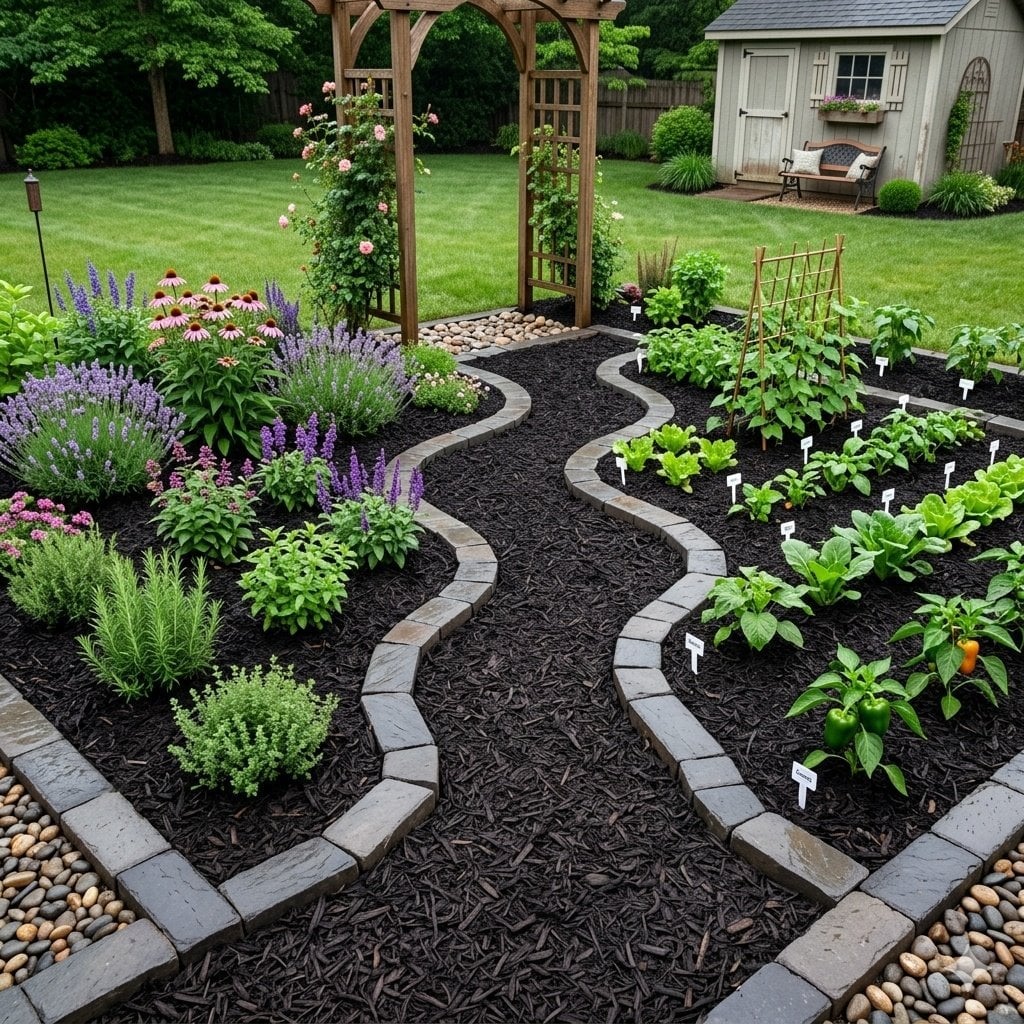
A straight path gets you from point A to B, but a curving one makes you slow down. This backyard swaps the direct route for stone paths that bend around raised garden beds, a wooden arbor, and a garden shed. The palette leans into greens, purples, pinks, and browns, so the wood and stone feel grounded rather than harsh. Mulch and gravel fill the gaps between beds, cutting down on mud after rain.
The layout works because the paths do not fight the beds. Each curve leads to a bench or a planting area, making the whole space feel roomy without being empty. If you are starting from scratch, lay out the paths first and build the beds around them. It keeps the flow natural and saves you from awkward corners.
Raised beds overflow with vegetables and flowers
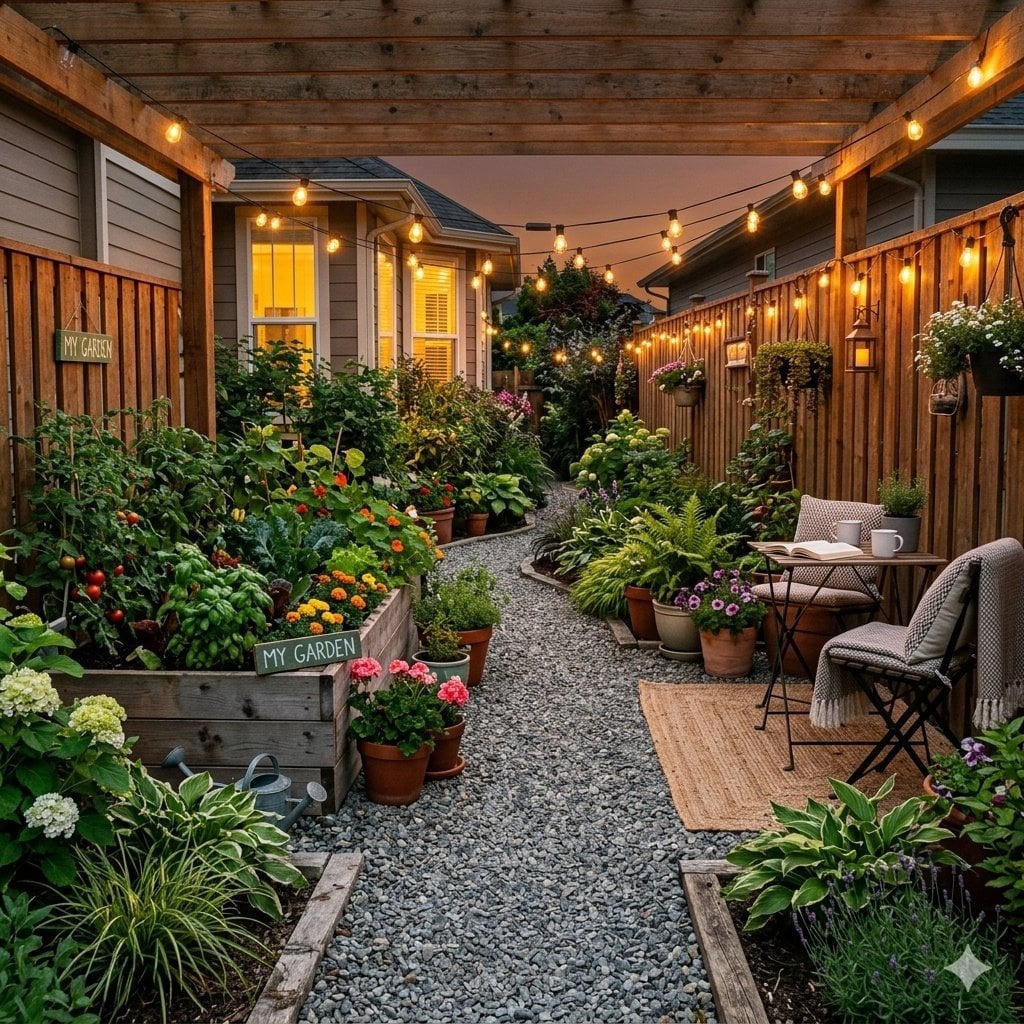
A raised garden bed packed with vegetables and flowers sits at the center of this compact backyard, with a bistro set nearby under string lights and a lantern. The mix of wood, gravel, terracotta, metal, and jute keeps the textures varied without feeling busy. Green, brown, orange, red, and yellow pop against each other, especially as the house lights come on. A pathway separates the growing area from the seating, so you can water without stepping on the chairs. For renters, a freestanding raised bed on gravel means you take the soil with you when you move.
Want a modern backyard with evening ambiance
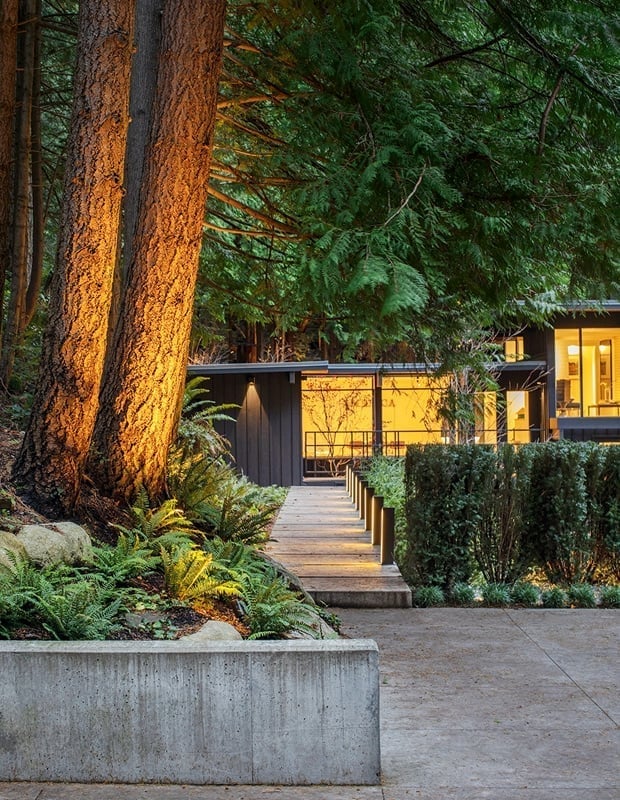
This modern backyard proves lighting is the fastest way to change a space. Uplighting on a large tree trunk and pathway lights guide the eye toward the house, while interior lights spill out from inside. A concrete planter and manicured hedges frame the wooden walkway, keeping the palette to greens, grays, and browns. The yellow glow from the uplighting softens the hard edges of the concrete and wood. Aim lights at the base of mature trees instead of scattering fixtures across the lawn. It creates depth without cluttering the ground.
Traditional garden with vibrant lawn and curved flower beds
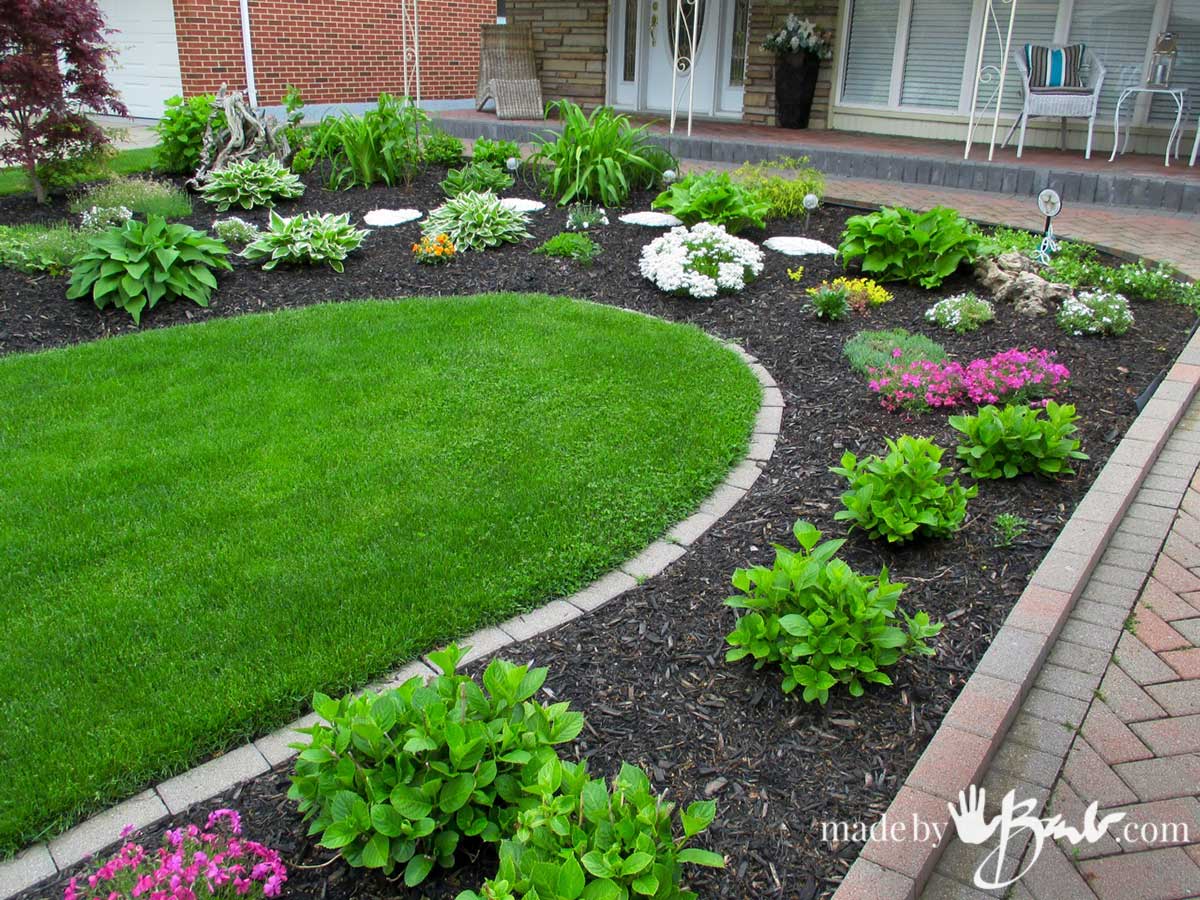
Can a traditional garden feel fresh without a full redesign? This one shows how curved flower beds and a manicured lawn do the job. Hostas and hydrangeas line the edges, with flowering plants in white, pink, and yellow against the green grass. Mulch keeps the beds tidy, while stone and brick borders define the curves without making them feel rigid.
The central lawn stays open, so the eye rests on the green rather than competing with the flowers. Curved beds soften the transition from grass to planting, and the wood accents on the bench tie into the natural materials. If you have a rectangular yard, a gentle curve in the bed line breaks the boxiness without losing the traditional feel.
Winding stone path leads through lush greenery
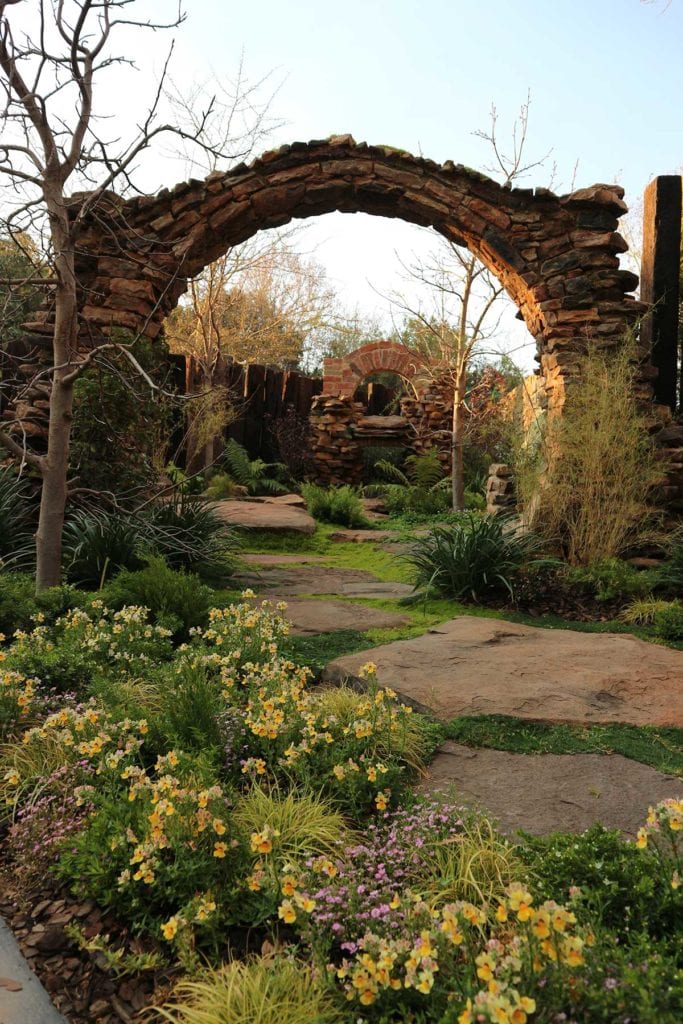
A large rustic stone archway anchors this winding path, with stepping stones leading through lush greenery and flowering plants in browns, greens, yellows, and pinks. The archway sets the scale: it is tall enough to frame the view without overwhelming the garden. Stepping stones spaced at a natural stride keep the path easy to walk, and the grass between them softens the hard edges. Choose an archway that matches the stone of the path. It keeps the look cohesive and lets the plants do the talking.
Welcome your guests with colorful flowering shrubs
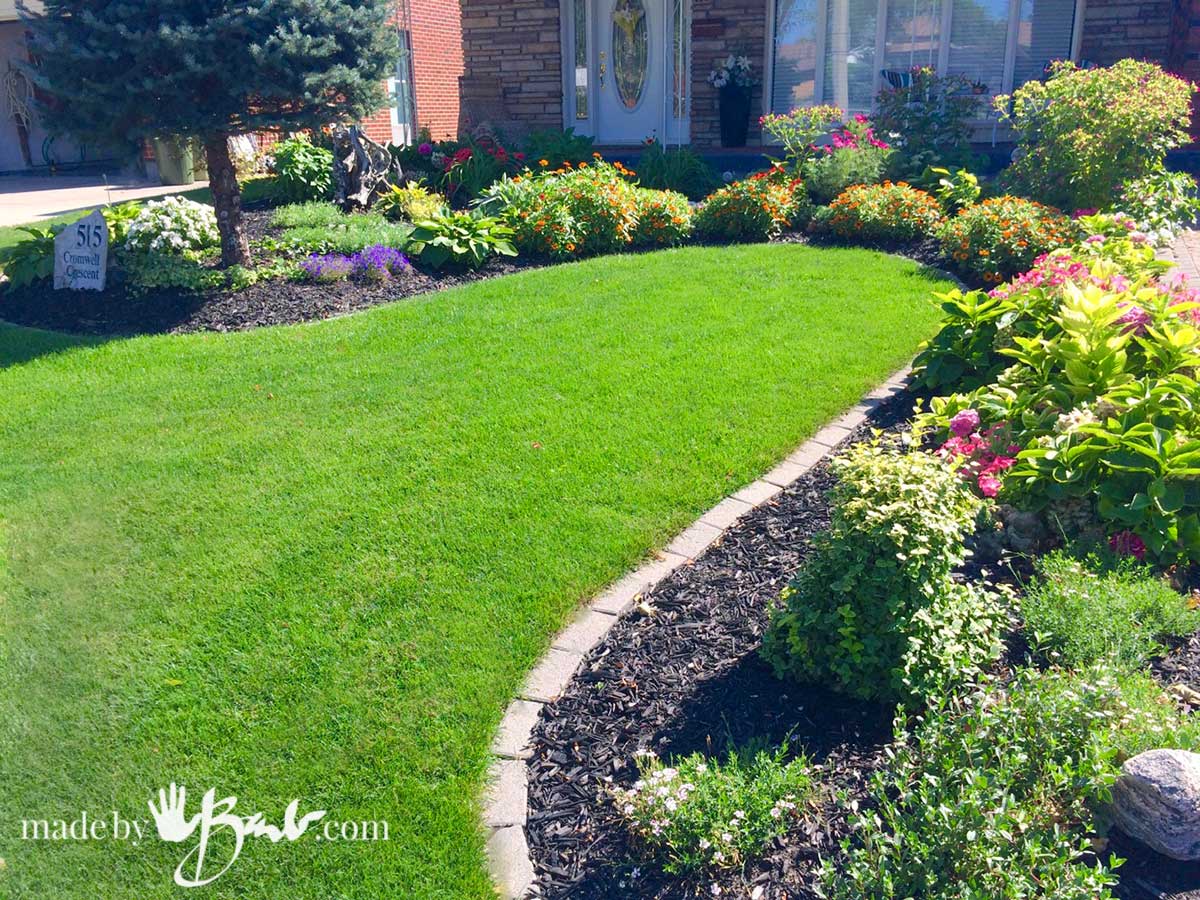
A front yard with a vibrant green lawn sets the stage, but the real welcome comes from the flowering shrubs that edge it. In this traditional layout, a curved lawn sits between planted beds filled with pink, orange, and purple blooms, with an evergreen tree and a stone address marker anchoring the scene. The key is keeping the lawn as the central open space, letting the shrubs do the work of framing the house without crowding the path. A roomy feel like this one comes from giving each plant room to grow into its natural shape, rather than packing them tight.
Modern patio with uplighting on lush foliage and mixed seating
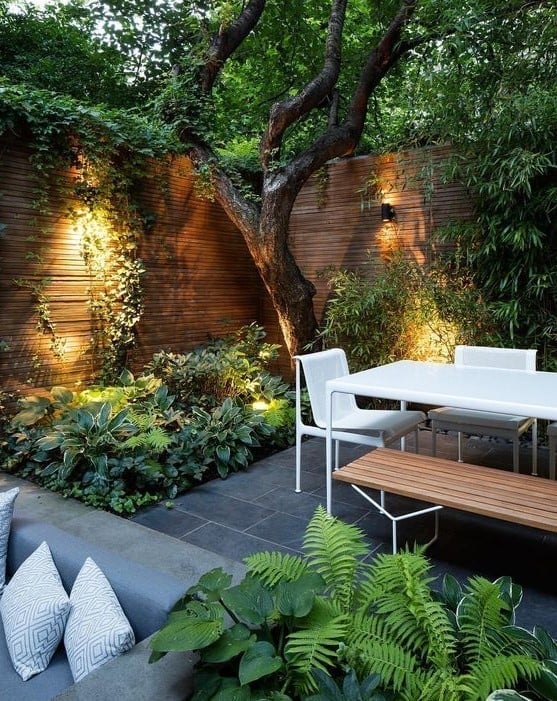
A patio with mixed seating can feel scattered, but a consistent lighting plan pulls it together. Here, uplighting hits the lush foliage from below, while wall sconces add a warm glow at eye level. The dining set with white chairs and a wooden bench anchors one end, and an outdoor sofa creates a second seating zone nearby. Greens, wood tones, gray, and white unify the plants and furniture as one space.
What makes the lighting work is the layering. Uplighting draws the eye to the texture of leaves and branches, while the sconces keep the seating areas usable after dark. On a compact patio, this approach carves out distinct areas without needing walls or dividers.
Curving path of numbered stepping stones
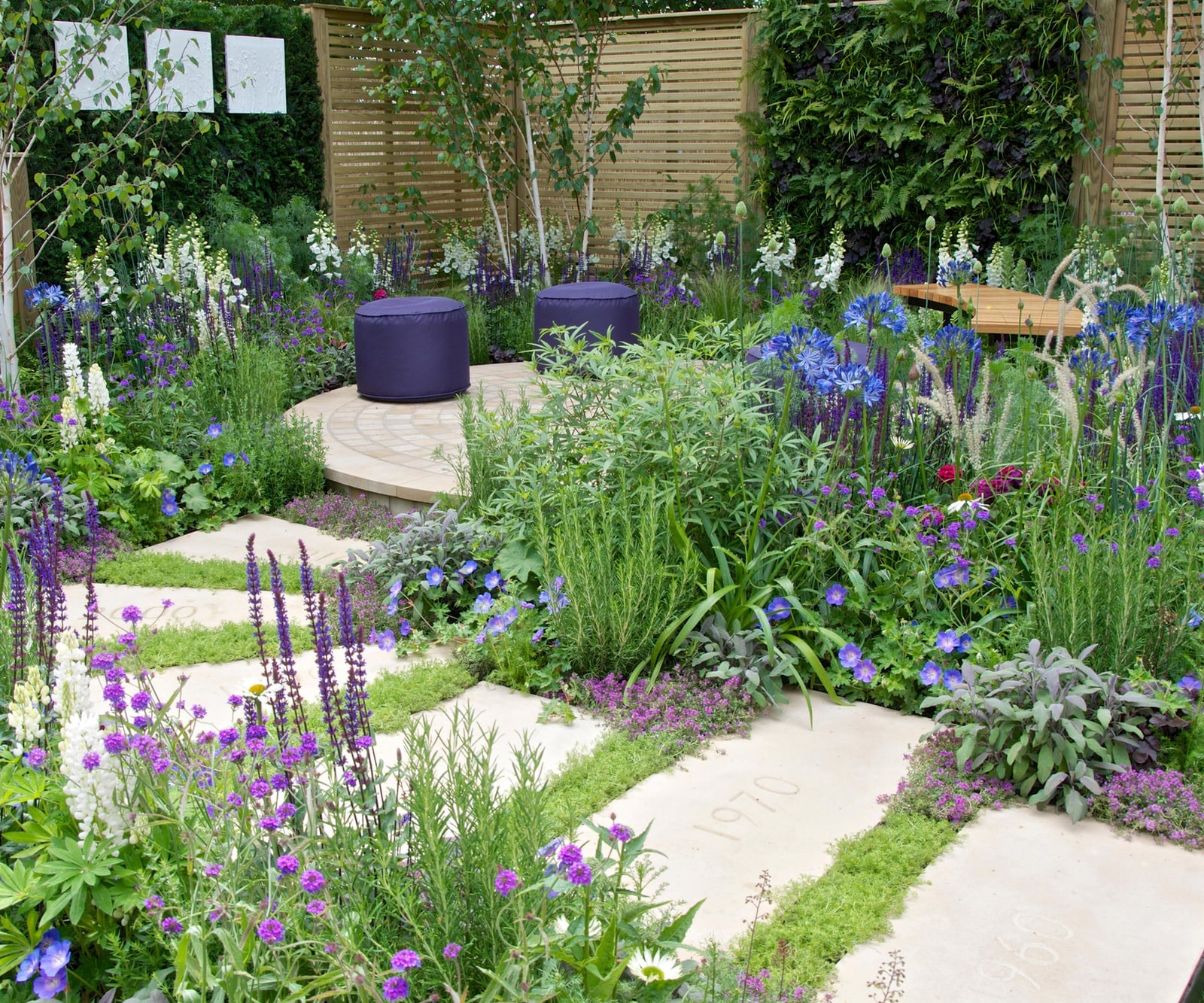
The numbered stepping stones are the first thing you notice, each one engraved with a digit that turns a simple path into a playful sequence. They curve through the garden toward a circular seating area with purple poufs and a wooden bench, with a vertical garden adding height against the back. The numbers give the path a purpose, making you want to follow it to see where it leads. In a modern garden, a detail like this turns a functional walkway into the main event.
Tropical front yard with stone pathway and vibrant palm trees
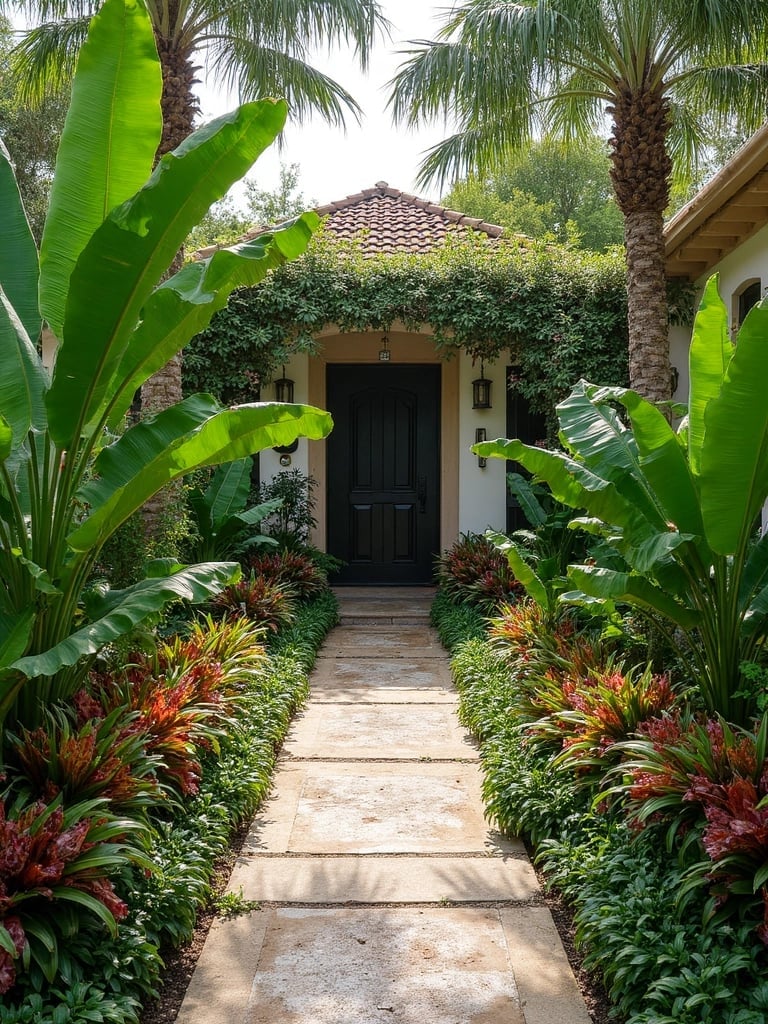
A stone pathway lined with palm trees and banana leaves sets a tropical front yard apart from a standard lawn. The path runs straight through the center, flanked by bromeliads and other broad-leaf plants that create a tunnel of green. A tile roof on the house and a wooden door reinforce the look, while wall sconces near the entry add a soft glow for evening arrivals. The stone path keeps the layout grounded, giving the eye a clear route through all that lush growth. For a tropical style, the pathway is what keeps the planting from feeling chaotic.
Modern patio with pergola, string lights, and integrated planters
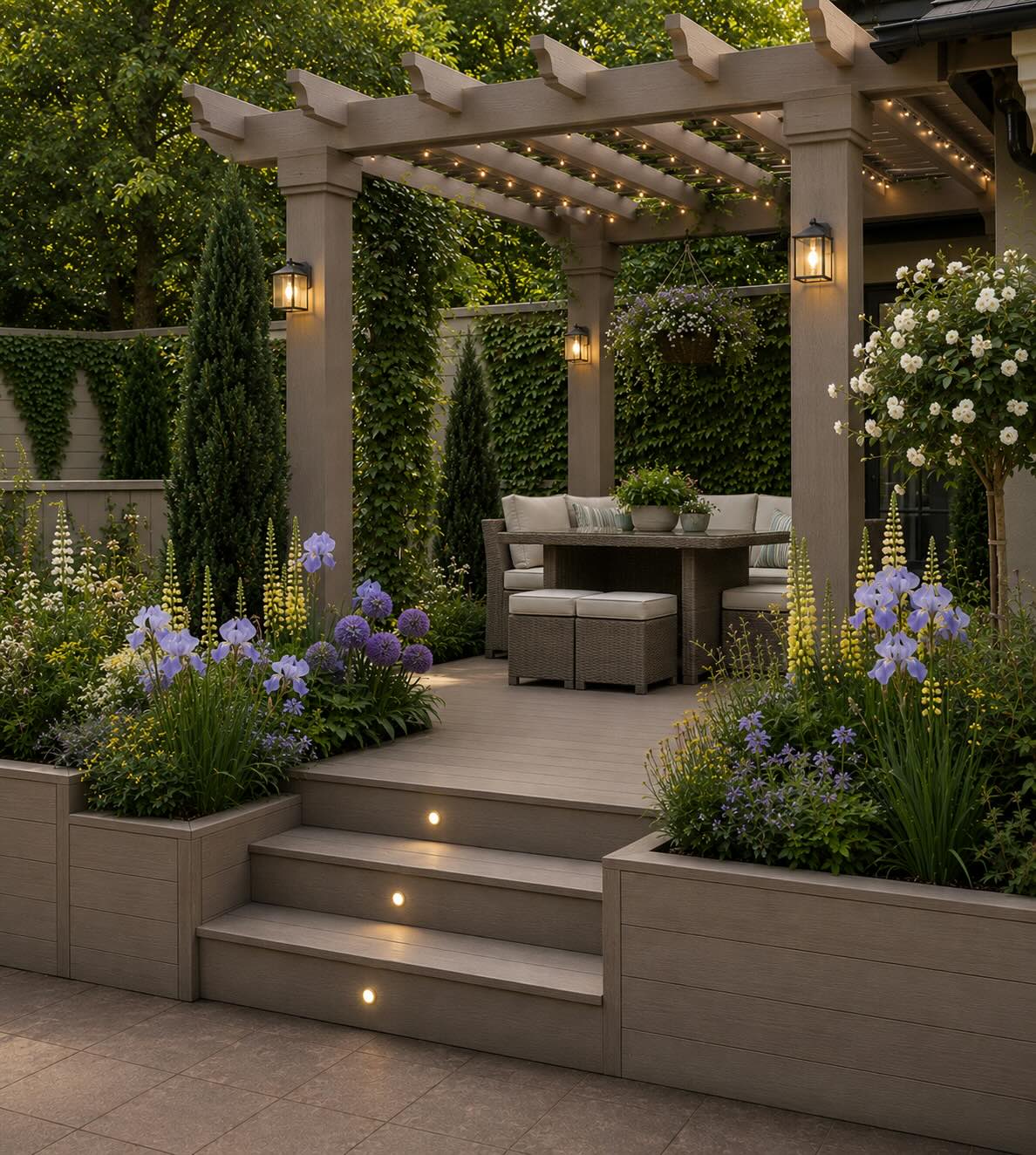
A pergola with string lights is a practical way to define a patio without closing it in. In this modern setup, the pergola sits over a dining set, with string lights crisscrossing above to soften the structure. Wall lanterns and step lights along the multi-level deck add lower lighting, so the space works for both dinner and late-night conversation. Integrated planters built into the deck hold a potted tree and hanging baskets, bringing green into the hardscape.
Step lights are the unsung hero here. They make the change in level visible without flooding the whole patio with light, which keeps the string lights as the main source above. On a roomy deck, this kind of layered lighting makes the outdoor room feel as finished as the indoors.
Conservatory with wicker furniture and abundant flowering plants
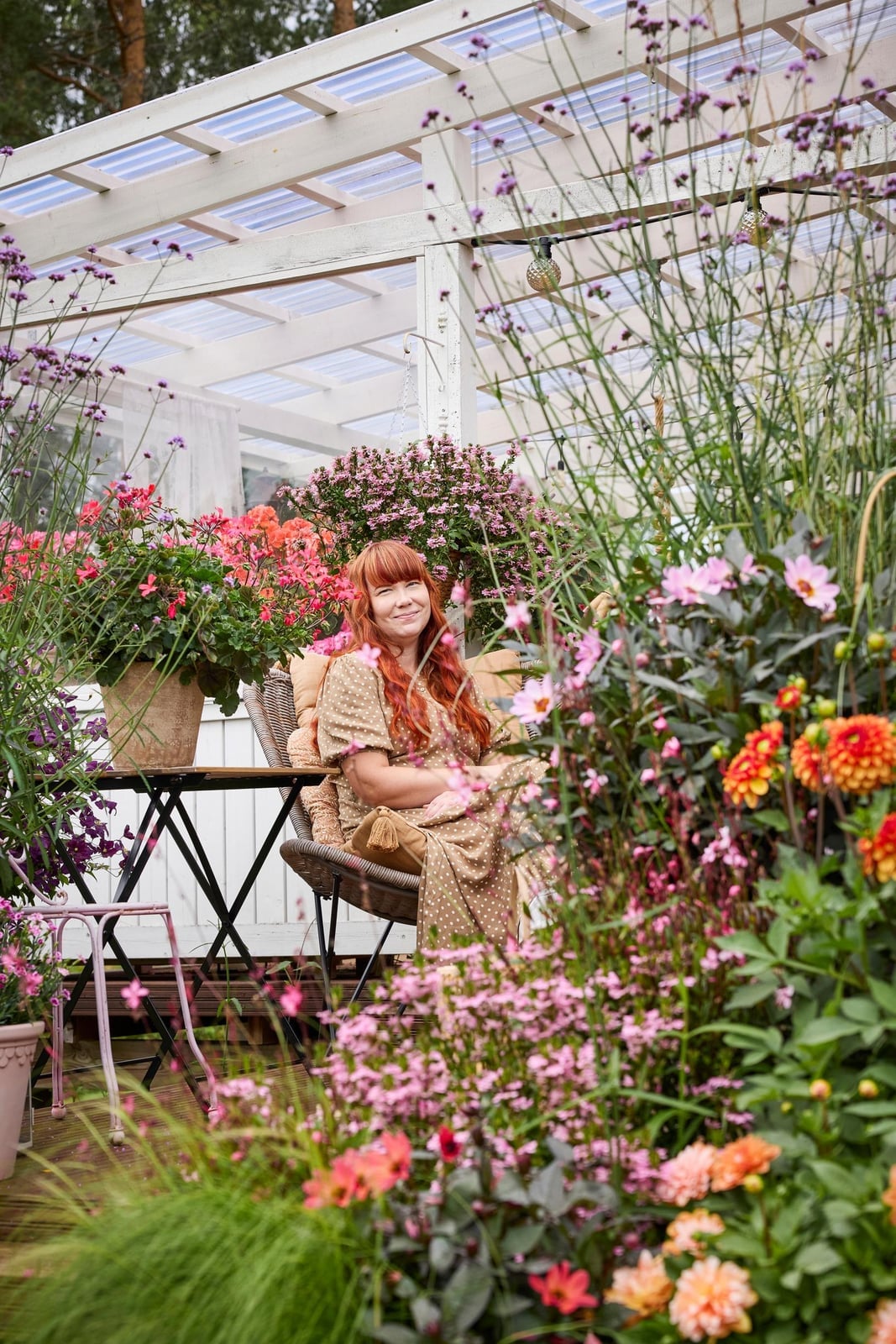
A compact conservatory makes the most of its square footage by packing in flowering plants around a seating area. A wicker chair and a folding metal table sit on a wood floor, with terracotta pots clustered at different heights. The palette runs pink, orange, purple, and green, with string lights overhead for evening use. The principle here is room mode: the whole space lives as one composition. The dense planting is the layout, defining the seating nook without walls. For a renter, a folding table and a single standout chair cost nothing to install and can leave with you.
Bamboo stalks dramatically lit from below
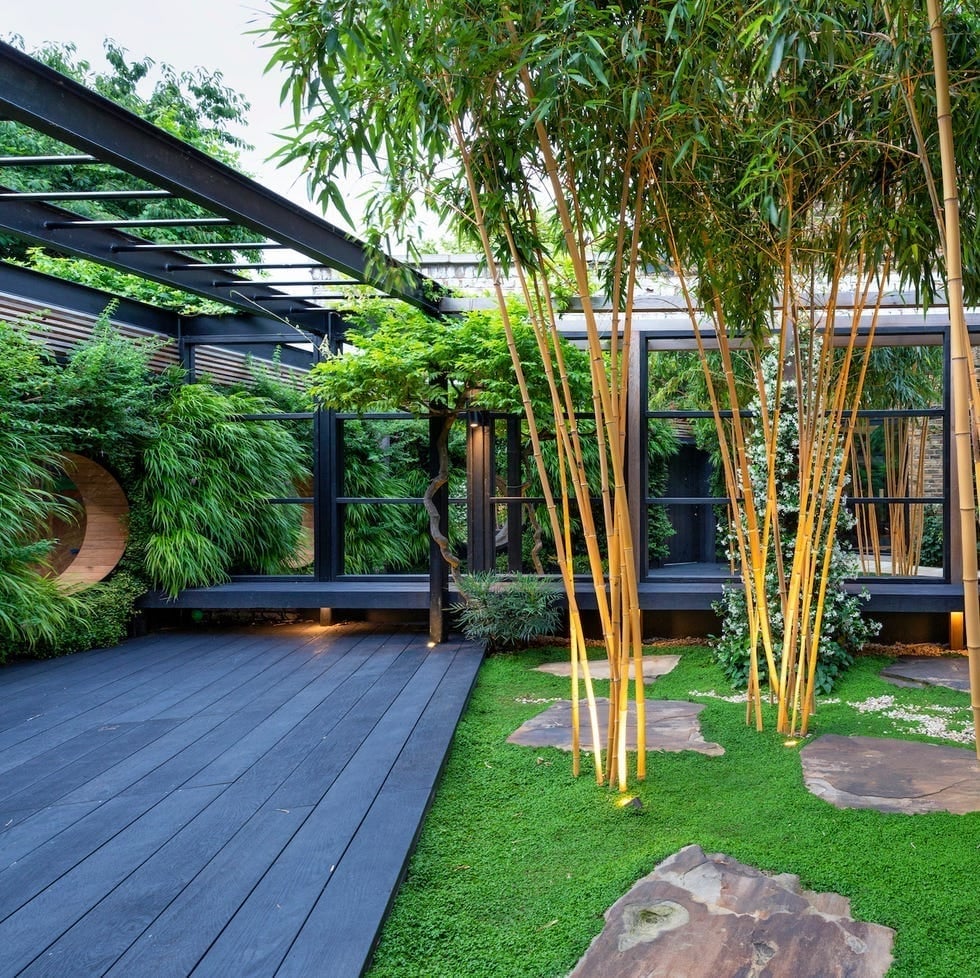
For outdoor lighting, aim fixtures at the ground plane, not the sky. In this modern asian backyard, uplights hit a grove of tall bamboo stalks from below, while subtle ground lights mark the dark wood decking. Large stones anchor the planting bed, and the deck leads toward the bamboo. The palette stays green, brown, black, and gray. Because the lighting is surface-mounted and plugs into an exterior outlet, no wiring is touched. Renters can set up the same effect with solar-powered stake lights placed at the base of any dense shrub or grass.
Naturalistic garden with winding flagstone pathway and ornamental
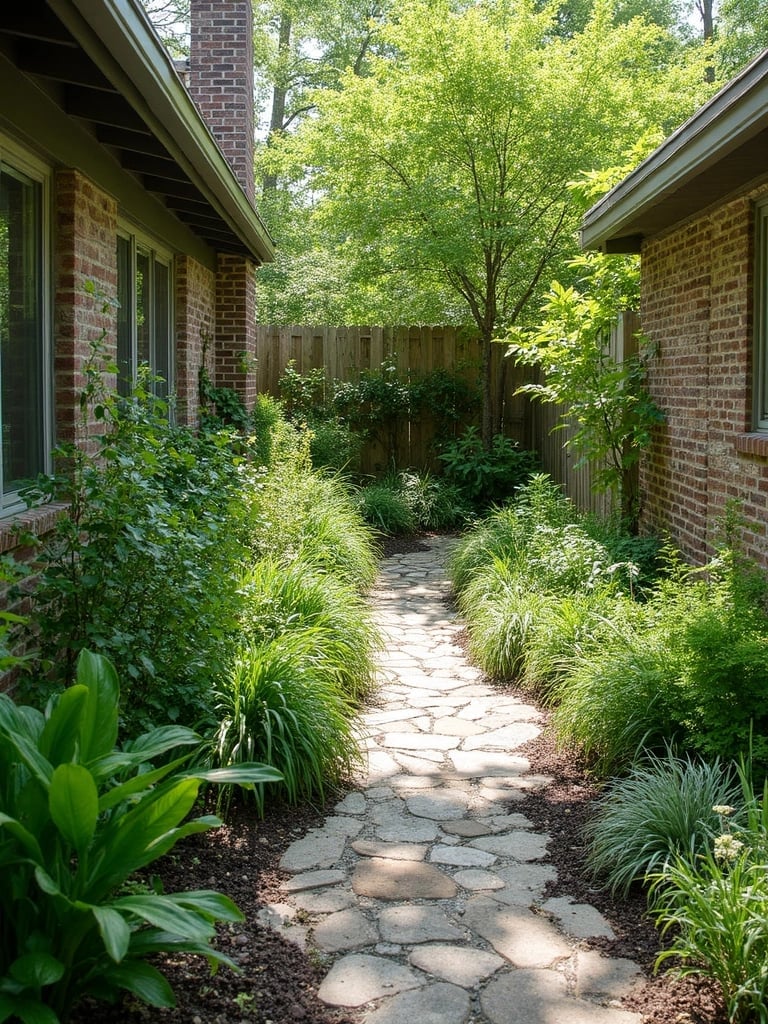
A straight path gets you from A to B. A winding flagstone path, by contrast, slows the walk and frames planting beds on both sides. This naturalistic garden uses irregularly shaped flagstones set into the ground, flanked by ornamental grasses and lush foliage under dappled daylight. The palette is green, brown, and gray, with brick and wood appearing as edging materials. The layout principle is circulation: a curved route breaks the garden into smaller visual rooms. Without a straight sightline, each turn reveals a new corner of foliage. For a similar effect, lay stones with wide gaps and let low ground cover grow between them for a softer edge.
Beds overflow with vegetables for bounty
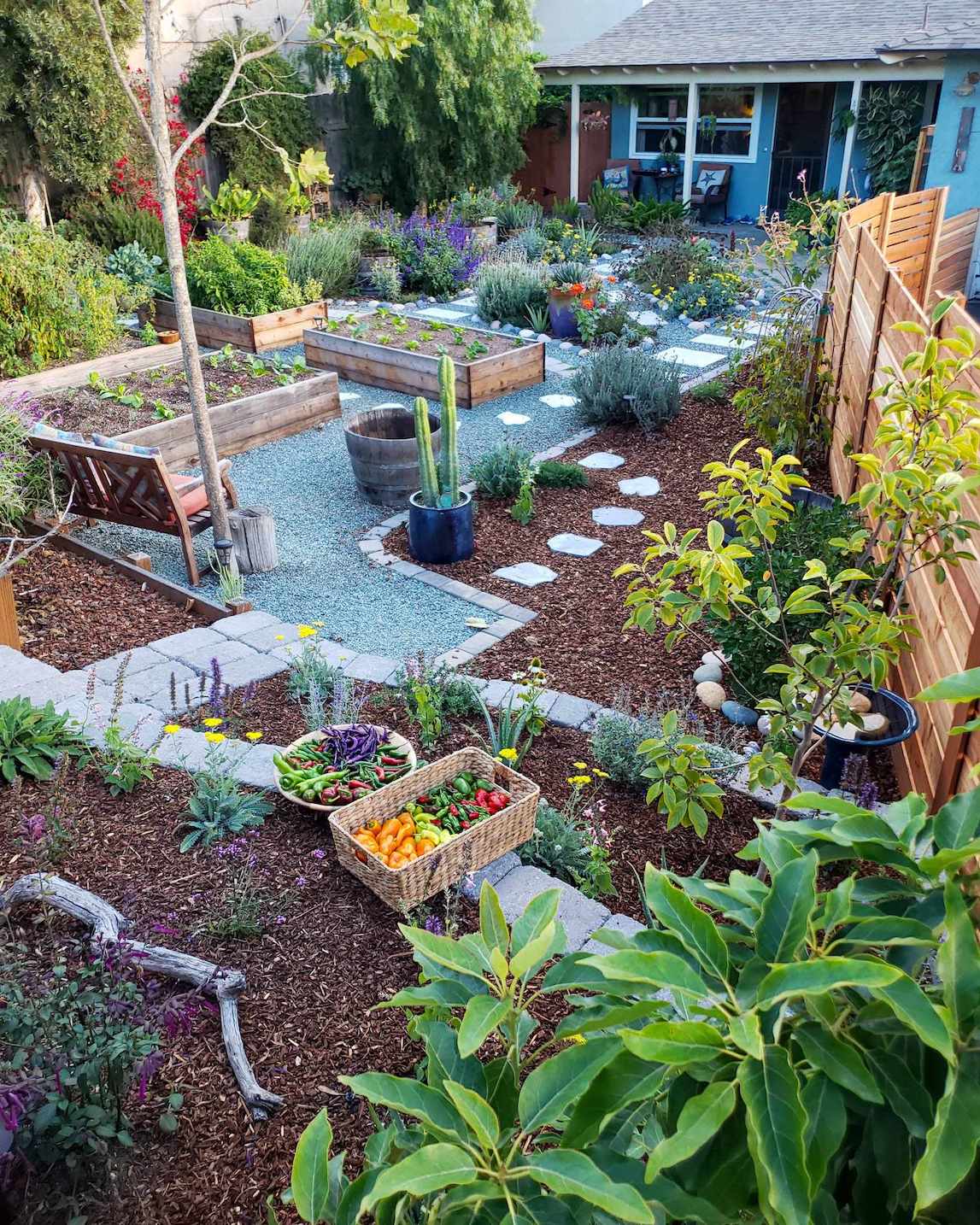
Raised wooden beds dominate this backyard, each one packed so full that leaves spill over the edges. Between the beds, gravel pathways lead to a wooden bench and a barrel planter, while baskets of blue, purple, red, and orange produce sit ready on a tile-topped surface. The palette is green, brown, and those harvest colors. The hero element is the raised bed itself, and the room mode here is about access: wide pathways let you reach every planting row without stepping on soil. A wooden bench nearby gives a place to sit while weeding or harvesting, which makes the garden feel like an outdoor room.
Simple garden with symmetrical raised beds and sunset glow
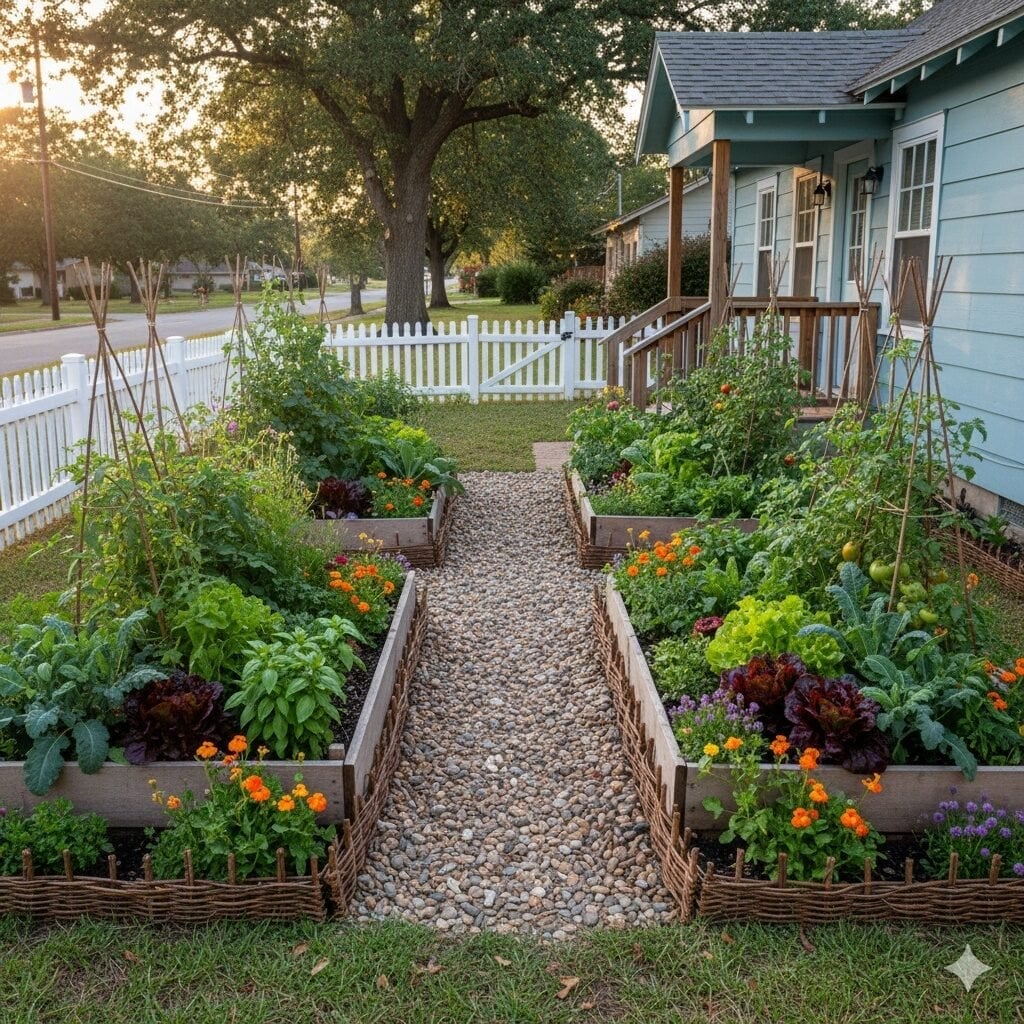
Symmetry requires a clear center line. Raised beds line up along a central gravel path, with a picket fence at the far end and tomato plants, lettuce, and kale filling the beds. The palette picks up green, red, orange, purple, and blue, with sunset light warming the whole scene. Proportion guides the layout: each bed is the same size, and the path between them matches that width, creating a rhythm that is easy to maintain. A single wooden bench or stone urn at the path’s end provides a visual stop.
Rectangular pond flanked by manicured hedges
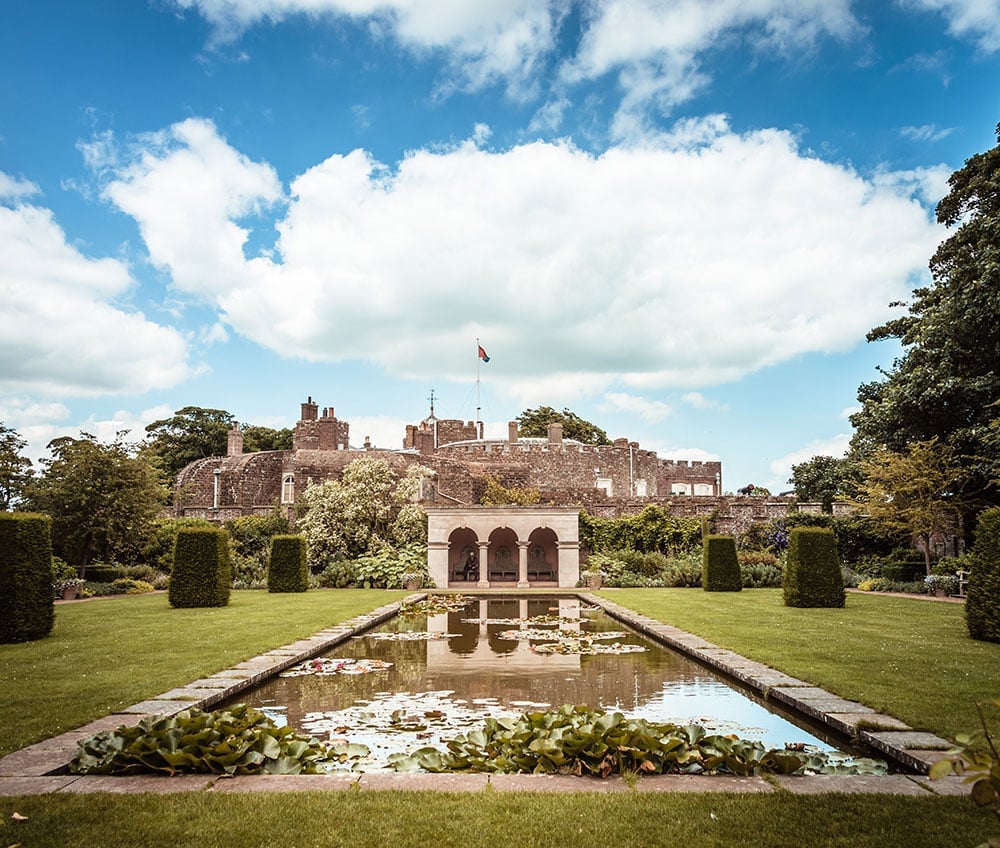
A symmetrical layout is the quickest route to a formal garden feel. A rectangular pond anchors the center, and flanking hedges repeat that clean geometry on both sides. The pond itself holds water lilies, and its surface reflects the bright sky above, adding depth without any extra ornament. An arched structure and a historic building frame the far edge, but the real work is done by the repetition of green, stone, and brick. The palette stays limited, so the space feels orderly. In a smaller yard, swap the pond for a rectangular reflecting pool and use dwarf boxwood hedges instead of full-size shrubs. The ratio of hardscape to planting should stay roughly equal to keep the balance formal.
Corrugated metal beds overflow with vegetables
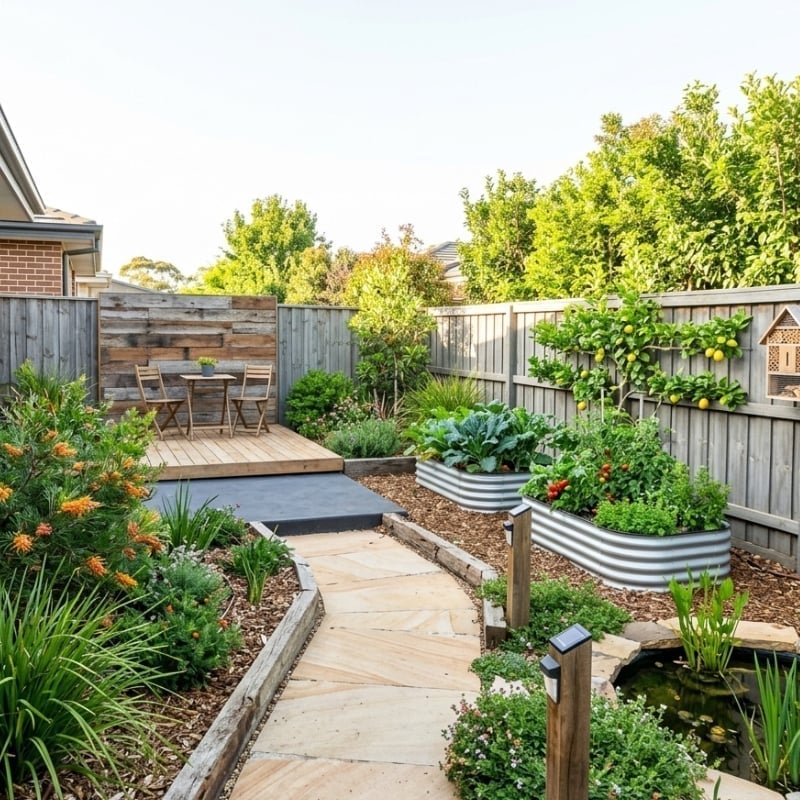
Corrugated metal raised beds bring an industrial edge to a vegetable garden. The gray metal contrasts with the green and yellow of the plants, and the warm brown of a wooden deck and a stone path softens the look. A small pond sits to the side, adding a reflective surface that balances all the texture. The beds overflow with produce, so the material choice feels practical rather than decorative. For renters, freestanding corrugated metal planters on casters offer a similar look without permanent installation.
Charming patio with vintage metal bench and abundant potted plants
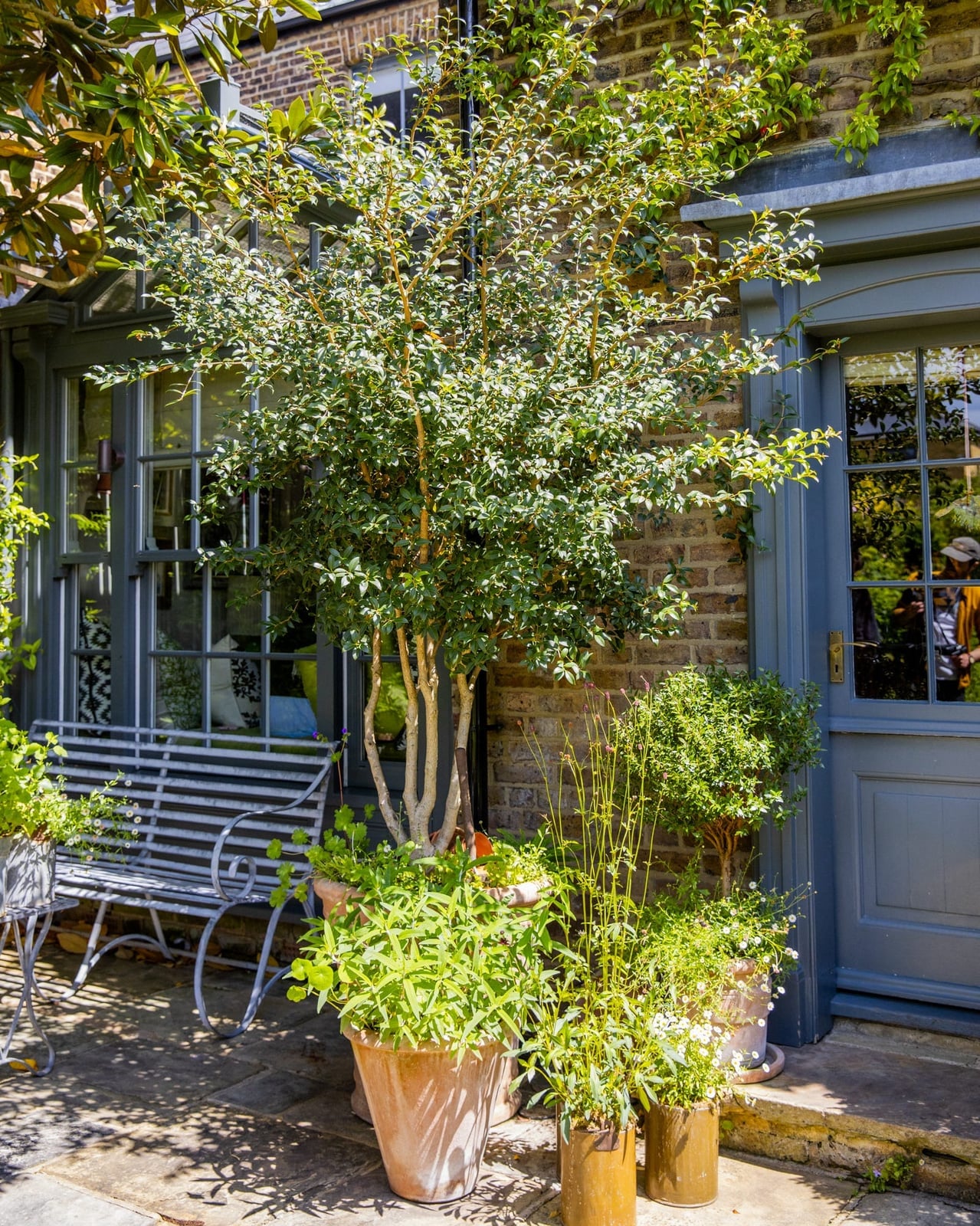
For a small patio, arrange plants around the seating to create a cohesive layout. An ornate metal bench serves as the visual center, with potted trees and shrubs in terracotta and brick tones forming a layered green backdrop. The mix of gray metal, warm terracotta, and wood keeps the palette grounded. Dappled shade from overhead foliage tones down the angular lines of brick and stone. For a renter-safe swap, use lightweight resin planters in terracotta colors instead of clay to avoid cracking in cold months.
Rustic garden entrance with stone archway and lavender
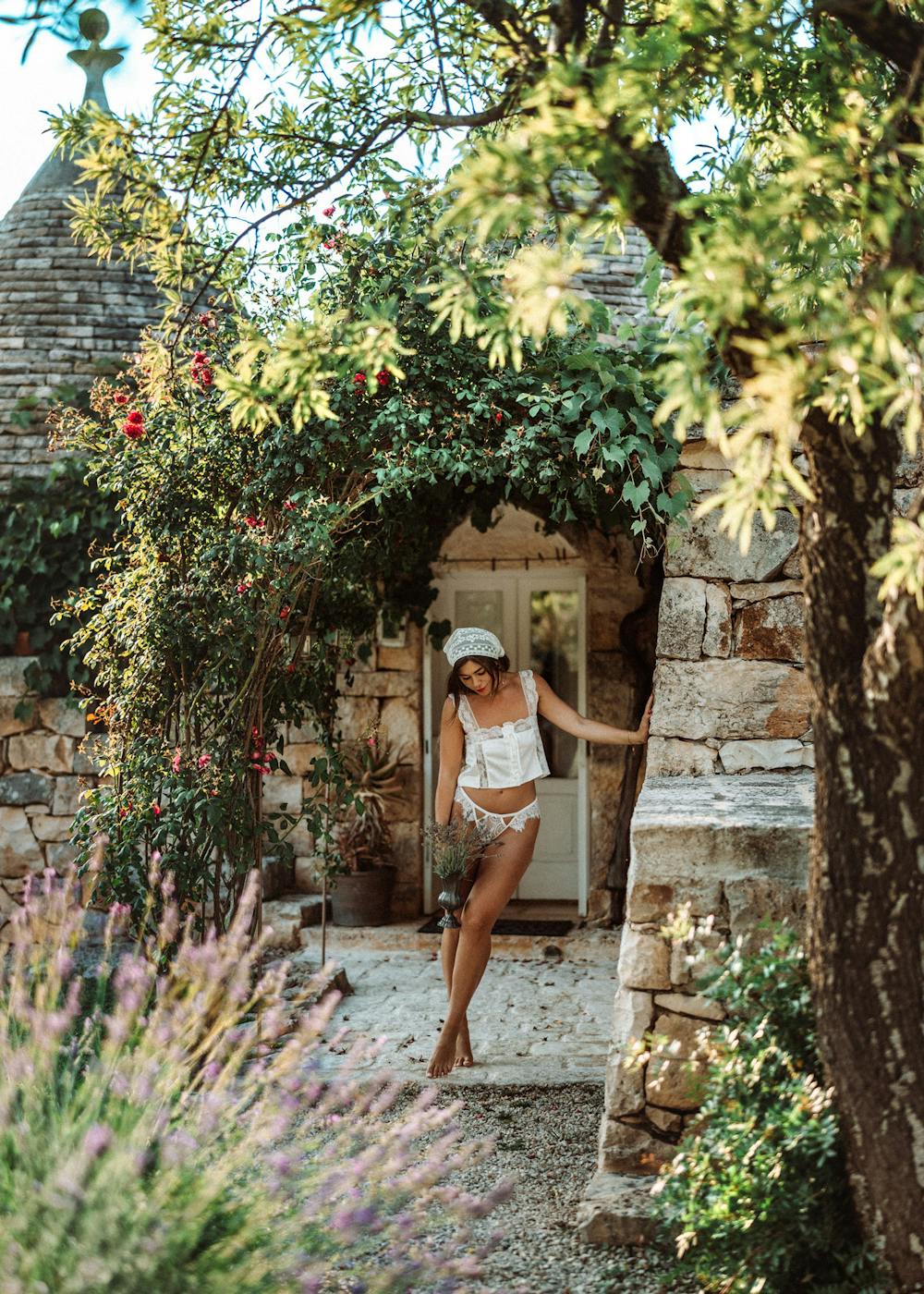
A formal entry relies on symmetry and a clear focal point. A rustic entrance, by contrast, leans into asymmetry and natural materials. This one uses a stone archway set into a stone building with a conical roof. Ivy climbs the stone, and rose bushes and lavender spill along the path. The lavender adds a soft purple note against the gray stone and green ivy. Dappled sunlight filters through, keeping the light gentle rather than harsh. The path leads the eye toward the archway without forcing a straight line. For a similar feel without building a stone structure, train climbing roses over a wooden arbor and underplant with lavender. The contrast of hard stone and soft flowers does the work.
Head-shaped planter adds eclectic flair
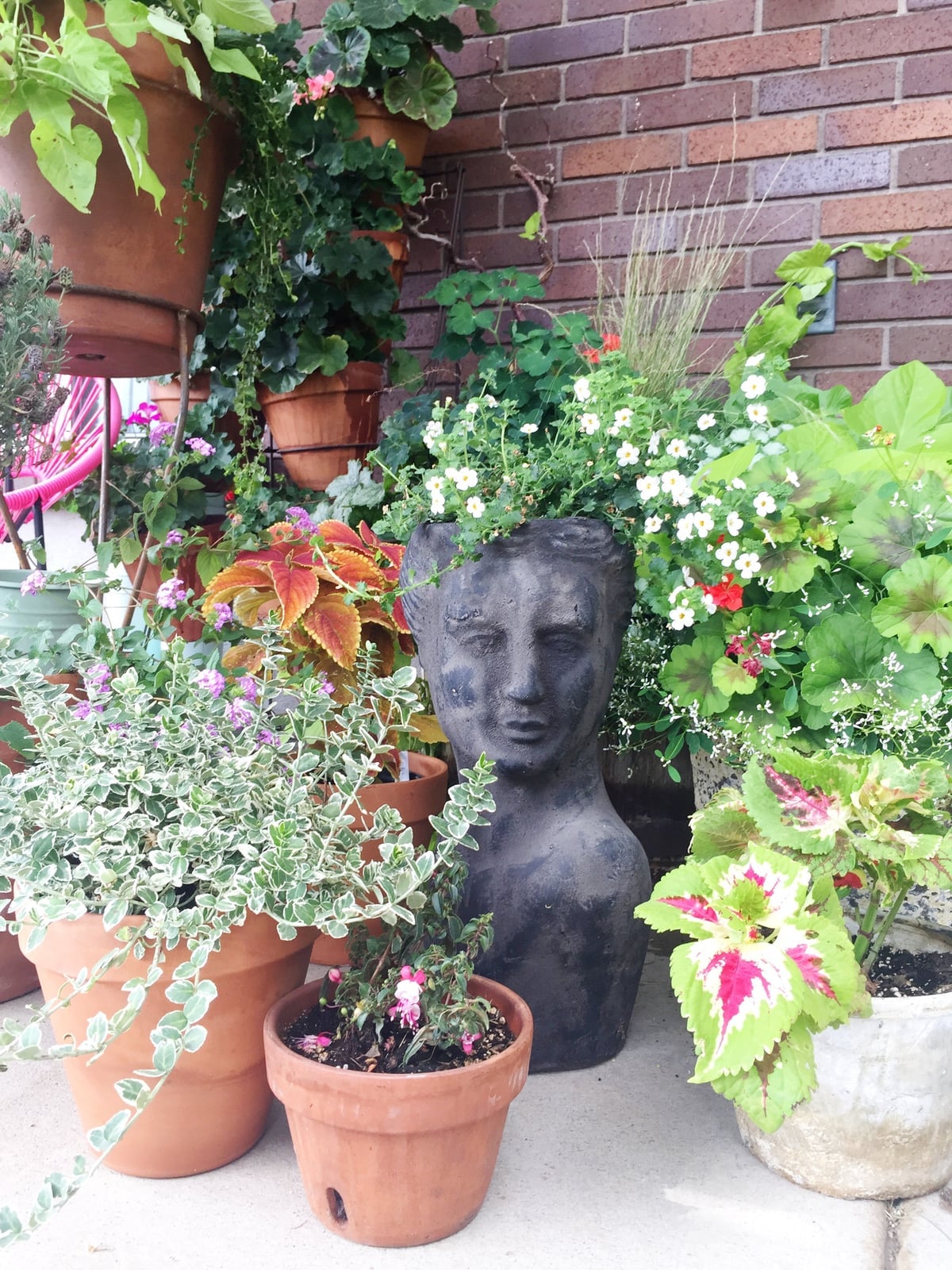
A head-shaped planter turns a patio corner into a conversation piece. The sculptural form sits among standard terracotta pots, and a coleus plant and ivy spill from the top. The face is neutral terracotta, so it does not compete with the pink and red blooms nearby. Layering the pots at different heights keeps the arrangement from looking random. For renters, a single sculptural planter on a patio table or step adds the same eclectic note without committing to a full redesign.
Cottagecore porch vignette with pink table and textured planter
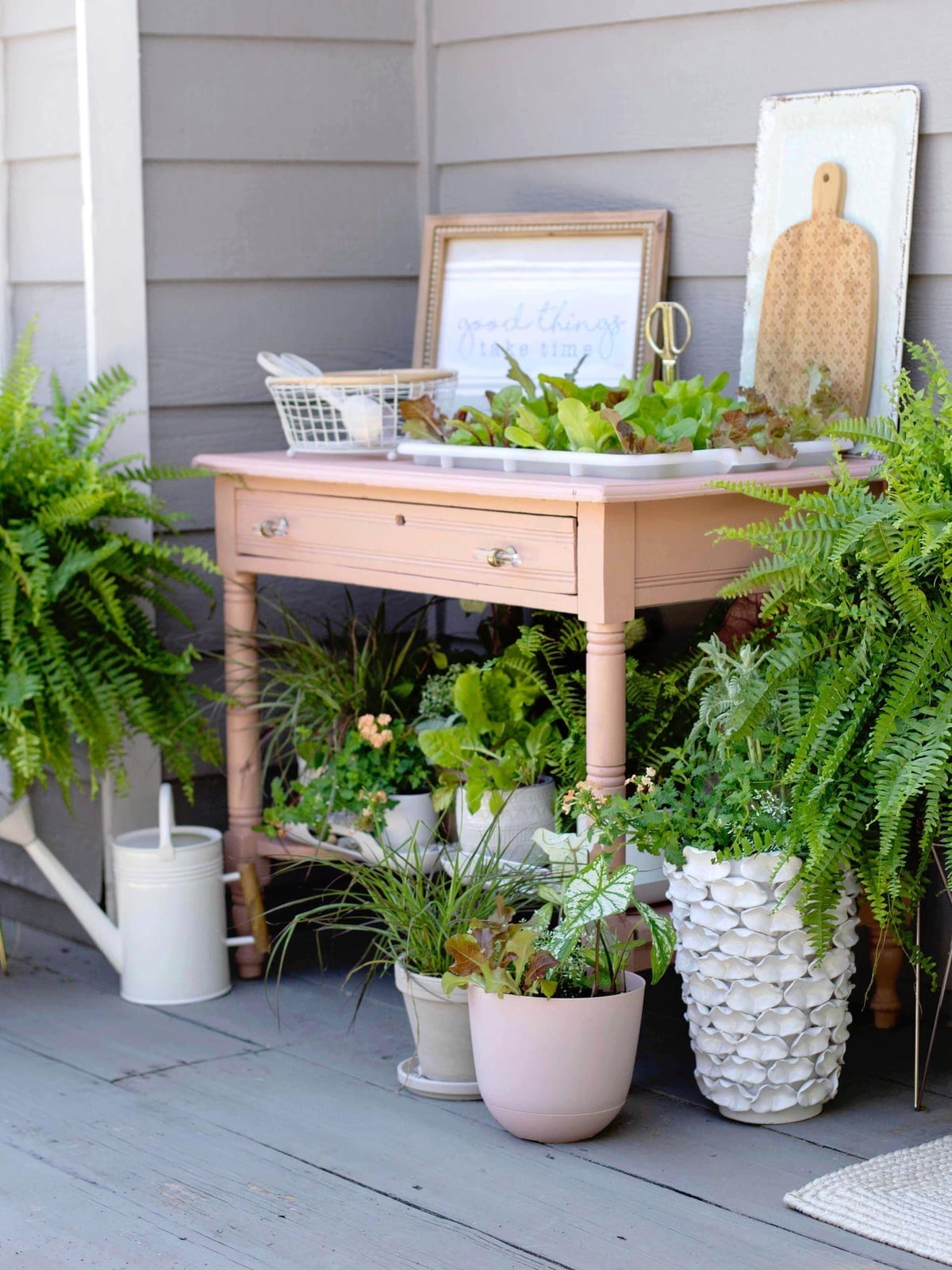
A compact porch corner gets a cottagecore update with a pink table as the anchor, layered with plants on top and below for fullness. The textured white planter stands out against the gray and green palette. A white watering can adds a practical touch that fits the look. The mix of wood, ceramic, metal, and glass keeps the vignette from feeling one-note. When you group containers this way, varying the heights and materials makes a small arrangement feel deliberate.
Rustic bed overflows with vegetables and herbs
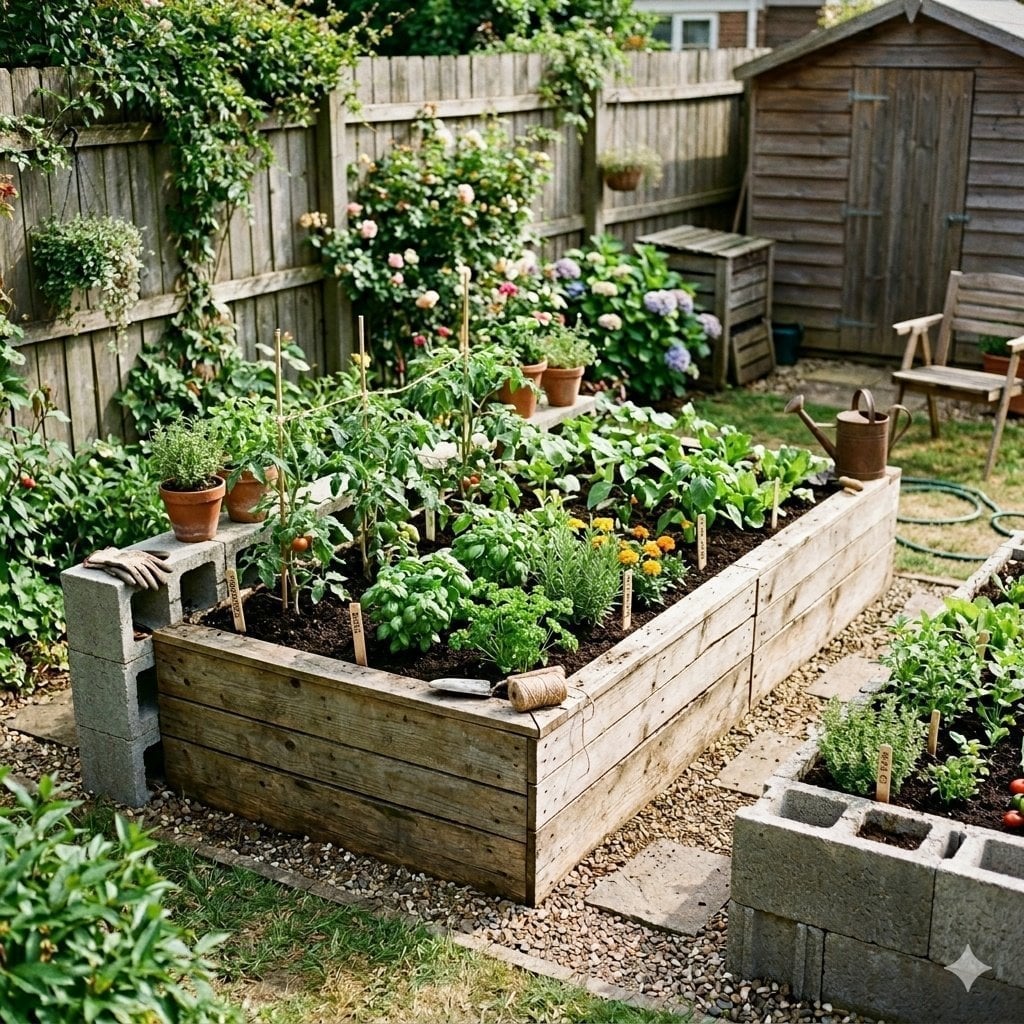
A rustic wooden raised garden bed overflows with vegetables and herbs, with concrete blocks adding structure and terracotta pots for extra planting space. The wooden shed behind it ties the materials together, while metal accents from the watering can and garden chairs add contrast. The layout uses pathways between the beds, so you can reach everything without stepping on soil.
The palette of green, brown, terracotta, pink, and purple comes from the plants themselves. For renters, a raised bed like this sits on top of grass or gravel and can be moved when you leave. The key is choosing materials that weather well: wood and concrete blocks age naturally without needing a fresh coat each season.
Modern asian courtyard with curved bench and metal screens
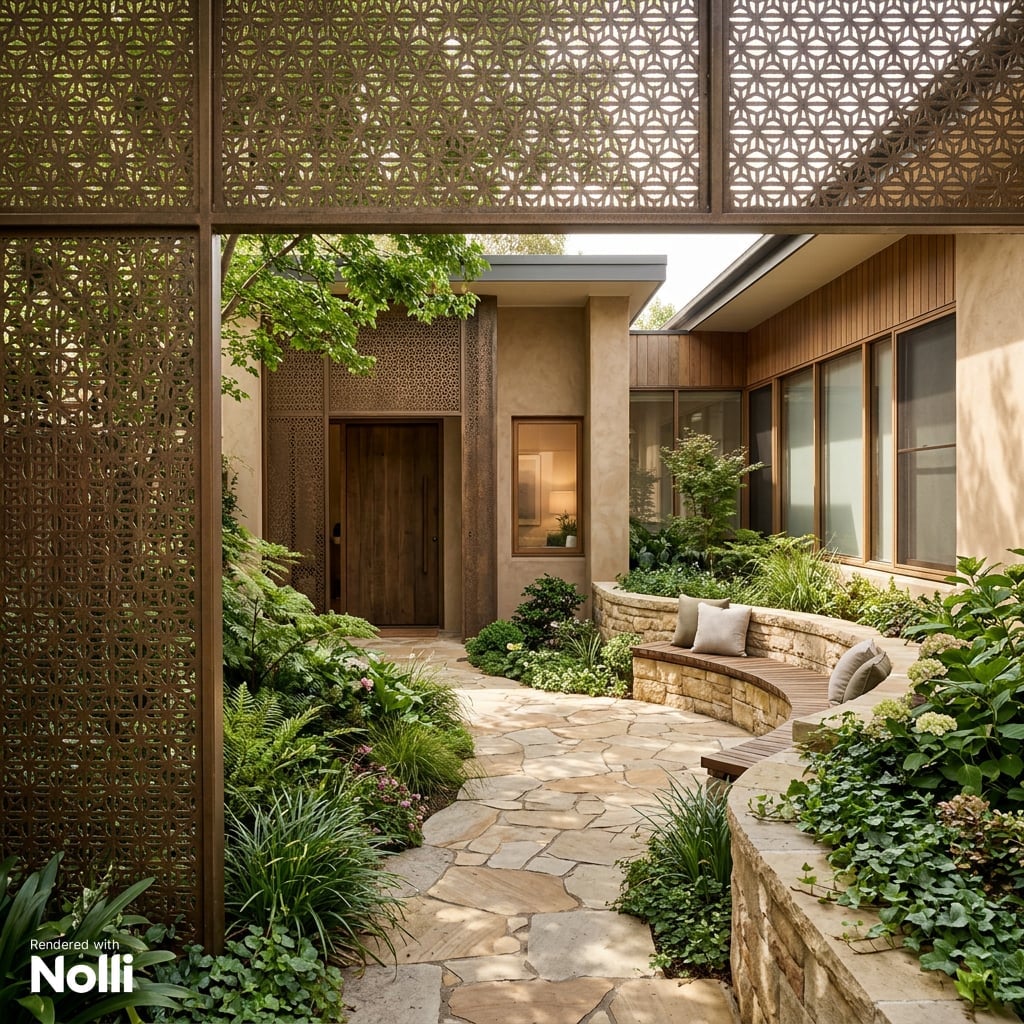
The curved wooden bench is the focal point here, set against a stone retaining wall that grounds the courtyard in earth tones. Decorative metal screens break up the sightline to the entrance, adding privacy without blocking light. The pathway leads past the seating area, so the layout encourages you to pause rather than just walk through. In a modern asian courtyard, the balance comes from mixing hard materials like stone and metal with the softness of plants. The wood bench is the bridge between them.
Japanese zen garden with water feature and bonsai trees
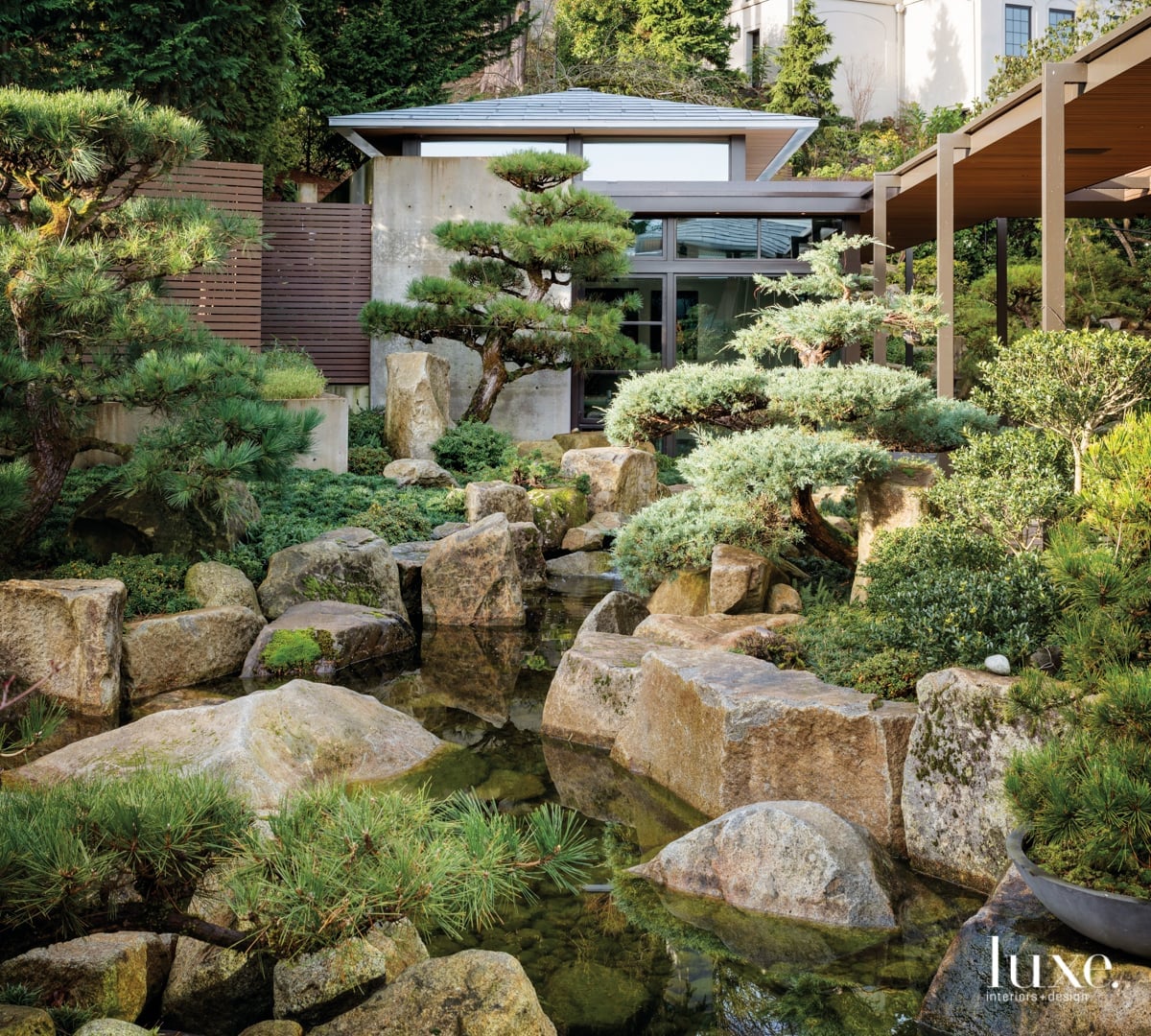
A zen garden that uses a small pond as the water feature keeps the sound subtle and the maintenance lower. Bonsai trees and large rocks are arranged in a naturalistic layout that feels spacious, even in a standard backyard. The green, gray, and brown palette helps the space stay calm. For a design like this, the placement of the rocks matters more than their size, group them in odd numbers and partially bury them to look like they belong.
Country backyard with layered garden beds and wood chip mulch
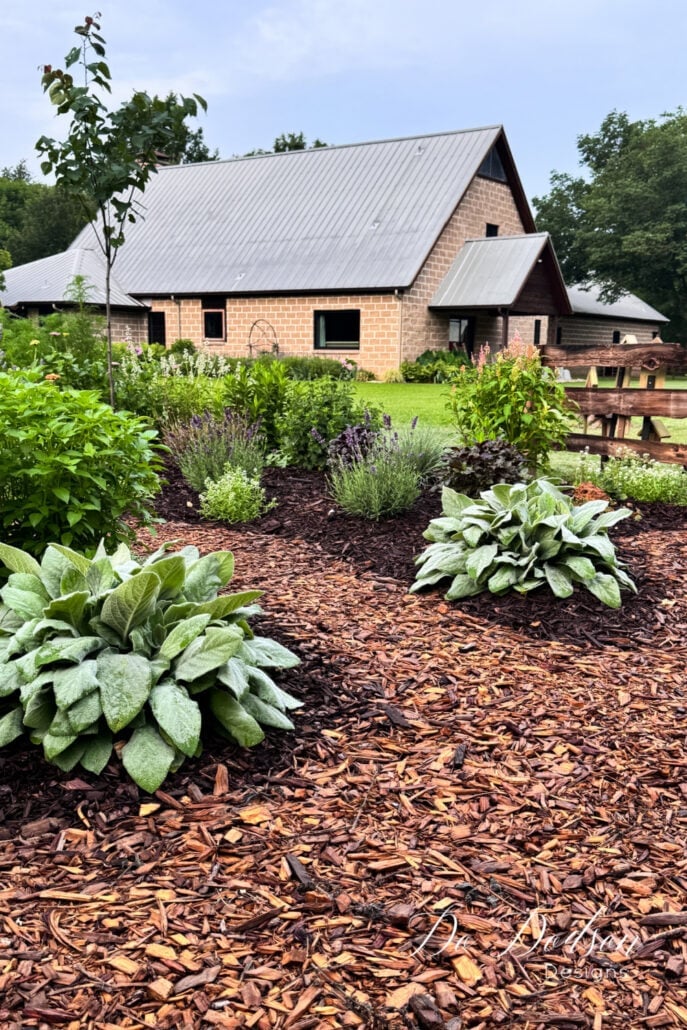
Where a formal garden might use straight lines and trimmed hedges, this country backyard leans into layered planting beds with wood chip mulch paths that soften the whole layout. The fluffy lamb’s ear plants and lavender spill over the edges, while a wooden bench offers a spot to sit and take it in. The overcast daylight makes the purple and green tones deeper, and the metal roof on the shed adds a practical note.
The wood chip mulch does more than look good. It suppresses weeds and keeps moisture in the soil, which means less watering during dry spells. Brick edging keeps the mulch from wandering onto the lawn, so the beds stay defined without a lot of upkeep. For a similar effect in your own yard, start with the paths first and let the plants fill in around them.
Vibrant cottage garden with curved flower bed and large rock
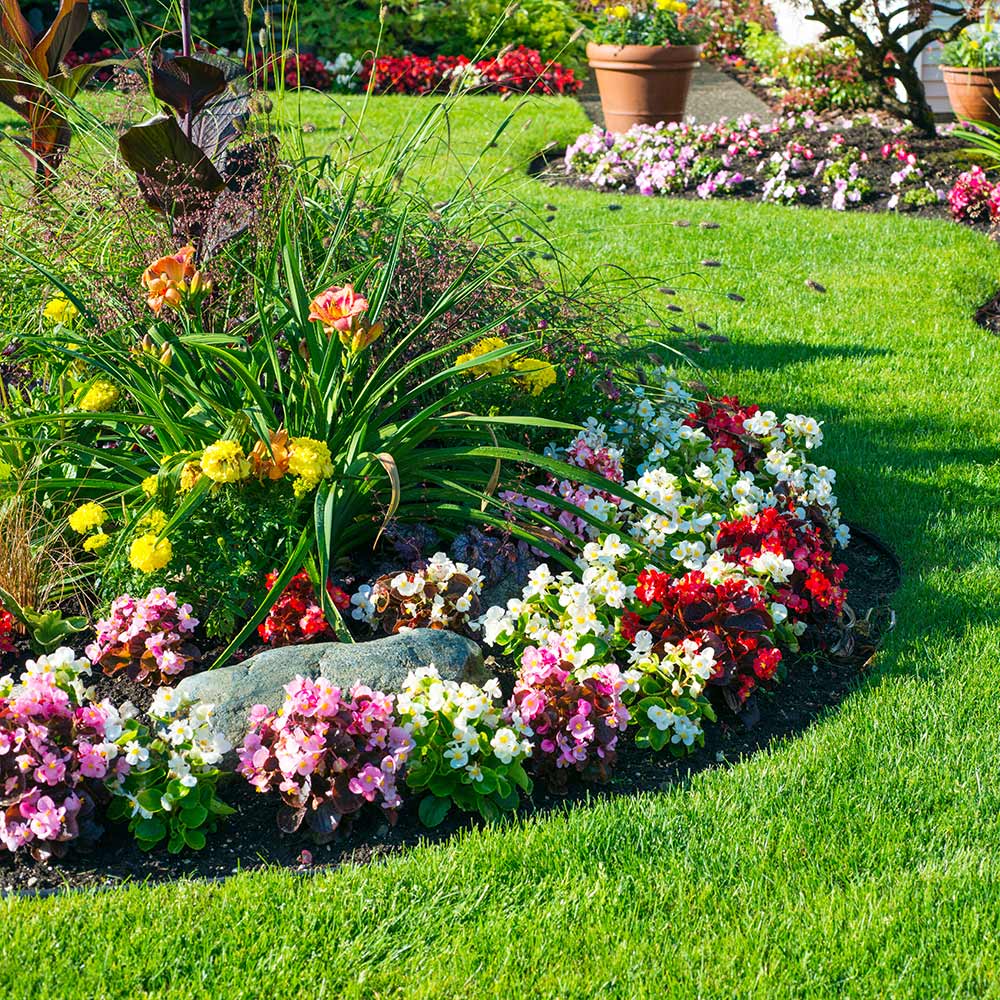
This garden leans into the idea that a single, generous curve does more work than several straight lines ever could. The flower bed sweeps around the lawn in one long arc, filled with layered plantings of daylilies, begonias, and ornamental grass in shades of pink, white, red, and yellow that rise against the green lawn. A large rock sits near the edge of the bed, anchoring all that color so it does not just float. The layout principle here is that a bold, continuous border gives a roomy garden direction without needing a fence or hedge.
Eclectic garden with purple wicker furniture and potted flowers
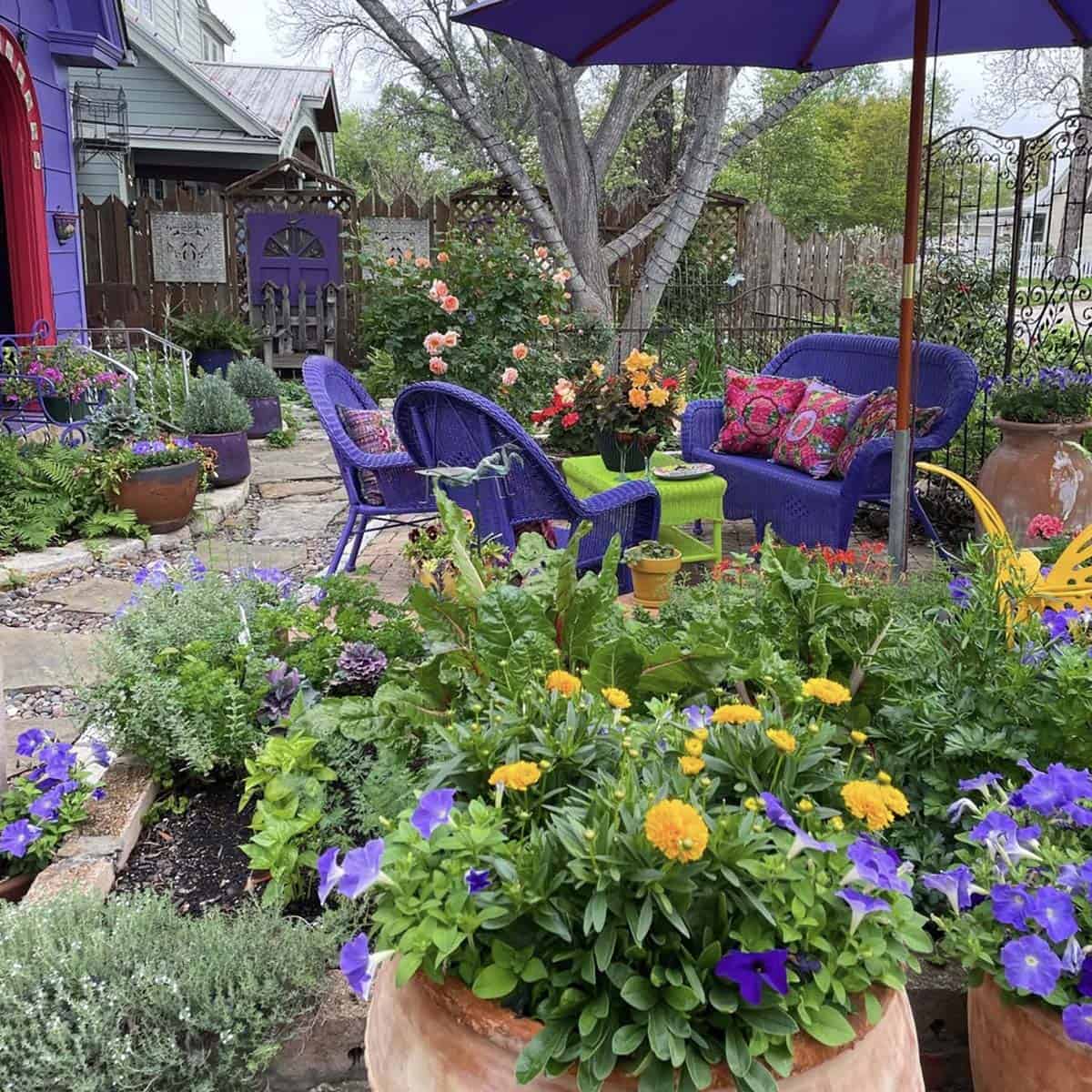
A purple wicker sofa and matching chairs around a lime green table set the tone here, and the rest of the garden follows their lead. The palette depends on contrast: the deep purple of the wicker pops against the orange and yellow of nearby potted flowers, while terracotta pots and metal plant stands add texture without competing. A purple umbrella extends the color upward, tying the seating area to the garden around it. The material mix works because wicker feels relaxed, terracotta looks grounded, and metal keeps the group from feeling soft. For anyone trying an eclectic garden with purple wicker furniture and potted flowers, the ratio to aim for is about one part bold furniture to two parts greenery and blooms.
Contemporary backyard with modern garden room and stone patio
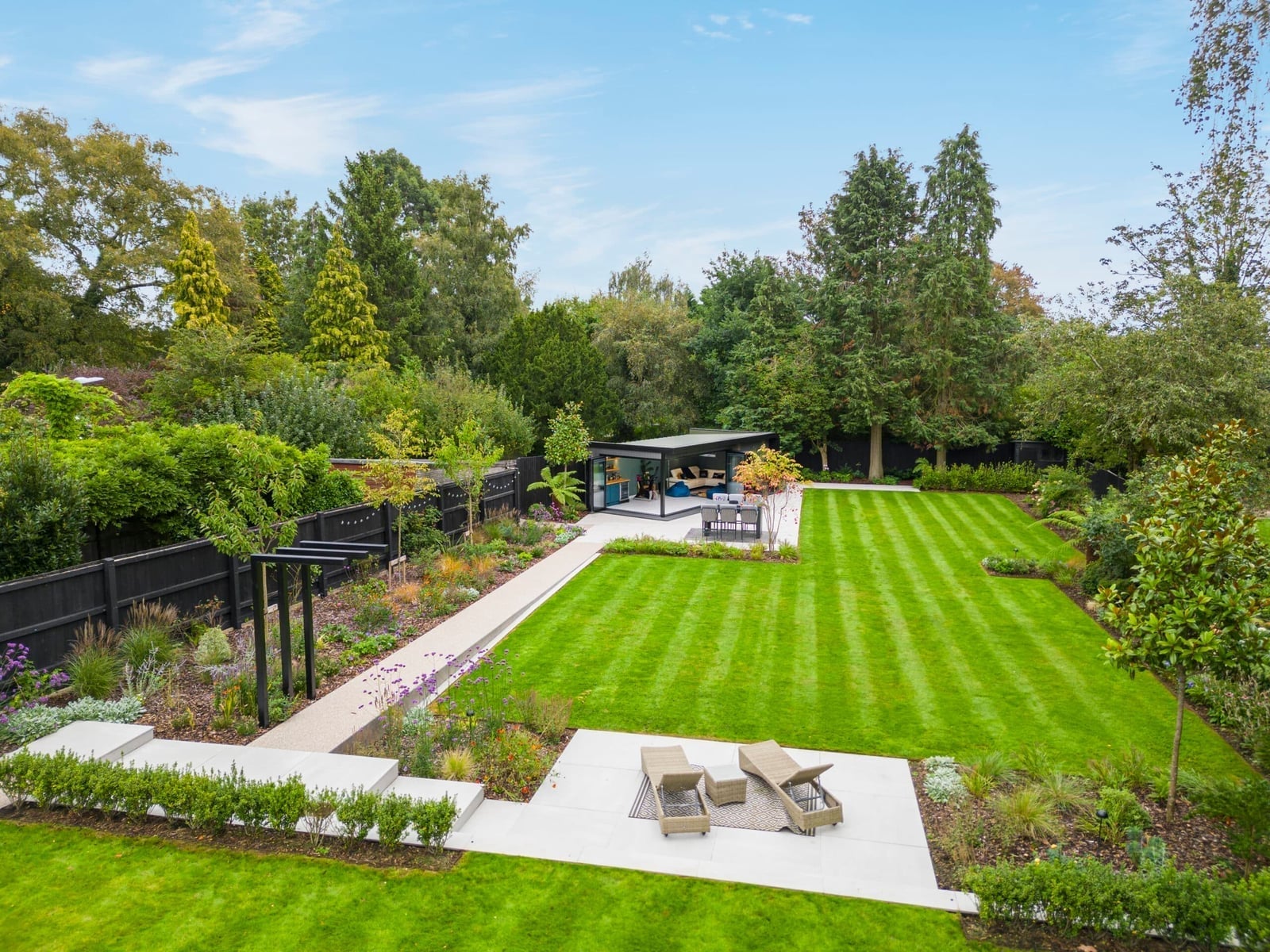
This backyard looks a contemporary alternative to the traditional screened porch. The modern garden room uses glass walls and a metal frame, which keeps the view of the manicured lawn and stone patio completely open. Lounge chairs and an outdoor dining set sit on the patio, creating a clear zone for relaxing, while the garden room itself becomes a second zone for shelter without closing off the space.
The material contrast matters here. The glass and metal of the garden room feel crisp next to the natural stone patio and the grass. Wood accents soften the transition between the hardscape and the lawn. The layout works because each area has a distinct purpose: the lawn stays open for movement, the patio holds the furniture, and the garden room provides depth at the far end. That zoning keeps a roomy backyard from feeling like one big empty stretch.
Curved bed features hostas and conifer tree
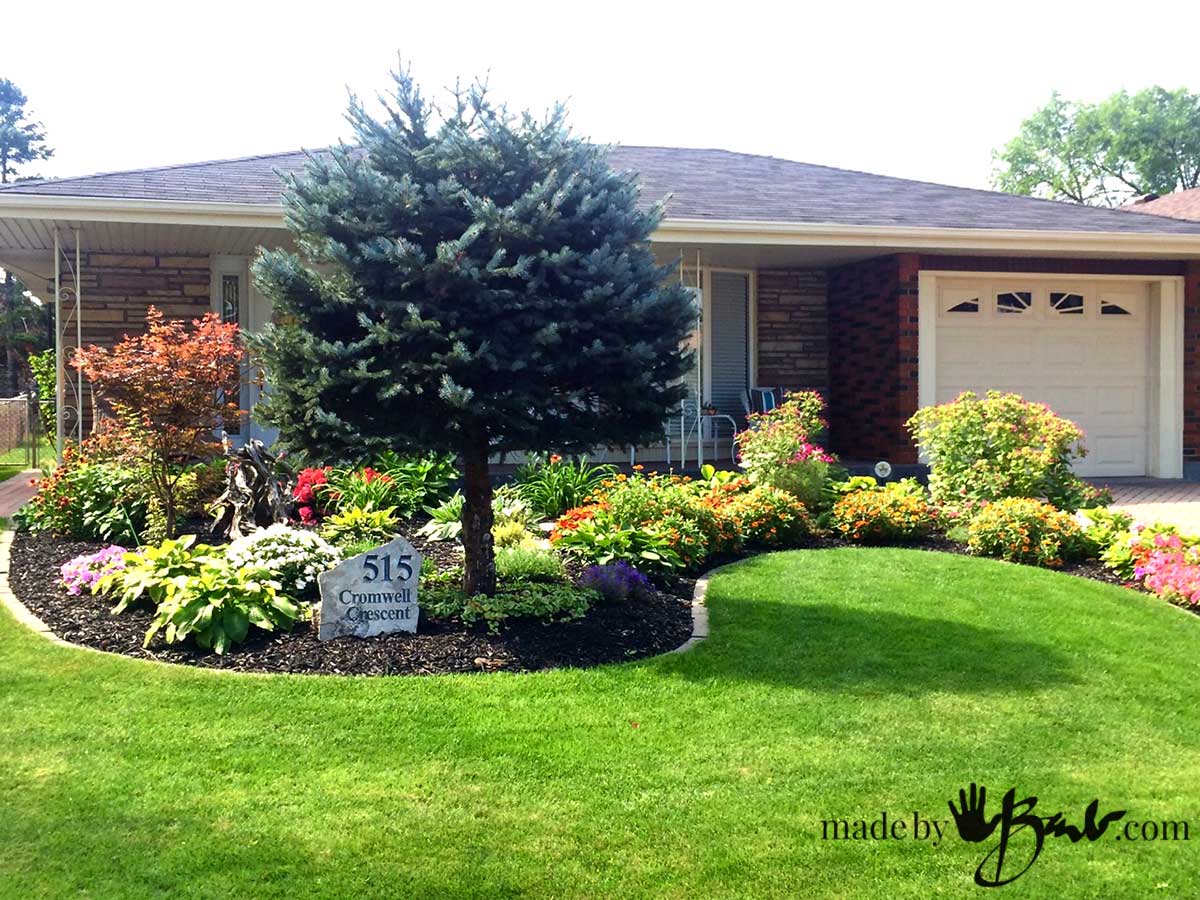
The address stone near the curb gives this front yard its anchor, but the curved bed does the real work. Hostas spread low along the front edge, while a conifer tree rises in the middle and flowering shrubs in red, pink, and orange fill the middle layer. Brick edging holds the curve in place, and dark mulch keeps the green tones from blending into the grass. The daylight hits the bed evenly, which matters for a traditional layout like this: the curve only reads if the light does not cast confusing shadows across the plant heights.
Tropical garden with lush foliage and wide wooden doorway
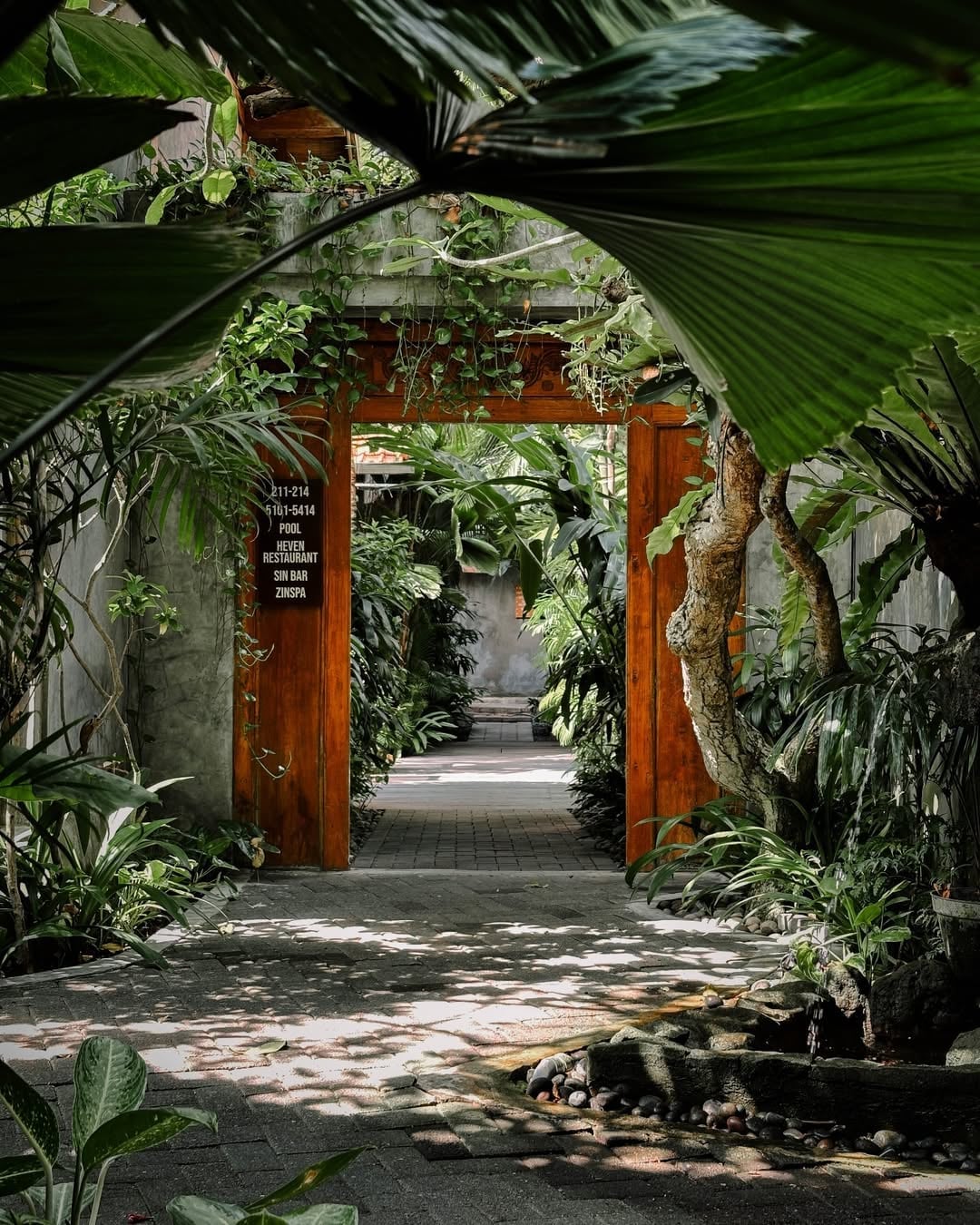
Large wooden doors set into a wide opening suggest there is something beyond the garden, which makes the space feel deeper than it might be. The stone pathway leads straight to the doorway, flanked by dense tropical foliage that narrows the view and then opens again at the threshold. Concrete pavers keep the path from feeling muddy, while the wood of the doors warms up all that green and gray. The material takeaway for a tropical garden with lush foliage and a wooden doorway is to match hard surfaces to the scale of the plants: broad leaves need broad planks and generous stones, not narrow stepping stones that get lost.
Final Thoughts
A simple garden design for 2027 doesn’t mean boring. It means choosing elements that earn their place: a path that leads somewhere, a bed that feeds you, a corner that asks you to sit down. The best gardens grow with you, so start with one good idea and let the rest follow. Keep mulch topped up, prune before growth starts in spring, and check your USDA zone before planting anything new. A garden is never really finished, and that is the whole point.