
Deck railing does more than keep you from stepping off the edge. It sets the whole look of your outdoor space, from clean modern lines to classic porch charm. In 2027, the trend is all about mixing materials and playing with contrast.
Think wood posts with black metal balusters, cable infills that don’t block the view, and horizontal rails that feel fresh. These 25 ideas give you real options for updating your deck without losing safety or style. Each one focuses on the railing itself, keeping the rest of the deck simple so the details stand out.
Modern deck with wood posts and cable railing
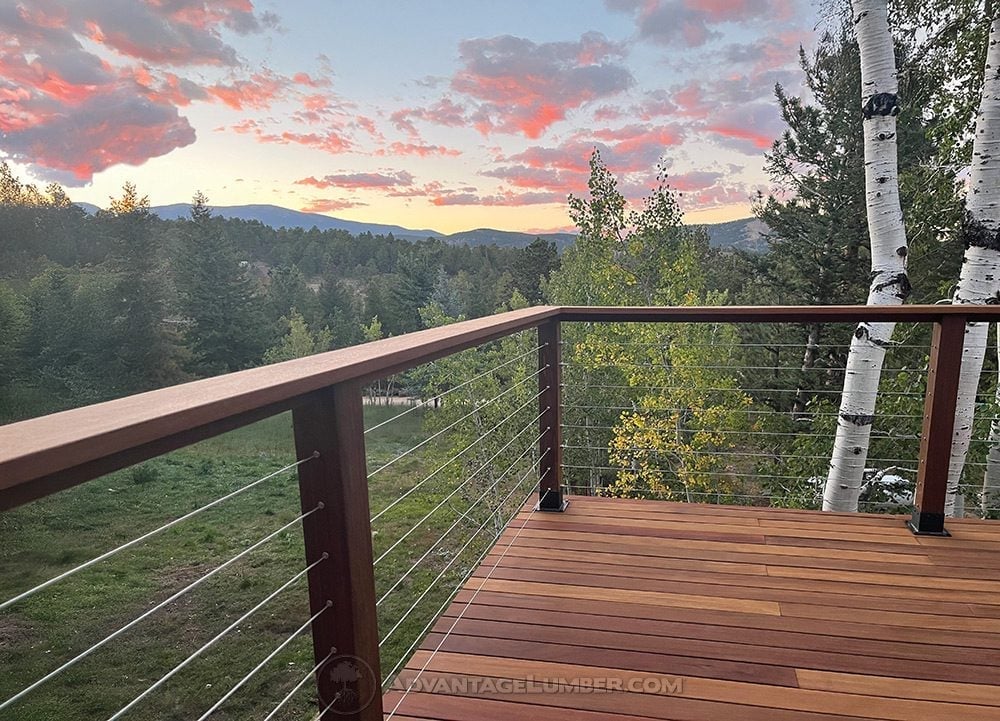
A cable railing system lets the view do the talking, and on this deck the sunset sky and treeline are the main event. The warm brown wood posts and deck boards anchor the space, while the thin metal cables keep the line of sight open. It is a layout trick that makes a roomy deck feel even larger. One practical principle: when the railing fades into the background, the palette of the natural setting, here, green leaves, blue water and a pink sky, decides the whole mood. No need to compete with the view when the railing is designed to disappear.
Traditional porch with black metal railing and white cap
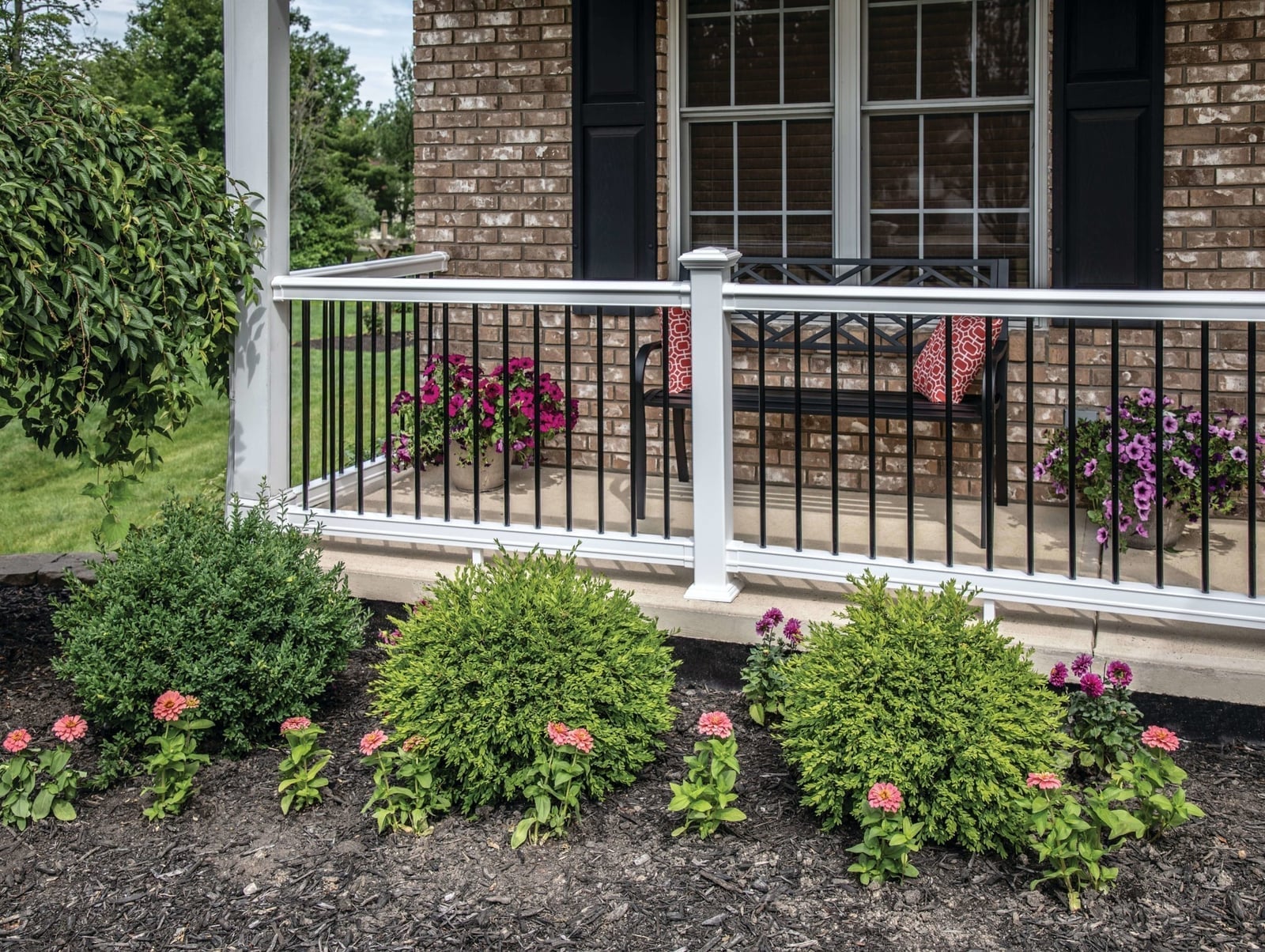
This is a clean traditional look that earns its keep through contrast. The black metal railing with a crisp white top cap stands out against the brick red facade and the dark green of the ornamental bushes. It is a palette built on opposites: dark against light, metal against brick. The white cap ties the railing to the white trim of the porch, creating a visual frame around the whole house. Potted flowers in pink and purple add a soft note that softens the black railing. For this kind of porch, match the railing cap color to your existing trim for a built-in look.
Deck overlooking a lake with black cable railing
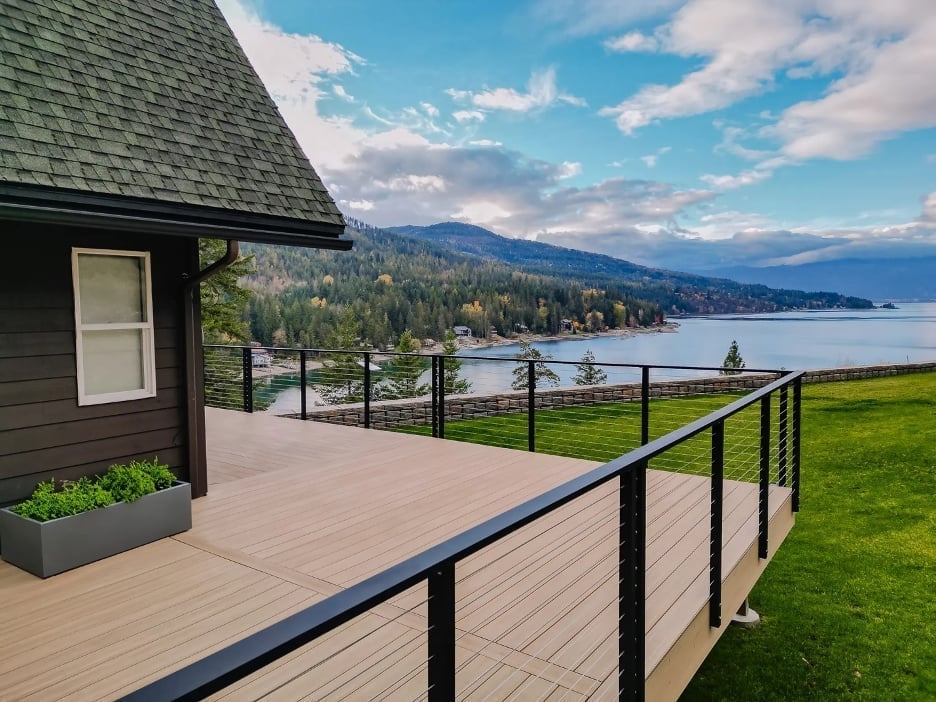
How do you keep a view open without sacrificing safety? A modern cable railing system in black is one answer. The thin vertical cables and slim top rail take up almost no visual space, so the lake and treeline stay front and center. The wood deck and posts add warmth, while the black metal keeps the look clean and architectural.
A planter with greenery softens the edge where the deck meets the railing. For an open deck overlooking water, the material choice matters: wood for warmth, metal for slim sightlines. This combination lets the landscape be the decoration. One layout principle to remember: on a deck with a primary view, keep all furniture low and away from the railing line so nothing blocks the sightline.
Weathered wooden deck with spindle railing
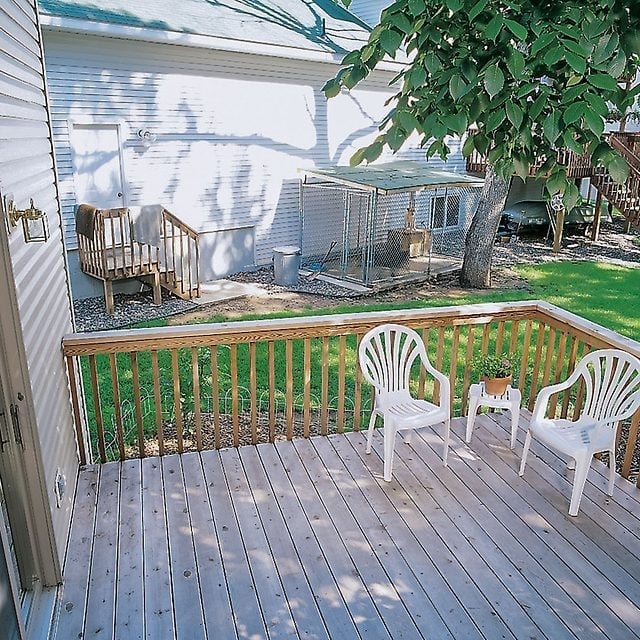
Vertical wood spindles spaced close together give this deck a classic, grounded feel. The weathered brown wood of the deck and railing blends into the surrounding trees, making the space feel like a natural clearing. White plastic chairs and a small white table sit in the dappled shade, and their light color breaks up all the brown. A potted plant adds a touch of green at eye level. The spindle railing is a traditional choice that offers more visual privacy than cables or glass. One practical takeaway: for a deck under trees, the dappled light pattern creates natural movement, so you can keep the furniture palette simple.
Multi-level deck with modern cable railing and fire pit
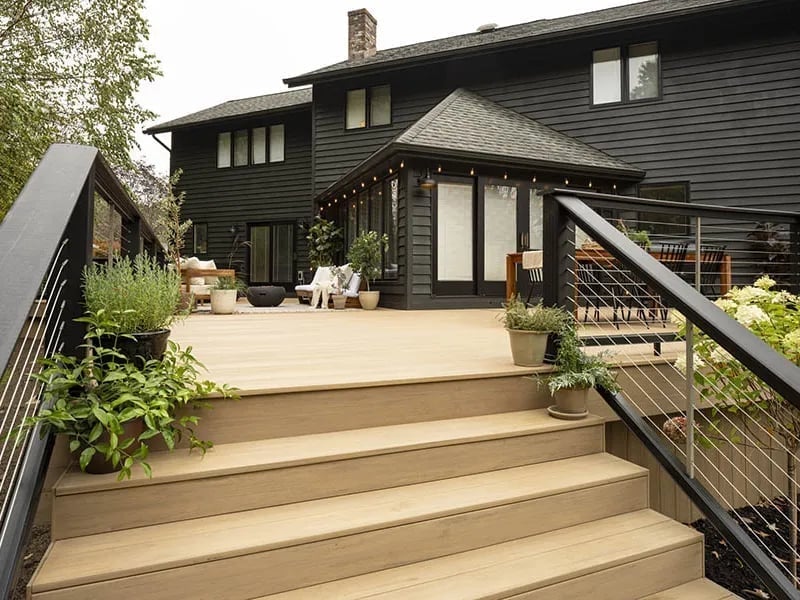
For a multi level deck, use the same railing system throughout to unify the space. Here, black cable railing runs along both levels and down the stairs, creating a continuous line that guides the eye. The wood deck and stair treads warm up the look, while string lights overhead add a soft glow. Furniture on the lower level is arranged around a fire pit, turning the patio into a gathering zone. The cable railing keeps the sightlines open so you can see from one level to the next. Repeating the railing style makes the whole structure feel connected rather than patched together.
Porch with white wooden railing and bright blue door
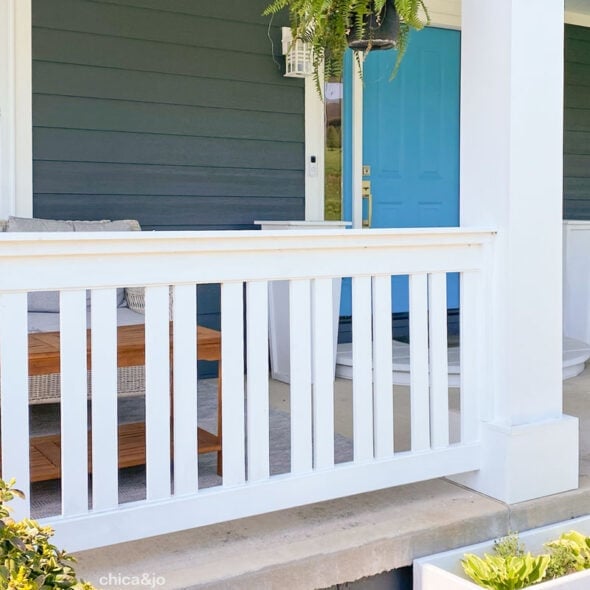
White wood railing can look a blank canvas or a missed opportunity. Here it anchors a porch where a bright blue door does the talking. The palette stays restrained: white rails, gray siding, concrete steps, and wood-toned furniture. A sofa and coffee table create a seating zone that feels open rather than crowded, with a hanging plant adding softness at eye level. The takeaway for palette is that a single saturated color works best when everything else stays neutral. White railings are the frame, not the picture. Let the door or a piece of furniture carry the hue, and the railing simply holds the line.
Porch entrance with black metal spindle railing and brick facade
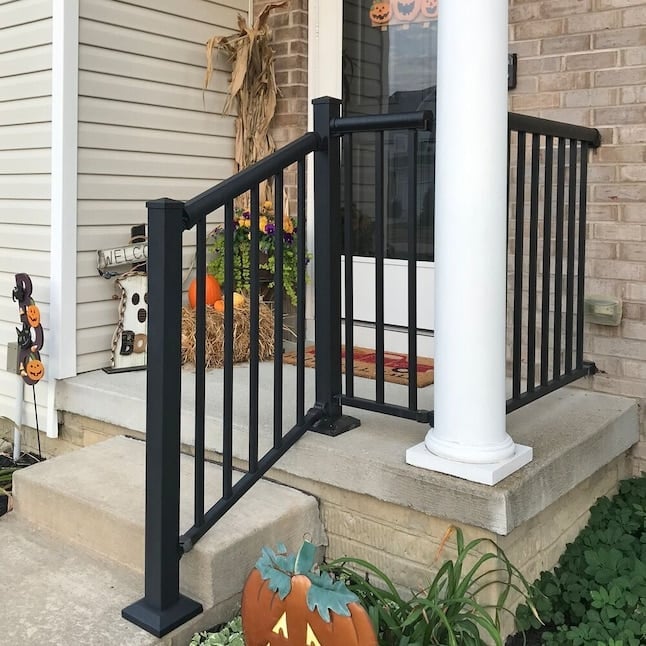
Black metal spindles stand out against a beige brick facade because of their vertical rhythm. The compact porch entrance pairs the railing with a white column, a straw bale, potted plants in orange and green, and a welcome mat. For renters, this is a low-commitment material swap: black spindles are common on stock railings and can be painted back to a neutral if needed. The metal holds up well in variable weather, and the dark tone hides the dust that shows on lighter finishes. The brick does the heavy lifting on texture, so the railing can stay simple.
Modern farmhouse porch with wood handrail and black balusters
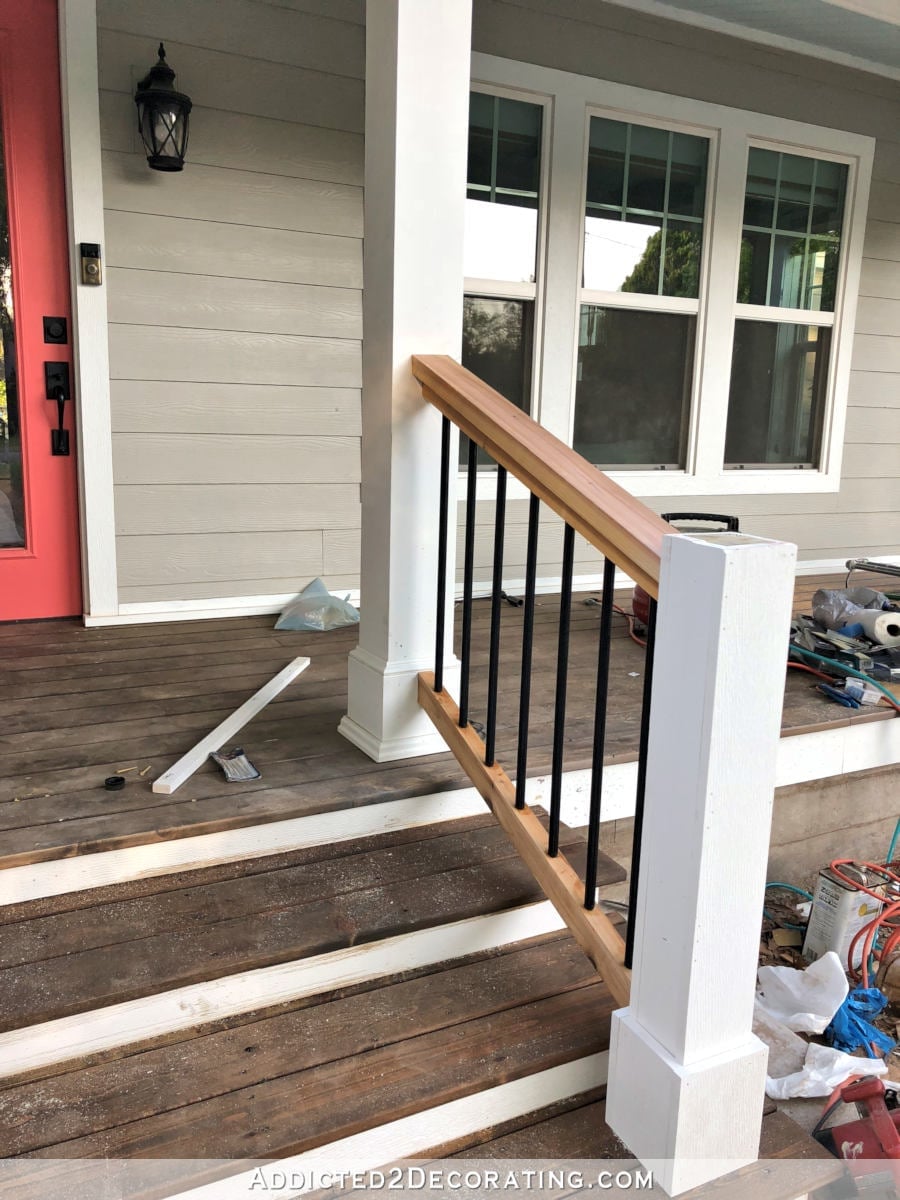
This railing uses a warm wood handrail with black metal balusters and white posts for a modern farmhouse look. The tan wood tone prevents a cold feel, while the black balusters add contrast. An outdoor lantern mounted nearby confirms the practical style. The wood handrail offers a natural grip surface, and the black balusters are powder-coated metal that resists rust in damp climates. White posts bridge the two materials visually, making the whole assembly feel cohesive.
Deck with contrasting black metal balusters and wood frame
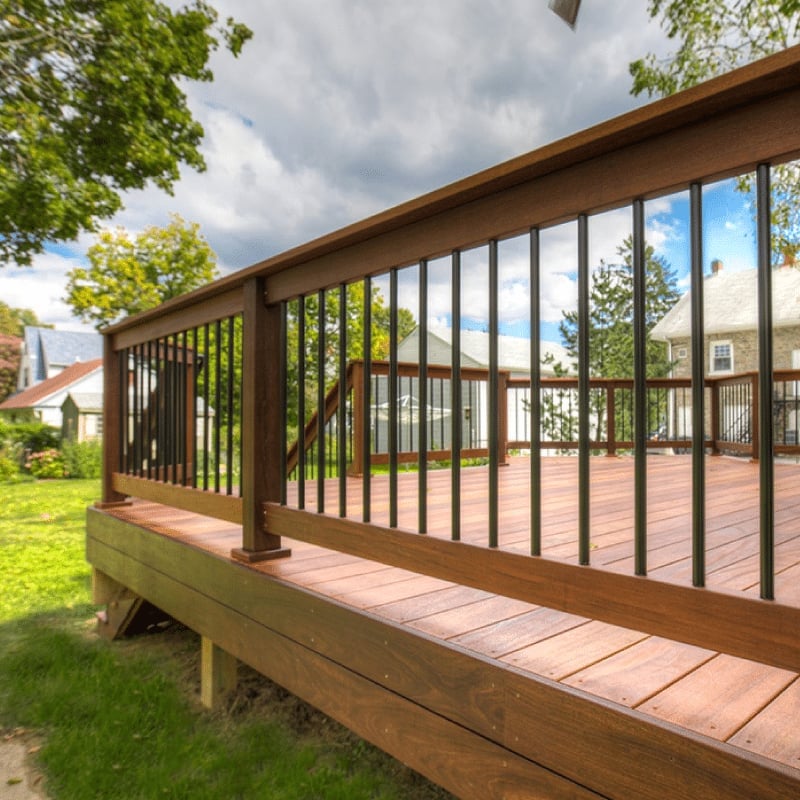
Can dark metal balusters work on a wood deck without feeling heavy? This one answers yes, because the wood frame stays light in tone and the deck boards are a similar warm brown. The black balusters run vertically between the top and bottom rails, creating a rhythm that draws the eye across the horizontal deck. The contrast is a line drawing against the wood field. For a deck that gets full sun, powder-coated black metal holds its color longer than painted wood, and it needs only a rinse to stay clean. The wood frame does the structural work; the metal just sharpens the look.
Rustic modern deck with live edge wood bar top
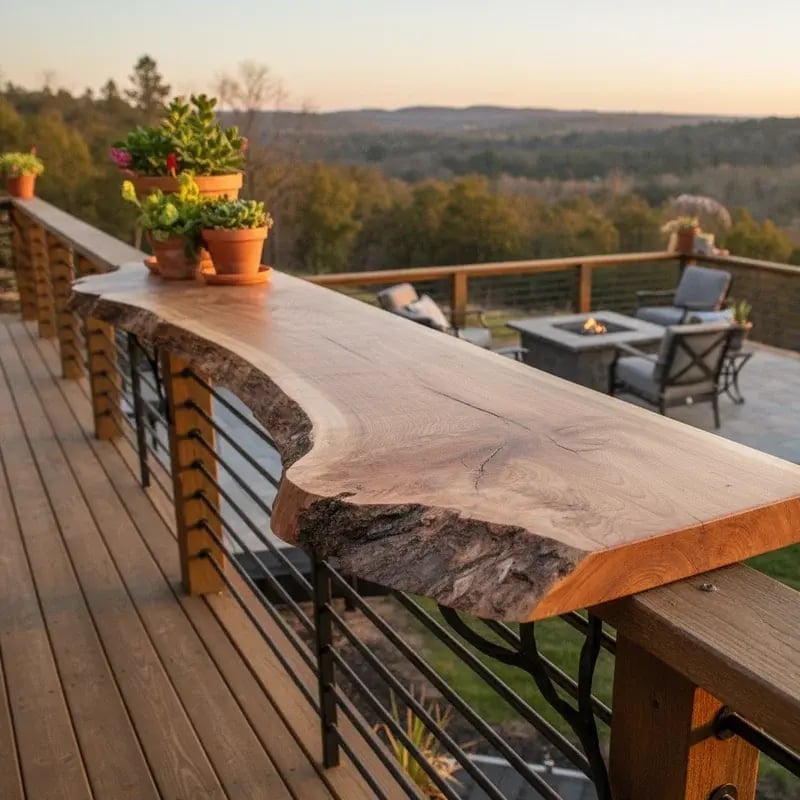
A live edge wood bar top replaces the standard railing cap on this deck, turning a safety requirement into a serving surface. The natural edge keeps the bark line visible, which pairs well with the rustic modern style of the deck. Below the bar, metal supports and stone accents ground the wood. The scale works because the bar top is wide enough to hold drinks without blocking the view of the fire pit and seating beyond. For anyone who entertains outdoors, a railing that doubles as a ledge saves floor space. Check your local code on railing height before replacing the top rail with a bar surface.
Traditional porch with ornate turned balusters
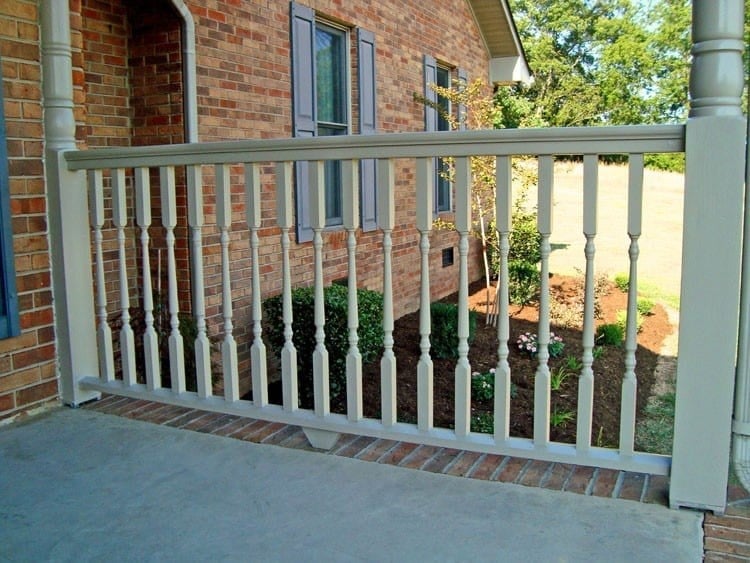
An ornate railing stands out when the porch stays simple. The turned balusters here hold all the detail, so the beige porch floor, gray siding, brick red steps, and green trim stay quiet in the background. That contrast keeps the railing from competing with the house itself. The wood posts and concrete base anchor the look without adding fuss. A useful layout tip is to let one element carry the ornament and let everything else support it. That way the porch looks planned and not cluttered.
Modern deck with contrasting wood posts and dark metal railing
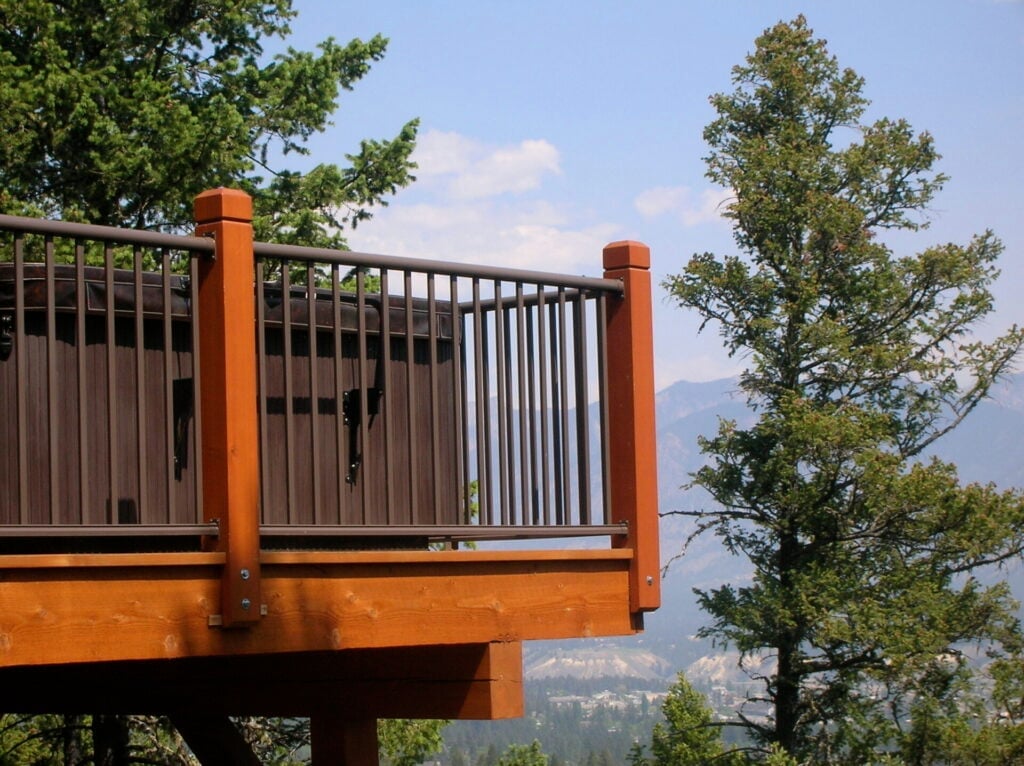
A wood post and dark metal railing combination reads differently than an all-black or all-wood system. Here the brown wood posts stand out against the dark metal infill, and the deck overlooks a landscape of greens and blues. The hot tub below adds a relaxed lived-in feel, but the railing itself stays clean and modern.
For palette, the trick is to limit the contrast to just two materials. The wood posts are the warm note, the metal railing is the cool note, and nothing else tries to match either one. That ratio keeps the deck from feeling split between two styles. The brown and dark metal palette works because the surrounding greenery and sky break up any potential heaviness.
Deck with sleek glass railing and white pergola
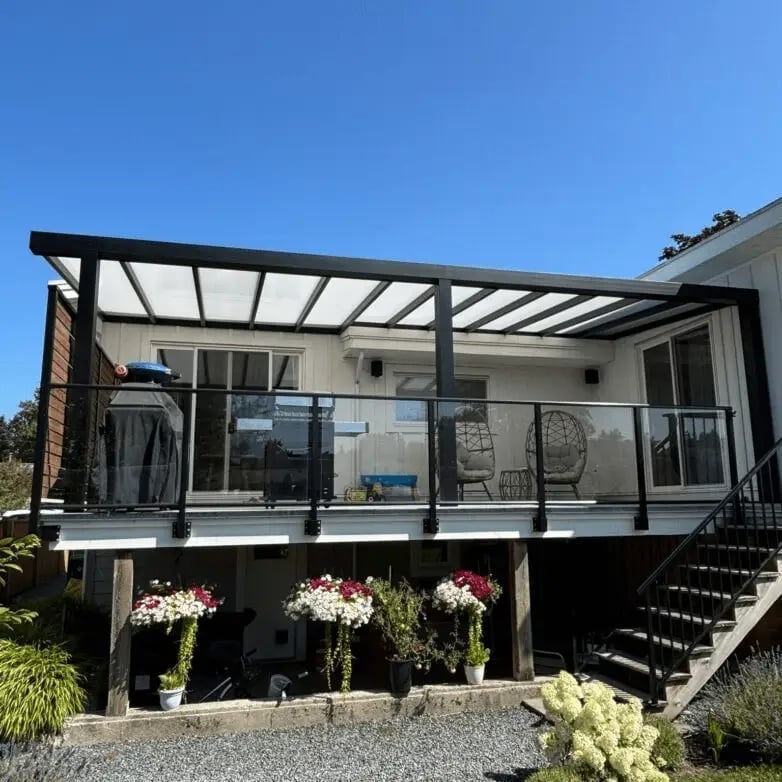
Glass railings disappear in a way that no other material quite does. Here the clear panels let the white pergola, black egg chairs, and wood decking act as the main elements, while the railing itself steps back. The deck with stairs keeps the view open, and the glass does not interrupt the line from the grill to the seating area. A practical point for materials is that glass railings work best when the deck already has strong architectural features to carry the visual weight.
Modern deck with horizontal metal railing and composite boards
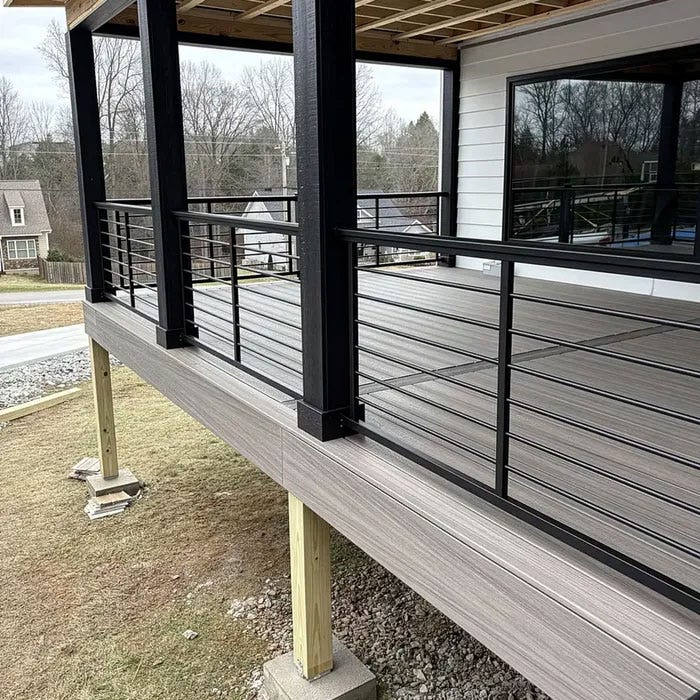
A horizontal metal railing is a direct way to give a deck a modern edge. Here the gray composite decking and wood posts frame the black horizontal bars, and the overhead structure casts a consistent daylight shadow across the whole space. The open deck layout lets the railing act as a clean line instead of a barrier. For lighting, the key is that the overhead structure diffuses the sun, so the railing does not cast harsh striped shadows across the deck surface. That even light keeps the horizontal lines looking crisp.
Multi-level deck with black cable railing and dining area
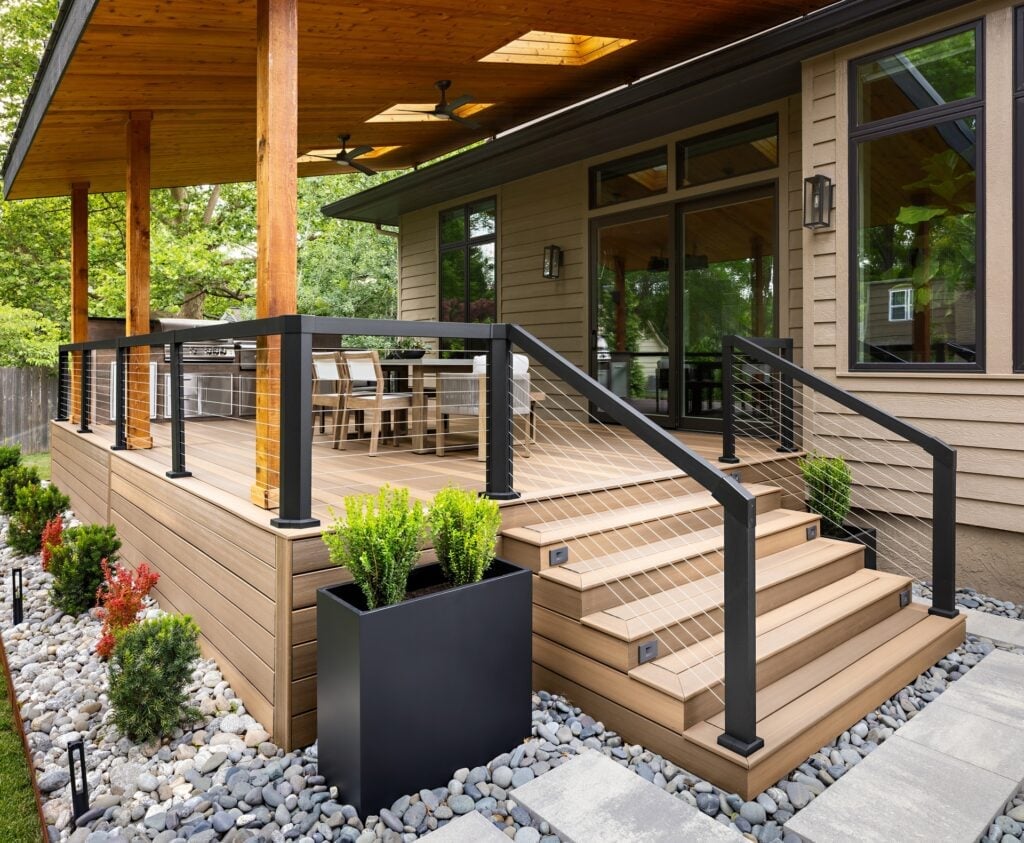
On a multi-level deck, use the railing to define each zone without closing it off. Here the black cable railing runs along both levels, and the dining table and chairs sit on the upper level while planters soften the lower edge. The stairs connect the two areas, and the cable infill keeps the view open across both levels.
For layout, the overhead fans with lights and the recessed lighting do double duty. They light the dining area for evening meals and keep the railing from feeling like a dark silhouette against the night sky. The brown deck boards and beige house siding keep the palette warm, while the black cable and green planters add contrast. The cable railing helps the deck live as one connected space, not two separate platforms.
Traditional porch with white posts and black balusters
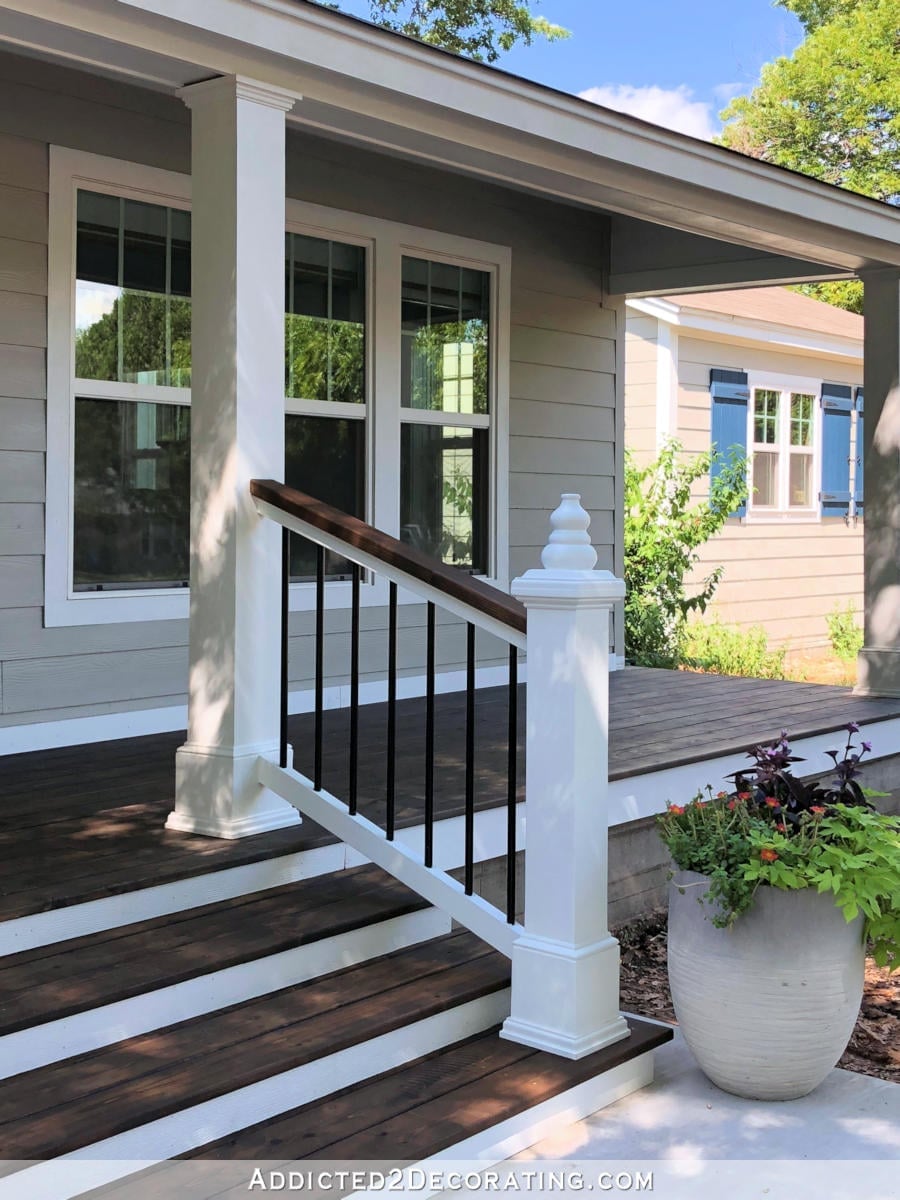
White railing posts with decorative caps and black balusters give this porch a classic look that feels neat without being fussy. The palette here is gray, white, dark wood, black, green, and orange, with the dark wood deck grounding all those lighter tones. When your railing has two strong colors like white and black, let the decking be the darkest element. That keeps the eye moving upward to the posts and the planter instead of getting stuck at floor level.
Contemporary deck with sleek black horizontal metal railings
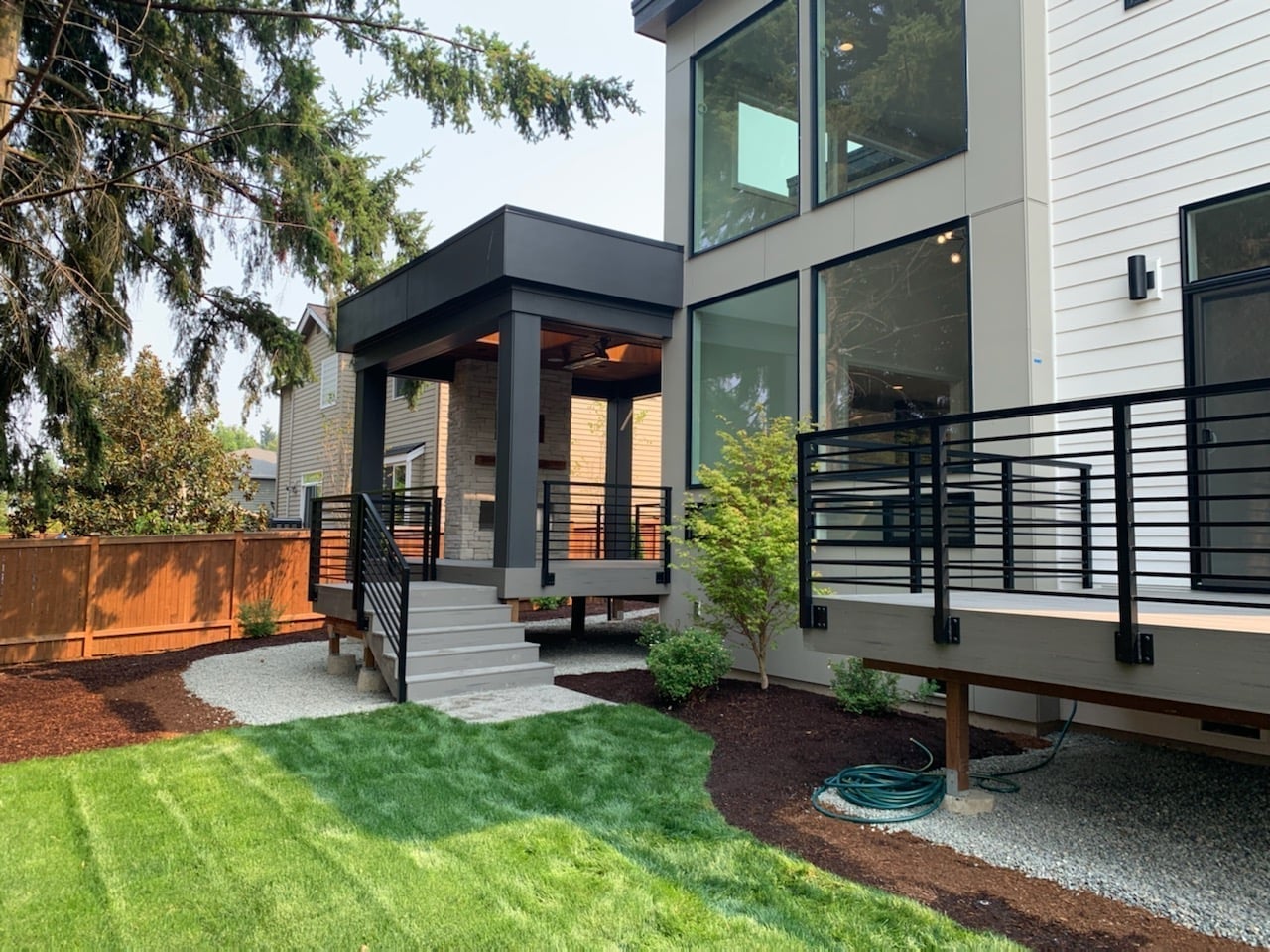
This sleek black metal railing runs along a multi-level deck with stairs, a covered area, and large windows. The palette stays in gray, black, beige, and green. For renters who cannot swap out the railing itself, the material swap here is straightforward: introduce wood or stone in the furniture and planters nearby. The dark metal recedes, so warm wood chairs or a stone planter will stand out without fighting the railing for attention.
Deck with white geometric railing and coastal style
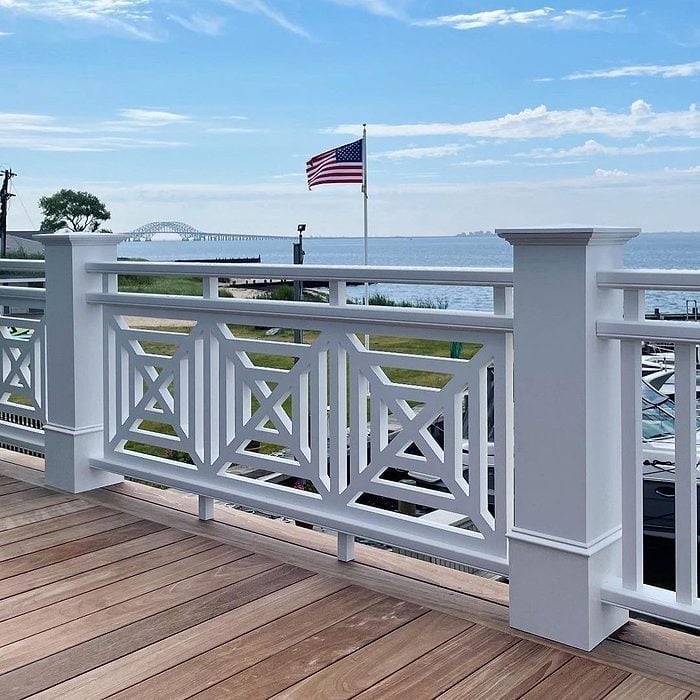
White geometric railing can look coastal or modern farmhouse depending on what is around it, so the difference comes down to the decking and the view. Here the white railing with its geometric pattern sits on a wood-toned deck, with blue and green tones from the surroundings. That blue-green palette is what pushes it toward coastal rather than farmhouse.
To try this styling variation yourself, look at the railing pattern first. A repeating geometric shape leans coastal when the deck is natural wood and the accents are soft blues or greens. If the same railing sat on a gray composite deck with black furniture, it would read modern. The palette is what breaks the style either way.
Modern porch with composite decking and stone pillar
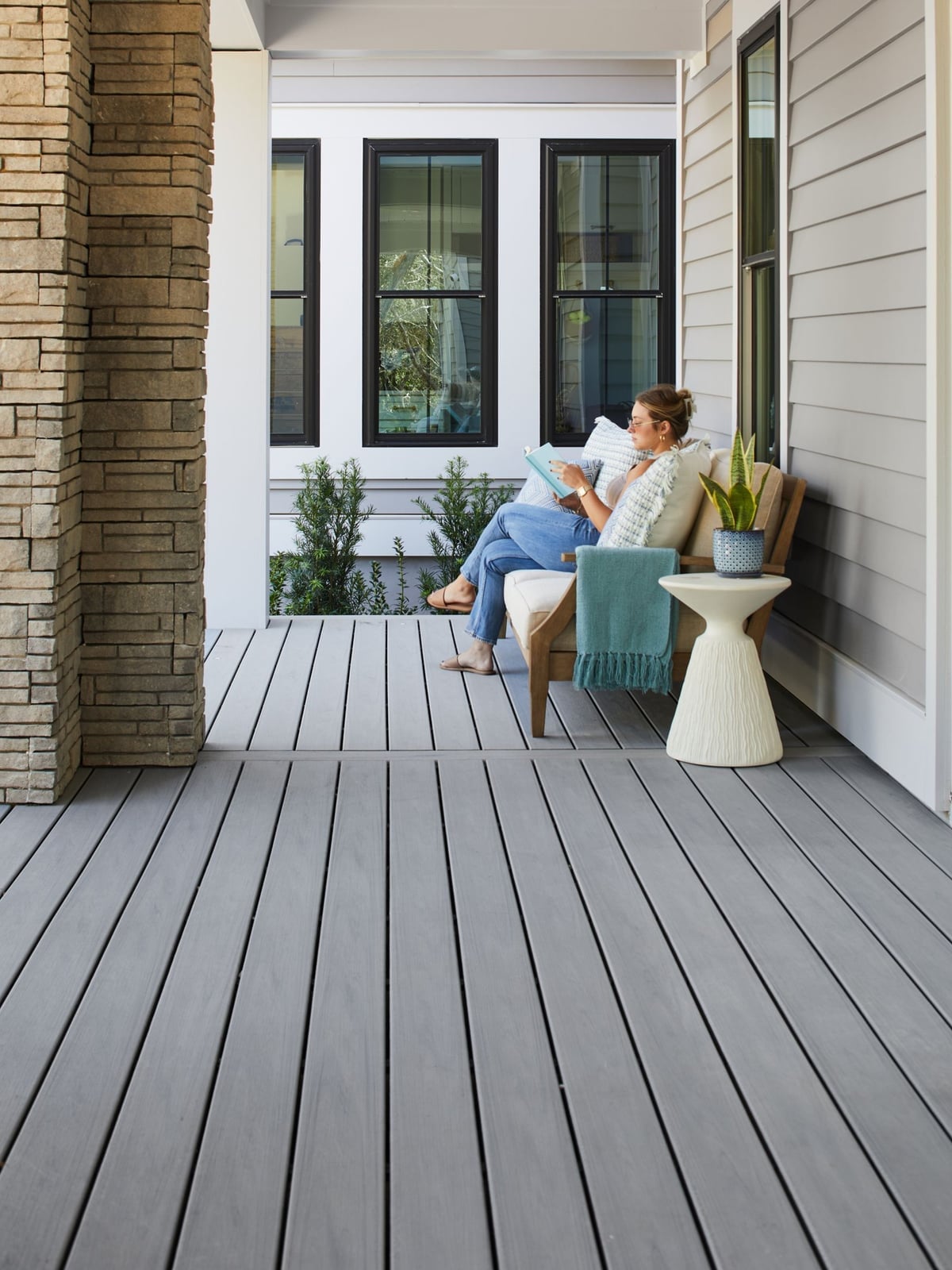
Composite deck boards run horizontally across this porch, paired with a stone pillar and a palette of gray, white, beige, and green. The composite material is a precise choice for covered porches because it holds its color and resists splintering in humid climates. The stone pillar adds visual weight at one end of the porch, balancing the lighter armchair and side table. For durability, the key is to match the material to the weather exposure: composite works well under cover, while natural stone handles full sun and rain without fading.
Deck with natural wood posts and black horizontal bars
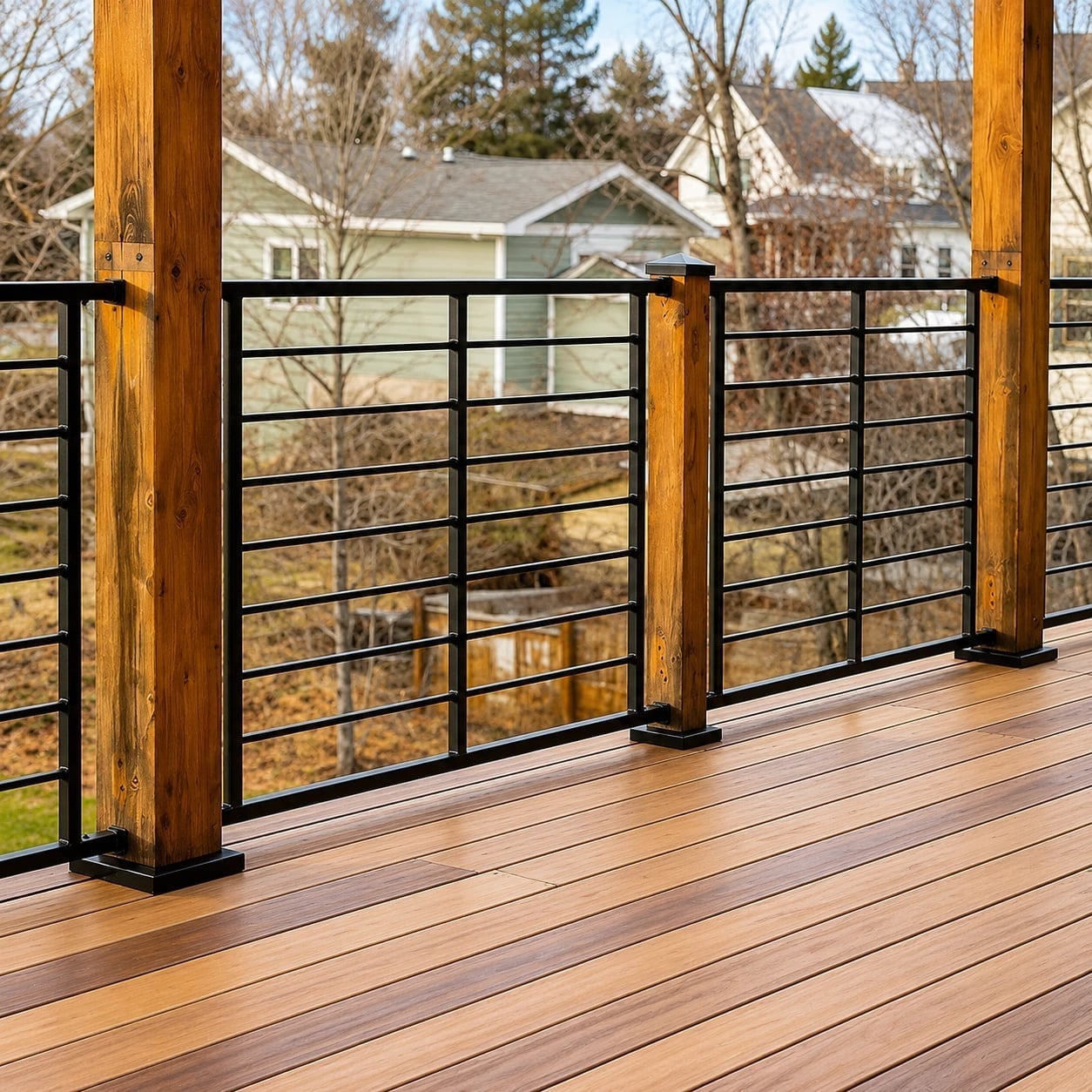
This railing gets the contrast right: natural wood posts with black horizontal bars on a deck that feels roomy and open. The wood posts are the warm element here, keeping the black metal from making the deck feel like a fire escape. A clear one-line assessment of this material pairing is that it works because the wood appears in substantial vertical posts, not thin spindles, so the eye registers both materials equally. For scale, the posts need to be thick enough to balance the horizontal span of the bars. Skinny posts with wide horizontal runs would make the railing feel top-heavy.
Multi-level deck with black cable railing and covered structure
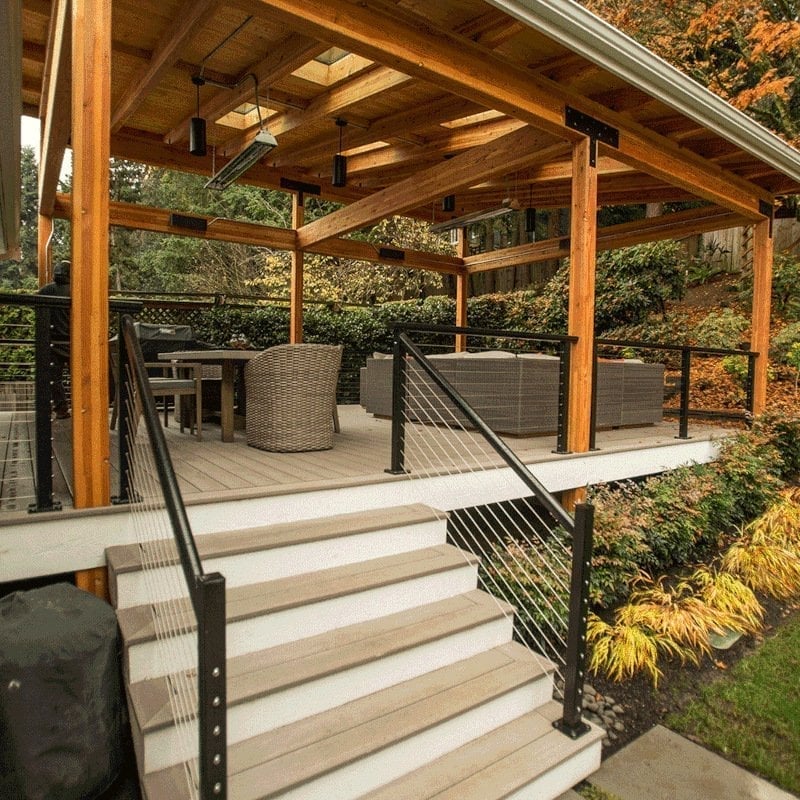
A covered structure changes the rules for a deck. The overhead roof lets you furnish the space with upholstered pieces like a sofa and dining chairs without worrying about direct sun or rain every afternoon. The black cable railing keeps sightlines open between levels so the layout connects as one outdoor room. Overhead lights and heaters extend the hours you can actually use the place.
The roomy footprint supports distinct zones. Place the dining group on the lower level and the seating area near the steps. Cable infill is thin enough that sightlines stay clear, which matters when you are looking down from an upper deck toward a conversation pit or fire feature below.
Modern porch with cable infill and brick steps
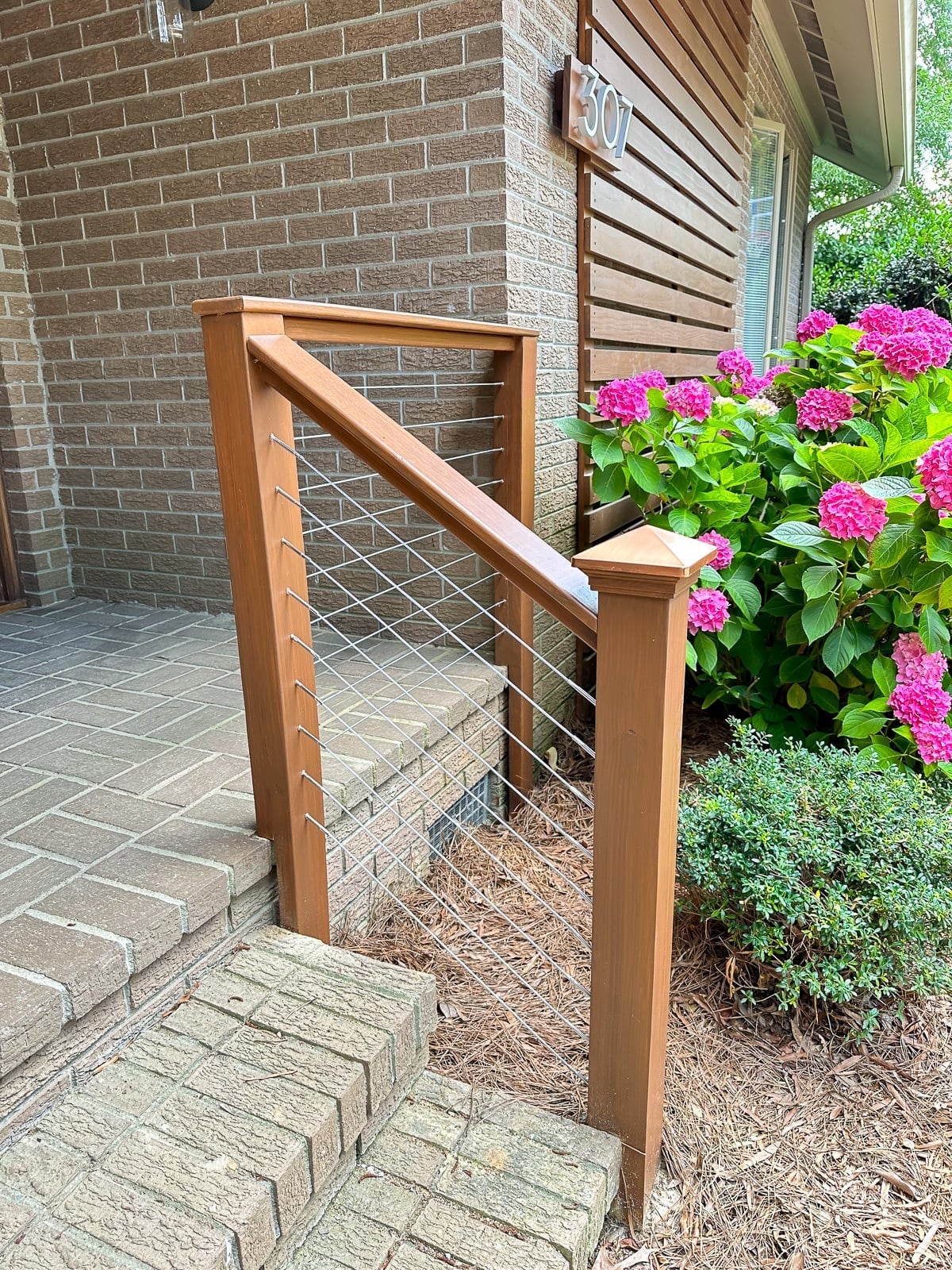
Brick steps and wood railing posts create a warm base for a modern porch, while the cable infill keeps the view open rather than blocked by solid panels. The palette stays restrained: brown wood, gray metal, green foliage and a touch of pink from hydrangeas planted nearby. Cable railing works well here because the brick and wood already carry enough texture. A solid baluster system would compete with the masonry. The thin metal lines recede visually, letting the material contrast between brick and wood do the talking.
Sharper deck with white vinyl railing and black balusters
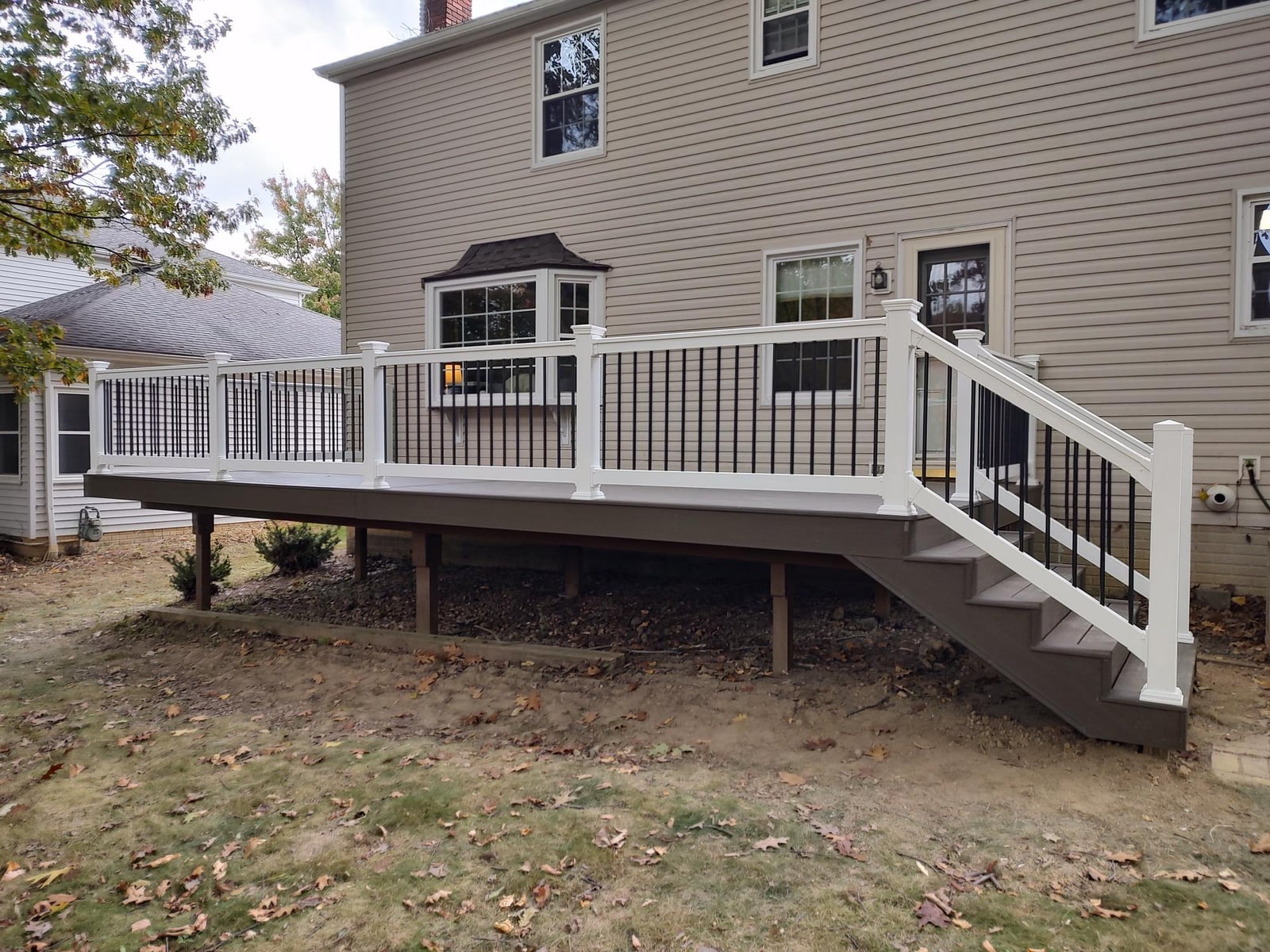
White vinyl railing with black balusters is a low-maintenance trick that works especially well on a deck where refinishing wood rails would be a hassle. The vinyl frame resists moisture and won’t need repainting every couple of seasons. The black balusters break up the white mass so the railing looks crisp. Composite decking in a warm brown or beige tone keeps the space from feeling too clinical. The dark balusters echo the composite color and tie the whole structure together.
Deck with white posts, gray top rails, and cable infill
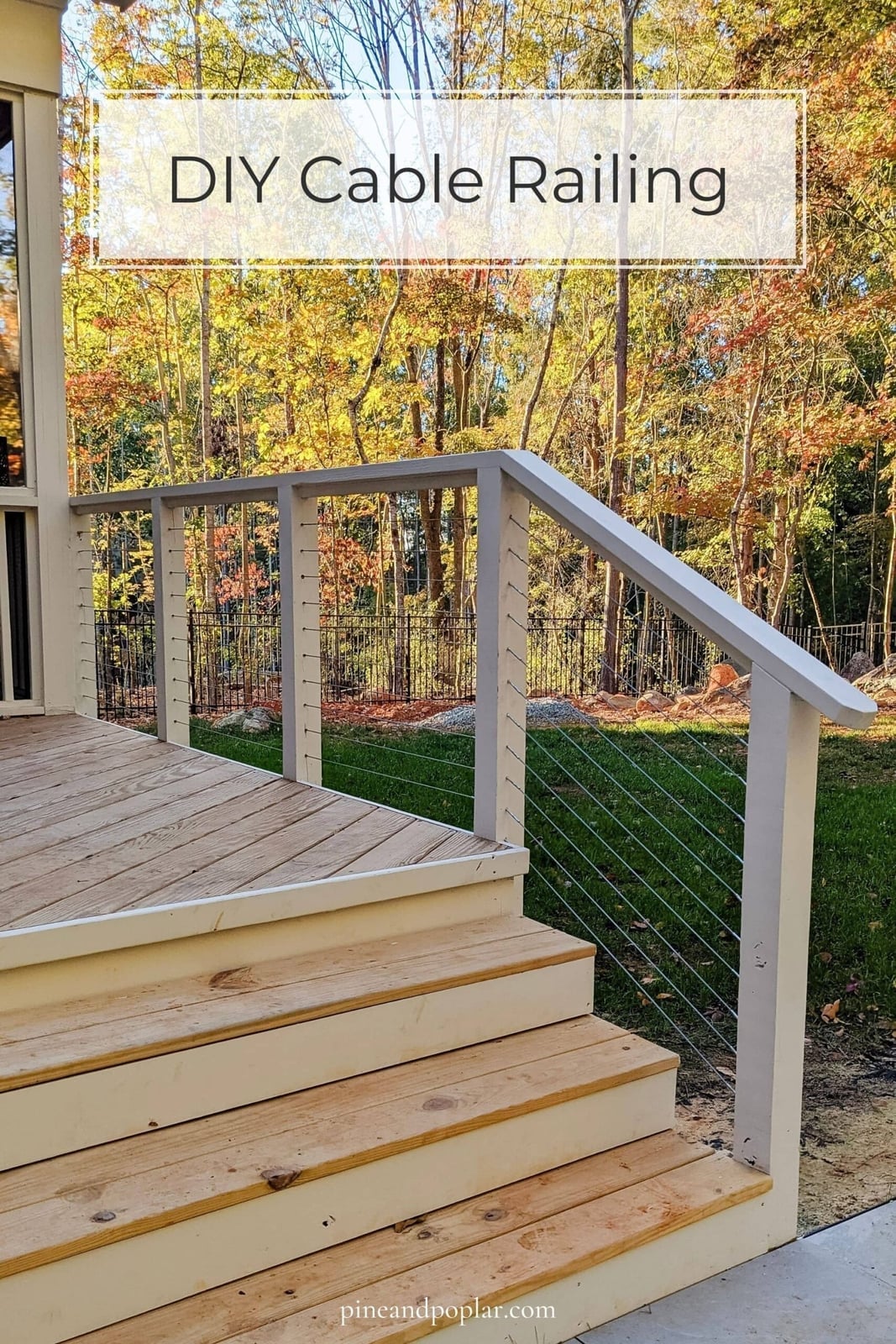
A close alternative to the all-white railing is a two-tone version with white posts and gray top rails. The gray cap rail picks up the weathered tone of wood deck boards or composite decking. The horizontal metal cable infill keeps the view open, which matters on a deck that overlooks a yard or green space. White posts keep the structure feeling light and airy.
The palette works because the gray is not competing with the wood. It sits in a middle zone that connects the white verticals to the natural deck surface. For a linear railing along a deck edge, this small shift in color adds definition without making the railing the main event.
Traditional deck with white vertical railing and wicker furniture
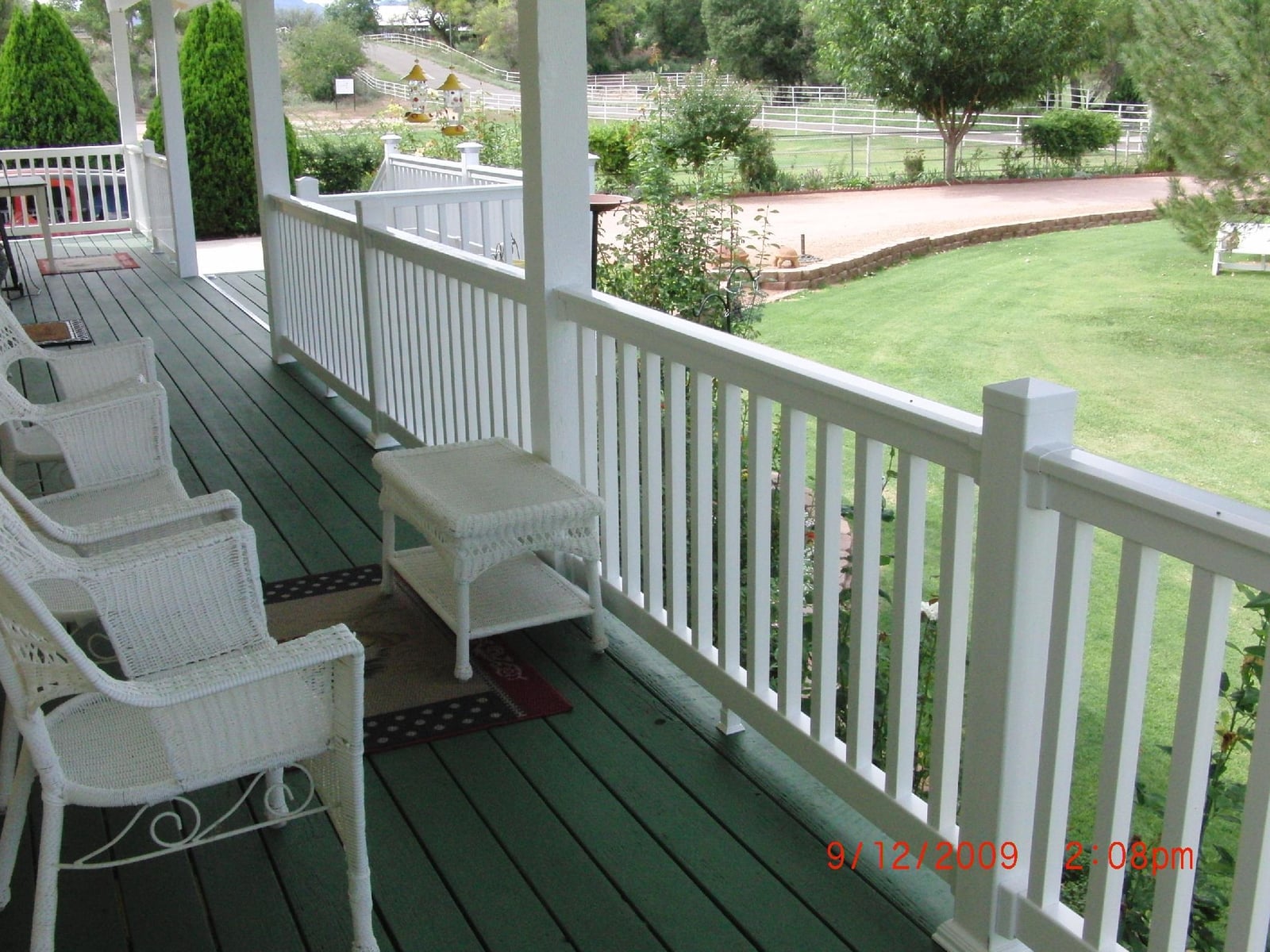
White vertical railing creates a classic backdrop that makes wicker furniture look right at home. The upright spindles echo the vertical lines of the wicker weave on a pair of chairs and a side table. The pale railing keeps the deck feeling roomy rather than enclosed, which matters when you are placing furniture along the edge. For a traditional look, keep the railing white and let the natural wood deck boards and green landscaping provide the contrast.
Final Thoughts
Choosing the right railing comes down to what you want to see from your deck and how much upkeep you can handle. Cable and metal options give you an open view with less maintenance. Wood and vinyl need more attention but bring warmth and traditional character. No matter which style you pick, the best railing fits your home’s architecture and your daily life. Keep the deck clean, check for loose posts or rust each season, and stain or seal wood every couple of years. That small routine keeps your railing looking good and doing its job for the long haul.